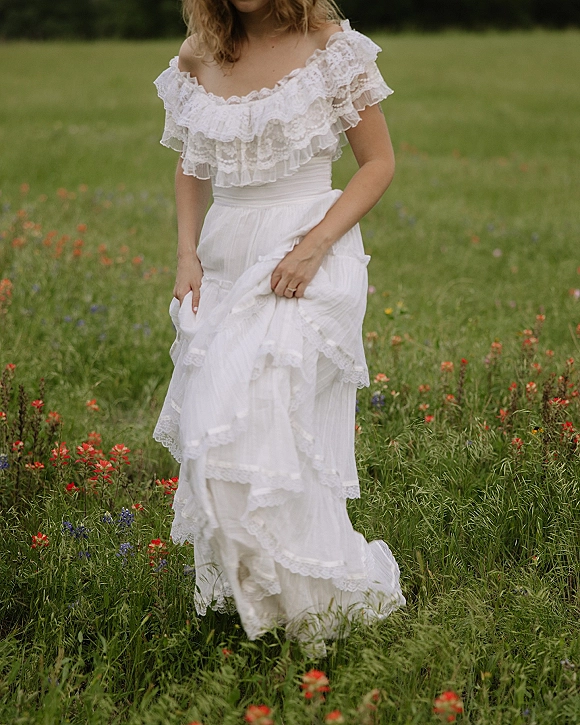
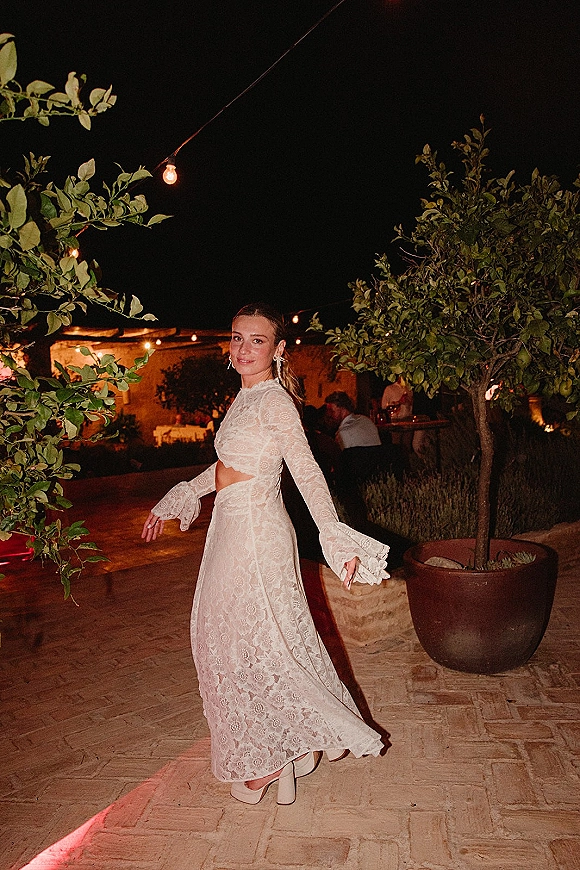
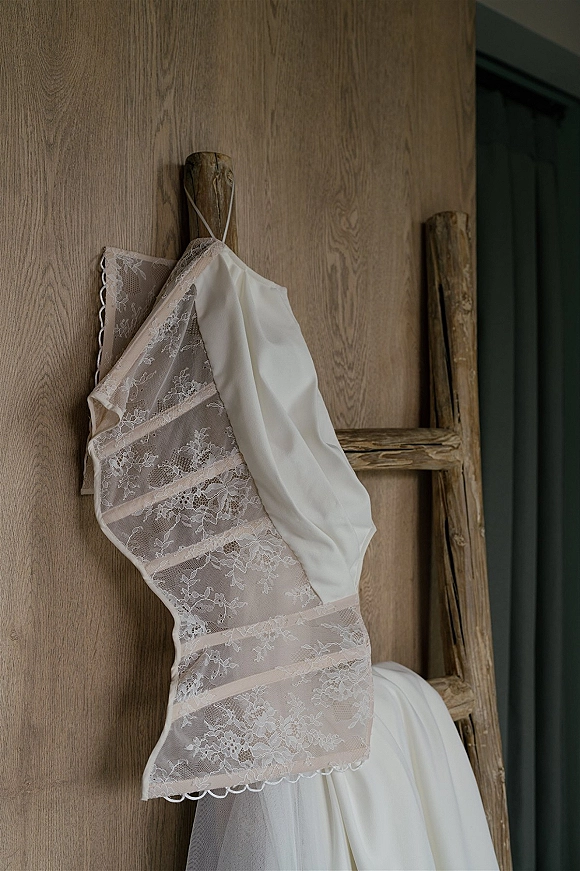
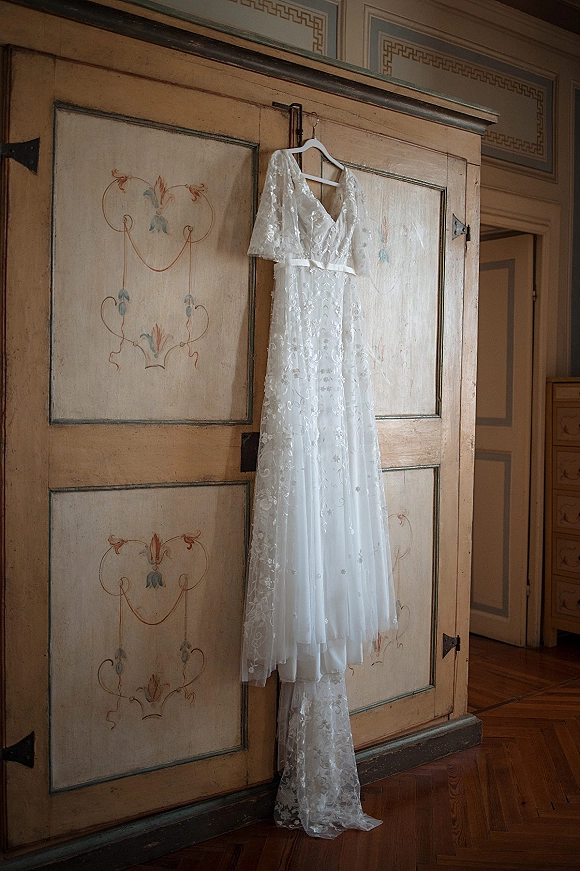
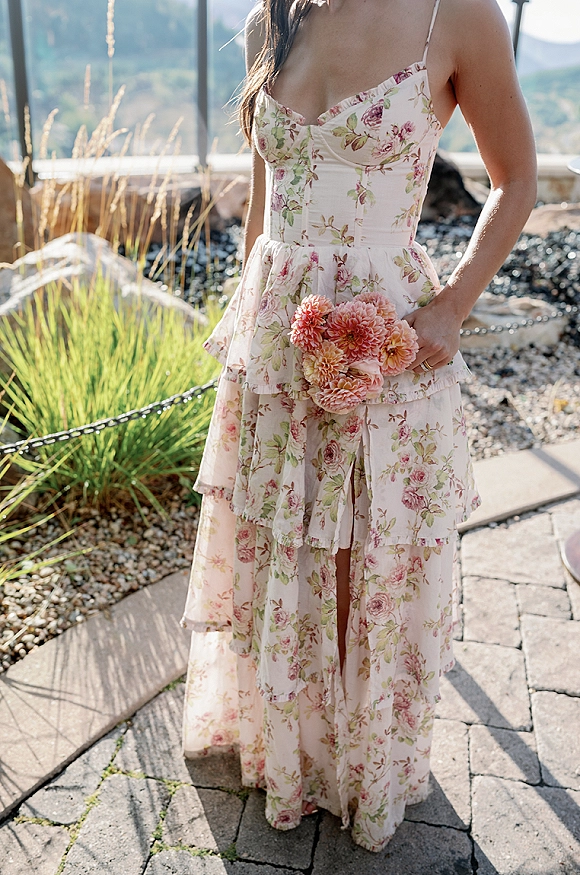
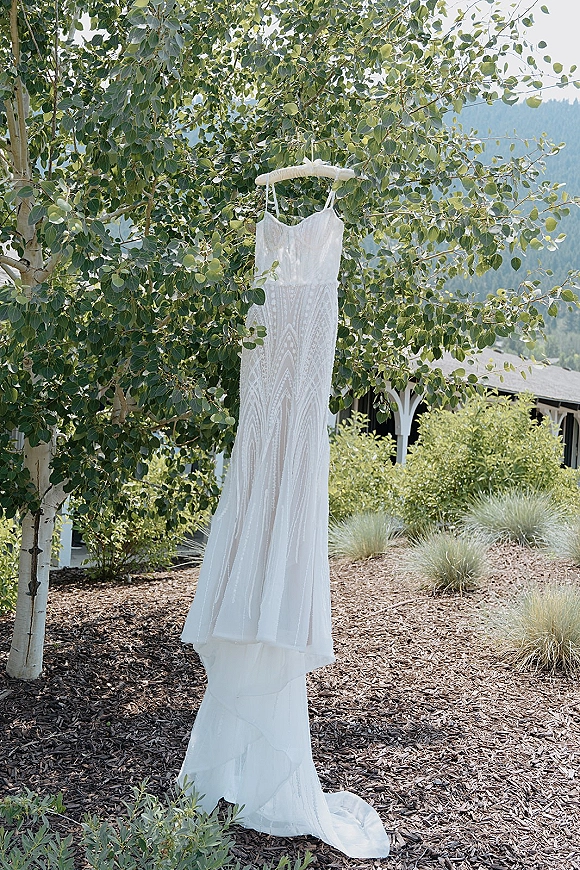
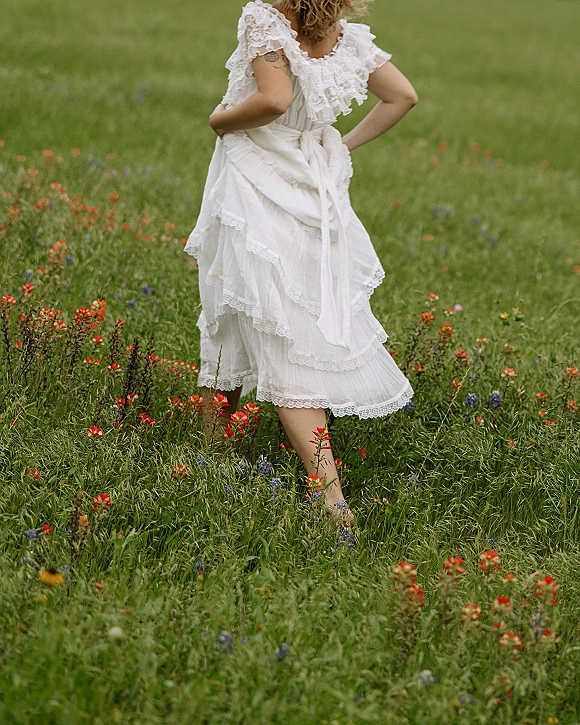
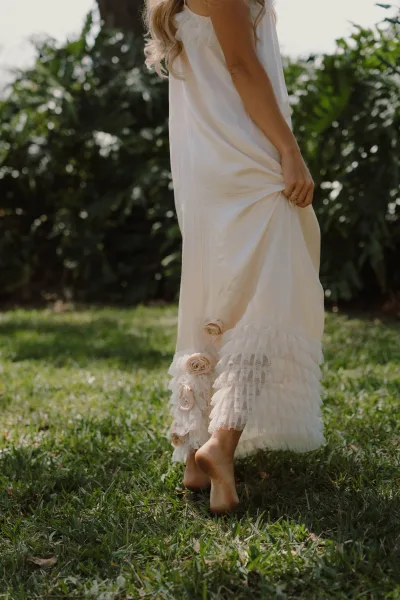
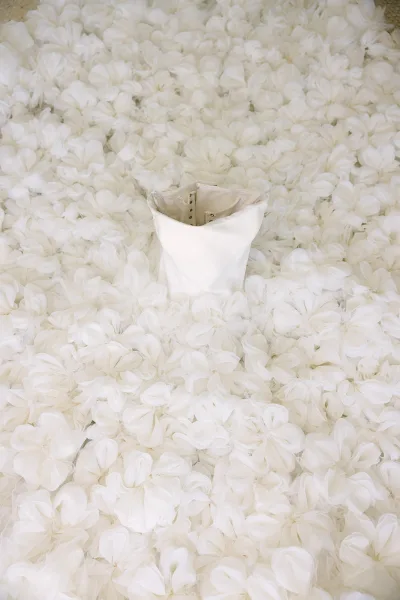
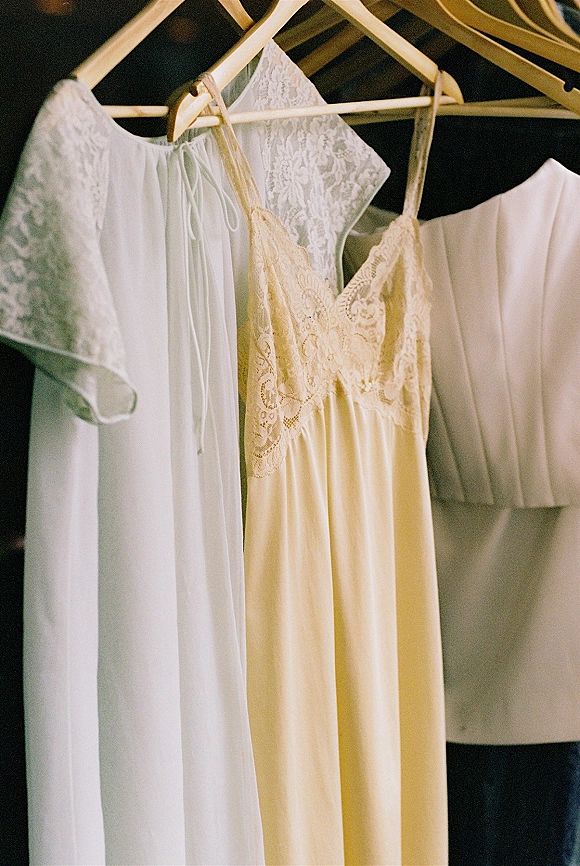
Boho spans a wide range. On one end sit clean chiffon A-lines with a deep V and an open back. On the other sit heavily embroidered gowns with bell sleeves, tiered skirts, and prairie necklines. Lace runs through most of it, and sleeves define a large share of the category. Use the sections below to find the version that fits your fabric preference, your body, your venue, and your season.
How to Tell a Boho Wedding Dress From a Traditional Gown
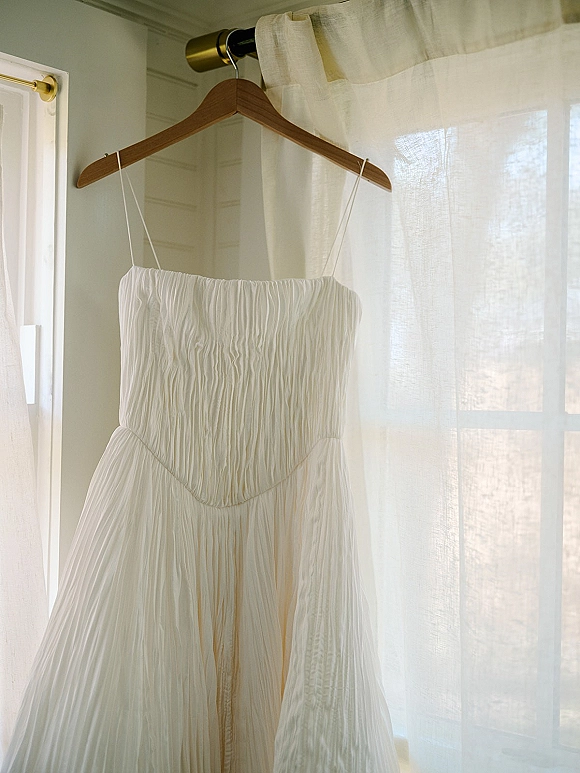
The fastest way to read a dress as boho is to look at four things: fabric, silhouette, detailing, and how much structure sits underneath. Boho gowns use fabrics that drape and move on their own, chiffon, georgette, crepe, and soft lace, rather than the stiff satins and heavy tulle that hold a formal shape. The silhouette follows the body loosely, usually an A-line or a fit-and-flare, instead of the corseted, sculpted lines of a traditional ballgown.
Detailing is the next tell. Boho leans on lace appliqué, botanical embroidery, open or keyhole backs, and unconstructed necklines like a deep V or a soft square. It avoids beaded bodices, crystal embellishment, and rigid boning that reads formal. The last tell is internal structure. A boho gown carries almost none of it, which is exactly why it moves. A dress that stands up on its own without a body inside is not boho, no matter what fabric it uses.
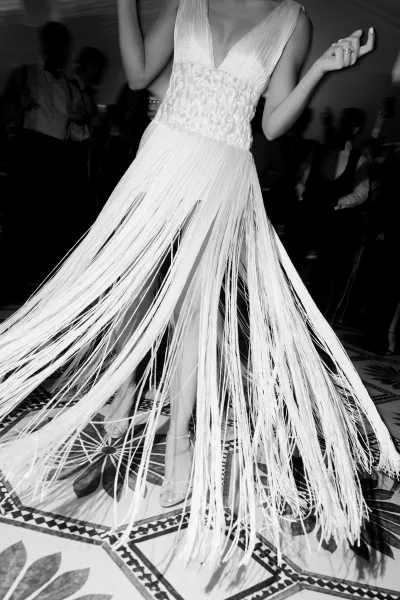
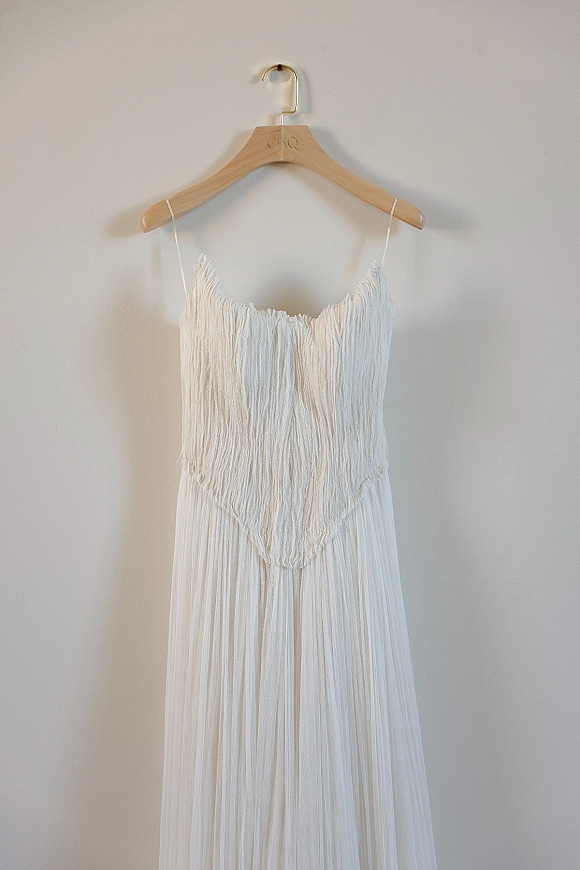
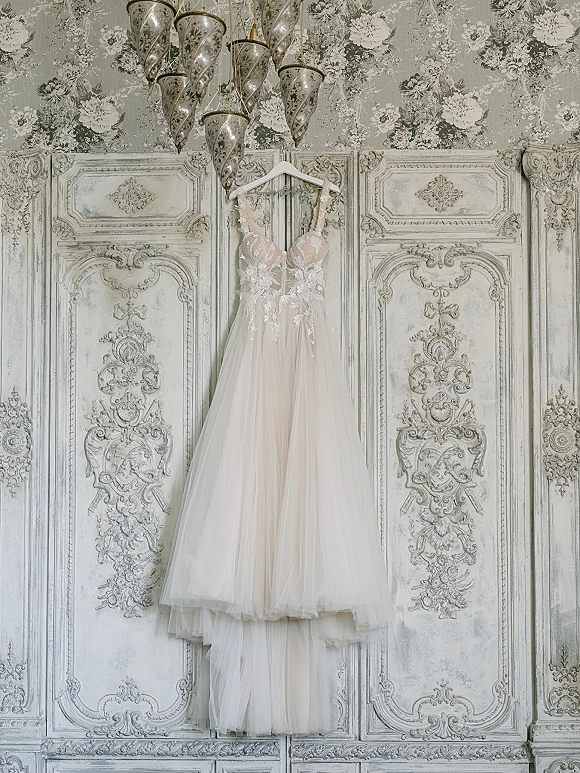
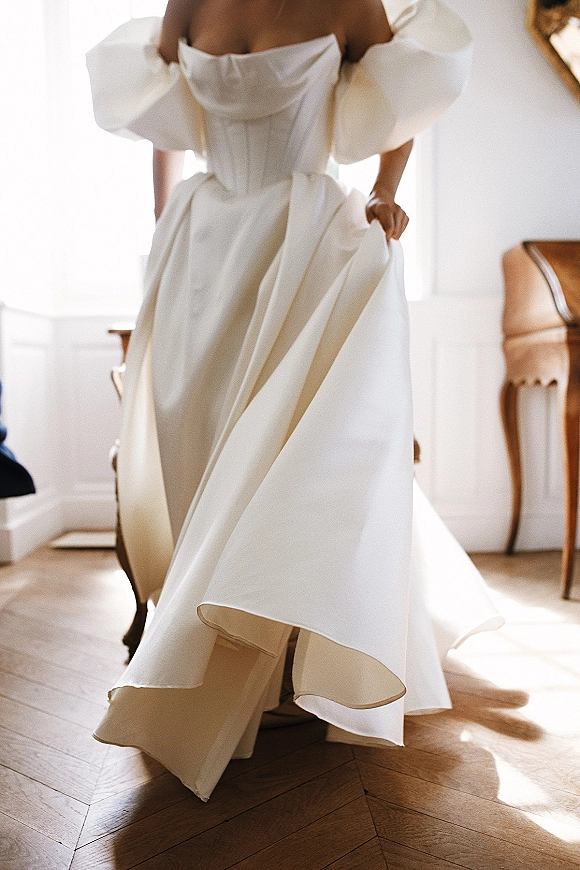
This is where a real-wedding gallery beats a product catalog. A retailer photograph shows a boho dress lit, pinned, and standing still. It cannot show whether the chiffon actually floats when the bride walks or whether the lace holds its shape in humidity. Every gown below is documented in a real ceremony, so the movement, the drape, and the light are real.
Boho Lace Wedding Dress
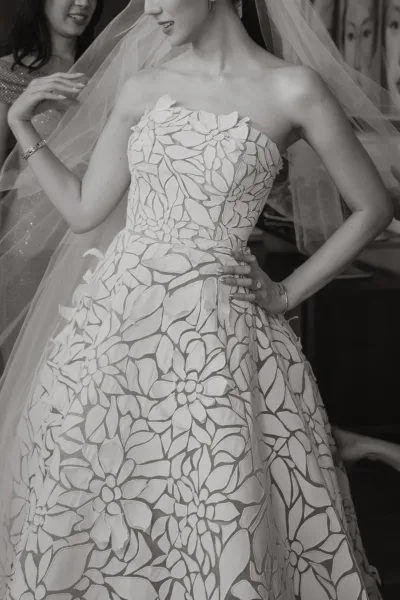
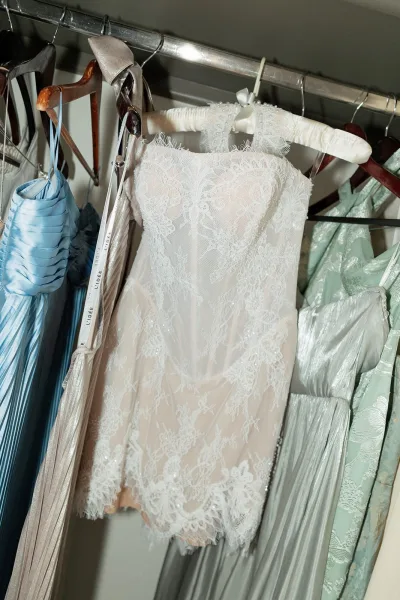
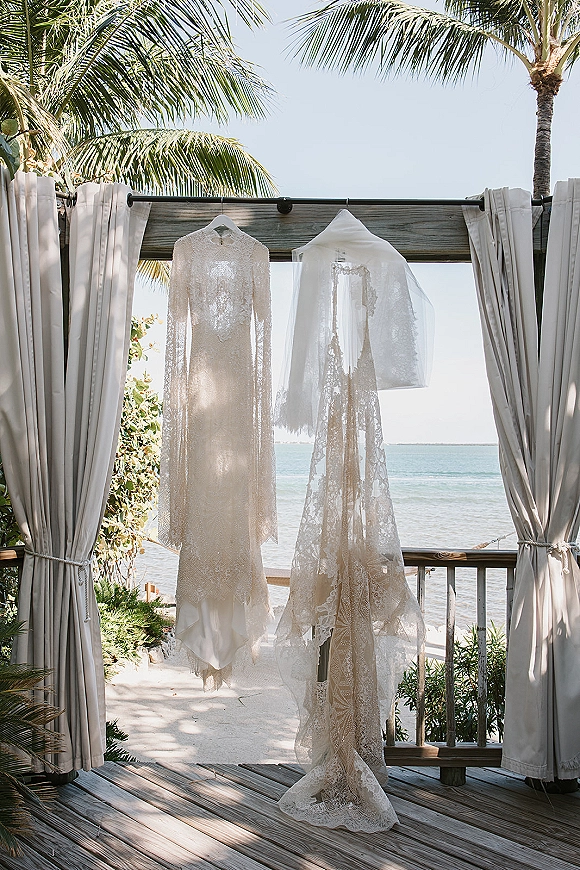
Lace is the single most requested detail in boho bridal, and the type of lace matters more than the amount. Boho favors soft, fluid laces like Chantilly and delicate corded floral lace over the stiffer guipure and Venetian laces used on structured ballgowns. Softer lace bends with the fabric underneath instead of holding a rigid panel, which keeps the gown light and lets it move.
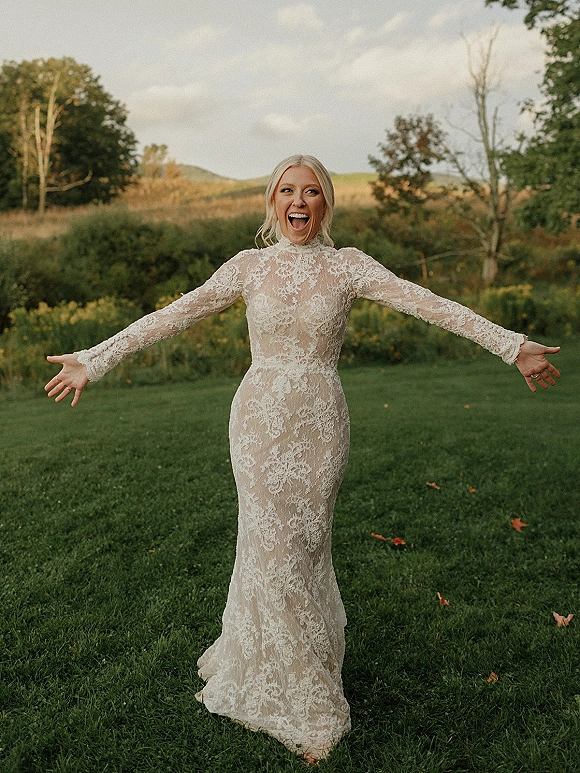
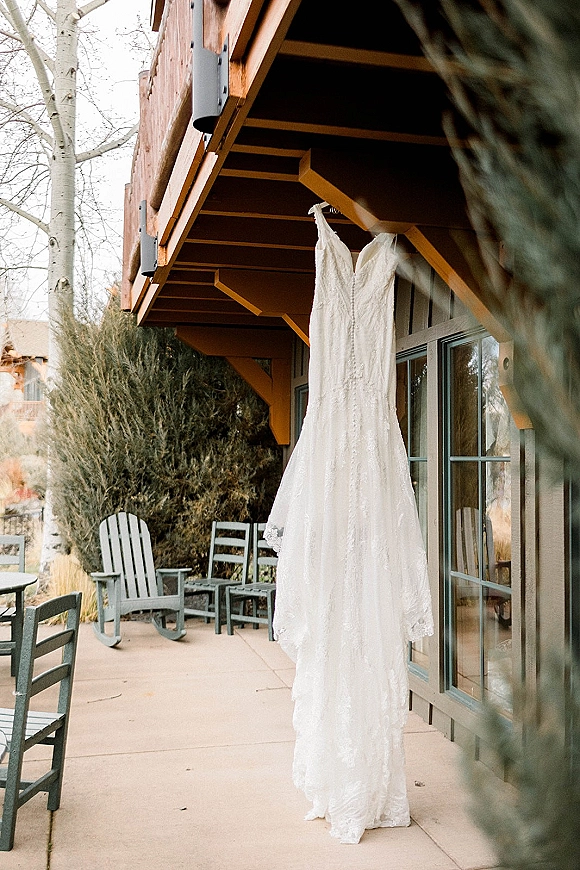
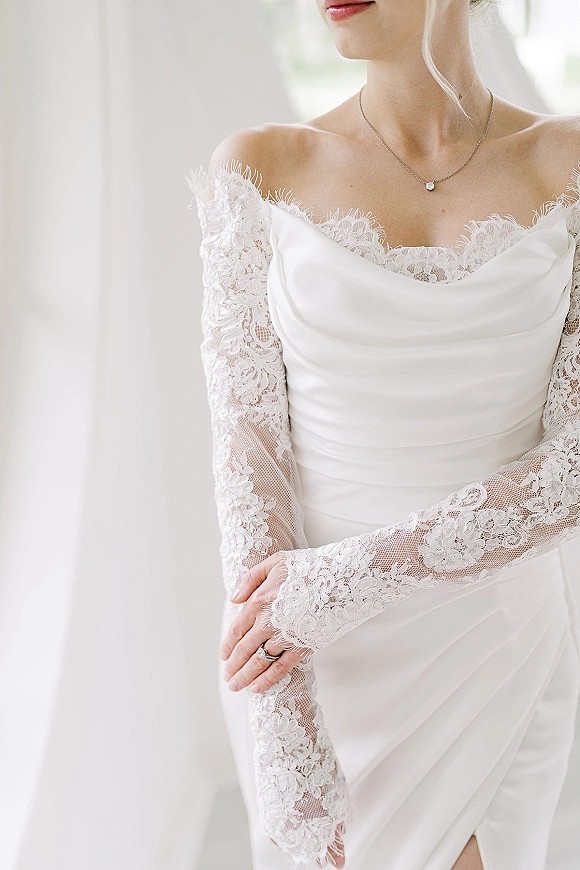
Placement is what keeps a boho lace gown from tipping into formal. The most-photographed version pairs a lace bodice with a plain chiffon or crepe skirt, so the texture sits at the top and the bottom stays fluid. Full-coverage lace works too, but it reads boho only when the base fabric stays soft and the silhouette stays loose. A boho chic lace wedding dressusually adds a sheer lace sleeve or an illusion back to the same formula, extending the texture without adding weight.
Lace also carries across the wedding party. Boho bridesmaid dresses follow the same soft-lace-and-chiffon logic in earthy and dusty palettes, which is the easiest way to make the bridal look and the party read as one aesthetic.
Long Sleeve Boho Wedding Dress
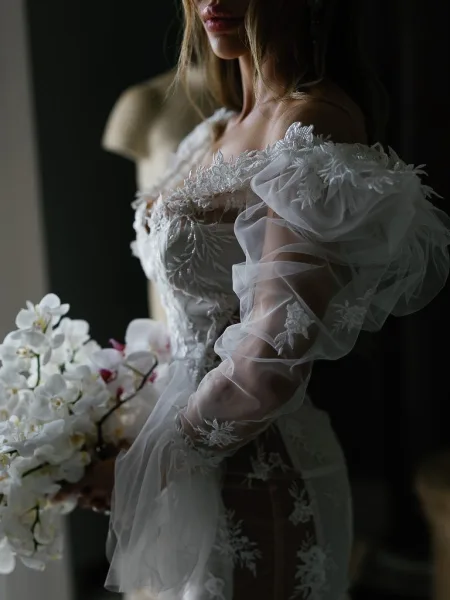
Sleeves define a huge share of boho gowns, and the reason is visual rather than practical. A long sleeve gives the photograph a strong line from shoulder to wrist and frames the arms in outdoor and landscape settings where the background is wide and open. The sleeve is almost always sheer, illusion mesh, lace, or embroidered tulle, so it adds interest without adding warmth or bulk.
Two sleeve shapes carry the category. Bishop sleeves gather into a soft cuff and read romantic and slightly historical. Bell sleeves flare open at the wrist and read more free-spirited. Both add volume at the wrist rather than the shoulder, which is what keeps them from looking structured or formal. The same lace or embroidery on the sleeve usually repeats on the bodice, so the gown reads cohesive and detailed from a distance without heavy embellishment.
Long sleeves also solve a real seasonal problem. They make a boho gown work for fall, winter, and cool-morning mountain ceremonies where a strapless dress would leave the bride cold. For the full range of sleeve styles beyond boho, the wedding dress with sleeves gallery covers bishop, bell, cap, and fitted options across every silhouette.
Flowy and A-Line Boho Silhouettes
A flowy silhouette is the heart of the boho look, and A-line is the shape that delivers it most reliably. An A-line skims the waist and releases into a soft, widening skirt, which flatters nearly every body and photographs beautifully in motion. Fit-and-flare works on the same principle with a closer fit through the hip before the release. Both give the fabric room to move, which is the entire point of a flowy wedding dress.
Slip and column shapes sit at the minimal end of boho. A bias-cut slip in crepe or soft satin reads clean and modern, with the drape doing all the work and no lace or embroidery at all. If that stripped-back direction appeals to you, the minimalist wedding dress gallery shows how far the look can go while still feeling bridal.
Mermaid and trumpet cuts exist within boho but skew more modern and structured, so they read boho only when the fabric stays soft and the detailing stays organic. The throughline across every boho silhouette is the same: the shape should suggest the body without gripping it, and the fabric should always look ready to move in a breeze.
Boho Beach Wedding Dress
A beach ceremony calls for the most stripped-back end of the boho spectrum, because sand, wind, and bright open light punish anything heavy. The best beach boho gowns use the lightest fabrics, chiffon, gauze, and soft crepe, in an A-line or slip shape with minimal embellishment and no long train to drag. The dress should move in the wind on purpose rather than fight it.
Fabric weight is the deciding factor. Lightweight chiffon and gauze float and catch the breeze, which is what makes beach portraits look ethereal. Georgette is a smart alternative when the wind is strong, since it has slightly more body and stays controlled without looking stiff. Heavy lace and structured bodices are the wrong call in the open, where hard midday sun flattens dense fabric and makes it read heavy instead of airy.
Skip the cathedral veil and the long train on sand. A shorter veil or a floral crown holds up far better in wind, and a tea-length or ankle-grazing hem keeps the dress clean when you are walking across the beach between photos.
Plus Size Boho Wedding Dress
The boho silhouette translates across body types better than most bridal categories, because it relies on drape and ease rather than rigid structure. Empire waists, adjustable corset backs, and A-line cuts give a comfortable, flattering fit without the compression of a heavily boned ballgown. Soft fabrics fall with the body instead of pulling against it, which is why so many plus size brides land on boho after trying stiffer styles.
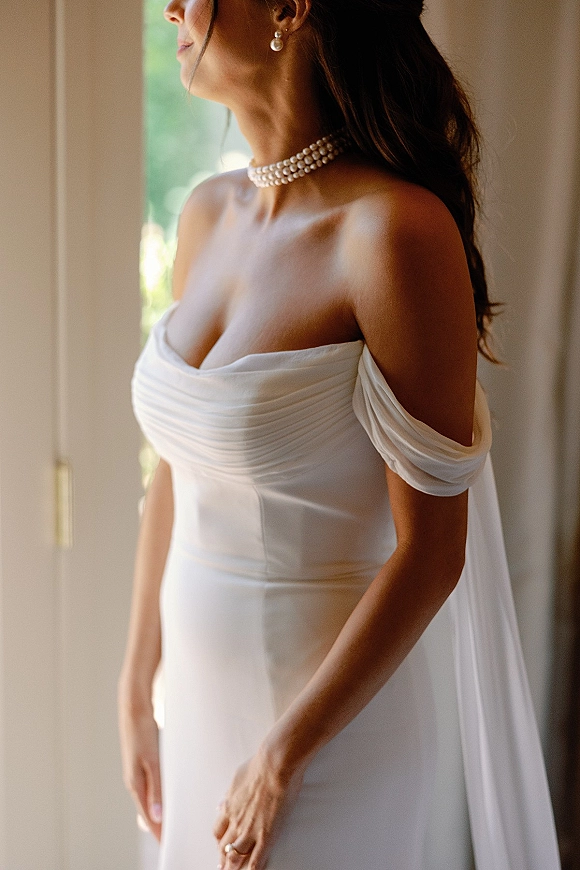
Lace-and-chiffon combinations are the most requested plus size boho look, often with sheer illusion sleeves, an off-the-shoulder neckline, or a keyhole back. The quality difference across price points shows up in the internal construction, specifically how the bodice support and boning are integrated to hold the shape smoothly. That interior work is worth checking in person, since it is the part a photograph never shows.
An open or corset back is worth prioritizing in this category. It makes fit adjustments simple during alterations and adds a strong detail that photographs well without adding bulk to the front of the gown.
Vintage and Hippie Boho Wedding Dresses
Vintage boho draws directly from late-1960s and 1970s bridal references, and the details are specific: high or Victorian necklines, prairie and flutter sleeves, delicate botanical embroidery, and eyelet, crochet, or Swiss-dot fabrics. The palette skews warm, ivory, cream, and soft champagne rather than bright white, which reinforces the handmade, lived-in feeling. This is the direction people often mean when they search for a hippie wedding dress.
What separates a true vintage-inspired boho gown from a contemporary one is surface texture and construction. Vintage leans into fabric that looks handcrafted, a fitted bodice over a tiered or gathered skirt, and embroidery that is floral rather than geometric. Contemporary boho, by contrast, tends toward cleaner fabrication and less surface detail.
The look pays off most at venues that already carry visual texture: restored barns, European-countryside settings, and established gardens. If a barn is your setting, the barn wedding ideas gallery shows how vintage boho gowns read against weathered wood, string lights, and wildflower florals.
How Boho Fabrics Move: Chiffon, Georgette, Crepe, and Lace
Three fabrics carry most boho gowns, and each behaves differently enough to change how the dress photographs. Chiffon is the lightest and the most transparent, so it floats and layers well, but a single layer needs lining and a light breeze to look its best. It is the fabric that delivers the classic weightless boho movement, and it is also the one that goes limp in dead-still, humid air.
Georgette is chiffon’s sturdier cousin. It has a faint crinkle texture and more body, so it holds a soft shape in wind and drapes with a gentle weight rather than floating. Crepe sits heavier still, with a matte finish and a fluid, liquid drape that reads clean and modern, which is why it dominates the minimal and slip end of boho. Soft lace layers over any of the three, adding texture at the bodice or sleeve while the base fabric keeps the movement.
Understanding this is the difference between a dress that looks right on a hanger and one that looks right in your actual ceremony. A cross-fabric gown, lace bodice, chiffon skirt, crepe lining, will move in three slightly different rhythms at once, and that layered motion is exactly what a real-wedding photograph captures and a catalog shot cannot.
How Boho Dresses Read in Golden Hour, Full Sun, and Candlelight
Light changes a boho gown more than most brides expect, because sheer fabric and warm ivory tones react to their surroundings. In golden hour, the low warm sun passes through chiffon and illusion lace and lights the fabric from within, which is why late-afternoon boho portraits look luminous. Warm-toned ivory and champagne gowns glow in this light rather than looking off-white.
Full midday sun is the harder case. Hard overhead light flattens texture and can wash out fine lace, so a densely embroidered gown loses its detail while a simple chiffon A-line keeps its shape and movement. Open shade near the ceremony is worth planning for if the dress relies on surface texture. Overcast skies are quietly ideal for boho, since the soft, even light shows lace and drape without harsh shadows.
Candlelight and warm reception uplighting pull ivory and champagne tones even warmer, which flatters the earthy boho palette and photographs beautifully. This is durable knowledge that holds for any boho gown in any year, and it is the kind of insight that only comes from documenting real weddings rather than styling a product shoot.
Styling a Boho Wedding Dress: Florals, Hair, and Accessories
Boho coheres through restraint. The dress and the setting carry the visual weight, so the accessories stay minimal and organic. Delicate gold jewelry, a single fine chain or small earrings, reads correct against lace and chiffon, while heavy diamond pieces and structured formal jewelry work against the whole register. A floral crown or a few pinned stems suits the look when the venue supports it, and a fingertip veil or no veil at all keeps the silhouette light.
Florals are the strongest styling lever. Loose, garden-gathered bouquets with trailing ribbon and unstructured greenery reinforce the aesthetic in a way that tight, rounded arrangements never will. Hair worn down, loosely waved, or softly pinned reads far more naturally than a sleek formal updo. The goal is a look that appears gathered rather than engineered.
When it comes time to try gowns in person, movement and fabric behavior are hard to judge online, especially for lace, which varies significantly across designers. A local wedding dress boutique is the right place to feel how a gown drapes and moves before you commit. As Carats + Cake’s editors put it, the boho dresses that photograph best are the ones chosen for how they move in person, not how they look pinned on a hanger.
Frequently Asked Questions
What makes a wedding dress boho?
A wedding dress reads as boho when it combines soft, natural fabrics like chiffon, georgette, or fluid lace with a relaxed A-line or fit-and-flare silhouette and organic details such as open backs, botanical embroidery, or sheer sleeves. The defining feature is minimal internal structure, so the gown moves with the body instead of holding a rigid shape. If a dress stands up on its own or relies on beading and heavy boning, it reads formal rather than boho.
What is the difference between a boho and a bohemian wedding dress?
There is no real difference. Boho is simply the shortened form of bohemian, and both describe the same relaxed, nature-inspired bridal aesthetic built on soft fabrics, lace, and unstructured silhouettes. The French spelling boheme refers to the same style. Retailers use the terms interchangeably, so you can search any of the three and find the same category of gown.
What fabric is best for a boho wedding dress?
Chiffon, georgette, and crepe are the three fabrics that define boho, each with a different weight and drape. Chiffon is the lightest and floats best, georgette holds a soft shape in wind, and crepe gives a heavier, liquid drape for a cleaner, more modern look. Soft lace layers over any of them for texture, while stiff satin and heavy structured tulle pull a gown out of the boho category entirely.
Are boho wedding dresses good for beach weddings?
Boho is one of the best styles for a beach wedding, as long as you choose the lightest fabrics. Chiffon, gauze, and soft crepe move in the wind and photograph as airy and ethereal, while an A-line or slip shape stays manageable on sand. Skip heavy lace, structured bodices, and long trains, which drag on sand and read heavy under bright open light.
Can you wear a boho wedding dress at a formal venue?
Yes, when the silhouette is structured enough to hold its own. A fitted lace bodice over an A-line skirt reads polished in a ballroom or estate, while a loose chiffon slip can look underdressed in the same room. Add a longer veil or a small amount of embellishment to lift a boho gown for a formal setting without losing the soft, organic feeling that defines the style.