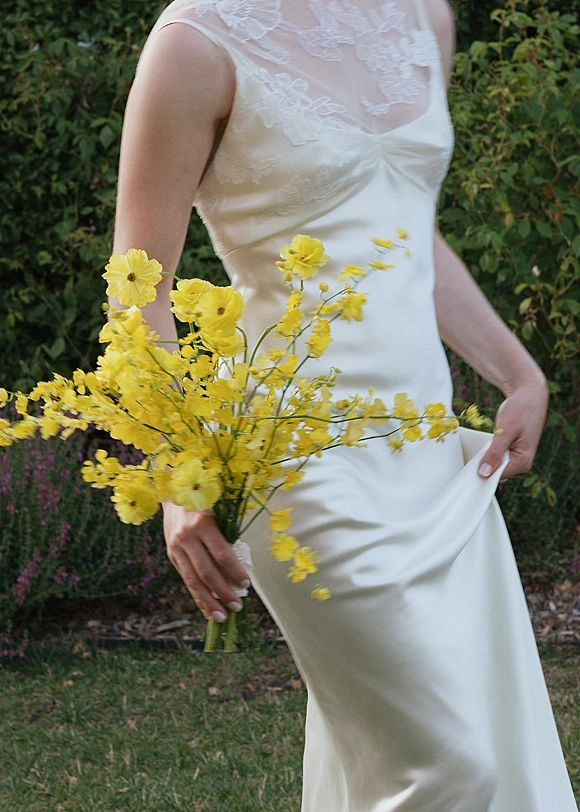
Which Fitted Silhouette Is Which: Sheath, Column, Fit-and-Flare, Trumpet, and Mermaid
The fitted family sorts by one variable: the release point, meaning where the skirt stops following the leg. A sheath and a column stay narrow to the hem. A fit-and-flare opens at the upper thigh, a trumpet at the mid-thigh, and a mermaid at or below the knee. The lower that point sits, the more the skirt shortens the stride.
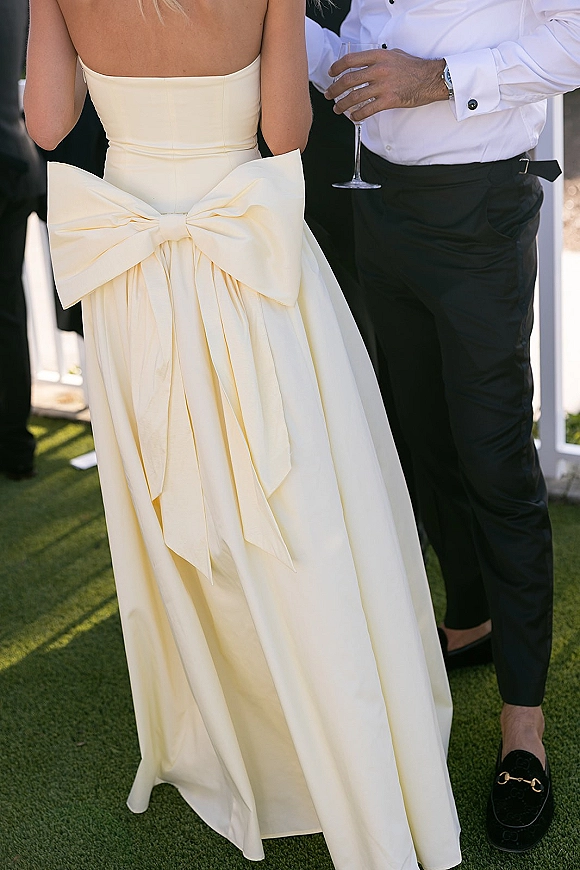
Sheath and column. These read narrowest because nothing flares. A sheath wedding dress traces the body in one line and often falls in crepe or bias-cut silk, which gives it a fluid drape rather than a structured one. Column gowns hold a straighter, more architectural version of the same idea.
Fit-and-flare. The most-chosen version of the fitted category, and the most forgiving. Because the fit and flare wedding dress opens above the knee, it holds a defined waist and hip without limiting movement, which is why it turns up at weddings with long dancing and uneven ground.
Trumpet. A midpoint. The trumpet wedding dress flares at the mid-thigh in a gradual sweep instead of a sharp break, so the skirt reads fuller than a fit-and-flare from the front but still moves.
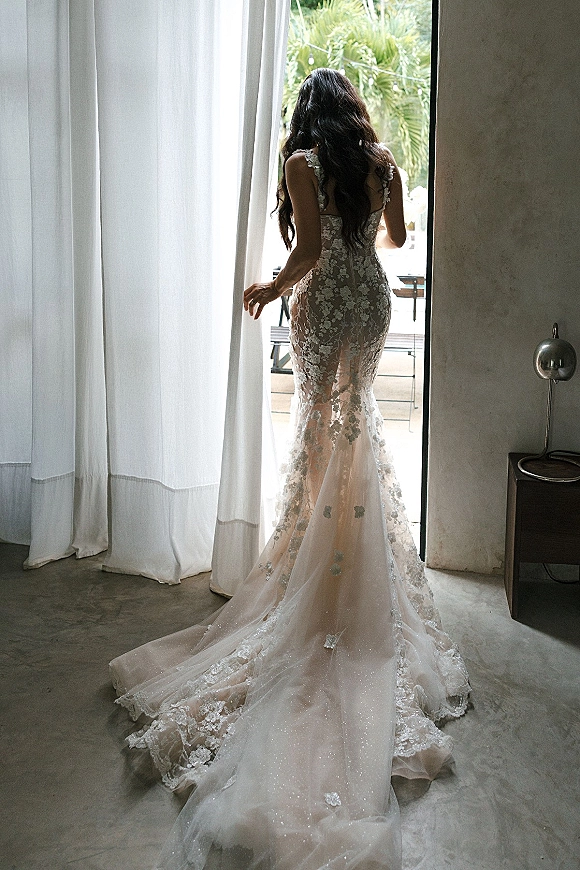
Mermaid. The most sculptural and the most demanding. A mermaid wedding dress holds the fit through the thigh and releases at or below the knee, usually with enough skirt volume to require a practiced walk.
Where fitted stops. An A-line or ball gown with a close bodice is not a fitted gown. Fitted describes the whole line through the hip, not the top alone.
The Fitted Bodice: What Holds the Shape
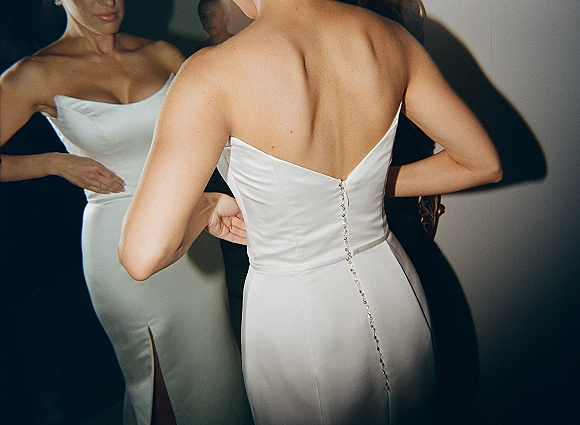
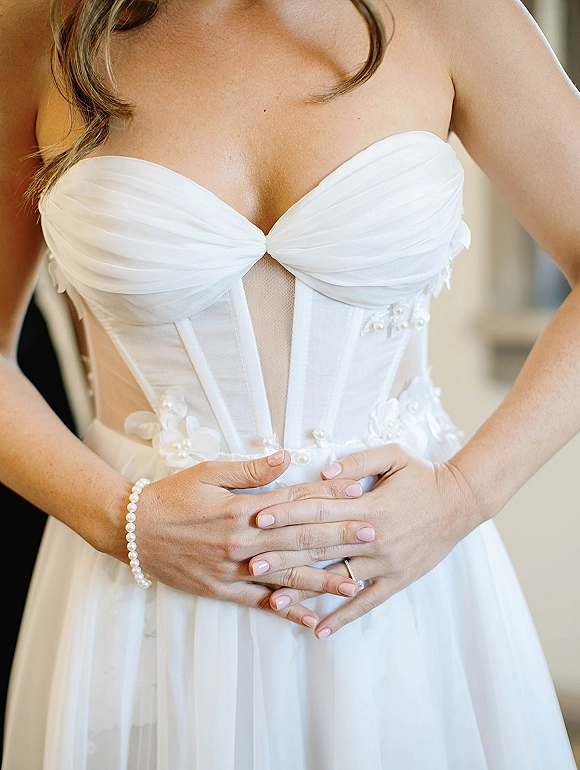
A fitted bodice keeps its line through internal structure, not through the outer fabric. Under the visible layer sits some combination of boning channels, an inner corselet, a waist stay, and curved seams. Strip those out and even a heavy satin collapses into wrinkles across the ribcage.
Boning and the inner corselet. Thin flexible boning runs vertically along the seam lines to stop the bodice from folding when the body bends. On a strapless or low-back gown, that structure carries the entire weight of the dress, which is why a well-built bodice stays put without straps. A corselet is a separate inner layer, essentially a built-in foundation garment, stitched to the shell and shaped independently of it. It differs from a corset wedding dress, where the boned structure and its lacing are the visible design.
Princess seams versus panel seams. Princess seams run from the armhole or shoulder down through the bust and waist, shaping in a continuous curve. Panel seams break the bodice into vertical sections, which allows finer shaping and gives an alterations specialist more places to take in or let out. The seam count is a reliable tell of how much a gown can be adjusted.
The waist stay. A grosgrain ribbon anchored at the natural waist inside the dress. It takes the load off the bodice seams so the gown does not travel down over the course of a long day.
Lining and interfacing. A fitted gown reads smooth because its lining is cut and shaped like a second dress. Thin or unshaped lining is the most common reason an otherwise well-cut gown ripples at the waist.
Satin, Crepe, and Mikado: Which Fabrics Hold a Fitted Line
Fabric behaves differently when it is stretched over a curve than when it hangs loose, so a fitted silhouette narrows the useful fabric list considerably. The question for every material is whether it holds a smooth surface under tension.
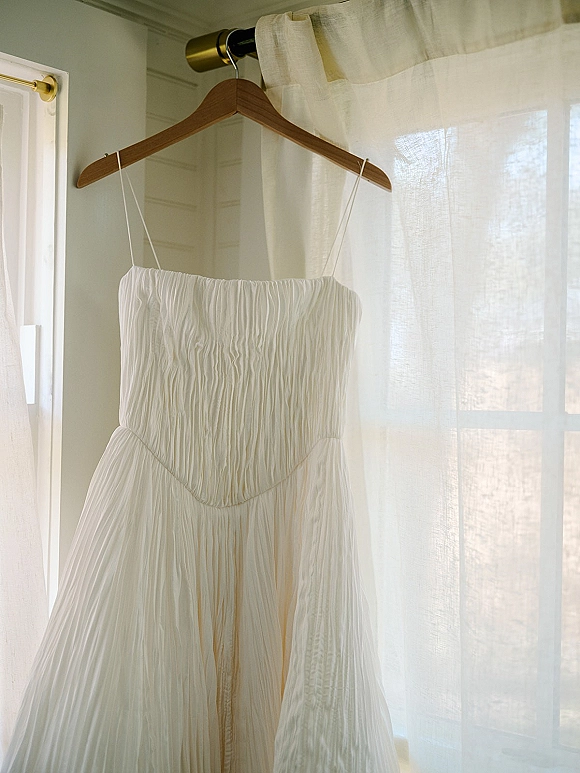
Crepe. Dense, matte, and slightly grainy, crepe is the workhorse of the fitted category. It has enough body to skim rather than cling and enough weight to hide small seam allowances, and because it absorbs light instead of bouncing it, it forgives the ripples that a shinier fabric would announce.
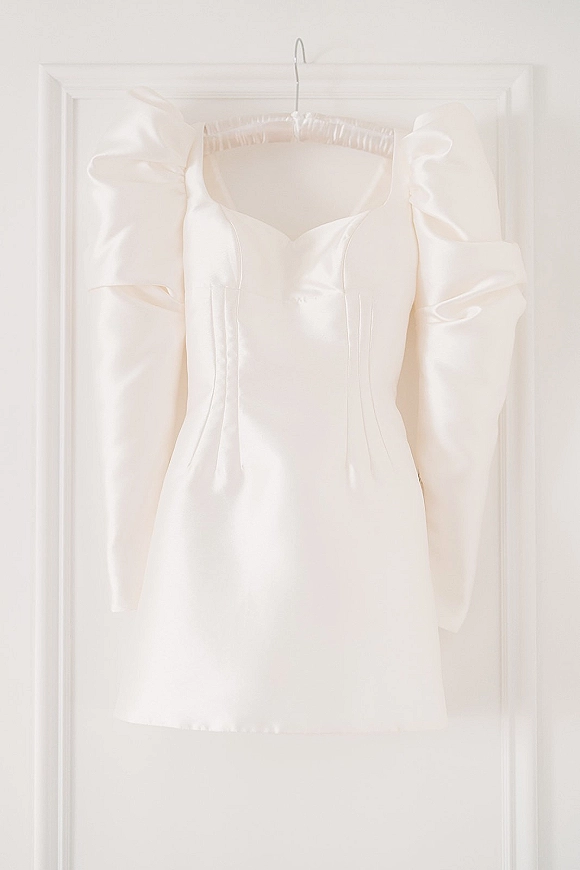
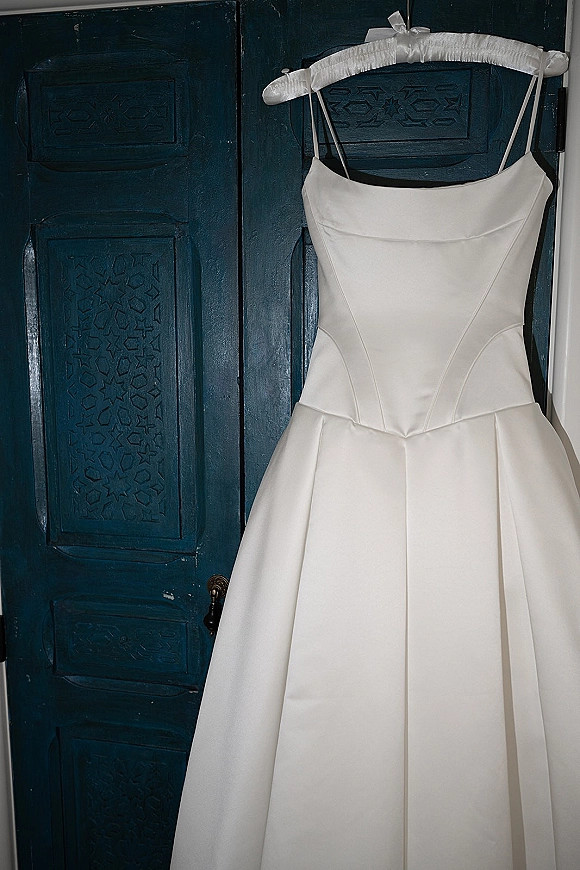
Duchess satin and mikado. Both are structured and both hold a shape on their own. Mikado is stiffer, with a subtle sheen and a crisp edge that suits an architectural column. Duchess satin is heavier and glossier, and it takes an immaculate under-layer, because any ripple in the lining shows through as a highlight.
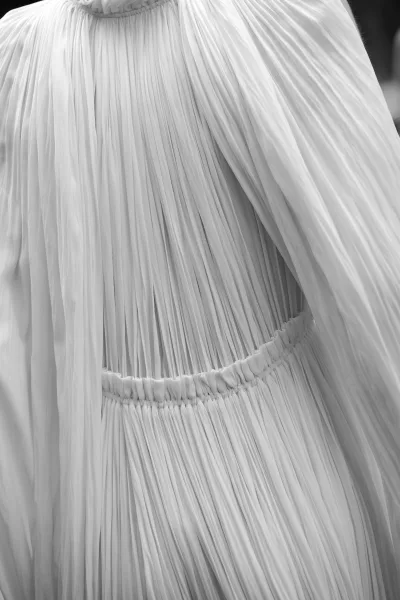
Charmeuse and bias-cut silk. Liquid, cool, and unforgiving. A bias cut moves with the body and photographs with a soft vertical fall, and it reveals every line beneath it, which makes the undergarment choice part of the dress decision rather than an afterthought.
Stretch blends. A small percentage of elastane in crepe or satin gives a gown enough recovery to sit and dance in. It also changes how alterations work, since stretch fabric can be eased in but rarely let out.
Lace on a Fitted Silhouette: Motif Scale and Seam Placement
Lace behaves differently on a narrow gown than on a full skirt. A fitted surface is curved and under tension, so motifs stretch slightly and read larger than they do on the bolt, and the seams that create the shape cut straight through the pattern unless someone plans around them.
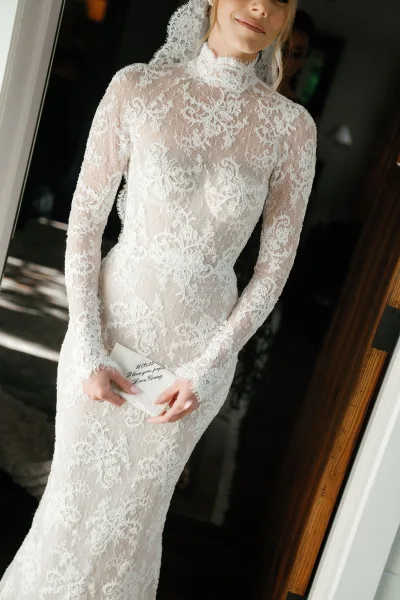
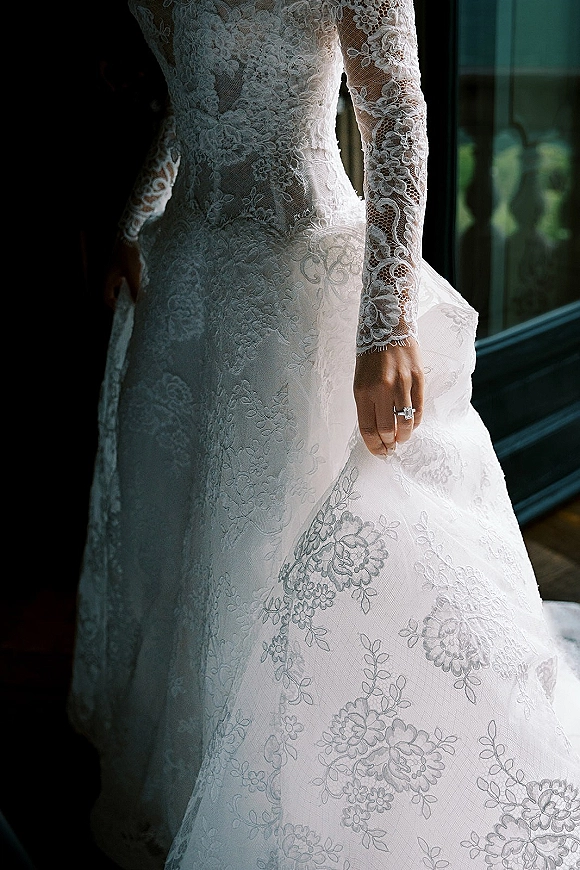
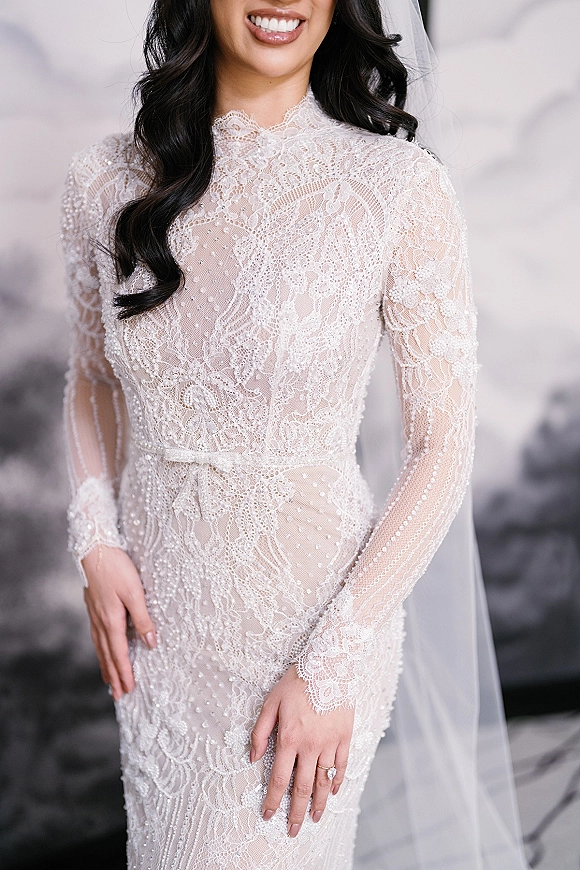
Lace types worth knowing by name. Chantilly is fine and light with a delicate scalloped edge, and it lies flattest against a close-fit bodice. Alençon has a corded outline that raises each motif and gives more definition on a plain satin base. Guipure and Venetian lace have no net ground at all, so the motifs connect to each other, and the resulting fabric is heavy enough to hold structure on its own.
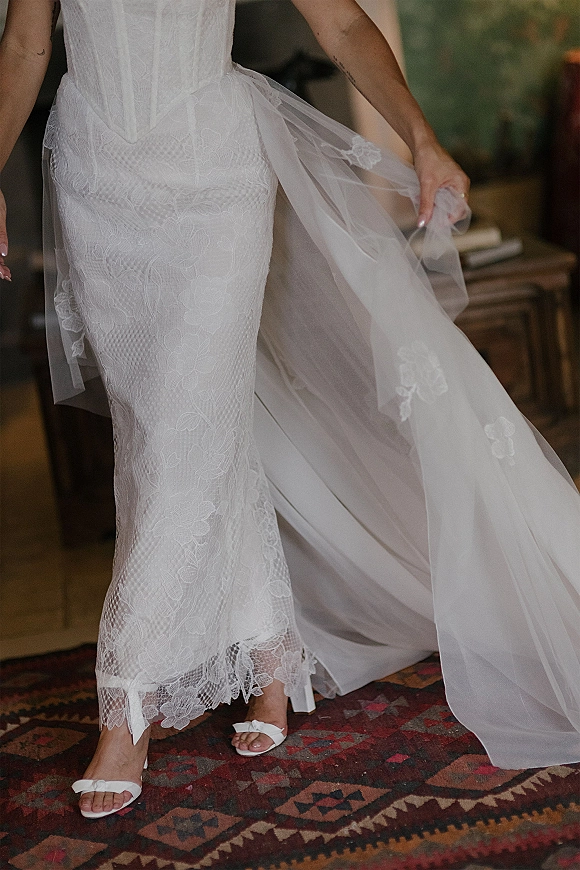
Placement and pattern matching. On a fitted gown, the most careful work is invisible: motifs matched across the side seams, appliqués moved to sit over a curve rather than across it, and the scalloped edge of the lace repositioned to follow the hemline. A gown where the lace pattern breaks at every seam looks unfinished no matter how good the base fabric is.
Allover lace versus applique. Allover lace on a fitted line gives a continuous texture that reads soft from a distance and detailed up close. Scattered appliqués do the opposite, drawing the eye to specific points, which is one way to shift emphasis along the body. For the fitted cut where lace shows up most often, see lace mermaid wedding dresses.
Long Sleeves and Straps on a Close-Fit Bodice
Sleeves on a fitted gown are a mobility question as much as an aesthetic one, because the armhole on a close-cut bodice is already smaller than it would be on a fuller dress.
The armhole matters more than the sleeve. A high, close armscye lets the arm lift without pulling the whole bodice upward. A low or wide one drags the neckline every time the arms go overhead, which becomes obvious during a first dance or a bouquet toss.
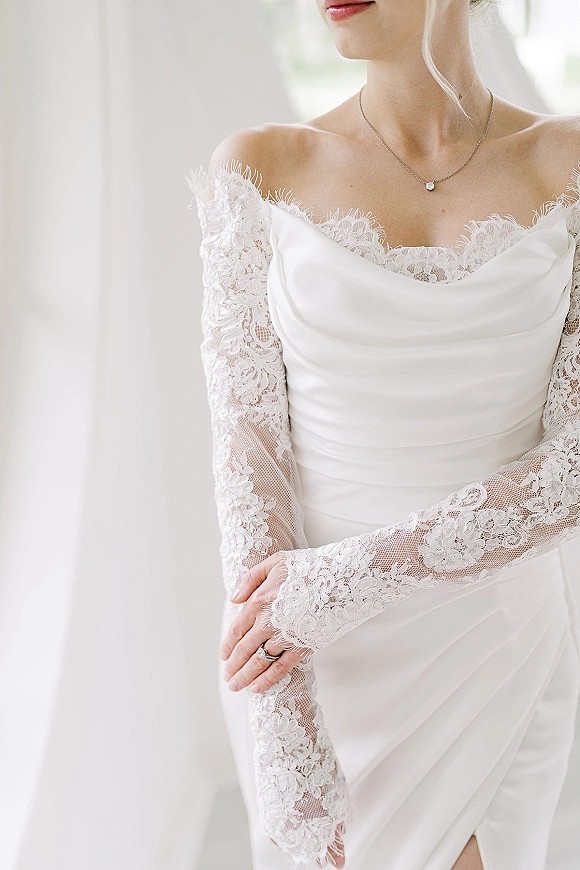
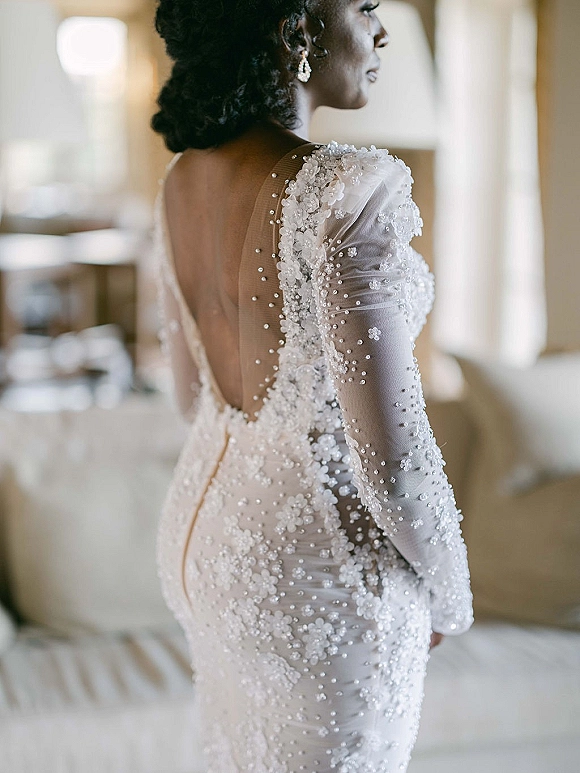
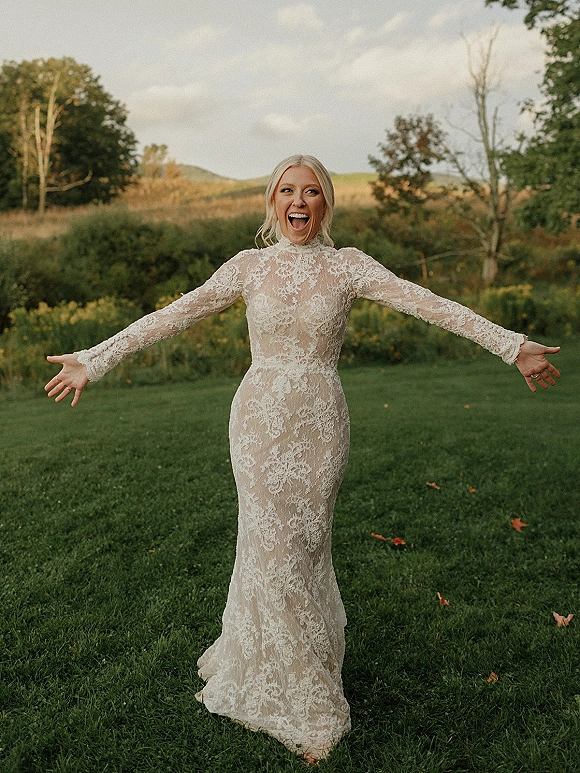
Illusion and lace sleeves. Fine tulle or Chantilly sleeves add coverage without adding weight or heat, and because they follow the arm closely, they extend the fitted line rather than interrupting it. Heavier corded lace holds its own shape and reads as a stronger design element.
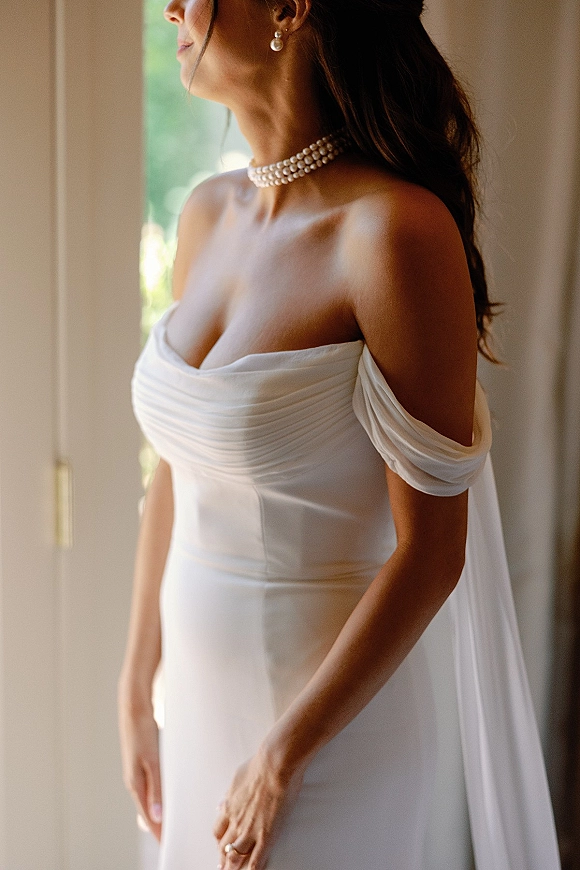
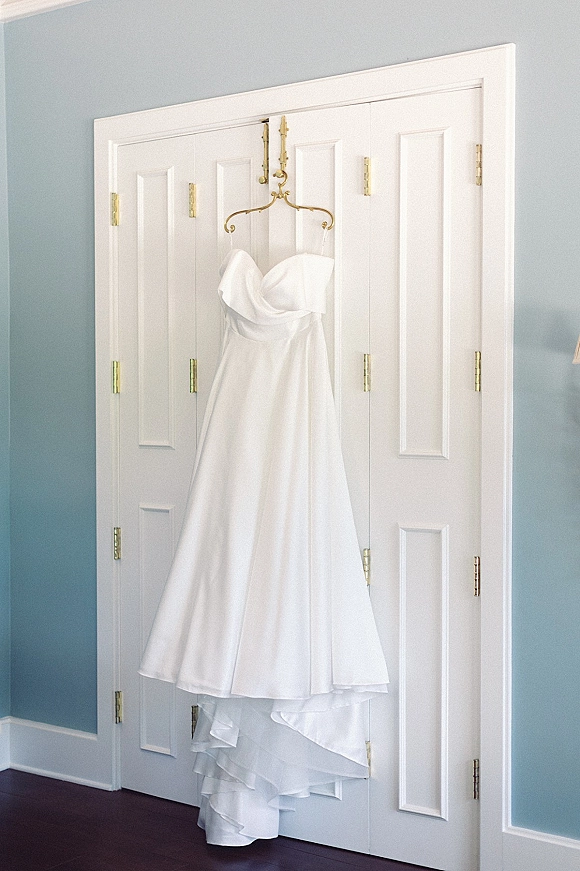
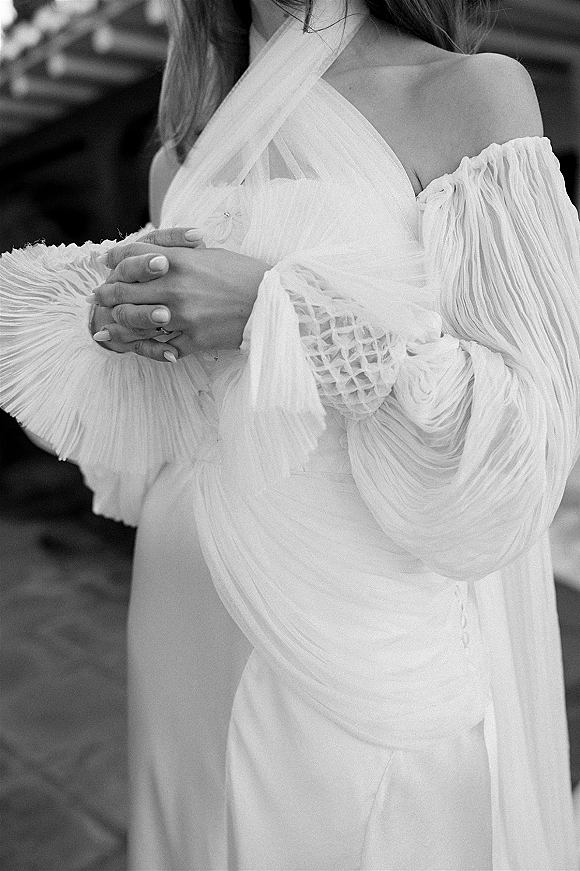
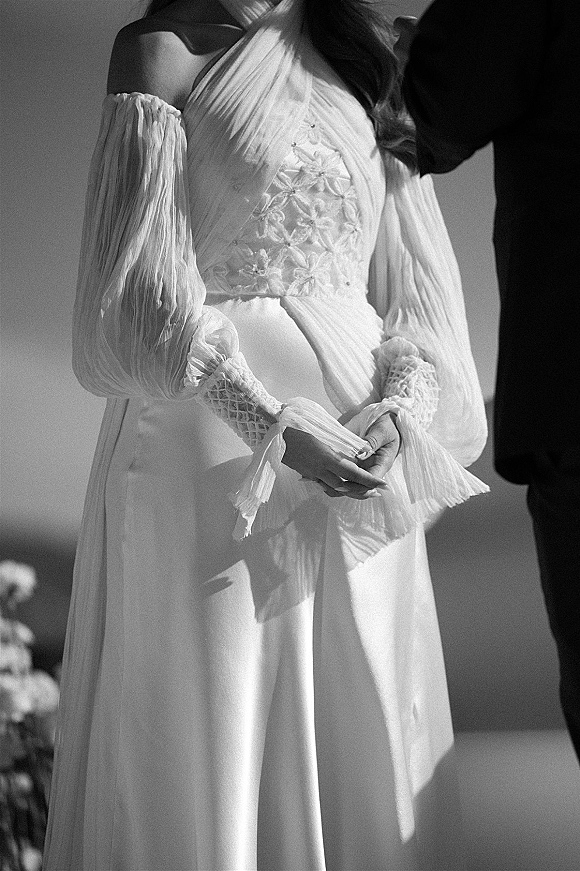
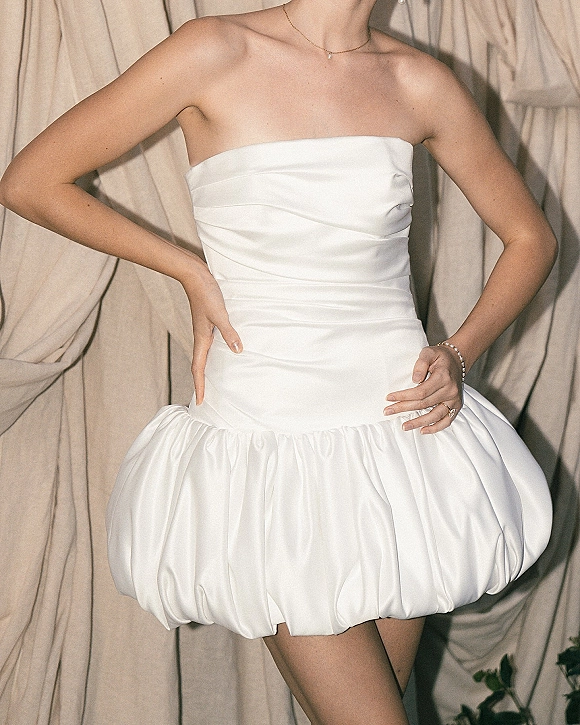
Straps, sleeveless, and detachable options. Spaghetti straps and thin shoulder ties transfer only a little load, so the bodice still has to be structurally self-supporting. Detachable sleeves and off-shoulder cuffs let one gown carry two looks across a ceremony and a reception. For more on sleeve treatments across silhouettes, see wedding dresses with sleeves, and for the bare-shoulder version, strapless wedding dresses.
How Close Is Too Close: The Fit Test
A fitted gown is the one silhouette where trying it on standing still tells you almost nothing. The fit only reveals itself in motion, and the checks below are what separate a gown that holds its line all day from one that gets adjusted every twenty minutes.
Sit, then stand. Sit fully back in a chair, cross the ankles, and stand again without using your hands to pull the dress down. A gown that rides up at the hip or gaps at the bust when you stand is cut too close through the seat.
Take the stairs. Walk up and down a full flight. The release point is right if the stride shortens and stays comfortable. On a mermaid or a low-release trumpet, expect to learn a slightly different step.
Raise both arms. Reach overhead and hug someone. The bodice should stay where it sits.
Breathe against the boning. You should be able to take a full breath and hold a conversation through dinner. A bodice fitted at the absolute limit of a deep inhale will feel considerably tighter after a meal.
Check the hem in the shoes. A fitted skirt has no volume to disguise a hem that is a half-inch long, so the final hem is set in the actual shoes, at the actual heel height.
Simple Fitted Gowns and the Case for Restraint
On a fitted silhouette, the shape is already doing the work, which is why the plainest gowns in this category often read as the most deliberate.
Seams as the only detail. An unadorned crepe column has nothing to look at but its own construction, so the seam placement becomes the design. When the curve of a princess seam follows the body precisely, the gown looks custom whether or not it is.
Where a simple fitted gown belongs. City hall ceremonies, restaurant receptions, second looks, and any setting where the venue supplies the visual complexity. It also travels well, since crepe and stretch satin recover from being packed. The broader case for this approach is in minimalist wedding dresses.
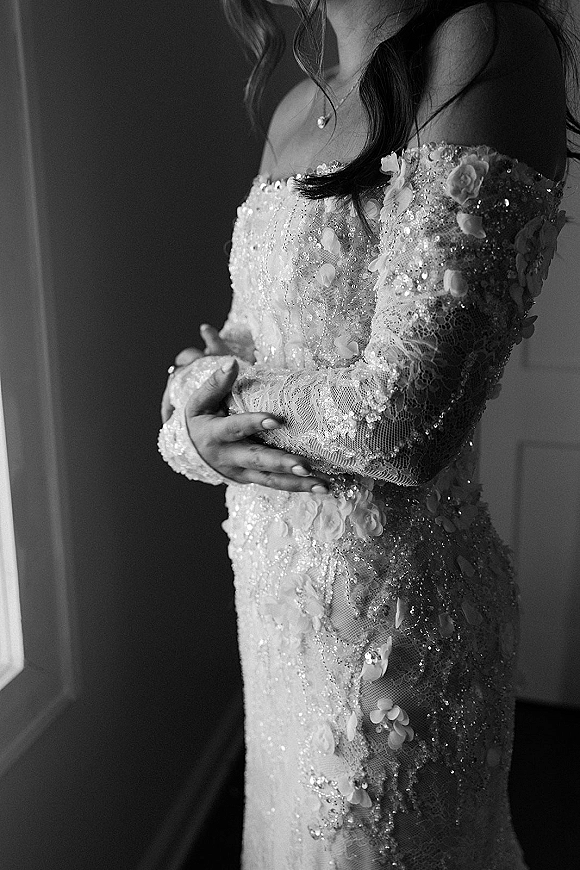
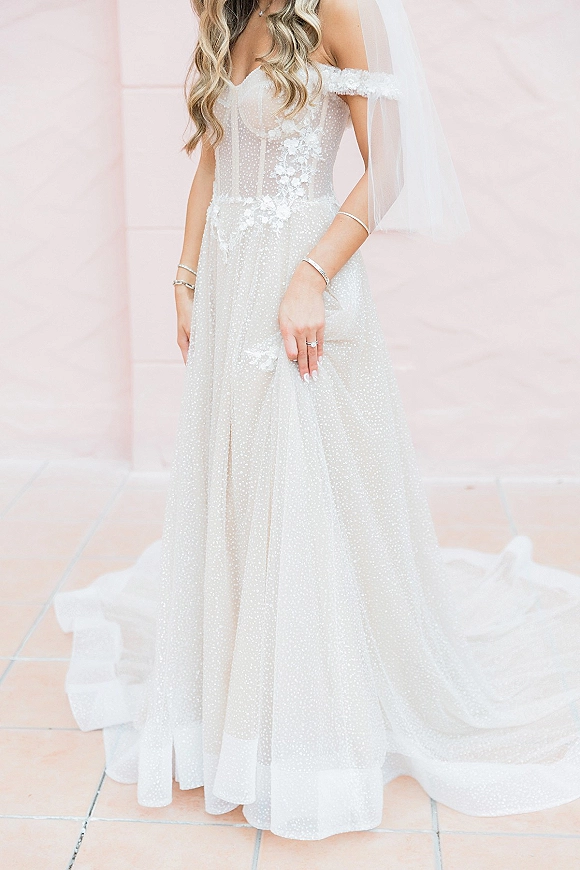
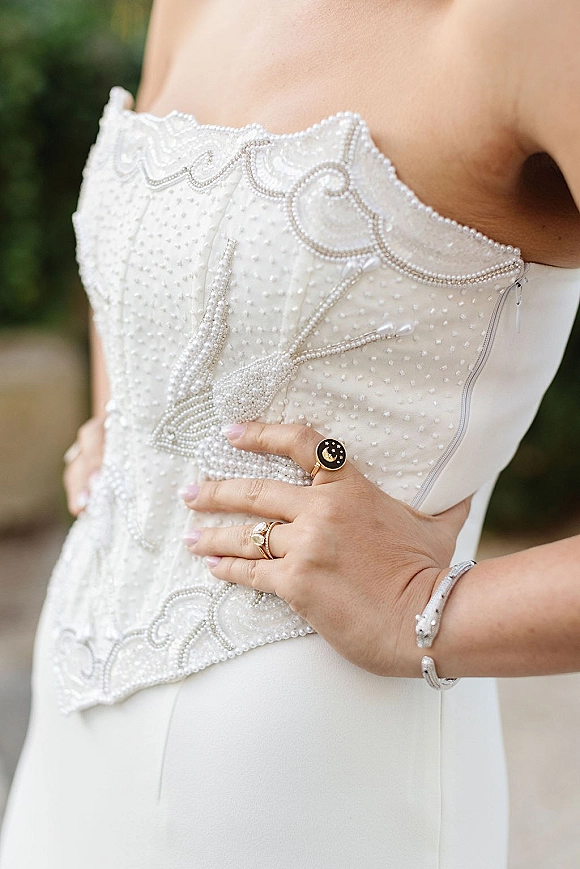
Embellishment, when it earns its place. Beading and sequins on a fitted gown add weight in specific spots, and weight pulls. Allover beadwork needs a substantial foundation beneath it, while a beaded band at the waist or a scattered treatment across the bodice adds shine without dragging the line down. Restraint here is structural as much as stylistic.
How a Fitted Gown Photographs and Moves
A fitted silhouette gives a photographer a defined outline to work with, which changes how the gown is best captured and where it shows up strongest in a wedding gallery.
Profile and full-length frames. The shape only reads when the whole line is in the frame. Close-cropped portraits flatten a mermaid into any other gown, while a full-length shot from a slight angle shows the release point and the curve above it.
Directional light on satin. Duchess satin and mikado catch light along the seams and across the hip, so side light produces the bright vertical highlight that these fabrics are chosen for. Flat frontal light removes it entirely. Crepe does the opposite and holds its color evenly in almost any light.
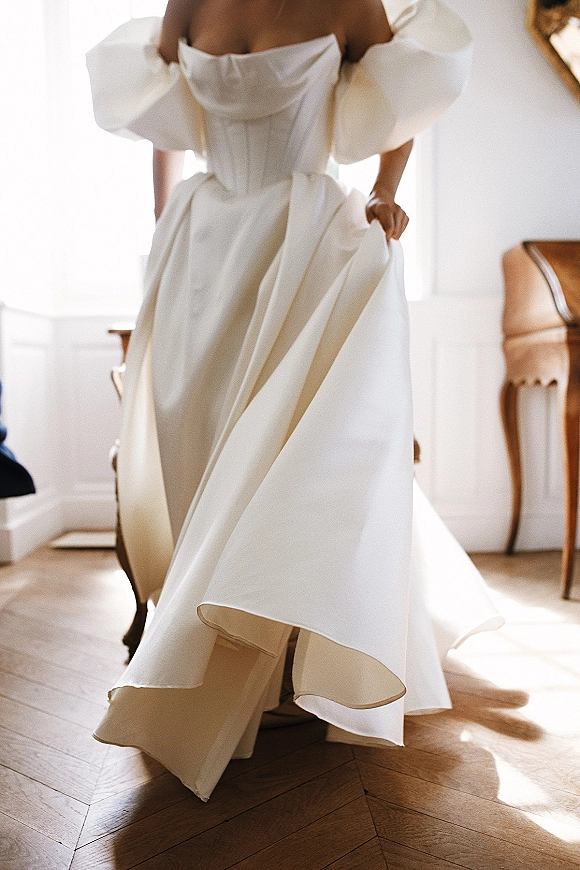
Motion is the whole point. A fitted gown looks static standing still and comes alive walking, turning, and on stairs. The strongest images of these silhouettes in real wedding galleries are almost always mid-movement: the walk back up the aisle, a turn on the dance floor, the skirt swinging out from the release point.
Consider the surface underfoot. A narrow hem sits close to the ground and picks up whatever is there. Lawns, sand, and gravel all show on a fitted skirt sooner than on a fuller one, which is worth knowing before a portrait session heads into a field.
Fitted Gowns Across Body Types and Sizes
A fitted silhouette works on any body, and the variables that make it work are proportional rather than about size.
The release point relative to your height. On a petite frame, a mermaid that releases below the knee shortens the leg line visibly. Moving that release up to a trumpet or fit-and-flare restores the proportion without giving up the fitted shape.
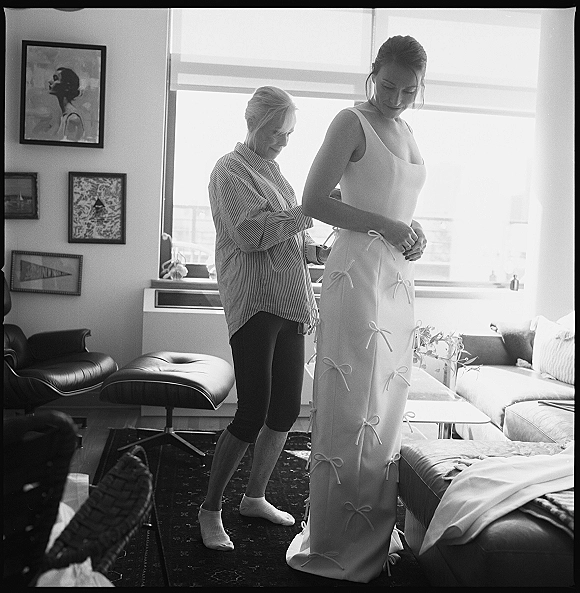
Torso length and waist placement. A long torso needs the bodice seam to sit at the natural waist rather than above it, or the gown reads as though it slipped down. Bodices with more vertical panels give an alterations specialist room to move that seam.
Plus-size fitted gowns. The construction matters more here, not less. A well-boned bodice with a proper inner corselet, generous seam allowances, and substantial fabric holds a clean line where a thin unstructured gown will not. Crepe and structured satin outperform lightweight fabrics for exactly this reason.
Where to start looking. Bridal shops that stock a genuine size range let you try the actual silhouette rather than clipping a sample several sizes off. Browse wedding dress shops and bridal salons to find the ones near you.
Frequently Asked Questions
What is the difference between a fitted and a form-fitting wedding dress?
They describe the same silhouette. Fitted is the term most bridal shops use on a rack or a website, while form-fitting shows up more often in casual conversation. Both mean a gown that follows the body through the bodice, waist, and hip rather than falling away from it.
Do fitted wedding dresses need more alterations than other silhouettes?
Usually, yes. A fitted gown touches the body at more points, so each adjustment has to be precise, and the bodice, waist, hip, and hem often all need work. The upside is that a gown with multiple vertical seams gives a skilled alterations specialist more places to shape it, which means a close-cut dress can end up fitting better than a looser one.
What do you wear under a fitted wedding dress?
Most fitted gowns are built with enough internal structure that a separate bra is unnecessary, and adding one often creates lines. Seamless shapewear that stops well above the hem, or nothing at all under a well-constructed bodice, are the two common answers. Bias-cut charmeuse is the exception, since it shows every edge underneath it.
Can you dance and sit comfortably in a fitted wedding dress?
Yes, with the right release point. A fit-and-flare or trumpet allows a full stride and easy dancing, while a mermaid restricts the step until the skirt opens below the knee. Many brides choose a detachable overskirt or a second look for the reception rather than compromising on the ceremony gown.
Is a fitted wedding dress a good choice for a beach or outdoor wedding?
It works well when the fabric matches the setting. Crepe and lightweight stretch satin hold a fitted line without the weight of a structured ball gown, which makes them comfortable in heat. The consideration is the hem, since a narrow skirt sits close to the ground and picks up sand or damp grass faster than a fuller one.