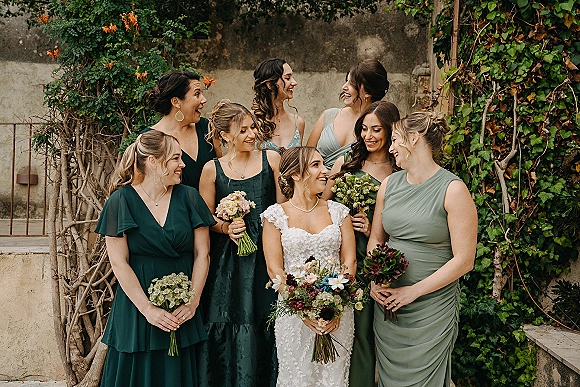
Why Emerald Reads as a Jewel Tone
Emerald is a saturated blue-green with enough depth to sit alongside burgundy, sapphire, and amethyst as a true jewel tone. What gives it that quality is the combination of vivid saturation and a cool blue undertone, which keeps it rich rather than bright. This is the distinction between emerald and a lighter, yellower green: emerald reads as gemstone-deep, which is why it carries the formality of a jewel-tone palette.
That depth is also why emerald photographs so well across lighting conditions. It holds its richness in low evening light where a paler green would flatten, and it reads vivid in daylight without looking washed out, making it a dependable choice for weddings that span an outdoor ceremony and an indoor reception.
Emerald Among the Greens: Versus Sage, Hunter, and Forest
Green covers a wide range, and placing emerald within it helps a party choose the right shade. Sage is soft, muted, and gray-green, the gentle pastel end of the family. Hunter and forest are darker and more muted, leaning toward a deep, earthy green. Emerald sits in the saturated middle: brighter and more jewel-like than hunter or forest, and far richer and cooler than sage. It is the green that reads as a true gemstone.
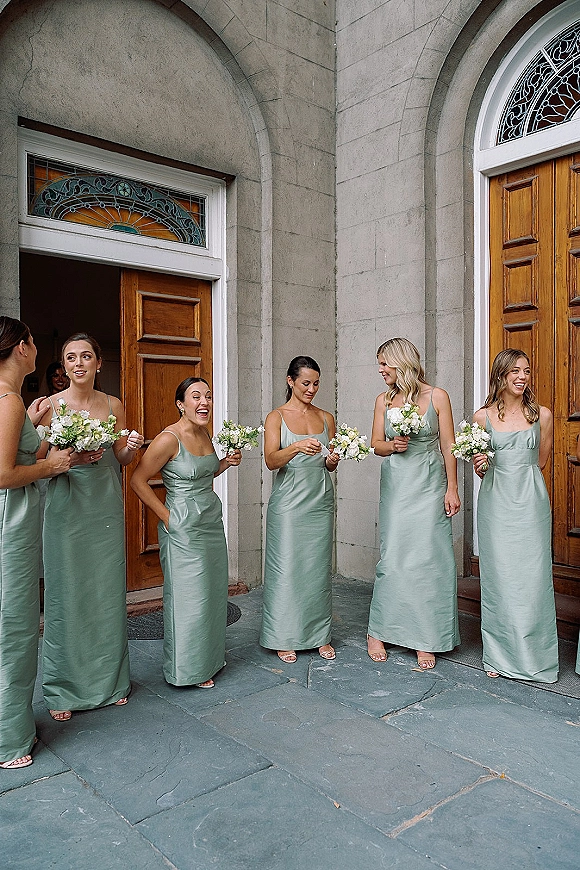
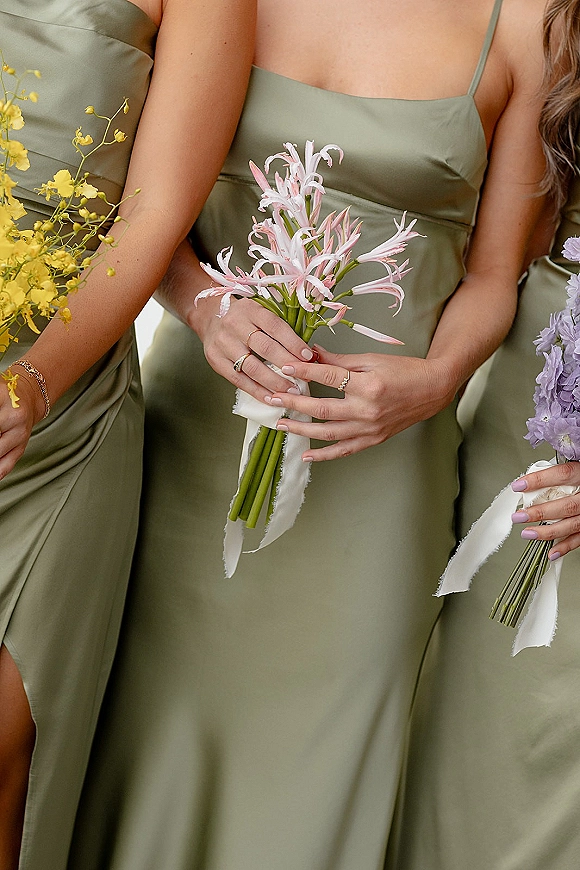
For a party deciding between greens, the choice comes down to mood. A soft, garden palette points toward sage green bridesmaid dresses, while a rich, formal, jewel-tone palette points to emerald. The two even work together in a mixed party, with emerald as the saturated anchor and sage as the soft counterpoint.
Satin Versus Velvet
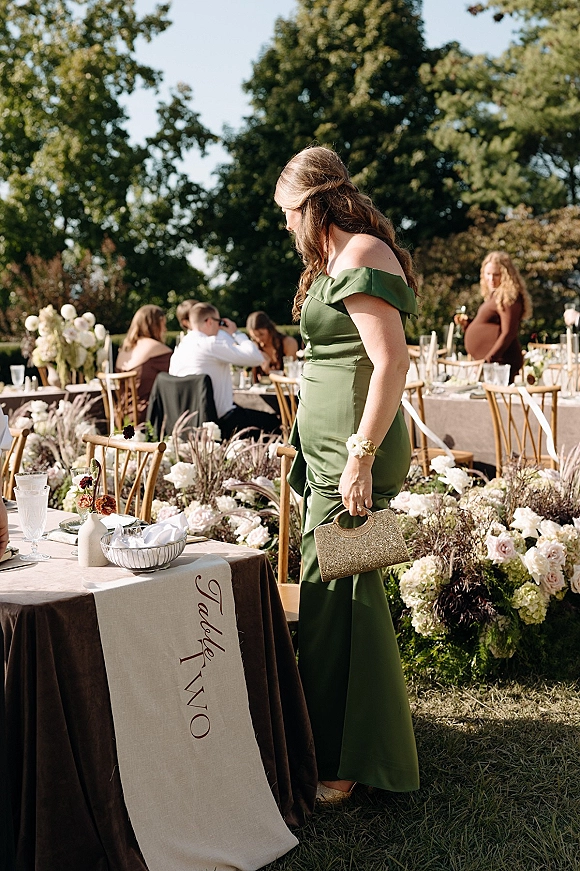
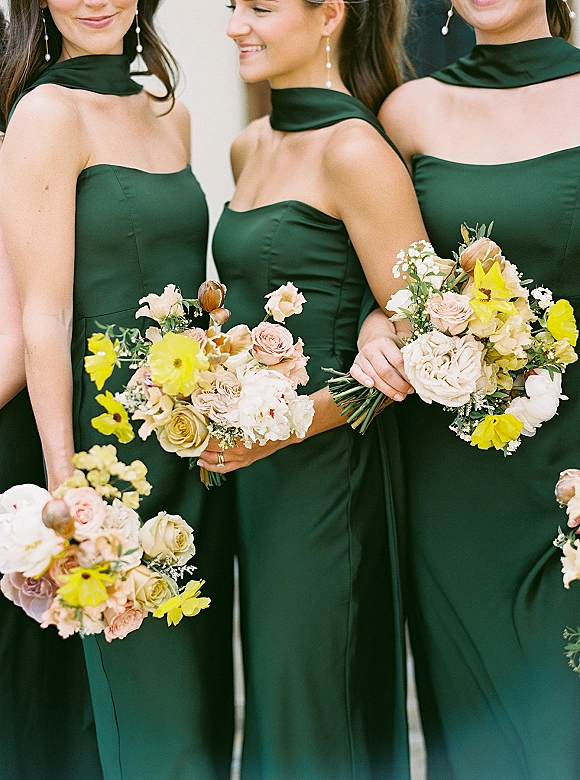
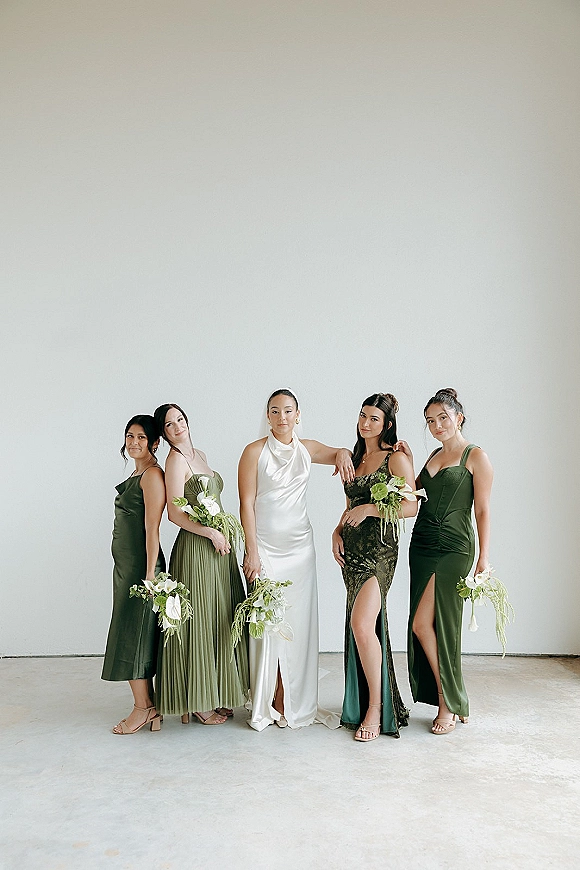
Fabric shapes how emerald reads. Satin gives the color a liquid, light-catching sheen that emphasizes its jewel-tone richness, ideal for formal evening and black-tie weddings. The shine deepens the saturation and gives a floor-length gown real drama. Velvet takes emerald into its most luxurious, winter-ready form, the plush texture absorbing light and deepening the green into something genuinely opulent for cold-weather and holiday celebrations.
Chiffon lightens emerald for warmer settings and outdoor ceremonies, keeping the jewel tone while softening its weight. The choice between these fabrics is largely seasonal, with velvet anchoring winter, satin spanning fall and formal events, and chiffon suiting transitional and warm-weather weddings.
Sleeves and Long Emerald
Because emerald is most popular in cooler months, sleeves suit it naturally. Long-sleeve emerald, especially in velvet or with lace detailing, reads elegant and season-appropriate for fall and winter. Flutter and cap sleeves offer lighter coverage for transitional weather. Floor-length emerald is the most formal expression of the color, the long column emphasizing the gown’s depth and richness.
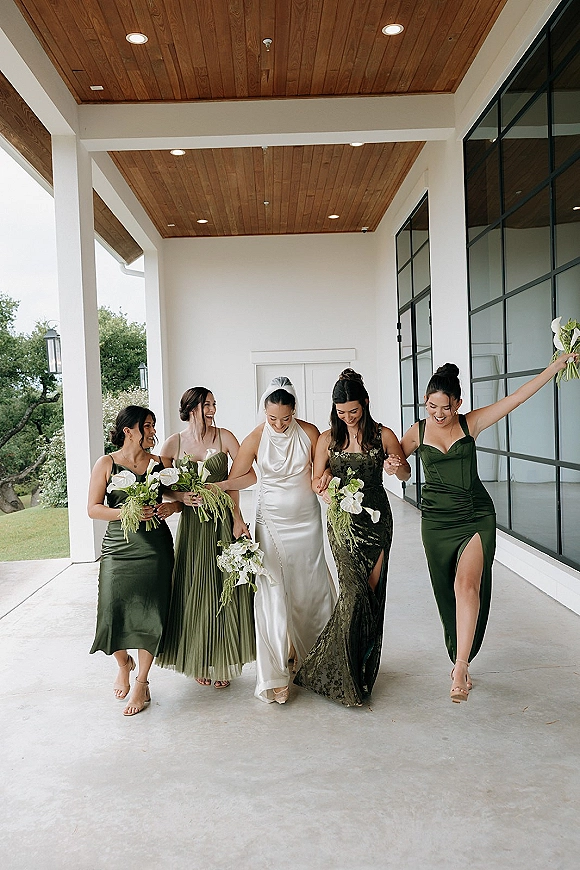
For a party with varied preferences, emerald carries mixed sleeve lengths well. The saturation holds the group together, so a lineup combining long-sleeve, cap-sleeve, and sleeveless emerald still photographs as one cohesive jewel-tone party.
Dark Emerald and Plus Size
Dark emerald deepens the shade toward its richest, most dramatic form, nearly bottle-green, suited to the most formal evening and winter weddings. Emerald is also a confident choice for a party with a range of body types: the saturated, cool-toned shade is naturally slimming and widely available in extended and plus sizes. The color reads consistently across silhouettes, so an A-line, a wrap, and a mermaid emerald gown coordinate without effort.
This range makes emerald a strong mix-and-match base. With the jewel tone carrying the cohesion, each bridesmaid can choose a silhouette that flatters her while the party reads unified.
Floral Emerald and Season
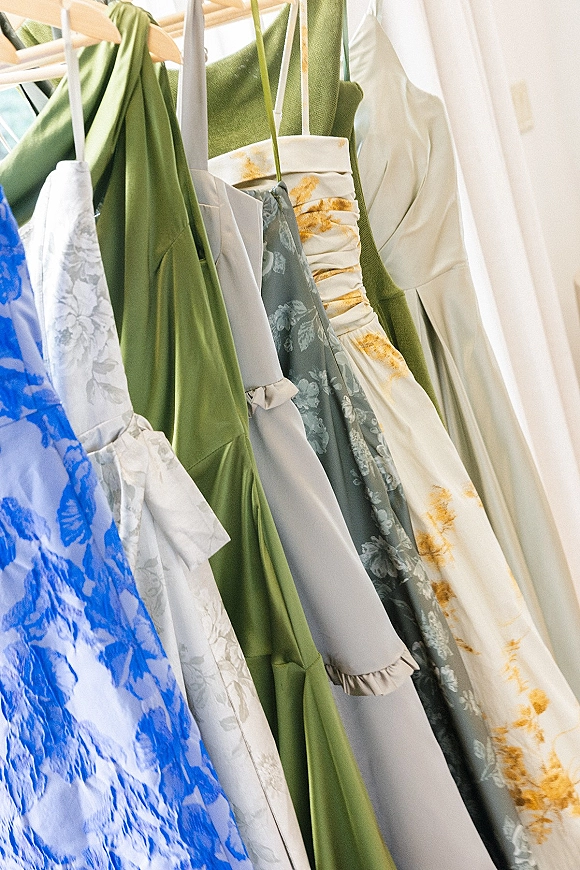
Emerald floral and printed dresses break up the solid jewel tone with pattern, working well for parties that want richness with a softer, organic feel. An emerald-ground floral suits garden and transitional weddings and pairs naturally with solid emerald gowns in a mixed party. Season-wise, emerald is the definitive fall, winter, and holiday green, its richness echoing evergreen foliage and reading warm and luxurious against cold-weather light.
While emerald can work in spring with lighter chiffon, its natural home is the cooler half of the year, where the deep green looks most intentional and the heavier fabrics it suits best are most comfortable.
Necklines and Silhouettes That Suit Emerald
Emerald carries dramatic necklines especially well because the saturated color rewards a clean, strong line. A plunging or halter neckline in emerald satin reads bold and formal, while an off-the-shoulder or one-shoulder cut adds structure without competing with the jewel tone. Cowl-back and open-back silhouettes use the fabric’s drape to show the color’s depth in motion.
Because emerald is rich enough to stand on its own, it suits both minimal and detailed gowns. A simple satin column lets the color speak, while a velvet gown with lace sleeves leans into winter opulence. For a mixed-silhouette party, the saturation holds the group together, so varied necklines still read as one cohesive jewel-tone lineup.
How Emerald Photographs in Different Light
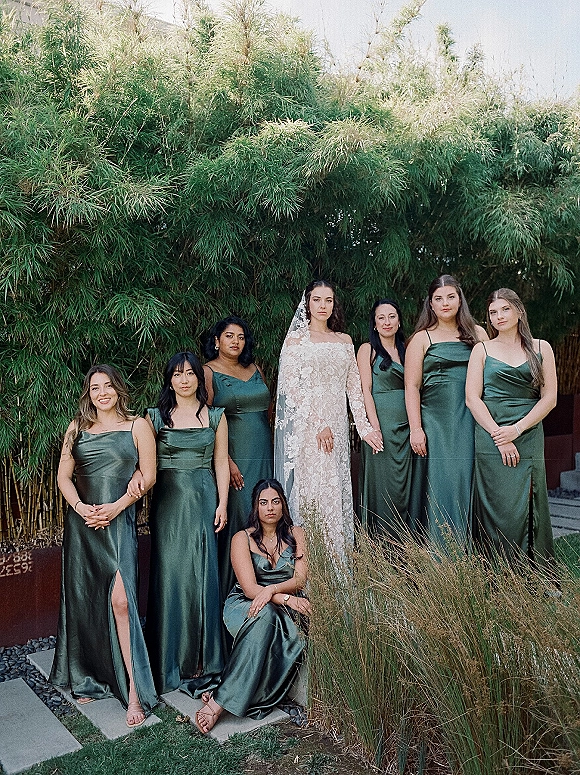
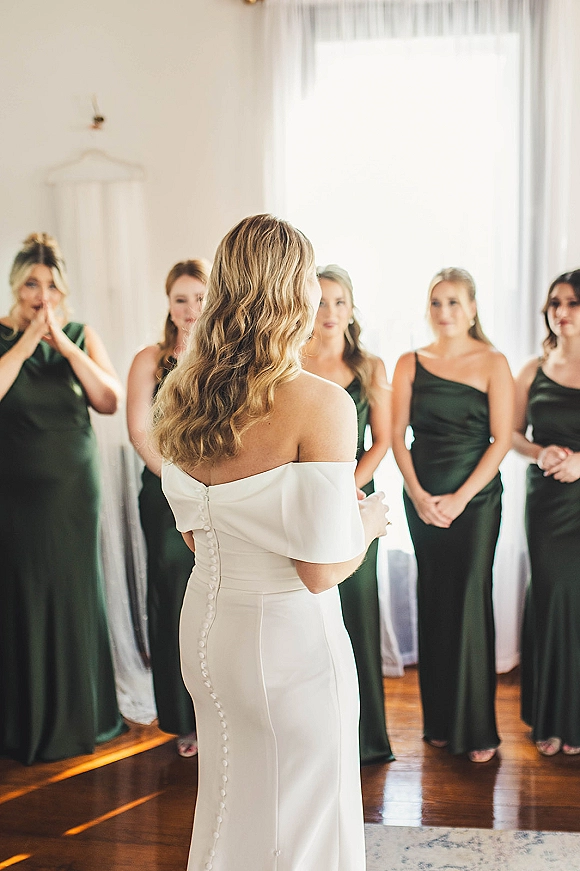
Emerald is one of the most dependable bridal-party colors in photographs because its saturation holds across lighting. In daylight it reads as a vivid, clear blue-green against stone, greenery, and neutral backdrops. In lower evening light it deepens richly without losing its color, where a paler green would flatten, which is why emerald suits weddings that move from an outdoor ceremony to an indoor reception.
The cool blue undertone keeps emerald from going muddy in warm reception lighting, holding its gemstone quality under candlelight and string lights. The main consideration is pairing it with greenery backdrops, where a vivid emerald can blend into foliage in photographs, so positioning the party against neutral or stone backgrounds keeps the gowns distinct.
Matching Emerald Across the Party
Emerald is fairly forgiving to coordinate because its saturation hides minor dye and fabric variation, but the green family is wide enough that attention helps. A true emerald, a dark emerald, and a near-hunter green ordered from different lines can read as different greens side by side, so matching every gown to one physical swatch keeps the party clearly emerald rather than a mix of greens.
Fabric shifts the read noticeably: emerald in satin looks brighter and more jewel-like, while the same dye in matte velvet reads deeper and richer. A party mixing fabrics should expect this tonal range, which usually reads as intentional dimension, but a single-shade party is most cohesive when anchored to one fabric and swatch.
Flowers and Bouquets for an Emerald Party
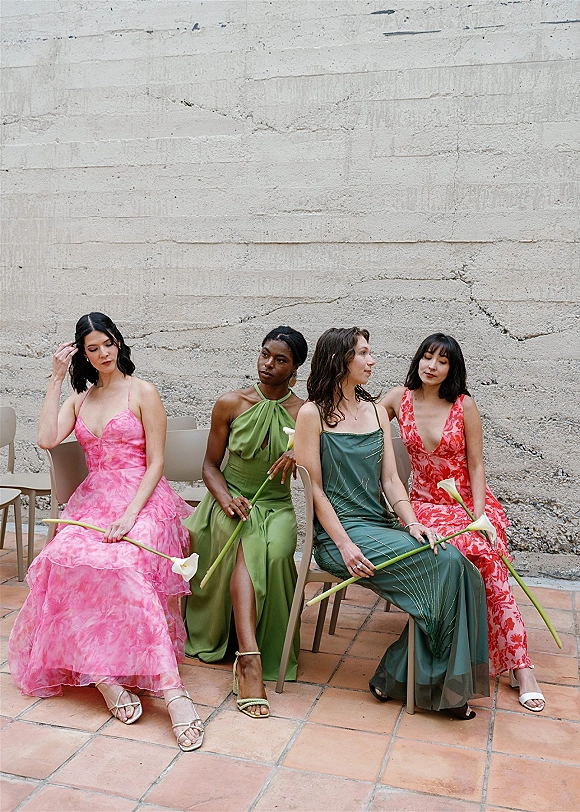
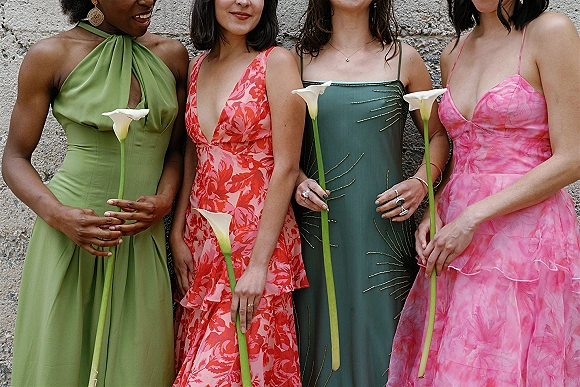
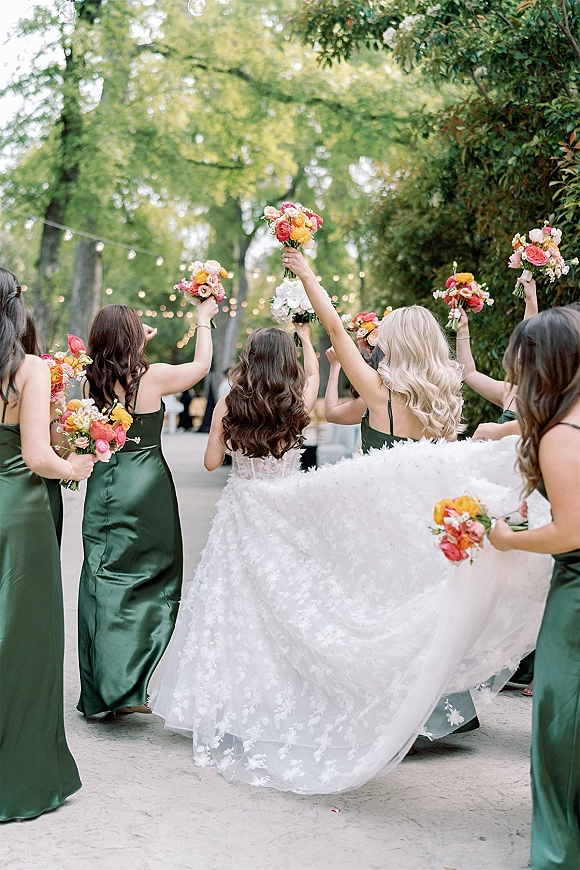
Emerald creates a luxurious backdrop that suits both crisp and dramatic floral choices. White and cream blooms read elegant and high-contrast against the deep green, the classic emerald-and-ivory pairing. Blush and pink soften the jewel tone for a romantic look, while deep florals in burgundy, plum, and deep red create a rich, holiday-ready palette against the emerald.
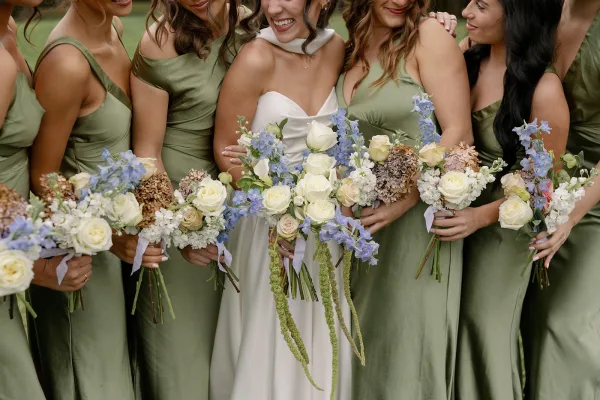
Greenery is a natural extension of emerald rather than a contrast, so florists often lean on white and jewel-tone blooms to provide the focal color while greenery ties the bouquet to the gowns. Touches of gold in the bouquet ribbon or accents reinforce the warm-metallic pairing emerald suits best for fall and winter weddings.
Emerald Across the Wider Wedding Party
Emerald anchors a whole-party palette beautifully for a fall, winter, or holiday wedding. Groomsmen in charcoal, navy, or black suiting with emerald ties or pocket squares tie directly to the gowns, and the jewel tone reads festive against formal suiting. Mothers can wear emerald or related deep tones without clashing, and flower girls in white, ivory, or soft green blend into the lineup.
This whole-party reach makes emerald a strong anchor for celebrations that want one rich color across every role. The shade pairs with the gold and deep-toned accents the rest of the party is likely to wear, keeping the jewel-tone palette consistent from the ceremony through the reception.
Emerald for a Holiday or New Year’s Wedding
Emerald is a favorite for holiday and New Year’s weddings, its rich jewel-green reading festive against winter interiors, candlelight, and metallic decor. Paired with gold, the deep green creates a classic holiday palette, while velvet emerald adds the seasonal texture that suits a December celebration. The color carries the festive mood through depth rather than novelty.
For a New Year’s wedding, emerald and gold together read glamorous and celebratory, especially in satin or sequined fabrics that catch the light. Add deep-red or burgundy accents and the palette becomes unmistakably festive, which is much of why emerald is a go-to for weddings in the holiday season.
Choosing Your Emerald Shade for the Palette
Emerald spans from a brighter, more vivid jewel-green to a deep, near-bottle green, and the choice sets the formality. A brighter emerald reads vivid and modern, holding its color well in daylight and against neutral backdrops. A darker emerald leans toward the depth of a forest tone for the most formal evening and winter weddings, where the richness suits the season.
The decision depends on season and setting, but consistency is what keeps a party cohesive. Because the green family is wide, matching every gown to one swatch keeps the lineup clearly emerald rather than drifting toward hunter on one dress and bright green on another.
Jewelry, Hair, and Shoes With Emerald
Emerald is one of the most rewarding bridal-party colors for metallics, since gold, rose-gold, and silver all read beautifully against the deep green. Gold brings out the warmth and reads classic and festive, while silver keeps the palette cool and modern. Statement jewelry stands out against the rich backdrop, and the jewel tone pairs naturally with gemstone accents.
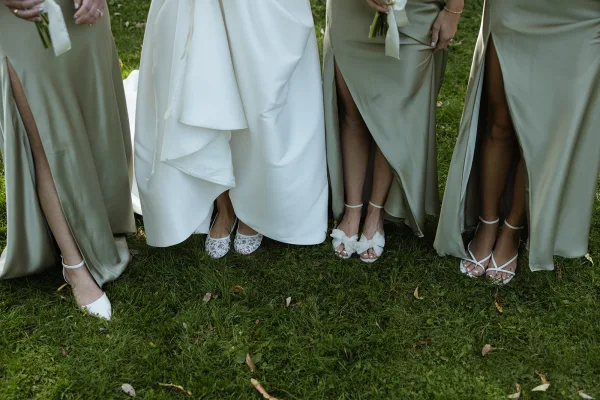
For shoes, metallic gold, nude, and ivory tones let the color carry the look, with nude elongating the leg under a floor-length gown. Emerald flatters both bold beauty looks and soft neutrals, and it suits polished updos as well as romantic styling, giving each bridesmaid latitude while the saturated color holds the lineup together.
Emerald Across Formal and Relaxed Settings
Emerald carries across both formal and relaxed weddings while keeping its jewel-tone richness. It reads black-tie luxurious in a ballroom, festive at a holiday celebration, and grounded at an estate or garden wedding, with the saturation adapting through fabric rather than losing its depth. Satin and velvet lean formal, while chiffon softens the green for a less structured setting.
This range lets one rich green anchor widely different celebrations, from a glamorous evening reception to an outdoor autumn ceremony. The depth of emerald keeps it reading intentional and luxurious whatever the formality, which is part of why it has become such a dependable jewel tone for fall and winter weddings.
Emerald Beside the Bridal Gown and Fit Across the Party
Emerald is a striking backdrop for a white or ivory bridal gown, the saturated jewel-green creating a rich, high contrast that makes the bride stand out clearly. The classic emerald-and-ivory pairing reads festive and formal, suiting the fall and winter weddings where the color is most at home. The depth of emerald keeps the bride distinct while adding genuine color around her.
Across a party, emerald flatters a range of body types because its saturation is naturally slimming and reads consistently across silhouettes. A structured satin column reads sleek, a velvet long-sleeve gown suits cooler weather and more coverage, and a flowing chiffon A-line works for warmer settings, all in the same jewel tone. Holding the emerald constant while varying the cut keeps a mixed party cohesive and rich.
Styling an Emerald Bridal Party
Emerald pairs beautifully with metallic accessories in gold, rose-gold, and silver, with gold bringing out the warmth and silver keeping the palette cool. Neutral and ivory shoes let the color shine. For bouquets, emerald creates a rich backdrop for white and cream blooms, blush for contrast, or deep jewel-tone florals in burgundy and plum for a holiday-ready palette, with plenty of greenery as a natural extension of the shade.
As a jewel tone, emerald layers naturally with other deep colors. It sits richly alongside burgundy bridesmaid dresses for a classic holiday scheme and grounds beautifully against navy blue bridesmaid dresses in a deep palette. To see complete emerald parties at real weddings, browse the galleries above, then explore designers through the bridesmaid dress vendors directory.
Frequently Asked Questions
What is the difference between emerald, sage, and hunter green bridesmaid dresses?
They sit at different points in the green family. Sage is a soft, muted, gray-green pastel. Hunter and forest are dark and earthy. Emerald is the saturated, jewel-tone middle, a vivid blue-green that reads richer than sage and brighter than hunter. Emerald is the green that reads as a true gemstone.
What season is best for emerald green bridesmaid dresses?
Emerald is the classic fall, winter, and holiday green. Its rich, saturated depth suits cold-weather weddings, and heavier fabrics like velvet read luxurious in winter. It can work in spring with lighter chiffon, but its natural home is the cooler half of the year.
What accessories go with emerald green bridesmaid dresses?
Metallics are the go-to: gold and rose-gold bring out the warmth, while silver keeps the palette cool and crisp. Neutral or ivory shoes let the color shine. For florals, white and cream blooms, blush, or deep jewel tones like burgundy all complement emerald.
Does emerald green flatter all skin tones?
Emerald is widely flattering thanks to its cool blue undertone and depth, which works across a broad range of complexions without washing anyone out. Its saturation is also naturally slimming, making it a reliable choice for a party with varied skin tones and body types.
Is satin or velvet better for emerald green bridesmaid dresses?
It depends on the season and formality. Satin gives emerald a liquid, jewel-tone sheen for formal and evening weddings. Velvet is the winter choice, its plush texture deepening the green into something opulent for cold-weather and holiday celebrations. Chiffon lightens the shade for warmer and outdoor settings.