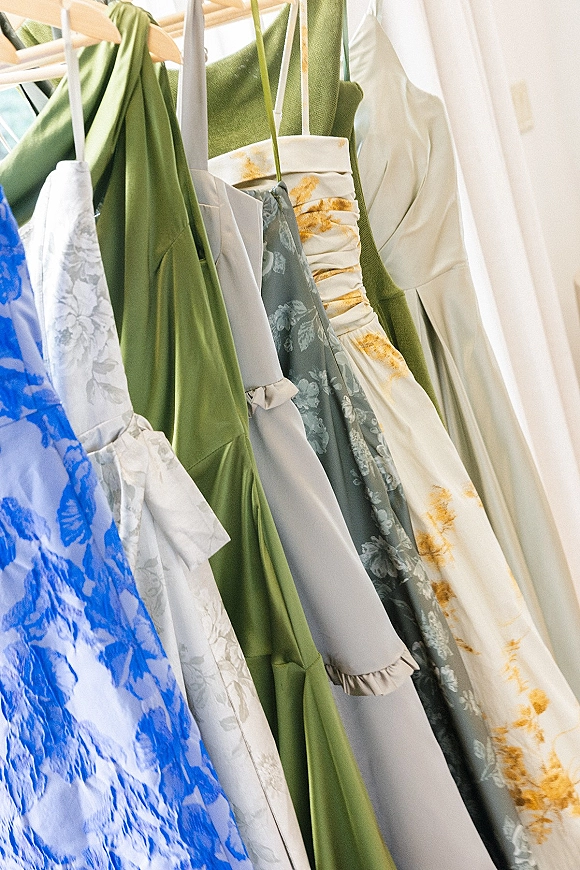
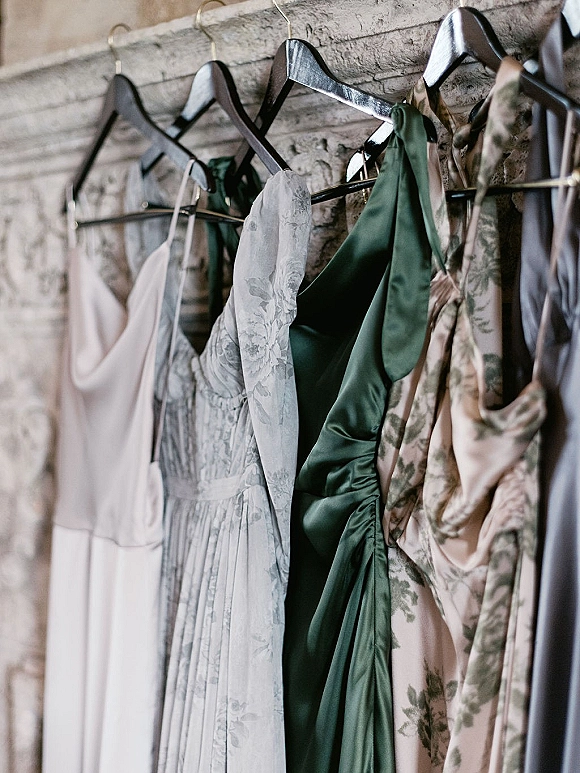
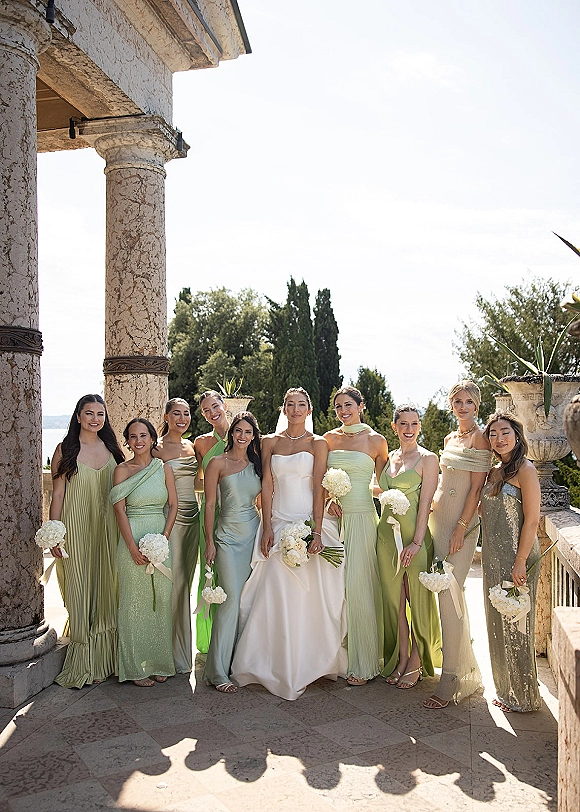
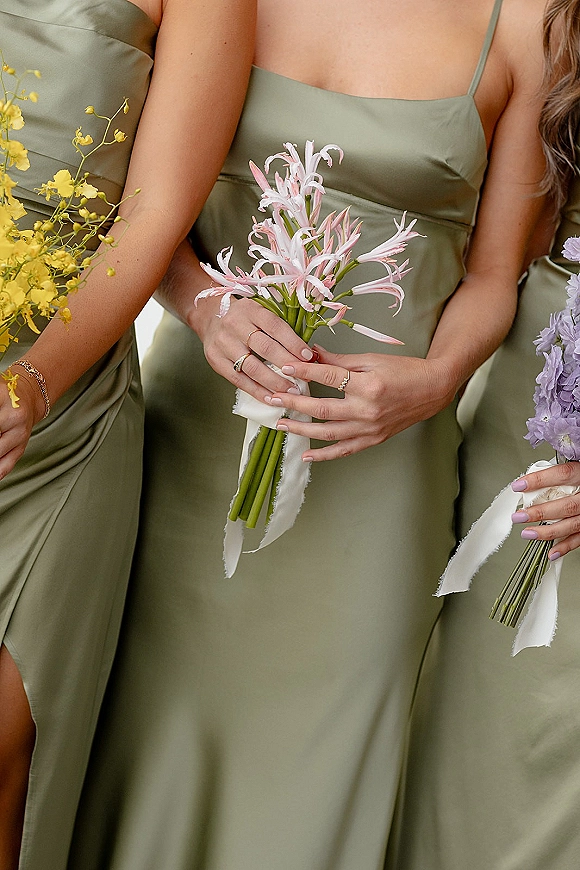
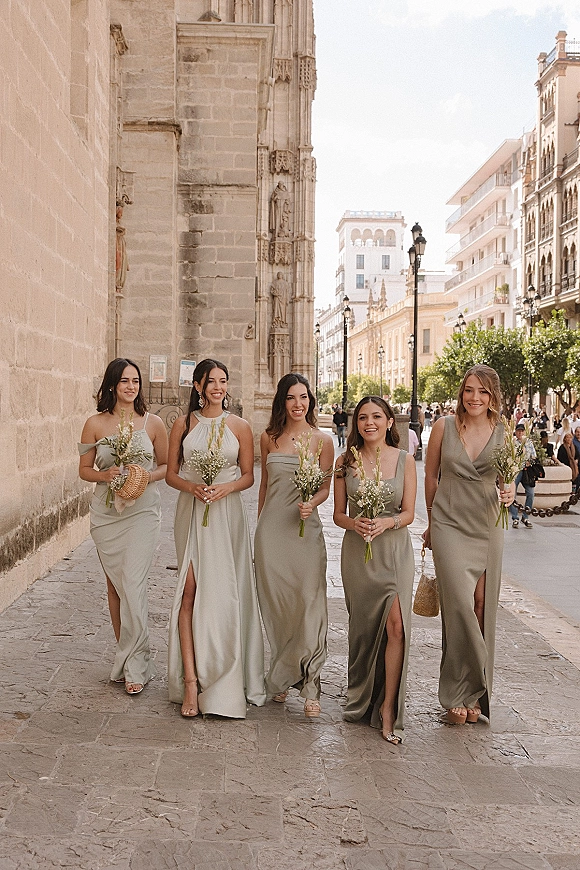
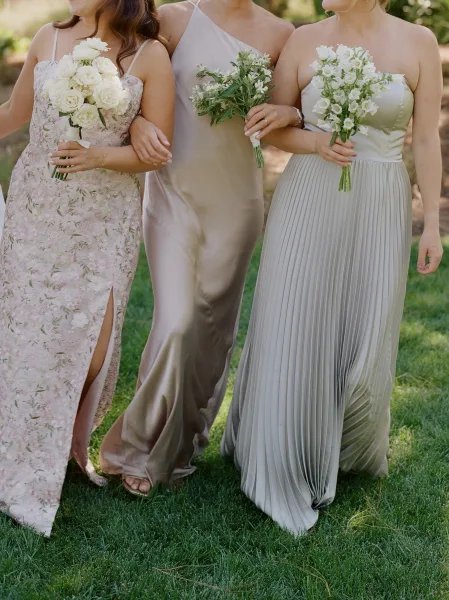
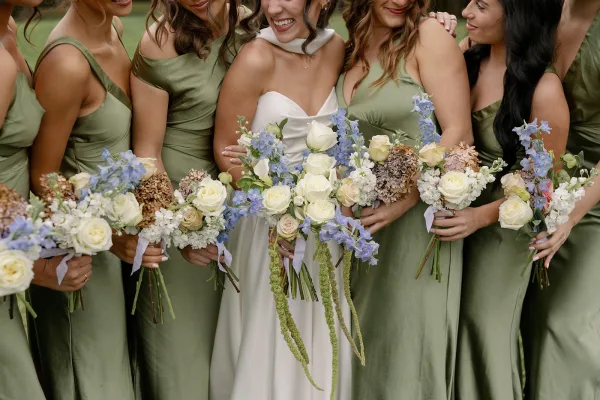
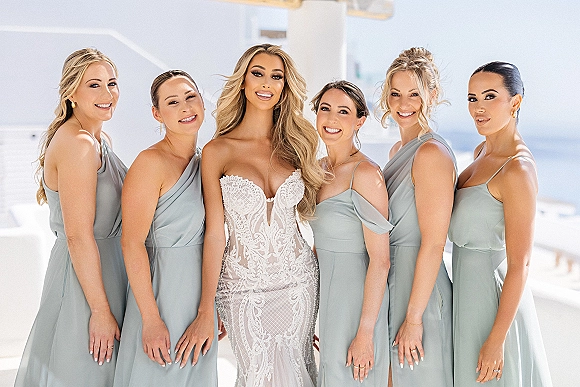
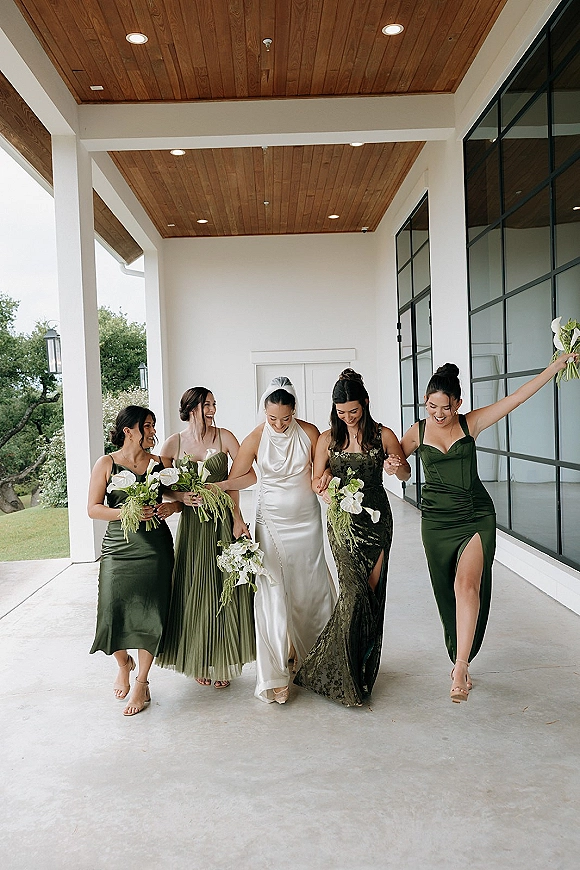
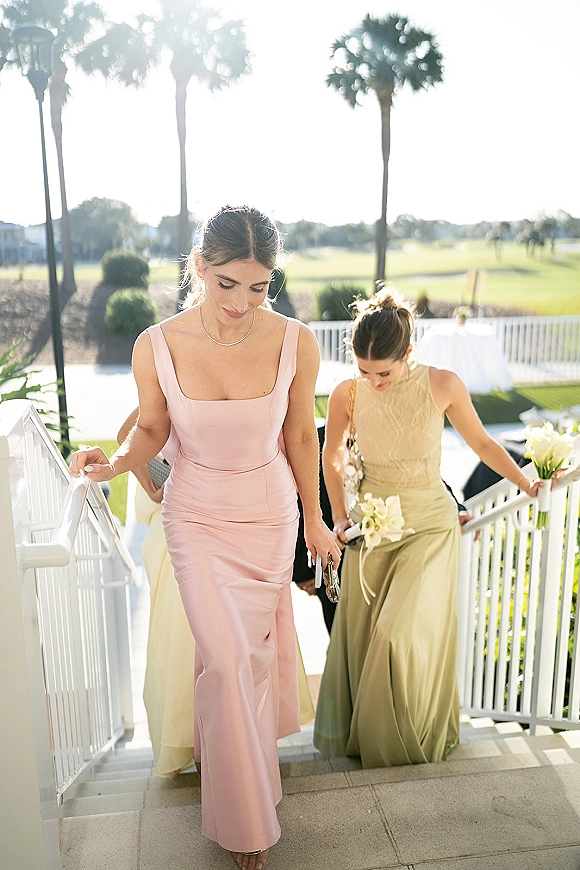
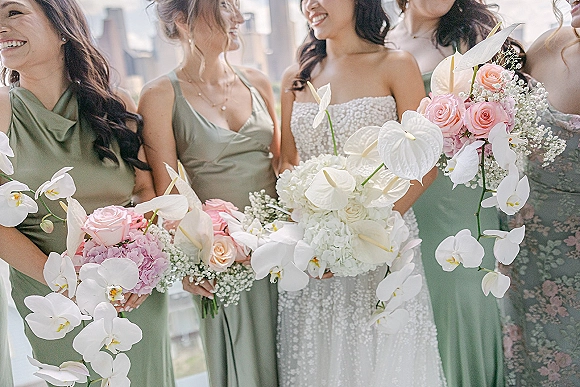
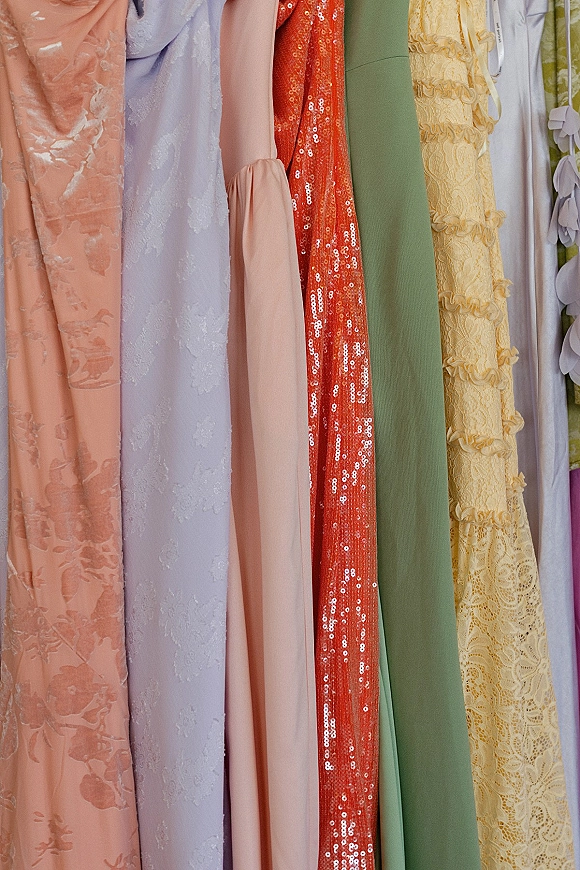
The range within the sage family is wider than it first appears. There’s a cooler, grayer interpretation close to eucalyptus, a warmer yellow-toned version that edges toward moss, and dusty sage, which carries enough gray to read almost neutral in certain light. What they share is desaturation: the absence of the intensity that separates sage from emerald or hunter.
Satin Sage Green Bridesmaid Dresses
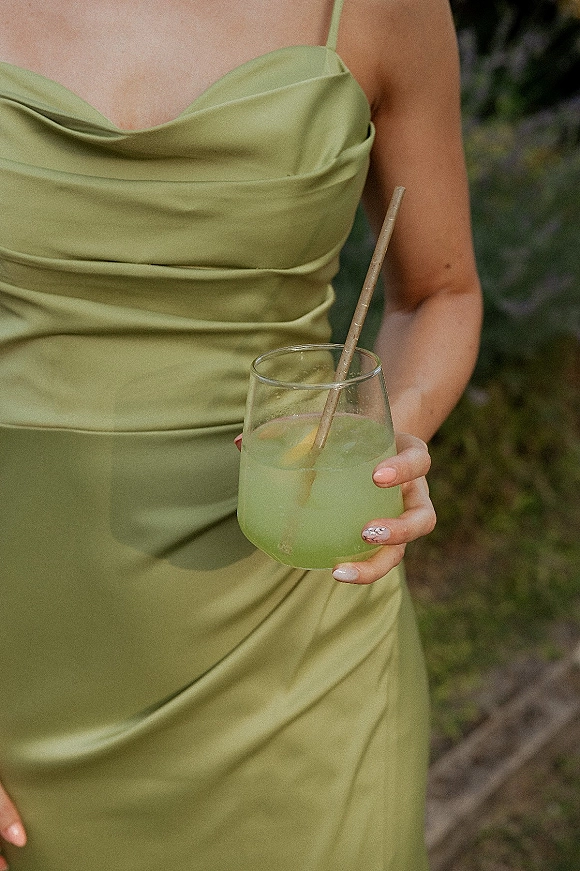
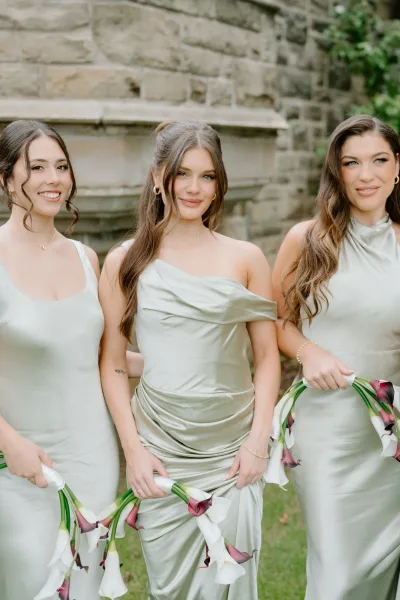
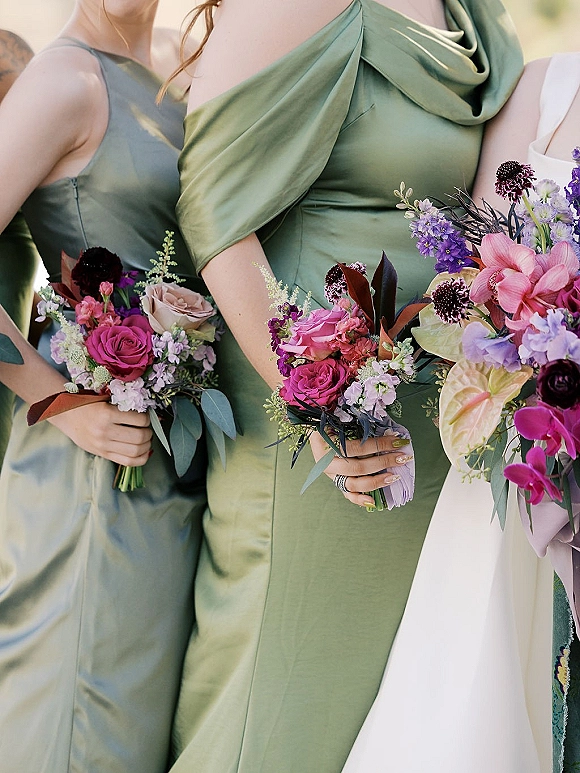
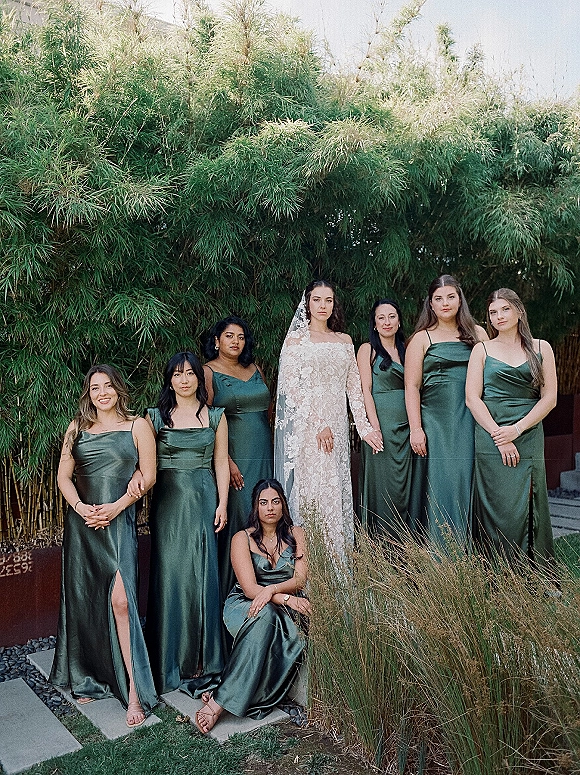
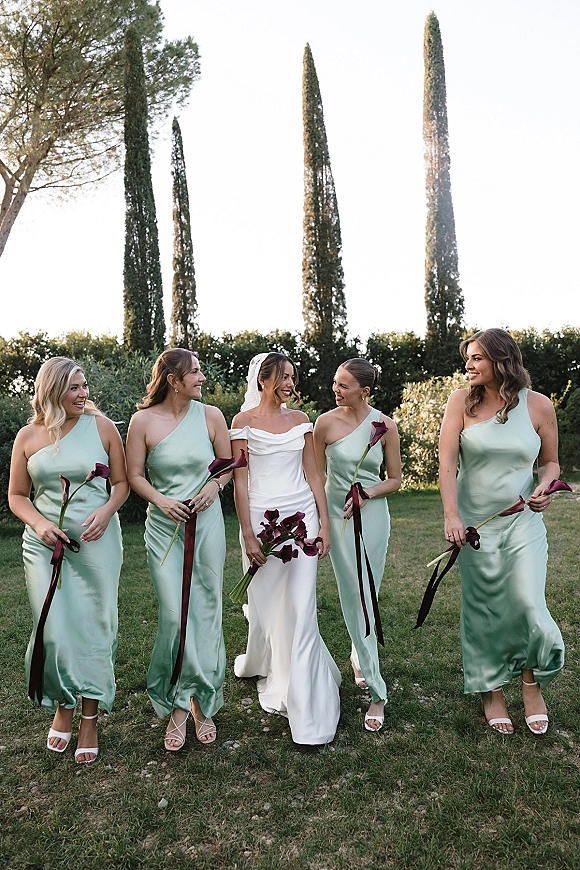
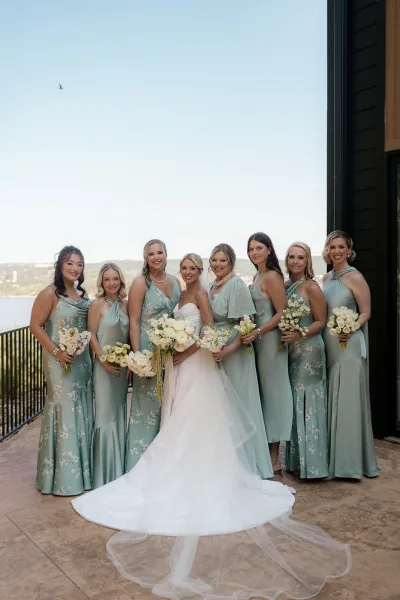
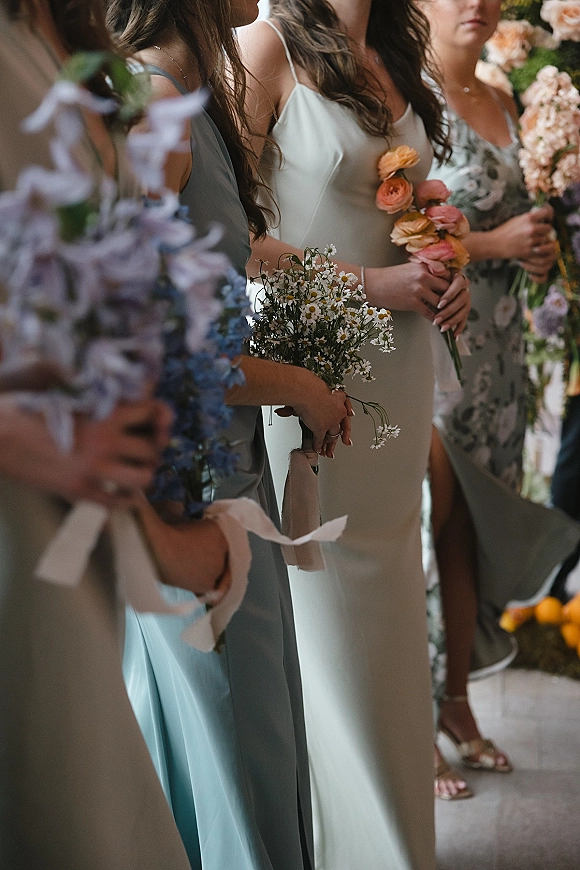
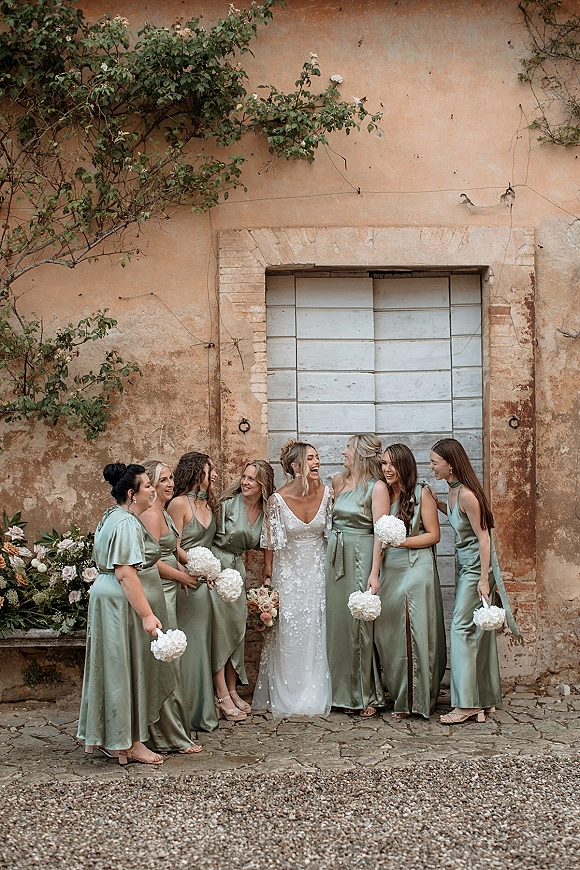
Satin is the most searched fabric in this color category, and real weddings show why the combination works. Sage green in satin has a luminosity that photographs softly. The muted tone takes the edge off the reflective surface, so the result reads as polished without flash. A satin slip silhouette in sage, whether bias-cut or straight, is the most consistent look across real bridal parties in this color.
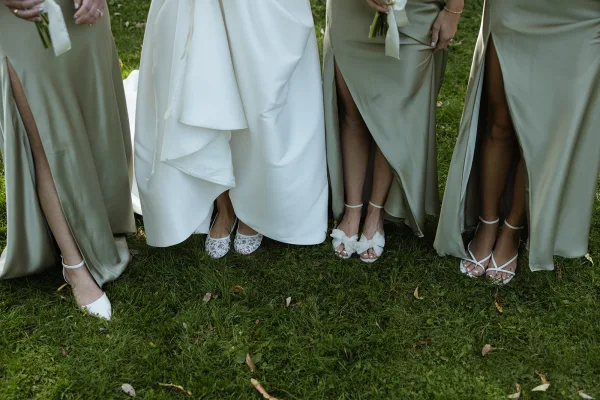
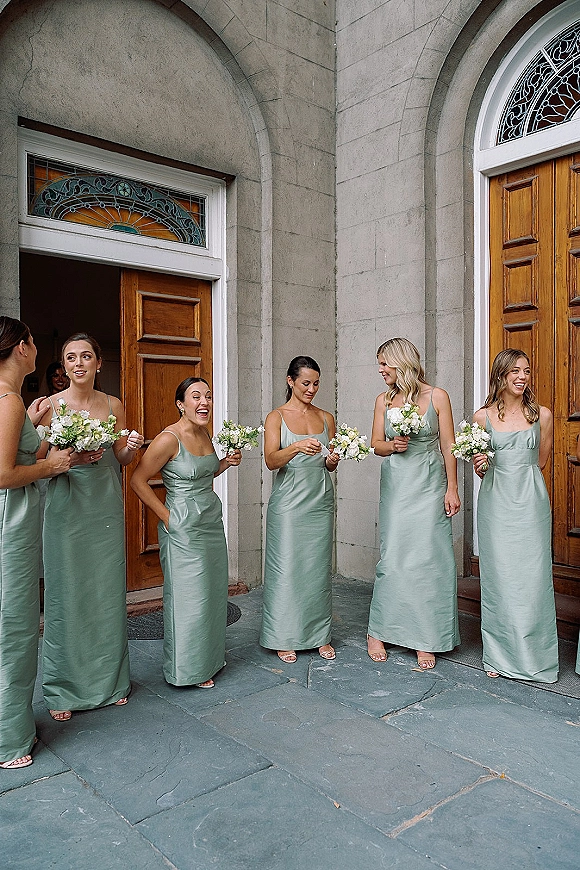
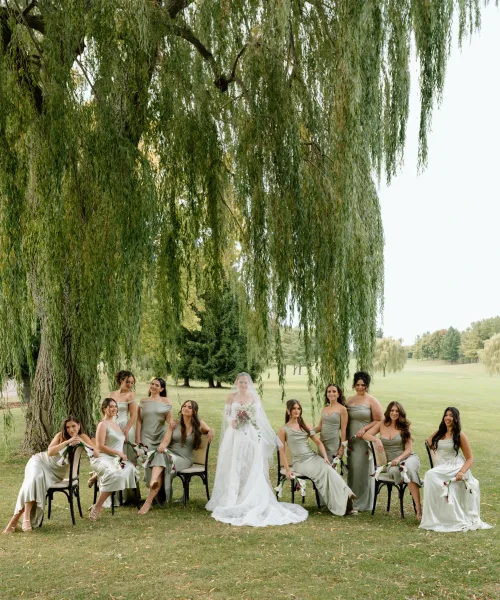
Cowl neck, square neck, and off-the-shoulder are the neckline variations that appear most often, each shifting the character slightly: the cowl has movement, the square neck has structure, the off-the-shoulder has a romantic quality. In group photography, satin sage green is one of the more cohesive choices a bridal party can make. The fabric uniformity and the color’s neutrality work with nearly any floral choice and venue type, which is part of why it appears in everything from garden ceremonies to formal ballroom receptions. Floor-length satin is the predominant look in real wedding submissions, though tea-length cuts appear in less formal settings and photograph with the same polish.
Chiffon Sage Green Bridesmaid Dresses
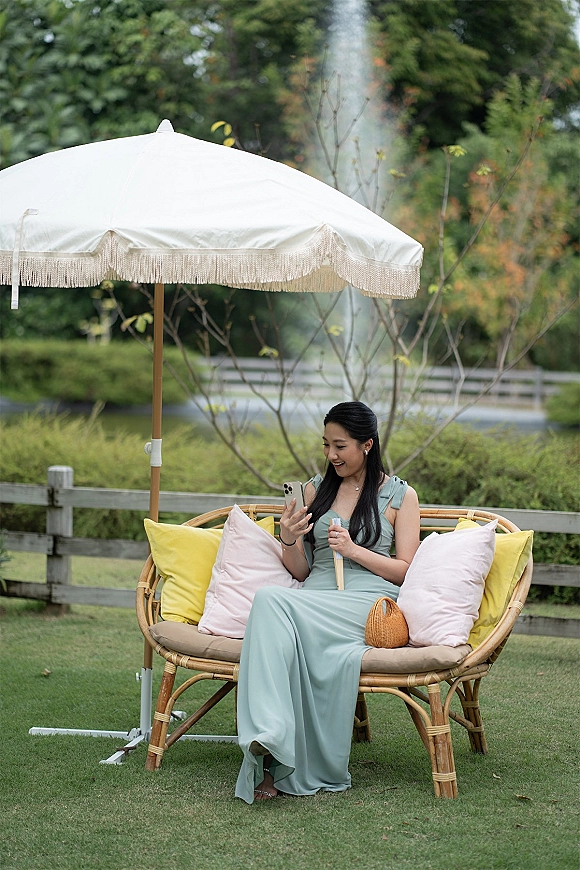
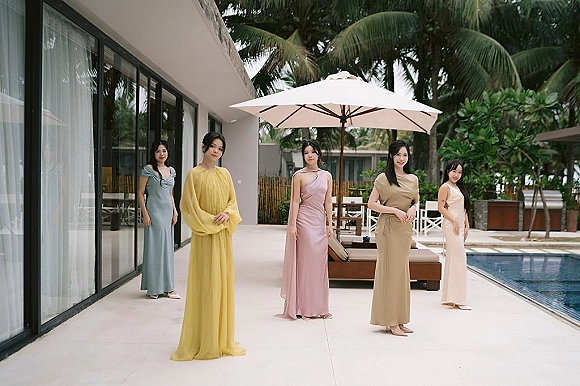
Chiffon is the lighter counterpart to satin: less polished, more movement, better suited to outdoor and daytime settings. The fabric’s natural transparency works with natural light rather than against it, and in ceremony footage a chiffon sage dress catches the light and the breeze in a way satin cannot.
For summer weddings and garden ceremonies, the practical case for chiffon is also real. The lighter weight makes a material difference for bridal parties spending extended time outdoors. A chiffon sage bridesmaid dress in an A-line or flowy silhouette with a ruched or gathered skirt creates more volume than the slip-style satin cut, which suits bridal parties where uniformity of silhouette matters less than color and fabric consistency. Chiffon in motion photographs with softness that suits the relaxed, editorial wedding aesthetic that has dominated the past several years.
Dusty Sage Bridesmaid Dresses
Dusty sage deserves its own section because it behaves differently from the brighter end of the sage spectrum. It’s heavily greyed; in some light conditions it reads as a warm neutral rather than a green, particularly in golden hour outdoor photography. That neutrality is part of the appeal: dusty sage suits fall ceremonies, desert settings, and venues where a softer, more muted palette suits the surroundings better than a color with more presence.
Paired against a warm ivory or champagne bridal gown, dusty sage has a particular harmony. Against pure white, the gray undertone can read as slightly dull rather than deliberately muted, which is worth testing in fabric swatches before committing. For reference on how dusty rose, a color in the same muted, desaturated family, photographs across real bridal parties, the dusty rose bridesmaid dresses collection offers useful comparison across palette and fabric.
Floral Sage Green Bridesmaid Dresses
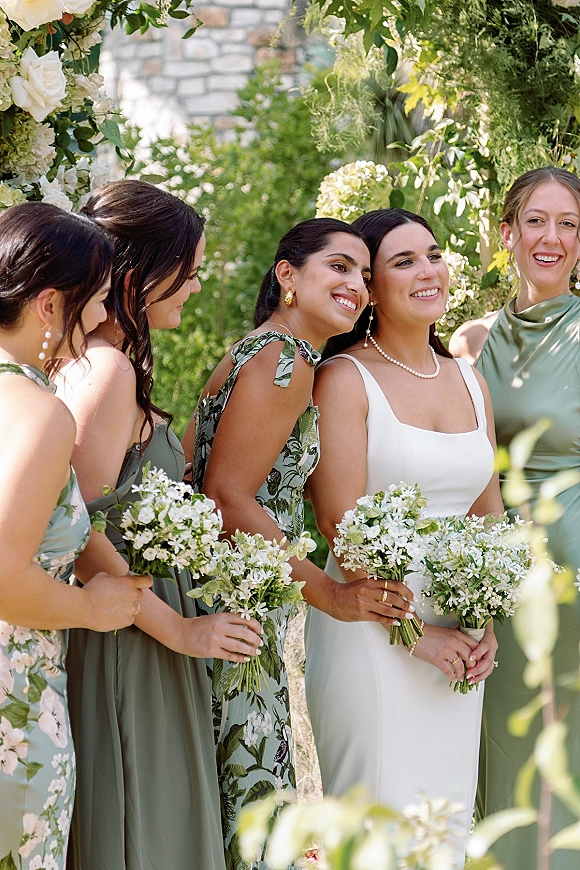
Floral sage green bridesmaid dresses appear most consistently in boho and garden wedding contexts, where sage green is the dominant ground color with a botanical print layered over it. The look is deliberately informal and suits weddings where the aesthetic is relaxed and nature-adjacent. For the full range of how this style plays out across complete bridal parties, the boho bridesmaid dresses collection shows real examples across settings and silhouettes.
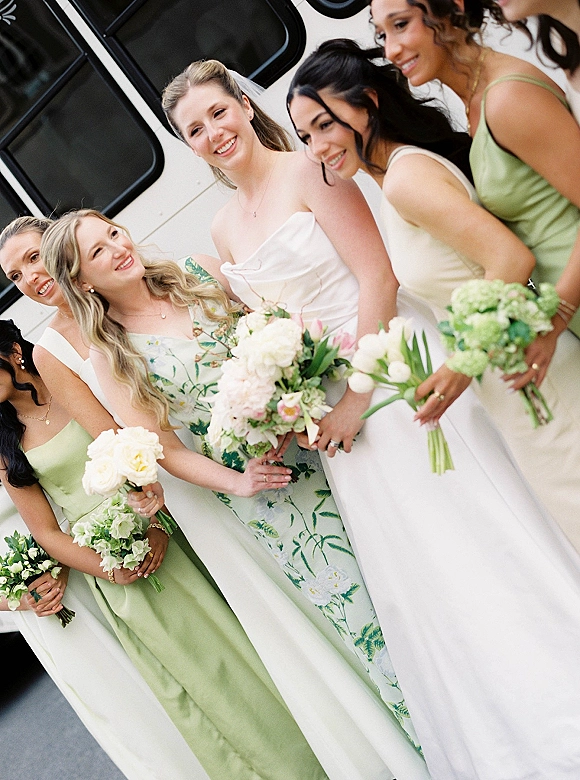
The risk with floral sage is print scale: in group photography, inconsistent print scale across different dress styles in a mixed bridal party can read as uncoordinated. The strongest floral sage looks in real weddings are either fully committed to the print across all dresses or use the floral version as a mixing element against solid sage.
Different Shades of Sage Green Bridesmaid Dresses
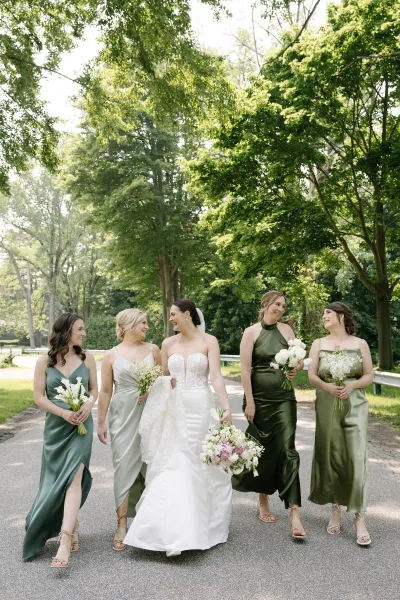
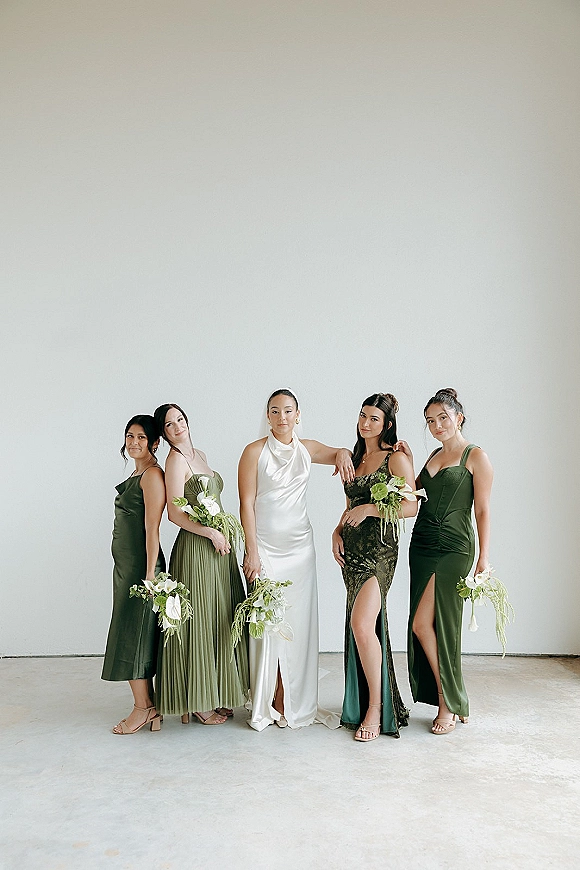
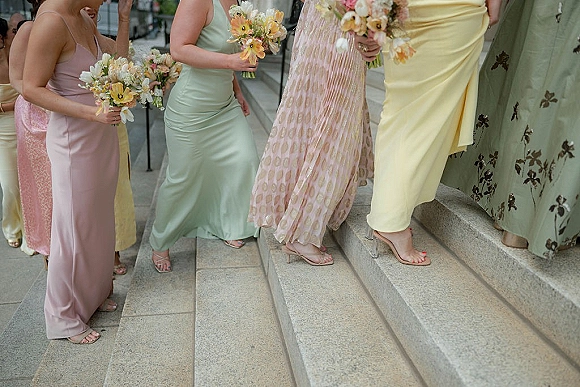
Mixing shades within the sage family, from dusty sage through sage to dark sage, in a single bridal party is a common approach and one that photographs well when the variation is tonal rather than undertone-based. Varying depth (light to dark within the same family) reads as deliberate. Varying undertone (a cool gray-sage against a warm yellow-sage) reads as a mismatch.
The rule is straightforward: vary depth, not undertone. A gradient from light to dark within the same color family works in photographs; mixing a cool gray-sage against a warm yellow-sage does not.
Styling and Pairings
Sage green bridesmaid dresses pair most naturally with warm white or ivory bridal gowns. The green undertone in sage connects to the warmth in ivory; against pure white, the contrast can read as slightly clinical depending on the specific shade. Against champagne or warm-toned gowns, sage has a harmony that photographs consistently.
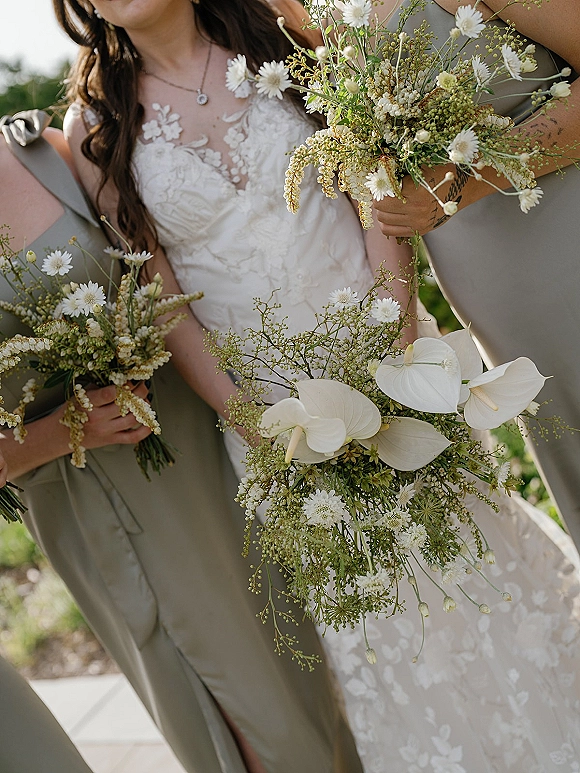
Florals in a sage green palette tend toward white, cream, peach, and terracotta. Greenery-forward arrangements with eucalyptus, olive branch, or fern repeat the sage tone in the botanical elements and create visual continuity between the florals and the dresses. For how florals interact with bridesmaid color palettes in real ceremony settings, the wedding ceremony flowers collection shows the full picture.
Accessories in sage green wedding palettes run toward gold and warm champagne rather than silver. Chrome and cool-toned metals read too far from the warmth of the palette; gold repeats it.
Frequently Asked Questions
Is sage green a good bridesmaid color for all seasons?
Sage green works across seasons but suits fall and spring most naturally. Dusty sage in fall connects to the warmth of the season; lighter sage in spring reads fresh against garden settings and blooms. For summer, chiffon in a lighter sage performs best. In winter, dark sage in satin has enough depth to hold in candlelit or formal indoor settings.
What skin tones does sage green suit?
Sage green is among the more universally flattering bridesmaid colors because its desaturated quality doesn't impose the contrast demands of a more saturated green. It works particularly well with warm and olive skin tones, where the green undertone complements rather than clashes. On fair or cool-toned skin, the grayer, cooler interpretation of sage performs better than the warmer, more yellow-toned variants.
What is the difference between sage green and dusty sage?
Sage green is a medium-toned muted green with a soft, slightly cool quality. Dusty sage is more heavily greyed; the green component is less dominant and the result is closer to a warm neutral. In photographs, dusty sage can appear almost taupe in low or warm light. The two are visually distinct enough that ordering from different suppliers without testing fabric swatches together is a real risk.
What flowers work with sage green bridesmaid dresses?
White, cream, ivory, peach, and terracotta florals pair most naturally with sage green. Greenery-forward arrangements with eucalyptus, olive branch, fern, and garden roses with foliage reinforce the palette and create continuity between the florals and the dresses. Bright or saturated florals can work as a contrast element but require careful coordination to avoid competing with the muted tone of the sage.
Can you mix different shades of sage green in a bridal party?
Yes: dusty sage, sage, and dark sage within a single bridal party read as intentional rather than mismatched in photographs when the variation is tonal. The rule is to vary depth rather than undertone: a gradient from light to dark within the same color family works; mixing a cool gray-sage against a warm yellow-sage does not.
What groomsmen attire pairs with sage green bridesmaid dresses?
Tan and warm-toned suits are the most natural groomsmen match for sage green bridesmaid dresses, repeating the warmth of the palette without competing with it. Charcoal and dark navy both work as contrast suits in more formal settings. Greenery, white, or cream boutonnières keep the florals consistent with the bridesmaid bouquets and the overall palette.
What is the difference between sage green and olive green bridesmaid dresses?
Sage green is soft, muted, and slightly cool. Olive green is darker, more yellow-toned, and carries a distinctly earthy quality that reads markedly differently in photographs. Sage photographs with an airy, soft quality; olive reads richer and heavier, closer to military green in certain lighting. They are distinct enough that mixing sage and olive in a bridal party without intentional contrast-planning will appear mismatched.