Wedding Ceremony Arch Flowers
The arch is almost always the centerpiece of ceremony florals. It frames the couple during the vows and appears in more ceremony photographs than any other single element, which is why most florists recommend concentrating a disproportionate share of your ceremony flower budget here.
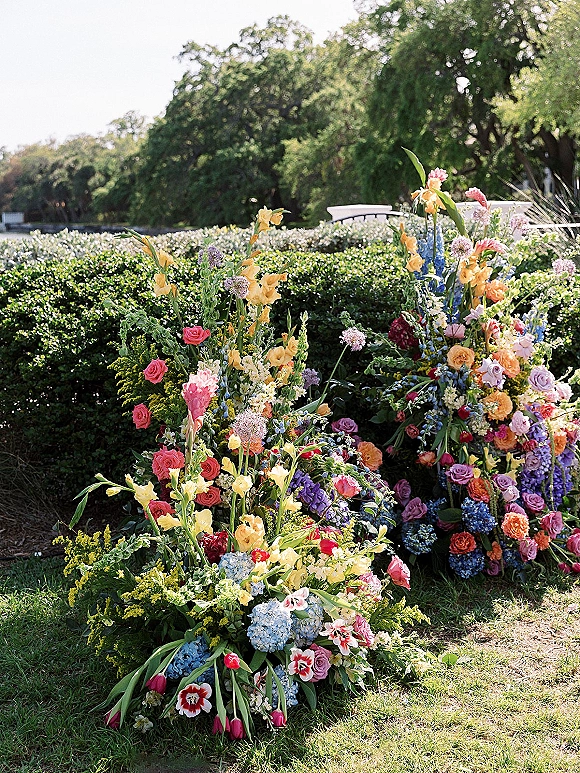
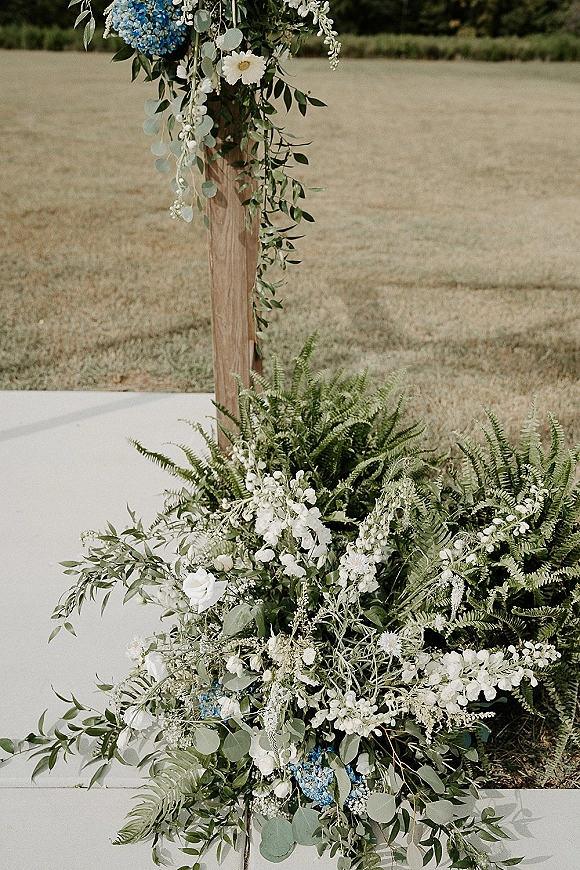
Arch styles range from the classic wood arbor to a circular moon gate to a freestanding acrylic frame. Coverage can be as minimal as asymmetrical corner clusters (blooms concentrated at one diagonal corner) or as immersive as a full canopy of flowers. Full arch florals typically run $1,500–$2,500 with a florist; a half arch or asymmetrical treatment lands at $800–$1,500; corner clusters start around $300. For lush, full-coverage arches, trailing greenery fills volume efficiently while controlling cost. Eucalyptus, smilax vine, and Italian ruscus build a dense backdrop; florists layer blooms selectively on top to create the appearance of full coverage at a fraction of an all-floral installation.
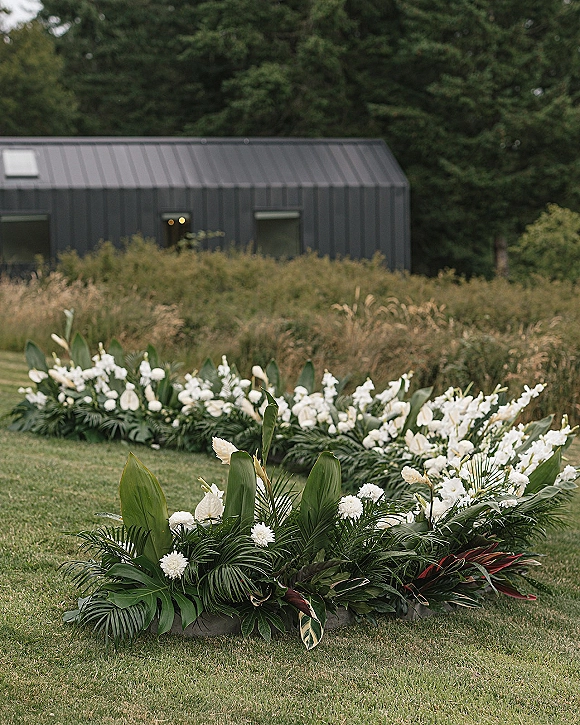
Popular bloom choices for arches include garden roses, ranunculus, and peonies for a romantic, layered look; orchids and anthuriums for something architectural and modern; and dried pampas grass, lunaria, and cotton stems for a boho or earthy ceremony aesthetic. Asymmetrical arches work particularly well for couples who want a dramatic visual without the full-coverage price tag. A cluster of blooms at the left peak with trailing greenery down the right side reads as intentional and editorial rather than sparse.
Wedding Ceremony Altar Flowers
For couples marrying in a church or at a venue with a defined altar space, flanking arrangements on either side of the officiant often deliver the most impact per dollar. Two substantial arrangements in tall vessels (urns, fluted vases, or bud vase clusters) frame the couple in every ceremony shot. Scale matters here: arrangements that look proportionate during setup often disappear visually once guests are seated. Your florist should account for viewing distance when sizing altar arrangements, not just how they read from three feet away.
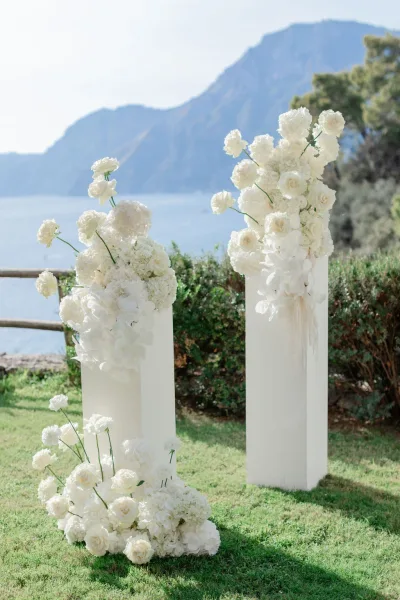
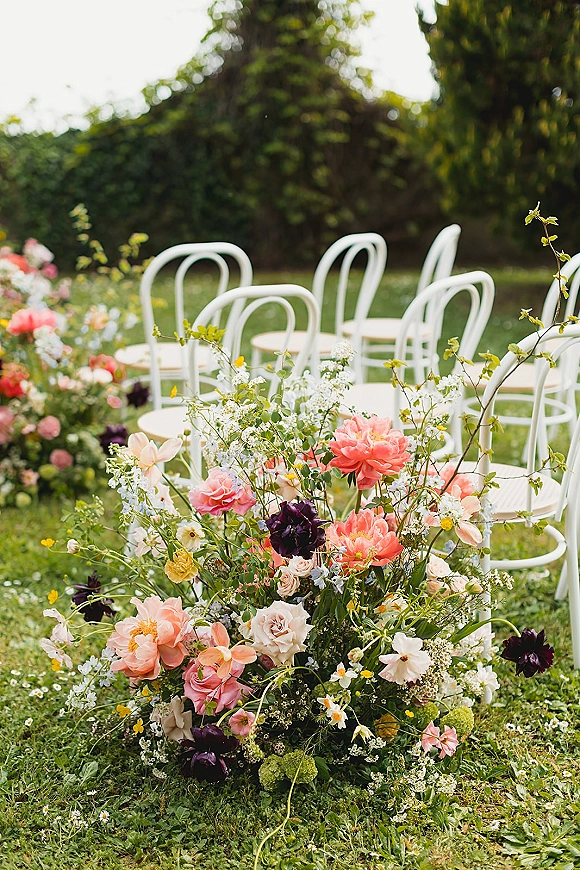
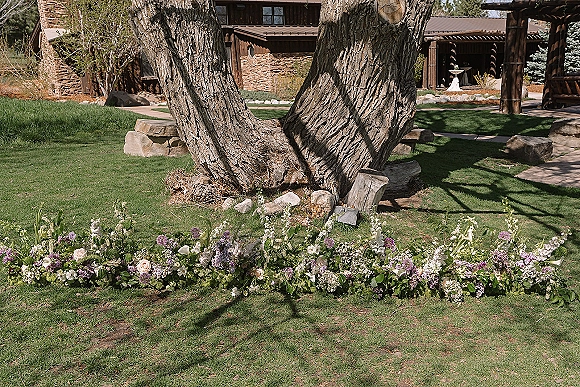
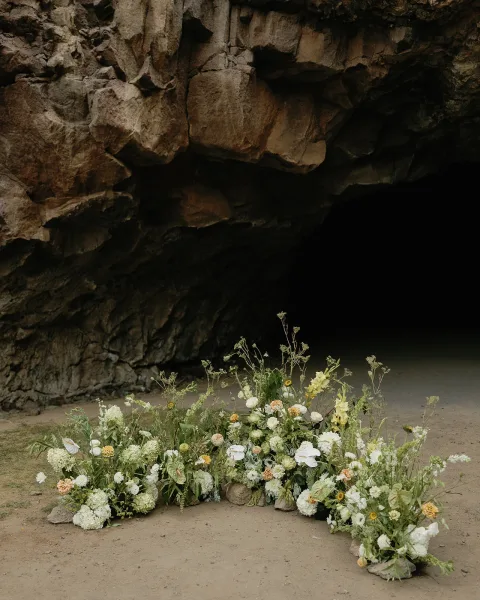
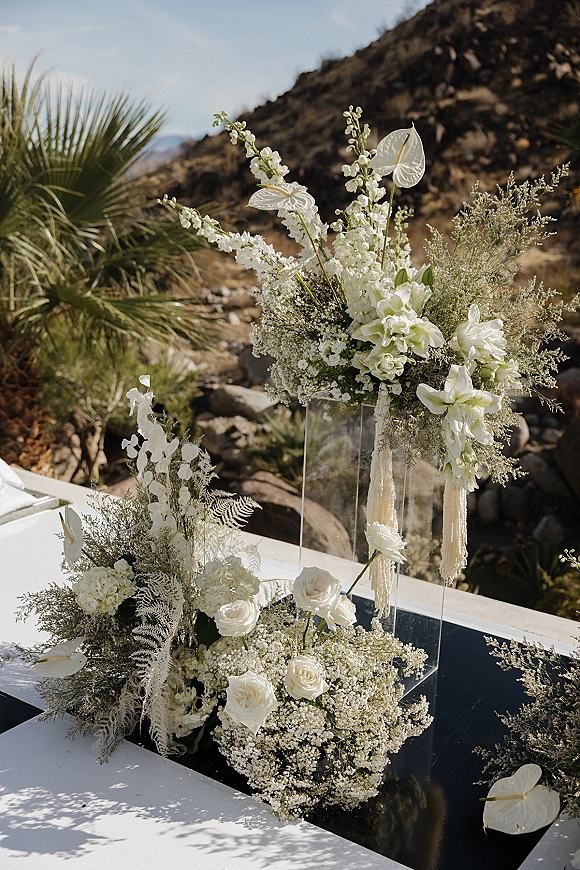
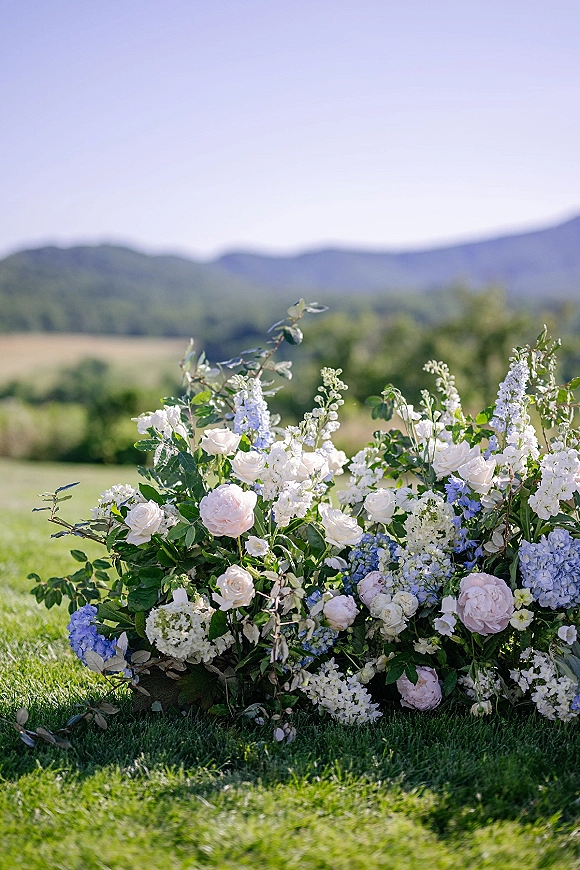
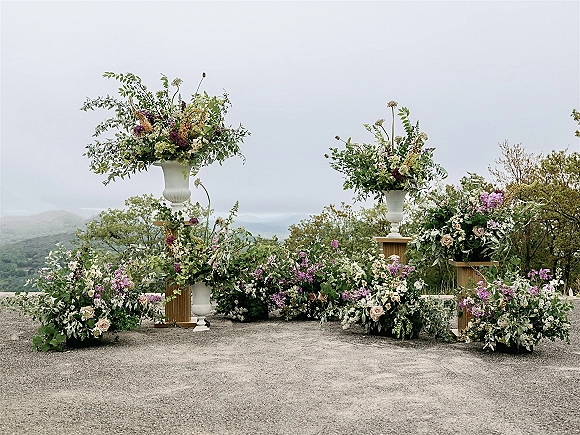
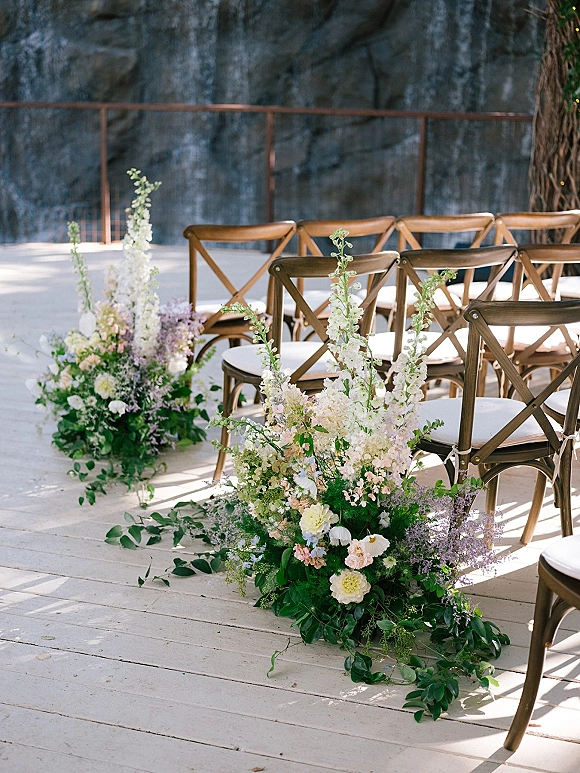
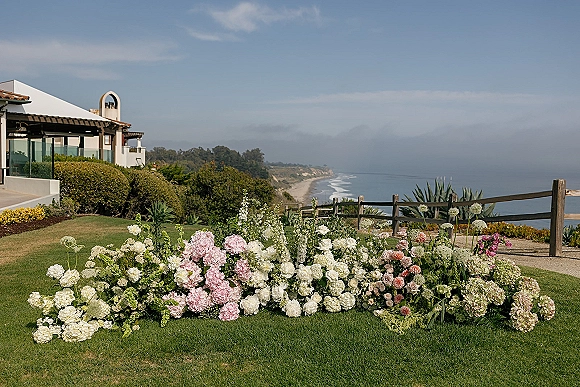
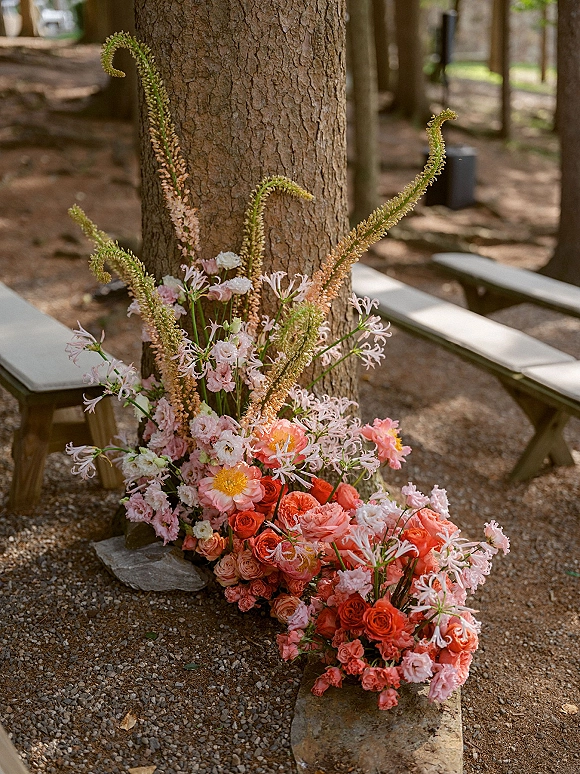
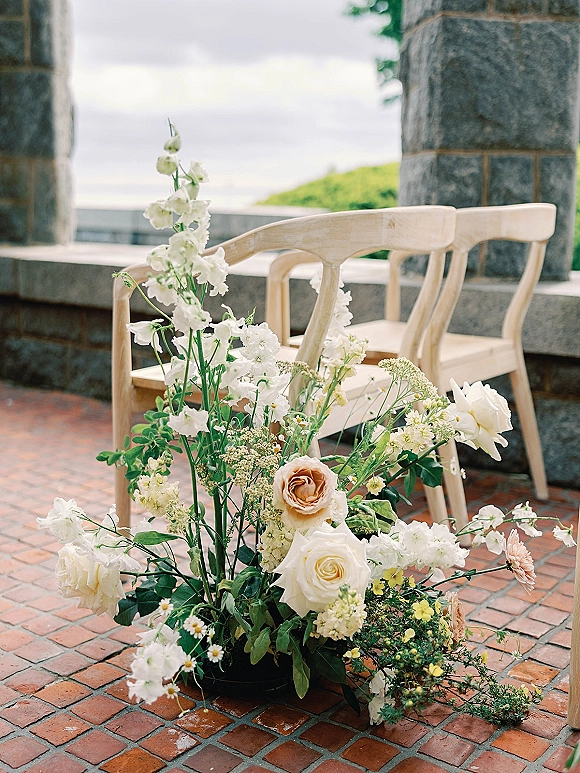
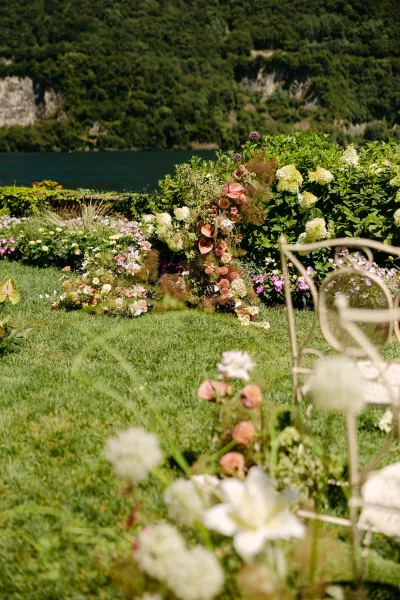
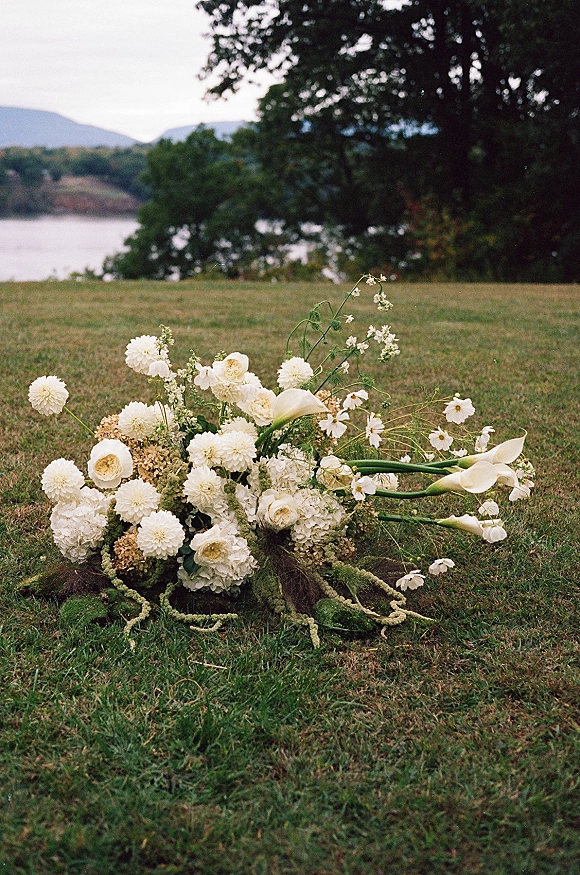
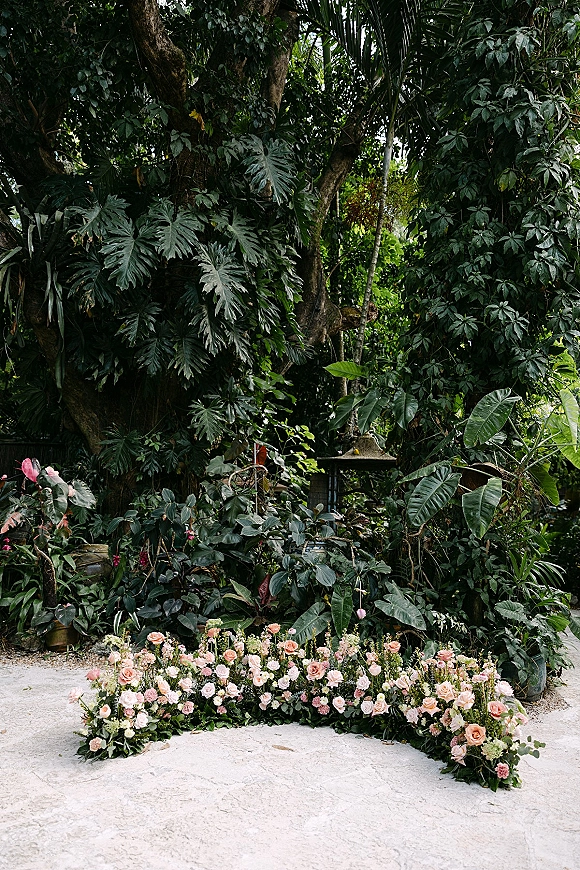
For outdoor ceremonies without a defined altar structure, a freestanding floral installation such as a pair of tall floral columns, a geometric metal frame wrapped in greenery, or a low ground-level arrangement at the couple’s feet provides an equivalent visual anchor. Ground-level arrangements built from loose blooms, pillar candles, and trailing leaves have become increasingly popular for ceremonies where the couple wants a natural, gathered-from-the-garden aesthetic.
Church ceremonies carry an additional consideration: most churches have their own guidelines about placement and what types of arrangements are permitted. Some prohibit hanging anything from pews or require specific candle holders. Confirm venue restrictions with the coordinator before finalizing any ceremony floral plan.
Pew Flowers for Your Wedding Ceremony
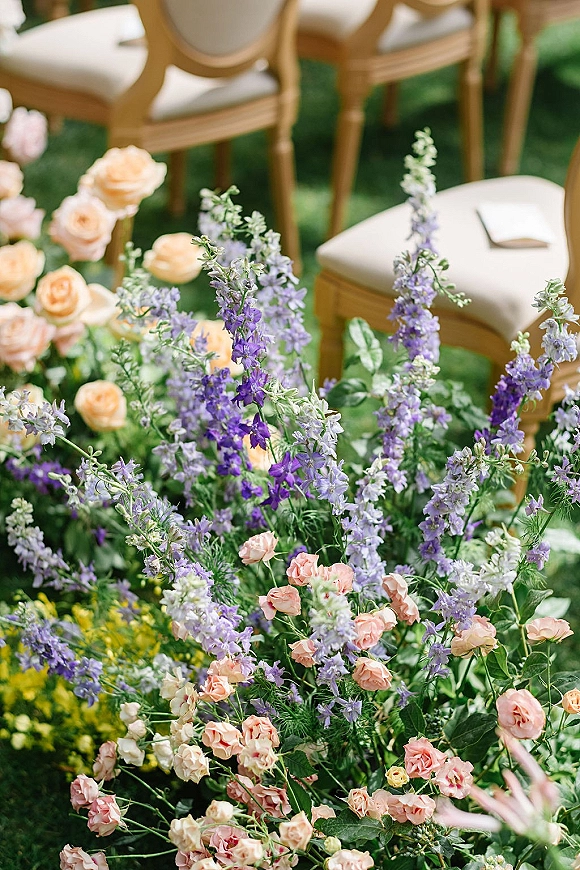
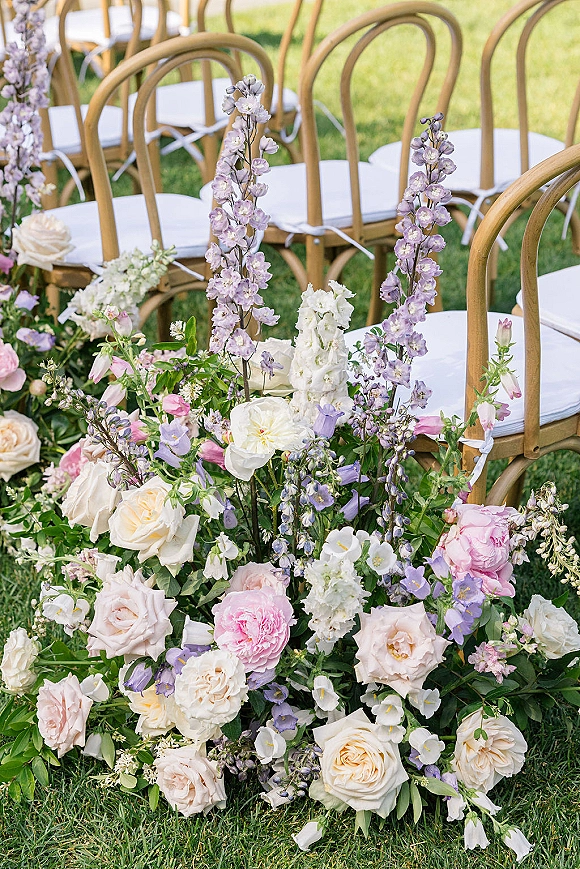
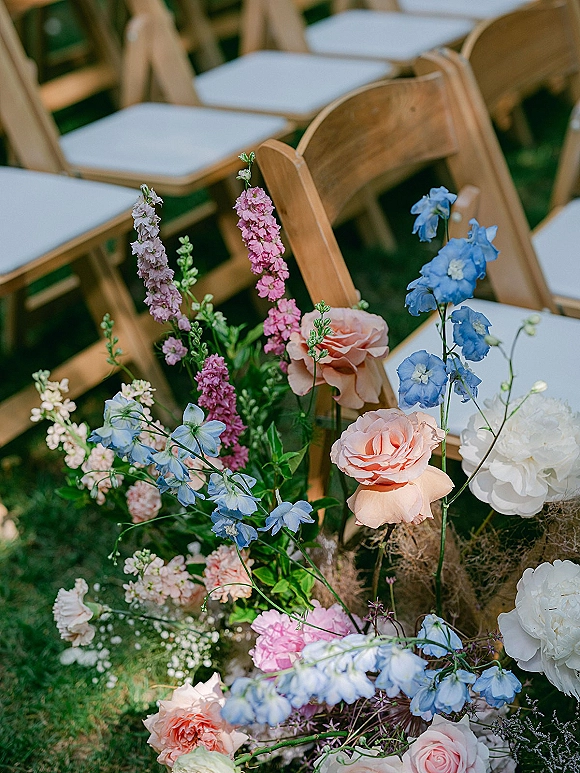
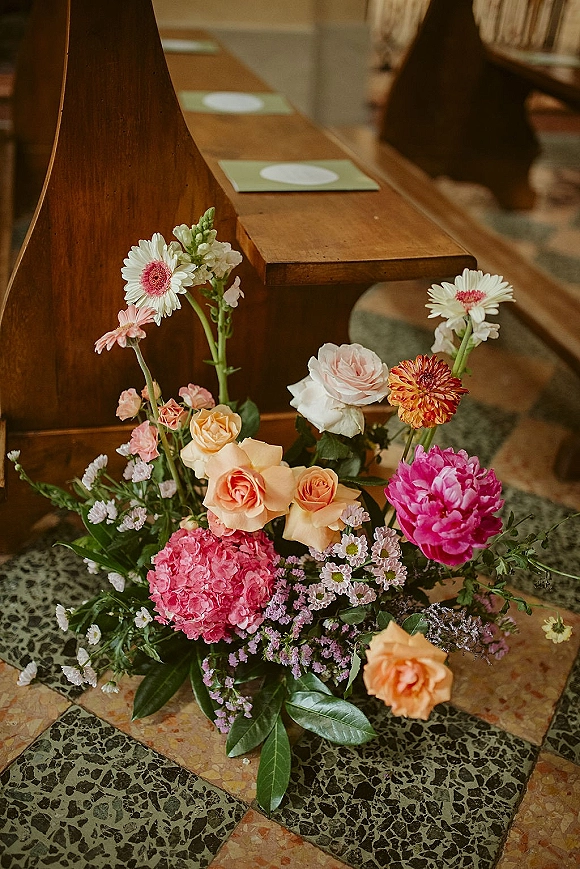
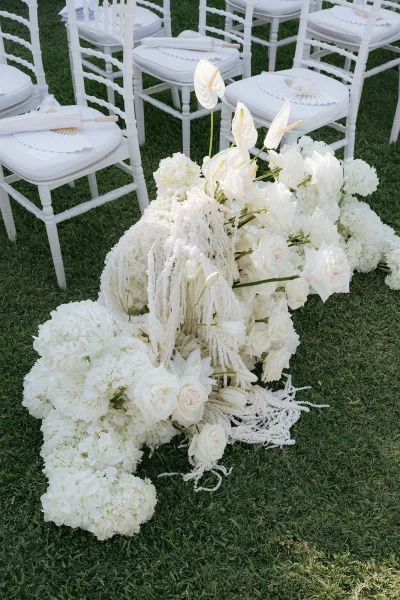
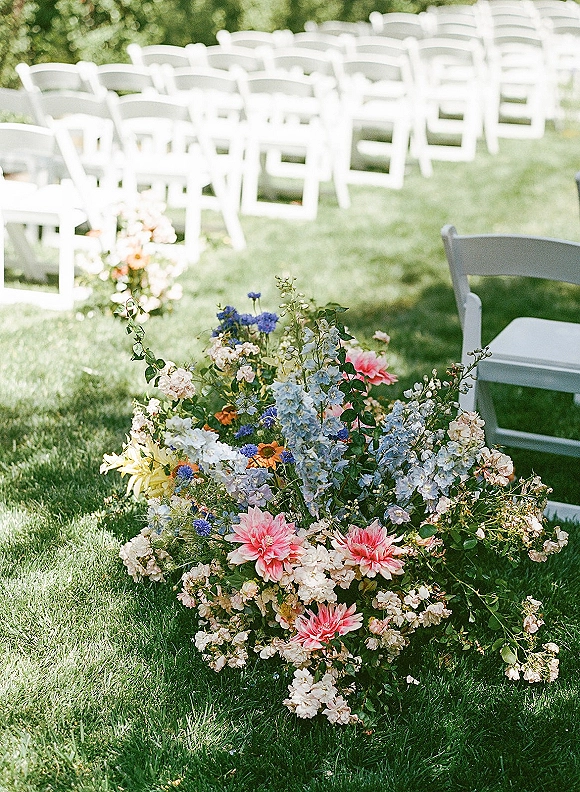
Aisle and pew flowers mark the path from the ceremony entrance to the couple. Depending on how they’re designed, they can be the detail guests remember most. The main formats are: tied pew or chair markers (a small nosegay, a single bloom with ribbon, or a floral cone attached to the chair end), shepherd’s hooks with hanging lanterns or bud vases, and low ground arrangements placed at the foot of each row.
For a 100-guest ceremony, plan for seven to ten rows on each side of the aisle, for 14–20 potential markers in total. Most couples decorate every other row, which lands at 8–10 markers and is the most visually balanced approach. Chair posies run $50–$75 each; more elaborate ground arrangements or full floral clouds start at $225 per placement.
Pew flowers for wedding ceremonies in churches look best when they’re intentionally simple: a single stem tied with a ribbon, a small cluster of baby’s breath and eucalyptus, or a tied bundle of seasonal blooms. Elaborately constructed arrangements repeated across every pew compete with the arch and altar rather than support them. The ceremony backdrop should be the visual focal point; the aisle should guide without overwhelming.
Wedding Ceremony Entrance Flowers
The ceremony entrance, whether the doors of a church, the gate of a garden estate, or the top of a staircase, is the first floral element guests encounter. It sets expectations for everything that follows, which makes it a high-return placement even when the overall ceremony floral budget is tight.
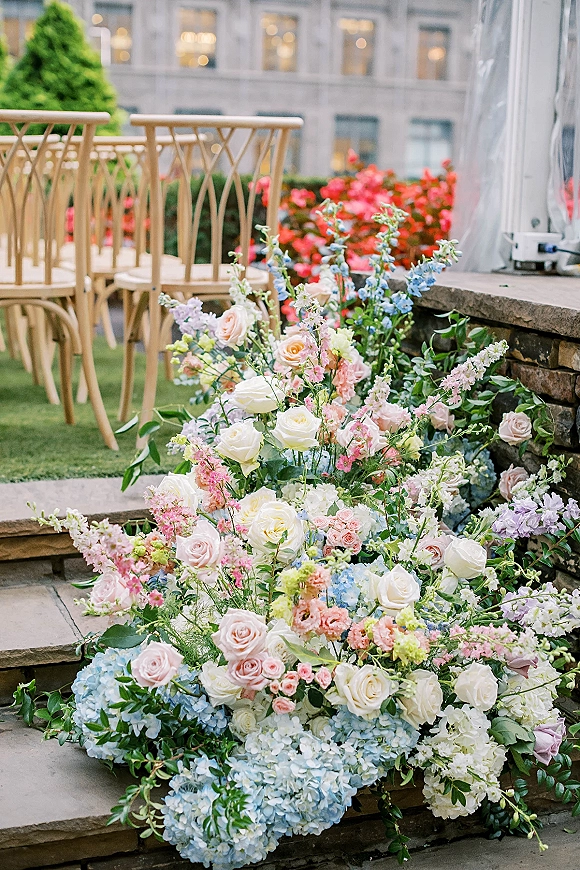
Popular entrance treatments include flanking arrangements in matching urns or tall vessels, a floral installation framing the doorway, a flower chandelier suspended overhead, or a petal ground installation at the threshold. For a treatment that photographs well without requiring a large investment, two matching oversized arrangements on either side of the entrance deliver a strong visual anchor. If you want a more immersive installation and your venue has the structural capacity, a suspended floral canopy at the entrance creates a genuinely arresting first impression.
Popular Flowers for Wedding Ceremony Arrangements
Choosing blooms for a ceremony is partly aesthetic and partly logistical. Some flowers hold up better in outdoor heat; some are significantly cheaper when in season; some have stems too delicate for large structural installations.
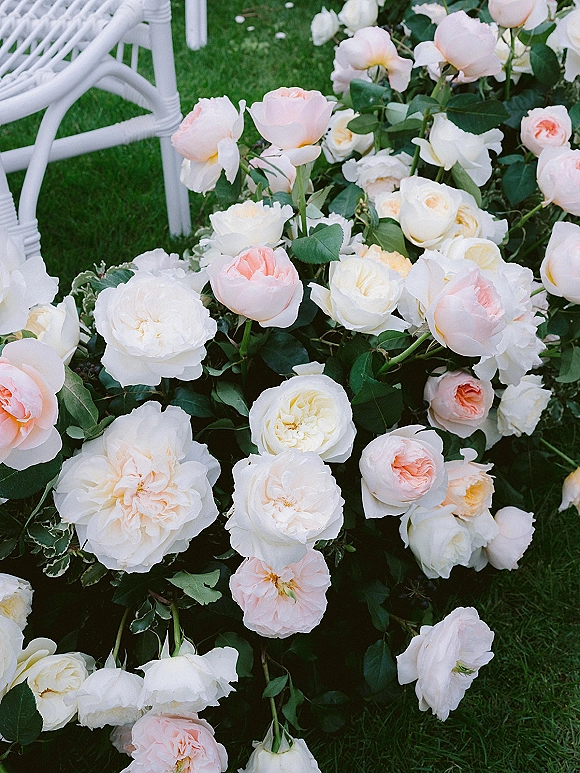
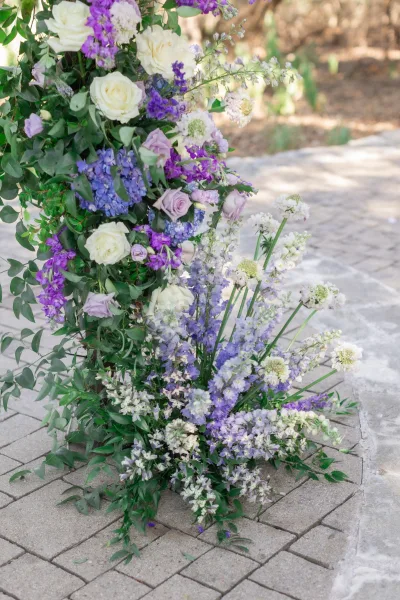
Roses and garden roses are the workhorses of ceremony florals, available year-round, structurally reliable, and well suited to mixed arrangements. Ranunculus and peonies add texture and a romantic, voluminous quality, but peonies are strictly seasonal (late spring through early summer) and can wilt quickly in heat above 80°F. Hydrangeas bring volume efficiently at relatively low cost, making them a popular filler in arches and altar arrangements. Orchids, particularly Phalaenopsis and cymbidium, trend toward the architectural end of the spectrum and work especially well in modern or minimalist ceremonies. For purple wedding ceremony flowers, lavender, lisianthus, and sweet peas are reliable choices that hold color well in photography without going violet under flash.
For greenery, eucalyptus is the most commonly used backdrop foliage for its scent, range of textures, and cost efficiency. Smilax vine, fern, and ruscus fill out arches and garlands; Italian ruscus is particularly popular for its dark, polished leaf. Dried elements like pampas grass, bunny tails, and lunaria have expanded well beyond boho weddings. They hold up well outdoors, require no water source, and add organic texture that fresh flowers alone can’t replicate. They’re also one of the more practical choices for fall wedding ceremony flowers, when fresh blooms can be harder to source in deeper seasonal colors.
For outdoor summer ceremonies, avoid blooms with shallow heat tolerance, including gardenias and lily of the valley, and ask your wedding florist about hardening and conditioning procedures that extend the life of ceremony arrangements in warm weather. A florist experienced in outdoor weddings will build timing buffers into delivery and setup specifically to account for temperature.
How to Budget for Wedding Ceremony Flowers
The national average cost of wedding flowers overall is $2,200–$2,700, with ceremony florals typically representing $500–$1,500 of that figure depending on venue size, floral density, and regional labor costs. Full arch florals at a large outdoor ceremony in a major metro can push the ceremony line item alone to $4,000–$5,000.
A useful framework for allocating ceremony flower budget: concentrate spending on the element that appears most prominently in ceremony photography. For most weddings, that’s the arch or ceremony backdrop first, then altar arrangements, then aisle markers. Pew or chair flowers often deliver the lowest visual-to-cost ratio and are the first element to cut when trimming ceremony florals.
The most effective cost-saving strategy in ceremony florals is greenery-forward design. Foliage typically costs $1–$3 per stem versus $3–$10 for most blooms. Arches built on a eucalyptus or smilax vine base with selective bloom placement look as full as all-floral installations at roughly 30–40% of the cost. Choosing in-season blooms, which florists source at wholesale rather than premium import rates, compounds those savings meaningfully.
For couples working with a tighter ceremony floral budget, an entrance-only floral treatment combined with an arch is the most efficient approach. According to floral designers who work across budget ranges, this combination delivers roughly 80% of the visual impact for 30% of the cost of a fully lined aisle with decorated pews.
Repurposing Wedding Ceremony Flowers at the Reception
One of the most cost-efficient decisions in wedding floral planning is designing ceremony flowers to move. Altar arrangements in standalone vessels can be relocated to flank the head table or the cake display. Aisle markers designed as low arrangements go directly to cocktail tables. A wildflower wedding bouquet placed at the sweetheart table during dinner doubles as a centerpiece without any additional floral spend.
The logistical key is designating this repurposing plan explicitly with your florist and venue coordinator before the wedding day. Ceremony breakdown and reception setup often run in parallel. If no one is assigned to move arrangements, they stay where they were placed. Build a 15–20 minute window into cocktail hour timing specifically for floral relocation. Most venues are accommodating once the task is clearly assigned and scheduled.
Garlands and long arrangements work especially well as reception table runners draped down the center of long farm tables. Arrangements built in bud vases or small vessels translate most easily. Pedestal arrangements in tall urns are harder to repurpose at reception tables without a visible height mismatch. Discuss this with your florist during the initial design consultation and ask them to recommend which ceremony pieces are built specifically to transition.
Frequently Asked Questions
What flowers are typically used in wedding ceremonies?
Roses, garden roses, and peonies are the most requested ceremony blooms for their romantic, layered look. Hydrangeas and ranunculus are close behind for their volume and texture. For greenery, eucalyptus is the standard backdrop foliage. Couples doing modern or minimalist ceremonies tend toward orchids, anthuriums, and architectural stems. Dried elements like pampas grass and lunaria have become widely used across ceremony aesthetics, not just boho weddings.
How much do wedding ceremony flowers cost?
Ceremony flowers typically run $500–$1,500 for a standard wedding, though full arch florals alone can cost $1,500–$2,500 with a florist in most markets. The total depends on venue size, floral density, regional labor rates, and whether the couple is using primarily fresh or dried elements. An entrance statement plus an arch—with no aisle markers—is the most cost-efficient approach for couples working within a tighter ceremony floral budget.
What are pew flowers for a wedding ceremony?
Pew flowers, also called pew markers or aisle markers, are small floral arrangements attached to the end of each church pew or ceremony chair to line the aisle. Common formats include tied nosegays, single stems with ribbon, floral cones, and small clusters of greenery with one or two focal blooms. For a 100-guest ceremony with 7–10 rows per side, most couples decorate every other row, landing at 8–10 markers total.
Should ceremony flowers match reception flowers?
They should be cohesive rather than identical. Matching the color palette and general bloom selection creates visual continuity without requiring the same exact arrangements in both spaces. The most practical approach: build ceremony arrangements in vessels that work at reception tables so they can be repurposed rather than wasted, and choose a consistent greenery backbone—eucalyptus, ruscus, or smilax vine—that runs through both spaces.
How far in advance should I book a florist for ceremony flowers?
Book your wedding florist 9–12 months before your wedding date for peak season (May–October) and 6–9 months out for off-peak dates. Florists book individual dates—once a date is taken, it's taken regardless of how far in advance you inquire. The initial consultation is the right time to discuss ceremony floral priorities and get a preliminary budget range, not a final commitment to a specific design.