How Dusty Rose Differs From Blush, Mauve, and Dusty Pink
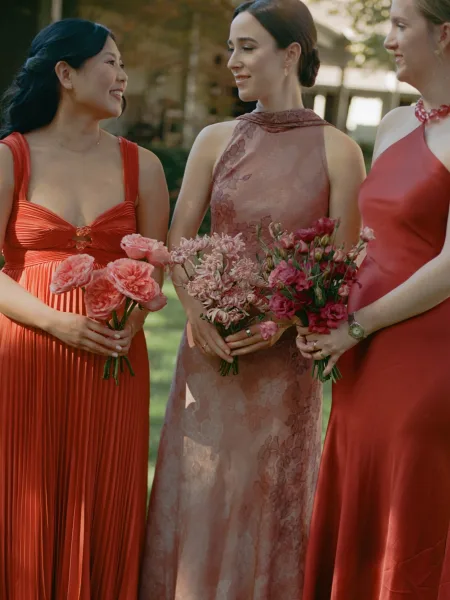
Dusty rose is a muted, slightly grayed pink with a warm undertone. It is deeper and grayer than blush, warmer and pinker than mauve, and less saturated than a true rose pink. The gray and the faint brown are the defining ingredients, and the exact amount of each is what every neighboring shade name is arguing about. Naming runs inconsistent across the industry, so a dusty rose from one collection can sit closer to another collection’s mauve than to its dusty rose. Ordering physical swatches and comparing them together in the same light is the only reliable way to tell them apart.
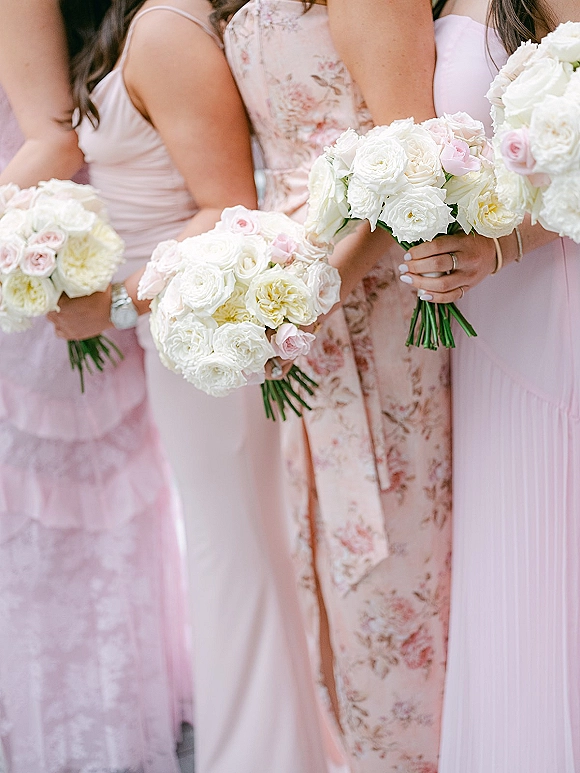
Blush. Blush sits above dusty rose on the value ladder, carrying more white and far less gray. It reads lighter, cooler, and closer to a pink-tinted ivory, and it washes out faster in bright sun where dusty rose holds its color. A party that wants delicacy leans blush; a party that wants depth and a little warmth leans dusty rose. For the paler end of the family, blush bridesmaid dresses work under slightly different rules, since blush shows seams and pressing marks that dusty rose’s deeper tone hides.
Mauve. Mauve pulls purple where dusty rose pulls brown. Set beside each other, mauve reads cooler and slightly grayer-violet, and dusty rose reads warmer and rosier. The two are the most frequently confused shades in the pink family, and they are also the most frequently mixed on purpose. Mauve bridesmaid dresses hold the vintage, purple-leaning corner of the palette that dusty rose only borders.
Dusty pink and dusty mauve. Dusty pink is the name the shade travels under outside the United States, and in practice it covers nearly the same range as dusty rose, so the two labels are best treated as one color with two names. Dusty mauve nudges that color a step toward gray-purple. Both belong in a dusty rose party without reading as a separate shade.
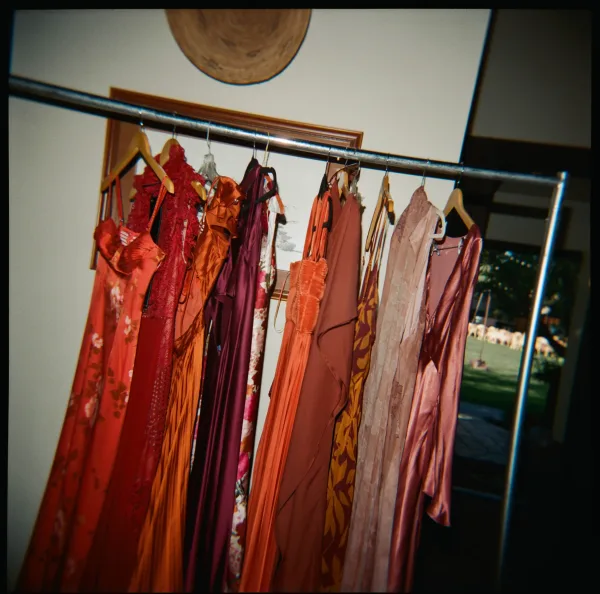
Desert rose, rosewood, and cinnamon rose. These are the deeper, browner cousins. Desert rose adds terracotta warmth, rosewood deepens toward a brown-mauve, and cinnamon rose leans redder. All three read as dusty rose’s evening-and-fall register and pair naturally beside it in a mixed-shade party rather than replacing it.
Old rose and mauve-pink. Old rose is dustier and more antique, with a grayed, faded quality. Mauve-pink sits on the fence between the two families. These are the shades most often mislabeled, and the ones where a physical swatch matters most.
Dark versus light dusty rose. The same name covers a real range, from a pale, nearly-blush dusty rose to a deep dusky rose with visible brown. Deciding where on that range the party sits, then ordering every dress against one master swatch, is what prevents the accidental spread that makes a matched party photograph as a mismatched one.
Why Dusty Rose Turns Warmer in Satin and Softer in Chiffon
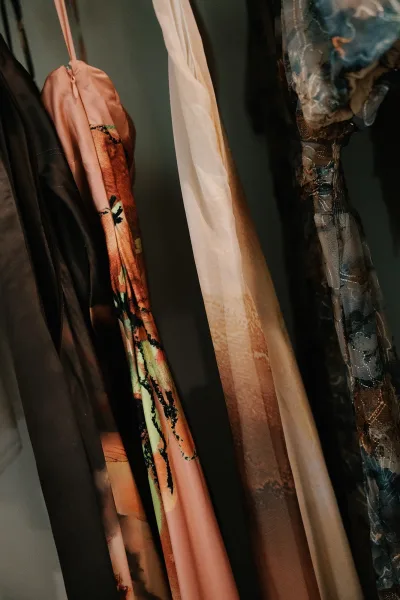
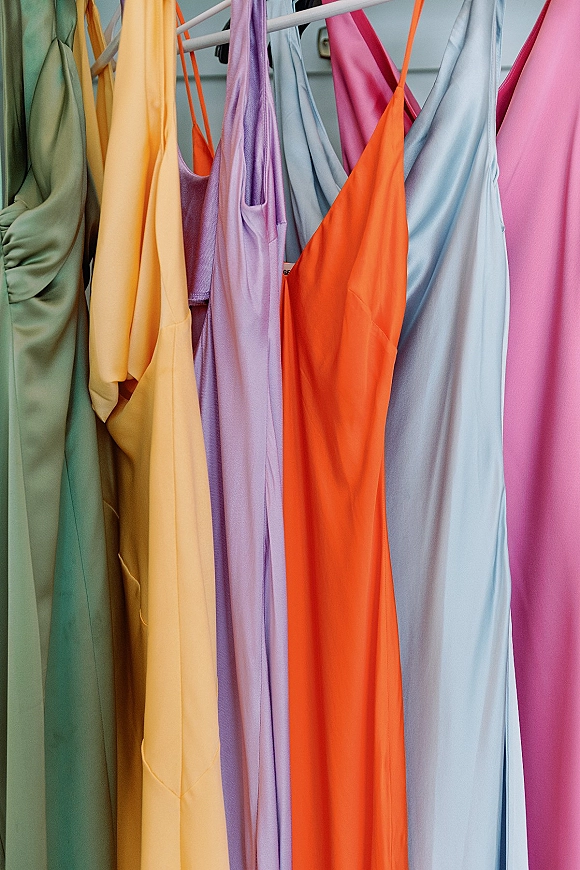
Fabric changes dusty rose more than any other single variable, because the shade sits close enough to neutral that surface and light tip it in either direction. Lustrous weaves reflect light off the surface and push the pink forward, reading warmer and rosier. Matte weaves absorb light and hold the gray, reading softer and cooler. One dye, two fabrics, two visibly different colors standing next to each other.
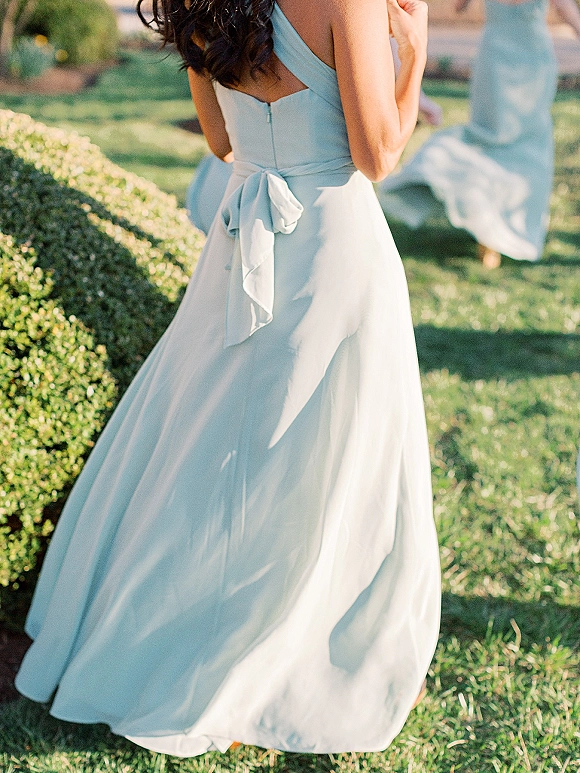
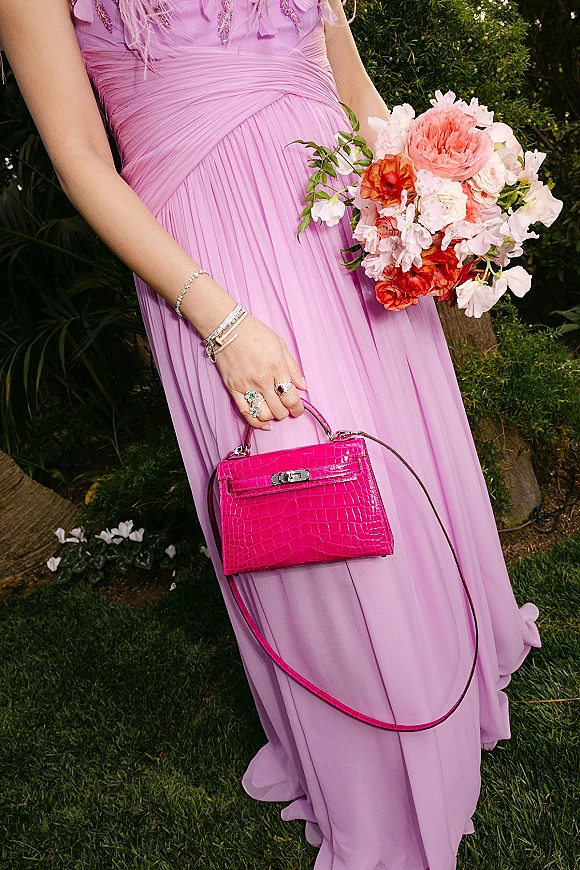
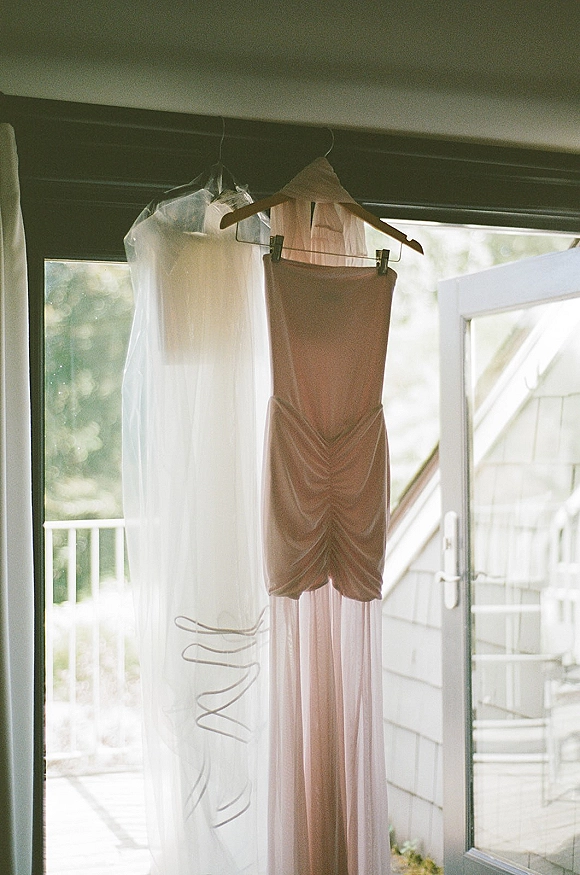
Chiffon. Matte, sheer, and almost always layered, chiffon gives the softest and grayest version of dusty rose. Each layer stacks the dye, so a gathered skirt reads deeper than a single-ply bodice, and the color intensifies where the fabric bunches. Its airiness suits the shade’s romance and moves well in outdoor photographs, which is why it is the most common dusty rose bridesmaid fabric.
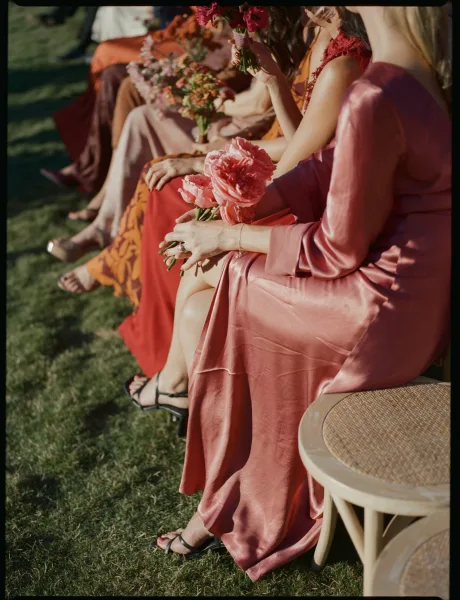
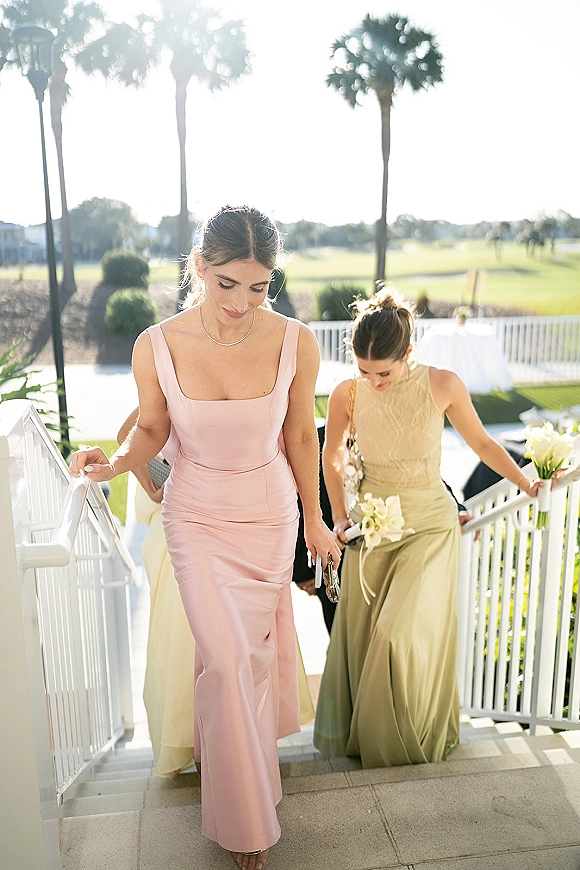
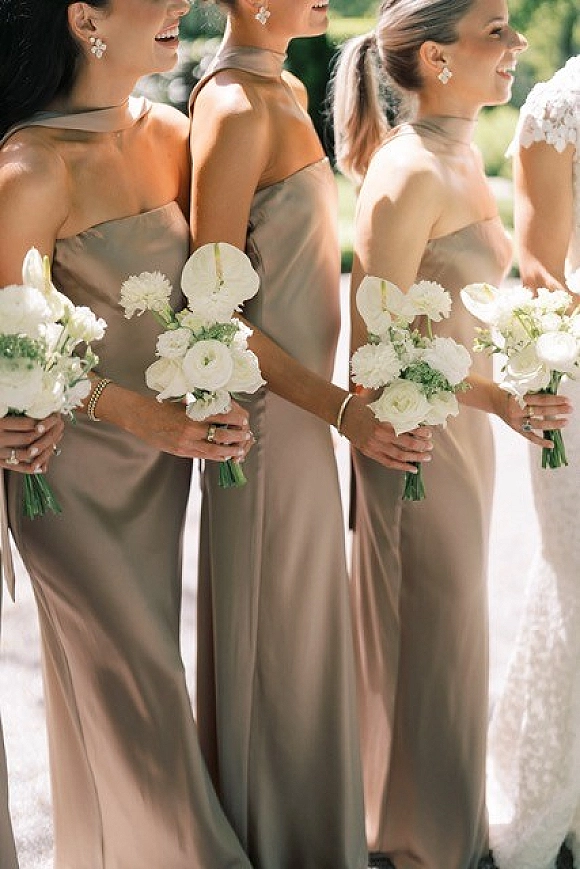
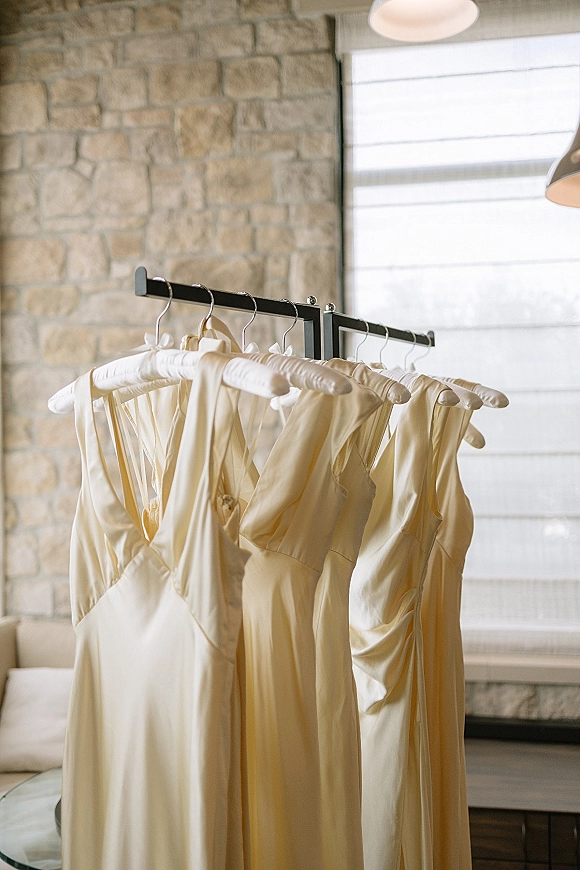
Charmeuse and matte satin. Charmeuse is fluid and highly reflective. It pools into deep folds where the crest catches light and reads nearly champagne-pink while the trough stays dusky, giving one dress a wide tonal range. That range is why satin dusty rose photographs as the most dimensional version of the shade, and also the hardest to match across different silhouettes. Matte satin cuts the shine and lands between charmeuse and crepe.
Crepe. Matte with a fine grain, crepe renders dusty rose closest to the swatch and stays steady under mixed lighting. It skims rather than clings, which makes it the most reliable choice across a party with a range of body types.
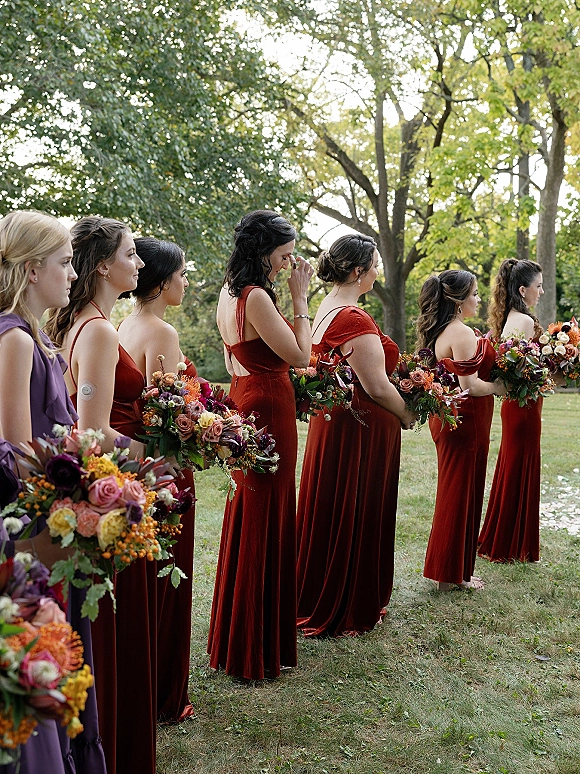
Velvet. Crushed pile absorbs light directionally, so the color shifts as the wearer turns and reads considerably deeper than its swatch, often close to rosewood. That makes dusty rose velvet a cold-weather and evening fabric rather than a garden one.
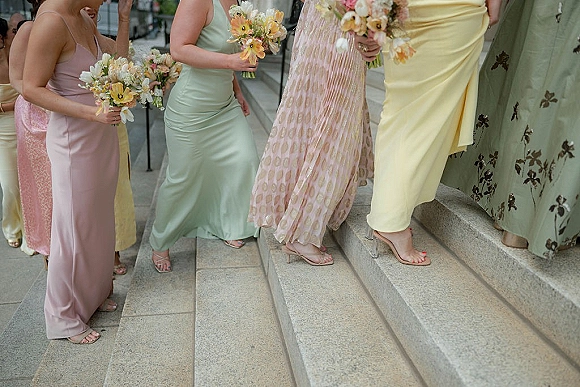
Lace, tulle, and silk. Chantilly and guipure lace over a lining in the same dye float the motif a shade lighter and give a single dress two tones at once; over a nude lining the whole dress warms and lightens. Tulle gives the airiest, palest read of any dusty rose fabric, and silk taffeta holds a crisper, slightly cooler pink than charmeuse. Mixing fabrics across a party is where the shade gets couples into trouble, because a chiffon dress and a satin dress cut from the same dusty rose will not match in photographs, and the gap reads as a mistake unless the whole party commits to the variation.
Dusty Rose in Daylight, Golden Hour, and Candlelight
Dusty rose shifts more with light than a saturated pink does, because warm light adds to its warmth and cool light exposes its gray. A party that looks correct at an afternoon ceremony can read as a different shade at the reception, and knowing that in advance is what lets a couple decide where the portraits happen.
Open shade and overcast. Neutral to cool light gives the truest rendering, and dusty rose in open shade looks like its swatch. This is where the shade earns its reputation and where portraits of the full party photograph most accurately.
Golden hour. Warm low sun adds yellow and red, which pushes dusty rose toward coral and peach. The effect flatters skin and reads romantic, but it is a real color change, and a party ordered as a cool dusty rose can look distinctly warm in sunset portraits.
Candlelight and warm reception lighting. The warmest, lowest-temperature light of the day deepens the pink and can tip dusty rose toward a dusty terracotta. Satin holds its identity longest because its cool highlights survive, while chiffon and crepe warm the fastest.
Colored uplighting. Pink and amber uplighting oversaturate dusty rose and erase the muted quality that made it appealing, while a blue wash grays it out entirely. Neutral or softly warm white preserves the shade.
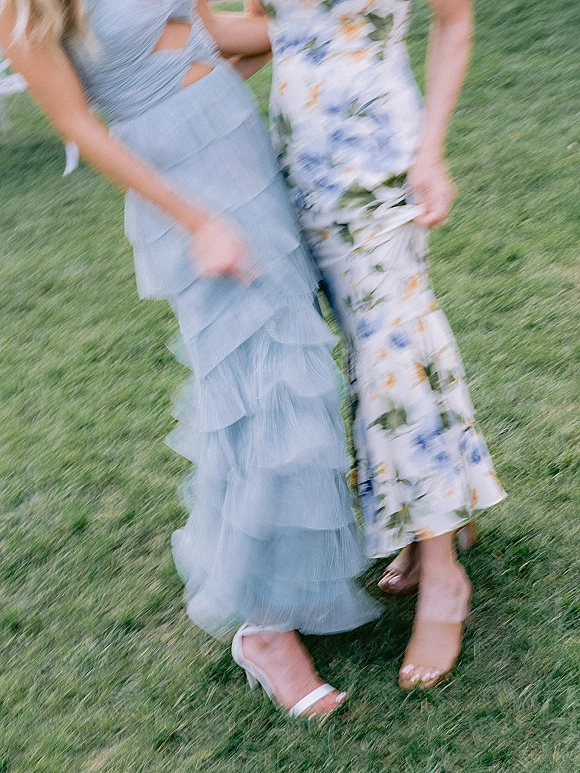
Reflected color from the setting. Green lawns and dense foliage bounce green onto the fabric and cool the pink toward gray; warm stone, sand, and wood bounce warmth and deepen it. A garden ceremony and a desert one will not produce the same dusty rose, which is a strong argument for seeing the shade in the actual setting before ordering the full party.
Silhouettes, Necklines, and Lengths That Suit Dusty Rose
Dusty rose sits at a middle value that hides construction better than blush and shows shape better than a dark shade, which gives it unusual range across cuts. Seams and boning do not telegraph the way they do in a pale pink, and the color still reads the line of a well-cut bodice.
Off-the-shoulder and one-shoulder. Dusty rose is warm enough that an exposed neckline and shoulder keep the look from reading covered or conservative, which is why off-the-shoulder and one-shoulder are the most requested necklines in the shade. A single strong diagonal also gives a solid dusty rose dress the visual interest the muted color does not supply on its own.
Strapless, halter, and drop waist. A strapless dusty rose bodice needs boning or a structured interior to hold its line, especially in fluid charmeuse that has no body of its own. Halter and drop-waist cuts have a strong following in this shade, since the elongated line suits the soft, romantic register dusty rose already carries. Without interior structure the neckline drops and the color pools where it should sit flat.
Sleeves. Long chiffon bishop sleeves suit the shade’s softness and give an outdoor ceremony coverage without weight. Flutter and cap sleeves keep the airiness, and long sleeves in crepe or velvet read formal and seasonal. Sleeves are among the most requested modifications in dusty rose, which skews toward garden and cooler-weather weddings where bare shoulders are a practical question.
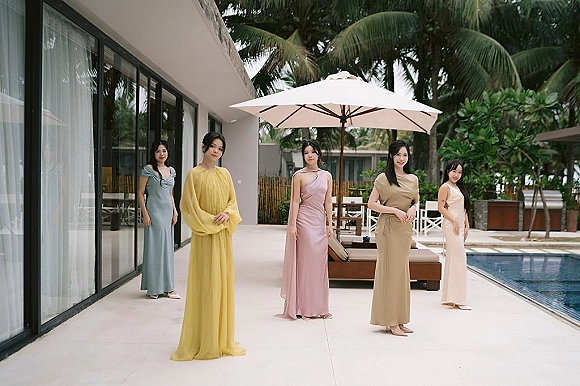
Lengths. Floor length is the default and reads the most formal. A midi or tea length shifts dusty rose into a more relaxed, daytime register and shows more shoe, which raises the shoe decision. Short dresses suit informal celebrations, and a dusty rose jumpsuit gives one member of the party a distinct role without leaving the palette.
Fitting a Dusty Rose Party Across Sizes and Roles
The practical strength of dusty rose across a party is that its softness forgives variation, so a group in the same shade can wear different cuts and still read as one. Fabric does most of that work.
A range of sizes. Crepe and matte satin skim and stay consistent across sizes, while chiffon with a full skirt adds movement and forgives fit differences between dresses. In plus sizes, a structured satin or a satin-chiffon combination gives cleaner definition than airy chiffon alone, which can add visual volume from certain angles. Holding one fabric and letting necklines vary keeps a size-diverse party unified while letting everyone wear something that fits properly.
Petite, junior, and flower girl. Dusty rose scales down without changing character, so a paler dusty rose on a junior bridesmaid or flower girl still reads as one family with the adult party. A shorter hem on a petite frame usually photographs better than a pooled floor length.
A pregnant bridesmaid. An empire waist in chiffon accommodates a pregnant bridesmaid within the same shade and fabric family as the rest of the party, which is easier to source in dusty rose than in a heavily structured satin.
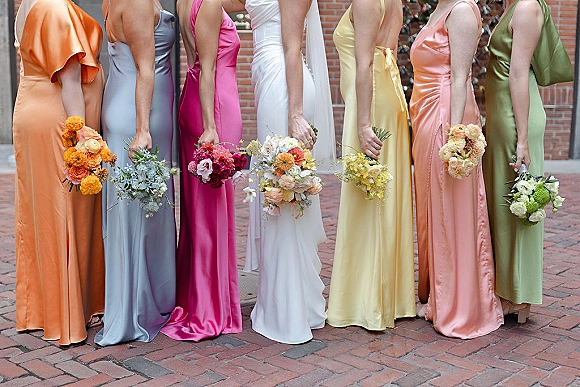
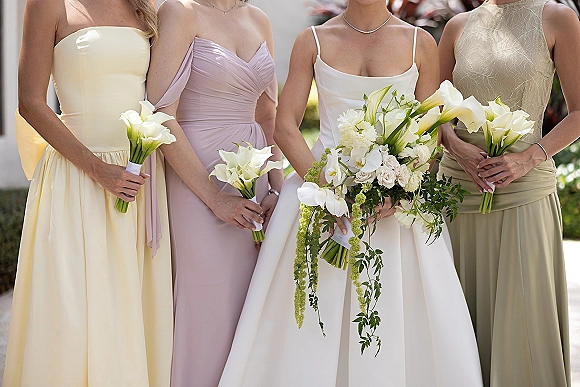
Maid of honor and mixed shades. Setting the maid of honor a half-step darker, a dusky rose or rosewood against the party’s dusty rose, marks the role without leaving the palette. A mix-and-match party in dusty rose, blush, and mauve holds together as long as every dress shares one fabric and the shades stay within a narrow band; when they drift too far apart they read as three colors rather than one tonal family.
What Goes With Dusty Rose: Sage, Burgundy, Champagne, and Navy
Dusty rose is a cooperative color. Its low saturation means it rarely fights an accent, and its warm gray gives it more neutral behavior than a true pink would have. The pairings below hold up in photographs rather than only on a swatch board.
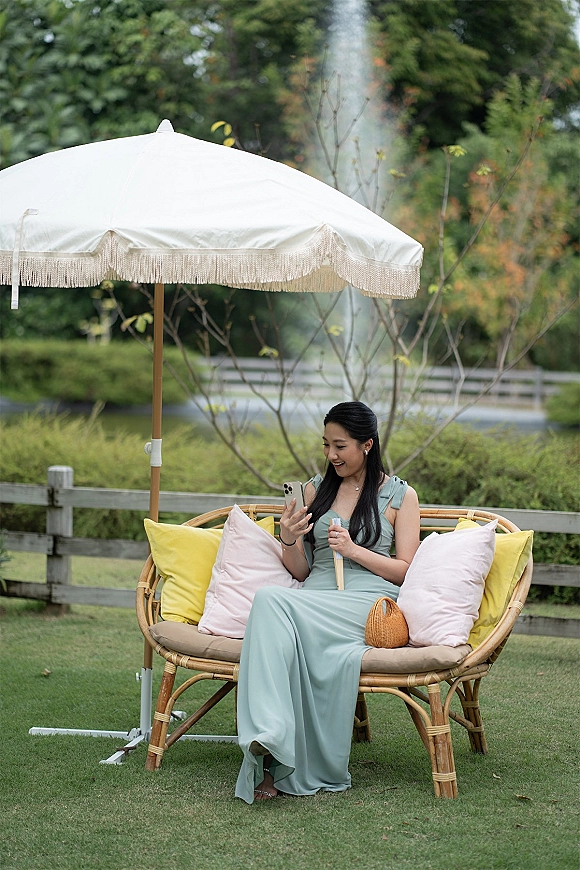
Sage and eucalyptus green. Sage is the pairing that appears most consistently beside dusty rose, because both are built on gray and neither overwhelms the other, and sage florals and greenery source easily against dusty rose dresses with no difficult color match. Sage green bridesmaid dresses run alongside dusty rose in a two-color party more often than any other combination.
Burgundy and deeper reds. Burgundy against dusty rose reads rich and deliberate, and the contrast stays high enough that the two remain distinct rather than muddying the way two close warm pinks can. A burgundy maid-of-honor dress against a dusty rose party is a reliable version of this.
Champagne and metallics. Champagne and nude read as near-neutral tonal partners and keep a soft, low-contrast palette. Antique gold and rose gold warm dusty rose and reinforce its pink, which works when the metallic already appears in the shoes or jewelry and looks accidental when it does not. Silver cools the palette and reads more modern.
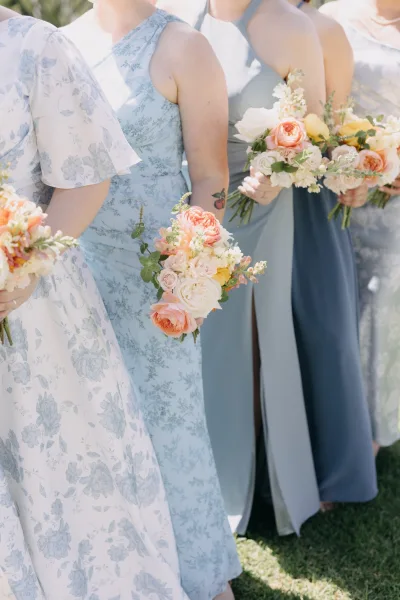
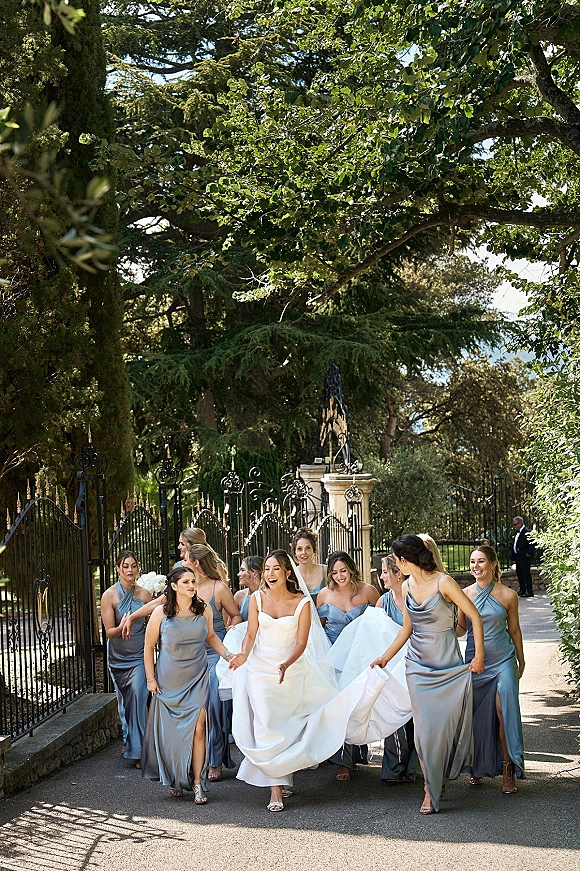
Navy and dusty blue. Navy gives dusty rose a crisp, high-contrast anchor and is the most common menswear pairing, since a grayed pink sits comfortably against a dark neutral. On the cool side of the muted family, dusty blue bridesmaid dresses occupy the position dusty rose holds on the warm side, and the two are frequently run in one party, a shade to each half or split against a shared neutral.
Dusty Rose at a Fall, Boho, or Vintage Wedding
Dusty rose works across seasons, but the way a dress is built decides which one it reads for. The shade itself stays constant; the fabric, the sleeves, and the florals move it through the calendar.
Fall. Dusty rose belongs in an autumn palette because its brown undertone sits naturally beside rust, terracotta, copper, and burgundy. The strongest fall move keeps the shade and changes what it is made of, trading airy chiffon for velvet, crepe, or matte satin with sleeves, which hold the color better under shorter, warmer afternoon light. Dried grasses, copper beech, and rust-toned ranunculus give the bouquets autumn weight while the dresses stay soft.
Boho. Dusty rose is a foundational boho shade, at home with pampas grass, terracotta accents, and unstructured silhouettes. Flutter sleeves, soft A-lines, and a mix-and-match party in dusty rose and its neighbors suit the relaxed, gathered look. For a party built fully around that aesthetic, boho bridesmaid dresses cover the silhouette-and-texture side of the same decision.
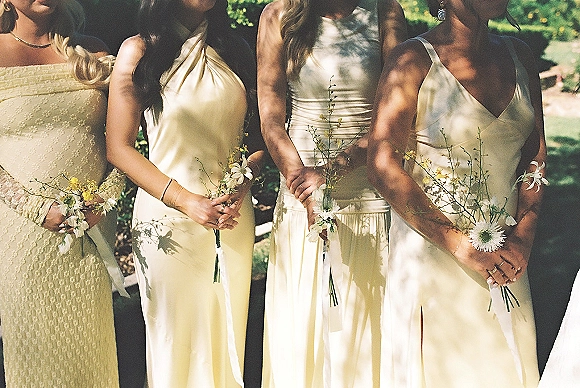
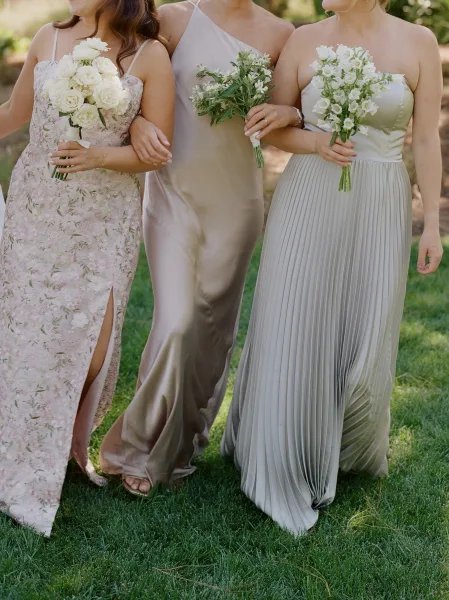
Vintage and garden. The grayed, antique quality of dusty rose is what makes it read vintage, and lace over a tonal lining pushes it further in that direction. For a spring or summer garden ceremony, chiffon in a lighter dusty rose photographs airy and romantic and pairs cleanly with white and ivory florals.
Bouquets, Groomsmen, and Shoes in a Dusty Rose Palette
The accessory decisions around dusty rose come down to whether the party wants a soft tonal look or a contrasted one. Tonal keeps everything in the warm muted family; contrast brings in a cool or dark counterweight.
Bouquets. White garden roses, ivory lisianthus, blush ranunculus, and dusty pink astilbe are the safest and best-photographing partners, since the contrast against dusty rose is one of value rather than hue. Mauve and dusty rose blooms tie directly to the dresses, while a touch of burgundy or a deeper rose adds depth without breaking the palette, and sage, eucalyptus, and olive are the strongest greenery because they echo the gray in the fabric. Coordinating florals against the exact dye is a conversation worth having early with the wedding florists in the directory.
Groomsmen suiting. Grey is the most reliable pairing, light grey for a spring or garden wedding and charcoal for something more formal, because dusty rose already carries gray and the match reads intentional. Navy gives a crisper contrast for a traditional look, tan and brown warm the palette for an outdoor or fall celebration, and black suits a formal evening once the shade has already deepened under warm light.
Shoes, jewelry, and hair. Nude in each wearer’s own undertone disappears under a floor-length hem, which is usually the point, while metallic champagne and rose gold photograph warmly against the shade and a tonal dusty rose shoe works when the hem is short enough to show it. Rose gold and soft yellow gold sit more comfortably against dusty rose than silver, and pearl reads well against the warm pink. Soft, romantic hair and warm-toned makeup keep the party consistent with the shade’s register.
How Dusty Rose Reads Beside the Bridal Gown
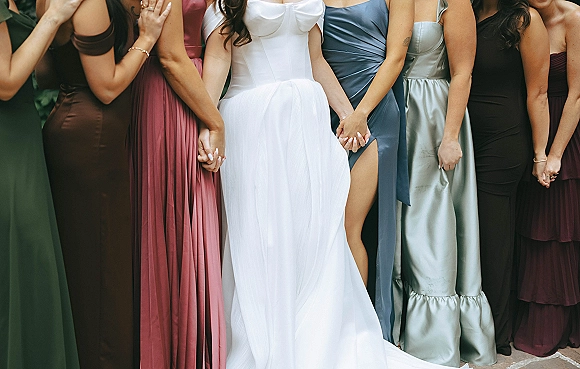
Dusty rose is one of the safest bridesmaid shades to set beside a white or ivory gown, because its warm gray keeps clear separation from both without competing. Against optic white the contrast is clean and modern; against ivory the two warm tones sit softly together, which suits a gown that is itself warm-toned. The shade almost never reads as a near-miss with the gown the way a blush can when the gown is also pink.
Across the wider party, dusty rose extends easily. A deeper dusky rose for the mothers and a paler, near-blush dusty rose for the flower girls still read as one family, because the shade’s neutrality absorbs a range of values. Boutonnieres and pocket squares in dusty rose or a coordinating mauve tie the groomsmen to the party without matching exactly. Comparing cuts and dye lots across a range of labels is easiest through the bridesmaid dress vendors in the directory, since the same shade name varies enough between makers that seeing them together is the only way to hold the party to one dusty rose.
Frequently Asked Questions
What color is dusty rose?
Dusty rose is a muted, slightly grayed pink with a warm undertone and a faint touch of brown. It reads deeper and softer than blush and warmer than mauve, and it tends to look grayer in fabric than it does on a screen. Because the gray holds the pink back from brightness, it photographs as romantic rather than sweet.
What is the difference between dusty rose and blush bridesmaid dresses?
Blush is lighter, cooler, and closer to a pink-tinted ivory, while dusty rose is deeper, warmer, and carries more gray. Blush reads delicate and can wash out in bright sun; dusty rose holds its color and reads slightly vintage. In a mixed party the two sit together well as long as one fabric runs across both.
Is dusty rose the same as mauve or dusty pink?
Dusty pink is essentially the same shade under a different name, most common outside the United States, so the two are safe to treat as one color. Mauve is a separate shade that pulls purple where dusty rose pulls brown, so the two read as cool-versus-warm side by side. Ordering swatches is the only reliable way to place a given collection's version of each.
What colors go with dusty rose bridesmaid dresses?
Sage green is the most consistent pairing, since both colors share a grayed, low-saturation quality. Burgundy adds a rich fall contrast, champagne and nude keep the palette soft and tonal, and navy gives a crisp anchor for the groomsmen. Rose gold and antique gold warm the shade, while silver cools it toward a more modern look.
Will dusty rose dresses ordered in different fabrics match?
Not visibly. The same dye reads warmer and pinker in satin, which reflects light, and softer and grayer in chiffon, which absorbs it and stacks color across layers. Holding one fabric across the party and letting silhouettes vary is the reliable approach; if fabrics do vary, vary them across the whole party so the difference reads as a choice.
Does dusty rose work for a fall wedding?
Yes, and its brown undertone is why. Dusty rose sits naturally beside rust, terracotta, copper, and burgundy, where a brighter pink would fight them. The strongest approach keeps the shade and changes the fabric, moving to velvet, crepe, or matte satin with sleeves rather than airy chiffon, and pairing the dresses with autumn-weighted florals.