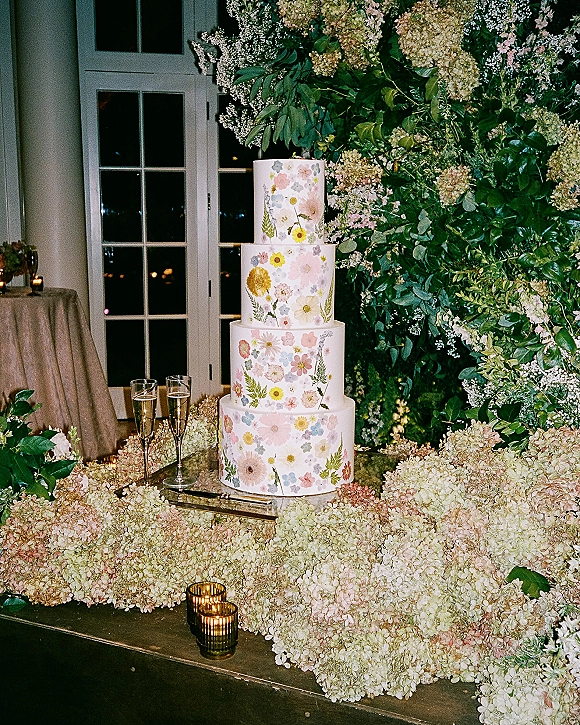
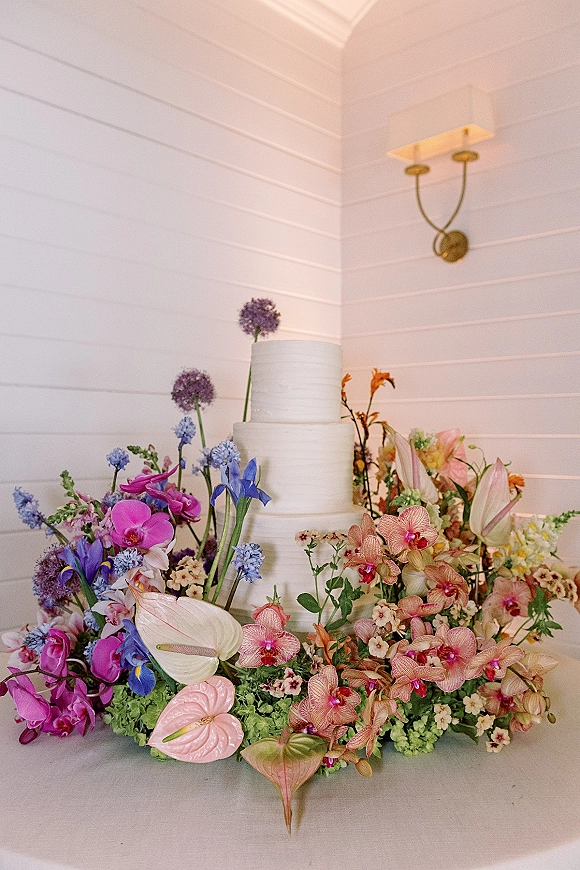
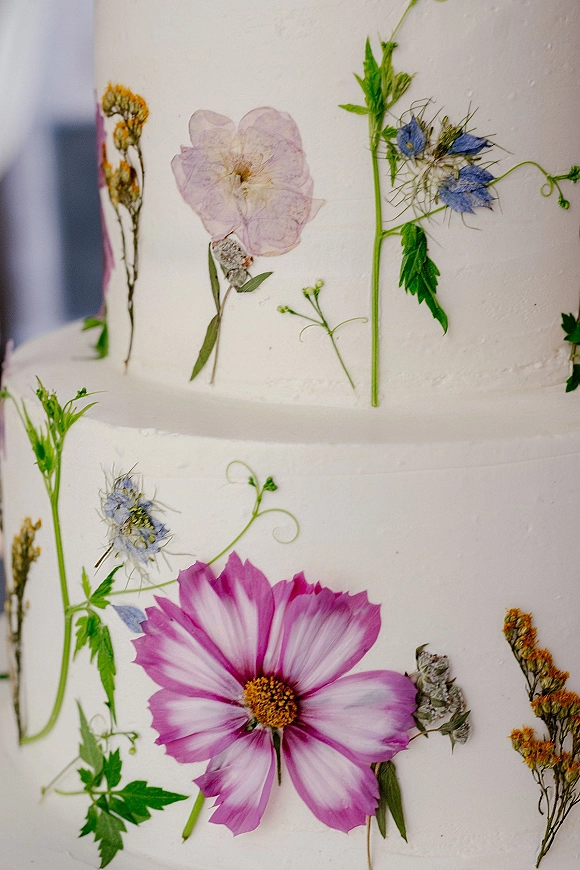
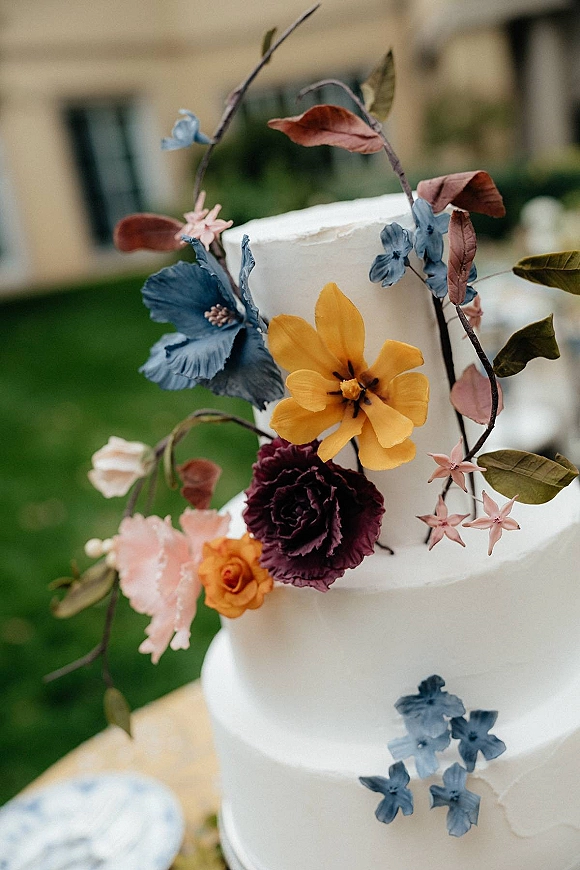
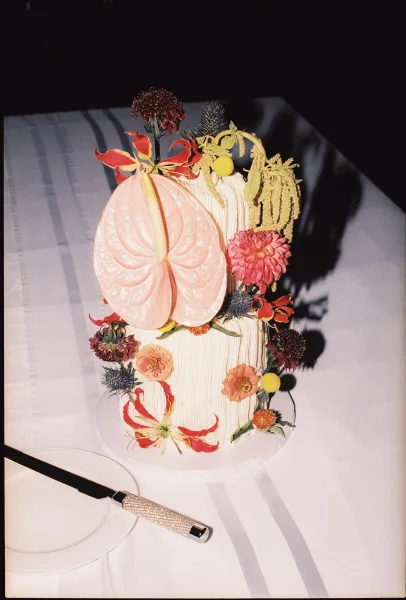
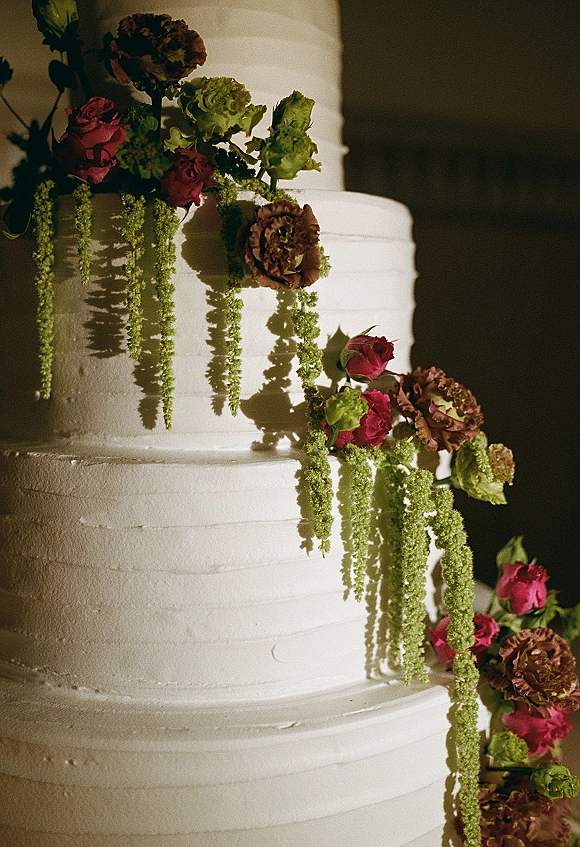
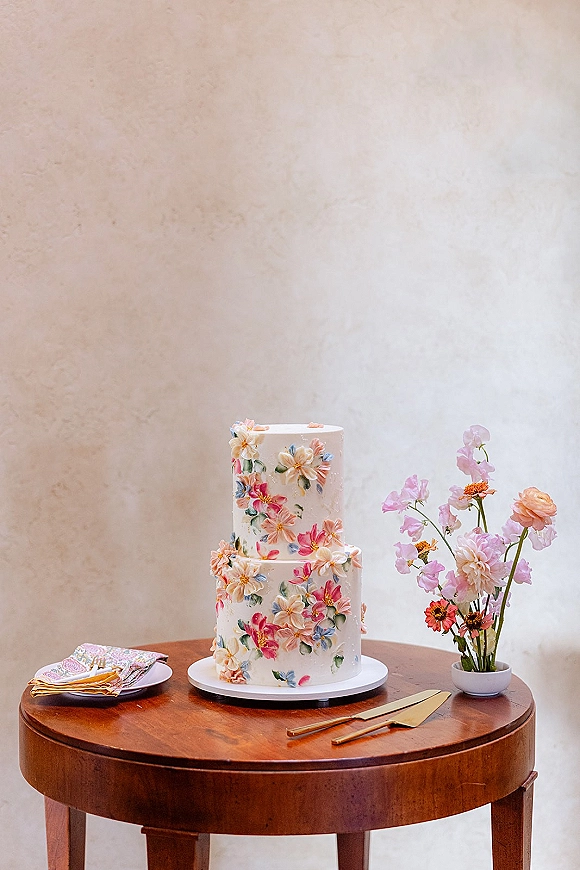
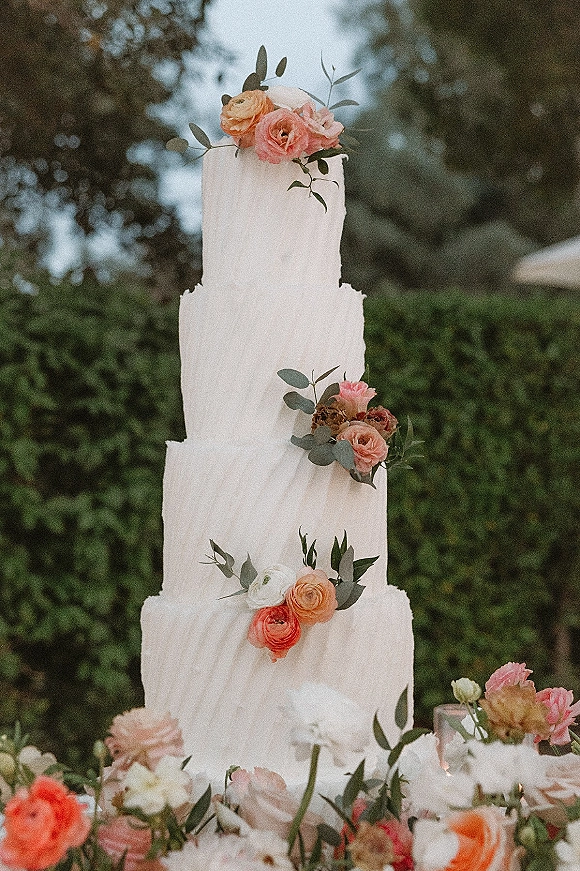
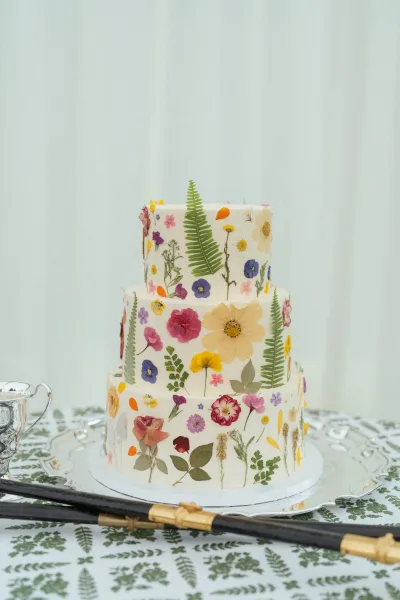
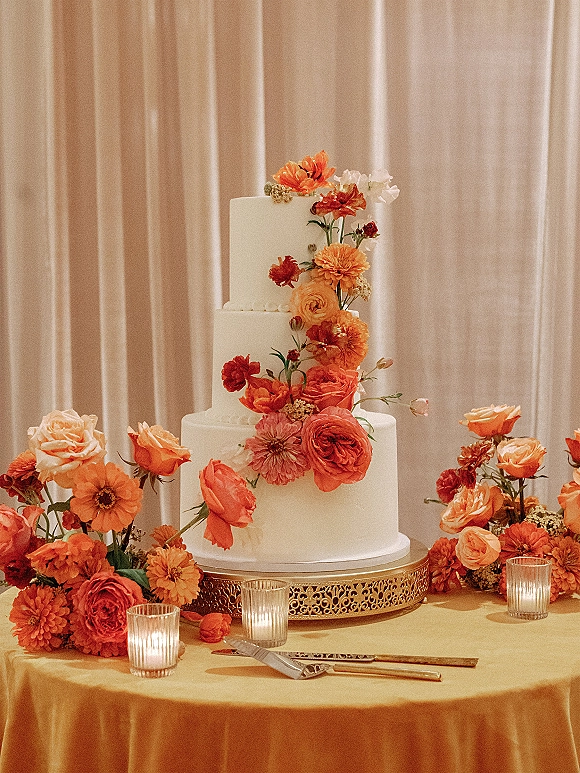
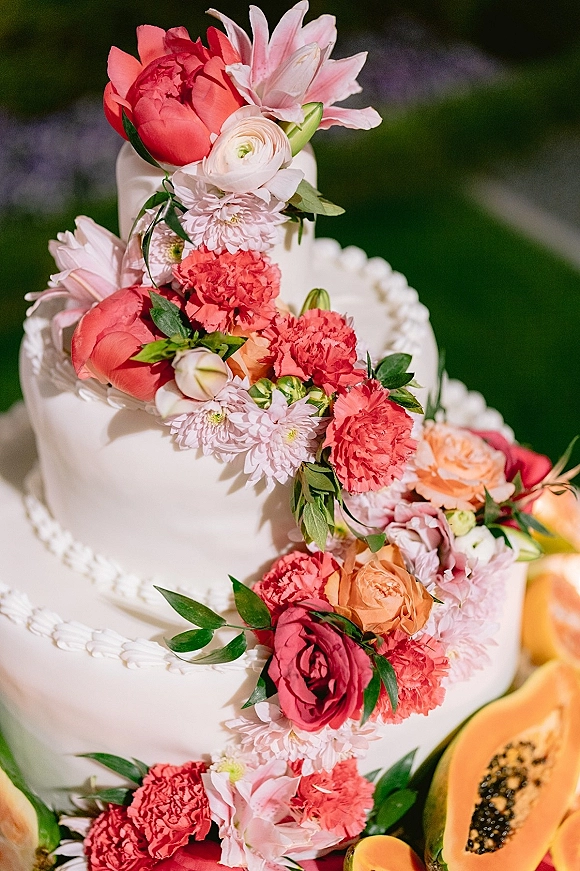
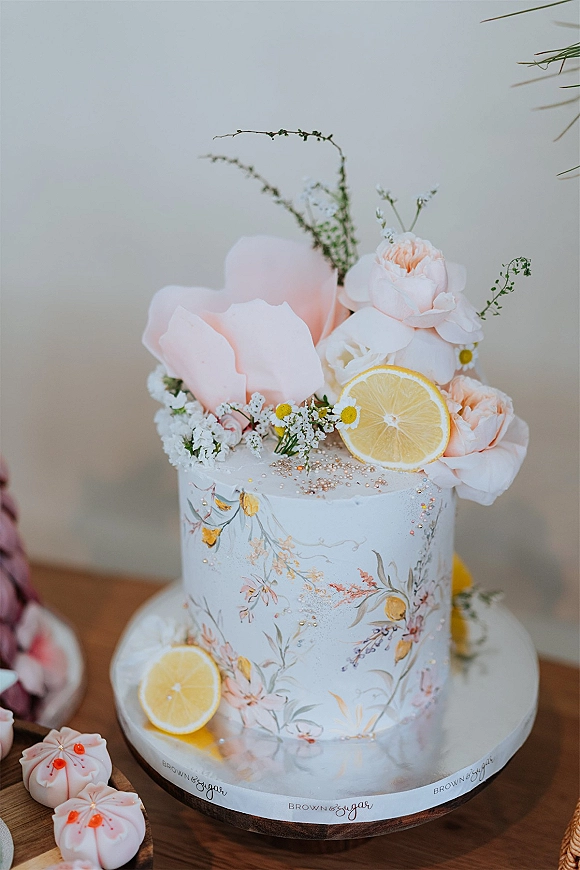
The technique chosen (fresh, sugar-crafted, painted, or piped) is as much a practical decision as an aesthetic one. Each approach carries different lead time requirements, different cost structures, and a different visual result in photographs. Understanding these distinctions before meeting with a baker makes the consultation substantially more productive.
Fresh Flowers on a Wedding Cake
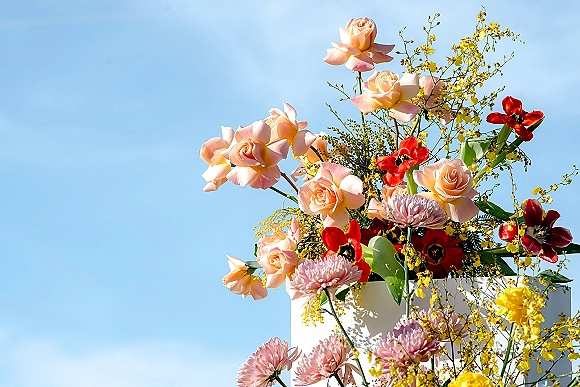
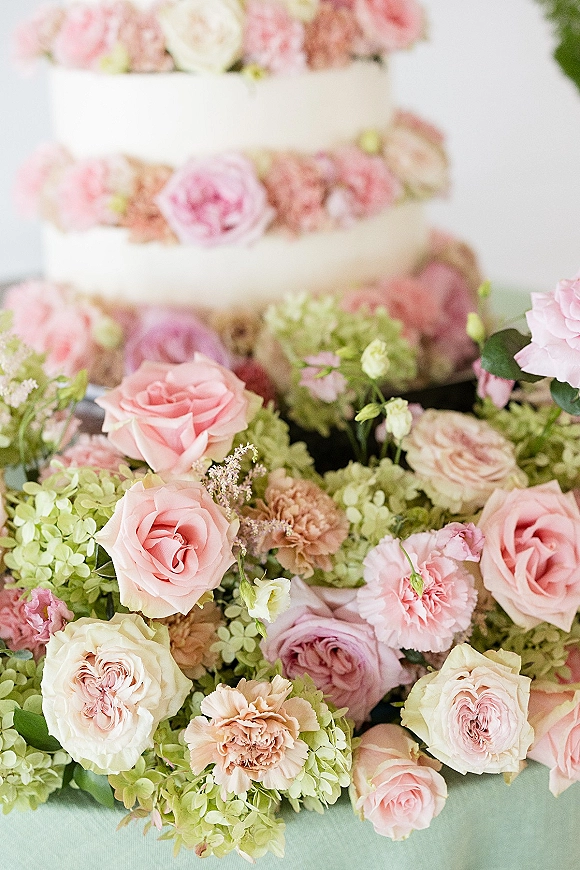
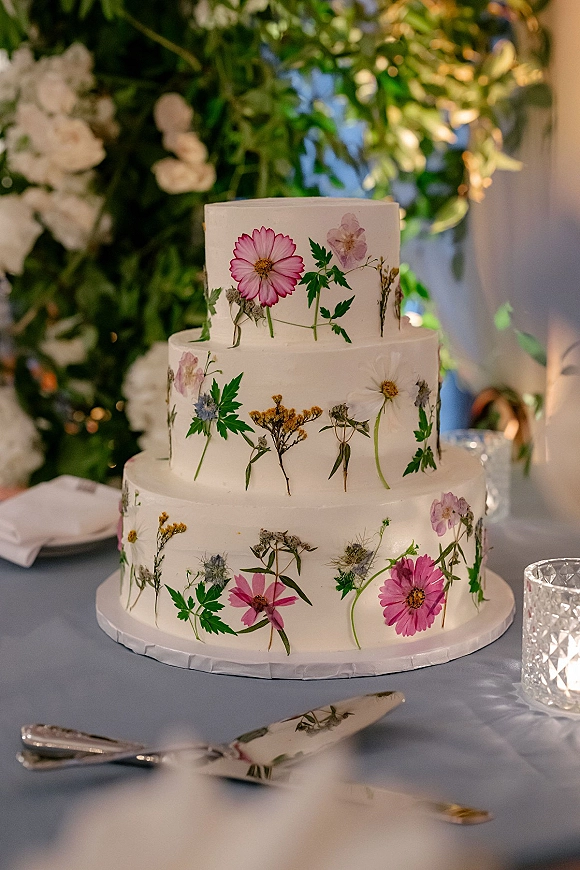
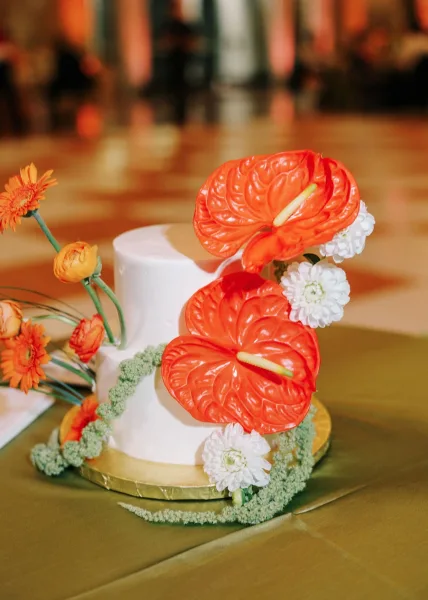
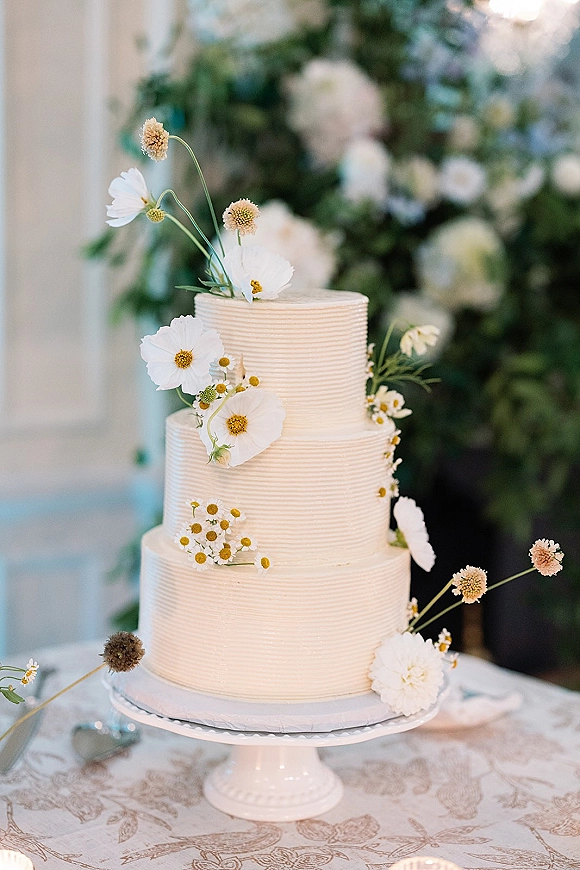
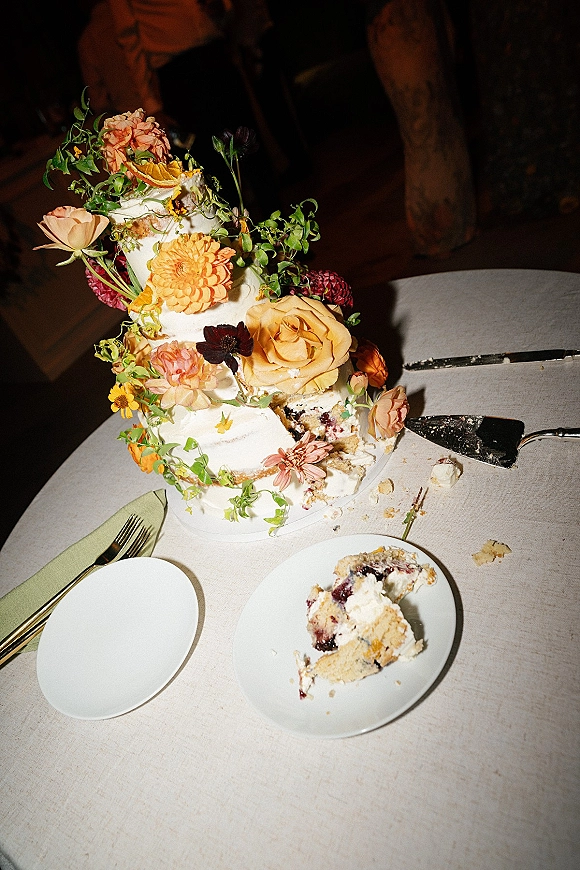
Fresh flowers are the most common floral treatment on wedding cakes, partly because they’re the most accessible and partly because the result photographs well without requiring the extended labor of sugar work. A cake dressed with fresh garden roses, ranunculus, and trailing greenery can look striking.
The practical constraint is food safety. Many florists source blooms treated with pesticides not intended for contact with food, and some flower varieties are toxic regardless of treatment. Confirm food-safe sourcing with the florist before any fresh flower touches the cake.
The most reliable approach is day-of placement by the baker or a designated person, using food-safe picks or stem wrapping to prevent direct contact between stems and the cake’s surface.
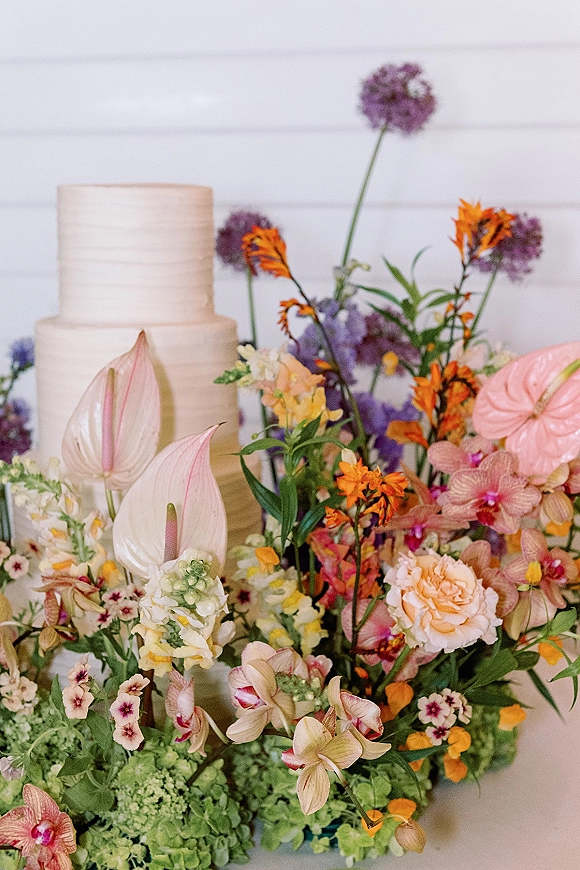
Fresh flowers work best when they connect directly to the wedding’s floral palette. A cake dressed with flowers that bear no relation to the bouquets and centerpieces reads as an afterthought. When the baker and florist communicate before the wedding, ideally with the florist setting aside specific blooms from the wedding order for the cake, the result is a table that reads as designed rather than assembled.
Sugar Flowers and Botanical Sugarwork
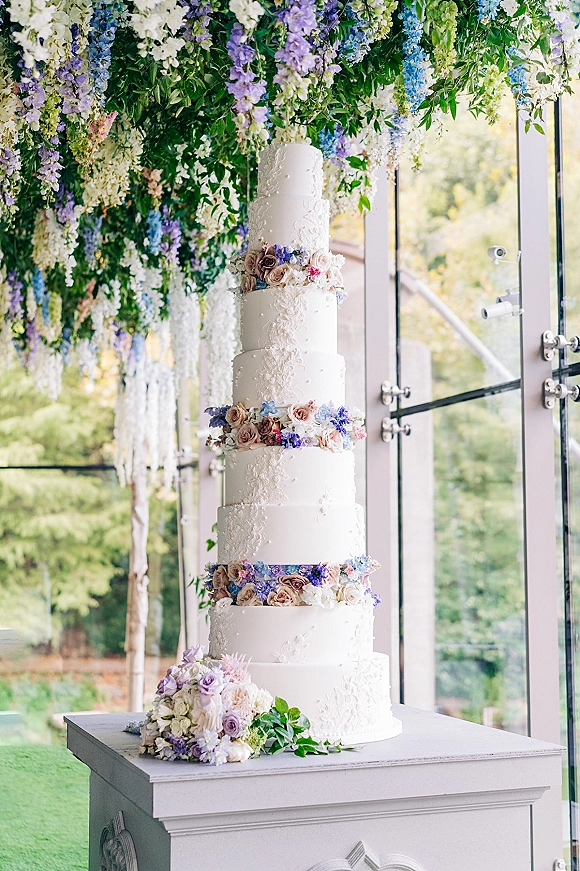
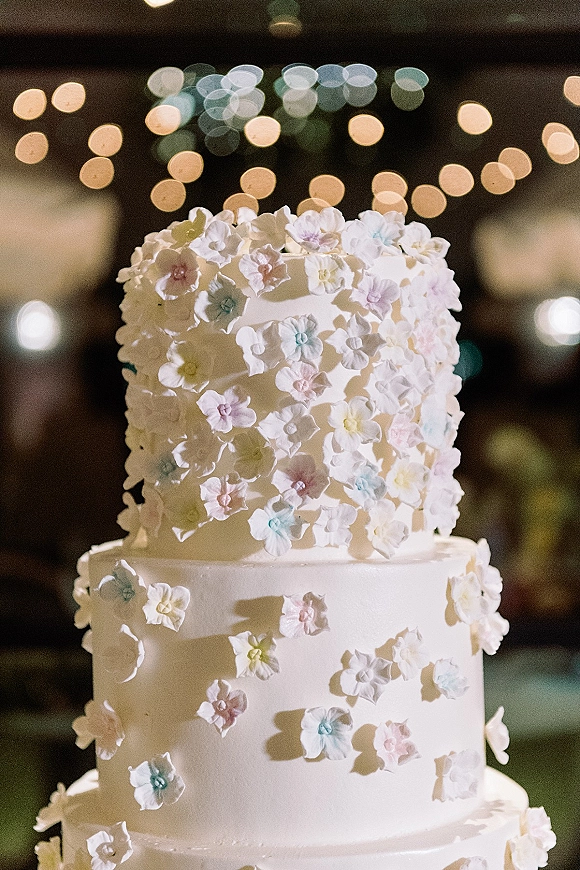
Sugar flowers are hand-sculpted from gum paste or a gum paste and fondant blend, dried and dusted with food-safe petal dusts to replicate the depth and translucency of real petals. At the highest level of execution, individual petals are shaped by hand, veined, cupped, and assembled into blooms that are difficult to distinguish from fresh flowers in photographs.
The lead time is significant. A complex cascading arrangement of hand-sculpted sugar peonies, garden roses, and trailing sweet peas can require six to eight weeks of preparation. For peak season dates, many bakers who specialize in sugar work are booked six to nine months out. The conversation with a sugar flower baker needs to happen earlier in the planning process than most couples expect.
The advantage of sugar over fresh is longevity and placement flexibility. Sugar flowers can be positioned anywhere on the cake without food safety concerns, prepared months in advance, and hold up through the duration of the reception without wilting. They also allow for colors that are difficult or impossible to source in fresh flowers: specific shades of blue, near-black, and highly saturated tones.
Painted Florals and Watercolor Techniques
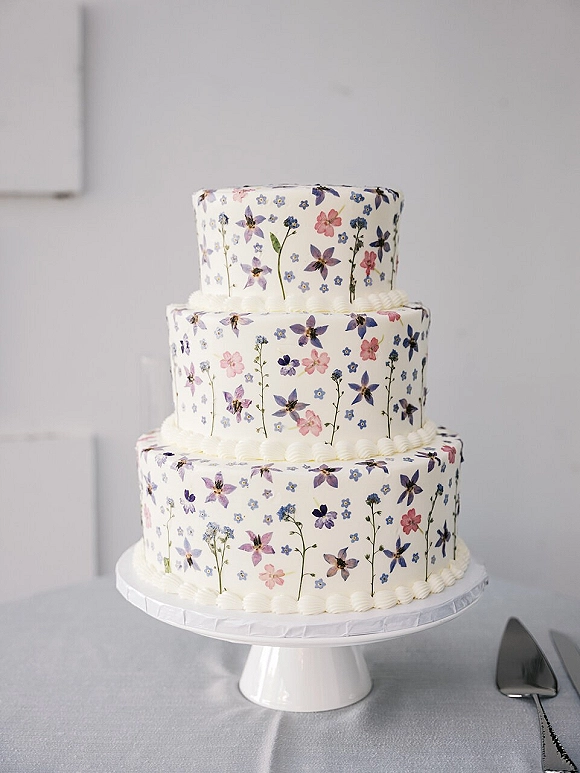
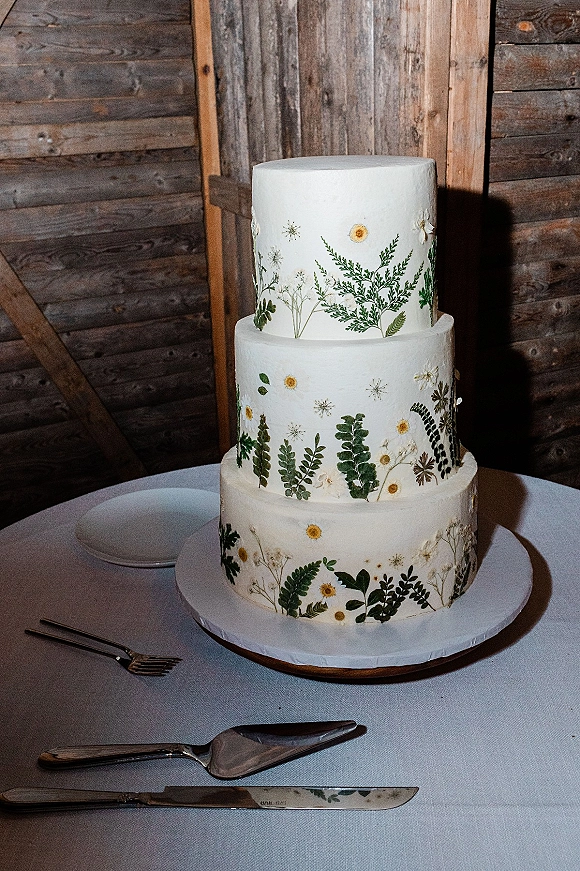
Painted botanical cakes are a distinct category from three-dimensional floral work. The decoration is applied directly to the cake’s surface, typically to a smooth fondant or buttercream base, using food-safe edible paints and food coloring. Results range from loose, impressionistic watercolor washes to precise botanical illustration styles that replicate the quality of scientific drawing.
Watercolor floral cakes tend to work best in softer color palettes: blush, sage, dusty blue, muted terracotta. The translucent layering of edible color creates genuine depth in these ranges. High-contrast or highly saturated painted cakes are harder to execute well and require significant technical skill to avoid reading as flat.
The style pairs naturally with organic or garden wedding aesthetics, where a looser, more impressionistic sensibility fits the overall visual register.
Buttercream Florals
Buttercream floral cakes occupy the middle ground between the formal precision of sugar flowers and the organic looseness of fresh arrangements. Piped buttercream flowers (roses, ranunculus, peonies, and smaller filler blooms) are sculpted directly onto the cake’s surface using piping tips and a palette knife. The texture is inherently softer and more relaxed than fondant or gum paste work, which suits organic, garden, and rustic wedding aesthetics.
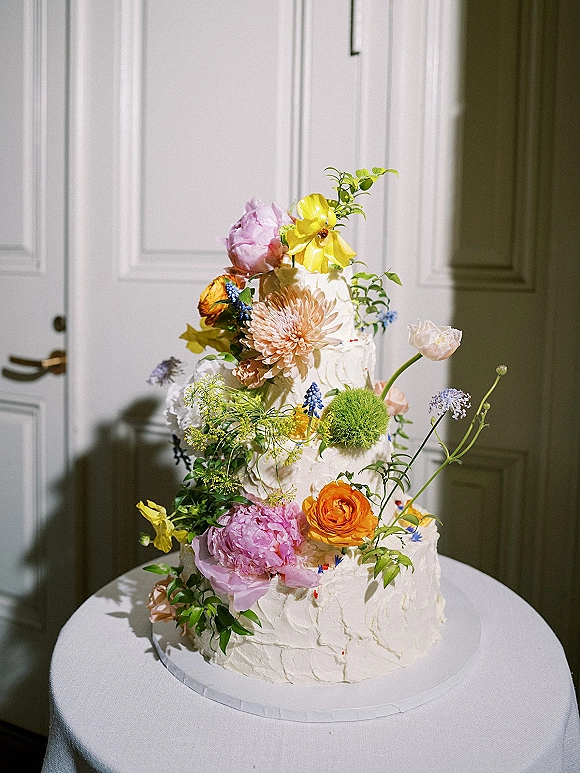
The visual character depends heavily on the frosting base. A smooth, sharp-edged buttercream base makes piped flowers read as precise and intentional. A textured or palette-knife-finished base (rough strokes, visible movement) makes the same piped flowers read as more painterly and loose.
Simple floral wedding cakes in buttercream, with a few well-placed blooms rather than full coverage, are among the most versatile options across wedding aesthetics and are generally more accessible from a cost perspective than comparable sugar flower work.
Cascading Floral Wedding Cakes
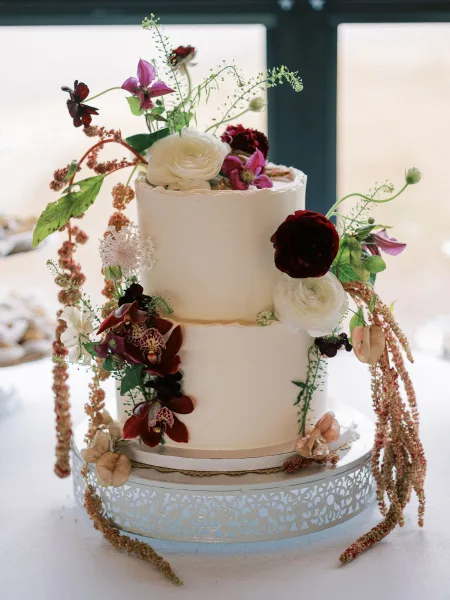
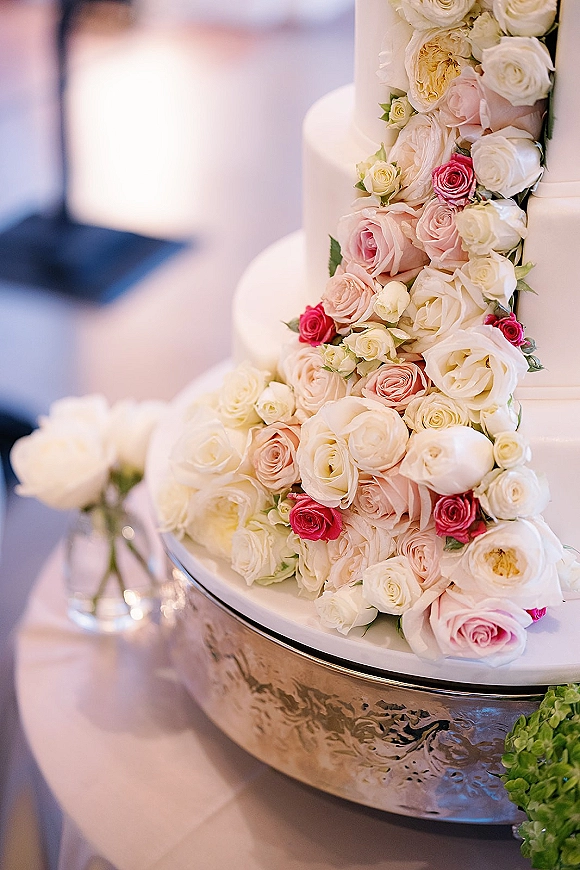
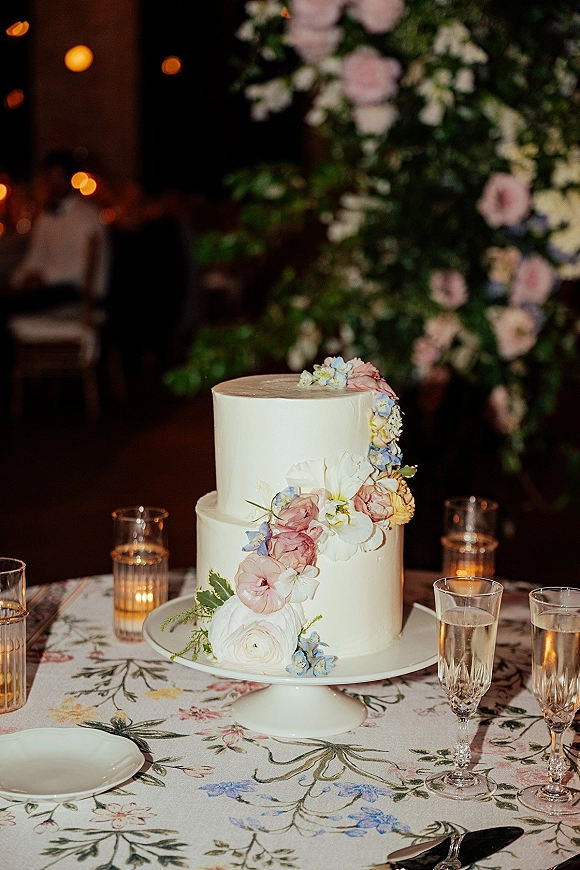
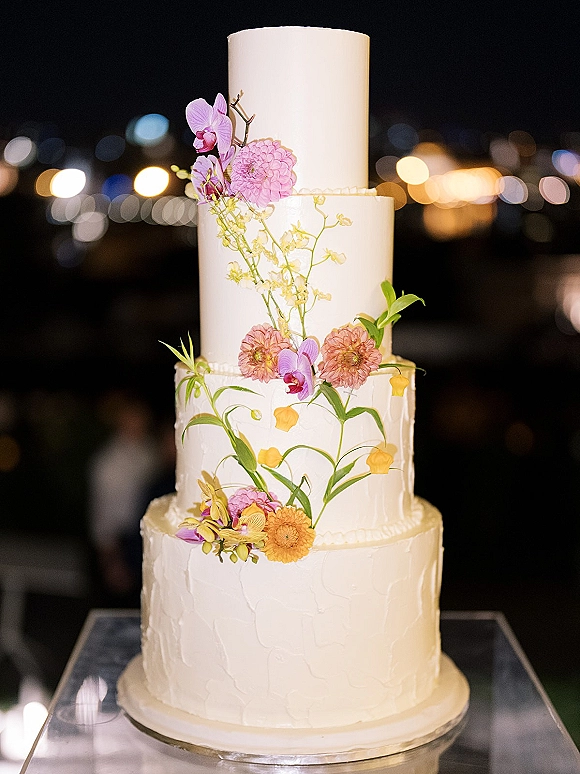
The cascading design, where flowers or foliage trail diagonally down the side of a tiered cake, is one of the most photographed compositions in wedding cake design. The diagonal line creates movement and scale that a symmetrically decorated cake doesn’t have, and it photographs particularly well from a three-quarter angle, which is how most wedding cake shots are framed.
Cascades work in both fresh and sugar flower formats. A fresh flower cascade requires careful day-of placement, typically with the florist or baker working directly on the delivered cake at the venue. A sugar flower cascade is constructed in the baker’s studio and arrives fully assembled, or in pre-positioned sections placed on-site, which simplifies logistics considerably.
Proportion matters. A cascade that covers too much of the cake’s surface overwhelms the tiers and makes the construction read as heavy. The most effective cascades use the blank frosted surface as a design element: the tension between the open background and the trailing florals creates the visual interest.
Floral Wedding Cake Colors
Color is one of the most consequential decisions in floral cake design, and the relationship between the floral palette and the frosting base determines most of the visual outcome.
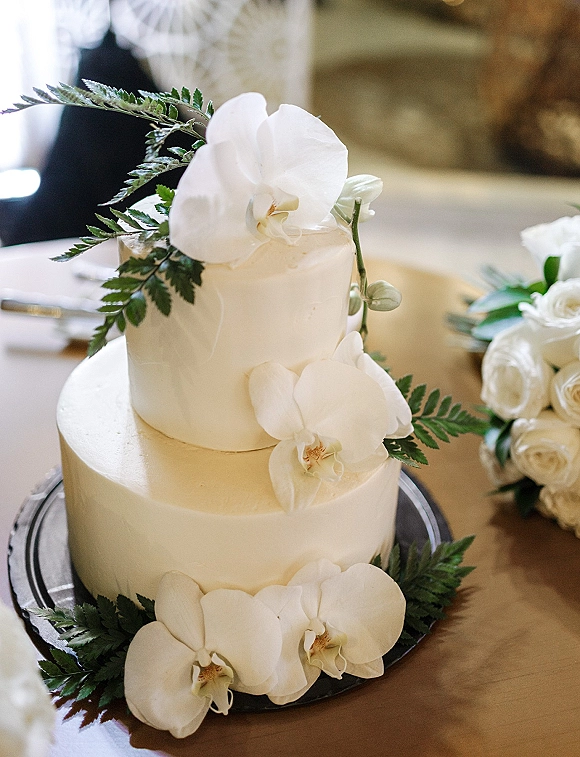
White floral wedding cakes are the most widely requested variation. White or ivory frosting creates a clean, formal backdrop that works across flower colors and styles, from a cascade of blush garden roses to a single arrangement of white lisianthus and eucalyptus. The choice between white and ivory shifts the effect: white registers as sharp and contemporary; ivory reads as softer and more traditional.
Pink floral wedding cakes are the most searched color variant in this category. Pink florals in sugar or fresh formats read as inherently bridal without being literal about it. The range within pink is wide: blush and dusty rose for softer palettes, hot pink and fuchsia for high-contrast modern aesthetics, coral for warm outdoor weddings.
The frosting base shifts everything. Pink florals on ivory read as soft and romantic. On white, the same flowers register as fresh and modern. On sage green, the result is garden-adjacent and organic. Against a darker or more saturated base (slate, terracotta, dusty blue), florals shift into something more editorial and unexpected.
"Color matching is the most common place couples miscommunicate with their baker," says Carats + Cake’s Editor-in-Chief. "The reference image from Pinterest was shot in a different light, against a different background, with different flowers. Give your baker the actual blooms from your florist, or at minimum, fabric swatches from your bridesmaids. That’s where the calibration happens."
Floral Wedding Cake Toppers
A floral wedding cake topper uses a concentrated arrangement of flowers (fresh, sugar, dried, or a mix) placed at the top of the cake rather than distributed across tiers. It’s the most accessible entry point into floral cake design, and it works across nearly every cake style, from a smooth fondant tier to a naked or semi-naked finish.
Fresh topper arrangements are typically placed day-of and work best when they echo the wedding’s bouquet. A compact arrangement of garden roses, ranunculus, and trailing herbs can transform a plainly frosted cake in minutes. Dried flower toppers, including pampas grass, preserved eucalyptus, and strawflowers, have grown significantly in popularity for their longevity and ability to complement earthy, bohemian, and rustic aesthetics.
Sugar flower toppers require the same lead time as any sugar work, but because the arrangement is concentrated rather than cascading, the labor investment is lower. A well-executed sugar topper on a simple buttercream cake can read as more refined than a full cascading design that doesn’t fit the rest of the wedding’s visual register.
Coordinating Your Baker and Florist
The two vendors most responsible for a floral wedding cake’s outcome often don’t communicate directly unless the couple facilitates it. This is one of the most practical things a couple can do early in the planning process.
Share your florist’s full palette with your baker at the initial consultation, along with any flowers already committed to for bouquets and centerpieces. If the cake will use fresh florals, confirm which blooms the florist can set aside from the wedding order specifically for the cake. Establish clearly who is responsible for placing the flowers on site. In most cases, this should be the baker or a designated person trained in food-safe handling.
For couples building out a wedding dessert table, the cake’s floral palette should connect visually to the surrounding desserts and table styling. Not match exactly, but share enough botanical language that the table reads as intentional. A cake with pink garden roses alongside coordinating blush and ivory macarons achieves this without being matchy.
Couples who want to explore bakers by market and specialty can browse wedding cake bakers across styles and locations on Carats + Cake.
Frequently Asked Questions
What is a floral wedding cake?
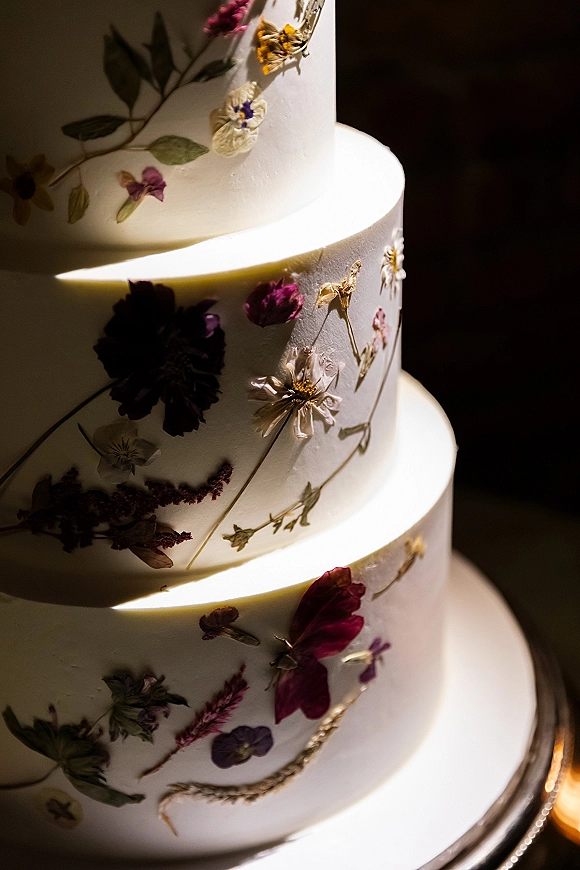
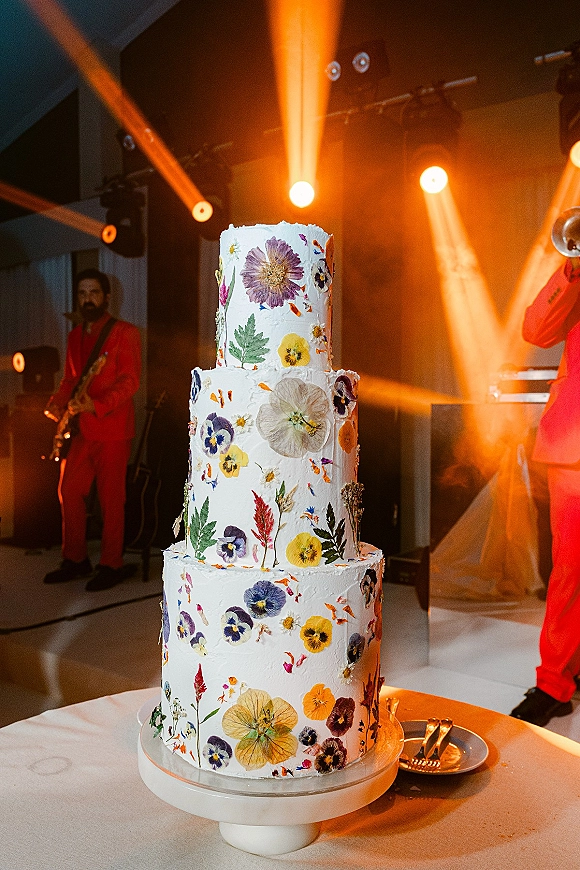
A floral wedding cake uses flowers (fresh, sugar-crafted, dried, or painted) as its primary decorative element. The term covers a wide range of styles, from a single bloom pressed into textured buttercream to a fully hand-sculpted sugar flower cascade on a formal tiered cake. The connecting thread is botanical form used as the visual language of the cake's decoration.
Are fresh flowers safe to put on a wedding cake?
Not automatically. Many florists source flowers treated with pesticides not intended for food contact, and some flower varieties are toxic regardless of treatment. Food-safe placement requires confirmed sourcing with the florist, food-safe stem barriers or picks to prevent direct contact with the cake's surface, and ideally a baker or designated person placing the flowers at the venue after delivery. Confirm food safety protocols with both your baker and florist well before the wedding.
How far in advance do sugar flowers need to be ordered?
Sugar flower work requires more lead time than most other cake decorations. Simple sugar botanicals may need only a few weeks. A complex cascading arrangement of hand-sculpted sugar peonies, roses, and foliage can require six to eight weeks of preparation, which means the baker conversation needs to happen significantly earlier than for a standard cake. For peak season dates, many bakers who specialize in sugar work are booked six to nine months out.
What is the difference between buttercream and sugar flower cakes?
Buttercream floral cakes have flowers piped directly onto the cake's surface using frosting: a softer, more relaxed visual result that suits organic and garden aesthetics. Sugar flower cakes use hand-sculpted gum paste blooms that are dried and assembled separately before being placed on the cake. Sugar flowers are more precise, more time-intensive, and more durable; buttercream florals are more textural and generally more accessible. Both photograph well; the choice is primarily aesthetic and practical.
Can a floral wedding cake work for an outdoor wedding?
Yes, with planning. Fresh flowers on an outdoor cake are sensitive to heat and direct sun, and placement timing and shade matter. Buttercream cakes can soften in warm temperatures, affecting both the frosting texture and the integrity of piped flowers. Sugar flowers are the most stable option for outdoor settings. Confirm temperature management with your baker, particularly for summer or warm-climate weddings, and discuss delivery timing relative to when guests will see the cake.
How much does a floral wedding cake cost?
The technique largely determines the cost range. Buttercream floral cakes are generally the most accessible option; fresh flowers add minimal incremental cost when sourced from the existing floral order. Sugar flower cakes carry significantly higher labor costs. A complex arrangement from an experienced specialist can represent 40–60% of the total cake budget. For a general benchmark, floral wedding cakes from established bakers typically range from $800 to $3,000 or more depending on tier count, technique, and market.