Short Wedding Dress Lengths: Mini, Tea-Length, and Midi
Short wedding dresses divide into four distinct length categories, each with its own visual logic and occasion register.
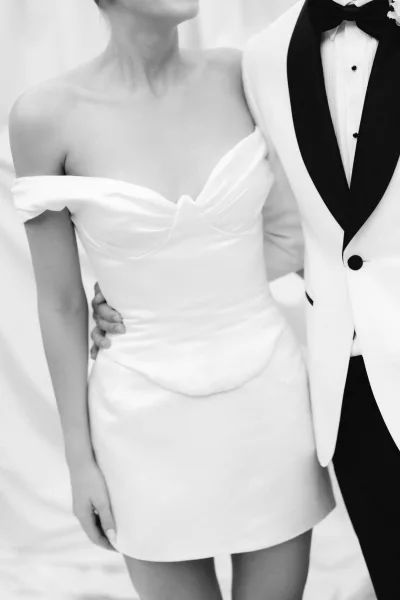
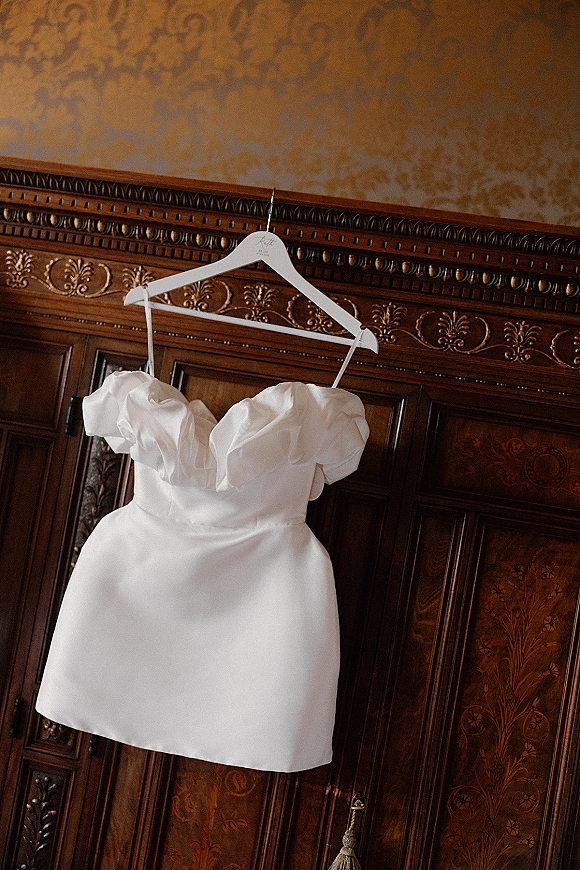
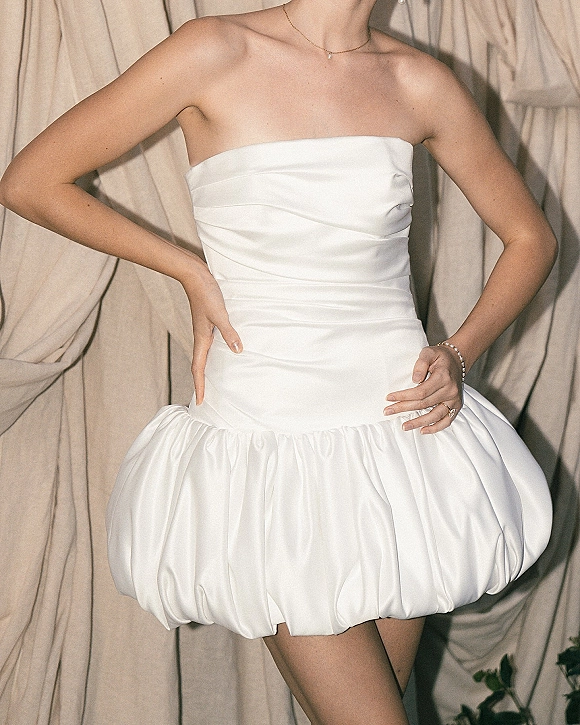
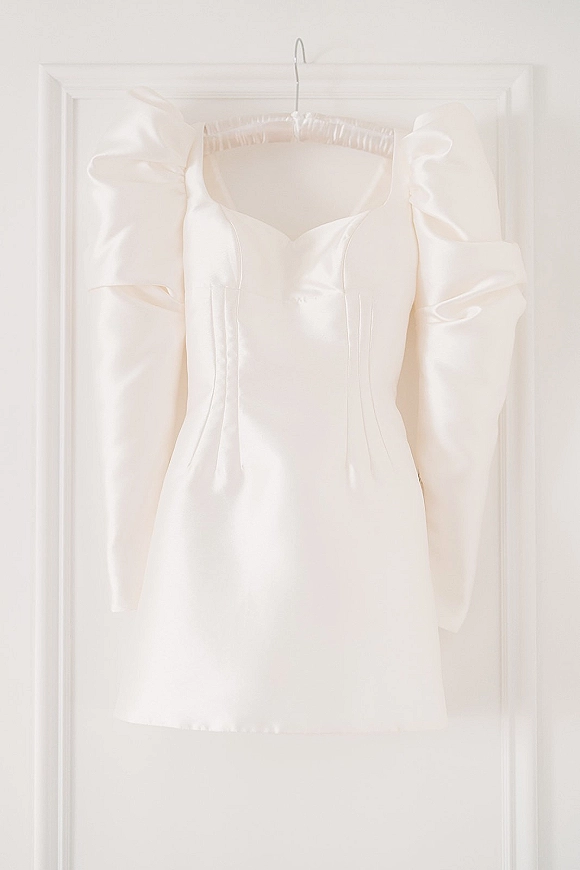
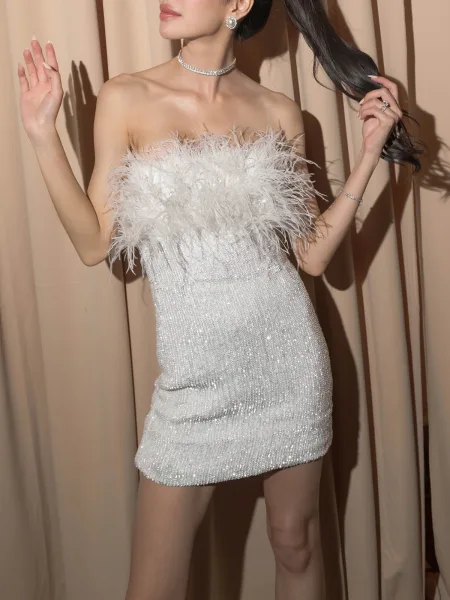
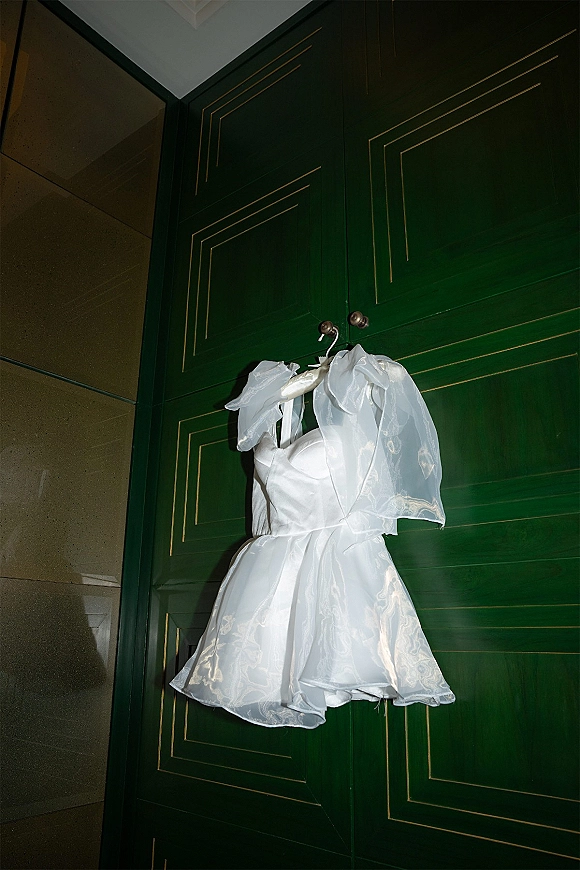
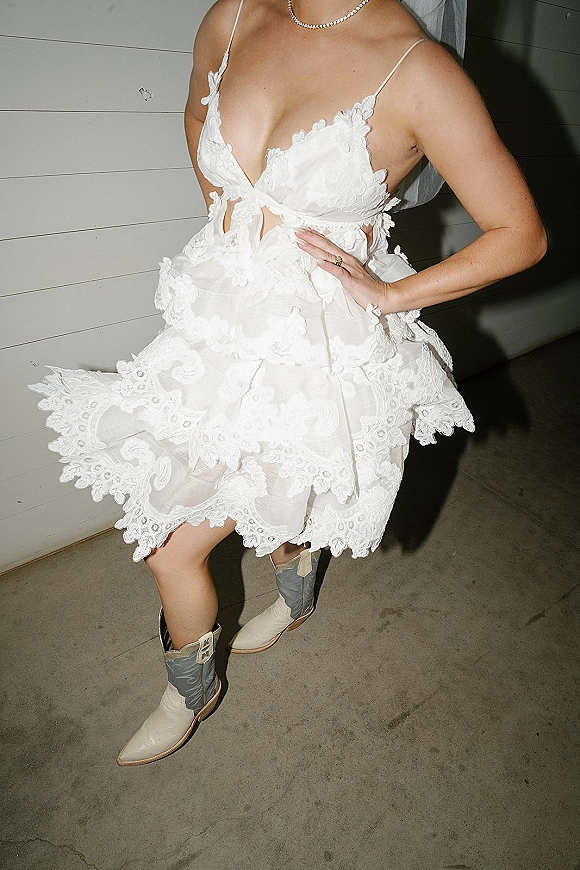
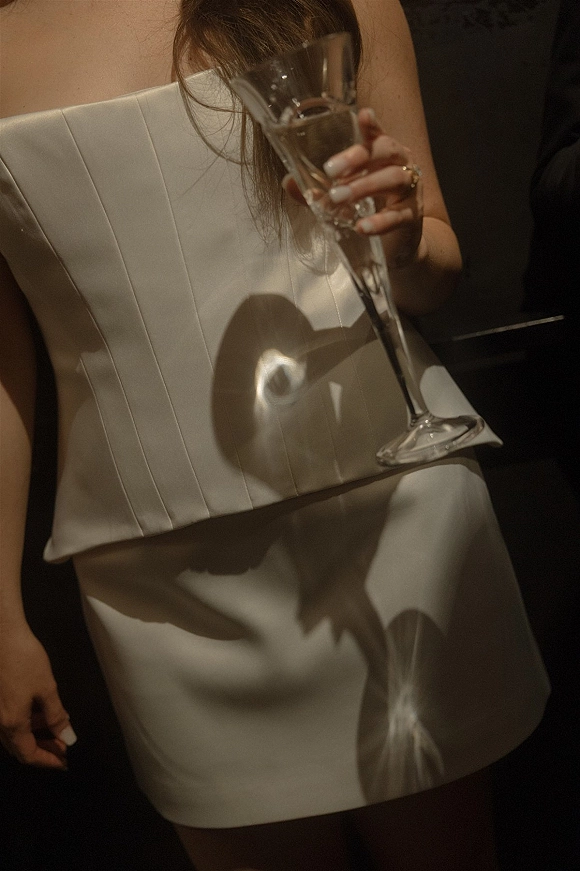
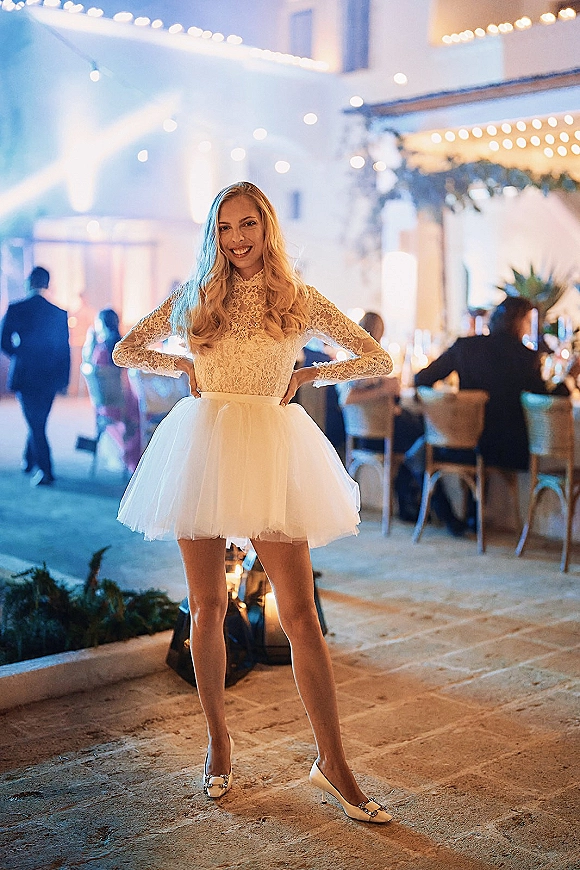
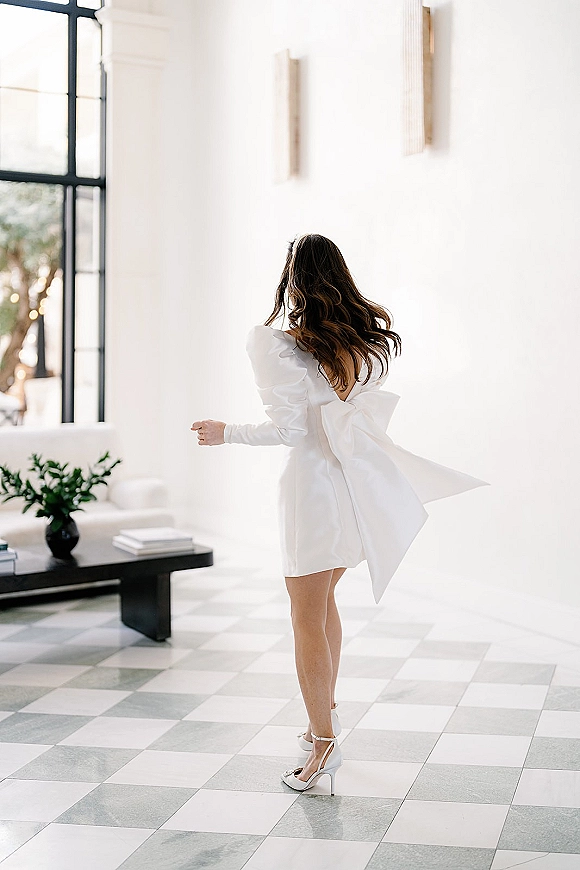
Mini dresses fall at mid-thigh, roughly 28 to 34 inches from the waist. The mini is a deliberate aesthetic choice, unmistakably fashion-forward, and suits courthouse weddings, rooftop ceremonies, and city celebrations. It’s also the most common choice for a reception change when the ceremony look is a full-length gown.
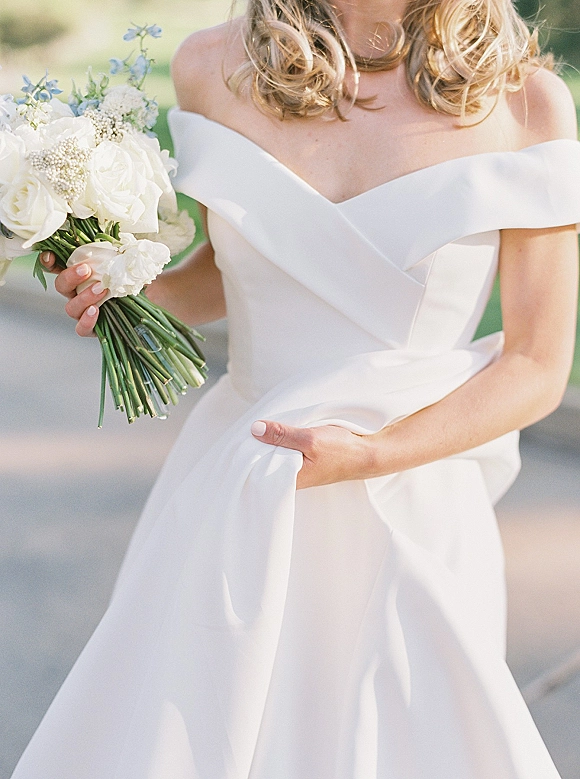
Knee-length and cocktail-length dresses land at or just below the knee, approximately 38 to 42 inches. This is the most versatile length in the short category. A structured A-line or fit-and-flare at knee-length moves between garden ceremonies, outdoor venues, and casual receptions without reading as underdressed for any of them.
Tea-length dresses reach mid-calf, typically between 45 and 50 inches. The tea-length silhouette has a vintage quality that associates naturally with 1950s-inspired bridal and full skirts. It’s the most formal of the short options, suited for venues where a mini would feel out of place but a floor-length gown reads as too grand for the setting.
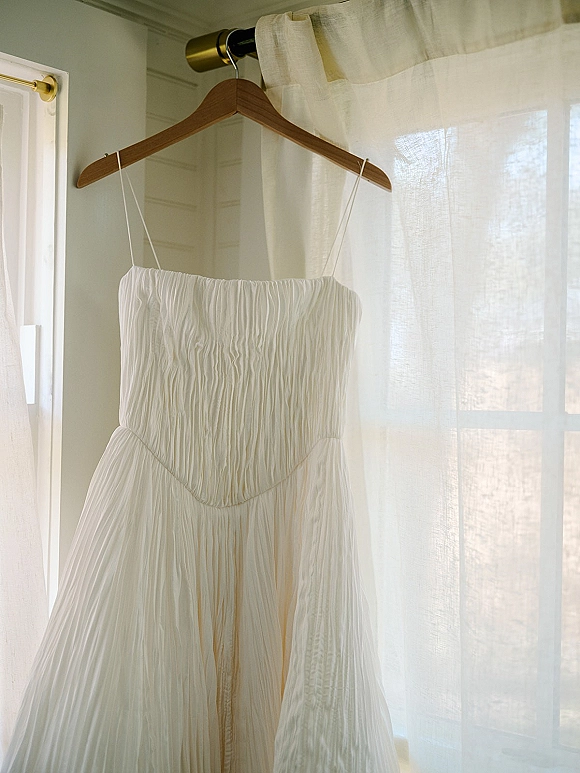
Midi styles sit ankle-skimming at 50-plus inches and occupy the border between short and floor-length. At this length, the most common silhouettes are A-line and column cuts, both reading as understated, modern bridal.
Short Lace Wedding Dress
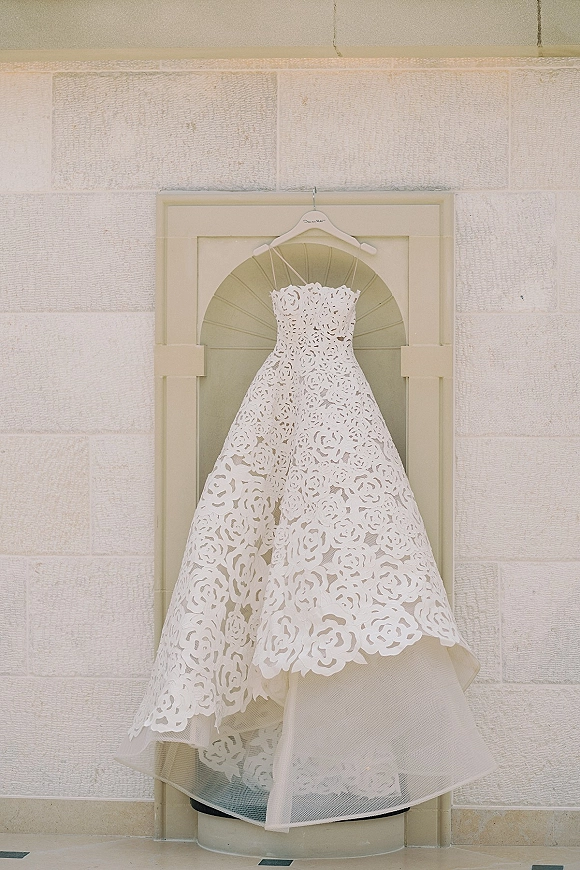
Lace is the most common fabric in the short wedding dress category, and the reasons are practical as well as aesthetic. Short hems put more of the garment’s construction on display than floor-length gowns, where skirt volume dominates. Lace handles close inspection well. The texture, variation, and detail of lace appliqué or all-over lace coverage make a short dress feel finished and considered rather than simply informal.
A short lace wedding dress in a cocktail-length A-line is the most consistent performer in this category across real weddings. The combination is versatile: it reads traditional enough for an outdoor garden ceremony and relaxed enough for a backyard or estate venue. Short lace dresses with scalloped or handkerchief hemlines photograph particularly well, since the hem detail becomes visible in full-length shots.
Short lace dresses also appear frequently with illusion necklines: an all-over lace bodice that continues into a sheer tulle or organza overlay at the décolletage. This construction reads as romantic without heavy coverage and suits afternoon and evening ceremonies at knee-length or tea-length.
Short Vintage Wedding Dress
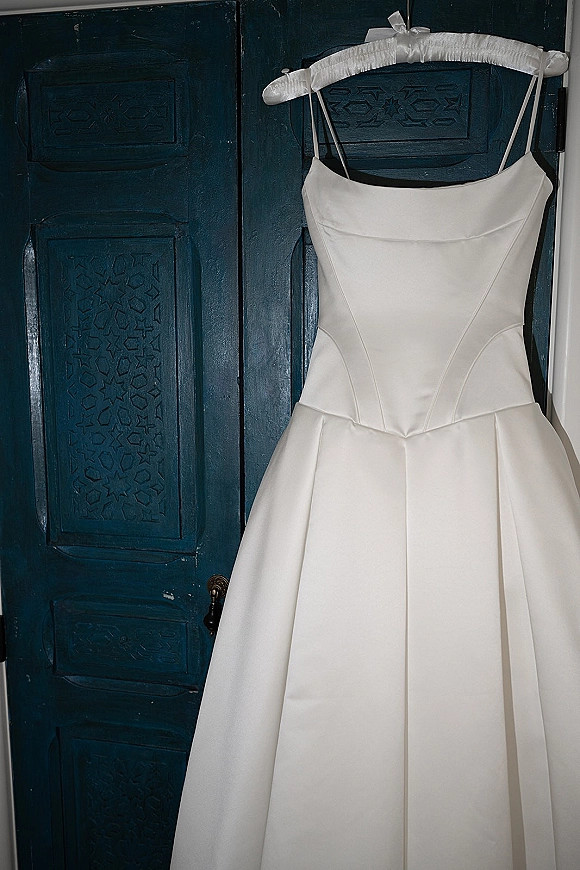
The short vintage wedding dress is a distinct aesthetic category with its own recognizable silhouette. Tea-length and knee-length A-lines with full tulle or taffeta skirts, fitted bodices, and modest necklines are the most common configuration. The look traces directly to 1950s and 1960s bridal; both the silhouette and the fabrication have period associations that are firmly established in the modern bridal inspiration vocabulary.
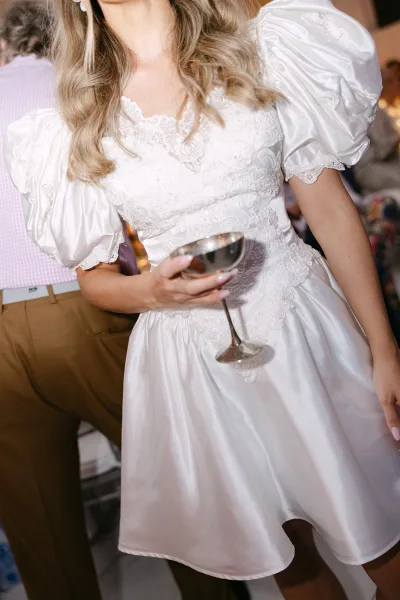
Satin and mikado are the characteristic fabrics in this category. A satin bodice combined with a puffed tulle skirt creates the volume and structure that define the vintage short look. Lace overlays on a tea-length dress with full skirt push the aesthetic further toward vintage-romantic. Buttons down the back, covered buttons on the bodice, and sweetheart or square necklines are the recurring period-appropriate details in real vintage-inspired short bridal.
Short vintage dresses suit a wider range of venues than the aesthetic might suggest. The clean structure and mid-length hemline make them appropriate for morning ceremonies, city weddings, and garden settings where a floor-length gown would read as formal for the scale of the event.
Short Wedding Dress with Sleeves
Sleeves change the visual register of a short wedding dress considerably, particularly at a short hemline, where the balance between coverage above and exposure below becomes a defining design decision.
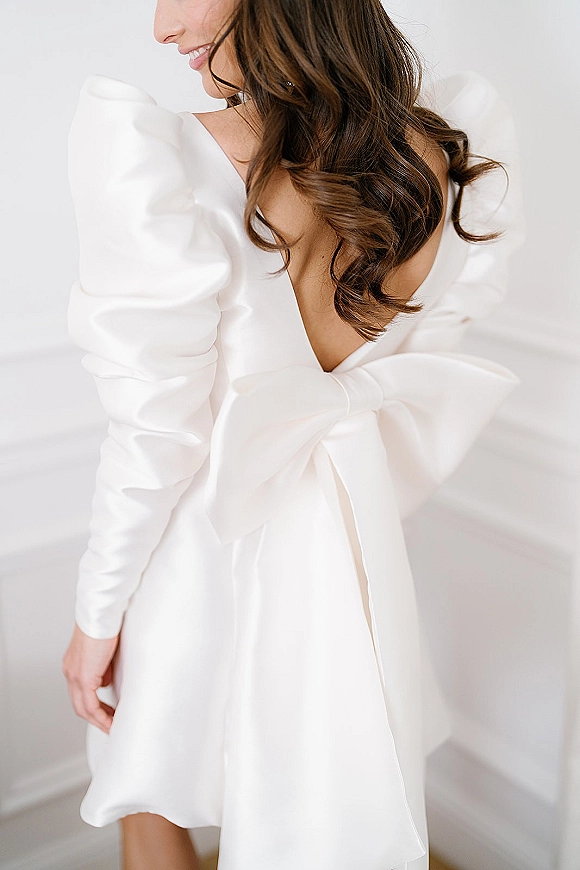
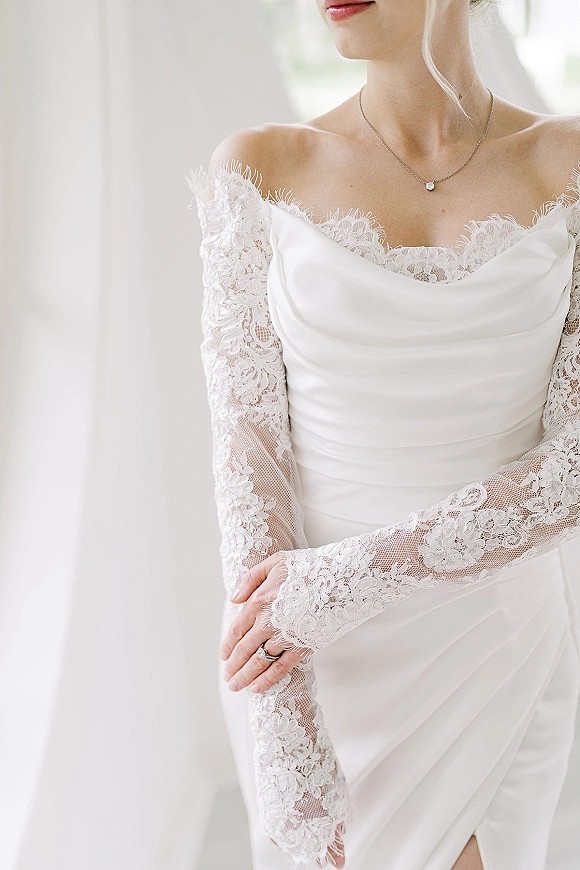
Long sleeves on a mini or knee-length dress create a deliberate editorial tension that photographs well. The covered-up bodice and short hem suit fashion-forward bridal aesthetics and destination elopements equally. Fitted lace sleeves are the most common execution of this combination in real weddings: the sleeve texture anchors the bare-leg length below.
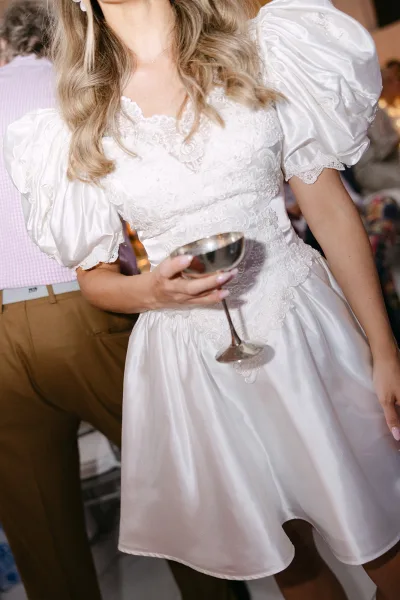
Short puff sleeves on a tea-length or knee-length A-line are among the clearest vintage signals in bridal. The combination reads directly as 1950s-era formal in satin or mikado. Structured cap sleeves in the same silhouette read as slightly more modern.
Three-quarter sleeves suit brides who want sleeve presence without the formality of a wrist-length sleeve. In lace, three-quarter sleeves on a short dress add visual complexity to an otherwise simple silhouette.
For the full range of sleeved bridal looks across all hemline lengths, the wedding dress with sleeves collection on Cherry covers long, short, and three-quarter sleeve options from real weddings.
Short Wedding Reception Dress
The short reception dress is one of the most searched and most practical applications of the short wedding dress category. A bride who wears a full-length gown for the ceremony and changes into a short dress for the reception covers both registers: the formality of the aisle and the mobility of the dance floor.
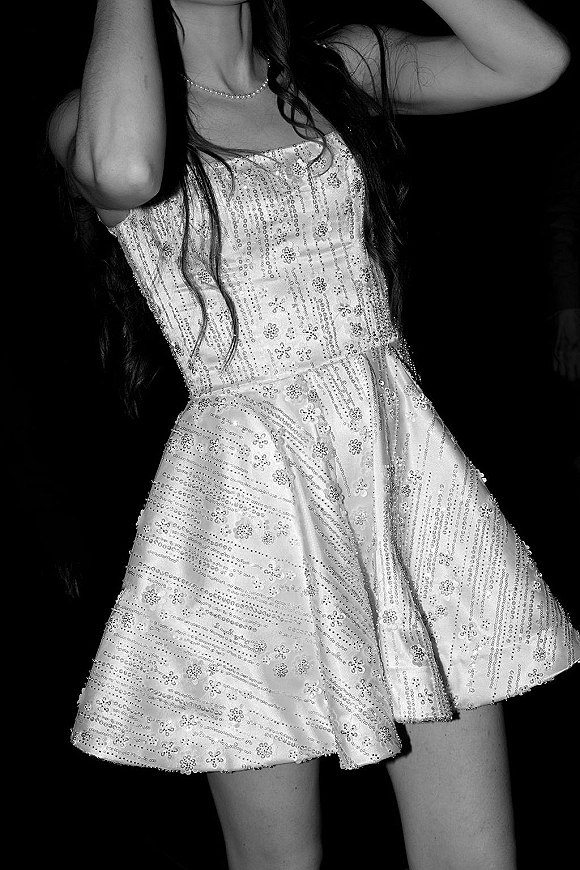
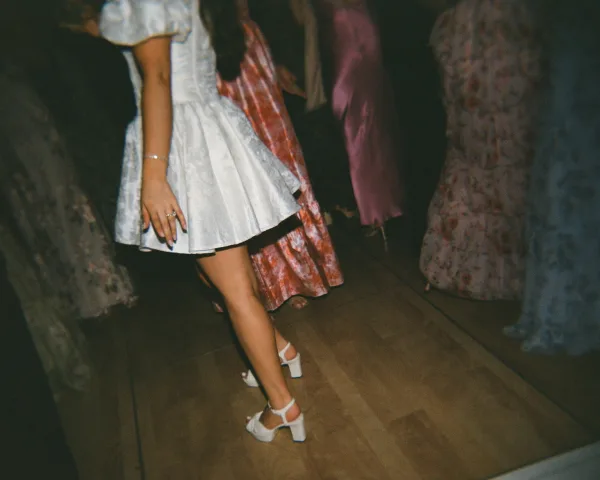
The most common reception dress configurations are knee-length A-lines and cocktail-length sheaths, silhouettes that allow full movement while maintaining a bridal quality distinct from a standard party dress. A short reception dress in a bridal-adjacent fabric (ivory crepe, white satin, blush tulle) reads as intentional and designed. A plainly non-bridal look reads as a different event.
Short reception dresses frequently appear with corset backs, which allows for fit adjustment between the ceremony and the reception look. They also appear as detachable-train constructions: the base dress is a short A-line or sheath, and the overskirt or train removes after the ceremony to reveal the shorter hemline. This is a common custom bridal request and increasingly available ready-to-wear.
Short Beach Wedding Dress
Beach and outdoor ceremonies put specific demands on a wedding dress. A short hemline eliminates the most significant practical problem of floor-length bridal: sand, surf, and uneven terrain. A knee-length or tea-length dress that stays clear of the ground changes the entire experience of a beach ceremony.
Fabric is the second variable. Chiffon is the most common choice in a short beach wedding dress: lightweight, it moves well in coastal wind and photographs with a softness that suits open-air settings. Lightweight A-line silhouettes in chiffon at knee-length or midi length are the most common short beach wedding dress silhouette in real wedding photography.
Lace in a beach dress works best at cocktail-length or tea-length, where the hem stays clear of the water line. An all-over lace short dress suits a more intimate ceremony, specifically an elopement or micro-wedding on a private stretch of beach, and reads as intentional rather than casual. For brides whose ceremony connects to a relaxed-outdoor, garden, or festival aesthetic, the boho wedding dress collection on Cherry includes short and midi options alongside floor-length looks.
Plus Size Short Wedding Dress
Short wedding dresses work across every body type, and the silhouette choice matters more than the hemline length.
The A-line is the most reliable performer in a short dress, because the flare from the waist creates vertical proportion that works at both knee-length and tea-length. The fit-and-flare is the second strong option, with a fitted hip transitioning to a flared skirt. Both silhouettes photograph well on plus size brides at these hemline lengths.
Mini silhouettes appear in the collection on plus size brides. The decision about hemline is a personal one with no attached body-type rules. If the look is executed well in terms of fabric, construction, and fit, it works at any length.
Corset backs are particularly common in plus size short wedding dresses because they allow for meaningful alteration range: the lace-up construction takes in or lets out more than standard side seams. Multiple designers now include this as a standard option in their shorter silhouettes.
Frequently Asked Questions
What is the difference between a mini, tea-length, and midi wedding dress?
A mini wedding dress falls at mid-thigh, typically 28 to 34 inches from the waist. Tea-length falls at mid-calf, approximately 45 to 50 inches, and carries a more vintage, formal quality. Midi dresses are ankle-skimming and sit between the two in both length and formality. Knee-length and cocktail-length dresses, landing at or just below the knee, are the most common short wedding dress length in real weddings.
Can you wear a short wedding dress to a formal wedding?
A short wedding dress is fully appropriate at a formal wedding. The formality of a bridal look is determined by fabric, silhouette, and construction, not hemline. A tea-length gown in structured satin with a fitted bodice reads as formal. A heavily embellished mini in silk or brocade reads as formal. Length is a style choice, not a formality signal.
What is a short wedding reception dress?
A short reception dress is a second look worn after the ceremony, typically replacing a full-length ceremony gown for the dancing portion of the reception. Knee-length A-lines and cocktail-length sheaths are the most common configurations. In bridal-adjacent fabrics like ivory crepe, white satin, and blush tulle, they maintain a bridal quality distinct from a standard party dress. Some designs use a detachable overskirt or train that converts a longer ceremony look into a shorter reception silhouette after the first dance.
What shoes work best with a short wedding dress?
With a knee-length or cocktail-length dress, the shoe is a significant visual element, more visible than in a floor-length gown. Heeled sandals, block heels, and pointed-toe pumps appear consistently in real wedding photography at this hemline. Embellished or metallic styles work well because the hemline puts them on full display. For tea-length vintage silhouettes, a kitten heel or low pump with a rounded toe reads as period-appropriate. For minis, ankle-strap heels and strappy heeled sandals both photograph well.
Are short wedding dresses appropriate for a church ceremony?
Short wedding dresses work in religious venues when the length is considered (tea-length or knee-length rather than a mini) and when the overall look is composed. Many religious venues also accommodate shorter hemlines when the bride adds sleeve coverage. Detachable sleeves, a structured jacket, or a lace bolero can be worn for the ceremony and removed for the reception.
Can a short wedding dress have a train?
Yes. Detachable trains and chapel-length trains attached to short-hemline dresses appear in the Cherry collection. The most common construction is a full-length overskirt or attached train that fastens to the waist of a short dress, creating a dramatic back silhouette for the ceremony and a short dance-floor-ready look when removed. Some designs use a high-low hemline, shorter in front and floor-length in back, as a built-in version of this effect.