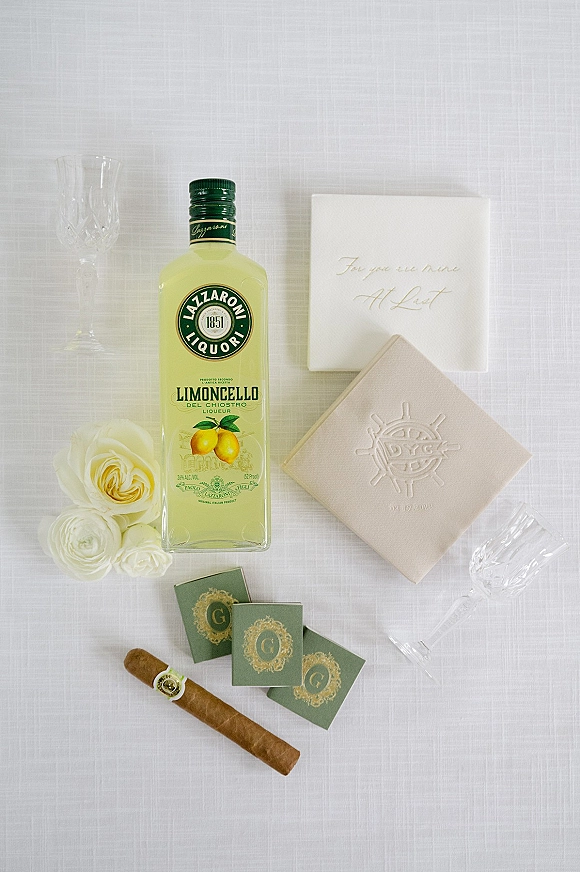
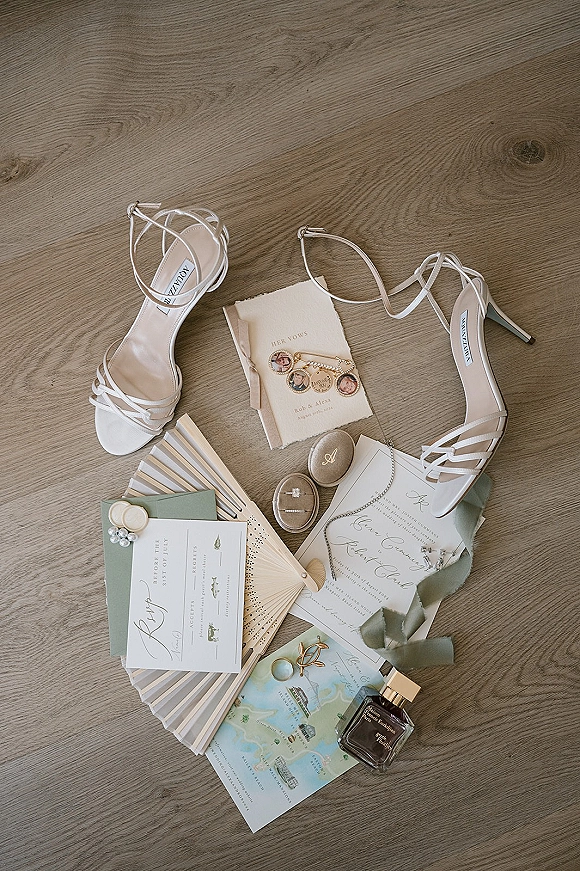
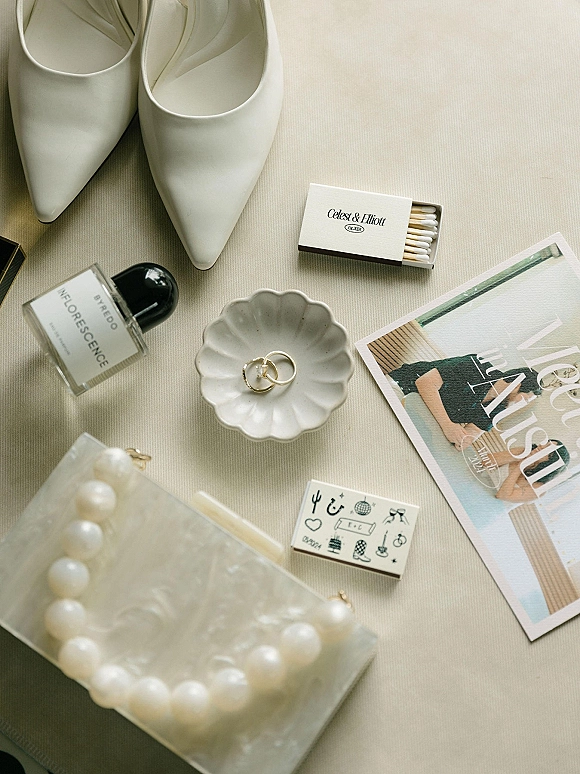
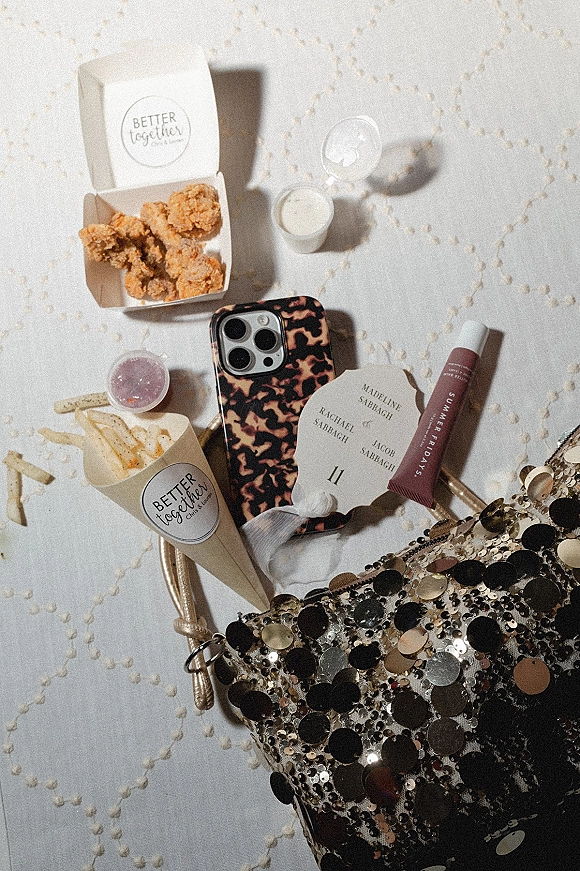
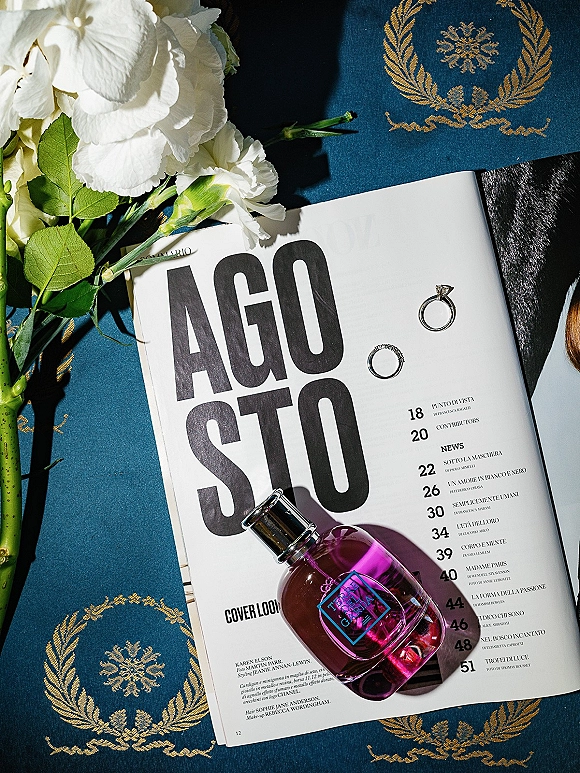
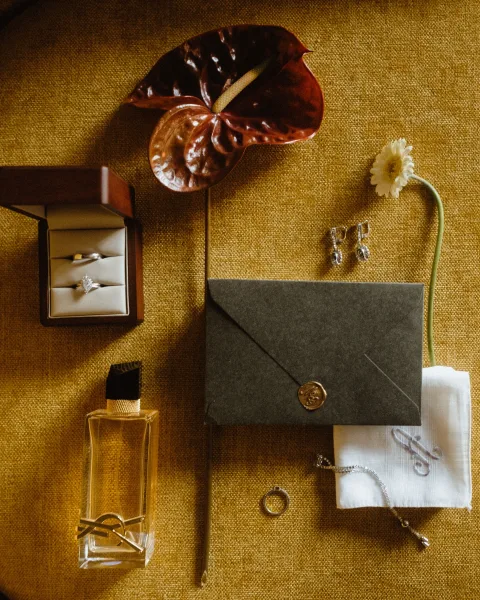
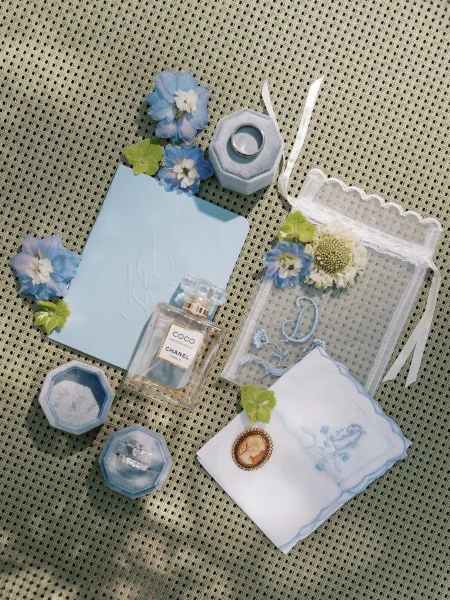
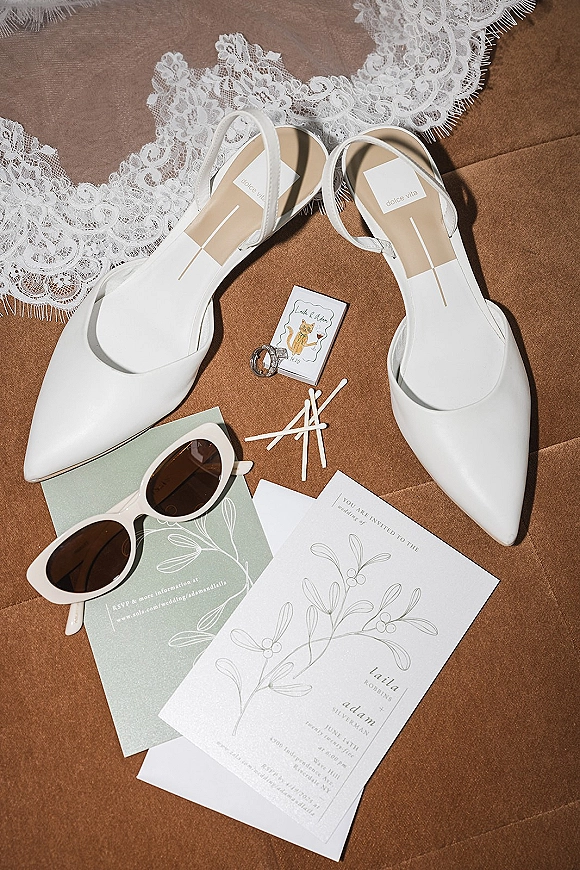
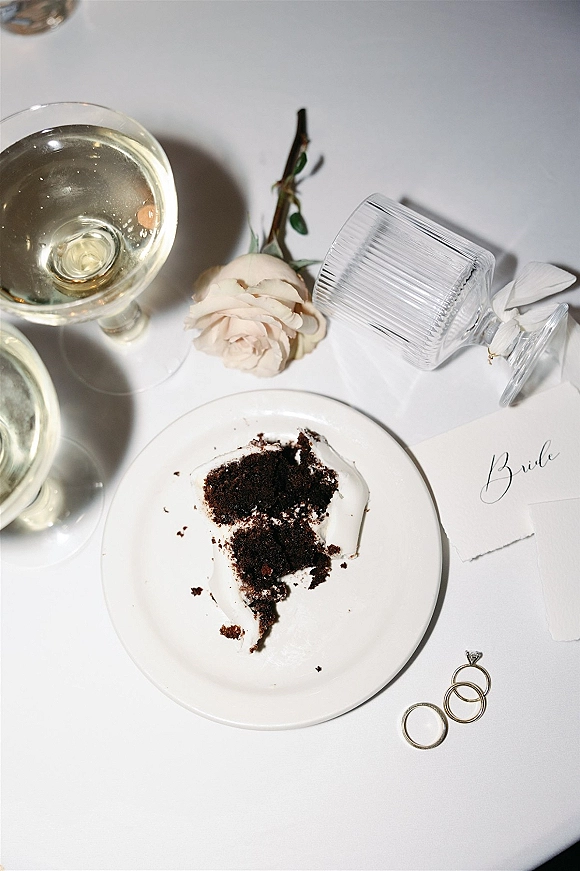
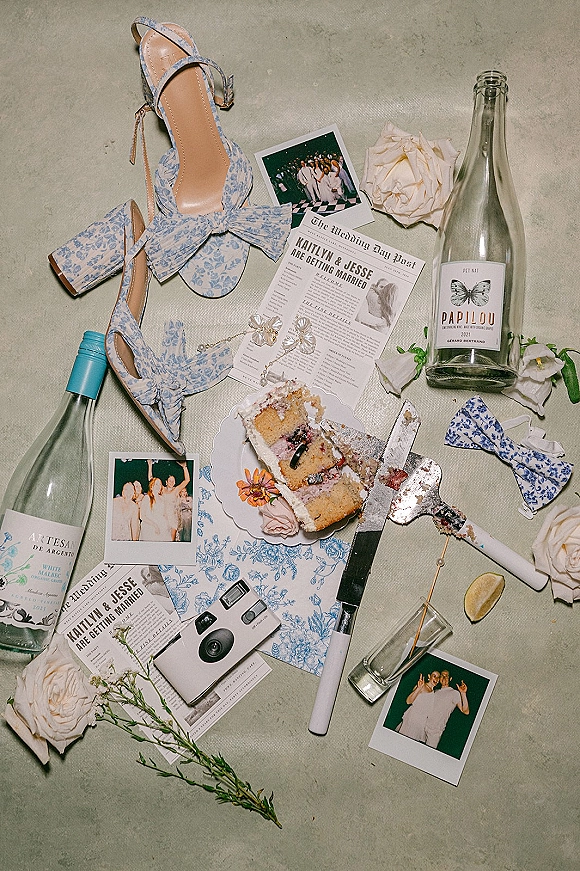
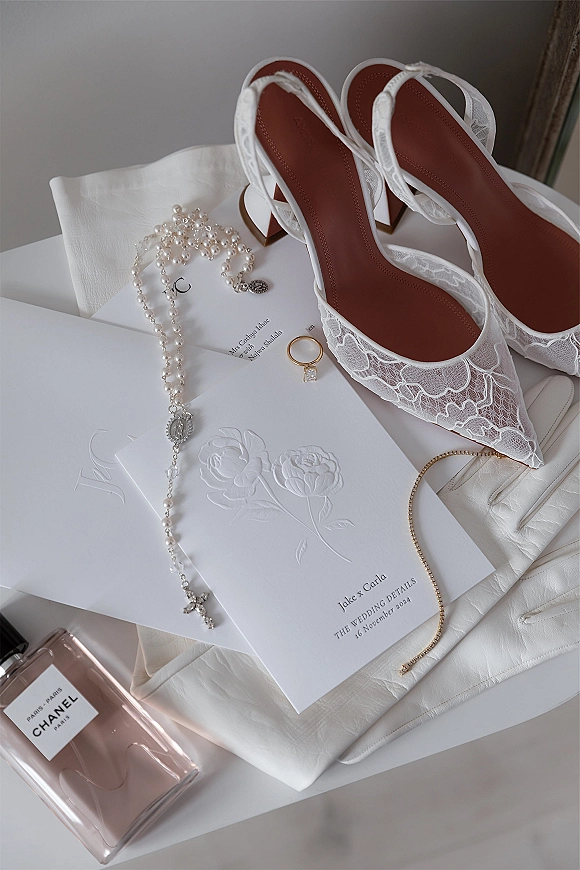
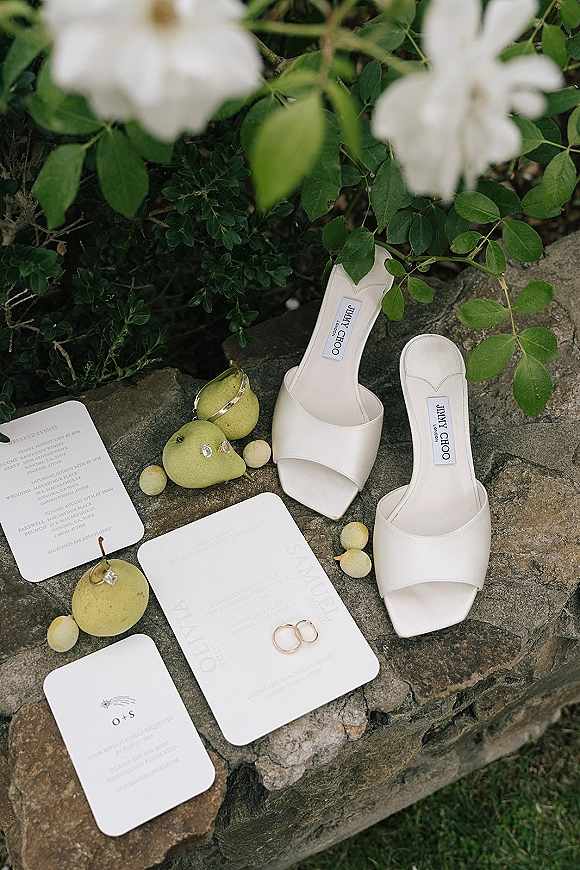
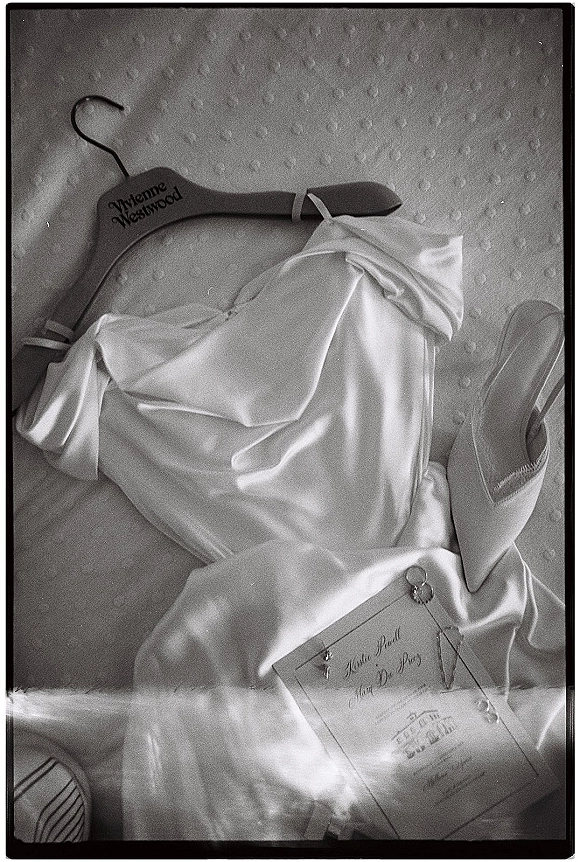
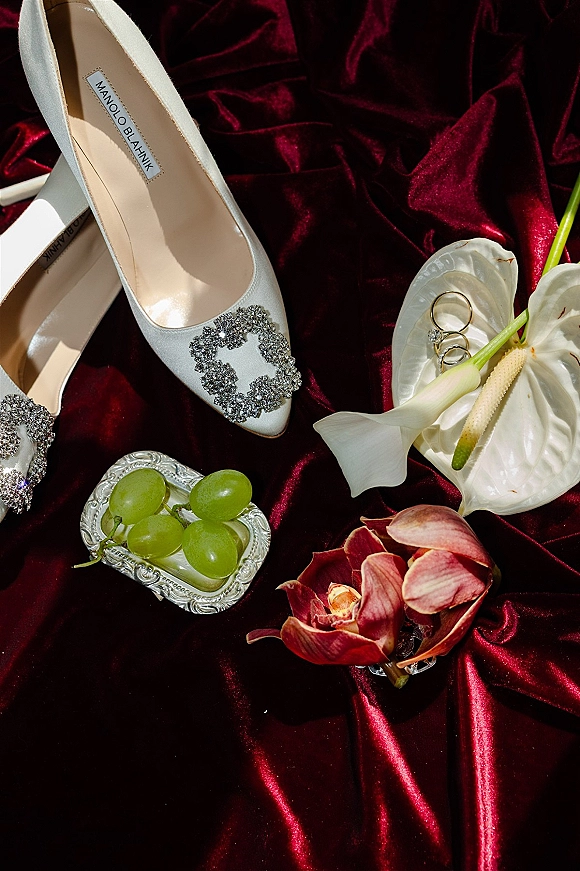
The details that end up in a flat lay are usually the ones couples spent the most time selecting. The paper stock on the invitation. The engraving on the band. The wax seal. A flat lay gives those choices their own frame, separate from the ceremony itself.
What Goes Into a Wedding Flat Lay
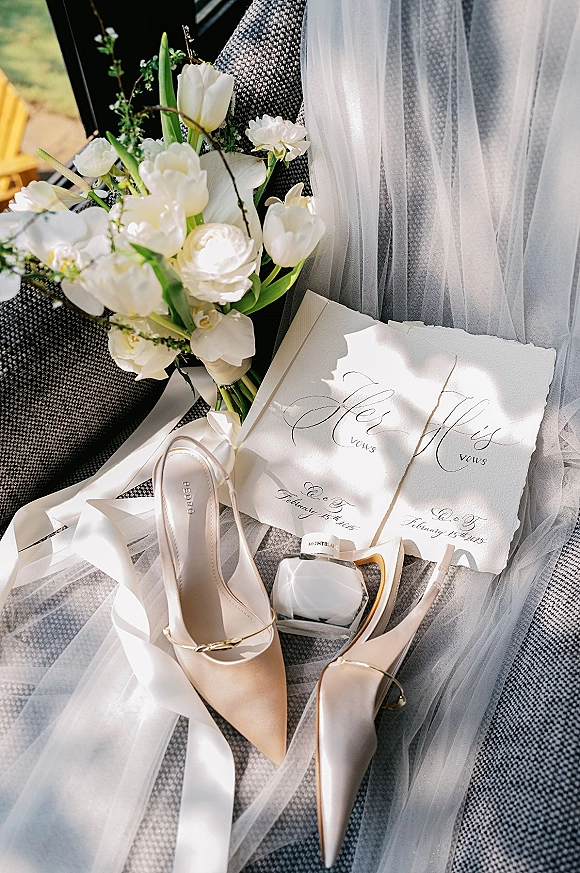
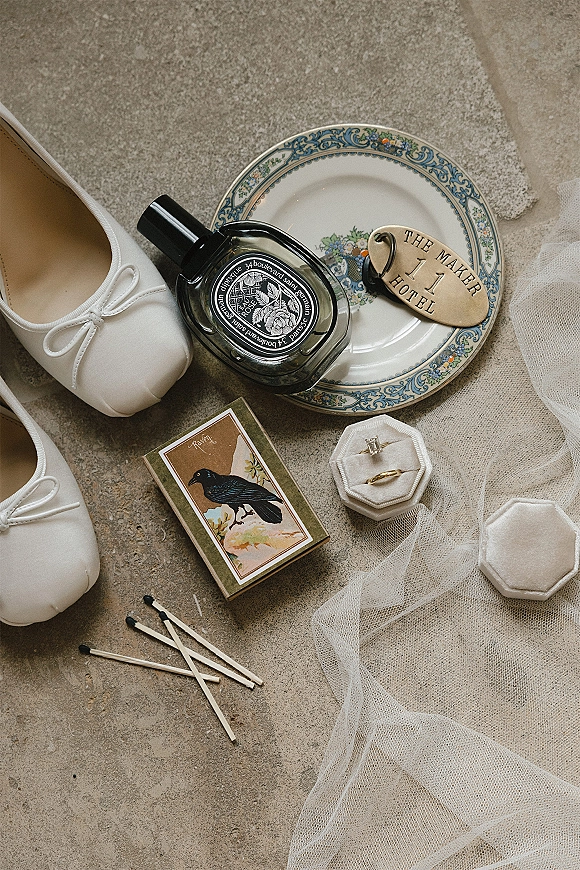
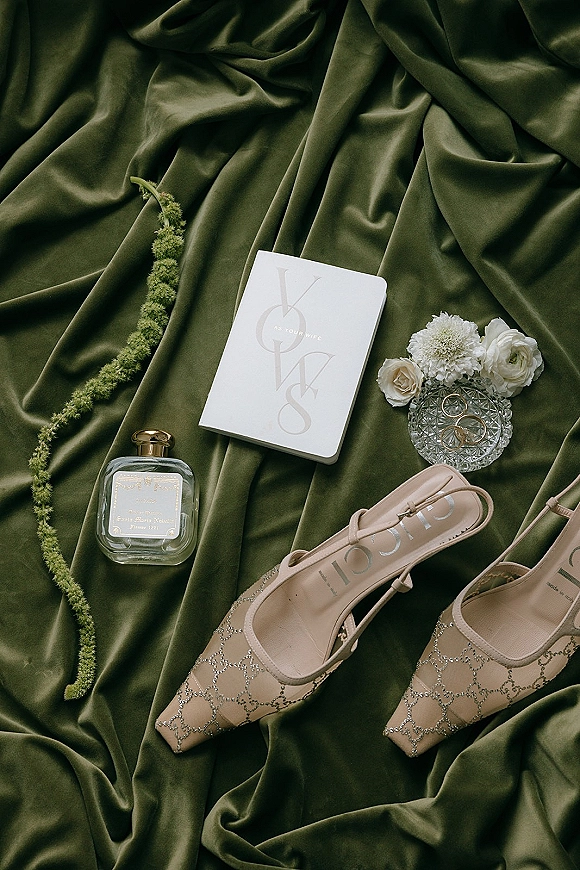
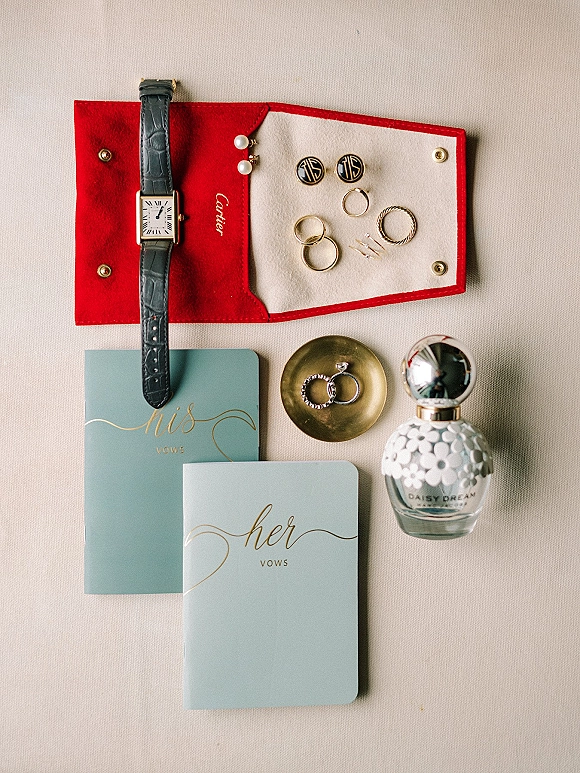
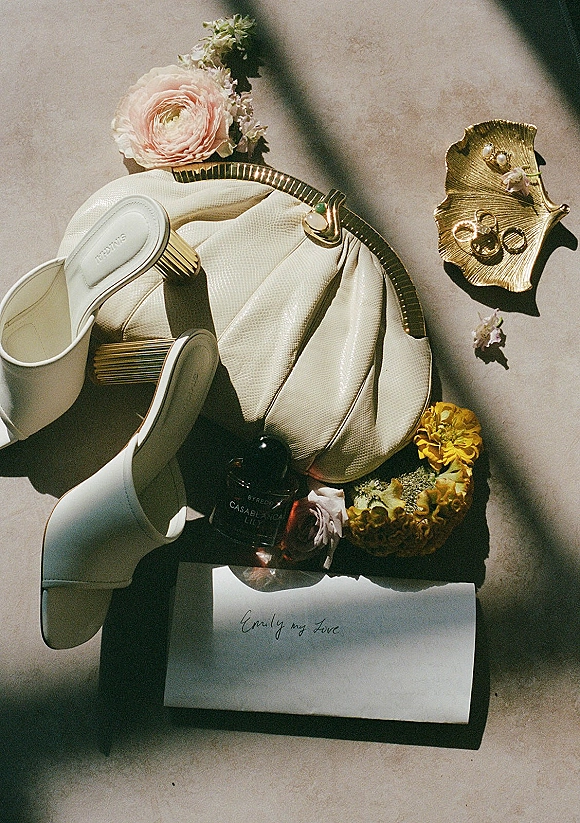
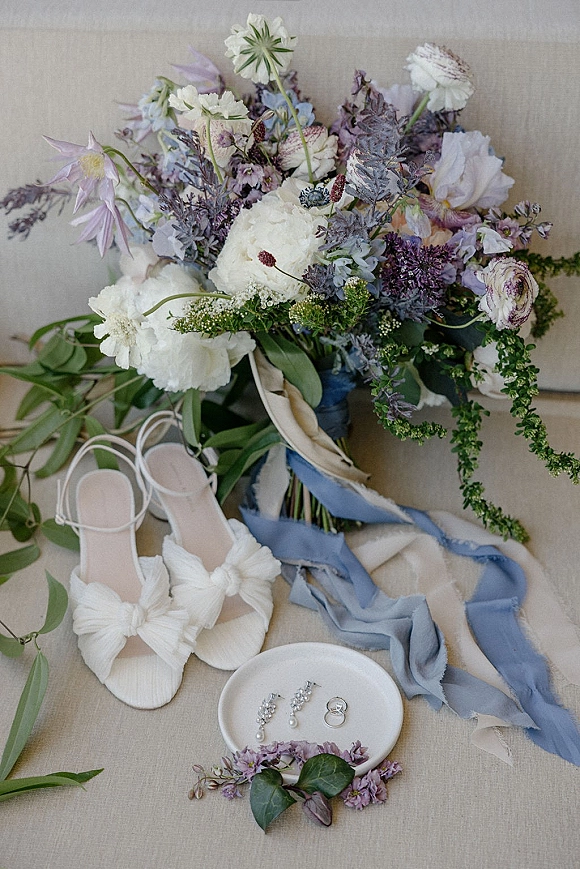
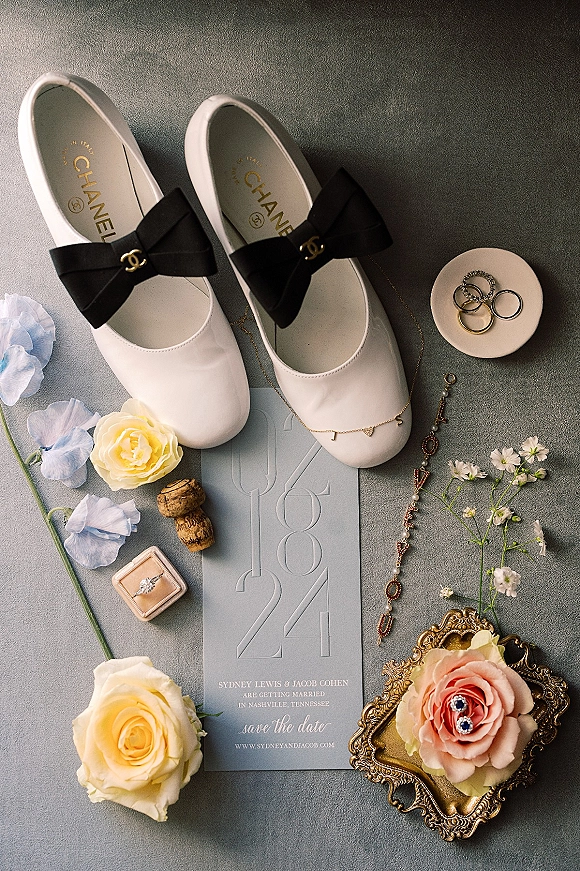
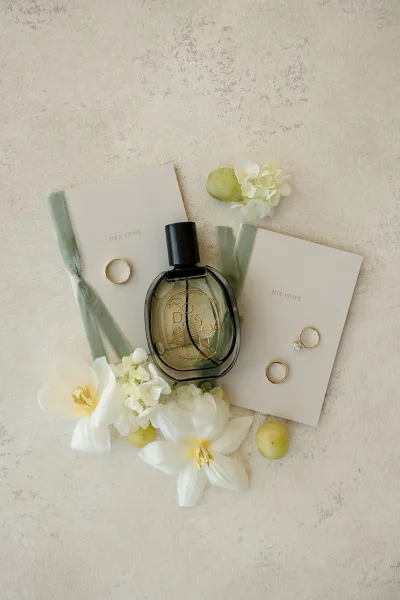
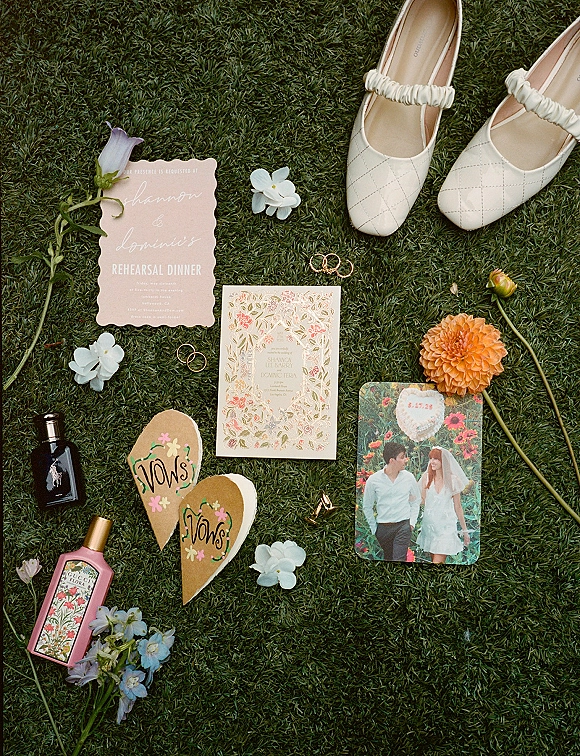
The rings anchor most flat lays. From there, photographers layer in items that tie back to the wedding’s visual language: an invitation card, a wax-sealed envelope, a small cutting of greenery or a single bloom from the bouquet, a perfume bottle, a watch.
The strongest flat lays are edited, not exhaustive. Three to five items, placed with intention, read more clearly than a dozen things competing for attention. Each element should connect back to something real about the wedding.
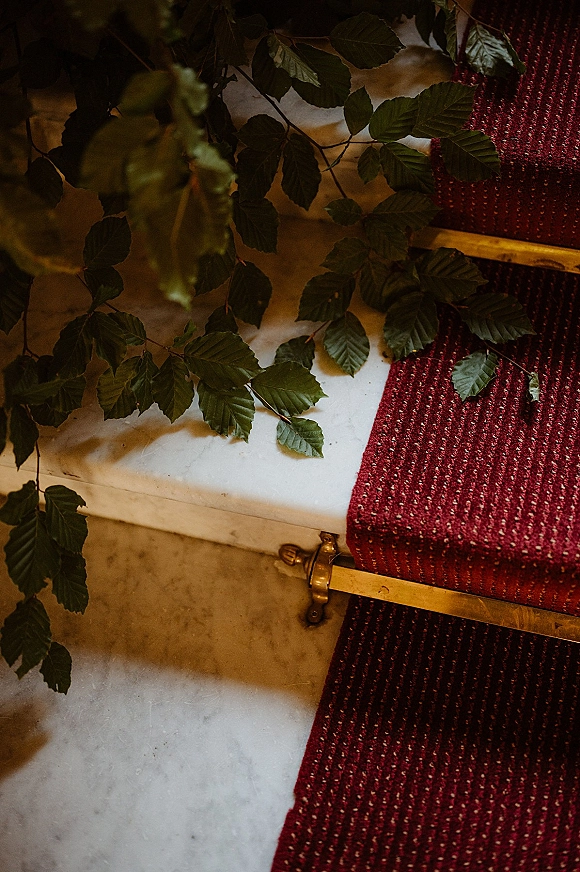
The surface matters as much as what sits on top of it. Marble, linen, raw wood, concrete, and velvet each shift the mood entirely. A cream invitation suite on bleached linen reads differently than the same suite on dark slate. Both are valid choices depending on the rest of the wedding’s aesthetic.
Wedding Flat Lay Photography: Timing and What to Tell Your Photographer
Flat lay photos are taken before the ceremony, during the getting-ready hours, when the rings are still together and the invitation suite is intact. That window is short. Photographers who prioritize detail work arrive early specifically for it, before the morning light shifts and before anyone has moved anything.
If flat lay photography matters to you, say so explicitly when you book. Some photographers treat detail work as a quick aside between portraits. Others build dedicated time into the schedule and arrive with their own surfaces and props. The difference in the final images reflects that approach directly.
A photographer’s portfolio will show you which category they fall into. Look for flat lay and detail shots alongside ceremony and reception coverage. Ask directly: how much time do you build in for details, and what surfaces do you typically bring? Browse wedding photography ideas to see how photographers approach the detail session across styles and settings.
For bridal party getting-ready photos more broadly, the same principle holds: photographers who prioritize this part of the day build it into the timeline rather than fitting it around everything else.
Flat Lay Styling: Surfaces and Props
Marble is the most-used flat lay surface for a reason. It photographs cleanly, it’s neutral, and it doesn’t compete with what’s sitting on top of it. Textured linen in white or off-white is equally versatile. Reclaimed wood works well for rustic and outdoor weddings. Dark surfaces like slate, black granite, and charcoal concrete read with more contrast and suit editorial or moody aesthetics.
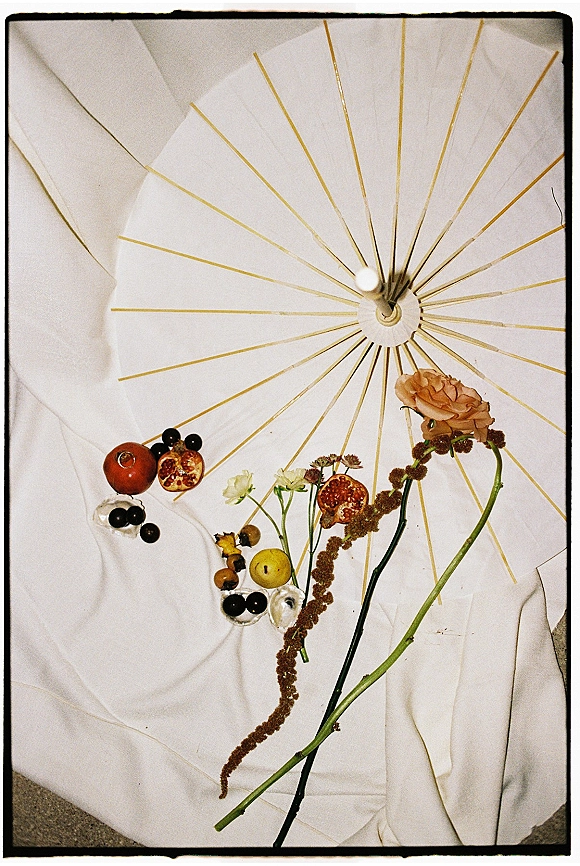
Beyond the surface, props are what bring a flat lay into conversation with the rest of the wedding. A single stem from the ceremony flowers. Ribbon from the invitation suite. A dried botanical that matches the bouquet’s palette. The best flat lay props are usually pulled directly from the wedding rather than sourced separately — which means setting pieces aside before the ceremony starts rather than scrambling for them after.
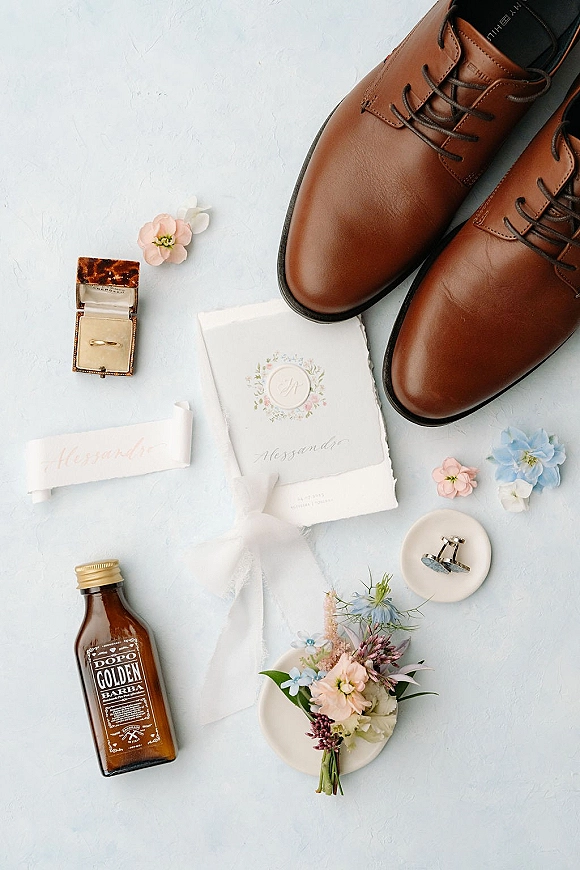
For groom flat lays, the standard set is a wedding band, a watch, cufflinks, a tie or pocket square, and a boutonnière cutting. Cologne and a monogrammed handkerchief work well as additions. The same rule applies: a few well-chosen items on a clean surface read better than a full spread of accessories.
Wedding Invitation Flat Lays
The invitation suite is one of the most photographed flat lay subjects. It’s typically the first piece of visual communication a couple sends their guests, and it reflects the wedding’s aesthetic more deliberately than almost anything else. Good stationery deserves its own image.
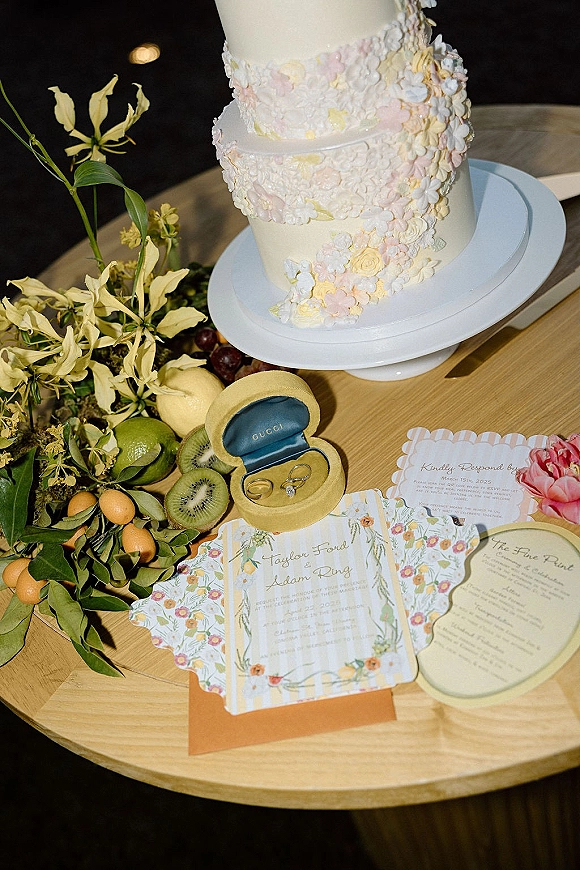
A full invitation flat lay might include the outer envelope, the inner envelope, the invitation card, an RSVP card and return envelope, any enclosure cards, and a detail element like the wax seal, a stamp, or a vellum overlay. Photographers typically arrange these in layers, fanning slightly or overlapping at angles, to show the full suite without stacking everything flat.
To get clean stationery shots, set the full suite aside before anyone opens it and flag it for your photographer at the start of the getting-ready session. Envelope flaps that have been opened, or cards that have been bent in transit, limit what’s possible in post.
Wedding Ring Flat Lays
Ring photos taken during the ceremony are often soft, secondary elements behind the portrait subject. A flat lay gives the rings their own moment: sharp, properly lit, close-up.
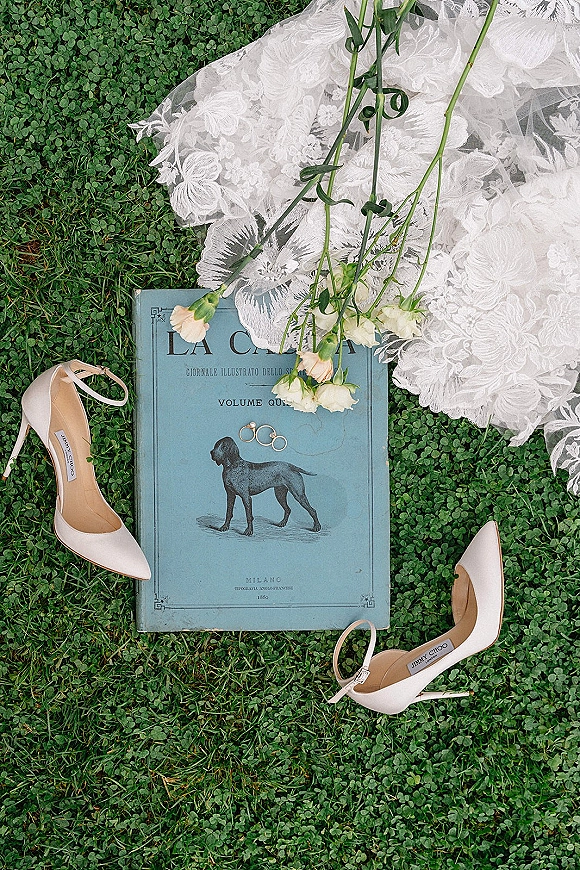
Most photographers shoot rings on a neutral surface first, then add supporting elements — a small floral cutting, the invitation suite envelope, a piece of velvet, a page from a vow book. Metal type affects how rings photograph. Yellow gold reads warmly on most surfaces. White gold and platinum read cooler and work well against dark backgrounds. Rose gold picks up color from surrounding props naturally.
For couples with significant center stones or complex settings, ask your photographer specifically how they handle glare in ring detail work. It’s a technical skill that separates photographers who shoot detail work regularly from those who treat it as an afterthought.
Frequently Asked Questions
What is a wedding flat lay?
A wedding flat lay is a photograph taken from directly overhead of wedding details: the rings, invitation suite, florals, and other small personal items arranged on a flat surface. The overhead angle and deliberate styling make it a distinct category within wedding photography, separate from portraits and event coverage.
What should I include in a wedding flat lay?
The rings are the standard anchor. The most common additions are the invitation suite, a small floral cutting from the bouquet, and one or two personal items: a watch, a perfume bottle, cufflinks, or ribbon that ties the color palette together. The goal is a small, considered selection of items that represents the wedding visually, not a complete inventory.
Do I need special props for a wedding flat lay?
Not necessarily. The best flat lay props are usually pulled from the wedding itself: a cutting from the florals, the invitation suite, the ribbon from the bouquet wrap. Some photographers bring their own surfaces (a piece of marble, a linen cloth, a wooden board) to give themselves options on the day. Ask your photographer what they typically bring and what they recommend you set aside before the ceremony.
What's the difference between a wedding flat lay and a detail shot?
A detail shot is any close-up image of a wedding element: a clasp on a shoe, a buttonhole, the texture of a cake tier. A flat lay is a specific type of detail shot, taken from directly overhead, with multiple items arranged together on a surface. All flat lays are detail shots; not all detail shots are flat lays.
When are flat lay photos taken during the wedding day?
Almost always during the getting-ready period, before the ceremony. The rings are still accessible, the invitation suite is intact, and the florals haven't been touched. Morning light is typically the best natural light of the day for this type of photography. Build 15 to 20 minutes into the getting-ready schedule specifically for the detail session if flat lay work is a priority.
What goes in a groom flat lay?
A groom flat lay typically includes the wedding band, a watch, cufflinks, a tie or pocket square, and a boutonnière cutting. Cologne and a monogrammed handkerchief work well as additions. The same principles apply as any flat lay: a few well-chosen items on a clean surface read better than a full spread of accessories.