Light and Location for Getting-Ready Photos
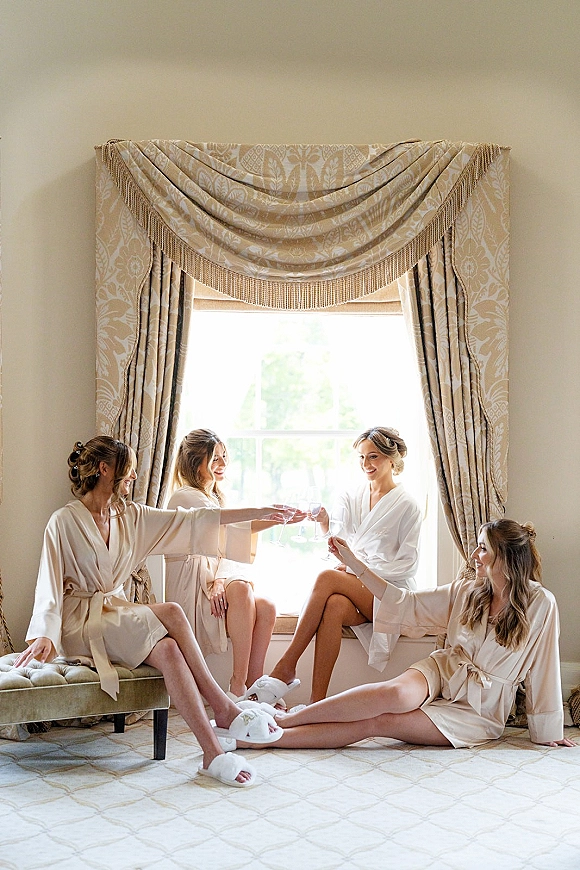
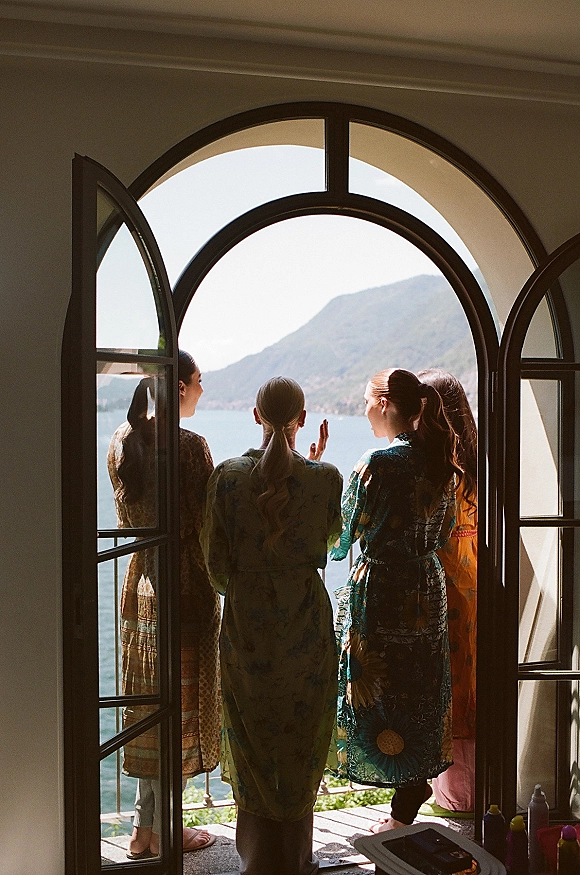
The quality of getting-ready photos is determined almost entirely by the space. Natural window light is the difference between images that feel intimate and warm and images that feel flat and artificial. A preparation suite with large windows, ideally facing north or east for soft morning light, gives a photographer something to work with. A windowless hotel room with overhead lighting does not.
If there’s any flexibility in where the bridal party gets ready, raise the light question directly with the venue coordinator or planner before the wedding day. Photographers can advise on timing relative to light direction; a west-facing room that’s dim in the morning may be beautiful by early afternoon, which affects how the schedule should be structured. The earlier this conversation happens, the more options are available.
Clutter is the other spatial factor. Getting-ready rooms accumulate fast: garment bags, hair tools, food, luggage, vendor cases. A quick clear before the photographer arrives makes a significant difference in how much usable space exists for portraits and detail shots. Designating one corner of the room as the clean zone for portraits, kept clear throughout the morning, is a practical way to manage this without disrupting the energy of the room.
What to Wear for Bridal Party Getting-Ready Photos
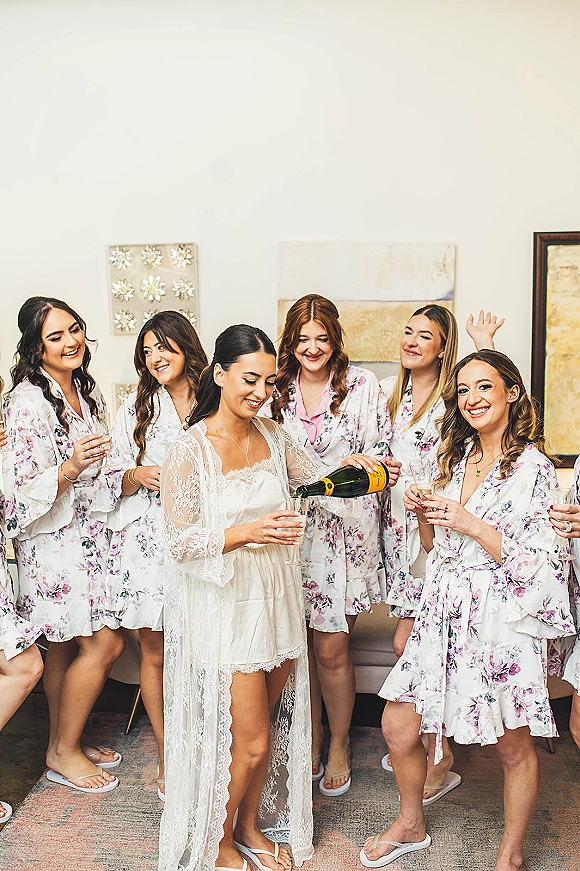
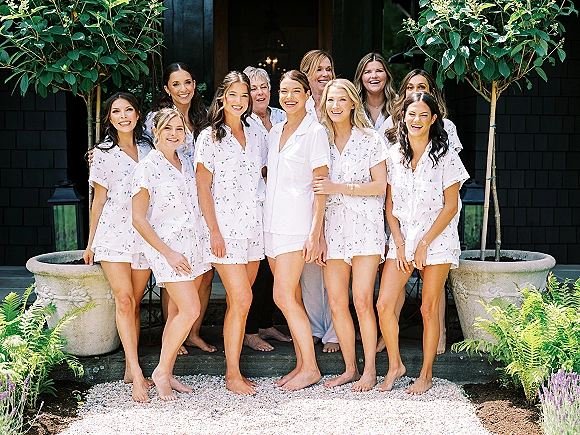
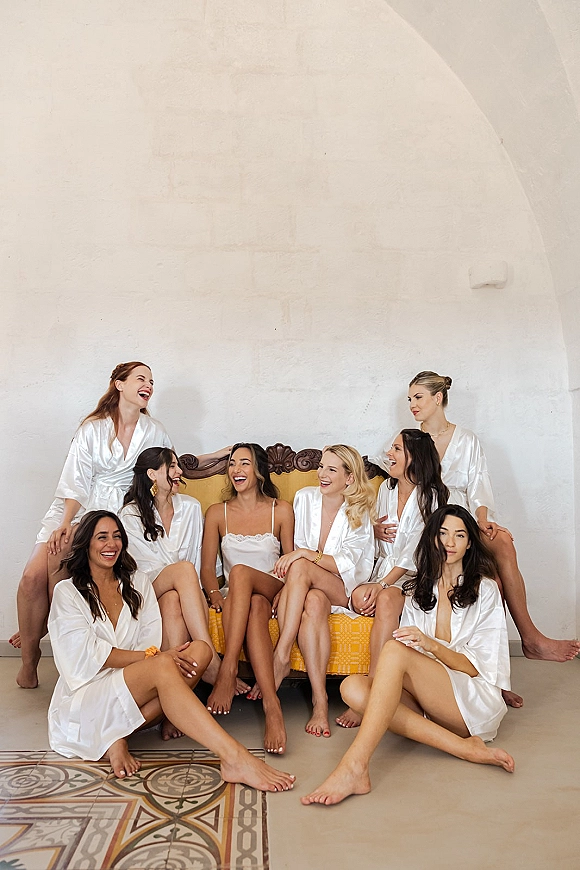
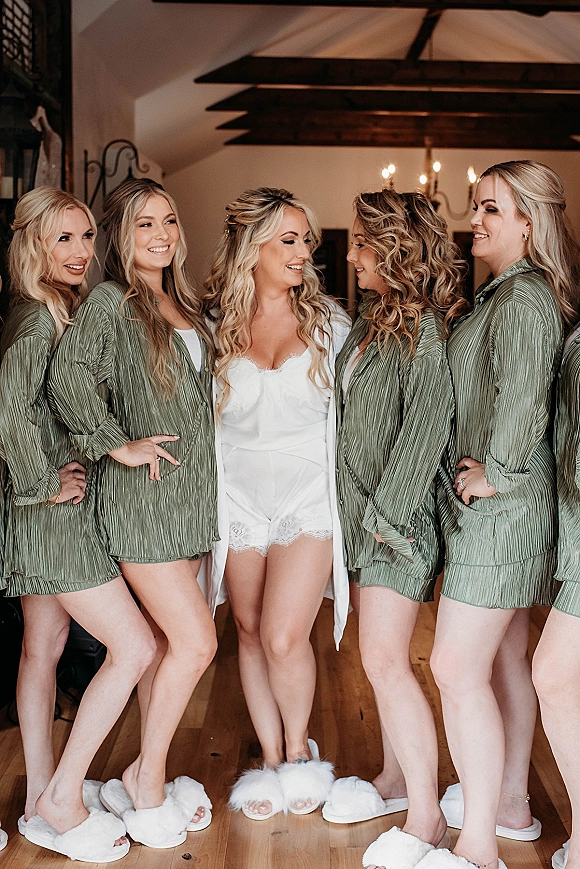
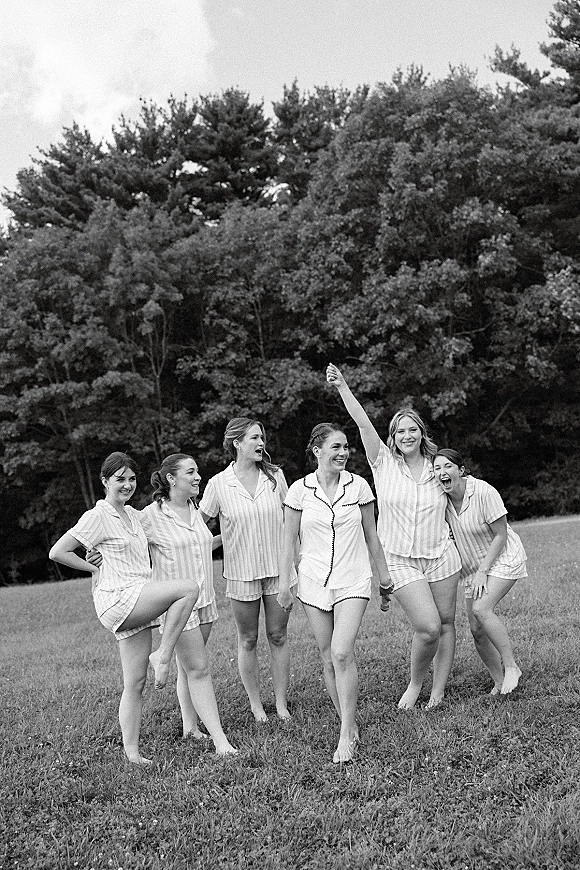
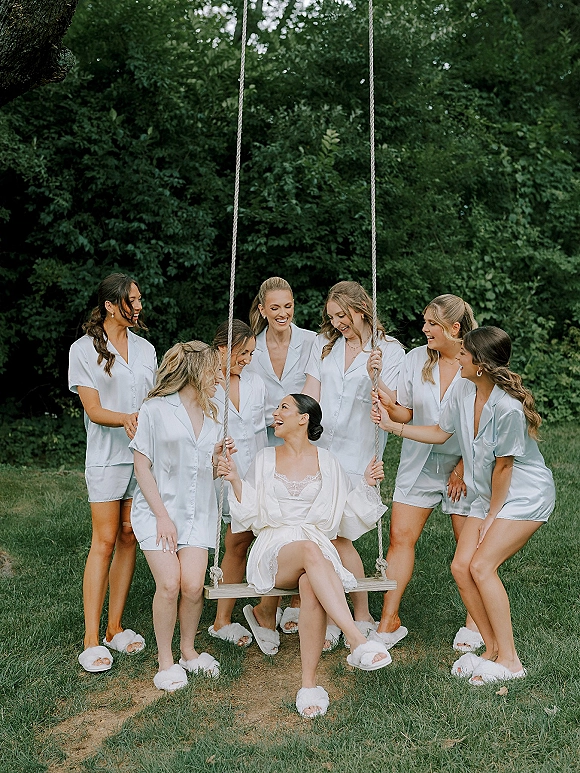
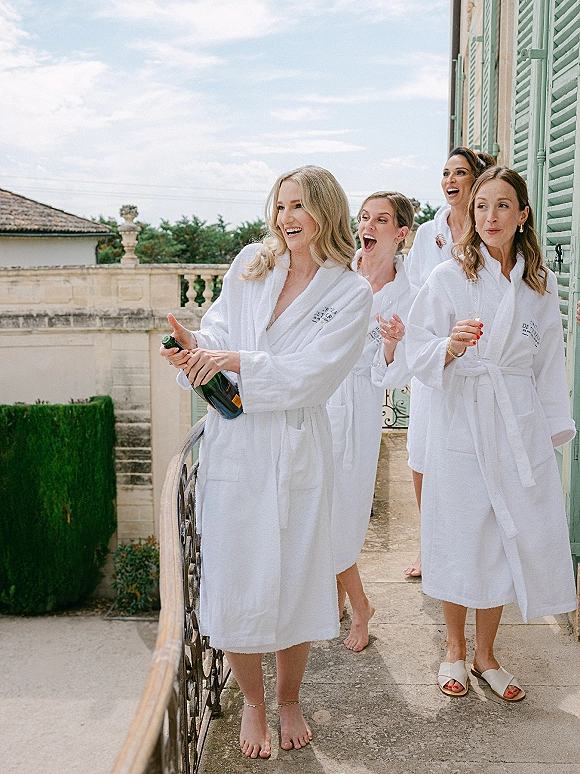
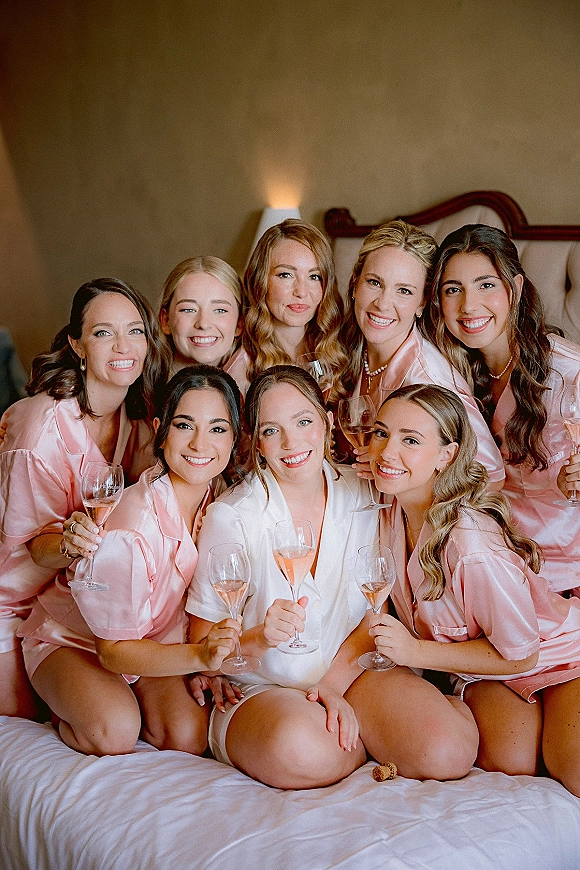
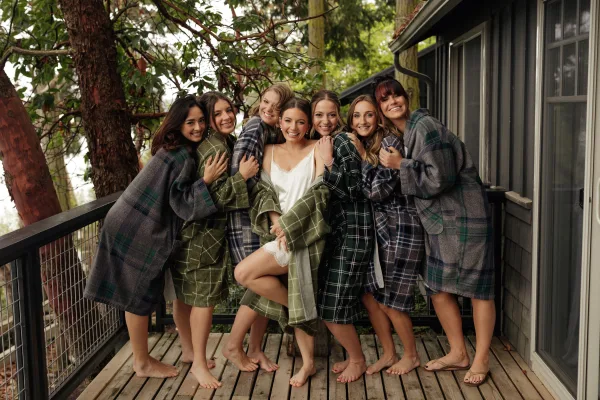
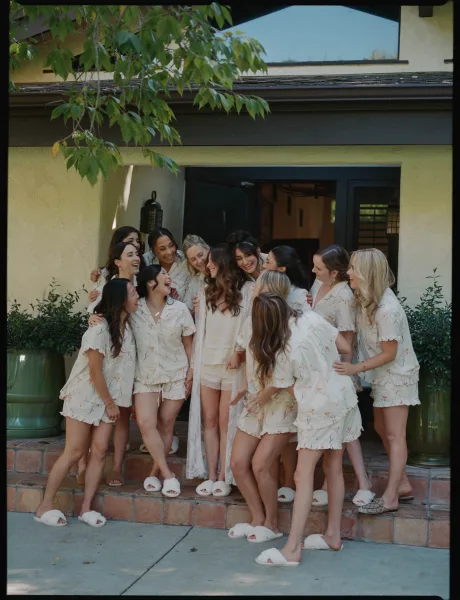
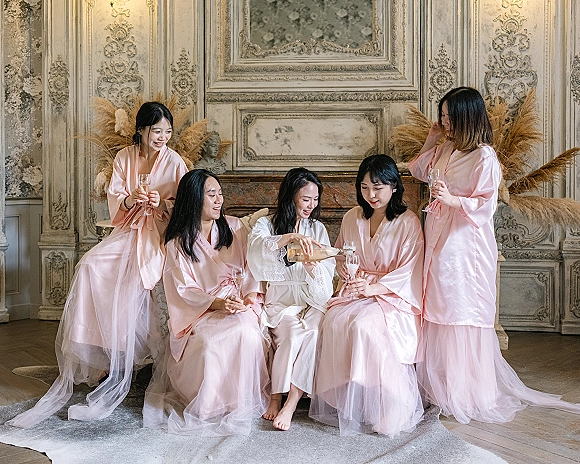
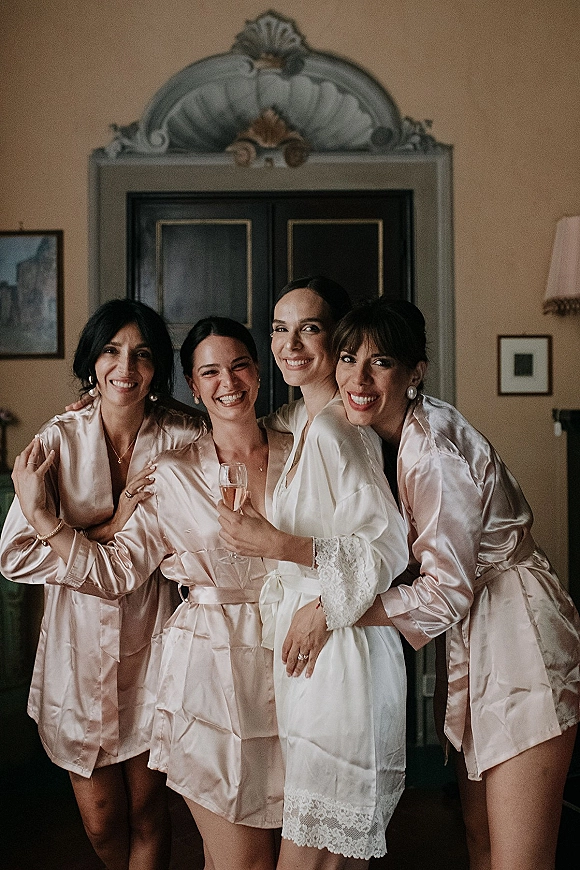
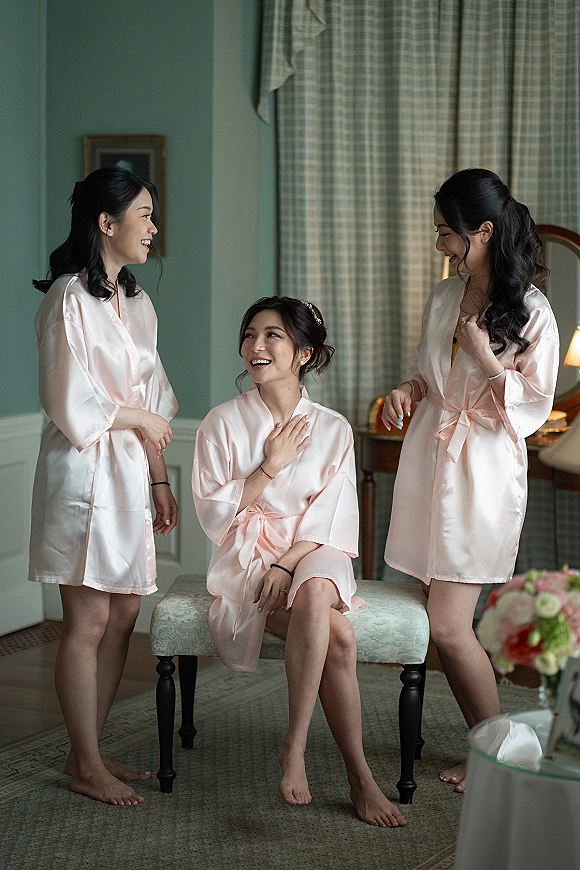
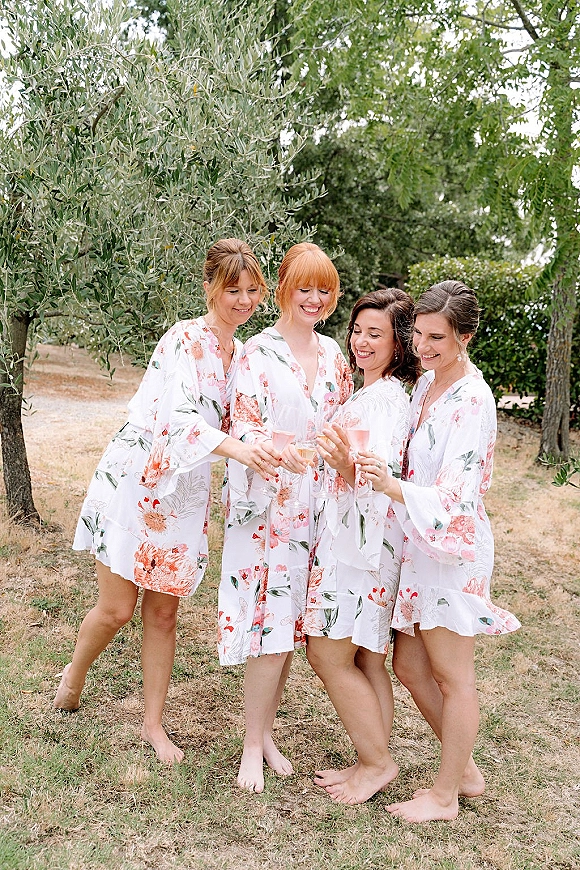
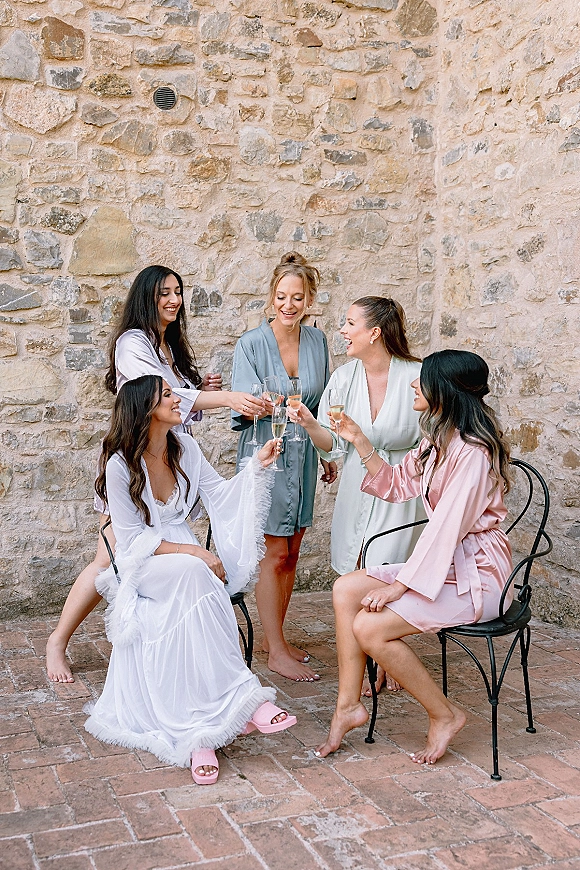
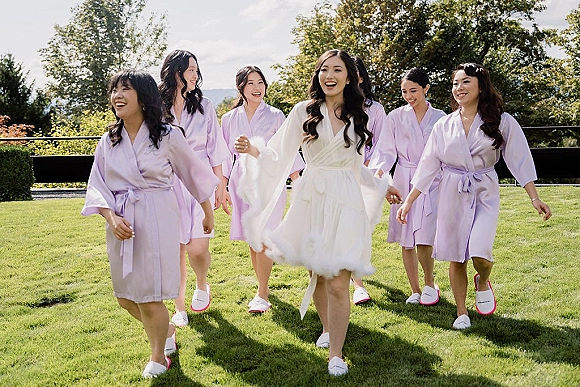
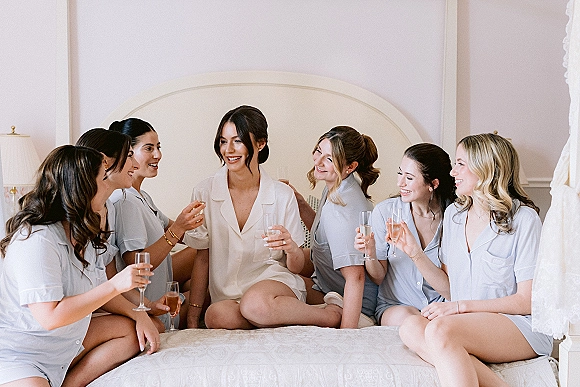
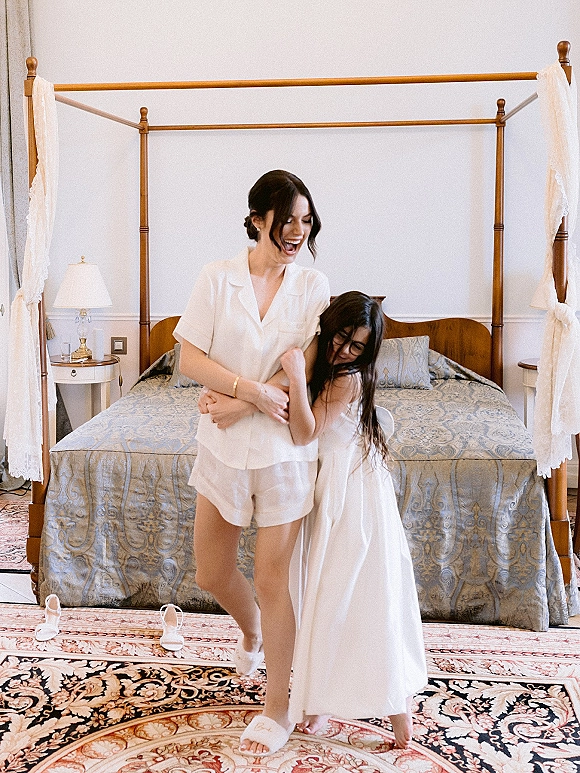
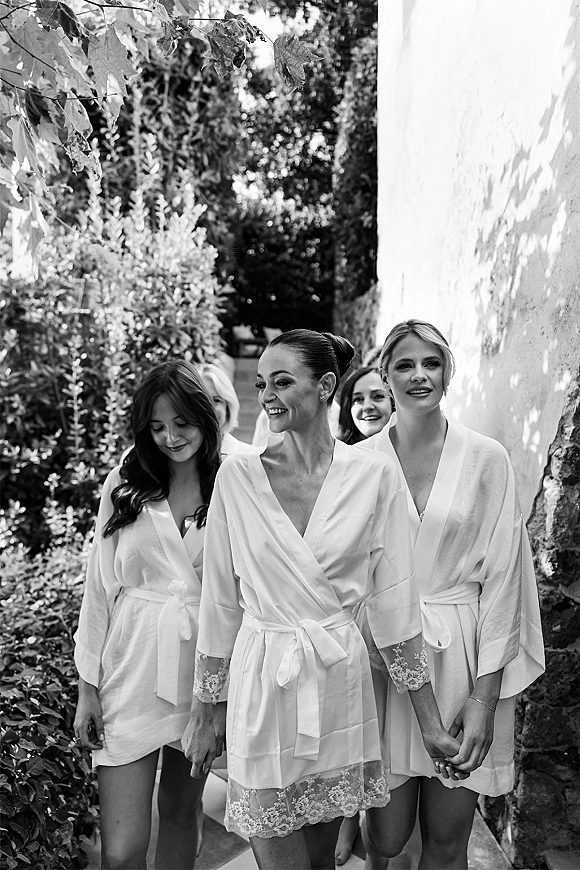
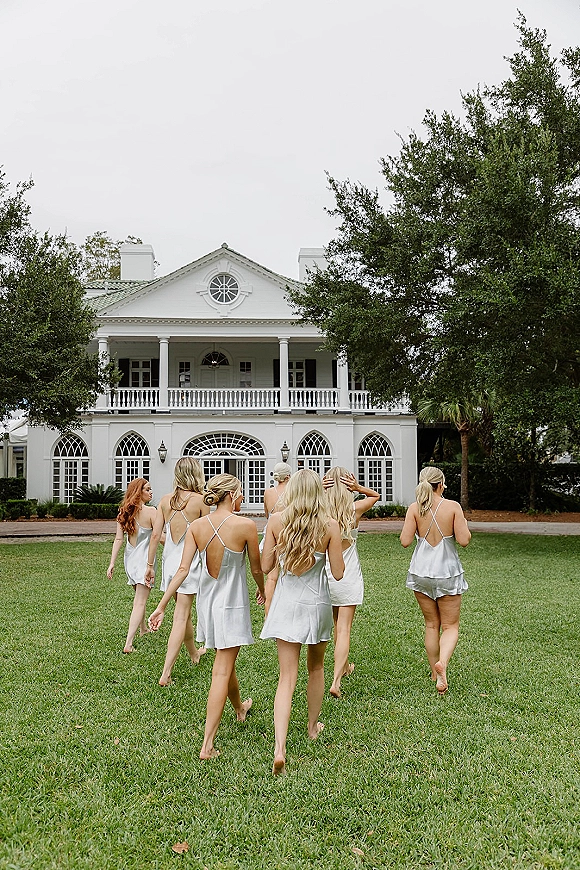
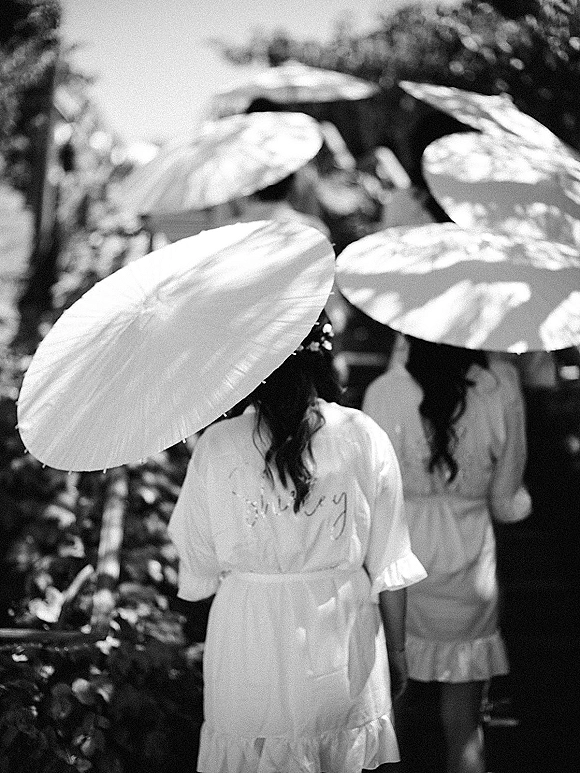
Getting-ready attire is a small logistical decision with a significant visual impact. Matching robes or pajama sets create cohesion across images of different people in different states of preparation. Without them, getting-ready coverage can feel visually inconsistent, particularly in wide shots of the full bridal party.
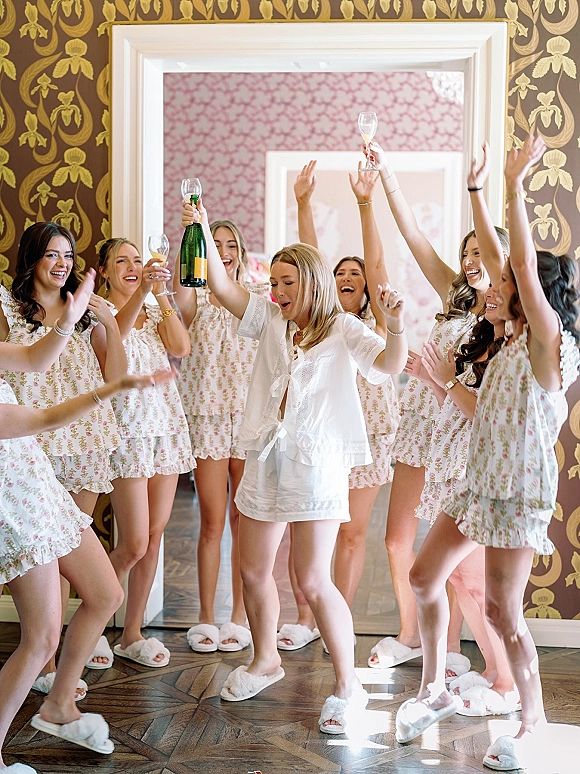
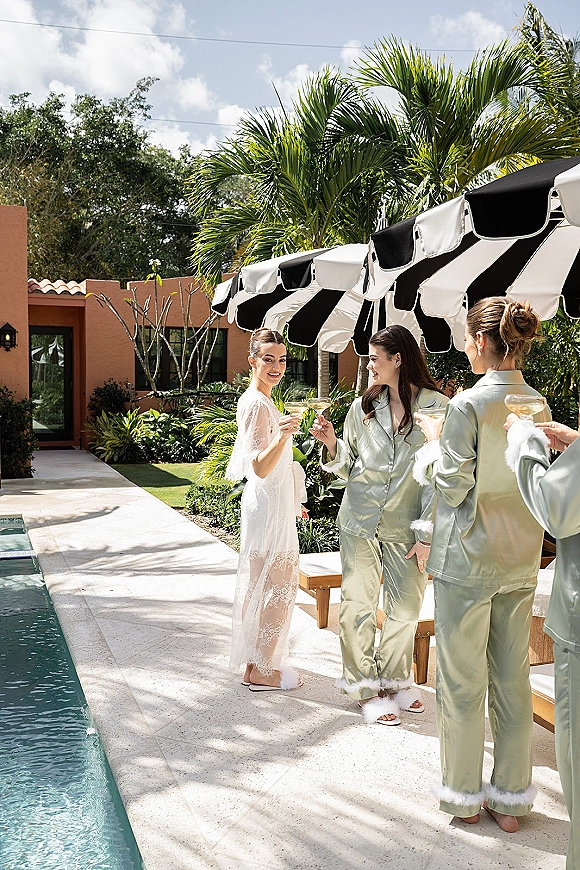
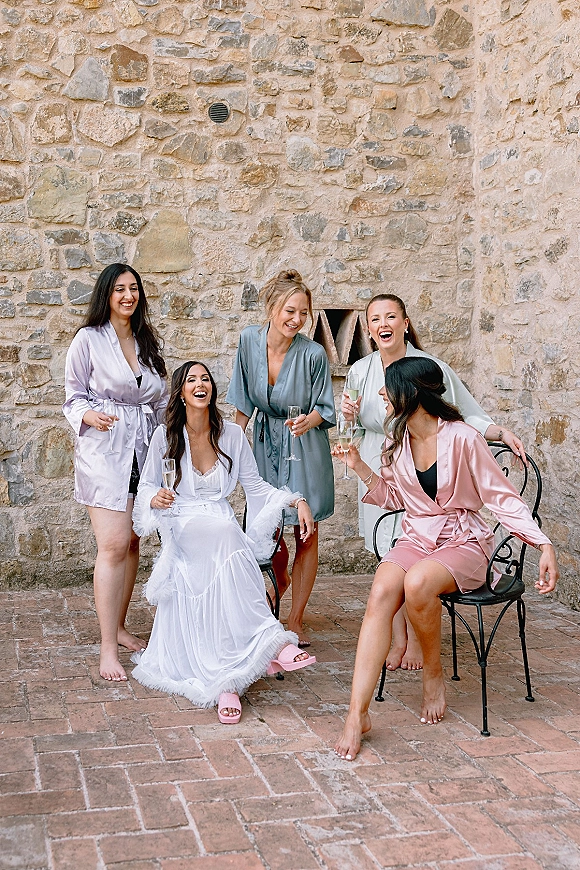
Silk or satin robes in ivory, blush, dusty rose, or sage photograph well across lighting conditions and pair cleanly with most bridesmaid palettes. Matching pajama sets, particularly linen or satin two-piece styles, have become equally common and photograph similarly well. The distinction is largely aesthetic: robes read more formal and polished; pajama sets read more relaxed and candid, which suits the energy of most morning-of timelines.
A few things to avoid: anything with large graphic text across the back (it competes visually in wide shots), dark colors that absorb light and lose detail, and synthetic fabrics that catch overhead light as shine. If the bridal party is gifting robes or pajamas ahead of the wedding, choose styles that pull from the side or front rather than over the head, so hair and makeup stays intact.
Getting-Ready Detail Shots
Detail photography — rings, shoes, the invitation suite, perfume, the dress hanging in window light — is typically shot during the getting-ready window, before the pace of the morning accelerates. These shots require stillness and a few minutes of deliberate setup. They’re often among the images couples display at home and share most widely after the wedding.
The most useful approach is to gather all detail items in one location before the photographer arrives: a clean surface near the best window light, with everything to be documented in one place. This removes the scramble of locating items mid-morning and gives the photographer uninterrupted time to work through each setup. A wedding flat lay, with all meaningful detail items arranged together, is consistently one of the strongest single images from any getting-ready window.
Rings, shoes, the invitation or vow booklet, perfume or cologne, jewelry, and any heirloom pieces are the standard list. If there are other meaningful objects (a gift from the partner, a piece of jewelry from a family member, a personal detail specific to the couple), flag those for the photographer before the day so they’re part of the shot list. The dress itself, hung against a window or a clean wall with good light, is almost always one of the strongest detail images of the day.
The Bridal Party’s Role in Getting-Ready Coverage
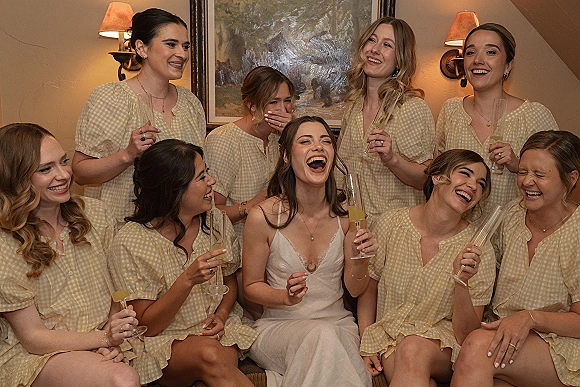
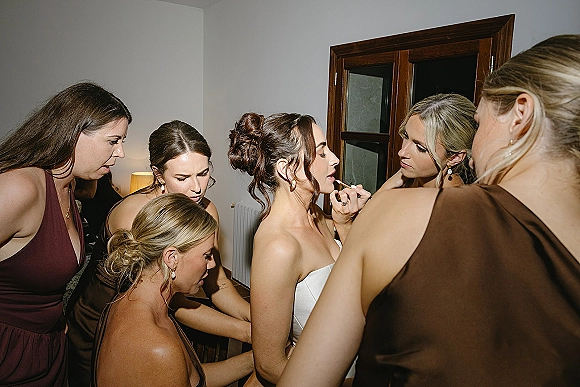
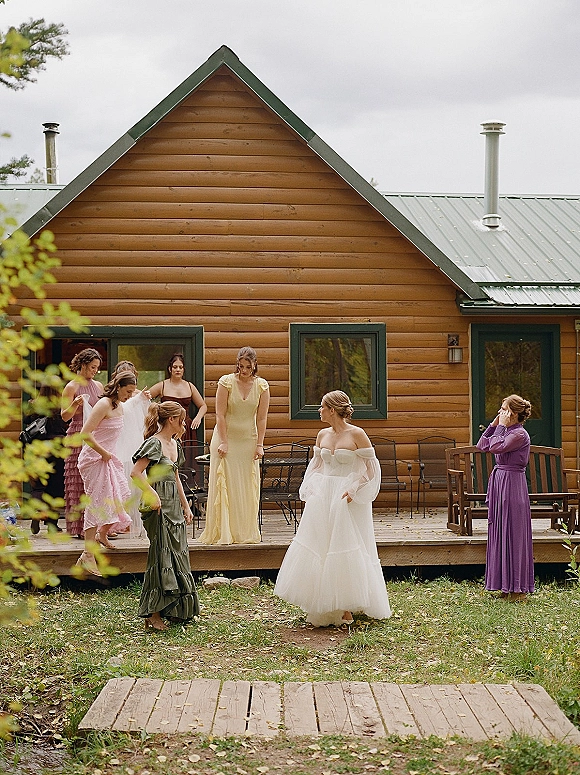
Getting-ready coverage works best when the bridal party is genuinely present rather than staged. The most useful instruction a couple can give their party is to continue doing what they’re doing: getting hair and makeup finished, talking, being together. A photographer working in this environment is looking for moments that happen naturally: someone seeing the dress for the first time, a quiet exchange between the bride and a close friend, the collective energy shift when hair and makeup wraps and the room turns toward the ceremony.
First looks with parents often happen during the getting-ready window as well, before the ceremony begins. These moments require the photographer to be present and positioned before they happen, not arriving as they’re wrapping up.
The group portrait logistics and formal coverage that follow the getting-ready window are covered in bridal party photos.
Building the Getting-Ready Photo Timeline
The getting-ready window is the part of the wedding day schedule most likely to compress under pressure. Hair and makeup run long, vendors arrive late, the room fills with people. Building a buffer of 20 to 30 minutes of unscheduled time into the morning timeline, before the photographer shifts to the next location, protects the getting-ready coverage from being the first thing cut when the morning runs behind.
Confirm the photographer’s arrival time explicitly before the day. Some photographers arrive at the very start of hair and makeup to document the full morning; others arrive 45 minutes before the dress goes on to focus on the peak moments. Neither approach is wrong, but the couple should know which they’re getting and verify that the arrival time aligns with when the most important moments are scheduled to happen.
The dress going on is almost always the emotional peak of the getting-ready coverage: the moment the morning’s preparation resolves into the actual wedding. It requires the photographer to be present and positioned before it happens, not arriving as it’s finishing. If the schedule is tight, protecting the photographer’s position for this moment takes priority over almost anything else in the morning’s sequence.
Structuring the full morning around a realistic wedding timeline helps identify where getting-ready coverage fits relative to the first look, ceremony, and formal portraits.
Frequently Asked Questions
What should I do to prepare for getting-ready photos?
Designate a clean area near the best window light in the preparation space for detail shots and portraits. Gather all detail items: rings, shoes, invitations, jewelry, and heirlooms, in one location before the photographer arrives. Brief the bridal party to continue naturally rather than posing, and confirm the photographer's arrival time aligns with the key moments: details first, then the dress going on.
How long do bridal party getting-ready photos take?
Most photographers spend 60 to 90 minutes in the getting-ready space, depending on what's being documented. Detail shots alone can take 20 to 30 minutes when done thoroughly. The dress-on sequence and immediate portraits typically take another 20 to 30 minutes. Couples who want comprehensive coverage of the full morning should discuss arrival timing with their photographer and build corresponding buffer into the schedule.
What should the bridal party wear for getting-ready photos?
Matching robes or pajama sets in silk or satin create the most visual cohesion across images of different people at different stages of preparation. Ivory, blush, dusty rose, and sage photograph well in most lighting conditions. Robes work better in more formal getting-ready spaces; pajama sets suit relaxed, candid mornings. Avoid large graphic text, dark solids, and synthetic fabrics that catch overhead light as shine.
Do I need matching robes or getting-ready attire?
Not required, but the visual difference is meaningful. Without consistent attire, getting-ready coverage can feel visually scattered, particularly in wide shots of the full bridal party. Matching silk or satin robes in ivory, blush, or a color that connects to the bridesmaids' palette are the most common choice and photograph well across lighting conditions.
What details should be included in getting-ready photos?
The standard list: engagement ring and wedding band together, wedding shoes, invitation suite or vow booklet, perfume or cologne, any jewelry being worn, heirloom pieces, and the dress hung in good light. If there are other meaningful objects (a gift from the partner, a piece of jewelry from a family member, a personal detail specific to the couple), flag those for the photographer in advance so they're included in the shot list.
Can getting-ready photos happen in a hotel room?
Yes, though the quality depends heavily on the room's natural light. A hotel suite with large windows and good morning light can produce strong getting-ready images. A standard hotel room with limited windows and overhead fluorescent lighting is significantly more challenging. If you're booking a hotel room specifically for getting-ready coverage, prioritize rooms on higher floors with unobstructed window exposure, and confirm with the photographer that the space will work before the day.