Group Portrait Logistics
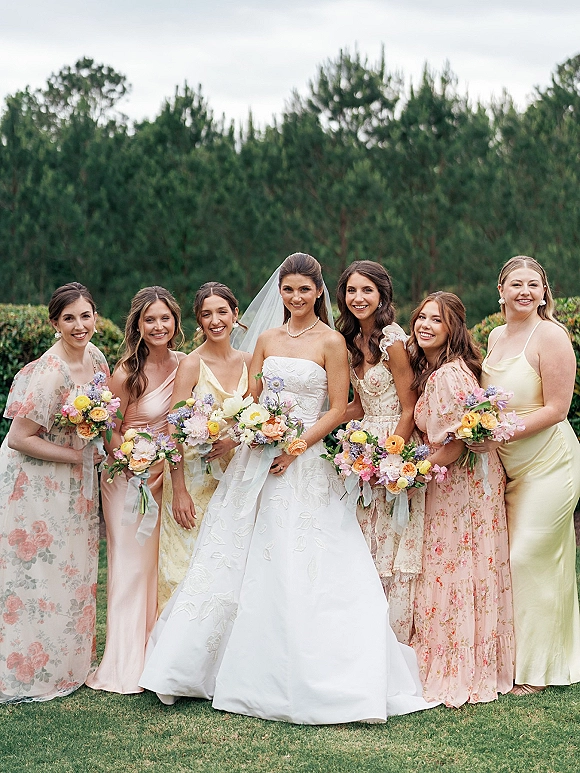
The formal bridal party group portrait is the image most couples feel obligated to capture and most photographers find the least creatively interesting to shoot. That isn’t an argument against it — it’s an argument for getting it done efficiently so the schedule can move to more dynamic work.
Portrait time is determined by three variables: party size, location changes, and decision-making speed. Appointing one person (a planner, MOH, or groomsman) to manage the group during portrait time has a measurable impact on how the schedule holds. A wedding timeline built around realistic portrait windows, rather than optimistic ones, is the clearest tool for avoiding compression on the day.
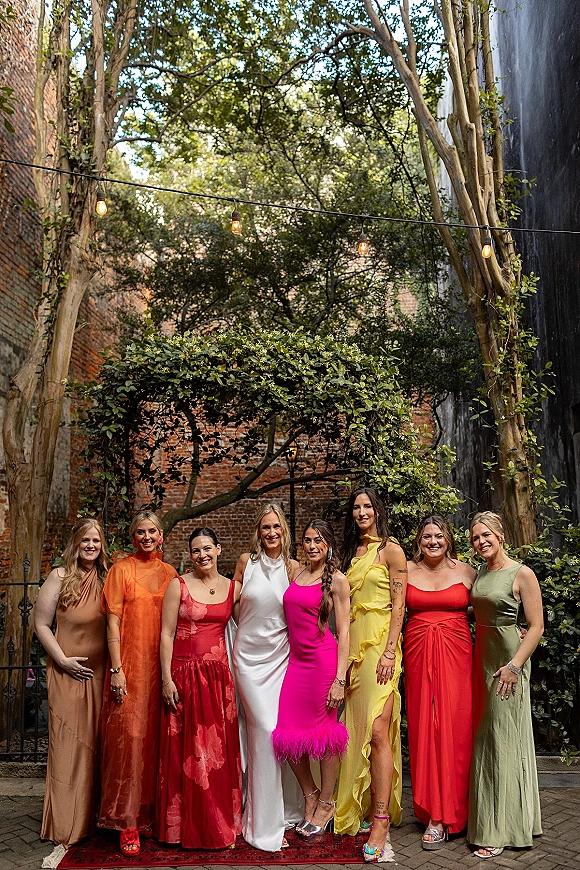
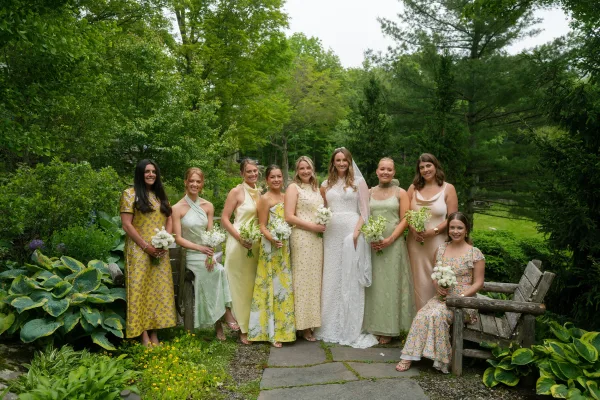
Large Bridal Party Photos
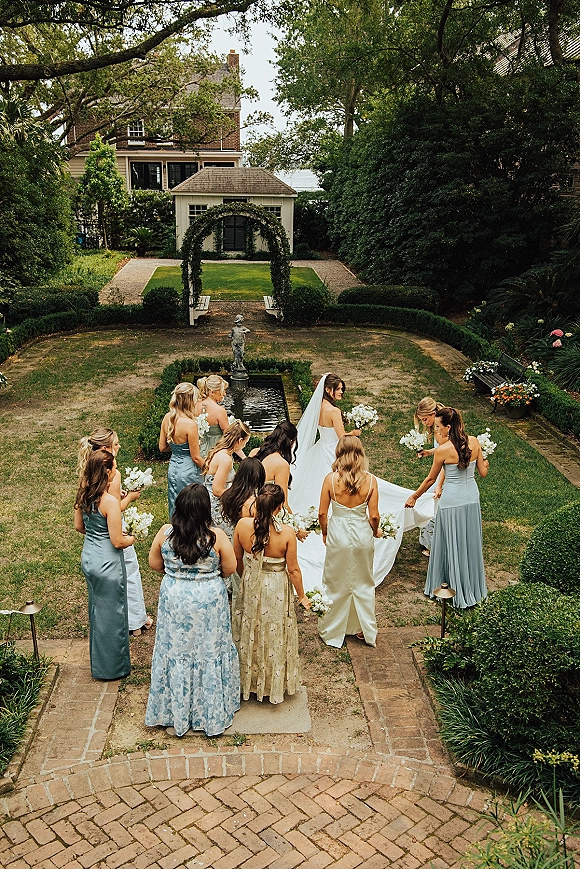
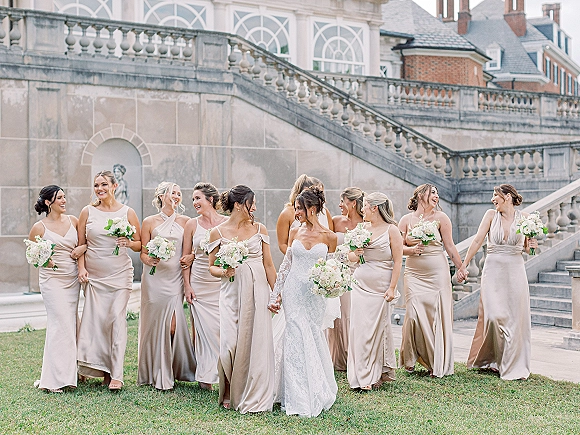
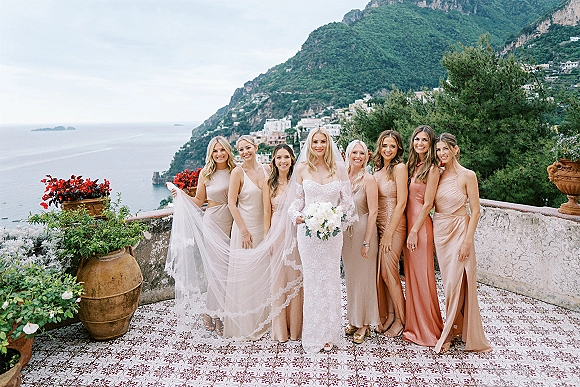
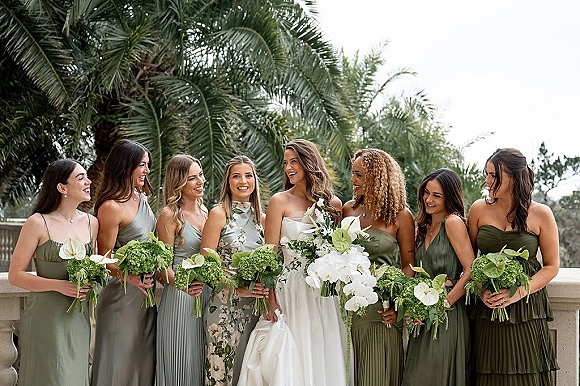
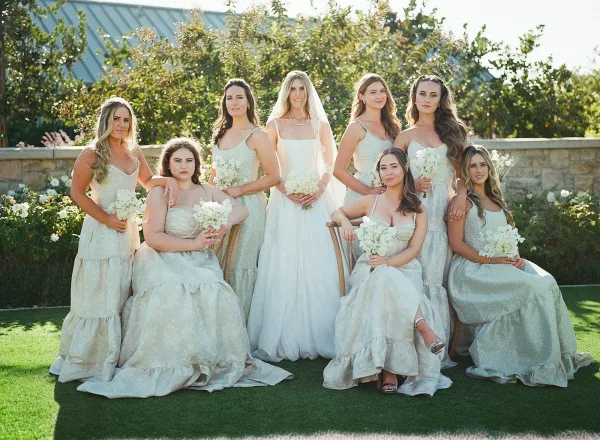
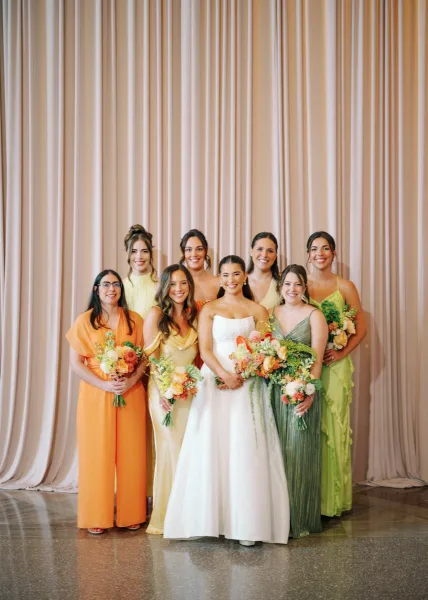
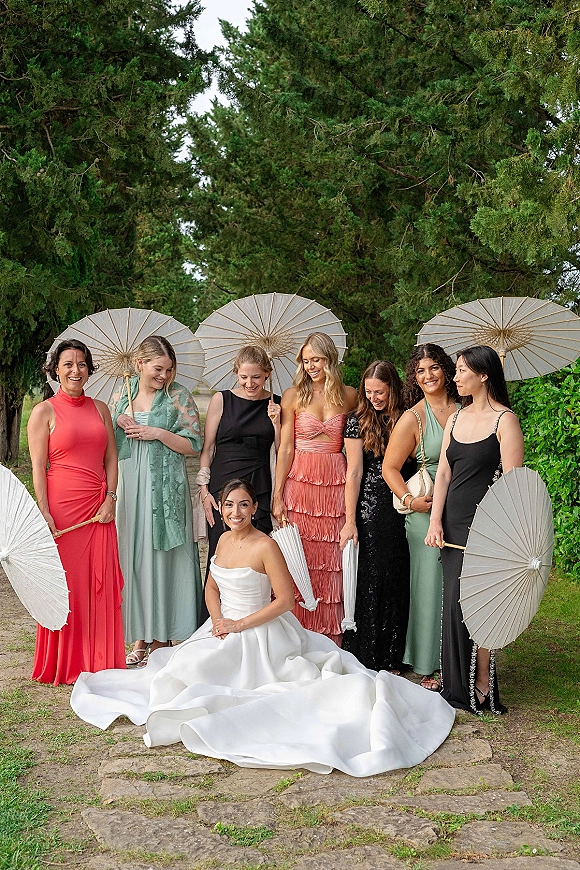
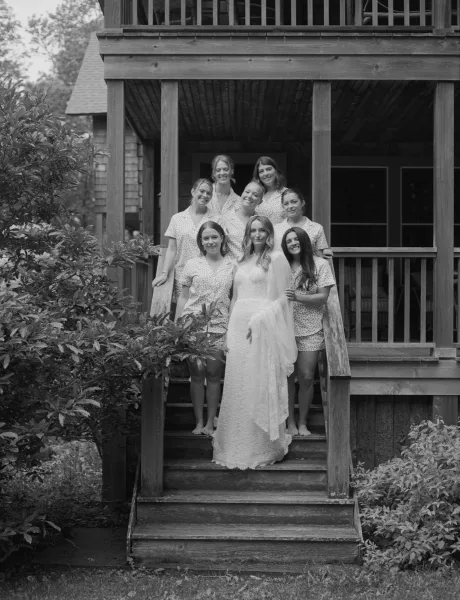
With eight or more people on each side, large bridal party photos require compositional approaches that smaller groups don’t need. The photographer has to think about depth, staggering, and sight lines: how to arrange people so everyone reads clearly in the frame without the image collapsing into a flat row.
Couples with large parties should discuss this explicitly with their photographer before the wedding day. A photographer’s portfolio should show clear evidence of how they handle full-party shots. Full gallery deliveries, not curated highlights, give the most accurate picture. Plan for 60 to 90 minutes of portrait time with a large party, longer if multiple locations are involved.
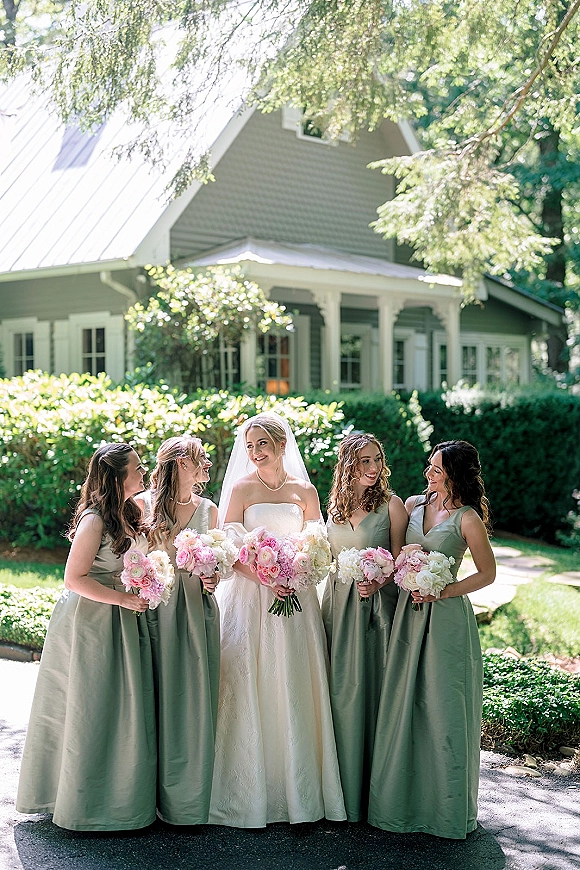
Small Bridal Party Photos
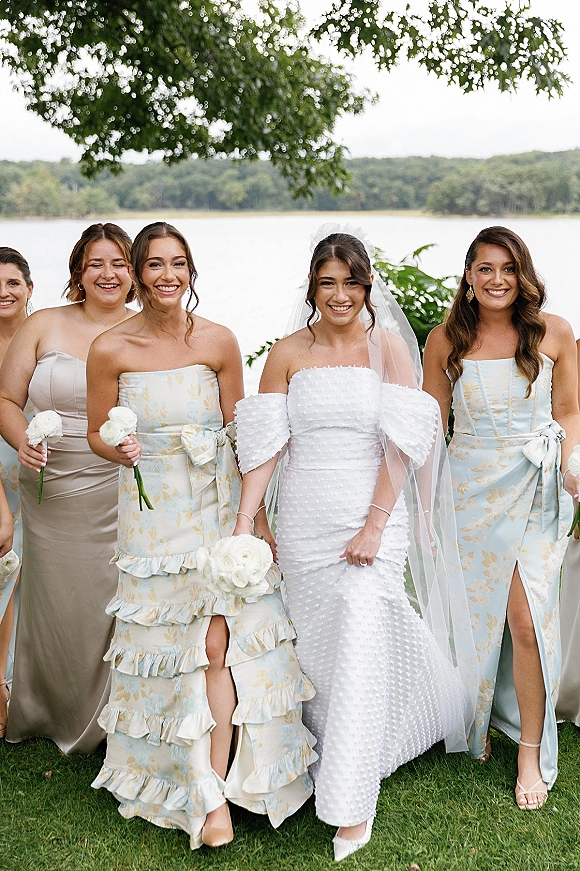
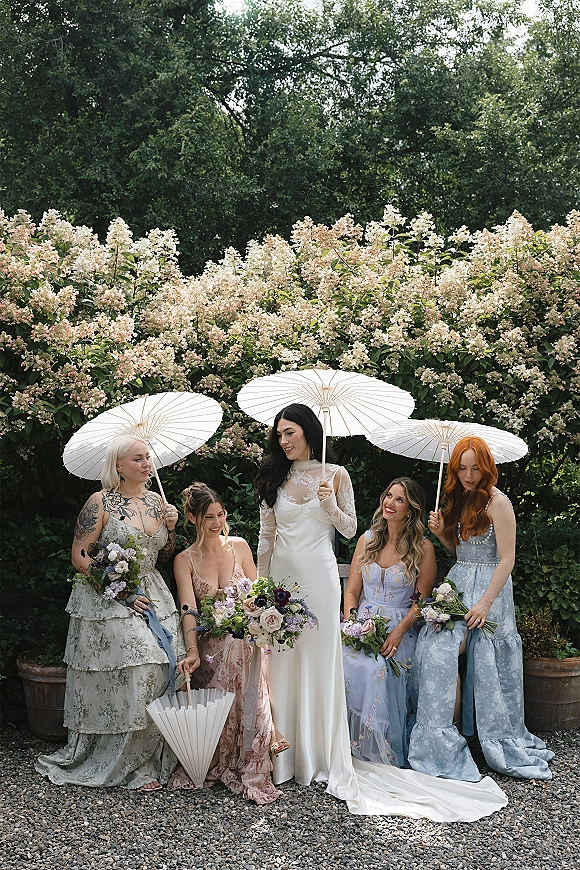
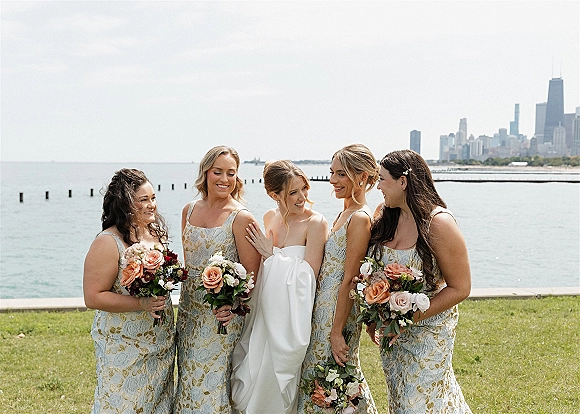
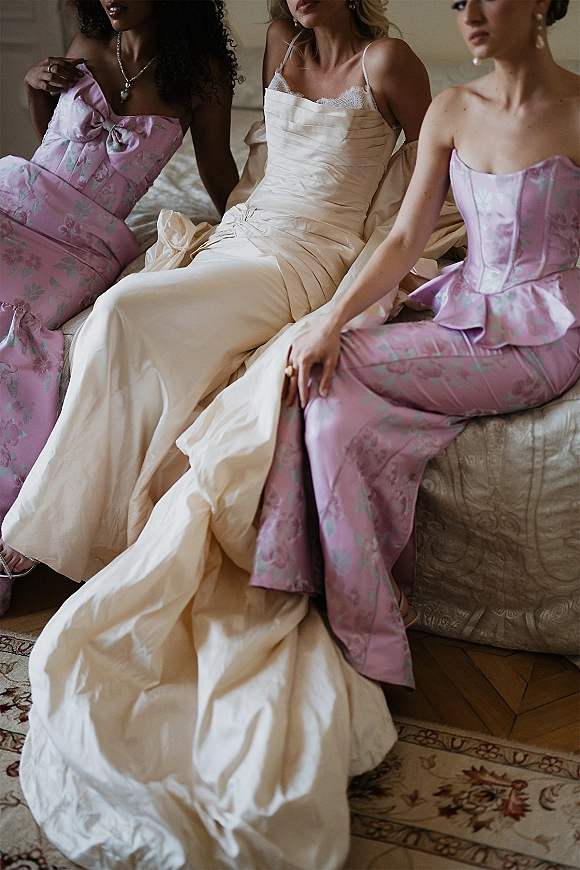
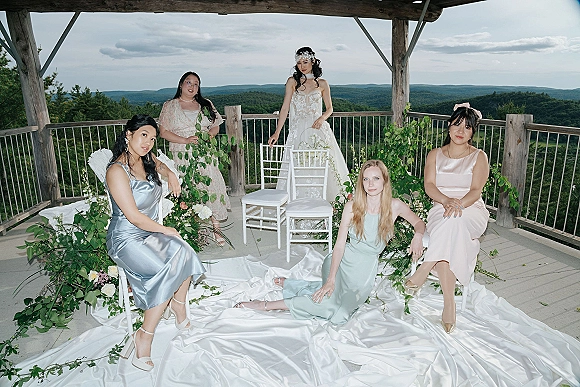
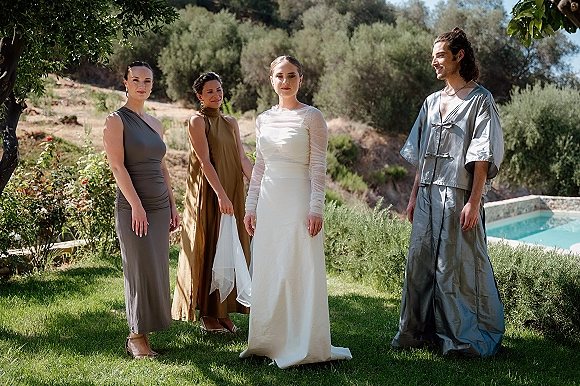
Small bridal party photos carry a different visual character than large-group work. With two or three attendants on each side, compositions become tighter and more intimate, closer to editorial portraiture than event documentation.
Micro-weddings and elopements with one or two attendants each tend to produce some of the most visually cohesive wedding photography. The consistency of a small group lets the photographer maintain a single visual register throughout the day rather than shifting between large-group logistics and intimate portraiture.
Uneven Bridal Party Photos
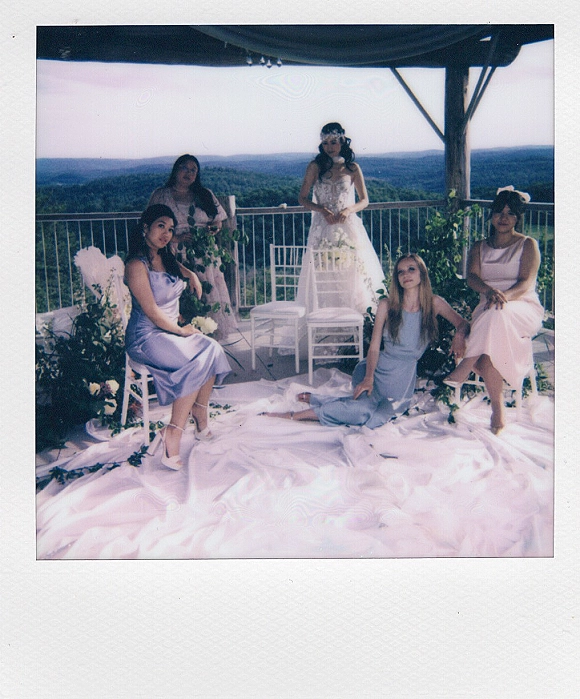
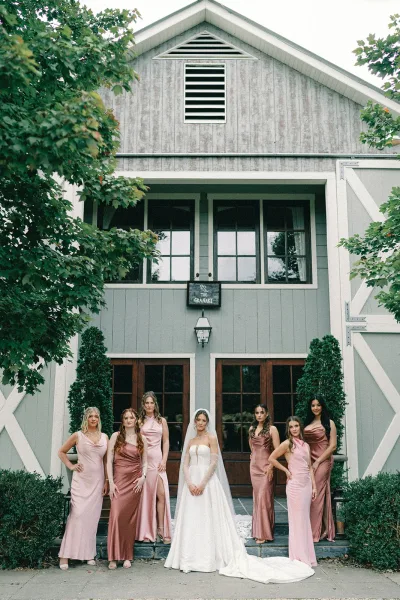
Uneven bridal party photos, where the bride’s side and groom’s side have different numbers, are more common than couples expect and less visually problematic than they fear. An experienced photographer balances an uneven party through positioning, depth, and arrangement rather than requiring symmetrical numbers.
Common approaches include placing people at varying distances from camera, using architectural or environmental elements to fill visual space, and choosing angles that don’t call attention to the numerical difference. The result rarely reads as uneven in the final images.
Bridal Party Photo Poses and Candid Moments
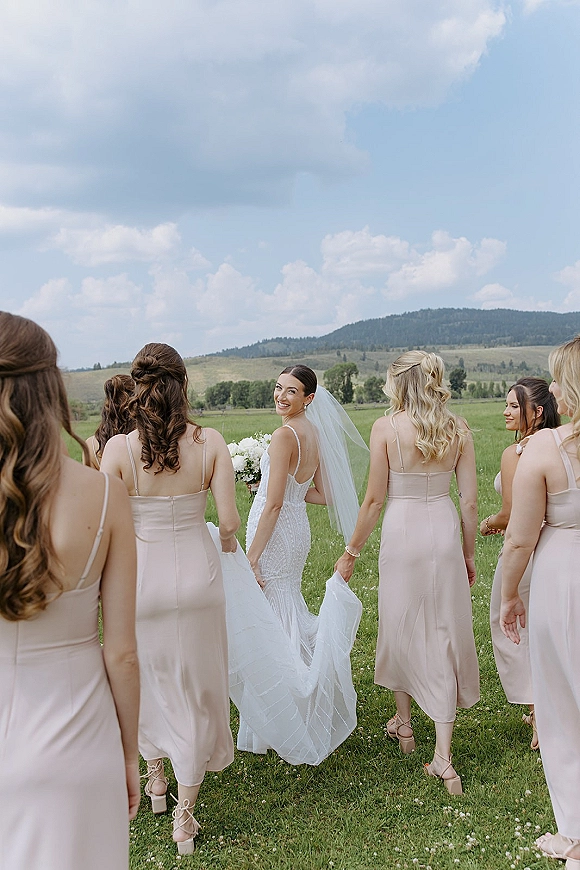
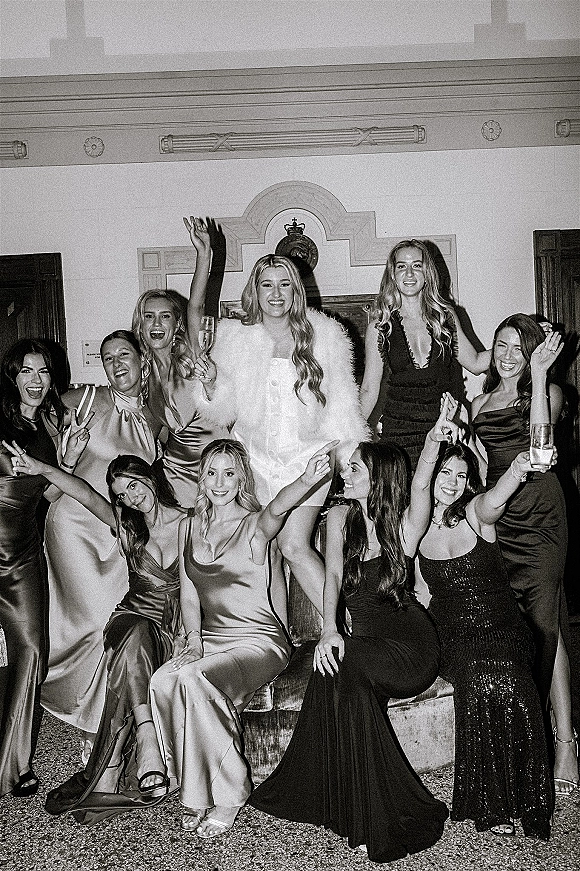
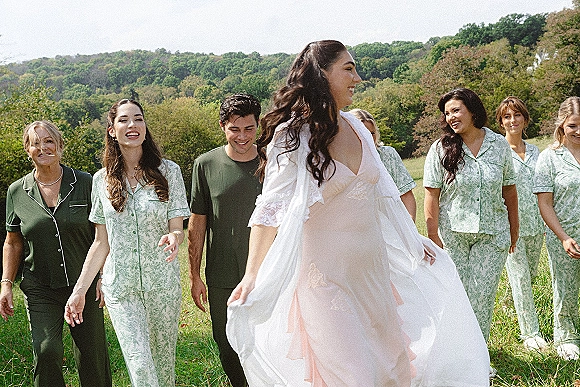
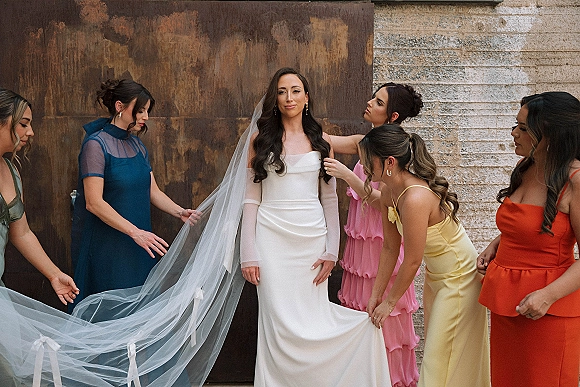
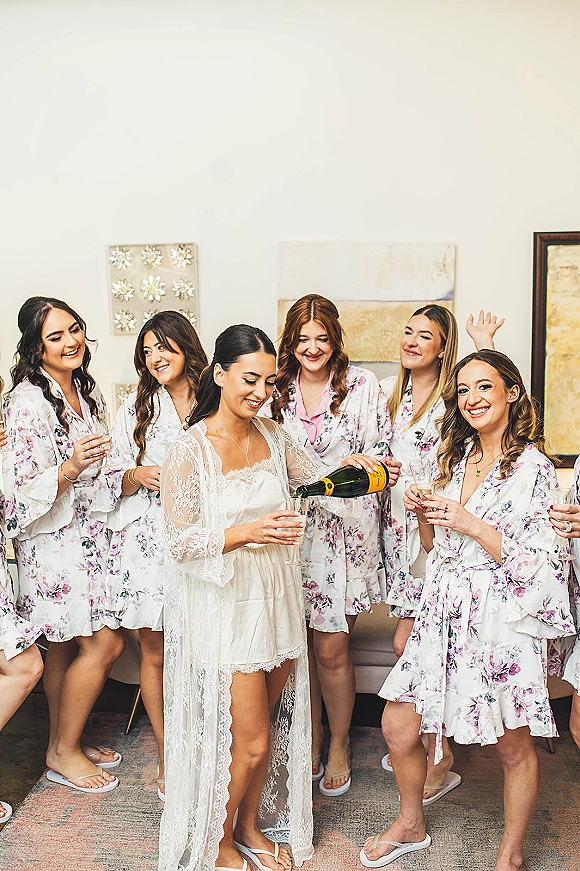
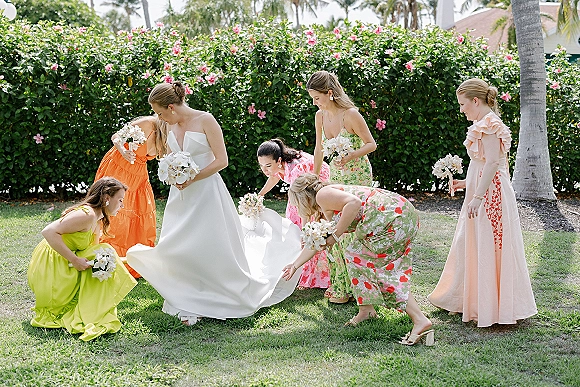
The bridal party images that consistently perform best editorially are rarely the formal portraits. They’re the candids — someone mid-laugh during a group shot, two bridesmaids adjusting a veil, groomsmen walking toward camera in open shade.
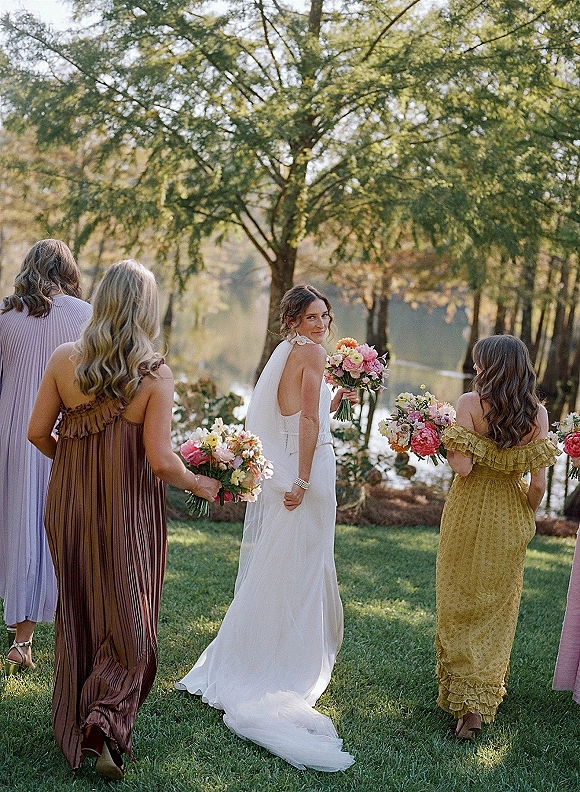
For poses specifically, movement reads better than static arrangements in most settings. Walking shots, looking-away compositions, and images taken immediately after a formal pose, when people relax back into themselves, tend to produce the strongest work. For a broader view of what’s possible across wedding photography styles, wedding photography ideascovers the full range.
Fun and Creative Bridal Party Photo Ideas
The most memorable bridal party photos tend to come from two directions: a location with natural compositional structure, or a photographer who builds genuine energy between people rather than just arranging them.
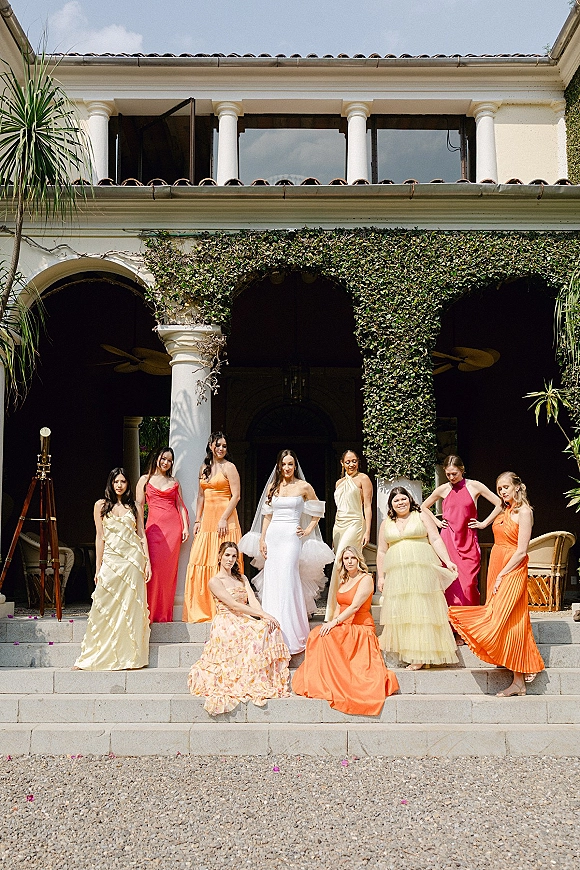
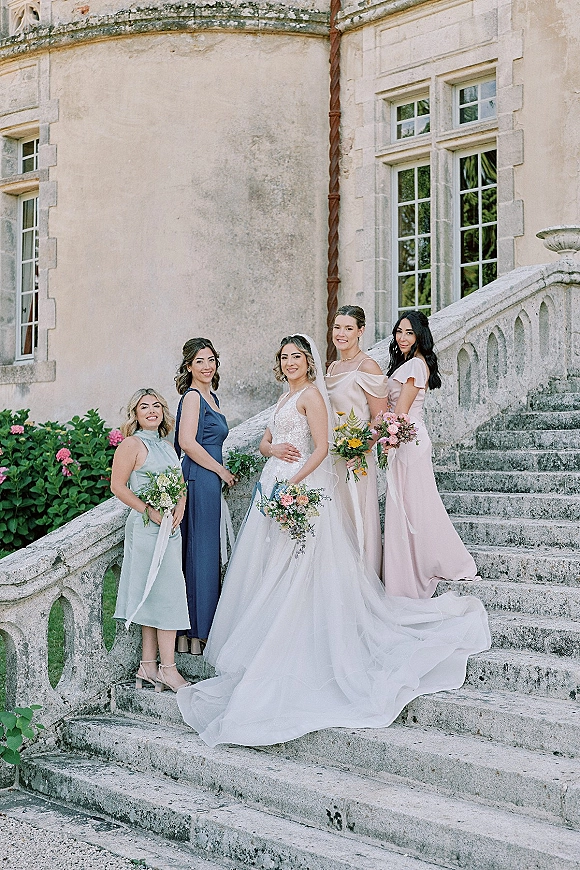
Locations with architectural interest (staircases, arched doorways, garden allées) give large groups a natural framework that solves the flat-lineup problem. Movement shots, loose staggered arrangements rather than formal rows, and compositions where the couple is the clear focal point with the party framing rather than competing are all approaches that photograph particularly well before the ceremony, when anticipation is still readable on people’s faces.
Bridal Party Photos Before the Ceremony
Pre-ceremony bridal party portraits allow couples to complete nearly all formal group work before the ceremony begins, arriving at the reception with almost no portrait time outstanding. Without a first look, bridal party portraits typically happen after the ceremony, which compresses the window between ceremony end and reception start.
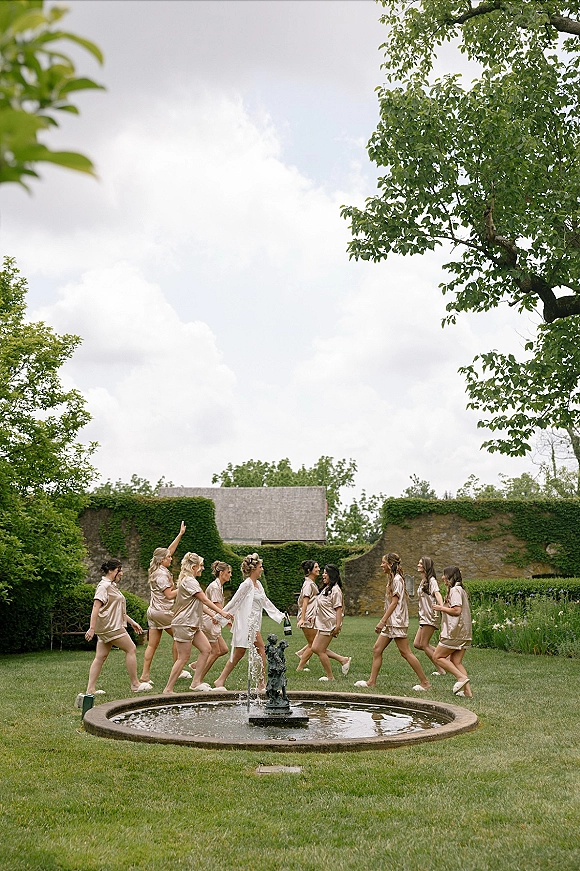
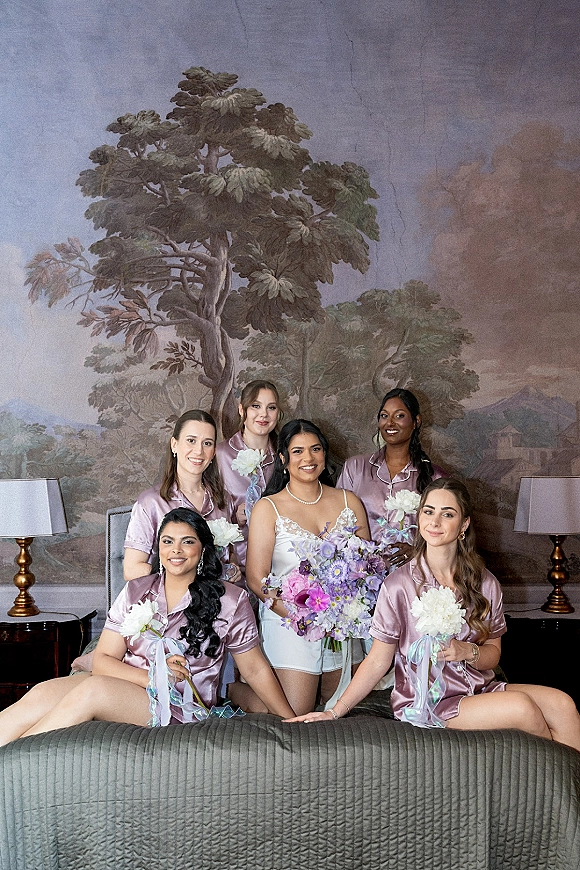
Detail shots, dress-on moments, and the morning logistics leading up to portrait time are a distinct planning category covered in bridal party getting ready photos.
Bridal Party Photos with Parents
Parent portraits, including each couple with their own parents and both families together, are typically handled as an extension of the bridal party portrait session, immediately after the full party portraits while the group is still assembled.
The standard sequence runs from largest group to smallest: full wedding party, bride’s side, groom’s side, then progressively smaller subgroups. Parent portraits fall naturally at the end. Couples who want specific family combinations should give the photographer a written shot list in advance with names attached. A verbal request on the day creates gaps when the schedule is moving fast.
Frequently Asked Questions
How long should bridal party photos take?
For a party of four to six on each side, plan for 45 minutes to an hour at one primary location. Add 15 minutes per additional location change. Large parties of eight or more, or multiple locations, can require 90 minutes or more. The single biggest efficiency factor is having one designated person responsible for gathering and moving the group between setups.
What order should bridal party photos be taken in?
Most photographers work from largest group to smallest: full wedding party together, then the bride's side alone, then the groom's side alone, then smaller subgroups and individual portraits. This releases people from the formal session progressively, keeps energy higher, and allows early departures for anyone with scheduling constraints. Confirm the order with your photographer in advance.
How do you handle an uneven bridal party in photos?
An experienced photographer balances an uneven party through depth and arrangement rather than symmetry. Positioning people at varying distances from camera, using environmental elements to fill visual space, and choosing angles that don't call attention to the numerical difference all help. The result rarely reads as uneven in the final images.
Should bridal party photos happen before or after the ceremony?
The decision depends primarily on whether the couple is doing a first look. A pre-ceremony first look enables nearly all formal portraits to happen before the ceremony begins. Without a first look, bridal party portraits typically happen after the ceremony, which requires careful timeline management to avoid a long gap between ceremony end and reception start.
What makes bridal party photos look good?
Consistent styling across the party, a location with strong natural light, and a schedule with enough buffer that the photographer isn't rushing setups. Beyond logistics, image quality depends most on the photographer's ability to direct groups: positioning people, managing energy between shots, and capturing the candid moments between formal setups. Reviewing full wedding galleries rather than curated highlights gives the clearest picture of how a photographer handles group work.