Blue as the Bride’s Something Blue
A blue wedding dress is a gown where blue is the dominant color, and it carries a built-in meaning few other shades can claim: it is the something blue of the old wedding rhyme, a symbol of fidelity, love, and constancy. That association makes blue one of the easier colored gowns to choose, since it reads as meaningful rather than merely unconventional. Blue is also seasonless and widely flattering, with cool undertones that suit a broad range of skin tones, which is part of why it has become a leading alternative to white.
Light, Powder, and Dusty Blue Gowns
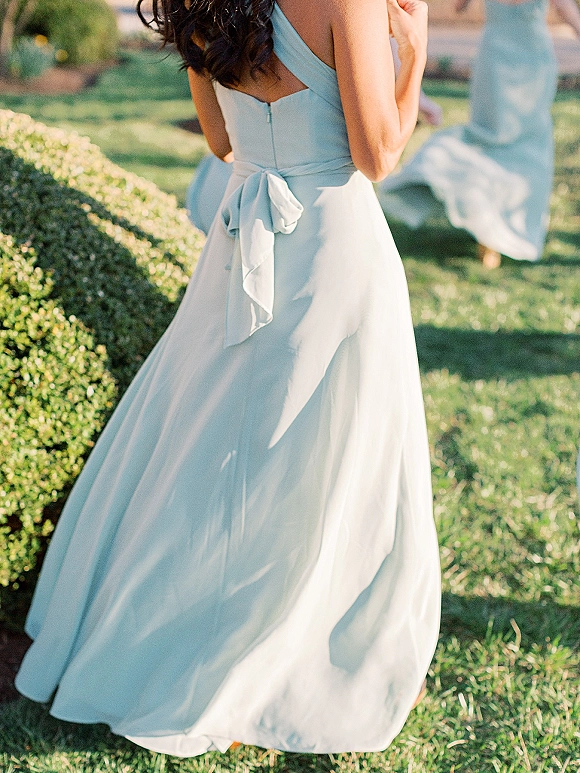
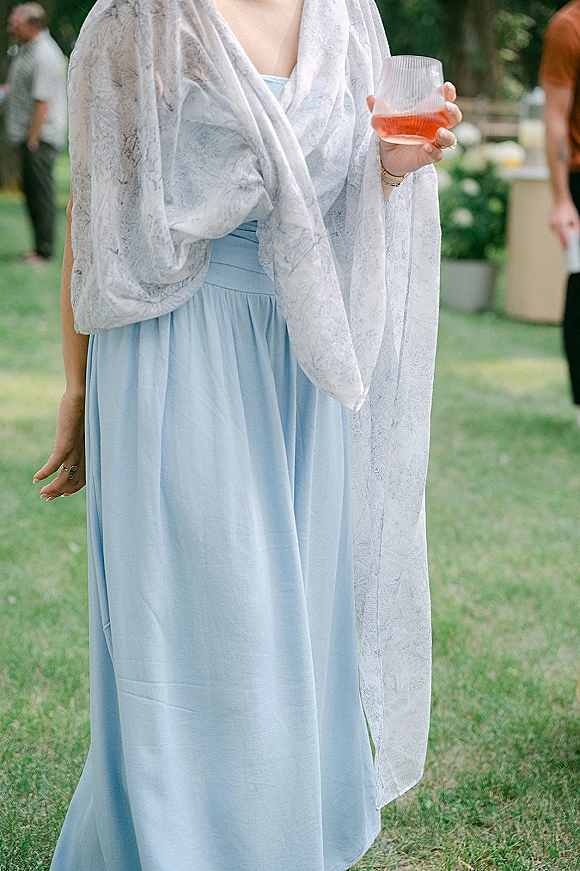
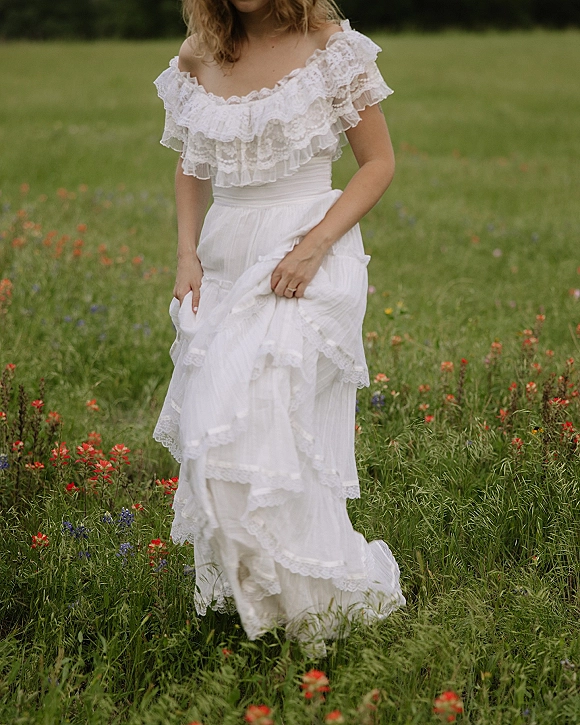
The palest blues sit closest to tradition. Powder, sky, and ice blue read almost as a cool-toned white from a distance, giving the gentlest possible introduction to a colored gown. Dusty blue, a grayed and muted shade, is among the most popular wedding blues for its soft, vintage calm, pairing naturally with greenery and neutral palettes. These light blues suit airy fabrics, layered tulle, chiffon, and organza, that keep the color delicate, and they photograph beautifully in daylight and garden settings. For a full wedding palette built on this shade, see our boho wedding dress looks where soft tones recur.
Navy, Midnight, and Cobalt Blue Gowns
At the deep end, navy and midnight blue read formal enough to stand beside a tuxedo, dark enough to function almost as a neutral while still clearly blue. These shades suit evening and cooler-weather weddings and pair well with rich fabrics like satin, mikado, and velvet that deepen the color. Cobalt and royal blue sit between the pastels and the darks, a saturated, jewel-toned blue that makes a bolder statement and holds up in bright light. A deep blue gown photographs with drama against both candlelight and a winter landscape, and it gives a sophisticated alternative to black for brides who want depth without going dark.
Blue and White Wedding Dresses
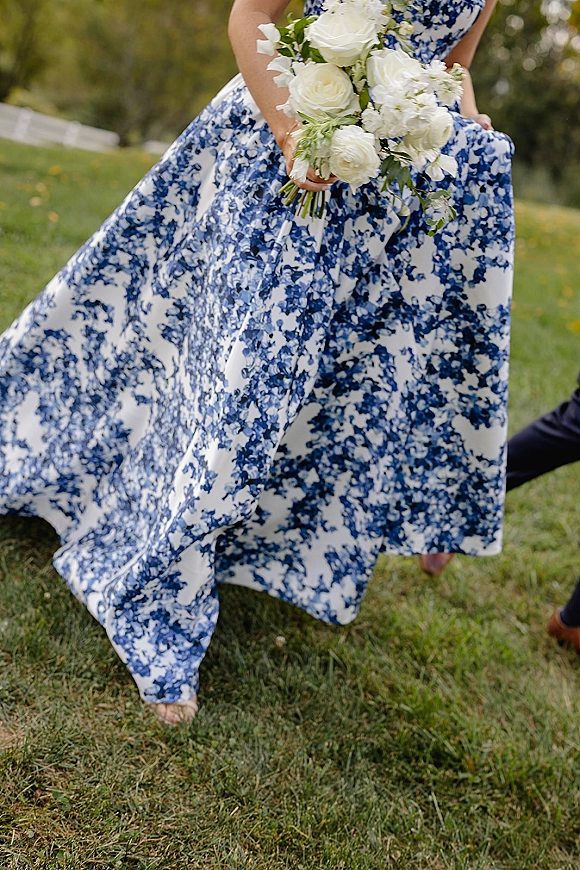
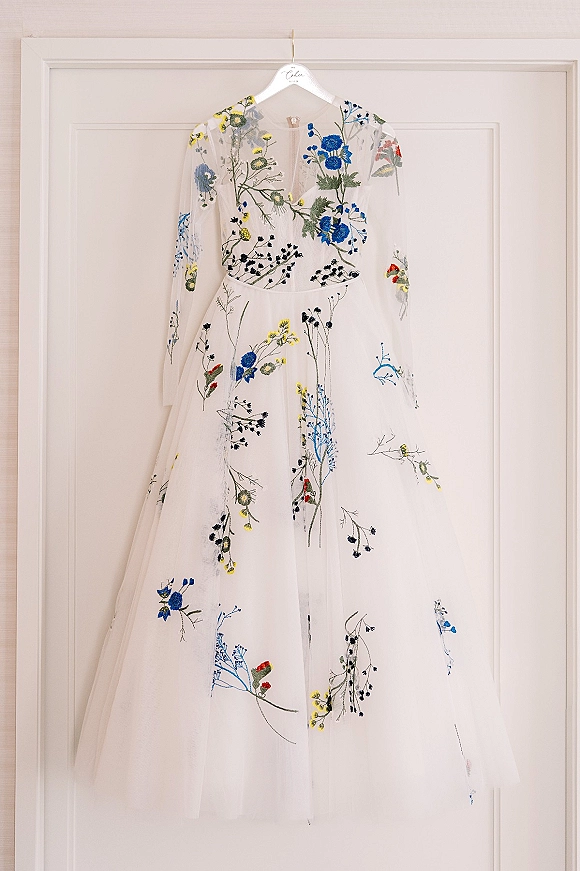
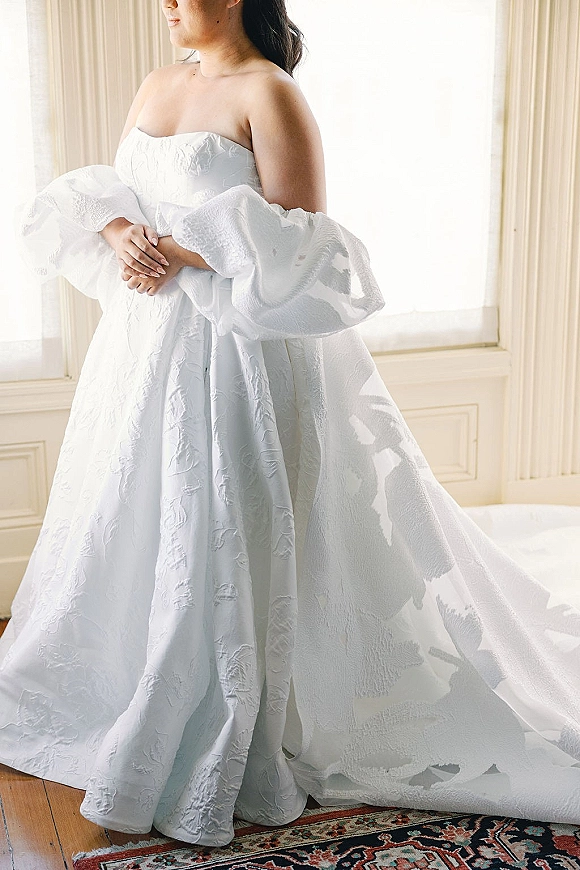
Pairing blue with white keeps the gown anchored in tradition while introducing the color. The combination appears as a white gown with blue floral embroidery or applique, a blue sash, a blue underlay beneath white lace, or an ombre deepening from white at the bodice to blue at the hem. This route evokes porcelain and delft patterning, reading fresh and garden-ready, and it suits brides who want a hint of blue rather than a fully colored gown. White also keeps a pale blue from disappearing, giving the color enough contrast to register in photographs.
Fabrics and Silhouettes for Blue
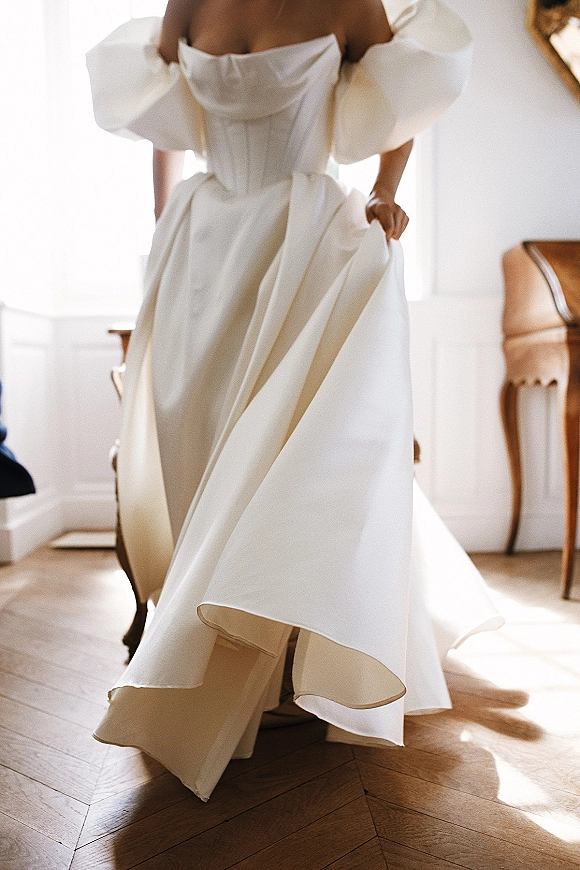
Blue holds across nearly every fabric, which is part of its range. Chiffon and tulle keep light blues airy and dimensional, organza adds a crisp structure, and satin and mikado give deep blues a reflective richness. Velvet suits navy and midnight for cold-weather weddings. For silhouette, a flowing A-line or ball gown suits the romantic pastels, a sleek column or slip reads modern in any depth of blue, and a fitted mermaid gives shape to the bolder cobalt and navy tones. Compare how designers render each shade across fabrics in the wedding dress directory.
Blue for Your Season and Setting
Blue’s range lets you tune the gown precisely to the time of year. Powder, sky, and dusty blue read fresh and serene in spring and summer, sitting naturally in garden, coastal, and outdoor settings where the color echoes water and sky. Aqua and seafoam carry a particular affinity for beach and waterfront weddings. As the year cools, navy, midnight, and velvet cobalt come into their own, reading rich and formal against autumn foliage, winter light, and candlelit interiors. A deep blue gown gives an evening or black-tie wedding the gravity of a dark gown while staying clearly colored. Match the depth to the light: pale blues glow in daylight but can read nearly white indoors, while deep blues reach their full richness after dark.
Necklines and Details That Suit Blue
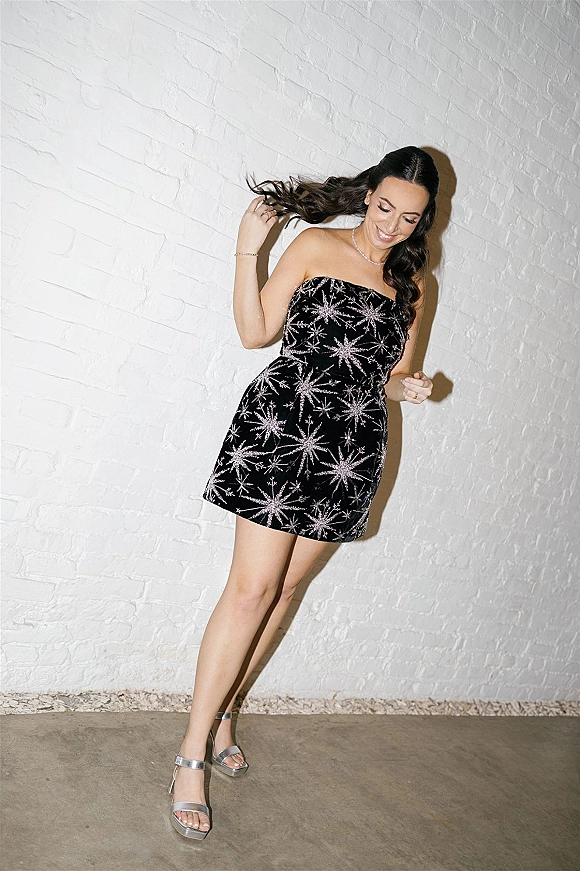
Blue takes a wide range of detailing because it reads as a true color rather than a neutral. On pale blues, floral applique, beading, and three-dimensional blooms add the romance the soft shade invites, and an off-the-shoulder or sweetheart neckline suits the garden mood. On deep navy and cobalt, a clean strapless, halter, or plunging neckline lets the saturated color carry the gown, while silver or crystal beadwork glitters against the dark ground like stars against a night sky. Embroidered floral detail in white or silver over a blue base evokes porcelain and delft patterning. A fitted bodice with a flowing skirt flatters across the whole range, balancing the color with shape and movement.
Aqua, Seafoam, and Jewel Blues
Beyond the pastels and the deep navies sits a band of vivid blues worth knowing. Aqua and seafoam carry a hint of green for a fresh, watery quality that suits coastal and beach weddings especially well, reading light and summery. Cerulean and a clear sky-toned blue are pure and bright, more saturated than powder blue but lighter than cobalt. At the richest end, a jewel-toned blue glows like a sapphire, deep and luminous against satin, giving the boldest blue statement short of true navy.
These mid-to-vivid blues suit brides who want clear, confident color rather than a soft wash or a near-neutral dark. They photograph vividly in daylight and hold their color where a pale blue would fade, which makes them a strong choice for bright outdoor and waterfront settings. Aqua and seafoam pair naturally with sand, driftwood, and white for a coastal palette, while a jewel-toned blue suits a more formal, glamorous setting in rich fabric. Choosing among them comes down to how much green you want in the blue and how saturated a statement the gown should make.
Blue Lace and Embellishment
Blue takes detailing in a way that reads as a true color rather than a neutral, so embellishment shows clearly. Lace over a blue lining adds romance and texture, the pattern reading softly against the shade, and a tonal blue lace on a blue gown gives a subtle, dimensional monochrome. On deeper navy and cobalt, silver and crystal beadwork glitters against the dark ground like stars against a night sky, an effect that suits an evening gown beautifully. White or silver floral embroidery over blue evokes porcelain and delft patterning, a distinctive and recognizable look.
For the pastels, three-dimensional fabric flowers and fine beading suit the soft, romantic mood, while a clean blue satin with no ornament reads modern and lets a jewel tone or navy carry the gown. Metallic accents shift the temperature: silver keeps a blue cool and crisp, while a touch of gold warms it toward richness. The level and color of embellishment should follow the depth of blue and the setting, with soft floral detail suiting a garden pastel and sparkling beadwork suiting a formal navy.
Blue by Wedding Style
Blue adapts across wedding aesthetics, and the shade should match the setting. For a coastal or beach wedding, aqua, seafoam, and powder blue echo the water and sky in a light, fresh way. For a garden or spring wedding, dusty and sky blue sit calmly alongside greenery and pastel florals. For a formal or evening wedding, navy, midnight, and a jewel-toned blue read sophisticated and rich, a refined alternative to black.
For a winter wedding, deep navy and velvet cobalt match the season’s cool light and pair with silver and white for a frosted palette. A rustic or boho celebration suits a soft dusty blue in flowing fabric, while a modern wedding carries a sleek blue column in any depth. Blue’s breadth is its strength here, since the same color family covers a barely-there pastel and a near-black formal tone, letting a bride match the gown precisely to the mood and formality of the day without leaving the color.
Blue Florals and Beauty
A blue gown shapes the florals and beauty that surround it. White blooms and abundant greenery keep a blue gown clean and natural, a classic pairing that suits the pastels especially well. For contrast, dusty pink, blush, and burgundy add romantic warmth, while true blue florals like delphinium and anemone echo the gown for a tonal effect. The bouquet can either keep the palette cool and fresh or introduce a warm counterpoint that lifts the blue.
For beauty, blue suits a soft, fresh makeup palette, with cool or neutral tones that complement rather than compete with the color. A deeper navy or jewel blue can carry a slightly stronger eye, while a pastel blue reads best with a natural, luminous finish. Hair worn soft and loose suits the romantic shades, and a sleek style balances a bold cobalt or navy. Silver and crystal accents keep a blue gown cool and crisp, while a touch of warm metal softens it, so the beauty look can tune the gown’s temperature in either direction.
Who Suits Blue and How to Wear It
Blue is among the most universally flattering colored gowns, but the shade can be tuned to your coloring. Lighter, icier blues tend to suit fair and cool complexions, reading crisp against the skin, while richer navy, cobalt, and jewel blues flatter warm and deep skin tones especially well, the saturated color glowing against them. A blue with a green cast like aqua brings warmth that suits olive complexions, while a clean, cool blue sharpens against rosy skin.
Blue also works beautifully as a second look, worn for the reception after a white ceremony gown, giving a serene or jewel-toned change of mood for the evening. A deep navy or cobalt reception dress reads sophisticated and lets a bride move and dance, while a flowing pastel blue keeps the romance of the ceremony. Whether as the main gown or a second look, blue offers a rare combination of meaning, flattery, and range, which is part of why it has become a leading choice among colored bridal gowns.
Blue in Your Wedding Palette
A blue gown sets a calm, sophisticated tone the wider wedding can build around. A tonal palette of dusty, sky, and powder blue across the bridal party and florals reads serene and cohesive, suited to a garden, coastal, or spring celebration. For richer settings, navy and cobalt pair with silver and white for a formal, frosted scheme or with gold for warmth. The depth of the gown guides the palette, since a soft dusty blue sits quietly within a neutral, greenery-rich scene while a deep navy anchors a more dramatic, evening one.
Bridesmaids offer a natural way to extend the gown’s shade, with dusty blue being one of the most popular party colors for its easy pairing with greenery and neutrals. A deeper or complementary tone lets a pale blue bridal gown stand apart, while a tonal blue party keeps the scene unified. Stationery, linens, and florals in echoing blues tie the gown into the day. Planning the blue into the palette from the start ensures the gown reads as the centerpiece of a coherent scheme rather than a colored choice set against an unrelated background.
The setting and details shape how the blue reads across the day. For a coastal or garden wedding, natural light, white florals, and greenery let a soft blue breathe and stay fresh, while a formal evening suits a navy gown surrounded by candlelight, silver, and deep blooms. Metallic accents tune the temperature, with silver and crystal keeping a blue scheme cool and a touch of gold warming it toward richness. Linens in white, cream, or a tonal blue keep the palette calm, and a single warm accent such as blush or terracotta adds contrast. Carrying the blue through these details gives the gown a setting that echoes its serenity rather than competing with it. Thinking through these choices early means the blue feels woven into the day rather than added at the end.
Blue Trains, Hems, and Length
Length shapes how romantic or how formal a blue gown reads. A flowing floor-length gown with a soft train suits the serene, garden mood the pastels carry, the color trailing in layers of tulle or chiffon. A sweep or chapel train adds formality to a navy or cobalt gown, while a clean floor length keeps a deep blue sleek and modern. The lighter and airier the blue, the more a full, layered skirt flatters it, letting the soft color build through the fabric.
Shorter lengths bring out blue’s fresh, playful side. A tea-length blue dress reads vintage and sweet, suited to a relaxed or coastal celebration, while a mini or cocktail-length gown in a bright or jewel-toned blue makes a striking reception look. A high-low hem adds movement for an outdoor setting. Because blue spans such a range, the hemline lets a bride decide whether to lean soft and romantic with length and volume or to sharpen the look with a shorter, cleaner cut that highlights the color itself.
Blue in Photographs and Light
Blue is one of the most reliably photogenic colored gowns, though shade and light shift its read. The palest powder and ice blues can appear close to a cool white indoors or in flat light, with their color clearest in daylight and against simple backdrops. Dusty and sky blues hold their color well across conditions, reading calm and clear. Navy, cobalt, and jewel blues reach their richest depth in the evening and in candlelight, glowing against the dark of a low-lit room while still reading unmistakably blue.
Fabric finish affects this too, since a satin blue catches light and shifts tone across its folds while a matte fabric reads as a truer, flatter shade. A pale blue benefits from natural daylight where its softness shows, while a deep blue gives drama after dark. Seeing the gown in conditions close to your venue helps confirm the shade reads as intended, especially for the lightest blues that can drift toward white. Matching the depth of blue to the expected light keeps the gown reading as the color you chose throughout the day.
The Tradition of Something Blue
Blue carries a meaning woven directly into wedding custom, which gives a blue gown a resonance beyond style. The familiar rhyme calls for something old, something new, something borrowed, and something blue, with blue long held as a symbol of love, fidelity, and constancy. Historically brides incorporated blue as a token of faithfulness and purity, sometimes through a ribbon, a garter, or embroidery hidden in the gown. Choosing a blue dress turns that small tradition into the centerpiece, satisfying the custom in the most visible way possible.
For brides who want the meaning without a fully blue gown, the color can enter as an accent: blue embroidery, a blue sash, blue shoes, or a blue underlayer beneath a white skirt all honor the tradition while keeping the dress white. A blue-and-white gown offers a middle path, adding the color as a clear design element. Whether worn as the whole gown or a single touch, blue lets a bride carry a centuries-old symbol of devotion into the day, which is part of why it resonates as a colored bridal choice more readily than many other shades.
Choosing Blue for Your Body and Fit
Blue flatters across body types, and the silhouette can be chosen to suit your shape as much as the shade. A ball gown in a soft blue brings romance and emphasizes a defined waist, a mermaid or fit-and-flare in navy or cobalt follows the figure before a dramatic hem, and a sheath or column in any blue reads sleek and elongating. An A-line suits nearly every frame, carrying blue in a balanced, flattering line. Because blue spans pastel to near-black, the silhouette can lean romantic or formal while staying within the color.
Shade and fit interact in the mirror, since a deep navy reads slimming and formal much as a dark neutral would, while a bright or pastel blue draws more attention to the gown’s lines. Trying blue in more than one depth and cut reveals which combination flatters most, as the same gown reads differently in powder blue versus cobalt. The aim is a gown where the color and the cut reinforce each other, the blue lending calm and meaning and the silhouette lending shape, so the gown feels considered and personal rather than chosen for color alone.
Styling a Blue Wedding Dress
Blue pairs easily with both warm and cool accents. Silver and crystal keep a pale blue fresh and icy, while gold warms a navy or cobalt toward something richer. For florals, white and greenery keep a blue gown clean and natural, while dusty pink or burgundy adds romantic contrast. Metallic or nude shoes lengthen the line without breaking the palette. For brides drawn to other cool jewel tones, our green wedding dress and purple wedding dress collections show neighboring directions worth comparing before you decide.
Frequently Asked Questions
What does a blue wedding dress symbolize?
Blue is the something blue of the traditional wedding rhyme, symbolizing fidelity, love, and constancy. That built-in meaning makes a blue gown read as significant rather than merely unconventional, which is part of its appeal as a colored bridal option.
What is the most popular shade of blue for a wedding dress?
Dusty blue, a soft grayed shade, is among the most popular for its calm, vintage feel and easy pairing with greenery. Powder and sky blue suit brides wanting the gentlest color, while navy and cobalt make a bolder, more formal statement.
Is blue a good wedding dress color for any season?
Yes. Blue is seasonless: light powder and dusty blues suit spring and summer gardens, while navy, midnight, and velvet cobalt suit autumn and winter evenings. The shade and fabric let you tune the gown to the time of year.
Does a blue wedding dress suit every skin tone?
Blue is among the most universally flattering colored gowns because of its cool undertone. Lighter, icier blues tend to suit fair and cool complexions, while richer navy and cobalt flatter warm and deep skin tones especially well.
What fabrics work best for a blue wedding dress?
Chiffon and tulle keep light blues airy, organza adds crisp structure, and satin and mikado give deep blues a reflective richness. Velvet suits navy and midnight for cold-weather weddings, deepening the color further.
How do I wear blue as my something blue?
A blue gown satisfies the tradition on its own, but you can also keep the dress white and add blue through embroidery, a sash, a hem, or an underlay. Blue-and-white designs offer a middle path that adds the color as an accent.