What Color Is Champagne, and How Does It Differ From Ivory, Nude, and Gold?
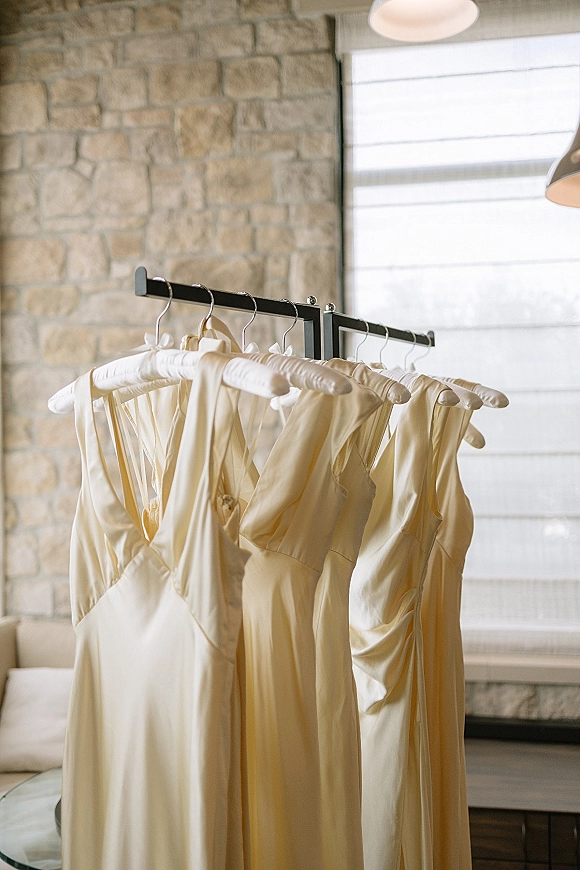
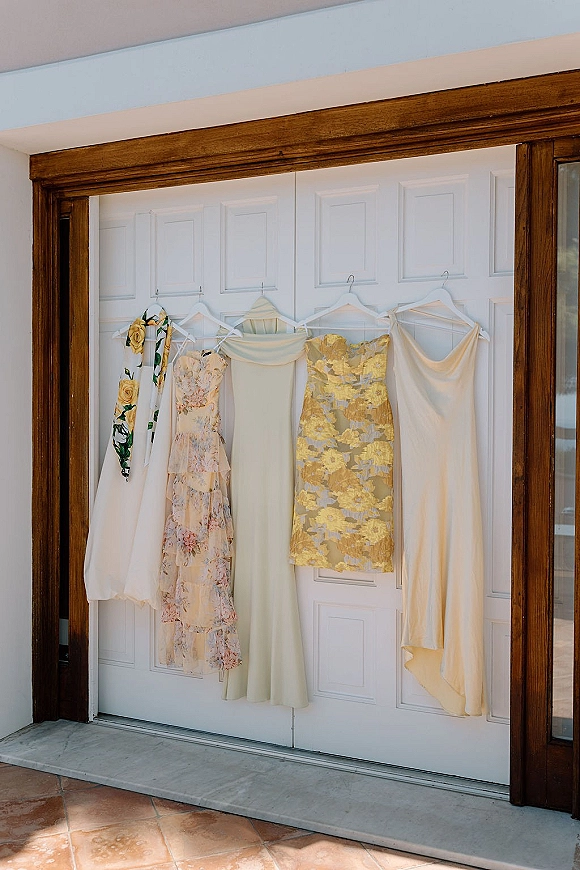
Champagne is a warm, pale gold with beige undertones, lighter than true gold and warmer than a cool ivory. The quickest way to place it: ivory leans white with a faint cream cast, nude leans toward skin and pink, gold reads as a clear yellow-metallic, and champagne sits between them as a soft golden-beige. In photos the distinction matters because champagne picks up surrounding light, so it can look nearly ivory in flat daylight and distinctly golden under warm reception lighting.
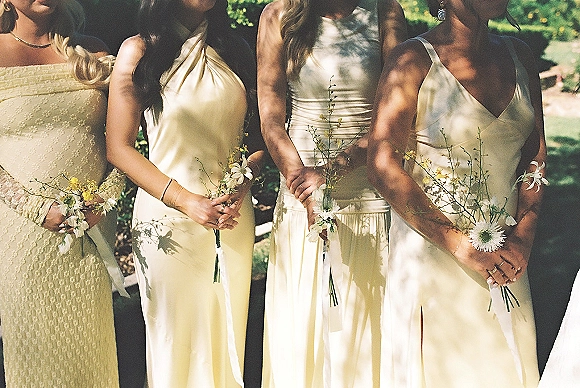
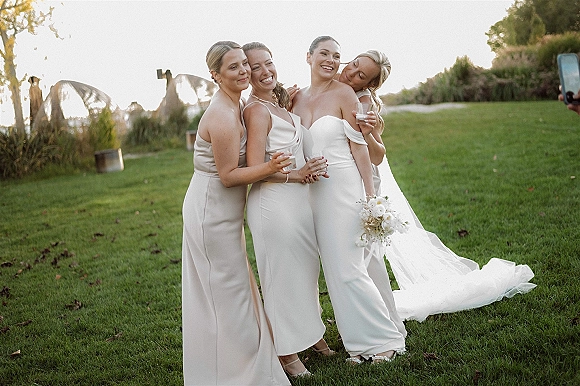
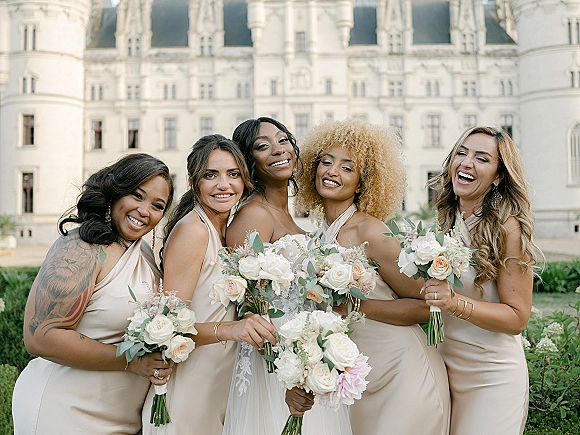
This shade-shifting quality is the reason champagne photographs so well across a single day. Bridesmaids standing in open shade at a ceremony read soft and neutral, then warm into a gentle glow once the reception lights come up. When a party wants a neutral that still has depth, champagne delivers it without committing to the saturation of a colored gown.
Satin and Shine: Sequin and Beaded Champagne
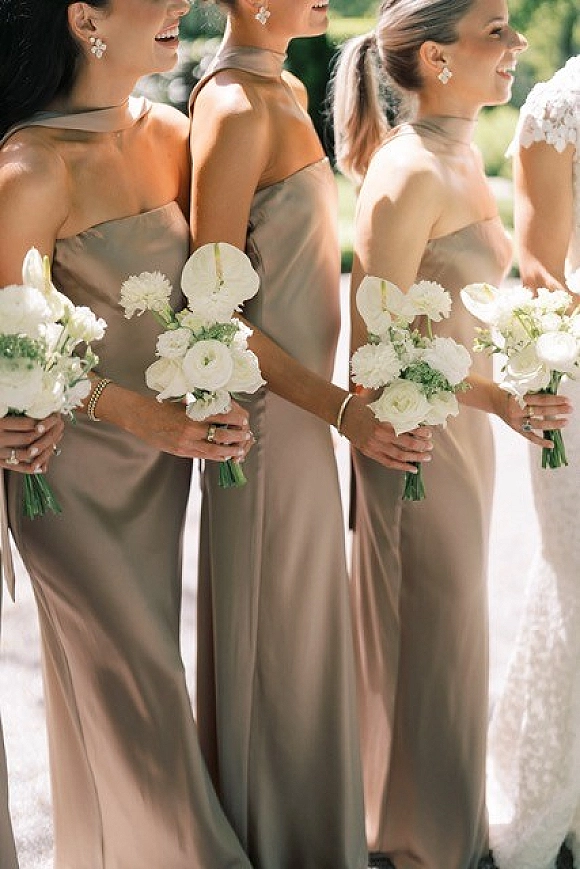
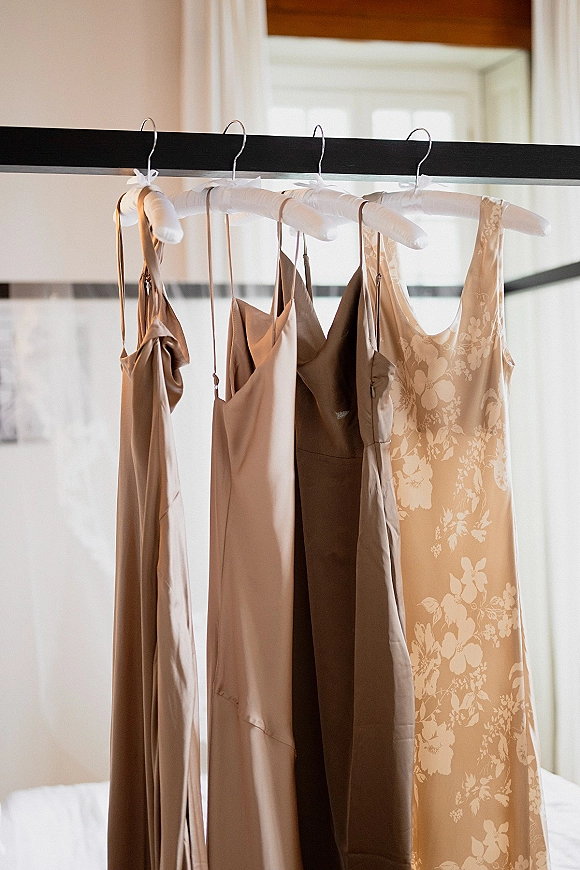
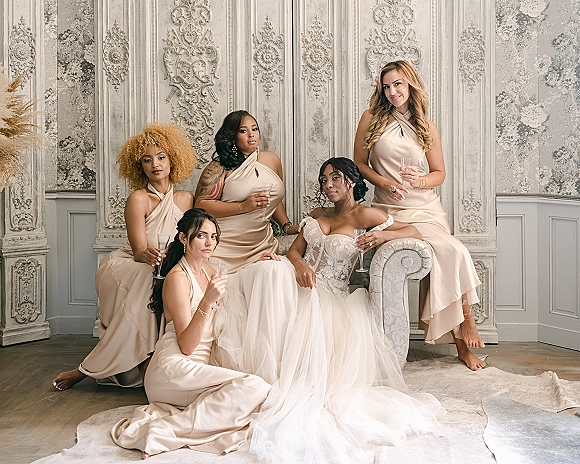
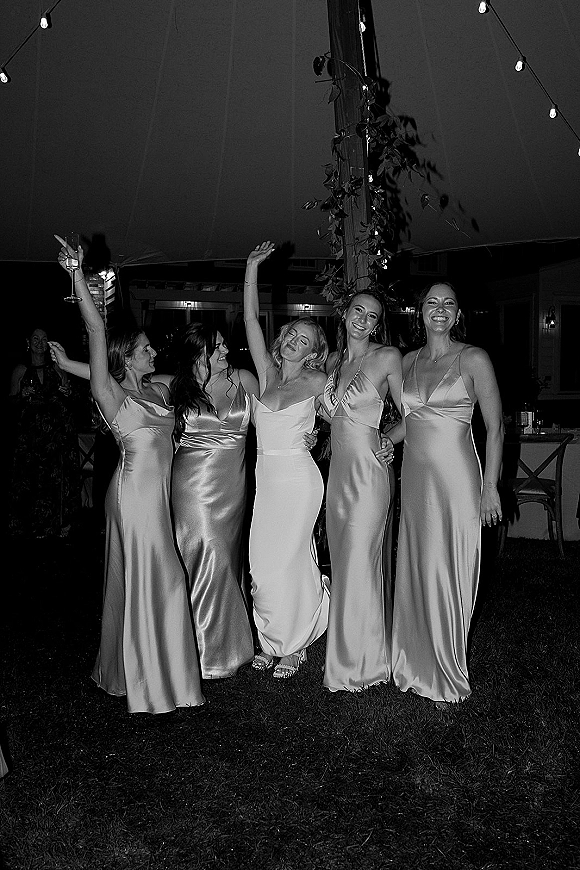
Fabric does more to define a champagne dress than almost any other color, because the shade lives in how it catches light. Satin gives champagne its signature pale-metallic sheen, with light sliding across a column or cowl-back silhouette and emphasizing the golden undertone. Matte crepe and chiffon pull the shade in the opposite direction, muting it to a soft sand that suits airy outdoor settings and floaty A-line cuts.
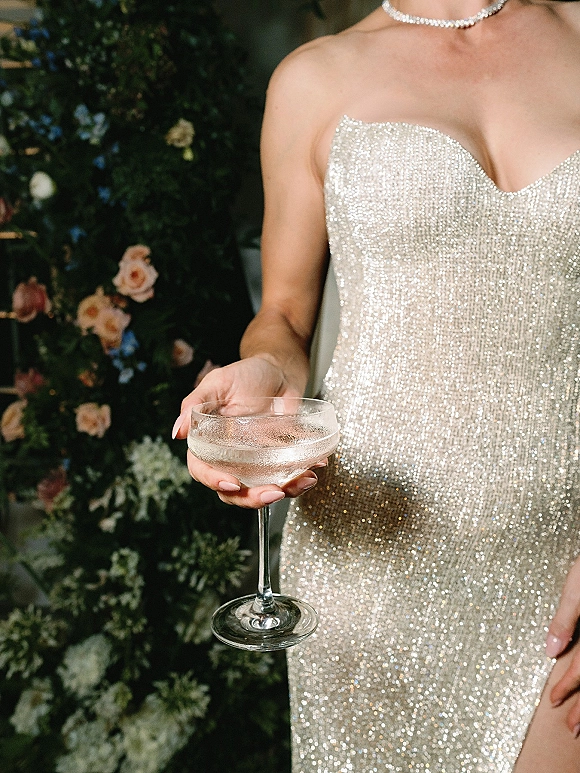
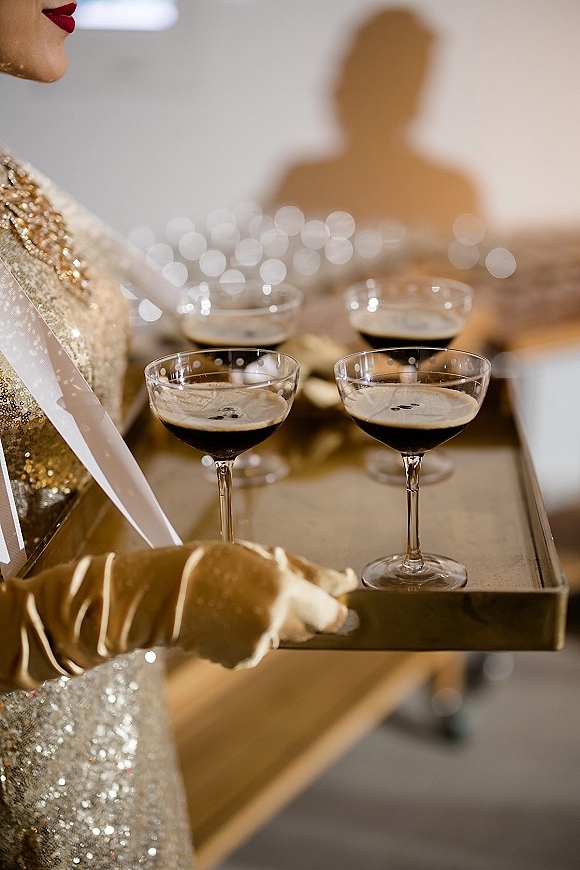
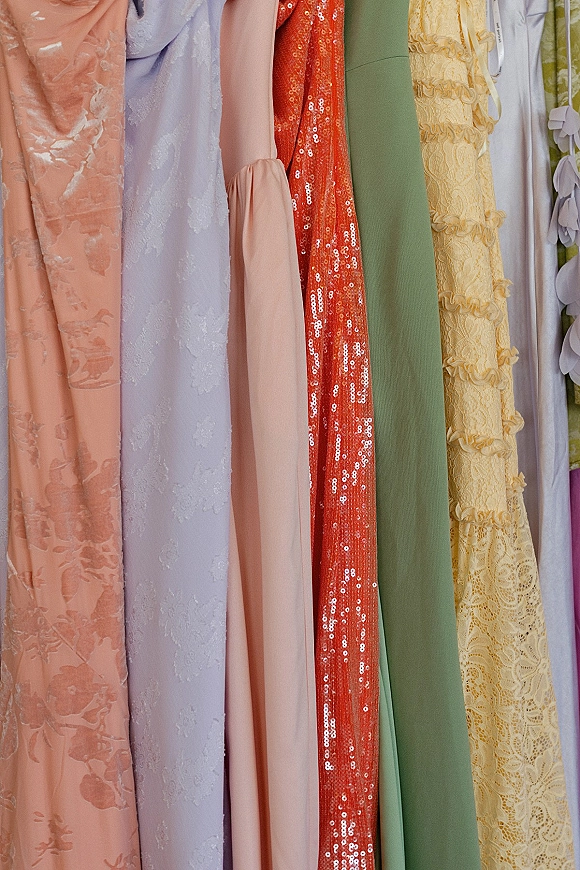
Sequined and beaded champagne is its own category. Allover sequins turn the gown into a genuine metallic, ideal for evening and black-tie receptions where a party wants shimmer without color. Beading concentrated at the bodice keeps the effect subtle, letting a flowing skirt stay soft while the top catches light during photographs. Because champagne already reads as a near-metallic, these embellished versions amplify what the base color is doing rather than fighting it.
Champagne and Gold
Pairing champagne with gold is the most natural metallic combination in this palette, since the two share a warm undertone. Gold accessories, shoes, and jewelry bring out the golden notes in the dress and tie the bridal party to gold-toned decor, flatware, and candlelight. Champagne gold bridesmaid dresses, where the fabric itself carries a stronger gold cast, push further in this direction and work well for formal evening weddings.
The pairing also gives a planner an easy way to layer warmth across the day. Champagne gowns with gold bouquets ribbon, gold chargers, and amber glassware create a cohesive warm-neutral scheme that feels rich without introducing a bold color. For parties drawn to metallics, this is the combination that holds together from getting-ready photos through the reception.
Champagne and Blush or Pink
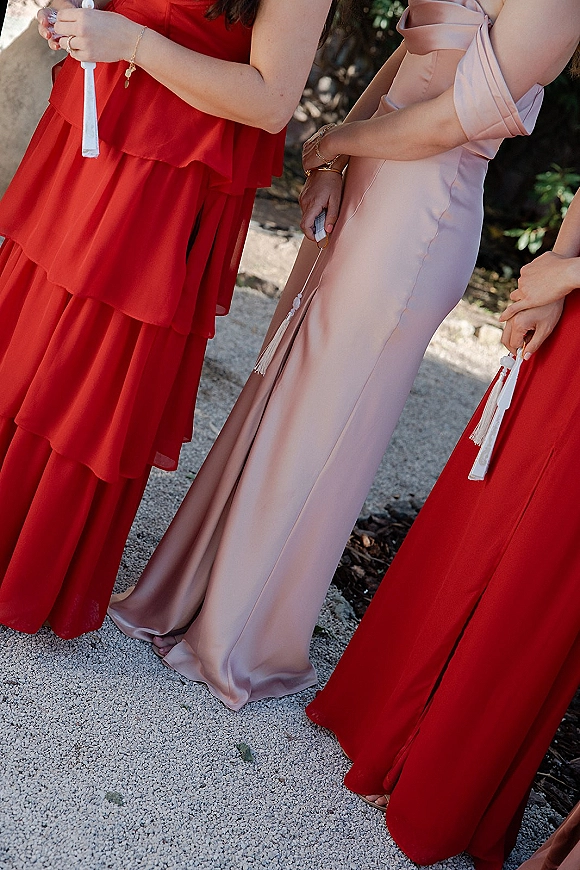
Champagne and blush belong to different families, one warm-neutral and one soft pink, but they sit close enough to layer beautifully. A mixed party of champagne and blush gowns reads as a tonal, romantic palette, with the champagne grounding the softer pink. Champagne pink dresses, where the base shade carries a faint rosy cast, bridge the two directly for parties that want a single hue with warmth on both ends.
For couples already building a soft palette, champagne extends naturally into pink-forward schemes. It pairs cleanly with blush bridesmaid dresses in a mixed lineup and sits comfortably next to dusty rose and mauve tones for a layered, vintage-leaning look.
Neutral-Palette Pairing and Champagne Versus Other Neutrals
Champagne anchors a neutral bridal party better than almost any other shade because it carries warmth without color. A neutral-palette party might combine champagne with taupe, oatmeal, and soft ivory for a layered, undyed look, or hold every gown in champagne for a unified warm-metallic lineup. Neutral champagne dresses, the muted matte versions of the shade, suit this approach best, reading as a sophisticated sand rather than a shiny gold.
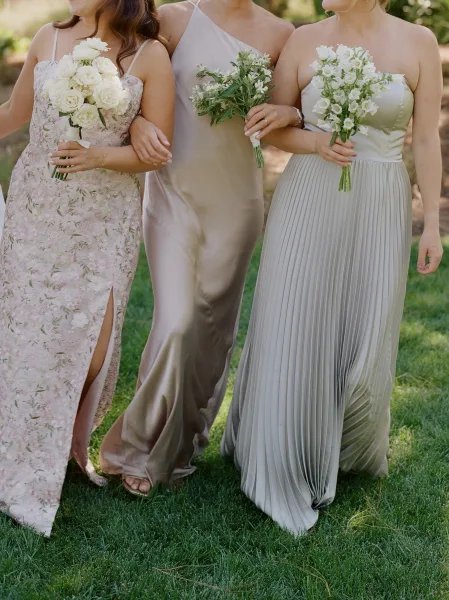
The key to a neutral party is fabric and depth variation rather than hue variation. Holding the color steady at champagne while mixing satin, crepe, and chiffon gives the lineup texture and dimension, so the party looks intentional rather than flat. This is where champagne outperforms a single bright color: it photographs as a cohesive palette even when every gown differs in cut.
Long Champagne Gowns Versus Midi Lengths
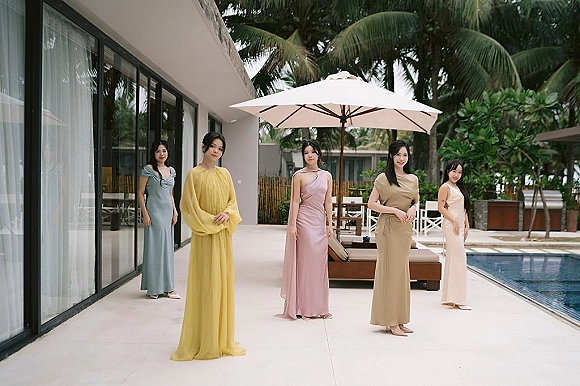
Length sets the formality of a champagne party. Long champagne gowns, especially in satin, read formal and evening-appropriate, with the fabric pooling and catching light along the floor. Floor-length chiffon softens that formality for garden and outdoor ceremonies while keeping the elegant line. Midi and cocktail lengths shift the whole look toward daytime and relaxed celebrations, where a shorter champagne dress feels fresh rather than formal.
Because champagne is a neutral, both lengths suit it without the color fighting the silhouette. A party can even mix lengths within one palette, holding the shade constant while letting each bridesmaid choose long or midi, and the result still reads cohesive.
Necklines and Silhouettes That Suit Champagne
Cowl necklines are a signature pairing with champagne satin, because the draped fabric creates soft folds that catch and release light across the chest. Strapless and sweetheart bodices let an allover sequin or beaded champagne speak for itself, while halter and one-shoulder cuts add structure to a flowing matte gown. The shade is forgiving across silhouettes, so the choice comes down to formality and the party’s range of body types.
For mixed-silhouette parties, champagne is one of the easiest colors to coordinate. A column, an A-line, and a cowl-back gown in the same champagne satin photograph as a unified group because the shade and sheen carry the cohesion that the differing cuts do not.
Season and Setting
Champagne is genuinely year-round, which is part of its appeal. In spring and summer, matte chiffon and lighter champagne tones suit garden, vineyard, and beach ceremonies. In fall and winter, satin and sequined champagne pick up candlelight and warm interiors, pairing naturally with deeper accent colors like burgundy florals or emerald greenery. Because the shade is neutral, it never looks out of season the way a strongly seasonal color can.
Setting matters more than season for this color. Champagne reads richest where there is warm light to catch, so evening and indoor receptions show it at its most metallic, while flat midday daylight pulls it toward a soft neutral.
Champagne Bridesmaids Beside an Ivory or White Bridal Gown
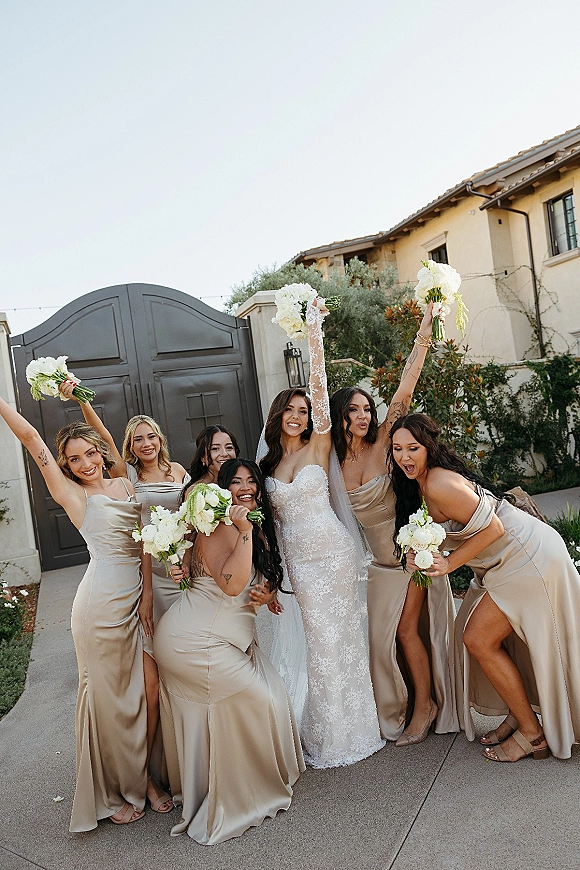
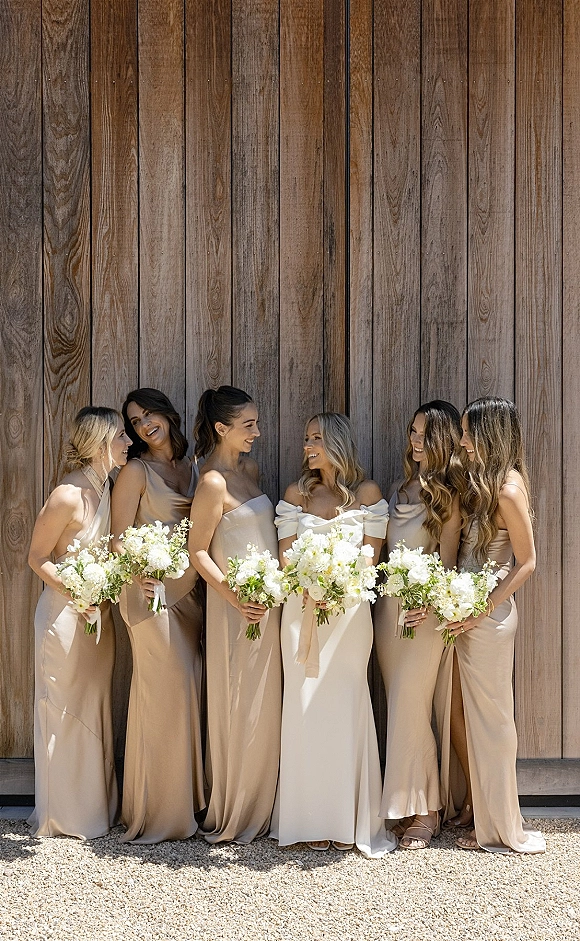
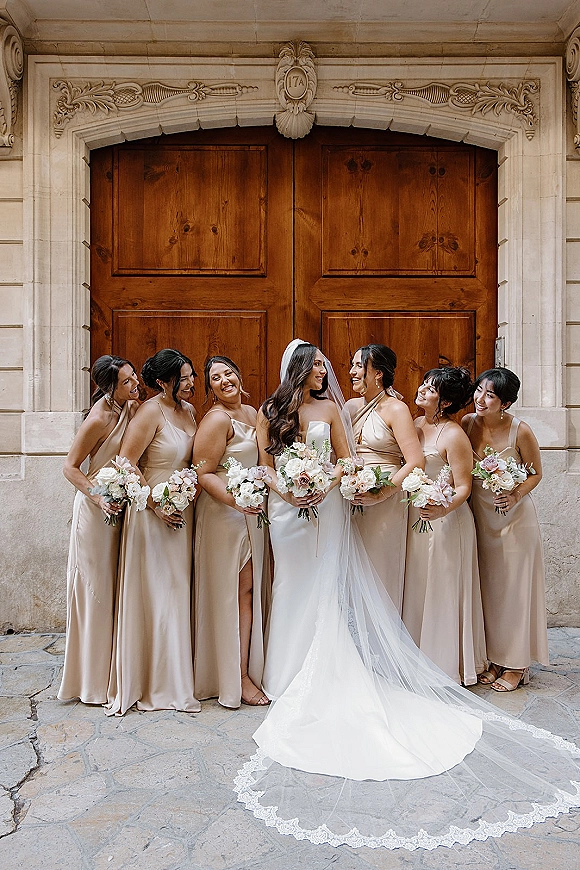
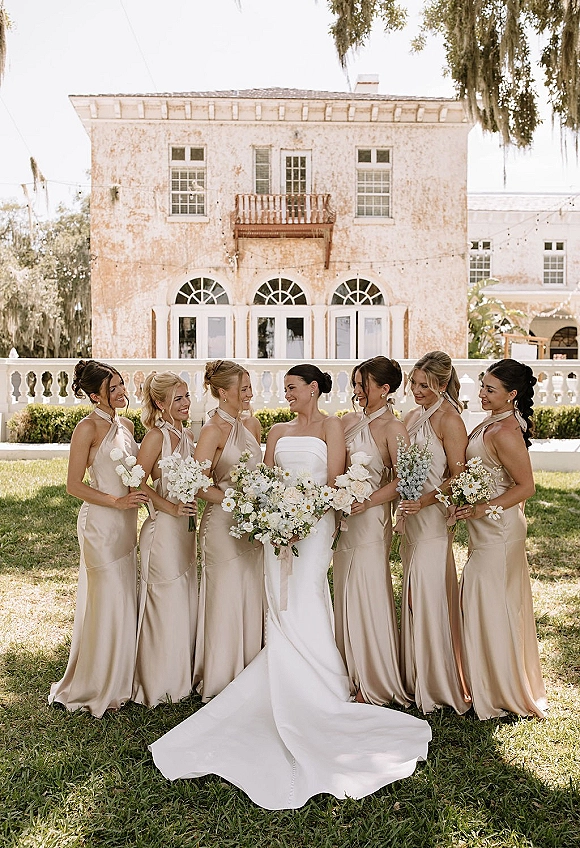
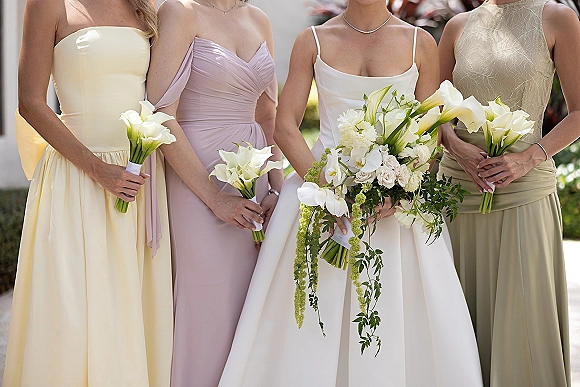
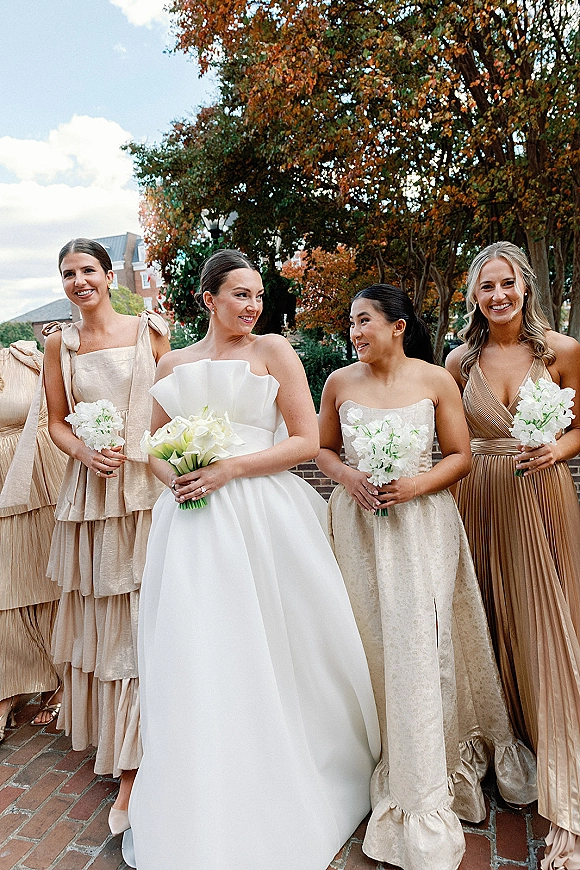
One of champagne’s quiet advantages is how it sits next to the bride. A champagne party reads as a soft, complementary frame around an ivory or white gown rather than competing with it, because the warm golden-beige is close enough to bridal whites to harmonize but distinct enough to keep the bride clearly separate. This is why champagne suits couples who want a tonal, neutral aesthetic where the bride stands a half-step lighter and brighter than her party.
The pairing works best when the bride’s gown and the champagne dresses share a temperature. A warm ivory bridal gown sits naturally against champagne, while a stark cool-white gown creates a slightly sharper contrast that still reads intentional. For couples planning the full lineup, choosing the champagne tone with the bridal gown in hand keeps the two from drifting toward an accidental near-match.
How Champagne Photographs in Different Light
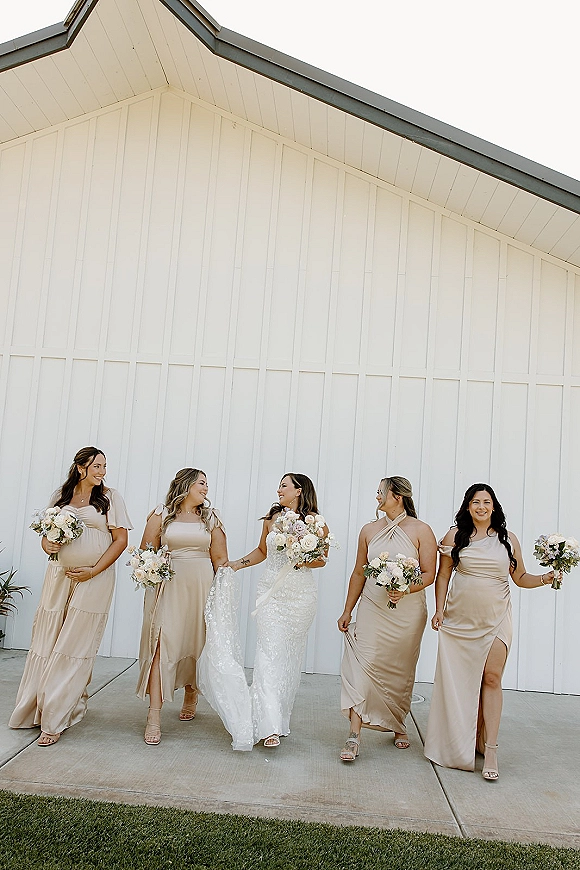
Few bridal-party colors shift with light the way champagne does, which is worth planning around. In flat, open daylight champagne reads as a soft, nearly ivory neutral, calm and pale in ceremony photographs. As light warms through the afternoon and into golden hour, the golden undertone intensifies and the gowns take on a gentle glow. Under warm reception lighting and candlelight, satin and sequined champagne read at their most metallic.
This range is an asset for a wedding that moves through several settings, since the same dresses look soft outdoors and rich indoors. The one consideration is cool or fluorescent lighting, which can flatten champagne or pull it toward gray, so warm-toned reception lighting shows the color at its best. Photographers often meter for champagne in mixed light to keep it from washing out against pale skin in bright sun.
Matching Champagne Across the Party
Champagne demands more attention to consistency than a darker color, because its paleness shows variation that a deep shade would hide. The same color name can read differently between a satin and a chiffon gown, and dye lots vary between lines, so a party ordering from several sources should match to one physical swatch rather than the word champagne. A high-shine satin and a matte chiffon in the identical dye will still read as slightly different tones because of how each fabric handles light.
The reliable approach is to anchor the party to one fabric where possible, or to embrace the variation deliberately by mixing satin and chiffon as a chosen texture contrast rather than an accident. Because champagne is a neutral, a small amount of tonal drift across the party reads as intentional dimension rather than a mistake, which gives it more forgiveness than a bright color, but pale shades reward careful swatching.
Flowers and Bouquets for a Champagne Party
Champagne gives a florist an unusually open canvas because the neutral gowns recede behind almost any bloom. For a soft, tonal look, cream and buttercream roses, white ranunculus, and pale garden flowers keep the palette gentle and let texture carry the interest. To add depth against the pale dresses, deeper blooms in burgundy, terracotta, plum, or dusty mauve create contrast and prevent the overall scene from reading washed out in photographs.
Greenery is especially effective with champagne. Muted sage, eucalyptus, and olive tones give the warm-neutral gowns a fresh counterpoint and reinforce a garden or organic aesthetic. For a metallic-leaning party, touches of gold in the bouquet ribbon or accents echo the champagne and tie the florals to the warm scheme.
Champagne Across the Wider Wedding Party
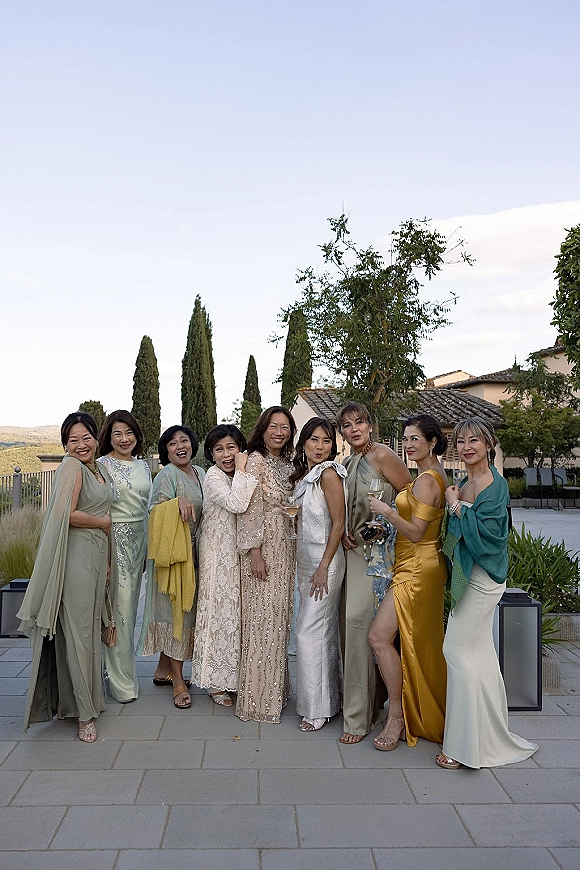
Because it is a neutral, champagne extends gracefully beyond the bridesmaids to the rest of the party. Mothers and grandmothers can wear deeper or more structured champagne tones without clashing, since the shade carries across formality levels. Flower girls in pale champagne or ivory blend naturally into the lineup, and groomsmen in tan, beige, or warm-gray suiting with gold-toned accents pick up the palette without matching it directly.
This whole-party flexibility is part of why champagne suits weddings that want a cohesive, warm-neutral aesthetic across every role. The shade coordinates rather than dictates, leaving room for each part of the party to vary in depth and silhouette while still reading as one warm scheme.
Choosing Between a Soft Matte and a Metallic Champagne
The first decision for a champagne party is where to land on the matte-to-metallic spectrum, because it sets the entire mood. A soft matte champagne in crepe or chiffon reads as a quiet, sophisticated neutral, ideal for daytime, garden, and understated weddings where the gowns should recede behind the bride and the setting. It is the safer, more flexible choice and the easiest to coordinate across a party.
A metallic champagne in satin or sequins reads dressy and luminous, claiming more attention and suiting formal evening celebrations. The trade-off is that high-shine champagne shows tonal variation more readily and reads warmer, so it rewards careful swatch-matching. Many parties split the difference with a satin that has a soft rather than mirror finish, capturing some glow without committing to full metallic.
Champagne for a Black-Tie Evening Wedding
Champagne is one of the strongest neutral choices for a black-tie wedding because it brings glamour without color. Floor-length satin and sequined champagne read as genuine evening wear, catching candlelight and chandelier light for a warm, luminous lineup that suits a formal ballroom or estate. The metallic quality means a champagne party never looks plain at a black-tie event the way a flat neutral might.
For the dressiest weddings, allover sequin champagne or a beaded bodice over a satin skirt elevates the party to the formality of the occasion. Paired with gold jewelry and metallic accessories, champagne reads as deliberate evening glamour, holding its own against tuxedos and a formal setting while keeping the warm, neutral palette intact.
Jewelry and Hair With Champagne
Because champagne carries a warm metallic undertone, gold and rose-gold jewelry are its most natural partners, reinforcing the glow rather than competing with it. Delicate gold pieces suit a soft matte champagne, while bolder statement jewelry balances a sequined or satin gown. Pearl accents also work beautifully, echoing the soft, warm neutrality of the shade.
For hair and beauty, champagne’s warmth flatters soft, neutral makeup palettes in peach, bronze, and warm rose, and it suits both loose, romantic styling and polished updos. The shade rarely fights a beauty look, which gives each bridesmaid latitude, though warm-toned makeup ties the overall lineup most cleanly to the gowns.
Shoes for a Champagne Party
Shoes for a champagne party are an easy decision because the neutral gowns pair with almost any tone. Metallic gold and rose-gold shoes reinforce the warm palette and disappear into a floor-length gown, while nude and blush shoes keep the look soft and elongate the leg. For a higher-contrast choice, a deeper metallic or a tonal taupe grounds the lineup.
Because champagne sits at the neutral center of the palette, mismatched shoe choices across the party still read cohesive, which suits a relaxed celebration. For a formal evening wedding, holding the party to one metallic keeps the lineup polished and intentional.
Champagne for a Daytime Garden Ceremony
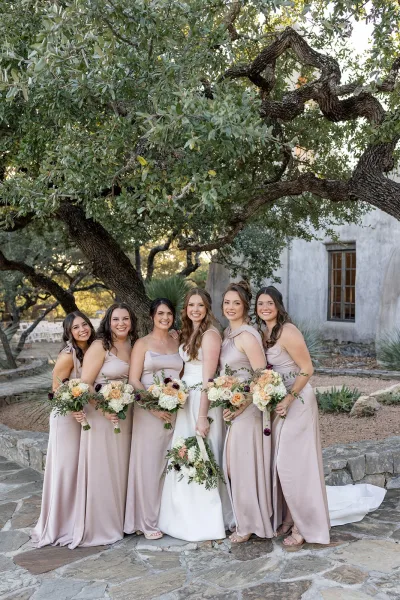
Champagne suits a daytime garden or vineyard ceremony beautifully when handled in its softer, matte form. Chiffon and crepe champagne read as a gentle, sun-warmed neutral in open daylight, complementing greenery and blooms rather than competing with them. The shade sits naturally against the soft palette of a garden setting, where its warmth keeps it from disappearing the way a cool ivory might.
For these relaxed daytime celebrations, lighter fabrics and flowing silhouettes keep champagne fresh and unfussy. Paired with muted greenery and pastel florals, the warm neutral reads romantic and understated, which is much of why champagne has become a favorite for outdoor weddings that want elegance without formality.
Fit and Flattering Silhouettes Across a Champagne Party
Champagne suits a wide span of body types because the neutral shade reads soft rather than attention-drawing, and its satin and crepe versions skim the body cleanly. For a party with a range of figures, a champagne satin that drapes on the bias flatters curves, while a structured crepe column gives a clean, modern line. The pale shade does show fit precisely, so well-tailored gowns photograph better in champagne than in a forgiving dark color.
This is where holding the color constant while varying the silhouette earns its keep. Each bridesmaid can choose a neckline and cut that flatters her, from a cowl-back to an A-line to a wrap, and the shared champagne keeps the lineup unified. Tailoring matters more in a pale metallic than in a deep tone, so building in time for alterations keeps the party looking polished.
Second-Look and Reception Champagne
Champagne is a natural fit for the reception and after-party, where its metallic quality comes alive under evening light. A sequined or satin champagne reads as celebratory evening wear once the dancing begins, and the shade pairs with the warm lighting and candlelight of a reception better than almost any other neutral. Shorter champagne styles suit a party that wants ease of movement later in the night.
For weddings with a daytime ceremony and an evening reception, champagne carries gracefully across both, reading soft outdoors and luminous indoors without any change of palette. This range is part of why it suits a full day of celebration, holding its place from the first photographs through the last dance. Few neutrals offer that kind of versatility across a single wedding, which is much of why champagne has become such a popular choice for parties that want one shade to carry every part of the day.
Styling a Champagne Bridal Party
Gold and rose-gold accessories are the most natural finish for champagne, reinforcing the warm undertone. For bouquets, champagne pairs with soft neutrals like buttercream and cream, muted greenery, and pastel blooms, while deeper accents such as burgundy, terracotta, or plum florals add contrast against the pale gowns. Neutral or metallic shoes keep the focus on the dress.
For palettes that want a cool counterpoint, champagne sits well alongside muted blues and greens. It pairs cleanly with mauve bridesmaid dresses for a warm-cool vintage scheme, and a champagne party can route accent gowns toward navy bridesmaid dresses when a wedding wants one grounding dark tone. To see how full champagne lineups come together at real celebrations, browse the galleries above, then explore designers and salons through the bridesmaid dress vendors directory.
Frequently Asked Questions
What colors go with champagne bridesmaid dresses?
Champagne pairs with almost any palette because it is a warm neutral. Gold and rose-gold accessories bring out its undertone, blush and dusty rose create a soft tonal scheme, and deep accents like burgundy, emerald, terracotta, or navy add contrast. For florals, soft neutrals and muted greenery keep it elegant while richer blooms add depth.
Is champagne the same as gold or ivory?
No. Champagne is a warm golden-beige that sits between ivory and gold. Ivory leans white with a cream cast, gold reads as a clear metallic yellow, and champagne is softer and warmer than ivory but paler than gold. In satin it looks nearly metallic, while in chiffon it reads as a muted sand.
Do champagne bridesmaid dresses work for every season?
Yes. Champagne is one of the most season-flexible bridesmaid colors. Lighter matte chiffon suits spring and summer, while satin and sequined champagne pick up candlelight for fall and winter. Because it is neutral, it never looks off-season the way a strongly seasonal color might.
Will champagne flatter different skin tones across a bridal party?
Generally yes, which is a large part of its popularity. The warm undertone is forgiving across a range of complexions. Parties concerned about a gown washing out a fairer bridesmaid can choose a slightly deeper champagne or a matte finish, which reads with more depth than a high-shine satin.
What fabric is best for champagne bridesmaid dresses?
It depends on the look. Satin gives champagne its pale-metallic sheen and suits formal evening weddings. Matte crepe and chiffon mute the shade to a soft neutral for outdoor and daytime settings. Sequined or beaded champagne turns the gown into a genuine metallic for black-tie celebrations.