What Is a Fit-and-Flare Wedding Dress
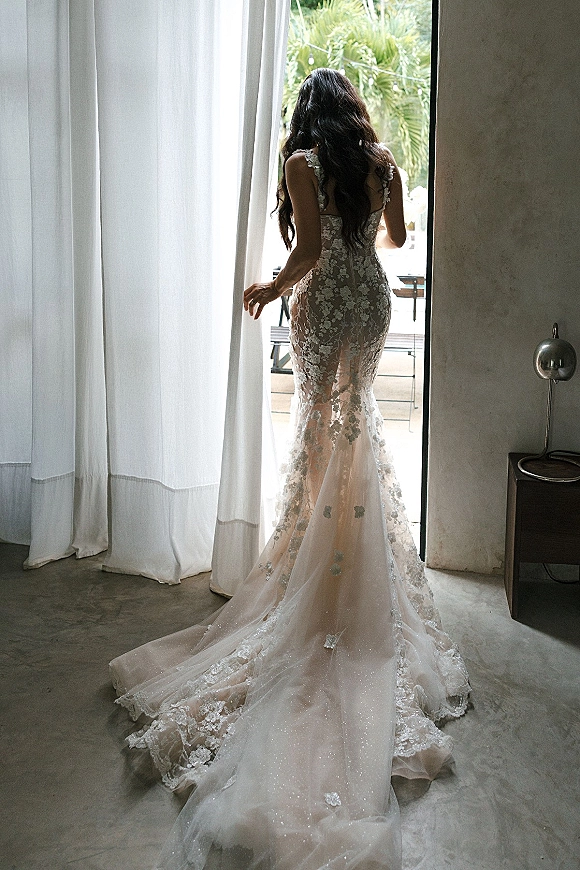
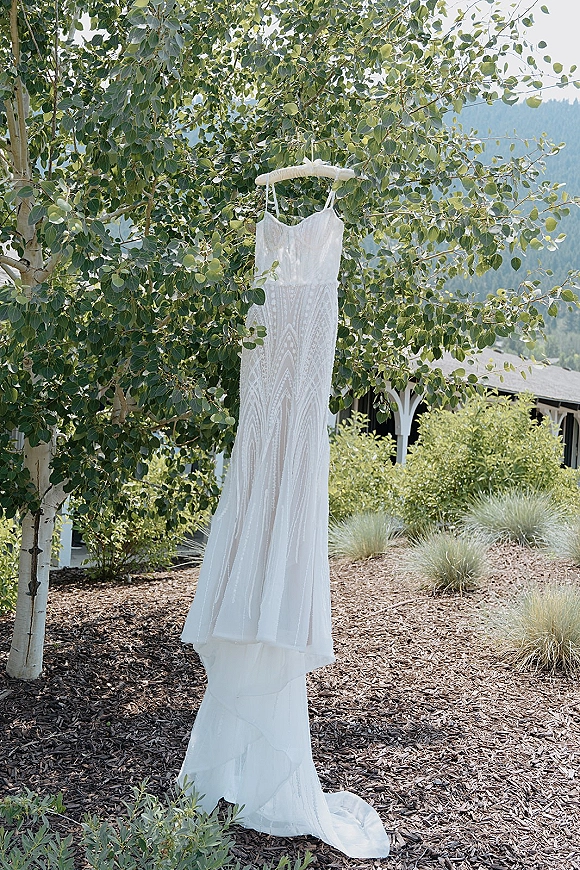
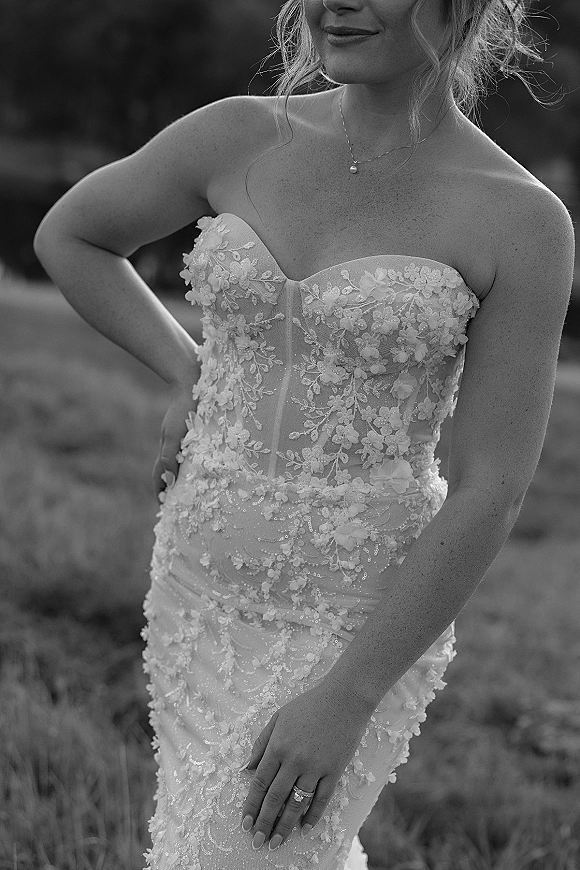
A fit-and-flare wedding dress traces the body from the bodice through the hip, then flares gradually to the hem, with the skirt opening lower and more softly than a mermaid or trumpet. The gradual flare is the whole point: it accentuates the natural curve of the body while keeping ease of movement, which makes the silhouette read romantic and figure-conscious without the close hold of a true mermaid through the thigh.
Because the flare is gentle rather than sharp, a fit-and-flare suits brides who want a defined shape but also want to walk, sit, and dance without adjusting to the gown. It sits in the middle of the fitted family, more shaped than an A-line and more forgiving than a mermaid. The fitted bodice and hip create the structure, and the soft flare delivers the movement, which is the balance that makes the silhouette so widely worn.
The flare can be built softly with a gored skirt that releases fullness through vertical seams, or more crisply with structured fabric that holds a defined shape, and the construction is what sets whether the gown reads romantic and fluid or clean and architectural. This range within a single silhouette is part of why the term covers so many gowns.
Searched as fit flare wedding dress or fit and flare dresses for weddings, the silhouette is essentially a softer, higher-flaring relative of the mermaid, and the two terms describe the same family of body-skimming gowns that open below the hip rather than clinging to the floor.
Fit-and-Flare vs. Mermaid vs. Trumpet
Fit-and-flare is the term brides confuse most, and the distinction comes down to the flare point. A fit-and-flare opens highest and most gradually, near the upper thigh, for the softest fitted line. A trumpet opens around the mid-thigh with a sharper break. A mermaid opens lowest, near or below the knee, for the most dramatic and body-conscious shape.
In practice, a fit-and-flare gives the most movement and the most universally comfortable wear, a trumpet adds curve with a defined break, and a mermaid delivers the boldest hourglass. If you love the look of a mermaid but want walking ease, a fit-and-flare is the gentler version of the same idea, and the difference is most visible in how soon the skirt leaves the body below the hip.
For brides comparing the three, the fit-and-flare is the most forgiving on the body and the easiest to wear, the trumpet adds a defined curve with a clear break, and the mermaid delivers the most dramatic hourglass. The decision usually comes down to how much movement a bride wants against how fitted a line she is after.
Lace Fit-and-Flare Gowns
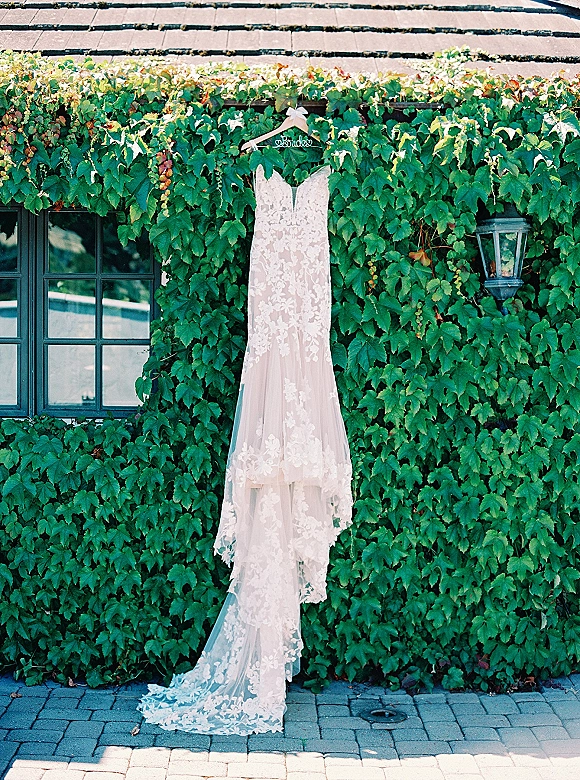
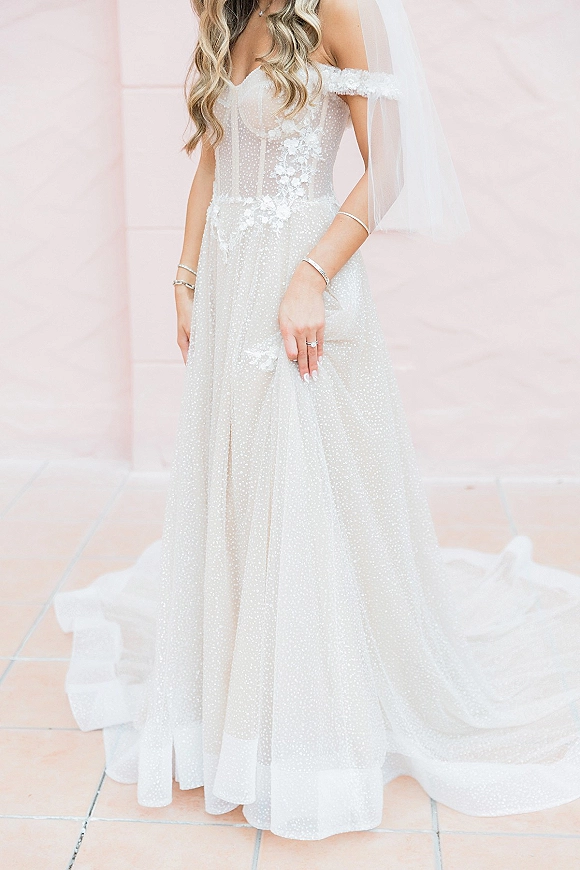
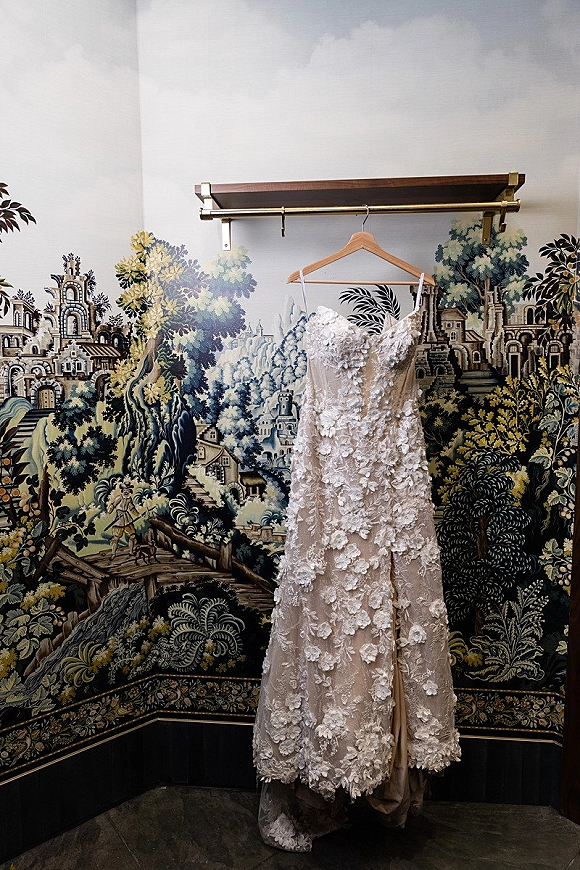
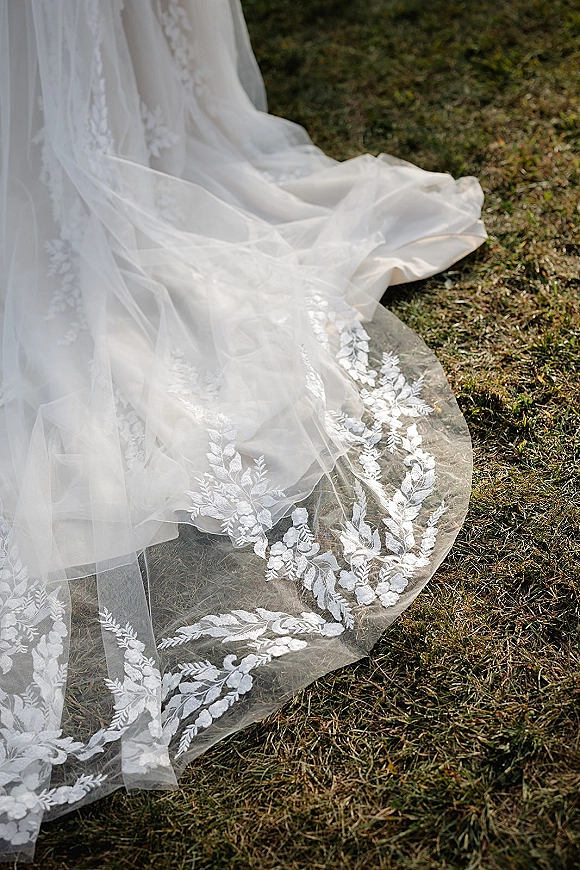
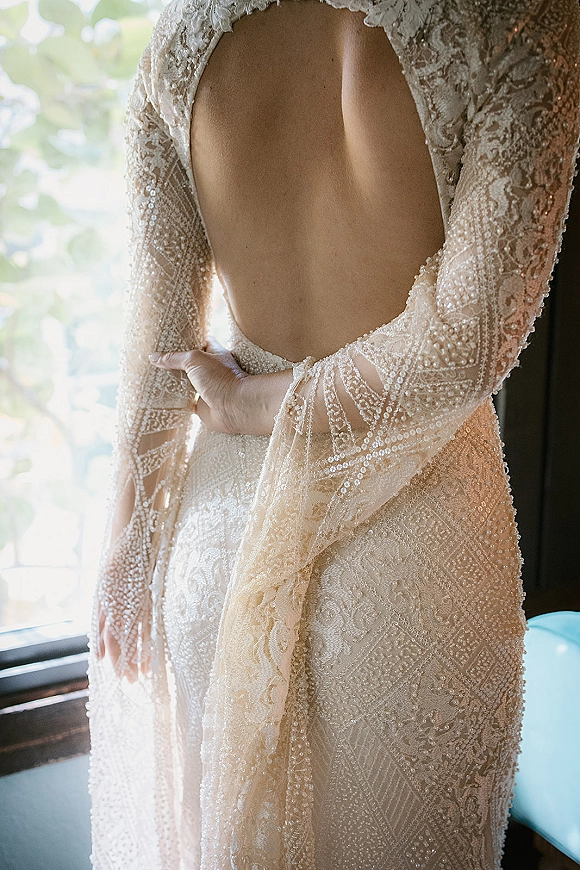
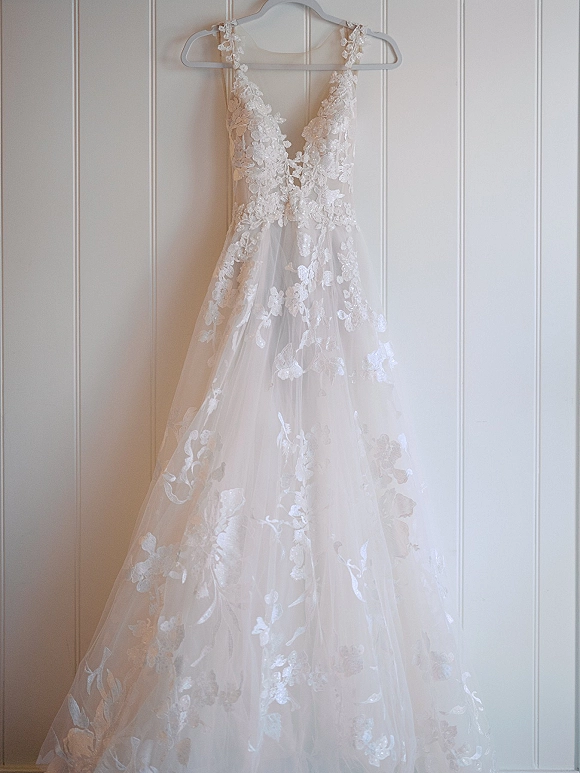
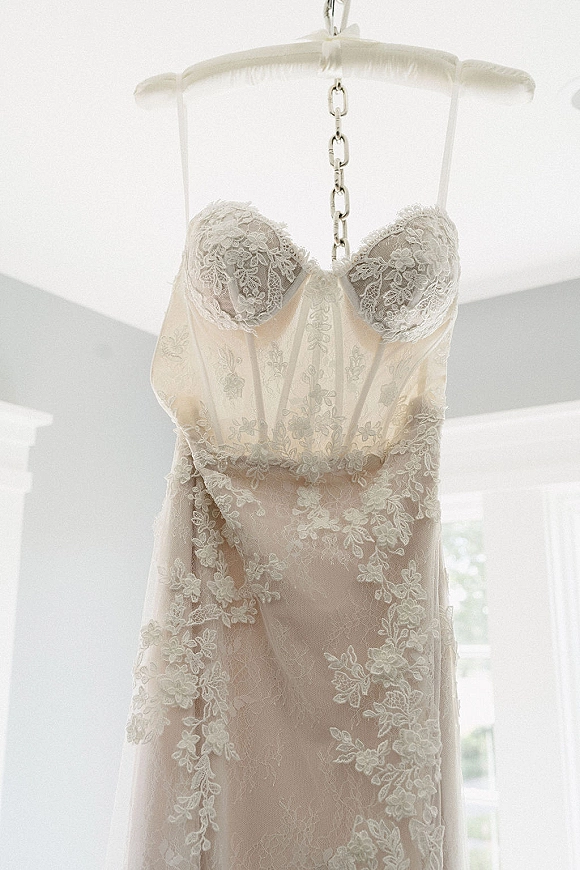
Lace suits the fit-and-flare especially well because the gradual flare gives lace room to show its pattern as the skirt opens. A lace fit and flare wedding dress can carry an allover lace overlay across the bodice and skirt for a romantic, textured look, or placed appliqué that follows the seams and concentrates detail at the bodice. The soft flare lets lace fall and move rather than holding it taut against the body.
The lace type shapes the result. Chantilly lays fine and delicate against the body for a soft effect, while corded or guipure lace reads more textured and structured at the hem. Either way, lace bridges the figure-conscious cut with the heirloom quality that makes the silhouette read romantic rather than purely sleek.
A scalloped lace hem or a lace-edged train adds a finished detail at the point where the flare opens, drawing attention to the silhouette’s defining feature. Placed appliqué that thins out toward the hem creates a gradual, dimensional effect that suits the gentle flare especially well.
Sleeves and Necklines
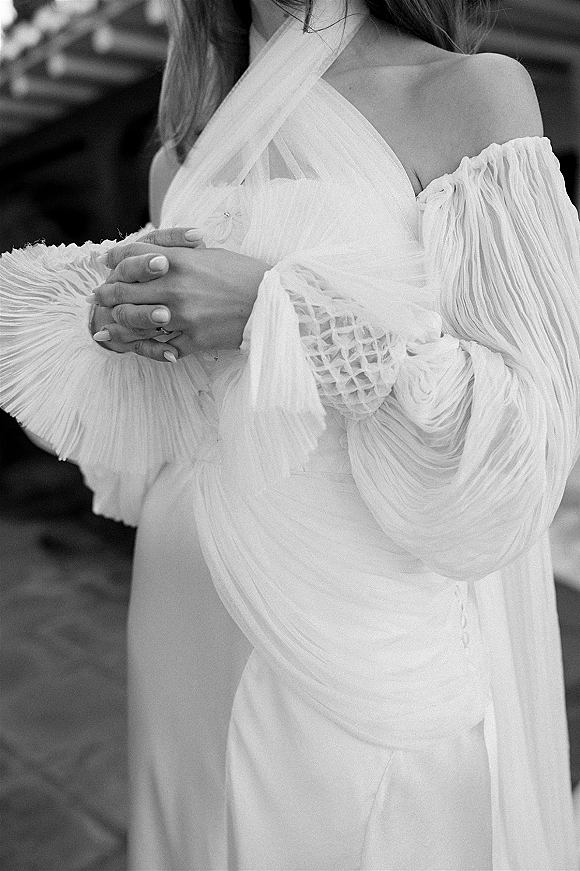
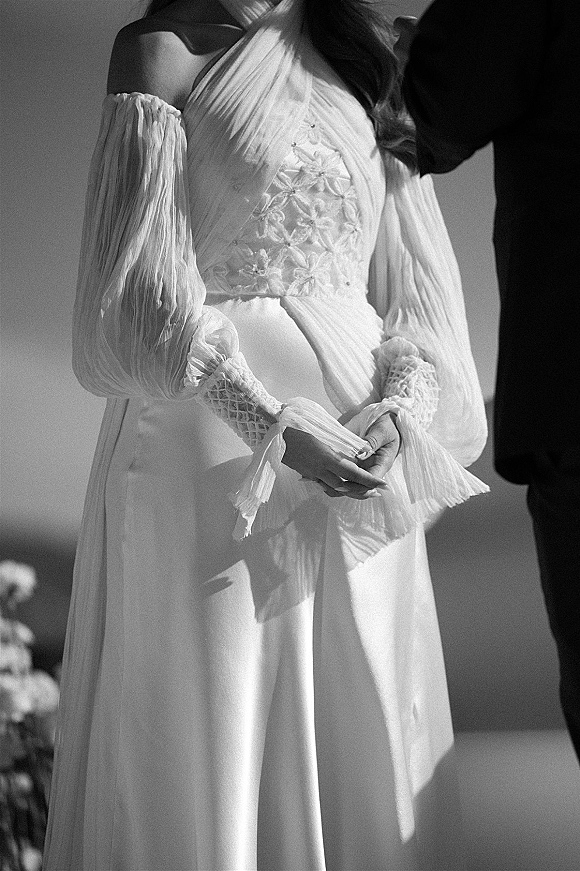
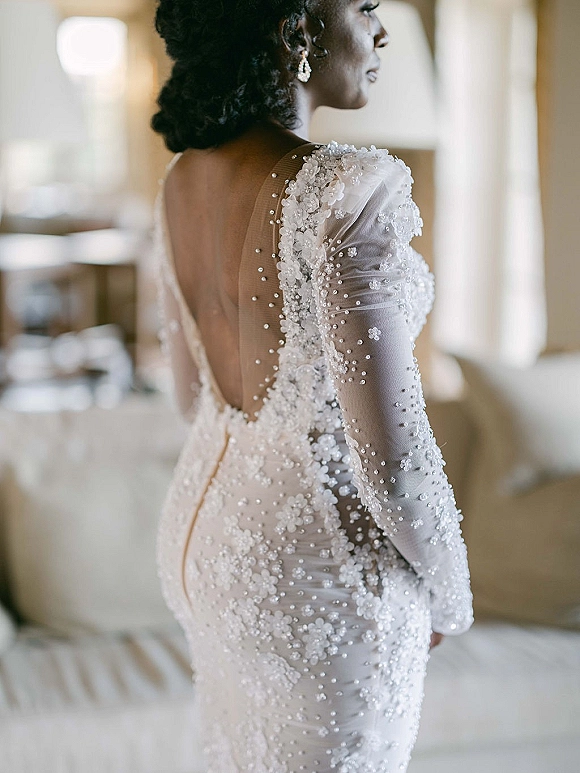
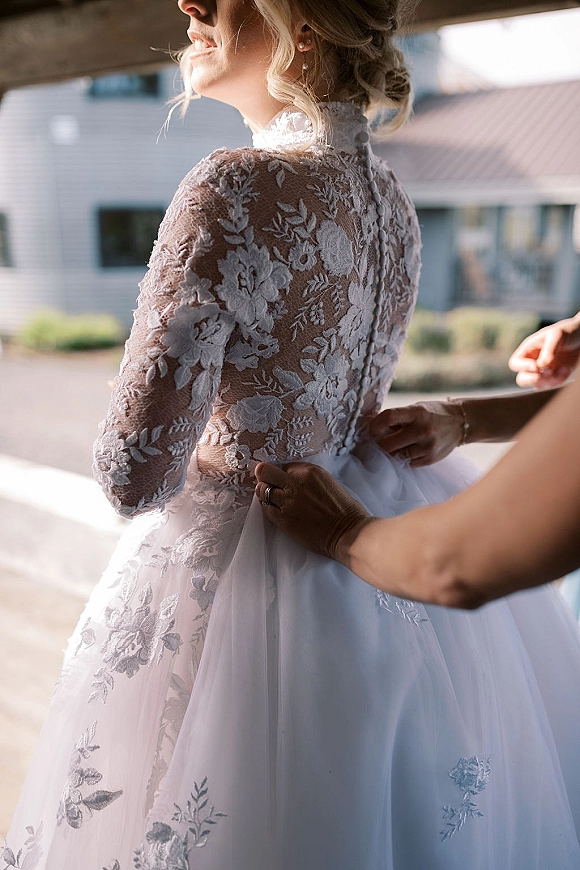
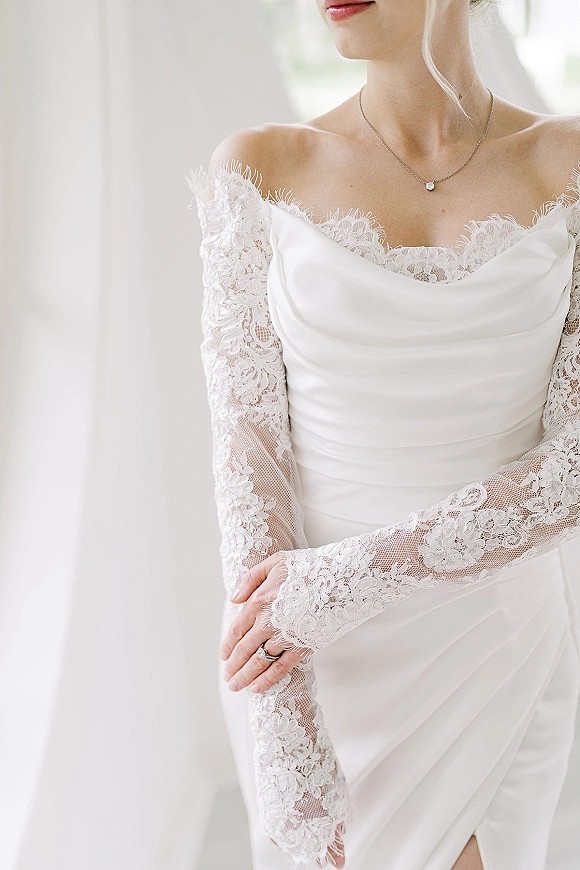
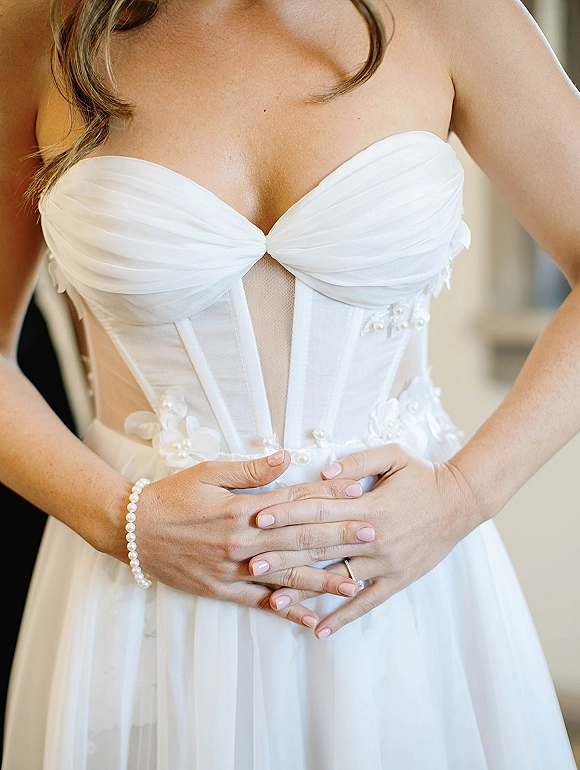
The fit-and-flare carries nearly any neckline because its shaping lives in the skirt rather than relying on a strapless bodice for effect. A fit and flare wedding dress with sleeves, whether long lace sleeves or sheer illusion sleeves, adds coverage while the gradual flare keeps the look soft. A sweetheart neckline is a popular pairing, framing the bust and echoing the curve of the silhouette below.
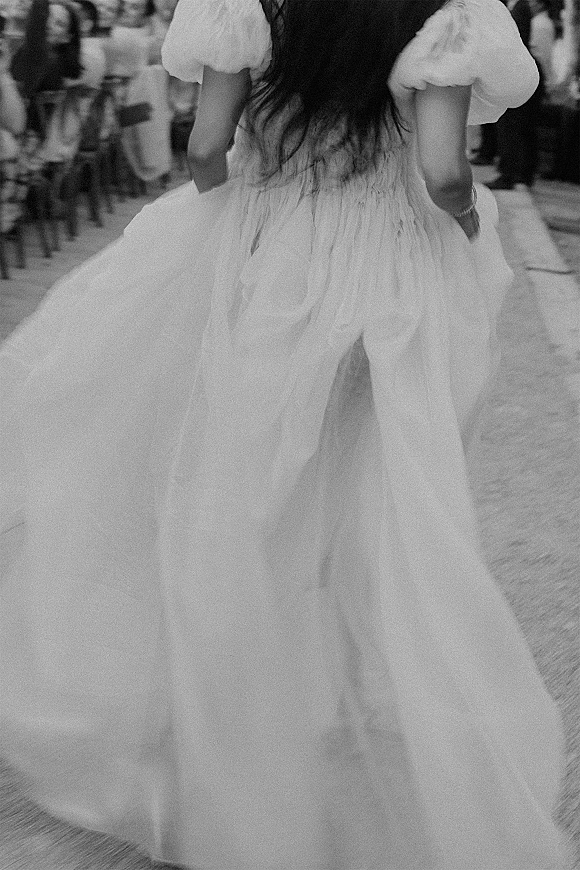
Off-the-shoulder bands, high necks, and V-necklines all work on the fitted bodice, so the neckline becomes a styling decision about where to draw the eye rather than a structural requirement. An illusion back or a row of covered buttons turns the gown around for the recessional, a detail the fitted silhouette shows off as the bride walks away.
Fabrics: Satin and Beyond
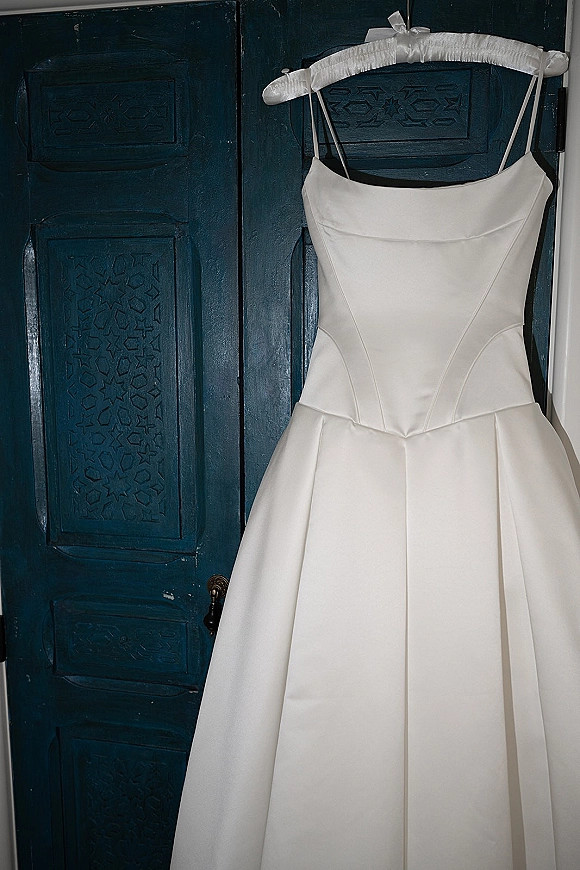
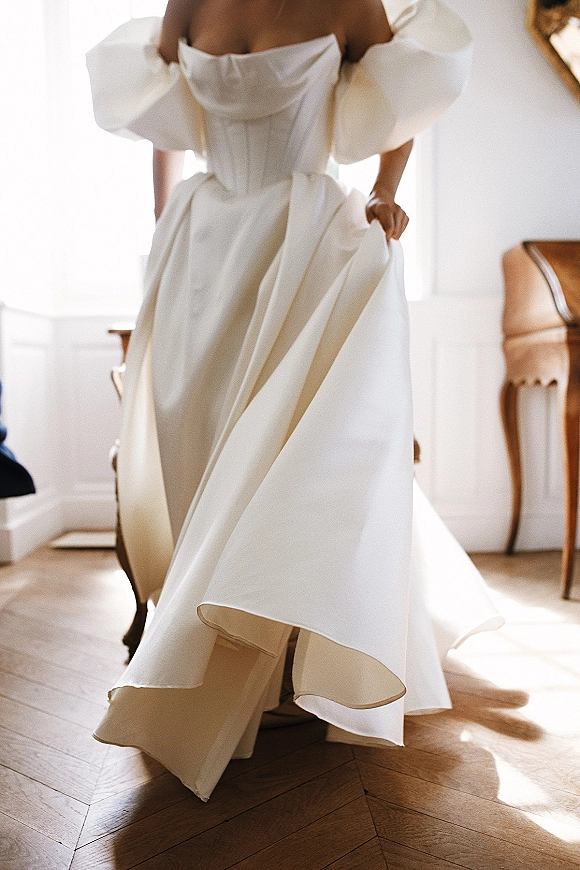
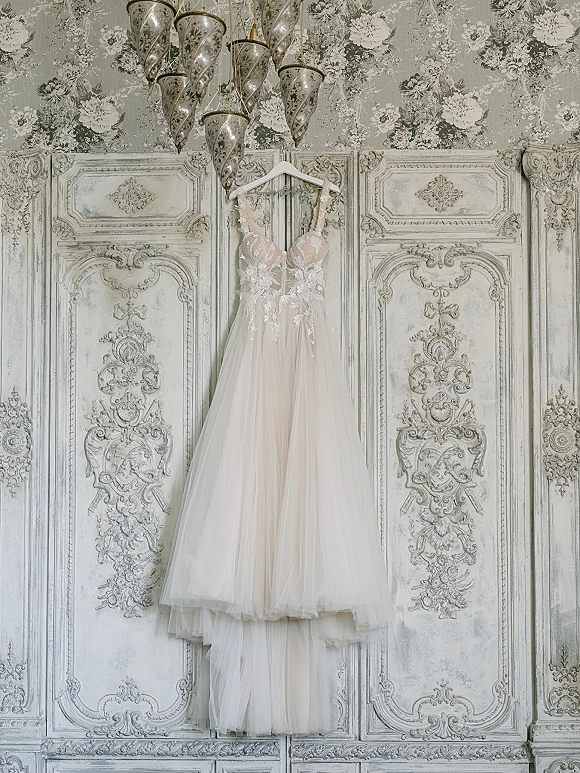
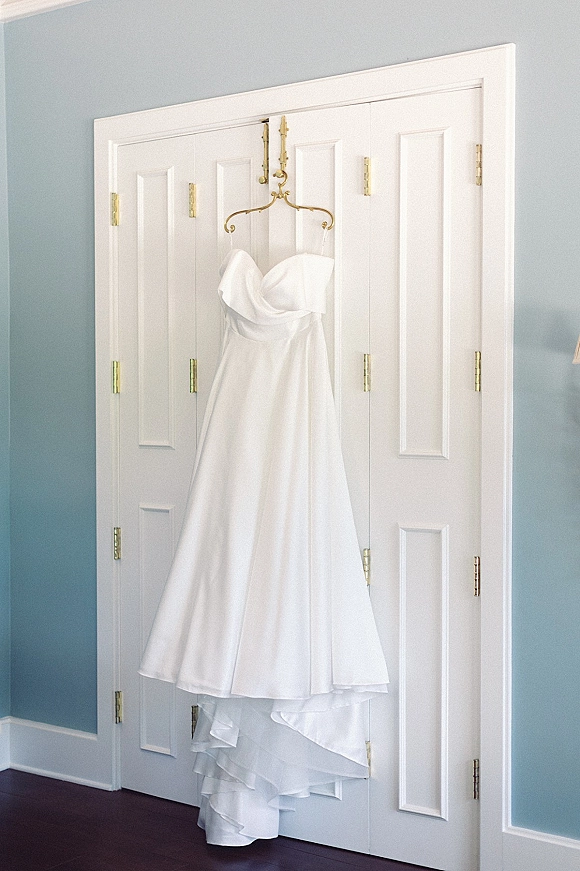
Fabric sets whether a fit-and-flare reads sleek or soft. A satin fit and flare wedding dress in stretch or duchess satin gives a polished surface that holds the gradual flare with a clean, structured line. Crepe sits matte and fluid for a modern, understated look that skims the body. Chiffon and tulle soften the flare further, falling lightly at the hem for an airier silhouette that moves easily.
Because the flare is gentle, lighter fabrics behave well in this silhouette where they would lose shape in a sharply fitted mermaid, which gives the fit-and-flare a wider fabric range than its more structured relatives. The same pattern can read crisp in mikado or fluid in charmeuse, so the fabric is the lever that shifts the gown between architectural and soft.
A Flattering Fit for Every Body, Including Plus Size
The fit-and-flare is one of the most universally flattering silhouettes precisely because of its balanced proportions: it defines the waist and skims the hip while the gradual flare creates or echoes curves on a range of figures. A plus-size fit and flare wedding dress uses the same gentle opening to shape the silhouette and elongate the frame, and the silhouette is frequently cited as one of the most flattering options for fuller figures.
For athletic or slender builds, the flare creates the illusion of curve where the natural line is straighter. For hourglass and curvier figures, it follows the body and emphasizes the waist. The gentle flare point is what makes the gown adapt so widely, because it can be placed to balance the proportions of nearly any figure. Browse the wedding dress designers in the directory to see the silhouette across collections.
Choosing a Fit-and-Flare for Your Wedding
The fit-and-flare suits a wide range of settings because it balances a defined shape with real ease of movement. Its gentle flare and lighter possible fabrics make it a frequent choice for garden, vineyard, and destination weddings, where a bride wants a figure-conscious gown that still moves and travels well. In a more formal setting, a structured satin fit-and-flare with a chapel train reads dressed up while keeping the comfort the silhouette is known for.
Because the flare is gradual, the gown bustles and moves more easily than a low-flaring mermaid, which makes it practical for a long reception. Brides who want the look of a fitted gown but expect to be on their feet and dancing often find the fit-and-flare the most livable of the fitted silhouettes.
Trains and Movement on a Fit-and-Flare Gown
The fit-and-flare carries a train gracefully because the skirt is already opening as it reaches the floor, so a sweep or chapel train flows naturally from the flare rather than being added against the line of the gown. The gradual opening also makes the bustle straightforward, gathering a manageable amount of fabric for the reception.
Movement is the silhouette’s quiet advantage. The flare gives room to climb stairs, sit comfortably, and dance without managing the gown, which is why brides who love a fitted look but worry about being constrained tend to land here. The shape reads body-conscious from a distance while wearing closer to a soft A-line in practice.
Fit-and-Flare vs. A-Line
Brides often weigh a fit-and-flare against an A-line, and the difference is where and how the skirt leaves the body. An A-line flares gradually from the natural waist into a wider, triangular skirt, giving fullness and a classic bridal shape. A fit-and-flare stays fitted through the hip before opening lower, so it traces the figure further down and reads more body-conscious than an A-line.
The choice comes down to how much shape a bride wants to show. An A-line skims over the hips and is the more forgiving, traditional option, while a fit-and-flare emphasizes the waist and hip before flaring, making it the choice for a bride who wants a defined silhouette with a touch of movement at the hem.
Detailing: Beading, Buttons, and Backs
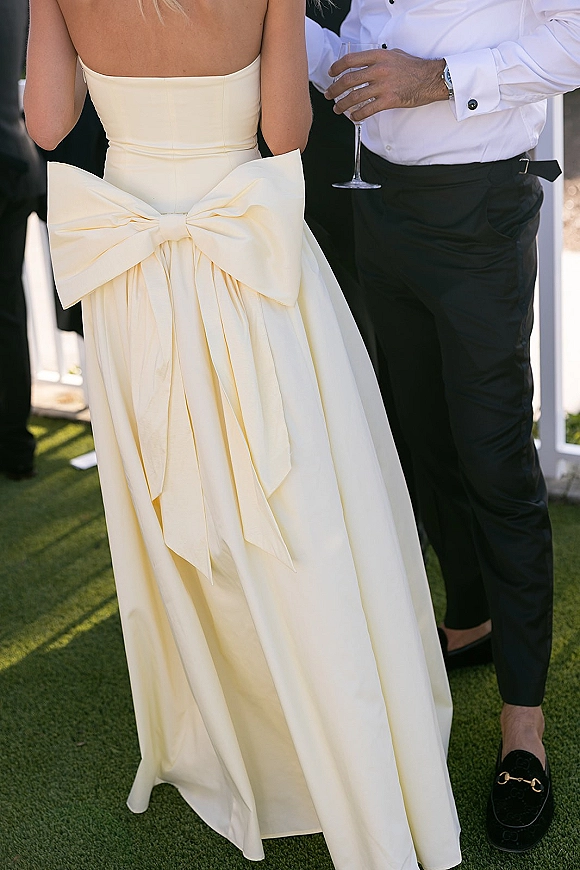
The fit-and-flare carries detailing well because the fitted bodice and the opening skirt give a designer two distinct canvases. Beading or appliqué concentrated at the bodice draws the eye to the waist, while a clean skirt keeps the lower line simple. A row of covered buttons down the back, or an illusion back panel, turns the gown around for the recessional, which the fitted upper body shows off as the bride walks away.
Because the silhouette is balanced rather than dramatic, detailing can be as restrained or as elaborate as the bride wants without overwhelming the shape, which is part of why the fit-and-flare spans minimalist crepe gowns and heavily beaded ones equally well.
Fit-and-Flare for Every Figure
The silhouette adapts to specific figures through where the flare is placed and how the bodice is cut. A petite bride benefits from a higher flare and a v-neck that lengthens the frame, while a taller bride can carry a lower flare and a longer fitted line. For a pear-shaped figure, the flare skims the hip and balances the proportions, and for an athletic build, it creates the impression of curve through the waist and hip.
This adaptability is why the fit-and-flare appears on nearly every list of universally flattering silhouettes. The same pattern can be tuned at a fitting to flatter the individual bride rather than forcing one shape on every figure.
Fabrics and Styling by Season
The fit-and-flare shifts easily across seasons through fabric and detailing. A light crepe, chiffon, or tulle fit-and-flare moves and breathes for a warm-weather or outdoor wedding, while a heavier satin or a long-sleeve lace version suits a cooler season or a formal evening. The silhouette stays the same; the weight and coverage of the fabric adapt it to the setting.
Detailing follows the same logic. A bare neckline and a flowing skirt read summery and relaxed, while long sleeves, a higher neckline, and a structured fabric read formal and seasonal. This adaptability lets one silhouette work for a garden ceremony or a black-tie reception depending on how it is made.
Where the Fit-and-Flare Shines
The fit-and-flare suits brides who want a defined shape with freedom to move, which makes it a frequent choice across a wide range of settings. For a destination or beach wedding, a light fit-and-flare moves with the bride and travels well. For a ballroom or estate, a structured version with a chapel train reads formal while keeping the comfort the silhouette is known for.
Its balance of shape and ease is the through-line. A bride who loves the look of a fitted gown but wants to dance, sit, and move comfortably finds the fit-and-flare delivers both, which is why it remains one of the most recommended silhouettes for an active wedding day.
Comfort and All-Day Wear
Comfort is one of the fit-and-flare’s quiet strengths. Because the flare opens gradually below the hip, the gown gives room to walk up the aisle, sit through dinner, and dance without the close hold a mermaid keeps through the knee. The fitted bodice still defines the waist, so the bride gets shape without sacrificing ease.
This livability is why brides who worry about being constrained in a fitted gown often land on the fit-and-flare. It looks body-conscious in photographs while wearing closer to a soft A-line, giving the silhouette its reputation as the most comfortable of the fitted family.
Veils and Finishing Touches
A veil completes a fit-and-flare without competing with its balanced line. A fingertip or waltz-length veil suits the silhouette’s easy proportions, while a chapel-length veil echoes a train for a more formal look. Because the gown is shaped but not dramatic, the veil and accessories can lean romantic or minimal depending on the bride, and a belt at the natural waist sharpens the point where the fitted bodice meets the flare.
Frequently Asked Questions
Where does the flare start on a fit-and-flare wedding dress?
A fit-and-flare opens gradually around the upper thigh to the knee, higher and softer than a mermaid or trumpet. The gradual break is what gives the silhouette its movement and its more forgiving fit. The exact point varies by gown, and trying styles on shows how the flare placement reads on your frame.
What is the difference between fit-and-flare and mermaid?
Both are fitted through the bodice and hip, then flare to the hem. A fit-and-flare opens higher and more gradually for a softer, more comfortable line, while a mermaid opens lower, near or below the knee, for a sharper and more body-conscious shape. A fit-and-flare gives more walking and dancing room than a mermaid.
What body types does a fit-and-flare suit?
The fit-and-flare suits a wide range of body types because of its balanced proportions. It defines the waist and skims the hip, creating curves on slender or athletic builds and following the natural line on hourglass and curvier figures. It is widely considered one of the most flattering silhouettes for plus-size brides.
Can you dance and move in a fit-and-flare dress?
Yes. The gradual flare gives a fit-and-flare more freedom of movement than a mermaid or trumpet, which open lower and sit closer through the thigh. The skirt allows a natural stride and room to dance, which is one of the main reasons brides choose this silhouette over a more fitted style.
What fabric is best for a fit-and-flare wedding dress?
The fit-and-flare carries a wide fabric range because its gentle flare suits both structured and soft materials. Satin and crepe give a sleek, polished line, while chiffon, tulle, and lace fall softly at the hem for an airier look. Lighter fabrics that would lose shape on a sharp mermaid behave well in this gentler silhouette.