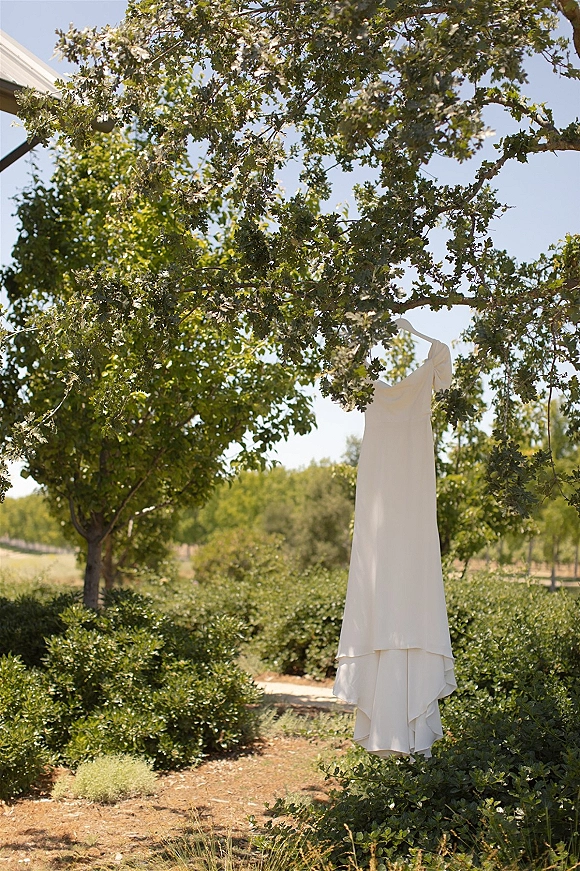
Minimalist Wedding Dress Silhouettes
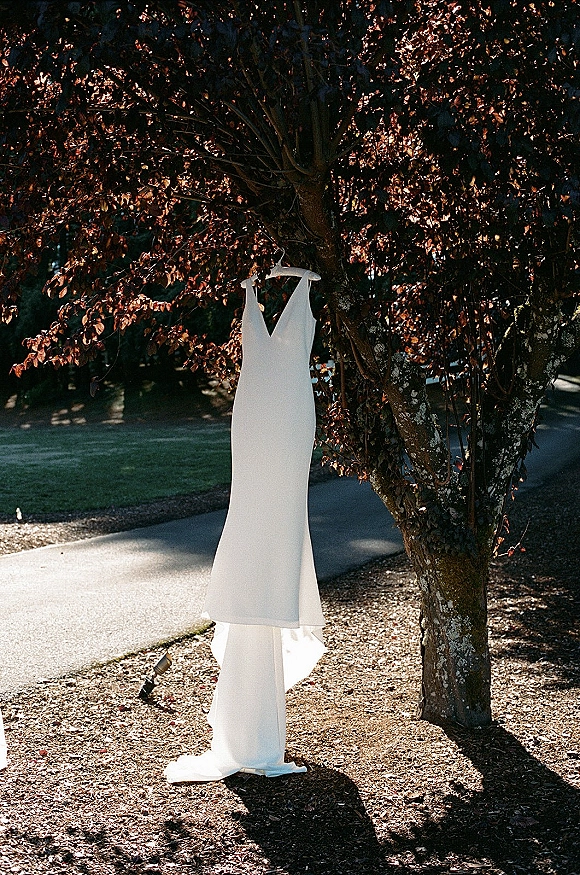
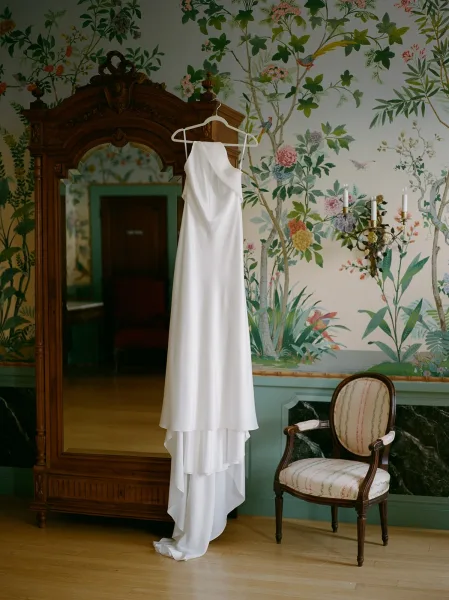
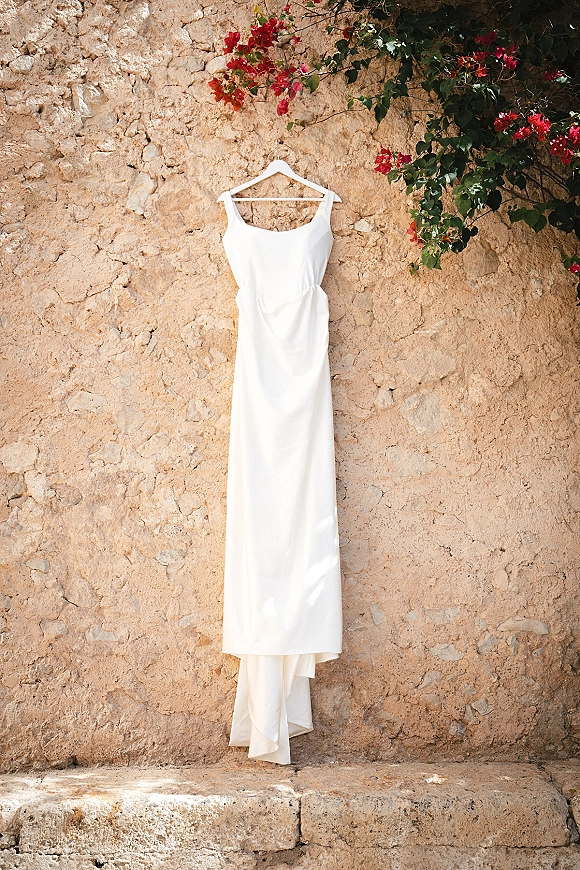
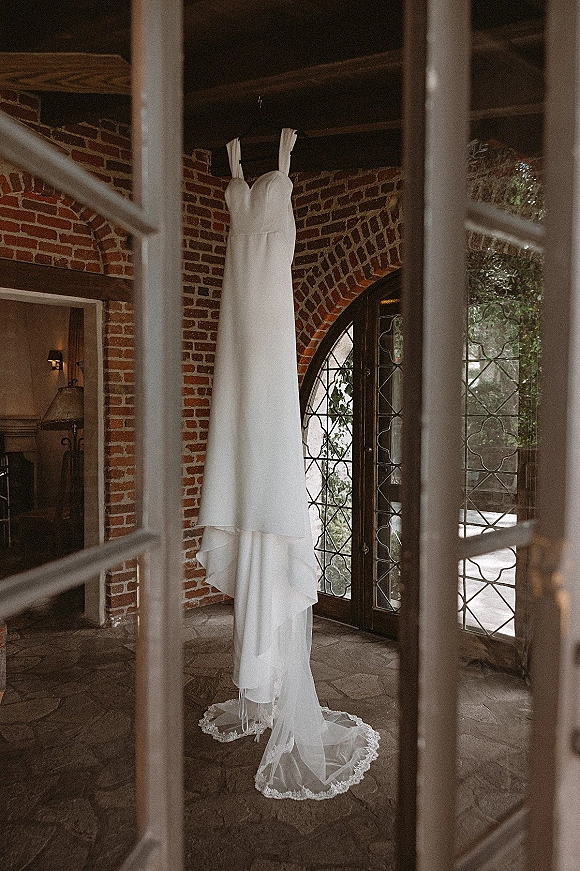
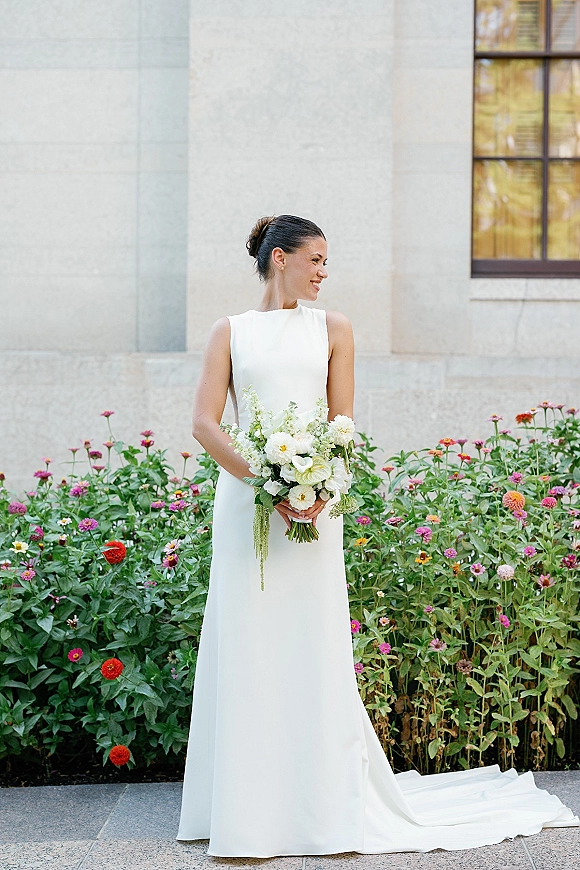
The sheath and column are the silhouettes most closely associated with minimalist bridal. Both hug the body without embellishment, relying on a precise fit and the quality of the fabric to carry the dress. A sheath has minimal flare from hip to hem; a column is more linear throughout. In either case, the cut has to be exact. There is no lace overlay or beading to redirect the eye.
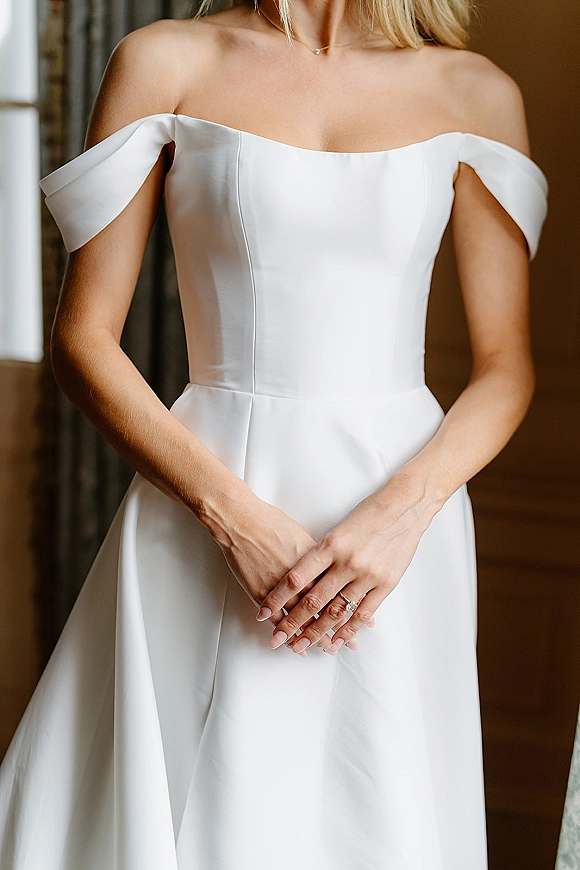
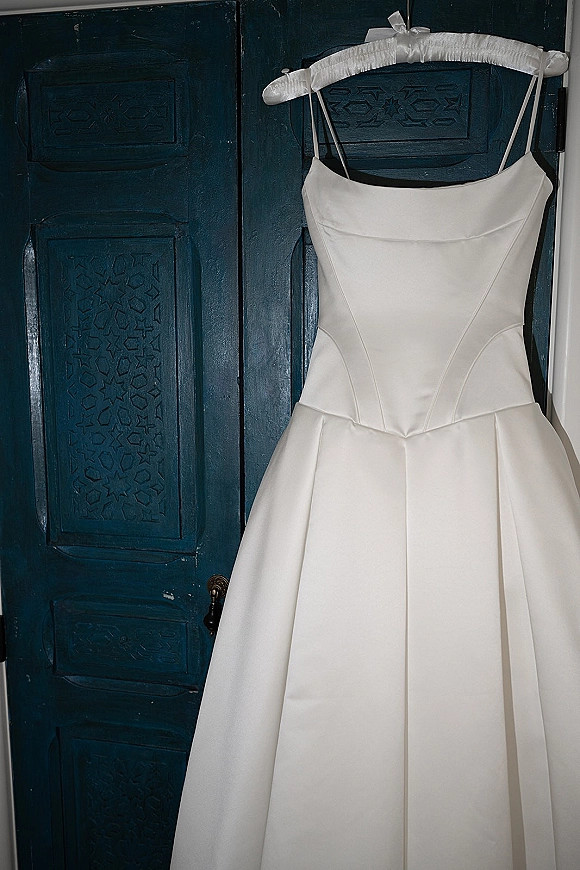
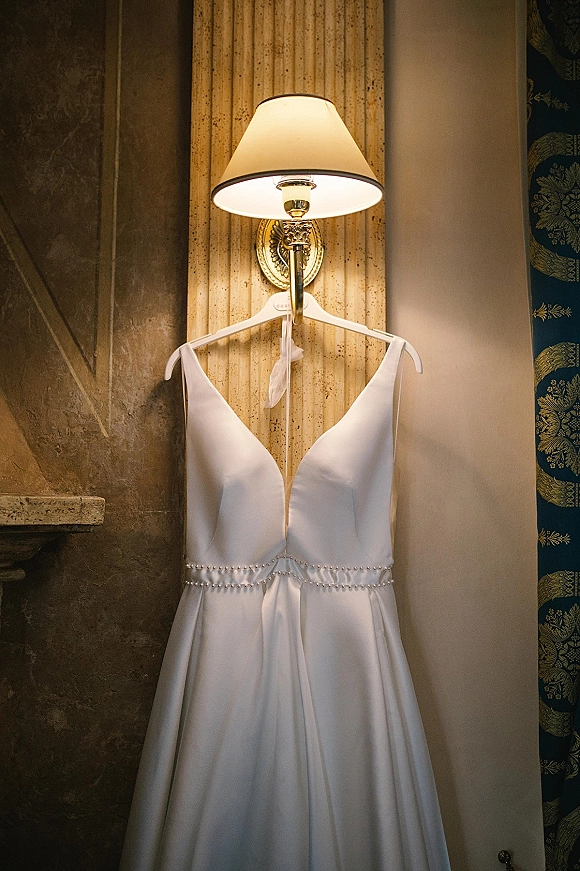
The A-line remains popular in the minimalist space because it works across body types and translates well to outdoor and intimate venues. Paired with a clean bateau or square neckline and a fabric like crepe or mikado, it reads as modern without trying too hard. Fit-and-flare follows similar logic: the interest is in the structural relationship between the fitted bodice and the flared skirt, not in any applied decoration.
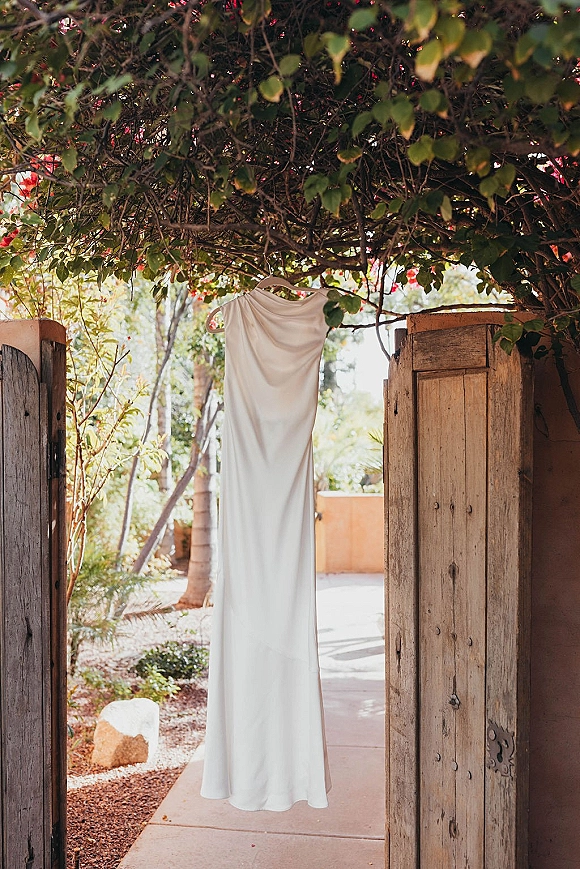
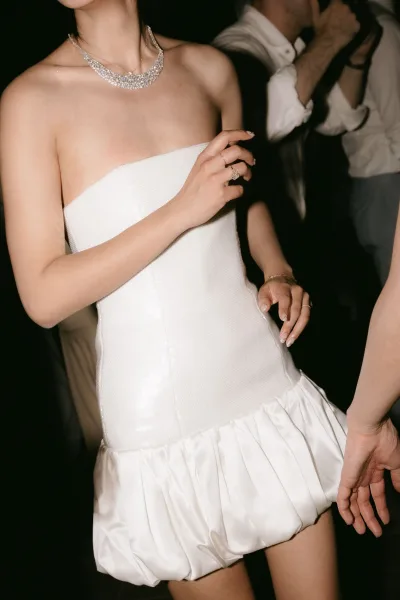
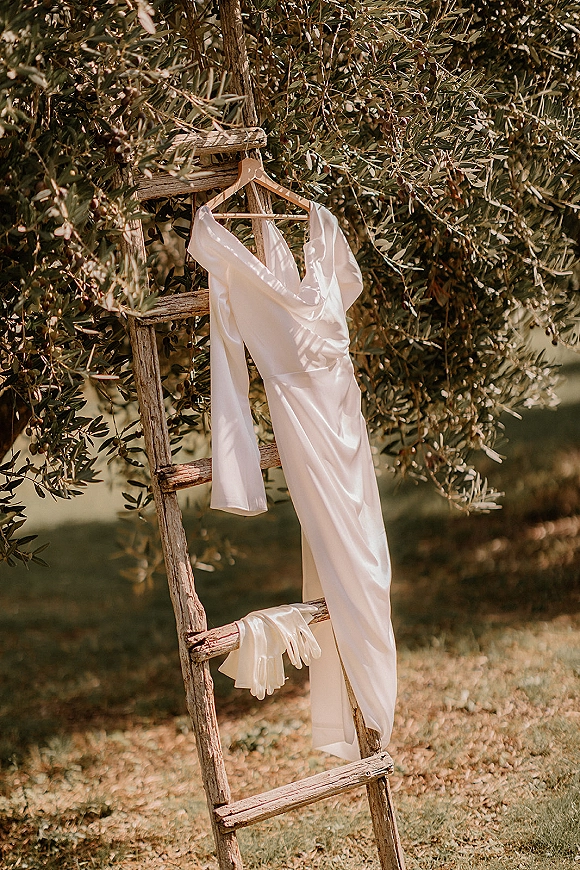
Tea-length is worth noting as a separate visual category here. A minimalist tea-length dress, particularly in satin or a matte silk charmeuse, leans into the mid-century reference point that runs through this aesthetic. It photographs differently than a floor-length gown and tends to suit city hall ceremonies, small restaurant receptions, and intimate outdoor settings.
Fabrics for a Minimalist Wedding Dress
In a minimalist wedding dress, fabric is doing everything a ruched bodice, floral appliqué, or beaded hem would do in a more embellished gown. The weight, drape, and sheen of the material are the design. This is worth understanding before selecting a silhouette, because the same column cut reads entirely differently in charmeuse versus crepe versus organza.
Crepe is the workhorse of the minimalist bridal category. It has a smooth matte surface, holds structure well, and doesn’t cling excessively, which makes it forgiving across different fits and easy to move in. Stretch crepe and woven crepe behave differently; woven is firmer and more architectural, while stretch crepe is softer and more body-conforming.
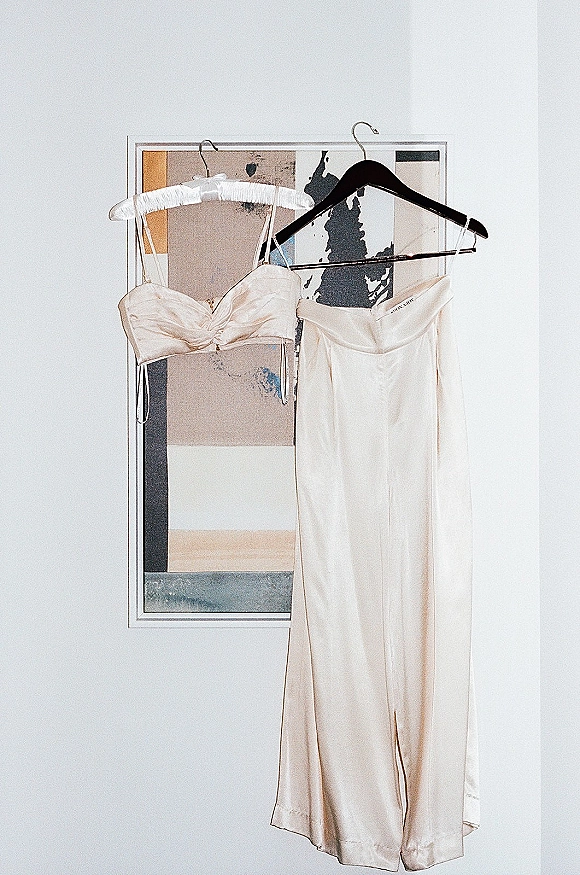
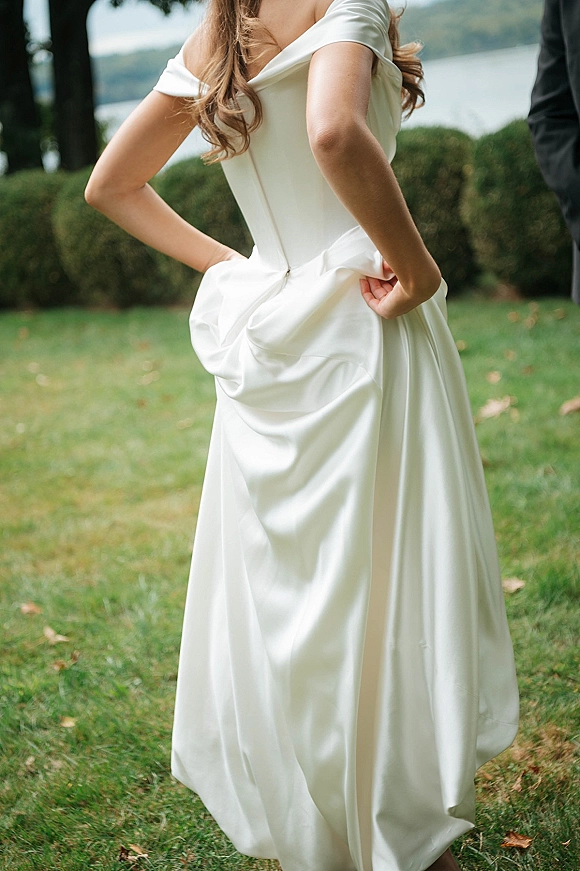
Silk charmeuse and satin bring a luminosity that crepe deliberately lacks. The tradeoff is that liquid-finish fabrics are less forgiving in fit and more demanding in tailoring. They show every seam and every body line. When they’re done well, the result is the closest thing bridal has to the slip dress ideal. When they’re not, the difference is obvious in photographs.
Organza in its minimalist applications, particularly for structured sleeves or a clean overlay, adds a lightness that crepe and satin can’t provide. A minimalist wedding dress with long organza sleeves or a subtle illusion neckline sits at the intersection of the sleeves trend and the clean aesthetic without tipping into maximalism.
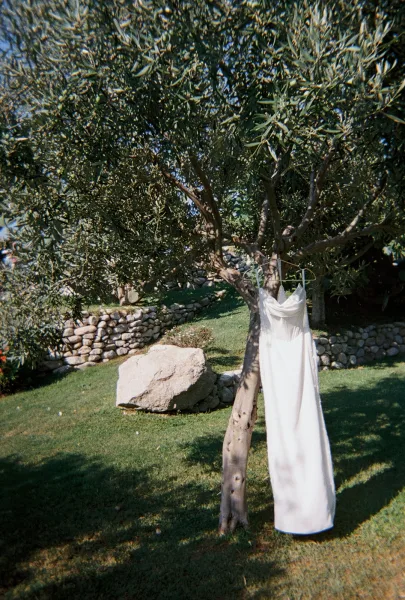
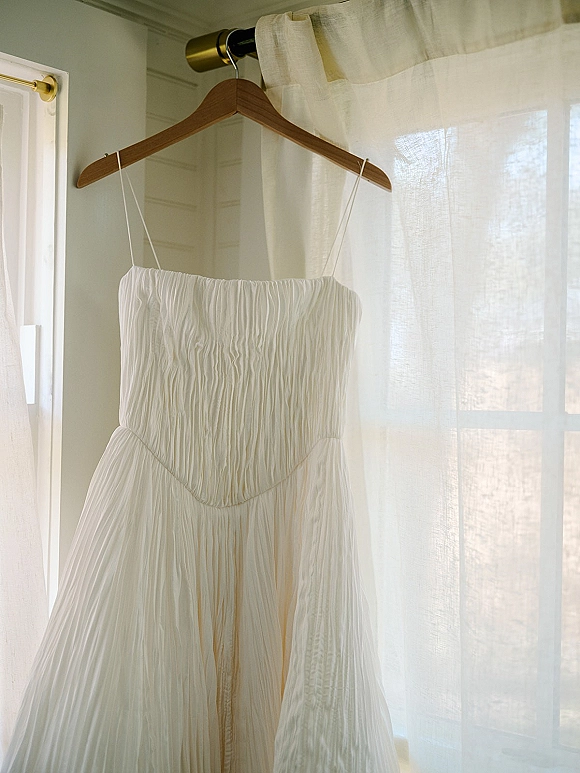
Linen and cotton are less common in bridal but relevant for outdoor or daytime ceremonies where a more relaxed, tactile fabric suits the setting. A minimalist linen dress in an A-line cut reads as intentionally casual in the best sense: dressed down on purpose, not as a compromise.
Necklines and Details That Work
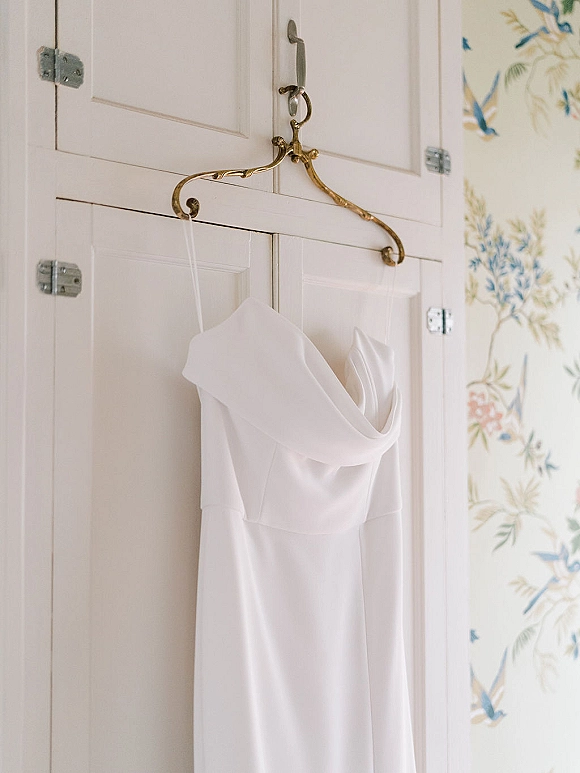
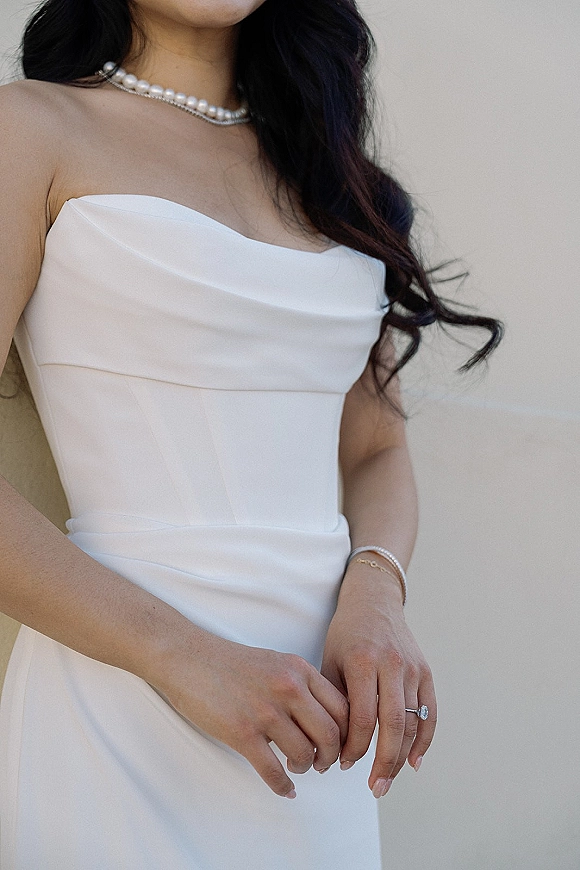
Neckline is the one area where minimalist bridal allows for real variation without breaking the aesthetic. The square neck, bateau, cowl, halter, and strapless bandeau each bring a distinct character while remaining clean. The square neck has been particularly prominent in recent years; it’s geometric, modern, and photographs well across most silhouettes. The cowl brings softness and movement; the halter adds structure and an open back.
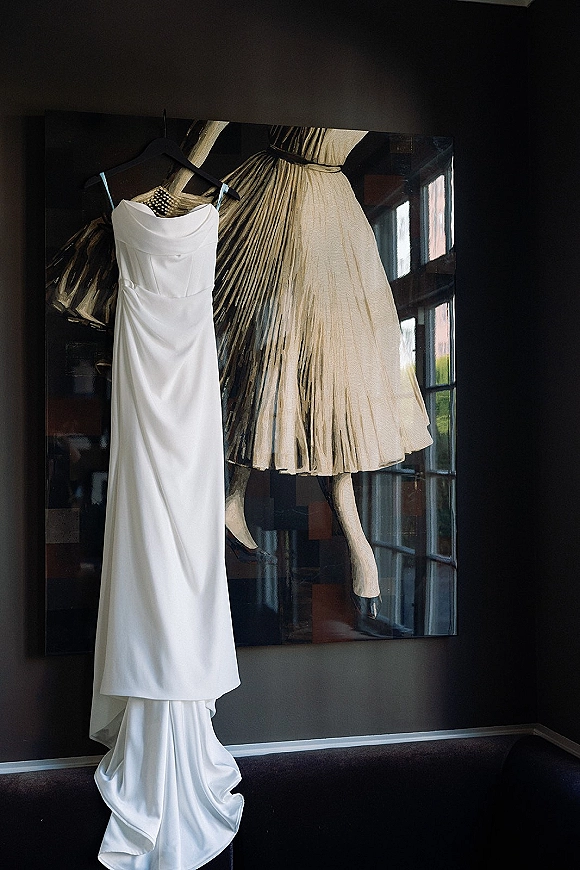
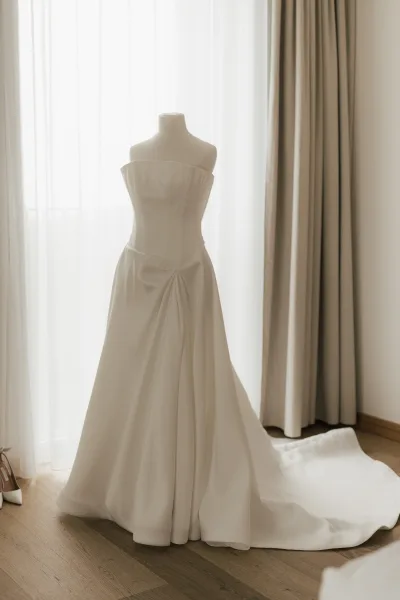
The strapless bandeau neckline is one of the strongest minimalist combinations: a straight, uninterrupted horizontal line across the chest reads as precise and architectural. The strapless wedding dress collection on Cherry covers the full range of strapless column and sheath looks in real weddings.
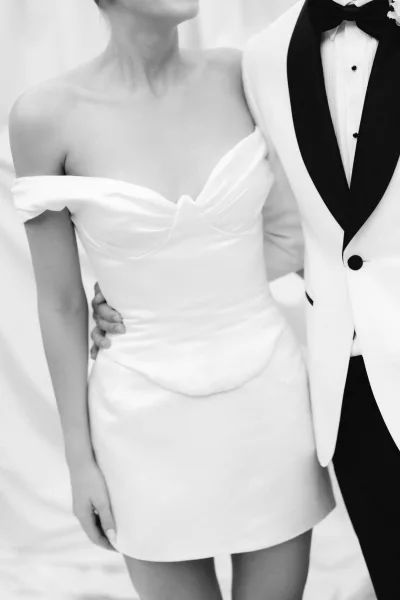
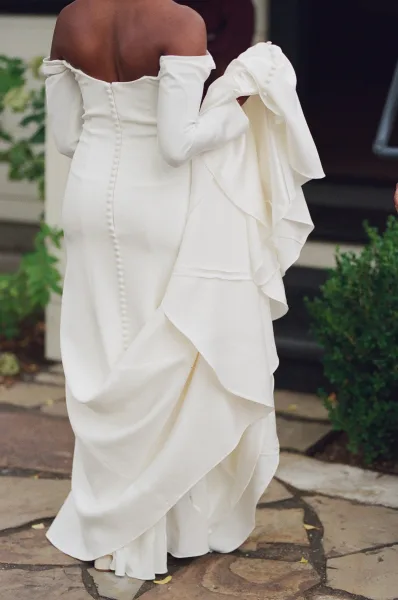
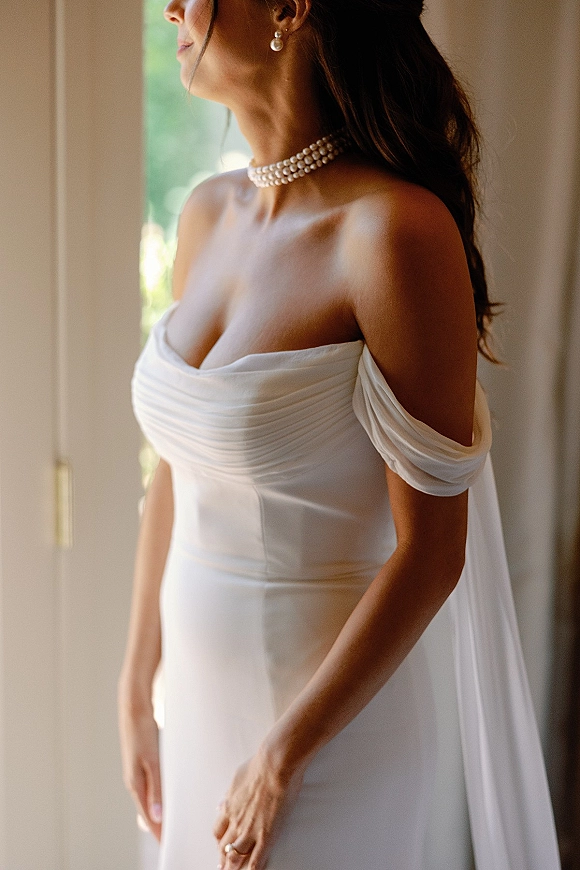
The off-the-shoulder works in the minimalist space when the silhouette is otherwise unadorned, though it reads as slightly more romantic than the starkest interpretations. Buttons are frequently the only surface detail on a minimalist gown: a row of covered buttons down the back is one of the few decorative moves that reads as intentional rather than added. The same is true of a simple bow at the back waist or a single architectural seam that creates a subtle point of interest.
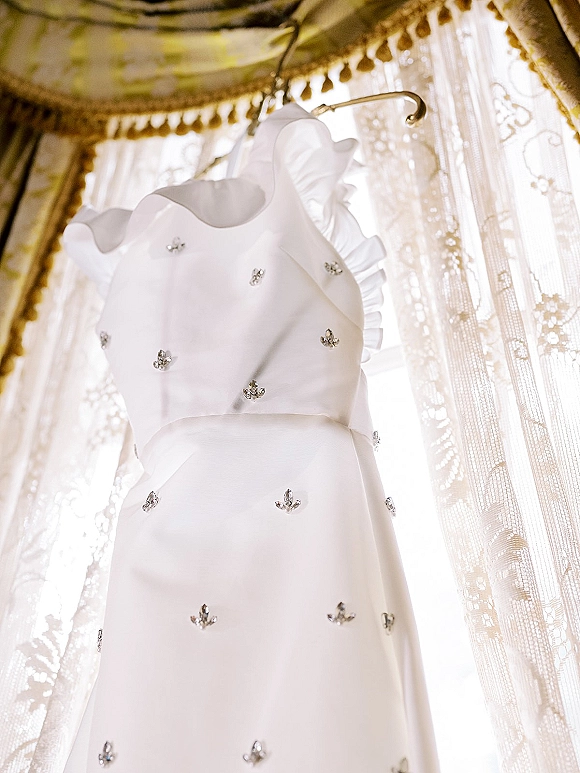
What’s absent in minimalist bridal: corset boning shown as a design feature, visible beading, floral appliqué, tiered skirts, lace overlay on the bodice, and ruching used as a design element rather than a fit solution.
Minimalist Wedding Dress with Sleeves
The sleeves conversation in minimalist bridal is worth its own section because it’s where a lot of the variation lives. Long sleeves on an otherwise bare dress create an asymmetry of coverage that reads as deliberate and modern. The sleeve fabric matters here: a fitted crepe sleeve reads as polished, a sheer organza sleeve reads as softer and more romantic, and a bishop sleeve in a lightweight fabric edges toward the fashion-forward interpretation of the minimalist aesthetic.
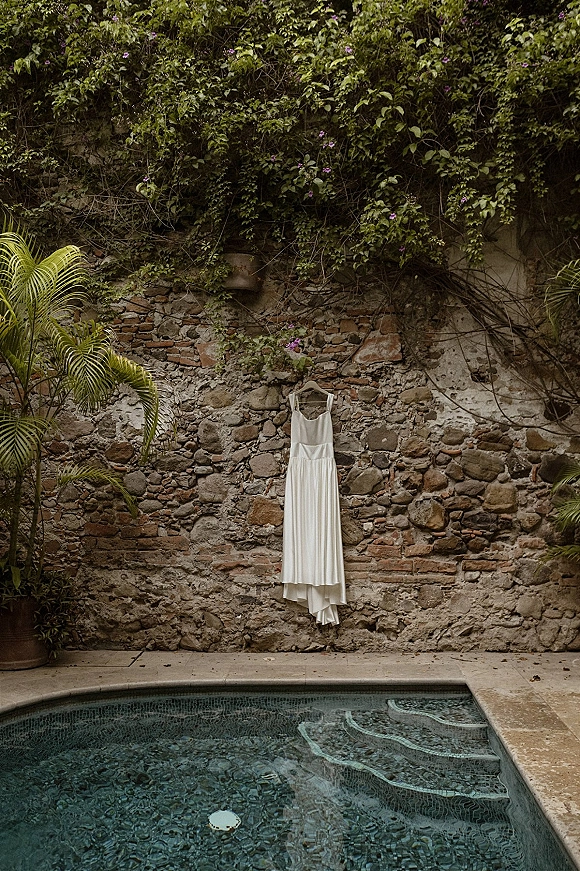
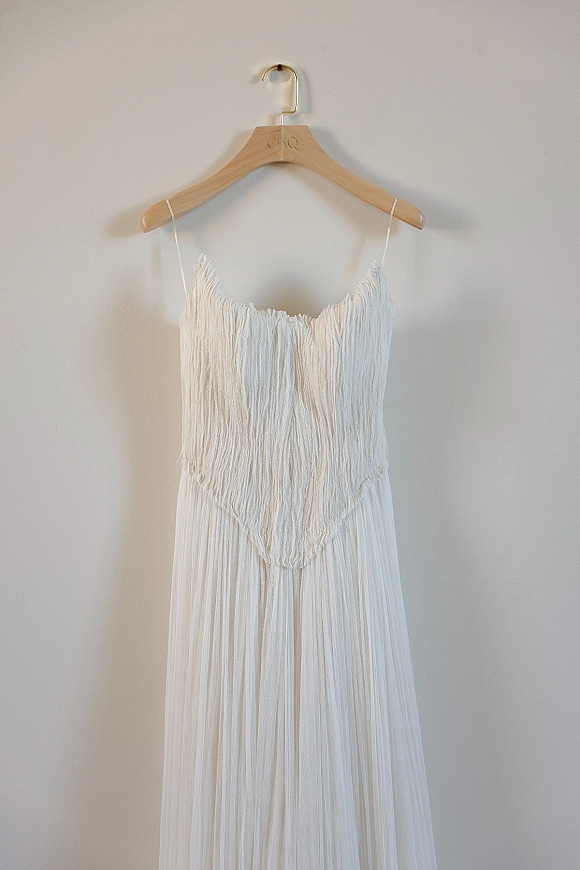
Short sleeves and cap sleeves are less common in the minimalist space. They tend to read as more vintage or feminine, but in the right silhouette and fabric, a structured short sleeve can work as a modern choice. Spaghetti straps and thin shoulder straps are firmly in the minimalist vocabulary and suit the slip dress reference point directly.
The wedding dress with sleeves collection on Cherry covers the full range of sleeved bridal looks in real weddings, from fitted long sleeves in crepe to sheer organza and illusion options.
The Minimalist Boho Crossover
The minimalist boho wedding dress occupies an interesting position: it’s looser in silhouette and more tactile in fabric than the strictest minimalist interpretation, but it deliberately avoids the maximalist floral and lace vocabulary associated with traditional boho bridal. Flowing, relaxed cuts in textured fabrics (gauze, loose-weave cotton, lightweight chiffon) land in this category. The effect is less architectural than a crepe column but more intentional than unstructured.
It suits outdoor ceremonies, garden settings, and brides who want a relaxed look without committing to either bohemian or conventional bridal. For the full boho spectrum, the boho wedding dress collection on Cherry covers the range from relaxed to fully embellished.
Styling a Minimalist Look
The accessories conversation for a minimalist dress is almost as important as the dress itself, because there’s nothing in the dress to carry the styling if the rest of the look is underdone. The strongest pairings tend to be sculptural: a single pair of architectural earrings rather than a delicate pendant, a structured bridal clutch rather than a beaded bag, a low bun or a precise updo rather than a loose wave.
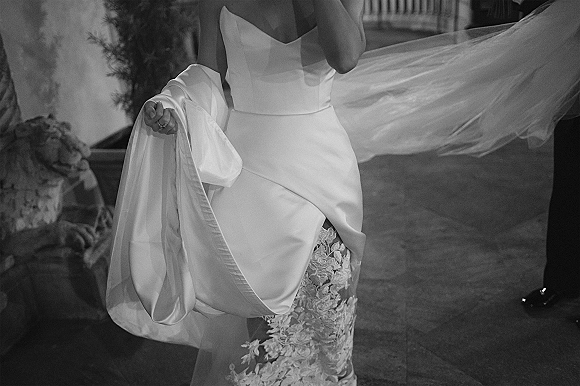
The veil presents an interesting choice. A long cathedral veil attached to a minimalist sheath can create a dramatic contrast that reads as intentional rather than incongruous. The simplicity of the dress absorbs the scale of the veil without competing with it. A short blusher or elbow-length veil suits a more intimate or relaxed interpretation. No veil at all is equally consistent with the minimalist aesthetic, particularly for a civil ceremony or a small outdoor wedding.
For venue context and ceremony settings that complement a minimalist bridal look, minimalist wedding venues covers the architectural and spare spaces where this dress category reads best.
Frequently Asked Questions
What makes a wedding dress minimalist?
A minimalist wedding dress is defined by clean lines, unembellished fabric, and a silhouette with no decorative additions: no lace overlay, no beading, no appliqué. The design interest comes from the cut, the fabric quality, and the precision of the fit rather than from surface ornamentation.
What fabrics are most common in minimalist wedding dresses?
Crepe is the most widely used fabric in minimalist bridal because it holds structure, has a matte finish, and works across multiple silhouettes. Silk charmeuse and satin are used for slip-style and bias-cut dresses. Organza appears in sleeve applications and structured overlays. Linen is less common but relevant for outdoor and daytime ceremonies.
What silhouettes suit a minimalist wedding dress?
Sheath and column silhouettes are the most closely associated with minimalist bridal. A-line is widely used because it suits multiple body types while keeping the overall look clean. Fit-and-flare works when the fabric is unadorned. Tea-length is a strong option for civil ceremonies and intimate settings.
Can a minimalist wedding dress work with sleeves?
Long sleeves in crepe or organza are among the strongest minimalist bridal looks: the sleeve coverage creates contrast against an otherwise bare dress. Sheer organza sleeves add softness; fitted crepe sleeves are more structured and modern. The key is that sleeves work as an architectural detail rather than a decorative one.
Is a boho wedding dress the same as a minimalist wedding dress?
Not exactly. Minimalist boho sits at the intersection of the two: looser in silhouette and more relaxed in fabric than strict minimalist, but without the lace and floral embellishment of traditional boho bridal. The overlap is real, but the two aesthetics have distinct visual references.
What necklines work best with a minimalist wedding dress?
The square neck, bateau, and strapless bandeau are the strongest minimalist necklines because each is geometric and unadorned. The cowl adds softness while remaining clean. The halter creates structure. The off-the-shoulder works in a minimalist context only when the silhouette is otherwise completely unembellished.