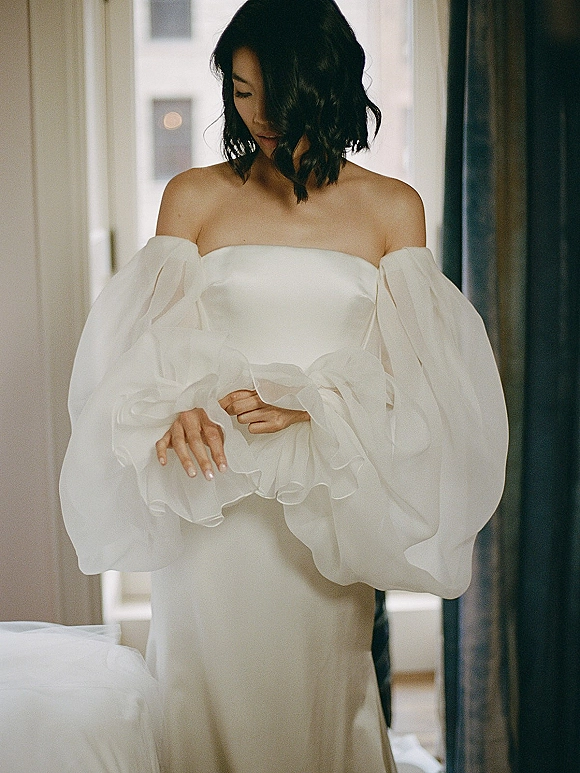
The Sweetheart Neckline
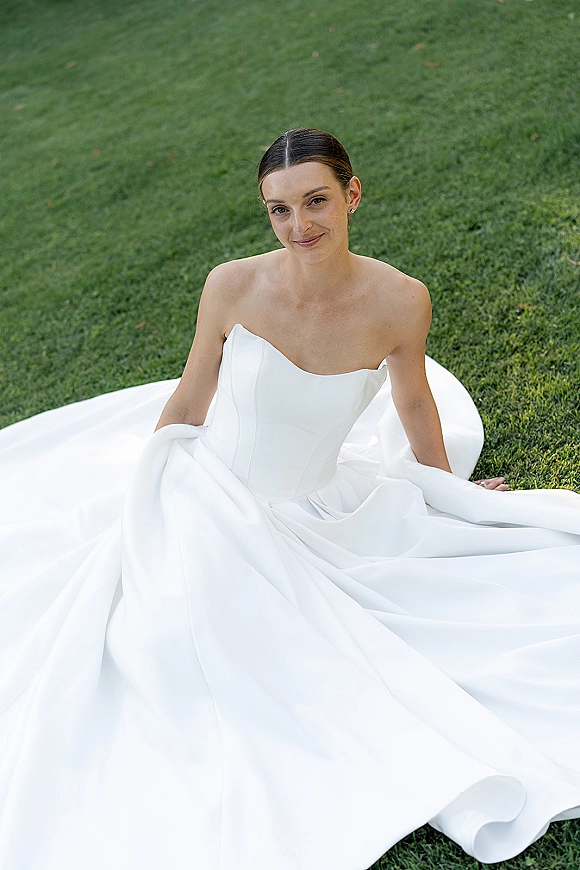
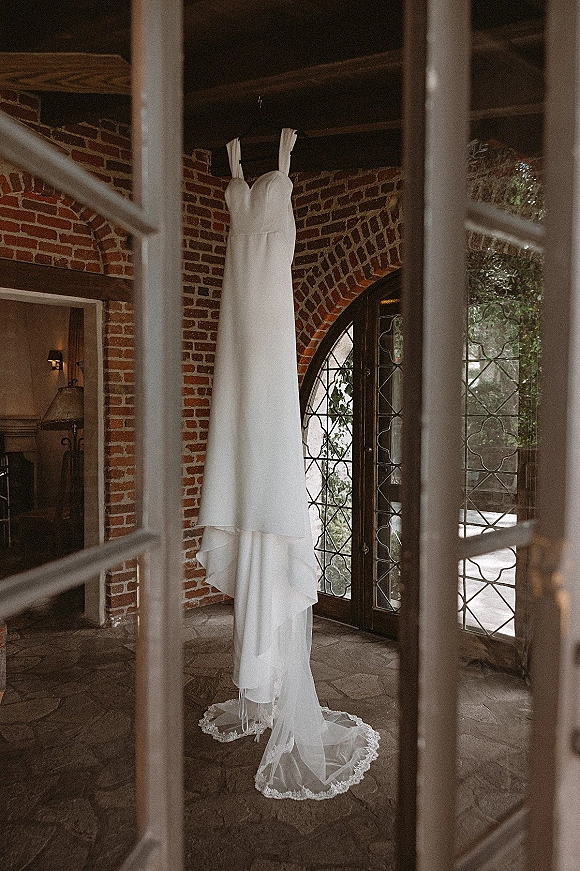
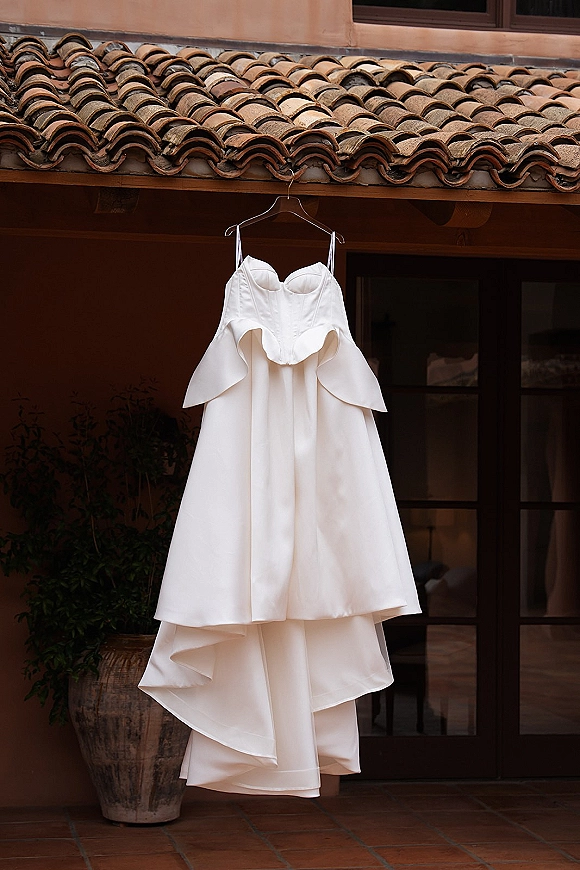
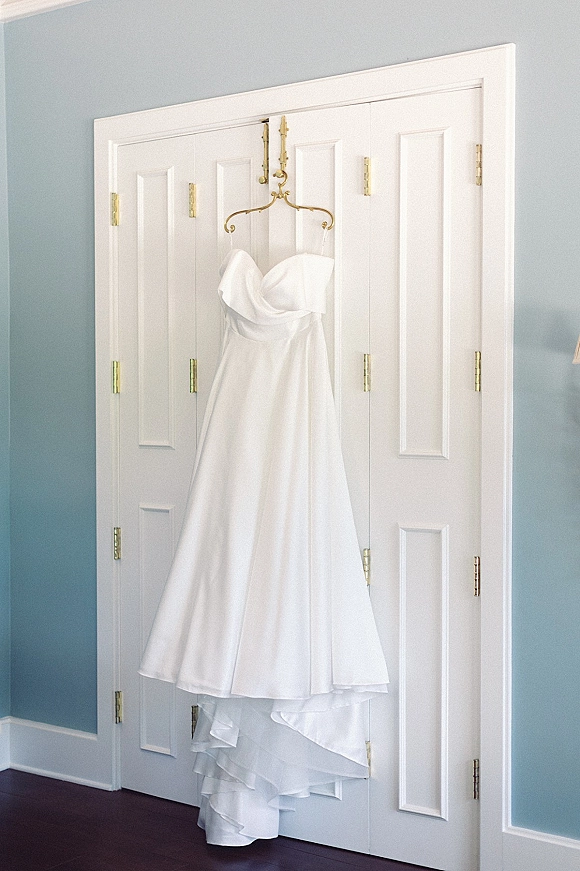
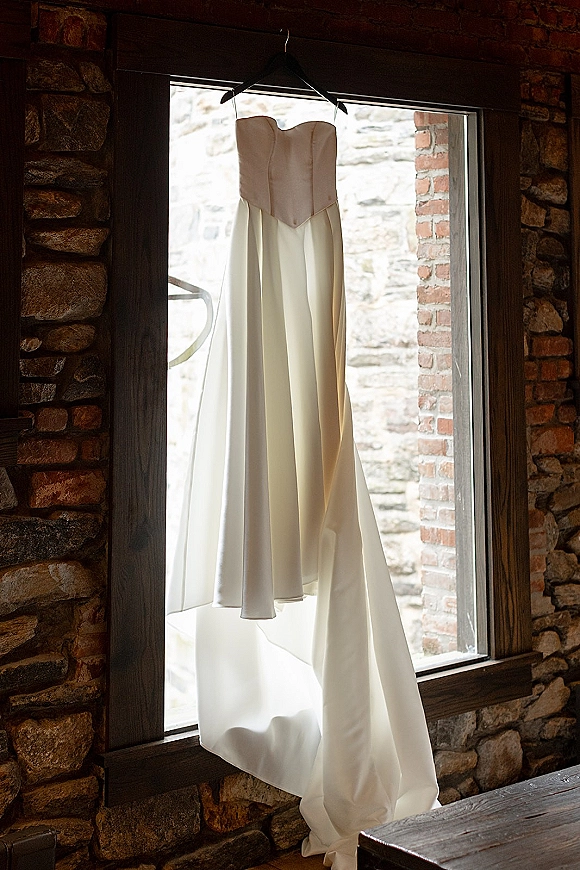
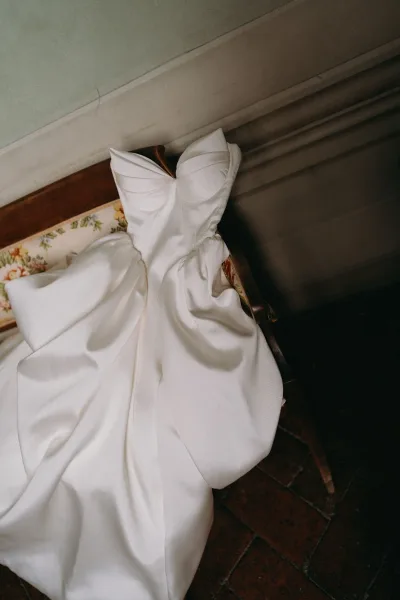
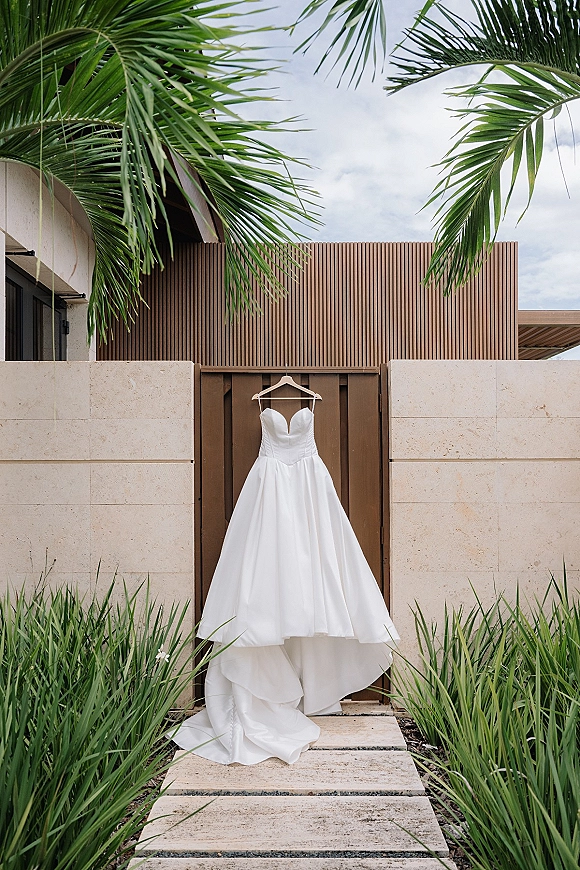
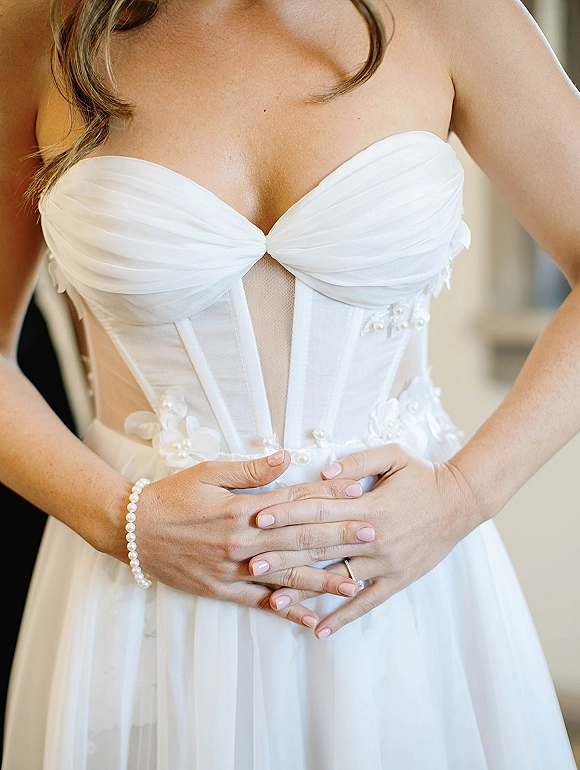
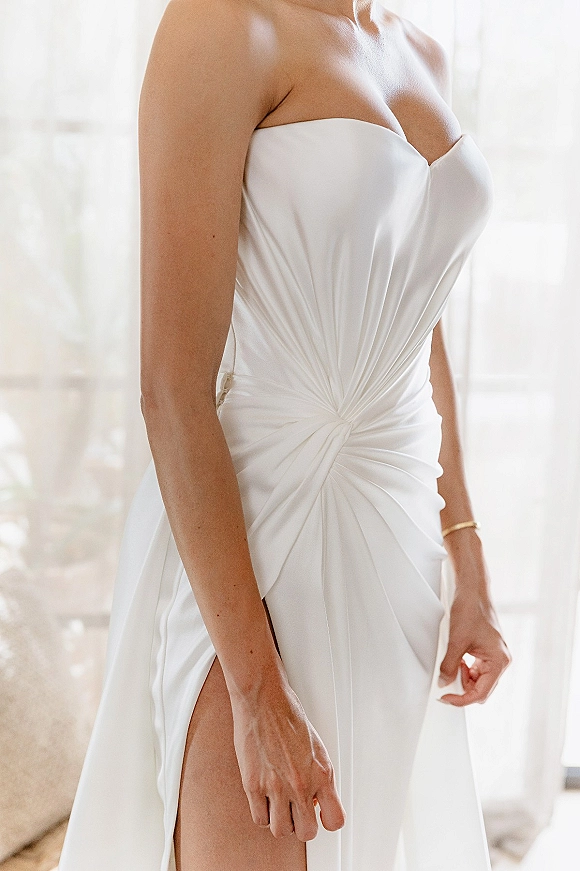
The sweetheart is the most common neckline variation in strapless bridal, and the one most couples picture when they hear "strapless wedding dress." The gentle curved scoop that follows the bust line adds softness to what would otherwise be a straight horizontal cut. It works particularly well with full skirts (ball gowns and A-lines) because the feminine quality of the neckline balances the volume below. In a fitted silhouette like a mermaid or sheath, the sweetheart reads as more overtly romantic.
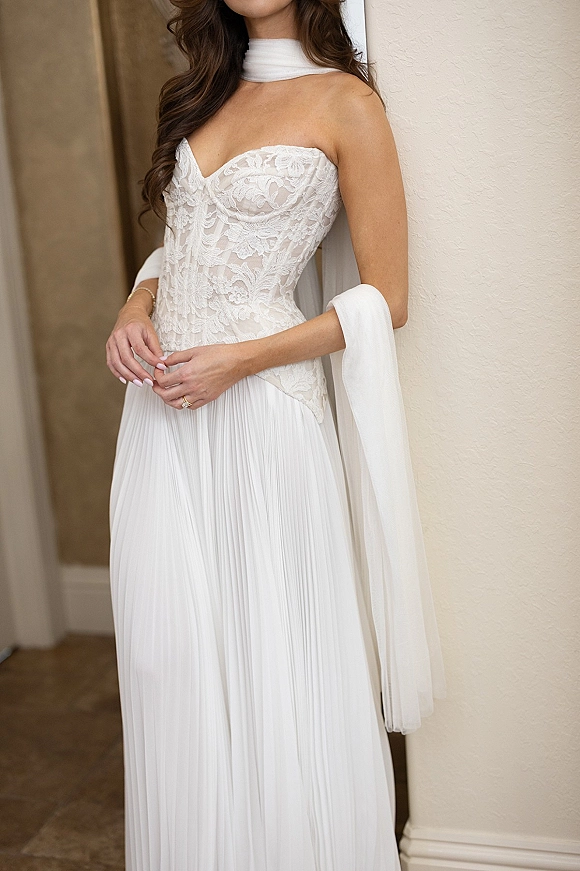
Lace is the most natural pairing for a sweetheart neckline. The fabric’s organic texture works with the curved line rather than against it, and a strapless lace wedding dress in this configuration has a visual coherence that’s hard to achieve with other fabric and neckline combinations. Satin in a sweetheart ball gown is the other classic: the smooth finish picks up light in a way that suits the full, formal silhouette.
Straight-Across and Structured Necklines
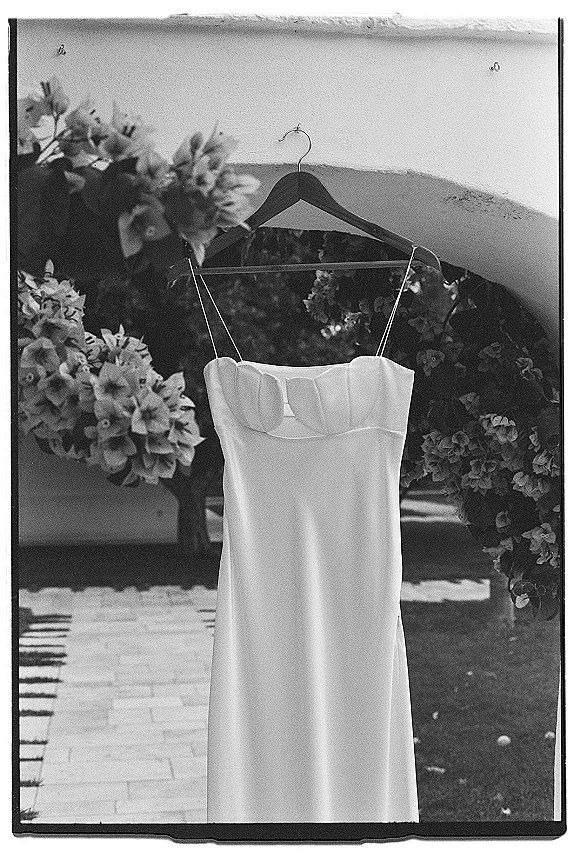
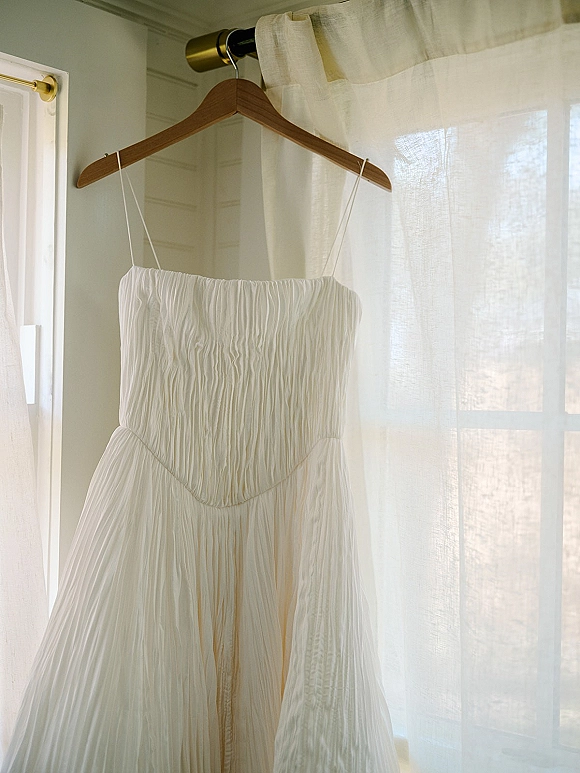
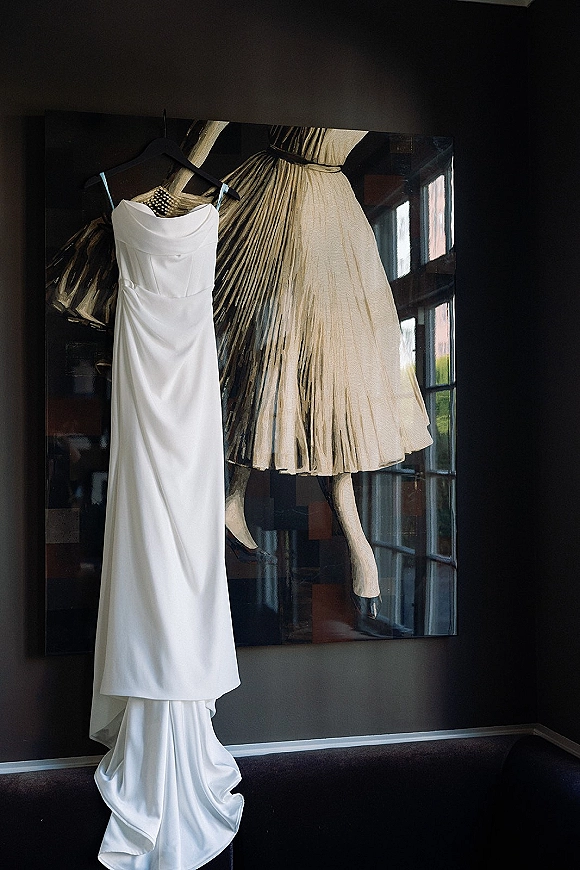
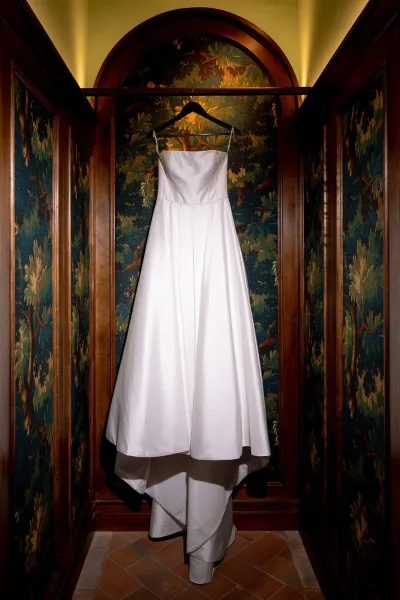
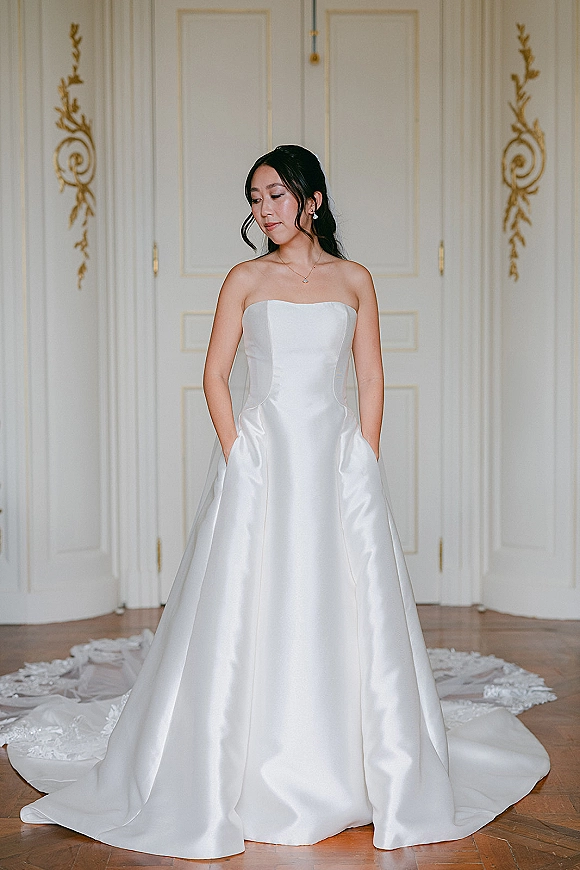
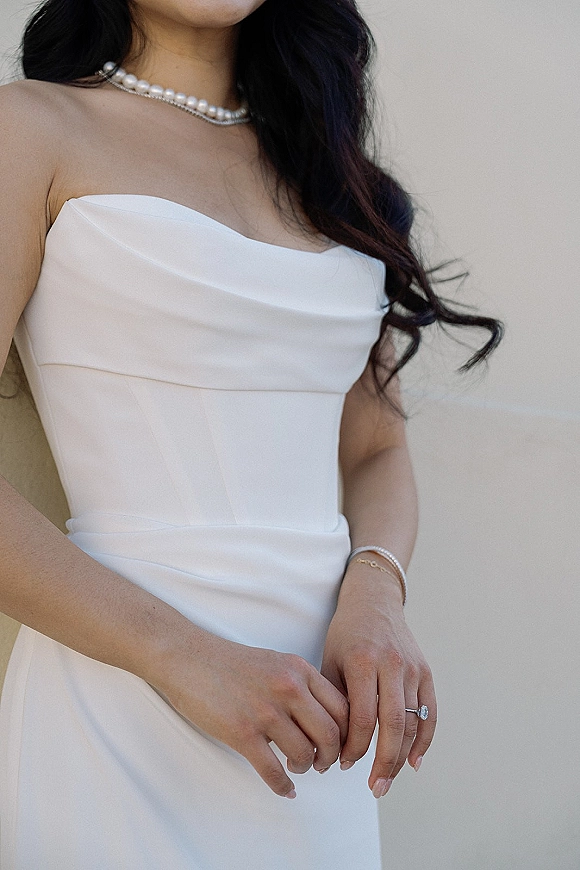
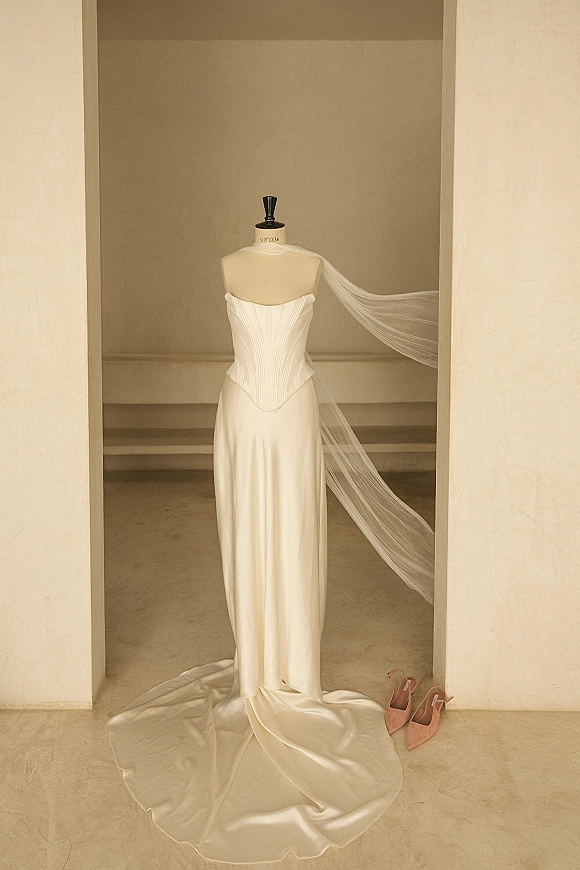
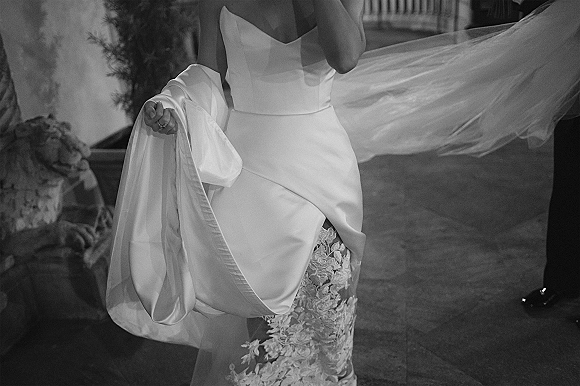
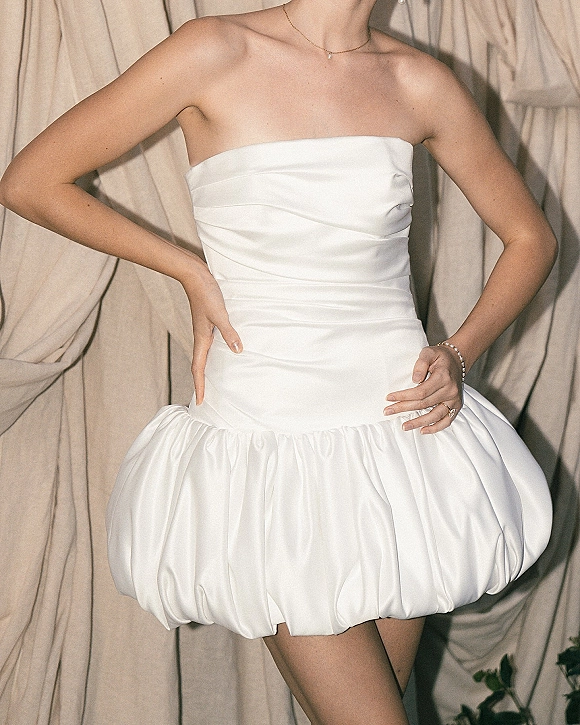
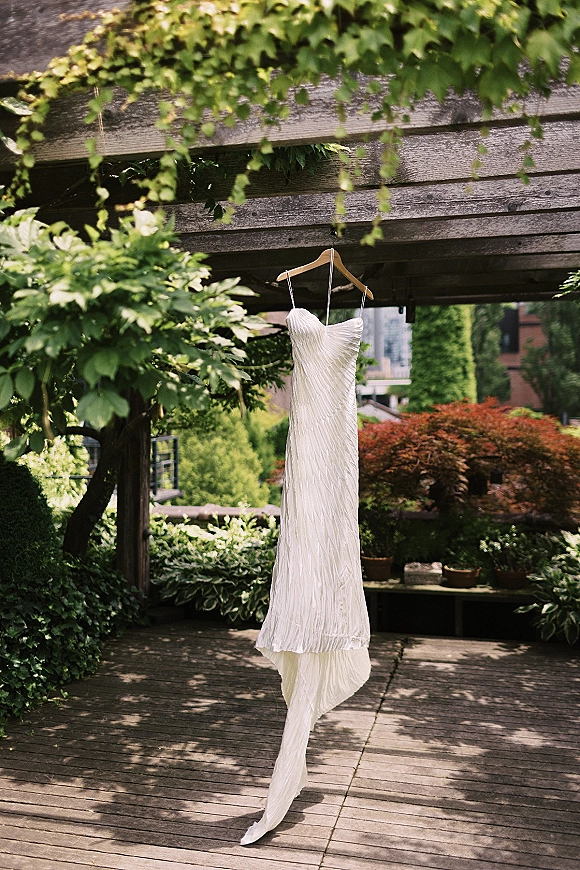
The straight-across strapless neckline (what’s sometimes called a bandeau neckline) reads very differently from the sweetheart. It’s sharper, more architectural, and suits modern or minimalist aesthetics considerably better. In crepe or mikado, a straight strapless neckline creates a clean, precise look that photographs as crisp and considered rather than romantic.
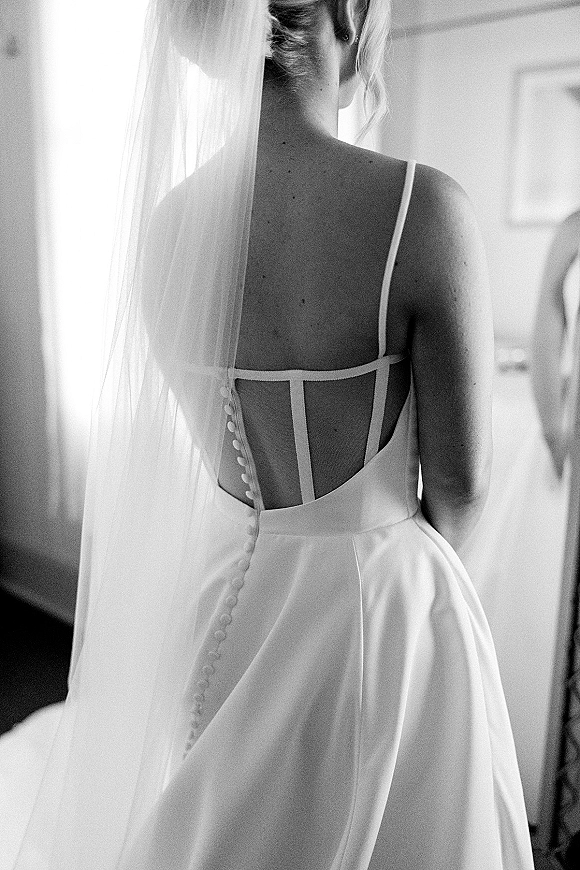
This is the neckline variation that works best in a column or sheath silhouette. The linearity at the top connects visually to the linearity of the skirt, creating a dress that reads as a single, coherent shape. It also suits a low back more naturally than the sweetheart. The two horizontal elements (front neckline and back drop) create a structural balance that reads as deliberate.
For the full range of cleaner, unembellished strapless looks, the minimalist wedding dress collection on Cherry covers the strapless column and sheath territory alongside other pared-back bridal styles.
Strapless Wedding Dress Silhouettes
The choice of silhouette shapes the entire register of the look, from grand and formal to sleek and modern.
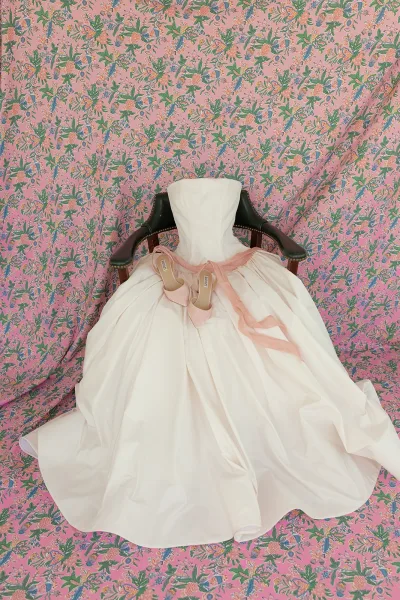
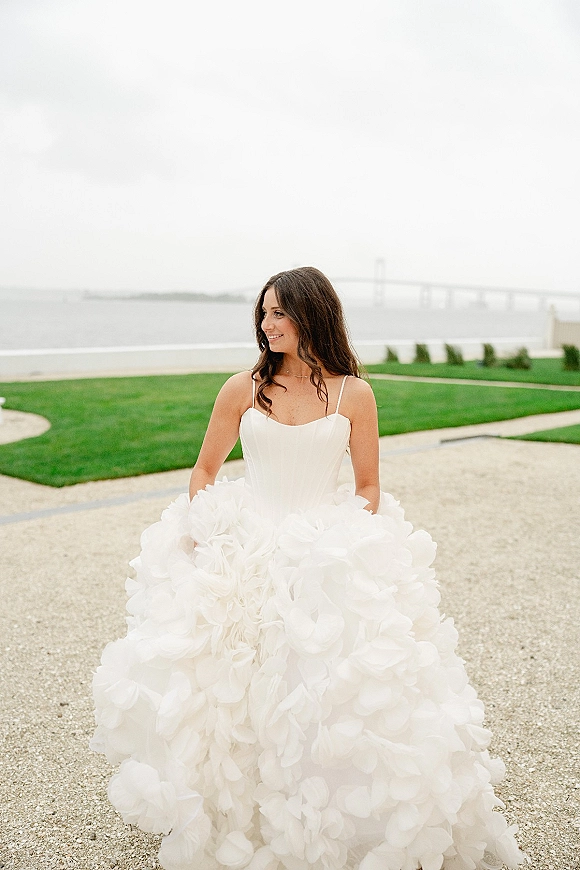
Ball gown: The strapless ball gown is the most formal interpretation of this neckline. The full, voluminous skirt creates a silhouette that reads as grand and occasion-appropriate. Tulle is the standard fabric for the skirt, sometimes layered with organza or embellished with appliqué. The bodice is typically boned and structured to support both the silhouette and the strapless construction.
A-line: The strapless A-line is arguably the most versatile wedding dress silhouette. It flatters a wide range of body types, transitions between formal and outdoor settings gracefully, and works in almost every fabric: lace, satin, chiffon, crepe. The neckline can be sweetheart or straight depending on the overall aesthetic direction.
Mermaid: The strapless mermaid is fitted through the hip and flares below the knee. It’s the most body-conscious option in the strapless category and requires precise fitting. In real weddings, strapless mermaid dresses read as confident and formal. They suit long receptions and photography-forward settings because they move dramatically and photograph well from every angle.
Fit-and-flare: Closely related to the mermaid but with a slightly earlier and more gradual flare, the fit-and-flare in a strapless construction suits brides who want the fitted bodice effect without the full mermaid commitment. In crepe or mikado, it reads as modern; in lace, it leans more traditional.
Fabric and How It Changes the Look
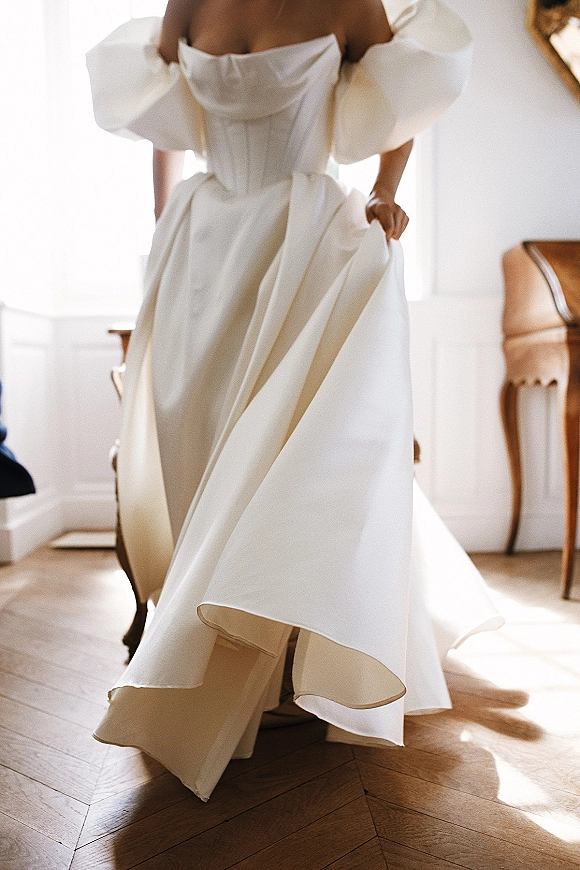
Satin in a strapless dress is the most formal combination bridal produces. The smooth, reflective surface picks up light in ceremony settings and photographs with an almost luminous quality in outdoor shots. Structured satin holds the silhouette independently; draped or fluid satin needs more internal support.
Lace applied to a strapless bodice does double work: it adds visual interest and texture to a neckline that would otherwise rely purely on cut. A strapless lace wedding dress in an A-line silhouette is one of the most consistent performers in bridal because the combination covers significant aesthetic range at once. It reads traditional enough for a church ceremony and relaxed enough for a garden or estate setting.
Chiffon in a strapless construction is more common in bridesmaids than bridal, but a strapless chiffon wedding dress in a simple A-line silhouette suits destination weddings and outdoor settings where movement and lightness are priorities. It’s less formal than satin or structured crepe and photographs softly.
Tulle is primarily a ball gown and skirt fabric. A strapless tulle ball gown with a satin or lace bodice is a classic combination. Tulle on its own has little structure, so the bodice construction in this configuration carries most of the weight.
Jewelry for a Strapless Wedding Dress
The bare shoulder and neck created by a strapless neckline is the primary styling decision to resolve, and it divides into two clear directions.
The first is to lean into the openness: no necklace, statement earrings only, hair up or in a low chignon that keeps the collarbone visible. This is the cleaner of the two options and suits minimalist or modern dress aesthetics.
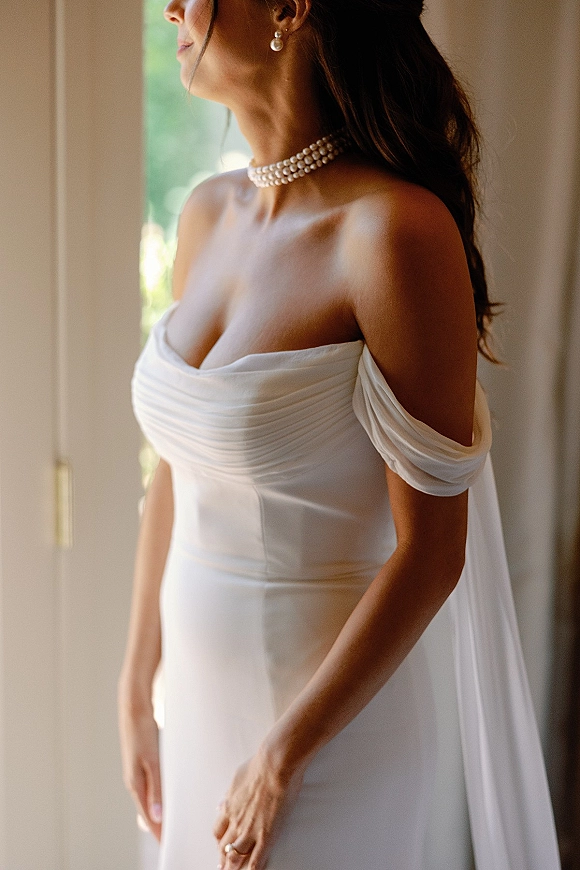
The second is to anchor the neckline with a necklace. A delicate chain or single strand of pearls suits a sweetheart neckline without competing with the curve of the fabric. A statement collar or choker suits a straight neckline more than a sweetheart; the geometry aligns. Drop earrings worn alongside a necklace require careful balance; both elements compete for attention in the same zone.
Hair up is the most common choice with a strapless neckline because it keeps the shoulders visible and the overall silhouette clean. Hair down shifts the visual weight differently. Loose waves falling over bare shoulders create a softer, more romantic effect that suits the sweetheart neckline more than the straight.
How a Strapless Wedding Dress Stays Up
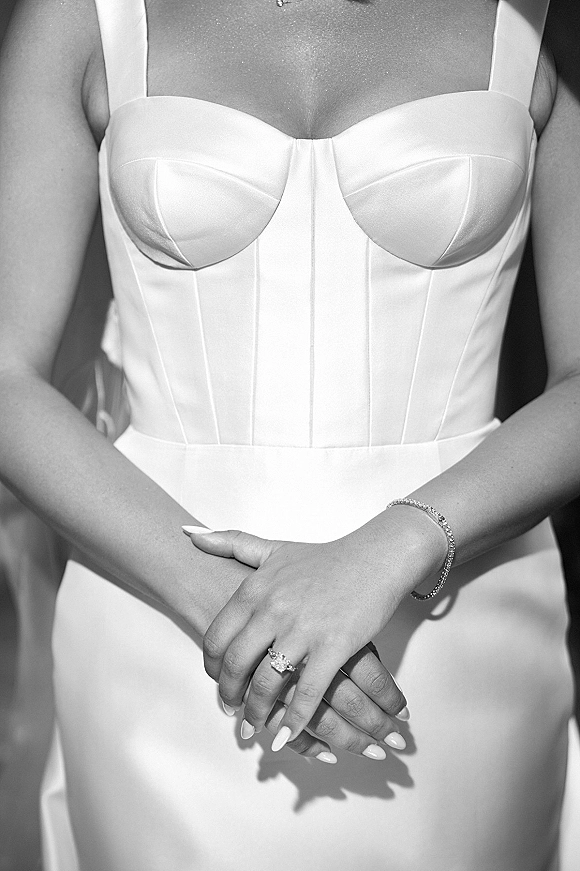
Strapless dresses stay up through internal structure: boning, a built-in corset, or a combination of both. The quality of that construction matters. A well-made strapless bodice with properly placed boning will hold its position through hours of movement, dancing, and photography without adjustment. A poorly constructed one will require constant attention.
Most strapless wedding dresses include boning in the bodice, either spiral steel (which allows for more movement) or flat boning (which is more rigid and structured). A built-in corset with lace-up back adds adjustability and provides more support than boning alone, and allows for slight size variation between fittings. Some dresses include grip tape or silicone strips at the interior of the neckline as additional security, though this is a finishing detail rather than a substitute for proper structure.
The fit appointment for a strapless dress should include movement testing (walking, sitting, raising arms), not just a standing assessment. A dress that holds at a standing fitting may behave differently on the dance floor.
What to Wear Under a Strapless Wedding Dress
Most strapless wedding dresses are structured enough in the bodice to be worn without a bra. The internal boning and corset construction in a properly built strapless gown handles the support that a bra would otherwise provide. For dresses with lighter construction, or for brides who want additional coverage, a strapless bra that sits below the neckline without being visible is the cleanest option.
Strapless shapewear is worth considering for mermaid and fit-and-flare silhouettes, where the fabric is fitted through the hip and thigh. Seamless options in a nude or skin-matched tone work best under smooth satin or crepe. For ball gowns with full tulle skirts, a lightweight slip or petticoat is standard, preventing tulle from scratching the skin during a long day of wear.
The more important undergarment question for a strapless dress is not the bra. It’s the fit of the bodice itself. A strapless dress that fits correctly in the chest and waist will not require tape, grip strips, or additional support to stay in place. Alterations to achieve that fit are standard and make a more meaningful difference than any undergarment choice.
Adding Sleeves or Coverage
A substantial portion of strapless wedding dress searches involve modification: adding sleeves, adding a cape, adding a bolero or lace jacket. This is partly a modesty consideration and partly an aesthetic one. The strapless silhouette can be softened or covered after the ceremony without changing the core dress.
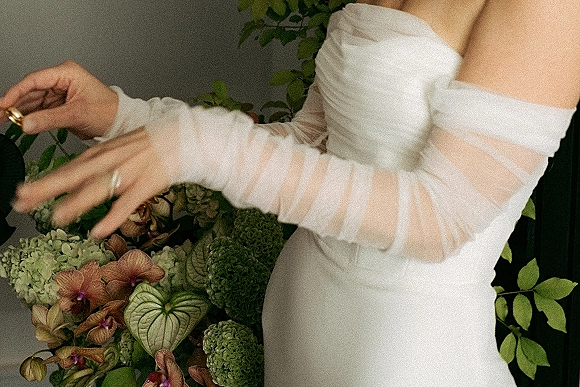
Detachable lace sleeves added to a strapless dress is the most common modification. Illusion or organza sleeves can be attached to the bodice at the shoulder and run to elbow or wrist length, converting a strapless look into something more covered for a religious ceremony. The wedding dress with sleeves collection on Cherry shows the full range of sleeved looks from real weddings, including detachable and illusion options.
A structured jacket or blazer worn over a strapless ball gown creates a different register entirely: more editorial, less traditional. A sheer or embroidered cape attached at the back of the bodice is a dramatic option that photographs well from behind and reads as formal without fully covering the shoulder line.
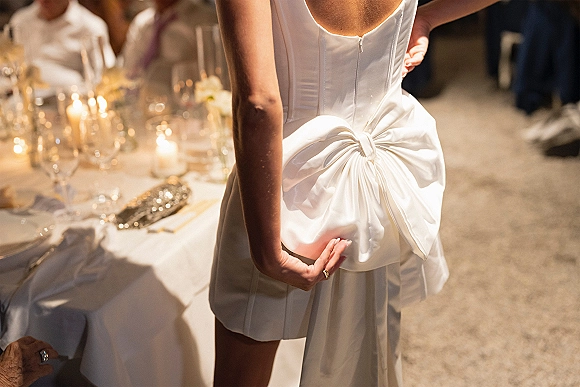
For shorter strapless silhouettes, the short wedding dress collection covers tea-length and mini options across neckline styles.
Frequently Asked Questions
Do strapless wedding dresses stay up on their own?
A properly constructed strapless dress with adequate boning or a built-in corset will hold its position without adjustment. The key is fit. A strapless bodice that is correctly sized and internally structured at the chest will stay in place through movement and dancing. A dress that requires constant pulling up is either undersized in the bodice, oversized at the waist, or lacks sufficient internal structure.
What is the difference between a sweetheart and a straight strapless neckline?
A sweetheart neckline follows a gentle curved scoop across the bust, adding softness and a feminine quality to the silhouette. A straight or bandeau neckline runs horizontally across the chest with no curve. It's sharper, more architectural, and suits minimalist or modern aesthetics. Both are strapless; the distinction is purely in the shape of the neckline.
What jewelry works best with a strapless wedding dress?
Statement earrings with no necklace is the cleanest approach for a strapless neckline. If wearing a necklace, a delicate single strand or pendant suits a sweetheart neckline; a collar or choker aligns better with a straight neckline. Avoid competing statement pieces at both the ear and neck simultaneously.
Can sleeves be added to a strapless wedding dress?
Yes. Detachable lace, organza, or illusion sleeves can be added to most strapless bodices by a seamstress. This is a common alteration for brides who want sleeve coverage for a religious ceremony and a strapless look for the reception. A structured jacket, blazer, or embroidered cape are non-permanent alternatives that don't require alteration.
What hairstyles work with a strapless wedding dress?
Hair up (a chignon, French twist, or low bun) is the most common choice because it keeps the shoulder and collarbone visible and maintains the clean silhouette of the neckline. Hair down works particularly well with a sweetheart neckline, where soft waves complement the curved line of the dress. Either option can work; the determining factor is usually the overall aesthetic direction of the look.
What do you wear under a strapless wedding dress?
Most structured strapless gowns are designed to be worn without a bra. The internal boning handles support. For brides who want additional coverage, a well-fitted strapless bra that sits below the neckline works without being visible. For mermaid or fit-and-flare silhouettes, seamless strapless shapewear in a skin-matched tone is the standard choice.