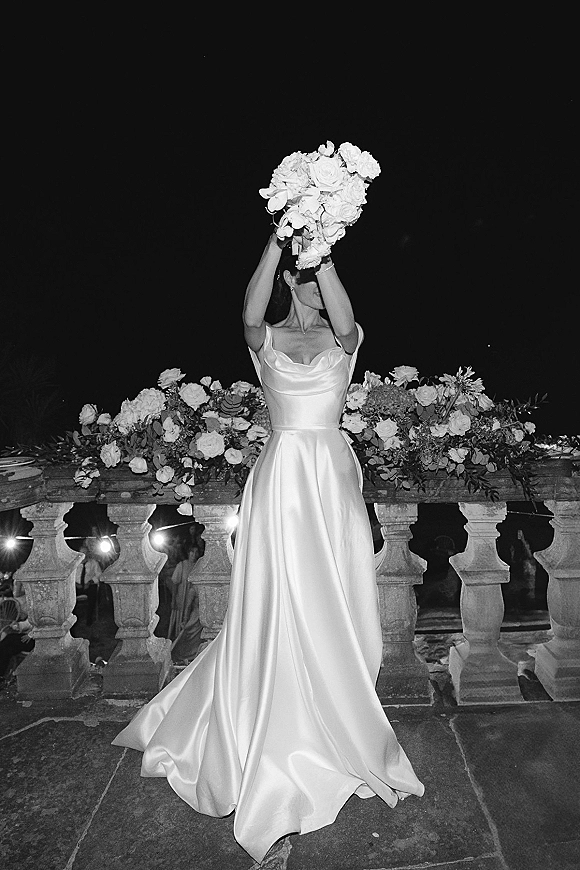
What Makes a Black and White Wedding Dress Different
A black and white wedding dress is a two-tone bridal gown where black and white share the design rather than either standing alone. It reads differently from an all-black gown: the white keeps the look anchored in bridal tradition while the black supplies contrast and edge, so the result feels balanced rather than gothic. The placement of the black is the whole decision, because a thin black trim whispers while a full black bodice declares. This is a distinct aesthetic of accent and contrast, not a colored gown.
Ways to Wear Black and White
The contrast can sit almost anywhere on the gown. A black ribbon sash or belt at the waist is the lightest touch, defining the figure with a single line. A black hem, horsehair trim, or banded edge frames the skirt and grounds a full white silhouette. A black bodice over a white or ivory skirt creates a strong color-blocked break at the waist, the most graphic version of the look. Black lace laid over an ivory lining softens the contrast into pattern and shadow, while a black-and-white print or floral applique scatters the two tones across the gown. Each placement changes how bold the gown reads.
Color-Blocked and Two-Tone Bodices
Color-blocking is the most fashion-forward route, treating the gown like a piece of tailoring. A black bodice with a sweetheart or strapless neckline meeting a white skirt draws a clean horizontal line that elongates the torso and defines the waist. Reversing it, a white bodice over a black skirt, shifts the weight downward for a more dramatic base. Vertical paneling, a black side seam or center inset against white, narrows the silhouette and reads as deliberate, modern construction. These designs suit brides who want their gown to register as fashion as much as bridal.
Black Lace Over Ivory
Layering black lace over an ivory or white base is the most romantic interpretation of the pairing. The lace pattern, Chantilly for a delicate floral net or a heavier corded guipure, casts shadow over the pale fabric so the contrast reads as texture rather than a hard line. This approach works beautifully on sleeves, a bodice overlay, or a full lace skirt, and it gives a softer entry point for brides drawn to black but wary of an all-black gown. The effect shifts with the light, the lace reading sharper indoors and softer in daylight.
How Much Black Is Right for You
The single most useful question with this pairing is what proportion of black feels right, because the ratio decides how traditional or how bold the gown reads. A thin black sash, a narrow hem band, or fine black lace edging keeps the gown almost entirely bridal with a single sharpening accent, the safest route for a bride who wants only a touch of contrast. An even split, a black bodice meeting a white skirt, reads as deliberate fashion and makes the contrast the headline. A predominantly black gown with white detailing pushes toward the dramatic end and begins to read closer to a black gown with bridal lightening. Picture each ratio against your venue and dress code before deciding, since a black-tie ballroom carries more black comfortably than a daytime garden.
Prints, Florals, and Patterned Contrast
Beyond solid color-blocking, black and white reads beautifully as pattern. A black-and-white floral print scatters the two tones across the gown for a softer, more organic contrast than a hard seam, suiting garden and spring weddings. Polka dots and stripes give a retro, fashion-forward edge that suits a playful or vintage celebration. Embroidered black botanicals climbing a white gown, or white appliqué over a black base, trade the graphic line for something more couture and detailed. These patterned treatments distribute the contrast evenly, so the gown reads as designed rather than simply two-toned, and they photograph with movement and depth a flat block cannot match.
Choosing Your Shades of Black and White
The two tones in a black and white gown each have variations, and pairing them thoughtfully changes the whole effect. On the light side, a true white reads crisp and modern and gives the sharpest contrast against black, while an ivory or cream softens the pairing into something warmer and more romantic. A black against ivory reads less stark than black against pure white, which suits brides who want the contrast without the hard edge. On the dark side, a true black is the boldest, while a charcoal or soft black gentles the scheme toward a tonal, almost-monochrome look.
Matching the temperature of the two shades keeps the gown coherent: a cool white pairs cleanly with a true black for a graphic, contemporary result, while a warm ivory sits more naturally with a soft or warm black. The proportion of each tone interacts with the shades you pick, since a large field of true white with a small true-black accent reads crisp and bridal, while ivory paired with a heavier black reads vintage and soft. Seeing the exact white and the exact black together in daylight tells you quickly whether the pairing reads sharp or romantic, which is the first decision to settle.
Black and White by Silhouette
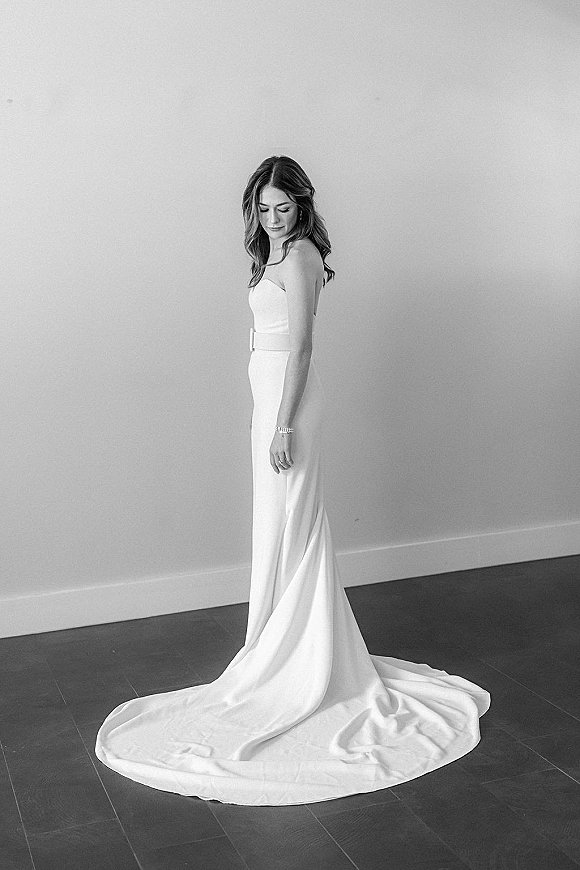
Silhouette decides where the contrast falls and how the eye travels. On a ball gown, a black bodice over a white skirt draws a strong horizontal line at the waist and lets the full skirt read as a clean field, the most classic two-tone effect. On a mermaid or fit-and-flare, contrast trim along the seams or a black hem traces the body’s line and emphasizes the silhouette’s curve. On a sheath or column, a vertical black panel or a single black sash reads sleek and modern, elongating the figure.
An A-line offers the most flexibility, carrying a black sash, a black-edged hem, or a lace overlay equally well without committing to a dramatic block. The silhouette also sets how bold the contrast reads: a structured gown makes a color-block look architectural and deliberate, while a soft, flowing gown lets black and white blend more gently through lace or print. For brides who want the contrast to read as clean line rather than ornament, a streamlined cut shows it best, much like the gowns in our minimalist wedding dress gallery.
Fabrics for a Two-Tone Gown
Fabric choice determines whether the contrast reads sharp or soft. A crisp mikado or duchess satin gives black and white a clean, architectural edge, ideal for color-blocked bodices and structured skirts where you want the line between the tones to read precisely. Crepe offers a matte, modern version of the same sharpness with more drape. For a softer contrast, black lace over a white or ivory base turns the two tones into pattern and shadow rather than a hard seam, and tulle layered in alternating tones blurs the boundary into a gradient.
Organza and chiffon keep a two-tone gown light and fluid, suited to garden and warm-weather settings where a heavy satin would feel formal. Mixing fabrics is common and effective: a satin black bodice against a tulle white skirt pairs structure with softness, while a lace black overlay on a satin white gown layers texture over sheen. Because the contrast is the whole point of the gown, the fabrics should make the boundary between black and white read the way you intend, whether that is a knife-sharp line or a soft dissolve.
Weight matters within each fabric as much as the fabric type. A heavy duchess satin holds a crisp color block, while a fluid charmeuse softens the same break into something gentler, and a fine Chantilly lace reads far more delicate over ivory than a bold corded guipure would. Pairing a structured fabric for the tone you want to dominate with a softer one for the secondary tone gives the contrast both clarity and movement, which keeps a two-tone gown from reading flat or stiff. Texture also reads as contrast in its own right, so a matte black against a lustrous white adds a second layer of difference beyond color alone.
Veils and Accessories for Two-Tone
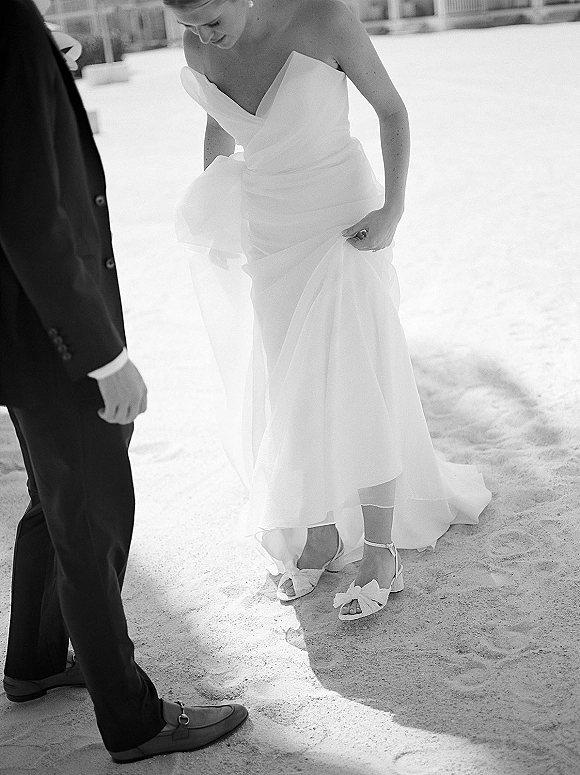
With a black and white gown, accessories work best when they commit to one of the two tones rather than introducing a third. A white veil keeps the look bridal and lets the black detail read as the accent, while a black veil or a veil with black trim leans into the contrast and reads as a fashion statement. Shoes can echo either tone: black heels sharpen the look and tie down to a black hem, while nude or metallic shoes keep the focus on the gown. Jewelry in jet, pearl, or crystal suits the monochrome palette without competing.
A black sash, belt, or ribbon is itself an accessory route, letting a bride add the contrast to a white gown without buying a two-tone dress. Gloves in black or white extend the scheme and lean vintage. The discipline with this palette is restraint: because the gown already balances two strong tones, accessories that stay within black, white, and metallic keep the look intentional, while a third color tends to break the graphic effect that makes the pairing work.
Black and White by Wedding Style
Black and white reads differently across wedding aesthetics, and the proportion of each tone is what you adjust to match. For a formal or black-tie wedding, a strong color block or a white gown with bold black detailing echoes the dress code and reads as elevated and graphic. For a modern or city wedding, a sleek two-tone column or a minimal black-sashed gown suits a contemporary venue. For a vintage or retro celebration, black and white through polka dots, stripes, or a tea-length silhouette leans playful and period-appropriate.
For a garden or spring wedding, a black-and-white floral print or fine black lace over ivory softens the contrast into something organic and seasonal. The pairing rarely suits a rustic or boho aesthetic as cleanly, since those lean warm and textured rather than graphic, though a soft ivory-and-charcoal version can bridge the gap. Naming your wedding’s style points you toward the right ratio and the right placement, keeping the gown reading as designed for the day rather than imposed on it.
Necklines for a Black and White Gown
The neckline is a key place to put the contrast, and it frames the face directly. A black bodice with a sweetheart or strapless neckline against a white skirt draws a clean line across the upper body and reads as classic color-blocking. A white bodice topped with a black illusion neckline or black lace yoke softens the contrast while still placing the dark tone near the face. An off-the-shoulder or bardot cut in either tone frames the collarbone and adds a romantic note to the graphic palette.
A black sash or banding at a V or scoop neckline outlines the shape without committing the whole bodice to the dark tone, a lighter touch that suits a more traditional gown. For a bold, modern result, a high black neckline over a white gown reads architectural and striking. The neckline choice interacts with where else the black falls: if the gown already carries a black hem or sash, keeping the neckline white balances the look, while a gown that is mostly white can carry a stronger black neckline as its single focal accent.
The Back and Train of a Two-Tone Gown
A black and white gown offers striking possibilities at the back, which is what guests see during the ceremony. A white gown with black buttons running down the spine, a black lace-up corset back, or a black bow at the waist places the contrast where it reads with quiet drama. A black train flowing from a white gown, or a white train from a black bodice, extends the two-tone effect down the aisle and photographs with high impact.
The train is also a chance to reverse the gown’s proportions: a predominantly white gown can carry a dramatic black-lined train that reveals the dark tone only as the bride moves, while a black gown can trail white tulle for a softer finish. Length follows formality, with a sweeping train suiting a black-tie wedding and a sweep or floor length suiting a modern celebration. Because the contrast is the gown’s whole concept, treating the back and train as deliberately as the front ensures the two-tone effect reads from every angle.
Black and White in Your Wedding Palette
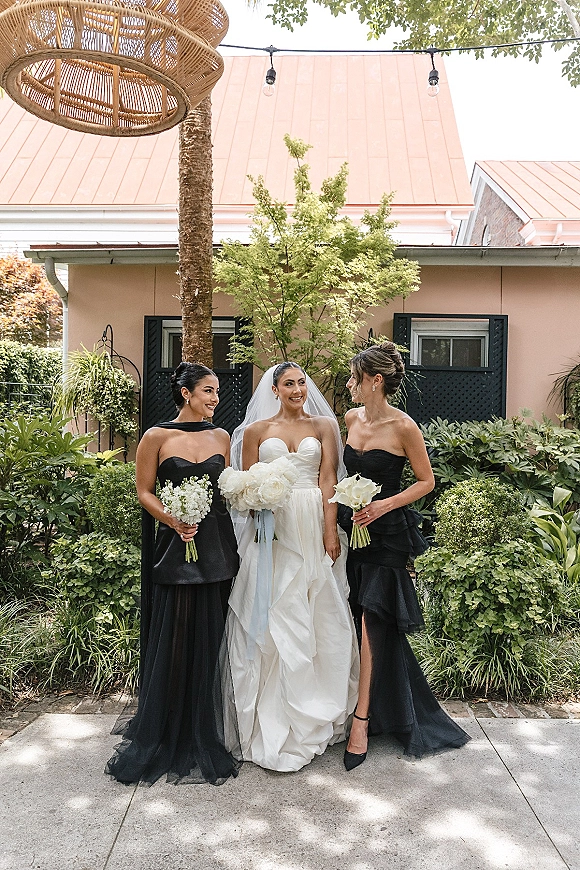
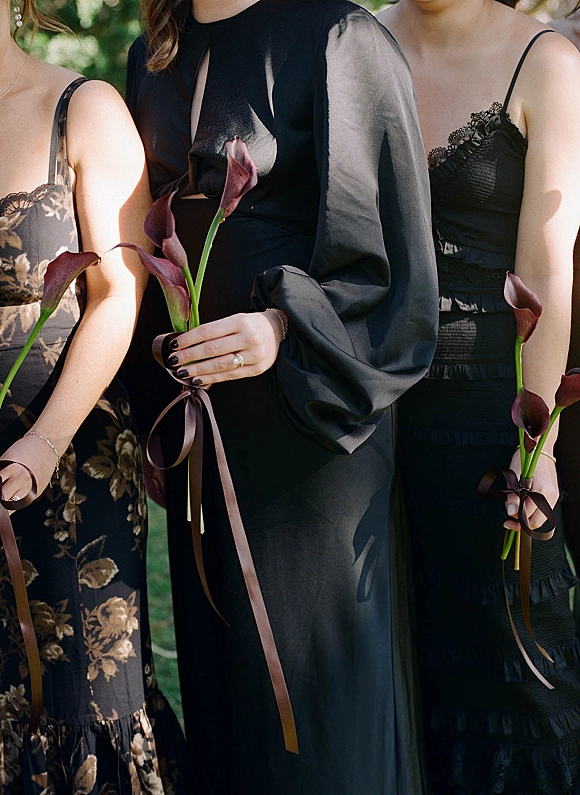
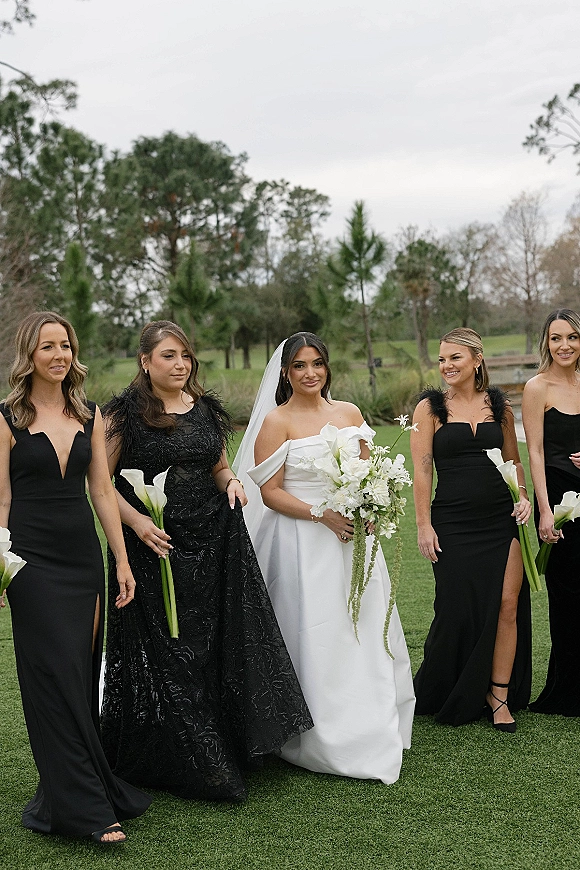
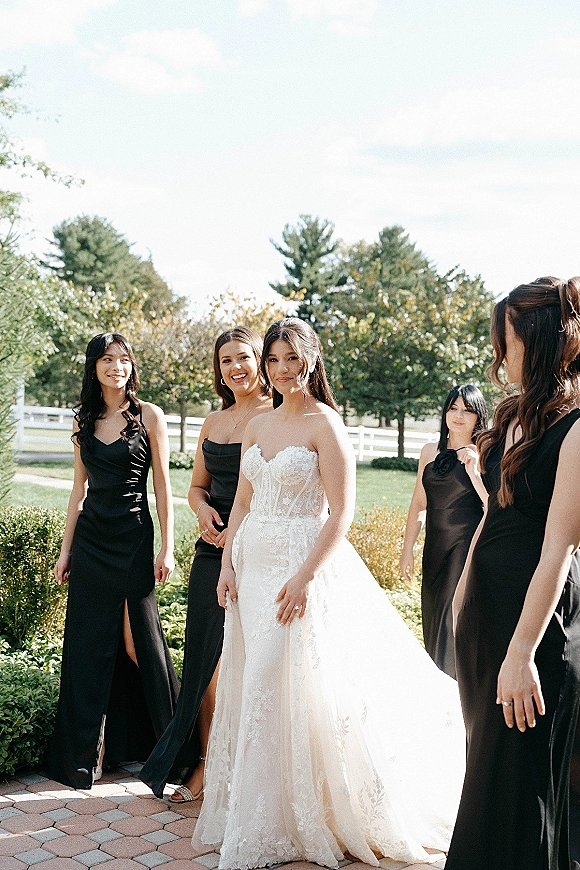
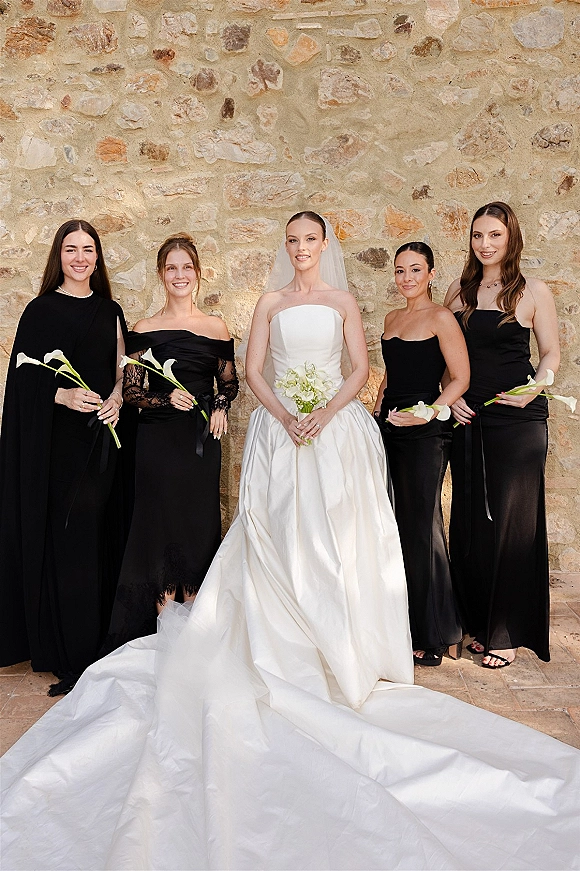
A black and white gown sets a graphic tone that the rest of the wedding can echo. A monochrome palette across the bridal party, the florals, and the table settings reads polished and intentional, with bridesmaids in black, white, or a mix continuing the gown’s scheme. Black and white photographs as a sophisticated, high-contrast wedding aesthetic that suits formal and modern celebrations particularly well, and it pairs cleanly with metallic accents in silver or gold for a touch of warmth.
Introducing a single accent color is the most common way to soften an all-monochrome scheme: deep red, blush, or greenery against black and white adds a focal point without breaking the graphic effect. The bouquet often carries this accent, white blooms with dark foliage staying tonal or a few red or burgundy stems adding contrast. Planning the gown’s two tones into the wider palette from the start keeps the whole wedding reading as a coherent design rather than a dress that stands apart from its setting.
Trying On and Choosing Your Contrast
Because a black and white gown depends entirely on proportion and placement, trying on several versions is the surest way to find your balance. Seeing how a thin black sash reads against a full white gown, versus a black bodice meeting a white skirt, versus black lace over ivory, reveals quickly how much contrast feels right on your frame and for your wedding. The amount of black that flatters varies with height and proportion, since a strong horizontal block can shorten or elongate the torso depending on where it falls.
Lighting matters too: a true black against pure white reads sharper in bright daylight and softer in candlelight, so seeing the gown in conditions close to your venue helps. It also helps to view the gown beside the accessories you plan to wear, since black shoes, a black veil, or metallic jewelry shift the overall balance. Settling the contrast before committing, rather than adjusting it after, ensures the finished gown reads as the deliberate, designed statement the two-tone look is meant to be.
Separates and Two-Piece Black and White Looks
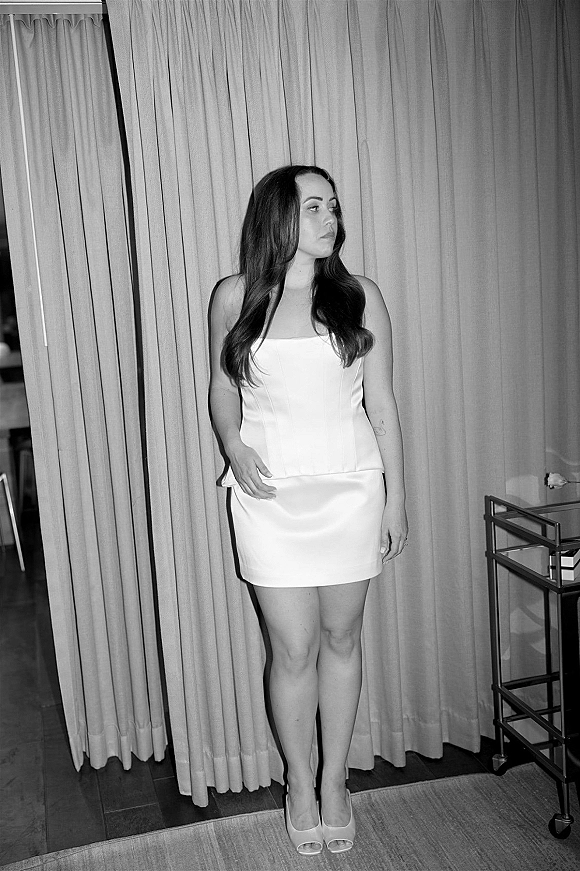
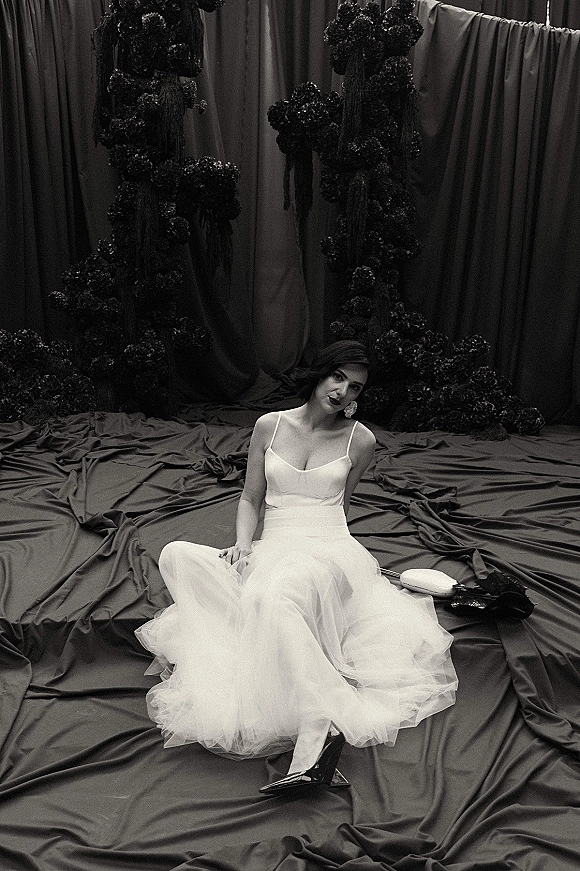
The black and white pairing lends itself naturally to separates, where a black top and a white skirt, or the reverse, build the contrast from two pieces rather than one gown. A black corset or bustier over a white ball-gown skirt is a directional, editorial look that reads as fashion as much as bridal, and it lets a bride mix textures, a structured black bodice against an airy white skirt. Separates also offer flexibility, since the pieces can be worn together for the ceremony and recombined or swapped for the reception.
A two-piece approach makes the proportion easy to control, letting a bride choose exactly how much black and white each half contributes. A cropped black top with a high-waisted white skirt draws a defined line at the waist, while a white top over a black skirt shifts the weight downward. Overskirts add another option, a detachable black tulle overskirt over a white gown creates a dramatic ceremony silhouette that lifts away for dancing. For the clean lines that suit a modern two-piece look, our minimalist wedding dress gallery shows the understated direction these separates can take.
Styling a Black and White Gown
Because the gown already carries two tones, accessories should pick one and stay there. Black shoes, a black clutch, or jet jewelry echo the darker element and sharpen the look, while keeping the veil white preserves the bridal read. A monochrome bouquet, white blooms with dark foliage or a few near-black flowers, ties the palette together without adding a third color. For a fuller-black direction, compare these with our black wedding dress looks, and for a warmer neutral pairing see the ivory wedding dress collection. A streamlined silhouette suits the graphic contrast well, like the lines in our minimalist wedding dress gallery.
Where a Black and White Dress Fits Best
The pairing suits formal and black-tie weddings most naturally, where the contrast echoes the dress code in the room. City venues, modern galleries, and classic ballrooms all flatter the sharp palette. The look also reads strongly at evening receptions, where the black detail registers against low light. To find gowns that ship with true black detailing rather than charcoal or navy, browse designers in the wedding dress directory and confirm the contrast color before ordering.
Frequently Asked Questions
Is a black and white wedding dress still bridal?
Yes. Because white remains a major part of the gown, a black and white dress keeps a clearly bridal read while adding contrast. The more white in the design and the smaller the black accent, the more traditional it appears.
Where should the black detail go on the gown?
A waist sash gives the lightest accent, a hem or trim frames the skirt, a black bodice creates a bold color-blocked break, and black lace over ivory softens the contrast into texture. Placement determines how dramatic the gown reads.
What accessories suit a black and white wedding dress?
Pick one tone and stay with it: black shoes and jet jewelry sharpen the look, while a white veil keeps it bridal. A monochrome bouquet of white blooms with dark foliage ties the two tones together without introducing a third color.
What is the difference between a black and white and an all-black gown?
An all-black gown reads gothic or high-drama, while a black and white gown stays anchored in bridal tradition through its white element. The two-tone version is about contrast and accent rather than committing to a single dark field.
What kind of wedding suits a black and white dress?
Formal and black-tie weddings suit the palette best, along with city venues, modern galleries, and evening receptions where the contrast registers against the setting and the room’s dress code.