What Defines a Black Wedding Dress
A black wedding dress is any bridal gown where black is the dominant color rather than an accent, worn by the bride herself. Black photographs as a true neutral, which means the gown’s impact comes almost entirely from fabric and cut: a structured duchess satin reads formal and architectural, while flowing chiffon or sheer lace reads soft and ethereal. Because the eye isn’t distracted by color variation, construction details like boning, seaming, and beadwork show more clearly on black than on white, making silhouette the most important decision you make.
Black Wedding Dress Silhouettes
Silhouette carries a black gown further than any other choice. A ball gown turns black into pure theater, the wide skirt reading as a deep shadow against any backdrop. A mermaid or fit-and-flare cut keeps black close to the body through the hip before releasing into a flared hem, the most figure-conscious way to wear the color. A sheath or column in matte crepe gives a sleek, modern line that suits a courthouse ceremony or a city reception. An A-line softens the whole proposition, offering black to brides who want the color without the full gothic weight. Strapless and corset bodices are common on black gowns because the structure they require photographs beautifully in a solid shade.
Fabrics That Carry Black Best
Fabric decides whether a black gown reads moody or luminous. Duchess and mikado satin hold structure and throw a crisp highlight, ideal for ball gowns and architectural bodices. Charmeuse and crepe drape closer to the body with a quieter sheen, suiting sheaths and slip silhouettes. Black lace, whether Chantilly for a fine floral net or guipure for a heavier raised pattern, is the most popular choice for sleeves and overlays because it adds romance and lets skin show through. Tulle builds volume in skirts and veils without weight, and velvet brings a cold-weather richness that absorbs light entirely. Many gowns combine two, a satin base under a lace overlay being the classic pairing.
Gothic and Victorian Black Wedding Dresses
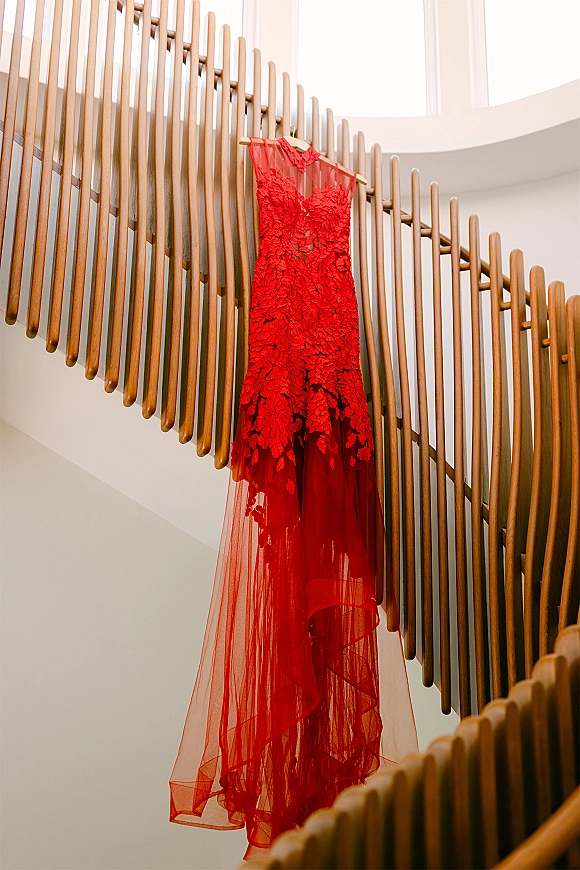
The gothic and Victorian direction is the most searched expression of the black gown, built around high necklines, long fitted sleeves, corseted bodices, and dramatic trains or capes. A Victorian-inspired gown leans on structure: a boned bodice, a high collar, leg-of-mutton or bishop sleeves, and lace worked over the shoulders and throat. The gothic version pushes toward the theatrical with sheer paneling, sweeping cathedral trains, and detachable capes that transform the look between ceremony and reception. Both suit candlelit indoor venues, historic estates, and autumn or winter celebrations where the deep tone matches the setting. For a related dark-romantic palette, see our black and red wedding dress collection.
Black and Gold Wedding Dresses
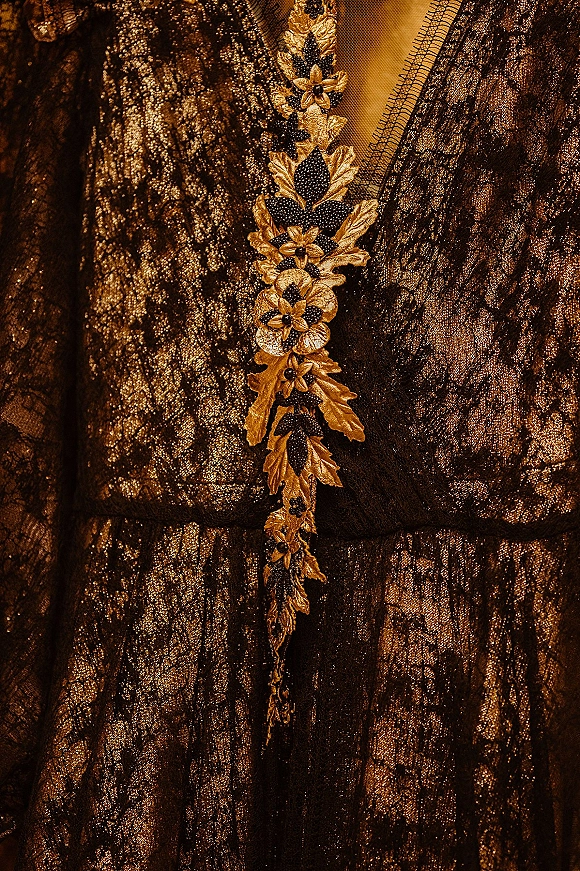
Pairing black with gold is the warmest way to wear the color. Gold appears as metallic embroidery, beaded appliqué, sequin work, or a brushed lamé underlay glowing beneath black lace. The combination keeps the drama of black while adding light and movement, which helps the gown read as celebratory rather than somber. Gold thread traced along a bodice or hem also defines the silhouette, drawing the eye along the gown’s lines. This pairing works especially well for evening receptions and black-tie weddings where metallic accents echo the setting.
Necklines, Sleeves, and Backs on a Black Gown
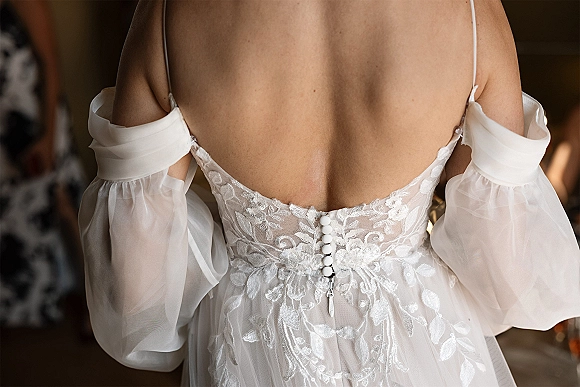
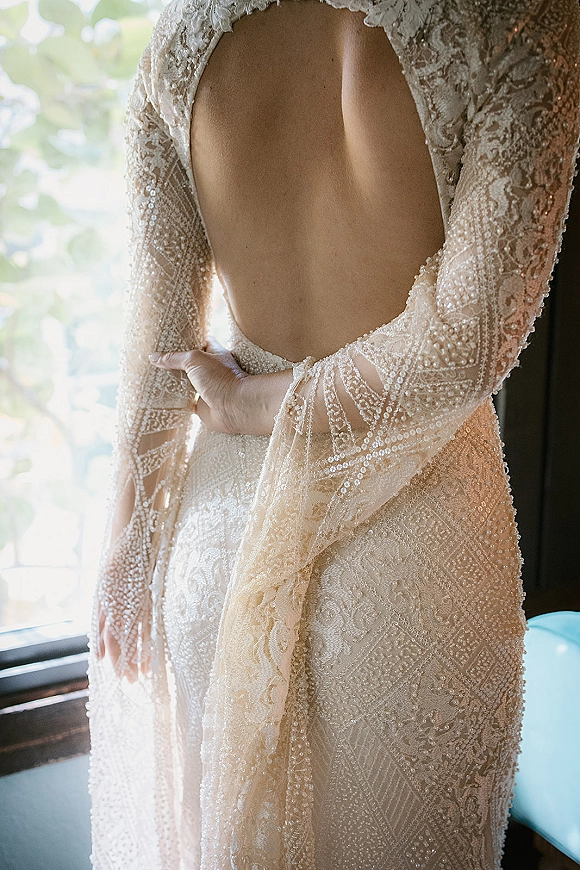
Because black shows every line of construction, the neckline and sleeves carry extra weight on a black gown. A sweetheart or strapless neckline keeps the look clean and lets a structured bodice do the work, while a high or illusion neckline in black lace leans gothic and Victorian. Off-the-shoulder and bardot necklines frame the collarbone and soften the gown’s severity. For sleeves, long fitted or bishop sleeves in black lace are the signature of the dark-romantic gown, sheer enough to show skin while adding coverage and shape, and detachable sleeves give flexibility between ceremony and reception. A boned or corset bodice is common because black renders its structure cleanly, holding shape through a strapless or low-back cut.
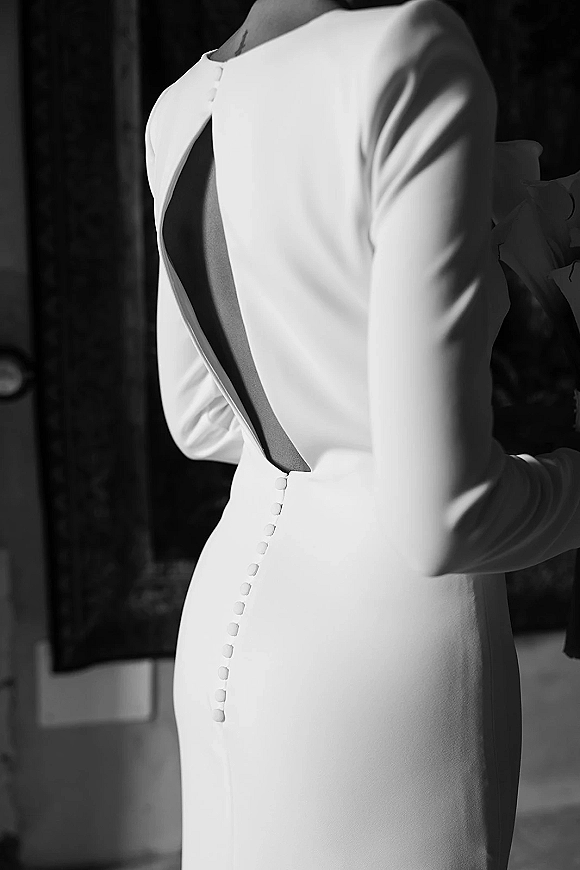
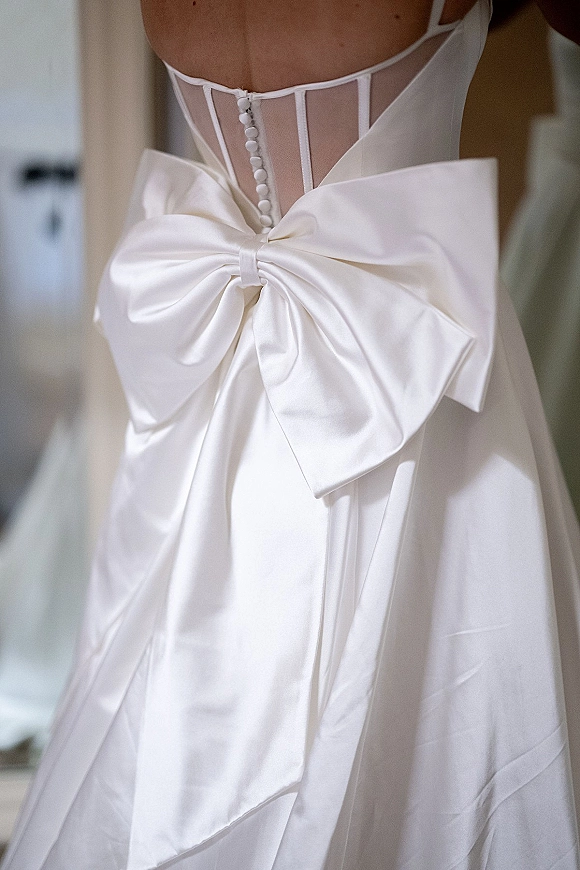
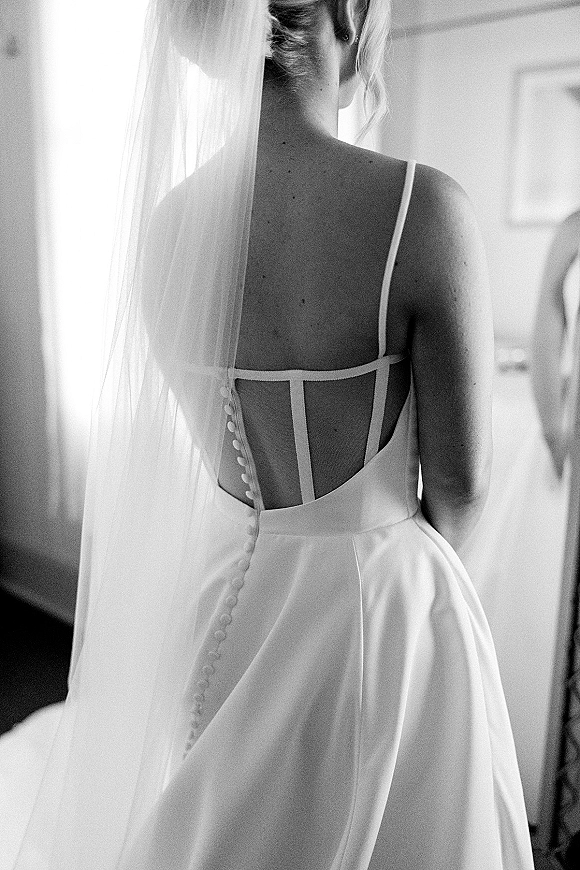
The back of a black gown deserves equal attention, since it is what guests watch during the ceremony. A low V or scoop back, a lace-up corset closure, or a sheer illusion panel scattered with covered buttons all read with high impact in a solid dark shade. A sweeping chapel or cathedral train extends the drama, the black fabric pooling like a shadow behind the gown as it moves.
Modern and Minimal Black Gowns
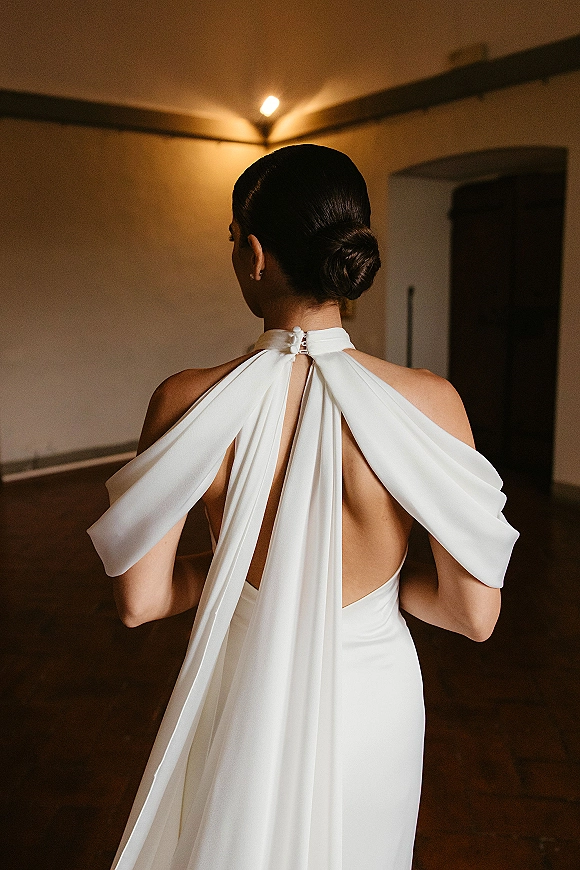
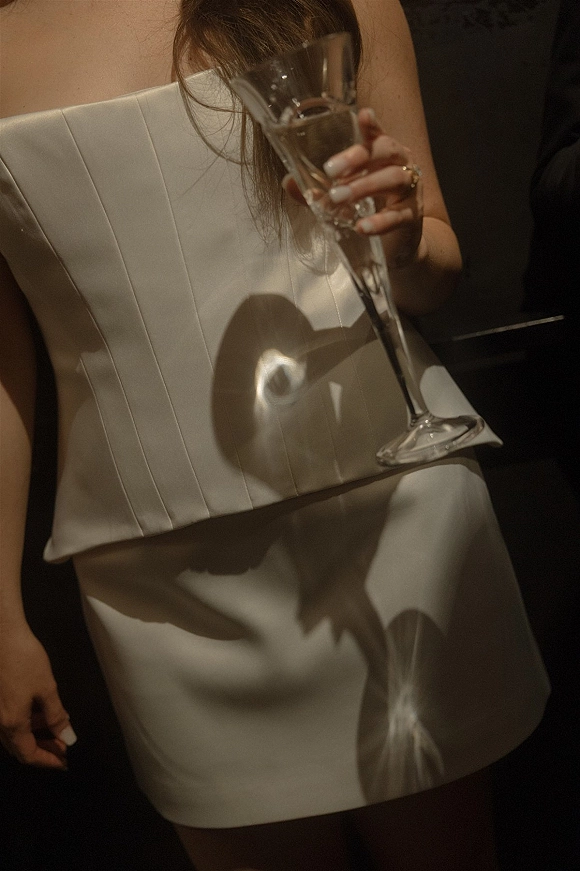
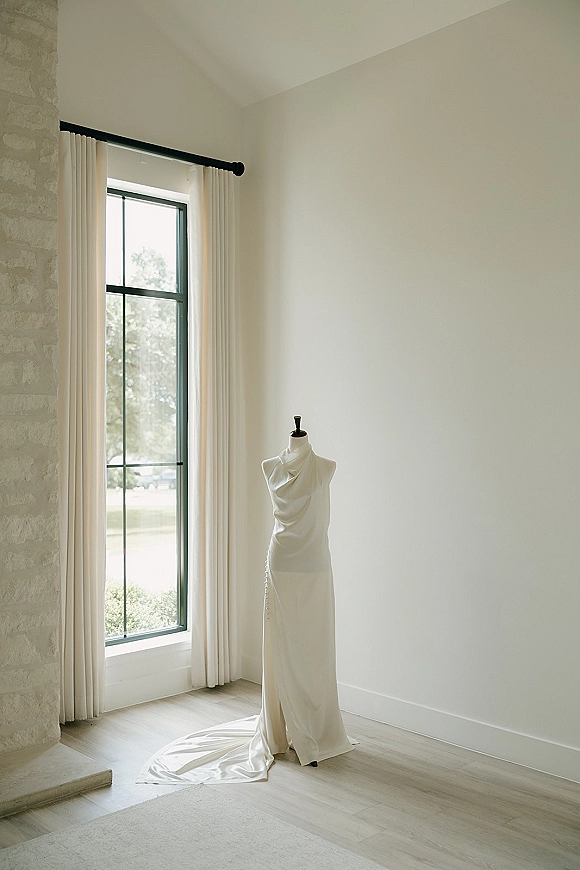
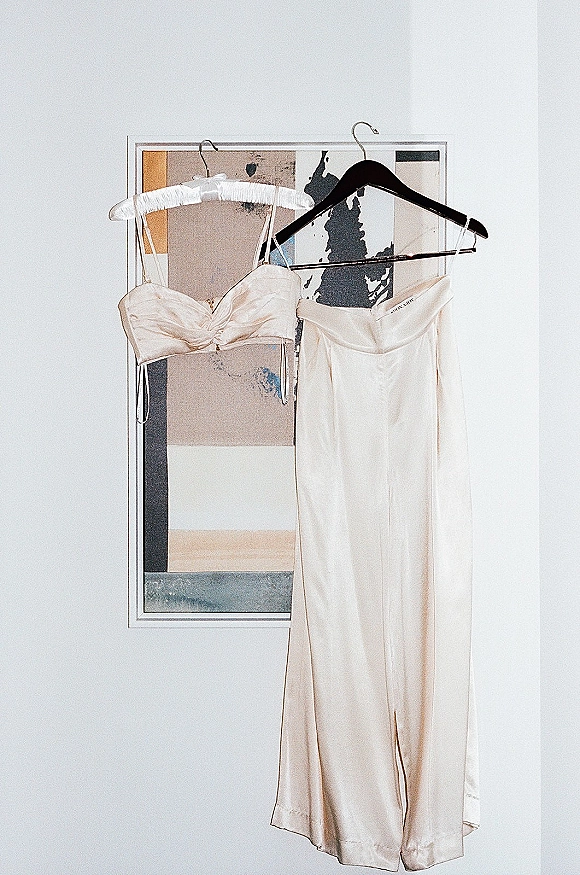
Not every black wedding dress reads gothic. Many brides choose black for a sleek, minimal, fashion-forward look rather than a dark-romantic one. A matte crepe column with a clean bateau or halter neckline reads architectural and modern, the kind of gown suited to a city-hall ceremony or a contemporary gallery reception. A black slip dress in silk charmeuse stays understated and chic, letting the cut and the fabric’s liquid drape carry the look without ornament. Two-piece sets, a black bodice with a separate skirt, give a directional, editorial feel. These pared-back gowns show that black can read as quiet sophistication as readily as high drama, the result decided entirely by silhouette and styling.
Shades and Finishes of Black
Black is not a single shade in bridal fabric, and recognizing the variations helps you choose a gown that reads the way you intend. A true, saturated black is the deepest and most dramatic, absorbing light so the gown reads as a clean, graphic silhouette. A soft or washed black carries a faint gray cast, gentler in daylight and less severe in close-up photographs. Onyx and jet describe a black with a cool, glossy depth, while a warmer black leans almost brown-black and sits more naturally against warm skin. Beyond the color itself, finish changes everything. A matte black in crepe or georgette reads modern and understated, a high-sheen black in satin or mikado reads formal and reflective, and a sheer black in tulle or lace reads soft and romantic.
Two gowns both labeled black can look entirely different depending on which of these you choose, which is why seeing swatches in both daylight and evening light matters before you commit. Finish also decides how black behaves with metallics and color: a matte ground mutes sparkle and keeps embellishment subtle, while a satin ground amplifies it, throwing light back from every bead and sequin. If your wedding leans formal and reflective, a satin black rewards the setting; if it leans modern and restrained, a matte crepe carries the look with less drama and more line.
Black Lace, Explained
Lace is the most common way black enters a bridal gown, and the type of lace sets the character of the whole dress. Chantilly lace is fine and delicate, a light floral net that reads romantic and soft, suited to sleeves, veils, and overlays where you want skin to show through. Guipure, sometimes called Venice lace, is heavier and corded, with raised motifs and no net ground, giving a bolder, more graphic black that holds its shape on a bodice or hem. Alencon lace adds a corded outline around its floral pattern, often beaded, for a more formal and dimensional effect. Each reads differently against the body: Chantilly whispers, guipure declares, and Alencon sits between the two.
On a black gown, lace placement guides the eye as much as the pattern does. A lace bodice over an illusion lining creates the look of florals resting directly on the skin, an effect that reads as couture and shows clearly in a dark shade. An all-over lace gown reads uniformly textured and rich, while lace concentrated at the sleeves or hem frames the silhouette. Because black renders lace patterns more sharply than white does, the choice of lace matters more on a black gown than on any other color, and matching the weight of the lace to the formality of the wedding keeps the gown coherent.
Black Wedding Dresses by Wedding Style
A black gown adapts to several distinct wedding aesthetics, and naming yours narrows the silhouette and fabric quickly. For a gothic or dark-romantic wedding, lean into corsetry, high necklines, long lace sleeves, and a dramatic train or cape, with deep florals and candlelight to match. For a formal black-tie wedding, a structured satin ball gown or a sleek mermaid reads as elevated evening glamour that suits the dress code in the room. For a modern city or gallery wedding, a matte crepe column or a minimal slip keeps the look architectural and current.
For a Halloween or themed celebration, black gives full license for theatrical detail, with sheer paneling, dramatic veils, and bold accessories. Even a relaxed outdoor wedding can carry black through a softer route, a flowing chiffon gown or a black-accented design rather than a heavy gothic gown. Matching the gown to the wedding’s overall aesthetic keeps black reading as a deliberate choice rather than a costume, and it guides every downstream decision from fabric to florals. For the softer, relaxed direction, our boho wedding dress looks show how dark and moody tones can still read airy and unstructured.
Veils, Capes, and Cover-Ups for Black
The layer you add over a black gown shapes its drama as much as the gown itself. A black veil is the boldest choice, deepening the gothic effect and reading as fully intentional, while a white or ivory veil against a black gown creates a sharp contrast that keeps the look anchored in bridal tradition. A sheer black cape or capelet attached at the shoulders adds movement and ceremony without the weight of sleeves, and it photographs beautifully trailing behind the gown. Detachable trains let a bride shift from a dramatic ceremony silhouette to a sleeker reception look in moments.
For cooler weather, a structured black coat, a faux-fur stole, or a long lace duster gives warmth while extending the gown’s mood rather than interrupting it. Gloves, short or opera-length in black lace or satin, lean vintage and add polish. Each of these elements gives a black gown flexibility across the day and the seasons, letting one dress read several ways from ceremony to reception. Because black is already the statement, these layers work best when they continue the gown’s line and finish rather than introducing a competing texture or tone.
Choosing Black for Your Coloring
Black flatters a wide range of complexions, and small adjustments help it sit best against your skin and hair. Against fair skin, a true black creates a high-contrast, striking effect, and softening the neckline with sheer black lace or an off-the-shoulder cut keeps it from reading severe. Warm and olive complexions tend to glow against a slightly warm black or a black softened with gold detailing, which echoes the skin’s undertone. Deep skin tones carry rich, saturated black beautifully, with metallic or jewel-toned accents adding luminous contrast.
Hair color plays a part as well. Dark hair against a black gown reads sleek and monochrome, while lighter hair stands out dramatically against the dark fabric, an effect some brides amplify and others soften with a veil. The aim is balance: the neckline, the finish, and the accessories should frame the face rather than let the gown overwhelm it. Trying a black gown in natural daylight reveals quickly whether a true, warm, or softened black flatters you most, since the same dress can read differently on different complexions.
Black as a Reception or Second Look
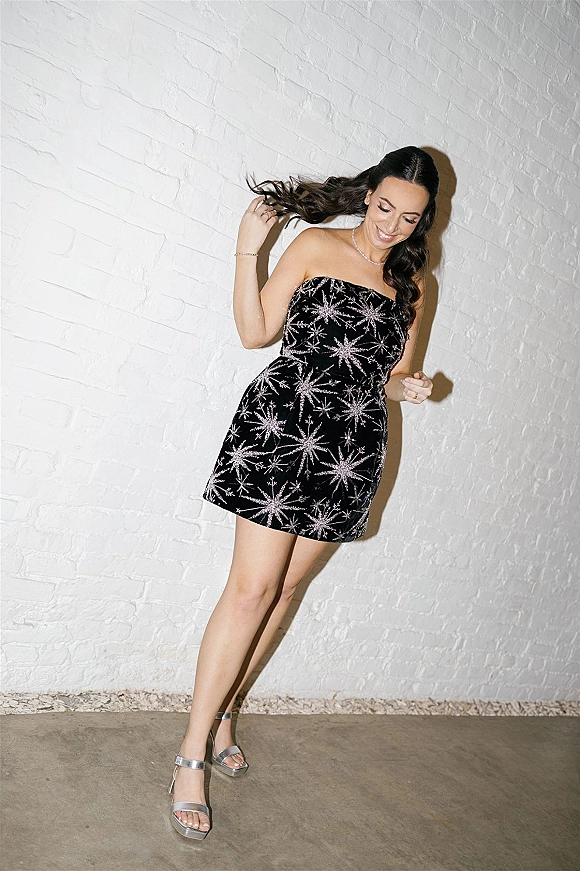
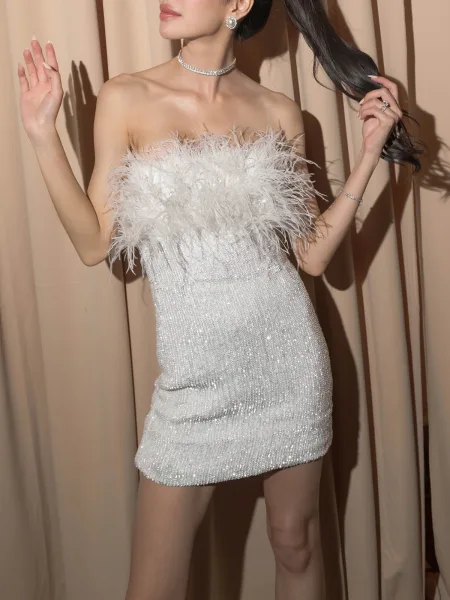
Black also works beautifully as a second look, worn for the reception after a traditional white ceremony gown. A black cocktail-length dress, a sleek black slip, or a fitted black gown gives a bride a dramatic change of mood for dancing and celebration, and the shift from white to black reads as a deliberate style statement. This route appeals to brides drawn to black who also want a classic white moment, letting them have both across a single day. A shorter black reception dress also carries practical advantages, hiding the wear of a long evening and freeing the bride to move and dance. Paired with statement shoes or bold jewelry, a black reception look becomes its own fashion moment, and whether worn as the main gown or a second look, black gives a wedding day a versatility few other colors offer.
Black Wedding Dress Trains and Hemlines
Length and train carry extra weight on a black gown because the dark fabric reads as a continuous, sculptural shape. A sweeping chapel or cathedral train in black satin or tulle pools behind the gown like a shadow, the most dramatic option and a natural fit for a formal or gothic wedding. A court or sweep train keeps the drama manageable for a venue with less space, while a floor-length hem with no train suits a modern or city celebration where movement matters. The deeper the black and the glossier the finish, the more a long train reads as pure theater.
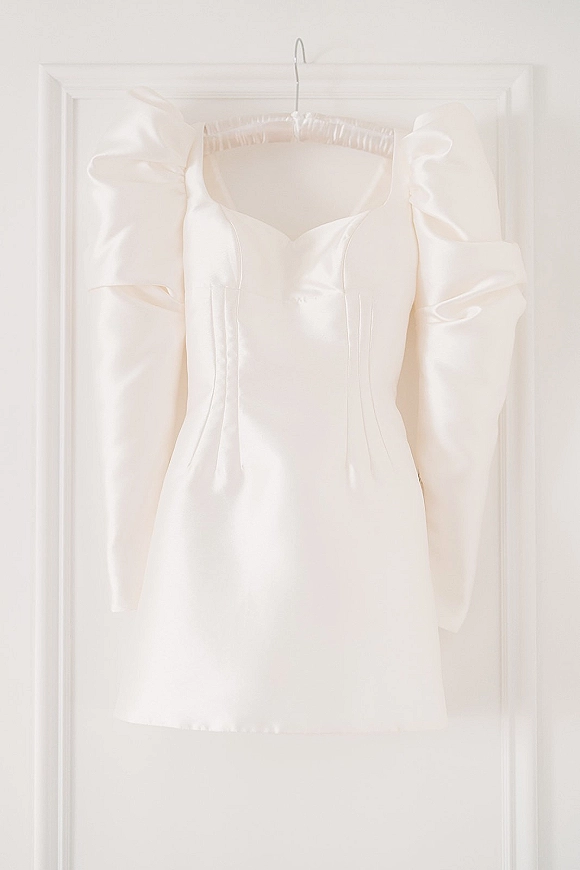
Shorter lengths shift black toward the playful and the modern. A tea-length or midi black dress reads vintage and fashion-forward, suited to a relaxed or retro celebration, while a mini or cocktail-length black gown works beautifully as a reception look or a courthouse choice. A high-low hem reveals the legs in front while keeping drama at the back. Because black defines a silhouette so clearly, the hemline is a strong design statement in its own right, and matching the length to the formality and the venue keeps the gown reading as intentional rather than incidental.
The Meaning and History of Black Bridal Gowns
Black has a longer place in wedding history than its modern, edgy reputation suggests. For most of history brides simply wore their best dress in whatever color they owned, and dark gowns including black were common and practical choices well before white became the western default in the nineteenth century. In some European traditions black was even a formal bridal color, worn for its richness and its association with constancy and devotion. The all-white wedding gown is a relatively recent convention, which means a black gown is in some sense a return to older freedom rather than a break from tradition.
Today black reads as a deliberate statement of individuality, elegance, and confidence, and many couples find personal meaning in it: a symbol of enduring commitment, a reflection of personal style, or simply a love of the color’s drama. Understanding that black carries history as well as fashion can make the choice feel grounded rather than merely contrarian. For a bride drawn to the color, knowing that black gowns have appeared at weddings across centuries and cultures reframes the decision as one with real precedent behind it.
Styling a Black Wedding Dress
Black gives you two clear styling routes. Lean into the contrast with ivory or white accessories, a pale bouquet, nude or metallic shoes, and a sheer veil, letting the gown stand alone as the statement. Or commit fully with black-on-black: a black veil, dark florals like deep red or burgundy blooms, and jet or onyx jewelry. Hair and makeup read strongly against black, so a defined lip or a sleek updo balances the gown’s weight. For brides pairing black with a contrasting bodice or skirt panel, our black and white wedding dress looks show how the two-tone version reads. Browse coordinating designers in the wedding dress directory to find gowns that ship in true black rather than charcoal.
Black and the Wedding Party
A black bridal gown sets a palette that the wedding party can echo or contrast. Bridesmaids in black create a sleek, unified look that lets a black bride blend into an elegant whole or stand apart through silhouette and detail rather than color. For contrast, dressing the party in deep jewel tones, gray, or white frames a black gown and keeps the bride distinct. Groom and groomsmen in classic black-tie sit naturally alongside a black gown, the whole party reading as a coordinated, formal scene.
The florals and details follow the same logic, with deep or moody blooms reinforcing the drama and pale flowers providing relief against the dark gown. A black gown gives the wedding a strong visual identity, so carrying the tone through the party and the details ties the day together. Planning how the party relates to the gown, whether matching it, framing it, or contrasting it, ensures the black dress reads as the deliberate center of a cohesive aesthetic rather than an isolated choice against a mismatched backdrop.
Choosing Black for Your Venue and Season
Black suits some settings more naturally than others. Indoor venues with controlled lighting, historic ballrooms, libraries, industrial lofts, and candlelit halls flatter the color and keep it from flattening in harsh sun. Outdoor evening ceremonies and cooler-weather weddings give black its strongest context, the deep tone reading intentional against autumn foliage or a winter landscape. In bright midday sun a matte black can appear heavy, so brides marrying outdoors in full light often choose a gown with sheer panels, lace, or metallic detail to break up the solid field. A structured silhouette also benefits from a gown with sleeves or coverage; for that route see our dramatic color pairings and the silhouette-focused designs in our directory.
Frequently Asked Questions
Is it acceptable to wear a black wedding dress?
Yes. Brides wore colored gowns including black for most of history, and white only became the default in the nineteenth century. A black wedding dress is a personal style choice with no rule against it, and it has become a recognized option offered by most major bridal designers.
What does a black wedding dress symbolize?
Black is associated with elegance, formality, individuality, and a sense of drama. Some couples read it as a symbol of devotion and constancy, while many brides simply choose it because it suits their personal style and venue rather than for any fixed meaning.
What silhouette works best for a black wedding dress?
Ball gowns maximize drama, mermaid and fit-and-flare cuts are the most figure-conscious, and a matte crepe sheath gives the sleekest modern line. Because black shows construction clearly, choose a silhouette with seaming or structure you want to highlight.
What accessories go with a black wedding dress?
For contrast, pair black with ivory or metallic shoes, a sheer veil, and a pale bouquet. For an all-dark look, use a black veil, deep-toned florals, and onyx or jet jewelry. A defined lip and sleek hair balance the gown’s visual weight.
What fabric is best for a black wedding dress?
Duchess and mikado satin hold structure and catch light for ball gowns; crepe and charmeuse drape softly for sheaths; black lace adds romance to sleeves and overlays; and velvet suits cold-weather weddings. Many gowns layer a lace overlay over a satin base.
How much does a black wedding dress cost?
Pricing varies by designer, fabric, construction, and where the gown is purchased, the same range you would find for any bridal gown. Custom work and heavy beading or lace add to the cost, while simpler crepe silhouettes sit at the lower end.