What Color Is Champagne, Exactly
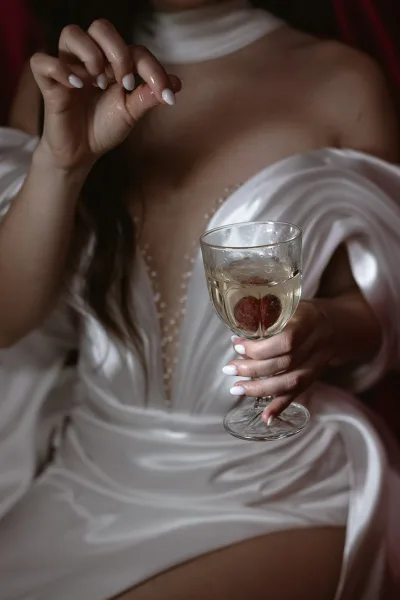
Champagne is a warm off-white that blends ivory with a hint of gold, sitting close to a pale beige or soft tan. It reads more obviously non-white than ivory does, with a golden warmth that catches light rather than staying flat. That warmth is its defining quality: where pure white is crisp and cool, champagne is soft and luminous, giving the bridal look a richer, more relaxed elegance. The exact tone varies by fabric, since a satin champagne glows while a matte crepe champagne reads closer to a warm neutral.
Why Champagne Flatters So Many Brides
Champagne’s gold undertone makes it one of the most universally flattering bridal shades, particularly for warm, golden, and olive complexions that pure white can wash out. The warmth reflects onto the skin and softens the overall look, reading as elegant rather than severe. For deeper skin tones champagne provides a gentle contrast without the harsh edge of bright white, and for fair brides it adds a glow that stark white lacks. This broad flattery is a major reason brides choose champagne over white or even ivory.
Sequined and Beaded Champagne Gowns
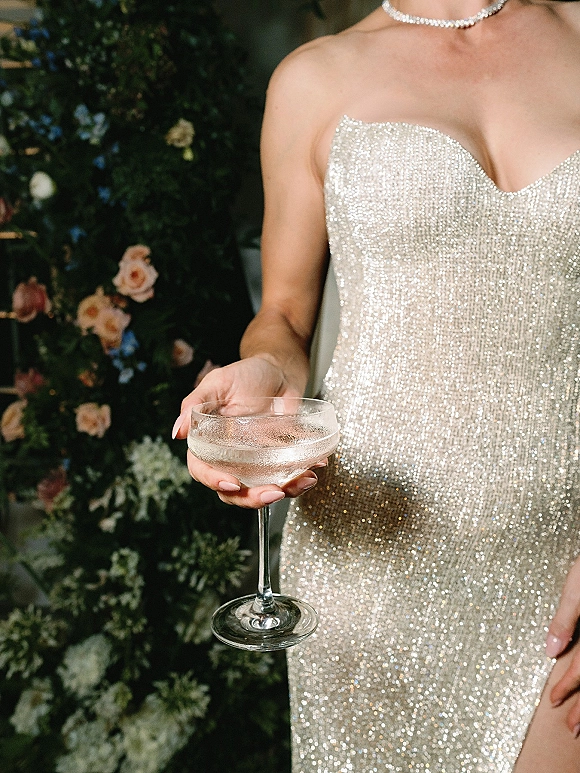
Champagne is the natural base for sparkle. A champagne ground makes gold sequins, beading, and metallic embroidery read as a unified glow rather than a contrast, so a fully sequined champagne gown shimmers as a single warm surface. Iridescent taffeta and embroidered tulle create that sheen without heavy sparkle, for brides who want shine in moderation. The shade also suits all-over glitter tulle and beaded bodices, where the champagne tone keeps the embellishment from reading as costume. This makes champagne a favorite for glamorous evening and black-tie weddings.
Champagne and Gold Wedding Dresses
Because champagne already carries a gold undertone, pairing it with true gold detailing is seamless. Gold lace, metallic thread, and beaded appliqué sit naturally against a champagne base, deepening the warmth rather than contrasting with it. This pairing reads as one of the most luxurious in bridal, ideal for formal evening celebrations where metallic accents echo the setting. For a gown where gold leads rather than supports, see our gold wedding dress collection, and for the cooler neutral alternative compare the ivory wedding dress looks.
Fabrics and Silhouettes for Champagne
Fabric decides how much champagne glows. Satin and mikado reflect light and show the gold undertone most clearly, suiting structured ball gowns and sleek sheaths. Crepe and chiffon read softer and more neutral, draping champagne into fluid lines. Lace over a champagne lining warms the pattern and adds romance. For silhouette, a sleek column or sheath gives champagne a modern, understated elegance, a ball gown turns it opulent, and a fit-and-flare balances shape with movement. Compare how designers render the shade across fabrics in the wedding dress directory.
Necklines and Details That Suit Champagne
Champagne’s warm glow flatters detailing that plays with light. A sweetheart or V-neckline reads classic against the soft tone, while an illusion neckline in champagne lace adds romance without contrast. Because the shade carries gold so naturally, metallic embroidery, beaded bodices, and sequin detail all sit harmoniously rather than competing, making champagne the ideal base for glamour. A plunging back or low-cut detail catches the warm sheen of a satin champagne beautifully. For brides wanting a quieter look, a smooth champagne crepe with minimal ornament lets the color’s warmth speak on its own. The shade suits both heavily embellished gowns and clean, modern silhouettes equally well, which is part of its versatility.
Champagne for Your Setting
Champagne suits a wide range of weddings because its warmth reads as elegant rather than loud. It shines at formal and black-tie evening receptions, where its glow and natural affinity for sequins and beading make it a glamorous alternative to white. It also suits vintage, garden, and outdoor weddings, the soft beige-gold harmonizing with natural light and warm palettes rather than contrasting against them. Because champagne photographs with a relaxed, luminous quality, it flatters candlelit and golden-hour settings in particular. The shade reads more obviously colored than ivory, so it suits brides who want a clear step away from white while keeping the overall look soft and refined.
One practical note sets champagne apart: because its warmth varies by fabric and dye lot, the undertone can shift from a cool, pale champagne to a deep, golden one. Seeing the gown in your venue’s actual light matters more with champagne than with white, since a warm champagne that glows under candlelight can read closer to beige in bright sun. Bringing a fabric swatch into both daylight and evening light before deciding helps you choose the depth that will hold its warmth throughout your day, from an outdoor ceremony to an indoor reception.
Champagne Next to Nude, Blush, and Gold
Champagne sits within a family of warm neutrals, and seeing how it differs from its neighbors helps you choose the exact shade. Against nude and beige, champagne reads slightly more golden and luminous, with a sheen those flatter tones lack. Against blush, champagne is warmer and more gold where blush leans pink and rosy, so the two read as warm cousins pulling in different directions. Against true gold, champagne is softer and more wearable, a metallic-adjacent neutral rather than a full metallic shine.
This places champagne as the middle ground between a classic neutral and a colored gown: clearly a step away from white, but soft enough to read elegant rather than bold. For brides deciding among these warm shades, the question is how much gold and how much shine they want, since champagne offers more warmth than nude and more subtlety than gold. Seeing swatches of all three together in daylight clarifies the choice quickly, because the differences that look small on a screen read clearly against the skin.
Champagne by Wedding Style
Champagne suits several wedding aesthetics through its warm, relaxed elegance. For a formal or black-tie wedding, a champagne gown with sequins or beading reads as glamorous and luminous, a softer alternative to white at an evening reception. For a vintage or fine-art celebration, champagne’s antique warmth suits lace and heirloom detailing. For a garden or outdoor wedding, a soft champagne harmonizes with natural light and warm palettes rather than contrasting against them.
For a destination or beach wedding, a lightweight champagne in chiffon or crepe reads relaxed and golden in sunlight, while a winter wedding suits a richer, more embellished champagne that glows in candlelight. The shade rarely suits a stark, ultra-modern aesthetic as cleanly as crisp white, since its warmth leans soft rather than sharp, though a clean champagne crepe sheath can bridge that gap. Matching the depth and embellishment of champagne to the wedding’s mood keeps the gown reading as a considered, cohesive choice.
Champagne in Your Wedding Palette
A champagne gown sets a warm, luminous tone the wider wedding can build around. A palette of champagne, ivory, blush, and gold reads soft and cohesive, suited to a romantic or glamorous celebration, while greenery adds a fresh contrast that keeps the warmth from reading heavy. Bridesmaids in champagne, blush, or muted neutrals continue the gown’s glow, and metallic gold accents through the details reinforce its richness.
For more contrast, champagne pairs beautifully with deeper tones like burgundy, emerald, or navy, which ground its warmth and add depth to an evening palette. Table linens in cream or champagne with gold flatware build an elegant, warm scene, and candlelight flatters the shade more than any other lighting. Planning the champagne into the palette from the start ensures the gown reads as the centerpiece of a warm, considered aesthetic rather than a neutral choice set against an unrelated background.
Champagne Trains, Hems, and Length
Length shapes how formal or how relaxed a champagne gown reads. A flowing floor-length gown with a soft train suits champagne’s elegant warmth, the color catching light as it trails, and a sweep or chapel train adds formality for an evening wedding. A clean floor length keeps a sleek champagne sheath modern, while rich fabrics like satin and beaded tulle carry a long train with a luminous glow. The more embellished the gown, the more a full silhouette suits the shade.
Shorter lengths bring out a lighter side of champagne. A tea-length champagne dress reads vintage and warm, while a cocktail-length beaded gown makes a glamorous reception look. A high-low hem adds movement for an outdoor or destination setting. Because champagne reads as elegant warmth, the hemline lets a bride decide whether to lean formal and luminous with length and embellishment or to keep the look light and relaxed with a shorter, simpler silhouette.
Champagne in Photographs and Light
Champagne is among the most light-responsive bridal shades, which is both its strength and a consideration. In candlelight and at golden hour, champagne glows warmly and reads luminous, its gold undertone coming alive, which makes it a beautiful choice for evening and indoor receptions. In bright, cool daylight, a warm champagne can read closer to beige or even appear darker against the palest skin, so seeing the shade in your venue’s light matters more than with a true white.
Embellishment changes how champagne photographs as well, since sequins and beading on a champagne base catch and scatter light, reading as a shifting glow rather than a flat color. A matte champagne reads as a soft, steady warm neutral. Because the shade varies with light more than white does, brides often view a champagne gown at the time of day they plan to marry, confirming the warmth reads as intended. Matching the depth of champagne to the expected light keeps the gown reading as the luminous shade it is meant to be.
Champagne for Your Coloring and Second Looks
Champagne’s gold undertone makes it one of the most flattering bridal shades, especially for warm, golden, and olive complexions that pure white can wash out. The warmth reflects onto the skin and softens the overall look, lending fair brides a glow and giving deeper skin tones a gentle contrast without the harsh edge of bright white. The right depth of champagne varies by coloring, so a paler champagne suits cooler skin while a deeper, more golden champagne flatters warm tones, and seeing the shade against your skin in daylight is the surest guide.
Champagne also makes a refined second look, worn for the reception after a white ceremony gown. A sequined or beaded champagne reception dress reads as glamorous evening shine, letting a bride shift from a traditional ceremony to a celebratory party look. Because champagne reads as warm elegance rather than a bold color, the change feels sophisticated rather than dramatic. Whether as the main gown or a reception change, champagne gives a bride a luminous, warm alternative to white that flatters across the day from a daylight ceremony to a candlelit evening.
Champagne and the Wedding Party
Champagne is a popular wedding-party color as well as a bridal one, which gives it a natural cohesion across the day. Bridesmaids in champagne, with its warm, flattering glow, suit a wide range of complexions and read elegant beside a champagne or ivory bridal gown. To keep the bride distinct in a tonal scheme, varying the silhouette, the embellishment, or the depth of champagne sets her gown apart while keeping the party unified.
For contrast, dressing the party in deeper tones like burgundy, navy, or emerald frames a champagne bridal gown and lets its glow stand out, while neutral palettes of taupe, blush, and champagne keep the whole scene soft and warm. Groom and groomsmen in classic black or navy sit naturally alongside champagne’s warmth. Carrying the champagne tone through the party, the florals, and the details ties the day together, so the gown reads as the centerpiece of a warm, cohesive aesthetic rather than an isolated choice set against an unrelated background.
Styling a Champagne Wedding Dress
Champagne pairs best with warm-toned accents that echo its gold. Gold and rose-gold jewelry, metallic shoes, and warm-hued florals like blush, peach, and ivory roses keep the palette cohesive and luminous. Greenery adds a fresh contrast without cooling the warmth. A softer makeup palette suits the gown’s gentle glow. For brides comparing champagne with its lighter neighbor, our blush wedding dress collection shows the pink-leaning alternative, both warm but in different directions.
Frequently Asked Questions
What color is a champagne wedding dress?
Champagne is a warm off-white blending ivory with a hint of gold, close to a pale beige or soft tan. It reads more obviously non-white than ivory, with a golden warmth that catches light and glows rather than staying flat.
What is the difference between champagne and ivory?
Ivory is a soft white with a slight yellow undertone but still reads as a white, while champagne is a step warmer and more golden, reading clearly as a soft beige-gold. Champagne glows under light where ivory stays closer to a true white.
Who does champagne suit best?
Champagne is widely flattering, especially for warm, golden, and olive skin tones that pure white can wash out. Its gold undertone reflects onto the skin and softens the look, and it gives fair brides a glow and deeper tones a gentle contrast.
Is champagne a good color for a sparkly wedding dress?
Yes. A champagne base makes gold sequins, beading, and metallic embroidery read as a unified glow rather than a contrast, so sequined and beaded champagne gowns shimmer as one warm surface. This suits glamorous evening and black-tie weddings.
What accessories go with a champagne wedding dress?
Warm-toned accents suit it best: gold and rose-gold jewelry, metallic shoes, and blush, peach, or ivory florals keep the palette luminous. Greenery adds fresh contrast, and a soft makeup palette complements the gown’s gentle glow.
How much does a champagne wedding dress cost?
Pricing varies by designer, fabric, and the amount of beading or sequin work, the same range as any bridal gown. Heavily sequined or beaded champagne gowns sit at the higher end, while simple satin or crepe styles are more modest.