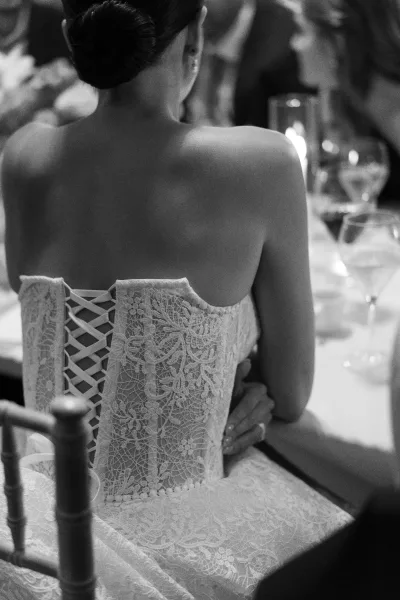
What Makes a Dress a Corset Wedding Dress
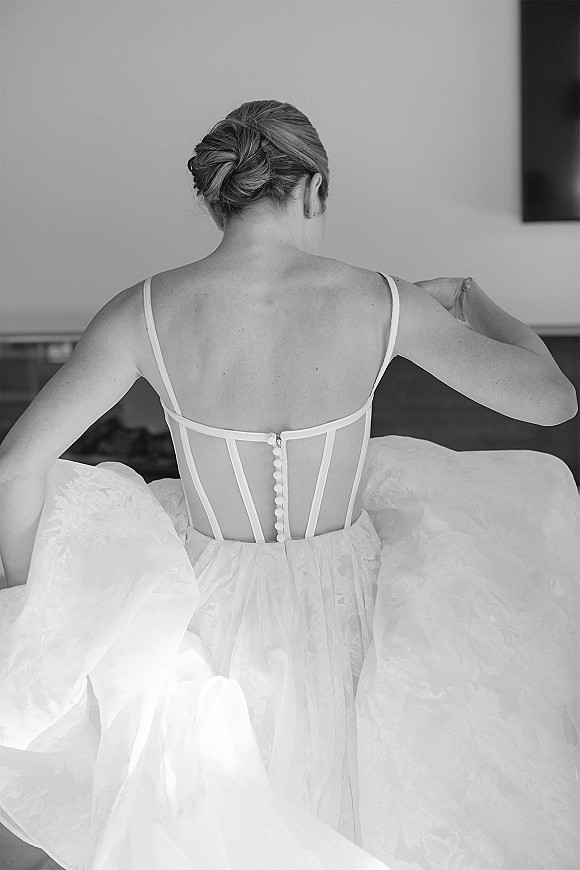
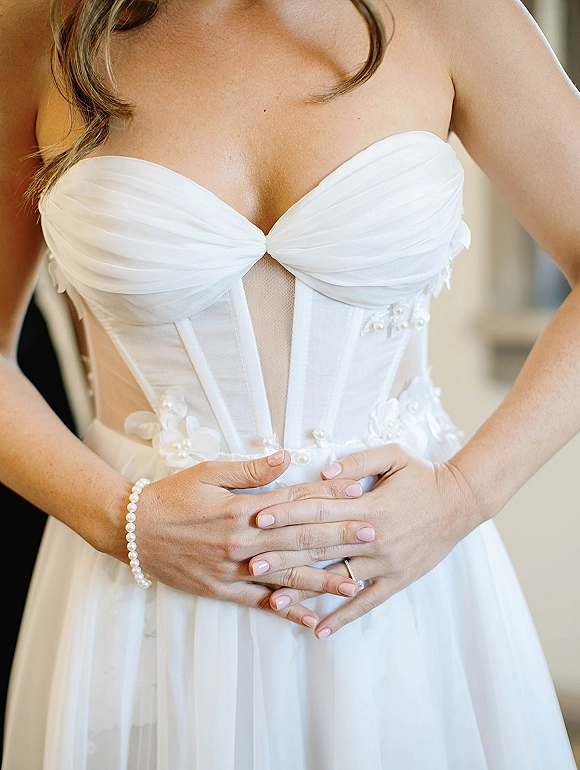
A corset wedding dress has a bodice reinforced with vertical boning channels that shape and support the torso independently of the body underneath. That internal structure is what separates a true corset from a simply fitted bodice: the boning holds the line, defines the waist, and provides support at the bust, so the gown shapes the figure rather than relying on the figure to shape it. The result is a defined waist and a smooth, sculpted upper body that reads couture.
The boning runs in channels stitched between the lining and the outer fabric, and the number and placement of those channels determine how much shaping the corset provides. A lightly boned bodice gives gentle structure, while a fully boned corset with closely spaced channels cinches and sculpts the waist firmly. Many gowns also include a waist stay, an internal band that anchors the bodice at the natural waist so it stays in place through the day.
Because the structure lives in the bodice, a corset can anchor a strapless neckline securely and support fuller skirts without straps or sleeves doing the work. This is the practical reason the style appears across so many silhouettes, from ball gown to fitted, and why brides who want support without a separate undergarment often choose it.
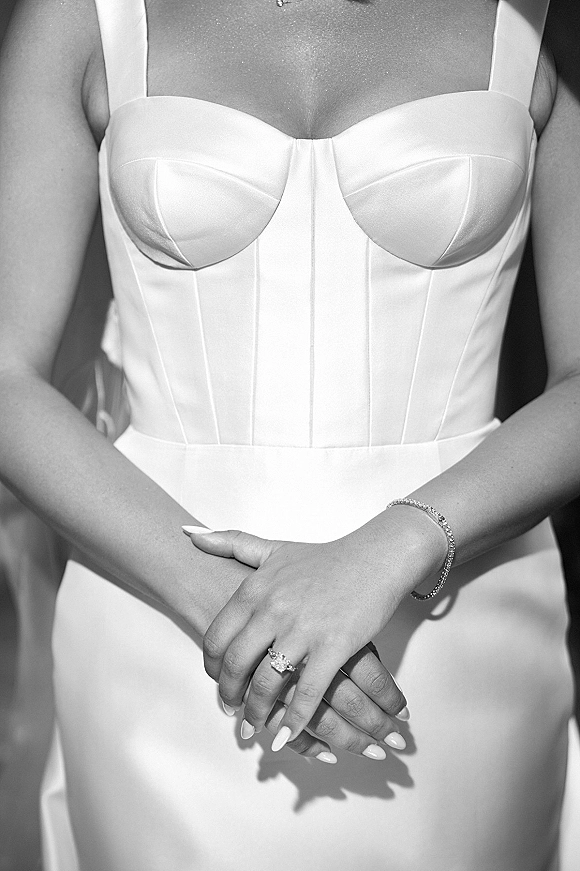
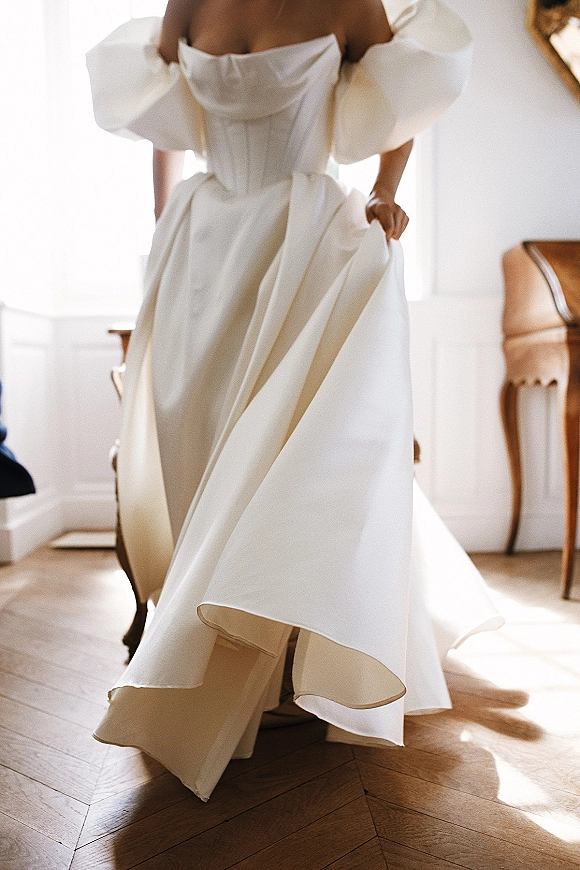
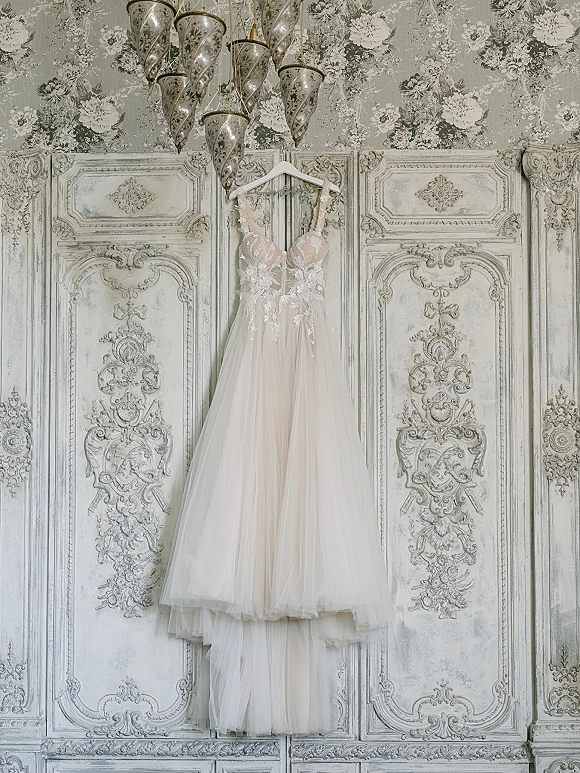
The fabric over the corset changes how structured the gown reads. A duchess satin or mikado corset holds a crisp, architectural line, while a soft tulle or lace over the boning reads more romantic even though the structure beneath is identical, which is how the same construction spans both regal ball gowns and soft, ethereal silhouettes.
A corset bodice can be built as part of the gown or as a separate boned underbodice that the outer fabric attaches to, and the second approach allows more precise shaping because the support layer is engineered independently. Either way, the boning is what holds the cinched waist and supports the bust without external straps.
Corset-Back Wedding Dresses
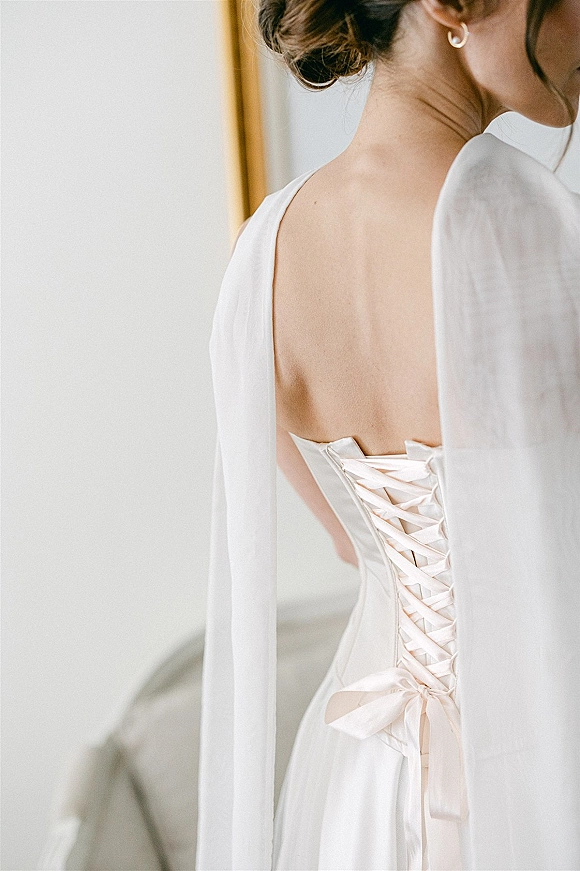
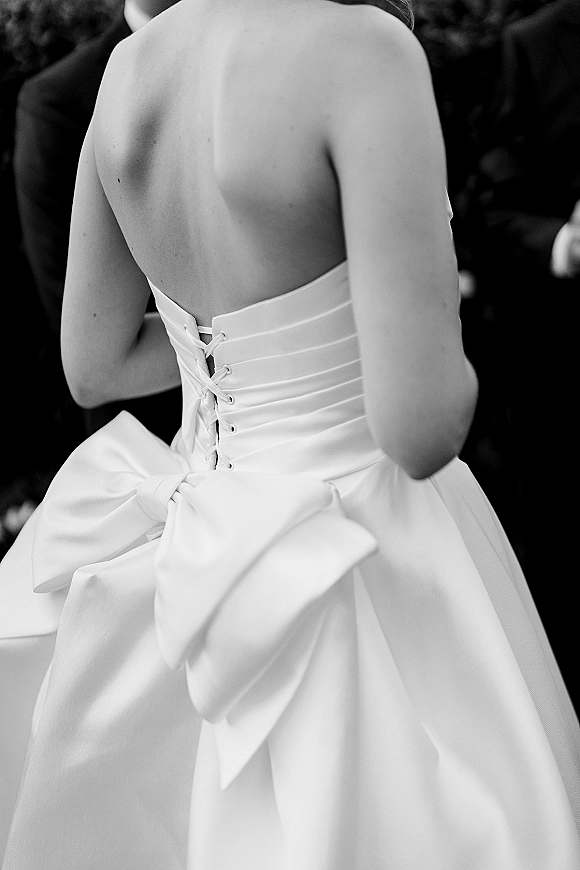
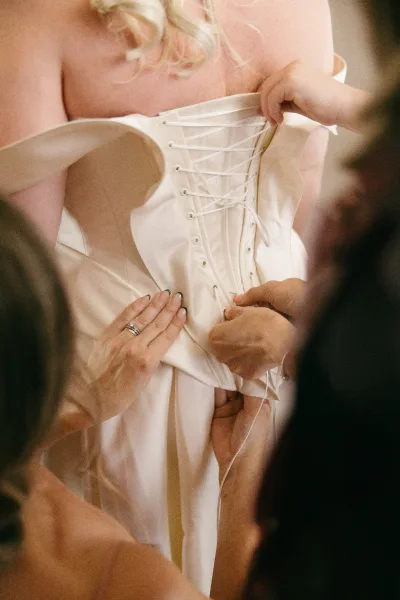
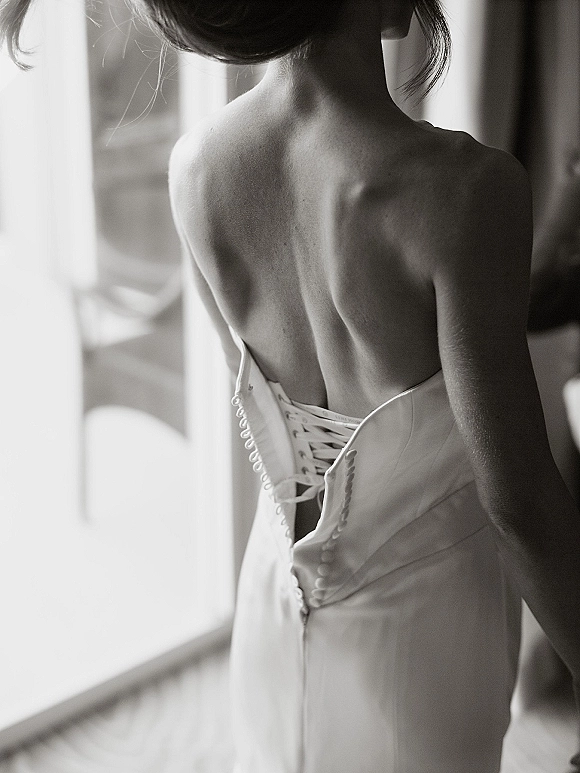
The corset back is the signature of the style and its most searched form. A lace-up back threads ribbon or cord through a row of grommets or fabric loops, then cinches to shape the waist and adjust the fit across a range of sizes. Brides choose a corset back for two reasons: the visual romance of the laced detail running down the spine, and the adjustability, which accommodates fitting changes and gives a custom hold without a fixed zipper.
Most corset-back gowns include a modesty panel behind the lacing, a strip of fabric that closes the gap so the lacing reads as a detail rather than an opening. The panel can sit flush behind the cord or extend as a wider piece for full coverage, and it is what makes a lace-up back wearable across a range of comfort levels. The lacing itself becomes a focal point during the ceremony, when the back of the gown faces guests.
A corset back pairs naturally with a fitted wedding dress for brides who want structure through the whole silhouette, and with a ball gown for the most traditional, regal version of the laced look. The closure works on nearly any skirt because it lives entirely in the bodice.
The lacing can be a functional closure that adjusts the fit, a decorative detail over a hidden zipper, or both at once, and knowing which a gown uses matters for fittings and for how quickly the bride can dress on the day. A purely functional lace-up gives the most adjustability, while a decorative version over a zipper offers the look with faster dressing.
Lace Corset Bodices
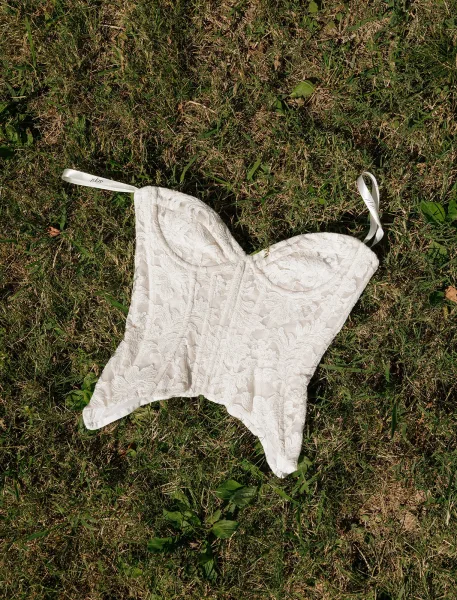
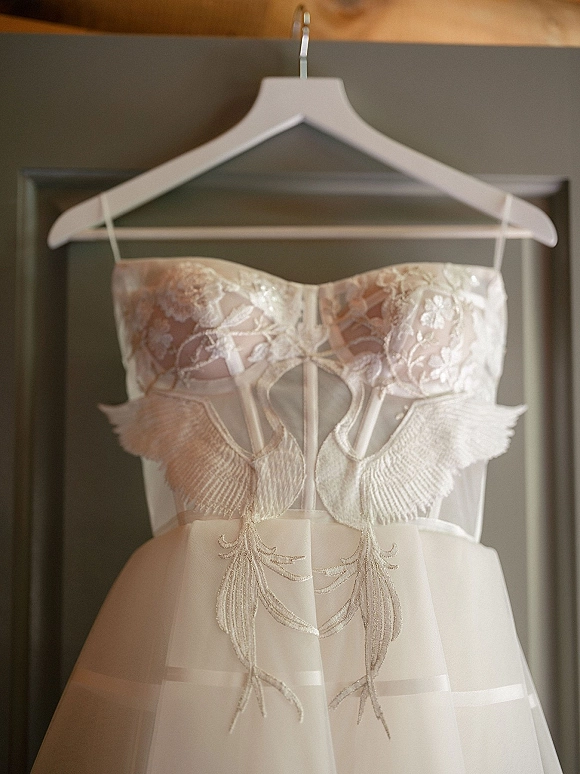
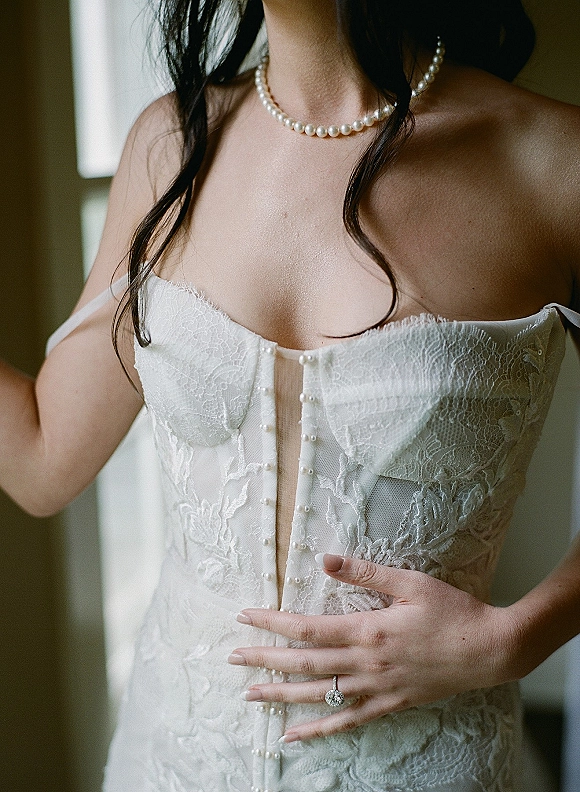
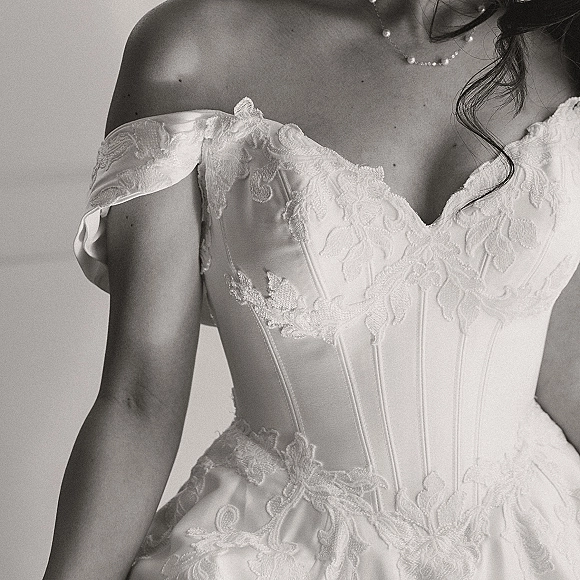
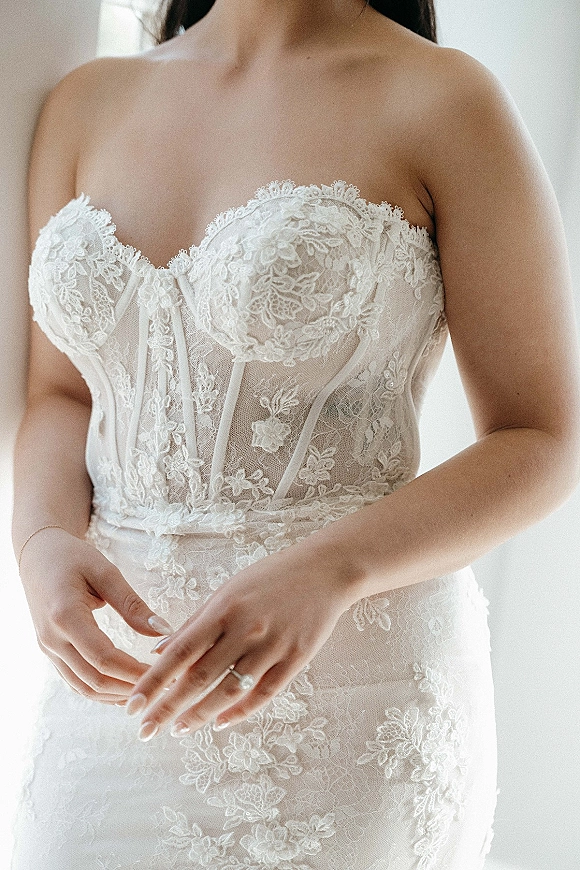
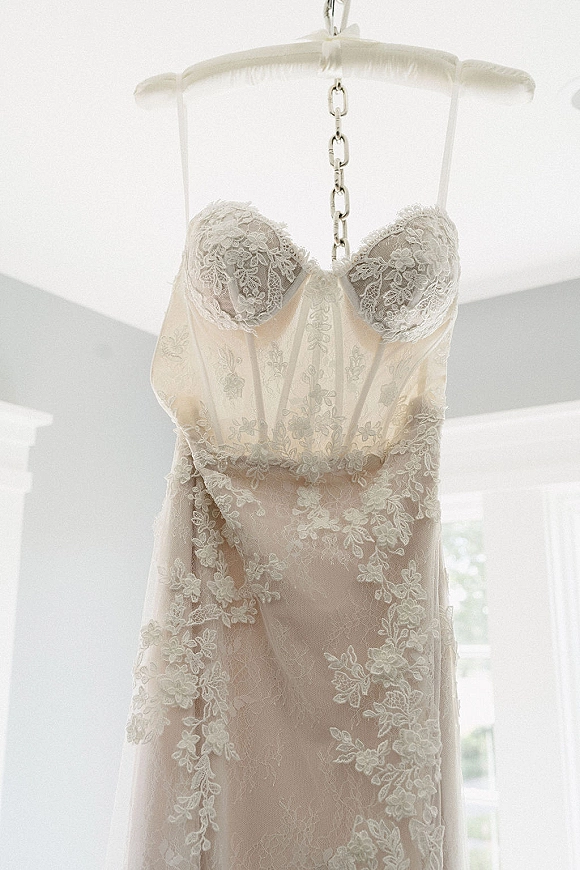
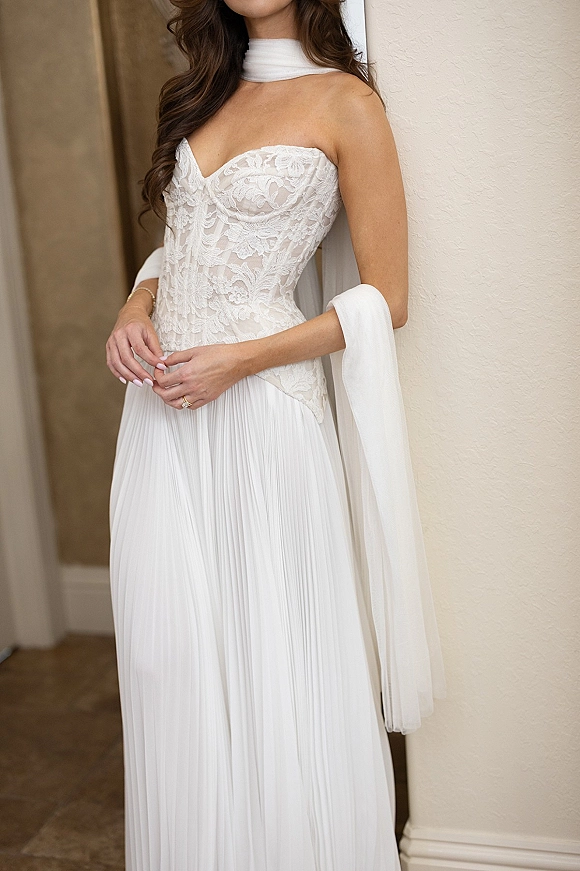
A lace corset bodice layers patterned lace over the structured base, softening the architectural lines of the boning with texture and detail. The lace can run as an allover overlay across the entire bodice or as placed appliqué that follows the seams and the boning channels, and either approach keeps the support of the corset while adding the romance of lace. Over a lace-up back, a lace bodice reads especially intricate, with the texture framing the laced detail down the spine.
The type of lace sets the mood. Chantilly is fine and delicate for a soft, romantic corset, while guipure, a heavier corded lace with bold motifs and open spaces, reads more graphic and modern against the structured bodice. Placed appliqué lets a designer concentrate the lace where it flatters most, often blooming up from the waist toward the bust to emphasize the cinched line.
Layering lace over a contrasting lining changes the effect again: ivory lace over a nude lining reads as lace on the skin, while ivory lace over an ivory base reads tonal and subtle. This interplay between lace and lining is one of the most common ways designers tune the romance of a corset bodice.
Necklines: Strapless, Sweetheart, and Off-Shoulder Corsets
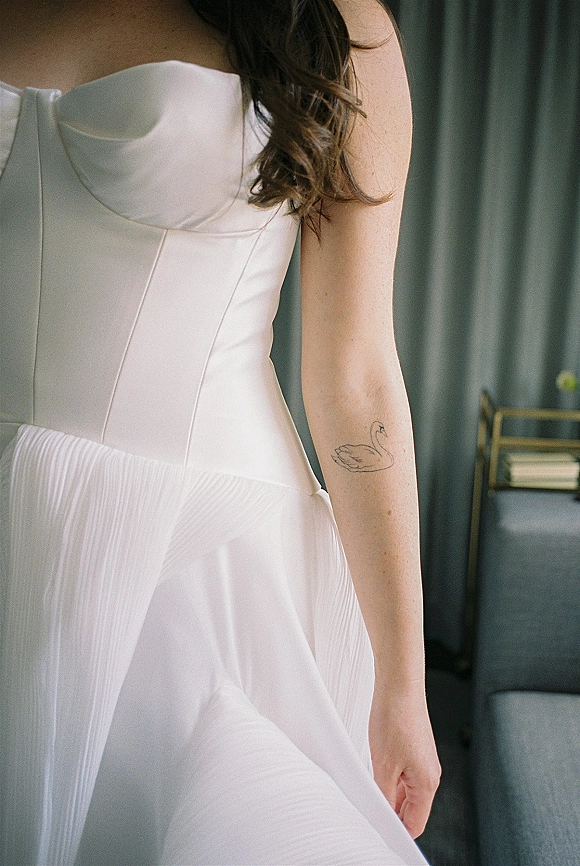
The corset structure supports the bust, which makes strapless and sweetheart necklines the natural defaults: both leave the shoulders bare while the boned bodice holds everything in place. A strapless corset keeps the focus on the cinched waist and the clean upper line, while a sweetheart neckline adds a soft curve at the bust that echoes the shaping below and softens the top edge of the bodice.
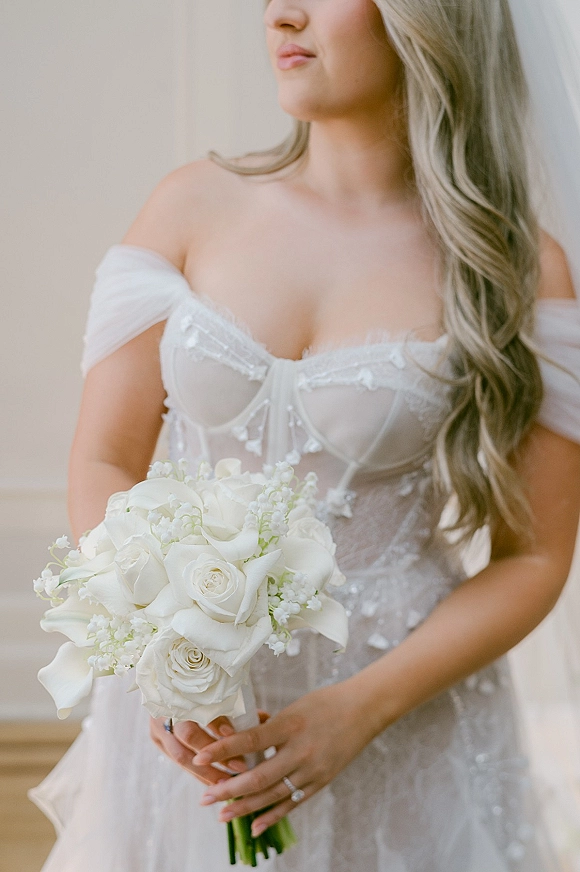
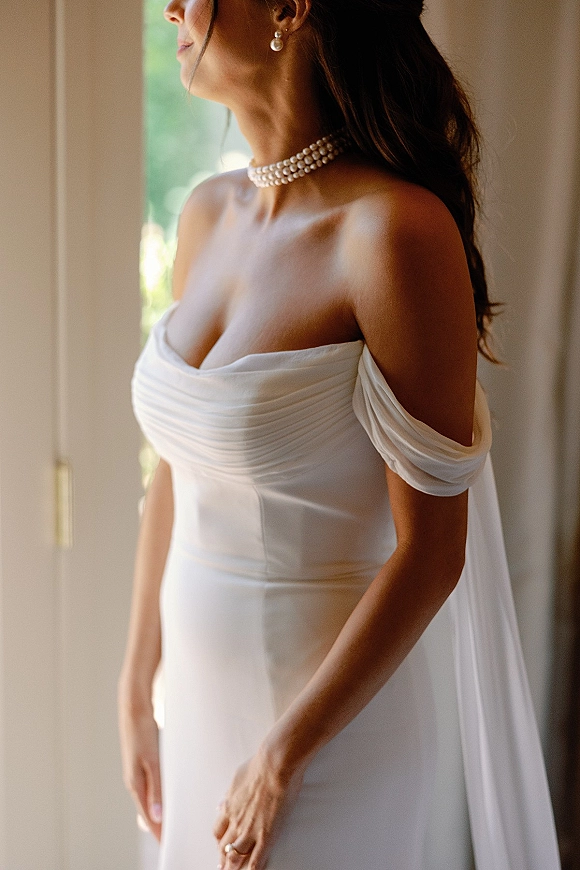
For brides who want shoulder coverage, an off-the-shoulder corset adds bands or draping that sit below the shoulder while the bodice continues to do the support work, framing the collarbone without changing the fit. A straight or semi-sweetheart neckline gives a more modern, architectural top edge. Because the corset handles structure, the neckline becomes purely a styling choice rather than a question of whether the gown will stay up.
Pairing a Corset with a Silhouette: Ball Gown and Beyond
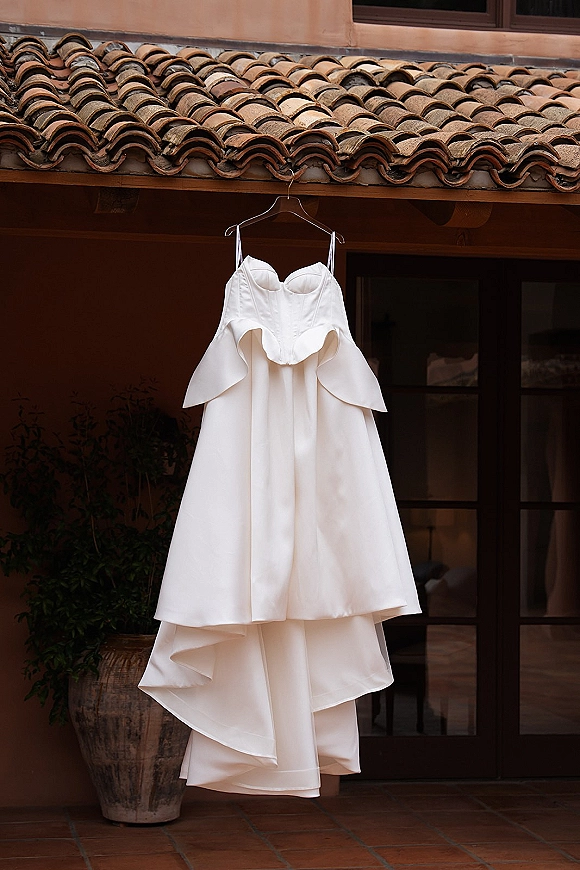
A corset bodice pairs with any skirt, and the pairing sets the entire mood of the gown. A corset ball gown wedding dress joins the cinched, structured waist to a full skirt for the most dramatic, regal version of the style, with the defined waist exaggerating the volume of the skirt and creating a sharp hourglass. The contrast between the tight bodice and the wide skirt is the most traditional and recognizable corset look.
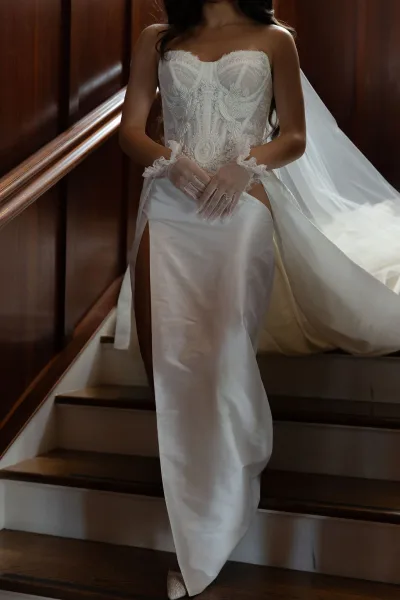
A basque or drop waist extends the corset into a V at the front and pairs beautifully with that fullness for a classic, feminine line that lengthens the torso. At the opposite end, a corset bodice over a fitted or mermaid skirt gives a sleek, body-conscious gown with couture shaping through the torso. The same bodice reads grand on a ball gown and modern on a fitted skirt, which is why the corset is one of the most versatile constructions in bridal.
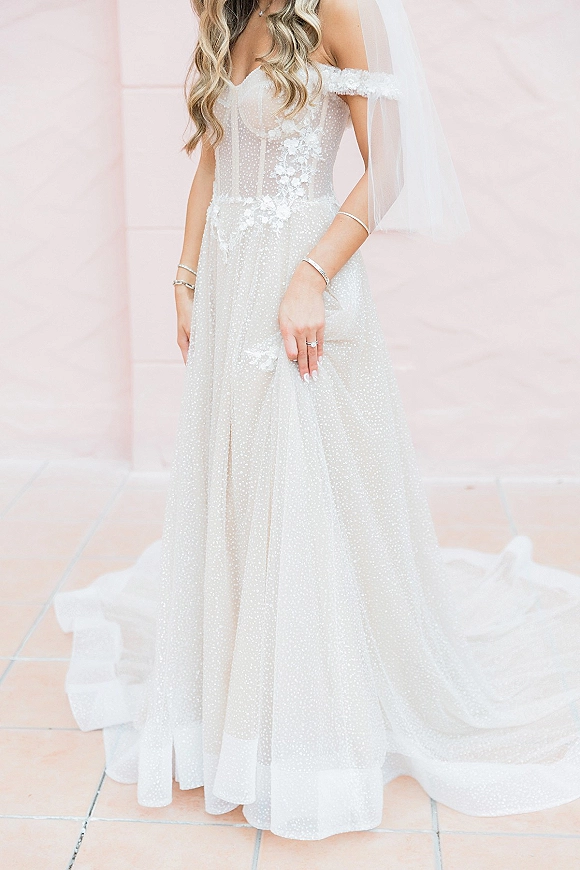
An A-line skirt over a corset sits between these extremes, giving a gently flared, universally flattering shape with the defined waist of the corset above it. This pairing is one of the most wearable in bridal because it combines the support and shaping of the corset with a skirt that suits nearly any figure and setting.
Sleeves on a Corset Gown
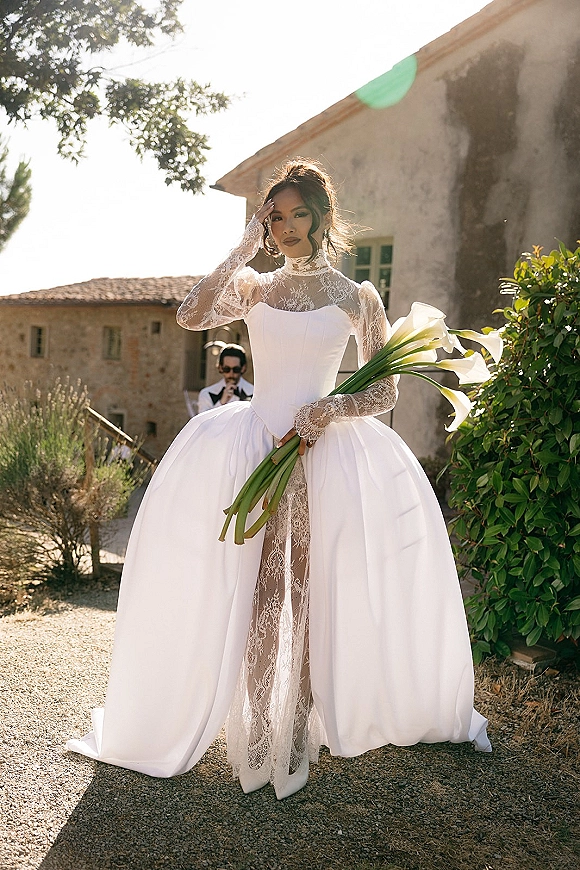
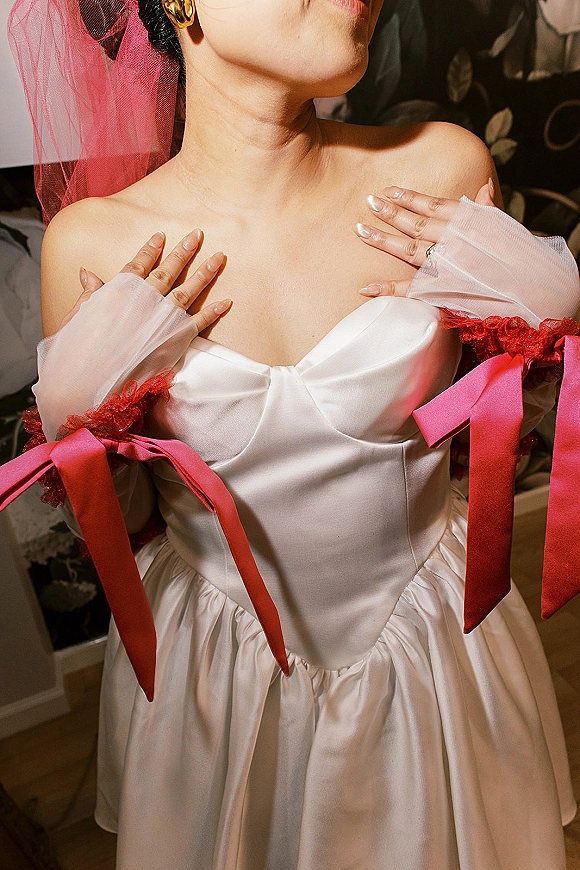
Sleeves attach to a corset gown without compromising its structure, because the boned bodice carries the support regardless of what covers the arms. A corset wedding dress with sleeves can pair the laced bodice with long lace sleeves, sheer illusion sleeves, off-the-shoulder draping, or detachable sleeves that lift away for the reception. The contrast between a covered arm and a structured, shaped torso reads intentional and elevated.
Illusion sleeves in fine tulle are a common pairing because they add the look of coverage without weight, letting lace appliqué float across the arm while the corset does the structural work beneath. This combination gives a covered, refined silhouette while keeping the cinched-waist effect that defines the style.
Fit Across Body Types and the Plus-Size Corset
The corset is one of the most universally flattering bridal constructions because its structure adapts to the body rather than the reverse. A plus-size corset wedding dress uses the same boning and lacing to define the waist and provide support, and the adjustable lace-up back means the fit can be tuned precisely across the bust, waist, and hip. For any figure, the corset creates an hourglass by shaping the waist and supporting the bust, which is why it is recommended so widely across body types.
The adjustability is also practical. A lace-up back accommodates fitting changes in the lead-up to the wedding and small shifts across the day itself, which a fixed closure cannot, and it gives a more forgiving fit for a long day of wear. Brides who want shaping and support built into the gown, rather than relying on separate shapewear, gravitate to the corset for this reason. Browse the wedding dress designers in the directory to see corset construction across collections.
The Black Corset Wedding Dress
A black corset wedding dress combines the couture structure of the boned bodice with the drama of a dark shade, and the two reinforce each other: the defined seams and lacing of the corset show with clarity against black, while the color makes the structure the focal point. Brides drawn to a non-traditional palette often choose a corset for the way it frames a bold tone, and the laced back reads especially striking when the cord contrasts against a dark bodice. See the black wedding dress collection for color-forward structured gowns.
What to Wear Under a Corset Wedding Dress
One of the practical advantages of a corset gown is that its built-in structure reduces the need for separate shapewear. The boning shapes the waist and the cups or built-in support hold the bust, so many brides wear little or nothing underneath beyond what comfort and the fabric require. A seamless or adhesive option is common under a strapless corset, since traditional straps would show against a bare shoulder line.
The lacing and modesty panel also affect what works underneath. A wider modesty panel gives full coverage behind the cord, which lets a bride choose a corset back without concern about the gap, while a narrow placket sits flush and needs less behind it. Discussing support during the first fitting lets the seamstress build or adjust the cups to the bride rather than relying on undergarments to do the shaping.
Caring for a Corset Gown and Planning the Fittings
A corset gown rewards a careful fitting schedule because the lacing has to be tuned to the body and the boning channels checked for a smooth line. The adjustable back is forgiving, but the bodice still needs to be fitted so the seams sit correctly and the waist lands at the natural waist, and a bride should practice having the gown laced so she and her party know the process on the day. The lacing is tightened from the center out and tied off with the excess cord tucked away.
Across the day, the lace-up back allows small adjustments that a fixed closure cannot, which is part of why the construction has stayed popular for so long. A slightly looser lacing for the reception keeps the bride comfortable through dinner and dancing while preserving the shaped line that defines the gown.
The History and Enduring Appeal of the Corset Bodice
The corset bodice carries a long association with formal and couture dressmaking, and that heritage is part of its appeal: the laced back and boned structure read as craftsmanship. Brides drawn to a classic, regal, or romantic aesthetic choose the corset because it signals construction and intention, with the lacing and seaming visible as deliberate detail rather than hidden engineering.
That same construction is what makes the silhouette flattering and supportive, which is why it has remained a fixture across changing bridal aesthetics. The corset adapts to soft and modern gowns as easily as it suits traditional ball gowns, carrying its shaping and support into whatever silhouette a designer pairs it with.
Corset Tops and Bridal Separates
The corset has driven the rise of bridal separates, where a structured corset top pairs with a separate skirt the bride can swap or change across the day. A corset top with a full tulle skirt for the ceremony and a sleek slip skirt for the reception gives two looks from one bodice, and the separates approach lets a bride mix a structured top with the exact skirt she wants rather than accepting a fixed pairing.
Separates also make the corset more wearable beyond the wedding day, since a well-made corset top can be restyled for an anniversary or another occasion. The flexibility is part of why corset tops have become a fixture in modern bridal collections alongside full gowns.
Boning and the Structure Beneath
Not all boning is the same, and the type affects how the corset feels and holds. Spiral steel boning flexes with the body and is the most comfortable for a long day, flat steel boning holds the firmest line at the closure, and synthetic or plastic boning is lighter and gives gentle structure in softer gowns. A bride who wants serious waist shaping benefits from steel boning, while one who wants light support may prefer a more flexible build.
The number of boning channels matters as much as the type. Closely spaced channels distribute the shaping evenly and prevent the fabric from wrinkling at the waist, which is one reason a well-constructed corset reads smooth and couture while a lightly boned one gives a softer, less sculpted line.
Lacing Styles and Ribbon Choices
The lacing itself is a design decision. A matching ribbon in the gown’s fabric keeps the back tonal and subtle, while a contrasting cord or a wider satin ribbon turns the lacing into a focal point. The lacing pattern can be a traditional crisscross, a ladder lace that runs straight across, or a corset-style that cinches from both ends toward the center, and each gives a slightly different look down the spine.
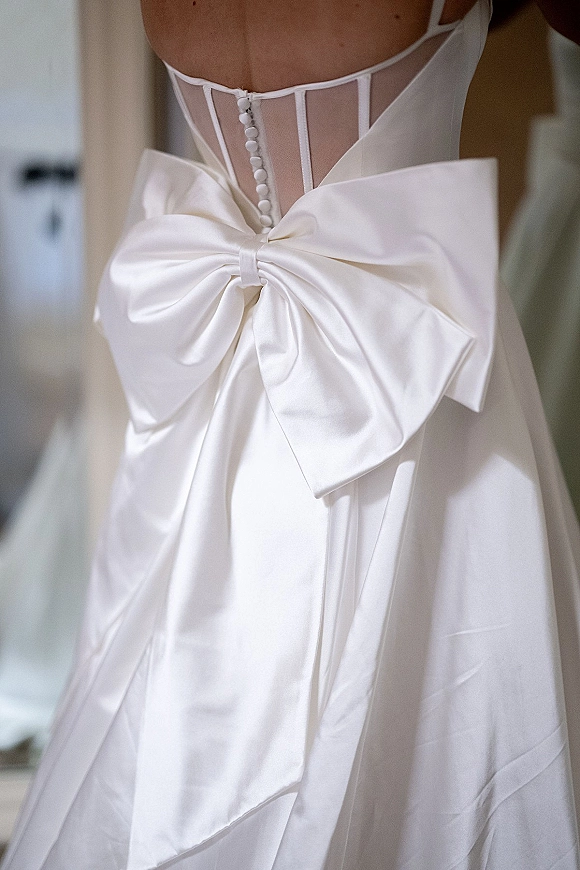
How the lacing finishes also varies: some gowns tie into a bow at the small of the back, while others tuck the excess cord neatly away for a cleaner line. Choosing the ribbon and the finish is part of personalizing a corset-back gown.
Corset Gowns Across Wedding Aesthetics
The corset adapts to nearly every bridal aesthetic, which is part of its staying power. Paired with airy tulle and soft lace, it reads romantic and ethereal; with structured satin and a full ball gown skirt, it reads classic and regal; with a sleek fitted skirt and minimal ornament, it reads modern and architectural. The same boned bodice anchors all three because the structure is neutral and the surrounding fabric sets the tone.
A corset also suits more dramatic directions, from a moody, gothic-leaning gown to a bohemian look with a relaxed skirt and a laced back. This range means a bride rarely has to choose between the support of a corset and the aesthetic she wants, since the construction follows the design rather than dictating it.
Comfort, Movement, and the Long Day
A common worry about corset gowns is comfort, but a properly fitted corset is built to be worn for a full day of standing, dining, and dancing. The key is lacing to shape rather than to constrict, which the adjustable back makes easy, and choosing flexible spiral steel or synthetic boning where ease of movement matters most. A lining against the skin and a smooth modesty panel add to the comfort.
Brides often loosen the lacing slightly between the ceremony and the reception to move more freely as the evening goes on, an adjustment a fixed closure cannot offer. With the right fit, the structure that shapes the waist also supports the back and posture through a long day.
Color and Embellishment on a Corset
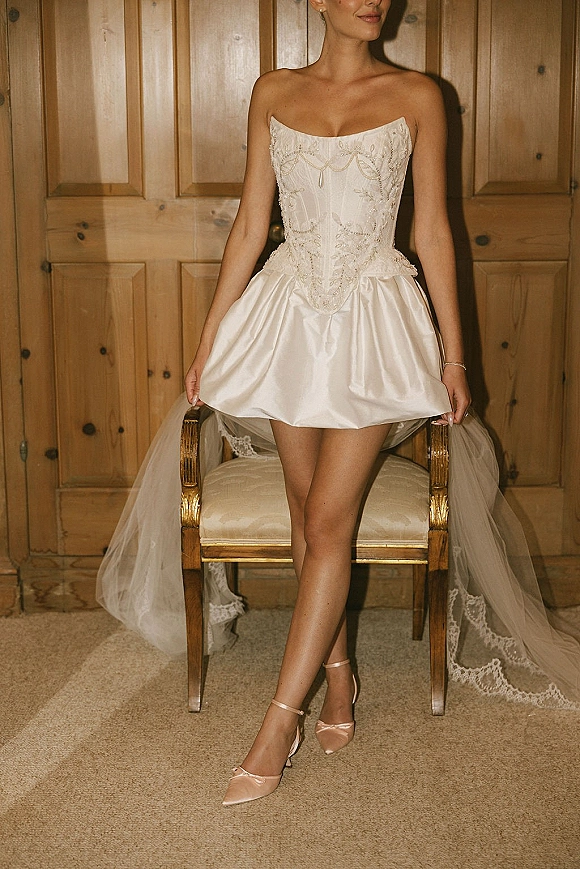
The seams and channels of a corset give embellishment a natural framework to follow. Beading or appliqué placed along the boning lines emphasizes the shaping and catches light at the waist, while a clean, unadorned corset lets the structure and the fabric speak on their own. Lace over the bodice softens the lines, and a beaded waistband sharpens the cinch between the bodice and the skirt.
Color works on a corset for the same reason structure does: the defined seams read clearly in any shade. A blush, champagne, or bold-toned corset shows its construction as plainly as an ivory one, which is why brides exploring color often choose a corset to carry it.
The Corset Back as a Ceremony Moment
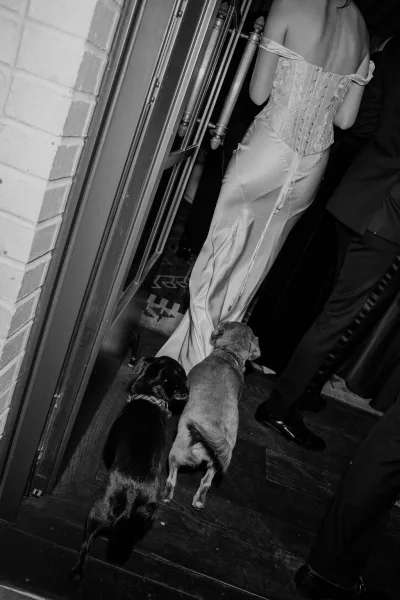
Because the corset back faces guests during the ceremony, the lacing becomes a focal point at the most photographed moment of the day. A bride walking down the aisle and standing at the altar shows the laced detail throughout the ceremony, which is part of why the corset back has stayed a romantic favorite. The recessional, when the couple walks back up the aisle together, frames the lacing again as guests rise.
This is worth keeping in mind when choosing the ribbon and the finish, since the back of the gown does as much visual work as the front. A tonal lacing reads subtle and elegant, while a defined cord makes the corset back a deliberate statement.
Frequently Asked Questions
What is a corset-back wedding dress?
A corset-back wedding dress closes with a lace-up panel, threading ribbon or cord through grommets or loops down the back of the bodice. Cinching the lacing shapes the waist and adjusts the fit across a range of sizes. Most include a modesty panel behind the lacing so the laced detail reads as decoration rather than an opening.
Do corset wedding dresses provide bust support?
Yes. A true corset bodice is reinforced with vertical boning that supports the bust and shapes the torso independently of the body. This is why corset gowns hold strapless and sweetheart necklines securely without straps or sleeves. The support comes from the structure of the bodice rather than from undergarments.
How tight should a corset wedding dress be laced?
A corset should be snug enough to shape the waist and stay in place, but not so tight that it restricts breathing or comfort over a long day. The lace-up back is designed to be adjustable, so it can be tuned at the fitting and slightly loosened or tightened as the day goes on. A modesty panel keeps the fit comfortable while concealing the gap behind the lacing.
What body types suit a corset wedding dress?
A corset flatters across body types because its boning defines the waist and supports the bust on any figure, creating an hourglass line. The adjustable lace-up back tunes the fit precisely at the bust, waist, and hip, which makes it especially accommodating for curvier figures and for brides expecting fitting changes before the wedding.
Can you wear a corset wedding dress comfortably all day?
Yes, when it is fitted correctly. A corset laced to shape rather than to constrict is comfortable through a full day, and the adjustable back allows small changes between the ceremony and reception. Choosing a corset with a modesty panel, a lining, and a waist stay adds comfort and keeps the bodice in place.
Can a corset bodice be paired with any skirt?
Yes. The corset is a bodice construction, so it pairs with nearly any skirt. A full ball gown skirt over a corset reads regal and dramatic, a basque waist adds a classic V at the front, and a fitted or mermaid skirt gives a sleek, body-conscious line. The skirt choice sets the formality while the corset shapes the waist.