The Fall Bouquet Palette and Signature Flowers
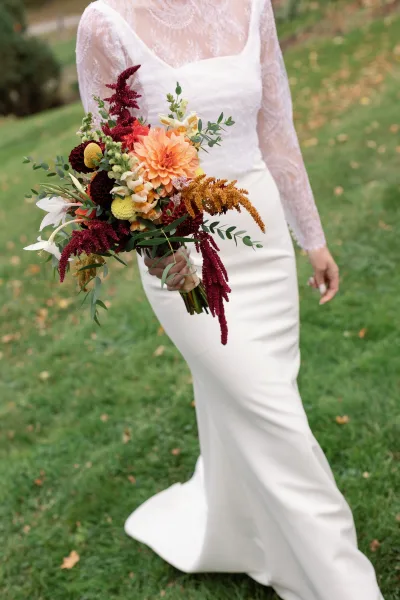
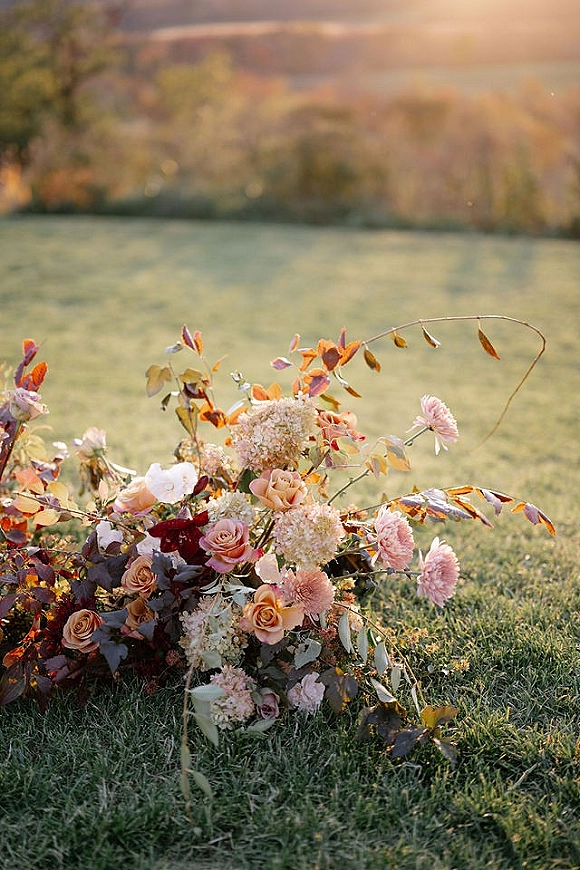
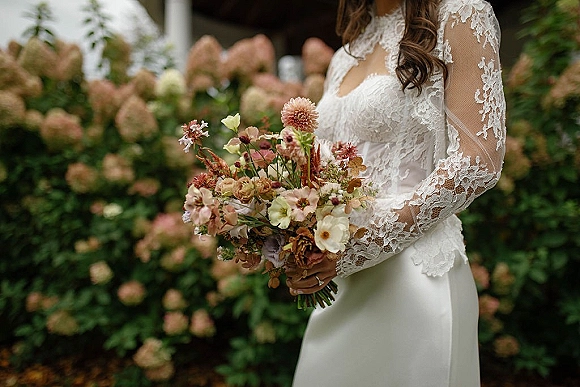
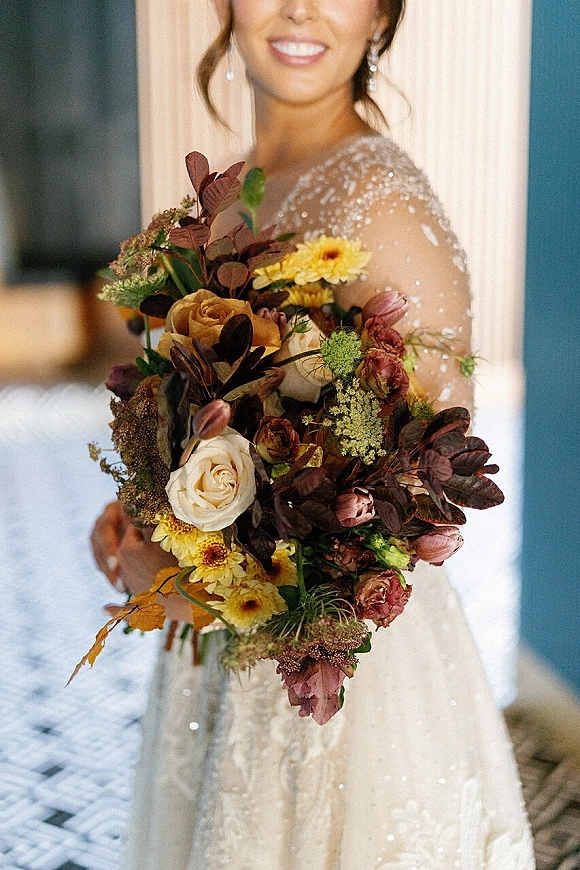
Fall wedding bouquets center on a warm, saturated palette, burgundy, burnt orange, rust, mustard yellow, and deep plum, filled out with the season’s defining flowers: dahlias, chrysanthemums, and garden roses in autumn tones. The color story is what makes a bouquet read as fall before the specific flowers even register, so most fall builds start with the palette and choose blooms to fill it. Dahlias are the quintessential fall flower, their large heads coming in everything from deep burgundy to soft peach, while chrysanthemums, marigolds, and calla lilies in rust and cream round out the list.
The season’s texture, hypericum and snowberries, seeded eucalyptus, dried grasses, gives the arrangement the layered, rich quality that separates fall florals from other seasons. What sets fall apart is that its flowers and its textures share one warm temperature, so almost anything the season produces harmonizes: a spring bouquet has to balance bright, clashing pastels, but a fall bouquet can layer dahlias, berries, grasses, and foliage in deep tones and trust the palette to hold together. That built-in cohesion is why fall arrangements can carry more elements and more texture without looking busy.
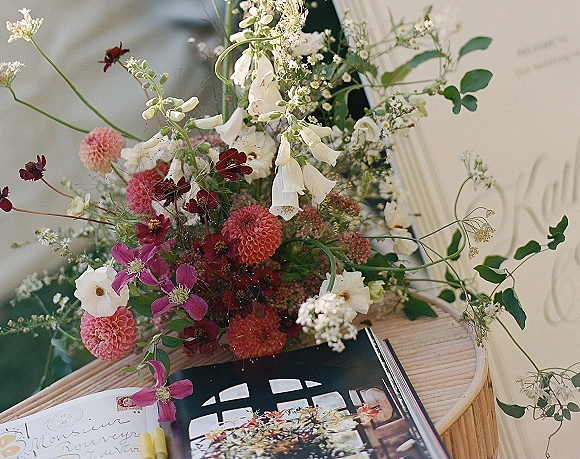
Dahlias deserve a closer look, since they carry more fall bouquets than any other bloom. They range from dinner-plate varieties the size of a hand to compact pompon and ball forms, so a single flower type can supply both the dramatic focal and the smaller supporting blooms in one bouquet. Their color range runs the entire fall palette, deep burgundy, rust, peach, cream, and near-black, which means a dahlia-led bouquet can commit to a lane without reaching for other flowers at all. Their one drawback is that they are thirsty and can wilt if left out of water too long, so a florist conditions them well and keeps them hydrated until the ceremony.
Fall Wedding Bouquet Ideas by Palette
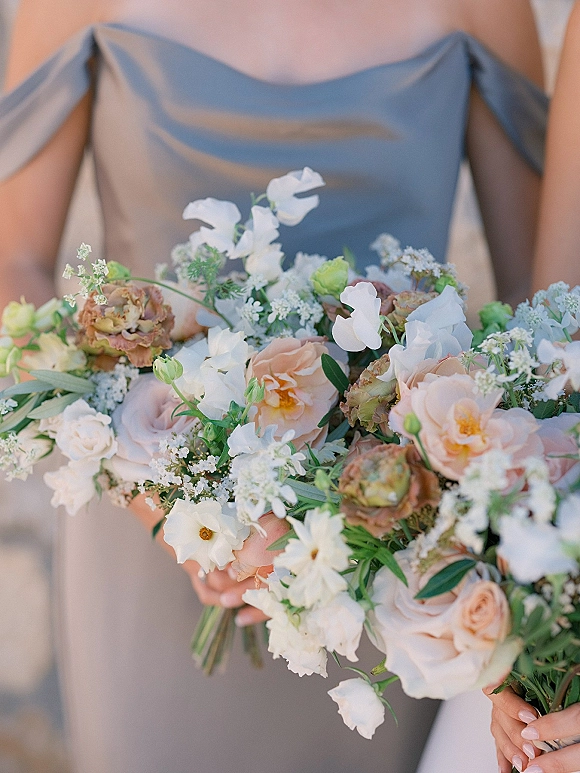
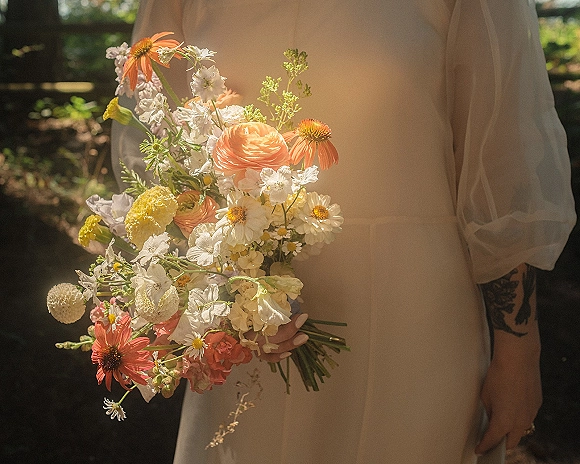
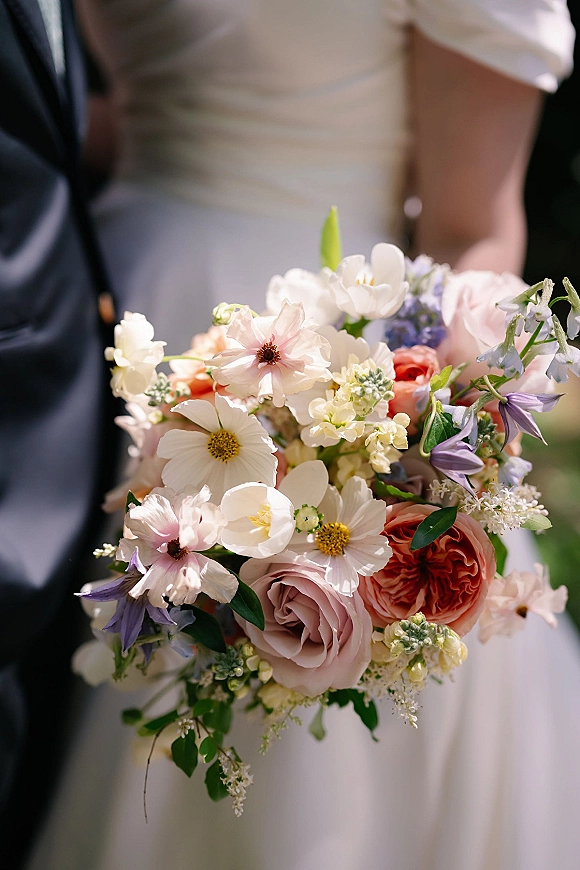
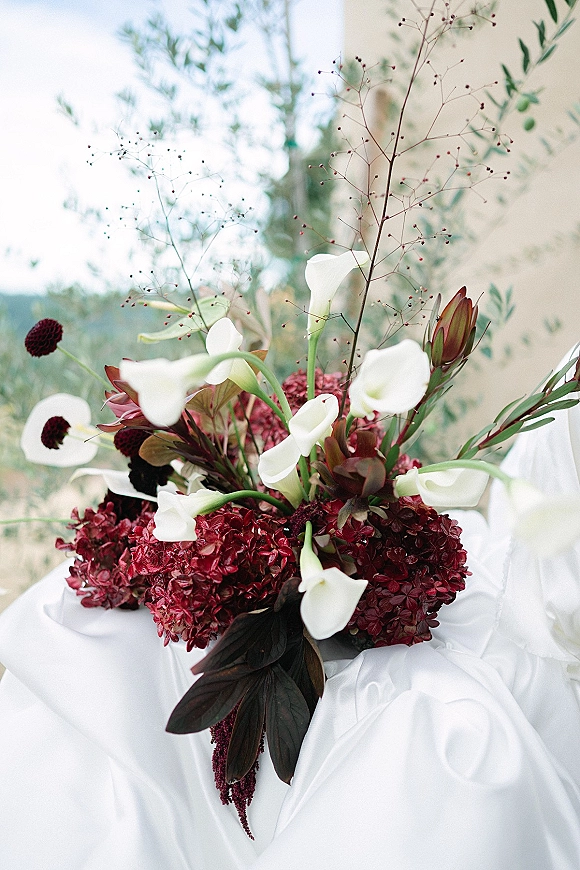
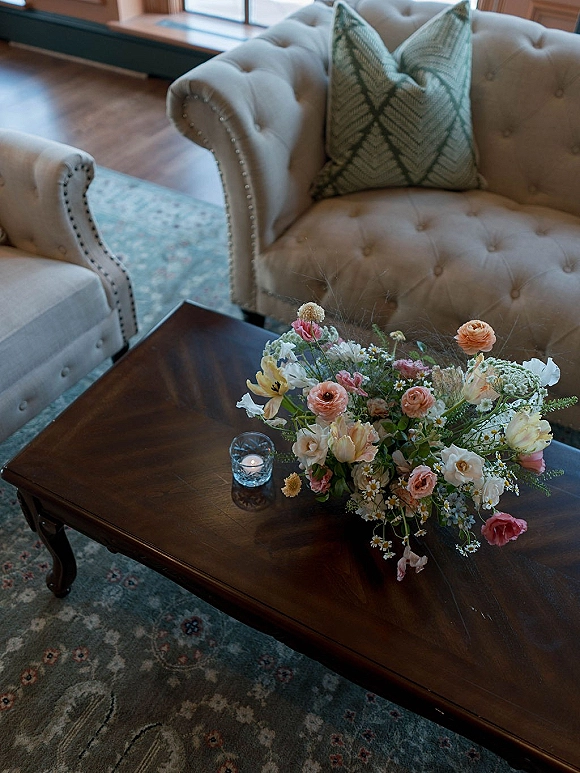
The fastest way to design a fall bouquet is to pick a palette lane and build within it. A deep-and-moody bouquet leans burgundy, plum, and near-black dahlias for a dramatic, formal read; a warm-harvest bouquet leans burnt orange, rust, and mustard for a rustic, sun-toned feel; and a soft-fall bouquet mutes the season into dusty mauve, terracotta, and cream for something more romantic than harvest. Because fall’s colors are naturally cohesive, even a mixed bouquet looks intentional as long as it stays inside one temperature range rather than mixing bright and muted tones at random.
The lane you choose should follow the wedding’s formality and time of day. A deep, moody bouquet reads best in the softer light of an evening reception, where its saturated tones hold their richness, while a warm harvest palette comes alive in daytime sun at an outdoor venue. The soft-fall palette bridges the two, muted enough for a refined setting yet warm enough to still read as autumn, which makes it a safe choice when the venue and the mood sit somewhere in between. Each lane also pairs with different dress colors, from jewel-tone gowns for the moody build to terracotta and rust for the harvest one.
The palette also shifts naturally across the season itself. Early fall still carries warmth and light, so it suits the brighter harvest tones of burnt orange, gold, and rust alongside the last of the summer dahlias and sunflowers. Later in the season the light cools and deepens, which is when burgundy, plum, and near-black feel most at home, joined by berries and dried textures. A couple marrying at the edge of the season, close to summer or close to winter, can lean their palette toward the neighboring season to bridge the transition rather than committing to peak-autumn color that might feel early or late.
Fall Bouquets With Sunflowers and Rustic Builds
With sunflowers. Sunflowers bring a burst of golden color and read cheerful and rustic, their yellow petals and dark centers providing bright contrast against the season’s deeper tones, and they belong in fall because they bloom into early autumn. The trick is balancing their scale and brightness, so they work best paired with deeper fall blooms, burgundy dahlias, rust mums, or plum accents, that ground the cheerfulness in the season, with hypericum berries and seeded eucalyptus adding harvest texture. They overlap heavily with rustic styling; see the full range of sunflower wedding bouquets for that direction.
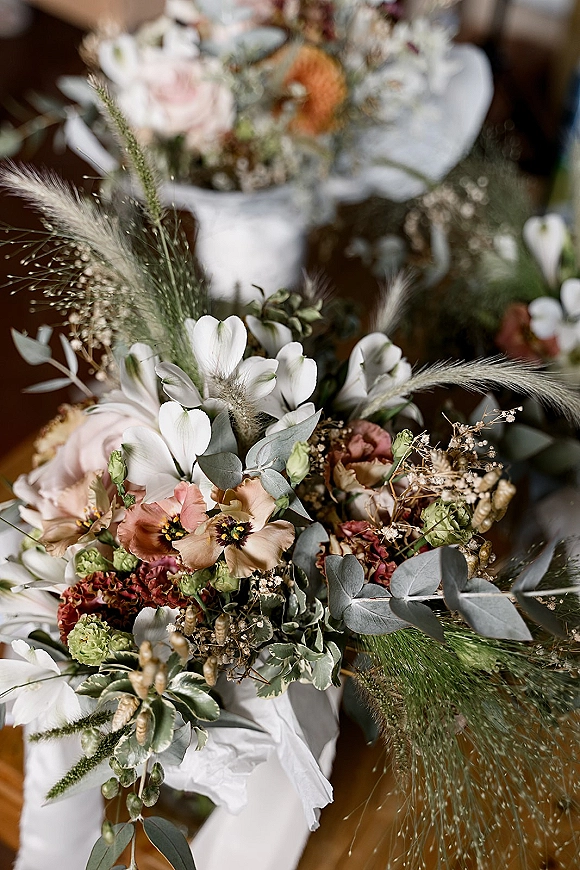
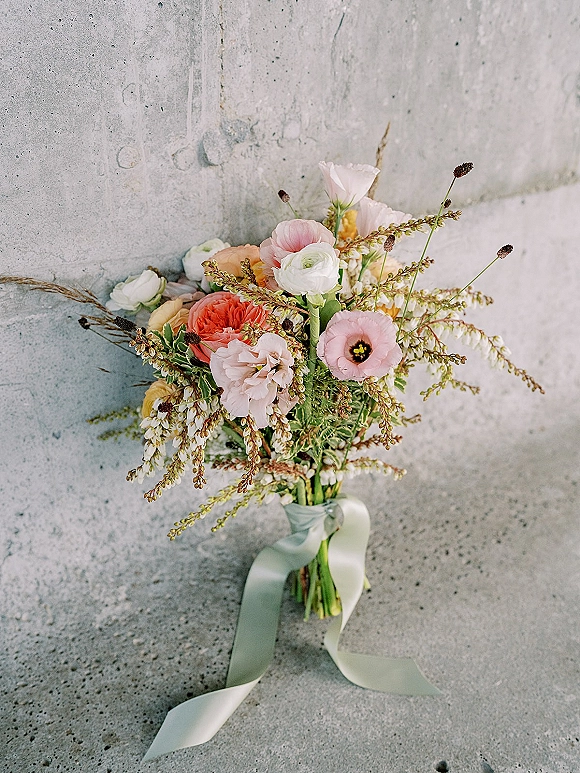
Rustic builds. Rustic fall bouquets are loose, textured, and gathered, mixing warm blooms with dried grasses, wheat, berries, and seasonal foliage for an organic, foraged look that suits barns, vineyards, and outdoor weddings. The recipe favors seasonal and locally available material, dahlias and mums alongside wheat stalks, oak leaves, and rosehips, and it often incorporates the same dried grasses that carry a boho arrangement, so it bridges naturally into dried and preserved styling. The looseness is forgiving in practice, tolerating slight variation from stem to stem and holding up to handling through an outdoor day, and a trailing silk ribbon or twine completes the harvest read.
The rustic build also rewards texture over polish, which changes how a florist assembles it. Rather than the tight, even dome of a formal bouquet, a rustic fall gather is left airy and asymmetric, with stems at varying heights and a few elements reaching or trailing beyond the outline. Wheat and grasses poke above the blooms, berries nod off to one side, and the whole thing looks as though it could have been picked that morning. That deliberate looseness is harder to get right than it appears, since it has to read as gathered rather than unfinished, which is where an experienced florist earns their keep.
Simple and Cascading Fall Bouquets
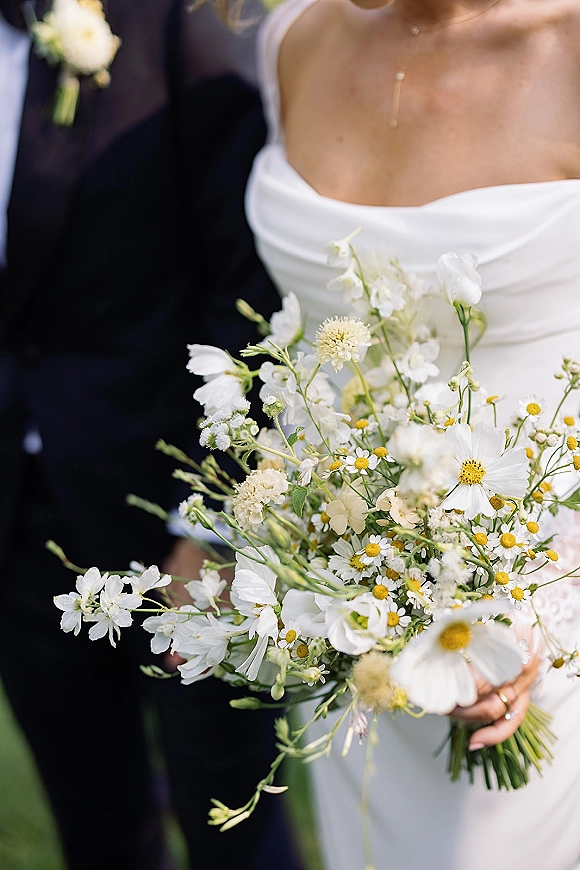
Simple bouquets. A simple fall bouquet keeps the flower list short and lets the season’s color carry the arrangement, often a single focal flower in a rich autumn tone with minimal greenery, so a tight cluster of burgundy dahlias or a handful of rust garden roses reads unmistakably fall without the layered complexity of a full harvest build. Simplicity suits a modern or minimalist fall wedding where the deep color does the work texture usually does, and it photographs with real impact because that color reads strongly against almost any backdrop, giving a portrait a single clear focal point. It also scales cleanly to a party in a matching tone.
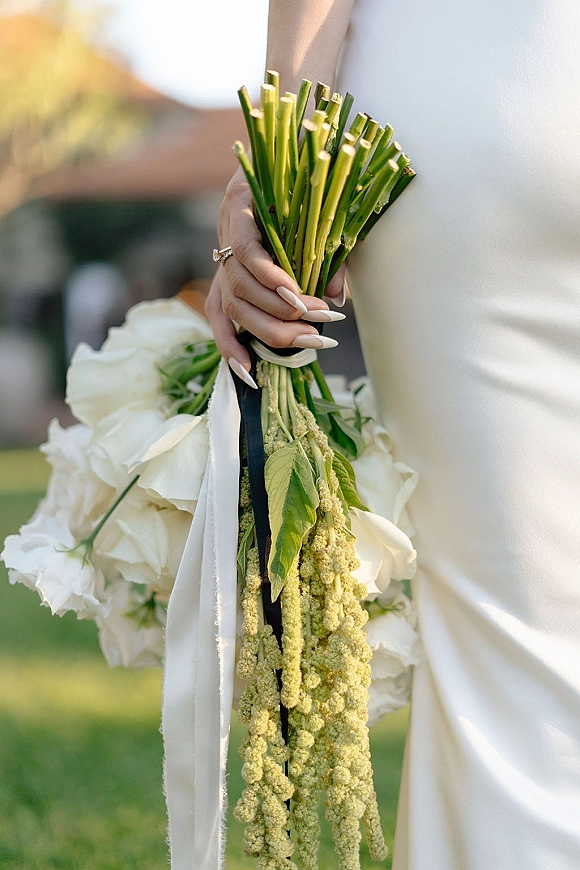
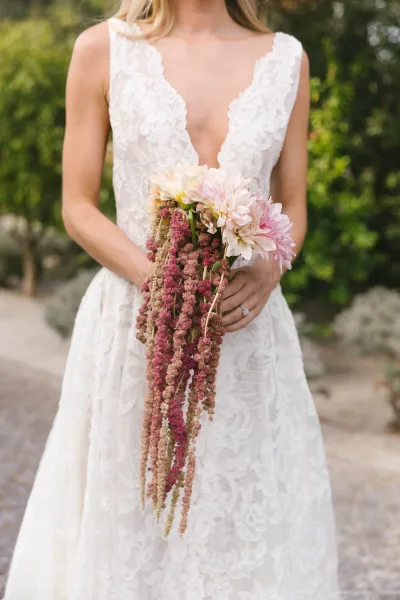
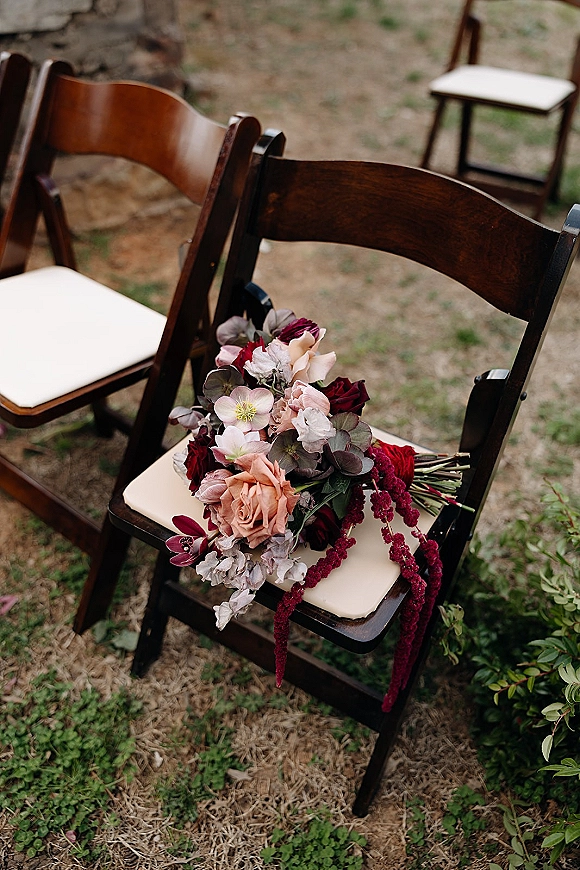
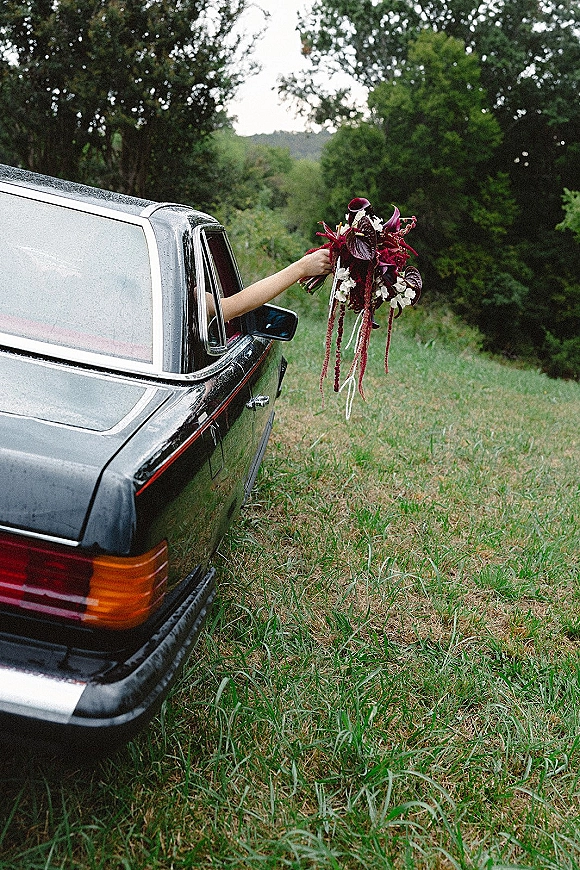
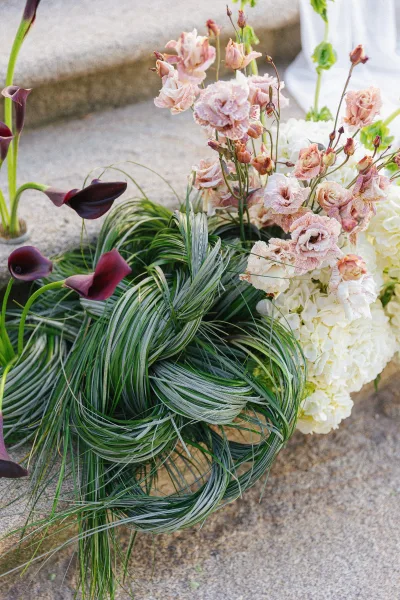
Cascading bouquets. A fall cascade brings autumn color into a trailing teardrop shape, with deep dahlias and garden roses at the top spilling into dried grasses, trailing amaranthus, and seasonal foliage, and fall is a natural season for a cascade because so much of its material trails on its own. Trailing amaranthus does the falling work here, its ruby ropes spilling from the base while dahlias and garden roses pack the top, and the warm palette keeps the shape from looking formal-white, so it feels rich and organic rather than grand. It suits a floor-length gown at an autumn vineyard or estate wedding; compare it against the full range of cascading wedding bouquets to see how fall material trails differently from callas or orchids.
Fall Flowers Beyond Dahlias, and Color Combinations
Beyond dahlias. Dahlias may define the fall bouquet, but the season offers a deep bench: chrysanthemums bring dense, long-lasting texture; celosia adds velvety plumes and coxcomb’s unusual form; amaranthus trails in ruby ropes; and ranunculus and garden roses carry into fall in warm tones. Marigolds, zinnias, and rudbeckia round out the warm-toned options with hardy, budget-friendly color, while scabiosa and its seed pods, protea for a bold focal, and berries like hypericum and rosehips add autumnal texture. Building from this wider list gives a fall bouquet more depth and makes it easier to match a specific palette or budget.
Color combinations. Fall bouquets often work best built around a specific two- or three-color combination rather than the whole autumn palette at once: burgundy and blush pairs a deep focal with a soft accent; burnt orange and navy sets warm against cool for a modern contrast; and rust with cream and greenery reads earthy and relaxed. Each combination gives the bouquet a clearer identity than a scattered mix, and it should echo the wider wedding, so a bouquet built on the same two colors as the bridesmaid dresses and the table settings ties the day together.
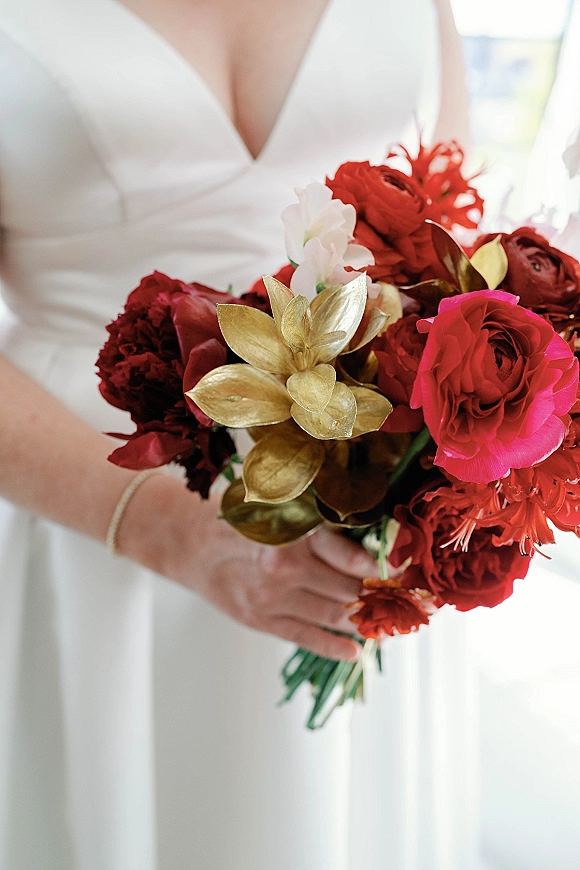
A few more combinations have become fall signatures worth knowing. Mauve and dusty rose with greenery feels soft and romantic for a couple who wants autumn without the drama; mustard and sage balances warm against cool for an earthy, understated palette; and deep plum with copper or gold accents leans luxe for a formal evening. The principle behind all of them is contrast within the warm family: pairing a deep, saturated tone with a lighter or metallic accent gives the bouquet dimension, where two tones of the same depth can look flat even when the colors are lovely on their own.
Berries, Grasses, and Seasonal Texture
Berries and grasses. Texture is what gives a fall bouquet its depth, and the season supplies it generously. Hypericum and snowberries add small round pops of color and a touch of whimsy, seeded eucalyptus and dried grasses bring movement, and rosehips, wheat, and oak or magnolia foliage add a harvest structure that spring and summer bouquets lack. Berries are the signature fall accent, their clustered form reading unmistakably autumnal against dahlias and roses, and layering these textures at different depths, rather than packing the bouquet evenly, is what makes a fall arrangement feel rich and gathered instead of flat.
Dried and preserved elements. Fall is the season where dried and fresh flowers mix most naturally, since autumn’s textures are already the material of dried flower wedding bouquets. Weaving dried elements into a fresh fall bouquet adds warmth and extends the arrangement’s life, and the two read as one because their tones and textures belong to the same palette. Preserved pampas, wheat, and bunny tails give movement and a rustic quality, while dried seed pods add sculptural interest, and a partly dried fall bouquet also travels and lasts better outdoors, doubling as a keepsake afterward.
Fall Bouquet Shapes, Sizes, and the Bridal Party
Fall bouquets suit a range of shapes, and the season’s trailing material makes some especially fitting. A loose, gathered hand-tied shape looks rustic and organic, matching the harvest mood; a fuller rounded bouquet feels richer and more formal; and a cascade built with hanging amaranthus and trailing grasses makes the most dramatic statement. Size follows the setting and the gown, with a grand estate or vineyard balancing a fuller bouquet and an intimate ceremony suiting a looser, smaller gather, and the season’s bold color means even a modest bouquet reads as a strong statement.
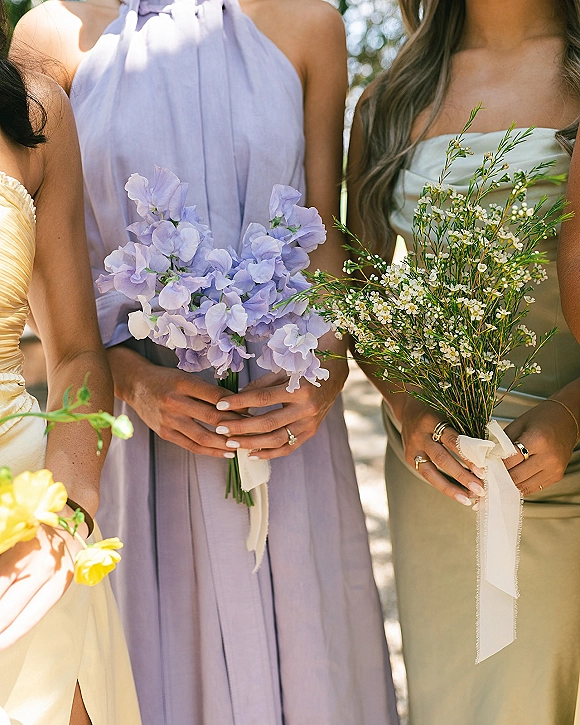
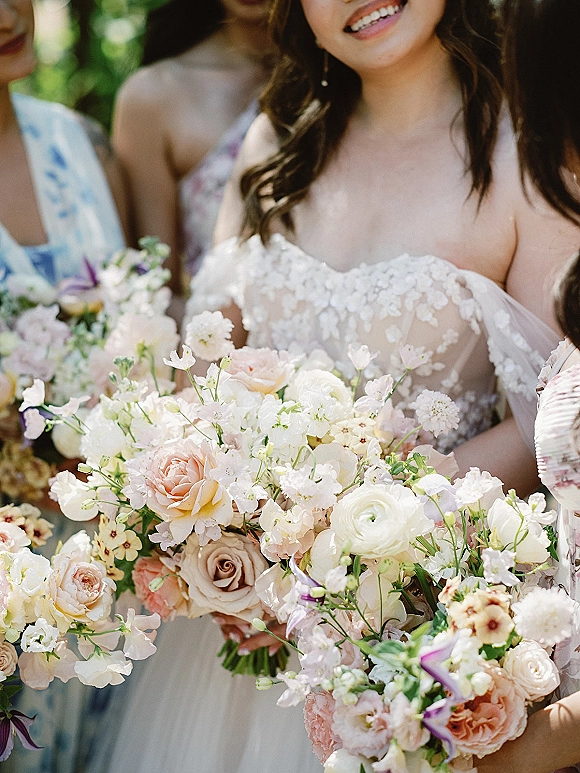
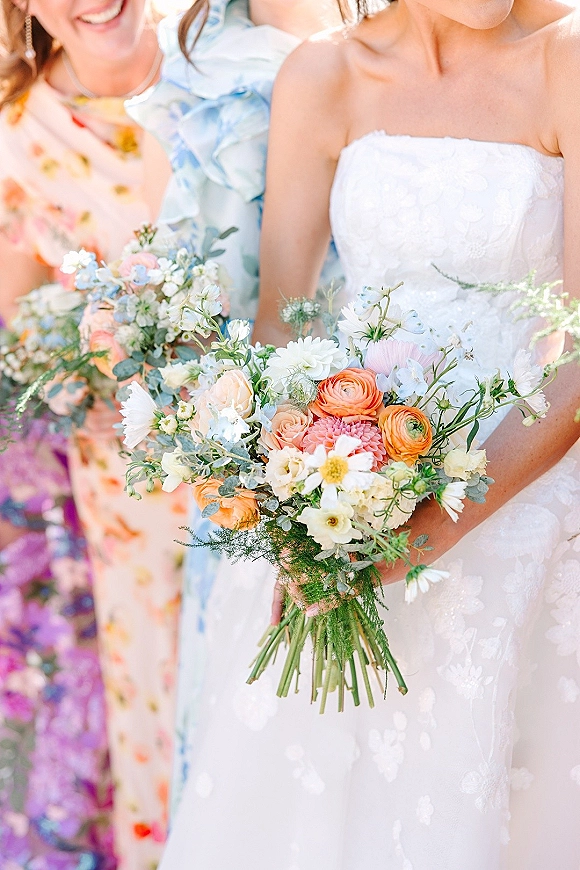
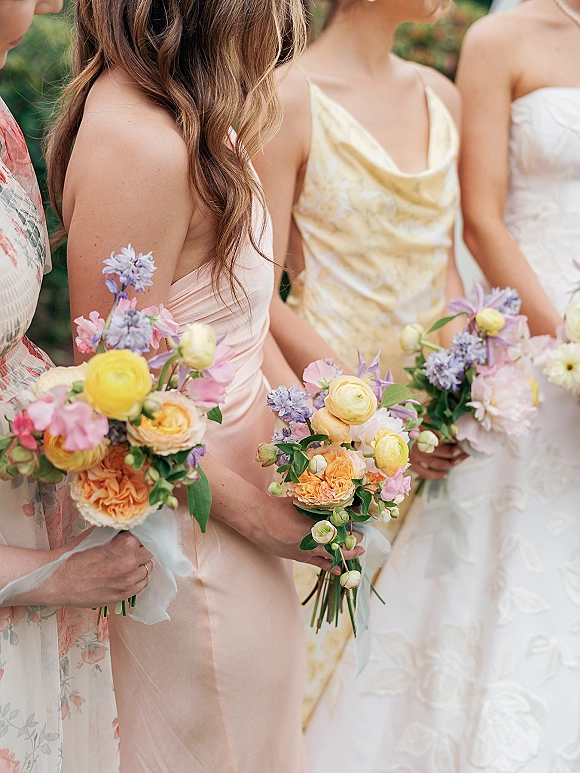
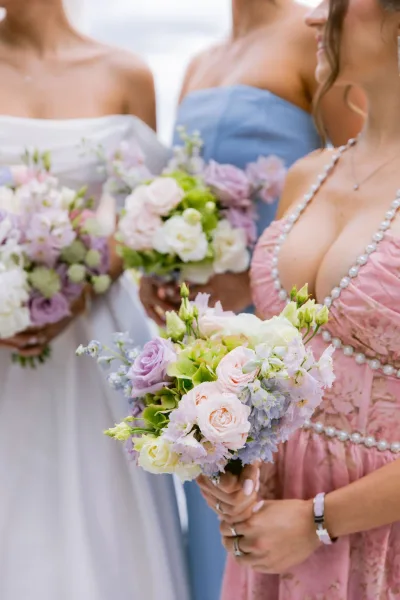
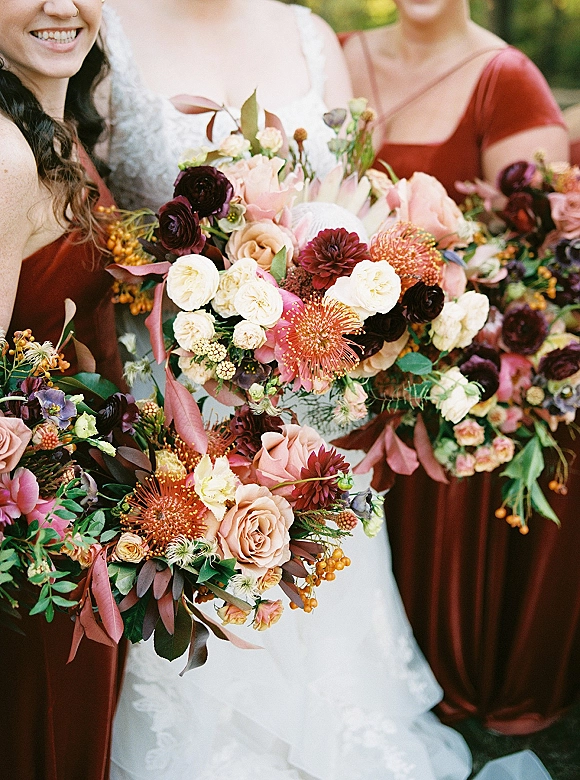
Bridal versus bridesmaid. A fall bridal bouquet usually carries the fullest expression of the season, layering focal dahlias and garden roses with berries, grasses, and foliage, while the bridesmaid versions step down from it, smaller and simpler, often pulling one fall element out of the bridal recipe and repeating it across the party. The season makes coordination easy because its palette is naturally cohesive, so bridesmaid bouquets in a single deep fall tone look cleanly against autumn dress colors while the bride’s fuller arrangement stays the visual lead.
Fall is also a season where non-floral elements earn a place in the bouquet without looking out of step. A few stems of wheat, a sprig of rosemary or sage for scent, or a wrap of velvet ribbon in a deep autumn shade all reinforce the season, and at a harvest or vineyard wedding even a small cluster of berries or a trailing grape leaf feels at home. These touches let a modest flower count feel richer and more seasonal, and they are part of why fall bouquets can feel abundant and gathered even when the actual bloom count is kept in check for the budget.
Choosing Fall Flowers by Availability and Cost
Sourcing by season. Building a fall bouquet around what is genuinely in season keeps it authentic and easier to source, and autumn offers a deep bench, with dahlias, chrysanthemums, and garden roses at their peak, sunflowers carrying from late summer, and textural material like wheat, grasses, and berries at its natural best. Choosing these over out-of-season imports gives richer color and better value, and a wedding florist can point you to whatever is peaking locally when the date lands. It also shapes the palette honestly, since the warm, saturated tones that define fall come naturally from the flowers the season produces.
What it costs. The cost of a fall bouquet is driven by the flowers chosen, the size, and how much premium focal material it carries, and autumn’s advantage is that many of its signature flowers are abundant and accessible. The levers are the same as any season, leaning on in-season blooms, filling with hardy warm-toned flowers and dried texture, and keeping premium focal flowers to a focal role, and because fall’s bold color makes even a modest bouquet read as a statement, an autumn arrangement can look rich without a long stem count.
Keeping Fall Flowers Fresh and Styling to the Wedding
Fall weddings often move outdoors into cool, variable weather, and the season’s flowers are generally well suited to it, since dahlias, mums, and garden roses hold up in cooler air better than in summer heat, and the dried and textural elements do not wilt at all. A few habits protect the blooms, keeping the bouquet cool and in water until the ceremony, out of any direct afternoon sun, and handling it by the stems, while the dried portion needs no care, which makes an autumn arrangement one of the more forgiving to carry from an outdoor ceremony to the reception.
Fall bouquets pair naturally with the deep gowns an autumn party favors, from navy and emerald to terracotta and burgundy, so the flowers and the dresses hold one palette, and the color photographs richly in the season’s golden light when the arrangement layers blooms, berries, and dried elements at different depths. A single detail worth settling early is the wrap: a velvet or raw-silk ribbon in a deep fall shade finishes the bouquet in a way that reinforces the season, while a trailing length adds movement to the portraits. Deep autumn palettes also overlap with the burgundy and crimson tones of a red wedding bouquet, so a couple torn between the two can browse both before settling the recipe.
Frequently Asked Questions
What flowers are best for a fall wedding bouquet?
Dahlias are the signature fall flower, joined by chrysanthemums, garden roses, marigolds, and calla lilies in autumn tones, plus sunflowers for warmth. Texture comes from hypericum and snowberries, seeded eucalyptus, wheat, and dried grasses, which give fall bouquets their layered, rich quality.
What colors define a fall wedding bouquet?
The classic fall palette is burgundy, burnt orange, rust, mustard yellow, and deep plum. Couples typically choose a lane within it: deep and moody for a formal look, warm harvest for rustic settings, or muted mauve and terracotta for a softer, more romantic fall bouquet.
Can I use sunflowers in a fall bouquet without it looking too summery?
Yes. Pairing sunflowers with deeper fall blooms like burgundy dahlias and rust mums, plus texture from hypericum berries and seeded eucalyptus, grounds their brightness in the season. That balance shifts the bouquet from summer-cheerful to autumn-harvest while keeping the sunflower's warm color.
Do fall bouquets work with dried flowers?
Yes, and readily. Fall's warm, earthy palette overlaps naturally with dried material like wheat, grasses, and preserved blooms, so many fall bouquets mix fresh autumn flowers with dried elements. The combination adds texture and a harvest feel while extending the bouquet's life as a keepsake.
What dress colors pair with a fall wedding bouquet?
Fall bouquets coordinate with the deep gown colors common to autumn weddings, navy, emerald, terracotta, and burgundy, so the party and the florals share one palette. Match the bouquet's intensity to the setting, keeping moody arrangements for formal evenings and warm harvest builds for daytime barns and vineyards.

.webp)