What a Wedding Florist Handles, From Sourcing to Strike
A wedding florist chooses your palette, sources the stems, builds every arrangement, installs on site, and comes back to break it all down. The work covers personal flowers, ceremony design, and reception decor as one connected look rather than a series of separate orders. Most of the labor is invisible.
That invisible half starts weeks before the wedding. Your florist places orders against a specific bloom list, then adjusts when a grower’s crop comes in short or a shipment misses its window. Roughly 80 percent of cut flowers sold in the United States arrive from abroad, with Colombia and Ecuador supplying the bulk of them, so a single delayed freight flight can reshape a design two days out. Experienced designers build substitutions into the plan before you ever hear about the problem.
The forty-eight hours before your ceremony are the busiest. Stems get processed and hydrated in a cooled studio, arrangements are built in order of how long they hold, and delicate work like boutonnieres waits until the last possible morning. Load-in follows the venue’s schedule, not yours, which is why florists ask about ceremony start times, elevator access, and whether another event occupies the room the night before.
Strike matters more than couples expect. Rented vessels, arch hardware, and installation rigging all belong to the florist, and someone has to remove them after the last guest leaves. Ask early whether breakdown is included or billed separately, because venues charge overtime when a team is still pulling greenery off a structure at one in the morning.
Wedding Bouquet Styles and What Each One Changes
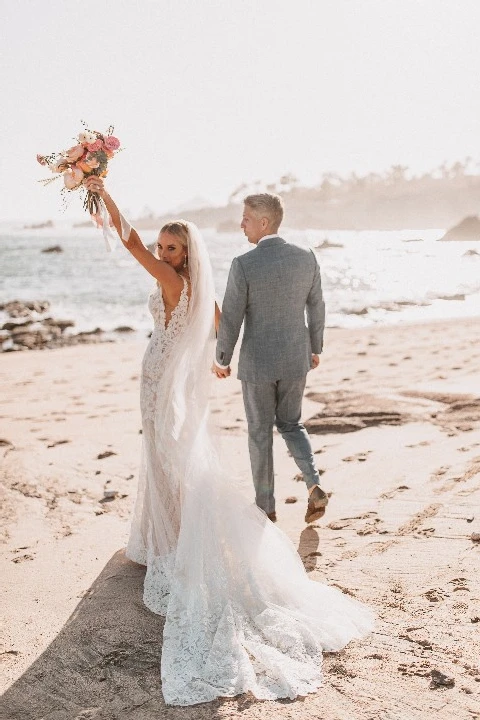
Bouquet shape does more visual work than flower choice. A compact round posy, a loose garden-gathered form, and a long cascade read as three different weddings even when built from identical stems. Decide the silhouette first, then let your florist fill it with what the season offers.
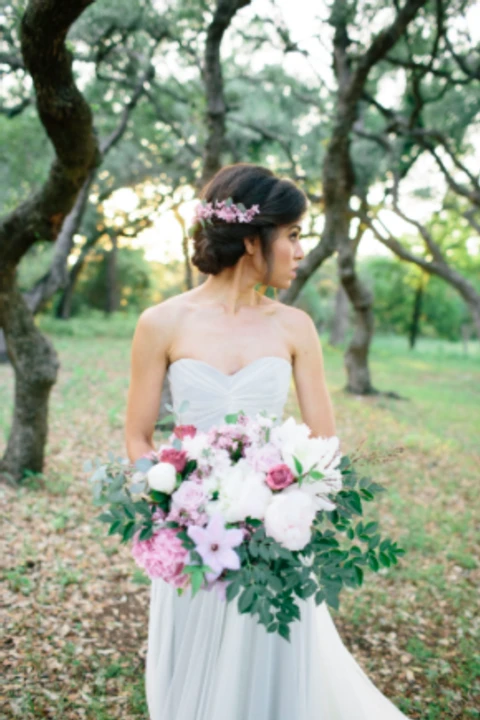
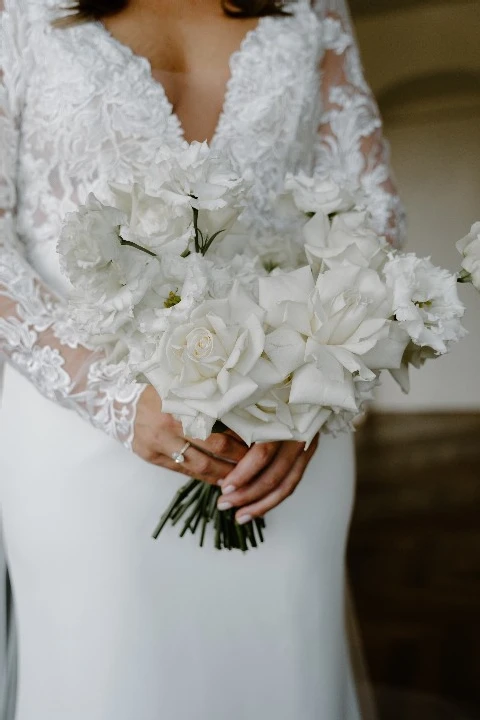
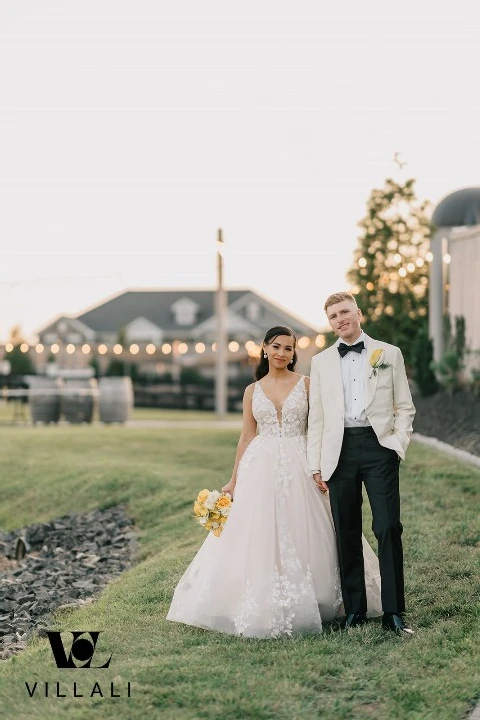
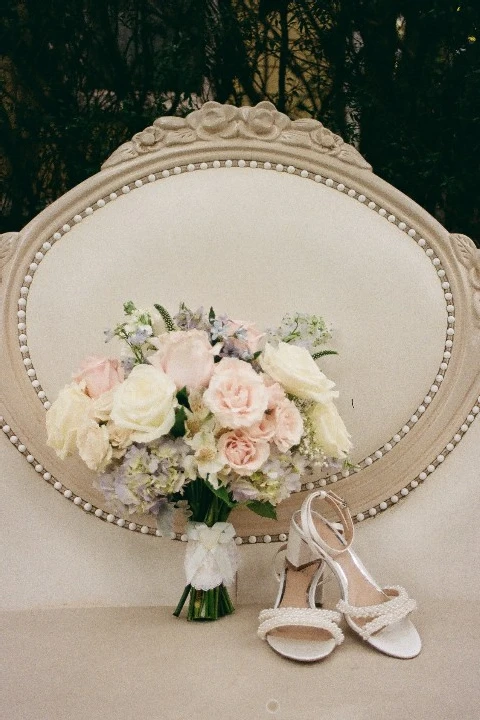
Round and hand-tied wedding bouquets remain the default for good reason: they photograph cleanly, hold their shape through a long day, and sit comfortably against most dress necklines. Cascading wedding bouquets trade that portability for drama, spilling downward in a teardrop that suits a ballroom aisle and a structured gown. They weigh more and need a stronger mechanic inside the handle, so flag the style at your first consultation rather than after the proposal.
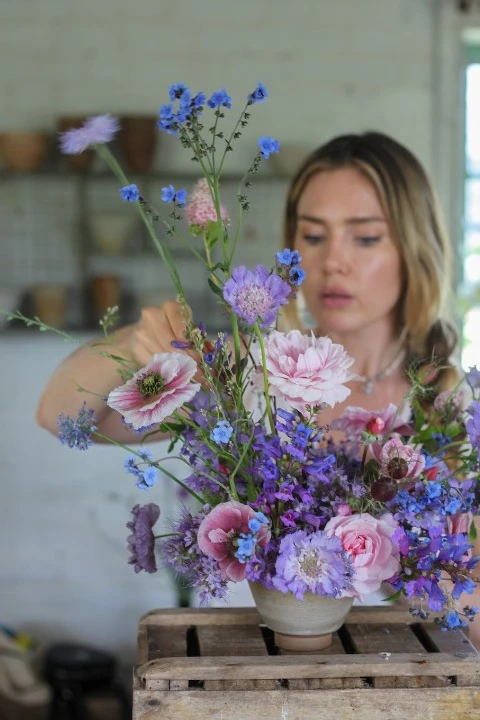
Texture-forward options have taken over the looser end of the spectrum. A wildflower wedding bouquet leans on movement, mixed stem heights, and an unfussy asymmetry that works outdoors and in. Dried flower wedding bouquetssolve a practical problem at the same time: they can be built weeks ahead, they survive heat that would collapse fresh stems, and they leave you with a keepsake that needs no preservation work afterward. Fall wedding bouquets draw on that same textural palette, with seed pods, berry branches, and dahlias carrying the season.
Do not treat the wedding party as an afterthought. Bridesmaid bouquets usually run smaller and simpler than yours, either echoing the same flowers at a lower stem count or shifting to a single variety so your bouquet stays the focal point.
Wedding Flowers by Season and What Is Genuinely Available
Seasonality controls quality and availability more than any other factor. Flowers grown for your date arrive fresher, last longer through a warm reception, and stretch a budget further than the same variety flown in against its natural cycle. Build the list around what peaks in your month, then add one or two splurge stems if a specific bloom matters to you.
Late spring belongs to peonies. Peony wedding bouquets depend on a narrow domestic window that runs roughly April through June, with a secondary Southern Hemisphere crop arriving in late fall. Outside those windows, availability gets unreliable fast. Lily of the valley wedding bouquets sit at the extreme end of the same problem: the natural season is a few weeks in spring, the stems are tiny, and a full bouquet takes hundreds of them, which is why most designers steer couples toward using it as an accent.
Summer opens the field. Hydrangea wedding bouquets fill volume efficiently and hold a soft color range, though the blooms drink heavily and wilt quickly out of water, so they need a hydrating mechanic and shade before the ceremony. Sunflower wedding bouquets peak from midsummer into early fall and bring a scale and saturation nothing else matches.
Two options work nearly year-round. Calla lily wedding bouquets are greenhouse-grown across most of the calendar, and the sculptural stem suits both a minimal handheld cluster and a full cascade. Eucalyptus wedding bouquets lean on foliage rather than bloom, with silver dollar, seeded, and gunni varieties available in every season at a fraction of what premium flowers command.
Ceremony Flowers and the Installation Behind Your Vow Photos
Ceremony flowers do the most photographic work of the day. Nearly every shot of your vows frames the two of you against whatever sits behind you, so the altar or arch earns a disproportionate share of the floral scope. Aisle work, entry arrangements, and the focal structure all get planned as one composition.
Wedding ceremony flowers usually break into three parts: the aisle, the entry, and the focal point. Aisle pieces can be as light as scattered petals or as involved as pedestal arrangements at every other row, and they set the pace as guests walk in. The entry marks the transition from cocktail area to ceremony space, and it is often the first floral moment anyone sees.
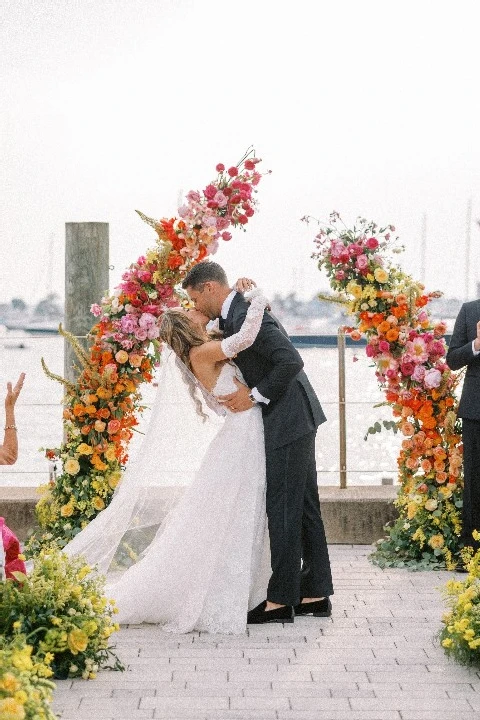
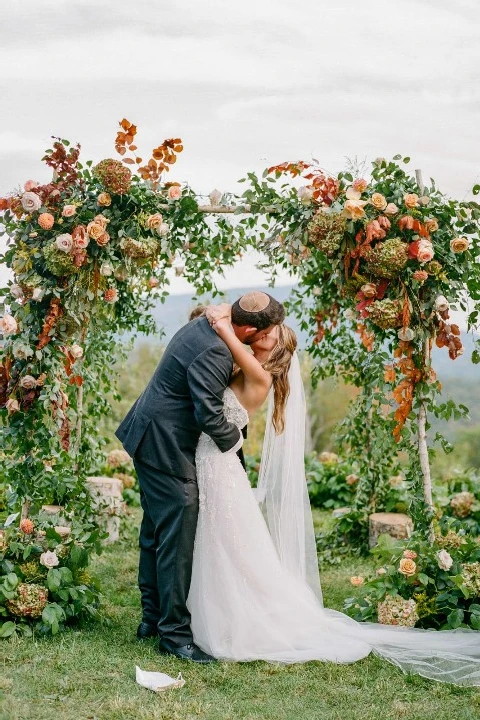
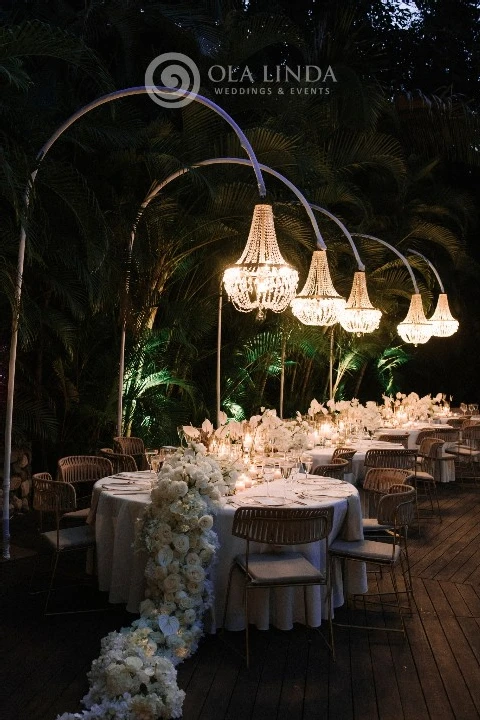
The focal point carries the most weight. A floral wedding arch can be fully covered, asymmetric with a single heavy corner, or lightly accented on an otherwise bare frame, and each version demands a different stem count and install time. A structural wedding arch built from wood, metal, or bamboo gives the florist something to mechanic onto, and the frame itself is frequently a rental rather than something your florist owns.
Budget the clock, not just the design. A full arch install runs two to four hours on site, and outdoor structures need staking or weighting against wind. If your ceremony and reception share a room, ask about the flip: moving the arch and repurposing aisle arrangements onto the head table or bar stretches the same flowers across both halves of the night. Coordinate that plan with your wedding planner, who controls the timeline every other vendor works against.
Greenery-Led Design and Foliage Installations
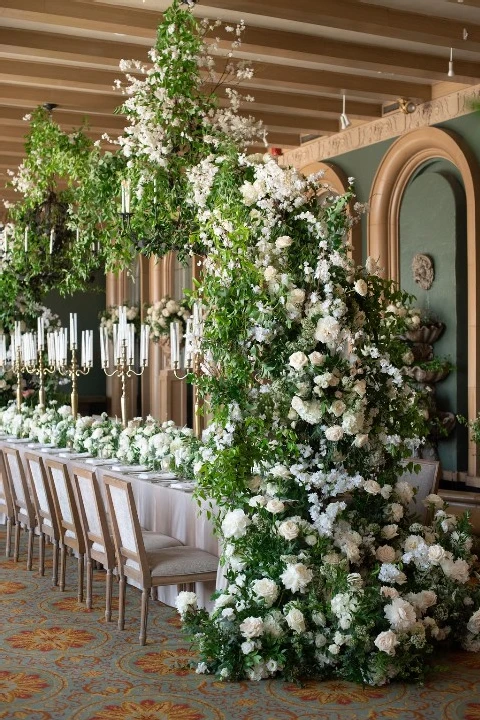
Greenery gives you scale without premium flower counts. Foliage covers volume efficiently, holds up in heat far better than most blooms, and reads as intentional rather than sparse when it is the point of the design instead of a filler around it.
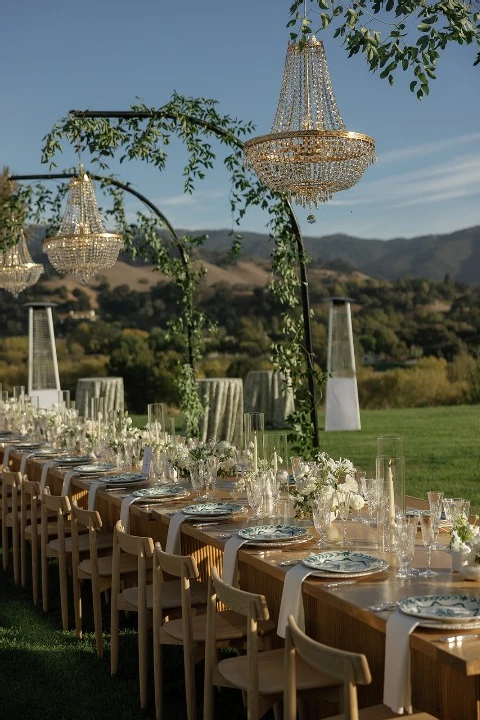
Wedding greenery shows up as table garlands, arch coverage, ceiling and chandelier installations, and aisle or chair marking. Running a garland down a long table replaces individual centerpieces entirely, and sightlines improve, since guests see across the table instead of around an arrangement. Smilax, olive branch, Italian ruscus, and the eucalyptus family each drape differently, and the choice determines whether a garland lies flat or spills over the edge.
A greenery backdrop for a wedding serves double duty behind a ceremony, a sweetheart table, or a photo area, and it stays relevant across the whole event in a way a bloom-only piece does not. Backdrops need a frame, and that frame typically comes from your wedding rentals order rather than the florist, so confirm who supplies it before either vendor quotes.
Ask about mechanics while you are at it. Floral foam is a single-use plastic that does not biodegrade, and a growing share of designers have moved to chicken wire, reusable water tubes, and pin frogs instead. Foam-free construction takes longer to build and changes how an installation gets priced, but it holds equally well and keeps the waste out of the landfill. Pair the greenery plan with your broader wedding decor choices so lighting and linens do not fight the foliage.
How to Vet a Wedding Florist Before You Sign
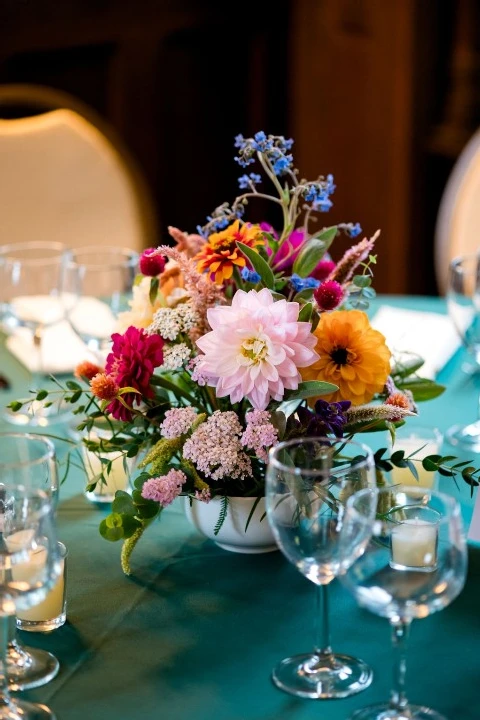
Look at complete weddings, not hero shots. A single well-lit bouquet proves very little. A full gallery shows whether a designer holds quality across personal flowers, a ceremony install, and forty reception tables on the same day. Shortlist two or three whose complete work you would happily copy.
Credentials help you read a portfolio you cannot fully judge on your own. The American Institute of Floral Designers awards the Certified Floral Designer, or CFD, designation through a juried evaluation, and AIFD accreditation signals formal training rather than self-taught trial and error. Neither is required to be excellent, and plenty of exceptional wedding designers hold neither, but the letters tell you someone has been assessed against a published standard.
Push on the proposal itself. Ask what is itemized versus bundled, whether delivery, install, and strike are included, and what happens if your guest count moves after signing. Ask how many weddings the studio takes on a single weekend and who leads your install if the principal designer is booked elsewhere. Get the substitution policy in writing, because the honest answer is that no florist can promise a specific stem eleven months out.
Bring a palette, images, and your venue floor plan rather than a fixed flower list. Florists design better against a feeling and a room than against a spreadsheet of varieties. Pay attention to how a designer responds when something you want does not fit the season or the space. The ones who explain the trade-off and offer an alternative are the ones who will handle a problem on your wedding day without calling you about it.
When to Book a Wedding Florist and How the Timeline Runs
Book your florist six to nine months before the wedding. Designers in high demand fill peak Saturdays twelve to eighteen months out, so a spring or fall date in a major market needs a longer runway. You need only your date, your venue, and a rough guest count to start consultations.
The sequence after booking is predictable. Your first consultation sets palette, scope, and rough scale. A proposal follows within a week or two, and revisions run until the design and the scope agree with each other. Some studios offer a paid mock-up two to three months out, which is the only reliable way to see a centerpiece in three dimensions before the wedding itself.
Final numbers land last. Two to four weeks before the date, your florist confirms table count, personal flower count, and any install changes, then places the actual grower order. That is the practical cutoff for meaningful changes. After it, the flowers are already committed and adjustments get expensive or impossible.
Venue choice drives most of the rest. Ceiling height, natural light, existing decor, and load-in access all shape what a florist can build and how long it takes, which is why booking your wedding venue first and your florist second saves a full round of redesign. Once both are locked, the remaining vendors slot in around them.
Frequently Asked Questions
How much does a wedding florist cost?
Wedding flower pricing tracks scope, not a flat rate. The count and size of your arrangements, the specific varieties you choose, and whether you want large installations drive the number far more than guest count does. In-season and locally grown stems stretch a budget further than premium or out-of-season varieties. Request itemized quotes from two or three designers so you can compare what each one actually includes.
Can you reuse ceremony flowers at the reception?
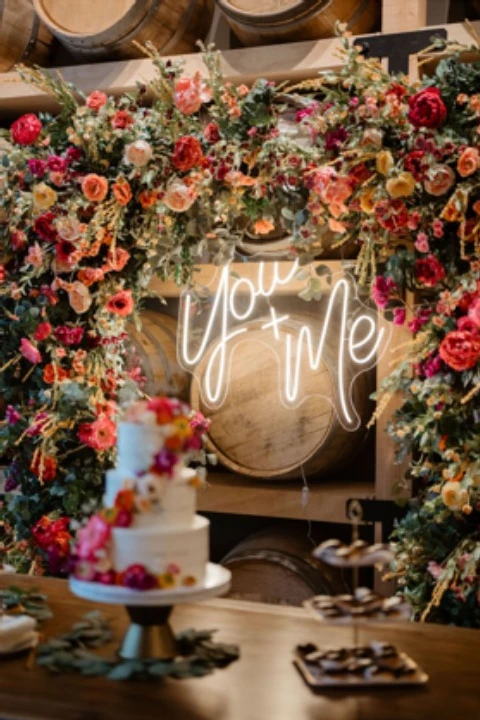
Yes, and most florists plan for it. Aisle arrangements move to the head table or bar, and an arch can be relocated behind a sweetheart table or a band. Repurposing requires staff on site during cocktail hour to make the move, so confirm whether that labor is in your proposal or billed as an add-on.
What is the difference between a wedding florist and a floral designer?
A retail florist runs a shop with walk-in and delivery business and handles weddings alongside daily orders. An event floral designer works from a studio, takes a limited number of weddings, and is set up for large-scale installation, custom mechanics, and on-site labor. Both can be excellent for personal flowers; installations and full-room design usually call for the second.
What happens if the flower you want is not available for your date?
Your florist substitutes a comparable variety in the same color, shape, and texture. Crop failures, weather, and shipping delays are routine, and no designer can guarantee a specific stem months ahead. Good contracts are written around a palette and a look rather than a fixed variety list, which gives your florist room to solve the problem without changing the design.
Do you still need a florist if your venue includes centerpieces?
Often, yes. In-house packages usually cover simple table arrangements and rarely include personal flowers, ceremony installations, or a custom palette. Compare what the venue provides against your full flower list before deciding, and check whether the venue allows an outside florist to install if you want to supplement.