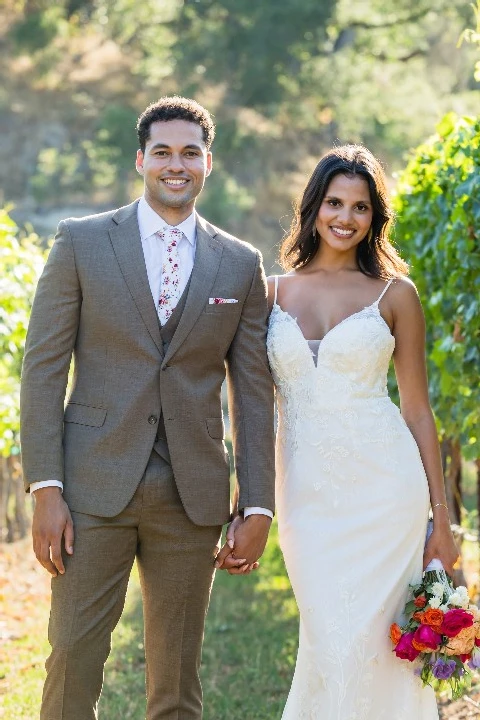
How to choose a wedding suit shop or tuxedo rental company
Start with lead time, because it removes more options than budget does. A bespoke tailor needs four to six months and three fittings. A rental company needs three weeks. Everything else sits between those two poles, so the date on the invitation decides which half of this directory is even open to you.
Once the timeline narrows the field, judge shops on three things. Alteration capability comes first: a shop that hems and takes in on site will fix a problem the week of the wedding, while a shop that ships garments out for alterations cannot. Second, look at how they handle a group, since a groom ordering alone and a groom ordering with six groomsmen in four states are different customers. Third, ask what the shop stocks in your size before you fall for a photograph, because the fabric on the website and the fabric in the store are frequently not the same cloth.
"The shop that will see you three times before the wedding is worth more than the shop with the better website," says Carats + Cake Editor-in-Chief [EIC NAME]. "Fit is the entire product, and fit is iterative."
Rental, made-to-measure, or bespoke: what each wedding suit vendor offers
Tuxedo and suit rental
Rental covers the widest range of formality for the smallest commitment, typically $150 to $350 per person, with three to four weeks of lead time and a return window of a few days after the wedding. National rental companies ship to the door, handle group orders through a shared link, and swap a bad fit before the date. Local rental shops trade that convenience for in-person fittings and same-week fixes.
Rental carries no stigma at any budget level. Across 3,161 weddings in the Carats + Cake dataset, rented menswear appears at roughly the same rate whether the couple spent under $100,000 or more than $250,000, and custom menswear never rises to replace it. Suit Supply and The Black Tux are the two most-credited menswear names in the dataset, appearing in 3.9 percent and 3.3 percent of all weddings.
Off-the-rack with alterations
Buying off the rack and having it altered is the fastest route to a suit the groom keeps. Expect $200 to $800 for the garment plus $100 to $300 in alterations, and four to six weeks to get through two fittings comfortably. This works when the groom is close to a standard size and wants something he will wear again.
Made-to-measure
Made-to-measure starts from an existing pattern and adjusts it to the groom’s measurements, usually $700 to $2,000 with an eight to twelve week turnaround. The fabric selection opens up considerably at this tier, and the fit reaches a level alterations cannot. Most shops build in two fittings, so book with a buffer.
Bespoke
Bespoke means a pattern cut from scratch, three or more fittings, and four to six months. Prices start around $2,500 and climb without a ceiling. Choose it when the groom has a fit problem no pattern solves, when the fabric matters more than the timeline, or when the suit is meant to outlast the wedding by a decade.
What to ask a wedding suit vendor before you book
Ask how many fittings are included and whether they cost extra, since the difference between two fittings and one is usually the difference between a good fit and a great one. Ask what happens if a garment arrives wrong the week of the wedding, and get the answer in specifics rather than reassurance. Ask whether alterations happen in house or off site.
For any purchase above the rental tier, ask to see and touch the actual cloth. Ask about the deposit structure and the cancellation window. If the groomsmen are ordering too, ask what the shop needs from each of them and by when, then take that date and move it two weeks earlier in your own planning. Our wedding planning timeline covers where suit fittings fall against every other vendor deadline.
Group orders: how wedding suit vendors handle groomsmen
Group ordering is where vendors separate most sharply, and it is the single best reason to choose one shop over another when everything else looks equal. National rental companies run this best: a shared order link, individual measurement submission, direct shipping to each groomsman, and a dashboard showing who has not ordered yet. That solves the real problem, which is not the suits but the six men who have not sent their measurements.
Local shops handle groups well when everyone is local and poorly when they are not. A groomsman in another state means measurements taken by a tailor you cannot vet, and remote measurements are the most common cause of a bad fit on the wedding day.
Set one deadline for the entire party and enforce it. Build in a two-week buffer for the one person who will miss it, because someone always does. Settle the groom’s look first so the party coordinates to him, and check how the full group holds together in a frame before you commit by looking at bridal party photos from real weddings.
Where to find wedding suits and tuxedos near you
Vendor availability varies more in this category than in almost any other. Major metros support bespoke tailors, independent made-to-measure shops, and multiple rental storefronts. Smaller markets often run on one or two rental shops plus national companies that ship, which is usually enough, since rental and made-to-measure both work remotely when the measurements are taken properly.
Browse the shops listed here, or filter by city to see who serves your market. Every listing includes what the vendor offers, the range they work in, and how to reach them. For grooms marrying away from home, order in the city where the fittings will happen instead of the city where the wedding is, because the fittings are the part that requires you in the room.
Already know what you want the suit to look like? Our guide to men’s wedding attire covers dress codes, colors, fits, and the details that separate a groom’s look from everyone else’s. Come back here once you know what you are buying. For the accessories layer, our wedding flat lay gallery shows how cufflinks, watches, and boutonnières are styled in real weddings.
Frequently asked questions
How far in advance should I book a wedding suit vendor?
It depends entirely on the vendor type. Rental needs three to four weeks, off-the-rack with alterations needs four to six, made-to-measure needs eight to twelve, and bespoke needs four to six months. Book at the long end of whichever range applies, because every one of these timelines assumes nothing goes wrong.
Is renting a tuxedo for a wedding a downgrade?
No. Rented menswear appears at about the same rate at every budget level in the Carats & Cake dataset, including weddings above $250,000. Rental buys a correctly fitted garment for one day at a fraction of the cost, and at black tie it is frequently the more sensible choice, since most grooms will not wear a tuxedo again for years.
Should the groom and groomsmen use the same vendor?
Usually yes, because matching fabric and finish across a group is far easier inside one supplier's line than across two. The common exception is a groom who wants something distinct from the party, in which case he buys or commissions separately while the groomsmen order together through a rental company.
How much does a groom's wedding suit cost?
Rental runs $150 to $350, off-the-rack with alterations $300 to $1,100 all in, made-to-measure $700 to $2,000, and bespoke from $2,500 upward. Alterations are the line most couples forget to budget, and they are what turns an acceptable fit into a good one.