What a Cascading Bouquet Is and How It Falls
A cascading bouquet resembles an upside-down teardrop: a rounded gathering of blooms at the top that tapers down into trailing flowers and greenery, so the arrangement flows or cascades from the bride’s hands like a waterfall. The shape is defined by that downward movement, which is what separates it from a round posy or a hand-tied cluster. The trailing effect comes from a mix of naturally draping material and light mechanics, with flexible stems, vines, and trailing greenery doing most of the work.
A good cascade moves as the bride walks, the trailing elements swaying rather than hanging stiff, which is why the style photographs with a sense of motion that rounded bouquets cannot match. The teardrop is also a flattering shape in its own right, since the eye follows the trail downward and lengthens the line of the body, drawing attention along the full length of the gown. That vertical pull is part of why the shape has endured across generations of bridal fashion, adapting from dense royal waterfalls to today’s looser, airier interpretations while keeping the same downward movement at its core.
Under the flowers, most cascades are built on some form of support that lets the trail hold its shape, whether a bouquet holder with a foam base, a wired armature, or a hand-tied construction with individually wired stems. The method matters because it determines how the trail behaves: a wired build gives the florist precise control over the curve and keeps delicate blooms hydrated in a base, while a hand-tied cascade reads looser and more natural but demands flowers that trail on their own. Knowing a cascade is engineered as much as gathered helps set expectations, since it is not a shape that comes together quickly or cheaply.
Cascade Shapes: Waterfall, Small, and Modern
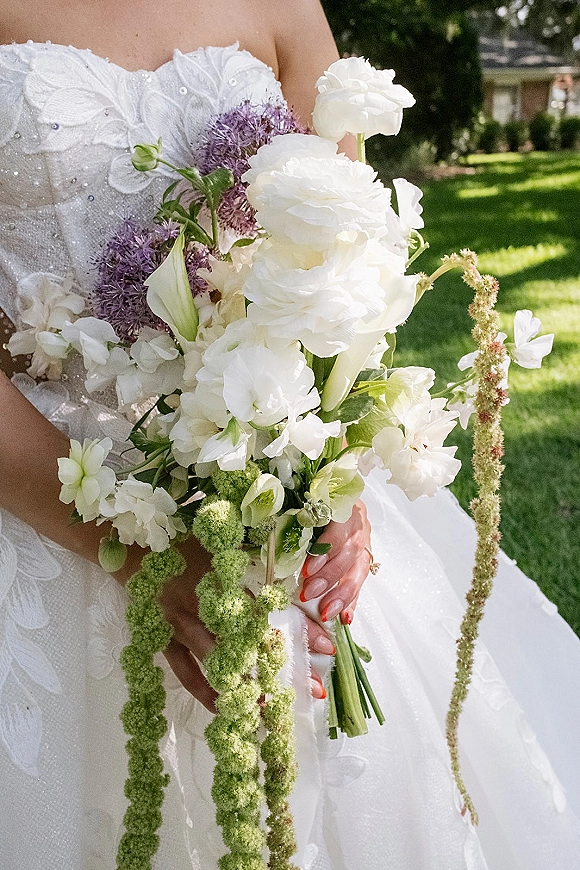
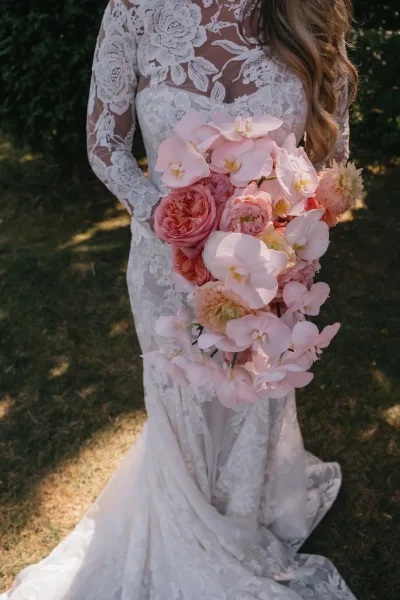
The classic waterfall. The most traditional cascade is rounded and full at the top, then tapers into a long, defined point for a clean teardrop silhouette, a continuous fall of blooms from wide to narrow. It feels formal and traditional, associated historically with grand weddings where long veils and full skirts called for florals at the same scale, and it suits a floor-length gown and a ceremony with room to be seen. The waterfall is the most demanding cascade to build and carry, since its length and density require the most trailing material and the most careful mechanics, but against a dramatic gown in a grand room it remains the benchmark the other shapes are measured against.
Small cascades. A small cascade keeps the trailing teardrop shape at a reduced scale, giving the drama without the length or weight of a full waterfall. The top cluster stays compact and the trail is shorter, which makes the style manageable for a petite bride or a less formal setting and lowers both the flower count and the cost. The teardrop still reads even when small, and a compact cascade of callas or orchids can feel more modern than a large romantic waterfall.
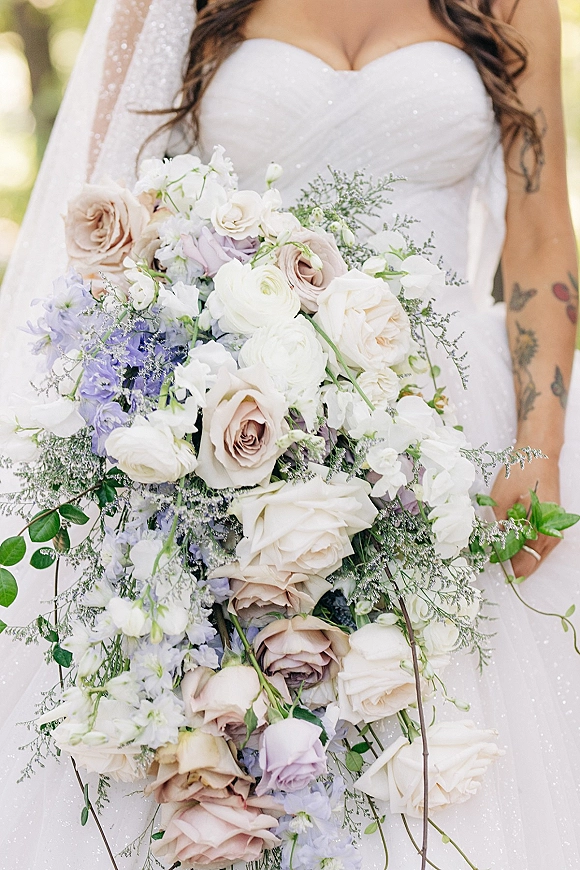
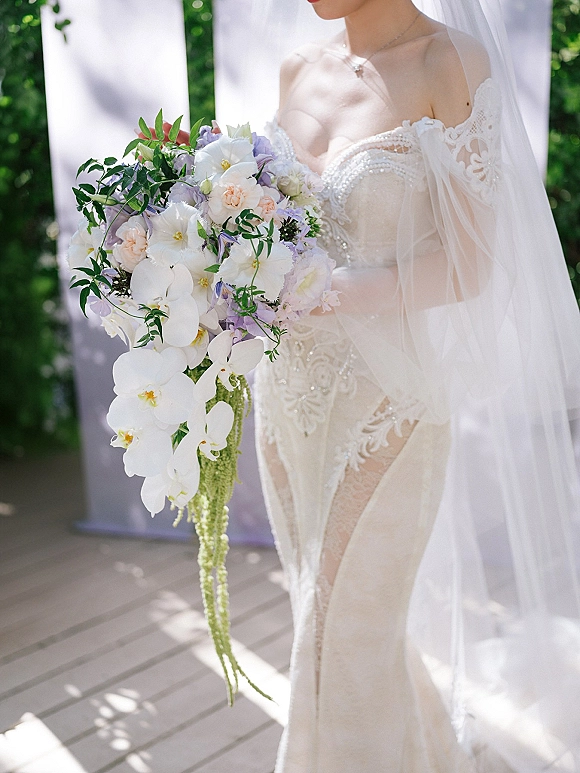
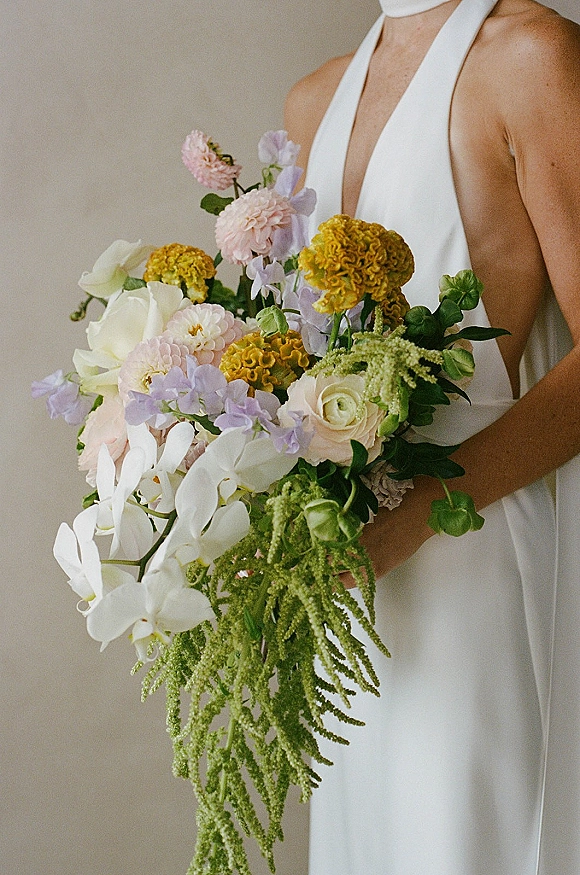
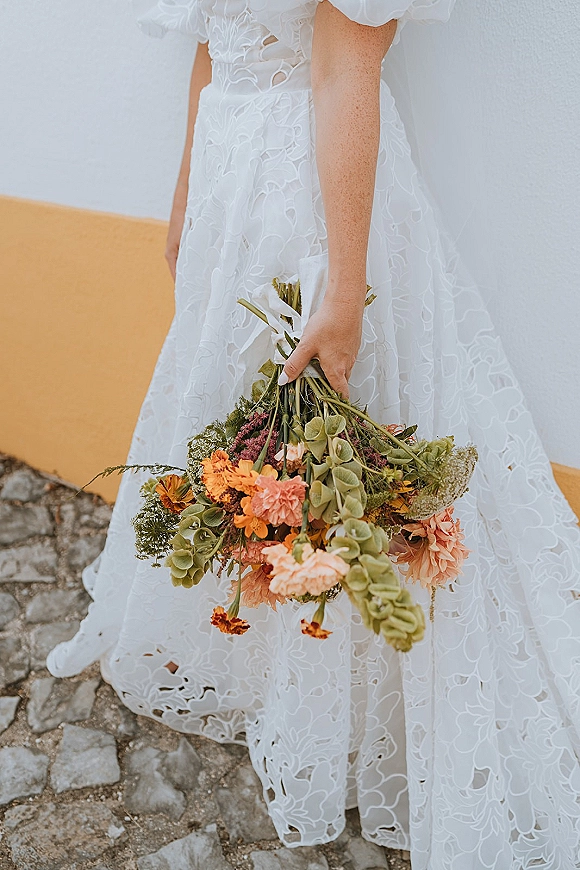
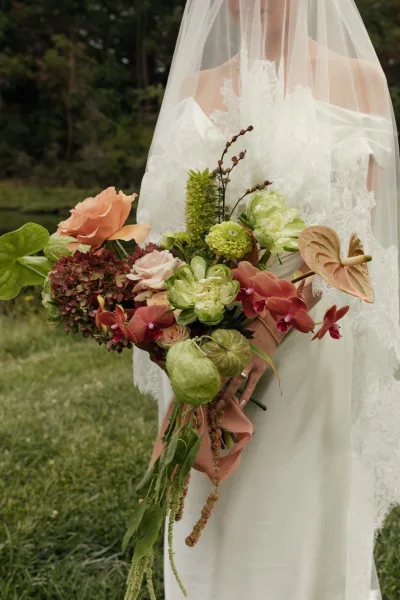
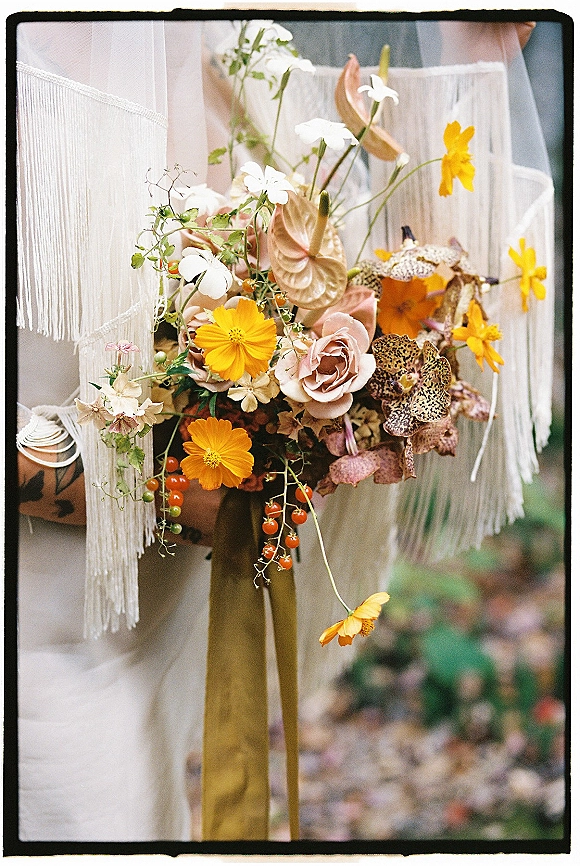
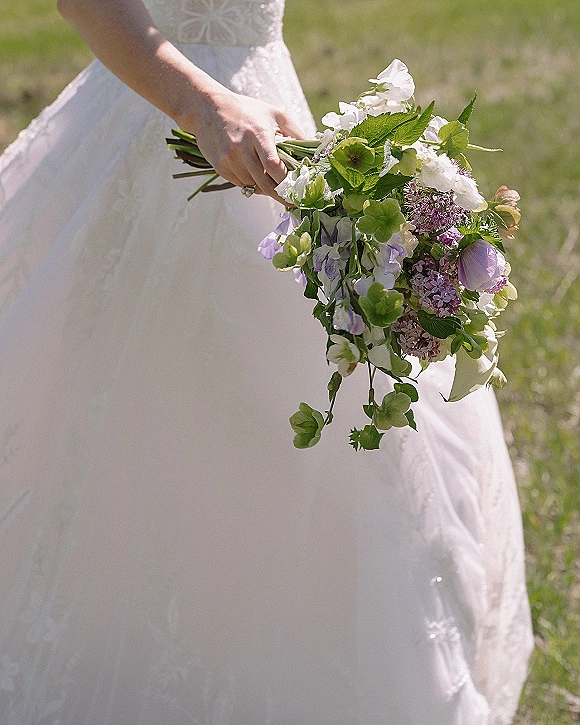
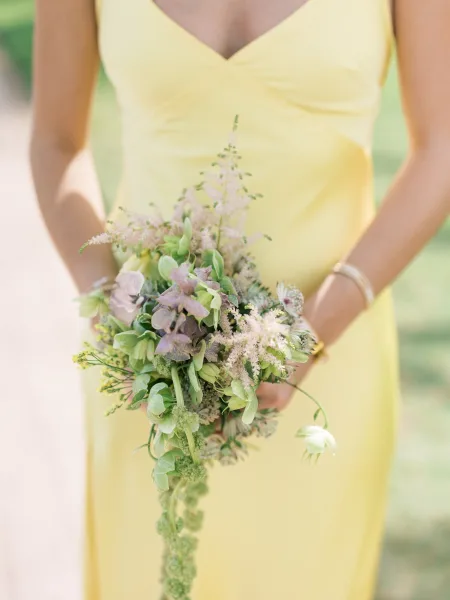
Modern takes. The cascade has moved well beyond the dense formal waterfall into looser, more contemporary shapes. A modern cascade often reads asymmetric and airy, with negative space between blooms and trailing greenery rather than a solid mass, and material choices push it further: a greenery-forward trail reads minimal and botanical, a calla or orchid cascade looks sleek and architectural, and a dried or grass-heavy trail reads boho. These lighter interpretations keep the drama of the trailing shape while shedding the heaviness that once defined it.
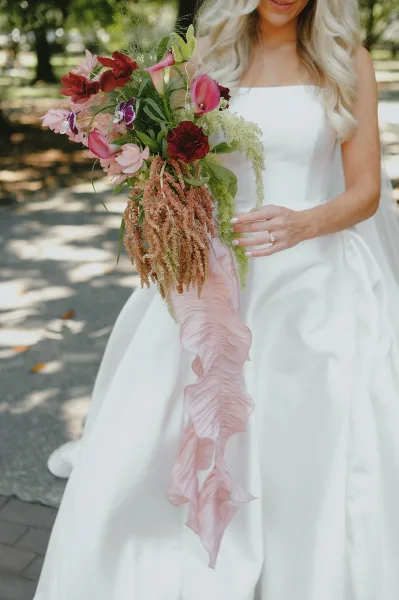
The asymmetric cascade deserves its own mention, since it is the shape driving much of the style’s modern revival. Instead of a symmetrical teardrop falling straight down the center, an asymmetric cascade trails off to one side, longer on the left or right, which feels relaxed and contemporary and photographs with a sense of movement even when the bride stands still. It suits a couple who wants the drama of a trail without the formality of a traditional waterfall, and it pairs especially well with a simpler gown, since the off-center line adds the visual interest a heavily detailed dress would otherwise provide.
Cascading Calla Lily and Orchid Bouquets
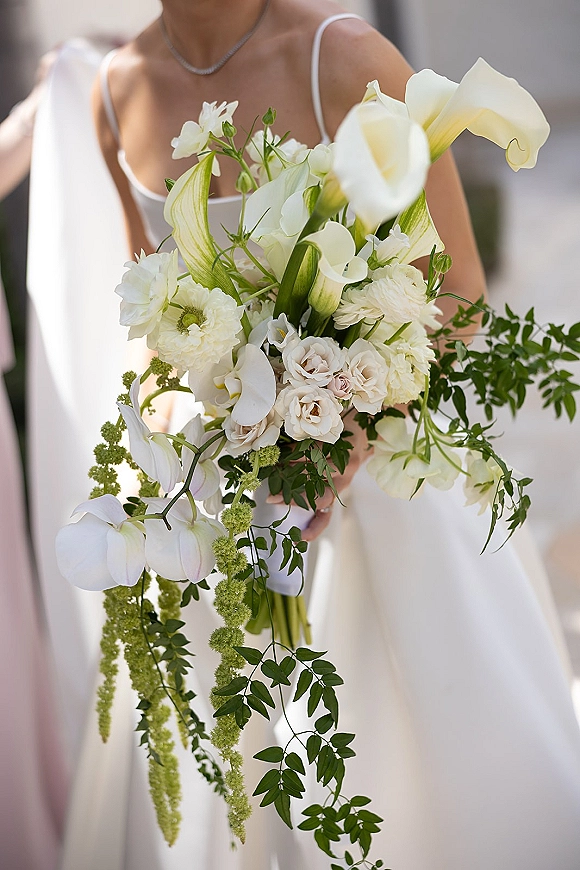
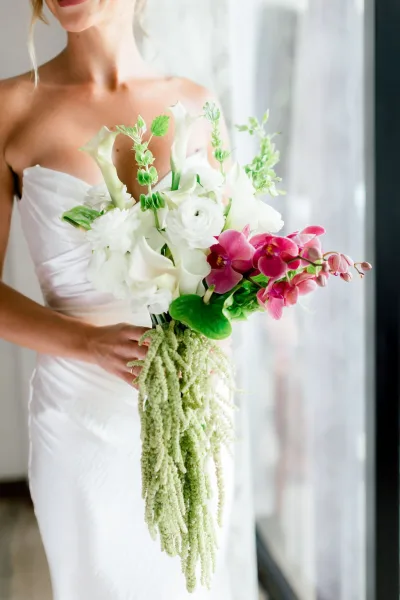
Calla cascades. Callas cascade with a natural grace because their long, flexible stems curve on their own, producing a clean trailing line without heavy wiring, so a calla cascade looks sleek and modern rather than lush. White long-stem callas make the most architectural cascade, the exposed green stems becoming part of the downward line, while trailing greenery softens the effect into something more organic. Because callas hold their shape, a calla cascade stays defined through a long day, and it pairs especially well with a sleek column or sheath gown. See the full range of calla lily wedding bouquets for hand-tied and long-stem alternatives.
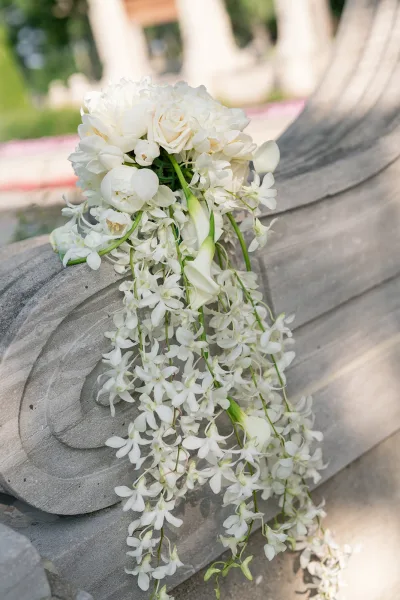
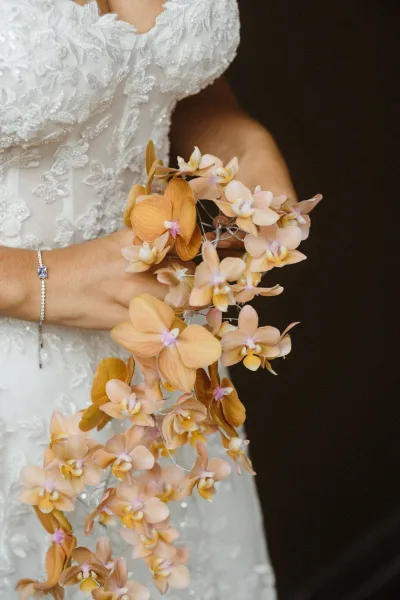
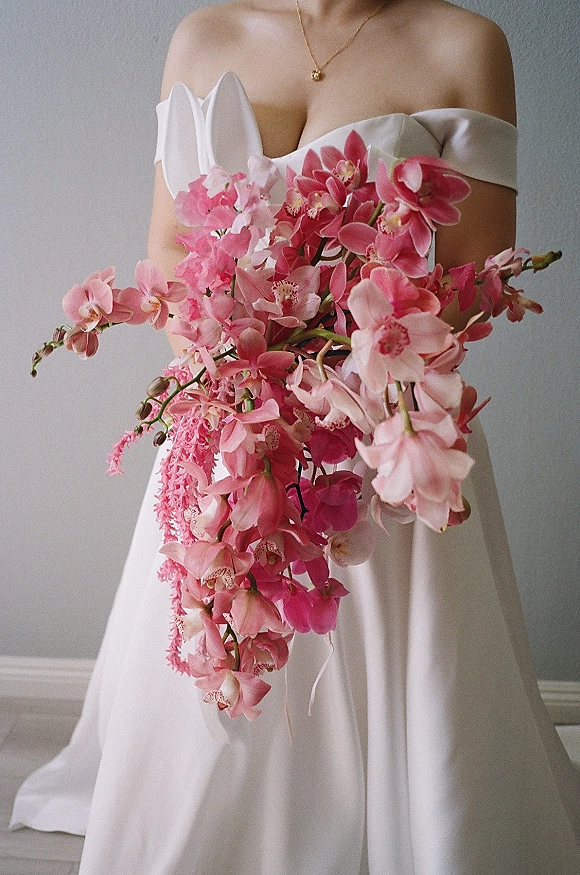
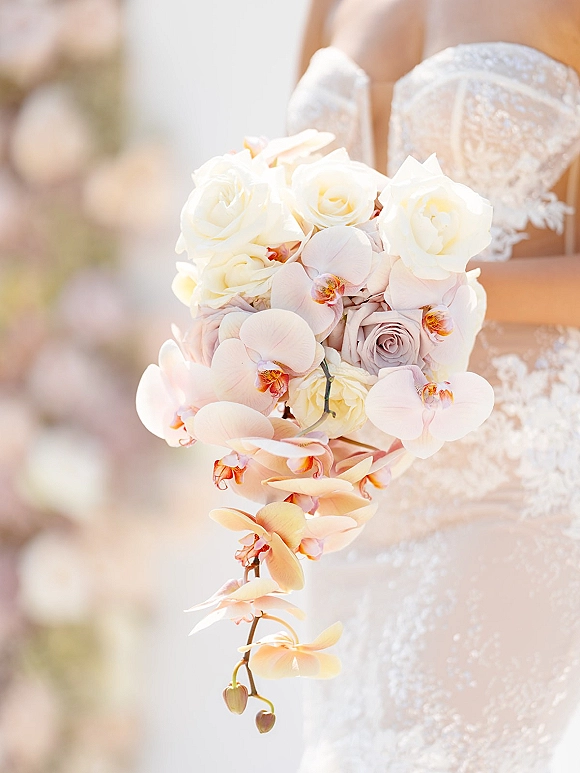
Orchid cascades. Orchids are among the best flowers for a cascade because many varieties grow on naturally arching, trailing stems, so a spray of phalaenopsis or dendrobium drapes with an elegant curve built in. A cascading orchid bouquet feels exotic and refined, with the individual blooms running down the trailing stem like a string of flowers, and it suits tropical and destination weddings as well as formal ceremonies wanting something less expected than roses. White phalaenopsis produce a soft, luxurious cascade, while deep purple or spotted varieties add drama, and orchids hold up remarkably well out of water through a warm-weather day.
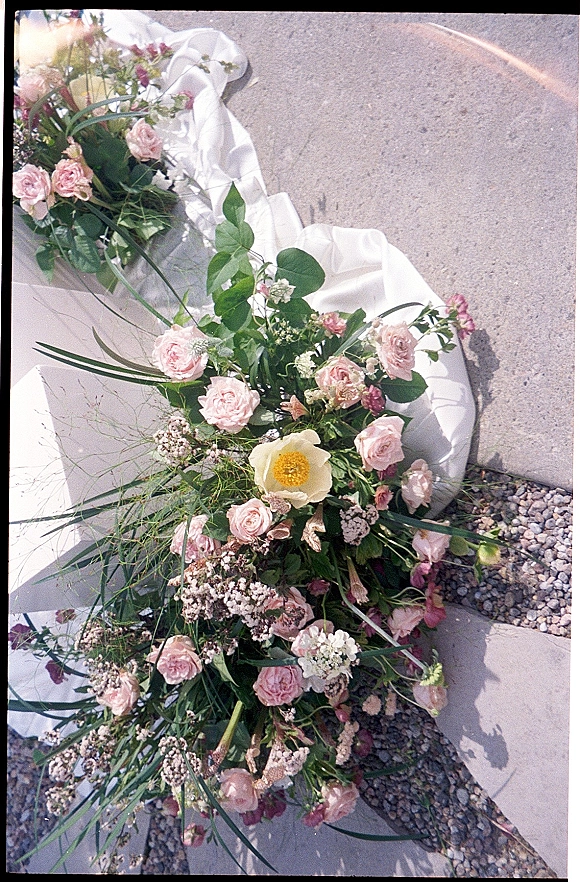
Roses and peonies also cascade beautifully when paired with the right trailing material, which is worth knowing for a couple who wants a lush, romantic waterfall rather than a sleek architectural one. Here the focal blooms cluster densely at the top and the trail is built from trailing greenery, stephanotis, or smaller wired flowers, so the roses supply the fullness and the greenery supplies the fall. This is the most classic cascade recipe and the one that reads most traditionally bridal, and it suits a couple whose gown and setting call for softness and volume over the clean line that callas and orchids give.
White and Fall Cascading Bouquets
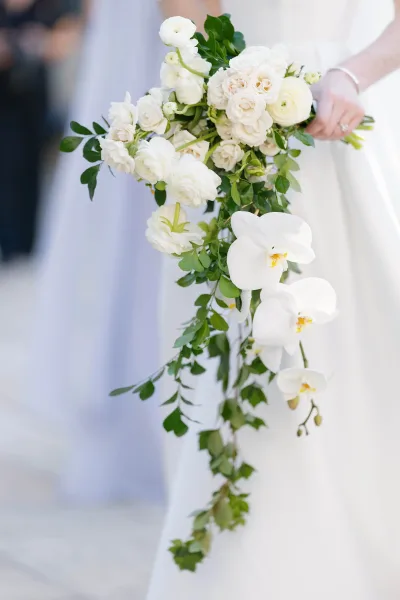
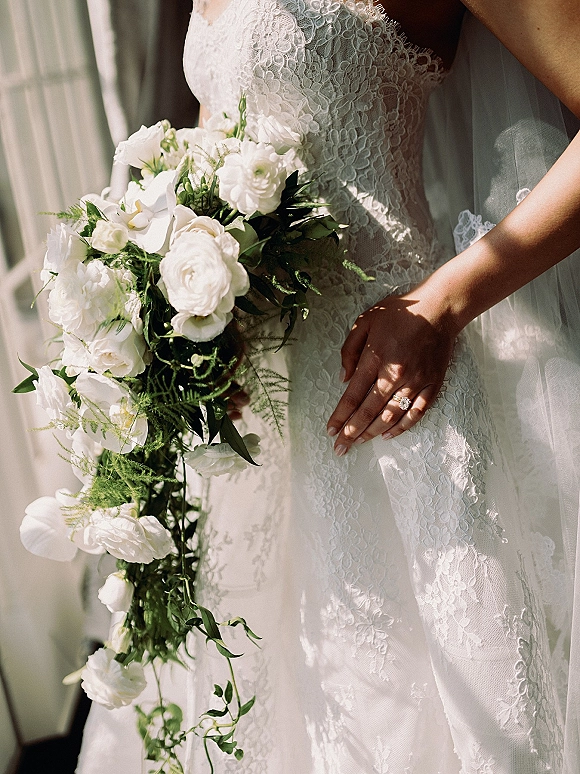
White cascades. The most formal version of the style, an all-white cascade trails pale blooms in a clean teardrop that looks elegant and bridal in the most traditional sense. White roses, callas, orchids, and stephanotis all cascade well, and combining them adds texture while keeping the single-color line. Green is what keeps a white cascade from washing out, so trailing ivy, jasmine vine, or eucalyptus runs down the length to give the white definition and movement, the same restraint that defines most white wedding bouquets. The all-white cascade suits ballroom and church settings where the formality matches the room.
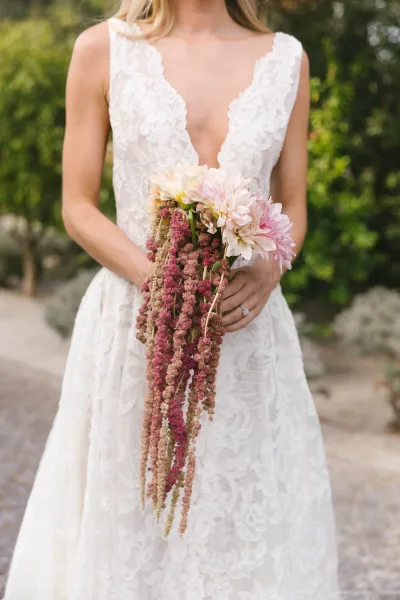
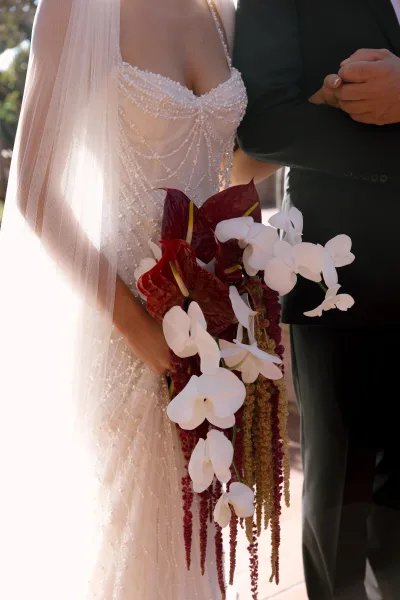
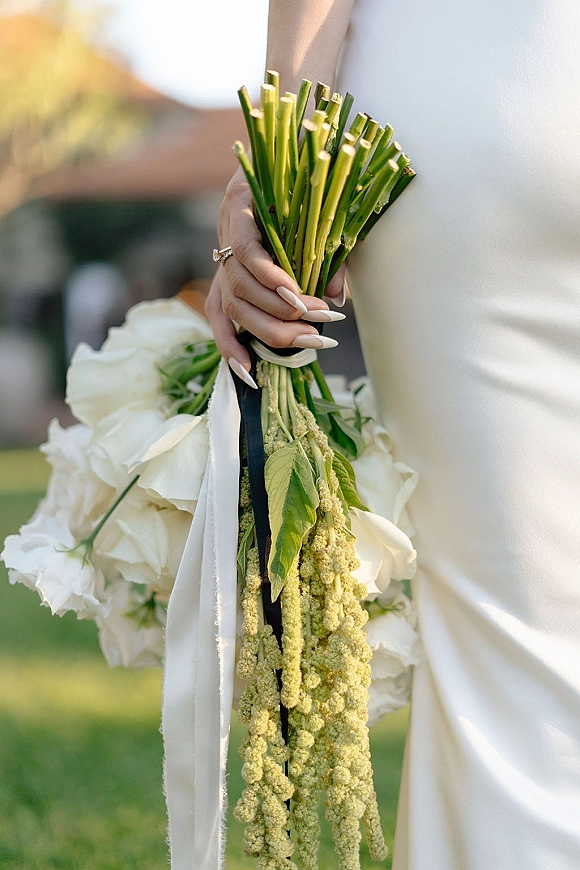
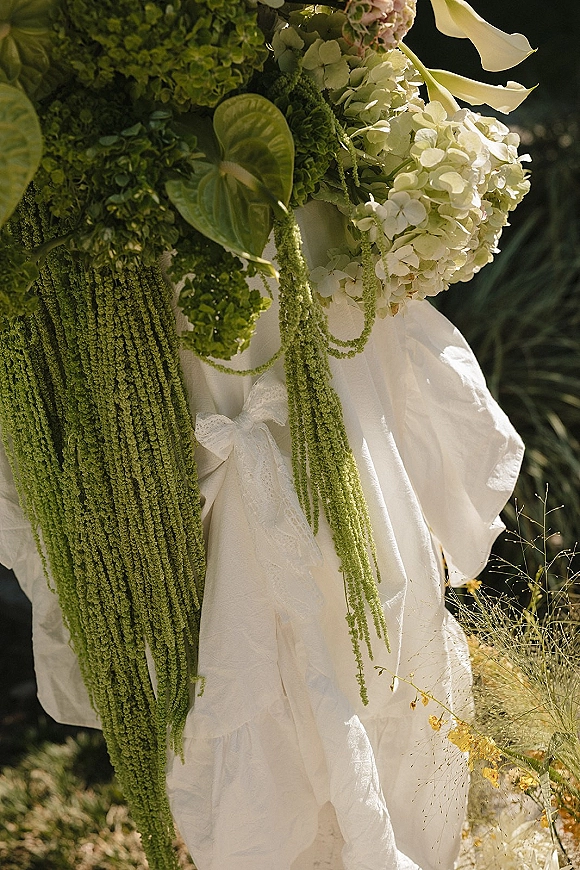
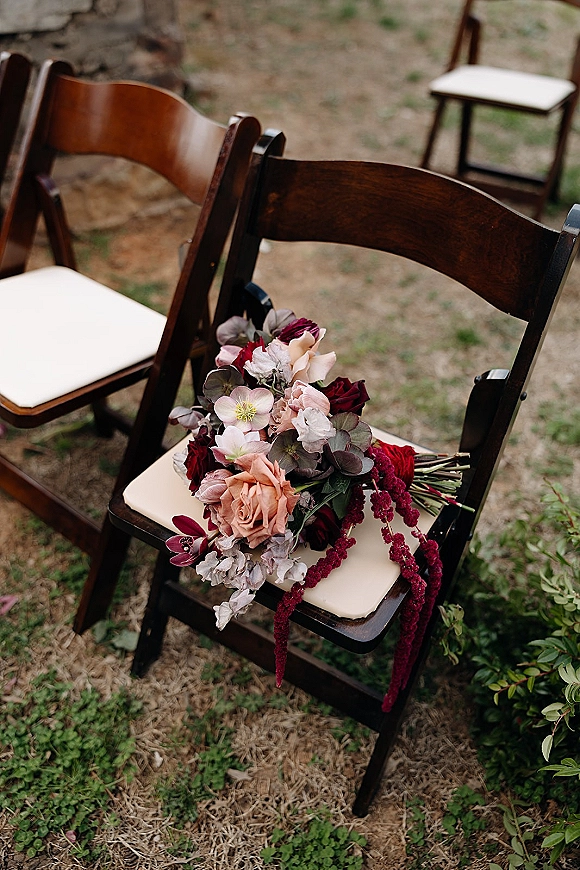
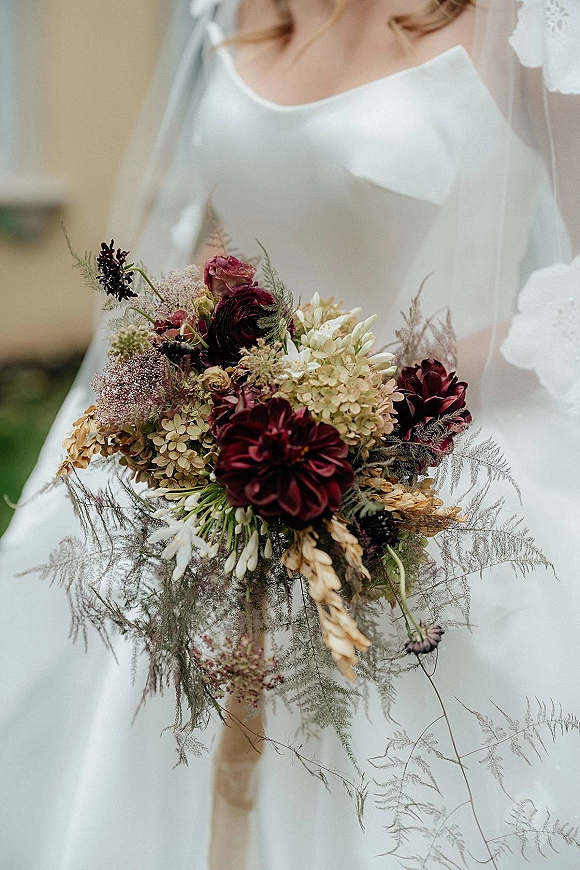
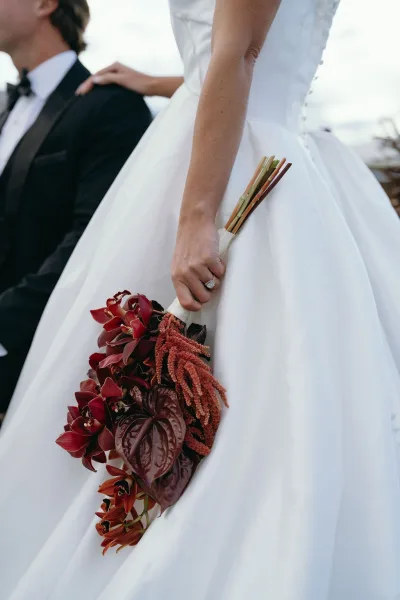
Fall cascades. A fall cascade brings autumn’s warm palette into the trailing shape, with burgundy, rust, and orange blooms falling into a teardrop softened by dried grasses and trailing greenery. The season’s trailing textures, among them wheat, amaranthus, and seeded eucalyptus, are natural drape material, so a fall cascade drapes with movement built from the palette itself. Hanging amaranthus is the signature element, its rope-like ruby trails dropping in a way no other flower matches, while dahlias and garden roses fill the top cluster. The result feels richer and more organic than a formal white waterfall, and it draws on the same warm palette that runs through most fall wedding bouquets, which suits a fall wedding in a barn, vineyard, or garden.
Choosing Flowers That Trail Well
Not every flower cascades, so the recipe starts with material that drapes on its own. The best trailing flowers grow on flexible or arching stems, callas, orchids, and sweet peas, while the length and movement usually come from vines and greenery rather than from the focal blooms themselves. Focal flowers cluster at the top where the shape is fullest, then the trail is built from progressively lighter, more flexible material so it tapers cleanly to a point, with roses, peonies, and hydrangeas anchoring the top and stephanotis, orchids, and small wired blooms carrying the eye down.
Greenery and trailing elements. Greenery is the backbone of most cascades, doing the work of length and movement that flowers alone cannot. Trailing ivy and jasmine vine give a soft, natural fall, amaranthus adds rope-like drama, and eucalyptus brings a cool tone and gentle drape, and the greenery is often what determines the trail’s length and shape before a single focal flower goes in. The balance of green to bloom sets the mood: a greenery-heavy cascade looks organic and garden, while a bloom-heavy cascade with greenery only as connective tissue looks lush and formal. Matching the greenery to the setting does as much for the look as the flower choice.
Cascade Weight and How to Carry It
A cascade weighs more than a round bouquet of the same flowers because of the added trailing material and the mechanics that hold it, so weight is worth discussing with a wedding florist before the day. A well-built cascade balances that weight so it sits comfortably in the hands without tipping forward, but an overlong or dense trail can become tiring to hold through a long ceremony.
The carry is part of the design. A cascade is held slightly lower and away from the body so the trail hangs free and reads at full length, rather than pressed against the skirt where it disappears. Because the shape is meant to be seen falling, it photographs best when the bride lets it drop naturally rather than gripping it high, which is worth practicing before walking down the aisle.
Length is the choice that most affects both the weight and the look, so it is worth deciding deliberately. A trail that ends at the hip reads modern and stays light and manageable; one that falls to the knee makes a fuller statement; and a floor-skimming waterfall is the most dramatic and the most demanding to carry. Matching the length to the gown matters too, since a trail should complement the skirt rather than fight it, and a bride planning to hold the bouquet through a long ceremony and receiving line may prefer a shorter, lighter cascade she can carry comfortably all day.
Cascade Versus Round and Hand-Tied Bouquets
The cascade sits at one end of the bouquet-shape spectrum, defined by downward movement, while round posies and hand-tied clusters sit at the other, defined by a contained, upward shape. The cascade makes a formal, maximalist statement; the round bouquet looks classic and neat; the hand-tied feels relaxed and modern. The choice is as much about the mood you want as the flowers.
Practical trade-offs come with each. A cascade demands more construction, weighs more, and costs more, but delivers unmatched drama and a sense of motion. A round or hand-tied bouquet is lighter, simpler, and easier to carry, and it suits a bride who wants the flowers to complement rather than command. Seeing the shapes side by side is the fastest way to know which one your gown and setting are asking for.
Cascades for the Bridal Party and Outdoor Weddings
The bridal party. A cascade is usually reserved for the bride, since it is the statement piece, with the party carrying smaller round or hand-tied bouquets that echo its flowers without competing, a contrast that reinforces the cascade as the day’s lead arrangement. When a party does carry cascades, they are kept much shorter and lighter than the bride’s, more a nod to the shape than a full waterfall, and repeating one or two of the bride’s trailing elements ties the group to her.
Destination and outdoor weddings. Cascades suit open, natural settings especially well, since the trailing shape reads beautifully against the movement of an outdoor breeze. Orchids are the natural choice for a tropical destination, where they hold up remarkably well out of water, while greenery-heavy trails suit a garden or vineyard. Durability matters more outdoors, so the flower list should favor callas, orchids, and hardy greenery that survive heat and handling, and a looser, organic cascade matches the relaxed mood of a destination wedding better than a rigid formal waterfall.
Cost, Care, and Choosing a Cascade for Your Gown
What drives the cost. A cascade generally costs more than a round bouquet of the same flowers, because the trailing shape uses more material and takes more of a florist’s time to wire, balance, and build. The levers within reach are length and density: a shorter or lighter cascade uses less material and construction, leaning on greenery rather than premium blooms for the trail stretches the budget, and choosing flowers that trail naturally, callas and orchids, reduces the wiring a florist would otherwise need.
Keeping it structured. A cascade relies on its mechanics holding, so the flowers need to survive being wired and handled through a long day, which is why sturdy blooms and hardy greenery keep their form while delicate flowers can leave gaps in the trail. Kept cool and out of direct sun until the ceremony, carried by the bound handle, and set down flat rather than stood upright, a well-built cascade holds from the aisle to the last photo.
A cascade is a commitment to a statement bouquet, so it works best matched to a gown and a room that can carry it: floor-length and full gowns balance a long waterfall, sleek columns pair with a graphic calla cascade, and a garden or destination setting suits a looser trail. It is one shape among many, so compare it against the wider range of wedding bouquets before committing, and since the shape is built as much as designed, work with a florist whose real-wedding portfolio shows cascades so you can see how their trails actually fall.
Frequently Asked Questions
What is a cascading wedding bouquet?
It is a bouquet shaped like an upside-down teardrop, full and rounded at the top and tapering into trailing flowers and greenery that spill downward from the bride's hands. The downward, waterfall-like movement is what defines the style and separates it from a round posy or hand-tied cluster.
Which flowers work best for a cascading bouquet?
Callas, orchids, and roses are the top choices, along with trailing material like amaranthus, ivy, and jasmine vine. Callas and orchids cascade naturally because their stems arch and trail on their own, while roses fill the top cluster and greenery extends the line.
Are cascading bouquets heavier or more expensive than round ones?
Generally yes. The trailing material and added construction make a cascade weigh and cost more than a rounded bouquet of similar flowers. A small or compact cascade reduces both the weight and the flower count while keeping the trailing shape.
What gown suits a cascading bouquet?
Floor-length and full gowns balance a long waterfall cascade, while sleek column and sheath gowns pair well with a graphic calla cascade that echoes their vertical line. A petite frame or a less formal setting is better matched to a small, shorter cascade.
Can a cascading bouquet work for a fall or outdoor wedding?
Yes. A fall cascade uses warm blooms like dahlias and garden roses with trailing amaranthus and dried grasses that hold up outdoors and add natural movement. Orchid and greenery-heavy cascades also suit garden and destination settings that call for a looser, more organic trail.