How to Choose a Wedding Bouquet
Choosing a wedding bouquet comes down to four linked decisions: the shape that sets its silhouette, the flower that leads it, the color it reads as across a room, and the season that governs what is available. Settle them roughly in that order and the smaller choices, greenery, ribbon, stem count, fall into place behind them.
Shape is the decision people skip and regret, because it is set before a single flower is chosen and it controls how the bouquet sits against the gown. Flower comes next, and it is worth choosing by behavior as much as by looks, since a bloom that collapses by the reception undoes the prettiest palette. Color is a coordination decision rather than a standalone one: a bouquet is seen against the dress and the setting, so its palette is chosen alongside them, not after. Season sits underneath all three, quietly deciding which flowers are at their best and which will be shipped in at a premium.
The order matters because each decision narrows the next. A compact round in an all-white key reads nothing like a loose, trailing gather in warm autumn tones, even when the two share half their flowers. Couples who start with a single must-have bloom often paint themselves into a corner, especially if that flower is out of season; couples who start with the shape and the mood they want leave the florist room to substitute intelligently and to work within a budget. Bring pictures rather than a flower list, name the season and the setting, and let the arrangement build from there. The pages in this collection are organized around exactly those four levers, so you can move from a shape you like to the flowers, colors, and seasonal versions that fit it.
The Bouquet Shapes, and What Each One Suits
Shape sets the silhouette before any flower is picked, and a handful of classic forms cover almost every wedding. Matching the shape to the gown and the venue is the fastest way to make a bouquet look considered rather than assembled.
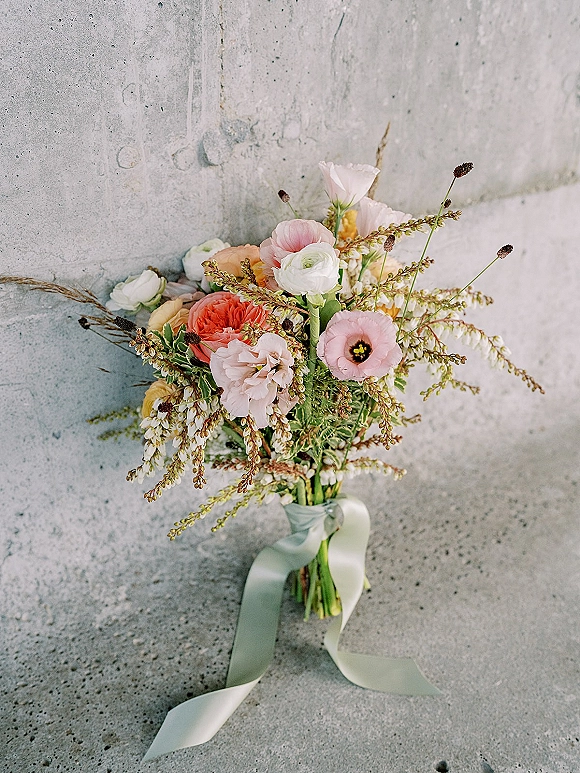
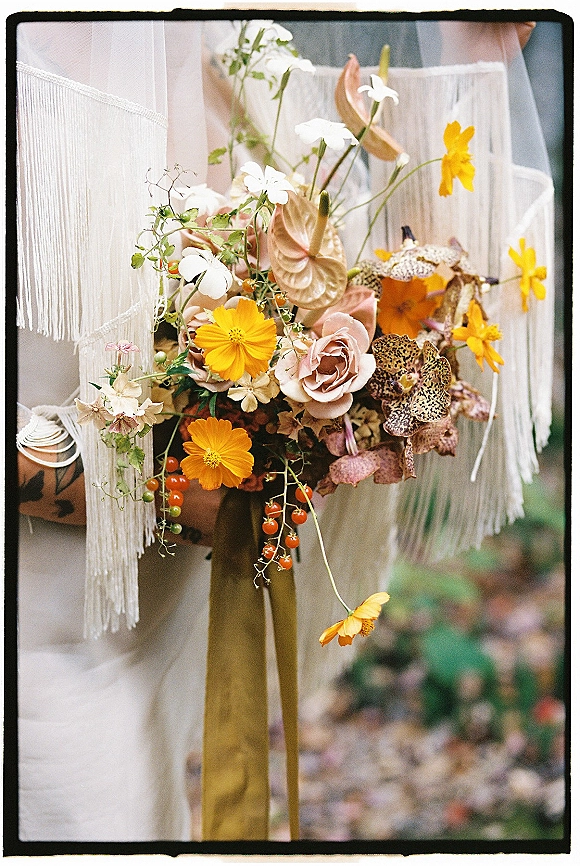
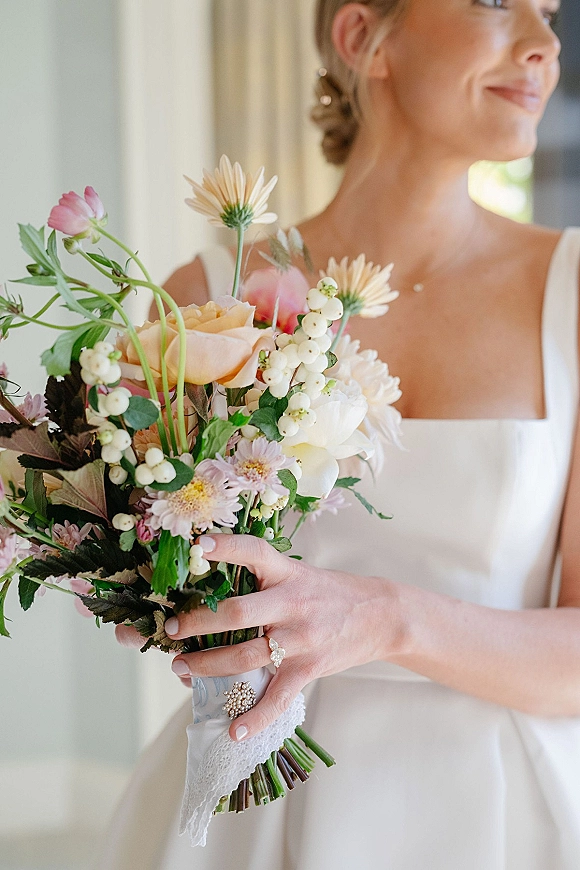
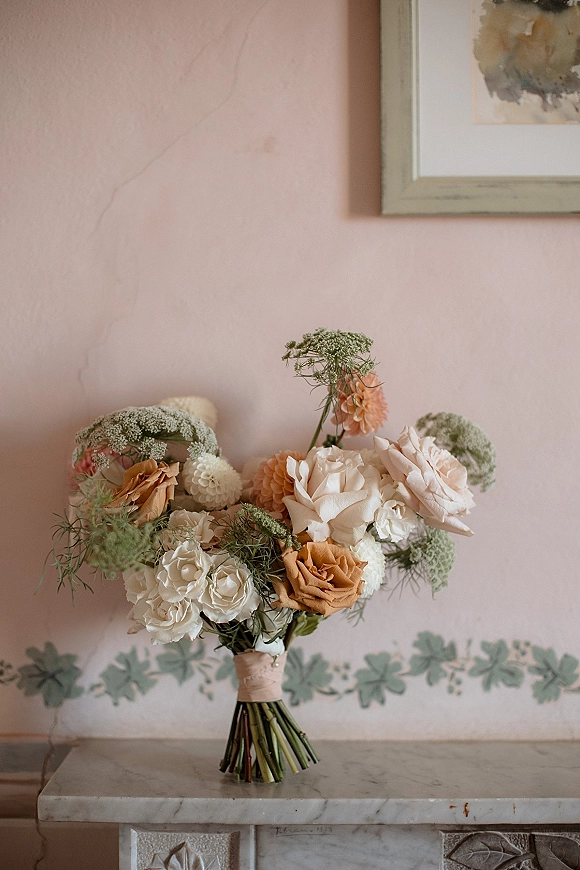
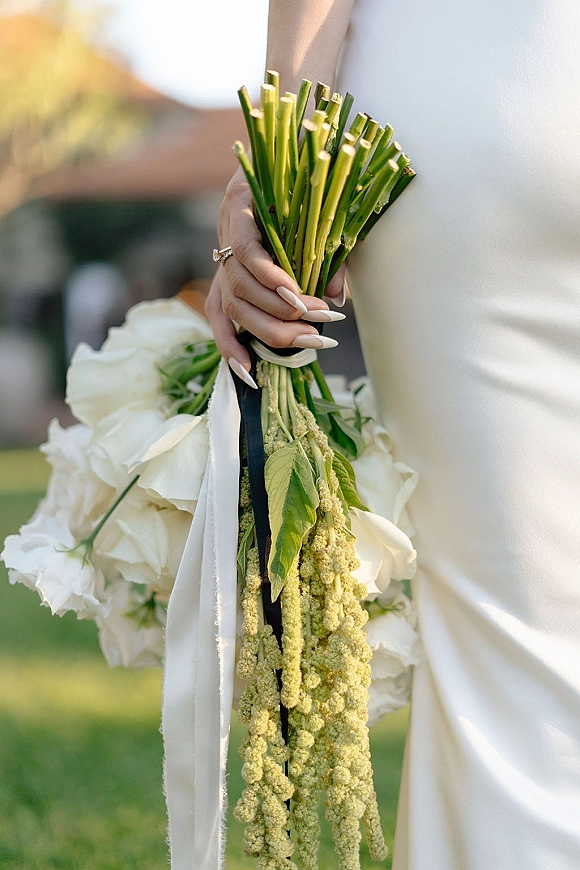
Hand-tied. Gathered loosely and bound low on the stems for a just-cut, garden-gathered look. It suits outdoor ceremonies, relaxed gowns, and anyone who wants the flowers to feel picked that morning. It is the most forgiving shape to carry and the one most florists default to.
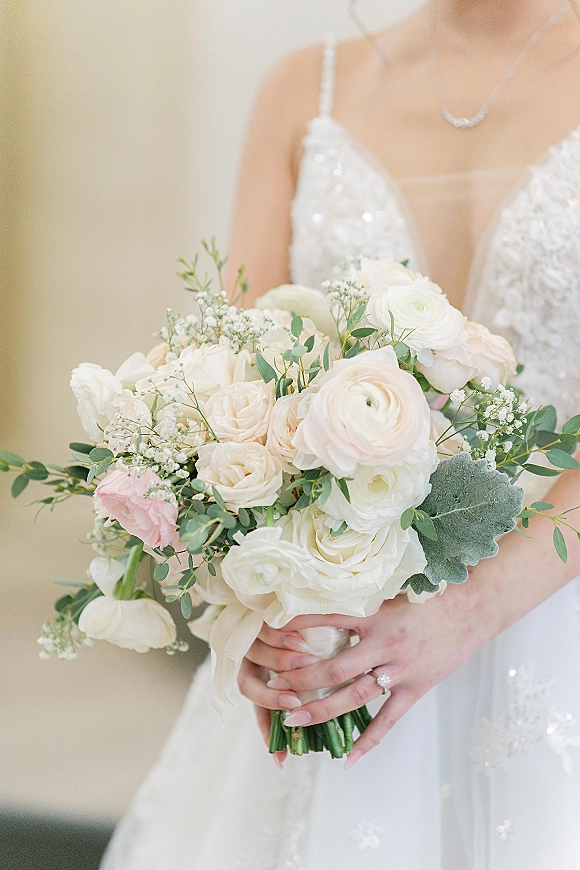
Round and posy. Compact and domed, with blooms packed to a clean edge. A round reads as polished and modern and pairs cleanly with a minimalist gown; a posy is the smaller version, easy to hold one-handed through a long ceremony. This is the safest shape for a bride who does not want to think about her hands.
Nosegay. A dense, tightly bound cluster, smaller than a posy and often ringed with a collar of greenery. It carries well at a smaller scale, which is why it frequently goes to bridesmaids or to a bride who wants something contained.
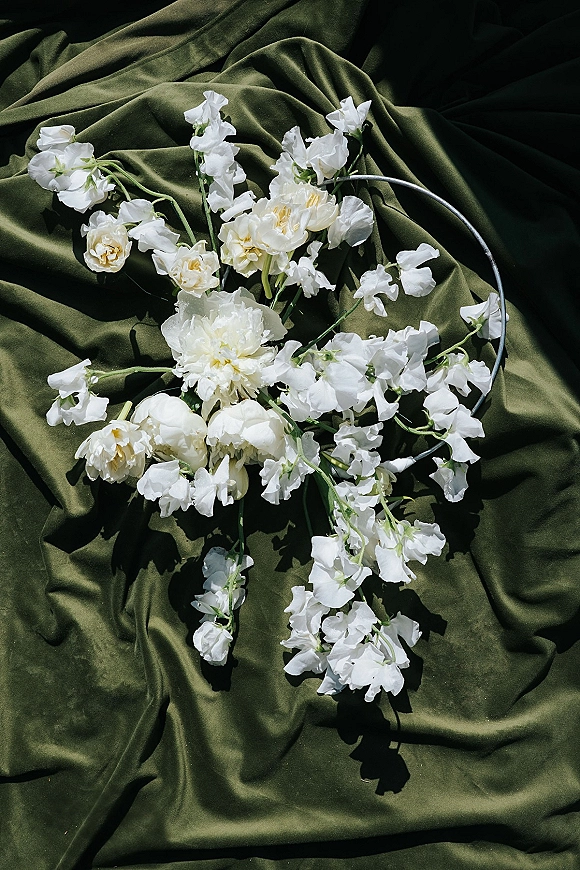
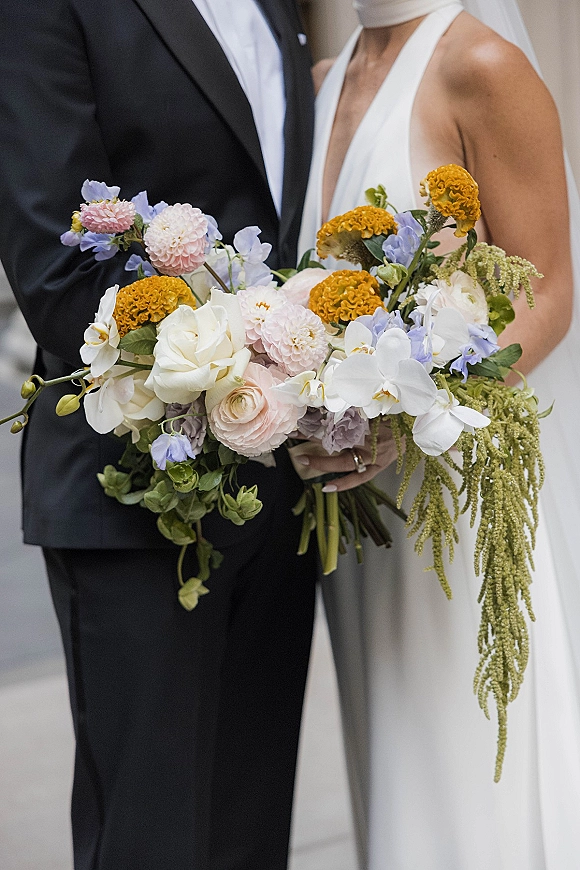
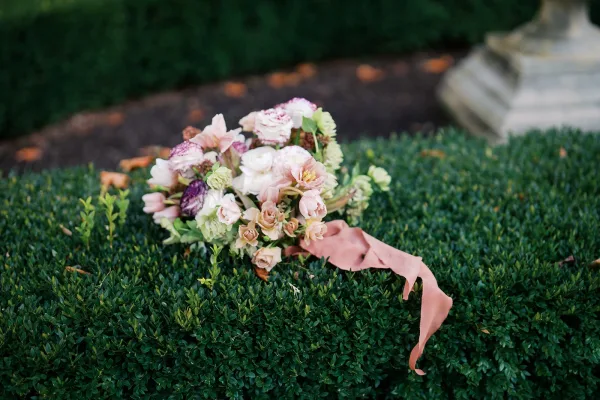
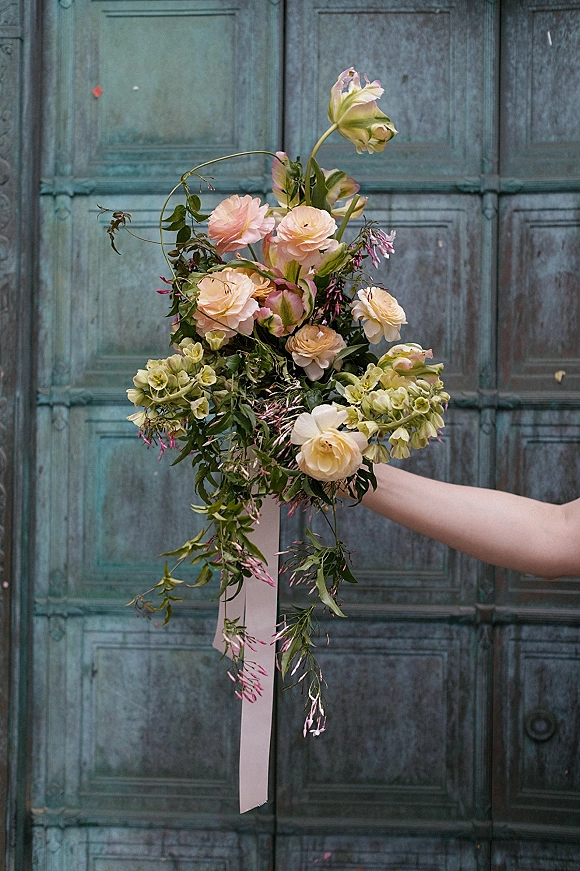
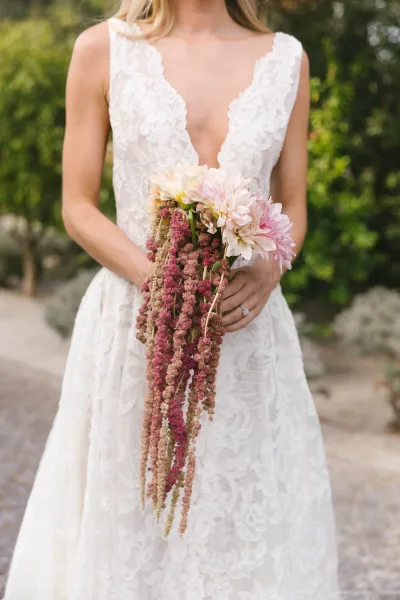
Cascade. Built to spill downward in a teardrop, adding a vertical line that lengthens full-length portraits. It reads formal and dramatic and belongs with a structured gown and a grand room. Because it is heavier and wants a specific grip, it rewards a florist who builds a proper handle into it. The cascading wedding bouquet collection shows how far the shape ranges, from restrained trails to full waterfalls.
Composite and pageant. A composite, or glamelia, is sculpted from individual petals wired into one oversized bloom, striking and modern and genuinely fragile. A pageant, or presentation, bouquet is cradled in the crook of the arm, old-Hollywood in feel and best suited to a long, formal gown. Both are statement choices rather than default ones.
One rule covers the rest: the busier the dress, the quieter the bouquet, and the plainer the dress, the more the flowers can carry.
Sizing the Bouquet to You, the Dress, and the Room
A bouquet should be scaled to the person carrying it before anything else. A petite frame is balanced by a contained arrangement; a taller bride or a full ball gown can hold something with more presence. The most common mistake is scaling from a moodboard, where a bouquet that looks lavish on a table vanishes against a gown in a wide shot, or an oversized one swallows a small frame and grows heavy by the reception. When the size is genuinely in question, going a touch smaller almost always photographs better than going too big.
The venue pulls in the same direction. A ballroom carries a fuller bouquet that reads at a distance; a garden or a beach suits a looser gather that echoes the setting. Small and mini bouquets have their own following for good reason: they suit courthouse and elopement looks, they are simple to carry, and they let the dress do the talking. Whatever the target size, a florist works it out fastest from a full-length photo of the gown plus the bride’s height, because proportion is a relationship between the flowers, the body, and the frame, not a fixed stem count.
Choosing Flowers by How They Behave, Not Just How They Look
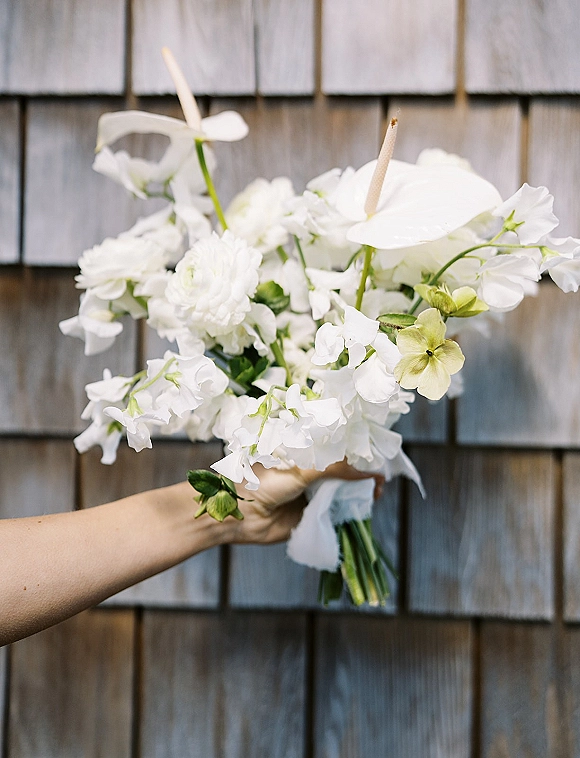
The most useful thing to know about a wedding flower is how it acts once it is cut, because the bouquet has to survive hours out of water. Roses and ranunculus are dependable and hold their form all day. Peonies open unpredictably, so a florist blends tight buds with open blooms to hit the right fullness at the right hour. Hydrangea and sweet peas drink hard and wilt if they dry out, so they go in last and stay cool until the ceremony. The reliable move is to pair a showy but sensitive bloom with a hardy one, so the arrangement still looks its best during the last dance.
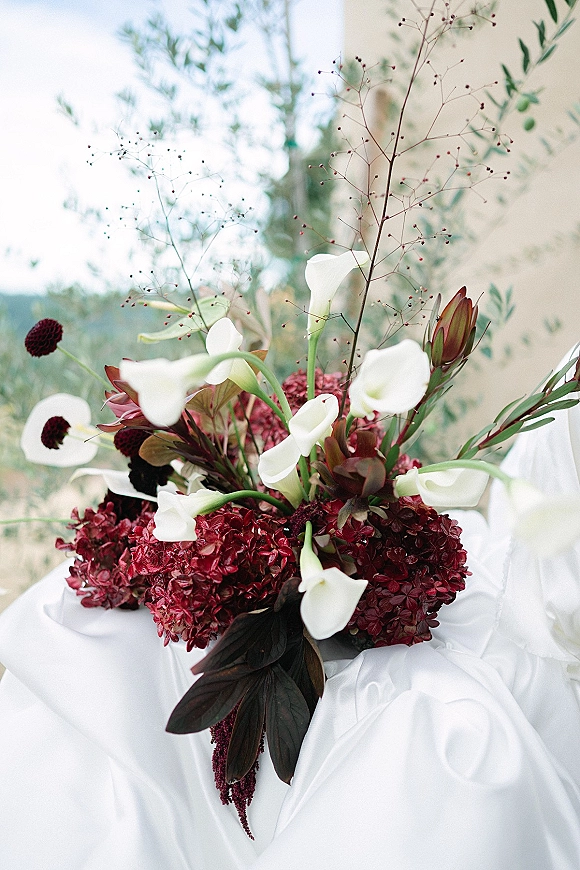
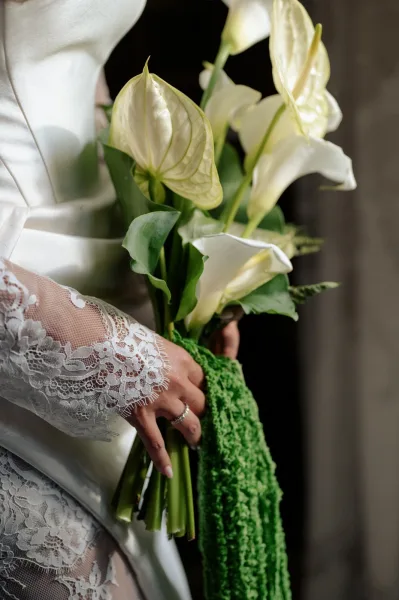
Certain flowers anchor a whole bouquet, and each brings a different feeling. Peony wedding bouquets are lush and full, with blooms that widen over the wedding week. Hydrangea wedding bouquets build cloud-like volume from only a few stems and stretch a budget. Lily of the valley wedding bouquets are small, fragrant, and heavy with bridal history. Calla lily wedding bouquets bring a sleek, architectural line, and sunflower wedding bouquets carry an open, sunlit warmth that suits rustic and late-summer weddings.
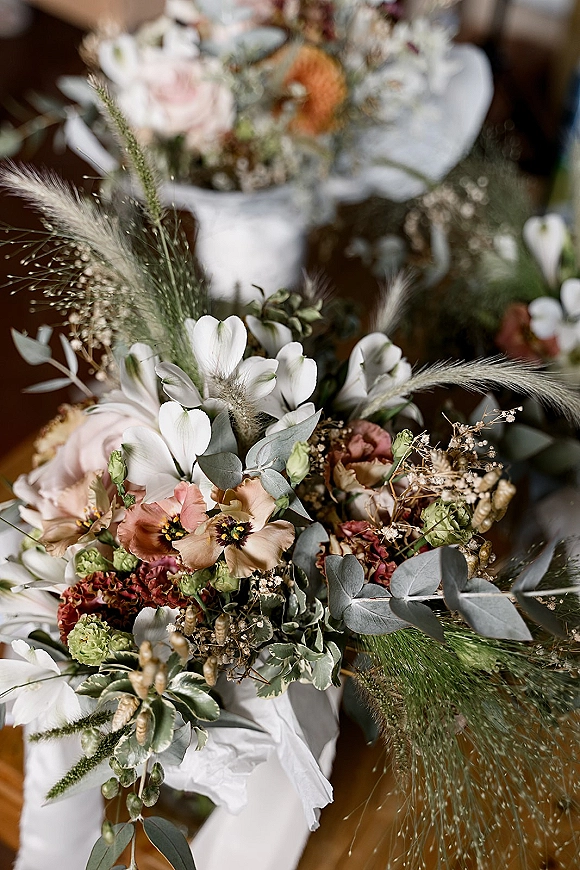
There are two other routes worth knowing. A wildflower wedding bouquet mixes cosmos, sweet peas, ranunculus, and daisies at uneven heights for a meadow-gathered look, while a bouquet led by eucalyptus and greenery leans on foliage for a soft, botanical feel with only a handful of flowers. A single-flower bouquet, all roses or all callas, reads confident and modern; a mix of five or six blooms tells a fuller story. Either works as long as one flower clearly leads and the rest support it, so the arrangement does not read as a committee.
Building a Bouquet Around Color
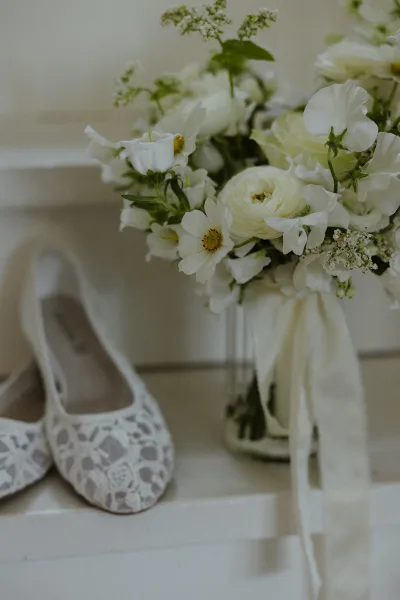
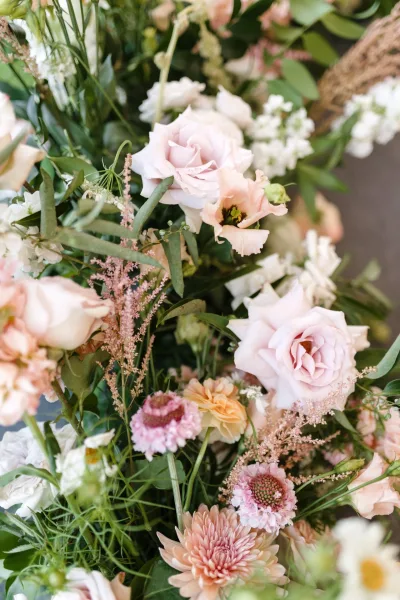
Color is chosen alongside the palette of the whole day, not bolted on afterward, because the bouquet is always seen against the gown and the setting. White wedding bouquets are the classic base, clean in every season and the easiest ground for a second shade. Pink wedding bouquets run from the softest blush to hot fuchsia and read romantic at every point on that ladder, while a pink and white wedding bouquet splits the difference and flatters nearly any gown.
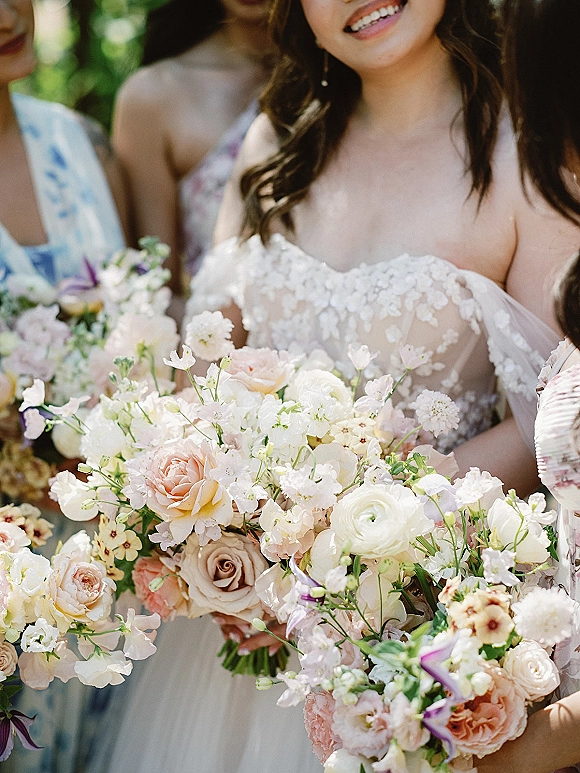
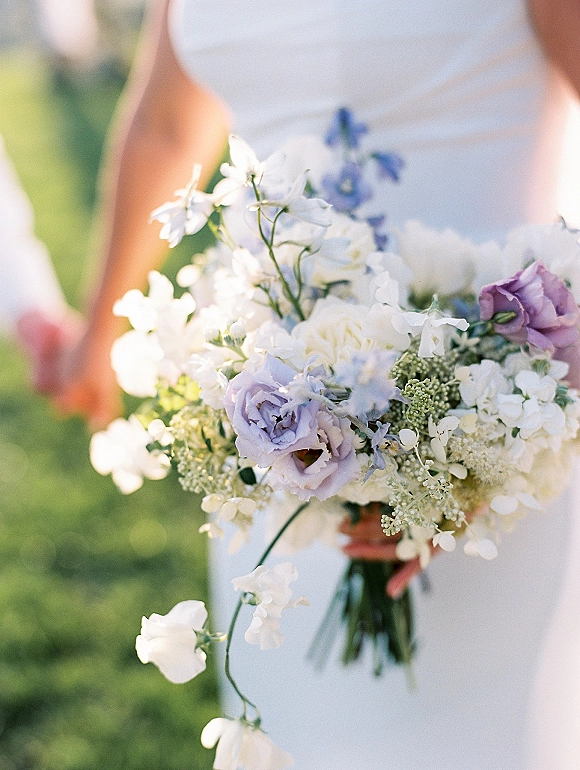
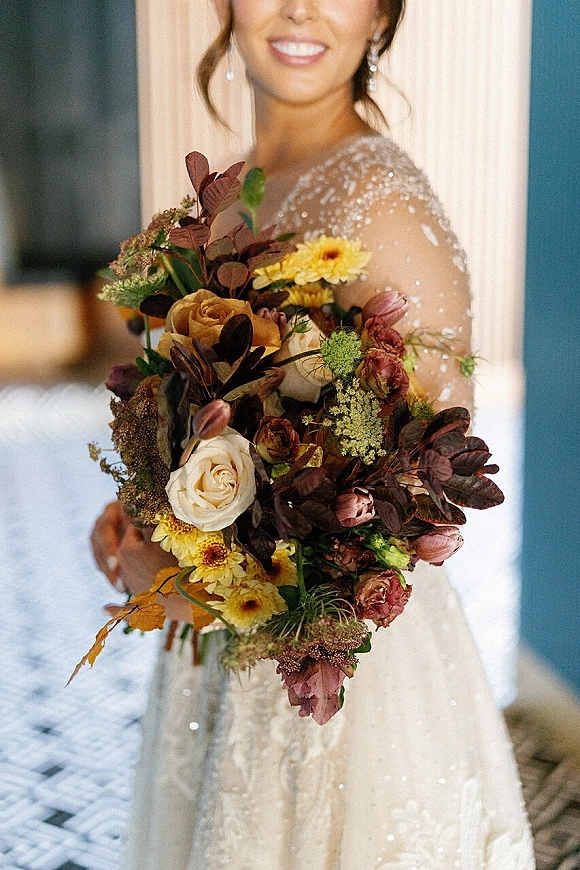
For a softer register, pastel wedding bouquets blend blush, lavender, mint, and powder blue into a quiet, multi-tonal palette. For depth, a red wedding bouquet holds its saturation in low light and photographs richest in autumn and winter. Blue, purple, burgundy, and yellow all pull the eye in their own direction and are usually built around one or two lead blooms rather than filled edge to edge. The practical rule is to match intensity to setting: pale palettes glow in open daylight and can wash out under a dark tent, while deep, saturated color does the reverse and keeps its punch after sunset. Two-tone palettes take a little more planning, since the ratio between the shades decides whether the bouquet reads as one color with an accent or as a genuine mix, and that balance is easier to judge from a real arrangement than from a swatch.
Wedding Bouquets Through the Seasons
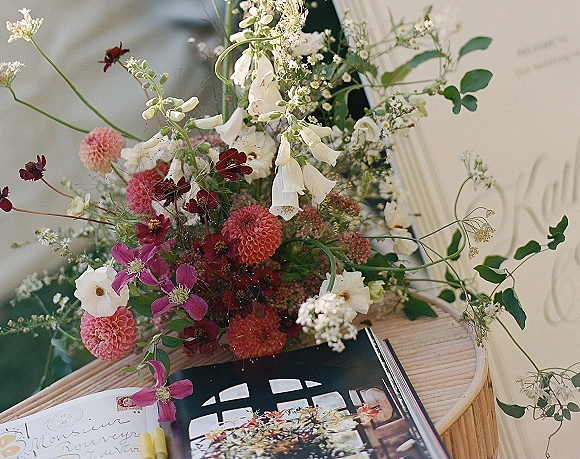
Season decides what is at its best, what is affordable, and what looks native to the day rather than shipped in. Spring leans on peonies, ranunculus, sweet peas, tulips, and lilac. Summer brings garden roses, dahlias, zinnias, and cosmos in fuller color. Autumn turns toward burgundy, rust, and amber, with dahlias, mums, and berried branches, all covered in the fall wedding bouquet collection. Winter favors ranunculus, anemones, amaryllis, and evergreen, often in a moodier or all-white key.
Buying in season keeps quality up and cost down, because local stems travel less and last longer. Chasing a flower out of its window means paying a premium for imports that have spent days in transit. The smarter request is for the in-season bloom that mimics the shape you love: garden roses stand in for peonies, ranunculus fills for almost anything ruffled, and lisianthus reads like a smaller rose. A florist who works in your season will name these swaps before you ask.
The Bridal Party: Bridesmaid, Toss, and Second Bouquets
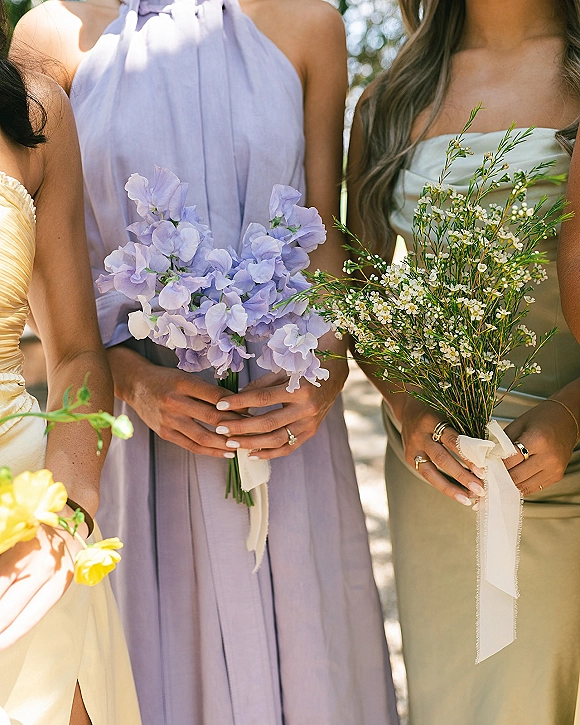
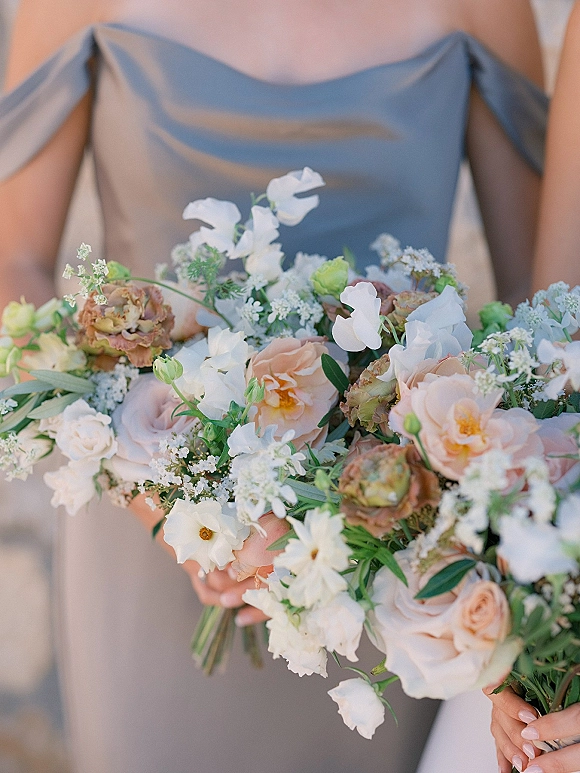
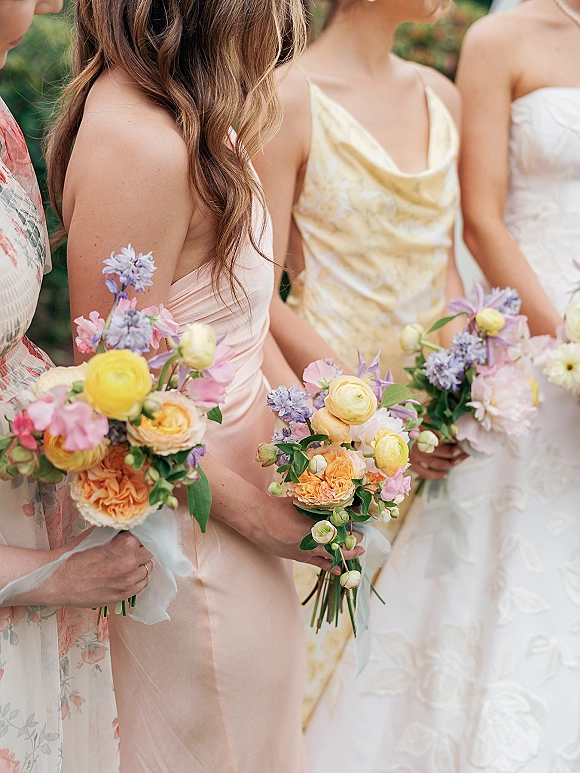
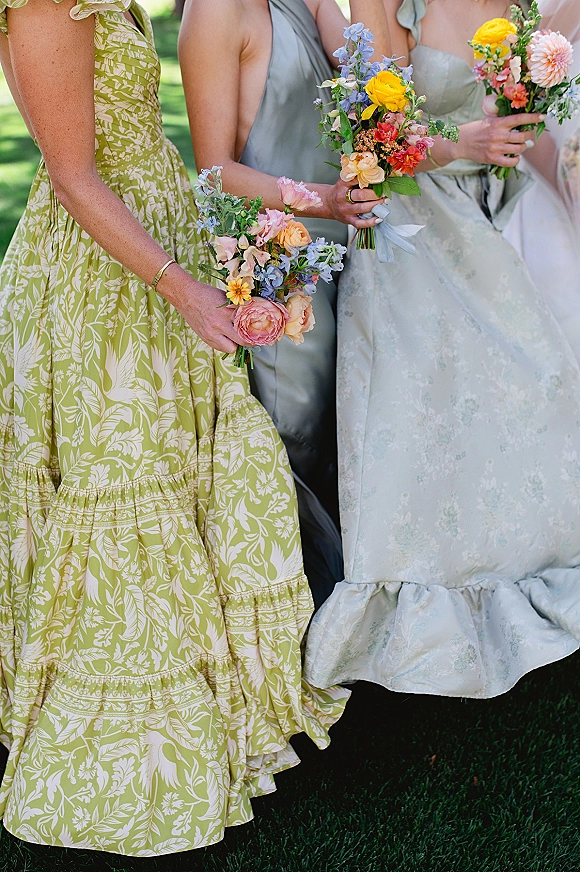
Most weddings call for a small family of bouquets rather than one. The bride carries the largest and most worked arrangement; the bridesmaids carry smaller echoes so the group reads as a set in photographs; the flower girl gets a petite version or a basket. Coordinating that group is its own small design problem, and the bridesmaid bouquet collection shows how couples handle it, whether they match every bridesmaid or vary the flowers within one palette.
Two smaller pieces round out the party. A toss bouquet is an optional, lightweight stand-in for the tradition, which lets the bride keep and preserve the real one. Some couples also carry a second, lighter bouquet for the reception, or send the bridal bouquet to the head table as a centerpiece once portraits wrap. Varying the size and density across the party, rather than making identical copies, keeps the aisle and the group portraits from looking flat.
Greenery, Ribbon, and the Personal Details
The elements around the flowers do real work. Greenery sets the register: soft eucalyptus for romance, glossy leaves for something crisp, grasses and ferns for a wilder look, so the foliage is a decision rather than a filler. Carried across the event, the same greenery ties the bouquet to the ceremony flowers and the reception greenery, which makes the whole day feel of a piece.
The wrap is the final note. Satin polishes, velvet and raw silk soften, and twine or bare stems go rustic. This is where couples tuck a keepsake: a locket, a scrap of a mother’s veil, a sprig with family history. Those touches have to be planned early enough for the florist to build them in cleanly, but they are the details noticed in the photographs years later.
How a Bouquet Survives a Full Day
A wedding bouquet is engineered to do something a centerpiece never has to: hold together for hours with no water source, in warm air, under handling. That constraint shapes every choice a good florist makes. Stems are cut and conditioned in deep water the night before so the blooms drink their fill, then bound so the arrangement holds its form once it leaves the bucket. Flowers that drink hard, like hydrangea and sweet peas, are added last and kept cool until the final moment, because every hour out of water counts against them.
This is why substitution is a florist’s friend rather than a compromise. Pairing a delicate focal bloom with a sturdy supporting one means the bouquet reads full at the ceremony and still reads full at the reception. It is also why the same flowers behave differently in different hands: conditioning, timing, and the order blooms are built in decide whether an arrangement lasts the day, far more than the price of any single stem. A florist who knows the behavior of flowers, not just the catalog, is the one worth hiring.
Why a Bouquet Photographs Differently Than It Looks in Your Hand
A bouquet is designed for the camera as much as for the aisle, and the two do not see it the same way. In the hand it looks balanced from every angle; in a photograph it is read from one side, at a distance, against a white gown. That is why florists build blooms to face outward and slightly up, so the flowers meet the lens rather than turning away from it, and why an arrangement that feels modest across a table can hold its own in a full-length frame.
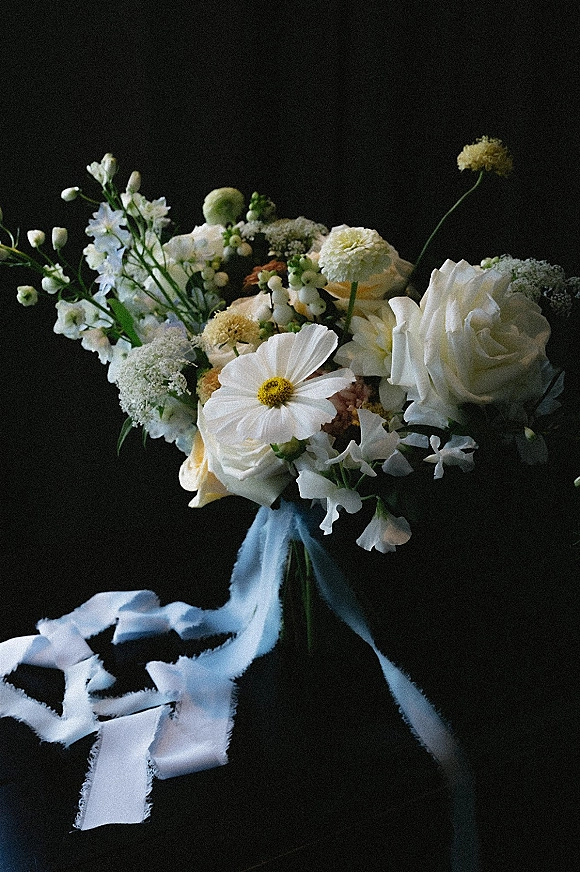
Light changes the color as much as the framing does. A pale, soft palette glows in open shade and warm, low sun, then loses definition under a dark tent or after sunset, where deep, saturated blooms hold their depth. Colored uplighting and the reflected tone of the setting, green from a garden, warm gold from candlelight, shift a bouquet’s read further still. None of this is visible in a studio product shot, which is where seeing a bouquet in a real wedding, in real light, against a real dress, tells you more than any catalog image can.
Preserving the Bouquet, and the Lasting Alternatives
A bouquet can outlive the day with a little planning, but nearly every method has to be arranged before the wedding. Pressing flattens the blooms for framing, resin sets them into a solid keepsake, and professional freeze-drying holds the three-dimensional shape best. All three depend on the flowers being handed off within a day or two while they are still fresh, and some blooms preserve far better than others, so the florist and the preservation service both need to know in advance.
Fresh flowers are not the only route. Dried flower wedding bouquets last for years, travel well to a destination, and double as a keepsake on their own. Good silk lets a couple use shapes and colors that would be fragile or out of season. Whichever path you take, the choice is made early: the bouquet you carry and the way you keep it are decided in the same planning conversation, not after the day is over. A florist who works in your season and style is the right person to start that conversation with, and browsing wedding florists by the aesthetic you want is the fastest way to find one.
Frequently Asked Questions
How many flowers are in a wedding bouquet?
A bridal bouquet usually holds somewhere between twenty and forty stems, depending on the flower and the shape. Large, dense blooms like hydrangea and peonies fill the same space with fewer stems, while airy flowers like cosmos and sweet peas need more to read as full. A florist sizes the count to the look and the scale of the gown rather than to a fixed number.
How much do wedding bouquets cost?
Cost varies widely by flower choice, season, size, and location. Out-of-season and short-supply blooms like peonies and lily of the valley raise the price, while in-season and locally grown flowers keep it lower. Reserve the splurge for the bridal bouquet, lean on affordable stems for the party, and ask a florist for a per-piece estimate once the flowers and headcount are set.
What is the most popular wedding bouquet shape?
The round or hand-tied bouquet is the most common choice, because both are easy to carry and pair with nearly any gown. Cascade bouquets are the classic formal alternative, adding a vertical line to full-length photos. The right shape depends less on popularity than on the dress and the venue, since a busy gown reads best with a quieter shape.
What flowers hold up best in a wedding bouquet?
Roses, ranunculus, chrysanthemums, and orchids are among the most durable, holding their form for hours out of water. More delicate blooms like hydrangea, sweet peas, and lily of the valley are worth carrying but need careful conditioning and cool handling. The usual strategy is to pair a sensitive focal flower with hardy supporting stems so the bouquet lasts the full day.
How far in advance should I order my wedding bouquet?
Book a florist early, often close to a year out for popular dates, so your preferred designer is available. The bouquet itself is built in the day or two before the wedding from flowers ordered to arrive fresh. Delicate or short-supply blooms may need to be reserved well ahead, so name them as soon as the palette is set.
How do I hold a wedding bouquet?
Hold the bouquet low, at about hip level, with relaxed arms and the blooms tilted slightly toward the camera. Holding it too high hides the dress and creates tension in the shoulders. In portraits, let it rest naturally against the front of the gown rather than pressing it to your chest.
Should bridesmaid bouquets match the bridal bouquet?
Bridesmaid bouquets usually share the bride's palette and a few of the same flowers, built smaller and simpler so the group coordinates without competing. Matching them exactly is optional and increasingly rare; varying the size, density, or flower mix within one color story keeps the aisle and the group portraits from looking flat.


.webp)