Account Login or Join Submit a Wedding
 

Peony Wedding Bouquets

Peony wedding bouquets are built around one of the most sought-after wedding flowers: a full, ruffled bloom that can span several inches wide and reads as pure romance in a photograph. Peonies open over the days around the wedding, shifting from a tight, formal ball to a loose, blowsy flower, which is part of their appeal and worth planning around. This collection gathers real-wedding peony bouquets by color and by pairing, from all-white and blush to peony-and-rose and peony-and-hydrangea combinations. Because peony season is short and demand is high, seeing how real couples used them helps you brief a florist on exactly the look you want.

What Makes Peonies Such Popular Wedding Flowers

Peonies are prized for their size and softness: a single stem carries a large, many-petaled bloom that adds instant volume and a sense of luxury to a bouquet. A closed peony has a tight, cupped shape that reads formal and classic, while an open peony spreads several inches wide and loose for a more whimsical, garden feel. Because they continue opening after they are cut, timing is everything, and a skilled florist orders stems at the right stage so they reach their peak on the wedding day rather than before or after it.

Beyond their looks, peonies carry meaning that suits a wedding. In many cultures they symbolize honor, prosperity, romance, and a happy marriage, which adds a layer of intention to choosing them. Their soft fragrance is another draw, present but not overpowering. The one thing to plan around is their seasonality: the flower's short natural window is the single biggest factor in both availability and cost, so it shapes nearly every decision that follows.

Peony Colors for Bouquets

Peonies come in a focused but flattering range, which is why they anchor so many palettes. Soft pink is the signature, romantic and universally becoming. Blush sits between pink and cream for a subtle, barely-there tint. White peonies read crisp and elegant and mix cleanly with any accent. Coral peonies open in warm, sunset tones that fade toward peach as they age, giving a single bouquet several shades at once.

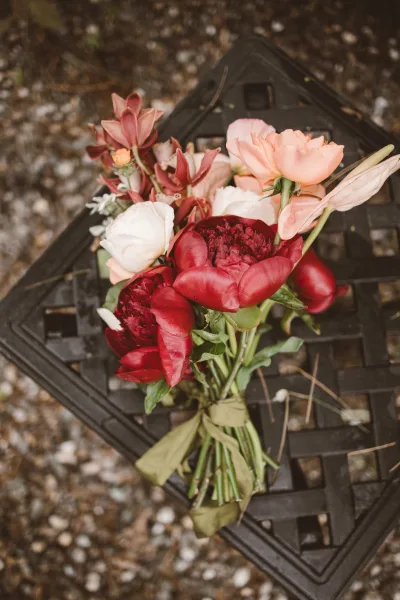
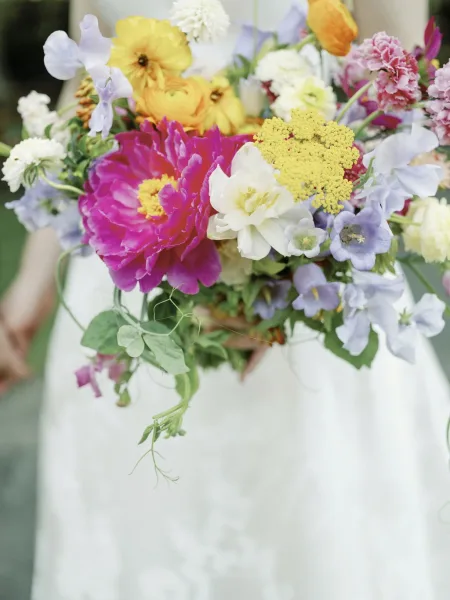
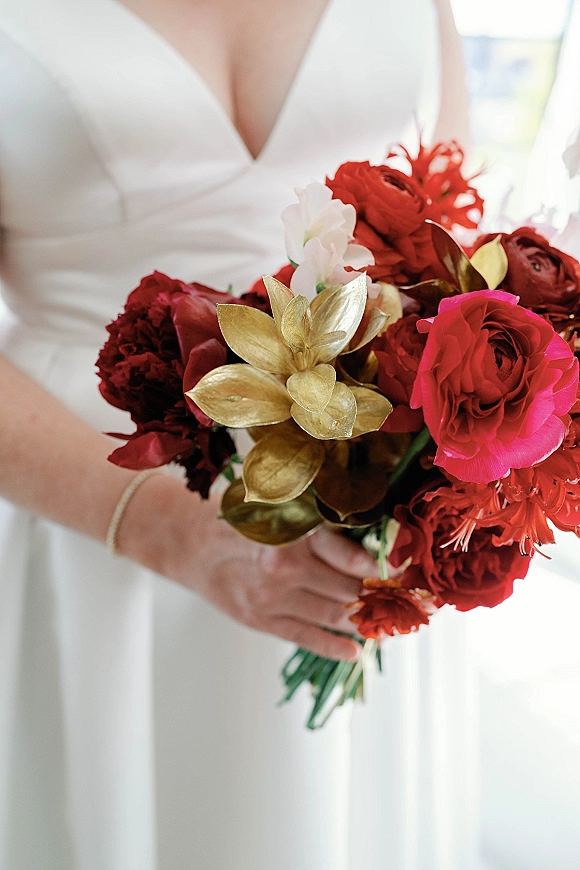
Deep magenta and burgundy varieties bring drama and suit fall weddings, where a richer peony reads seasonal rather than spring-like. Because the color range is narrow, peonies are easy to build a palette around: choosing your peony shade first tells your florist which companion flowers and greenery will blend seamlessly. If you want a color peonies do not naturally come in, garden roses and ranunculus can extend the palette while keeping the same soft, ruffled character.

All-White Peony Bouquets

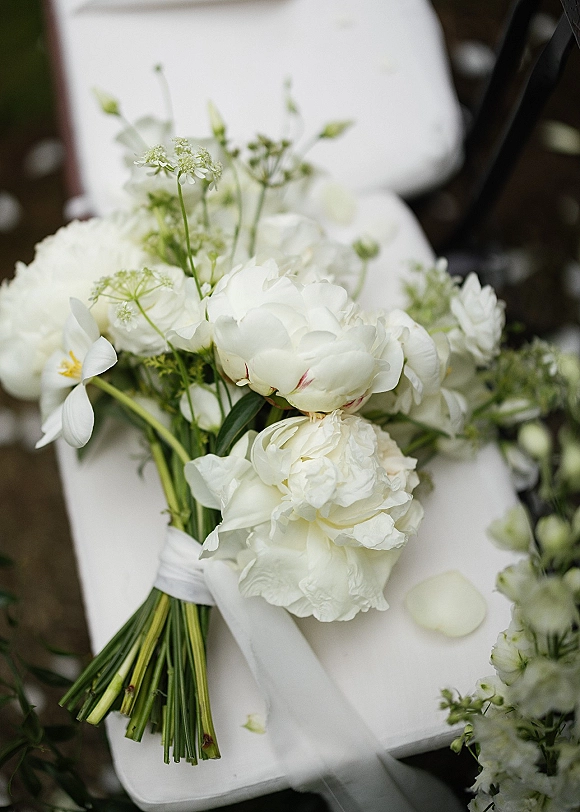
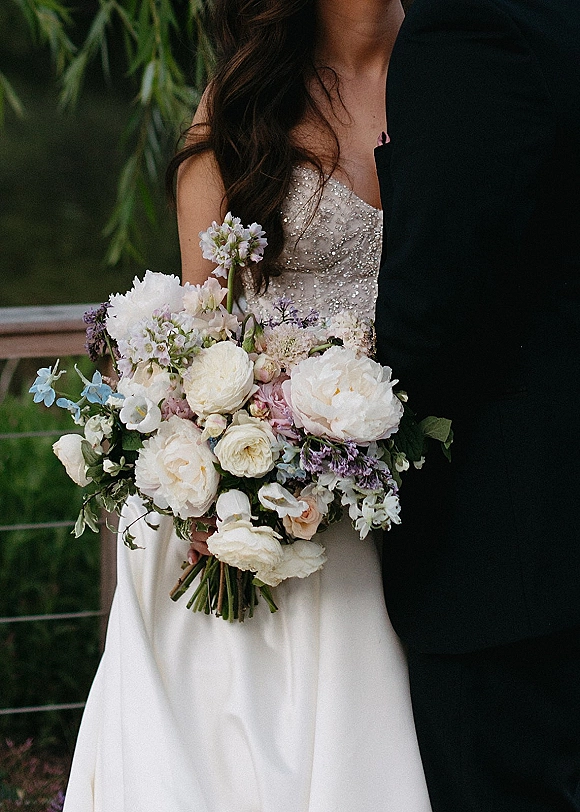
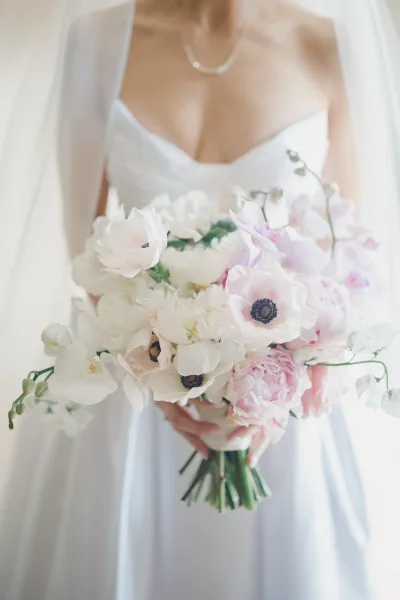
An all-white peony bouquet is the cleanest expression of the flower, letting the ruffled texture do the work without color competing. White peonies pair beautifully with a little greenery or with white garden roses and ranunculus for depth, and the look suits classic, formal, and minimalist weddings equally. It photographs crisply against nearly any dress, which is part of its enduring appeal.

The one consideration is undertone. A stark, cool white peony can read slightly blue against a warm ivory or champagne gown, so many couples choose a creamy white variety that bridges the two tones. If you love an all-white look but want a little warmth, blending in a few blush stems softens the effect without introducing real color. An all-white peony bouquet also photographs with beautiful dimension despite its single color, because the deep folds and shadows within each ruffled bloom create their own light and shade. See the broader white wedding bouquet collection for more monochrome ideas.

Pink Peony Bouquets

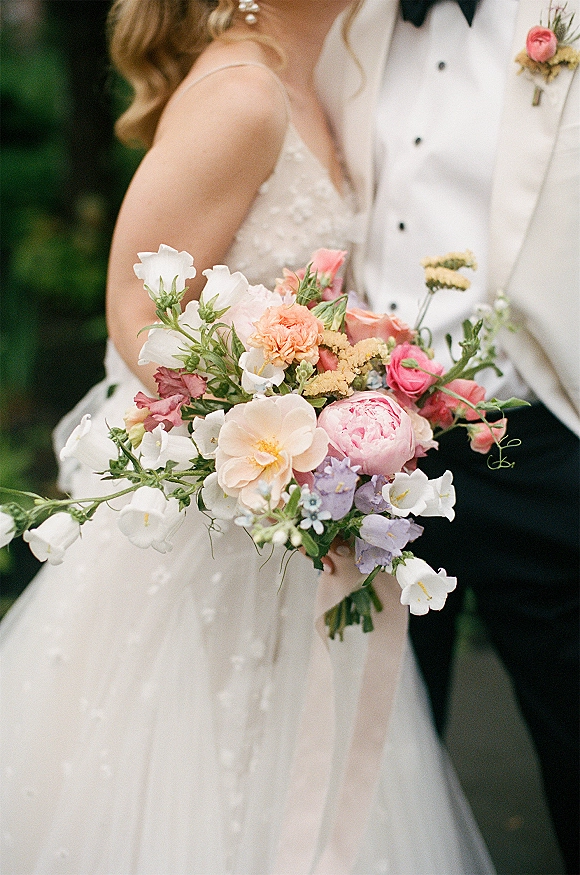
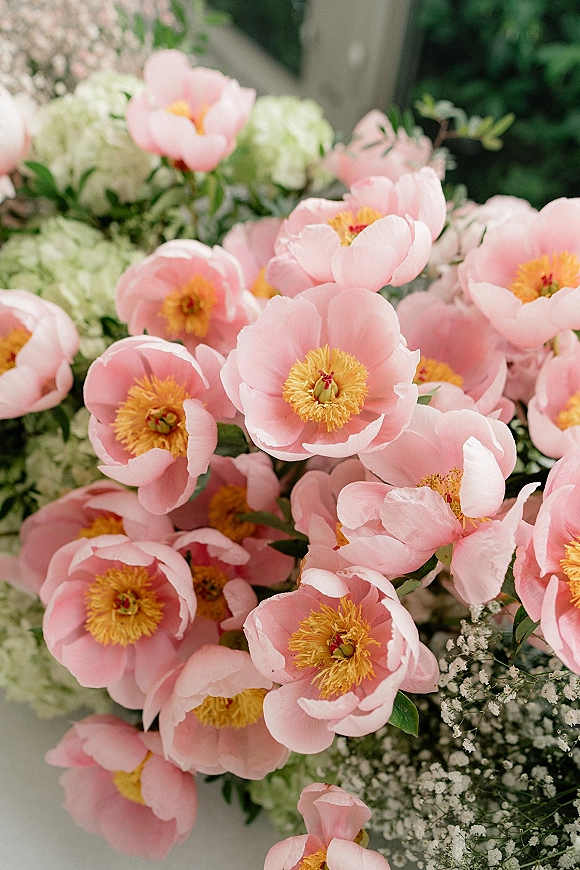
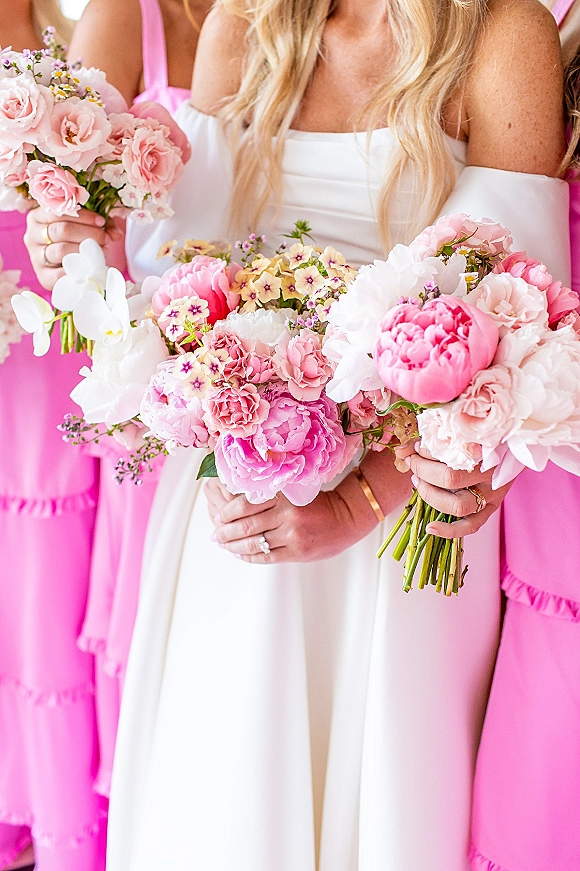
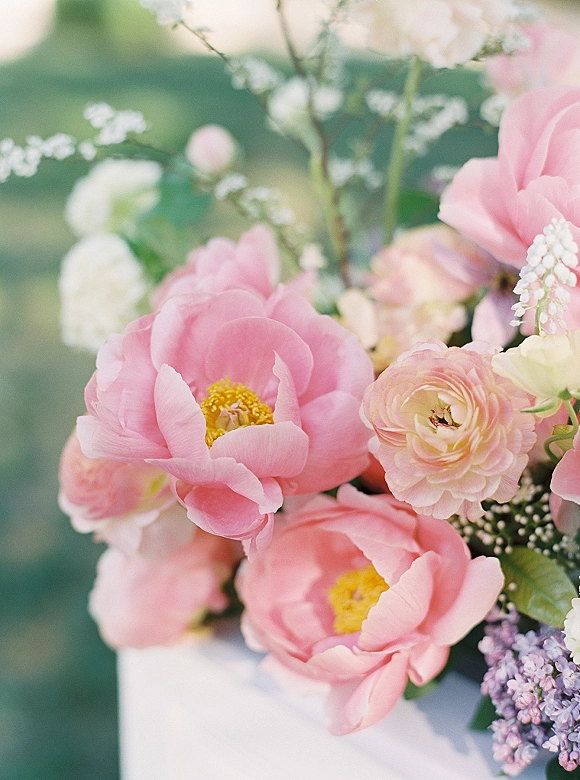
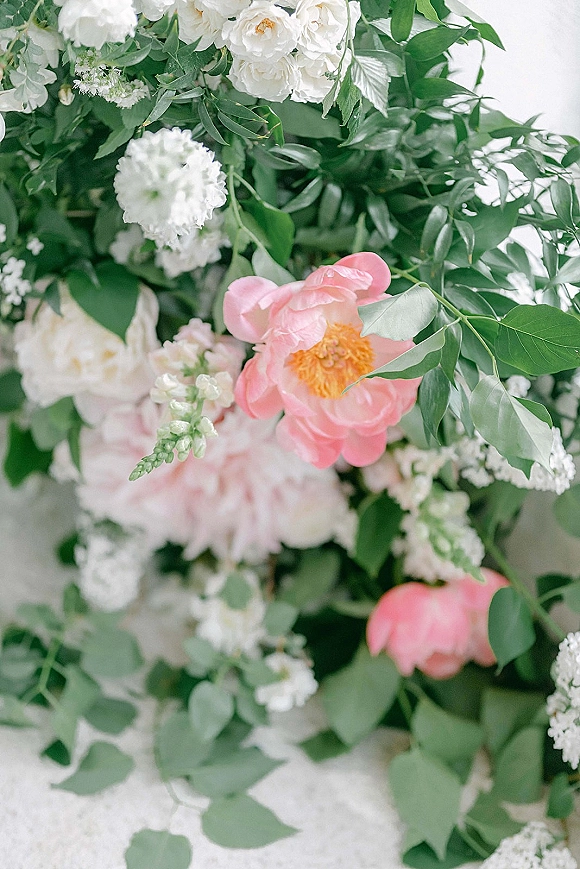
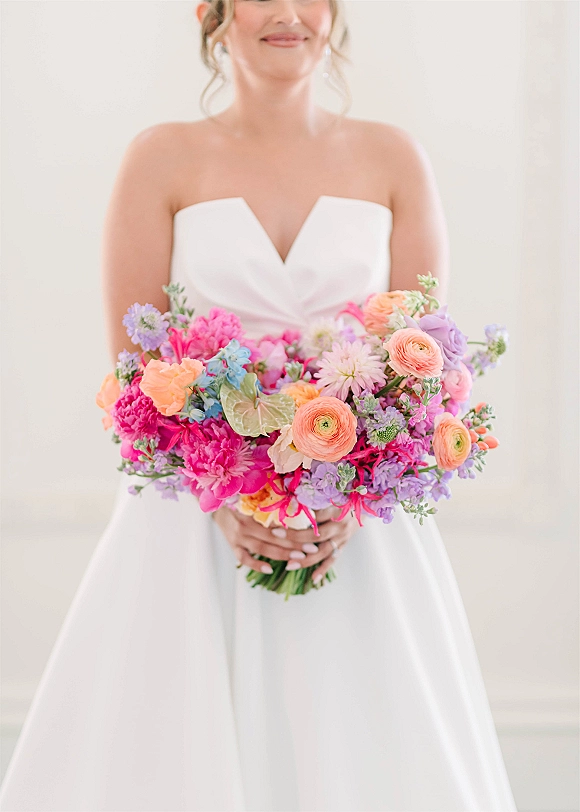
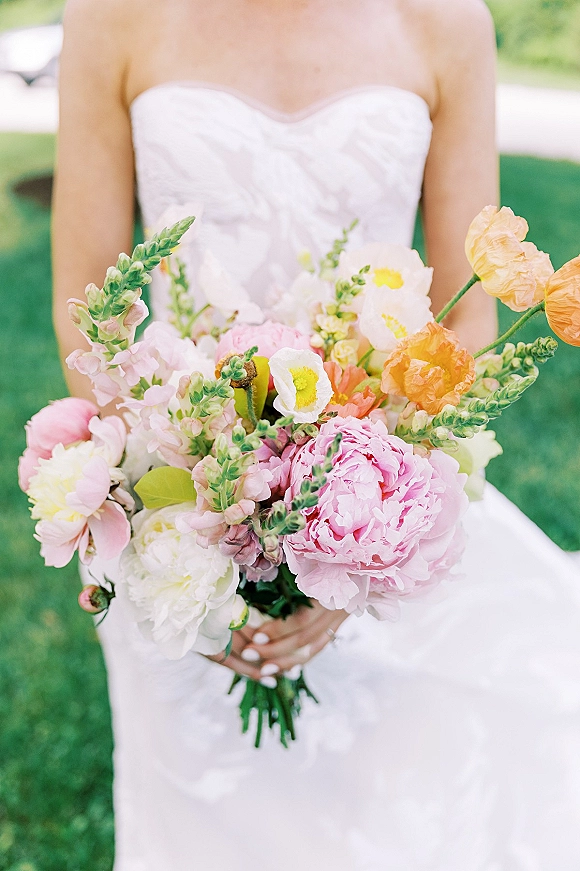
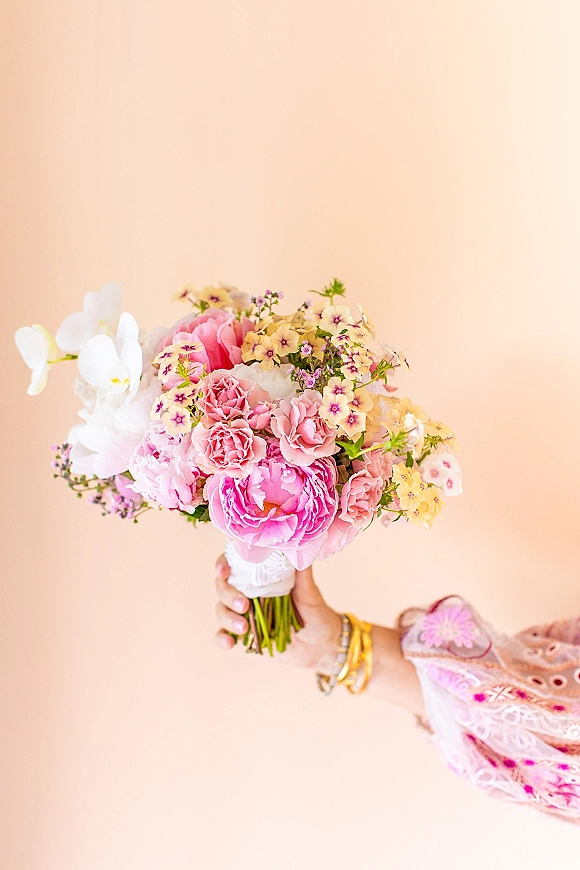
Pink is the peony color most couples picture, and it ranges from pale ballet to a rich, saturated rose. A monochrome pink peony bouquet feels romantic and full, while mixing two or three shades of pink adds dimension without introducing a second color. Pink peonies sit naturally alongside blush, ivory, and soft greenery, and they are among the most photogenic choices for a spring or early-summer wedding.

If you want a bolder look, deeper pink and rose peonies hold their color in bright light where paler shades can wash out. For more ways to build around the color, the full pink wedding bouquet collection covers the shade ladder from blush to fuchsia and the companion flowers that pair with each.

Peonies for a Summer Wedding

Peonies bridge late spring into early summer, so an early-summer wedding can still catch them at their peak, especially the later-blooming varieties. For summer, lighter and brighter shades read fresh in the strong seasonal light, and pairing peonies with garden roses, sweet peas, and airy greenery suits a summer garden setting. As the season warms, heat opens peonies faster, so summer bouquets benefit from a mix of budded and open stems and careful cooling. Toward high summer, peonies give way and garden roses and ranunculus carry the same soft, ruffled look in their place.

Blush Peony Bridal Bouquets

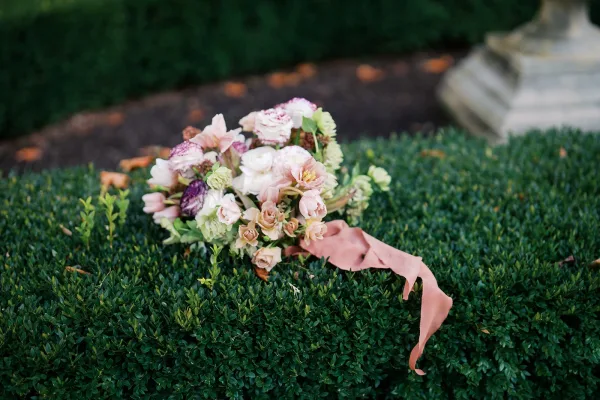
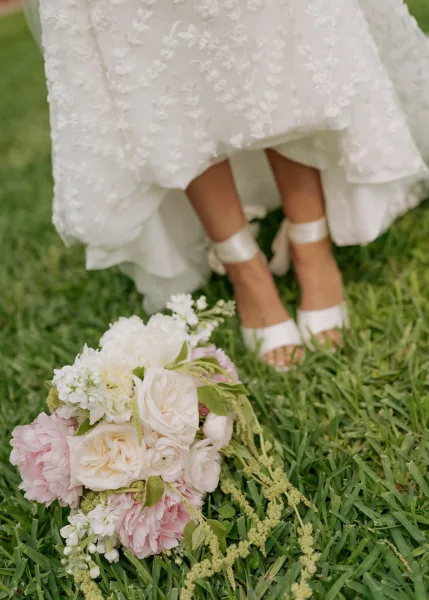
Blush peonies read as the quietest, most understated version of the flower, a whisper of color that flatters ivory and champagne gowns. A blush peony bridal bouquet works when you want softness without a strong pink statement, and it blends seamlessly with nude roses, cream ranunculus, and dusty greenery. The tone is especially forgiving in bright outdoor light, where stronger pinks can photograph hot and lose their subtlety.

Coral and Sunset Peonies

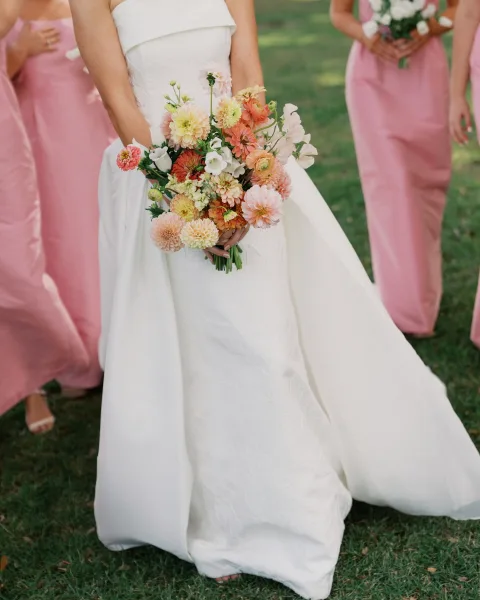
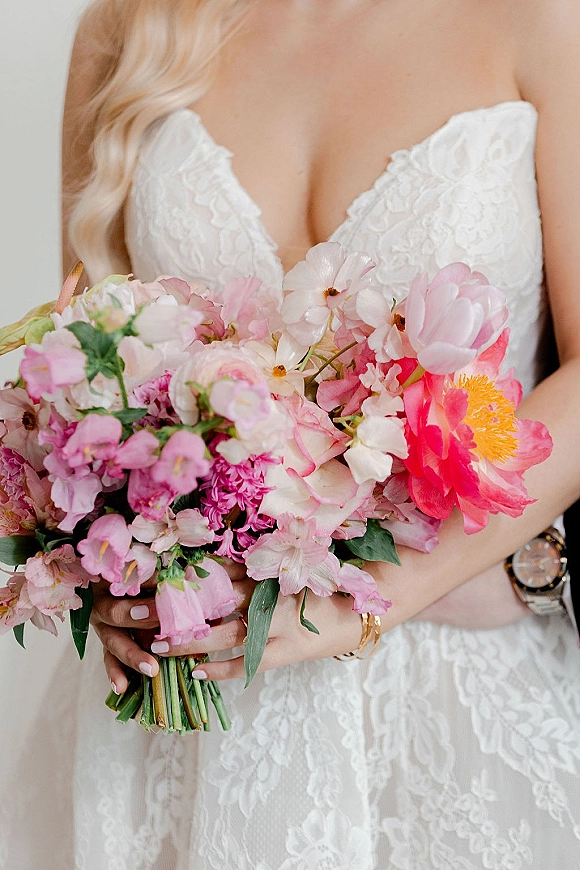
Coral peonies deserve their own mention because they behave unlike the pinks and whites. Varieties such as Coral Charm open in a vivid coral and fade through peach to cream as they age, so a single stem shows several tones and a bouquet of them carries natural, shifting color over the day. This movement makes coral peonies a favorite for couples who want warmth and depth rather than a flat single shade. They pair beautifully with peach, cream, and soft orange, and they photograph with a glow in warm light that few other flowers can match at golden hour.

Peony Fragrance

Peonies carry a soft, fresh fragrance that is present without being heavy, which adds to their appeal as a flower carried close all day. Scent varies by variety, with some of the double pink types among the most fragrant and many whites more subtle. If fragrance matters to you, mention it to your florist, who can lean toward the more scented varieties. For anyone sensitive to strong floral perfume, the peony's gentler scent is an advantage over headier flowers like lilies or gardenia. The fragrance is also fleeting and natural rather than cloying, which is part of why peonies feel fresh rather than heavy in a bouquet held through a long celebration.

Peonies with Greenery and Foliage

Because peonies are large and soft, the greenery around them shapes the whole bouquet. A little foliage lets the blooms cluster into a lush, romantic mound, while more generous greenery spaces them for a looser, garden-gathered feel. Soft, silvery foliage keeps a peony bouquet gentle and romantic, while glossy leaves read cleaner and more modern. Trailing vines can extend a peony bouquet toward a soft cascade. The greenery is a real design choice, not filler, and it tunes the peony's abundance up or down.

Peony and Rose Bouquets

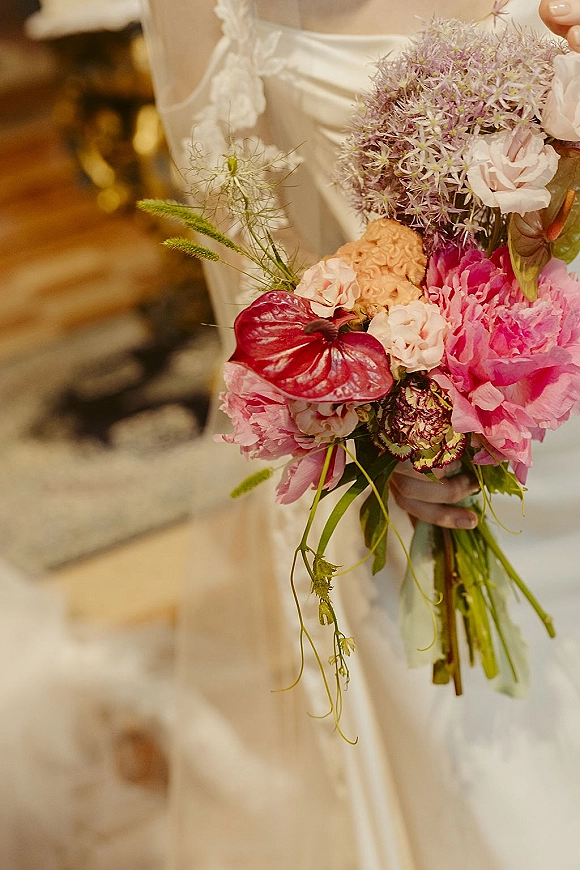
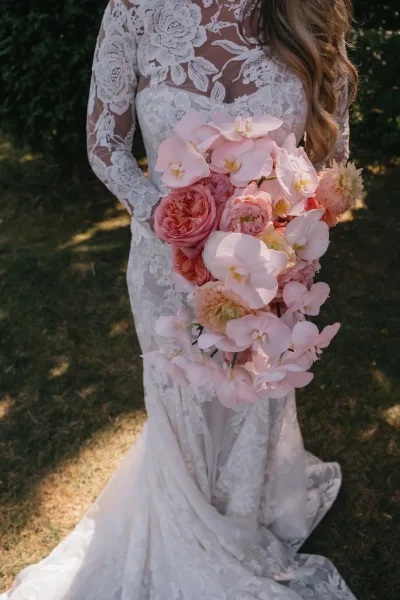
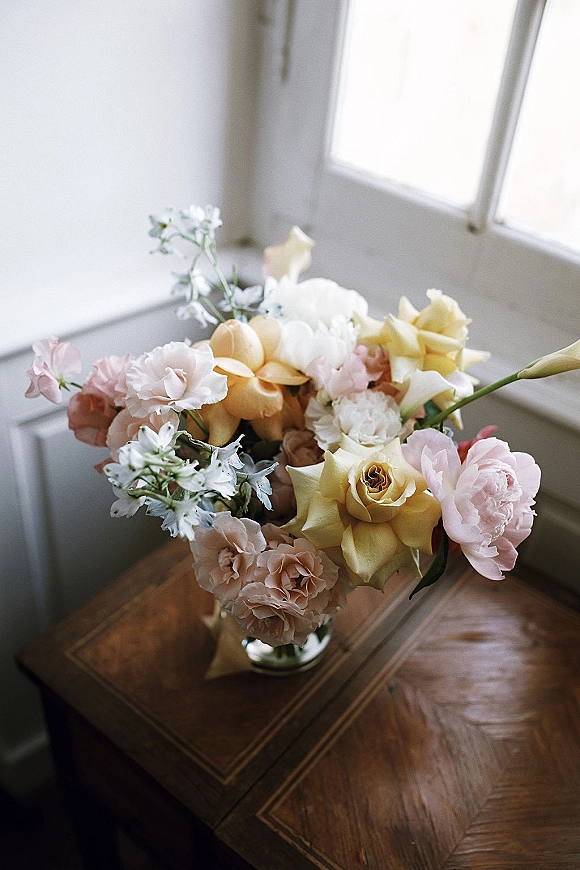
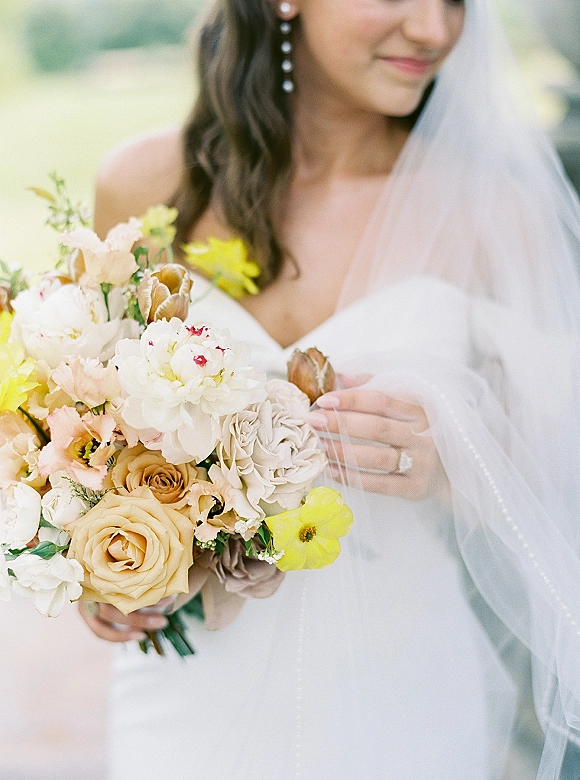
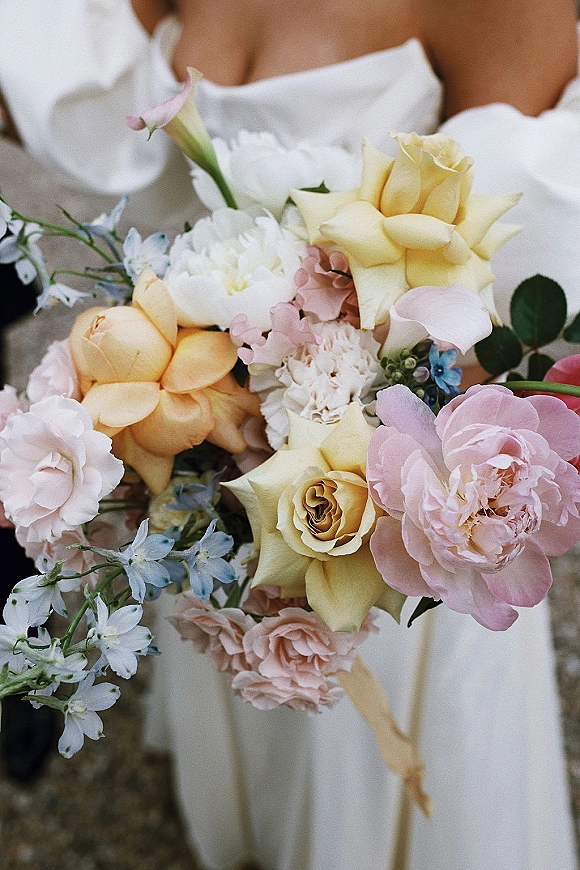
Peony and rose is a classic pairing because the two flowers share a soft, layered shape while offering different scale and behavior. Roses hold their form reliably and give the bouquet structure, while peonies provide the loose, oversized volume that a rose alone cannot. Keeping both in the same color family with a hint of greenery makes a bouquet that is lush yet cohesive.

Garden roses in particular echo the peony's ruffled, many-petaled texture for a seamless blend, and they are the go-to substitute when peonies are out of season. Pairing the two also hedges against the peony's unpredictability: if a few peonies open too fast, the roses keep the bouquet looking full and intentional throughout the day.

Peony and Hydrangea Bouquets

Pairing peonies with hydrangea builds a full, mounded bouquet quickly, since both flowers carry a lot of visual weight per stem. Hydrangea fills the base with soft, cloud-like volume while peonies sit as the focal blooms, so a generous bouquet comes together with relatively few stems. The combination suits couples who want a romantic, abundant look without a large stem count, and it takes color well in white, blush, and blue-and-pink combinations.

Ranunculus and Peony Bouquets

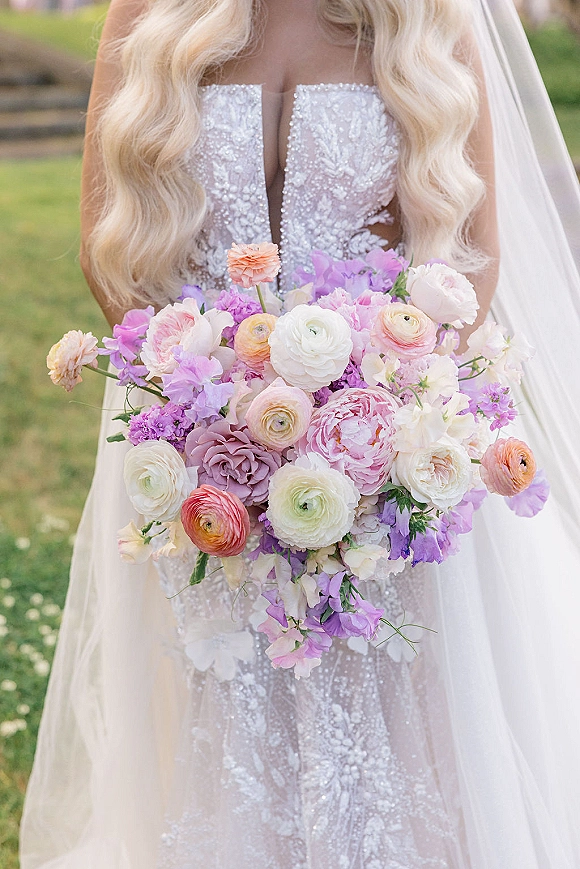
Ranunculus is the ideal companion to peonies because it mirrors their many-petaled look at a smaller scale, filling gaps between the larger blooms and repeating the ruffled texture. That repetition is what gives a bouquet cohesion and depth rather than a few big flowers floating in greenery. Ranunculus also comes in a wide color range and a longer season, so it can extend a peony palette when peonies themselves are at the edge of availability, or carry the look entirely when they are gone.

Mixing Peony Shades

Because peonies come in a focused range of soft, related colors, blending several shades within one bouquet is one of the prettiest ways to use them. Pale pink, blush, and cream together read soft and dimensional without introducing a second color, while adding a coral or deeper rose peony gives a gentle gradient of warmth. This tonal approach keeps a peony bouquet cohesive while avoiding the flatness of a single shade. It also hides the flower's unpredictability well, since a mix of tones and openness reads intentional even as the blooms shift over the day.

Peony Bouquets by Wedding Style

Peonies suit several wedding styles depending on how they are handled. Tightly gathered in a round with minimal greenery, they read formal and classic. Loosely arranged and left slightly open with soft foliage, they read romantic and garden-gathered. A few peonies among wilder, textural flowers lean boho, while an all-white peony bouquet reads clean and modern. The flower is flexible enough to anchor almost any aesthetic, so the shape and greenery, more than the peony itself, set whether it feels traditional or contemporary.

Peony Varieties Florists Use for Weddings

Knowing a few variety names helps you communicate precisely with a florist. Sarah Bernhardt is a large, soft-pink, fragrant peony and one of the most requested for weddings. Duchesse de Nemours is a creamy white with a classic, vintage look. Coral Charm opens in warm coral and fades to peach, giving natural movement over the day as it ages.

Other favorites include the deep, saturated Red Charm for fall palettes and the fully double, blush Angel Cheeks. You do not need to memorize the catalog, but naming the look you want, even loosely, helps your florist source the right stems within your season and budget. Bringing a photo of the exact peony shade and openness you like is the most reliable way to communicate it.

Peony Bouquet Shapes

Because peonies are large and rounded, they suit a domed, hand-tied, or round bouquet where the full blooms cluster into a lush mound. A loose hand-tied gathering shows off the flower's natural, slightly blowsy character, while a tighter round reads more formal. Peonies are less suited to a delicate cascade on their own, since the heavy heads want to sit upright, though they can crown the top of a cascade built with lighter trailing flowers and greenery.

Scale is worth watching. A few open peonies read as generous quickly, so an oversized peony bouquet can become both visually heavy and literally heavy to carry. Many couples keep a peony bouquet moderate in size and let the flower's fullness do the work rather than adding stem count.

Peony Bouquet Cost-Saving Tips

Peonies are a splurge, but a few strategies keep them within reach. Marrying in local peony season is the biggest lever, since in-season stems cost far less than imports. Reserving peonies for the bridal bouquet while bridesmaids carry garden roses and ranunculus keeps the premium flower where it shows most. Keeping the bridal bouquet moderate in size, and letting a few open peonies do the work rather than packing in many stems, controls the count. Blending peonies with less expensive companions that share their look stretches the effect further without sacrificing the romance.

How Many Peonies You Need

A peony-focused bridal bouquet often uses roughly ten to fifteen stems, since each open bloom fills significant space. The exact number depends on how open the peonies are on the day and whether they are mixed with companion flowers like roses and ranunculus, which reduce the count needed. Fully open peonies read much larger than budded ones, so a florist plans the stem count around the stage the flowers will reach, not their size when they arrive.

Peonies for a Fall Wedding

Peonies are naturally a spring flower, but deeper varieties in magenta, coral, and burgundy can suit a fall palette when they are available. Because true peony season has passed by autumn, fall peonies usually mean imported stems at a premium, so many couples marrying in fall use garden roses and ranunculus in rich tones to echo the peony look instead. The effect reads seasonal and lush without the sourcing challenge.

Caring for Peonies on the Wedding Day

Peonies are hardier than their soft look suggests, but they still need care on the day. Kept cool and hydrated until the ceremony, they hold well, but heat and direct sun speed their opening, so a peony bouquet left in a hot car or bright window can go from perfect to overblown within hours. Building in a mix of closed and open stems hedges against this, giving the bouquet room to look full across the whole day rather than peaking too early.

Peony Bridesmaid Bouquets

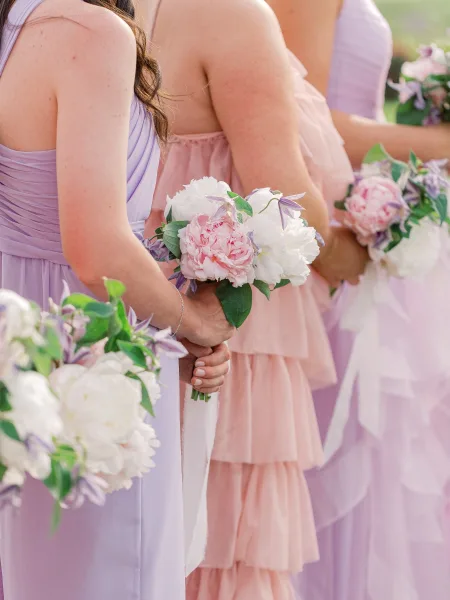
Because peonies are costly, many couples reserve them for the bridal bouquet and give bridesmaids smaller arrangements that echo the palette with a single peony or with peony look-alikes like garden roses and ranunculus. This keeps the party coordinated while controlling the flower budget across several bouquets. A single open peony wrapped simply also makes an elegant, modern bridesmaid bouquet in its own right.

Peony Meaning and Symbolism

Peonies carry meaning that suits a wedding, which adds to their popularity beyond their looks. They are widely associated with romance, prosperity, honor, and a happy marriage, and in several cultures they are a recognized symbol of good fortune and a joyful union. For couples who like a flower to say something, the peony brings a well-established and celebratory symbolism. That layer of meaning, combined with the flower's lush beauty, is part of why it has become one of the most requested wedding blooms.

Common Peony Mistakes to Avoid

The usual peony pitfalls trace back to its unpredictability. Ordering all fully open stems risks a bouquet that looks overblown by evening, while all tightly budded stems can look sparse in the morning, so a mix is safest. Leaving peonies in heat or sun speeds their opening, so they should be kept cool until the ceremony. And counting on peonies out of season without a backup invites disappointment if supply falls through. Building in companion flowers like garden roses and ranunculus hedges against all of these, keeping the bouquet full and on plan whatever the peonies do.

Peonies with Other Spring Flowers

Because peonies peak in spring, they pair naturally with the season's other flowers, which are at their best at the same time. Ranunculus and garden roses echo the peony's ruffled fullness, sweet peas and lily of the valley add delicacy and fragrance, and tulips bring clean shape. Lilac and hellebore extend the palette with soft, seasonal color. Building a peony bouquet around companions that share its season keeps the arrangement cohesive, easier to source, and better value than pairing peonies with out-of-season imports.

Best Time of Year for a Peony Wedding

If peonies are a priority, planning the wedding within their season is the single most effective decision you can make. A late-spring or early-summer date puts you in the heart of local peony availability, when the flowers are at their best quality, widest variety, and lowest cost. Marrying at the edges of the season still works with some imported support, while a date far outside it means relying on pricier imports or a peony-look blend. Letting the flower guide the date, when possible, removes most of the sourcing and budget challenges peonies otherwise bring.

Peony Season and Availability

Peonies have a short natural bloom window, concentrated in late spring and early summer, with limited imported supply extending it at either end. Because the window is narrow and demand is high, peonies are among the pricier wedding flowers, and cost rises the further your date sits from local peony season. Imported stems from the opposite hemisphere can bridge some of the gap, but at a premium and with less predictability.

If your heart is set on peonies outside their season, a florist can source imported stems or blend in ranunculus and garden roses to echo the look at a lower cost. The most budget-friendly path is simply to marry within local peony season, when the flowers are at their best and most available. A florist can also tell you honestly whether your date and budget support peonies or whether a peony-look blend will serve you better, which is a conversation worth having early. Browse wedding florists who specialize in seasonal sourcing to understand what your date allows, and see the full wedding bouquet guide for building the rest of your palette.

Frequently Asked Questions

Are peonies expensive for wedding bouquets?

Peonies are among the more expensive wedding flowers because their natural bloom window is short and demand is high. Cost is lowest when your date falls within local peony season and rises when stems must be imported out of season. A florist can blend in ranunculus and garden roses to stretch the look if peonies alone push past your budget.

When are peonies in season?

Peonies bloom naturally in late spring and early summer, with the peak concentrated over a few weeks. Imported stems can extend availability at the edges, but quality and price are best during the local season. If your wedding falls outside that window, plan for imported sourcing or a peony-look blend.

How many peonies are in a bridal bouquet?

A peony-focused bridal bouquet often uses roughly ten to fifteen stems, since each bloom is large and fills significant space once open. The exact count depends on how open the peonies are and whether they are mixed with companion flowers like roses and ranunculus.

Do peonies last through a wedding day?

Yes, when handled well. Peonies are cut while still budded or partly open so they reach full bloom around the wedding, and a good florist times the order to your date. Keeping the bouquet cool and hydrated until the ceremony helps the blooms hold through the day.

Should I choose open or closed peonies?

Most bouquets look best with a mix. Closed peonies read formal and hold their shape, while open peonies add loose, romantic volume. Florists blend both so the bouquet looks full on the day rather than tight in the morning and overblown by evening.

What can replace peonies if they are out of season?

Garden roses and ranunculus are the closest stand-ins, since both share the peony's ruffled, many-petaled texture. Combined in the same color family, they recreate the soft, full look of a peony bouquet at a lower cost and with wider year-round availability.
Save
Save
Save
Save
View Wedding
Vendor Team
Carats + Cake
Join the Community
Create An Account
Back to Login

By creating an account, you agree to our Terms of Use and have read and understood the Privacy Policy.

Back to Login
No problem! Reset your password via email.
Back to Login
Wedding Websites & Invitations
Copy Vendor Credits


As seen on: @caratsandcake

  Copy Credits