Why Hydrangea Works in Wedding Bouquets
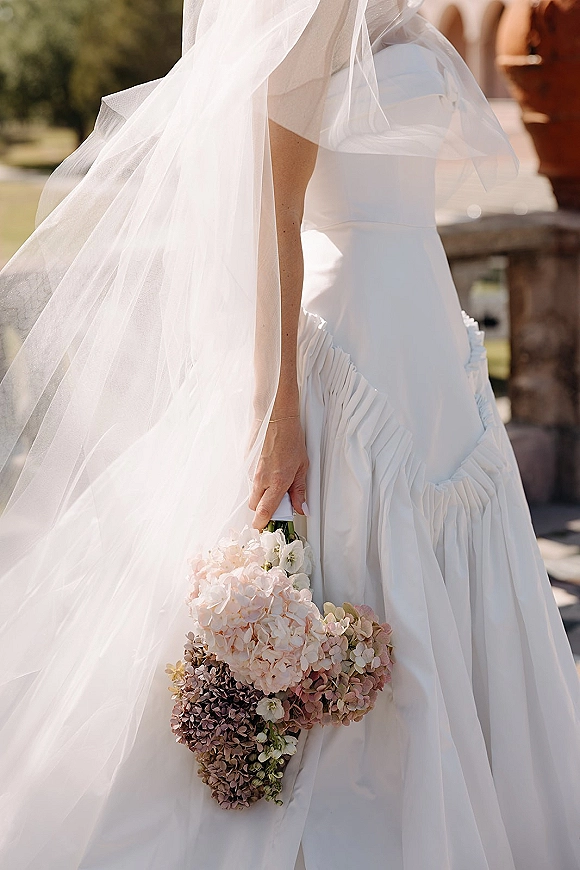
Hydrangea is a volume flower: a single stem carries a large, rounded head made of dozens of small florets, so five to eight stems can fill an entire bridal bouquet. That efficiency makes hydrangea both economical and lush, and it gives a bouquet a soft, full base that other flowers can sit within. Florists often use hydrangea as the foundation and tuck roses, lisianthus, or peonies through it for texture and focal interest.
The one trade-off is a shorter vase life. Hydrangea draws water through its entire flower head rather than just the stem, so it can wilt quickly if it dries out. A good florist conditions the stems thoroughly, keeps the bouquet cool and hydrated until the ceremony, and can treat the flowers so they hold through the day. Handled properly, hydrangea is reliable, but it is not a flower to leave sitting in a hot car before photos. Its behavior is worth understanding before you build a whole bouquet around it. The upside of that thirsty nature is that hydrangea revives well: a wilting head can often be brought back by misting or briefly dipping the bloom in water, which few other cut flowers allow.
Blue Hydrangea Bouquets
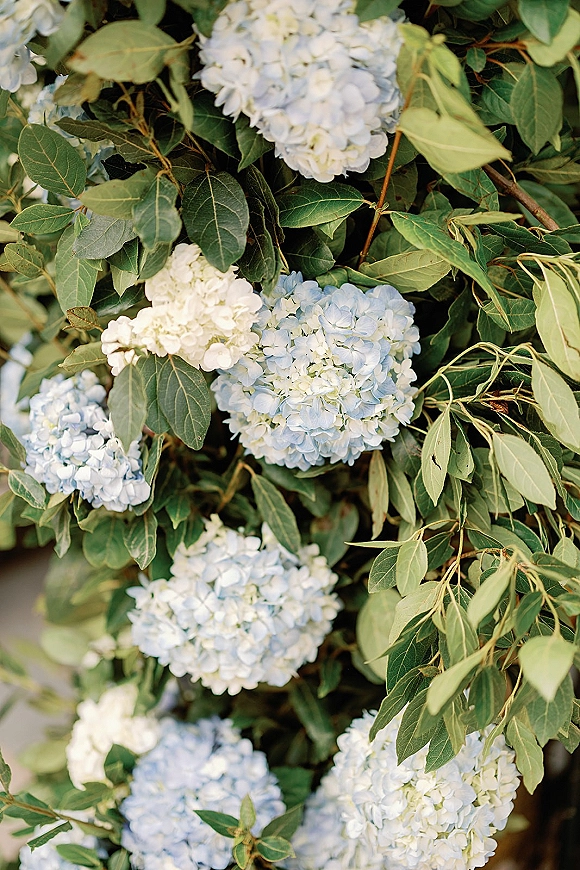
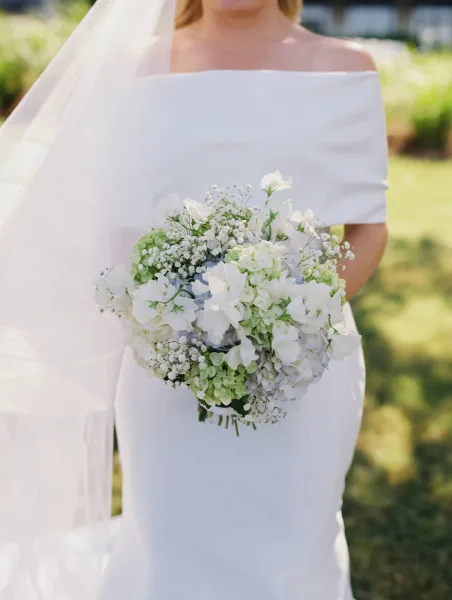
Blue hydrangea is the most requested version of the flower, partly because true blue is rare among wedding blooms and hard to achieve without dye in other flowers. The shade ranges from soft powder to deep periwinkle, and it doubles neatly as a bride's something blue. Blue hydrangea pairs cleanly with white and cream for a fresh, coastal look, and with pink for a soft, romantic contrast.
Because the blue tone is influenced by soil and growing conditions, it varies naturally from stem to stem and season to season, so confirm the exact shade with your florist rather than assuming a single photo will match. If you need a precise blue, ask whether it will be natural or enhanced, and look at real samples close to your date. Blue hydrangea is especially at home at waterfront, garden, and summer weddings, where its cool tone reads fresh against natural surroundings.
Choosing White or Blue Hydrangea for Your Palette
The two most popular hydrangea choices point in different directions. White hydrangea is the neutral, adaptable option that blends into any palette and suits formal, classic, and minimalist weddings, working as a base that lets other flowers lead. Blue hydrangea makes a statement, brings a rare true-blue tone, and doubles as a something blue, anchoring coastal and garden palettes. If you want the hydrangea to disappear into a larger design, choose white; if you want it to be a recognizable feature of the bouquet, choose blue. Many couples use both, letting white soften and blue accent.
White Hydrangea Bouquets
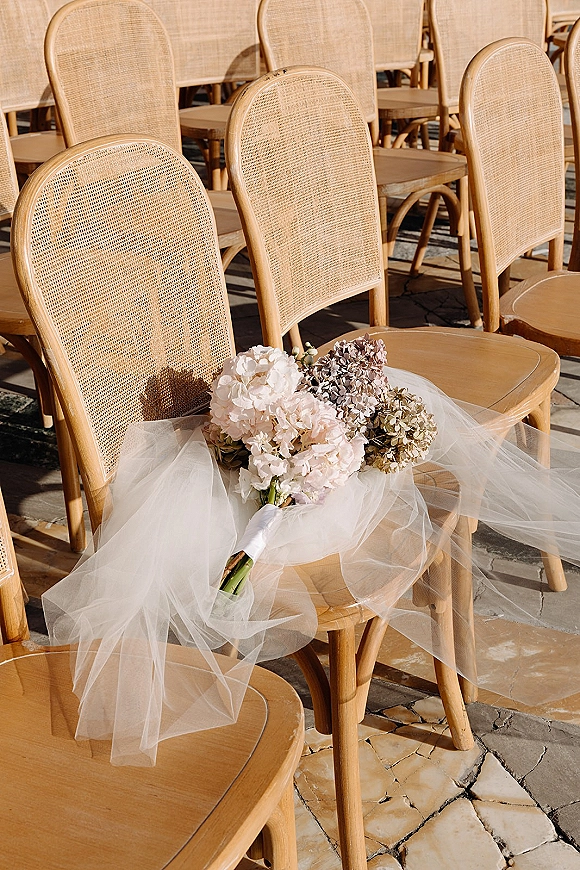
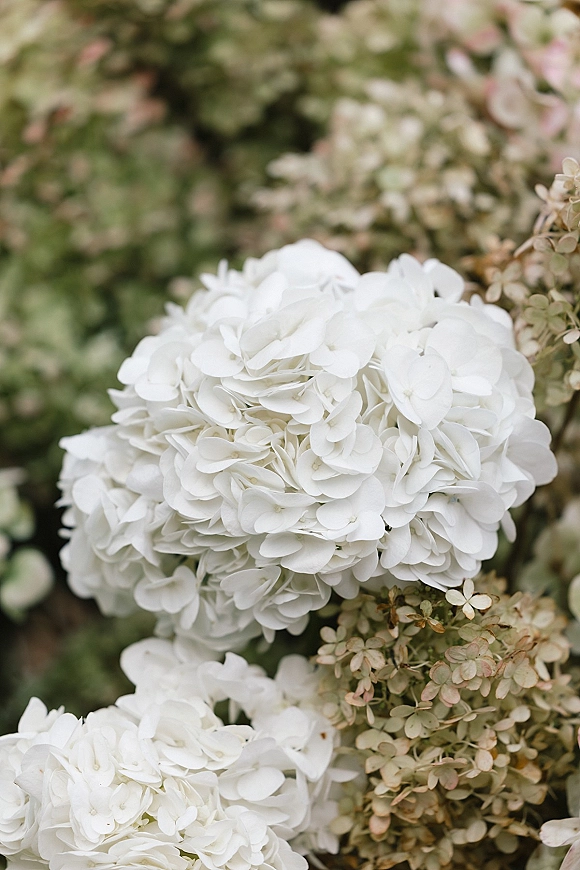
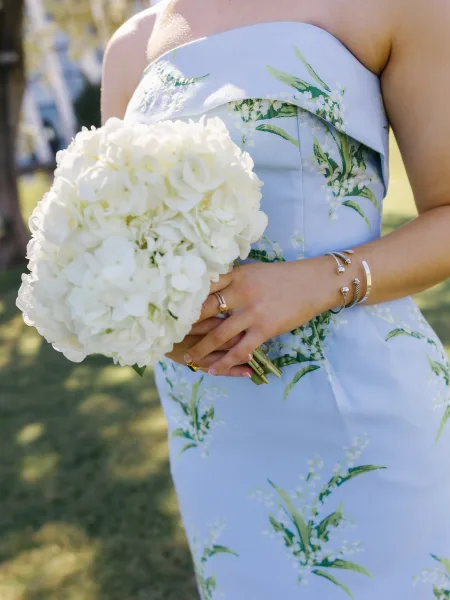
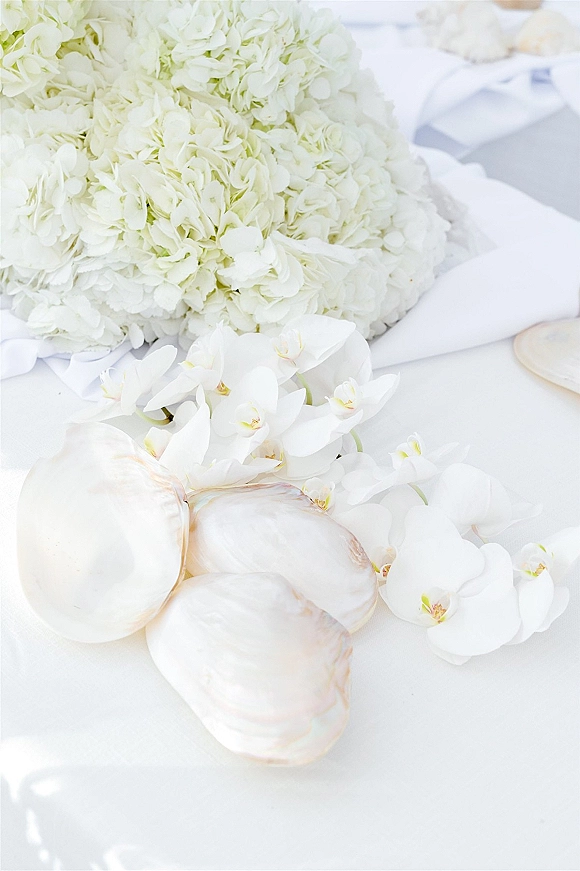
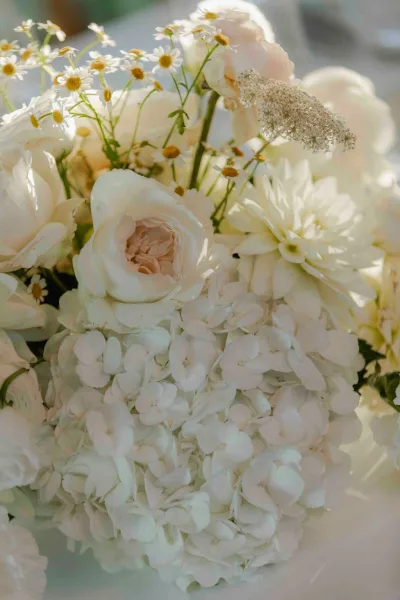
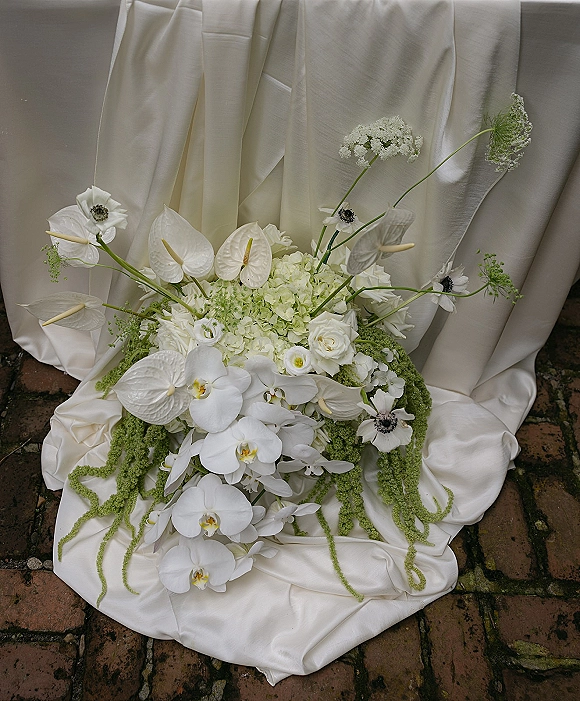
White hydrangea is the most versatile of the color options, reading crisp and elegant and blending into nearly any palette. As a base flower it makes an all-white bouquet look generous and full, and it lets more expensive focal blooms like peonies and garden roses go further for the money. White hydrangea suits classic, coastal, and minimalist weddings and photographs cleanly against every dress tone. For more monochrome ideas, see the full white wedding bouquet collection.
Pink and Purple Hydrangea Bouquets
Pink hydrangea ranges from soft blush to a warmer rose, giving a bouquet gentle color and full volume at once. It pairs naturally with pink roses and ranunculus for a monochrome look, or with white to keep things fresh, and it is a strong choice when you want a romantic, full bouquet without the seasonality or cost of peonies. For the wider shade range, see pink wedding bouquets.
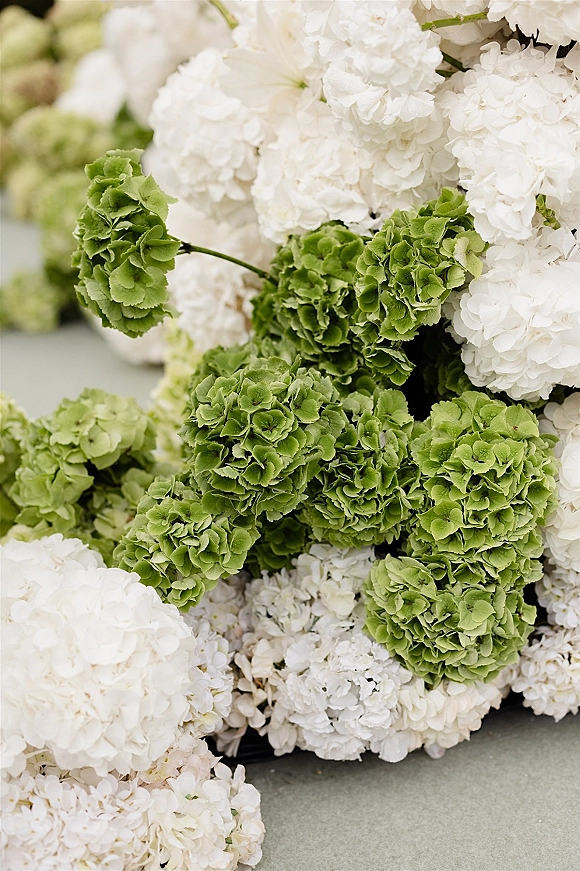
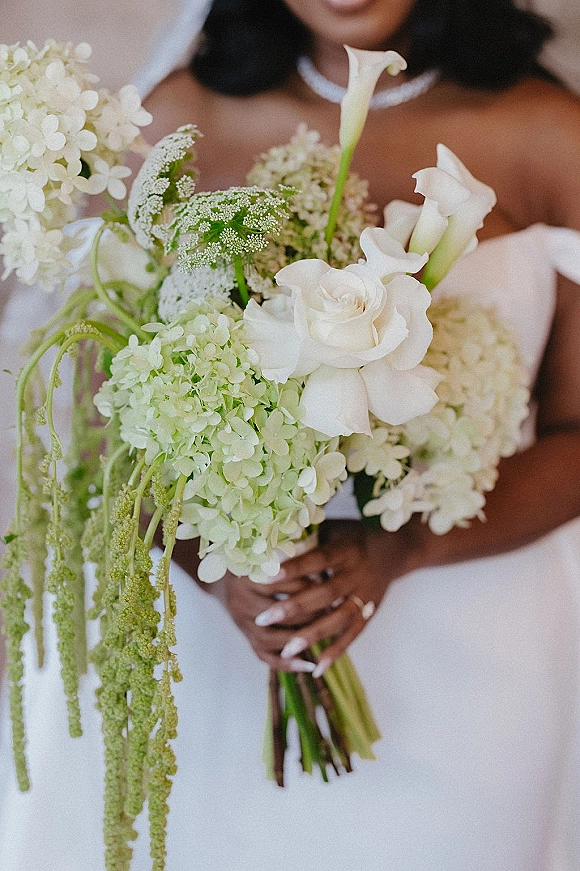
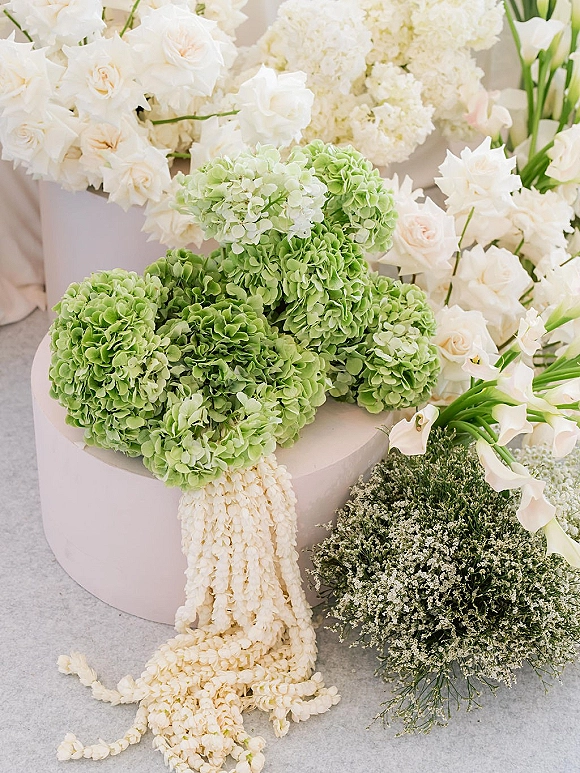
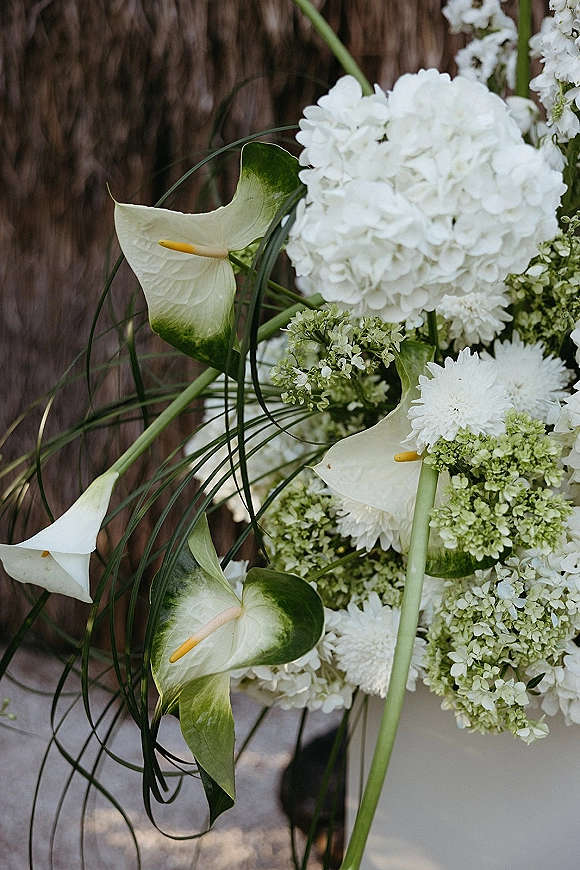
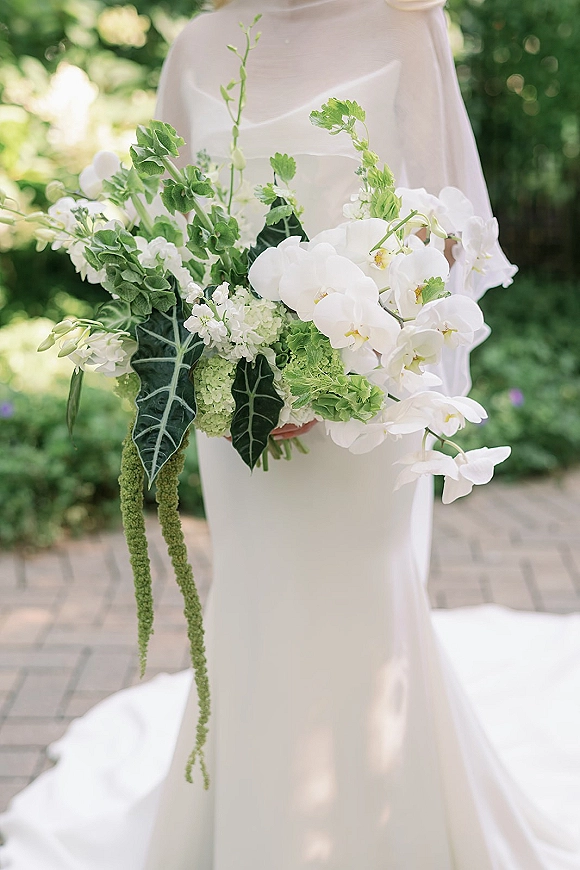
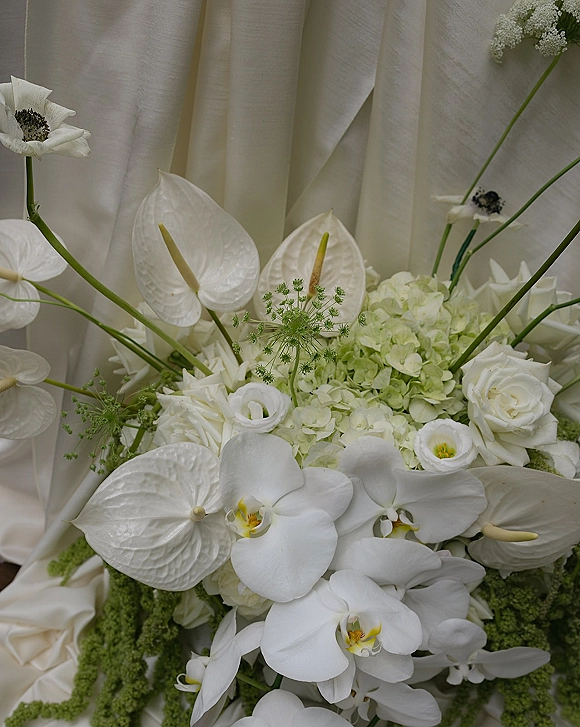
Purple hydrangea brings the deepest color in the family, from soft lavender to rich violet. It adds a jewel-toned note and pairs well with blue hydrangea for a cool, tonal look or with pink for contrast. Green hydrangea, the antique or limelight type, is another option entirely, reading soft and sophisticated and blending beautifully into white-and-green palettes for a subtle, textural bouquet that suits a garden or modern wedding equally.
Hydrangea and Lisianthus Bouquets
Lisianthus is one of hydrangea's best partners because it adds a rose-like focal bloom on a softer, more delicate frame. Its ruffled petals come in white, blush, purple, and deep tones that sit beautifully against a hydrangea base, and it holds up well through a long day. Tucked among hydrangea heads, lisianthus breaks up the solid mounded texture and adds movement without the cost of premium roses or peonies. The pairing gives a full, romantic bouquet at a reasonable price, which is much of hydrangea's appeal in the first place.
Hydrangea for a Garden Wedding
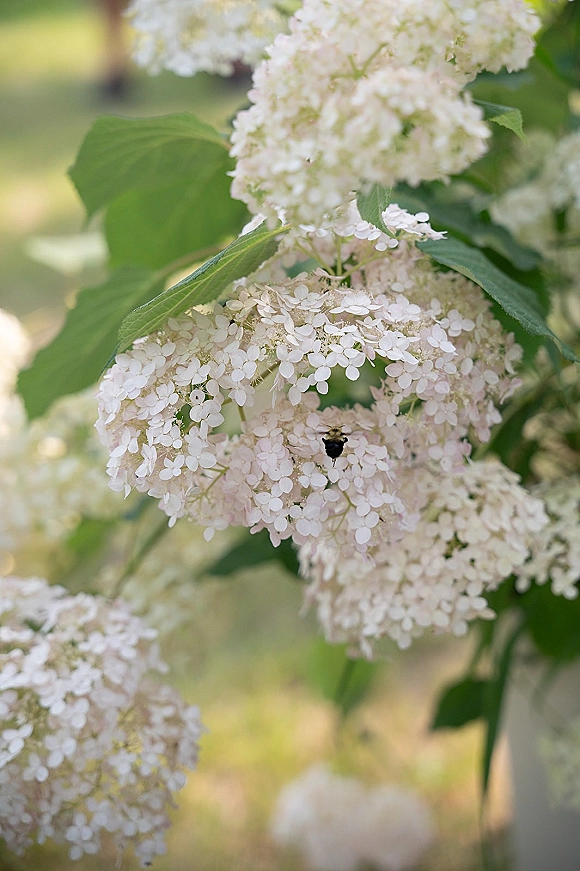
Hydrangea suits a garden wedding naturally, since it reads soft, lush, and slightly informal in a loose arrangement. Spaced with airy flowers and trailing greenery rather than packed tight, hydrangea takes on a gathered, garden-picked quality that matches an outdoor ceremony. Green, antique, and soft blue hydrangea especially echo a garden palette. For a relaxed, abundant look among roses, sweet peas, and foliage, hydrangea provides the volume that makes the whole bouquet feel generous and unforced in the setting.
Hydrangea and Rose Bouquets
Hydrangea and rose is the workhorse pairing for a full, classic bouquet. Hydrangea provides the soft base volume while roses add structured focal blooms and reliable color that holds out of water, and the two together read balanced and abundant. Adding lisianthus or seeded eucalyptus builds extra texture and movement. This combination is a dependable way to get a generous bouquet in any season, and the rose helps steady a bouquet against the hydrangea's tendency to wilt.
Hydrangea and Peony Bouquets
Combining hydrangea with peonies creates one of the fullest, most romantic bouquets possible, since both flowers carry heavy visual weight per stem. Hydrangea fills the base and peonies sit as the oversized focal blooms, so a lush bouquet comes together with relatively few stems. The pairing works beautifully in white, blush, and blue-and-pink combinations for spring and early summer, when both flowers are at their best.
Hydrangea and Lily Bouquets
Pairing hydrangea with lilies balances soft volume against sculptural form. The rounded hydrangea head contrasts with the lily's long, defined petals, giving a bouquet structure and a light fragrance. White hydrangea with white lilies reads especially clean and formal, suiting classic and church weddings. The contrast in shape is what keeps the combination from reading flat, since the two flowers work in different visual registers.
A Guide to Blue Hydrangea Shades
Blue hydrangea is not a single color but a range, and knowing the spread helps you specify what you want. Powder and sky blue read soft and coastal. Periwinkle leans slightly purple and reads romantic. Cornflower and true blue are the boldest and rarest, reading crisp and vivid. Because the shade is shaped by growing conditions, the same variety can arrive lighter or deeper depending on the season and source, so it is worth describing the exact blue you want and confirming it against real samples rather than a single photo. A florist can steer toward the tone you are after within what the season offers.
Hydrangea in Bouquets Versus Centerpieces
Hydrangea earns its popularity partly because it works everywhere, but a bouquet and a centerpiece ask slightly different things of it. In a bouquet, the flower must be well conditioned to survive out of water, so it is handled carefully and often paired with hardier blooms. In a centerpiece, sitting in water, hydrangea is more forgiving and can be used generously to fill an arrangement affordably. Coordinating the two from the same palette ties the day together, and because hydrangea stretches so far, using it in both keeps the overall flower budget in check.
Green and Antique Hydrangea Bouquets
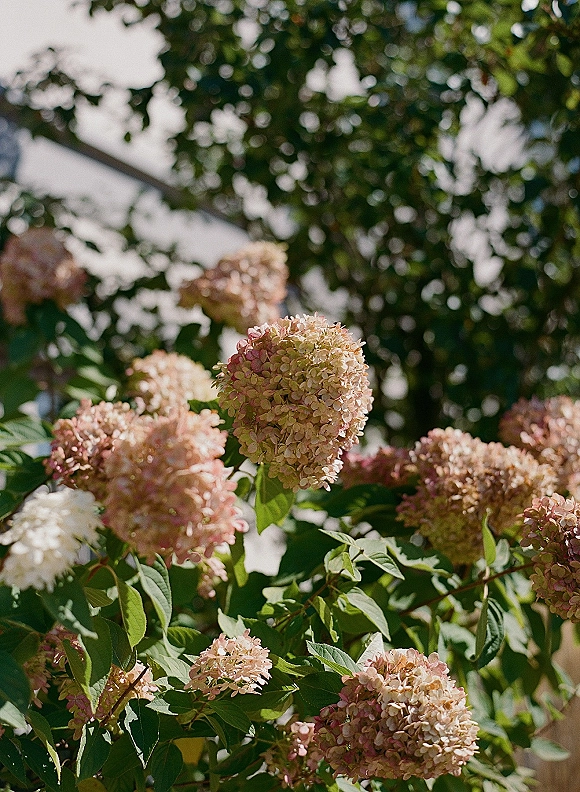
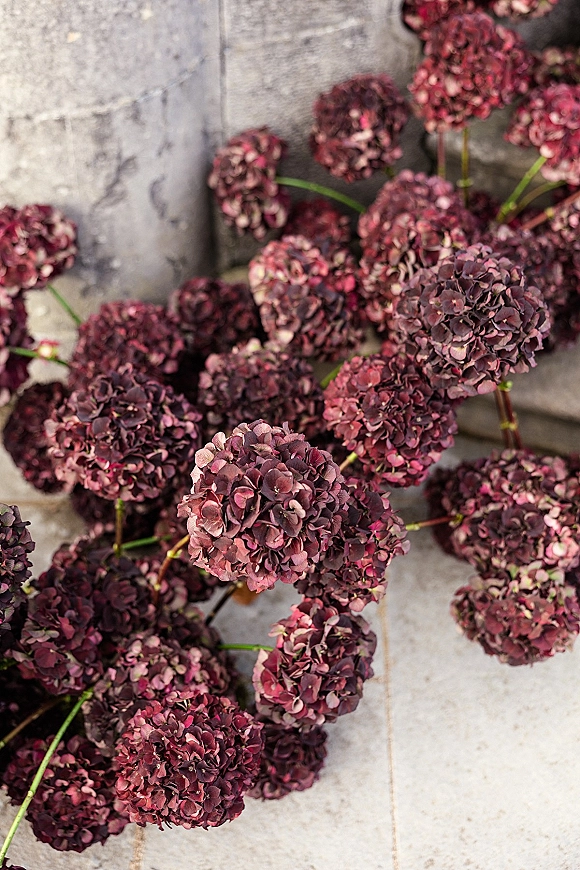
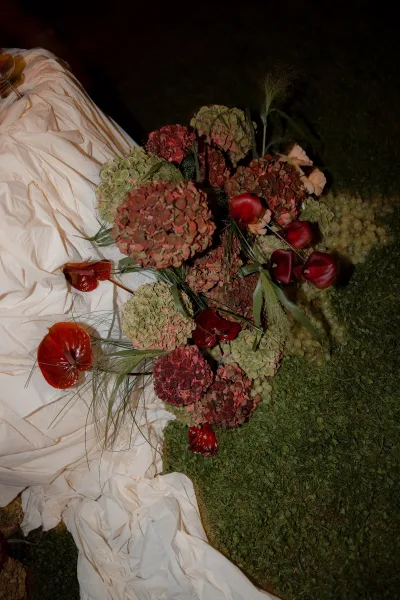
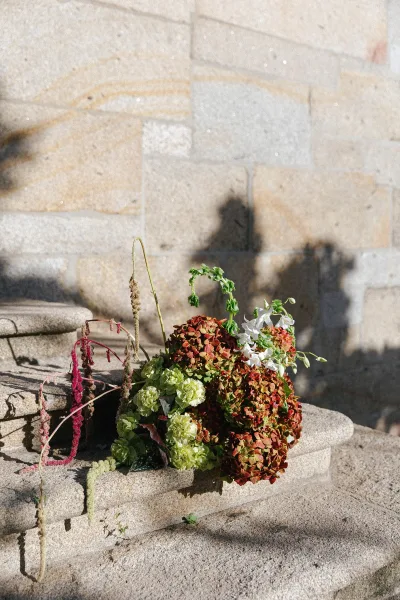
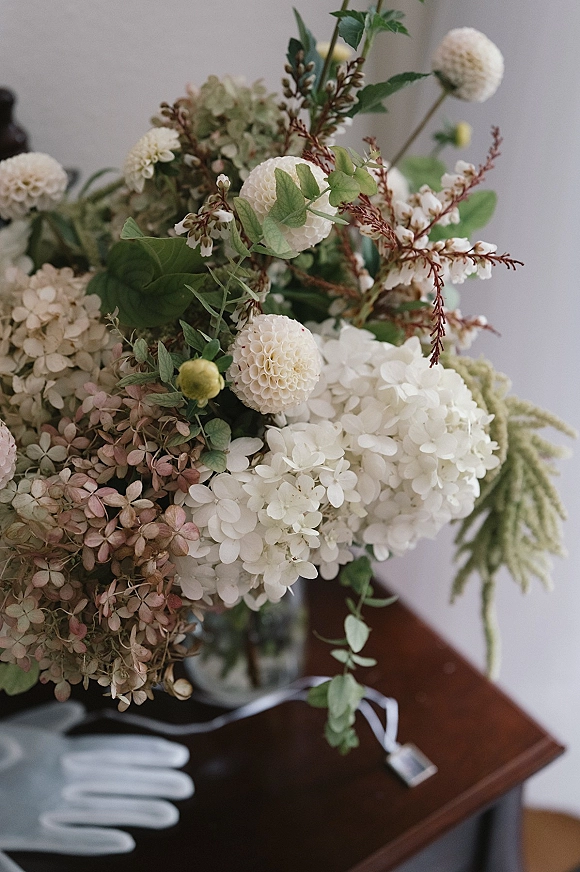
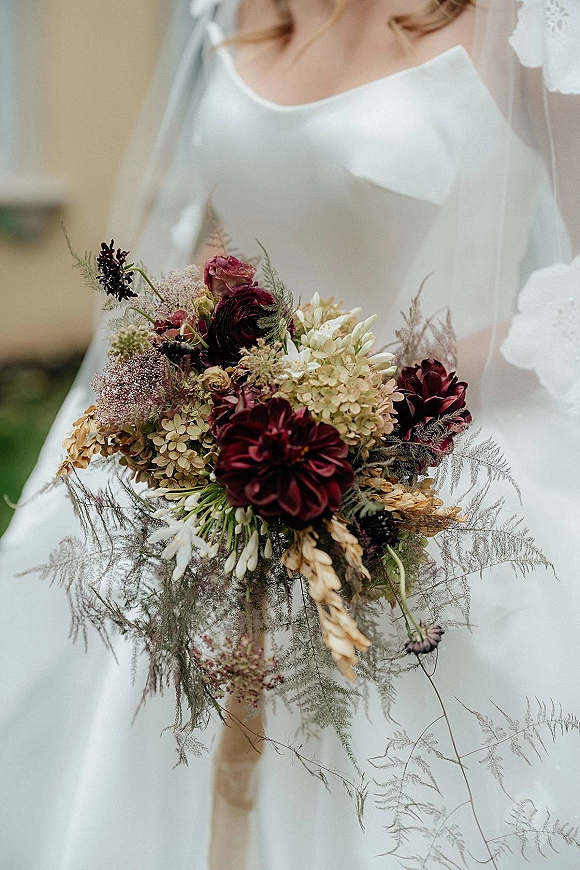
Green hydrangea deserves its own mention because it behaves differently from the bolder colors. The soft, celadon-to-lime tones read almost like a flower and a foliage at once, which makes green hydrangea a natural bridge in a white-and-green palette or a subtle, sophisticated bouquet on its own. As the growing season turns, many hydrangeas shift into muted, dusty antique shades, mauve, dusty blue, and faded green in a single head, and these antique tones suit fall palettes and dry especially well for a keepsake. A bouquet built on antique hydrangea reads soft and vintage rather than fresh and bright.
Hydrangea Varieties Florists Use
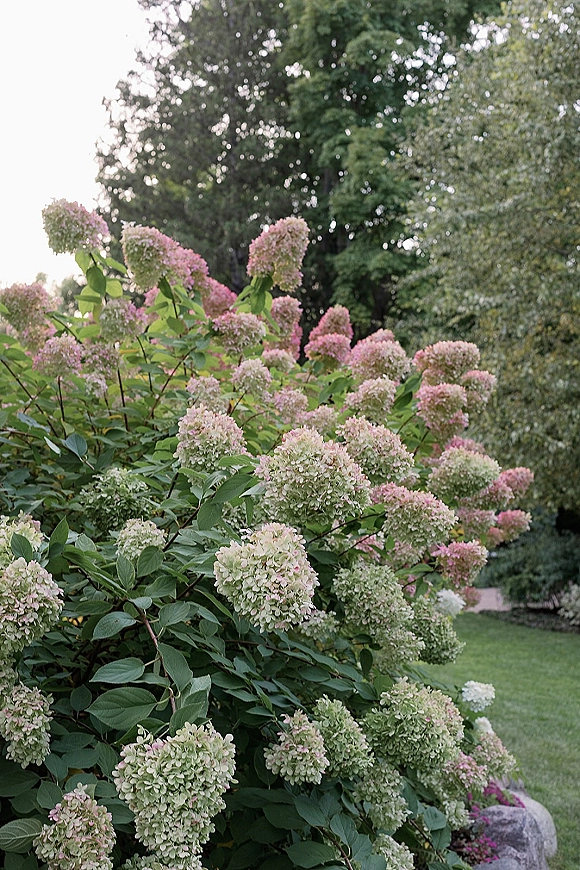
Knowing a few hydrangea types helps you communicate with a florist. The classic wedding hydrangea is the mophead, with its full, rounded head of dense florets, which is what most couples picture. Lacecap hydrangea has a flatter, more delicate head with an open center, giving a looser, more natural texture. Panicle types, including the popular limelight, form cone-shaped clusters in white and soft green that read a little wilder and hold up well. Each gives a different feel, so naming the shape you like, rounded and full or loose and open, helps your florist source the right stems.
Hydrangea and Garden Rose Bouquets
Beyond the standard rose pairing, combining hydrangea with garden roses specifically creates a soft, romantic bouquet where both flowers share a full, layered quality. The garden rose's ruffled, many-petaled bloom echoes the density of the hydrangea head while adding a focal point and a gentle fragrance the hydrangea lacks. This pairing suits couples who want the lush look of peonies when peonies are out of season, since hydrangea and garden roses together approximate that soft abundance year-round.
How Many Hydrangea Stems You Need
Because each head is large, a hydrangea-focused bridal bouquet often uses only five to eight stems, and fewer when hydrangea is mixed with other focal flowers. That efficiency is central to the flower's value: a generous, full bouquet comes together with a low stem count, which keeps cost down. For bridesmaids, one to three stems can form a complete posy. When planning, remember that a little hydrangea reads as a lot, so oversizing a hydrangea bouquet adds weight and cost without much visual gain.
Hydrangea Bouquet Cost and Value
Hydrangea is one of the better values in wedding flowers because of that volume per stem. A few large heads fill a bouquet that would take many more roses or ranunculus to match, so hydrangea stretches a flower budget while still looking abundant. Cost rises mainly when you need a specific shade of blue out of season or an unusual variety, but for sheer fullness at a reasonable price, hydrangea is hard to beat. Using it as a base and reserving pricier blooms for focal accents is a reliable way to get a lush look without a large budget.
Choosing Hydrangea for Your Venue and Style
Hydrangea suits a range of wedding styles depending on how it is used. Blue and white hydrangea reads coastal and classic, at home at a waterfront or garden wedding. All-white mophead hydrangea reads formal and clean for a ballroom or church. Antique and green hydrangea reads soft and organic for a fall or garden celebration, while lacecap and panicle types lean rustic and natural. Matching the color and variety to your setting, rather than choosing hydrangea in the abstract, is what makes it feel intentional. See the full wedding bouquet guide for coordinating the look across your day.
Hydrangea Bouquet Shapes
Because each head is already rounded and full, hydrangea lends itself naturally to a domed, hand-tied, or round bouquet where the mounded shape is the whole point. It is less suited to a delicate cascade on its own, since the heavy heads want to sit upright, though it can anchor the top of a cascade built with trailing greenery and lighter flowers. For a loose, garden look, florists space the heads slightly and thread airy flowers between them so the bouquet reads gathered rather than solid.
Caring for Hydrangea on the Wedding Day
Because hydrangea is thirsty and prone to wilting, day-of handling matters more than with hardier flowers. The stems should be conditioned in water right up until the last moment, and the bouquet kept cool and out of direct sun before the ceremony. If a hydrangea does begin to droop, misting the flower head or briefly submerging it can revive it, since the blooms absorb water through their petals. Knowing this, many florists build hydrangea bouquets close to the ceremony time and pair the flower with sturdier roses as insurance against a long, warm day.
Hydrangea Color Meanings
Hydrangea carries its own gentle symbolism, generally associated with gratitude, heartfelt emotion, and understanding, which suits a wedding and adds a quiet layer of meaning for couples who like it. Some color traditions attach further associations, with blue and white reading as sincerity and pink as heartfelt affection. The flower's abundance of small blooms on a single head has long made it a symbol of togetherness. None of this is essential to choosing hydrangea, but it gives the flower a warm story beyond its looks for those who want one.
Two-Tone and Ombre Hydrangea
One of hydrangea's quirks is that a single head often carries more than one shade, shifting from blue to lavender or pink to green across its florets. Florists use this to build subtle two-tone and ombre effects, arranging heads so the color moves gradually across the bouquet rather than sitting in blocks. This natural variation is part of what gives a hydrangea bouquet depth, and it means no two are exactly alike. Leaning into the multi-tone quality, rather than seeking a single uniform color, often produces the most beautiful result.
Dried Hydrangea and Keepsake Bouquets
Hydrangea is one of the best wedding flowers for drying, which makes it a natural choice for a keepsake. The large heads hold their shape as they dry and settle into soft, muted, antique tones that many couples find as lovely as the fresh flower. A hydrangea bouquet can be air-dried after the wedding and kept for years, or a dried hydrangea bouquet can be built from the start for a fall or boho wedding. If you want to preserve your bouquet, hydrangea is a forgiving flower to plan around.
Hydrangea Boutonnieres and Party Flowers
Because a single hydrangea head is made of many small florets, a few of those florets clustered together make a full, soft boutonniere or corsage, so hydrangea coordinates a whole wedding party from a small amount of flower. This efficiency carries through the day: the same stems that anchor the bridal bouquet can supply bridesmaid posies, boutonnieres, and even small arrangements, keeping the palette consistent and the cost controlled across every piece.
Common Hydrangea Mistakes to Avoid
The main pitfall with hydrangea is treating it like a hardier flower. Left out of water in heat, it wilts faster than roses, so it should not sit in a warm car or bright window before photos. Assuming a photographed blue will match exactly is another misstep, since the shade varies naturally. And because hydrangea reads as so full, oversizing the bouquet adds weight without much visual gain. Building the bouquet close to the ceremony, confirming the shade with real samples, and keeping the scale moderate all prevent the usual problems.
Hydrangea by Season
Hydrangea is most abundant and best priced in summer and early fall, when it is at its fullest and most vivid. Greenhouse and imported supply keeps it available much of the year, but in-season hydrangea holds up better and costs less, so timing a hydrangea-heavy bouquet to summer helps on both quality and budget. Antique hydrangea, the muted, dusty-toned version that appears as the season turns, brings soft mauve, green, and blue shades that suit fall palettes and dry beautifully for keepsakes.
Hydrangea for a Coastal Wedding
Blue and white hydrangea has a natural affinity with coastal and waterfront weddings, where its soft, cloud-like heads echo the sea-and-sky palette. The combination reads fresh, breezy, and a little nautical, and it pairs beautifully with white roses, delphinium, and grasses. Hydrangea also stands up reasonably to the fuller, more relaxed arrangements a beach or seaside wedding tends to call for. For a summer wedding by the water, blue hydrangea is one of the most fitting and recognizable choices available.
Hydrangea Bridesmaid Bouquets
Hydrangea makes an economical, full-looking bridesmaid bouquet, since a single stem can nearly form a small posy on its own. Using hydrangea for the wedding party keeps the palette consistent with the bridal bouquet while controlling cost across several arrangements, which adds up quickly when you have several bridesmaids. A stem or two wrapped simply gives each bridesmaid a generous bloom without a complex build, and the low stem count keeps a large party affordable. Browse wedding florists who work with seasonal hydrangea, and see the full wedding bouquet guide for coordinating the whole set.
Frequently Asked Questions
Do hydrangeas wilt quickly in a bouquet?
Hydrangeas have a shorter vase life than many wedding flowers and can wilt if they dry out, because they draw water through the whole flower head. A good florist conditions them well, keeps the bouquet cool and hydrated until the ceremony, and can treat the stems so they hold through the day. They are reliable when handled properly.
How many hydrangea stems are in a bridal bouquet?
Because each head is large, roughly five to eight stems can fill a full bridal bouquet, and fewer are needed if hydrangea is mixed with other focal flowers. This efficiency is part of what makes hydrangea an economical choice for a lush, full look without a high flower count.
Is blue hydrangea a natural color?
Yes, blue hydrangea occurs naturally, and the exact shade is influenced by soil and growing conditions, which is why blues vary from powder to deep periwinkle. Because the tone can shift, confirm the specific shade with your florist rather than relying on a single photo.
When is hydrangea in season?
Hydrangea is most abundant and best priced in summer and early fall, though greenhouse and imported supply makes it available much of the year. In-season hydrangea holds up better and costs less, so timing your palette to its season helps on both quality and budget.
Are hydrangea bouquets affordable?
Hydrangea is one of the more economical ways to get a full bouquet, since a few large stems go a long way. Cost rises if you want a specific shade of blue out of season, but for volume per stem, hydrangea is among the better values in wedding flowers.