What White Flowers Symbolize
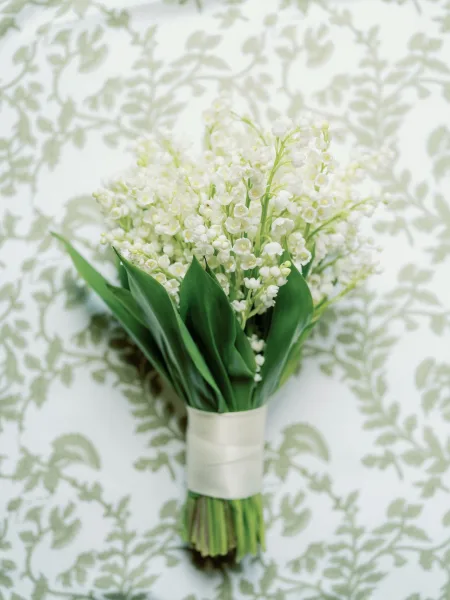
White has been tied to weddings for generations for what it represents: purity, sincerity, unity, and lasting love. That symbolism is part of why an all-white bouquet reads as quietly formal and bridal in a way no other color quite matches. Individual white flowers carry their own meanings too, with white roses long signaling love and reverence and lily of the valley representing the return of happiness. For couples who like a bouquet to carry meaning, white offers a clear, well-established symbolism that suits the occasion without needing explanation.
White Bouquets by Wedding Style
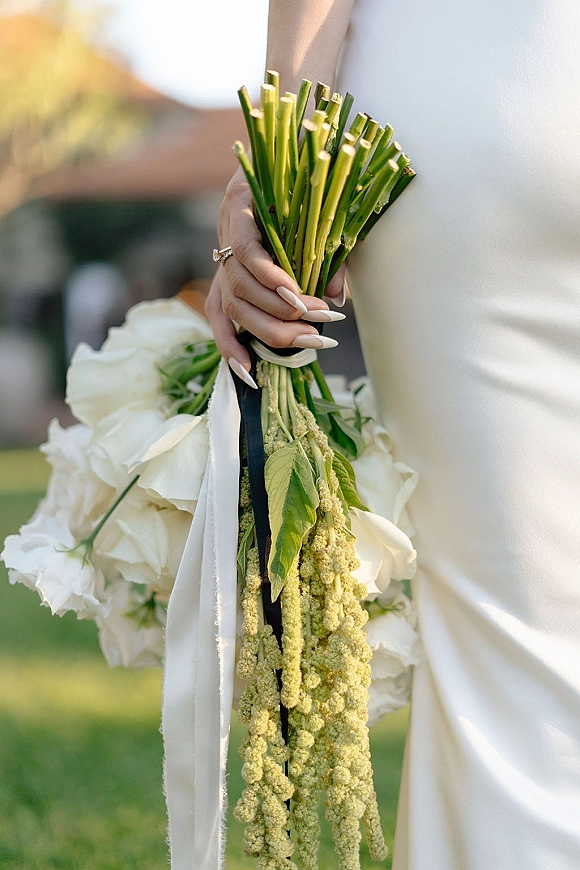
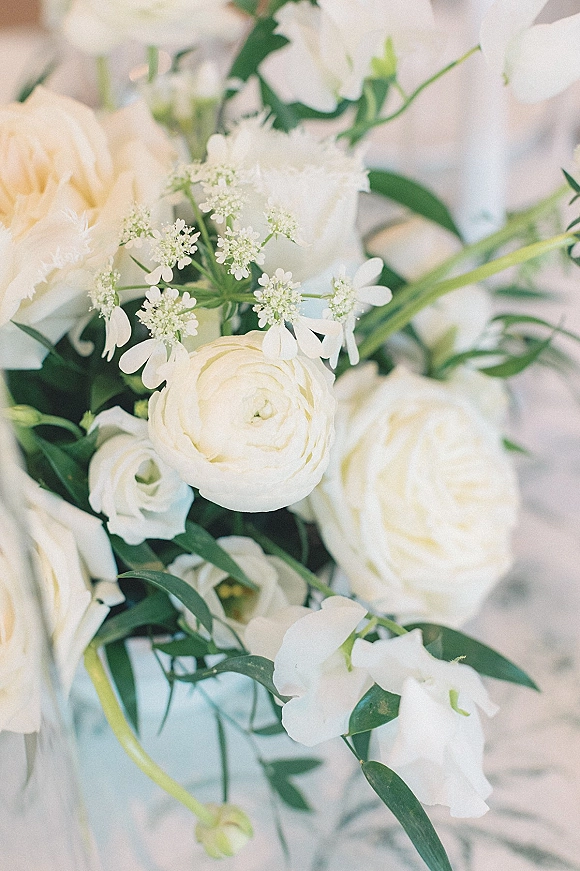
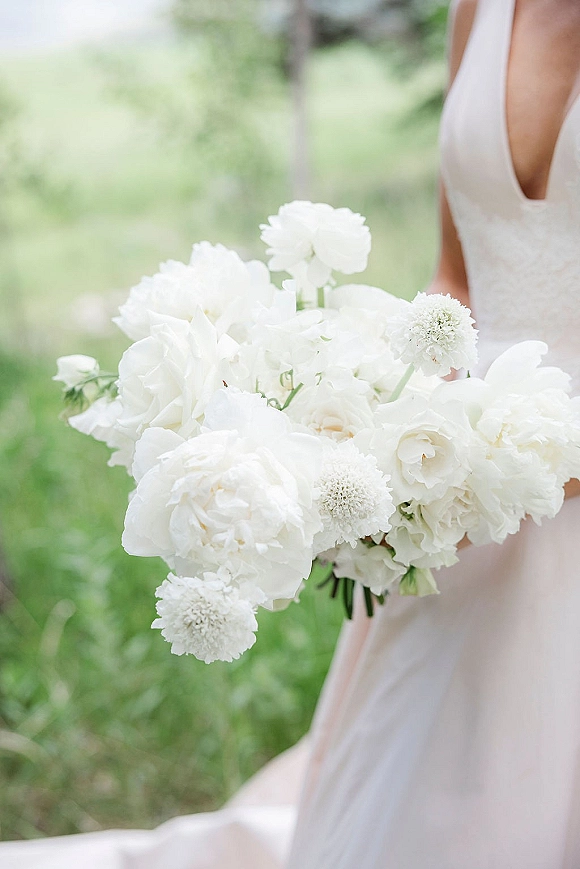
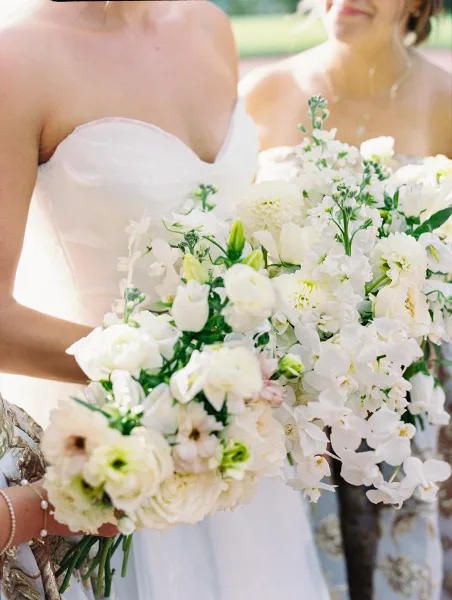
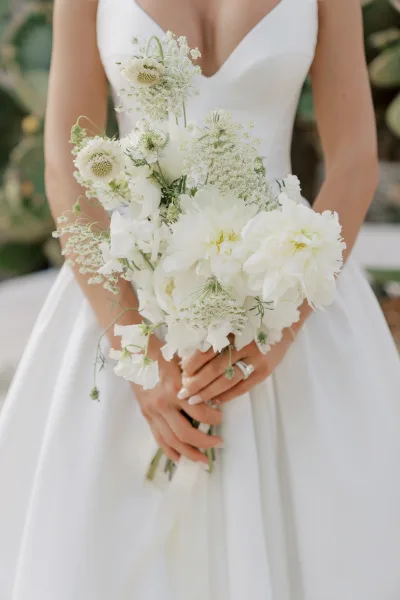
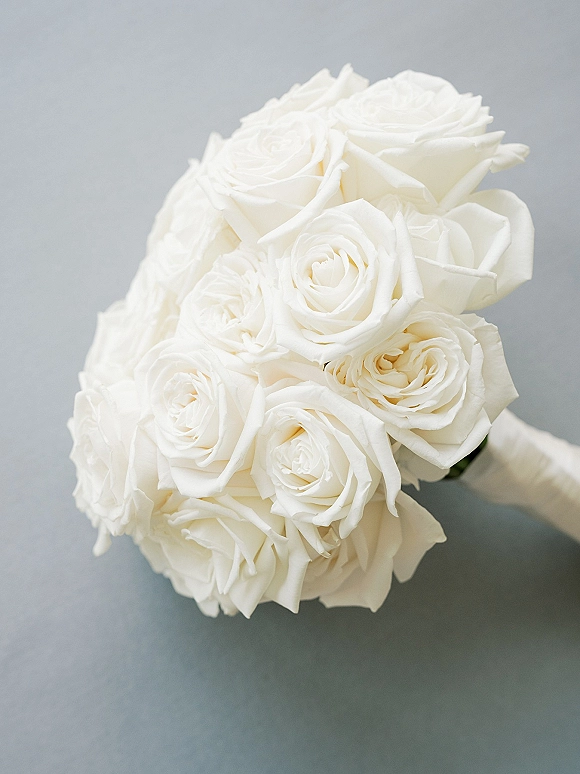
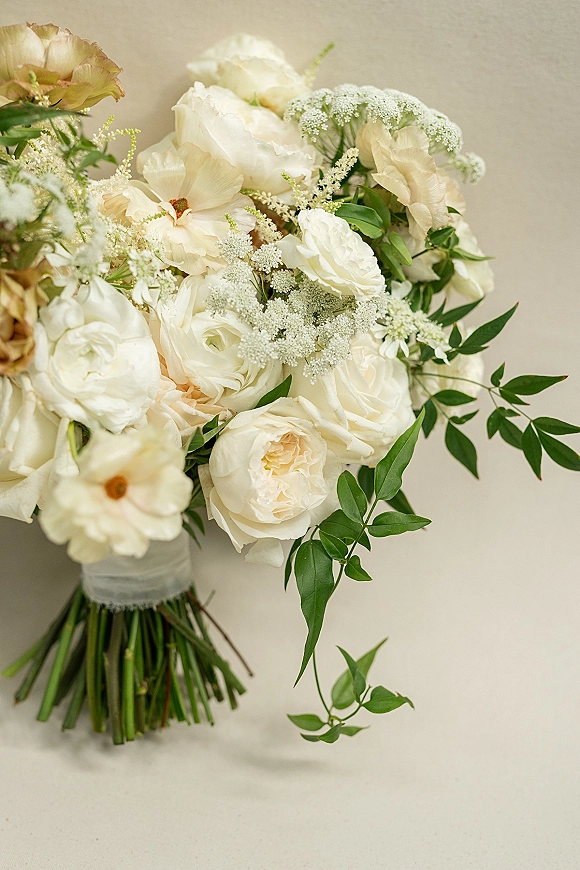
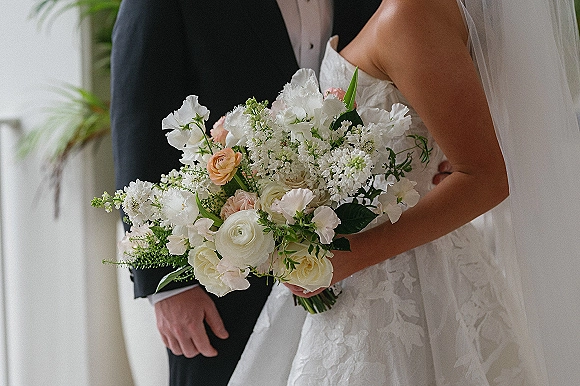
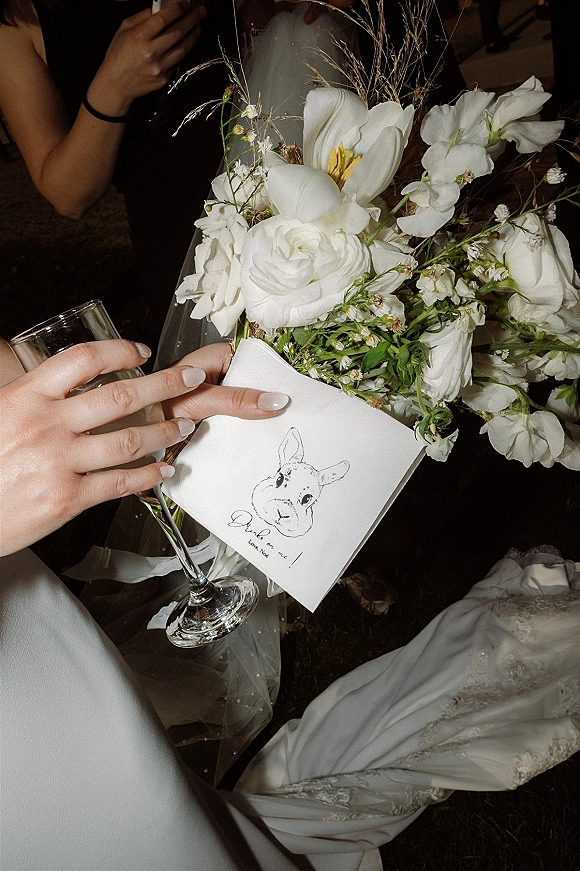
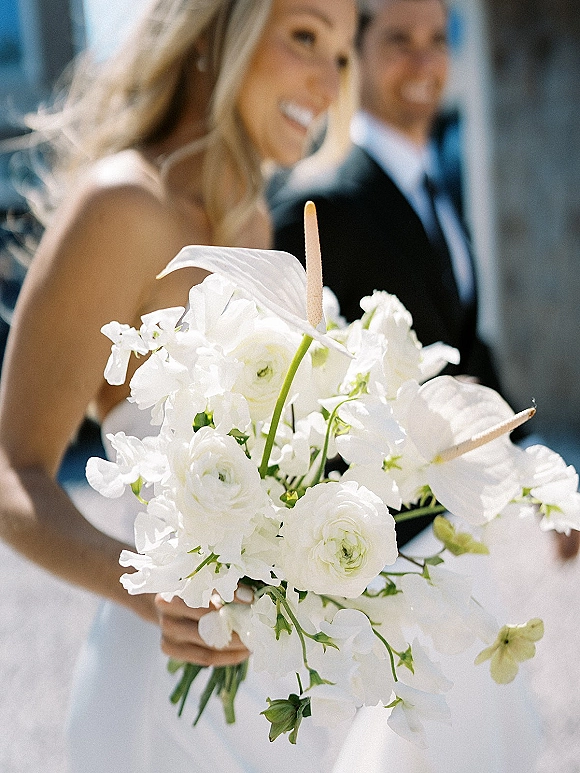
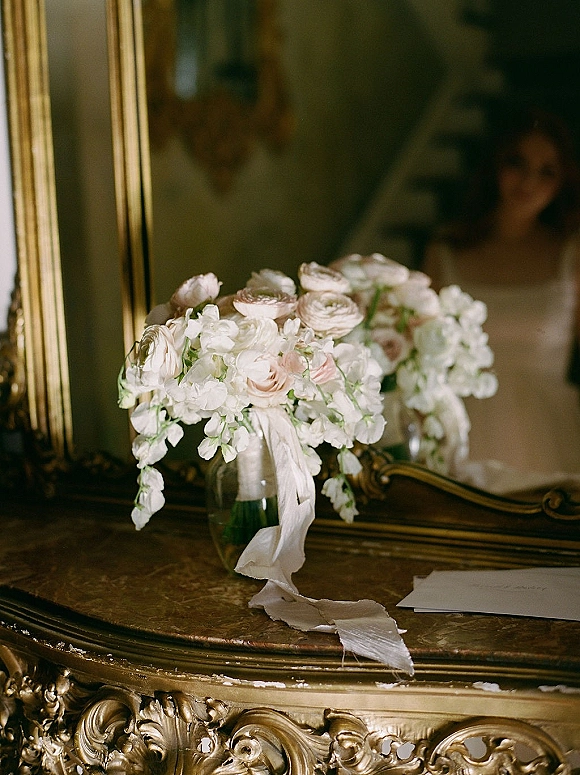
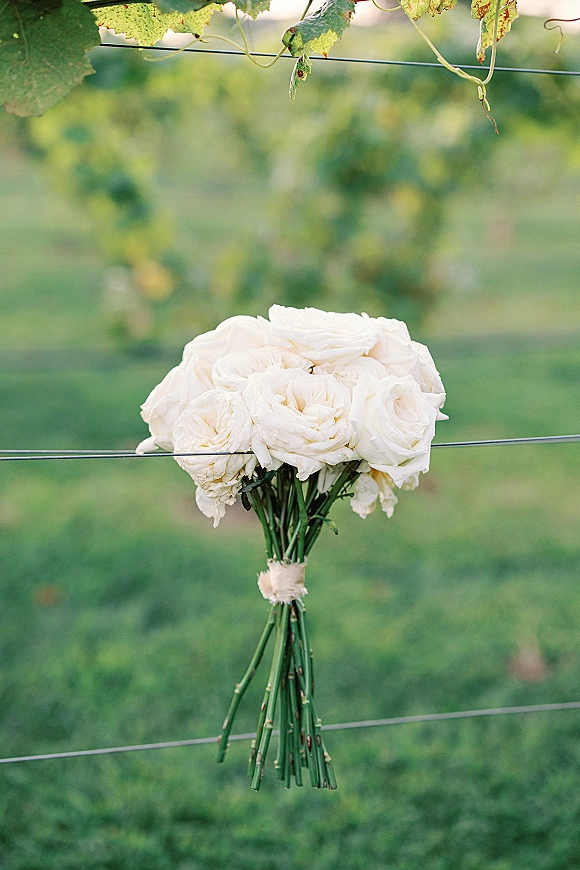
White adapts to any aesthetic through its shape and flower mix. A tight round of white roses reads classic and formal. A loose gathering of white garden roses, ranunculus, and greenery reads romantic and garden-like. A sculptural cluster of calla lilies or orchids reads modern and architectural. An airy mix with grasses and wildflowers in white reads boho and organic. Because the color is neutral, white takes on the character of whatever style you build it in, which is a large part of why it suits every kind of wedding.
Why Choose a White Wedding Bouquet
White is the most versatile bouquet color because it complements every dress tone, venue, and season without competing. It reads clean and formal in a classic setting and soft and organic in a garden one, depending entirely on the flowers and shape. White also photographs reliably, holding its brightness against both white and ivory gowns in nearly any light.
White carries meaning as well, long associated with weddings for what it signals, which adds to its enduring appeal. For couples who want a bouquet that will look right regardless of their other decisions, white is the safest and most classic starting point, and it is the easiest base to build a two-tone combination on later. Its one demand is texture: because there is no color contrast to carry the arrangement, the flower shapes have to do that work. This is also why an all-white bouquet can range so widely in feel, from a crisp, modern cluster of calla lilies to a soft, romantic gathering of garden roses, all within a single color. The white is constant; the character comes entirely from the flowers and the shape.
White Flower Options for Bouquets
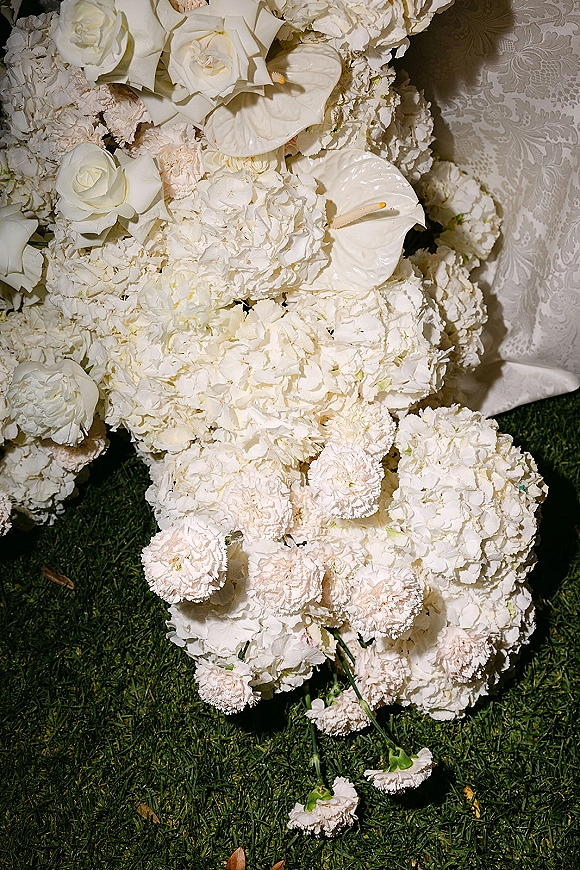
An all-white bouquet gets its interest from texture, so the flower mix matters more than in a colored bouquet. White roses offer clean, classic form. White peonies add soft, oversized volume in spring. Calla lilies bring sleek, sculptural lines. White hydrangea builds full, cloud-like base volume and stretches the budget.
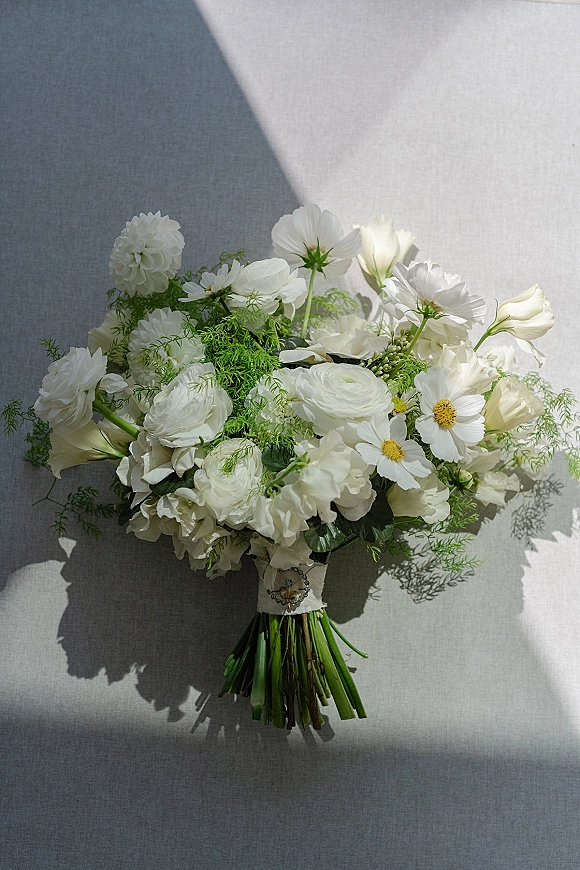
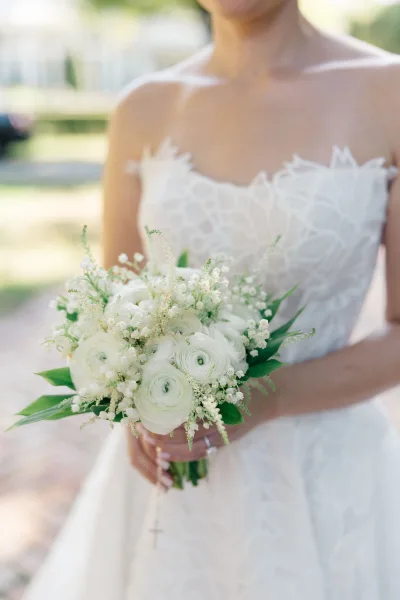
Anemones add graphic contrast with their dark centers, a striking detail in an otherwise pale bouquet. Ranunculus and lisianthus provide ruffled, layered texture, tulips bring a clean spring shape, and lily of the valley adds delicacy and fragrance. Stephanotis and orchids read especially formal. Combining several of these shapes, some round, some spiky, some ruffled, is what keeps a white bouquet from reading flat or one-note. Filler flowers matter too: baby's breath, waxflower, and astilbe add fine white texture between the focal blooms, and a little greenery keeps even an all-white bouquet from looking solid and heavy.
White Bouquet Shapes
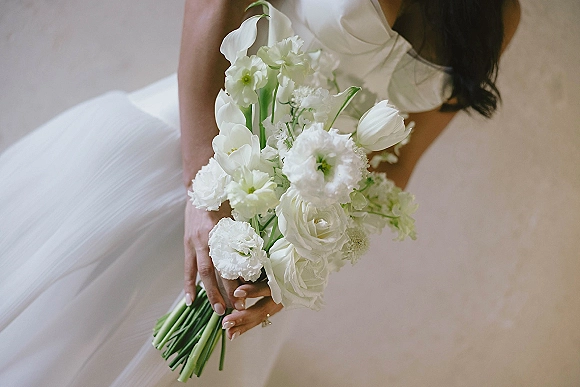
White suits every bouquet shape, so the form can be chosen purely for the dress and mood. A tight round of white roses reads formal and classic. A loose, organic hand-tied gathering with greenery reads garden and relaxed. A sculptural cluster of white calla lilies reads sleek and modern, and a white cascade reads dramatic and grand. Because white is neutral, the shape does more of the talking than it would in a bold color, so it is worth choosing the silhouette deliberately rather than defaulting to a round.
What White Wedding Bouquets Cost
White bouquets are not inherently expensive, since cost depends on the flowers rather than the color. White roses, hydrangea, and carnations are affordable and available year-round, making a full all-white bouquet achievable on a modest budget, while white peonies, lily of the valley, and gardenia sit at the premium end and are seasonal. The most economical route is to build on volume flowers like white hydrangea and roses and reserve a few premium white blooms as focal accents. Choosing in-season white flowers is the simplest way to keep the bouquet lush without overspending.
White Rose Bouquets
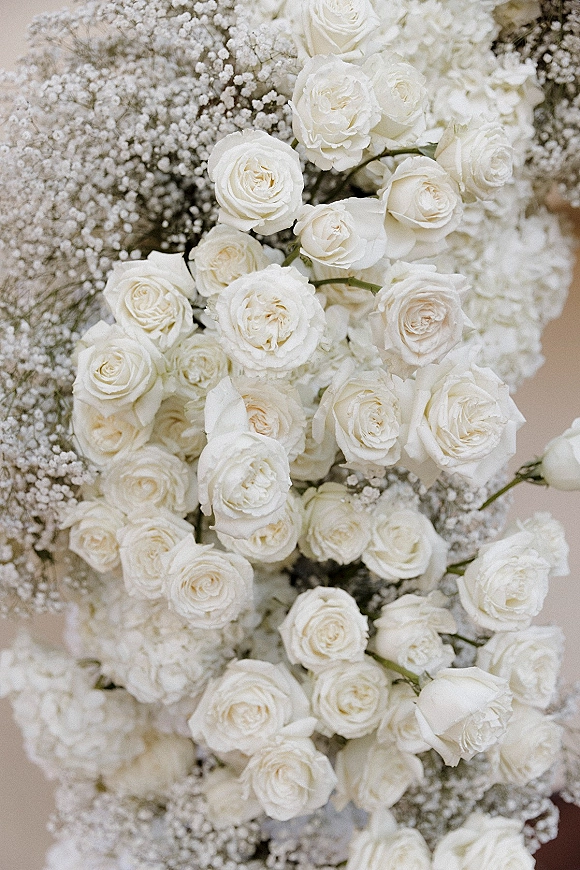
The white rose bouquet is the definitive classic, a tight or loosely gathered round of a single flower that suits nearly every wedding. Garden roses add ruffled fullness and a soft, peony-like look, while standard roses read cleaner and more structured. A white rose bouquet works formal or relaxed depending on how tightly it is built, and it pairs with any level of greenery from none to abundant.
Roses are also among the most reliable flowers out of water, holding their form through a long day, which makes an all-rose bouquet a practical choice as well as a classic one. It is the dependable pick when you want something unmistakably bridal that will not wilt or surprise you. Available in every white from bright to cream year-round, roses also make it easy to match the exact tone of your gown, which is harder with more seasonal flowers.
White Anemone and Ranunculus Bouquets
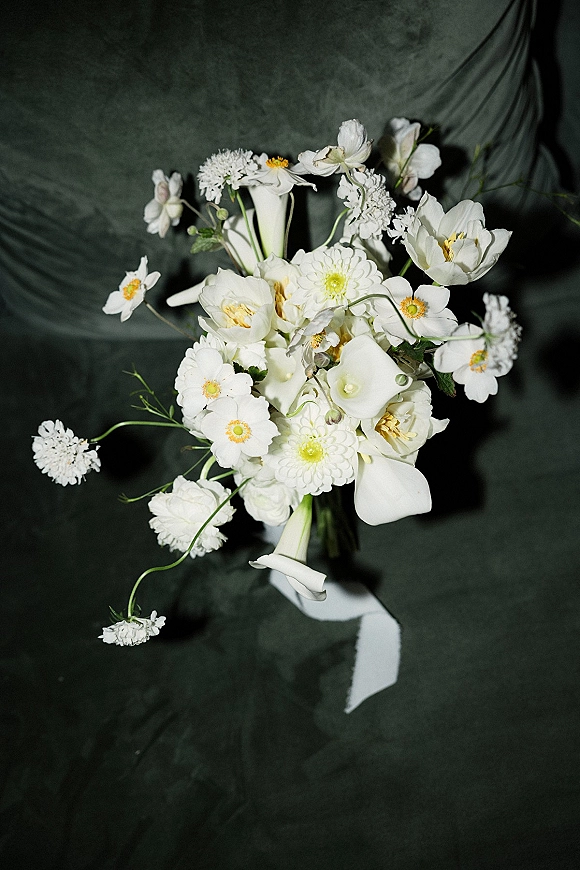
Two white flowers give a monochrome bouquet particular character. White anemones, with their crisp petals and dark centers, add graphic contrast and a modern, slightly editorial edge to an all-white design. White ranunculus, with its many thin, layered petals, adds soft, rose-like fullness at a smaller scale and holds beautifully through the day. Together they cover both ends of the white spectrum, one bold and structural, one soft and delicate, and either can lift a white rose or hydrangea bouquet from plain to textured. Both are at their best in the cooler months.
White and Green Bouquets
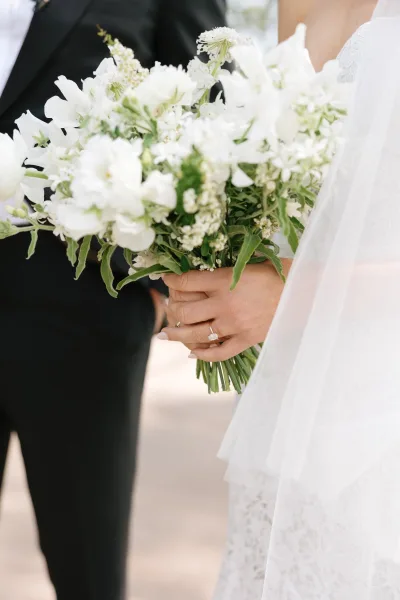
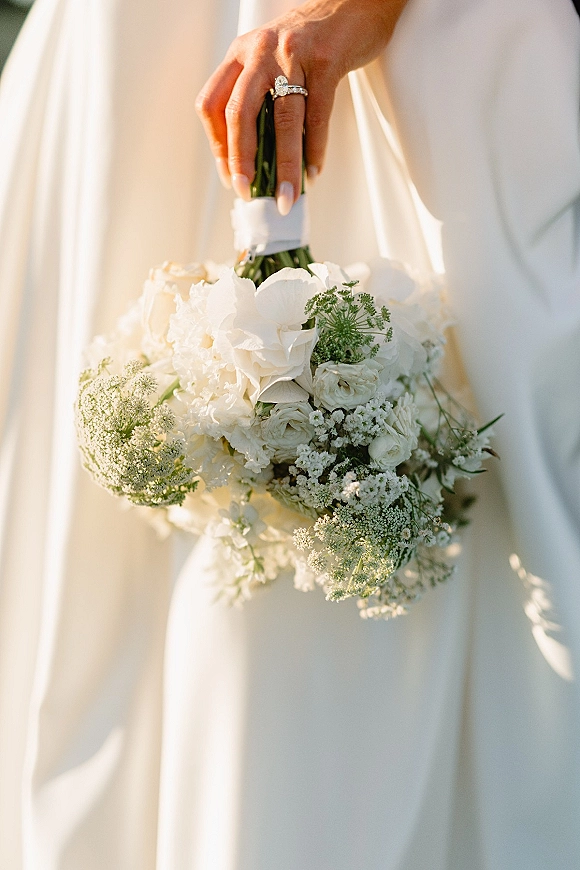
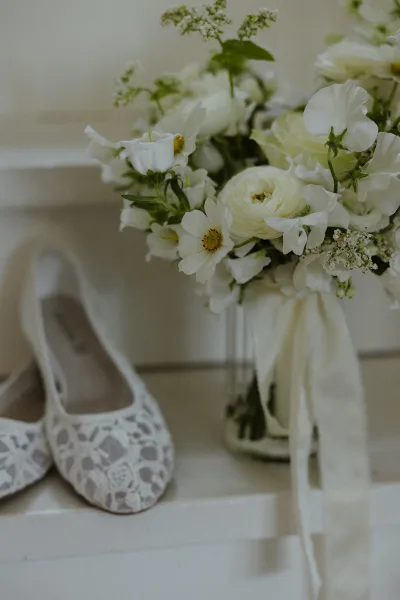
Adding green is the most popular way to give a white bouquet life, and the pairing has become a signature of modern weddings. Foliage, from soft eucalyptus to structured leaves and trailing vines, frames the white blooms and adds an organic, garden freshness. The ratio sets the mood: mostly white with green accents reads formal, while a generous amount of greenery reads relaxed and natural.
The type of greenery matters too. Silvery eucalyptus reads soft and romantic, glossy leaves read crisp and modern, and grasses or ferns read wild and organic. Explore related wedding greenery ideas for the leafy side of the palette.
Yellow and White Bouquets
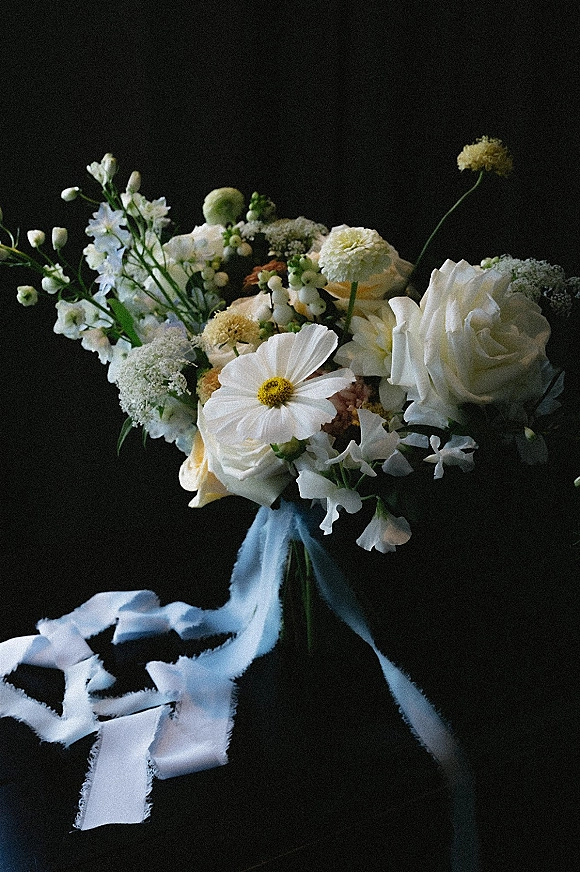
Yellow and white is a cheerful, sunny pairing that feels fresh for spring and summer. Buttery yellow roses, craspedia, ranunculus, or daffodils against crisp white read bright and optimistic without being loud. The combination suits garden and outdoor weddings and photographs with real warmth in daylight. Keeping the yellow soft and buttery rather than neon holds the look elegant rather than casual.
Blue and White Bouquets
Blue and white is a crisp, coastal-leaning pairing, and the blue can double as a bride's something blue. Blue hydrangea, delphinium, or thistle against white roses and hydrangea reads fresh and a little nautical. The palette suits waterfront and summer weddings especially, and because true blue is rare among flowers, it feels distinctive while staying clean and classic rather than trendy.
Red and White Bouquets
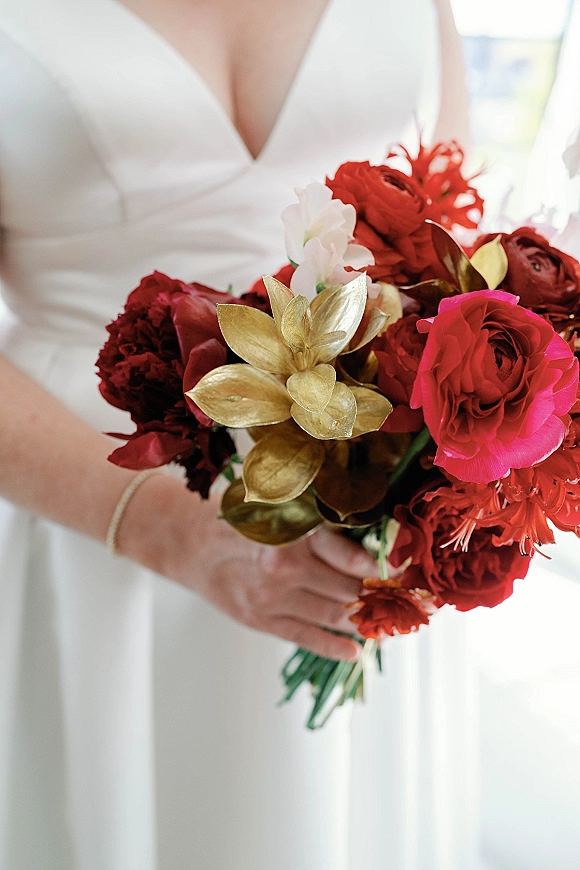
Red and white is the most dramatic of the white pairings, a high-contrast, classic combination with a formal edge. Deep red roses against crisp white create bold definition that photographs sharply, and the look feels especially right for winter and holiday weddings. Adjusting the ratio shifts the mood, with more white reading cleaner and more red reading bolder. See the full red wedding bouquet collection for red-forward variations of the pairing.
Black and White Bouquets
For a modern, high-contrast look, black and white pairs white blooms with the darkest flowers available: deep burgundy and near-black dahlias, calla lilies, or anemones with dark centers. The effect is graphic and editorial, suited to formal, modern, and black-tie weddings. It is the boldest way to keep a bouquet essentially white while adding striking definition, and it reads as a deliberate design statement. The contrast also photographs sharply in black-and-white images, which is a consideration for couples drawn to that editorial style.
Texture in an All-White Bouquet
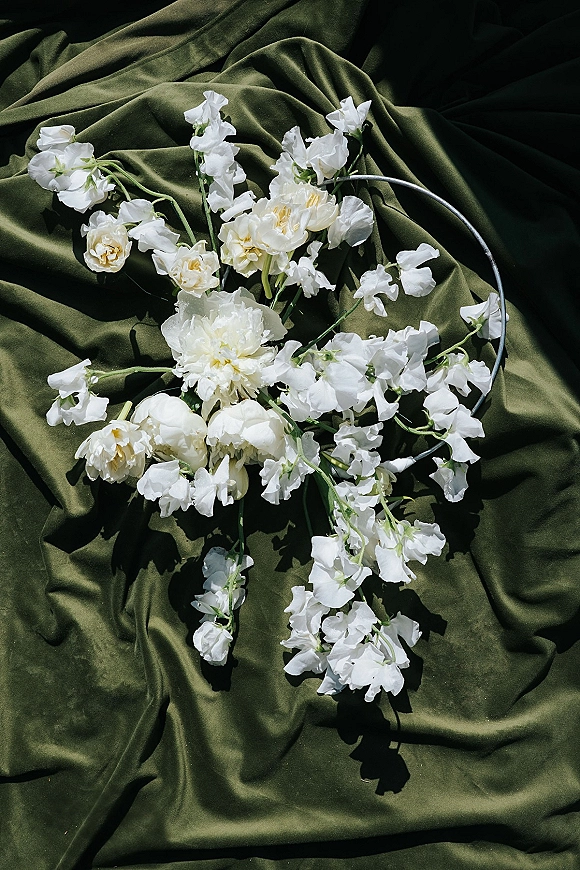
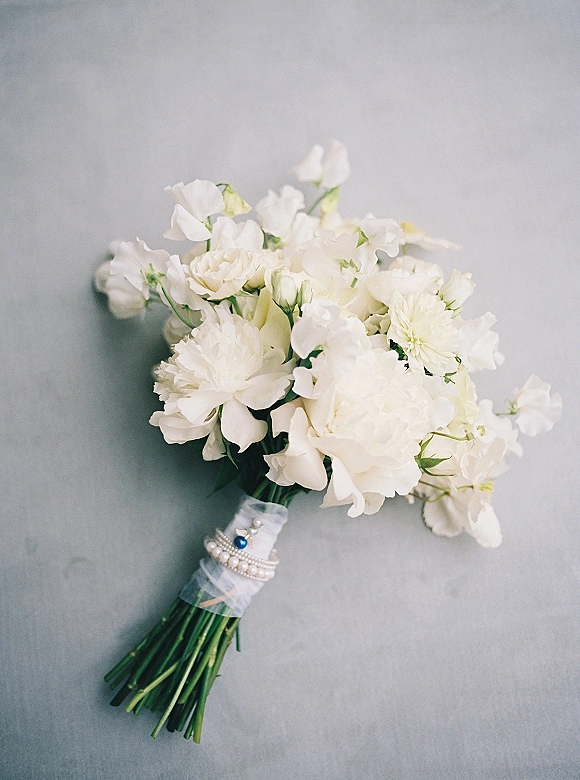
Because an all-white bouquet has no color contrast, texture is what gives it life, and building it well is a matter of mixing flower shapes deliberately. Pairing a smooth, structured bloom like a calla lily or standard rose with a ruffled, many-petaled one like a garden rose or ranunculus, then adding an airy or spiky element like lily of the valley, sweet peas, or astilbe, creates contrast within a single color. Varying the size of the blooms matters too, since a few large focal flowers among smaller ones read far richer than a uniform cluster. A monochrome bouquet lives or dies on this interplay of shape and scale.
White Bouquets by Season
White works year-round, but the flowers that carry it shift with the season. Spring offers white peonies, tulips, ranunculus, and lily of the valley. Summer brings white garden roses, dahlias, and hydrangea at their fullest. Fall suits white dahlias and roses with deeper greenery for contrast, and winter favors amaryllis, anemones, ranunculus, and paperwhites with evergreen accents. Choosing white flowers in their season keeps quality high and cost reasonable, and it subtly shifts the bouquet's character, from soft and fresh in spring to crisp and structural in winter.
White Bridesmaid Bouquets
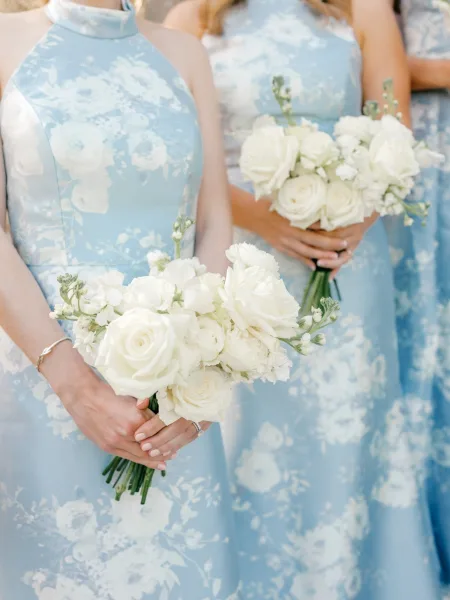
All-white bouquets make an elegant, cohesive choice for a wedding party, and they work in two directions. Bridesmaids can carry white bouquets alongside a bride whose bouquet adds a touch of color, or the whole party can carry variations of white so the group reads clean and unified. Because white flatters every bridesmaid dress color, it is one of the safest party palettes, and varying the greenery or the flower mix slightly across the bouquets keeps the all-white look from reading flat. See the full wedding bouquet guide for coordinating the set.
Fragrant White Flowers
Many of the most fragrant wedding flowers are white, so an all-white bouquet can carry scent as well as a clean look. Gardenia, stephanotis, freesia, and lily of the valley are among the most fragrant, while garden roses add a softer perfume. Fragrance is worth considering deliberately: a strongly scented bouquet is lovely to carry but can be overwhelming in a small space or for anyone sensitive, so many florists use fragrant flowers as an accent rather than the whole bouquet. If scent matters to you, name it as a priority, since some beautiful white flowers have almost no fragrance at all.
White and Neutral Bouquets
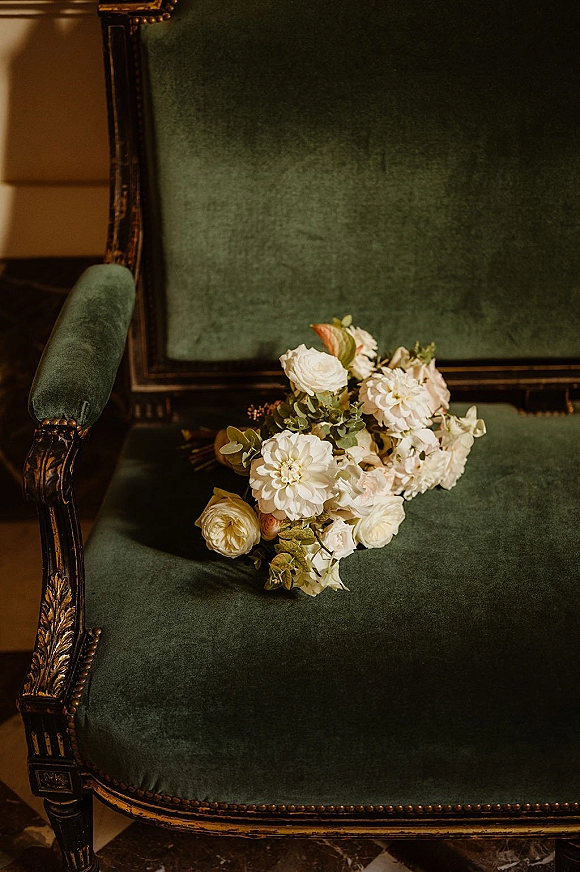
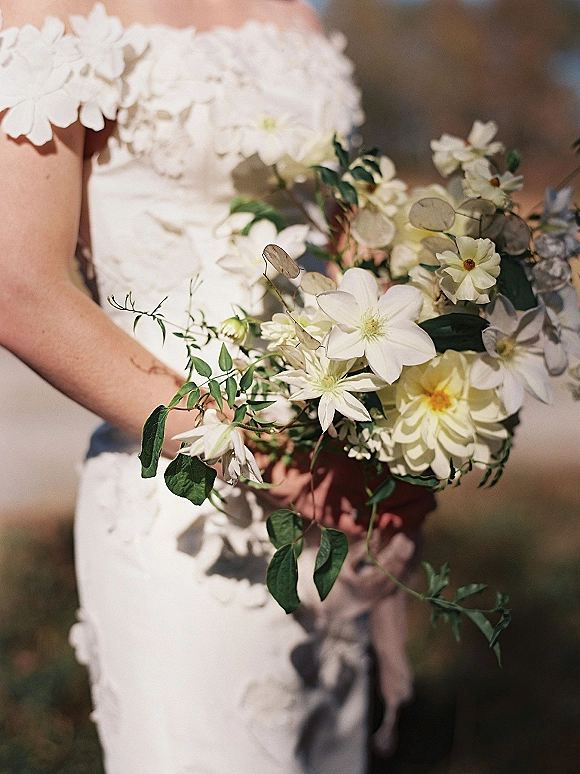
A softer alternative to a pure-white bouquet blends white with neutral tones, cream, champagne, taupe, and soft beige, for a warm, organic look that has become a favorite for modern and boho weddings. Dried elements, pampas, and wheat push the neutral direction further, while white roses and ranunculus keep it fresh. This muted, tonal palette reads sophisticated and calm rather than crisp, and it flatters warm-toned gowns and outdoor settings especially. It is the choice for couples who love white but want warmth and texture over stark brightness. Because the neutrals are so forgiving, this palette also hides the natural variation among white flowers, where cool and warm whites can otherwise clash in a strictly pure-white bouquet.
Ivory Versus Pure White
Not all whites are the same, and the distinction matters against a gown. Pure white is a cool, bright tone, while ivory and cream carry a warm, soft undertone. An ivory bouquet blends more seamlessly with an ivory or champagne dress, while a stark white bouquet can look slightly cool against a warm gown, or crisp and intentional against a bright white one. Many bouquets blend both, using cream and pure white together for depth. Bring a swatch of your dress so your florist can match the exact white. Browse wedding florists for monochrome and two-tone design.
Frequently Asked Questions
What white flowers are best for wedding bouquets?
Popular choices include white roses, peonies, calla lilies, hydrangea, anemones, ranunculus, lisianthus, and lily of the valley. Because an all-white bouquet relies on texture rather than color for interest, combining several different flower shapes gives the best result.
Do white bouquets photograph well?
Yes. White is reliable in photos, staying bright against both white and ivory gowns and reading clean in nearly any light. The one consideration is that a stark white bouquet can look slightly cool against a warm ivory dress, in which case cream and blush-white blooms bridge the tone.
What is the most popular color to pair with a white bouquet?
Green is the most popular pairing by far. Greenery frames white blooms and adds organic freshness, and adjusting the ratio shifts the look from formal, with green as an accent, to relaxed and garden-like, with abundant foliage.
What is the difference between white and ivory bouquets?
White is a cool, pure tone, while ivory and cream carry a warm, soft undertone. Ivory bouquets pair more seamlessly with ivory and champagne gowns, while pure white reads crisper against a bright white dress. Many bouquets blend both for depth.
Are white wedding bouquets more expensive?
Not inherently; cost depends on the specific flowers. White roses and hydrangea are affordable and available year-round, while white peonies and lily of the valley are seasonal and pricier. Choosing in-season white flowers keeps the bouquet budget-friendly.