What Is a Lily of the Valley Bouquet
Lily of the valley is a small woodland flower with rows of tiny, nodding, bell-shaped blooms along a slender arching stem, prized for its clean white color and strong, sweet scent. In a bouquet it reads delicate and refined rather than bold, so it is often gathered densely into a small posy where the many little bells create a soft, textured white cluster. It also works as a fragrant accent threaded through larger flowers.
Its scale and scent, more than its size, are what make it feel special, and they also make it a flower to handle carefully. The stems are fine and the blooms delicate, so a bouquet built entirely of lily of the valley is more fragile than one built on roses or hydrangea. One practical note worth knowing: like many garden flowers, lily of the valley is toxic if ingested, so it should be kept away from small children and pets and is not suitable for anything that touches food or drink.
The name itself comes from the French word muguet, and the flower has a long history in gardens and bridal traditions across Europe. It grows low to the ground in shaded, wooded settings, which is why its natural season is short and its supply limited compared with cultivated flowers grown year-round. Understanding that it is a wild-natured spring flower, rather than a commercial hothouse bloom, explains much of what follows about its season, cost, and handling.
How Far Ahead to Order Lily of the Valley
Because supply is limited and the season short, lily of the valley usually needs to be reserved well before the wedding, further ahead than most flowers. A florist will typically place the order early and have the delicate stems delivered close to the date, since they are best used within a day or two of arriving. If your wedding falls outside the natural spring window, the lead time and cost both rise, so the earlier you decide you want the flower, the better your florist can plan for it. Leaving it late is the most common way couples miss out on it.
Classic All-White Lily of the Valley Bouquets
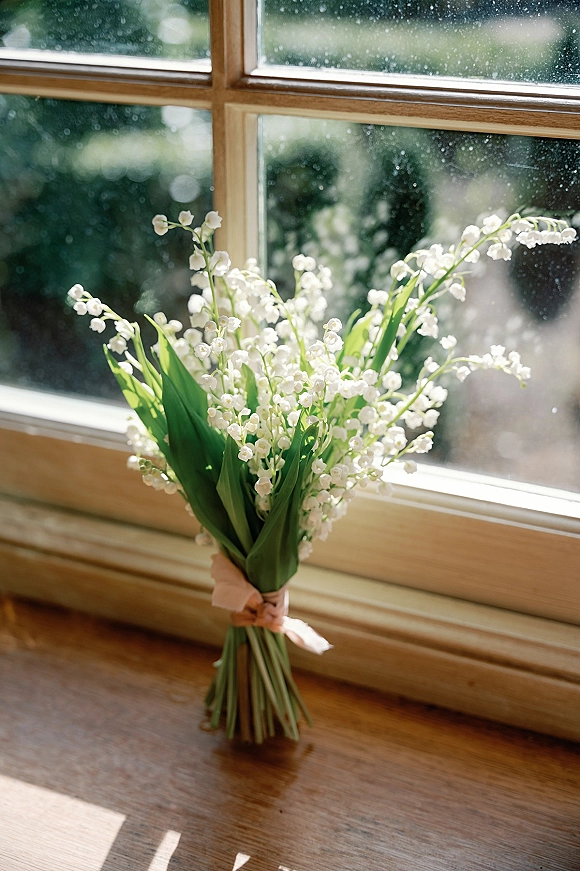
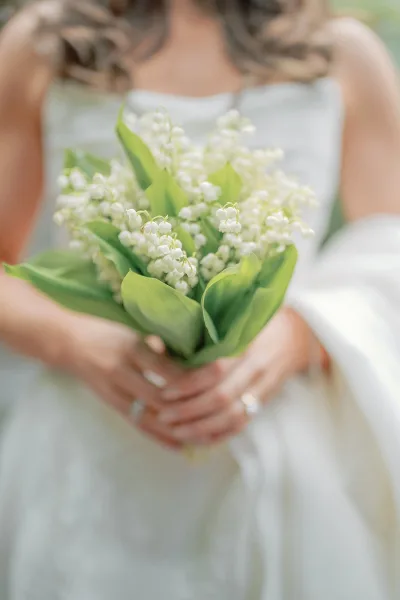
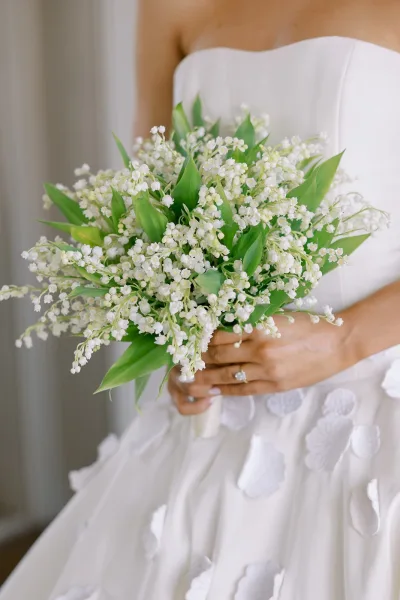
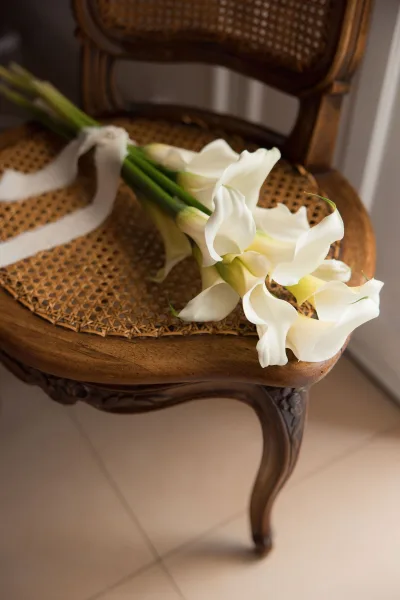
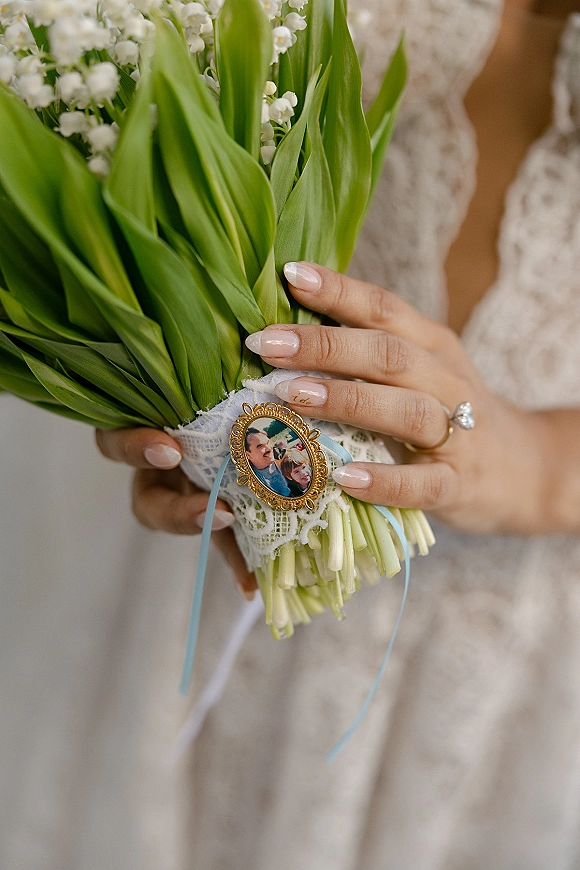
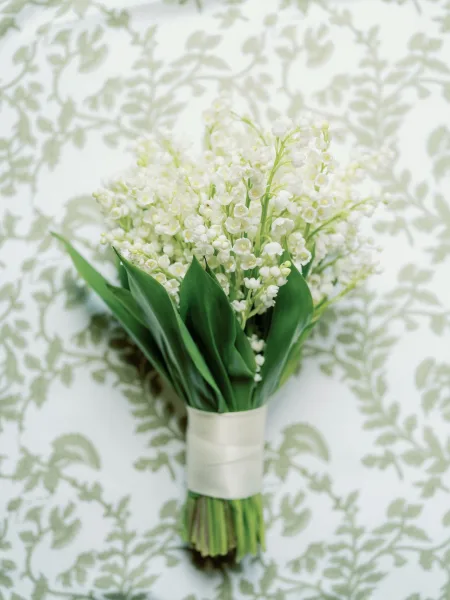
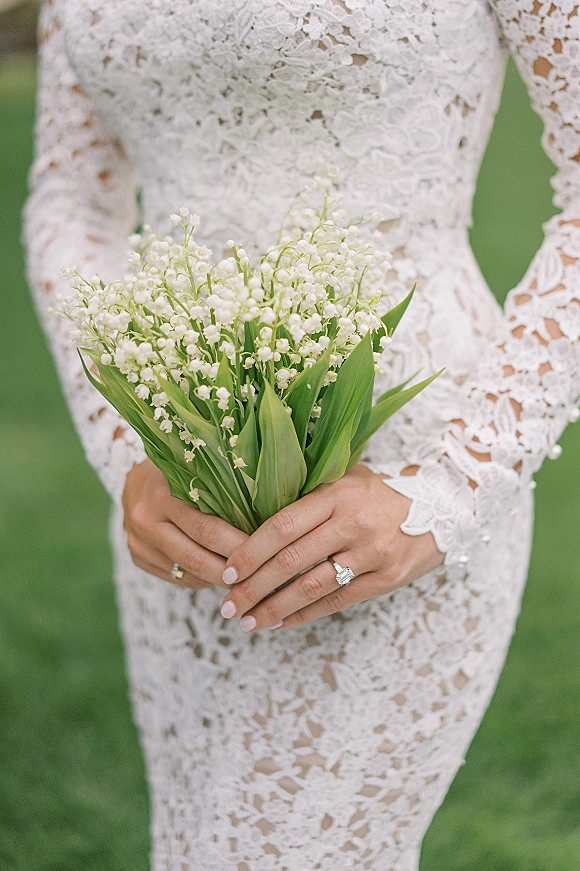
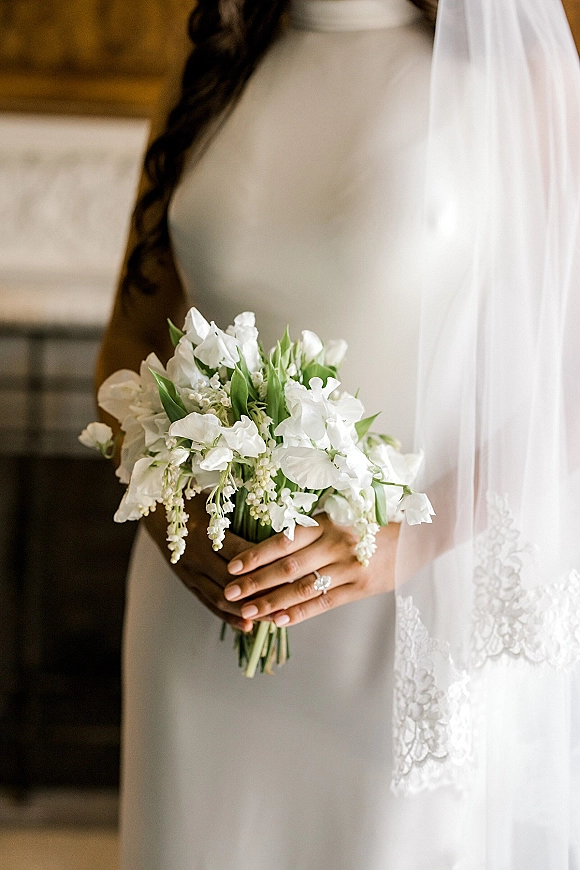
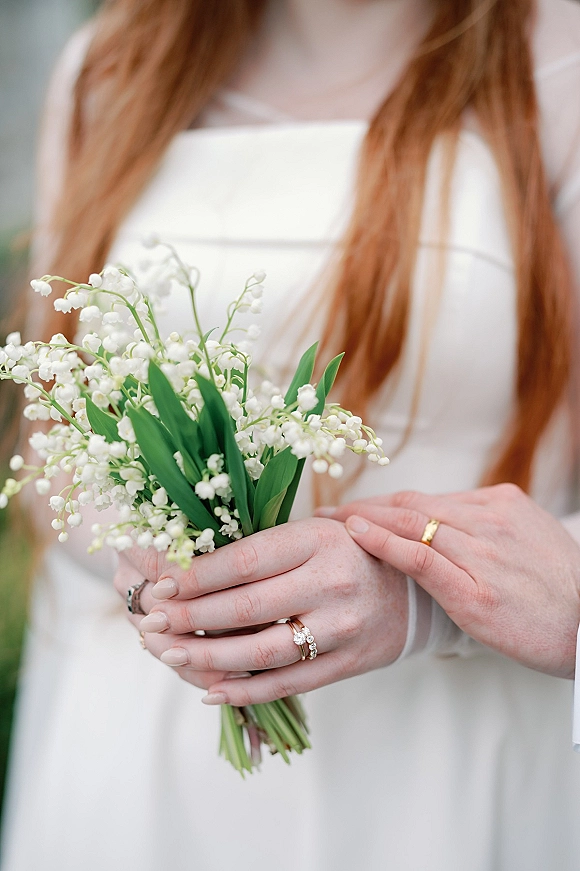
The purest way to use the flower is an all-white, all-lily-of-the-valley posy, a small rounded bouquet made entirely of the bells and their green stems. The look is understated and elegant, suited to formal, classic, and minimalist weddings where restraint reads as luxury. It photographs as a soft, textured cloud of white rather than a bold statement, which is exactly its appeal.
Because each stem is small and carries only a handful of bells, an all-lily-of-the-valley bouquet uses a great many stems, which is part of why it carries the reputation and price it does. If you love the pure look but not the cost, keeping the posy petite rather than oversized is the most effective way to manage it, since scale drives the stem count directly. A small, dense posy also suits the flower's delicate character better than a large one, so restraint here serves both the budget and the look.
Lily of the Valley Down the Aisle
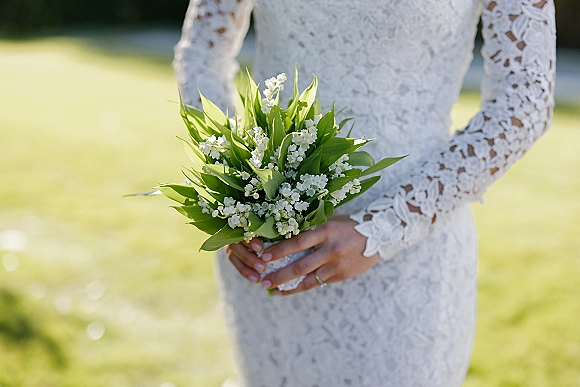
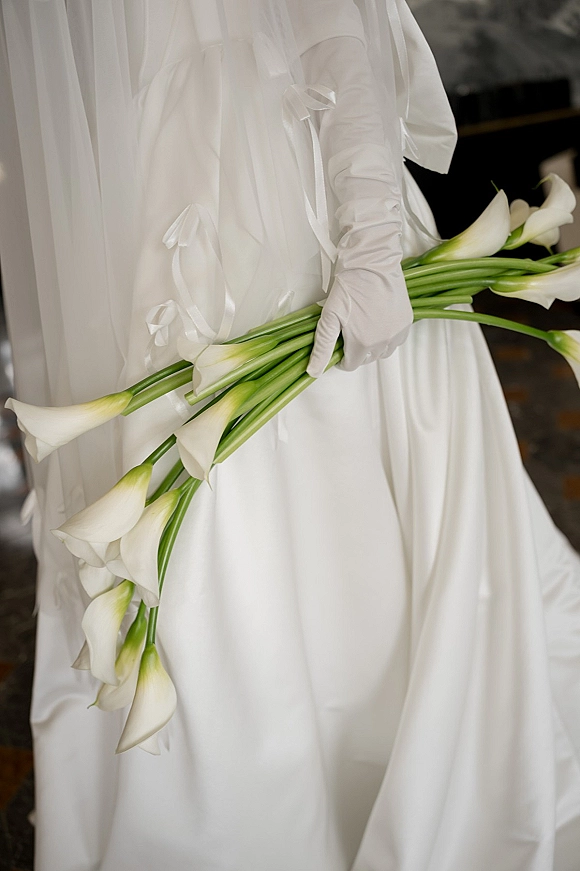
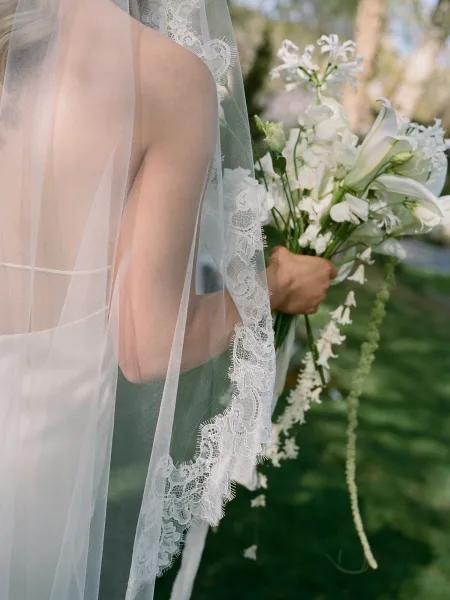
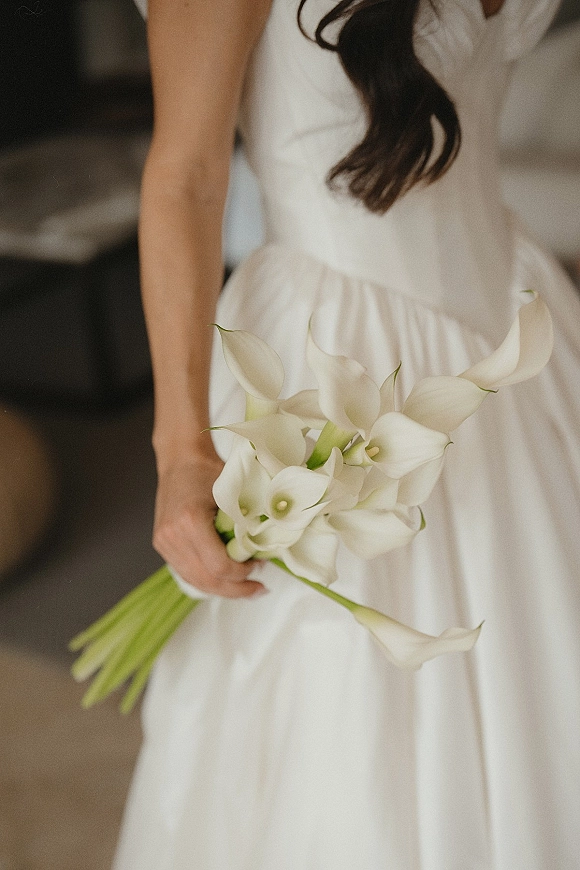
The flower's upright, arching stems and clusters of white bells give it a particular grace in motion, which is part of why it reads so well in aisle photographs. A small posy of lily of the valley sits neatly in the hands and photographs as a soft, textured cloud of white against the gown, delicate rather than showy. For a formal or classic ceremony especially, the restraint of an all-lily-of-the-valley bouquet reads as a considered, refined choice, letting the dress and the moment lead while the flowers stay quietly beautiful.
The Royal and Heirloom Association
Lily of the valley has been chosen by generations of brides for its association with refinement and tradition, appearing in some of the most photographed weddings in history, including a number of royal weddings that cemented its reputation. That heritage is part of the flower's draw: it signals a classic, understated sensibility rather than a trend. For couples wanting a quietly formal bouquet with a sense of continuity, the flower carries meaning without needing embellishment, and it pairs naturally with heirloom details like a family veil or vintage gown. Choosing it can feel like joining a long line of brides who carried the same delicate white bells, which is a quiet kind of significance a showier flower rarely offers.
Lily of the Valley as a Bridal Accent
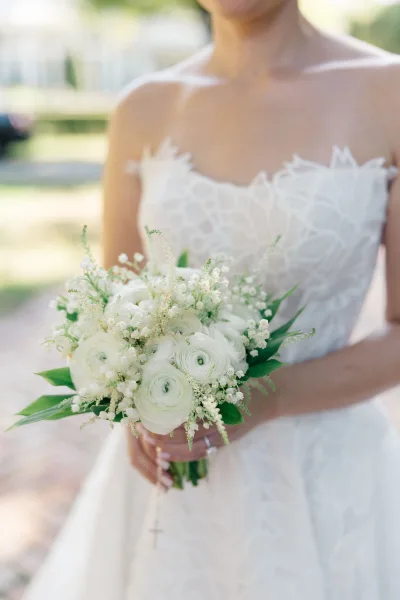
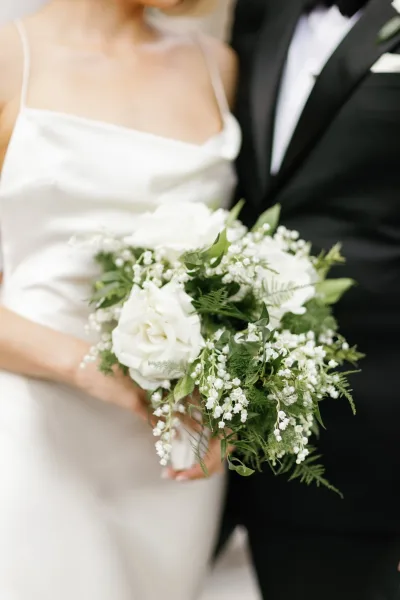
Because the flower is delicate and costly, many couples use lily of the valley as an accent rather than the whole bouquet, which is the most practical way to include it. Threaded among white roses, ranunculus, or garden roses, it adds fine texture and its signature fragrance while stretching a limited supply. This approach gives the flower's look and scent at a fraction of the stem count an all-white posy requires, and it lets the sturdier flowers carry the bouquet's structure.
Managing the Cost of Lily of the Valley
Cost is the practical reality of this flower, so it is worth planning around directly. The two biggest levers are timing and role: marrying within its short late-spring season lowers the price, and using it as an accent rather than the whole bouquet cuts the stem count dramatically. A petite posy costs far less than an oversized one, since scale drives the number of stems. Pairing a few real lily of the valley stems with lower-cost white flowers, or reserving the flower for the bridal bouquet alone while bridesmaids carry look-alikes, keeps the signature touch without the full expense across a whole party.
Peony and Lily of the Valley Bouquets
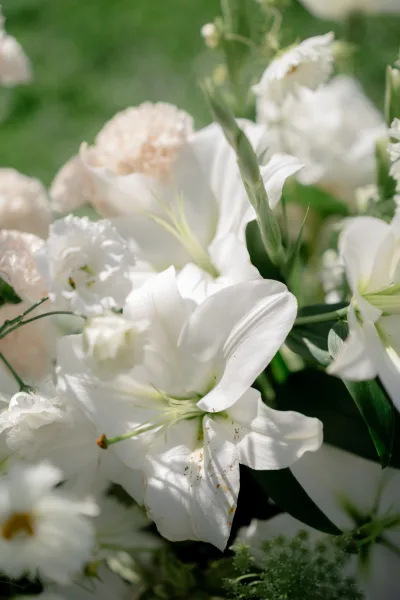
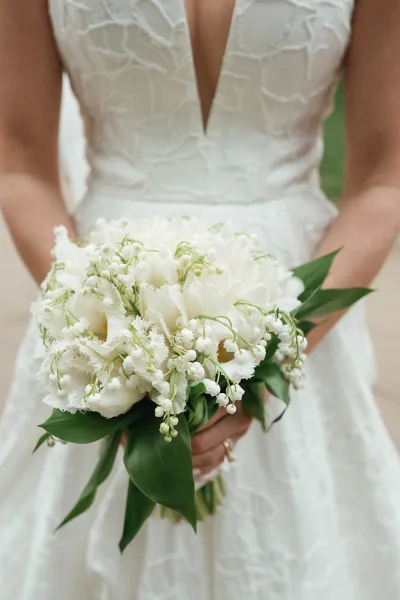
Pairing lily of the valley with peonies sets the flower's fine bells against the peony's oversized ruffles, a contrast of scale that reads lush and romantic. Both flowers peak in late spring, so the pairing is naturally seasonal and both are at their best at the same time. Lily of the valley tucked among blush or white peonies adds delicacy and scent to an already full bouquet, softening the edges of the larger blooms.
Pairing Lily of the Valley with Greenery
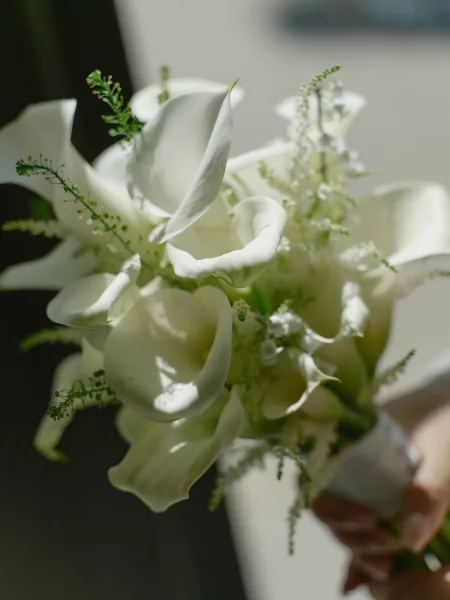
Lily of the valley comes with its own soft green foliage, the broad leaves that frame the stems, and these are often used to set off the white bells in a natural way. Beyond its own leaves, it pairs well with delicate, fine greenery rather than heavy foliage, since anything too bold overwhelms the fine flower. Soft ferns, jasmine vine, and light trailing greens complement it without competing. Keeping the greenery as delicate as the flower preserves the airy, refined quality that makes lily of the valley special.
Lily of the Valley and Rose Bouquets
Roses give lily of the valley the structure it lacks on its own. White garden roses paired with lily of the valley make a bouquet that is full and formal yet keeps the delicate, fragrant character of the smaller flower. The roses anchor the shape and hold up reliably out of water while the bells soften the edges, a dependable way to build a classic all-white bouquet with real texture. See the broader white wedding bouquet collection for more all-white combinations.
Pink Lily of the Valley Bouquets
A rarer pink-tinged variety of lily of the valley exists, offering a soft blush version of the usual white bells. It is harder to source and more of a specialty request, but it lets couples keep the flower's delicate form while adding a whisper of color. Paired with blush roses and soft greenery, it makes an especially tonal, romantic bouquet for a spring wedding.
Lily of the Valley for an Off-Season Wedding
Couples marrying outside late spring can still include lily of the valley, but it takes planning. Off-season, the flower relies on limited forced or imported supply, which raises both cost and uncertainty, so it is usually reserved for a small accent or the bridal bouquet alone. For a fall or winter wedding, pairing a few real stems with seasonal white flowers, or leaning on a look-alike like stephanotis, captures the effect without depending on scarce supply. Deciding early and briefing an experienced florist is the difference between including it off-season and being disappointed.
Lily of the Valley Meaning and Symbolism
Part of the flower's appeal is what it has long represented. Lily of the valley is traditionally associated with purity, humility, and the return of happiness, meanings that suit a wedding and add a quiet layer of intention to carrying it. Its heritage in bridal history, chosen by generations of brides for its refinement, reinforces that sense of continuity. For couples who like a flower to carry meaning as well as beauty, lily of the valley offers a gentle, well-established symbolism without needing to explain itself.

All-White Bouquets Featuring Lily of the Valley
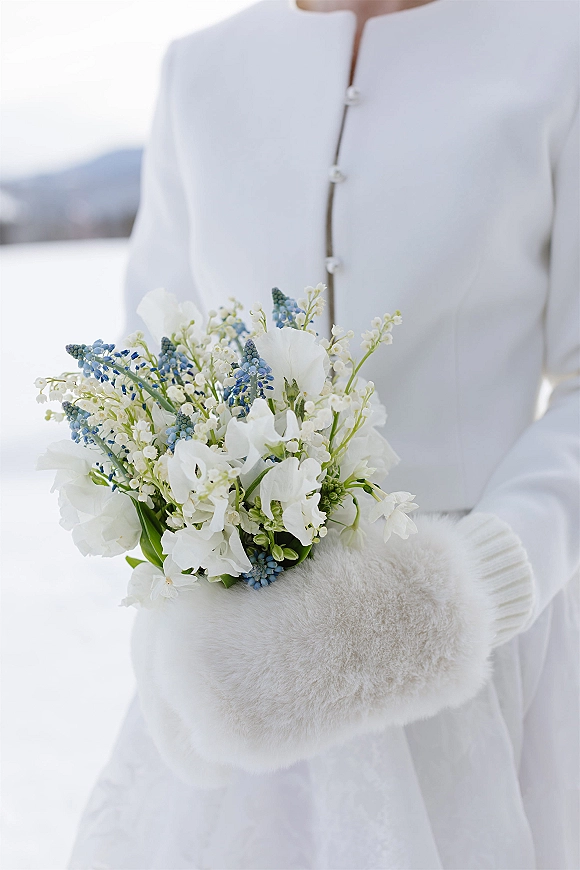
Lily of the valley is one of the finest textures available for an all-white bouquet, so it often appears as the delicate element in a larger white design. Set among white roses, ranunculus, sweet peas, and a little greenery, its arching bells add movement and fragrance that fuller flowers cannot. This is where the flower earns its place for many couples: not as the whole bouquet, but as the detail that lifts an all-white arrangement from simple to refined. A little goes a long way, since even a few sprigs read clearly against larger white blooms and carry the flower's fragrance through the whole bouquet. See the broader white wedding bouquet collection for building the rest of the palette.
Lily of the Valley and Spring Flower Pairings
Because lily of the valley peaks in late spring, it pairs naturally with other spring flowers at their best. Tulips bring clean, simple shape alongside its fine bells, while sweet peas echo its delicacy and add soft color. Ranunculus and garden roses give structure, and fresh greenery keeps the look green and light. Building a spring bouquet around what blooms at the same time as lily of the valley keeps the arrangement seasonal, cohesive, and easier to source than pairing it with out-of-season flowers.
An All-White Spring Bouquet with Lily of the Valley
One of the loveliest ways to feature the flower is a soft, all-white spring bouquet where lily of the valley threads through white peonies, garden roses, ranunculus, and sweet peas. Each flower brings a different scale, from the peony's oversized ruffle to the lily of the valley's fine bells, so the bouquet reads rich and textural despite its single color. Because all of these flowers peak in spring, the arrangement is seasonal and cohesive. This approach gives the flower's signature delicacy and fragrance a supporting cast that fills out the bouquet and stretches its cost.
Lily of the Valley for the Wedding Party
The flower's fine stems make it a natural choice for boutonnieres, where a single sprig reads elegant and understated, and for delicate hair pieces or corsages. Across the wedding party, its cost usually means it is reserved for the bride, with bridesmaids carrying coordinating white flowers that echo the palette without the expense. A shared sprig of lily of the valley in each boutonniere is an affordable way to carry the flower's signature through the party without building whole bouquets from it. The same approach works for the flower girl, whose small posy or basket can hold a stem or two so she matches the bride without a costly full arrangement.
Handling and Fragrance on the Day
Lily of the valley is delicate and best handled with care on the wedding day. The fine stems and small bells do not tolerate heat or drought well, so the flower should be kept cool and hydrated and is often added close to the ceremony. Its fragrance, while much of its charm, is strong for such a small flower, so anyone sensitive to scent may prefer it as an accent rather than a full bouquet held close all day. A florist experienced with the flower will plan its timing and placement around these traits.
Lily of the Valley Bouquet Shapes and Size
The flower's delicate scale shapes how it is used. On its own it suits a small, rounded posy or nosegay, where the density of tiny bells creates a soft cluster and the petite size reads as intentional restraint rather than a lack of flowers. A compact posy also keeps the stem count, and therefore the cost, in check. As an accent, it threads naturally through a larger hand-tied bouquet, its arching stems softening the edges. It rarely suits a bold cascade, since the fine stems lack the weight to trail, so the flower is nearly always used in a gathered, close form.
Look-Alike Flowers and Substitutes
When the real flower is out of season or over budget, several white flowers recreate its fine, textured look. Stephanotis offers small, waxy white blooms with a similar delicacy and its own fragrance. White spirea and lily of the valley shrub carry sprays of tiny white flowers along arching stems, echoing the bell-like effect. Small white ranunculus and spray roses fill a similar role in a mixed bouquet. None matches the exact scent, but each captures the airy, all-white texture at a lower cost and with wider availability, so a florist can approximate the look for any date.
Safety and Handling Notes
One practical point worth knowing: lily of the valley is toxic if any part is ingested, so it should be kept away from young children and pets and never used near food, drink, or a cake. This does not affect its use in a bouquet carried by hand, but it is a reason to be thoughtful about placement at the reception. Washing hands after handling the cut stems is a sensible precaution. A good florist is familiar with the flower and will handle and place it appropriately.
When Lily of the Valley Is Worth It
Because the flower asks for planning and budget, it helps to decide where it earns its place. It is most worth it when you want a specific look or meaning it uniquely provides: an all-white, fragrant, heirloom bouquet with a sense of tradition. If you mainly want delicate white texture, a look-alike will serve at a fraction of the cost. The clearest approach is to reserve real lily of the valley for the one place it matters most, usually the bridal bouquet or the boutonnieres, and build everything else around it.
Preserved and Artificial Alternatives
Because the fresh flower is delicate, seasonal, and expensive, some couples choose high-quality artificial or preserved lily of the valley, particularly for a bouquet they want to keep afterward. Realistic silk versions hold their shape without wilting and can be handled without worry, though they lack the fresh flower's fragrance, which is much of its charm. A florist can advise on where a real accent matters most and where a faux stem will pass unnoticed.
Choosing a Florist for Lily of the Valley
Because the flower is delicate, seasonal, and needs to be reserved ahead, it is worth working with a florist experienced in handling it. An experienced florist will know how to source it for your date, how far in advance to order, and how to condition and time the delicate stems so they are fresh for the ceremony. They can also advise honestly on whether the real flower is feasible for your season and budget, or whether an accent, a look-alike, or a preserved option will serve you better. This is not a flower to leave to chance with an unfamiliar supplier.
Season, Supply, and Planning
Lily of the valley blooms naturally for only a short window in late spring, and even with limited forcing it remains one of the harder wedding flowers to source year-round. Florists typically need to preorder it well ahead, and the delicate stems are best delivered close to the wedding so they are fresh for the day. Its scarcity and short window make it one of the more expensive choices. Even when it is available, quality can vary, so a trusted florist who can inspect the stems on arrival matters more with this flower than with hardier, year-round blooms.
Decide early whether you want it as the whole bouquet or as an accent, because that single choice drives both cost and feasibility more than anything else. If your date falls outside its season, talk to your florist about imported sourcing, a smaller accent role, or look-alike flowers such as stephanotis and white spirea that echo the fine white texture. Browse wedding florists experienced with delicate, seasonal blooms, and see the full wedding bouquet guide for building the rest of your palette.
Frequently Asked Questions
Why is lily of the valley so expensive?
Lily of the valley has a short natural season, limited supply, and small stems, so an all-lily-of-the-valley bouquet requires a great many of them. That combination of scarcity and stem count makes it one of the more expensive wedding flowers, especially outside its late-spring window.
When is lily of the valley in season?
It blooms naturally for a short period in late spring. Limited forcing can extend availability, but quality and price are best during the natural window. Because supply is limited, florists usually need to reserve it well in advance.
Can I use artificial lily of the valley instead?
Some couples choose high-quality artificial or preserved lily of the valley to manage cost and supply, since the real flower is delicate and seasonal. Artificial stems hold up without wilting, though they lack the fresh flower's signature fragrance. A florist can advise on realistic options.
Does lily of the valley have a strong fragrance?
Yes. Despite its small size, lily of the valley has a distinctive, sweet, and carrying scent, which is a large part of its appeal in a bouquet. If you are sensitive to strong floral fragrance, use it as an accent rather than the whole arrangement.
What can replace lily of the valley in a bouquet?
For a similar delicate white look, florists use flowers such as stephanotis, white spirea, or small white ranunculus and spray roses. None carries the exact fragrance, but they recreate the fine, textured white effect at a lower cost and with wider availability.