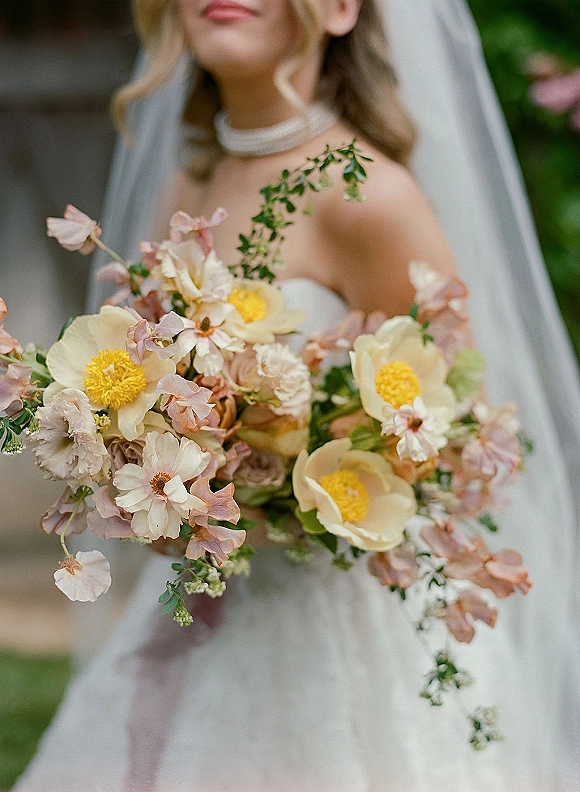
What Makes a Bouquet Pastel
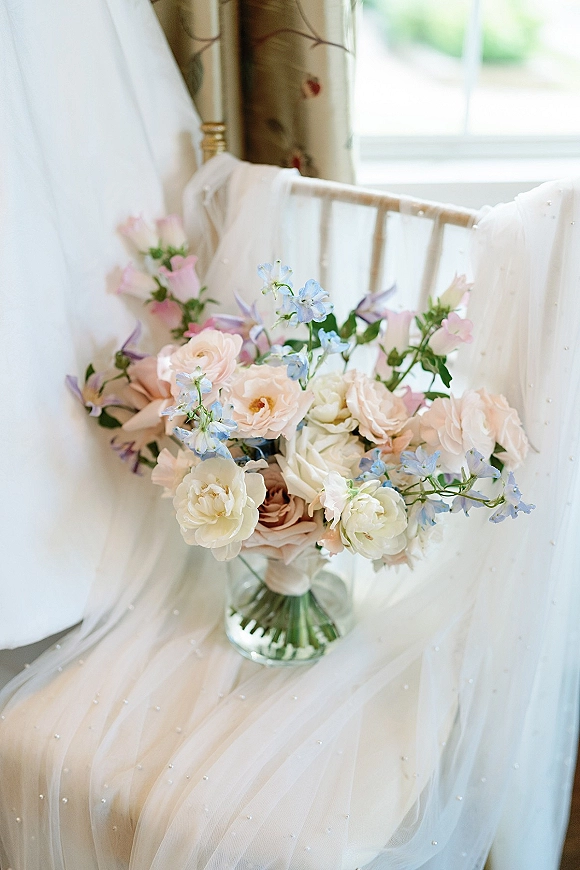
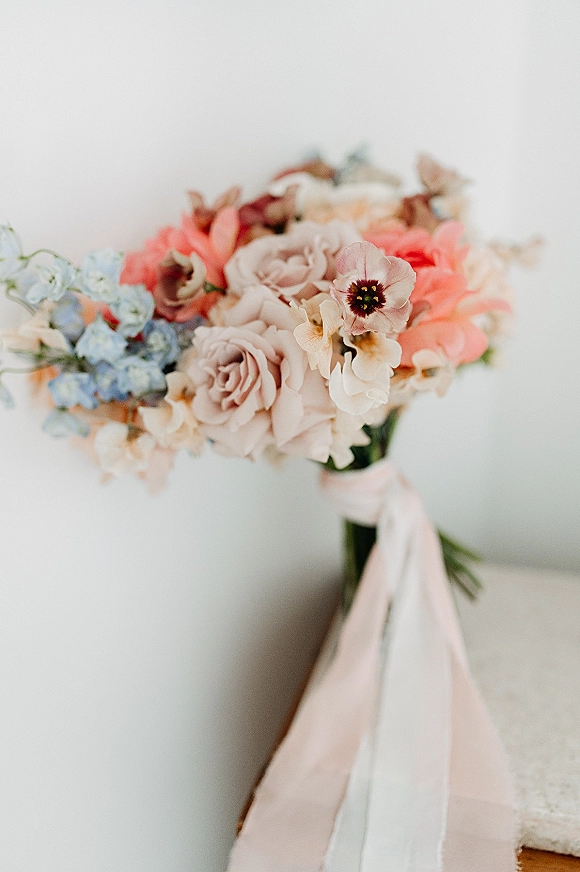
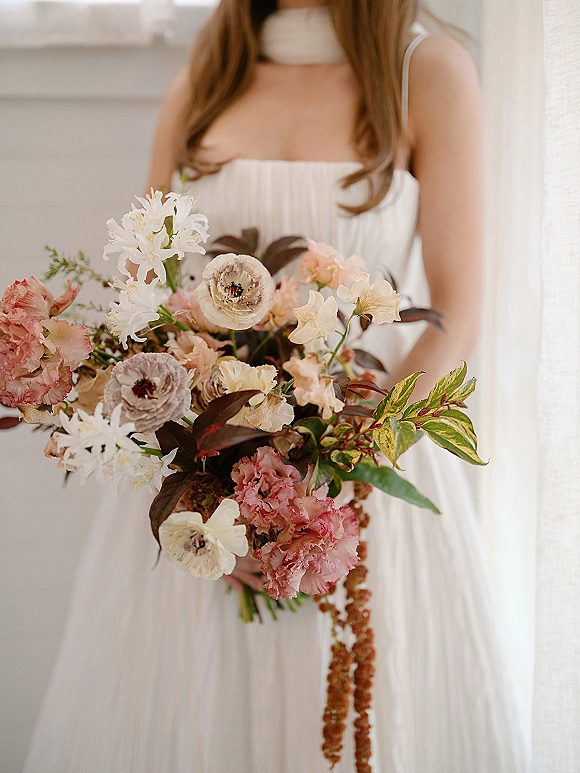
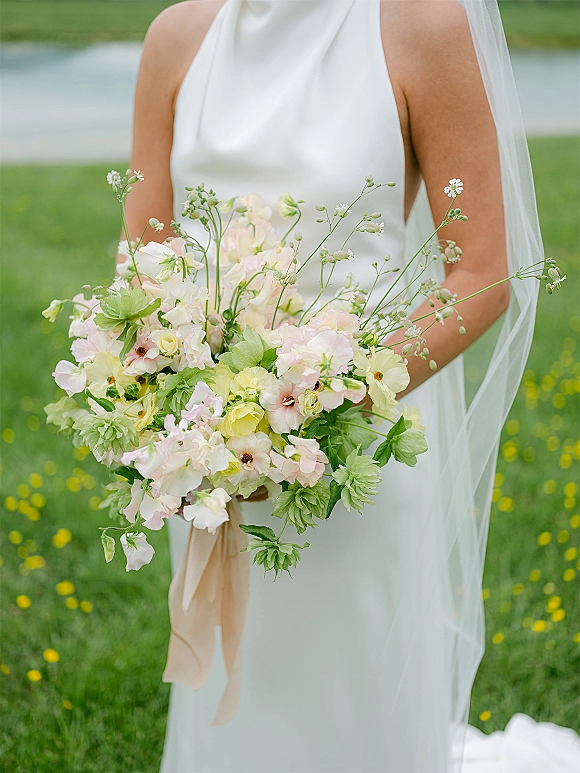
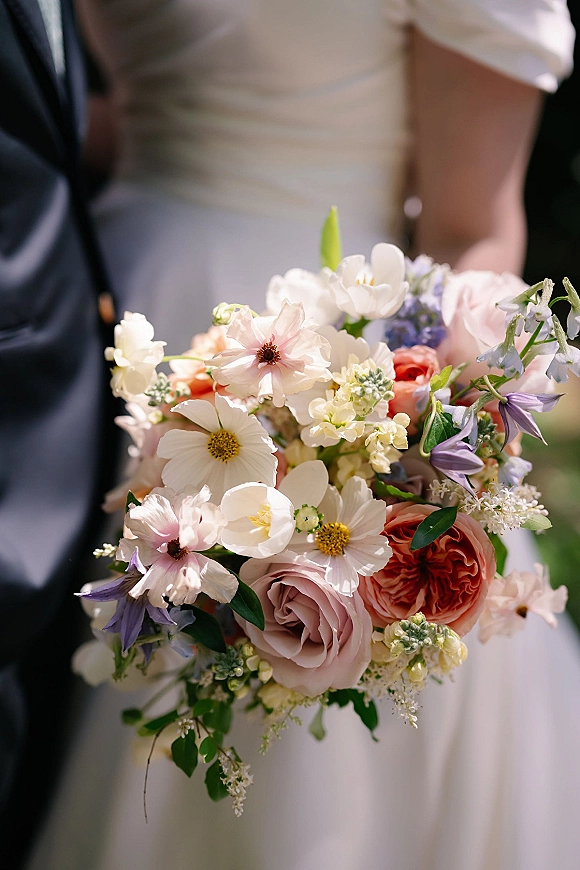
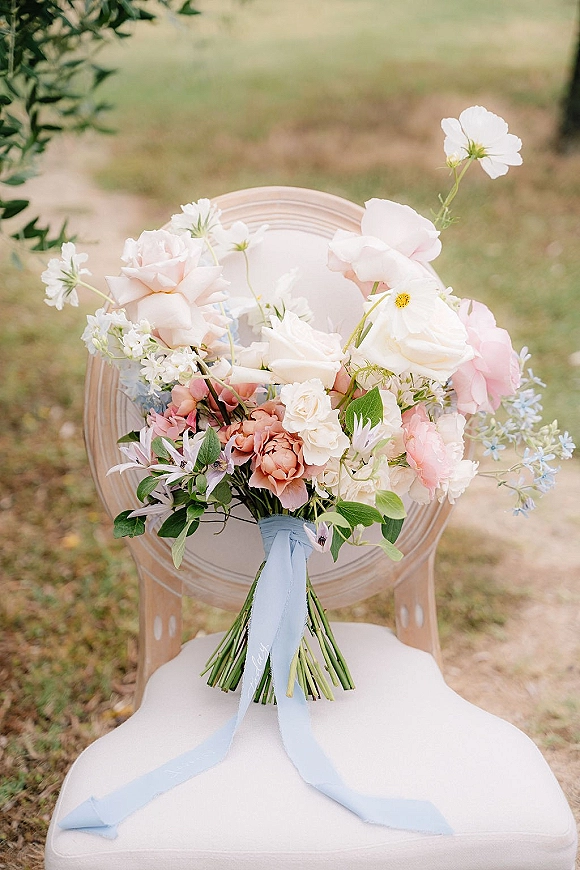
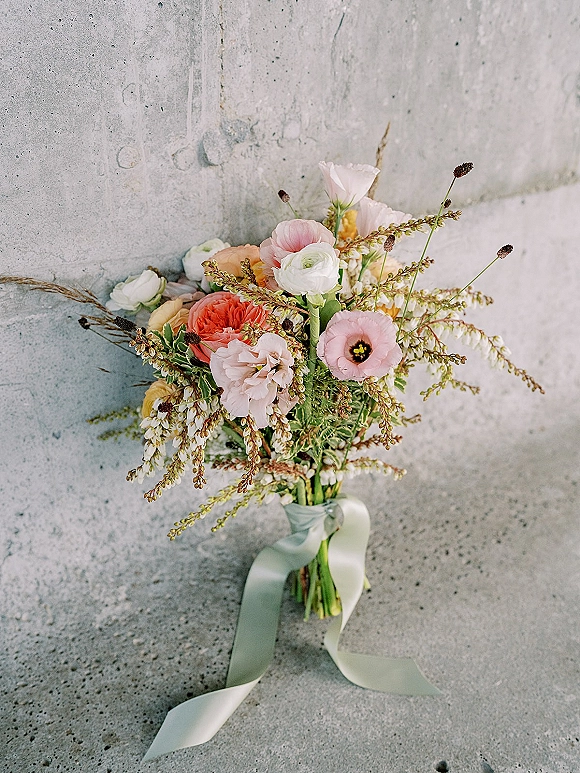
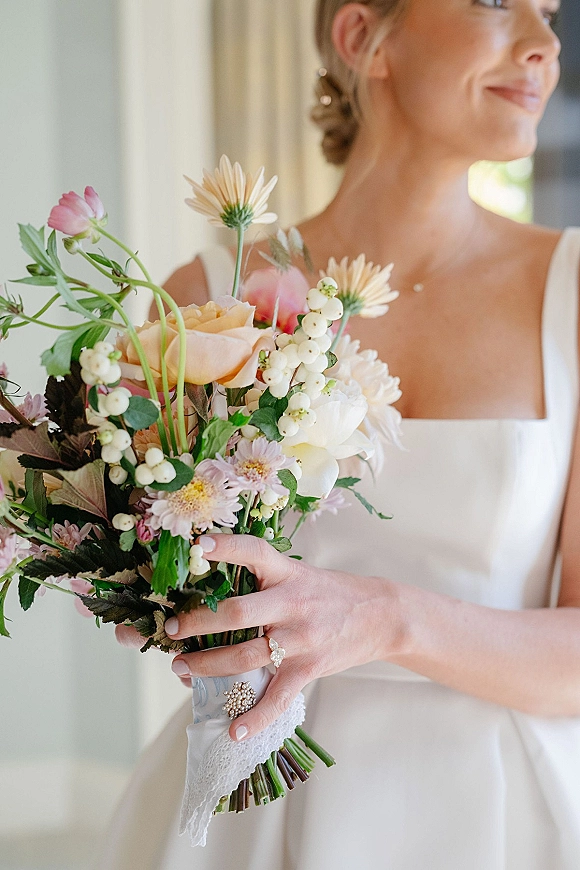
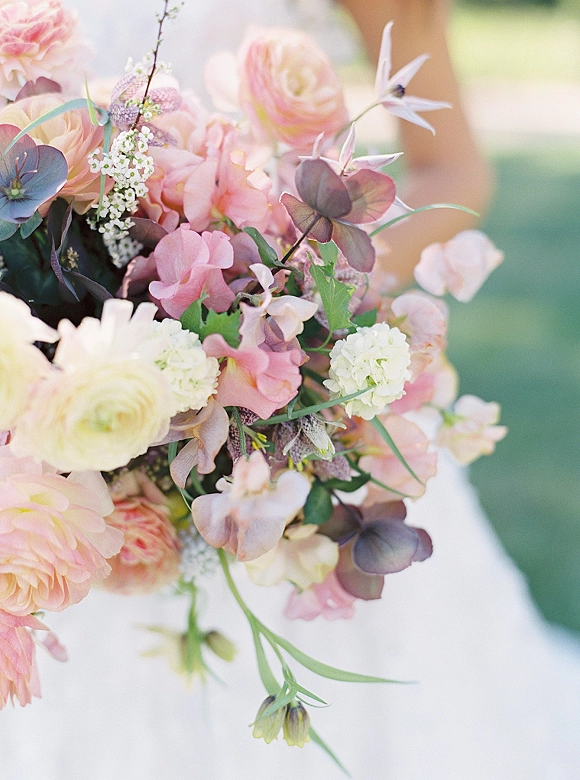
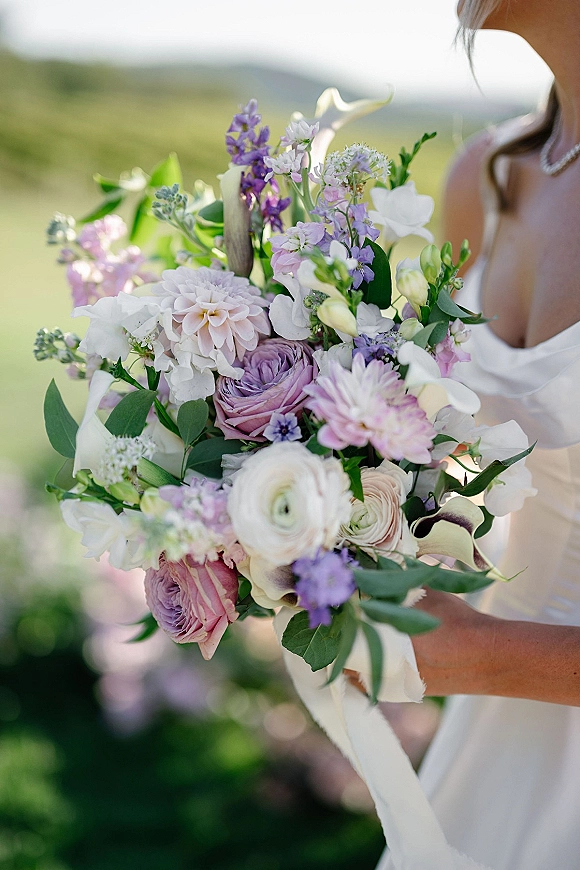
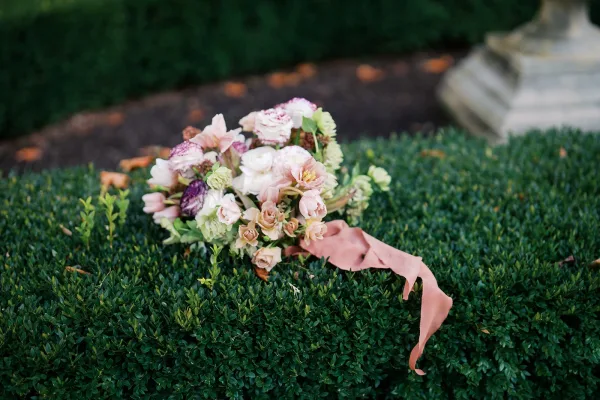
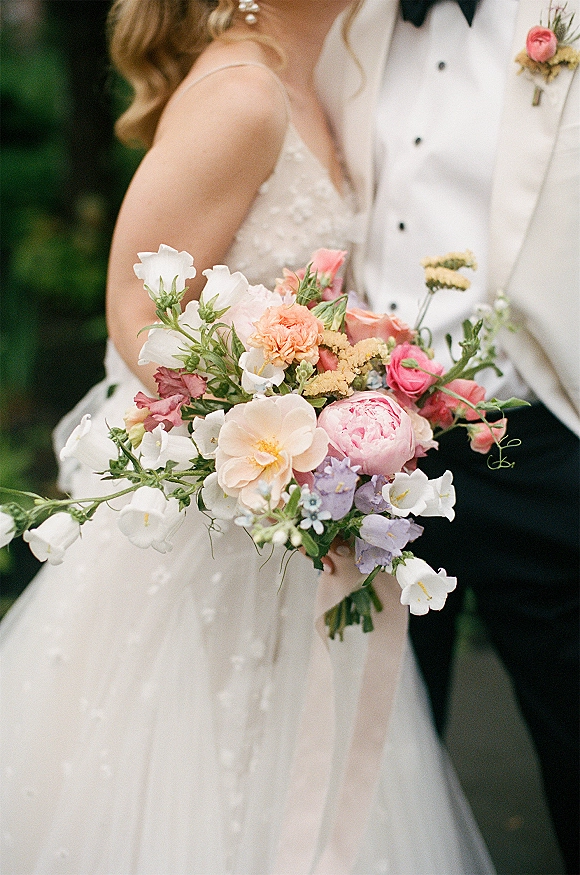
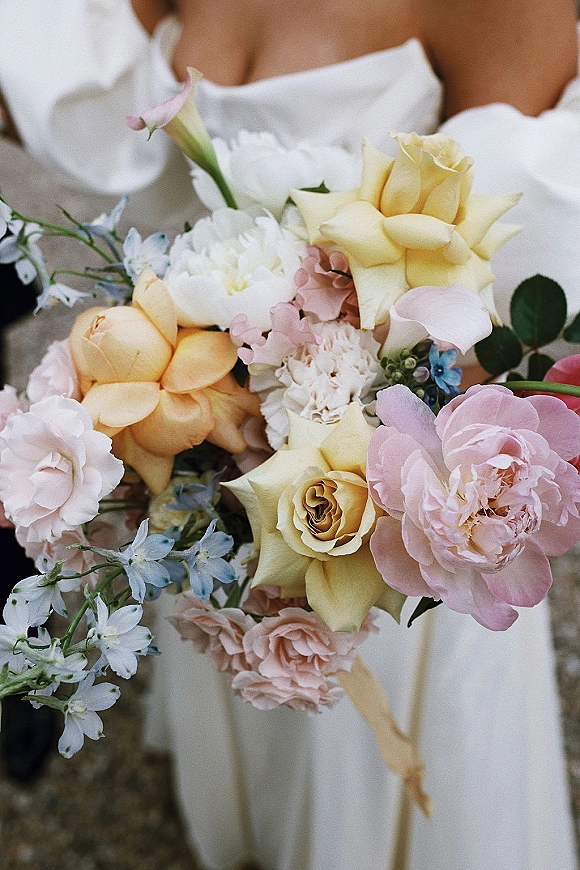
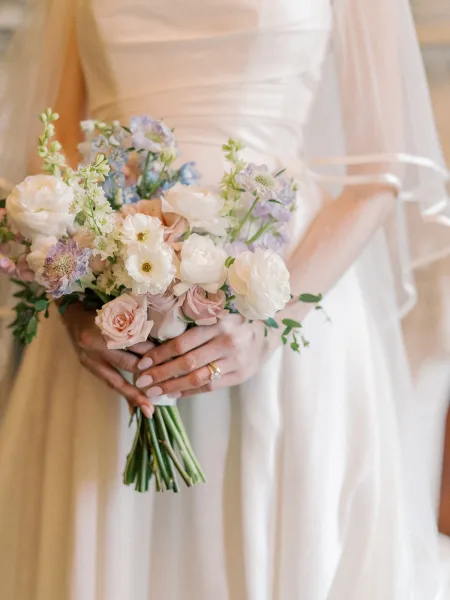
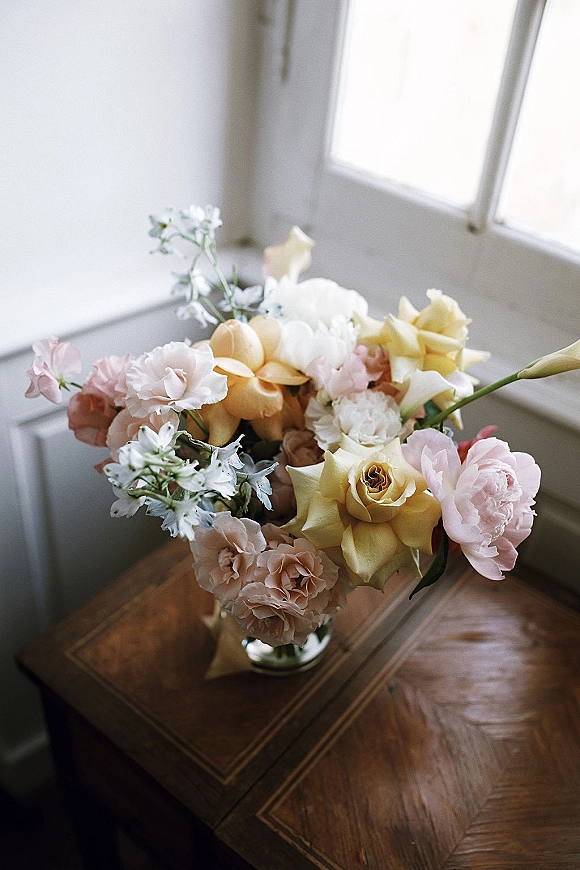
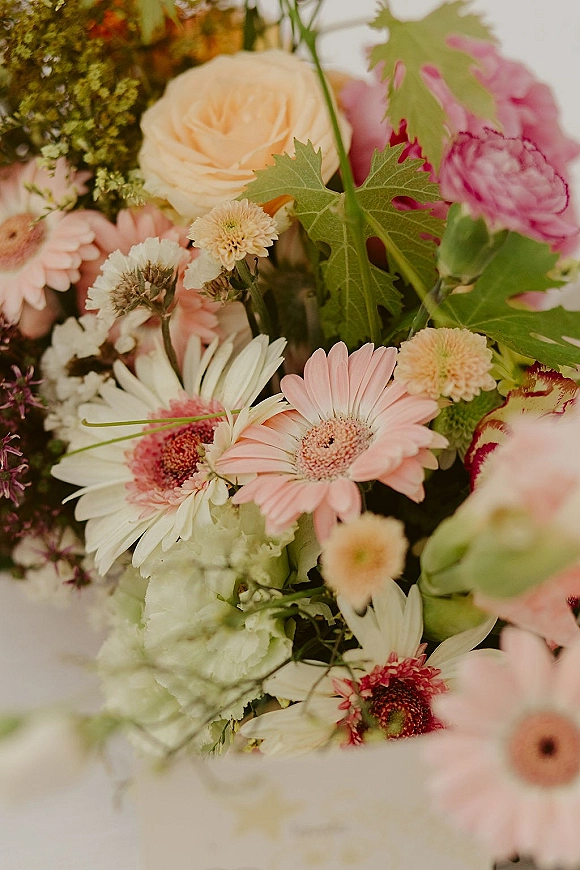
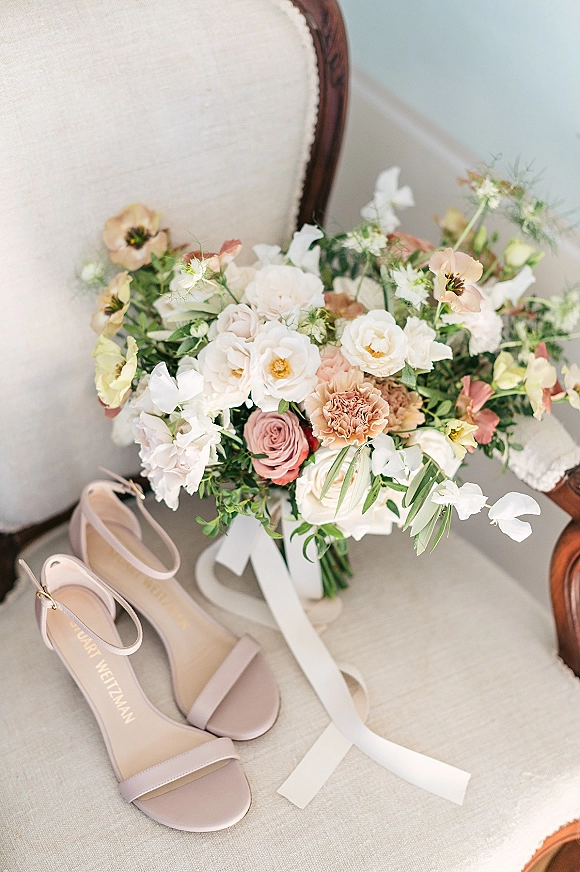
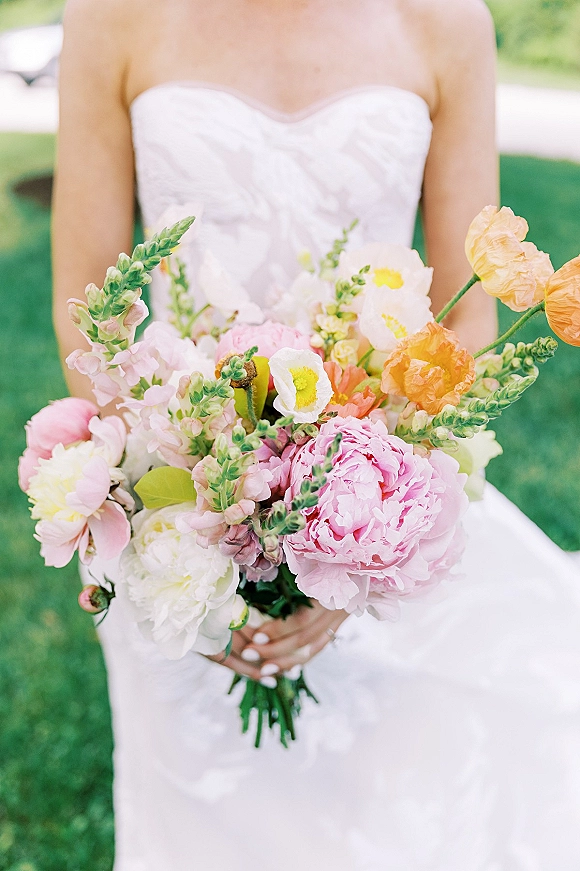
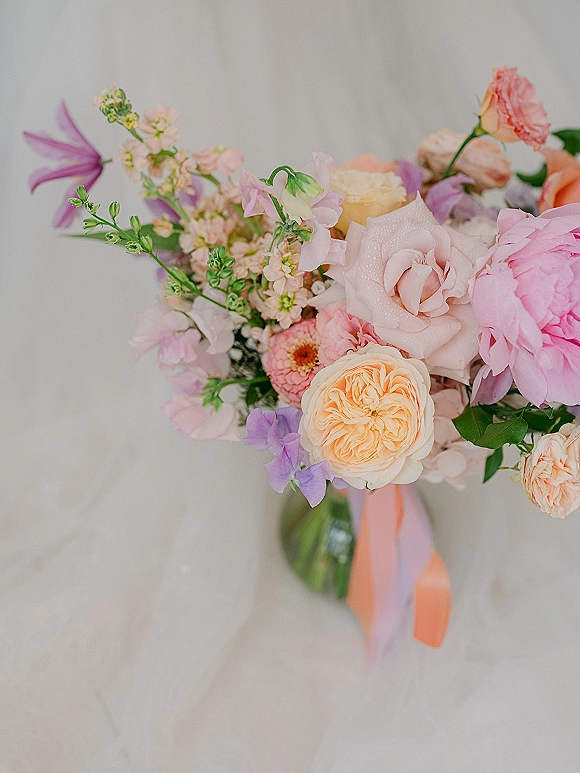
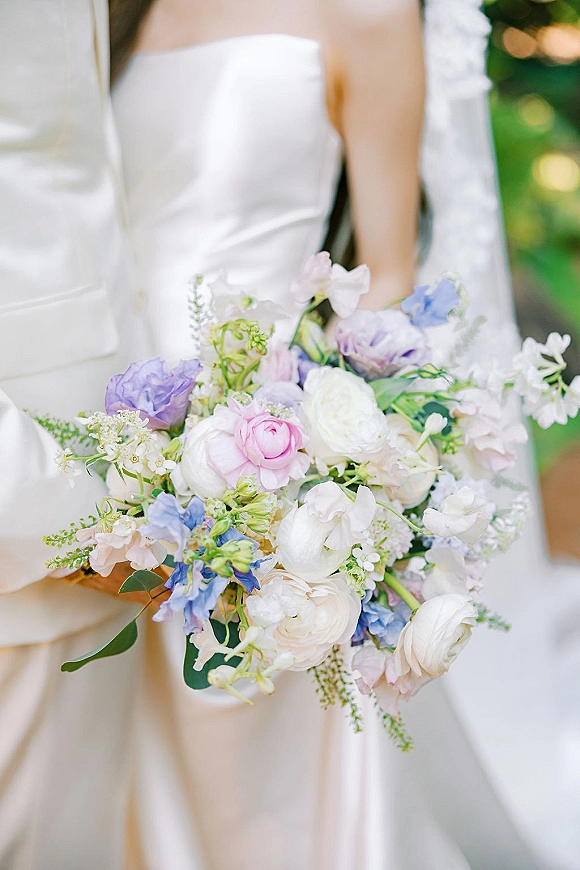
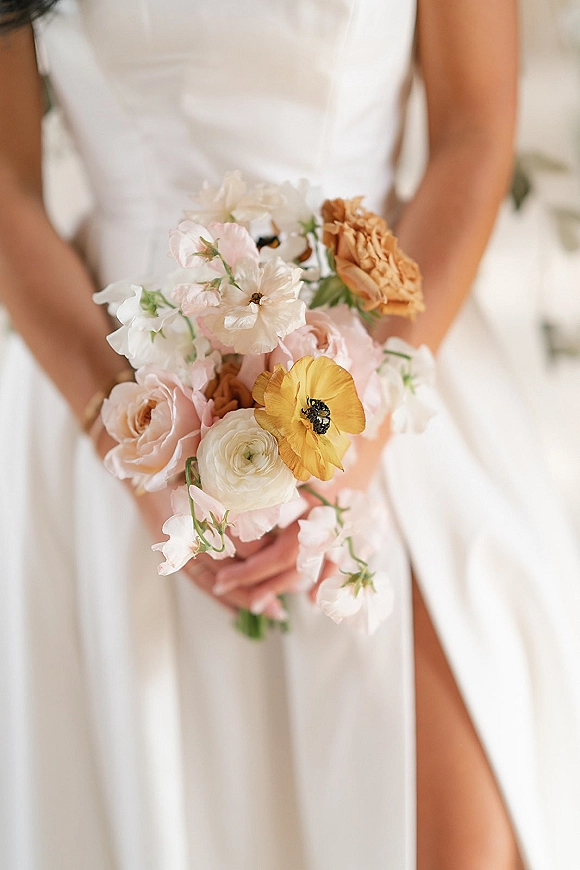
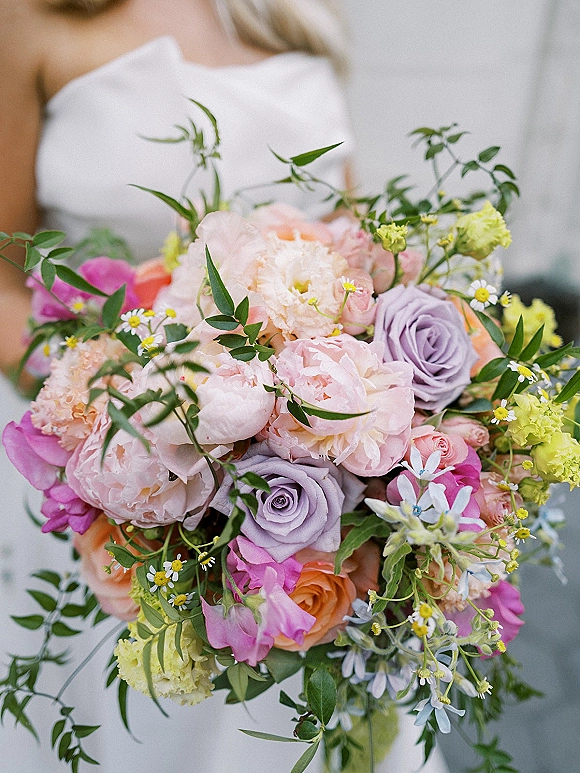
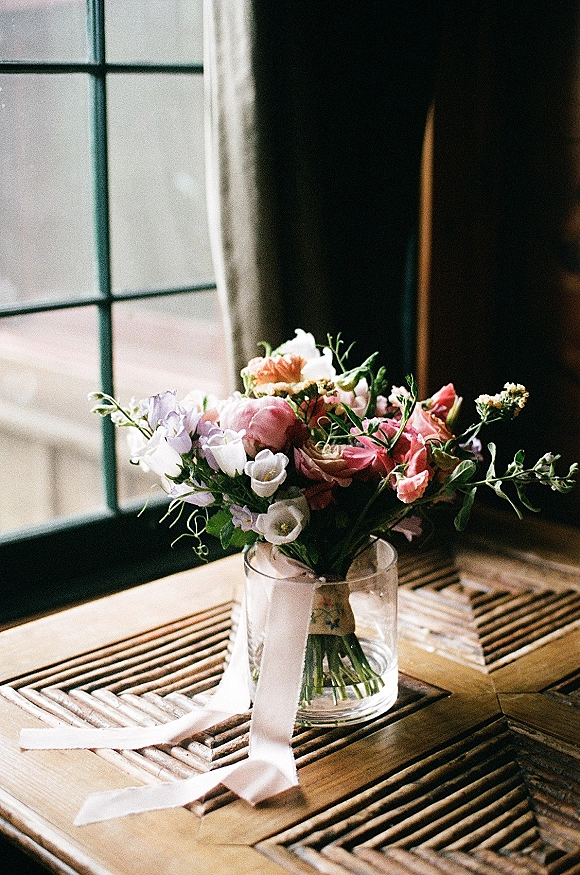
A pastel bouquet is about soft, washed-out color, not a particular flower. The tones stay pale and low-contrast, so blush sits beside lavender and mint without any one shade pulling ahead, and the effect turns gentle and almost watercolor. The trick is keeping every color equally muted, since one saturated bloom breaks the spell; plenty of pale flowers and silvery foliage hold the calm, romantic quality. Pastels suit couples who want color without boldness, the soft, nostalgic palette flatters a wide range of dresses and complexions because nothing competes, and it glows in soft natural light where the subtle shifts read as depth.
The Palette and Its Flowers
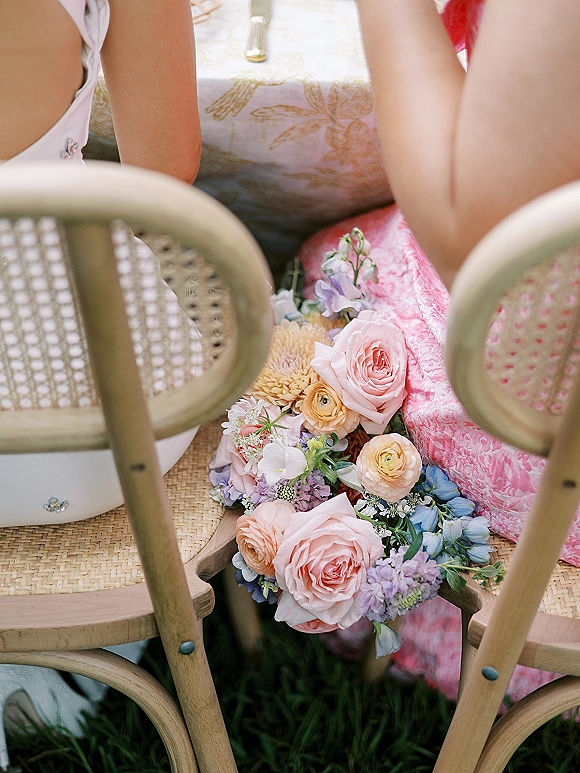
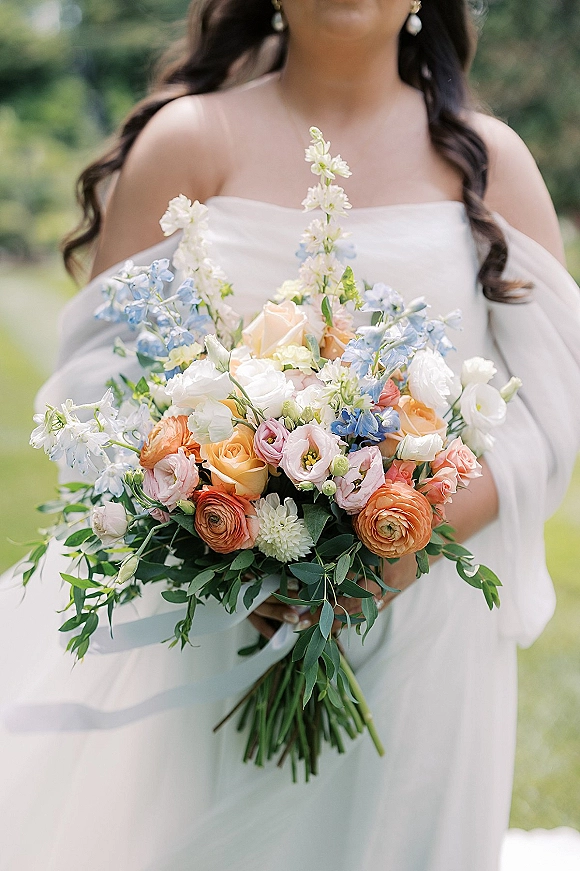
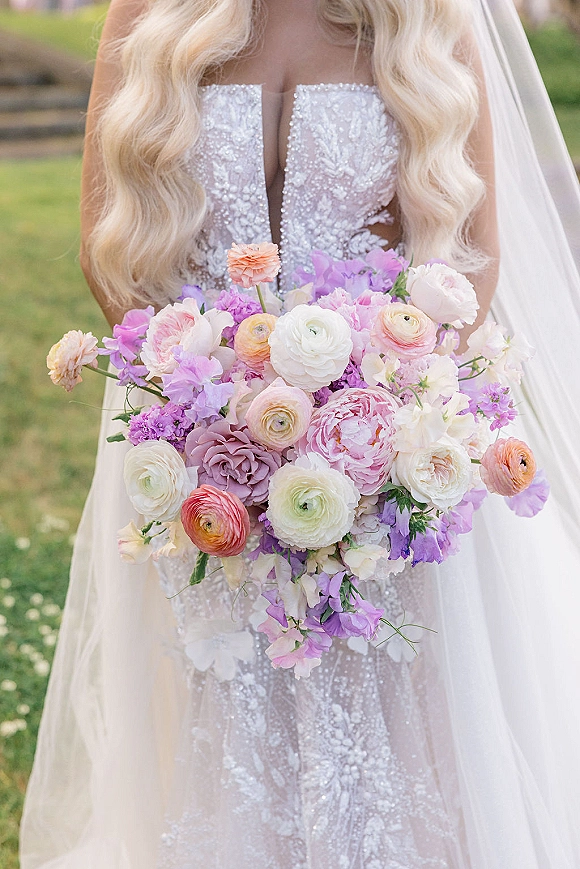
The classic range runs blush pink, soft lavender, mint green, peach, powder blue, and buttercream, shades that share a chalky quality and mix freely; most bouquets pull three or four together, with blush and lavender the usual anchors. Naming the two or three that lead helps a florist build something intentional instead of merely pale.
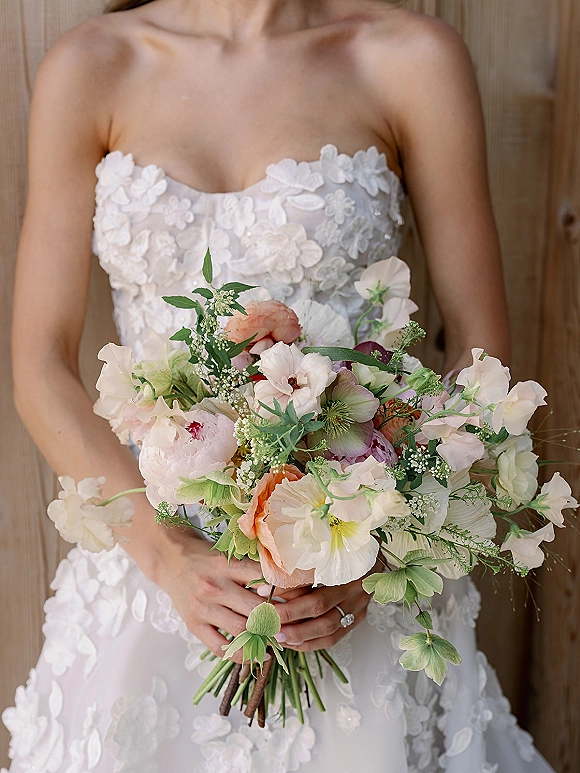
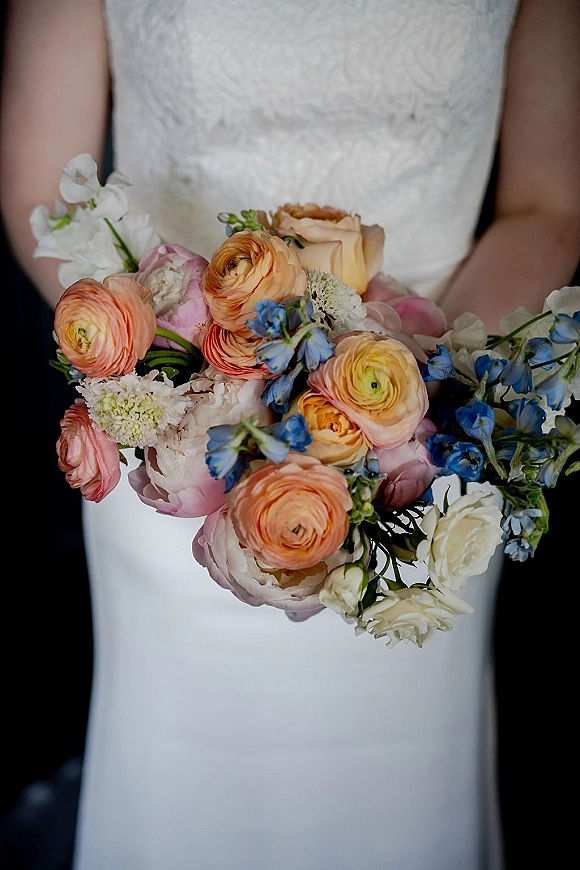
Certain flowers carry these tones naturally. David Austin and garden roses come in soft blush and peach; ranunculus offers pale, layered color; sweet peas bring delicate lavender, blush, and cream; tulips add a clean spring shape. Hydrangea contributes soft blue and pink volume and peonies pale pink fullness in spring, with Queen Anne’s lace and nigella for airy texture. Silvery eucalyptus and dusty miller keep the greenery soft instead of sharp, which holds the muted effect together.
Single-Shade Pastel Bouquets
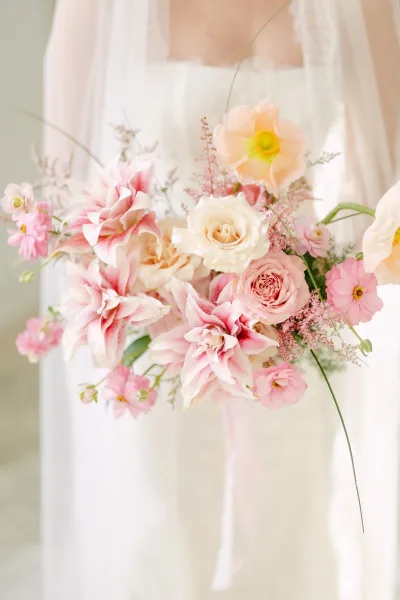
Pastel pink keeps to blush and pale rose, often with a touch of peach or cream for warmth, the gentlest single-shade choice for a spring or garden wedding; the wider spectrum lives in our pink wedding bouquet collection. Pastel blue leans on powder blue and soft periwinkle through hydrangea, delphinium, and nigella, fresh and serene and an easy something blue, at home at coastal and spring weddings.
Mixing Pastels and Dressing the Party
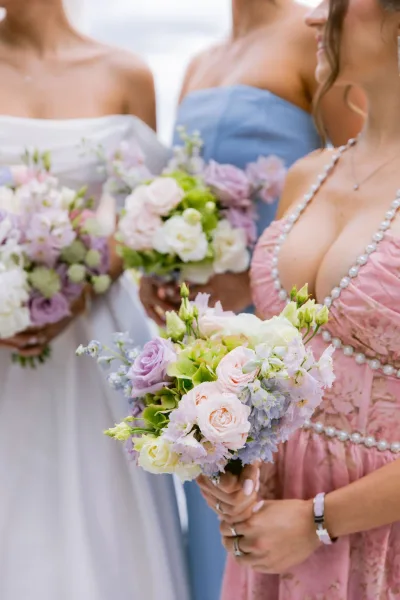
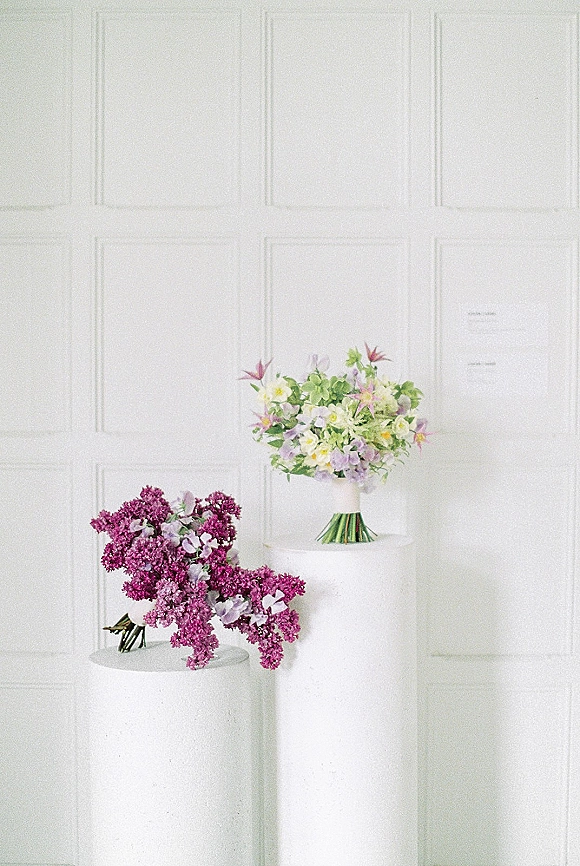
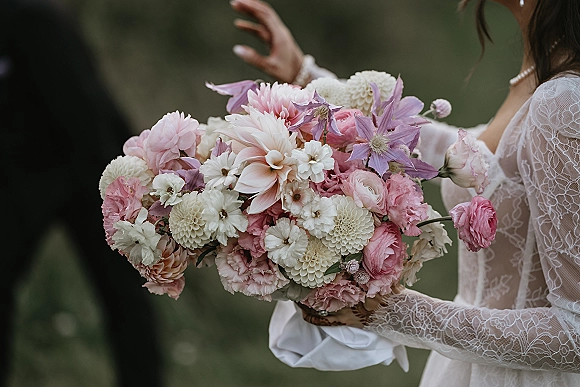
The signature look blends several soft shades at once, and the trick is keeping every color equally muted so the mix reads harmonious instead of busy, distributing the colors evenly to hold the watercolor quality. For a simpler two-tone version, our pink and white collection covers it. Pastels also dress a party beautifully, since each bridesmaid can carry a different soft shade while the group still reads as one palette, one in blush, one in lavender, one in powder blue, as long as the shades stay equally muted.
Shapes, Foliage, and Pastels by Season
Pastels suit a loose, romantic hand-tied shape or a soft cascade, where the airy feel matches the gentle color; a tight, structured dome fights the softness, so most pastel bouquets stay a little undone. Foliage matters, since sharp dark green overpowers pale tones, silvery eucalyptus, dusty miller, olive, and brunia keep the greenery muted and hold the watercolor effect, the goal being softness in color, shape, and even the leaves.
Though pastels peak in spring, they carry through the year on the right flowers: pastel dahlias and cosmos in summer, dustier antique tones like mauve and dusty blue in fall, pale ranunculus and anemones against silvery greenery in winter. Choose pastels that echo the season and the palette never feels out of place. Many designers in the wedding florist directory favor soft palettes, and our white collection offers a crisper alternative.
Frequently Asked Questions
What flowers are best for a pastel bouquet?
David Austin and garden roses, ranunculus, sweet peas, hydrangea, and peonies all come in soft pastel tones, joined by airy fillers like Queen Anne's lace and nigella. Silvery foliage such as eucalyptus and dusty miller keeps the greenery soft, holding the muted, watercolor quality of the palette.
Are pastel bouquets only for spring weddings?
No. Pastels are most associated with spring but work year-round. Summer offers pastel dahlias and cosmos, fall suits dustier antique pastels like mauve and dusty blue, and winter can use pale ranunculus and anemones. Matching the pastels to the season keeps them from feeling out of place.
How do you mix pastel colors without it looking busy?
Keep every shade equally soft and muted, and distribute the colors evenly rather than clustering them. When blush, lavender, peach, and mint are all similar in intensity, they blend into a harmonious watercolor effect. A single saturated bloom is what breaks the softness, so avoid bright accents.
What greenery works with a pastel bouquet?
Soft, silvery foliage suits pastels best, since sharp dark green can overpower the pale tones. Eucalyptus, dusty miller, olive, and brunia add texture while keeping the overall look muted and gentle, preserving the bouquet's soft character.