What Makes Calla Lilies Right for a Wedding Bouquet
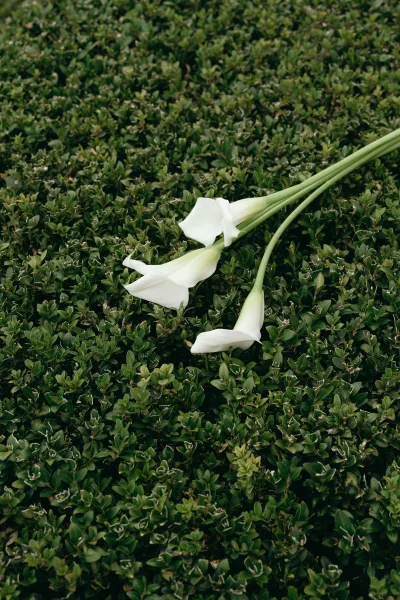
Calla lilies suit wedding bouquets because their single smooth bloom and rigid stem give a clean, sculptural line that feels modern and formal. The flower holds its shape without ruffles or layers, so a calla bouquet looks composed and graphic rather than soft, which is why it anchors city hall, contemporary, and black-tie weddings. A calla’s waxy petal reflects light differently than a matte garden rose, giving the bouquet a subtle sheen in photographs, and the stems are sturdy enough to be left long and exposed as part of the design, an option no clustered garden flower offers.
The practical case is just as strong as the aesthetic one. Callas ship and store well, come in a consistent size and shape, and do not depend on a fleeting peak of freshness the way a fully open peony or garden rose does, so a couple knows exactly what the bouquet will look like on the day. That waxy petal also holds up in warm weather better than many delicate blooms, which makes the flower a practical choice for a long or outdoor ceremony as well as a sculptural one.
Available year-round. Callas are in supply in most months, which removes the seasonal constraint that limits flowers like peonies or lily of the valley and makes them a reliable choice regardless of the wedding date. Both the full-size and the mini varieties can be sourced across the calendar, and the color range, white, purple, mango, pink, near-black, holds steady, so the flower is one of the more dependable options a couple can build a bouquet around. Confirming the deeper or more unusual shades with a florist early is still worth doing.
The flower also suits couples who want a low-maintenance bouquet that still looks considered. Because a calla arrangement needs only a handful of stems to make its statement, there is less to go wrong on the day, no dozens of delicate blooms to open at exactly the right moment or bruise in transit. A florist can build a calla bouquet the day before and trust it to hold its shape, which removes one of the small anxieties of wedding-morning timing and is part of why callas appeal to a bride who wants elegance without fuss.
Cascading and Long-Stem Calla Bouquets
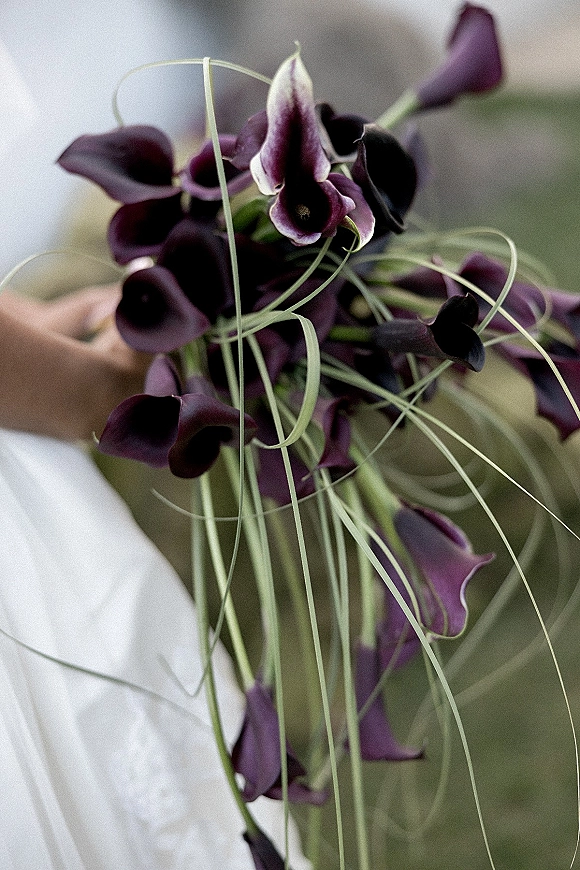
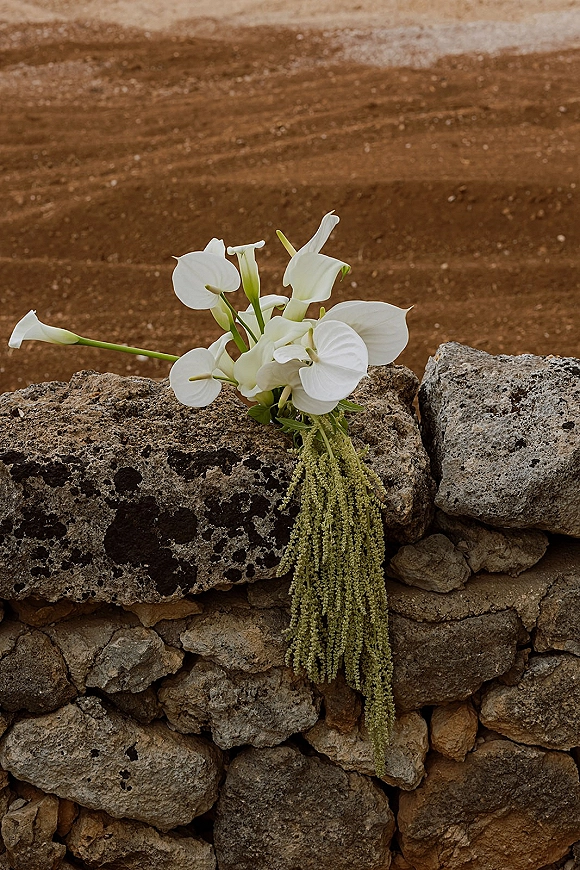
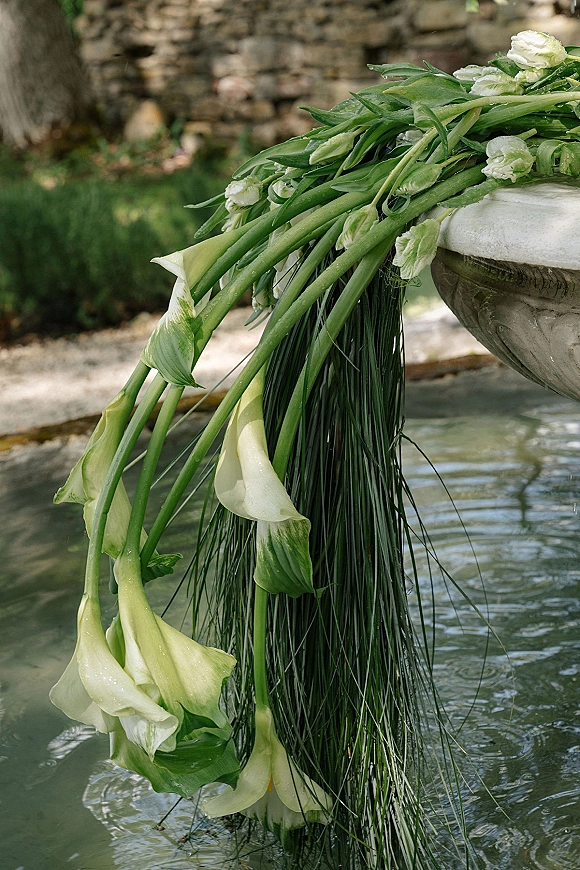
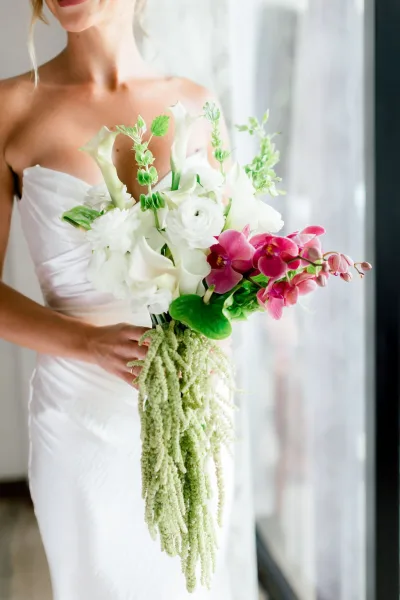
Cascading callas. A cascading calla bouquet uses the flower’s long, flexible stems to trail downward in a teardrop shape, creating the waterfall effect callas produce more gracefully than almost any other bloom. Because the stem itself curves, callas cascade with a natural arc that needs no heavy mechanics to hold, which keeps the trailing shape light and clean. The look feels formal and statement-making, suited to a floor-length gown and a grand setting, and long-stem white callas produce the most graphic cascade, while trailing amaranthus or ivy softens the drop. If a cascade feels like the direction, browse the dedicated cascading wedding bouquets to compare how calla trails against fuller waterfall builds.
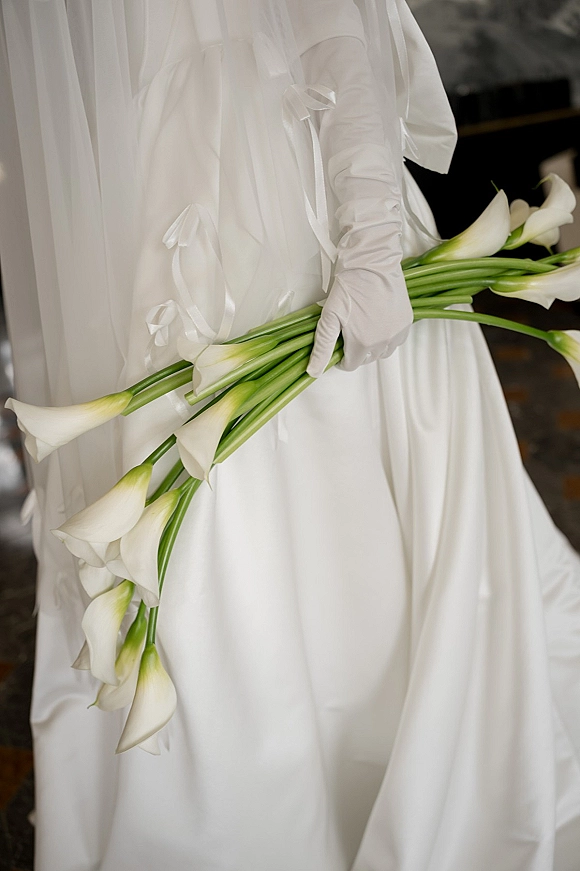
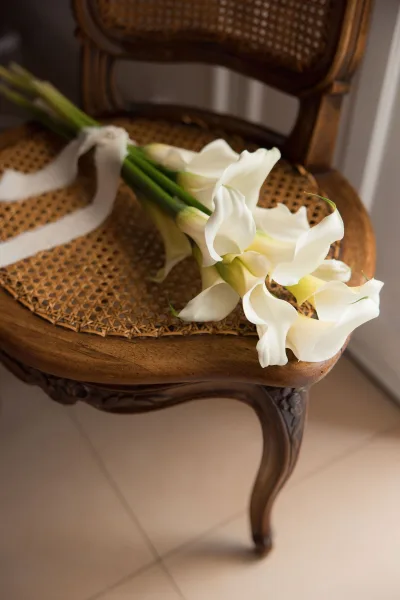
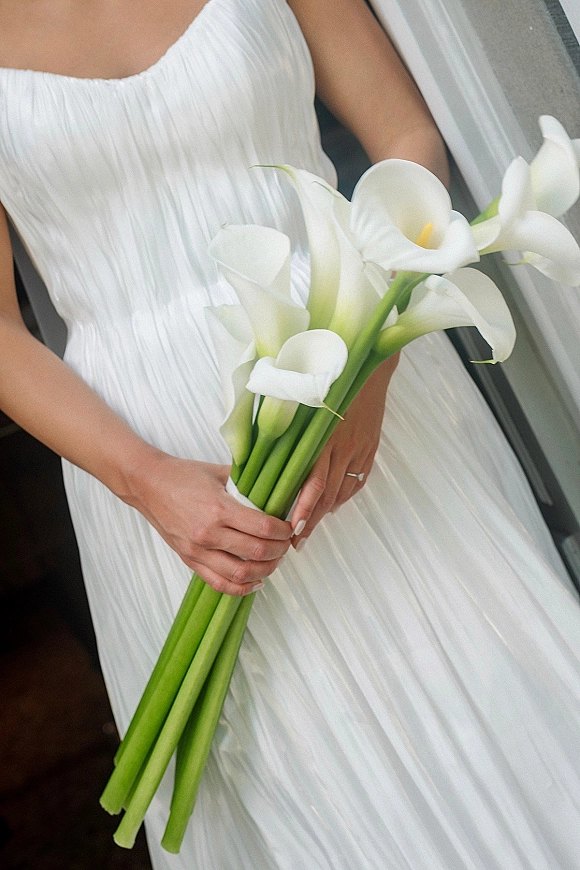
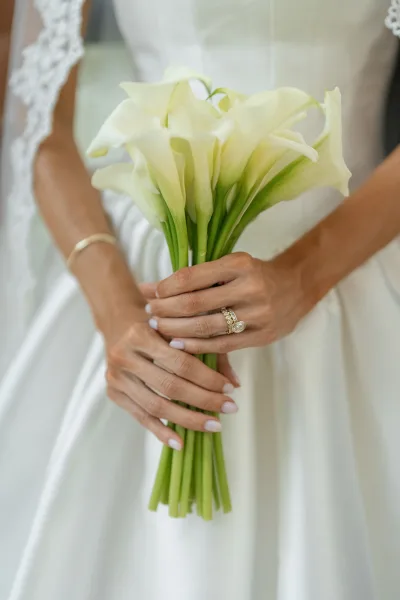
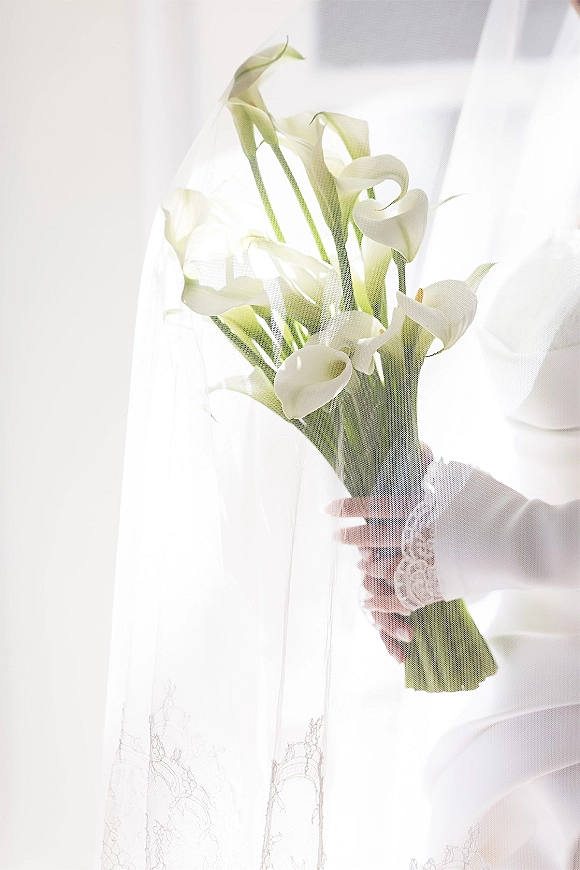
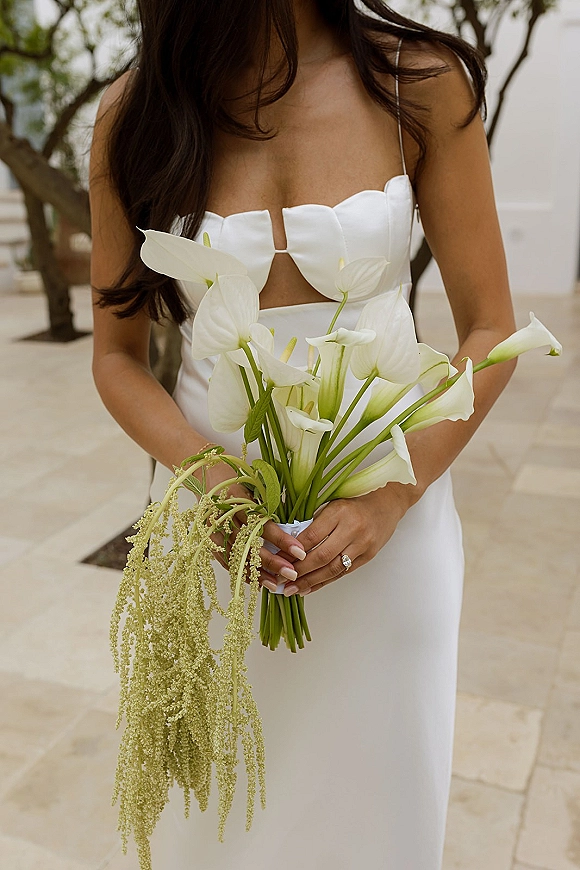
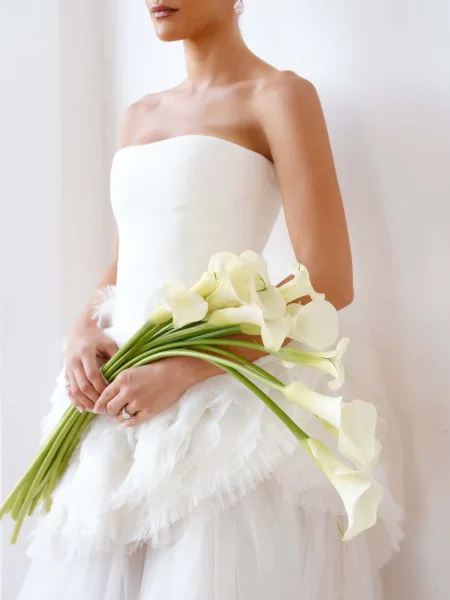
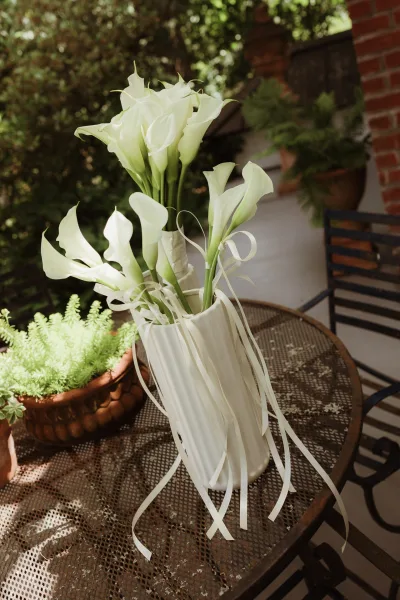
Long-stem callas. Leaving the stems exposed and bound rather than hidden in a collar of greenery turns the bundle of clean green stems into part of the design. A loose armful of long-stem callas, cradled in the crook of the arm rather than gripped, is one of the most recognizable modern bridal looks, and it suits a minimalist gown especially well since the vertical line of the stems echoes a sleek column or sheath silhouette. This is one of the most editorial presentations in bridal florals, and it rewards restraint: it works best with fewer, larger blooms rather than a dense bundle, since the point is the elegance of the line, not the volume. A wide trailing ribbon at the binding point adds softness without hiding the stems.
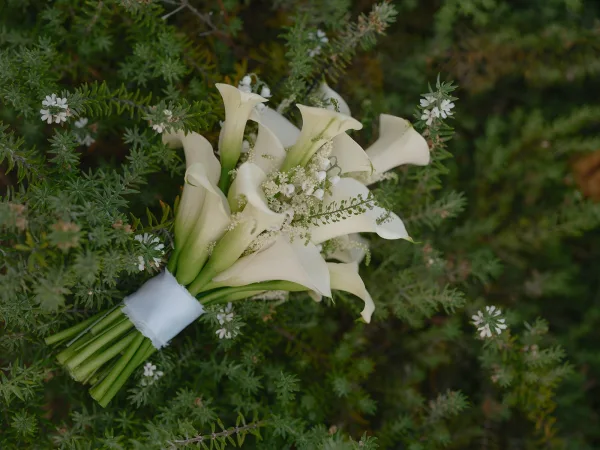
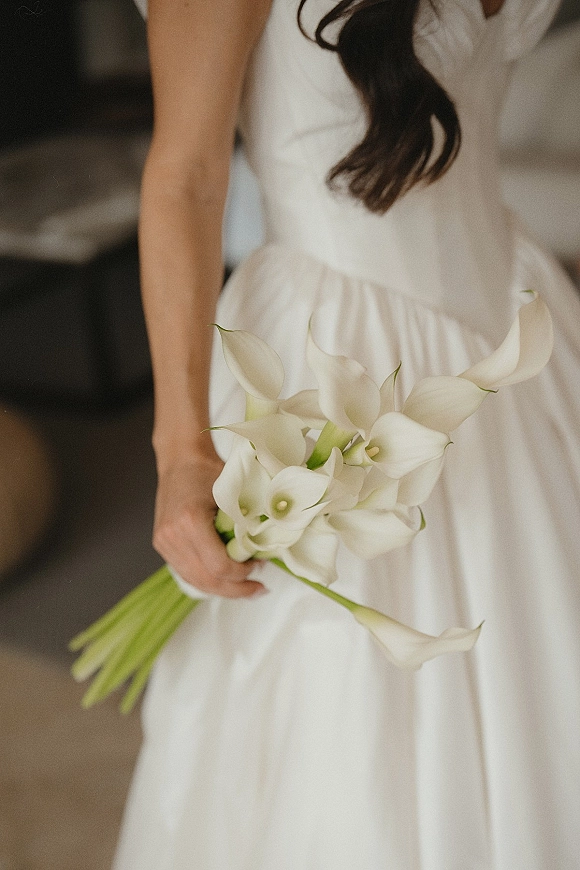
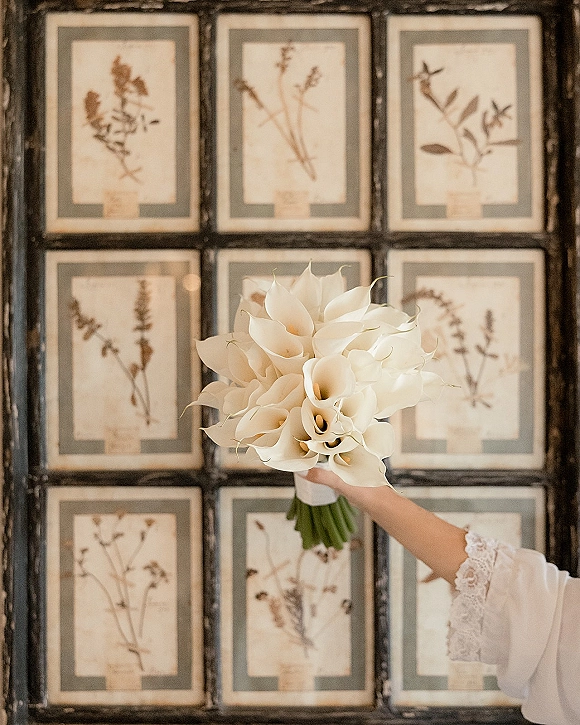
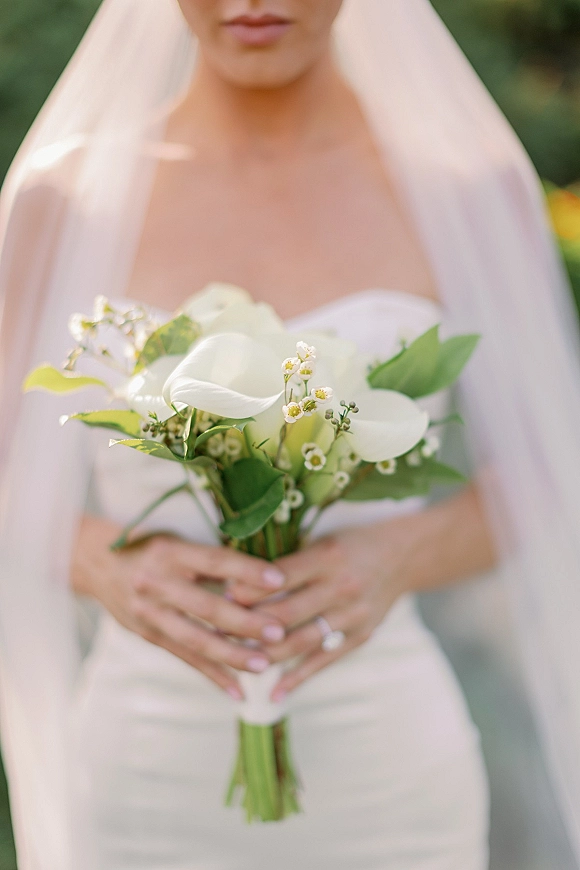
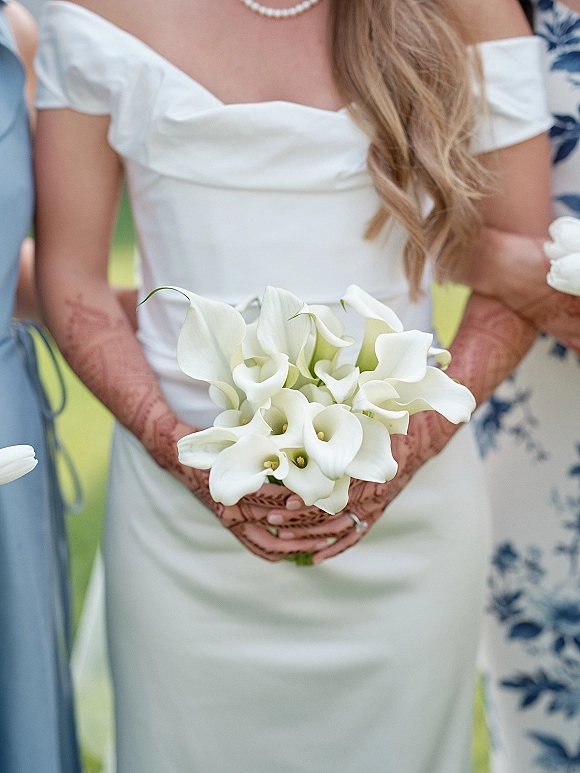
Between these two directions sits a simple rounded hand-tie, the most versatile calla presentation and the one most bridesmaids carry. Here the stems are cut shorter and bound close under a domed cluster of blooms, giving a neat, portable shape that reads modern without the drama of a cascade or the editorial looseness of an armful. Mini callas suit this build especially well, since their smaller heads pack into a fuller dome. Choosing among the three, rounded hand-tie, long-stem armful, or trailing cascade, is the first decision to make with callas, because it shapes the whole bouquet more than the color does.
Calla Bouquet Colors, From White to Near-Black
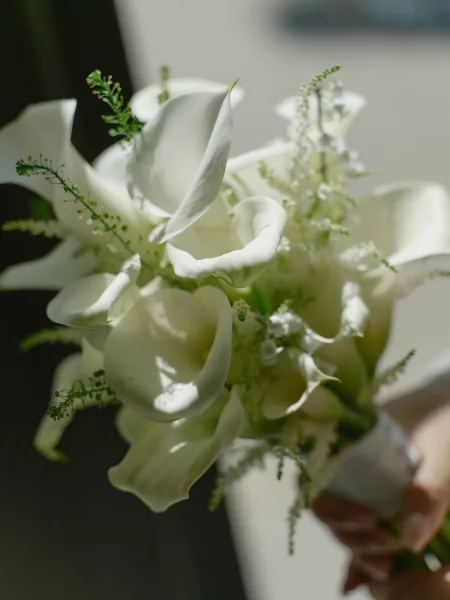
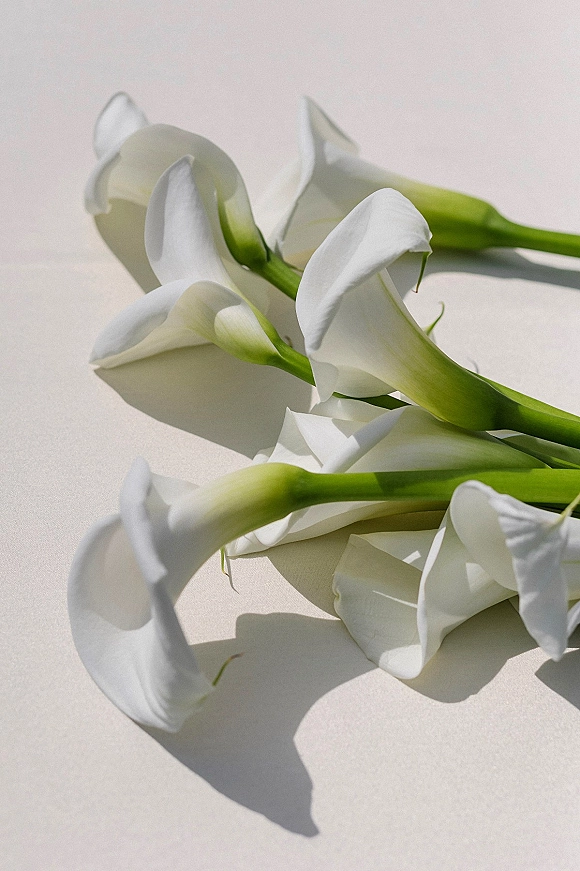
White callas. The purest expression of the flower, all clean line and pale sheen, white calla bouquets photograph with crisp definition against any gown. A hand-tied cluster of white mini callas looks modern and minimal, while a few full-size white callas make a graphic statement with just a handful of stems, holding their own alongside the softer builds in most white wedding bouquets. They rarely need company: a collar of dark green foliage sharpens the white, and a single accent adds interest without breaking the minimalism. Their simple, uncluttered shape gives a camera a clean form to read, so they hold up in both close portraits and full-length shots.
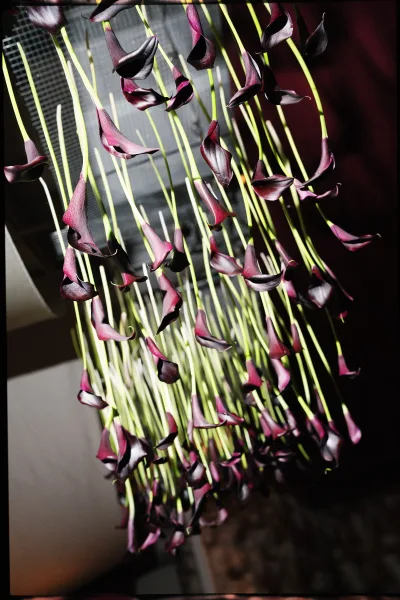
Purple callas. In shades from soft lavender to deep aubergine, purple callas keep the flower’s clean shape while adding saturated color that feels richer and more dramatic than white. Dark purple callas are nearly graphic in their intensity, holding their trumpet form so precisely that a bouquet looks almost sculpted, and they pair naturally with jewel-tone weddings and cooler palettes. Against silvery eucalyptus, or with a few white callas mixed in, they gain contrast that keeps the arrangement from reading as a solid dark mass. For a party, they hold color and shape better than ruffled purple flowers, so they translate cleanly to matching bridesmaid bouquets.
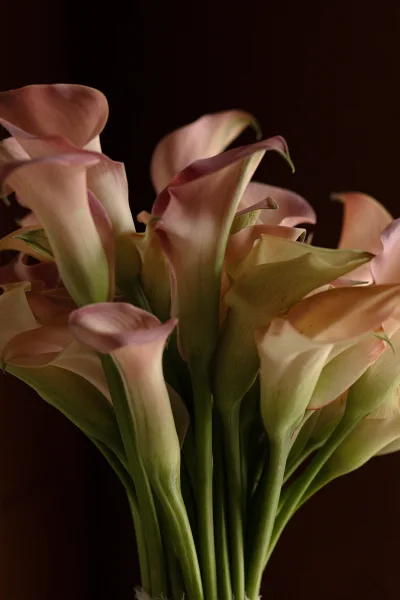
Blush, mango, and dark callas. Beyond white and purple, callas come in a warm and moody range: blush and pink feel soft and romantic while keeping the modern line; mango and peach bring warmth that suits sunset, garden, and autumn weddings; butter yellow looks fresh and cheerful; and near-black is the most graphic of all, holding its shape so precisely a cluster looks sculpted. Because mini callas carry the widest color range, these warmer and darker shades are easiest to find at the smaller scale, where their saturation feels considered rather than heavy.
The single-color read is usually strongest with callas, but a graded or two-tone approach can work when handled carefully. A bouquet that moves from cream through blush to deep pink across its stems reads intentional and painterly, and a cluster of one deep shade with a single contrasting calla, one black among mango, or one white among purple, gives a graphic focal point. What does not work is a random scatter of many colors, since the calla’s clean shape rewards restraint and a busy mix muddies the clean line that makes the flower worth choosing.
Calla Lily and Rose Bouquets
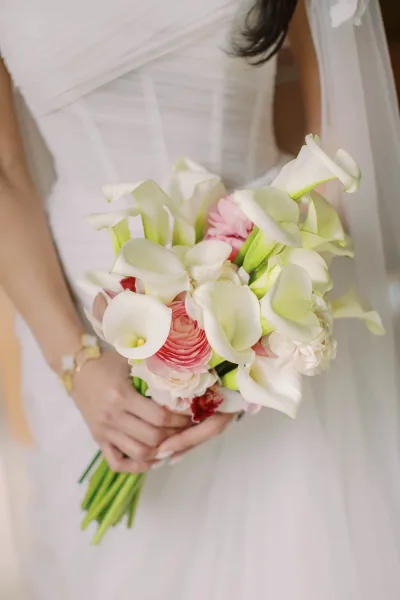
Pairing callas with roses balances the calla’s sleek line against the rose’s soft, layered fullness, giving a bouquet that reads both modern and romantic. The two flowers cover each other’s gaps: callas bring structure and a defined silhouette, roses bring depth and a familiar softness that keeps the arrangement from feeling austere. The most common build sets white or blush garden roses among white callas, with the callas rising slightly above the rose cluster so their shape stays legible, though color pairings work too, deep purple callas with ivory roses, or peach callas with garden roses in the same warm tone.
Garden roses in particular flatter the pairing, since their loose, many-petaled form is the strongest possible contrast to the calla’s single smooth trumpet, and they add scent that callas alone lack. Keep the ratio in the calla’s favor for the modern read, or lead with roses and use callas as accents for a softer, more traditional result. Pairing with greenery and texture. A few stems of ranunculus, or a collar of glossy ruscus or eucalyptus, bridges the two shapes so the transition from smooth calla to layered rose looks intentional, while dark foliage used alone against plain callas sharpens their shape rather than softening it. Restraint is the rule, since crowding a calla with texture works against the reason to choose it.
Callas also pair beyond roses when a couple wants a specific mood. With orchids they read tropical and architectural, with anemones they gain graphic black-and-white contrast, and with a little trailing greenery they soften toward garden. Succulents and a few structural leaves suit a modern, desert-leaning wedding. In every case the calla wants to stay the lead shape, so the partner flower works best as an accent that fills the gaps between stems rather than a co-star that competes for the eye, which keeps the clean line that defines the bouquet intact.
Mini Calla Lily Bouquets
Mini calla lily bouquets use the flower’s smaller variety, which offers the same trumpet shape at a reduced scale, making it ideal for tighter hand-tied clusters and for bridesmaids. Because mini callas pack more blooms into a compact shape, they build a fuller bouquet than full-size callas without losing the clean line, and their size makes bold colors, mango, purple, near-black, feel considered rather than heavy. A dense posy of mango or purple mini callas is one of the most color-saturated modern bouquet options available.
The distinction between mini and standard callas is worth understanding before ordering, since it changes the whole feel of the bouquet. Standard callas have larger, more open trumpets on thicker stems and suit long-stem armfuls and statement cascades where a few blooms carry the design. Mini callas are shorter, more slender, and more numerous, which is what lets them build a rounded, fuller shape and take bold color gracefully. A bride picturing a sleek armful of a dozen large white callas and one picturing a compact posy of thirty mango minis are describing two entirely different bouquets from the same flower.
Because they build fuller shapes, mini callas also suit couples who love the flower but find full-size callas too sparse for the size of bouquet they want. A dense mini-calla posy feels lush while keeping the clean trumpet shape, giving the best of both directions: the calla’s modern line and the fullness of a traditional rounded bouquet. It is the version to consider when the appeal is the calla’s shape but the desired bouquet is generous rather than minimal, and the reduced stem length makes it easy to carry for attendants and junior members of the party.
Calla Lily Meaning and Symbolism
Calla lilies carry a long association with purity, devotion, and refined beauty, which is part of why they read formal and bridal even in a stripped-back arrangement. The flower’s clean, upright form has made it a recurring symbol of elegance across art and design, and couples often choose it as much for that quiet significance as for its shape.
The color shifts the meaning. White callas lean toward the traditional associations of purity and new beginnings, deep purple callas suggest richness and drama, and yellow or mango callas look warmth and cheer. None of this is required reading for a guest, but for a couple who wants their flowers to carry meaning, the calla offers a recognized language of shape and shade that few modern bouquet flowers match.
How to Carry and Style a Calla Bouquet
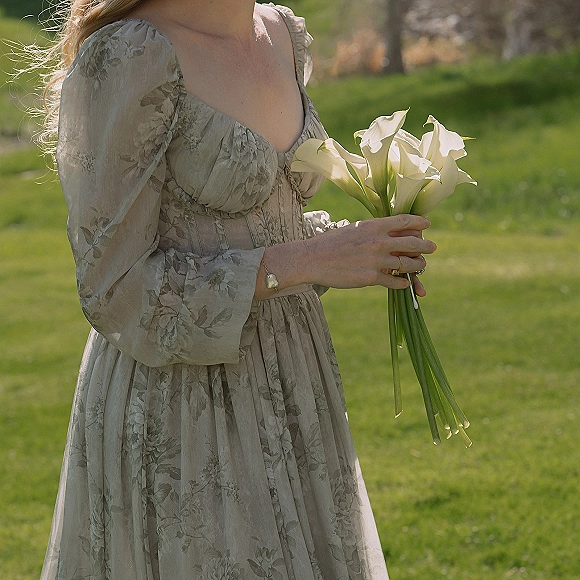
Two ways to carry it. Callas support two distinct presentations, and the choice is a real design decision. The upright hand-tied cluster, gripped at a bound stem, reads structured and modern, holding the blooms in a rounded or slightly domed shape. The arm-cradled long-stem armful, laid across the forearm, looks relaxed and editorial, letting the stems show as part of the look. Whichever you choose, callas reward being held slightly away from the body so their shape reads in photographs rather than flattening against the dress.
Styling to the wedding. Callas adapt across styles because their clean line reads as either minimal or dramatic depending on the build. For a minimalist or city hall wedding, a small hand-tied cluster of white callas is close to the definitive modern bouquet; for a black-tie or ballroom wedding, a fuller white-calla arrangement with a few structural accents matches the room. Deep purple or near-black mini callas bring graphic color to a contemporary wedding, while a loose long-stem armful feels relaxed and editorial at a garden or destination ceremony. The styling decision, hand-tied or long-stem, minimal or mixed, matters more than the flower choice itself.
Season and setting nudge that decision as much as the gown does. A long-stem armful of white callas suits a modern city or gallery wedding and photographs cleanly under architectural light, while mango and peach callas warm a bouquet for a sunset or garden ceremony, and deep purple or near-black callas hold their drama in the low light of an evening reception. Callas are one of the few flowers equally at home in a stark contemporary space and a lush garden, so the styling is less about whether callas fit the setting and more about which shade and which carry let them read best in it.
Calla Bouquets for the Bridal Party
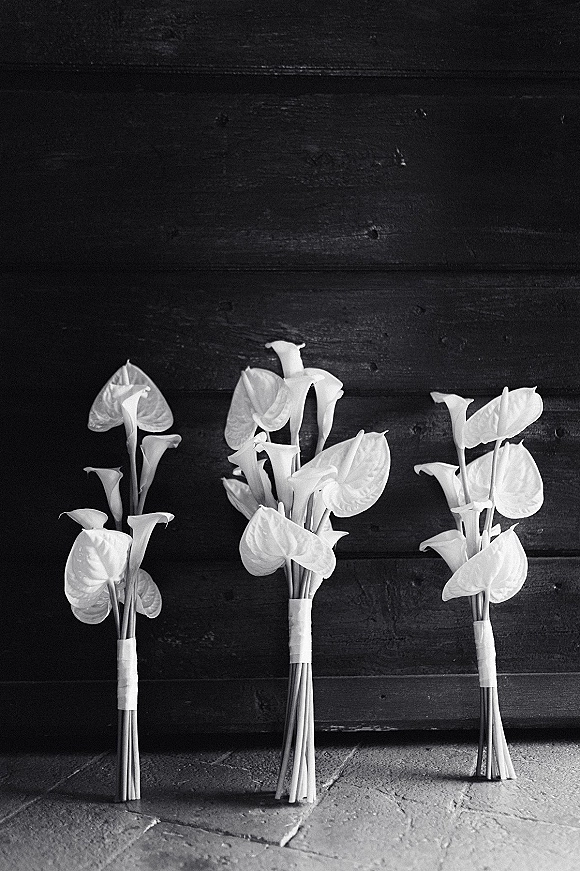
Callas translate cleanly to the bridal party because their shape repeats well and holds up to handling. A bride carrying a hand-tied white calla cluster can put smaller three-stem calla posies in the hands of her attendants, and the repetition of one clean shape down the aisle reads modern and cohesive. Mini callas are the practical choice for bridesmaids, since their smaller scale and shorter stems are easy to carry and let bold colors feel considered rather than heavy.
The coordination extends past the bouquets. A single calla makes an elegant boutonniere that echoes the bride’s arrangement, so the flower can tie the couple, the party, and the ceremony flowers into one clear visual thread. Stepping the color, white for the bride and a deeper shade for the party, or the reverse, keeps the coordination from feeling uniform while holding the calla as the connecting element. Because callas are sturdy and do not bruise easily, they suit a party that will be moving through a long day.
Callas also scale gracefully from a large party down to a single attendant or a flower girl. A maid of honor might carry a slightly fuller cluster while the rest hold three-stem posies, or a flower girl might carry a single mini calla that echoes the group at a child-friendly scale. Because the flower reads as complete even in ones and twos, there is no awkward point where a smaller bouquet looks unfinished, which gives a couple real flexibility in sizing the party’s flowers to each person and to the budget.
Choosing a Calla Over a Traditional Bouquet, and Keeping It Fresh
Choosing callas over a classic garden bouquet is a decision about mood as much as flower. A calla bouquet looks modern, structural, and restrained, where a rose or peony bouquet feels soft, full, and romantic, so the calla suits a couple drawn to clean lines and a contemporary aesthetic rather than the lush look of most wedding bouquets. The practical differences reinforce the aesthetic one: callas need fewer stems to make an impact, hold up better through a long day, and photograph with a legibility that dense bouquets can lose, while a traditional bouquet offers more volume, fragrance, and layered texture.
Keeping calla lilies fresh. Callas are among the more resilient bridal flowers, holding their shape and finish through a full day out of water thanks to their waxy petals and sturdy stems, which is a practical reason to choose them for a long or warm-weather wedding. Kept cool and in water until the ceremony, trimmed fresh, and held by the stems rather than the blooms, they photograph as crisply at the last dance as they did walking down the aisle. The stems can mark if gripped too tightly, so a ribbon wrap protects them and makes the bouquet more comfortable to hold.
One small handling note matters for the exposed-stem look specifically: because long-stem callas show their stems as part of the design, keeping those stems clean and unblemished is part of the styling. A florist will often leave the natural stem bare for a modern armful or bind it neatly under a wide ribbon, and either way the stems should be wiped dry and handled at the base so they photograph as crisp green lines. It is a minor point, but with callas the stem is on display in a way it never is under a collar of greenery, so it earns the same care as the blooms.
Sourcing Callas and Briefing Your Florist
Callas are one of the more forgiving flowers to plan around. They come in a consistent size and shape, last a full day out of water, and are available through every month, so a florist can build the bouquet ahead and trust it to look the same at the last dance as it did walking in. The deeper and less common shades, aubergine, near-black, mango, are worth reserving early, but white and the everyday colors rarely pose a supply problem whatever the date.
Settle three things before the flowers are ordered: the carry, the shade, and the gown the bouquet will sit against. Hand those to your florist, along with whether you want the stark minimal version or a softer mixed arrangement, and use the wedding florists directory to find real-wedding work that matches what you have in mind.
Frequently Asked Questions
Are calla lilies a good choice for a wedding bouquet?
Yes, particularly for modern, formal, and minimalist weddings. Callas hold a clean trumpet shape on a strong stem, so they photograph as sculptural and composed, and their waxy petals stand up to warm weather better than many delicate blooms. They work massed for a sleek look or grouped for a dramatic cascade.
How long do calla lilies last in a bouquet?
Cut callas hold well for a full wedding day and can last seven to ten days in water with fresh trimming and cool storage. Their sturdy stems and waxy petals make them one of the more resilient bridal flowers, which is part of why they suit outdoor and long-day ceremonies.
What colors do calla lilies come in for weddings?
Beyond classic white, callas come in deep purple and aubergine, blush and pink, mango and peach, yellow, and near-black. Mini callas offer the widest color range at a smaller scale, which makes saturated shades like mango and purple look considered rather than heavy.
Do calla lilies pair well with other flowers?
Yes. Roses are the most common partner, balancing the calla's sleek line with soft fullness, while eucalyptus and dark foliage sharpen the flower's shape. Keep callas as the majority for a modern look, or use them as structural accents in a rose-led romantic bouquet.
What is the difference between a cascading and a hand-tied calla bouquet?
A cascading calla bouquet lets the long stems trail downward in a teardrop shape for a formal, statement look, while a hand-tied version clusters the blooms into a rounded or long-stem bundle carried upright. Cascades suit floor-length gowns and grand settings; hand-tied and long-stem builds suit minimalist and contemporary looks.