How Bridesmaid Bouquets Differ From the Bridal Bouquet
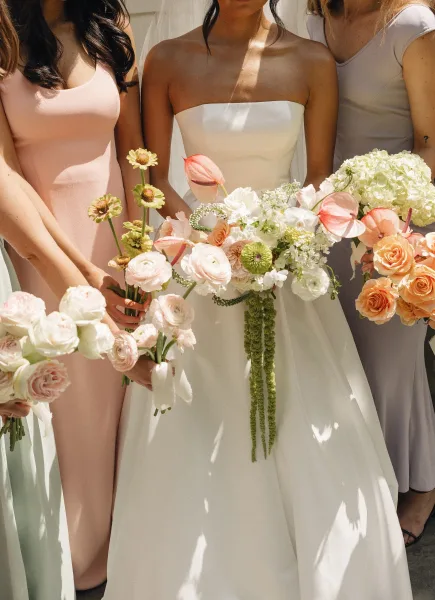
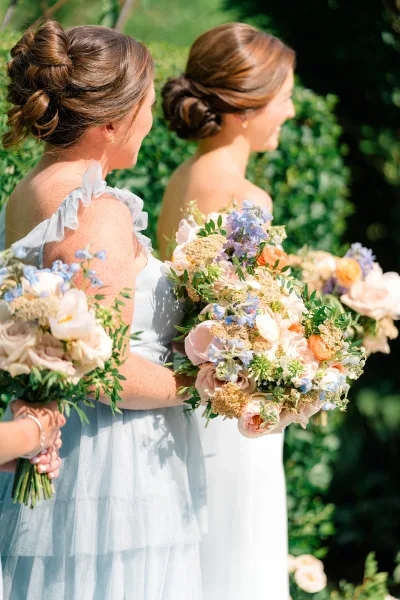
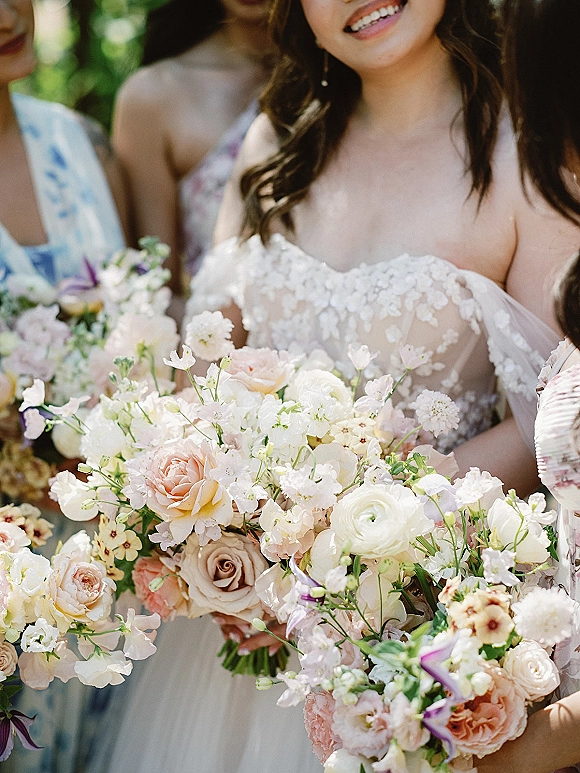
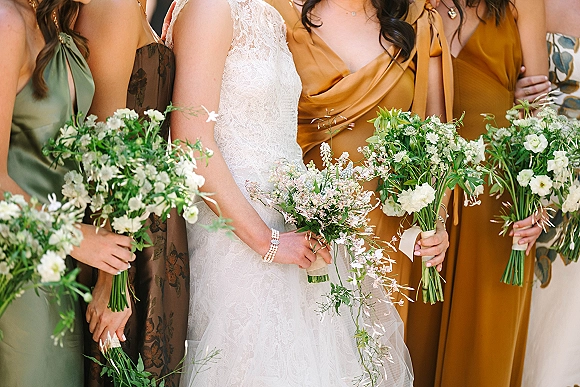
A bridesmaid bouquet is a smaller, simpler version of the bridal bouquet, typically using fewer stems, a narrower palette, and less costly focal flowers so the bride’s arrangement stays the visual anchor. Florists often pull a single flower or color out of the bridal recipe and repeat it across the party, which keeps the aisle cohesive without asking every bouquet to do the same work. Where a bridal bouquet might carry three or four focal blooms and layered greenery, bridesmaid versions frequently sit at one focal flower plus filler, or a monochrome cluster of a single variety.
That downsizing does more than manage the flower list. It lets a party of six or eight stay within reach on cost, and it looks deliberate in group photos, where a row of tidy, matched shapes looks more composed than a row of competing full arrangements. Bridesmaid bouquets also carry the wedding’s color story into the aisle in a way the bridal bouquet, often white or pale, cannot, since they can lean into the palette of the dresses, the season, or the flowers on the tables. The party’s flowers set the tone the guests read as the group walks in, framing the bride rather than competing with her.
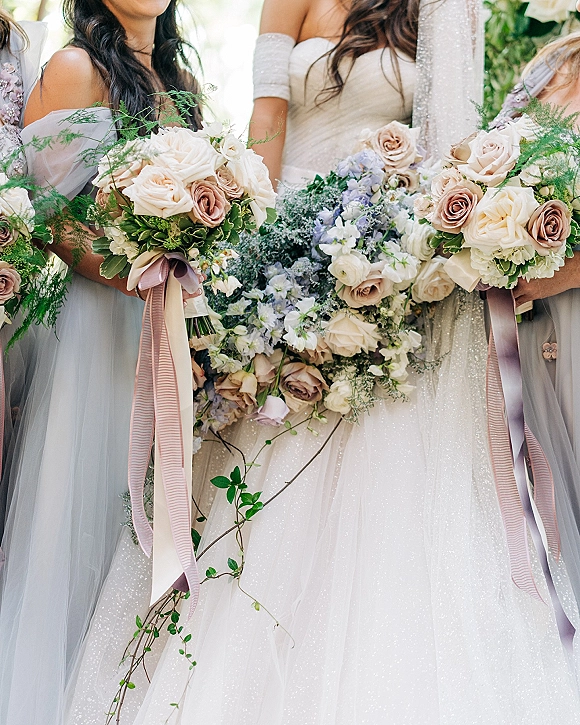
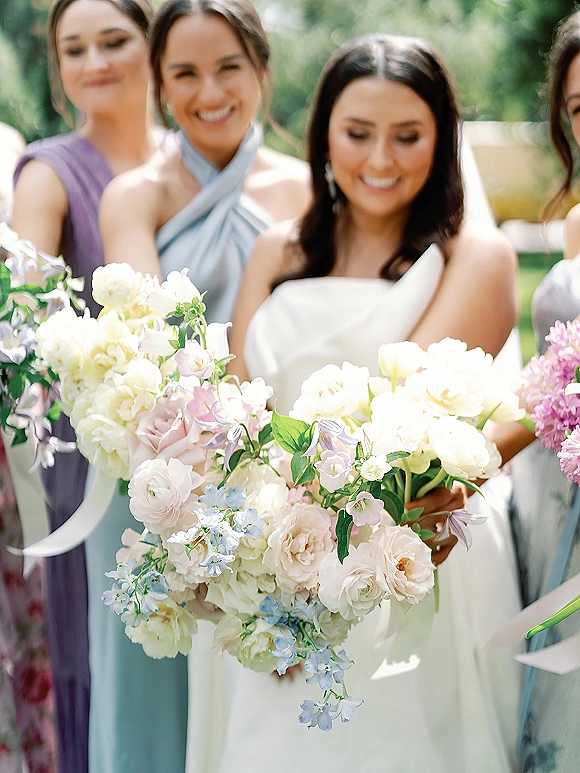
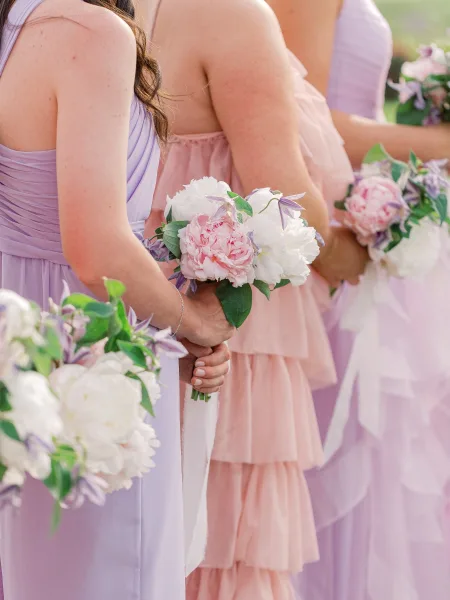
Getting the proportion right. The single rule that separates a considered party from a haphazard one is that bridesmaid bouquets should read as clearly smaller than the bride’s, so hers still leads when the two sit side by side. Match the individual bouquet to the person carrying it: a tall attendant in a floor-length gown balances a fuller shape, while a petite attendant or a junior bridesmaid looks best with a compact nosegay. For a large party, holding every bouquet to the same modest size looks more cohesive than letting a few grow full, and it keeps the flower count and the budget in check.
Bridesmaid Bouquet Ideas by Color and Flower
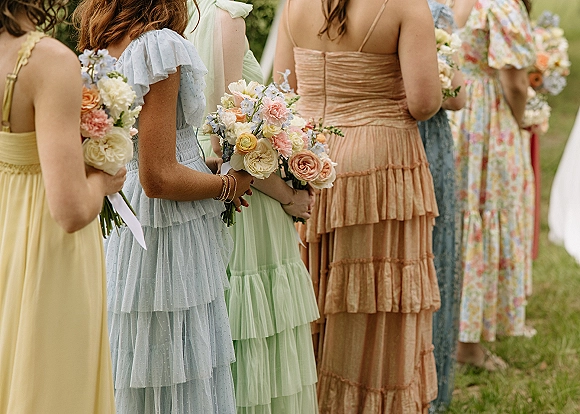
The fastest way to make a party look pulled together is to fix the color first and let the flowers vary within it. A single hue carried in different blooms, roses next to dahlias next to ranunculus in one shared tone, gives you texture without visual noise. Couples who want more contrast often flip the logic: the bridesmaids carry one color and the bride carries another, so the party frames her rather than blending in. Texture is the lever most people underuse: spray roses read smaller and more delicate and scale down neatly for junior attendants, while ranunculus and dahlias add ruffled volume that photographs with depth.
The flowers that repeat best. The most-used bridesmaid flowers earn their place by holding up, repeating well, and stretching a budget. Roses lead because they come in every color and hold their shape through handling; ranunculus and dahlias add ruffled texture; spray roses scale down for a delicate look; and carnations deliver full, inexpensive volume that reads far better in a modern tight cluster than their old reputation suggests. Baby’s breath, once treated as filler only, now carries whole bouquets as airy white clouds that cost a fraction of focal blooms, and a single hydrangea head fills a hand on its own.
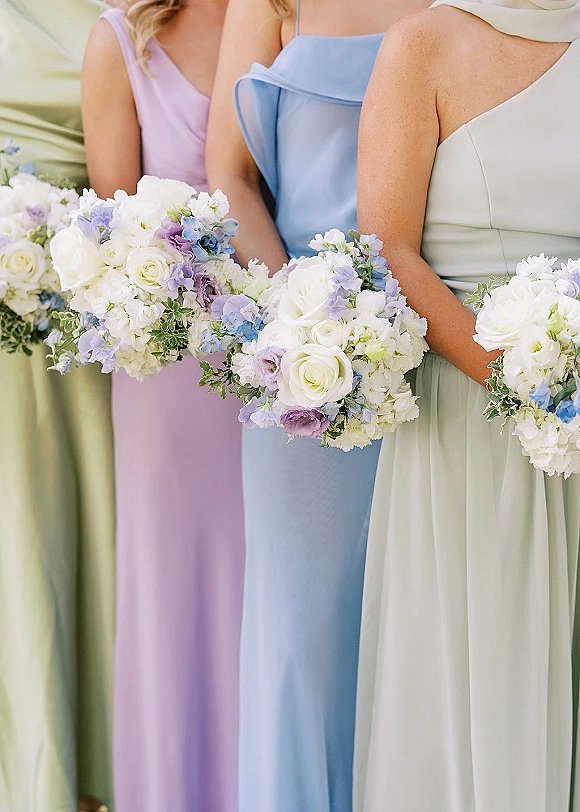
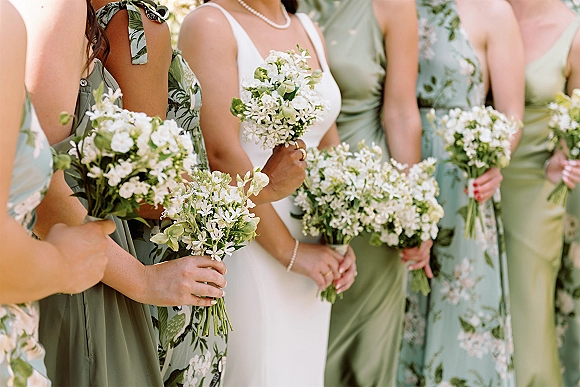
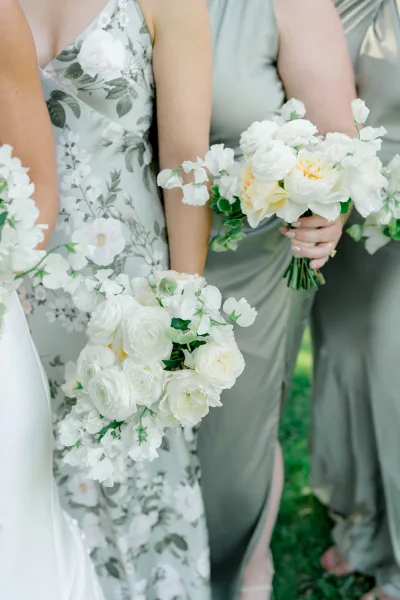
Color choice is worth tying directly to the dresses rather than the bride’s flowers. Bouquets that sit against the bridesmaid gowns all day read best when they either match the dresses in a tonal, monochrome way or contrast them cleanly, so a sage dress might carry cream and white blooms while a deep navy dress can hold blush or dusty pink for contrast. The one combination to watch is a bouquet color too close to the dress but not matching, which reads as a near-miss in photos. When in doubt, a white or greenery-forward bouquet sits cleanly against any dress color, which is why it remains the safe default for a mixed palette.
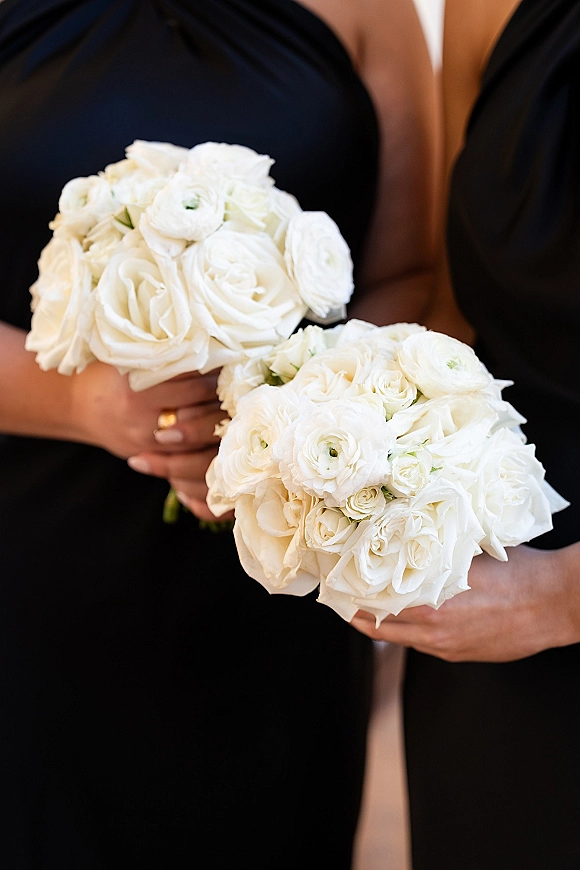
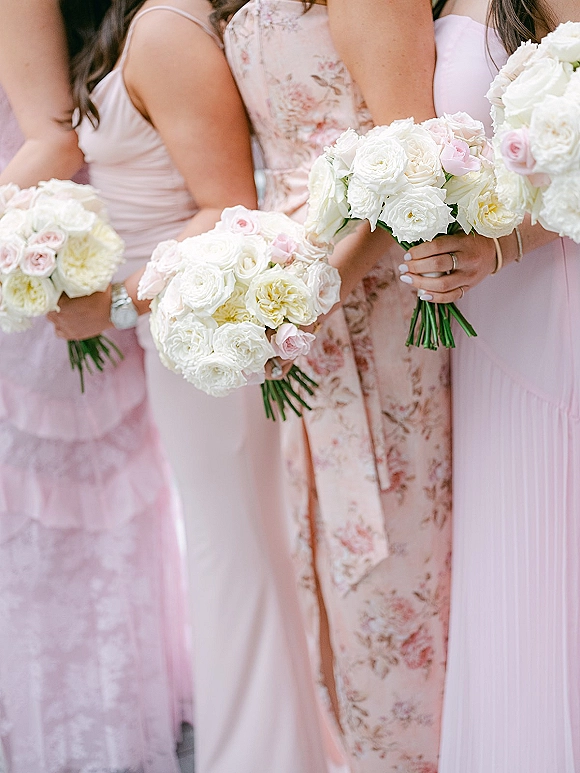
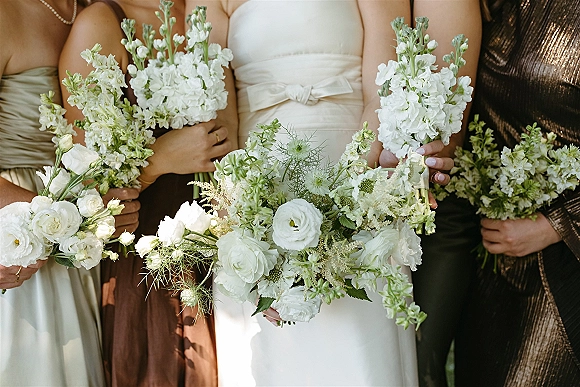
White bridesmaid bouquets. White feels formal and photographs against every dress color, which makes it the safest choice for a mixed or undecided palette, and it holds real range within one color: crisp white roses for a glamorous look, garden roses and ranunculus for softness, or all-white anemones with their dark centers for graphic contrast, the same building blocks behind most all-white white wedding bouquets. The trap with white is flatness, since a mass of one pale tone can lose definition in bright sun, so building in green, a collar of eucalyptus or a few stems of Italian ruscus, restores depth. White also lets the bridesmaid dresses carry the color story, which suits parties in bold or jewel-tone gowns where floral color would compete.
Calla Lily Bridesmaid Bouquets
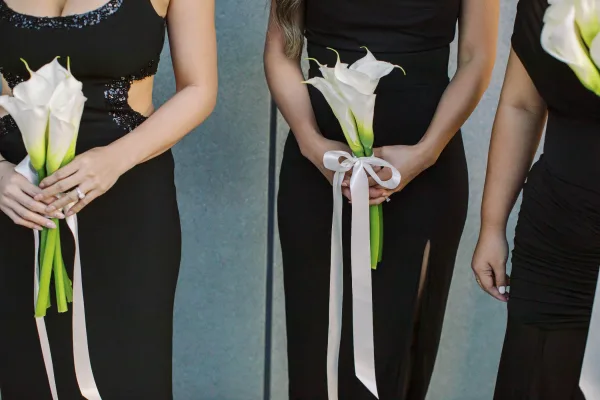
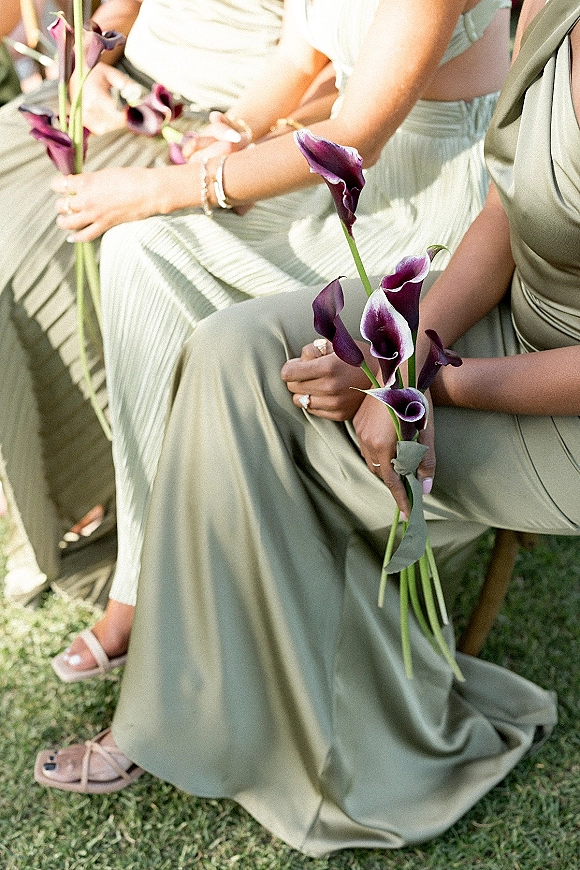
Calla lily bridesmaid bouquets lean modern and architectural, built from the flower’s smooth trumpet shape and long, clean stem. A cluster of white mini callas hand-tied with a wrapped stem reads sleek against nearly any dress color, which is why calla is a default for city hall and contemporary weddings where the party wants structure over softness. For color parties, deep purple and mango callas hold their shape in a way ruffled flowers cannot, so a three-stem calla bouquet stays graphic even when carried loosely.
Pair callas with a single accent variety only if you want to break the minimalism, since most calla bridesmaid looks earn their impact from repetition and restraint. If the bride carries a cascading calla arrangement, echoing it in a smaller hand-tied version across the party is one of the cleanest ways to tie the group to her. The full range of shapes lives on our calla lily wedding bouquets page.
Simple, Small, and Single-Stem Bridesmaid Bouquets
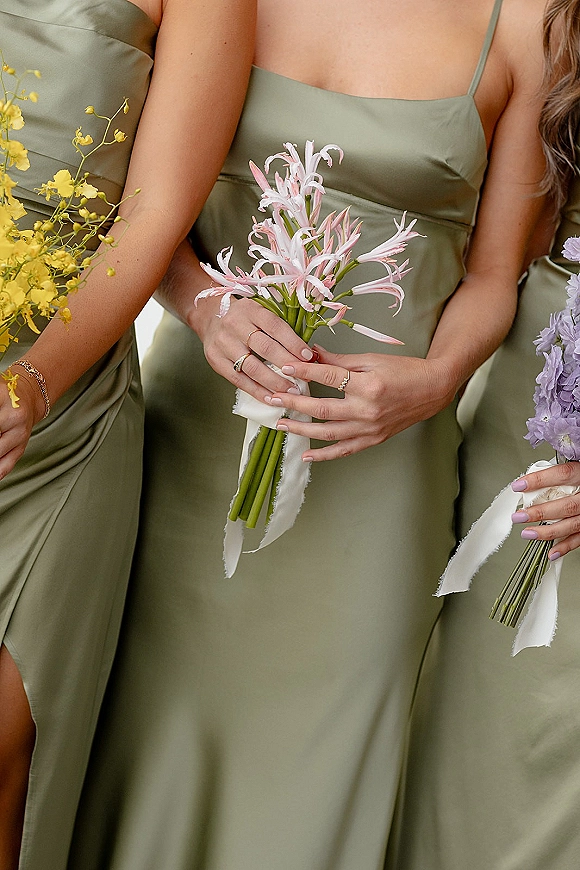
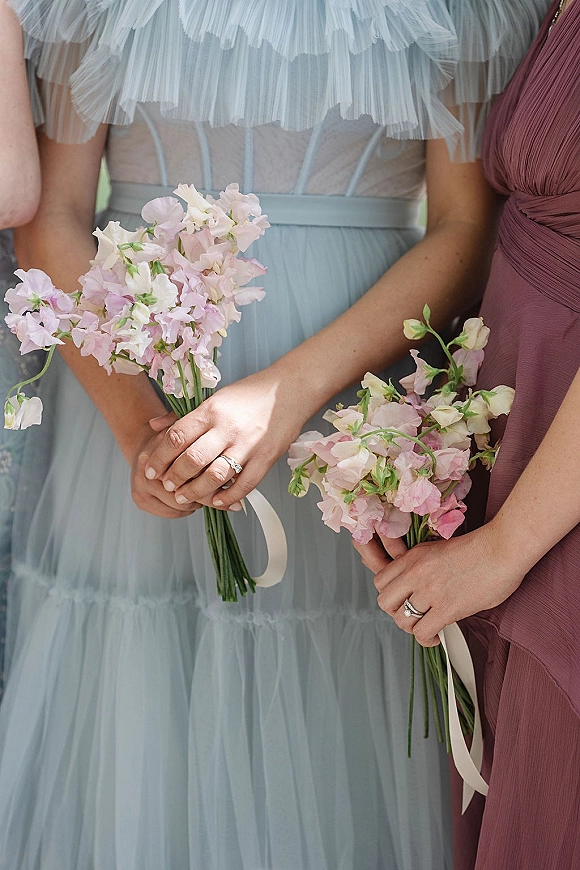
Simple bridesmaid bouquets, three to five stems of a single flower with minimal greenery, are the most requested build because they are proportionate, easy to carry, and forgiving on flowers. A small posy of roses or a tight cluster of ranunculus sits comfortably in one hand and does not overwhelm a petite attendant or a junior bridesmaid. Small does not mean plain: a compact bouquet of densely packed spray roses looks rich because of the packing, not the count, and a petite arrangement of textured seasonal blooms can look more considered than a large loose one. Scale the bouquet to the person carrying it, a fuller shape for a tall attendant in a floor-length gown, a nosegay for a shorter dress or a smaller frame.
Single-stem bouquets. Giving each attendant one striking flower to carry is the simplest, most budget-conscious, and most modern option available. A lone oversized bloom, a hydrangea head, a king protea, an open peony, a large calla, or a single sunflower, makes a strong graphic statement and needs almost no construction. The look depends entirely on the flower’s scale and shape, so it rewards blooms that read as complete on their own: hydrangeas because a single head fills a hand, callas because the stem itself is part of the design. Wrap the stem in ribbon or leave it bare, and know that single stems photograph beautifully in a row, since the repetition of one clean shape across the party is inherently graphic.
Wildflower Bridesmaid Bouquets
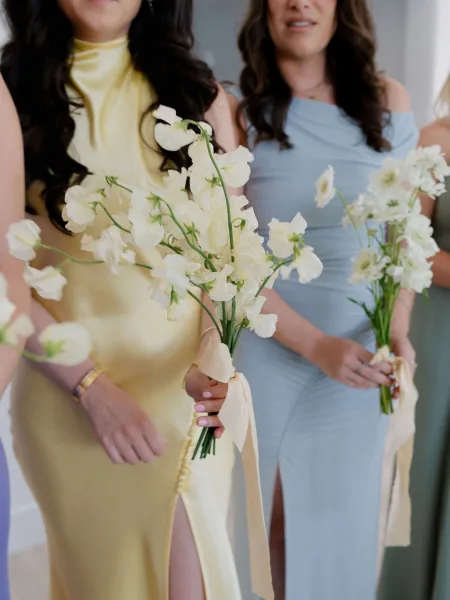
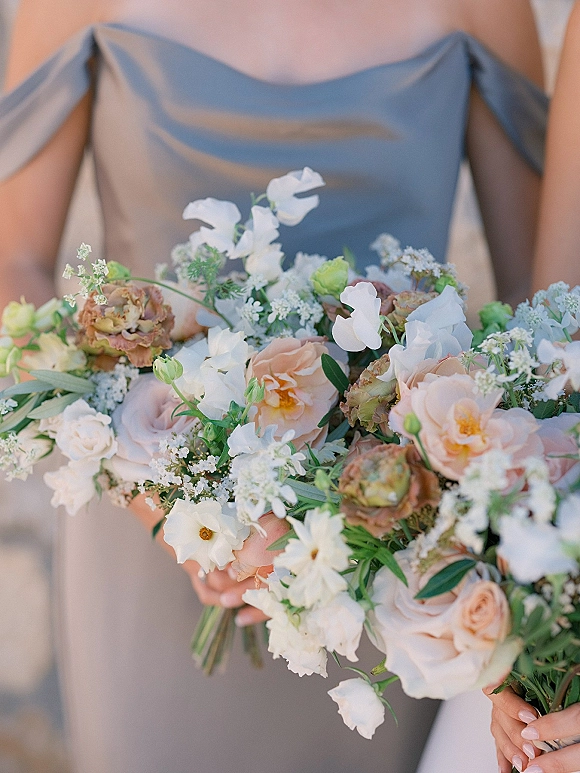
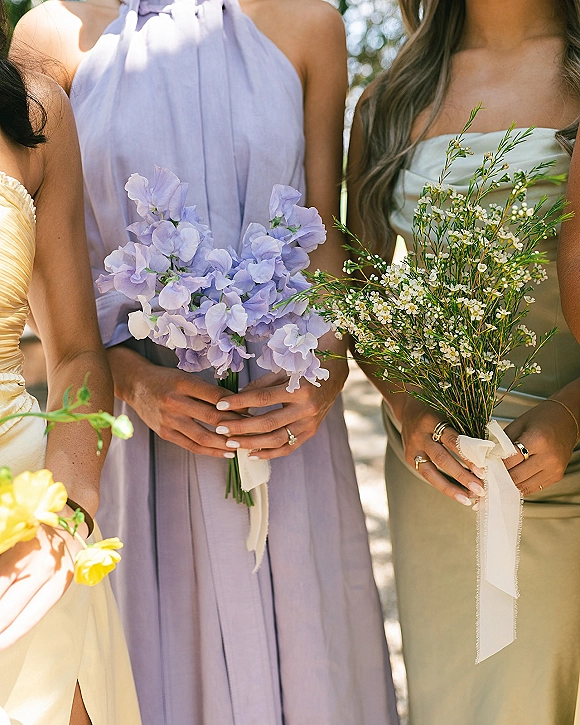
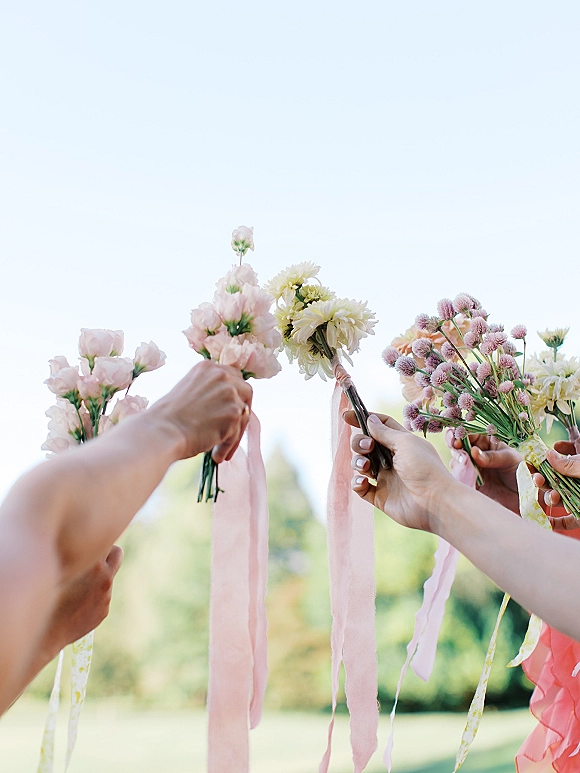
Wildflower bridesmaid bouquets are loose, mixed, and gathered to look picked rather than arranged, which suits garden, barn, and outdoor weddings. The recipe is intentionally varied: cosmos, feverfew, scabiosa, larkspur, and grasses combined so no two stems match, then hand-tied with a trailing ribbon or twine. Because the style feels casual, it forgives slight differences from bouquet to bouquet, which is useful for larger parties or partly DIY flowers.
Keep a shared color thread running through the mix, all soft pastels or all warm meadow tones, so the party still coordinates even as the individual stems differ. Locally grown, in-season stems give wildflower bouquets their authenticity, and they pair naturally with the airy, garden-gathered look of a full wildflower wedding bouquet that many outdoor couples want.
Seasonal Bridesmaid Bouquets, Fall Through Winter
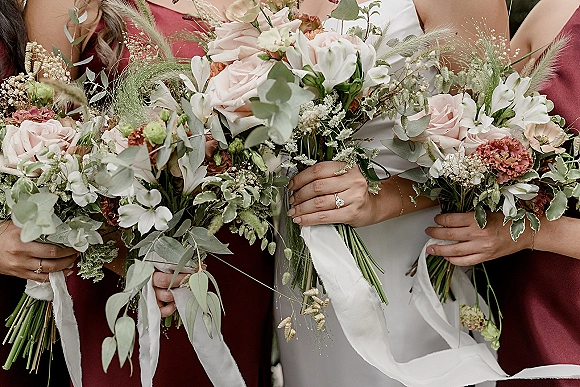
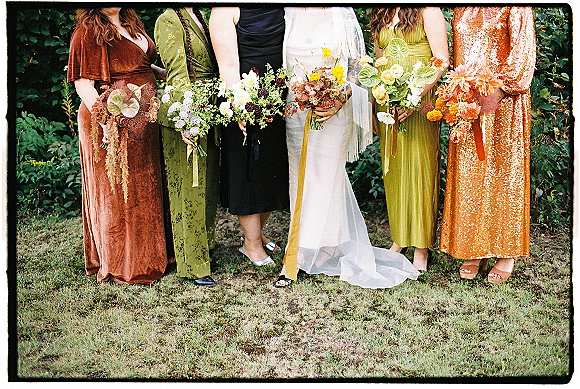
Fall bridesmaid bouquets. Autumn parties pull from a warm palette of burgundy, rust, burnt orange, and mustard, carried in dahlias, mums, and seasonal textures. A small cluster of burgundy dahlias with a few hypericum berries and dried grasses captures the season in a size that stays manageable for the party. Dried and preserved elements earn their place here, since wheat, bunny tails, and pampas add movement and cut cost while surviving a long outdoor day without wilting, and fall flowers sit well against the deeper gowns an autumn party tends to wear, such as navy, emerald, and terracotta.
Winter bridesmaid bouquets. Winter favors structure and contrast: deep reds and whites, silvery greenery, and cool-toned blooms that hold up in cold air. Amaryllis, anemones, and ranunculus carry the season, often paired with frosted eucalyptus or dusty miller for a cool, muted finish, and a few sprigs of cedar or pine root a cluster of white roses in the season without turning it into a wreath. All-white winter parties look crisp against dark suits and jewel-tone gowns, while a single crimson amaryllis gives each attendant a graphic focal point that photographs well in low winter light.
Spring and summer. Warmer months open the palette back up: spring parties lean on tulips, ranunculus, and peonies in soft tones, while summer moves to garden roses, dahlias, and zinnias in brighter color. Season guides shape as much as flower, with warmer months suiting looser, garden-gathered bouquets and plenty of greenery, and cooler months favoring tighter, more structural clusters. Matching the party’s bouquets to the season the wedding actually falls in, rather than forcing an out-of-season flower, is the simplest route to arrangements that look right in the day’s light and hold up in its weather.
Matched or Mismatched Bridesmaid Bouquets
Bridesmaid bouquets fall into two broad camps: matched, where every attendant carries the same arrangement, and mismatched, where bouquets vary in flower or shade while sharing a palette. Matched bouquets feel formal and orderly, reinforcing one clean look down the aisle, which suits ballroom and black-tie weddings where uniformity is the point.
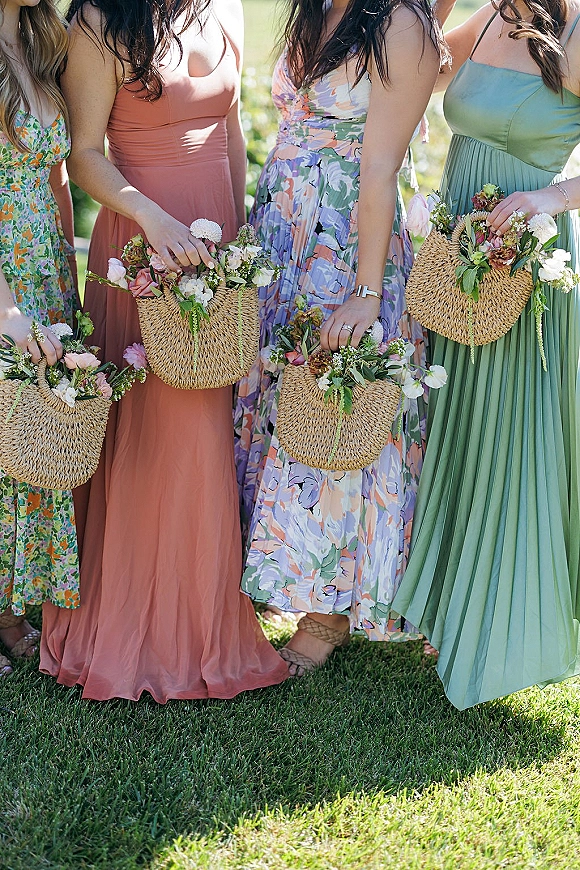
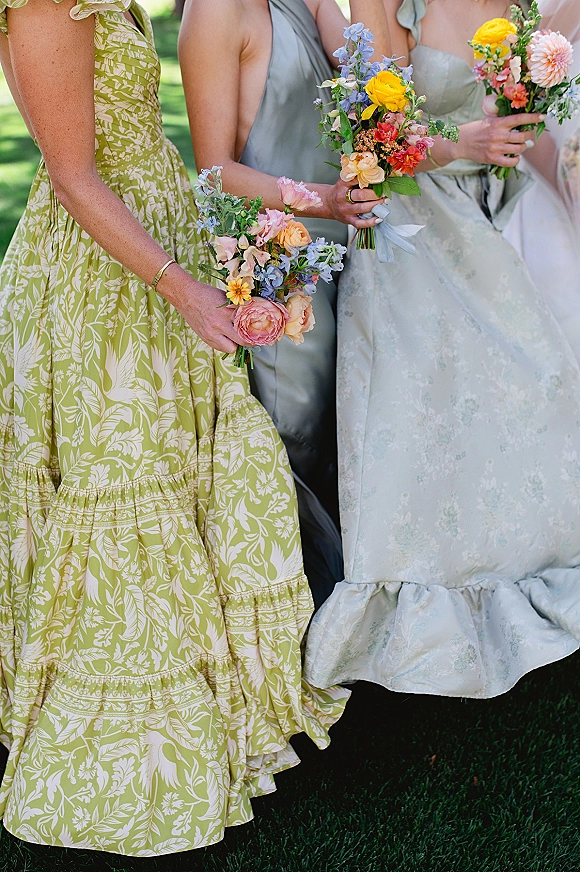
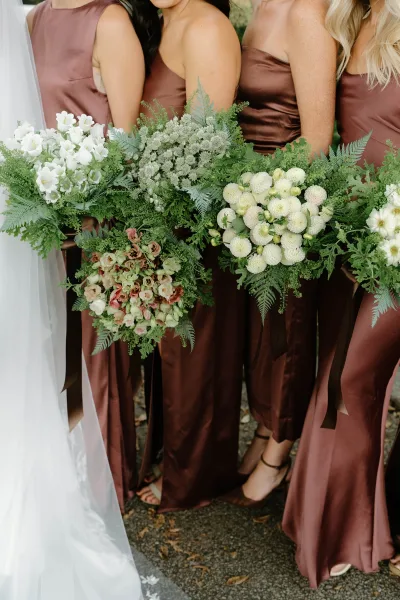
Mismatched bouquets give each attendant a slightly different arrangement inside a shared color story, which looks relaxed and modern and forgives natural variation in a larger or partly DIY party. The thing that keeps mismatched from looking accidental is a fixed boundary: one shared palette, one flower repeated across the group, or one shared wrap, so the differences register as intentional rather than as a florist running short. A middle path gives the maid of honor a distinct bouquet while the rest match, marking her role without breaking the group.
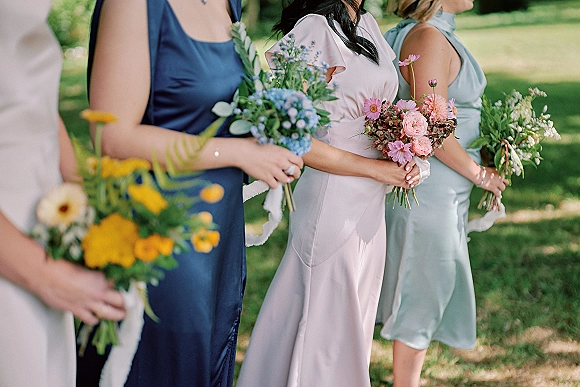
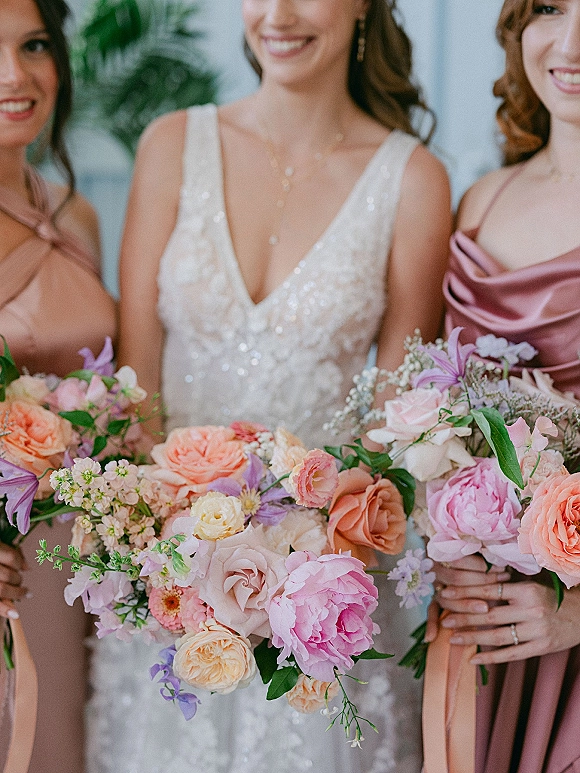
Mismatched works best when one variable changes while the others hold steady. Varying the flowers but keeping a single color feels cohesive, as does varying the shade across one flower type, a gradient of blush to deep pink roses down the line. What tends to look unplanned is changing several variables at once, different flowers in different colors with different wraps, which reads as a florist improvising rather than a deliberate choice. Setting one rule and holding to it is what makes a mismatched party look styled, and it also makes the bouquets easier to source and price, since the florist is working within clear limits.
Bridesmaid Bouquet Alternatives
For attendants who would rather not carry a bouquet, the strongest alternatives are a floral wrist corsage, a small hoop wreath, a single flower held loosely, or a non-floral piece like a fan, clutch, or lantern. Corsages and flower crowns accent the bridesmaid look while cutting flower count, and they free the hands for a party that will be helping with the dress and the day.
Alternatives also solve real logistics. A pinned corsage will not be set down and lost during photos, a fur stole or muff reads seasonal at a winter wedding, and a held candle or lantern suits an evening ceremony. The goal is coordination, not uniformity, so an alternative works best when it repeats the wedding’s color or material even as it drops the traditional bouquet shape.
Finishing Touches, Care, and Budget
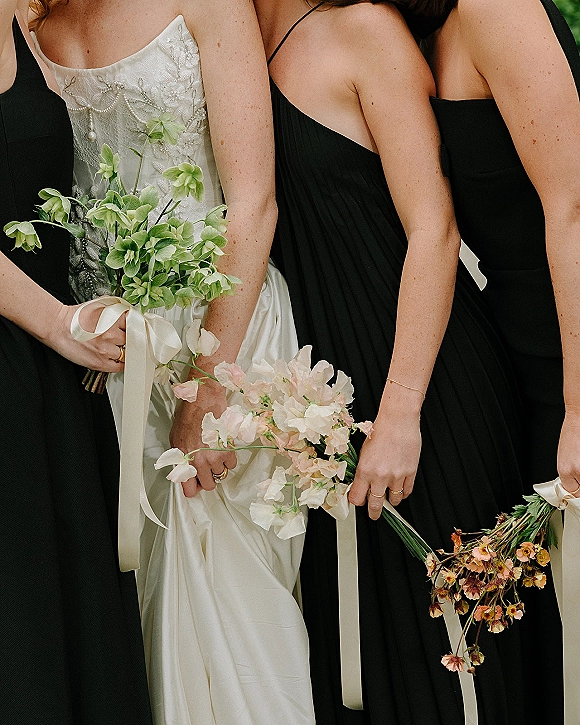
Greenery and ribbon. The finishing details do as much for a bridesmaid bouquet as the flowers. A collar of eucalyptus or ruscus adds movement and depth, keeping a single-color cluster from reading flat, while a few trailing sprigs soften the outline. Ribbon sets the tone at the handle: a wide satin ribbon left to trail reads formal and romantic, a raw-edge silk or velvet looks soft and modern, and twine or jute finishes a rustic gather. Repeating one wrap across the party ties mismatched bouquets together, and matching it to the dresses carries the color story into the smallest detail.
Keeping them fresh. Bridesmaid bouquets get handled more than the bridal bouquet, set down during photos, carried through heat, held for hours, so durability matters in the flower choice. Hardy blooms like roses, carnations, and callas, plus resilient greenery like eucalyptus, hold up far better than delicate garden flowers that bruise or wilt. Bouquets should stay in water until the last possible moment and be handled by the stems rather than the blooms, and for a warm or outdoor wedding, choosing heat-tolerant flowers matters more than any styling decision.
Managing the budget. Bridesmaid bouquets are one of the easiest places to manage a flower budget, because they can be simpler and smaller than the bridal bouquet without anyone noticing. The most effective savings come from choosing seasonal, readily available flowers, keeping the flower list short, and leaning on volume-building blooms and greenery rather than a long count of premium focal stems. What a bridesmaid bouquet costs varies with the flowers, size, season, and sourcing, so the lever within reach is the recipe: single-stem, baby’s breath, and greenery-forward builds all deliver a full look for far less, and corsages trim it further. A wedding florist can steer the recipe toward whatever is in season, which is usually where the real savings sit.
Choosing Bridesmaid Bouquets That Coordinate With the Bride
The cleanest parties share one element with the bridal bouquet and diverge on the rest. Repeat the bride’s dominant color in a simpler flower, or repeat her focal flower in a smaller count, but let the bridesmaid bouquets stay visibly lighter so hers still reads as the lead. Matching them exactly tends to flatten the group photo rather than unify it.
Match the bouquet to the dress and the setting as much as to the bride. Bold gowns want restrained florals; neutral gowns can carry more color; an outdoor garden wants looseness while a ballroom rewards structure. These bridesmaid looks sit alongside the wider range of wedding bouquets in the same palette, so brief your florist on the dress color, the venue, and the season together, and let the bride’s bouquet lead while the party frames her.
Frequently Asked Questions
Should bridesmaid bouquets match the bridal bouquet?
They should coordinate, not match exactly. The most cohesive approach shares one element, usually a color or a focal flower, while keeping the bridesmaid bouquets smaller and simpler so the bridal bouquet stays the visual anchor. Identical bouquets tend to flatten group photos rather than unify them.
How big should a bridesmaid bouquet be?
Smaller than the bridal bouquet, scaled to the person carrying it. A three-to-five-stem posy that sits comfortably in one hand suits most attendants, with fuller shapes reserved for taller frames or floor-length gowns and compact nosegays for petite attendants and junior bridesmaids.
What are budget-friendly bridesmaid bouquet flowers?
Baby's breath, spray roses, carnations, and single-stem hydrangeas deliver the most volume for the least cost. Sticking to one color and one or two flower types, or giving each attendant a single striking stem, keeps a larger party affordable without looking sparse.
Do bridesmaids have to carry bouquets at all?
No. Wrist corsages, small hoop wreaths, a single held flower, or non-floral pieces like fans, clutches, and lanterns all coordinate a party while cutting flower count. Alternatives look intentional when they repeat the wedding's color or material.
What are the best fall and winter bridesmaid bouquet flowers?
Fall parties lean on dahlias, mums, and dried grasses in burgundy, rust, and burnt orange. Winter favors amaryllis, anemones, and ranunculus in reds and whites, paired with silvery eucalyptus, dusty miller, or evergreen sprigs for cool-toned contrast.


.webp)