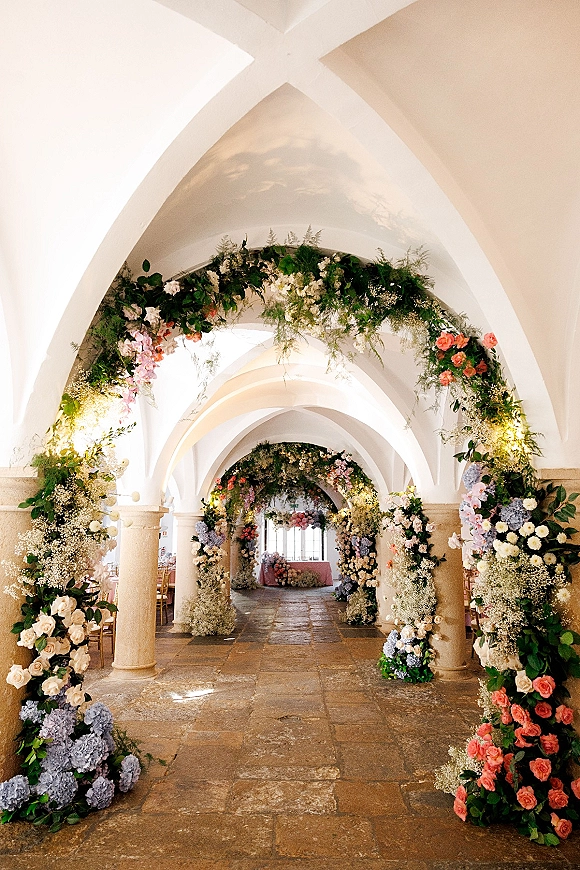
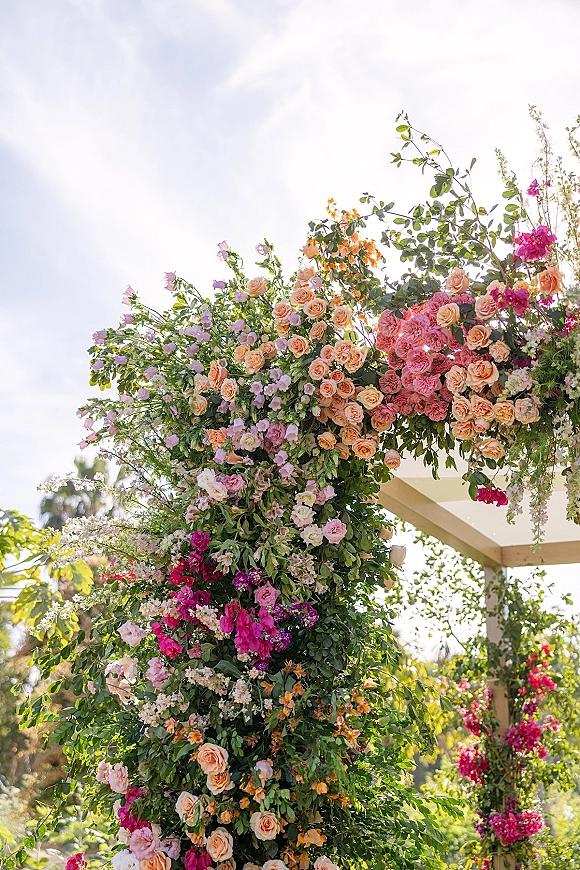
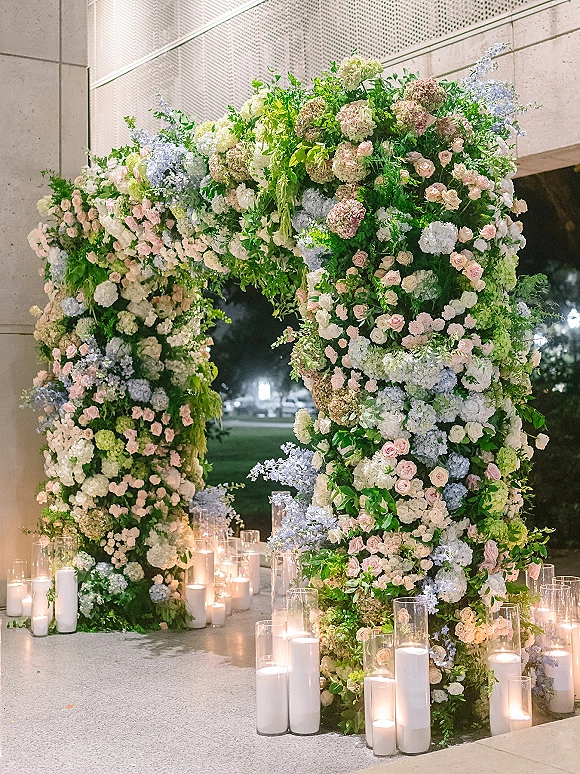
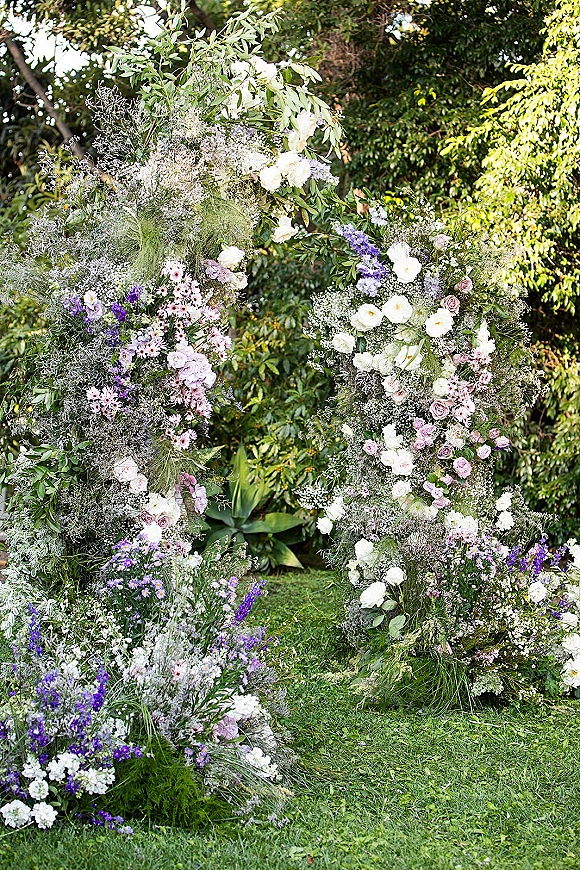
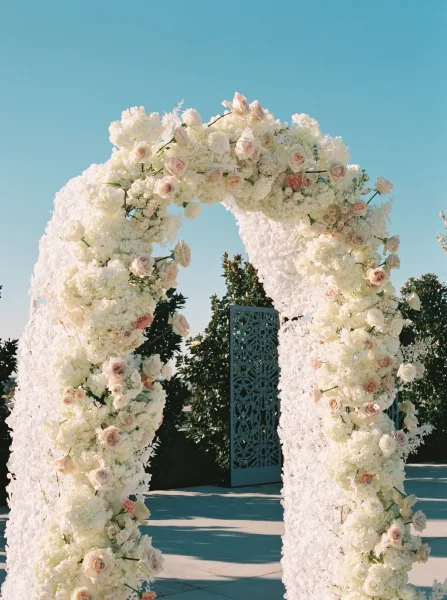
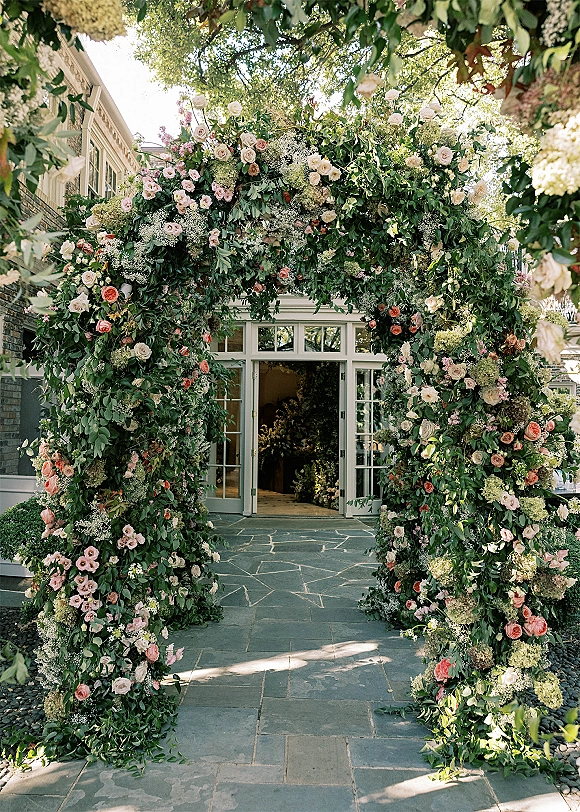
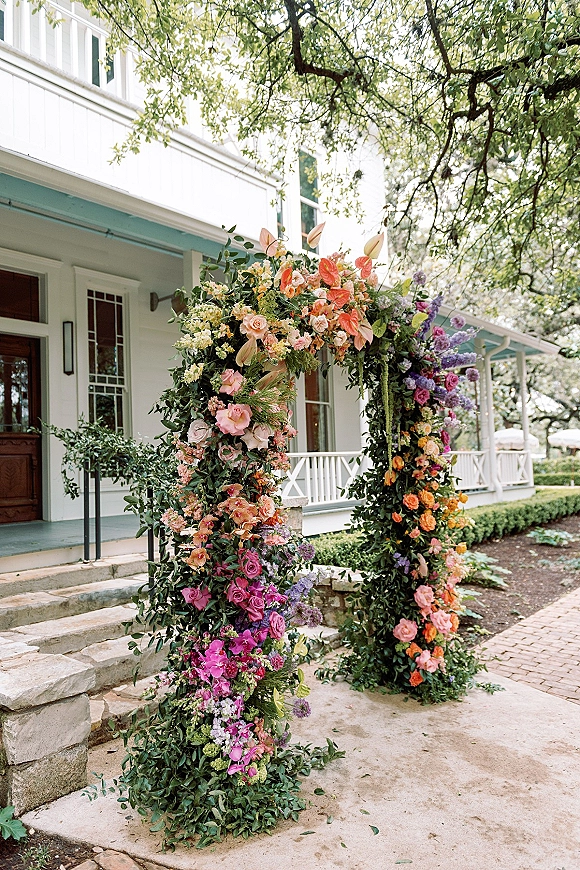
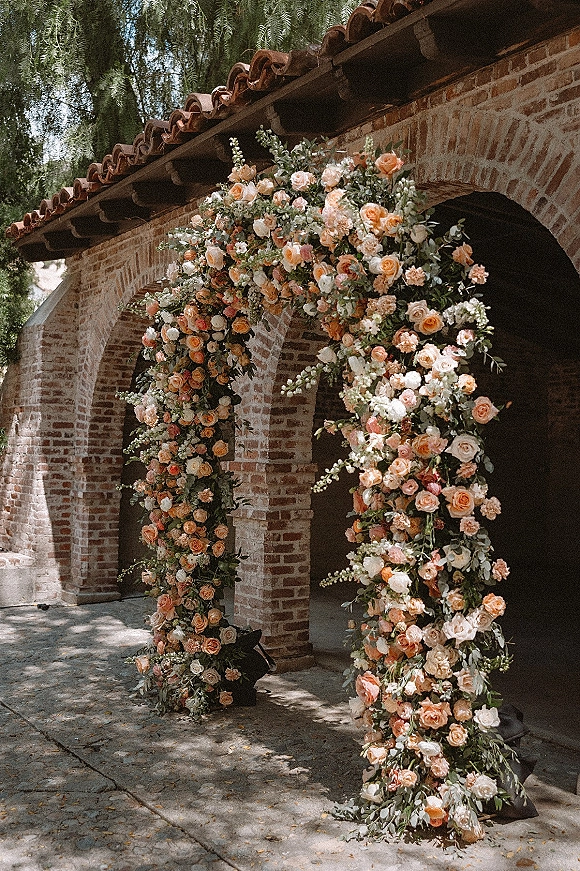
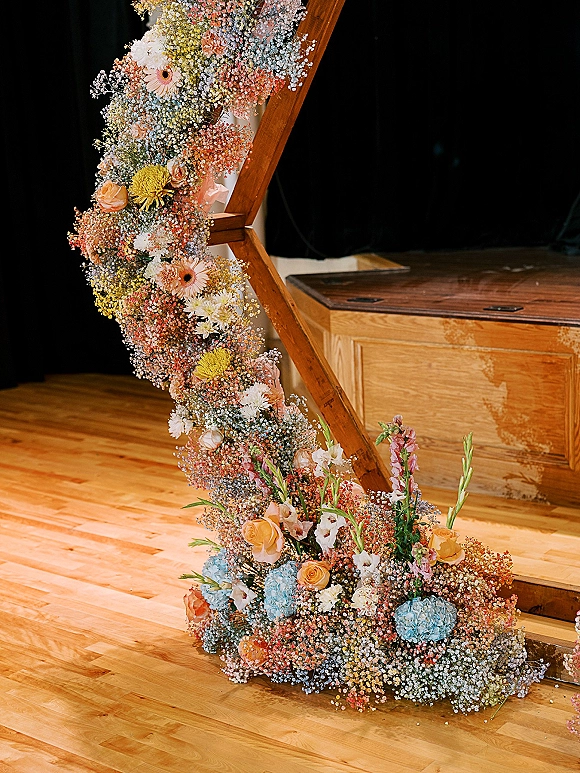
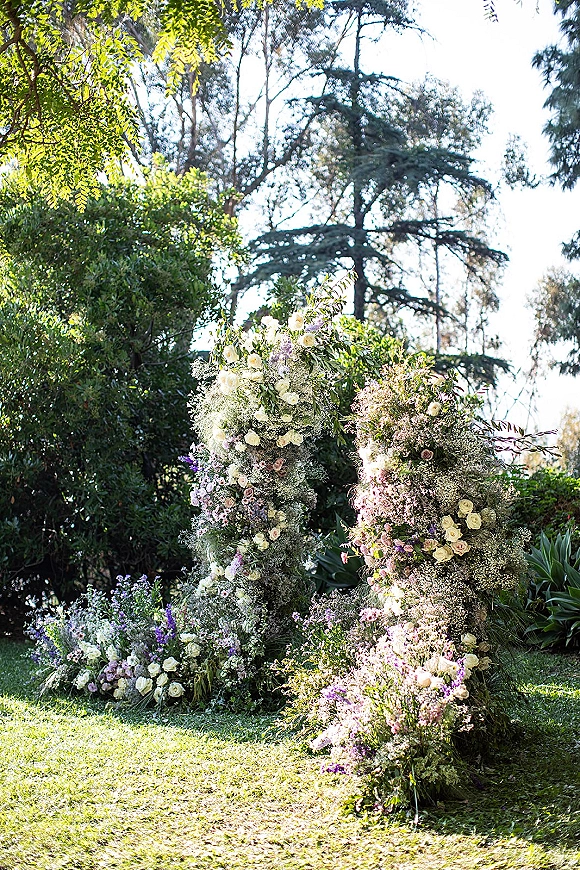
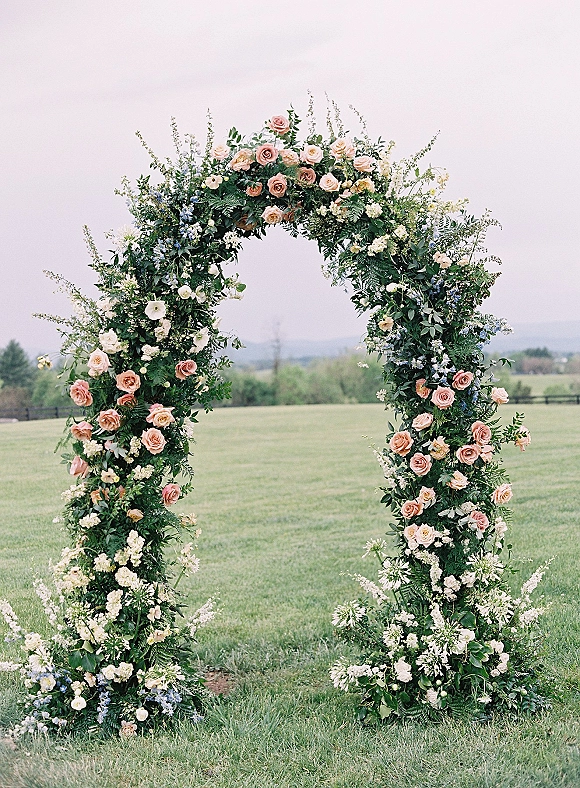
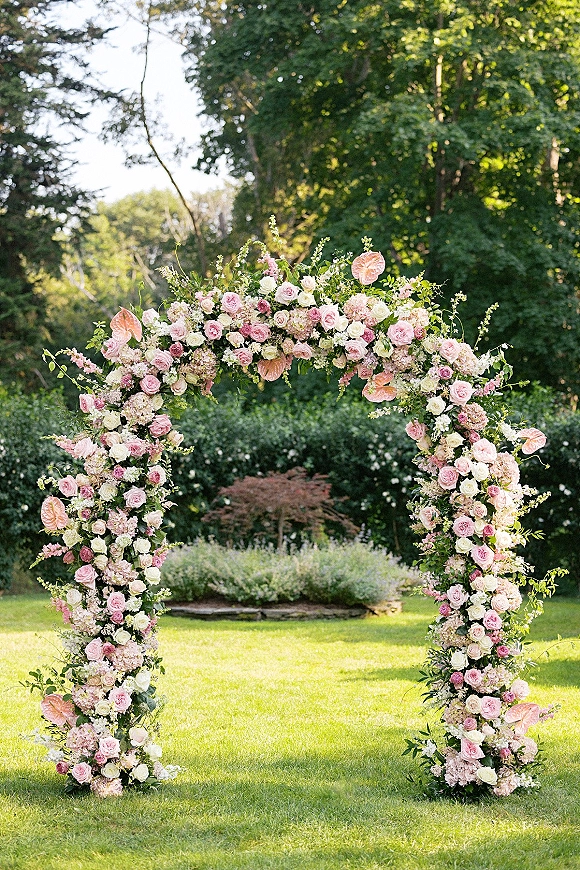
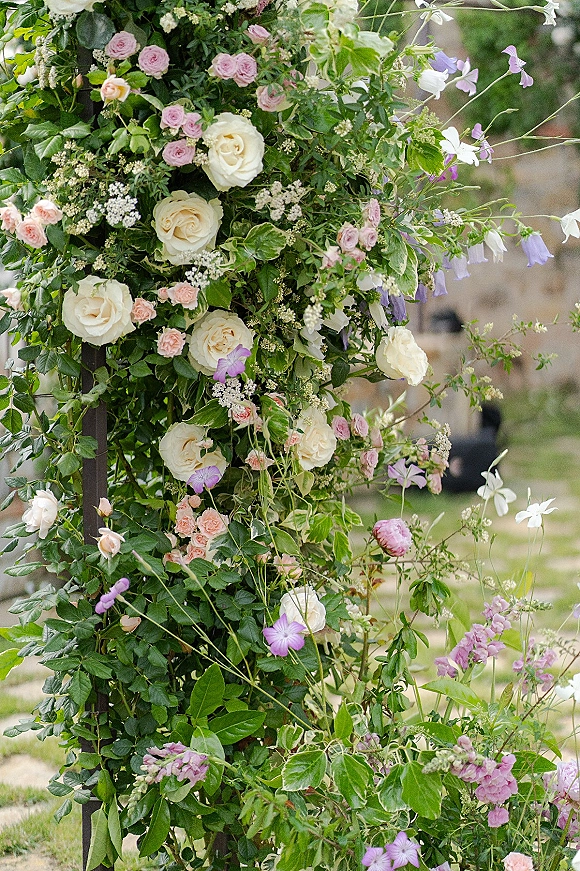
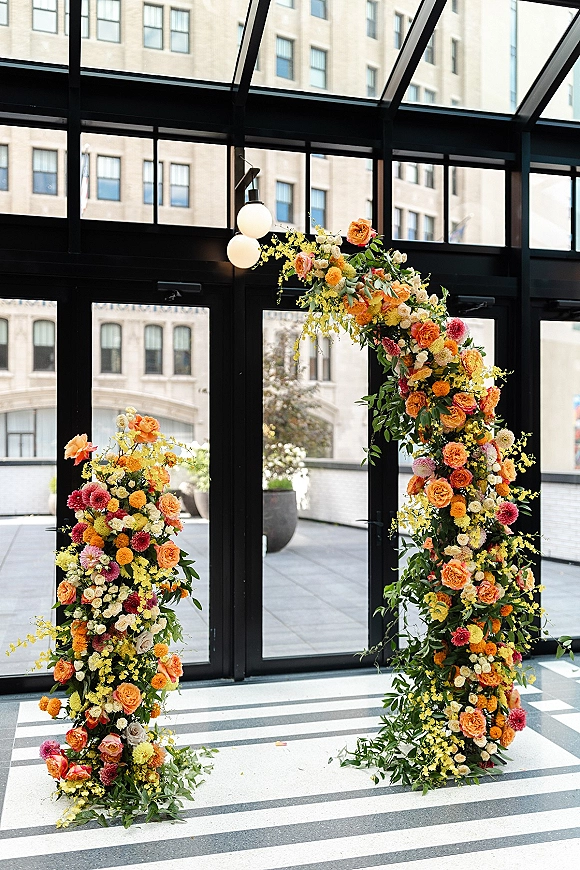
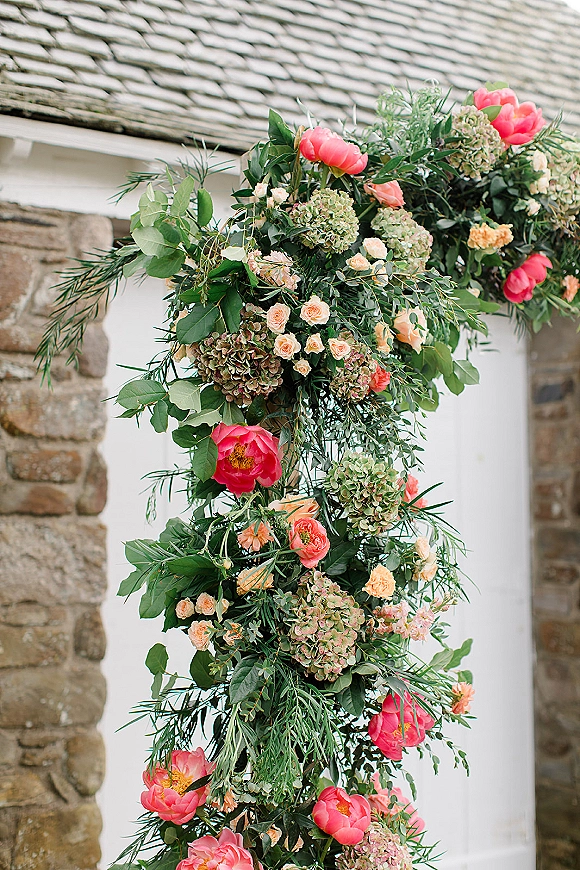
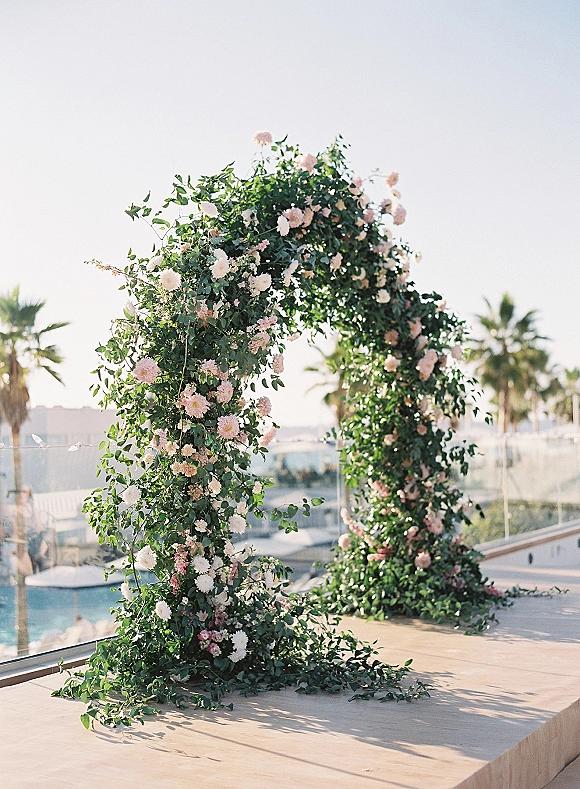
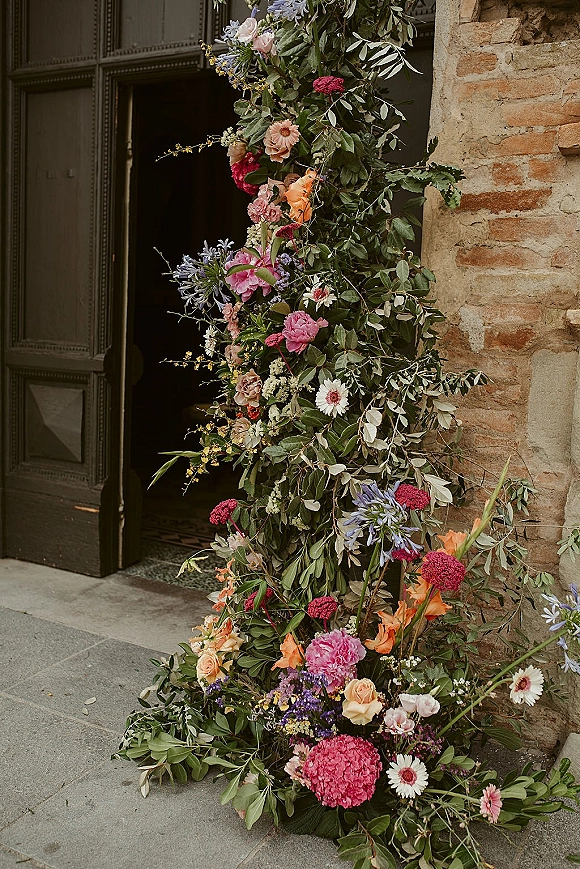
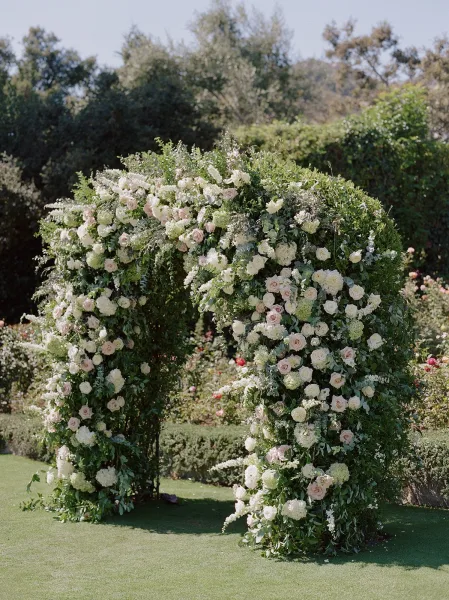
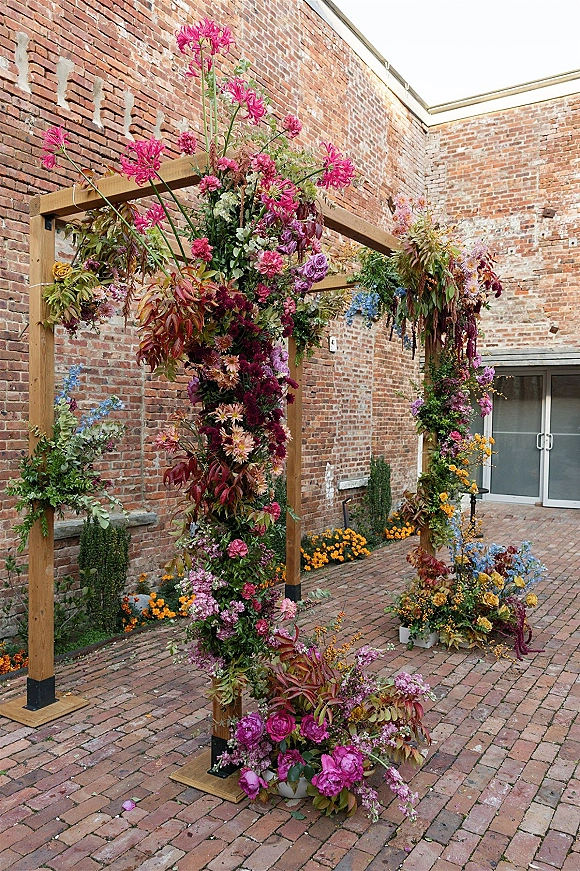
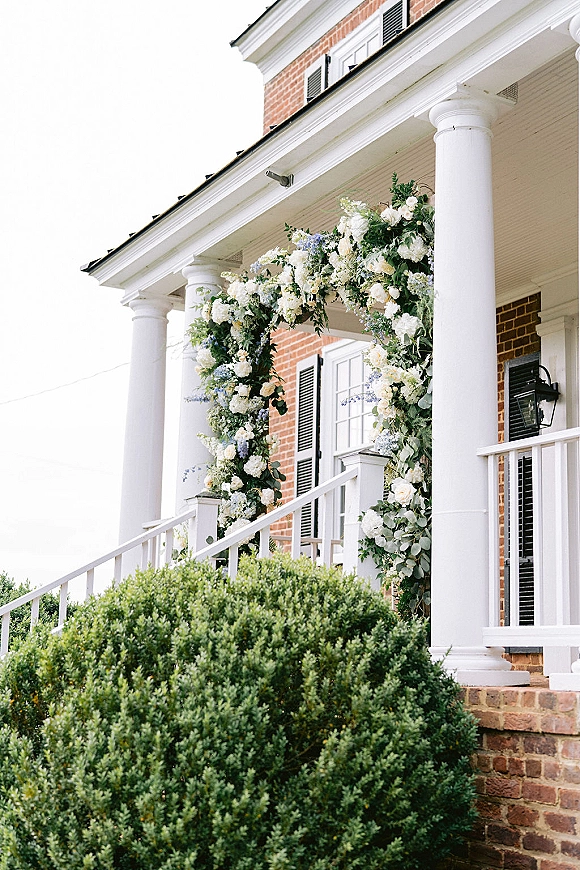
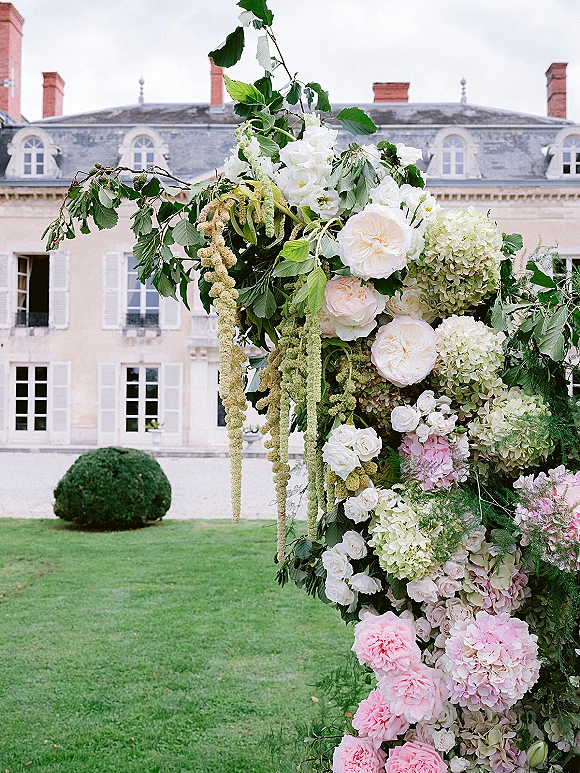
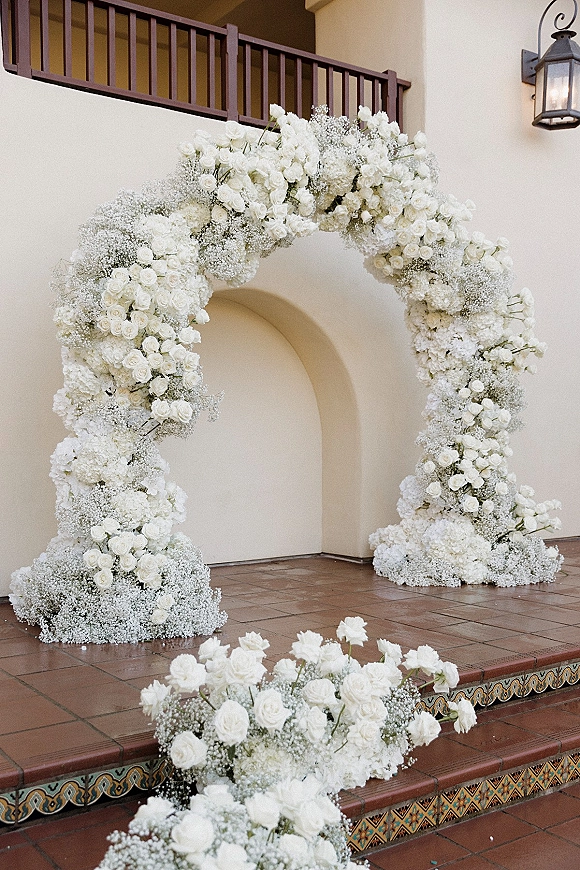
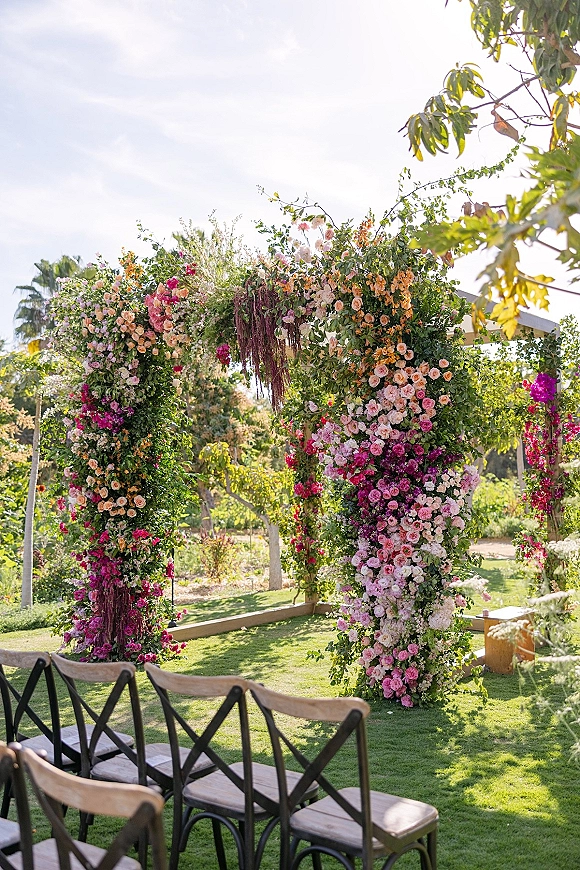
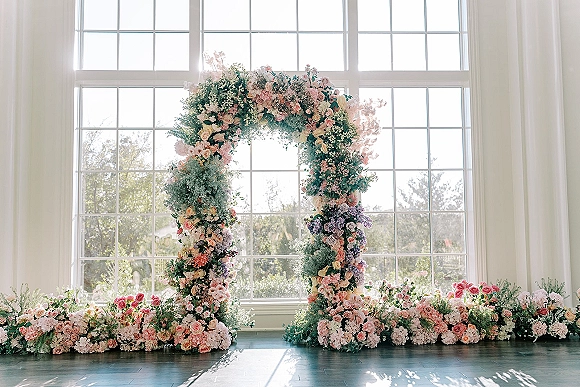
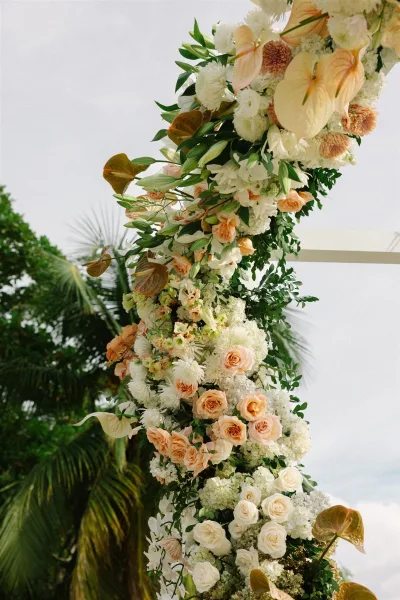
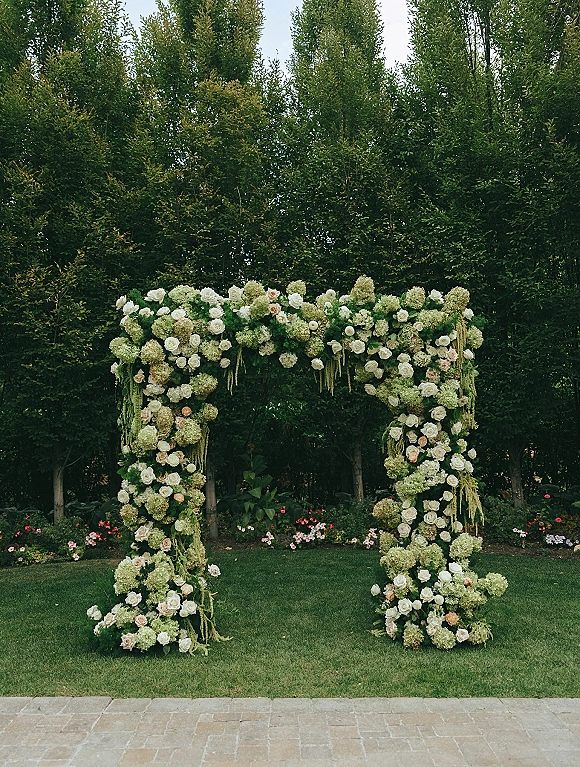
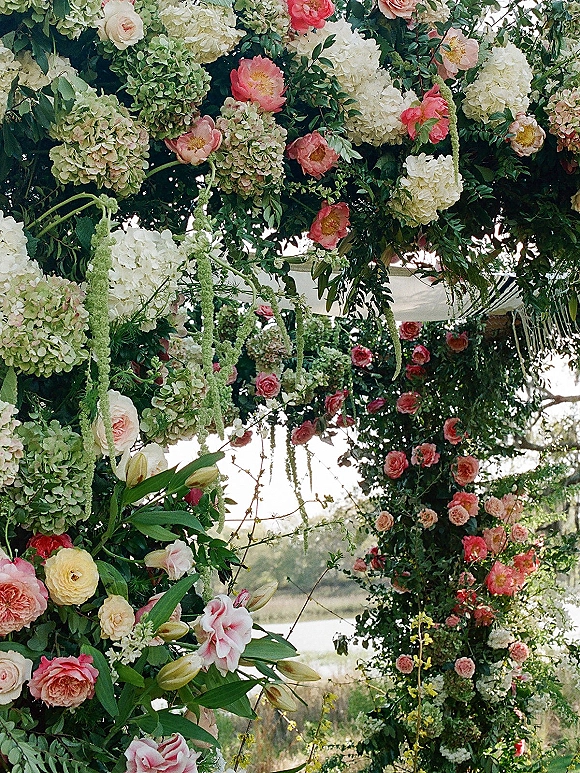
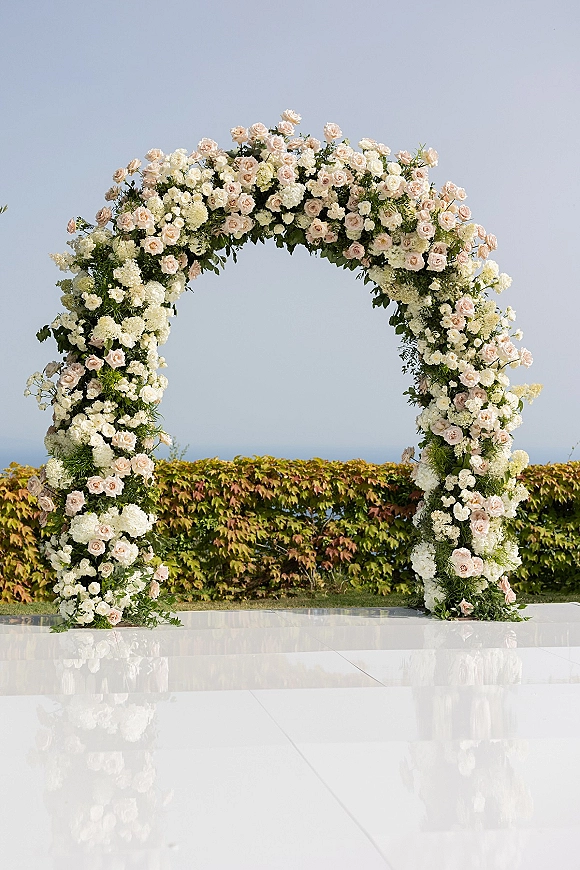
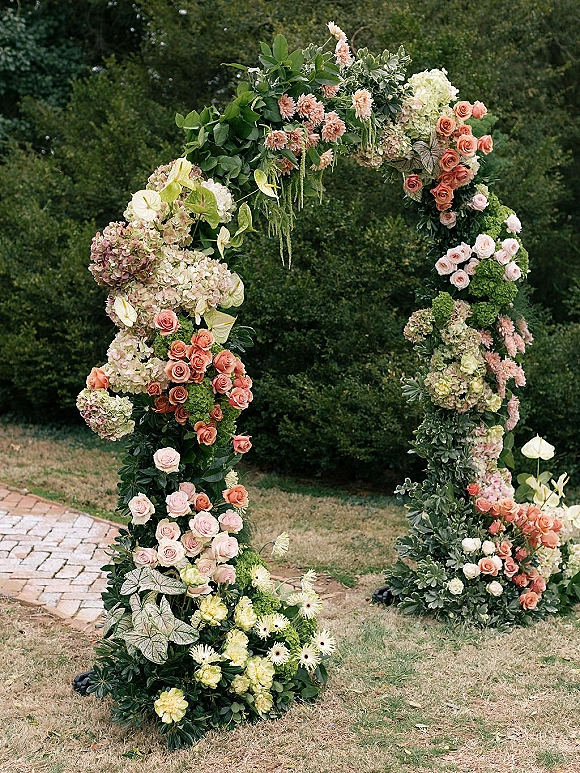
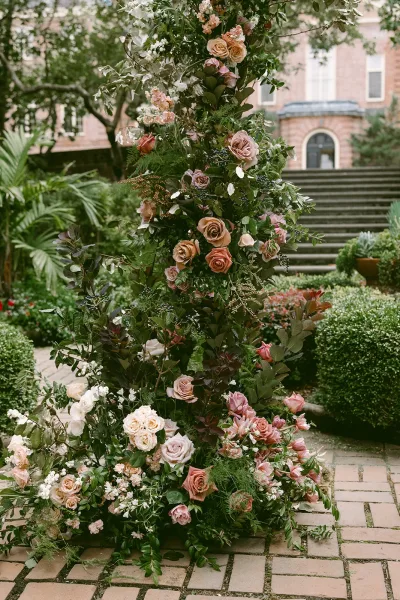
Floral arches perform across every ceremony setting. Outdoors in natural light, the botanical density reads as part of the landscape. Indoors, a heavily floral arch creates a contained focal point that draws the eye to the couple and holds it there. In both contexts, the arch defines the space and the florals define the arch.
Arch Shapes and Their Visual Logic
The shape of the arch determines how the florals behave before a single bloom is placed. Different structures carry different visual weight, different coverage requirements, and different relationships to the couple standing beneath them.
The classic rounded arch, a continuous curve from ground to peak, is the most versatile shape and the most common in wedding photography. Its symmetry reads as formal and ceremonial, and it scales well from minimally dressed to fully covered. A rounded arch with asymmetric floral placement, heavier coverage on one side with florals trailing toward the other, introduces movement and an editorial quality that straight-sided arches don’t naturally produce.
The square or rectangular frame is the most contemporary option. Its sharp geometry contrasts with the organic form of flowers in a way that reads as intentional and modern. This tension between hard architecture and soft botanicals is precisely what makes the square arch compelling in editorial contexts. It photographs cleanly from a straight-on angle and allows the florals to read as additions to a designed object rather than coverage of a structure.
The circular arch, a full metal hoop, is the most graphic shape and the most dependent on the setting behind it. Placed in front of a natural landscape, it frames a view. Placed against a wall or backdrop, it reads as a standalone decorative object. Floral coverage on a circular arch typically concentrates at the base and sides rather than the top, allowing the circle’s shape to remain visible as a design element.
Asymmetric and organic structures, including natural wood branches, two-post arbors, and driftwood frames, carry an inherent botanical quality before any flowers are added. Florals on these structures work best when they extend the arch’s organic character. Loose, unstructured arrangements with trailing vines and mixed textures complement raw wood; tight, formal florals create a conflict between the arch’s material and the arrangement style.
For the full range of arch styles beyond floral installations, including metal, wood, drapery, greenery-only, and mixed approaches, wedding arch ideas covers every aesthetic and ceremony setting.
Flower Choices for a Wedding Arch
The flowers on a wedding arch need to do two things at once: hold up through the ceremony in whatever conditions exist at the venue, and read clearly in photographs taken from 10 to 30 feet away. Both requirements eliminate many blooms that work well in handheld arrangements but fail at scale or in heat.
Garden roses, peonies, and ranunculus are the most reliably strong performers in floral arch work. They have enough petal density to read at distance, they hold their structure in moderate temperatures, and they photograph with depth and texture that single-petal flowers don’t produce. Large-headed blooms like garden roses anchor the arrangement visually; smaller filler flowers like wax flower, sweet peas, and astilbe add density without competing for attention.
Greenery is the structural element that most significantly affects the overall visual character of a floral arch. Eucalyptus, particularly seeded and silver dollar varieties, drapes naturally, frames blooms without overpowering them, and photographs well in both warm and cool light. Smilax vine and jasmine vine add a wilder, more organic quality. Italian ruscus and salal provide dense, matte green coverage that works well as a base layer for more elaborate floral installations. For couples building out a greenery-forward ceremony aesthetic, wedding greenery covers the full range of options.
Dried and pampas grass elements add textural contrast and solve the longevity problem for outdoor summer ceremonies. Pampas grass, in natural cream or bleached white, creates a sense of movement that fresh flowers don’t replicate. Dried elements arrive stable and remain stable regardless of temperature. The visual register tends toward organic and bohemian, which suits settings where that aesthetic is intentional.
Full Coverage, Partial Coverage, and Asymmetric Styles
The amount of floral coverage changes both the cost and the visual reading of the arch significantly. Full coverage, with blooms and greenery running from base to peak on both sides, creates the most dramatic effect and the highest-impact photographs. It also requires the most material and installation time, and arch size drives the price more than any other single factor.
Partial coverage, where florals concentrate at the base, the peak, or one side, can be equally compelling when the placement is deliberate. Asymmetric coverage, where one side carries significantly more florals than the other, creates visual tension and movement. It reduces material cost relative to full coverage while often producing stronger photographs, because the asymmetry gives the photographer more compositional options.
The Grounded Floral Arch
A grounded floral arch extends the arrangement from the base of the structure down to floor level, with blooms and greenery arranged to look as though they’re growing naturally around the arch. The floor-level arrangement is a significant part of the composition, not a secondary element.
Grounded arches photograph well from low angles, which wedding photographers frequently use for ceremony shots to capture the couple, the arch, and the floor arrangement in a single frame. Full-length grounded arrangements work especially well on outdoor lawn and garden ceremony settings, where the blooms appear to grow directly from the ground. The grounded approach is one of the most effective partial-coverage strategies because it creates high visual impact without requiring flowers across the entire arch structure.
Floral Swags for a Wedding Arch
A floral swag is a horizontal or diagonal arrangement of blooms and greenery attached to an arch rather than covering it end to end. Swags add intentional floral accents to an arch that’s otherwise left open, to a fabric-draped structure, or to a pergola or beam with an existing design.
A well-placed swag on a wooden arch or pergola often reads as more deliberate than full coverage, because the negative space makes the arrangement itself more visible. Swags work well with trailing greenery, hanging amaranthus, or elements that extend below the attachment point. For couples whose ceremony space has columns, beams, or a pergola rather than a freestanding arch, floral swags are often the more structurally appropriate solution.
How Floral Arch Design Connects to the Rest of the Ceremony
The relationship between the arch florals and the ceremony’s broader floral design matters more than it’s often given credit for in the planning process. An arch that carries a completely different palette or aesthetic from the aisle arrangements and reception florals reads as a disconnected statement piece rather than part of a designed whole.
The arch doesn’t need to match the ceremony flowers exactly. The most photographically interesting ceremonies often use the arch as an amplified version of the overall palette rather than a direct repetition of it. If the ceremony aisle uses low, loose arrangements of white garden roses and eucalyptus, the arch might use the same flowers in higher density with the addition of a statement bloom, such as large-headed white dahlias, that connects to the same aesthetic register without repeating it exactly.
For a complete reference on how floral arches fit within the broader ceremony design, covering aisle arrangements, altar flowers, and the visual flow from entrance to altar, wedding ceremony flowers covers the full category.
How Much Does a Floral Wedding Arch Cost
A professionally designed floral wedding arch typically costs between $500 and $5,000, with most couples spending $1,000 to $2,500 depending on arch size, bloom selection, and coverage level.
Structure size is the primary cost driver. A small rounded arbor dressed with partial coverage costs significantly less than an 8-foot square frame with full floral coverage on both sides. Bloom choice matters almost as much: garden roses, peonies, and orchids cost more per stem than filler flowers like wax flower or baby’s breath. A full arch heavy with premium blooms during peak wedding season can reach $3,000 to $5,000 at florists operating at the higher end of the market.
Installation time and florist travel are factored into most arch quotes. Grounded installations with complex mechanics typically cost more than simple draped arrangements. Most florists quote the arch as a line item separate from the rest of the ceremony florals.
Couples comparing quotes should verify whether the price includes the arch structure itself or only the florals. Some florists supply the frame; others work with a rented or couple-supplied structure.
DIY Floral Wedding Arch vs. Renting or Hiring a Florist
Building a DIY floral wedding arch is achievable, but more logistically demanding than most DIY wedding projects. The structure itself, a metal frame, wood arbor, or bamboo arch, can be purchased for $75 to $200 and reused or resold. The flowers require purchasing from a wholesale supplier, hydrating stems overnight, building the arrangement, and transporting it assembled or installing it on-site on the wedding morning.
The main challenge with DIY arch work is timing. Fresh flowers begin deteriorating from the moment they’re cut, and an outdoor summer ceremony requires installation as close to the start time as possible. Managing a flower arch on the morning of a wedding while handling everything else that morning is where most DIY arch projects run into difficulty.
Renting a pre-decorated arch from a local floral or event rental company is a practical middle-ground option. Rentals typically run $200 to $500 for a dressed arch, with all mechanics and installation handled. Selection is more limited than working with a florist directly, but the logistics are handled.
Hiring a florist gives the most control over the final result, particularly for custom bloom selections and grounded or asymmetric installations that require on-site design judgment.
Frequently Asked Questions
What flowers work best on a wedding arch?
Garden roses, peonies, ranunculus, and lisianthus are among the most reliable choices. They have enough petal density to read at distance, hold their structure through a ceremony, and photograph with depth and texture. Greenery choices matter as much as the blooms: eucalyptus, smilax vine, and Italian ruscus all work well as structural elements. Flowers with delicate petals or stems that wilt quickly in heat, such as lily of the valley or sweet peas used in quantity, require careful management in outdoor or warm settings.
How far in advance is a floral wedding arch installed?
Most floral arches using fresh flowers are installed on the wedding day, typically one to four hours before the ceremony, depending on the complexity of the installation and the venue's access schedule. The florist will confirm timing based on the specific flowers chosen and the venue's temperature conditions. Arches using dried elements or a combination of fresh and dried can be installed earlier, since the dried components aren't time-sensitive.
What is a grounded floral arch?
A grounded floral arch has florals that extend from the base of the arch structure down to floor level, with blooms and greenery arranged to look as though they're growing naturally around the structure. The ground-level arrangement is a significant part of the visual composition and photographs well from low angles. It's one of the most effective partial-coverage approaches, creating high visual impact without requiring full arch coverage.
Can a floral wedding arch be used outdoors in summer heat?
Yes, with planning. Fresh flowers in direct sun and high heat will wilt faster than in shaded or climate-controlled environments. Florists working with outdoor summer ceremonies typically schedule installation as close to the ceremony as possible, choose hardier blooms, and use water tubes or hydrated floral foam for stems where feasible. Incorporating dried elements, such as pampas grass, dried palms, or preserved eucalyptus, reduces heat sensitivity while maintaining the overall aesthetic.
How much does a floral wedding arch cost?
Most professionally designed floral wedding arches cost between $1,000 and $2,500, with simpler partial-coverage arches starting around $500 and premium installations with large structures and high-end blooms reaching $5,000 or more. The primary cost drivers are arch size, bloom selection, coverage level, and installation complexity. Couples should confirm whether the florist's quote includes the arch structure or only the florals.
Is it possible to rent a floral wedding arch?
Rental arches are available from many local floral and event rental companies, typically ranging from $200 to $500 for a pre-decorated arch delivered and installed. Selection is more limited than working with a florist directly, but all the mechanics and logistics are handled. This is a practical option for couples who want a professional-quality result without the cost of a custom floral design.
How does a floral arch relate to the rest of the ceremony florals?
The arch works best as an amplified or elevated version of the ceremony's broader floral palette rather than a completely independent statement. Using the same primary flowers at different scales and densities across the arch, aisle arrangements, and any altar florals creates visual cohesion. The arch can introduce a statement bloom or additional color depth that isn't present elsewhere, as long as it connects to the same aesthetic register as the rest of the ceremony design.