Wedding Arch Materials and Structures
Wooden wedding arches are the most versatile starting point. Raw timber works across barn ceremonies, vineyard settings, and open-air garden celebrations. Whitewashed wood holds up in coastal and beach settings without competing with the environment. Stained frames support heavier floral installations and read more formal. A simple wooden arch can go in almost any direction depending on what the florist does with it.
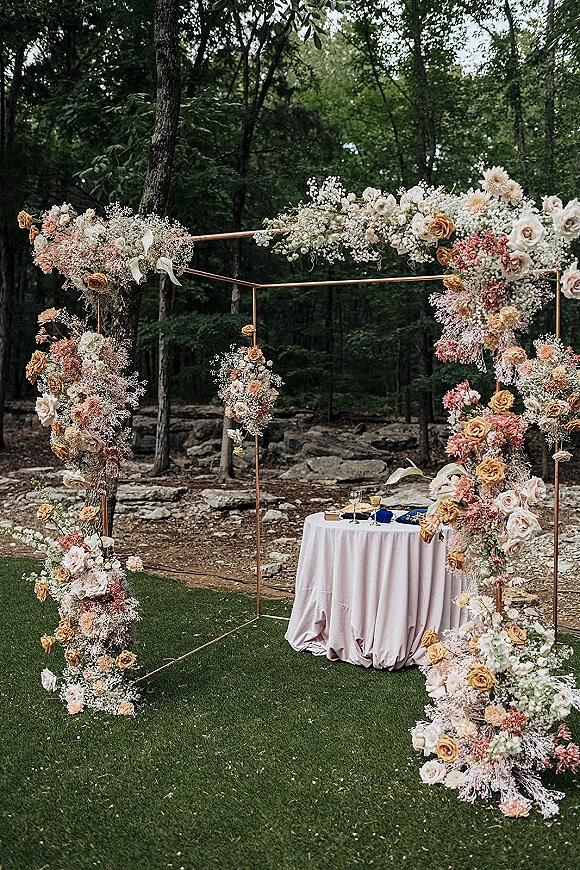
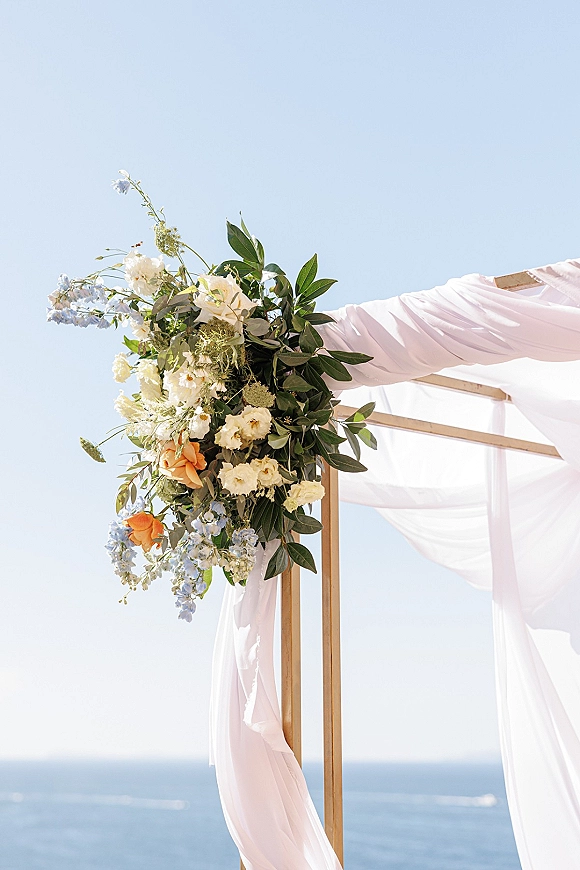
Metal arches read with more precision. Powder-coated white, matte black, and gold finishes each photograph differently. Gold has remained consistent in editorial ceremony photography because it responds well to warm afternoon light. Metal frames work best in modern indoor spaces, loft venues, and destination weddings where the architecture already has its own character.
Hexagon arches serve a similar framing function to circular ones but with a more geometric sensibility. They read well in modern barn and industrial venue settings where some angularity suits the space. Balloon arches occupy a separate category. More playful and color-forward, they belong at receptions and cocktail hours rather than ceremonies.
Wooden and Rustic Wedding Arch Ideas
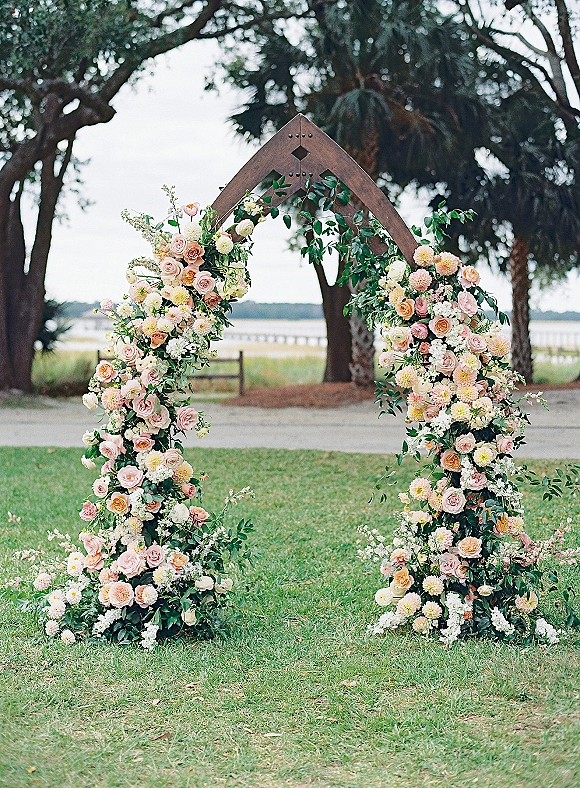
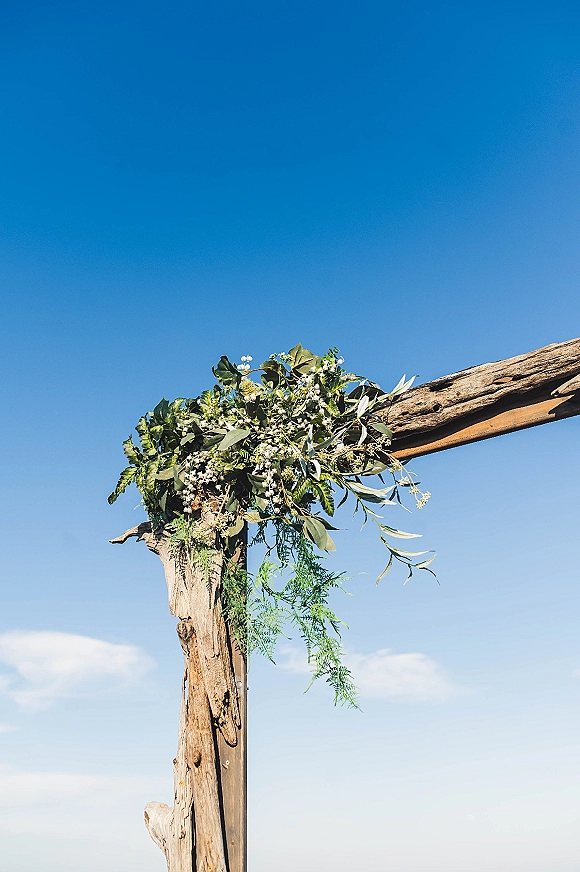
Raw timber frames take florals in any direction, from overloaded garden rose installations to a single trailing vine. The material is forgiving across styles and settings, which is why it remains the default for outdoor ceremonies. Whitewashed finishes work in coastal and beach settings. Darker stains read more formal and anchor larger floral installations without the frame disappearing.
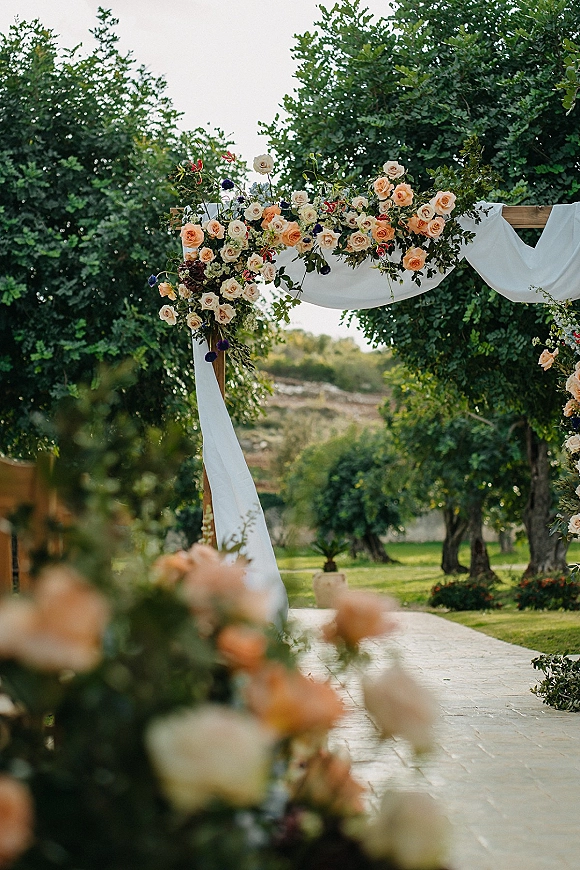
Rustic wooden arches pair naturally with barn wedding ideas: draped fabric, dried grasses, and eucalyptus branches all photograph well against raw timber. The key distinction between rustic and refined is not the wood itself but the floral and textile choices layered onto it. A weathered frame with structured garden roses and ribbon reads elevated. The same frame with dried pampas and linen reads relaxed and editorial.
Stained arches also work for vineyard and estate ceremonies. A deeper walnut or espresso finish against stone or brick backgrounds creates contrast that holds in photographs. Wedding greenery (eucalyptus, ruscus, smilax) is particularly effective on dark wood frames.
Round and Circular Wedding Arch Ideas
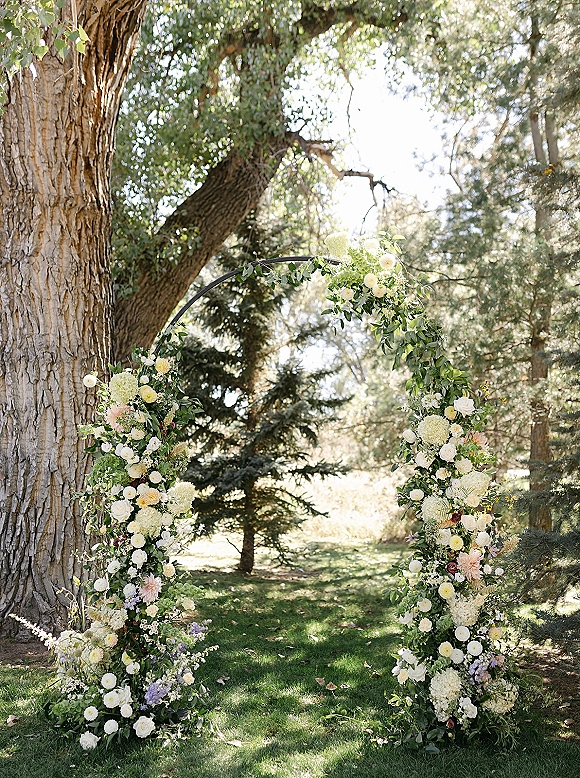
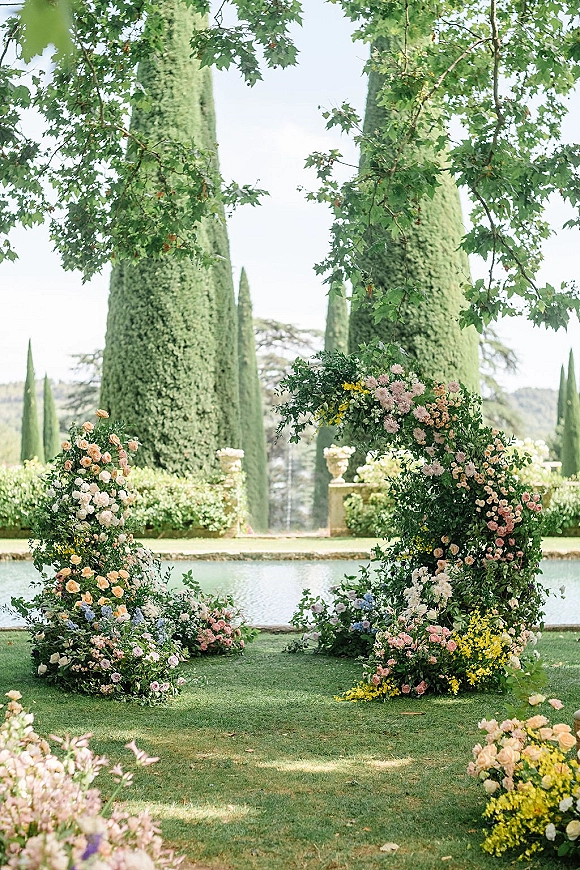
Circular arches, sometimes called moon gates, create a frame within a frame. The round shape is softer and more romantic than angular alternatives, and it works especially well when the ceremony backdrop is already strong: a garden, a stone wall, or open water. The circle focuses the eye rather than adding visual complexity.
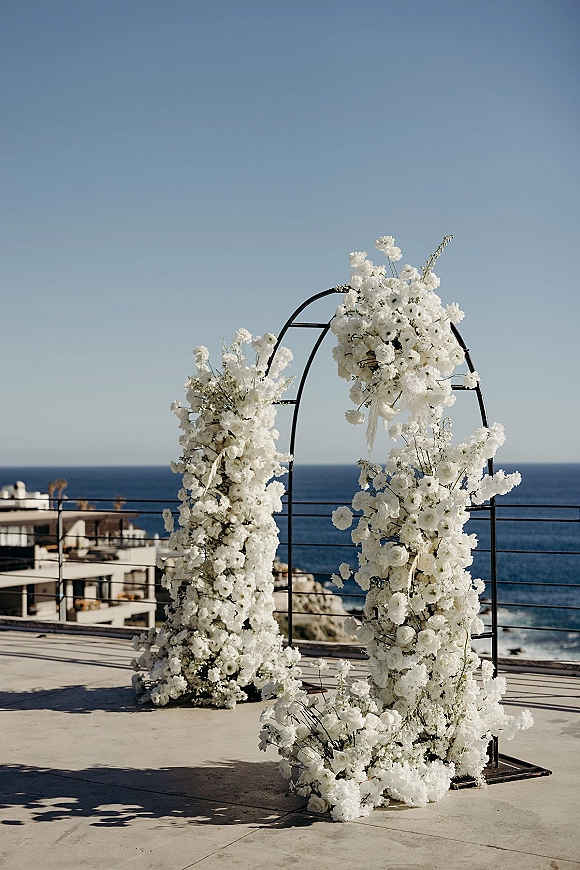
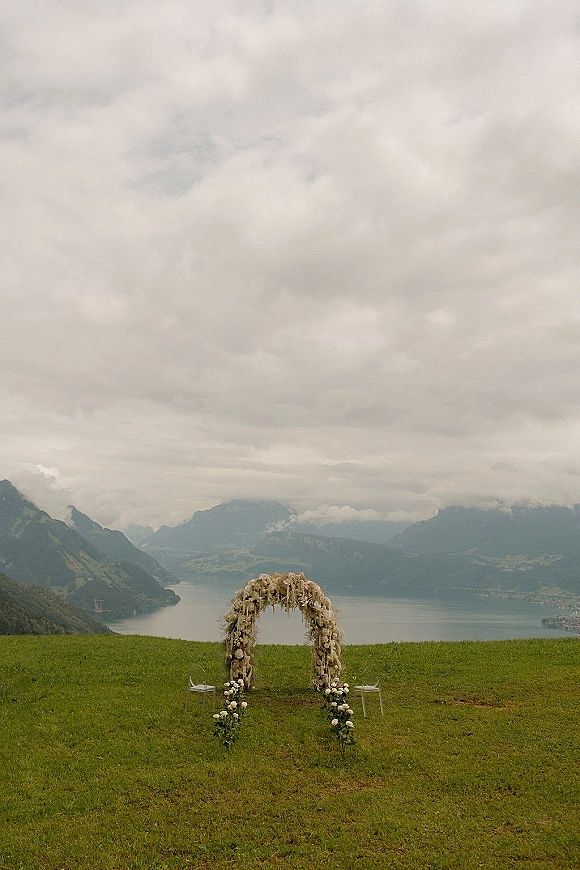
The most effective circular arch installations keep florals asymmetric. A dense arrangement on one side trailing down and across the base photographs with more movement than a uniform floral wrap. This is especially true outdoors, where the backdrop is competing for attention. Round arches in matte white or gold finishes are consistent in editorial ceremony photography because they complement without overpowering the setting.
Indoor circular arches work well in ballroom and greenhouse venues, where the shape contrasts with the geometry of the room. Floral treatment here tends to be more contained: a tight installation of garden roses and ranunculus rather than trailing greenery.
Floral Wedding Arch Ideas
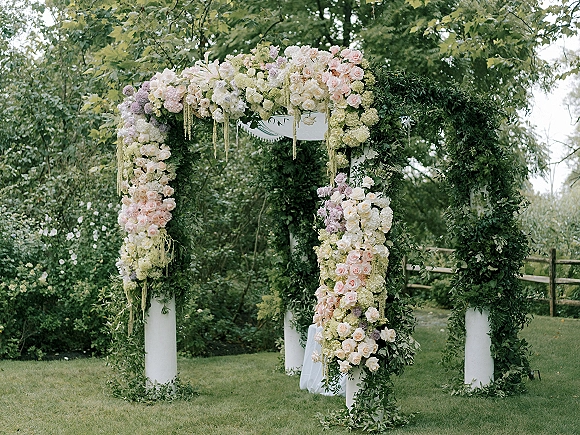
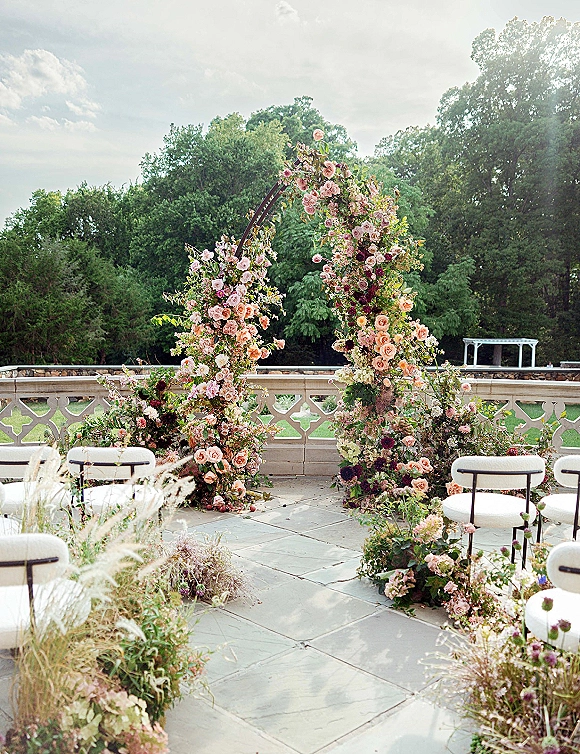
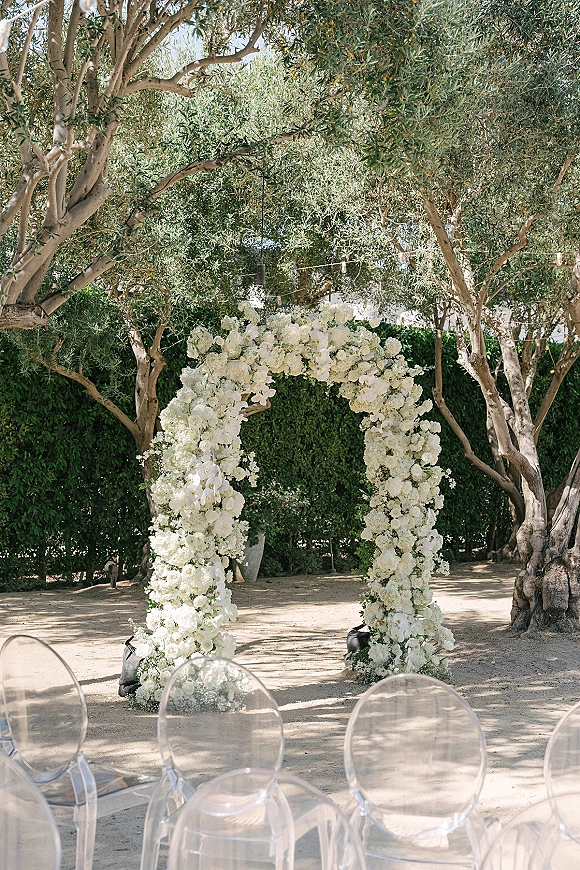
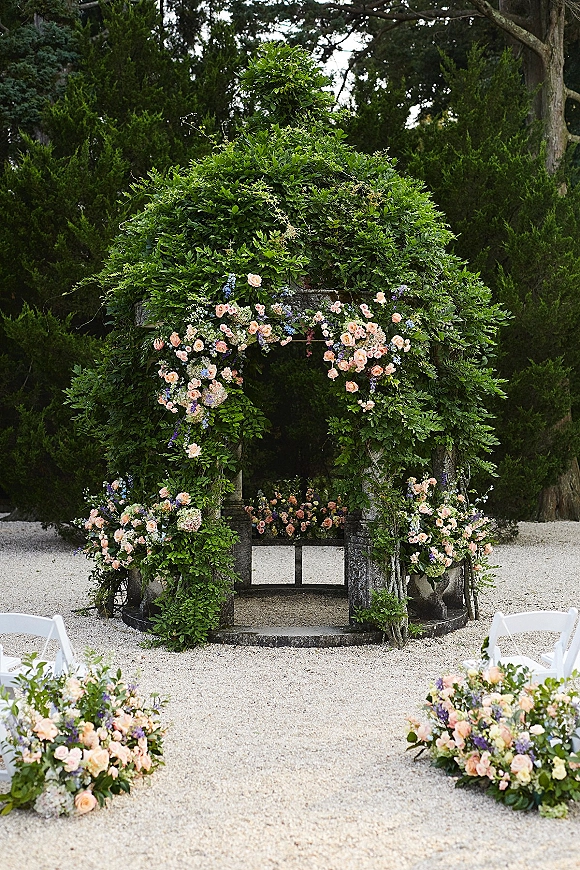
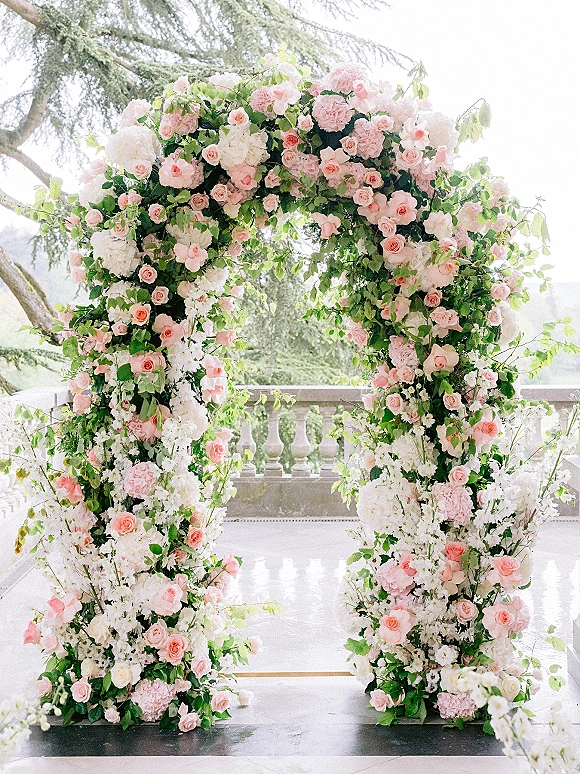
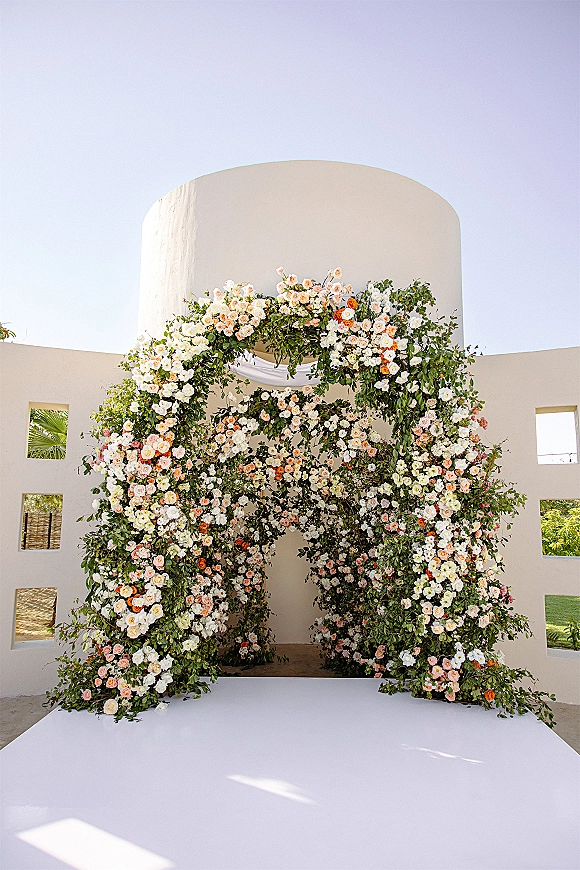
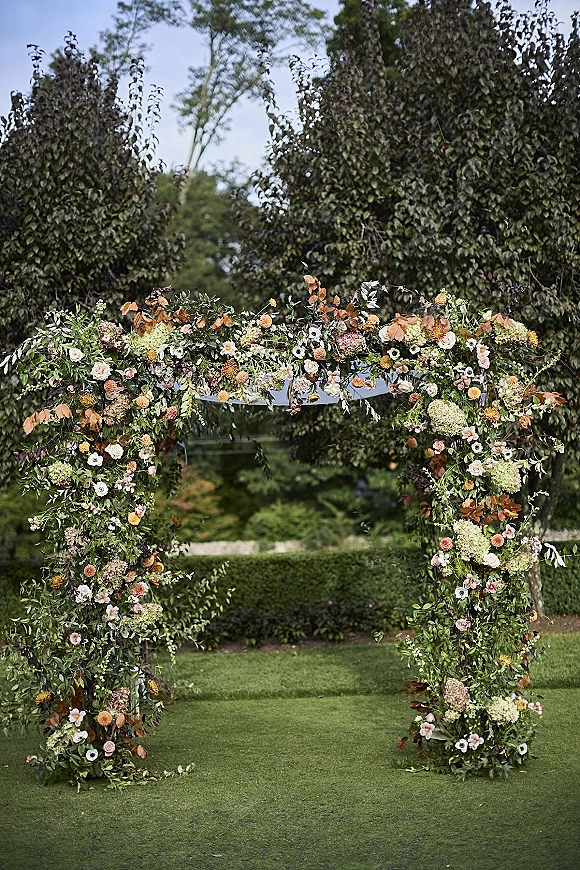
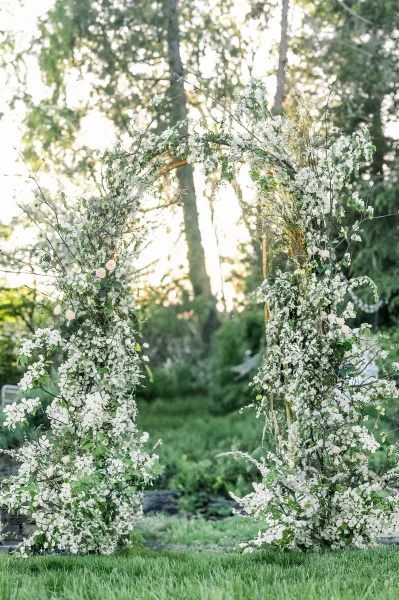
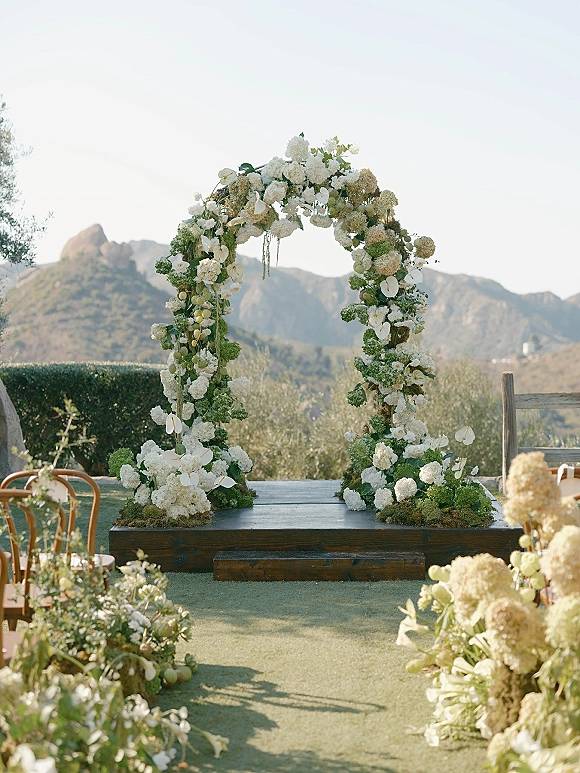
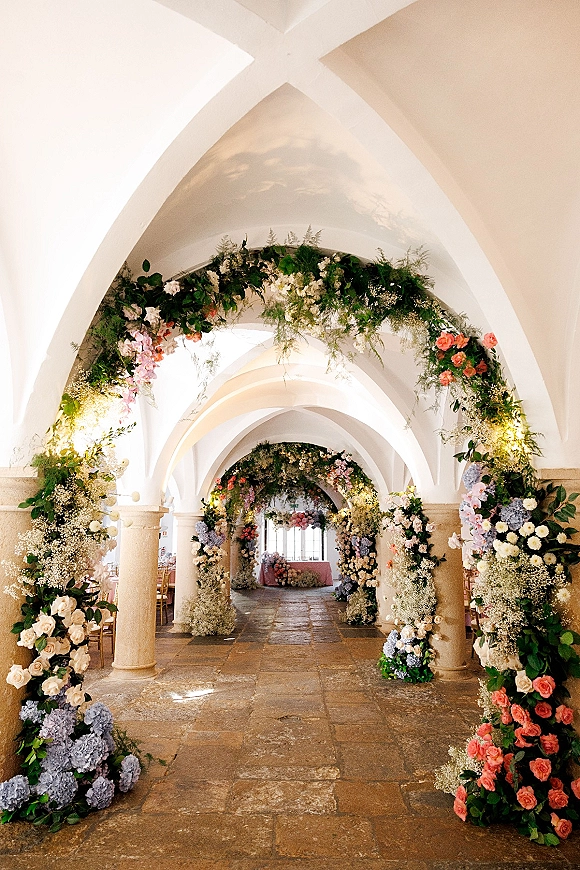
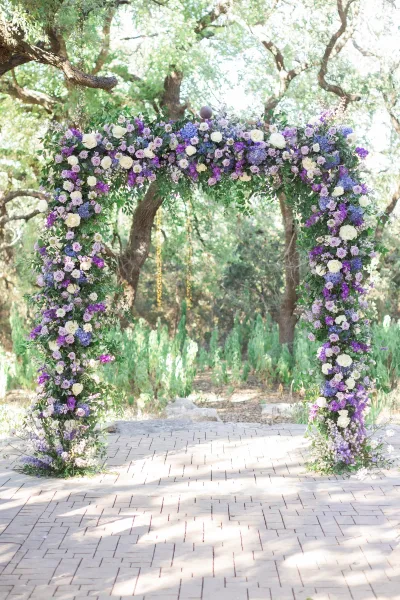
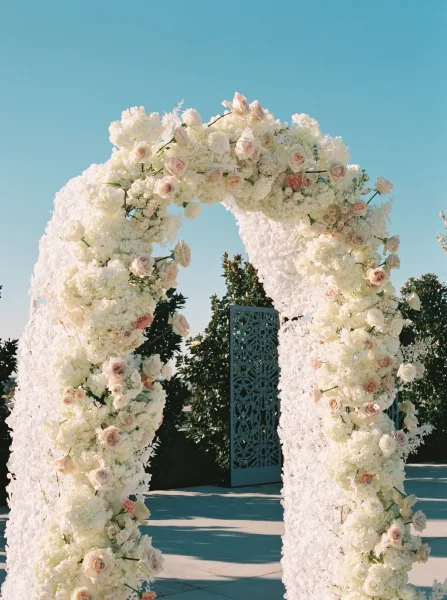
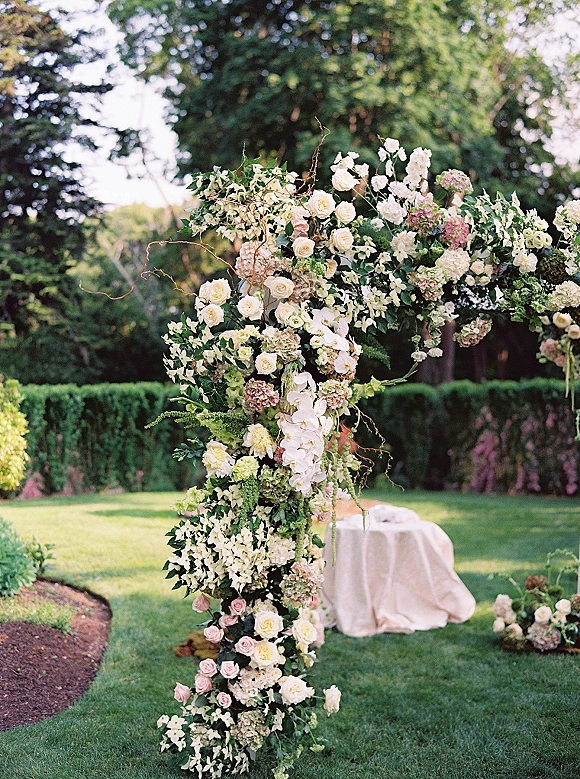
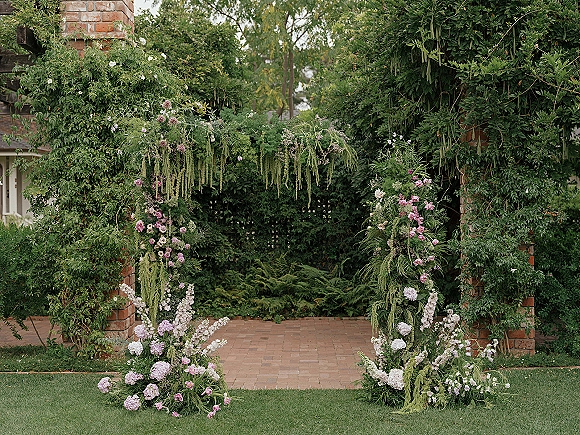
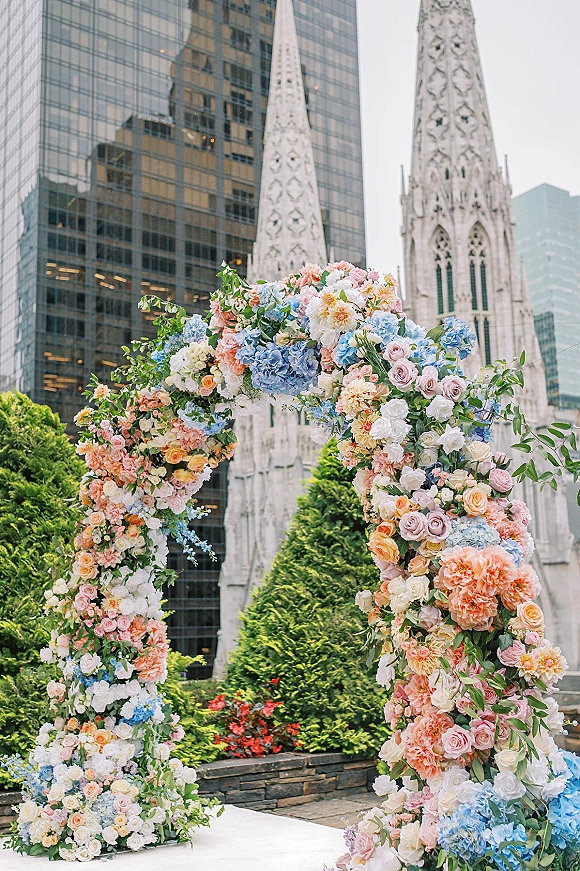
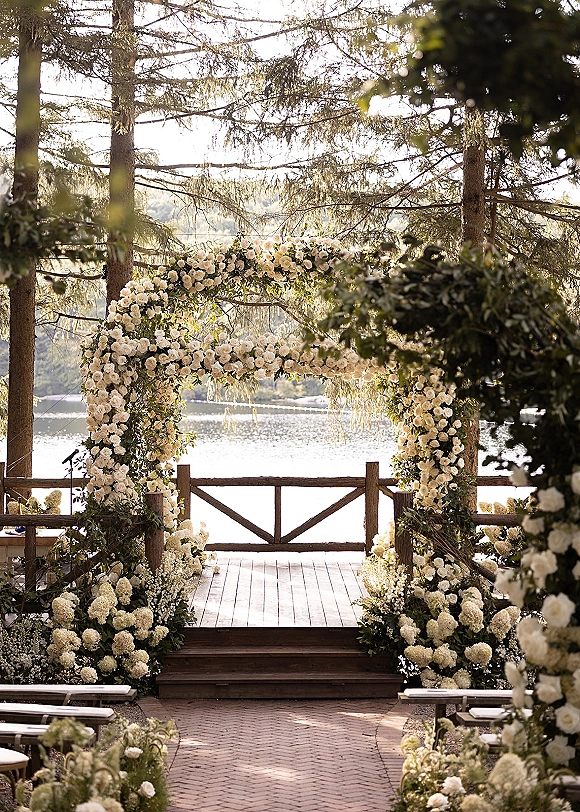
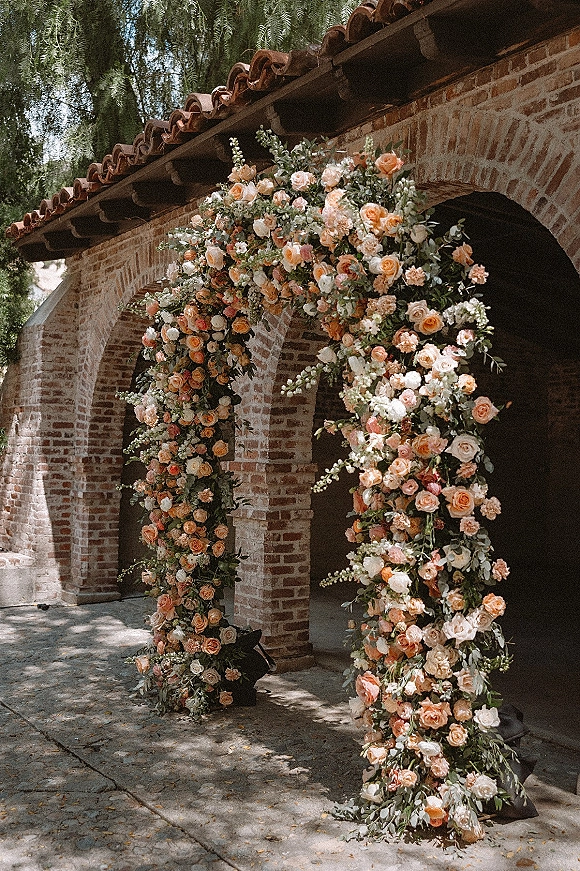
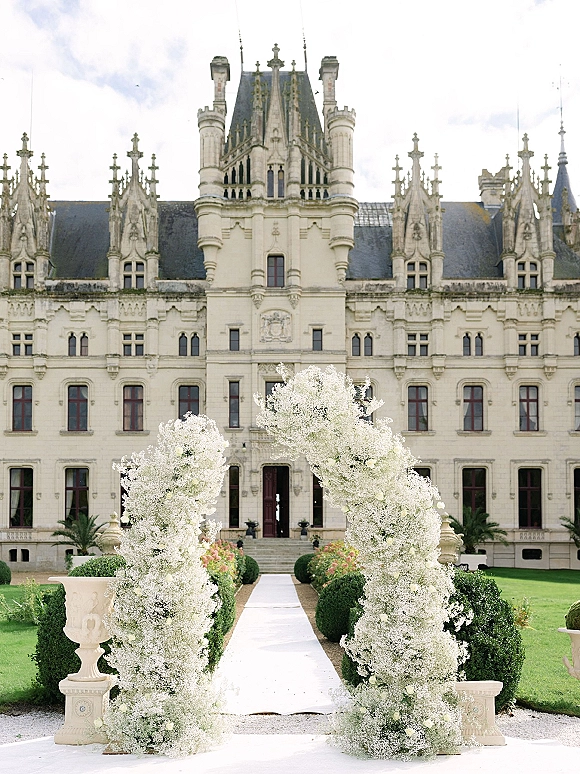
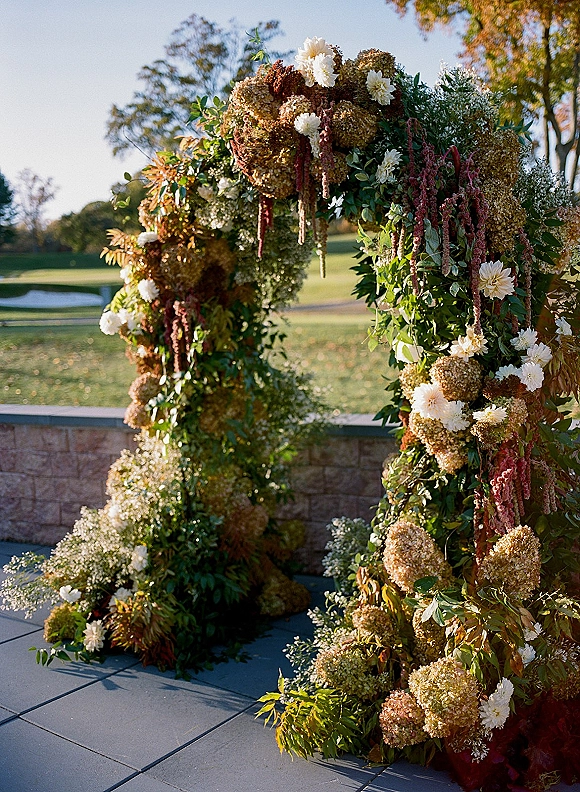
Floral treatment is where an arch becomes distinctive. A single-sided arrangement, with blooms concentrated on one side and trailing asymmetrically, lands with more visual impact than a uniform wrap. Loose arrangements with foliage, trailing greenery, and mixed bloom sizes suit outdoor settings where scale supports them. Tighter, more structured designs photograph well in contained indoor spaces.
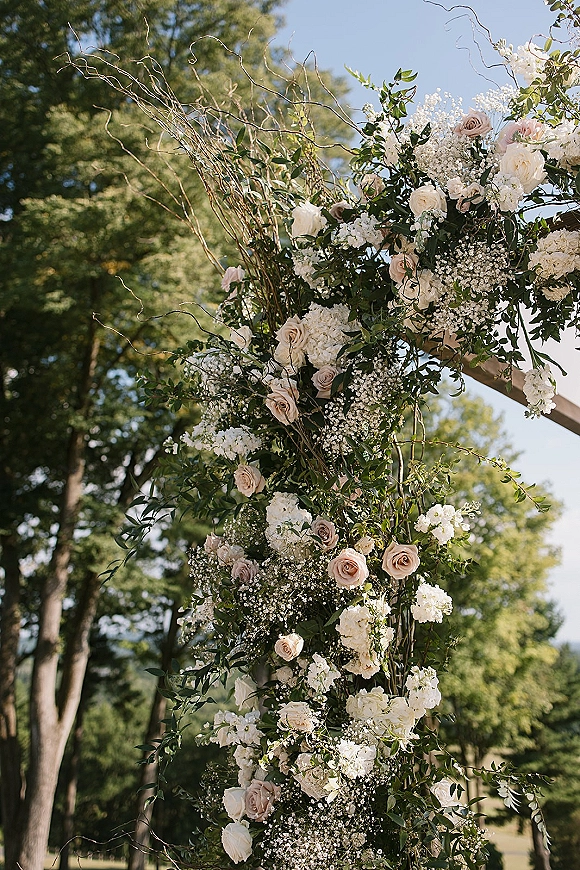
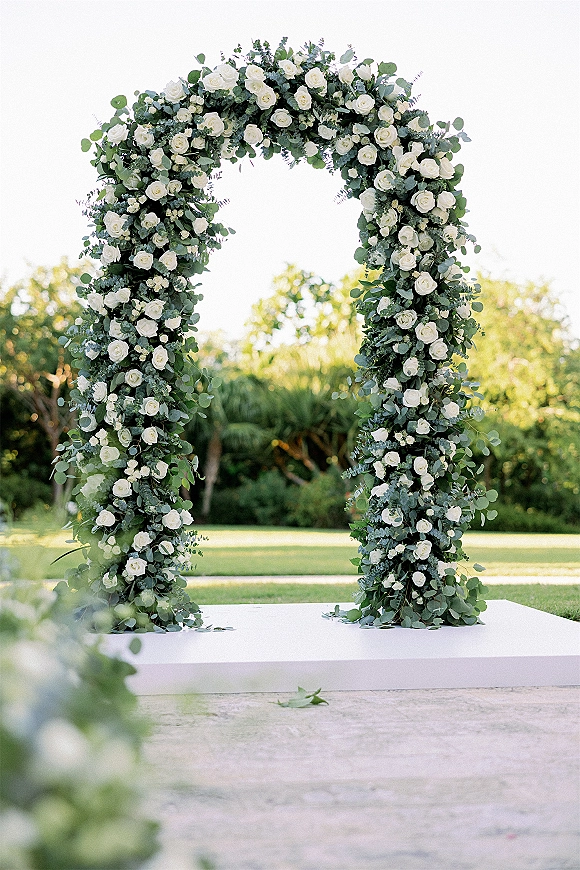
Flower choice matters as much as arrangement. Garden roses and ranunculus read soft and romantic. Protea, dried grasses, and pampas read editorial and modern. Tropical blooms shift the palette entirely. Most strong arch installations mix foliage (eucalyptus, ruscus, maidenhair fern) with blooms to add texture and visual depth.
For the full range of floral arch styles from real weddings, including bloom choices, coverage approaches, and seasonal flower pairings, see floral wedding arch ideas. A fully floral arch is the highest-impact option and the highest-investment one. Start the conversation with your florist early. For full installations, booking 9 to 12 months out is standard in competitive markets.
DIY Wedding Arch Ideas
DIY wooden arches are a realistic option for couples with some construction experience. Simple A-frame and arbor designs require basic lumber, hardware, and a finish: raw, painted, or stained. The structure itself is straightforward. The challenge is stability in wind, which matters for outdoor ceremonies. A frame that shifts mid-ceremony creates photography problems and logistics issues for the florist attaching flowers.
The most reliable DIY arch designs use cross-braced legs and are anchored with sand-weighted bases or stakes driven into the ground. For outdoor venues with exposed locations, talk to your florist before finalizing the build. They’ll know how heavy the floral installation will be, which affects the structural requirements.
DIY works best for couples who want a minimal arch with a few stems, candles, or draped fabric rather than a full floral installation. Ceremony flowers from a professional florist on a DIY frame is a common middle path: you control the build cost while the florist handles the part that actually shows in photographs. Browse wedding ceremony flowers to see how florals translate across different arch structures.
Wedding Arch Rental
Renting a ceremony arch through your florist or a decor rental company is the most common approach for couples who want a specific shape or material without the cost of purchasing. Most florists have inventory or work with rental partners. Standalone rental companies operate in most markets and typically offer wooden frames, metal arches, circular arches, and hexagon structures.
Pricing varies by market and arch type. Expect metal and circular arches to run higher than basic wooden A-frames. Full floral installation on a rented frame is typically quoted separately by the florist. Some rental companies bundle delivery, setup, and teardown; others require the florist or couple to manage logistics.
Book rental arches at the same time you confirm your florist. Availability fills at the same pace, and good inventory in popular shapes disappears well ahead of peak dates. For markets with limited options, a florist with their own arch inventory has an advantage. Browse wedding florists near you to find someone who works with arch rentals directly.
Ceremony Arch Placement and Photography
The arch photographs across multiple moments: the ceremony, portraits, and sometimes the reception. That range makes placement worth thinking through before the day. An arch positioned with strong natural backlight photographs differently than one placed in direct midday sun, and florals that hold in shade may wilt during a long outdoor ceremony in direct afternoon heat.
A brief conversation between the photographer and florist about arch placement before the wedding produces better results than leaving it to day-of logistics. The frame, the florals, and the light all interact, and small positioning decisions have a visible impact on photographs. A greenery backdrop for the wedding paired with a simple arch creates a layered effect that photographs well in almost any light.
For barn ceremony settings specifically, arch placement relative to the open doors matters. Natural light flooding through an open barn door can either backlight or front-light the arch depending on time of day and orientation. Barn wedding ideas from real couples show how placement decisions play out across different settings.
Frequently Asked Questions
What is a wedding arch?
A wedding arch is a freestanding structure positioned at the ceremony altar as a visual backdrop. It frames the couple during the ceremony and serves as the primary focal point for photographs. Arches are typically made from wood, metal, or a combination of both, and are often decorated with florals, greenery, or fabric.
What flowers are used on a wedding arch?
Garden roses, ranunculus, peonies, anemones, and sweet peas are common for romantic and garden-style installations. Protea, dried grasses, and pampas are used for more editorial or modern designs. Most florists mix foliage (eucalyptus, fern, trailing ivy) with blooms to add texture and scale.
What is the difference between a circular arch and a regular wedding arch?
A circular arch, also called a moon gate, is a round freestanding frame rather than an angled or rectangular one. It creates a softer visual frame and works especially well when the ceremony backdrop is already strong. The shape suits garden and outdoor ceremonies in particular.
Can a wedding arch be used indoors?
Yes. Metal and geometric arches tend to work better indoors than organic wooden styles, as they complement interior architecture more naturally. Floral installations on indoor arches are typically more contained and precise rather than loose and overflowing.
What is the difference between a wedding arch and a wedding arbor?
A wedding arch typically refers to a freestanding structure with an arched top, in metal or wood, across round, rectangular, or geometric shapes. A wedding arbor is usually a more open wooden structure with a flat or pitched top, often designed to support climbing plants or draped florals. The terms are used interchangeably in practice, though an arbor tends to read more rustic and an arch more structural.
How much does a wedding arch cost to rent?
Arch rentals typically run $150–$500 depending on market, material, and structure type. A basic wooden A-frame costs less; a geometric metal or moon gate arch costs more. That price covers the frame only. Floral installation is quoted separately by the florist and can range from a few hundred to several thousand dollars depending on bloom choice and coverage.
How far in advance should I book a florist for a floral arch?
For a full floral arch installation, booking 9 to 12 months out is standard in competitive markets. Florists working on large installations block significant preparation time, and availability fills early.