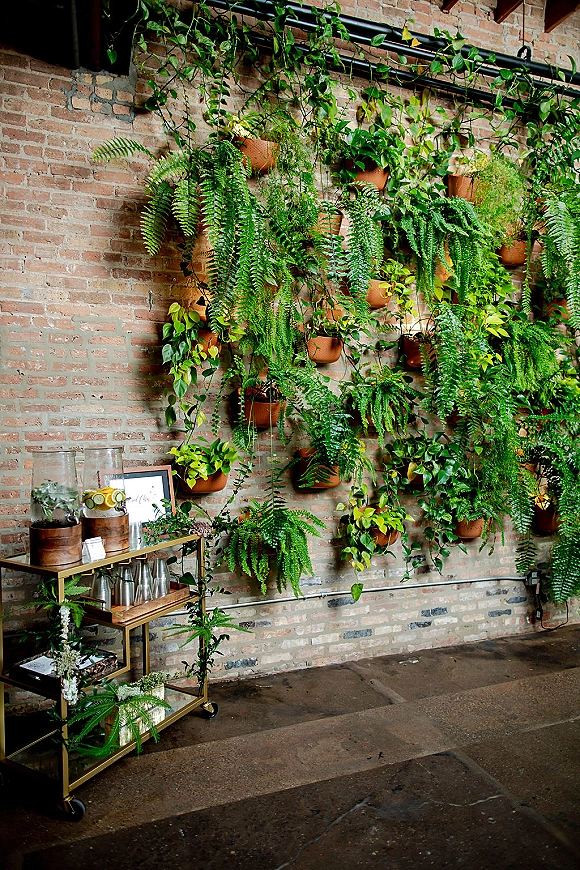
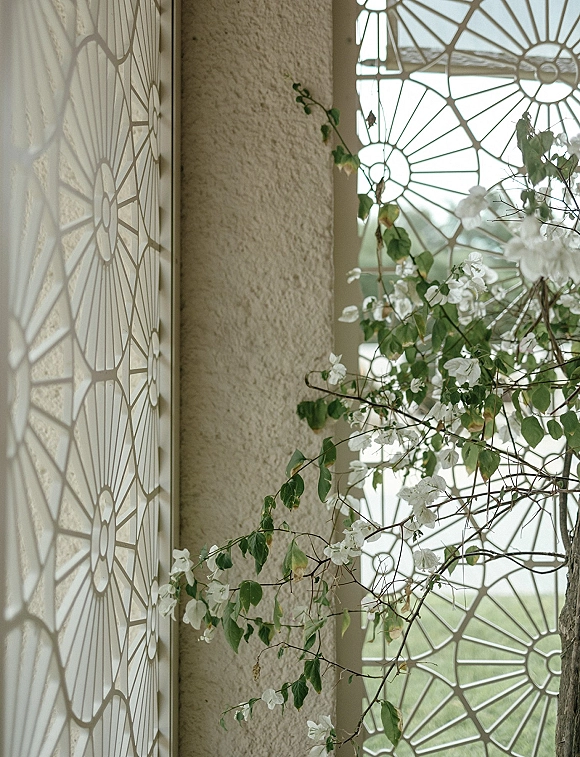
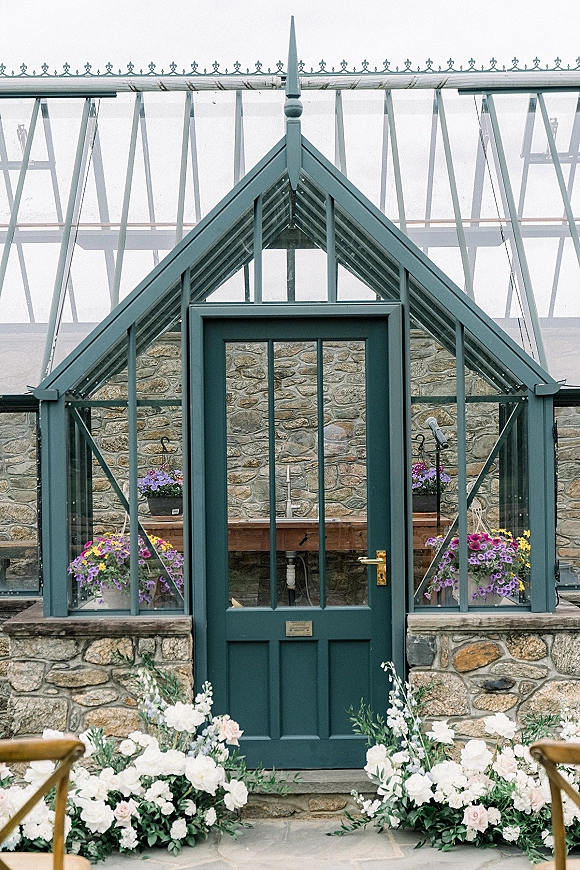
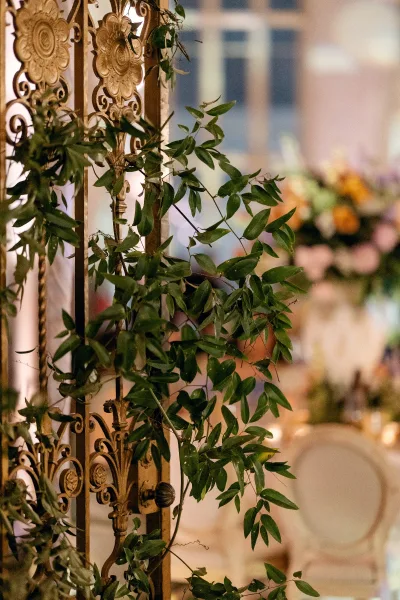
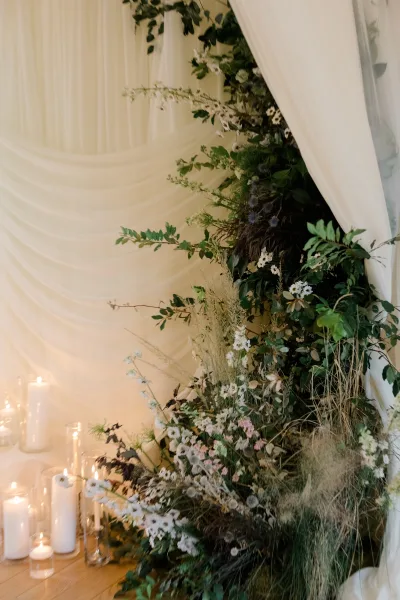
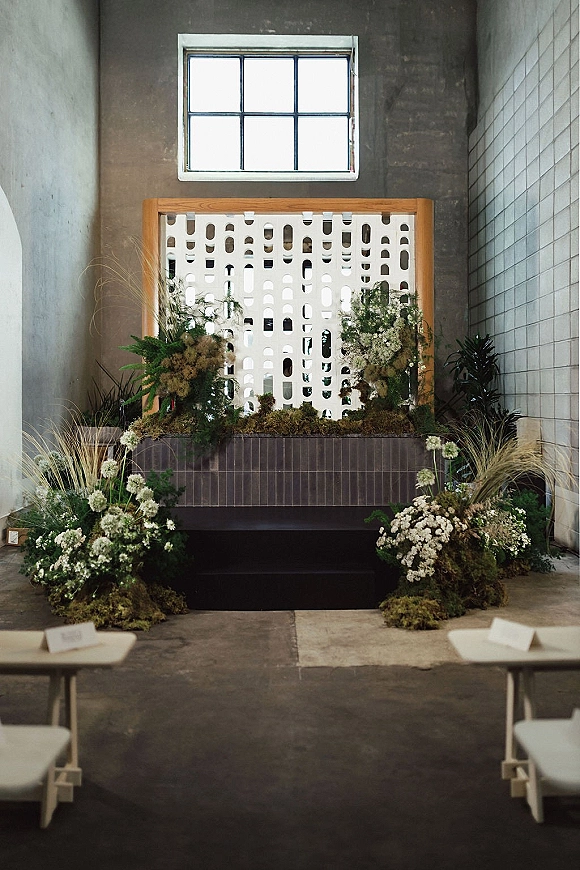
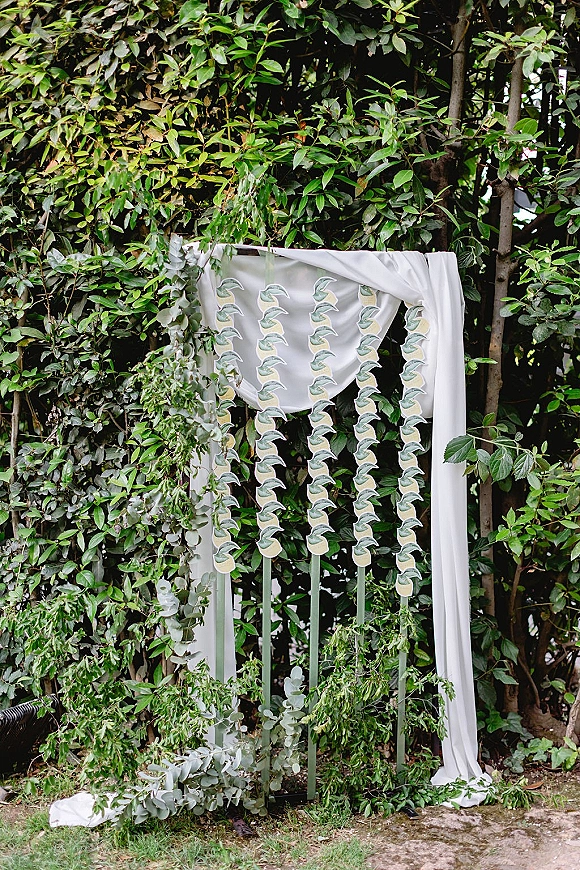
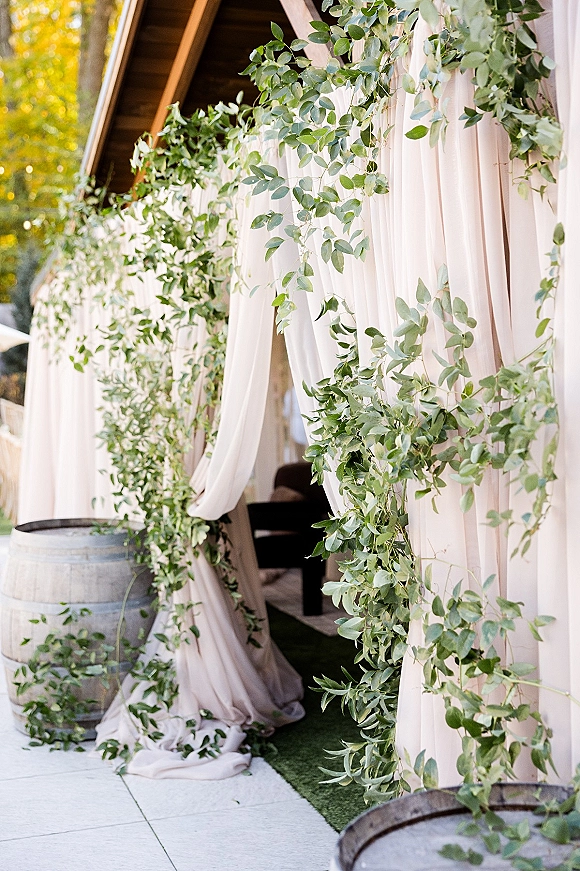
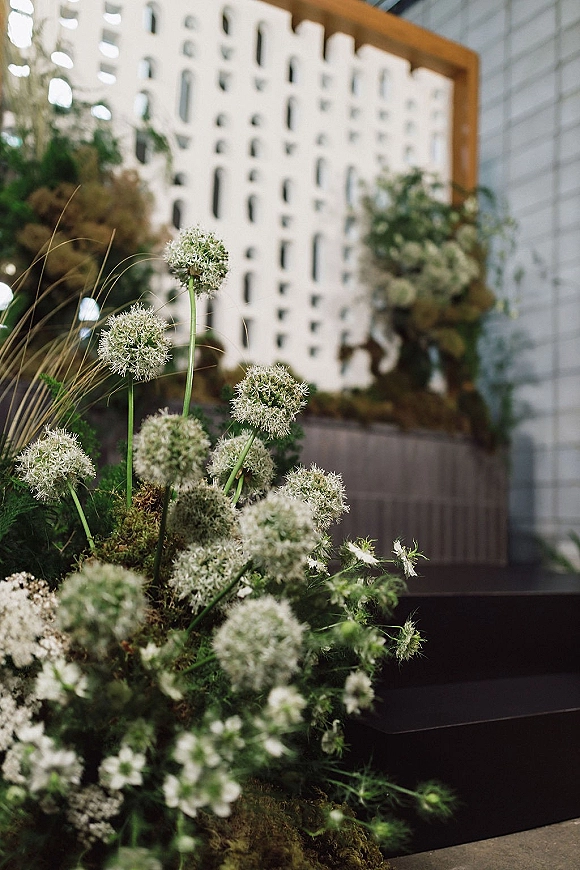
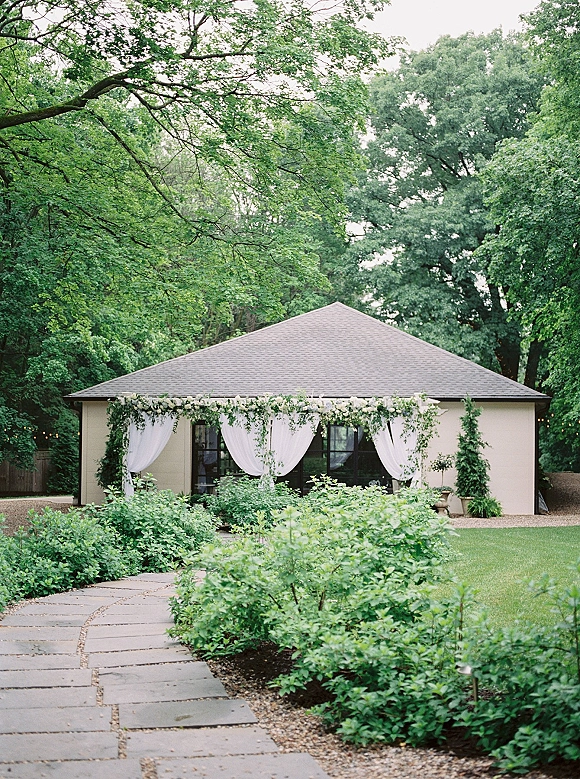
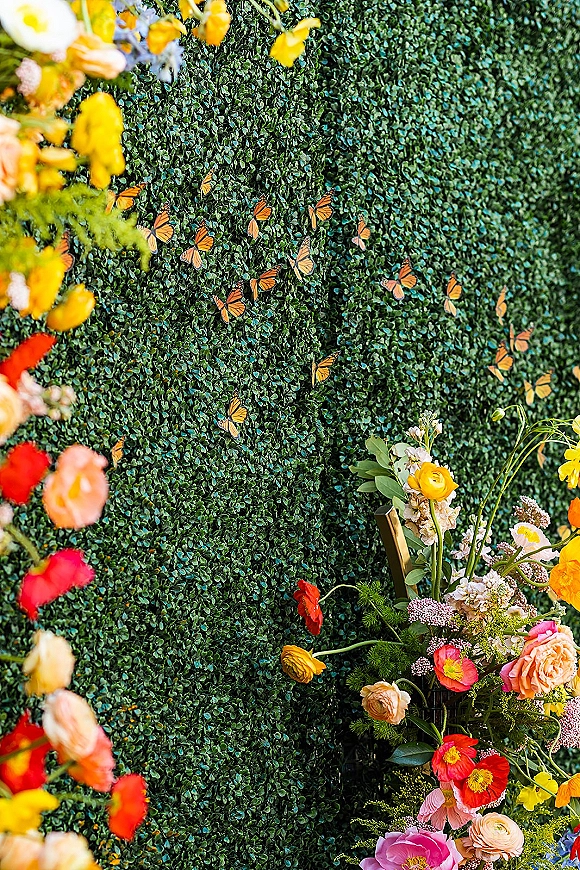
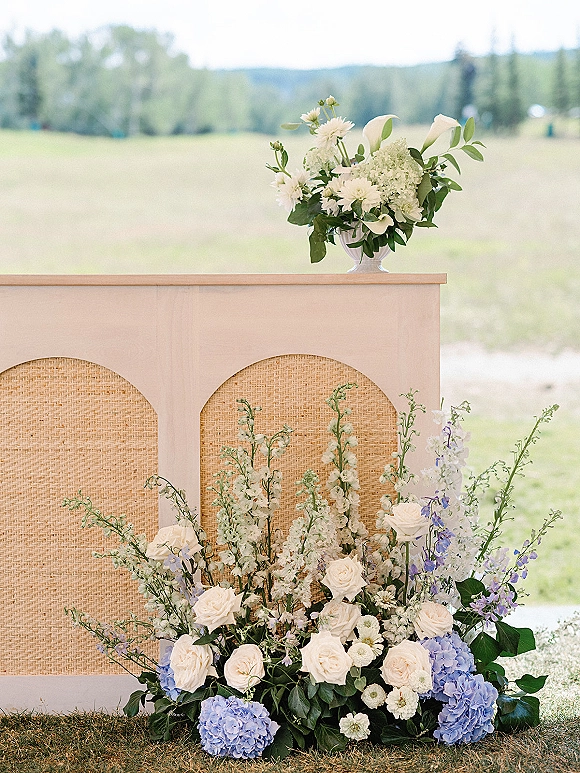
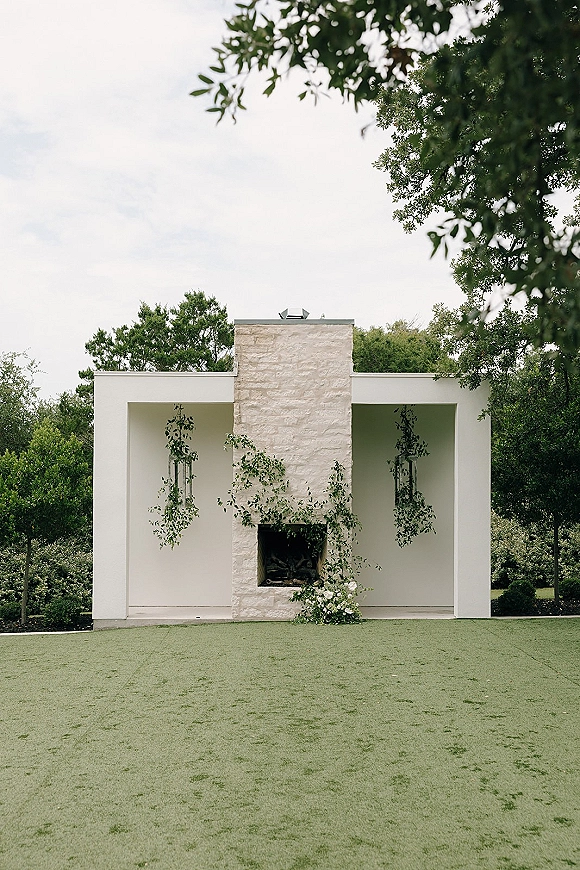
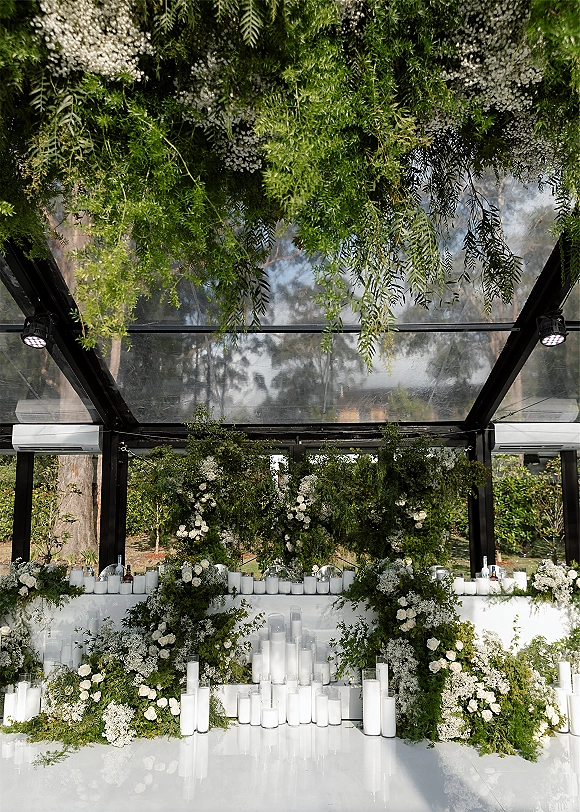
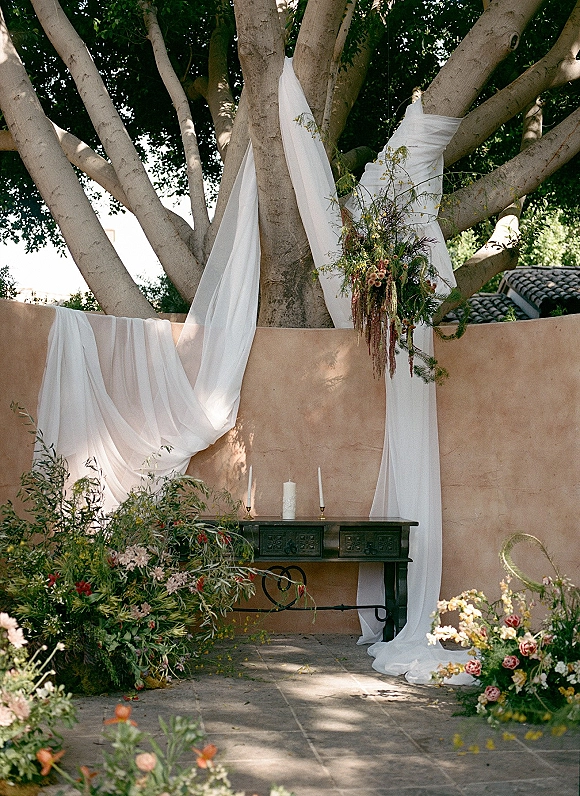
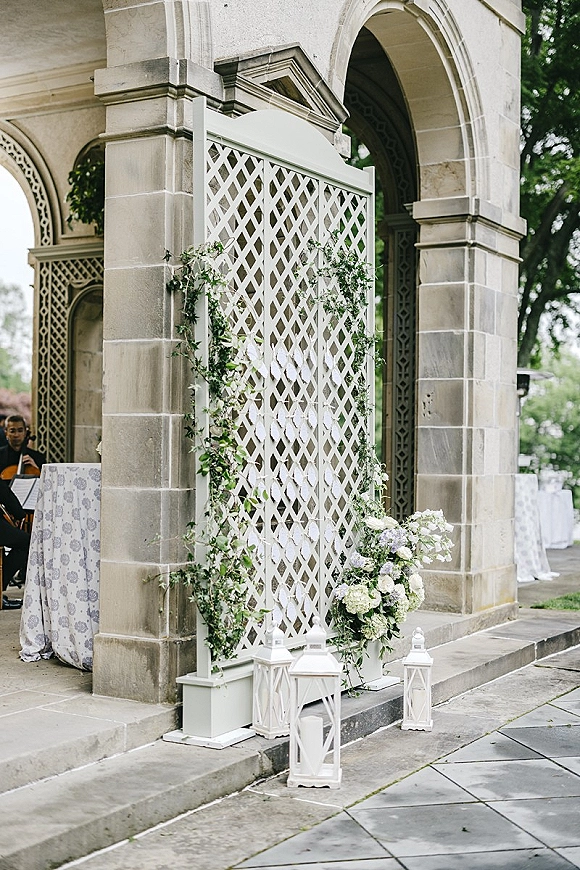
The most common execution is a ceremony backdrop, typically framed as a wall or an arch. But greenery backdrops appear throughout a wedding day: behind the sweetheart table, as a photo opportunity for guests, flanking a bar setup, or running the length of a head table as an elevated backdrop that’s lower and more horizontal than a standing wall. Each placement reads differently in photos, and the choice usually comes down to how the space is structured rather than personal preference alone.
Greenery Ceremony Backdrop
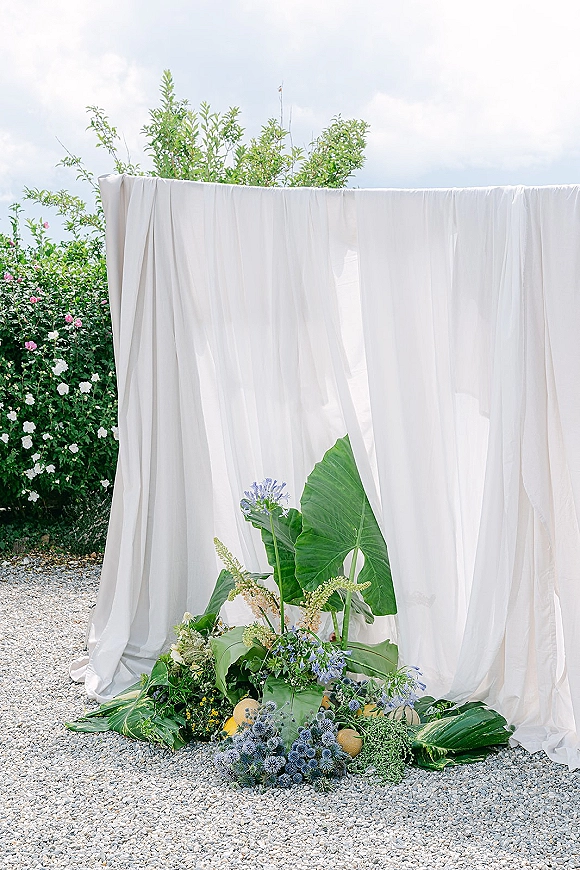
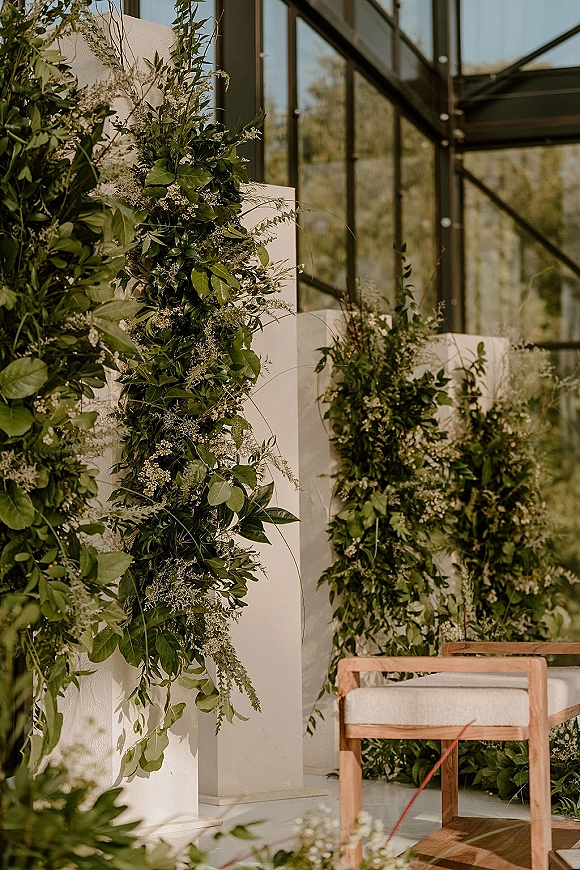
For ceremony backdrops, the most frequently used materials are eucalyptus (in multiple varieties: silver dollar, seeded, and baby blue read differently in photos), Italian ruscus, ivy, ferns, and tropical leaves for warmer climates or modern aesthetics. The choice of foliage affects how formal or casual the backdrop reads. Silver dollar eucalyptus in a full, dense installation has an almost sculptural quality. A mix of ferns and wild vines reads garden party. Tropical banana leaves or monstera push contemporary and editorial.
Scale matters considerably here. A backdrop that’s undersized for a tall or wide ceremony space loses its visual impact and reads as a prop rather than an architectural element. Florists typically recommend working with the full height of the space and extending the width at least to the couple’s wingspan on either side.
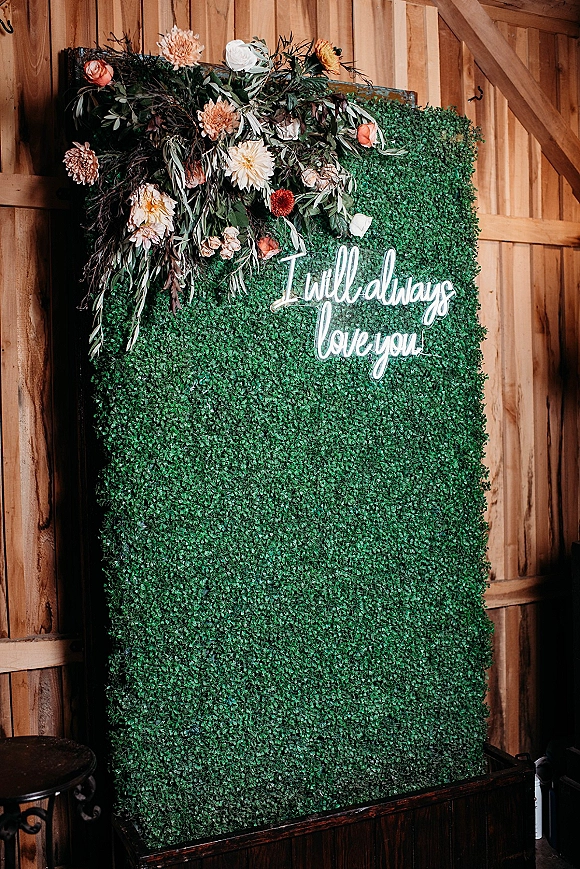
Greenery Backdrop with Flowers
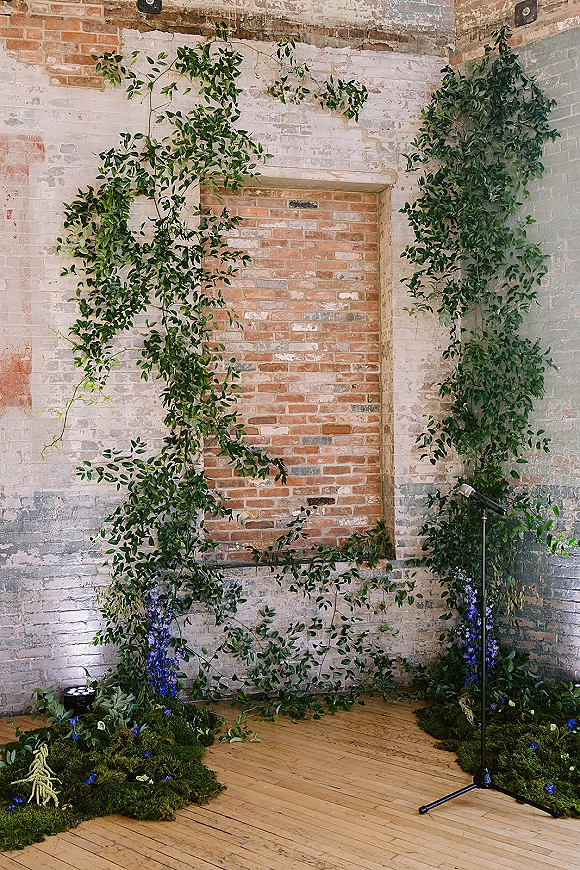
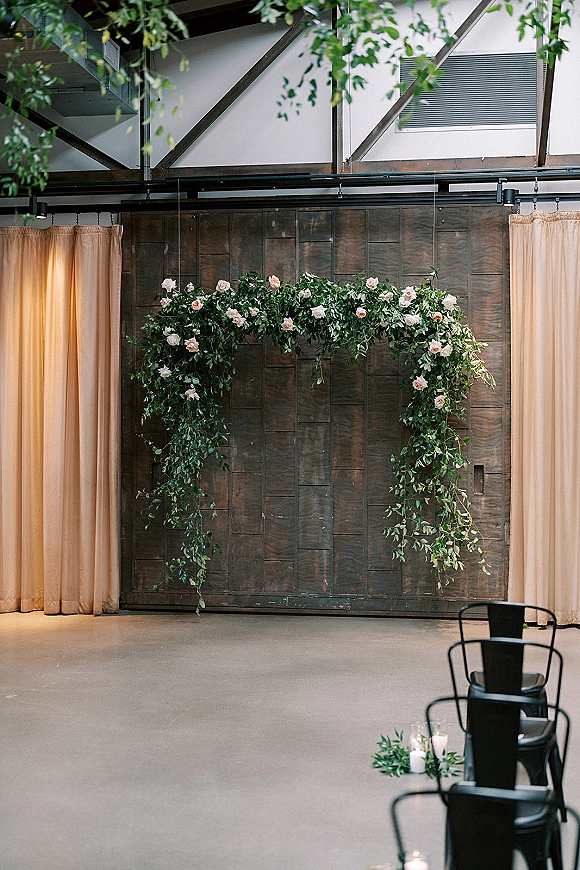
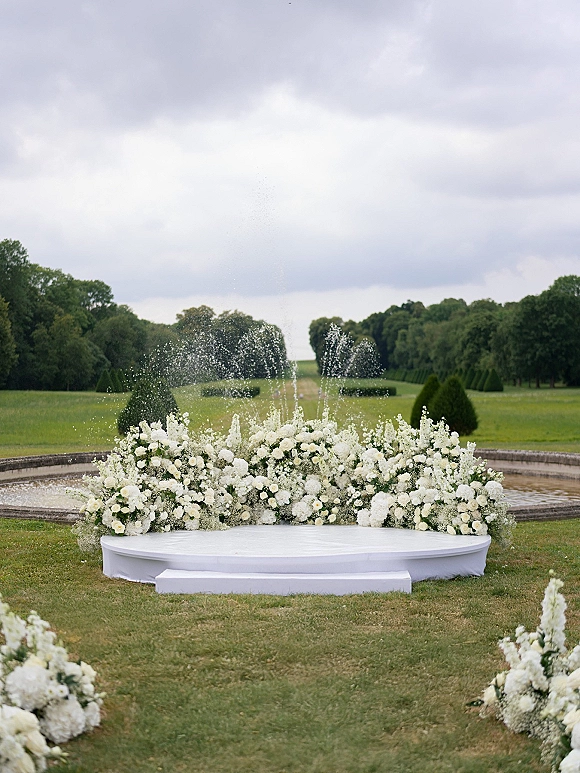
The addition of flowers to a greenery backdrop changes what the installation communicates. All-greenery is clean and current. Greenery with blooms, particularly white or ivory florals like garden roses, ranunculus, or orchids, reads more formal and traditional. Color introduces personality: a greenery backdrop punctuated with blush peonies reads differently than one with coral garden roses or burgundy dahlias.
The ratio is the decision. Some couples want the flowers to be the point and use greenery as the frame. Others want the greenery to be the feature with blooms as accent. Both are valid, but they’re different design intentions and should be discussed explicitly with the florist rather than left to interpretation.
Texture also factors in. Greenery backdrops with flowers tend to have more variation in surface and shadow, which photographs well in natural light but can flatten under direct flash. This is worth noting for venue scouting: backdrops positioned near windows or in naturally lit spaces will photograph better than those in darker rooms. For more ideas on how greenery interacts with larger ceremony flower design, wedding ceremony flowers and floral wedding arch are worth looking at together.
Greenery Backdrop Ideas
The range of what a greenery backdrop can be is wider than most couples expect. A traditional framed wall is the starting point, but the approach diverges significantly from there.
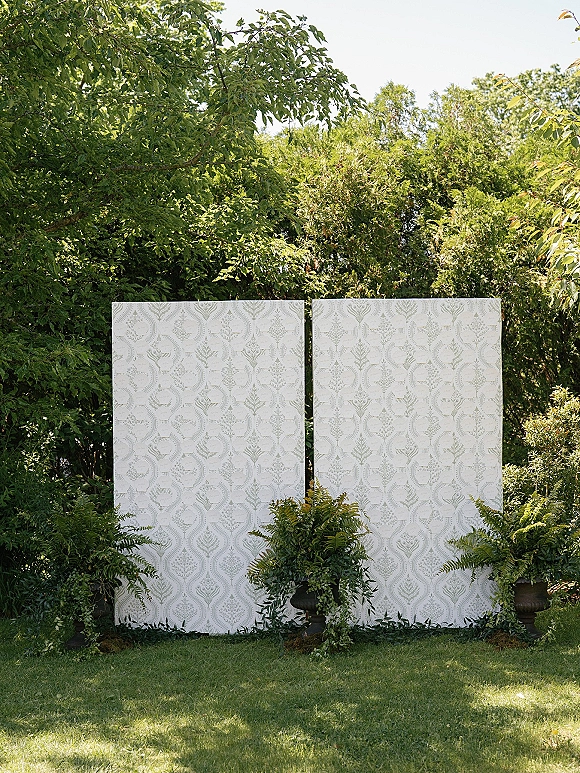
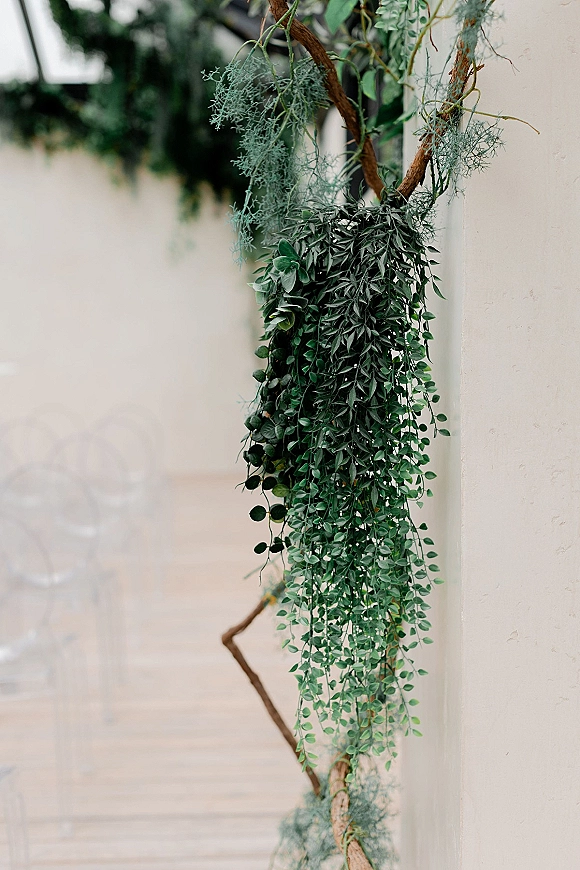
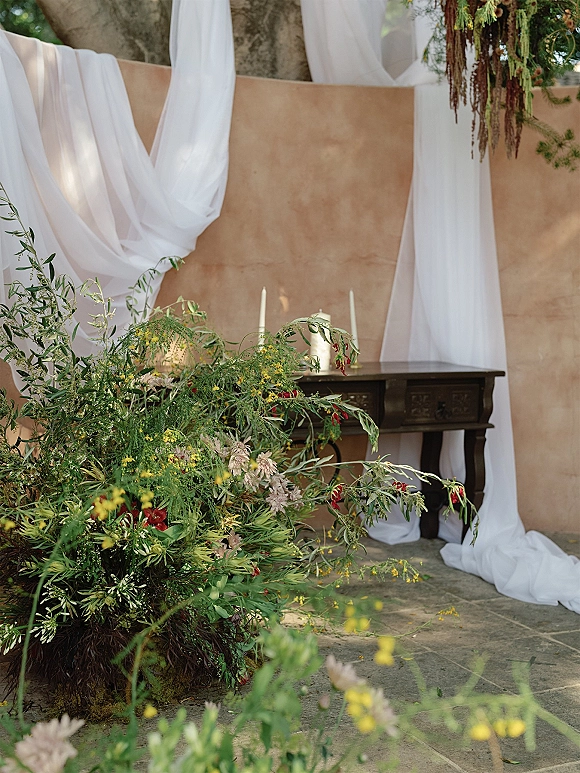
Organic installations, where foliage is layered with intentional irregularity incorporating branches, hanging elements, and varied heights, read less like a constructed piece and more like the couple walked into a garden. These work particularly well for outdoor or barn venues where a formal rectangular wall would feel mismatched to the setting.
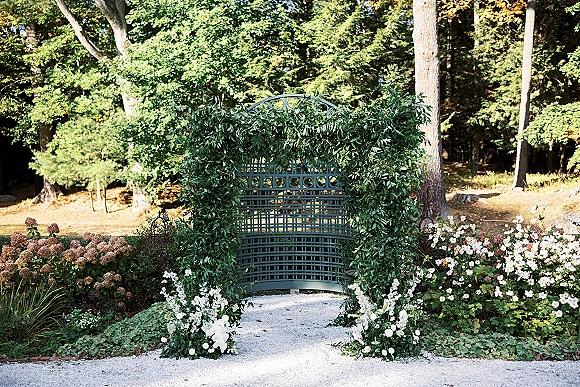
Arched greenery backdrops are common for ceremony use and appear frequently as a variant of the wedding arch format. Free-standing frames are common for interiors; natural structures like wooden arbors or metal frames are more typical outdoors.
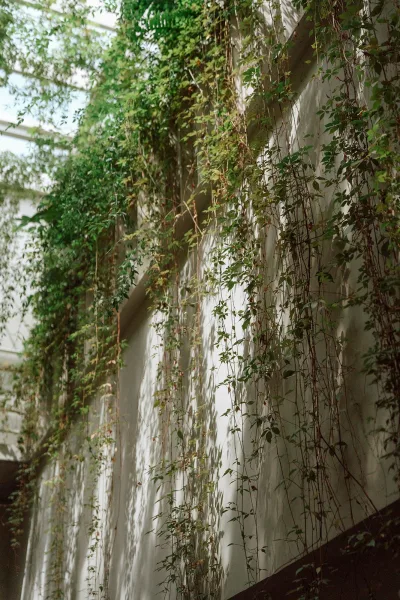
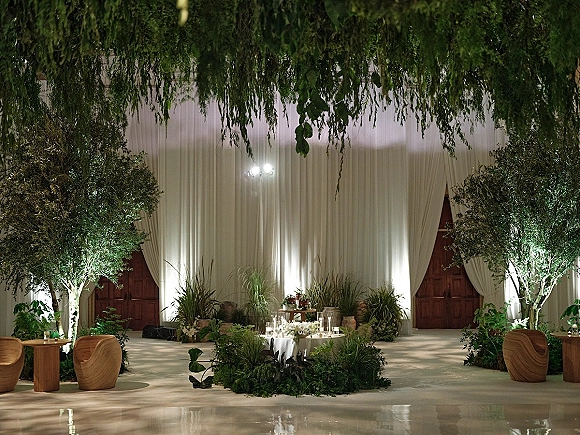
Suspended installations, where greenery hangs from the ceiling rather than mounts on a frame, are a distinct category that works well for reception backdrops, particularly behind the sweetheart table. These photograph differently than wall installations because they have depth on both sides and catch ambient light differently.
Frequently Asked Questions
What greenery is used for wedding backdrops?
Eucalyptus (silver dollar, seeded, and baby blue varieties), Italian ruscus, ivy, and ferns are the most common choices. For contemporary or tropical aesthetics, monstera leaves, palms, and banana leaf are used. The choice of foliage affects the overall formality and photographic quality of the installation: dense, structured foliage reads more formal, while mixed wild greens read more relaxed.
How much does a greenery backdrop cost?
Greenery backdrop pricing varies significantly based on size, foliage selection, and whether flowers are incorporated. Per best practice, we don't publish specific cost figures. A florist quote is the most reliable source given how much regional labor and sourcing costs vary.
How do you make a greenery backdrop for a wedding?
Most couples hire a florist or event stylist for ceremony and reception backdrops. For smaller or DIY installations, a metal or wooden frame is the typical starting structure, with foliage secured using floral wire, zip ties, or adhesive foam. The key variable is foliage freshness: greenery installed more than 12 to 18 hours before a wedding in a warm or dry space will wilt and read poorly in photos.
Can a greenery backdrop be used outdoors?
Yes, and outdoor installations often look more natural than indoor ones because the foliage blends with the surrounding environment. The practical concern is weather. Wind affects hanging elements, and direct sun for several hours will accelerate wilting. Most outdoor ceremony backdrops are installed morning-of and positioned in partial shade where possible.