Which Grey You Actually Mean
Grey is not one color in bridal, it is seven, and they do not look alike in a room. Dove, pearl, silver, steel, slate, charcoal, and gunmetal are all sold as grey, and the distance between the palest and the deepest is the distance between an ivory gown and a black one. Naming the shade is the first real decision, and it is the one that determines everything after it.
Dove grey is the palest and the warmest. From the back of a ceremony it reads as ivory standing in shade, and only at conversational distance does the color resolve, closer to the inside of an oyster shell than to anything cool. It photographs pale enough that a direct flash will erase it. Pearl grey sits fractionally lighter again, with a faint sheen that behaves like candlelight sitting on white.
Silver carries metal, and metal is what the eye registers first. Across a room a silver gown reads as light rather than as color, and it moves in flashes rather than in tones. Steel is silver with the shine taken out and a blue cast put in. It holds its edge in bright daylight, which is exactly the condition where dove disappears.
Slate is the first grey that is unmistakably a color from across a room. It is mid-depth and cool, and in a matte weave it reads as one continuous line from shoulder to hem rather than as a surface catching light. Pewter is the warm version of the same depth, leaning faintly brown, and under warm light it drifts toward taupe.
Charcoal is the darkest shade that still reads as grey rather than black. In a dark ceremony it stops being a color and becomes a silhouette, which is a real effect and a deliberate one, but it needs light behind it to keep the shape legible. Gunmetal is charcoal with a metallic cast, and it functions as an alternative to black rather than as a pale bridal shade.
If you want one recommendation instead of seven options, take slate in a matte crepe. It is unmistakably a color, so you get the decision you actually made rather than a gown that reads as off-white in every photograph. It is matte, which is what keeps grey reading as bridal instead of as evening wear. And it is mid-depth, so it survives both a bright garden ceremony and a candlelit dinner without collapsing into white at one end of the day or into black at the other. The trade-off is real: slate photographs cooler and harder than dove, it wants warm flowers or warm metal nearby to keep it from reading severe, and in a genuinely dark room you lose the shade entirely and keep only the shape.
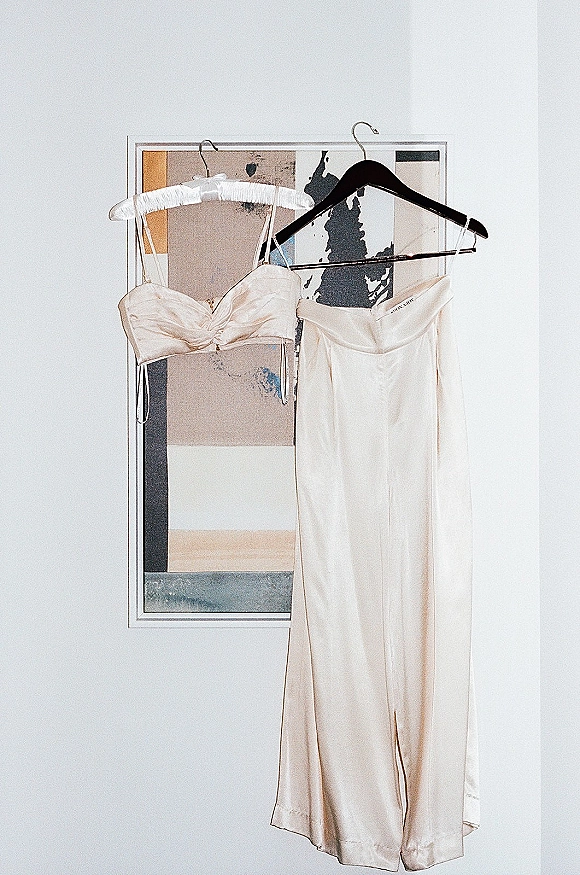
Two more colors get confused with grey constantly. Oyster carries gold undertones and a pearlescent shimmer, which makes it a warm neutral wearing a cool name. Taupe is grey-brown. Both are far easier to find than true grey, and if what you want is softness rather than coolness, they are worth trying first. A minimalist wedding dress in oyster gets you most of the way there.
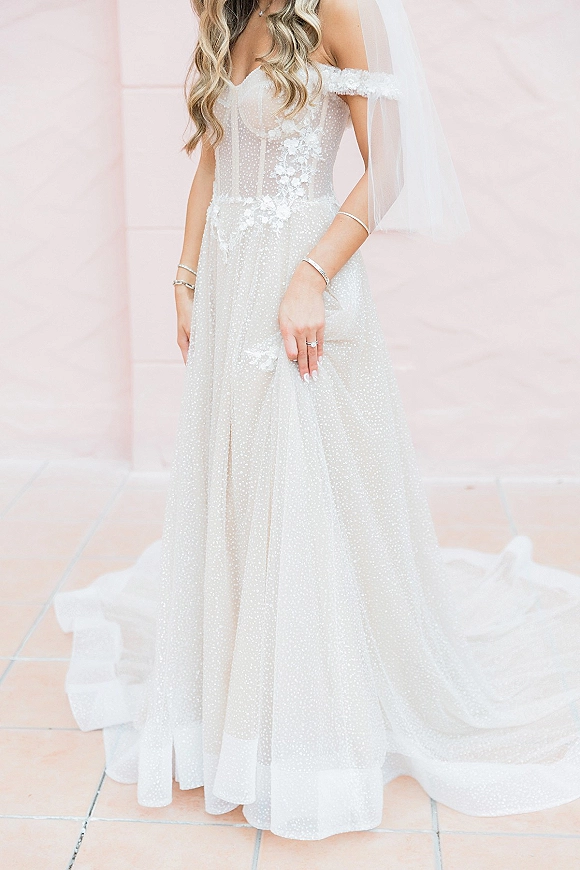
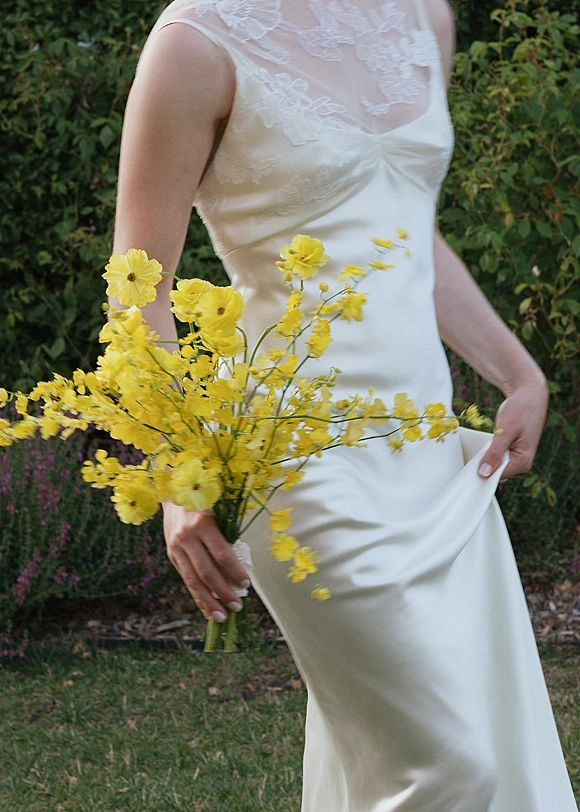
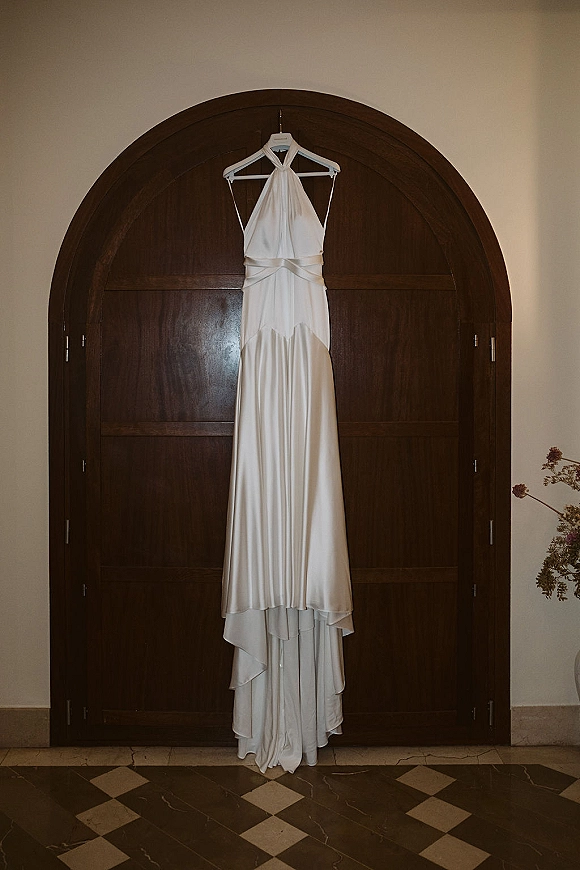
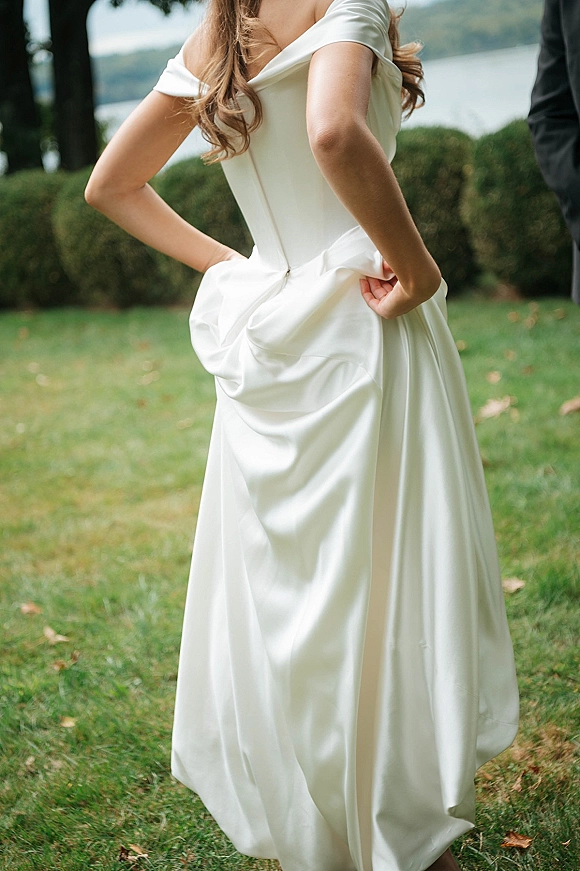
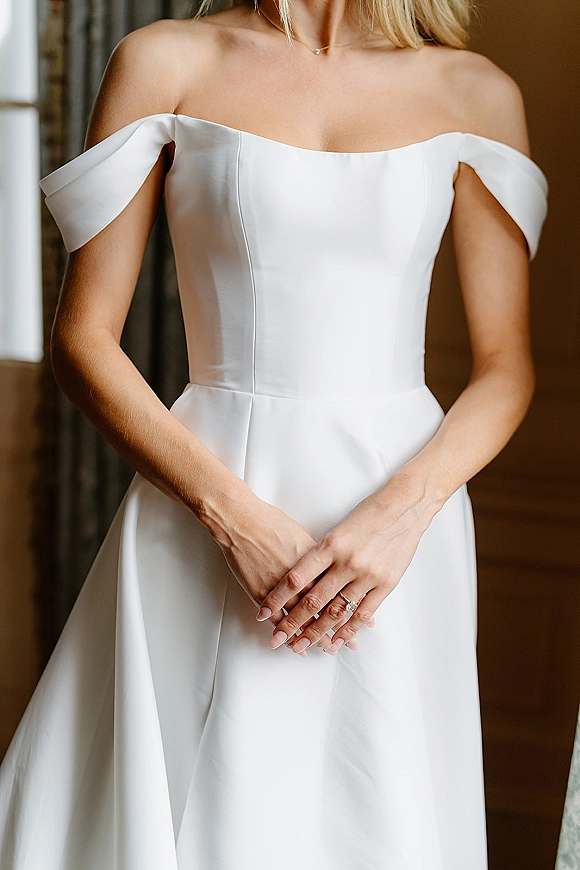
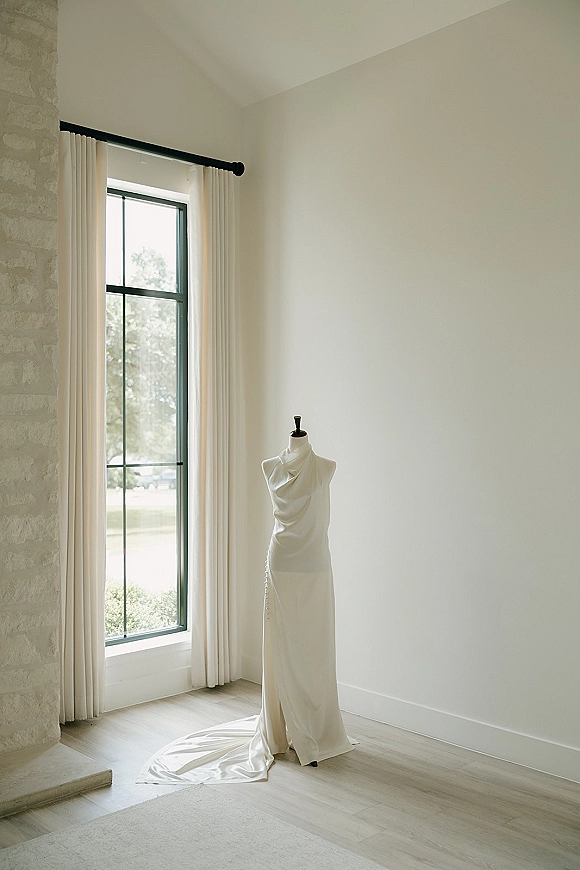
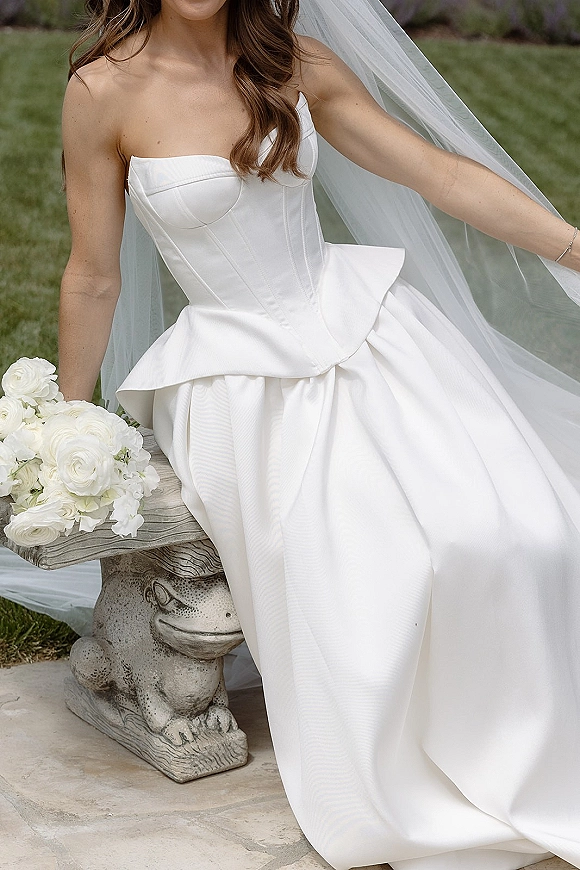
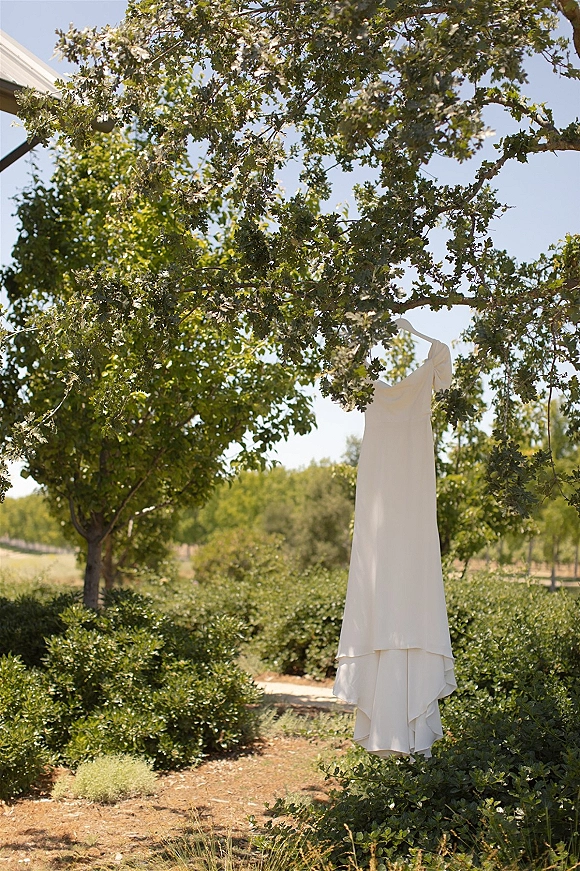
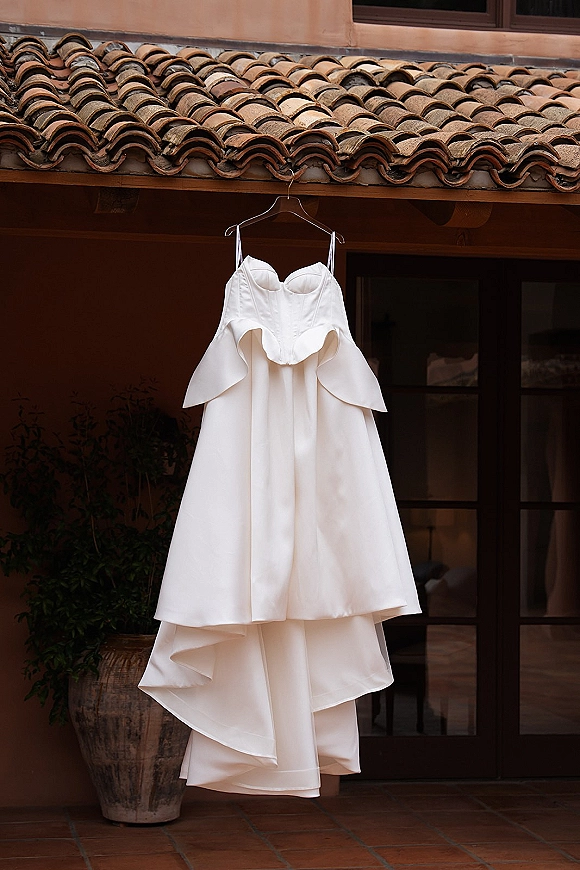
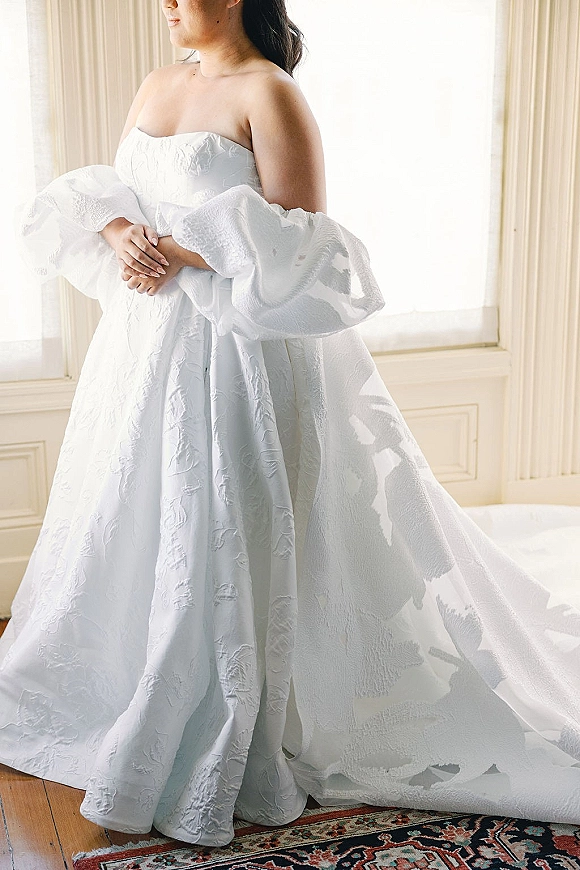
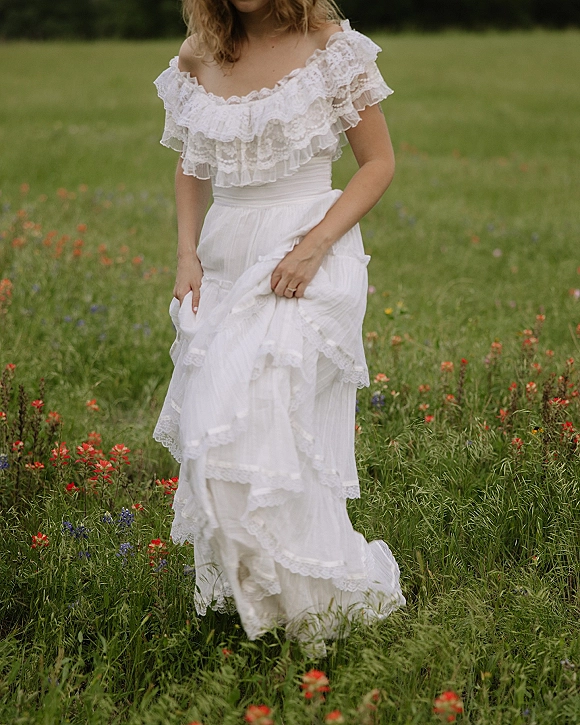
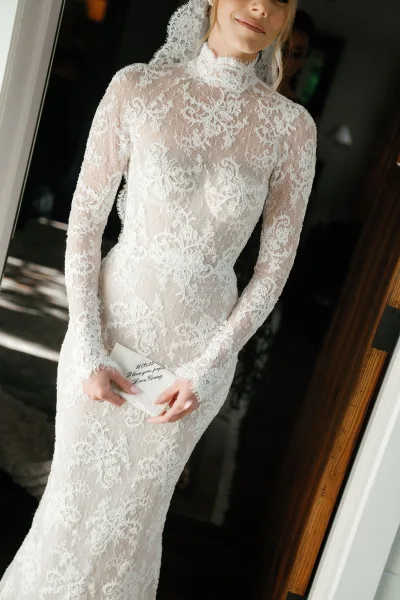
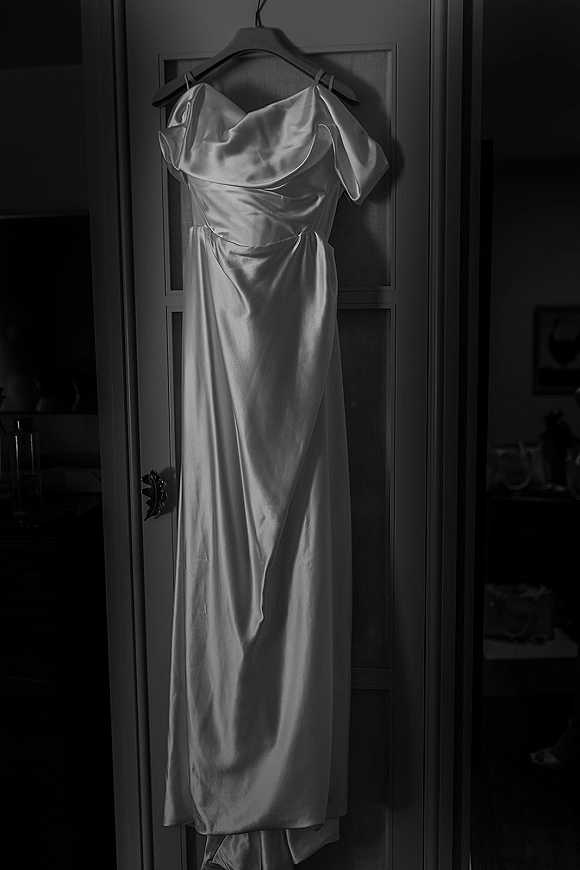
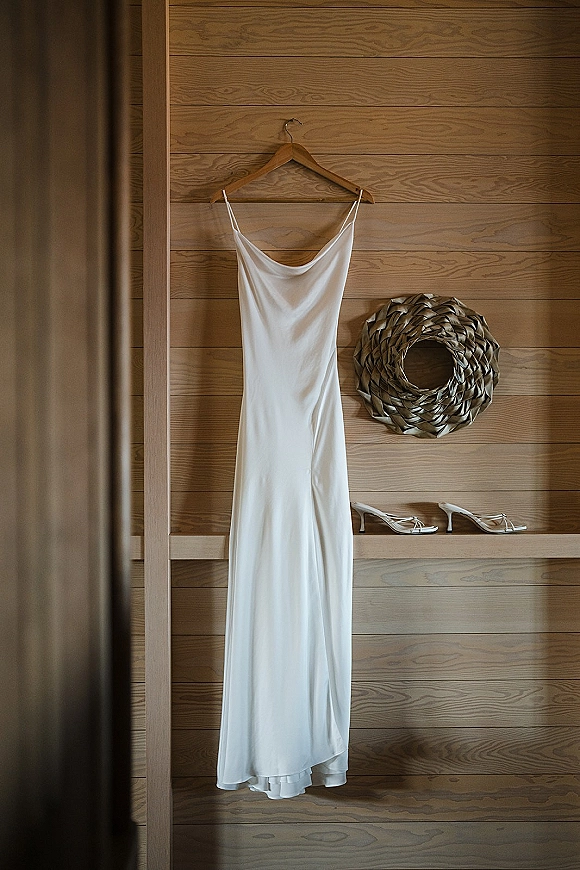
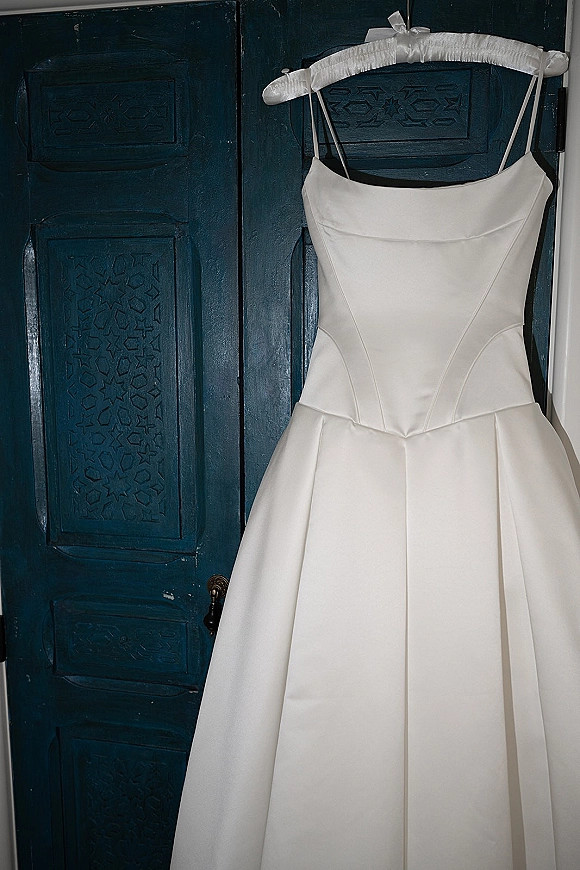
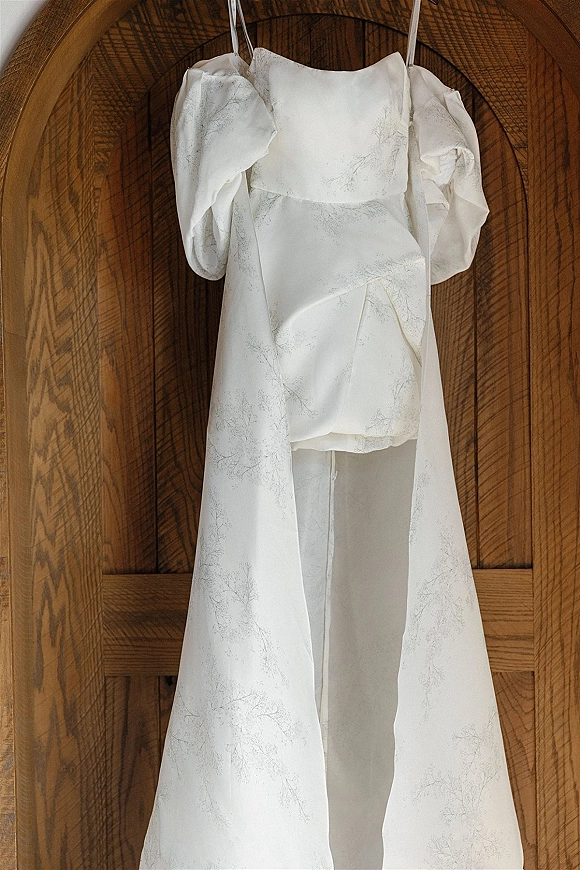
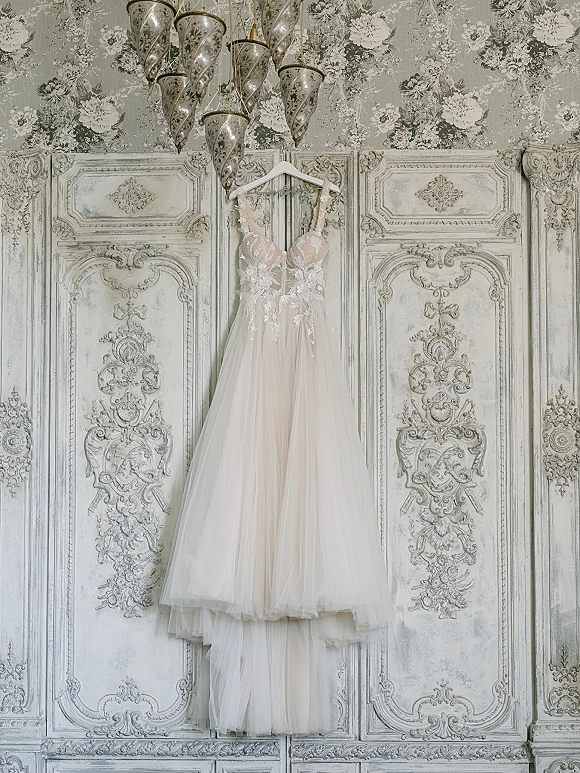
Scroll the gowns below before you commit to a shade, and watch how much of what you read as grey is the light in the room rather than the dye in the cloth.
One note on searching. Grey and gray are the same shade, and the two spellings pull different inventory, so run both. The shade names are less reliable. Charcoal and dove are standard bridesmaid vocabulary, so searching either one lands you in attendant collections rather than bridal ones. The plain phrase grey wedding dress is the one that reaches a bride's own gown.
Whether a Grey Wedding Dress Reads as Bridal
Matte grey reads as a wedding dress. Metallic silver reads as evening wear. The distinction is finish rather than depth: a matte crepe or a soft tulle in dove or slate photographs as bridal, while high-shine liquid silver photographs as a gala gown.
The fear behind the question is not that grey is inappropriate. It is that the dress will not read as a wedding dress at all, that a guest will look up and register a well-dressed woman rather than a bride. That fear is correct, and it is a finish problem rather than a color one. Shine is what moves a gown out of bridal, and shine belongs to the fabric, not the shade.
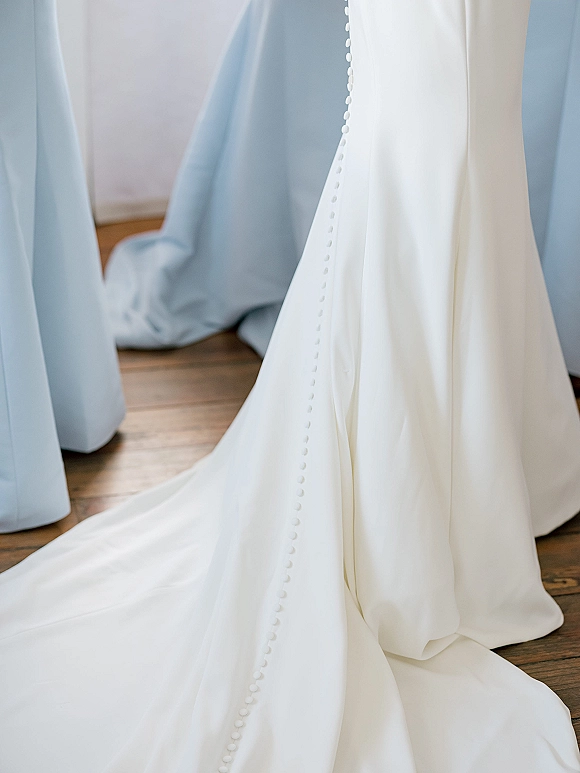
Bridal cues do the rest of the work, and they are cheap. A veil, a train, lace, buttons down the back, and a bouquet all signal wedding faster than color does. A grey gown carrying two or three of them reads as bridal from the last row, and the single most efficient of them is the veil, because ivory tulle over a grey gown creates a haze at the edges of the color that no guest mistakes for anything else.
Depth matters less than people expect. Dove grey in a garden and charcoal at a candlelit dinner both read as deliberate. What does not read as deliberate is a mid-silver satin under bright daylight, where the shine flattens the shade and the gown starts to look like a bridesmaid dress that got promoted.
What a Grey Wedding Dress Means
Grey carries three separate histories in bridal, and none of them is the one people assume. The oldest is mourning. Victorian and Edwardian mourning ran in phases, and grey, mauve, lilac, and lavender replaced black in the final phase, called half-mourning. Aberdeen City Museums holds a grey and black half-mourning wedding dress from around 1905, worn by a bride who was in mourning for a family member and permitted, by the rules of the time, to marry in the colors of whichever stage she had reached. That is the association people half-remember when they hesitate over grey.
The second history is money, and it is far more common than the first. The same collection holds a pearl grey silk wedding dress from 1899, chosen, by the museum's own account, because a bride of limited means picked colors and materials she would alter and wear again. Grey was practical. A grey wool wedding dress from 1903 in the same collection belonged to a dressmaker following that year's fashions exactly. Four grey wedding dresses between 1880 and 1905 sit in one Scottish municipal collection, which tells you grey was ordinary rather than daring.
The third is the rhyme. "Married in grey, you will go far away" is one line of a Victorian wedding-color verse, recorded in the 1930s in the Schools' Collection of Ireland's National Folklore Collection, where a schoolgirl in County Cork wrote down the variant "Grey: you'll live far away." Grey is one of only four colors the rhyme treats kindly. Black makes you wish yourself back, red makes you wish yourself dead, green leaves you ashamed to be seen. Grey gets travel.
None of this makes grey a statement. It makes grey a color brides have worn for a century and a half, for reasons that had nothing to do with rebellion.
How Fabric Changes a Grey Wedding Dress
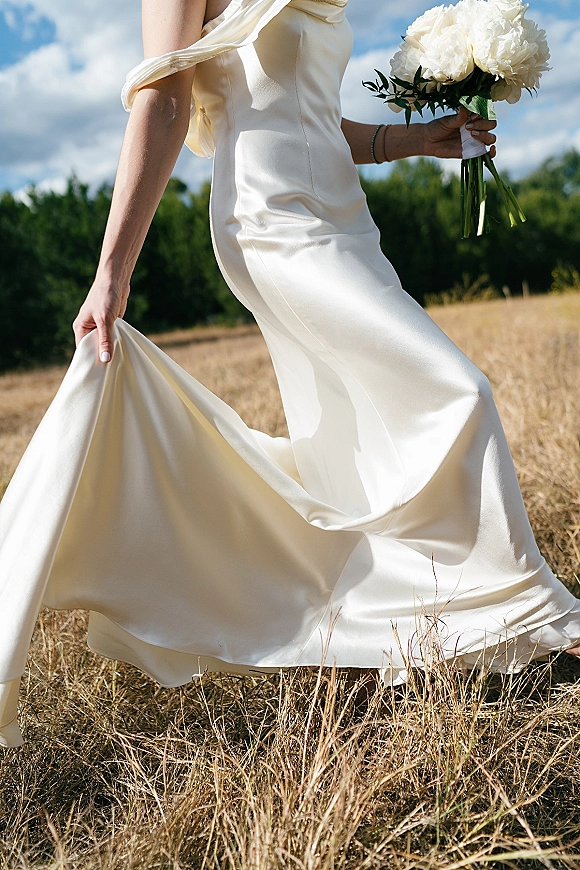
Fabric does more to grey than silhouette does, because grey is a low-contrast shade and finish is the only thing that gives it definition. Matte crepe holds one even depth from every angle, so the gown reads as a shape rather than as a surface, and it is the most modern treatment available to the color. Duchess satin does the opposite. It throws hard specular highlights, which means a single mid-grey becomes two shades at once, near-white along the curves and near-charcoal in the folds, and the whole gown shifts as she crosses a room.
Sheer layers lighten grey fast, and they lighten it more than the swatch suggests. Tulle and organza over a grey lining read several steps paler than the fabric you were shown, and each additional layer pushes further toward white. In motion the effect is closer to weather than to cloth. Most grey gowns that photograph as soft are built exactly this way, which means the color you are buying lives in a layer you cannot see once the dress is finished.
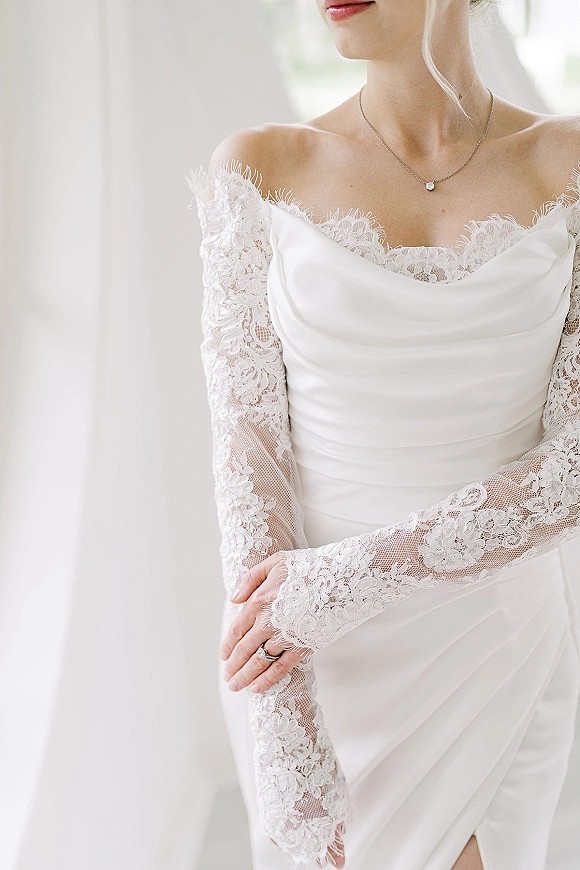
Grey lace over a grey underlay is the quietest construction of the group and the one that changes most as she moves. From across a room it reads as shadow inside the lacework rather than as color. Up close the grey resolves, through the open ground of the lace and along the scalloped edge where the underlay runs out. Velvet behaves in the opposite direction, absorbing light and holding one depth from every angle, which is why charcoal velvet suits winter and candlelight better than any satin does.
Beading is where grey either stays bridal or leaves. Pearl and opal read luminous against a cool grey and add the bridal signal without adding shine to the cloth itself. Crystal and sequin push the gown toward the metallic problem. If you want sparkle on grey, put it in the beadwork and keep the base matte.
What to ask before you order. Ask which layer carries the color, because on a layered gown the answer is the lining and the lining is what shifts between dye lots. Ask for the lot number and order the veil, the sash, and any grey trim from that same lot at the same time; ordering the veil later is how two greys end up in one photograph. Ask what the seam allowances and the inner structure are dyed to, because an unbleached allowance shows through pale grey at a fitting and there is no fixing it late.
How a Grey Wedding Dress Photographs
Grey is the easiest color on a camera and the hardest color in a room. A sensor renders a neutral more accurately than any saturated shade, so the gown in your gallery will look close to the gown you tried on. The room is the variable, and it is a large one. Warm tungsten uplighting and gold ballroom fixtures push grey toward brown or mauve, while cool LED washes push it toward blue, and neither is a small shift.
Candlelight warms dove grey almost to champagne, which is worth knowing if you chose the shade for its coolness. Open shade and overcast are the most faithful conditions of the day, and the undertone shows honestly in both. Direct midday sun is the one condition to plan around, since it blows pale grey out toward white and takes the shade with it.
Flash is the failure nobody expects. A direct on-camera flash at the reception erases a pale grey completely, and the gown that read as a considered color all afternoon comes back as plain white in the dancing photographs. The fix is not the dress, it is the brief: tell your photographer the shade by name before the day, ask what they plan to do about white balance, and ask whether they bounce or shoot direct after dark. Grey is the one bridal color where a decision made in the moment changes what you get back.
Backgrounds matter more than they do with ivory. Grey against grey is the trap, and stone walls, concrete, slate patios, and overcast skies all swallow a mid-grey gown whole. Green lawns, warm wood, dark foliage, and rich florals give it the contrast it needs. Charcoal against a dark venue at night is a deliberate choice rather than an accident, and it wants strong backlighting to keep the silhouette readable.
Look at the gowns below at thumbnail size first, then open one. The shade you register in the small image is the shade your guests will see from the back of the ceremony.
Grey Wedding Palettes: White, Blush, Green, and Black
Grey sits with almost anything, which is the practical argument for it. White and ivory are what most grey weddings actually run, since they give the eye a reference point.
Blush and dusty rose warm grey and pull it toward the garden end of the register. Sage and eucalyptus keep it cool and read as continuous with it rather than as contrast, which is soft and occasionally too soft.
A black and grey wedding dress is the most photographable version of the color. Black at the hem or in lace over a grey underlay gives the gown a hard edge that a single flat shade never produces, and it solves the from-a-distance problem completely, because the eye has something to measure the grey against. Charcoal with black detailing reads gothic; dove grey with black reads graphic and modern.
Metallics decide the register. Silver and platinum keep the whole palette cool. Gold and champagne warm grey and are the more forgiving choice in a ballroom, where the light is already warm and a cool palette spends the evening fighting it.
The wedding party is the easiest part of this, because grey is a mature attendant color in a way it is not a bridal one, and matching or laddering your party to your gown is straightforward. Run them a shade darker than the gown and it reads as depth; run them lighter and you risk two versions of the same near-white in every group photograph. Bridesmaid dress labels that publish swatch programs save the most time here.
Flowers want contrast. White and cream with green foliage holds from across a room. Deep burgundy and rich orange read strongly against a cool grey and give the bouquet its own job. Pale blues and lilacs blur into a mid-grey gown rather than complementing it. A white bouquet is the safest version and the one that most reliably signals bridal against a colored gown.
Where to Buy a Grey Wedding Dress
Four routes exist and the mainstream one does not. Made-to-order houses will build a grey gown to your measurements. Independent makers cut from scratch. A bridal dye lab will recolor a white gown you already own. What is missing is the salon rack in between, where most brides expect to shop and where grey is almost never hanging.
A small number of couture houses do show grey, and they price it as couture rather than as inventory.
Made to order is the default route, and swatches come before anything else. Grey varies more between dye lots than ivory does, screen calibration distorts it further, and a shade that looks like dove online arrives closer to steel often enough that you should assume it will. Order physical swatches from every supplier involved and compare them together under the light of your actual venue rather than in a shop or at a window.
Dyeing is the route when you already own the dress. A specialist will take a finished white gown to grey, and grey is a more forgiving target than a saturated color because it is a desaturation rather than a hue shift. Send the gown before you have it altered. Dyeing shrinks some fabrics and every seam moves, so alterations done first are alterations done twice. Ask which fabrics the lab has done in grey specifically, and expect embellishment to take dye at a different rate than the cloth around it.
Commissioning is the route to grey in silk. It is the only way to get a specific shade in a specific fabric with a specific lining, and it is the route where you will be asked to make decisions the other three make for you.
Build in the time. Made-to-order production runs six to eight weeks before shipping even starts, dye work adds several weeks on top of a gown you already have, and the first quarter of the year is the slowest window in the calendar for both. Order six to eight months out rather than three, and treat the swatch round as part of that timeline rather than as something that happens before it.
How Much a Grey Wedding Dress Costs
Most grey wedding dresses run between $400 and $950, because most of them come from made-to-order houses rather than bridal salons. Dyeing a gown you already own starts around $300 and climbs with the silhouette, the fabric, and the number of colors involved. Those are the two honest anchors.
What is missing is the middle. There is no ordinary salon tier for grey, which is where most brides shop and where the fitting-room experience lives, and the handful of grey gowns that do sit in salons are priced as couture rather than as inventory. That absence, rather than price itself, is the real constraint on the color. For the full picture of what wedding dresses cost across the market, the mainstream benchmarks are worth reading against these.
Budget for the parts nobody quotes. A matching veil in the same dye lot is a separate order. Alterations on a colored gown run longer than on ivory, because the alterations hand has to match thread and replace linings in a shade rather than in white. And a swatch round or two, on a color this variable, is a cost worth paying rather than skipping.
Grey as a Reception Dress or Second Look
Plenty of brides who want grey never wear it down the aisle.
They wear ivory for the ceremony and change into charcoal or slate for the reception, and it is the most underrated answer to the whole question. A ceremony gown is photographed in daylight and watched by every relative with an opinion. A reception dress is worn under warm indoor light for the rest of the night, which is exactly where a darker grey outperforms white and exactly where charcoal stops reading as sombre and starts reading as sharp.
It also removes the risk. Committing to grey as your only gown is a decision made months before you feel it, and the reception route lets you have both. It opens up the evening-wear market too, where grey is abundant and inexpensive rather than scarce and expensive. Real second looks tend to be bolder than first ones for that reason. A short wedding dress in charcoal crepe moves better on a dance floor than any train does, and it holds a crease far better than satin at the end of a long night.
What to Wear With a Grey Wedding Dress
Metallics beat color for every accessory, and the choice between silver and gold sets the register for the whole look. Silver and platinum keep grey cool and modern. Gold and champagne warm it.
Shoes follow the undertone rather than the depth. A cool blue-grey gown takes silver or pewter. A warm dove or pearl grey takes champagne or gold. Matching the shoe to the dress is the one choice that consistently disappoints, since two greys from two makers rarely agree and the mismatch shows most in exactly the photographs where the hem lifts.
Jewelry does the bridal signaling. Pearls read unmistakably bridal against grey and are the fastest way to keep a grey gown from drifting toward evening wear. Diamonds and clear crystal work. Colored stones fight the neutrality that made you choose grey in the first place.
The veil does the most work of anything you add. An ivory veil over a grey gown creates a soft haze at the edges of the color where the two shades overlap, and it photographs beautifully in every light. A tonal grey veil deepens the effect and reads more fashion than wedding, which is a legitimate choice as long as it is a choice. If you are working through the wedding dress directory for designers who take color orders, ask about the veil in the same conversation as the gown.
In the gowns below, notice what the accessories are doing rather than what color they are.
Frequently Asked Questions
Can a bride wear a grey wedding dress?
Yes. No etiquette rule requires white, and grey has been worn by brides since at least the 1880s. The constraint is inventory rather than tradition, since almost no bridal salon stocks the color. Expect to shop made-to-order or to have a white gown dyed rather than pulling one off a rack.
What does a grey wedding dress mean?
Historically, three separate things. Victorian and Edwardian brides in mourning wore grey or lavender instead of black during the final phase, called half-mourning. Brides of limited means chose grey because it was a color they would wear again after the wedding. And the old rhyme runs "Married in grey, you will go far away." None of those meanings attaches by default today, and grey now reads as a modern neutral.
How much does a grey wedding dress cost?
Most run between $400 and $950 from made-to-order houses. Dyeing a white gown you already own starts around $300 and rises with the fabric and silhouette. There is effectively no mid-market salon tier for grey, so the gowns that do hang in salons are priced as couture.
What is the difference between a grey and a silver wedding dress?
Silver is a grey with a metallic finish. Grey is a matte or low-sheen neutral. Retailers routinely file both under one label, so read the fabric description rather than the color name. The practical difference is what a guest sees: a matte grey reads as bridal, and a high-shine silver reads as evening wear.
Which shade of grey is easiest to wear?
Slate in a matte weave. It is dark enough to read as a real color from across a room, matte enough to stay bridal, and mid-depth enough to survive both daylight and candlelight without collapsing toward white or black. Dove is the softer alternative if you want the color to whisper rather than register.
Why does searching a grey shade name return bridesmaid dresses?
Because charcoal and dove are standard bridesmaid vocabulary, and the attendant market is far larger than the bridal one in this color. Searching a shade name lands you in attendant collections. Search the plain phrase grey wedding dress to reach a bride's own gown, and run the gray spelling as well, since the two return different inventory.
What colors go with a grey wedding dress?
White and ivory are the most common pairing, because they keep the gown reading as bridal and give the eye a reference point. Blush and dusty rose warm grey, while sage and eucalyptus keep it cool. Black makes it graphic. For flowers, white and cream with green foliage holds the clearest contrast from across a room.