What Sage Looks Like in Bridal Fabric
Sage is a low-chroma green sitting at a middle value, near hex #9CAF88, which is a technical way of saying it has gray in it and never gets loud. That property is the whole reason it wears as easily as it does, and why fabric matters more here than silhouette.
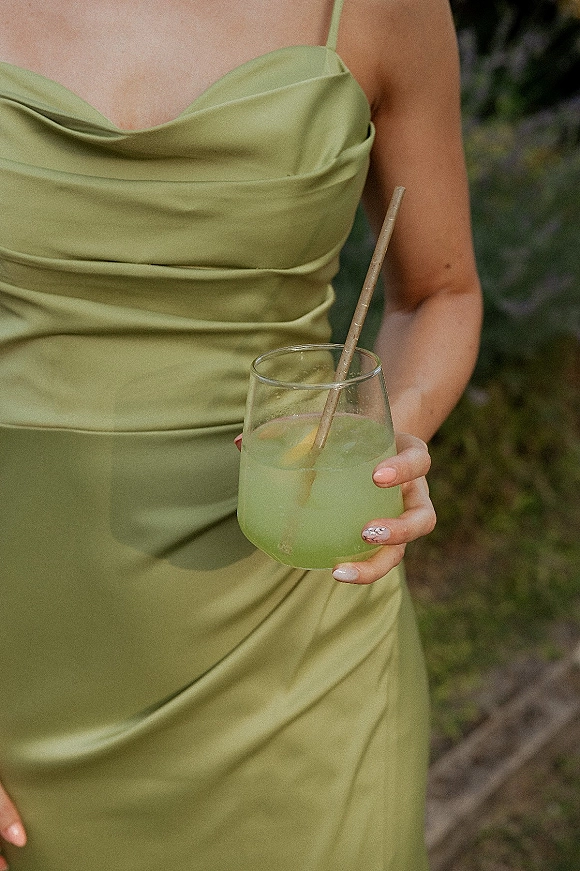
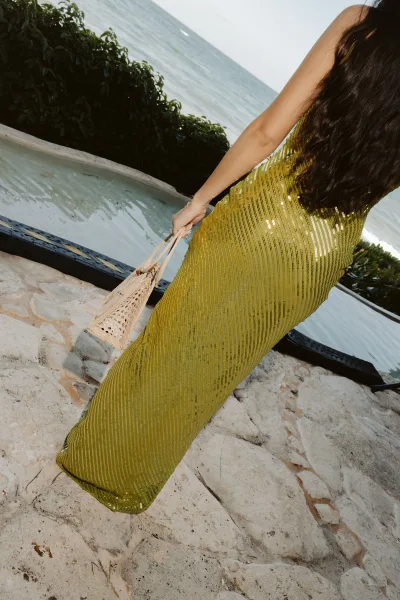
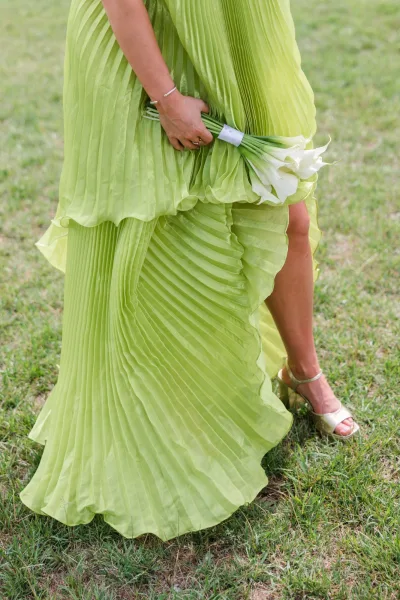
Matte cloth holds sage as one flat tone. Crepe and matte satin give you a dress that reads almost as a warm neutral from any distance, closer to stone than to green, and the color only declares itself when someone is standing next to you. Lustrous cloth splits it in two. Duchess satin and mikado throw the highlights nearly to white while the folds drop into deep gray-green, so a satin sage gown reads as an actual color across a room because the eye has two tones to compare rather than one.
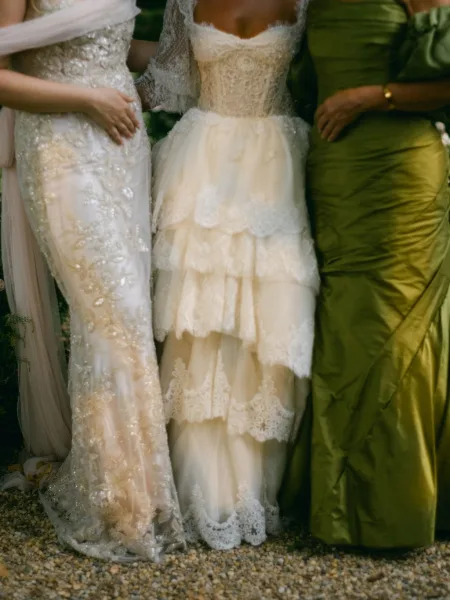
Sheer layers subtract. Ivory tulle or organza laid over a sage lining mutes the color once per layer, and by the third or fourth the green has become a suggestion of shadow rather than a shade. Sage lace over cream behaves differently again, holding the color inside the pattern: from the back of a room it registers as texture in the lacework, and up close it resolves into green along the leaf shapes and the scalloped edge of the hem. Silk chiffon moves the color as she moves, going pale where the fabric pulls taut across the body and deeper in the gathers.
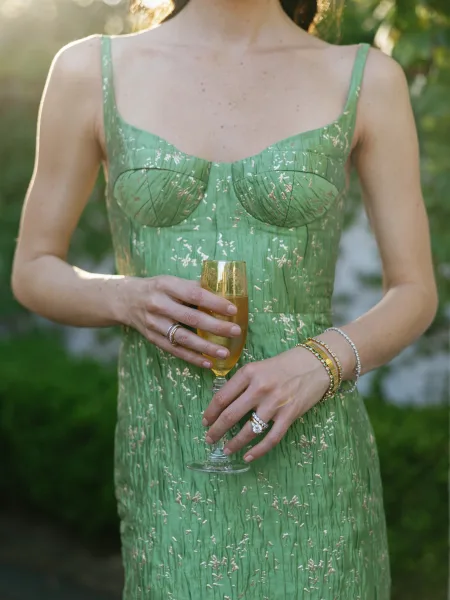
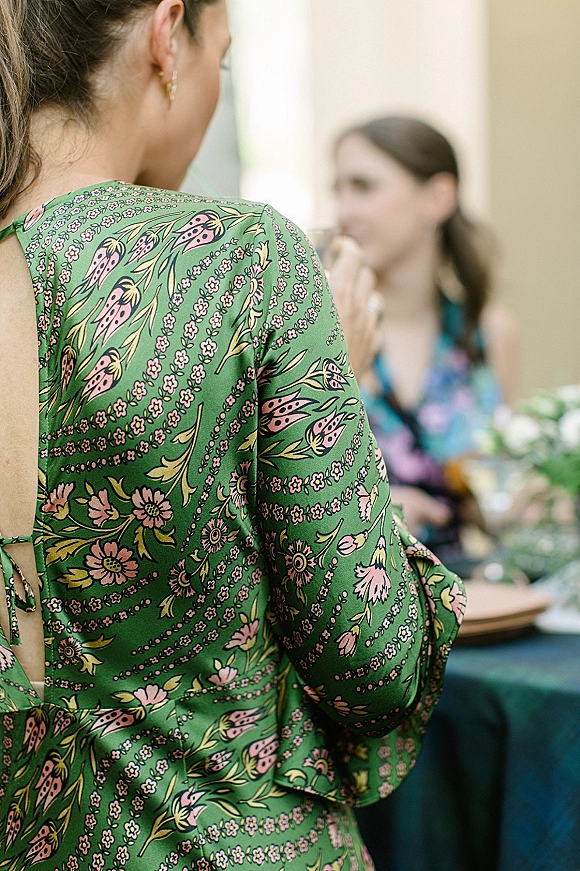
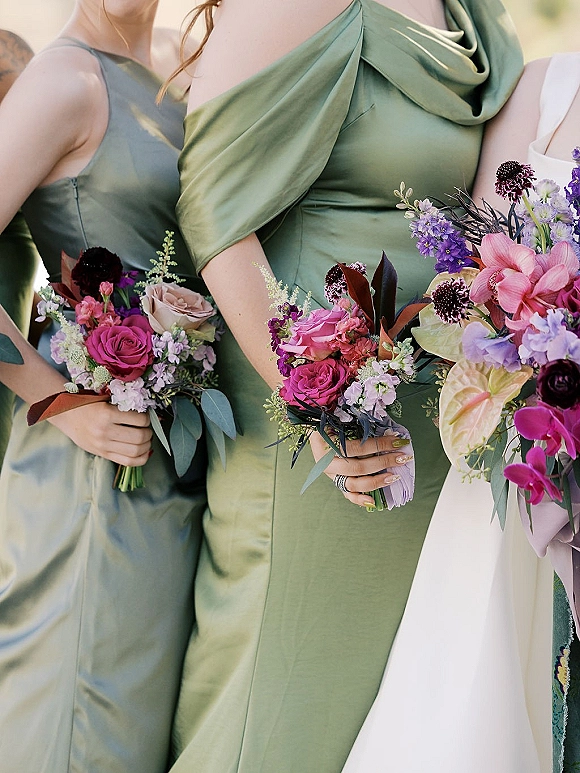
Watch where the color sits in the gowns below, and how much of each dress it actually covers.
Solid Sage or Sage Over Cream
If you want one recommendation instead of four options, take sage over cream rather than solid sage: an ivory or cream base with the color carried in the lace, in an underlayer beneath it, or in embroidery along the bodice.
Two reasons. It survives the camera, because there is always an ivory reference in frame that stops the green from neutralizing away. And it steps out of the way of your wedding party, since sage attendant dresses are the deepest inventory in the industry and a bride in solid pale sage is standing in front of eight people wearing a near-identical shade.
The trade-off is real and worth stating. Sage over cream is a quiet dress. Nobody at the back of the ceremony will describe it later as a green wedding dress, because from thirty feet it reads as ivory with texture. If the point is that she wore color and you want people to register it as such, go the other way: a solid gown in a deeper, olive-leaning sage, and put the attendants in cream and champagne instead. What fails is the middle. A solid gown in the palest sage gives you the cost and the lead time of a colored dress and the photographs of an ivory one.
Where to Buy a Sage Green Wedding Dress
Four routes get sage onto the bride, and a traditional salon appointment is not one of them. Bridal retail produces this color at volume for the wedding party and close to not at all for the bride herself, which means that walking into a salon and asking to try a few sage gowns on is the one approach that reliably ends the afternoon with nothing.
Made-to-order online bridal is the widest option, since the sellers who cut a gown after you order it are the ones who can cut it in a color. An independent maker will build to your measurements and is where the more interesting sage work lives, in embroidery and dyed lace rather than solid cloth. A bridal dye lab will recolor a white gown you already own. And any workroom that already handles colored detail on ivory can put sage into a dress without producing a colored gown at all, which is why the accent route is the one the mainstream will actually take on.
Ask for a swatch from whichever route you pick, and expect to have to ask. The free swatch programs in this industry were built for bridesmaids, which leaves the bride as the one person in the party who cannot see the color in her own light before paying for it. Made-to-order sellers will usually cut one anyway, and a maker who declines has told you something useful about how the rest of the order will go. If you want the wider spectrum before you settle, the green wedding dresscollection runs from mint through forest, and emerald covers the deep end.
What to Ask Before You Order a Sage Gown
Five questions separate a gown that arrives in the color you actually pictured from one that does not, and none of the five are answered anywhere on a product page or in a listing photograph.
Ask where the color physically is. A gown dyed through the cloth behaves differently from ivory lace over a sage lining, and the second holds its color far better in photographs. Ask what the fiber is, because polyester takes sage cool and slightly bright while silk pulls it warmer and duller, and the same swatch reference produces two visibly different dresses. Ask whether the lace is dyed to match the base or left ivory over a sage lining, which decides whether the dress reads tonal or two-tone from any real distance.
Ask to see the fabric under warm indoor light rather than a window, since daylight is the condition that flatters sage most and describes your reception least. And ask whether the shade is repeatable, because if a bustle or a panel needs extra cloth six weeks before the wedding, a maker who cannot cut from the same lot will hand you a near miss.
Give the maker a hex value or a physical swatch rather than the word. Sage carries almost no information across vendors, and a sash from one label, a lining from another, and a dyed gown from a third will sit visibly apart in the same photograph.
Having a White Gown Dyed Sage Green
Bridal dye specialists take a finished white gown, test the fabric, and then recolor the whole garment, with prices starting at around $265 and running up to roughly $1,000 depending on the cloth and the silhouette they are working with. Sage sits at the cheaper end of that spread, because pale shades take less dye than jewel tones do and the majority of bridal fabric is synthetic.
Send them the gown before you have it altered. Dyeing shrinks some fabrics and every seam moves, so a dress fitted first and dyed second comes back needing the same alterations again. The labs swatch-test before committing a gown for the same reason, and a pale low-chroma color like sage exposes inconsistency in the cloth that a saturated color would bury.
This is the route when you have already found the dress and want it in another color, and it is the only one that gets you sage in a gown that already fits your body.
Why Sage Loses Its Color on Camera
Sage is the shade most likely to disappear in a photograph, and it happens for a reason worth understanding early.
A camera's white balance looks for neutral in the frame and corrects toward it. A pale, low-chroma color sitting at a middle value is close enough to neutral that the correction pulls it the rest of the way, and in a room already full of ivory the sensor has every reason to read the dress as white cloth under a green cast. Direct flash flattens it further, since a hard frontal light kills the shadow that was carrying half the color. Golden hour pushes sage toward olive and yellow. Open shade renders it truest of anything.
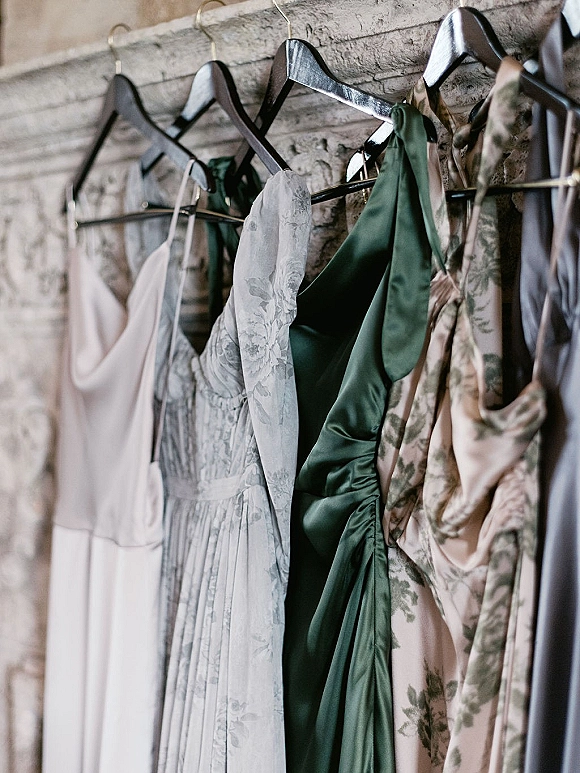
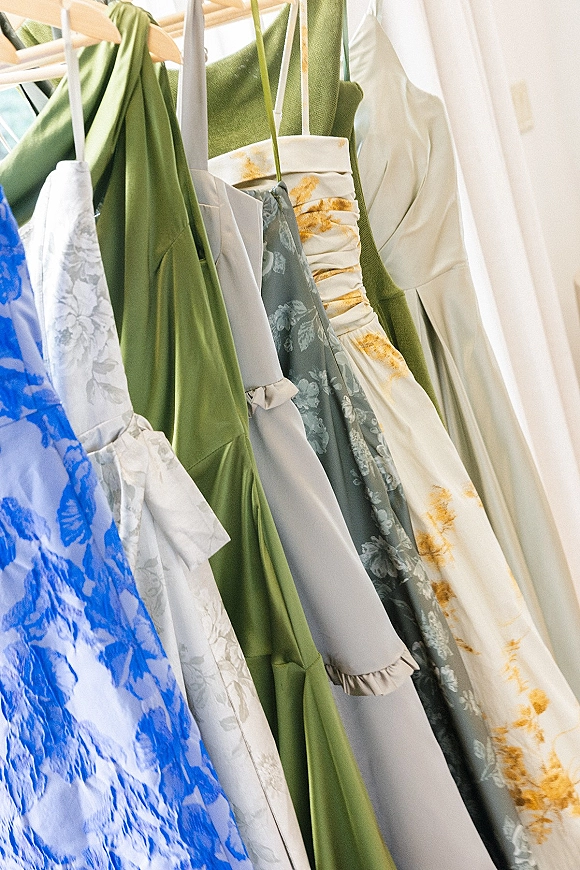
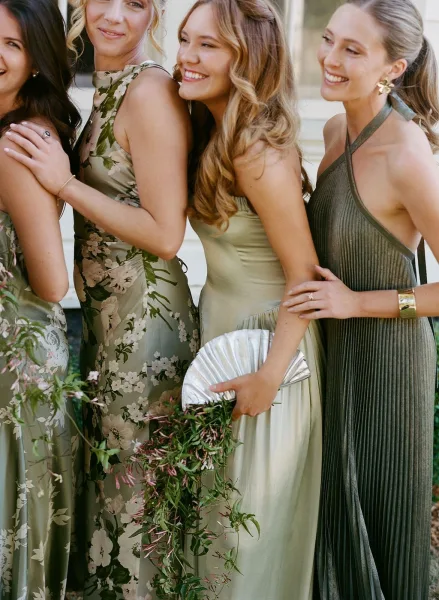
Three things protect it. Choose a sage with visible depth rather than the palest version on offer, because dusty and silver sages hold their gray-green cast when the pale ones surrender. Choose textured cloth over flat, since lace and gathers hold shadow and shadow is where the color lives. And tell your photographer the dress is green before the first fitting, so the getting-ready shots are not white-balanced off a wall that takes the color out. As you scroll the gowns below, notice how differently the shade reads between daylight and indoor light.
What Goes Wrong With a Sage Gown
Dye lots are the first failure and by some distance the most common one. Cloth cut months apart rarely matches, so a sash ordered late, a replacement panel added after a fitting, or a matching wrap for a cold evening ceremony will land a shade off from the dress itself and read to everyone in the room as a mistake rather than as a decision. Order every piece of sage the wedding needs at once, from one maker.
Marks show more on pale green than on ivory. Deodorant transfer, makeup on the neckline, and sweat at the waist all read as darker patches on a colored ground where ivory would hide them, so a colored gown wants dress shields and a getting-ready order that puts the dress on last. Water spotting is the other one to test for. Some dyed synthetics ring where a drop lands and steam sits, and the place to find that out is an inside seam at the fitting rather than a rainy portrait hour.
Catch all of it at the final fitting. Look at the dress under warm light, photograph it on your phone with the flash on, and check every seam against the panel next to it. The failures on this list are all visible three weeks out and none of them are fixable on the morning.
Dressing the Wedding Party Around a Sage Green Gown
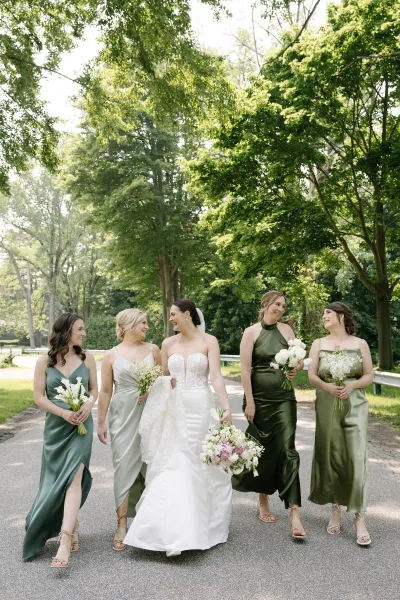
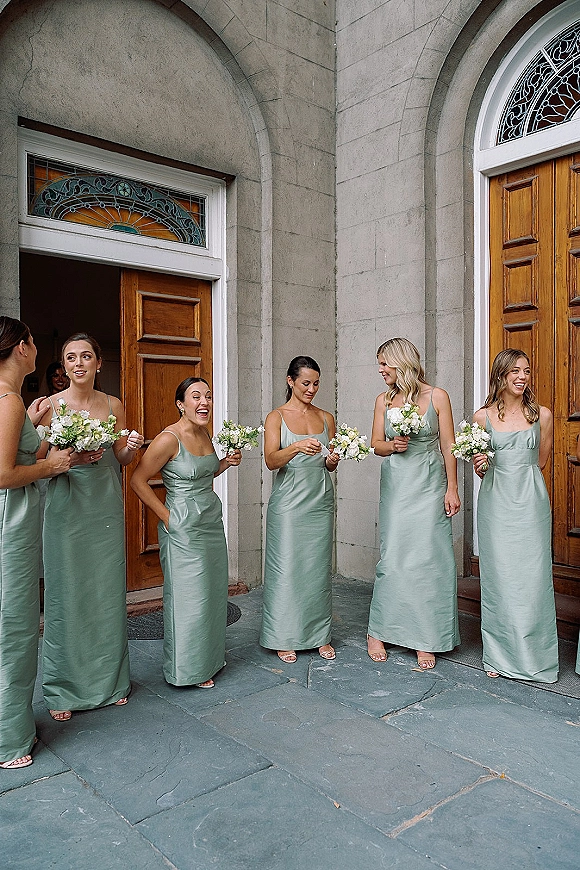
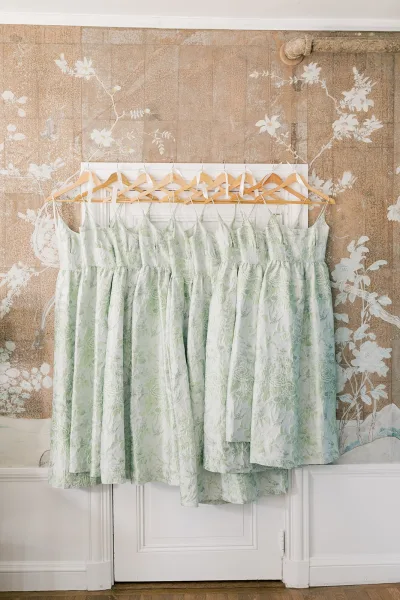
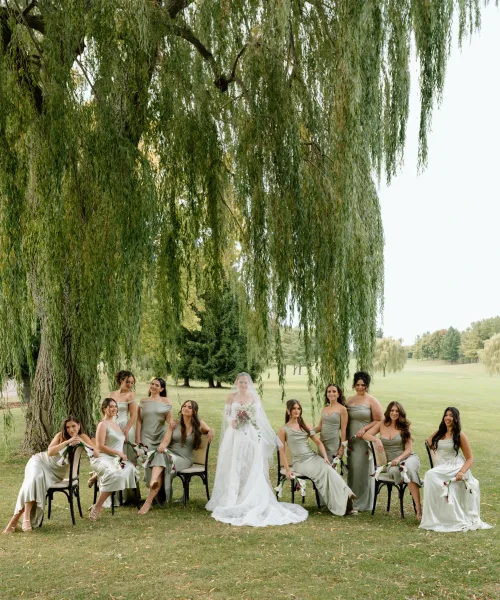
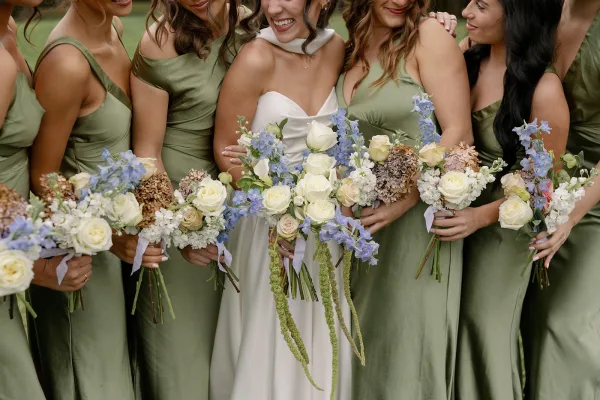
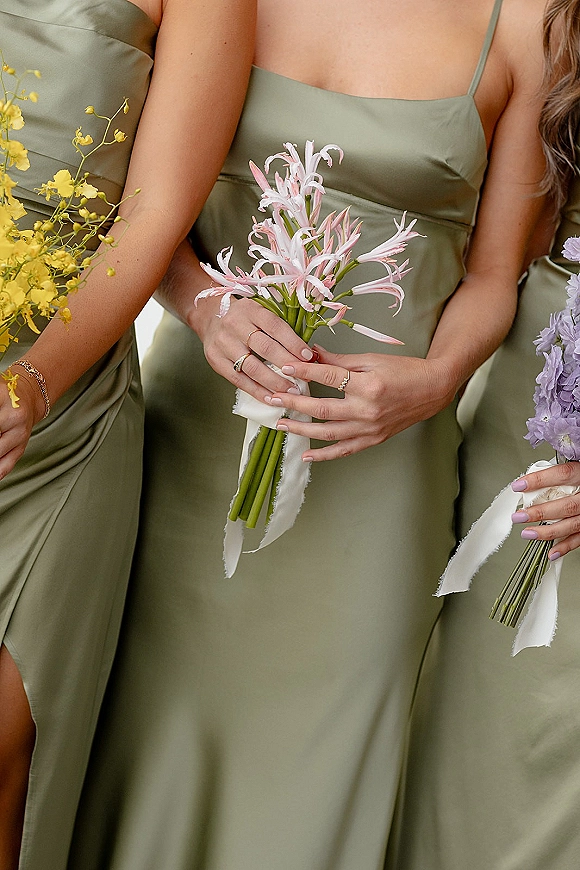
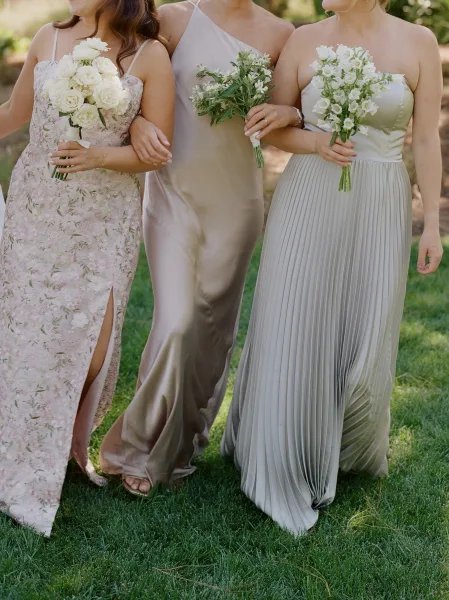
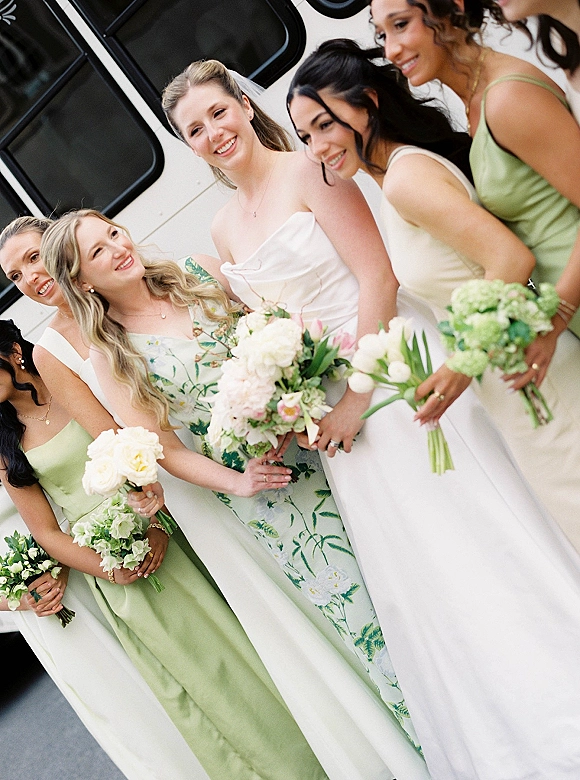
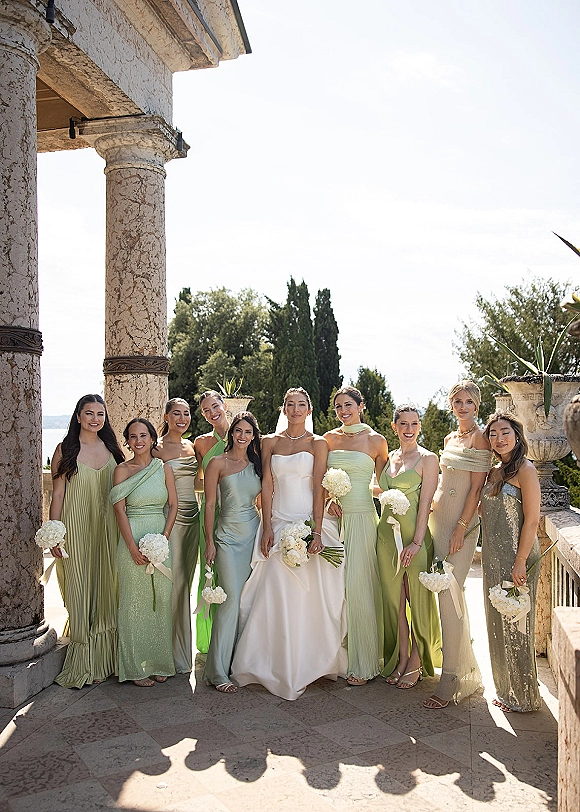
A sage gown creates one problem that no other bridal color creates, and the sequencing that solves it runs opposite to the order in which couples usually work. Sage is the deepest color in the entire bridesmaid market, so the shade your attendants would most naturally be put in is the exact shade you have just claimed for yourself. Eight people standing in dusty sage beside a bride in light sage produces photographs where the bride merges into the line.
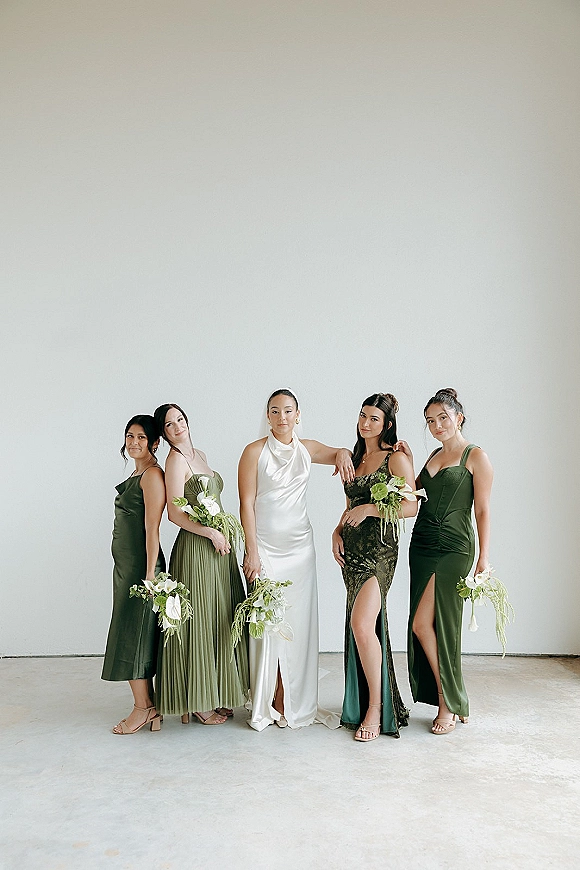
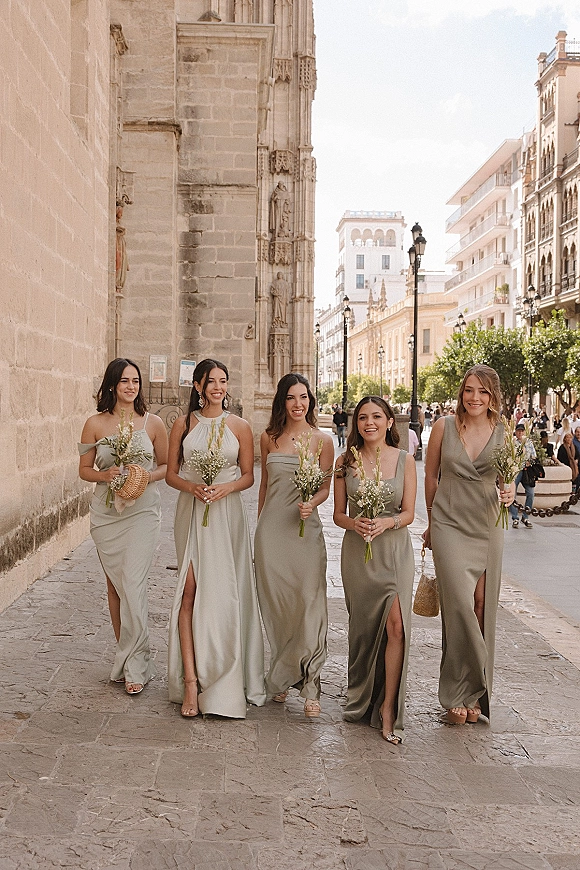
Separate by value rather than by hue. Send the attendants darker and warmer, into olive or deep juniper, and the paler gown lifts off them cleanly. Cream and champagne work in the opposite direction and suit a lighter ceremony. What fails is the near miss, where two sages that looked adjacent on a screen turn out a shade apart in daylight.
Order the gown first, then choose the attendant color against a physical swatch of the gown. Couples routinely do this backwards, locking sage green bridesmaid dresses months before the bride has her own dress, and then discovering the two shades fight. Photograph both swatches together under the light your ceremony will actually have. No retailer will run that comparison for you, because the two garments come from different parts of the business.
What Colors Go With a Sage Green Wedding Dress
Cream and ivory are the pairing that lets a sage gown read as the color in the room rather than one green among others.
Warm metals suit it better than cool. Gold and brass give the green something to push against, while silver and platinum sit at a similar value and flatten the whole palette into one soft blur. Terracotta and dusty rose are the accent shades that hold up best beside sage, both warm enough to keep it from going cold. Black sharpens it for an evening wedding and is the one high-contrast option that works.
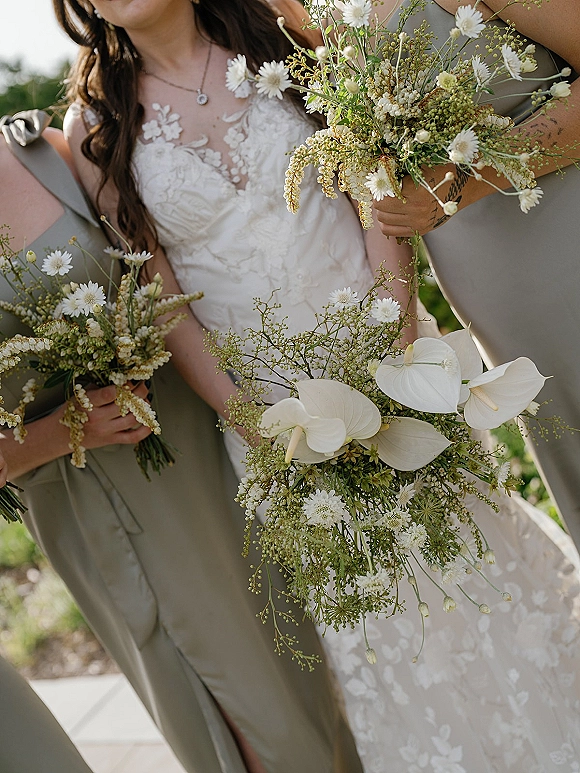
Flowers need more thought here than with any saturated color. A bouquet built on eucalyptus and greenery will vanish into a sage gown from any distance, which is the opposite of what a bouquet is for. White anemones, cream garden roses, and warm rust tones keep their edge against the dress.
When to Order a Sage Green Wedding Dress
Eight to ten months before the wedding, which is a longer runway than a salon purchase needs and for an entirely different reason. Sage bridal is made to order almost by definition, and independent makers quote something in the region of five to seven months to build a gown from scratch, before any alterations begin.
A dye job runs shorter but adds its own window, since the lab swatch-tests the fabric before committing the gown and the alterations come after the color rather than before. Accessories go last in both cases. Metals, shoes, and any sage detail for the wedding party have to be chosen against the finished fabric rather than a screen. Local fittings can be arranged through the wedding dress shops in our directory once the gown itself is on order, and the mainstream price benchmarks in our guide to what wedding dresses cost are worth reading before you commit.
Frequently Asked Questions
Can the bride wear a sage green wedding dress?
Yes. No etiquette rule or superstition attaches to green. The obstacle is supply rather than tradition, since bridal retail stocks sage almost entirely in bridesmaid lines and treats a colored gown for the bride as a special order.
Is a sage green wedding dress the same as a sage bridesmaid dress?
No. Bridesmaid dresses in sage are a mature category with hundreds of styles at ordinary retail prices. A sage bridal gown is made to order or dyed, in bridal fabric and bridal construction, and costs several times more. If you are dressing attendants or attending a wedding as a guest, search those categories rather than wedding dresses.
What color is sage green?
Sage green is a muted, gray-cast green sitting near hex #9CAF88. Retailers apply the name loosely across shades from silver sage through eucalyptus and moss, so a hex value or a physical swatch is more reliable than the word when you are specifying a garment.
How much does a sage green wedding dress cost?
It depends entirely on the route. Dyeing a gown you already own starts around $265 and runs to roughly $1,000. A commissioned gown from an independent maker runs into the low thousands, with one atelier pricing its sage embroidered wedding dress at $2,200. Made-to-order online bridal sits between the two.
Can you dye a wedding dress sage green?
Yes, and sage is one of the easier colors to get, since pale shades take less dye than jewel tones. Send the gown to the lab before alterations, because dyeing shrinks some fabrics and moves every seam. The lab will swatch-test the cloth first.
Why does my sage green dress look white in photos?
Because a camera's white balance corrects toward neutral, and pale sage sits close enough to neutral to be corrected away, especially in a room full of ivory. Direct flash makes it worse. Choose a deeper, textured sage and tell your photographer the dress is green before the day.
What should the bridesmaids wear if the bride wears sage?
Something separated by value rather than by hue. Olive or deep juniper sits darker and warmer than a pale sage gown and keeps the bride distinct, and cream or champagne works in the opposite direction. Avoid a second sage, since two near-identical shades read as an error rather than a choice.