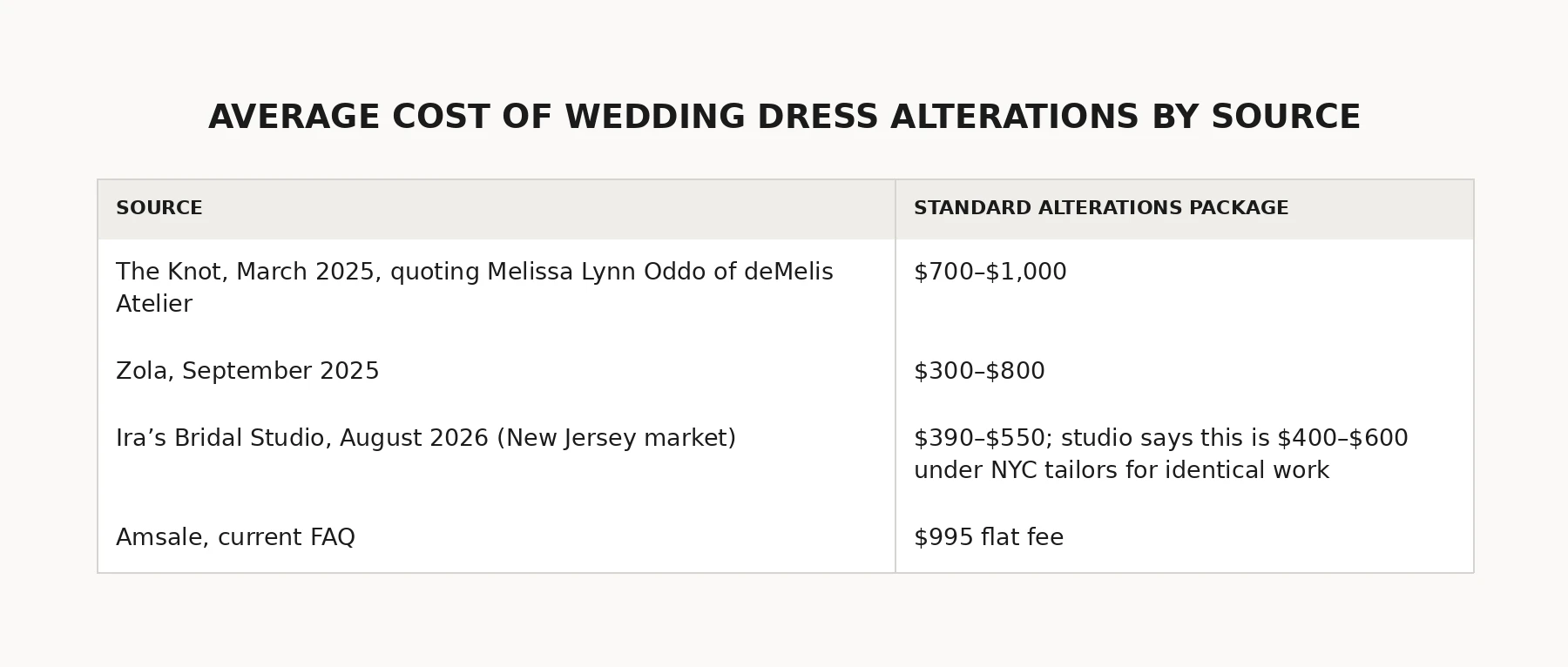
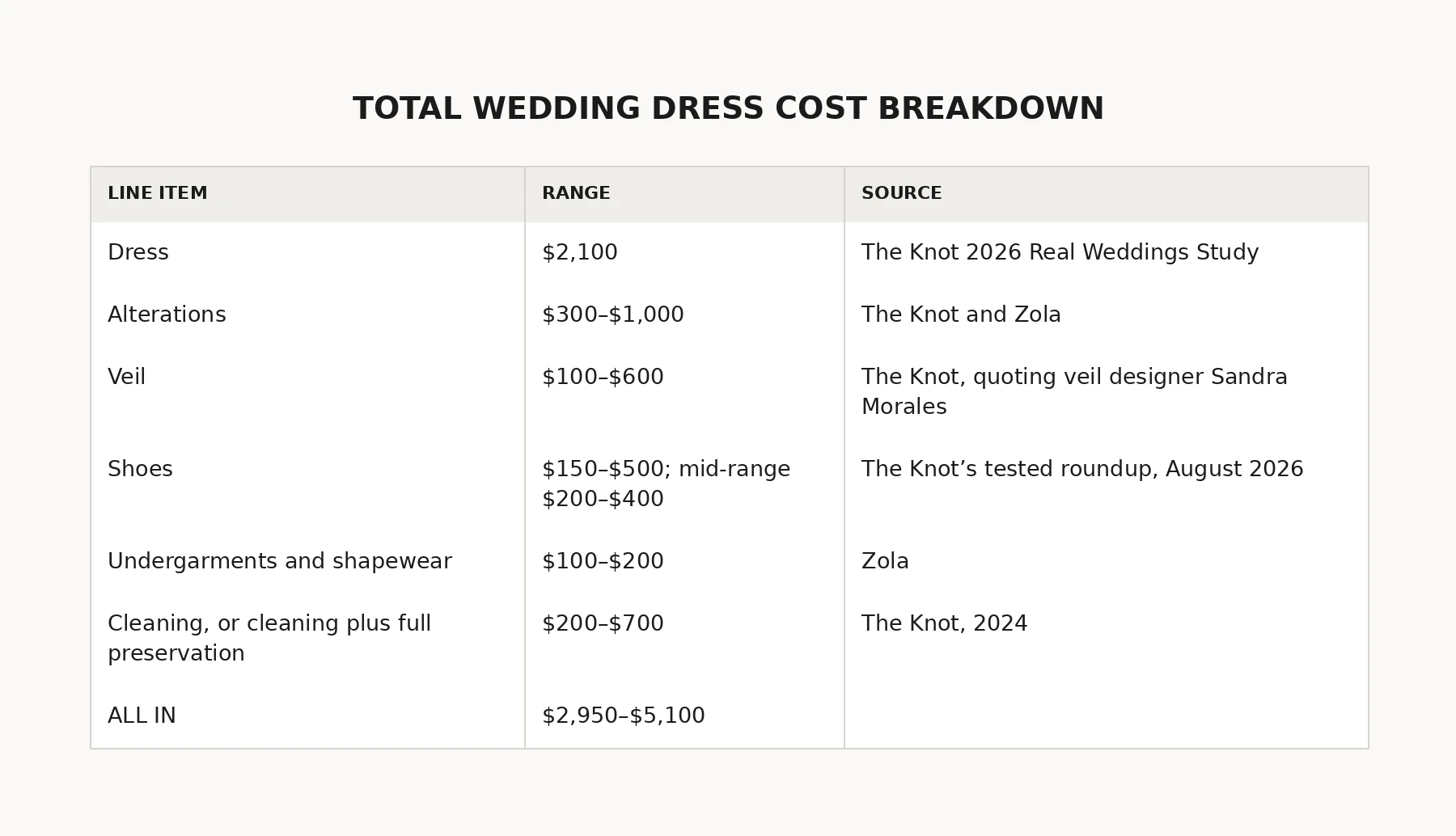
Bridal shoes vary more than any other line. The Knot's 2026 tested roundup goes from $45 at Lulus to $2,095 for Jimmy Choo, with the mid-range at $200 to $400. Preservation has a live benchmark: The Knot's own preservation service currently charges $299 for cleaning plus preservation and $259 for cleaning alone. You can compare those rates to your local dry cleaner's quote, since the wider $200 to $700 range circulating online dates back to 2024.
Designer accessories move the number quickly. Grace Loves Lace prices its veils at $445 to $500, costing more than a complete Lulus gown.
Ask about all of these at your first appointment. Salons quote the gown and will share additional pricing as you move along in the process. Before booking a fitting, browse wedding dress designers to see who carries what in your area.
Why Are Wedding Dresses So Expensive?
Four things, roughly in order of impact: fabric, hand-work, small production runs, and, since 2025, tariffs.
Alyssa Hoersten, designer and founder of Alyssa Kristin, told The Knot that "depending on the fabric, trims and components, brands are paying anywhere from 15 to 50% more on inputs alone, and that increases compound quickly." Nothing else explains why gown prices moved in 2026 while other wedding categories remained the same.
Silk Mikado, European lace, and layered silk tulle cost several times what polyester equivalents do, and a full skirt requires a lot of yardage. Lobachova named European lace, silk satin, Italian Mikado, and layered tulle as the materials that have climbed the most at Ricca Sposa.
Beading, embroidery, and 3D floral appliqué are placed by hand, one element at a time, and a heavily worked bodice can take an artisan weeks. Plus, built-in corsetry, boning, and multilayered skirts add construction hours before a single bead goes on. A bridal designer cuts a few hundred units of a style worldwide, against tens of thousands for a comparable ready-to-wear dress, so that’s one more thing to keep in mind.
How Much Should You Spend on a Wedding Dress?
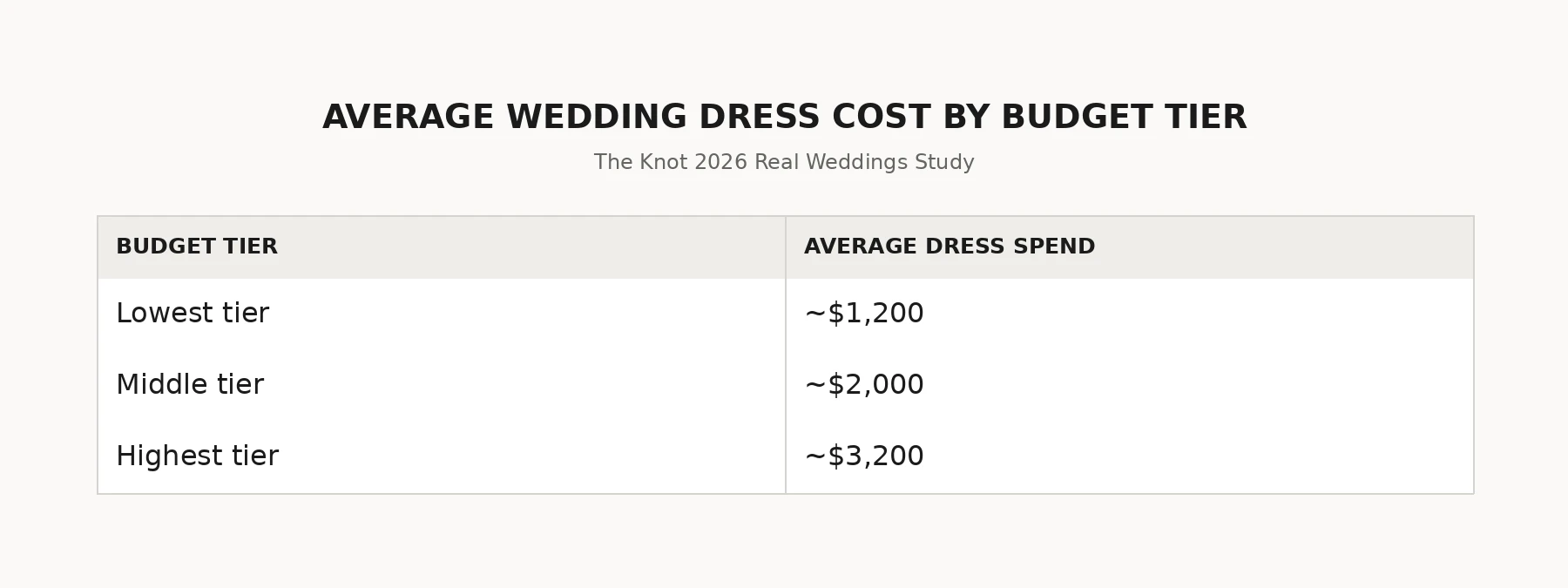
Between 5% and 10% of your total wedding budget is the conventional recommendation, which puts the dress at $1,700 to $3,400 on a $34,000 wedding. Through our research, we’ve learned most people online report paying $1,500 to $3,000 at a boutique. Treat that as a starting point.
If the dress is the part of the day you care most about, or if a designer you love opens above your percentage, plan to pay more than that range suggests. Plenty of couples prioritize this important category over other vendors or details they don’t care as much about.
Or your budget might be on the lower end if you’re hosting a larger guest count, if your venue took a bigger share than planned, or if you already know you want something simple. Silk sheaths from contemporary labels start around $900, photograph beautifully, and cost a quarter of what a beaded ballgown does.
The one number that should not shift is your all-in ceiling. Walk into the first appointment with a total that already includes alterations and accessories. Say it out loud, and early, and ask your consultant to pull nothing above that price point. From there, they’ll work to that number.
How to Buy a Wedding Dress on a Budget
It’s possible to save on your dream dress, but you’ll need to go through one of five recommended routes worth taking seriously.
Sample sales cut 20% to 60% off, according to a&bé bridal shop, and occasionally you can score even bigger markdowns. How deep the cut goes on any individual gown depends on how long that sample has sat on the floor and what condition it’s in. David's Bridal hosted a national sample sale in 2026 at up to 75% off with bridal gowns starting as low as $79. Kleinfeld’s sample sale is held twice a year, and the next one is slotted for September. The catch is that samples often come in a single size, usually a bridal 8 to 12, and you’re buying whatever fits closely enough to alter.
Resale typically provides people with the deepest discounts and is the most underused strategy. Nearly Newlywed's own data, reported by The Knot, puts a gown in good condition and under two years old at around 50% of its retail price, with top-tier designers holding closer to 60%. Stillwhite's marketplace features tens of thousands of listings, and most are between $500 and $3,500; Nearly Newlywed's inventory spans roughly $100 to $5,000. You can expect to spend more on alterations, though, because a secondhand gown usually needs more work than a made-to-order one.
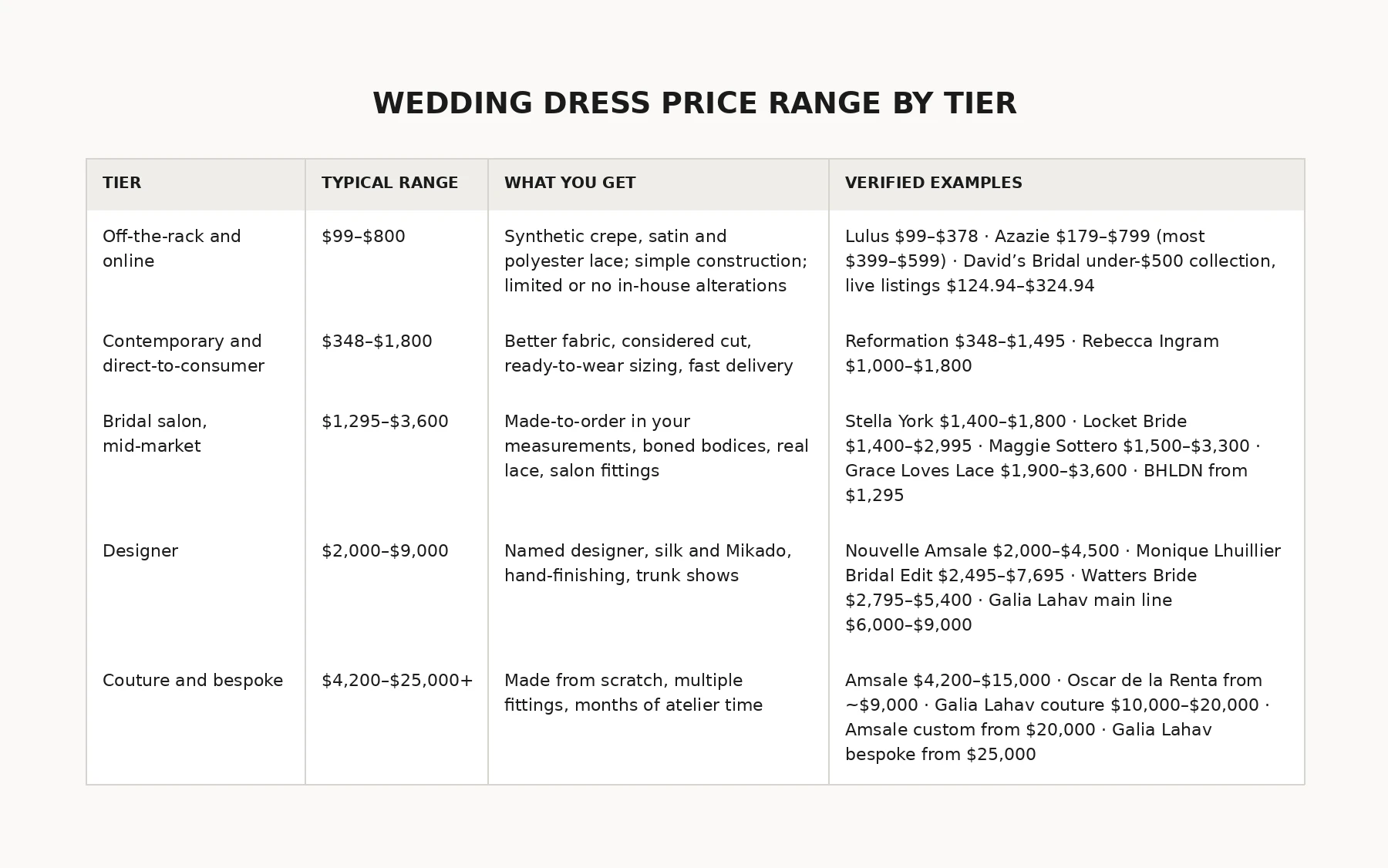
Off-the-rack and direct-to-consumer brands skip the eight-month production wait entirely. Lulus, Azazie and Reformation all ship in days and prices are generally under $400.
Rental options exist, but aren’t as popular. Independent boutiques rent gowns from roughly $200 to $2,000 depending on the designer, and no national platform currently rents actual ceremony gowns. Rent the Runway and Nuuly can help you dress for showers and rehearsal dinners, but not the aisle.
Buy less dress. Choosing crepe over silk Mikado, or a clean bodice over a beaded one, moves the price further than any negotiation will. A short wedding dress takes this to its limit: less yardage, far less hemming, and it reads as a style decision, not a compromise.
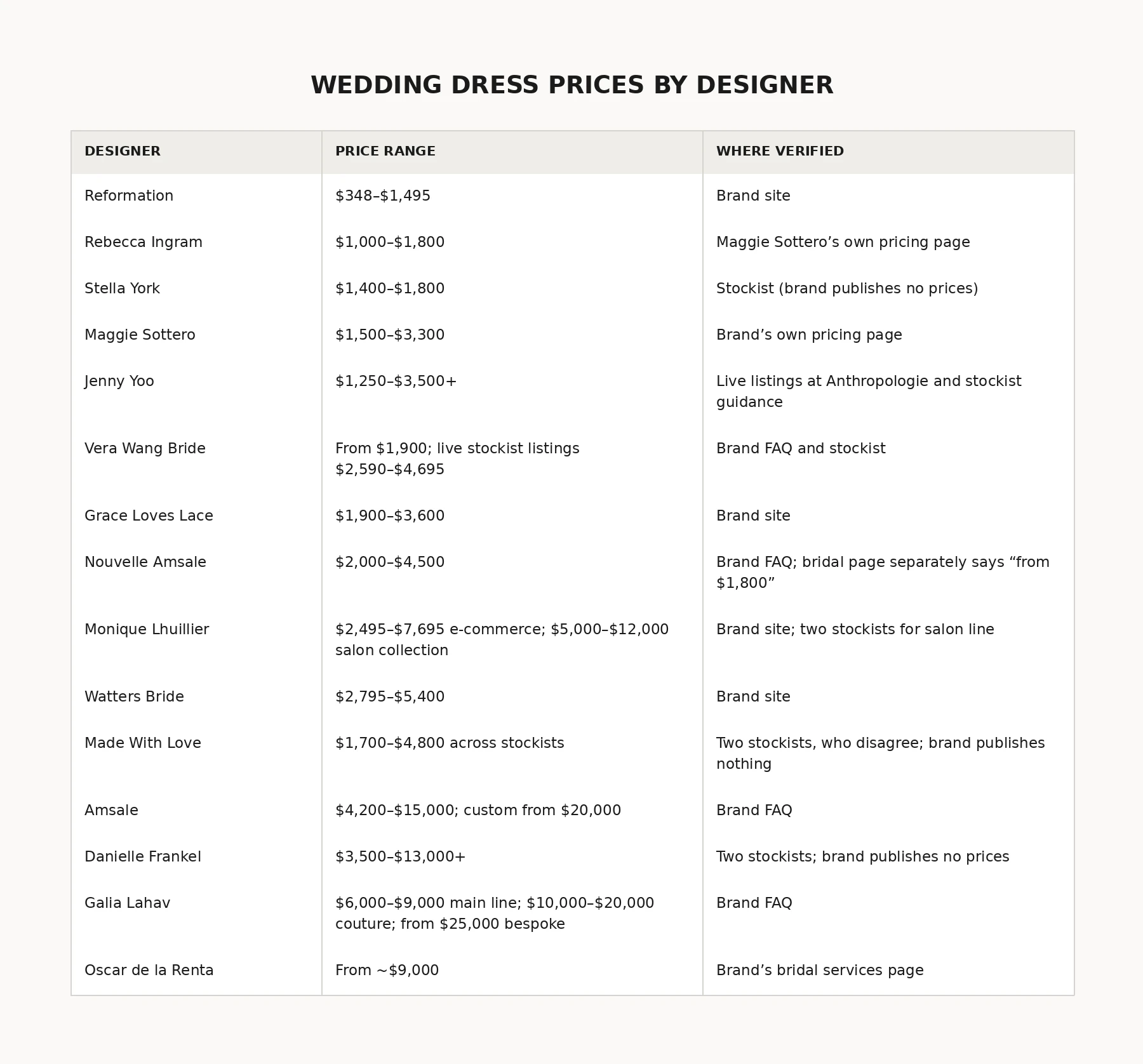
Wedding Dress Prices by Designer
See below for pricing as of August 2026. Bridal houses rarely publish full price lists, so several rows below come from authorized retailers.