Why Couples Choose Dried Flowers Over Fresh
Dried flower bouquets last indefinitely, survive a full day without water, and keep their form as a permanent keepsake, which is the practical case for choosing them over fresh. Where a fresh bouquet is at its peak for hours, a dried one can be arranged well ahead of the wedding and kept as decor or memory long after, with no wilting in heat or handling. The aesthetic case is texture and tone: dried blooms carry muted, earthy color, soft wheat, faded rose, silvery lunaria, that fresh flowers cannot replicate, and their varied textures give a bouquet depth without relying on bright color.
Because they are real preserved flowers rather than fabric or plastic, they read natural and organic, which is the quality that separates them from artificial arrangements and suits the handcrafted, unfussy look many outdoor couples want. Flexibility is a quieter advantage: because dried bouquets do not depend on a flower being in season, a couple can build a look around a specific texture or tone at any point in the year, and the arrangement can be assembled weeks ahead without any risk of wilting. That freedom from both the floral calendar and day-of timing pressure is a large part of why the style has grown from a niche choice into a mainstream one.
There is a trade-off worth naming, since dried flowers are not simply better than fresh. They are more fragile to the touch and can shed or snap, they lack the dewy softness and scent of a just-cut bloom, and their muted palette, while part of the appeal, will not deliver the saturated brights of fresh peonies or ranunculus. The couples happiest with dried bouquets are those drawn to texture, earthiness, and permanence rather than to lush, vivid color and fragrance. Understanding that going in is what separates a dried bouquet chosen on purpose from one chosen for durability alone and quietly regretted.
Dried Flower Bridal Bouquets
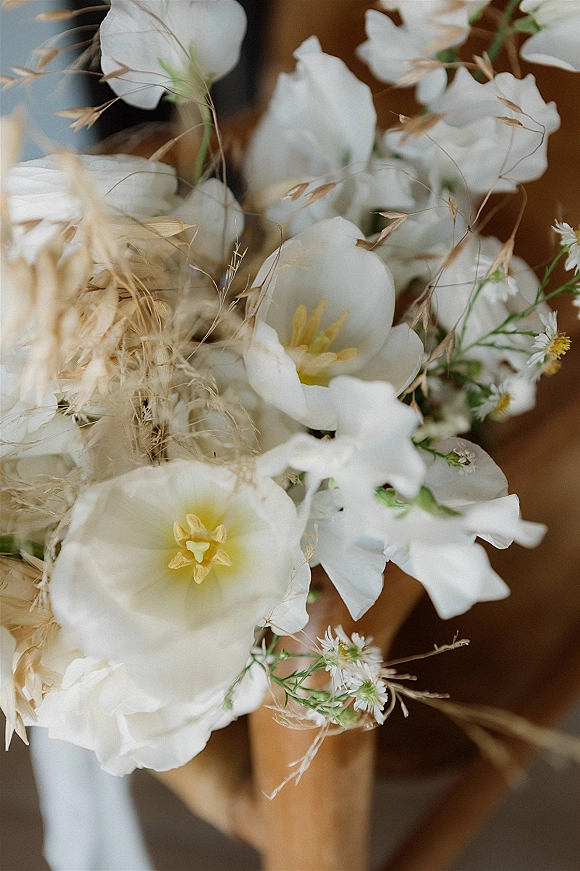
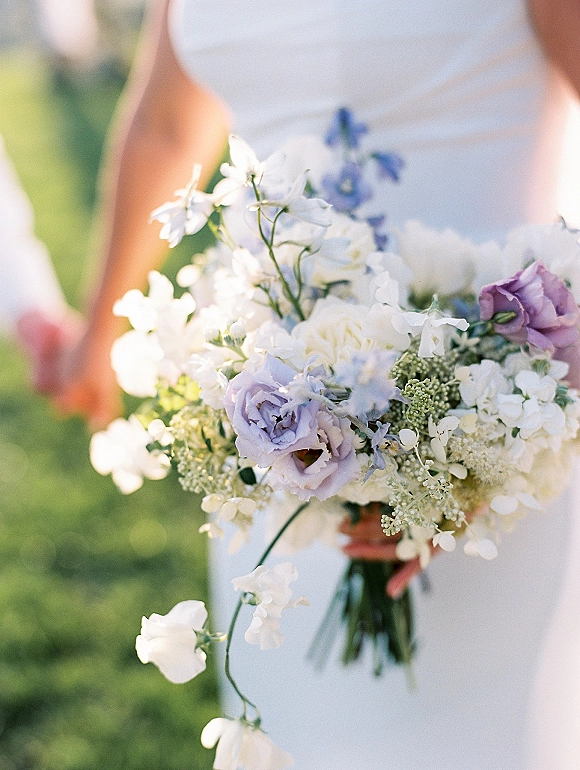
A dried flower bridal bouquet is typically fuller and more textural than its bridesmaid versions, built to be the day’s focal arrangement from premium preserved blooms like larkspur, roses, ranunculus, and ammobium. The bridal version can carry more visual weight and a wider mix of textures, since it is meant to hold the eye, and the construction rewards contrast between soft and structural elements: feathery grasses and airy lunaria play against the denser form of preserved roses and the linear reach of wheat or sea oats.
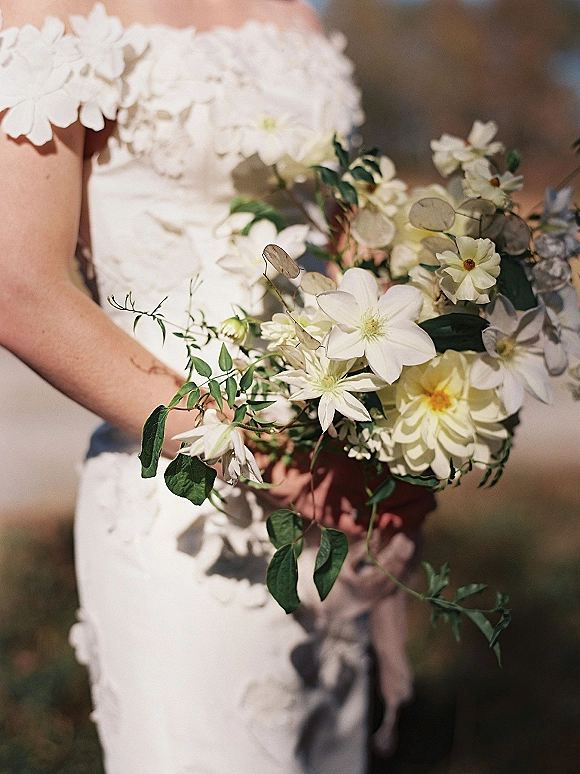
A bridal dried bouquet also does not have to be entirely dried, since one dried element woven through fresh blooms bridges the two and gives the keepsake quality without committing the whole arrangement to muted tones. Scale and shape matter more with dried material than with fresh, because grasses and linear stems read differently than round blooms, so a bridal dried bouquet often carries a slightly loose, asymmetric shape that lets the individual textures show. That looseness is part of the appeal, but it rewards a florist who understands how to balance feathery, structural, and trailing elements so the arrangement looks full and intentional rather than sparse.
Boho and Fall Dried Bouquets
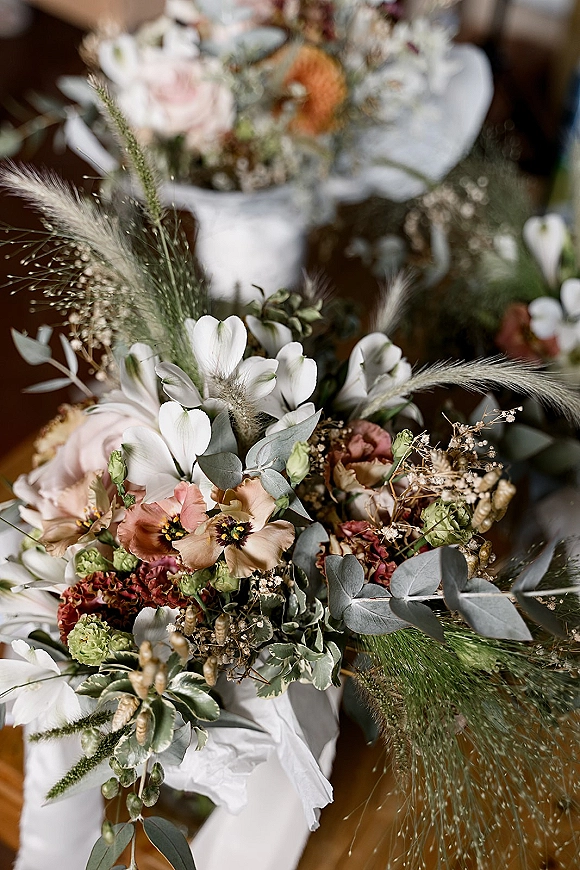
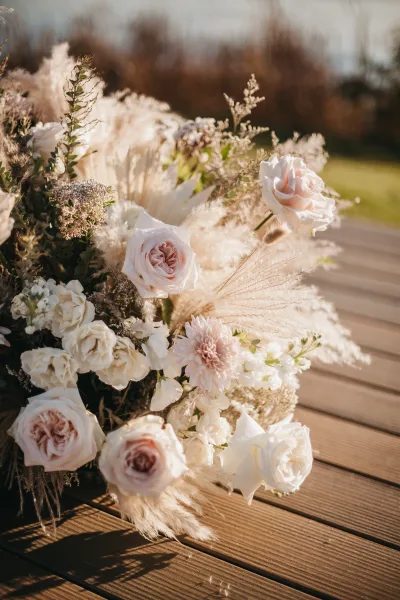
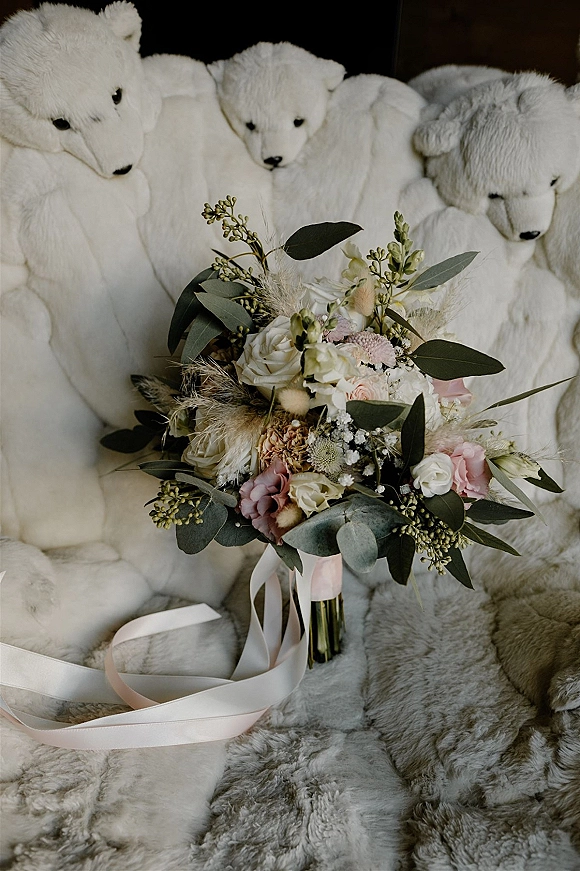
Boho dried bouquets. The signature version of the style is loose, asymmetric, and grass-heavy, built around pampas, bunny tails, and neutral tones for an unstructured, gathered look, with stems that reach and trail at different lengths. The palette is what makes it read boho, warm neutrals of cream, tan, blush, and soft rust rather than bright color, with texture doing the work color usually does. Pampas grass is the anchor element, its feathery plumes giving height and softness, while bunny tails, dried palm, and preserved eucalyptus fill the shape. The look pairs naturally with a relaxed gown and a desert, beach, or field setting.
Within the boho category, the amount of pampas sets the tone. A pampas-heavy bouquet feels soft, oversized, and dramatic, its plumes giving the whole arrangement a cloud-like fullness, while dialing the pampas back in favor of bunny tails, dried florals, and fine grasses gives a tighter, more refined boho look that still reads gathered. Warm neutrals dominate, but a single muted accent, a dried burgundy rose or a stem of soft blue, keeps the palette from going entirely flat. The boho dried bouquet is the version most couples picture when they think of dried flowers, and it is the easiest starting point for a first foray into the style.
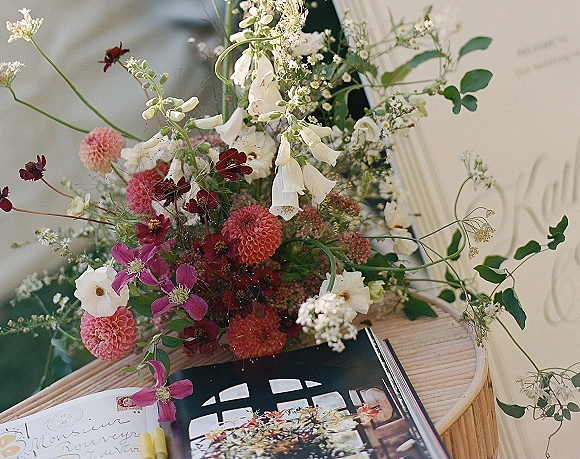
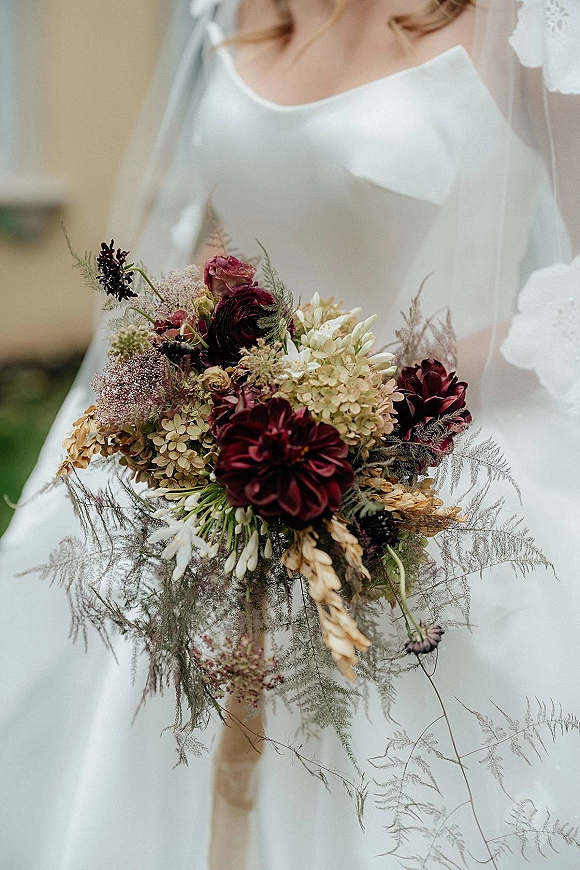
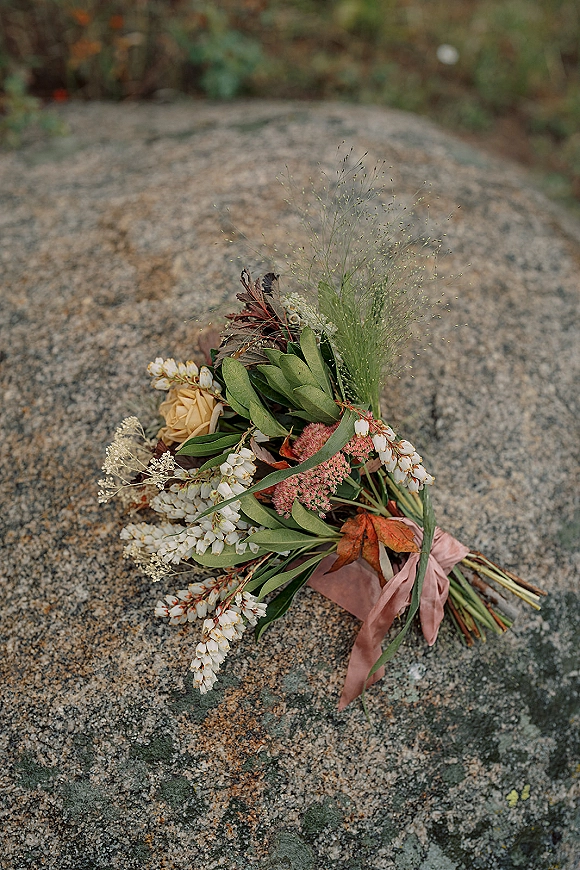
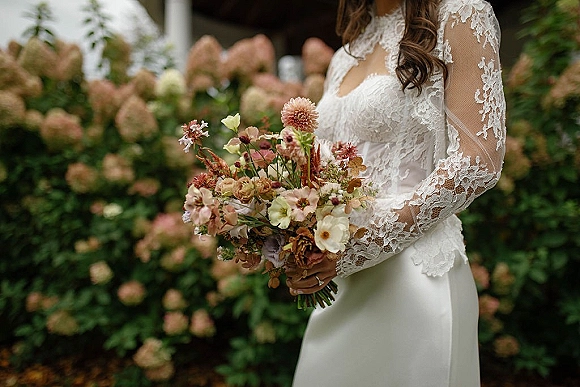
Fall dried bouquets. Autumn dried bouquets lean into the same warm, earthy palette of deep rust, burgundy, ochre, and burnt orange that runs through fresh fall wedding bouquets, using preserved blooms and grasses that echo the season’s harvest tones. Dried material is naturally suited to fall, since wheat, grasses, and seed pods are the textures the season already suggests, and the pairing reads richer than a bright fresh fall bouquet, with preserved dahlias and roses set among wheat, oats, and dried foliage. Because the palette is already warm and low, a fall dried bouquet feels cohesive without much effort, and its keepsake quality resonates with the harvest mood of an autumn wedding.
Small, Mini, and Tall Dried Bouquets
Small and mini bouquets. Condensing the textural mix into a compact, tightly gathered shape suits bridesmaids, minimalist brides, or a delicate look, and the reduced scale asks for restraint in the recipe, since a few well-chosen textures feel cleaner than a small bouquet crammed with variety. A mini dried bouquet often works best around one anchor texture, a cluster of bunny tails or a small gathering of preserved roses, with one or two supporting elements. The small size also makes dried bouquets an easy keepsake to display afterward, since a compact arrangement fits a shelf or shadow box neatly.
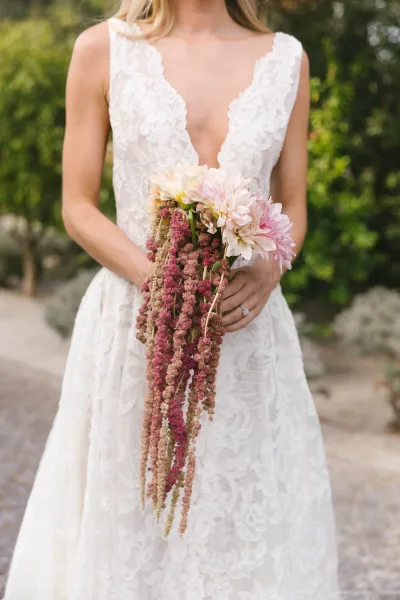
Tall bouquets. A tall dried bouquet uses long-stemmed grasses and linear elements, pampas, wheat, palm spears, delphinium, to build height and a vertical, sculptural shape rather than a rounded one, making a dramatic statement that looks modern and architectural against the otherwise soft dried palette. Height works because dried stems are rigid and hold their line without water, so the bouquet stays upright and defined where fresh stems would droop. The vertical build suits a bride who wants a graphic, contemporary look or a taller frame that can carry the scale, and it needs a fuller base to keep the height from looking sparse.
Signature Textures and Colors in a Dried Bouquet
Dried bouquets are built on texture more than color, so knowing the signature elements helps you brief a florist or shop a look. Pampas grass gives feathery height and softness, bunny tails add small round pops of fluff, and lunaria, the papery silver dollars of the honesty plant, brings a translucent shimmer, while wheat, oats, and other grains add linear structure and a harvest note. Blooms carry the color that grasses cannot: preserved roses, larkspur, ranunculus, and strawflower hold saturated tone, while ammobium and gypsophila add small white accents, and palm spears, sea oats, and dried ferns extend the shape.
The art of a dried bouquet is in balancing these against each other, since a pile of one texture reads monotonous no matter how pretty each stem is. A well-built arrangement usually pairs something feathery, pampas or bunny tails, with something structural, wheat or a seed pod, and something with visible color, a preserved bloom or a dyed accent, so the eye moves across soft, firm, and saturated. Trailing or reaching elements at the edges keep the outline from looking like a solid clump. Naming the textures you want, or pointing to them in real-wedding images, gives a florist a far clearer brief than simply asking for a dried bouquet.
Colored and dyed dried flowers. Dried flowers are not limited to natural neutrals, since many are dyed to extend the palette into color a couple wants. Naturally dried material runs cream, tan, wheat, and faded rose, but dyed pampas, bleached or tinted grasses, and preserved blooms in deeper tones open the style to nearly any color story, from soft pastel to deep jewel. The choice between natural and dyed sets the mood, natural tones reading organic and boho while dyed elements let a dried bouquet match a bold wedding color, and mixing a few dyed accents into a mostly natural arrangement adds a pop of intentional color without losing the earthy character.
Dried Versus Silk, and the Sustainable Appeal
Dried versus silk and artificial. Dried and artificial bouquets both last, but they are not the same thing. Dried flowers are real blooms and grasses that have been preserved, so they carry genuine texture, subtle tonal variation, and an organic irregularity that reads natural up close, while silk and artificial flowers are manufactured, which gives them consistent color and fresh-looking shape but a uniformity that can read as fake in photographs. Dried suits couples who want a real, textural, earthy bouquet and a genuine keepsake; silk suits those who want the look of specific fresh flowers, out of season or in a precise color, without any wilting. Dried is more fragile and can shed, while silk is more robust to handling.
The sustainable appeal. Dried flowers carry a genuine sustainability advantage, since a bouquet that lasts for years replaces the single-use cycle of fresh flowers with an arrangement that becomes lasting decor, with no cold-chain shipping, no floral foam, and no waste at the end of the night. The keepsake quality reinforces the eco appeal, since a bouquet kept as home decor is not discarded at all, and locally dried, seasonally grown material lowers the footprint further. For couples weighing environmental impact alongside aesthetics, dried flowers answer both at once.
Building, Photographing, and Styling a Dried Bouquet
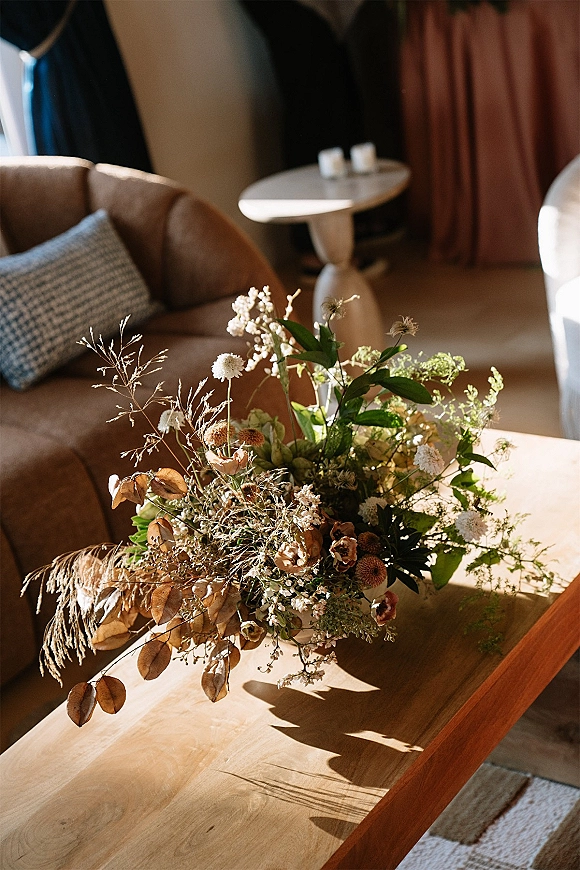
Dried bouquets photograph best when texture and shape do the work color usually does, so the build matters more than in a bright fresh arrangement. Contrast is the key, pairing feathery pampas against structural wheat, or pale lunaria against a saturated preserved rose, so the camera has distinct forms to read rather than a single muted mass. The muted, earthy palette looks richest in warm, natural light and against neutral or organic backdrops, which is why the style suits outdoor, desert, and field weddings, and a bouquet with varied heights, some trailing elements, and a mix of matte and shimmery textures holds up in both close portraits and full-length shots.
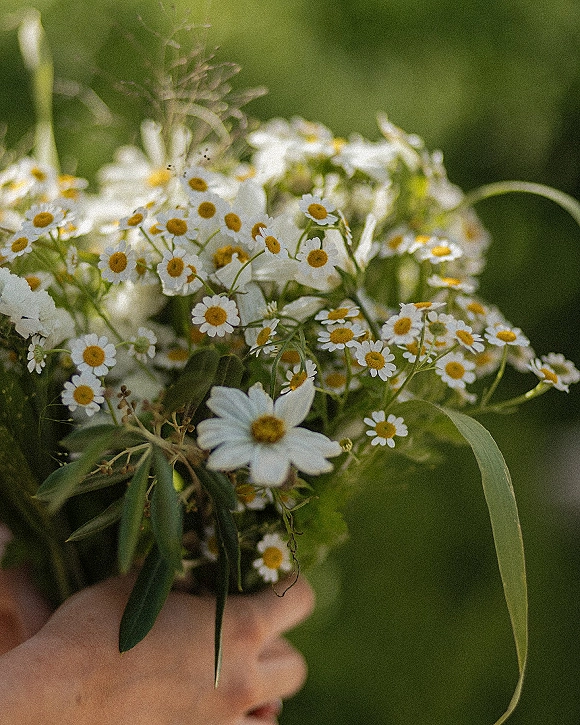
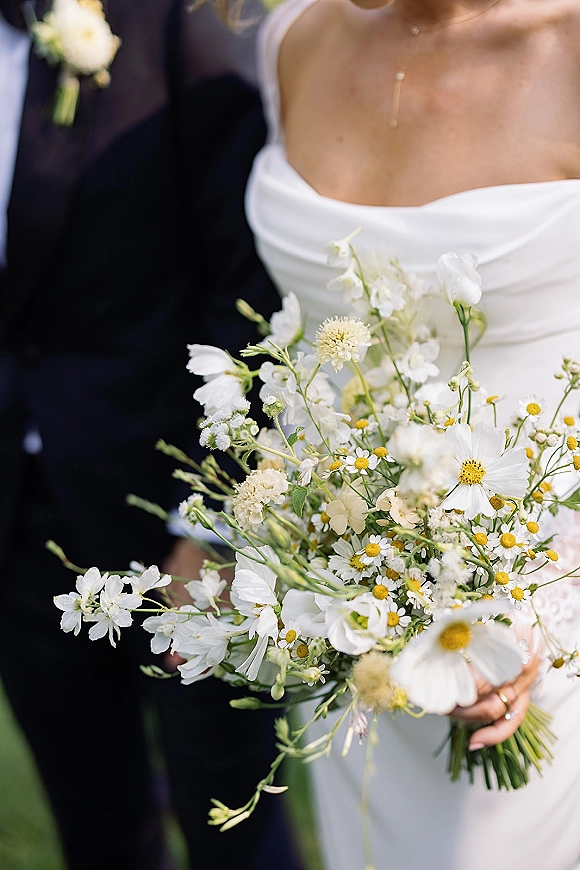
Popular dried aesthetics. Dried bouquets anchor several distinct looks: the boho aesthetic leans on pampas, grasses, and warm neutrals for a loose, gathered feel; the cottagecore look favors soft dried florals, larkspur, and muted color for a romantic, garden-gathered read; and a modern minimalist look uses a few structural dried stems in a restrained, sculptural shape. The setting usually points to the aesthetic, with desert and field weddings suiting the boho grasses, an English-garden or vintage wedding suiting the cottagecore florals, and a contemporary urban wedding suiting the minimalist stems. They also coordinate cleanly with the loose look of a wildflower wedding bouquet or greenery-forward wedding greenery.
Dried Bouquets for the Party, and Ordering Ahead
For the bridal party. Dried flowers suit a party especially well because they are made ahead, survive the day without water, and give each attendant a lasting keepsake. A bride carrying a full dried arrangement can put smaller, simpler dried posies in the hands of her party, repeating a few of the same textures at a reduced scale, and keeping the party’s bouquets to one or two anchor textures looks cleaner than repeating a full boho mix across every attendant. The bouquets can be assembled well before the wedding, removing day-of florist pressure, and they will not wilt while the party gets ready or stands through a long outdoor ceremony.
Ordering, preserving, and displaying. Because dried material is more brittle than fresh, it can shed or snap if packed tightly or knocked, so transport and storage matter as much as the design, and a dry, cool spot away from humidity keeps a finished bouquet intact until the day. There are two routes to dried wedding flowers: buying a bouquet built from dried material gives full control over the look from the start, while preserving your own fresh bouquet after the wedding turns the actual flowers you carried into a keepsake, though the result is less predictable. Afterward, a dried bouquet needs only a dry spot out of direct sun, which fades the muted tones over time, and many couples repurpose it as lasting decor.
A little care extends its life considerably. A light dusting with a hair dryer on a cool setting clears the fine debris that settles into grasses and plumes, a spot away from humidity keeps stems from softening and drooping, and a shot of unscented hairspray helps a shedding pampas plume hold together. Displayed in a vase, hung upside down, or set in a shadow box, the bouquet becomes a lasting piece of the day rather than an arrangement discarded the morning after, which for many couples is the whole point of choosing dried in the first place.
Where a Dried Bouquet Fits Best
Dried bouquets suit relaxed, natural, and outdoor weddings most naturally, boho, cottagecore, beach, and desert settings where the earthy palette and gathered texture belong. They coordinate cleanly with neutral and warm-toned parties, and because dried material comes in a wide range of dyed and natural tones, the palette can be matched to nearly any color story, though the muted, low-saturation read is where the style is strongest.
Brief your florist on whether you want an all-dried bouquet or a dried-and-fresh mix, since the two ship and build differently, and browse the wedding florists directory for real-wedding work that shows dried and preserved arrangements, since sourcing and building with dried material is a distinct skill.
Frequently Asked Questions
Do dried flower bouquets look cheap or artificial?
No. Because they are real preserved flowers and grasses rather than fabric or plastic, dried bouquets read natural and textural, with muted, earthy tones that fresh flowers cannot replicate. The handcrafted, organic look is exactly why they suit boho and relaxed weddings, and quality preserved blooms hold rich color and form.
How long do dried wedding bouquets last?
Indefinitely, with basic care. A dried bouquet is already preserved, so it survives the wedding day without water and can be kept for years afterward in a dry spot out of direct sunlight, which fades the tones over time. Many couples display it at home as lasting decor.
Can I mix dried and fresh flowers in one bouquet?
Yes, and it is a common approach. One dried element woven through fresh blooms, or a mostly dried bouquet with a few fresh focal flowers, bridges the two styles. The mix gives some of the keepsake quality and texture while keeping brighter fresh color in the arrangement.
What flowers and grasses are used in dried bouquets?
Common elements include pampas grass, bunny tails, wheat, lunaria, sea oats, and dried palm for texture, alongside preserved roses, larkspur, ranunculus, and ammobium for blooms. Boho builds lean on grasses and neutrals, while fall versions use preserved dahlias and roses in warm autumn tones.
Are dried bouquets a good choice for an outdoor or summer wedding?
Yes, particularly. Dried flowers do not wilt in heat or need water, so they hold up through a long, warm outdoor day where fresh blooms would fade. That durability, plus the earthy palette, makes them well suited to beach, desert, and field weddings.