Why Eucalyptus Is the Most Popular Wedding Greenery
Eucalyptus leads wedding greenery because it is versatile, fragrant, and available year-round, pairing with almost any flower while adding soft movement and a fresh herbal scent. Its delicate yet lush texture drapes and trails in a way stiffer foliage cannot, so it gives a bouquet a natural, garden-gathered flow rather than a rigid green collar, and the clean, cooling fragrance adds a sensory layer most greenery lacks. It also reads across styles, working in a bohemian trailing bouquet, a rustic wildflower gather, or a chic minimal white arrangement.
Its shape is as useful as its tone. Eucalyptus grows on long, leafy stems that can be left to trail for movement, clustered tight for a green collar, or stripped to a few leaves for a delicate accent, so one plant supplies several roles within a single bouquet. Few other greeneries are this adaptable, and combined with year-round supply and a low relative cost, that range is what makes eucalyptus the default greenery for weddings, from a florist building an entire wedding’s coordinated florals around it to a couple wanting a single trailing accent.
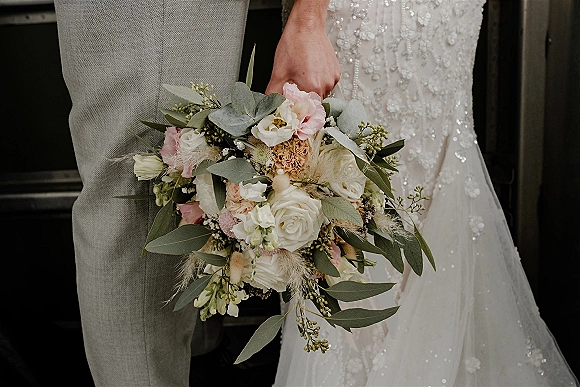
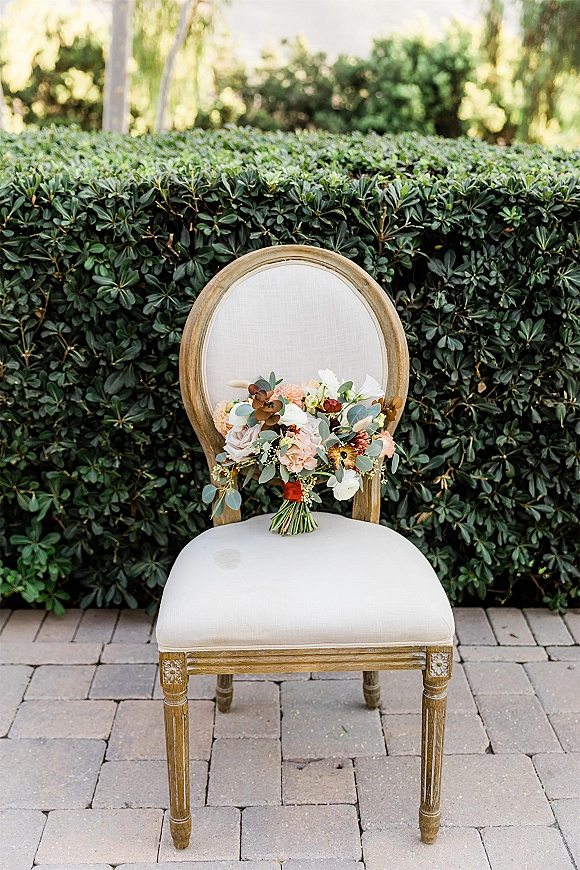
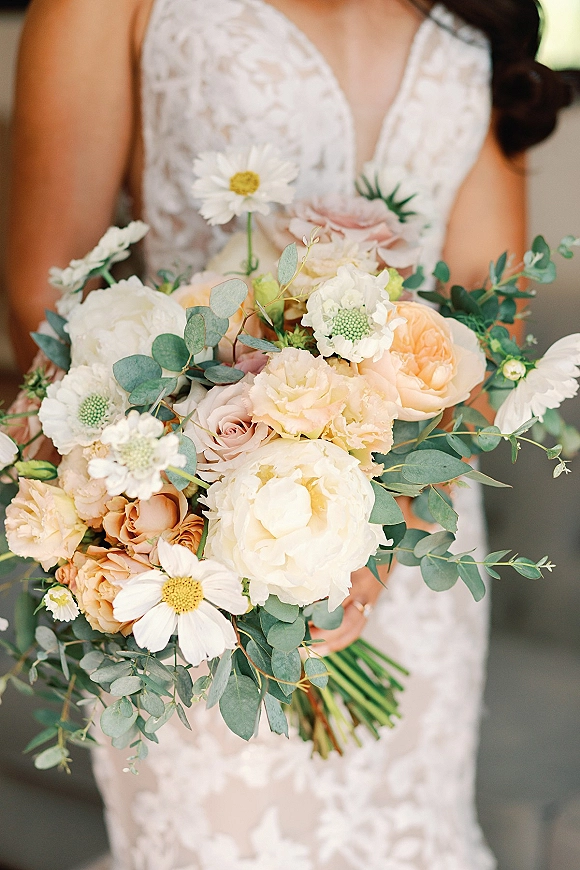
It photographs as well as it handles. The silvery-green tone gives a bouquet cool contrast against warm blooms and neutral contrast against bright ones, so the flowers read cleaner without the greenery competing for attention. In movement, the trailing leaves catch the light and add a sense of life to a still portrait, and in a full-length shot the drape breaks up the outline of the bouquet so it looks garden-gathered rather than a tight, formal ball. That combination of a flattering tone and natural movement is why eucalyptus turns up in so many real-wedding bouquets across every style.
Eucalyptus and Flower Pairings
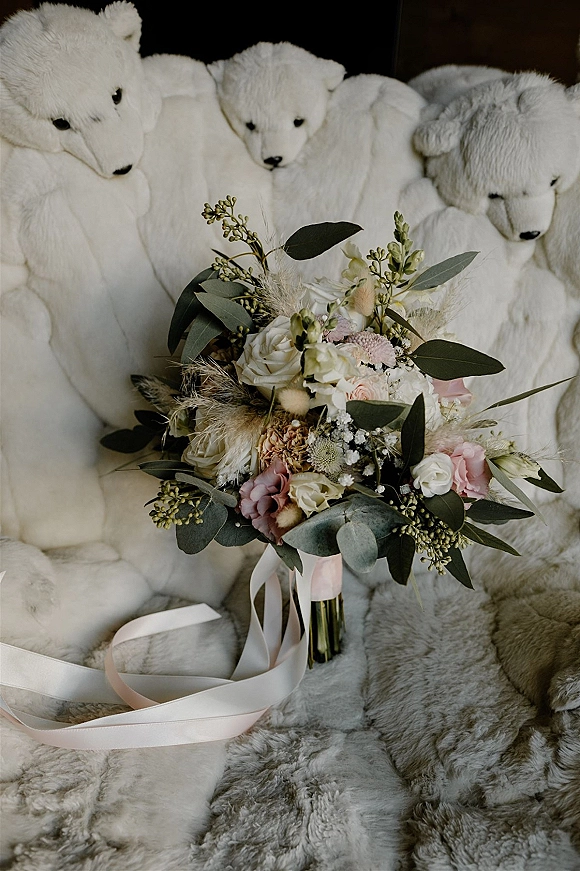
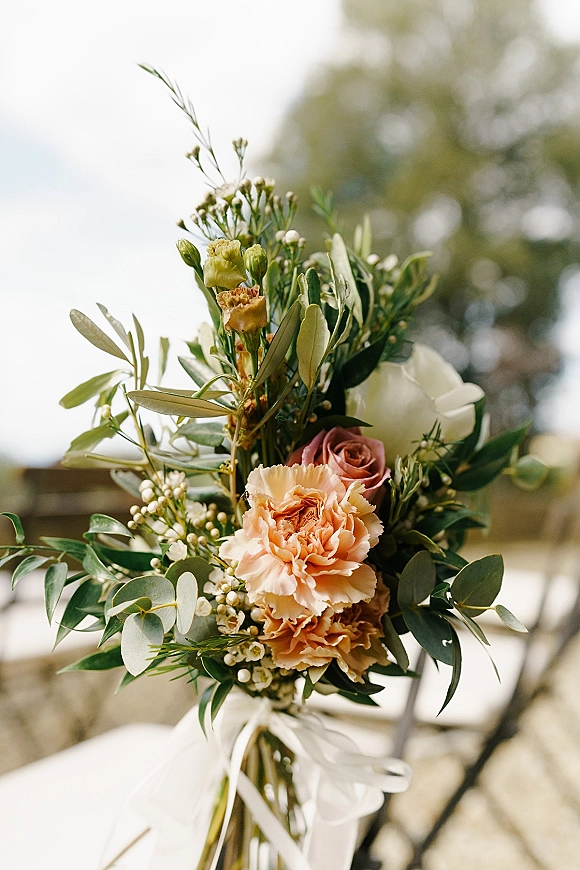
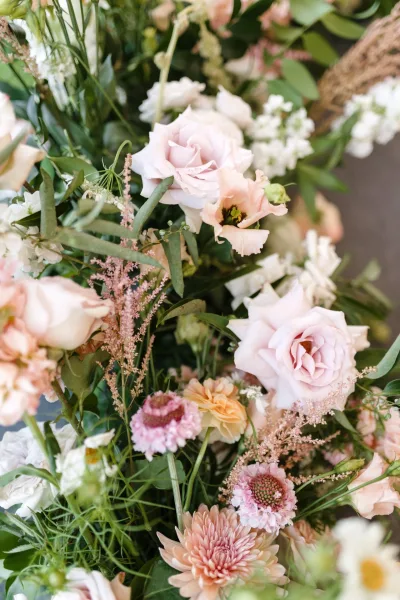
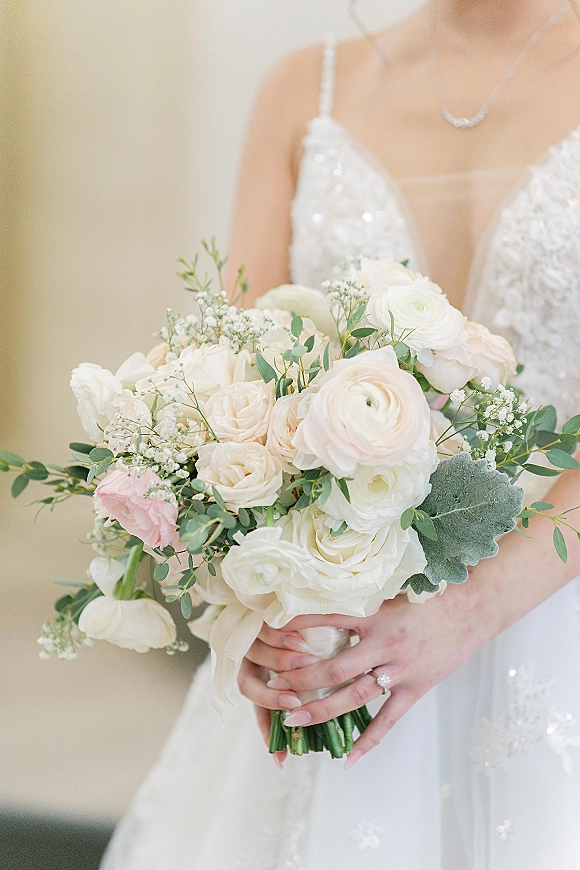
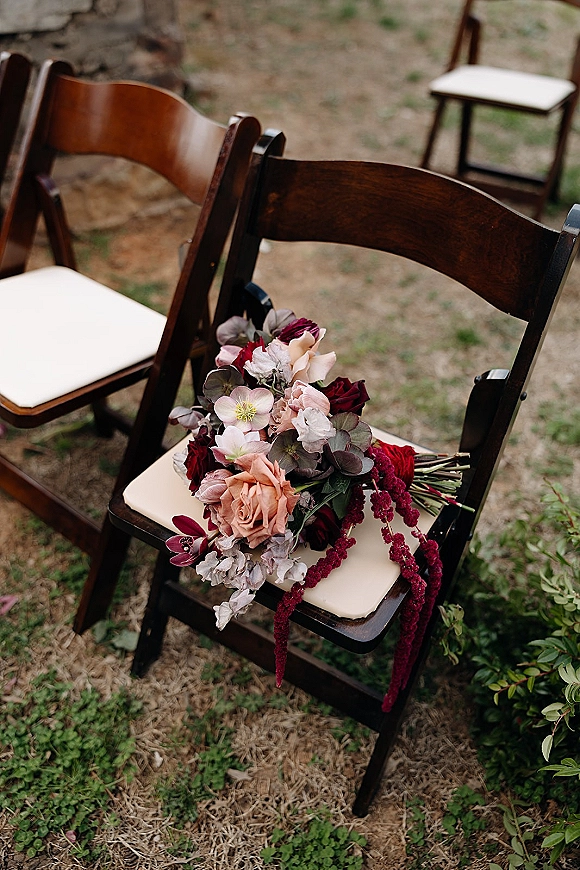
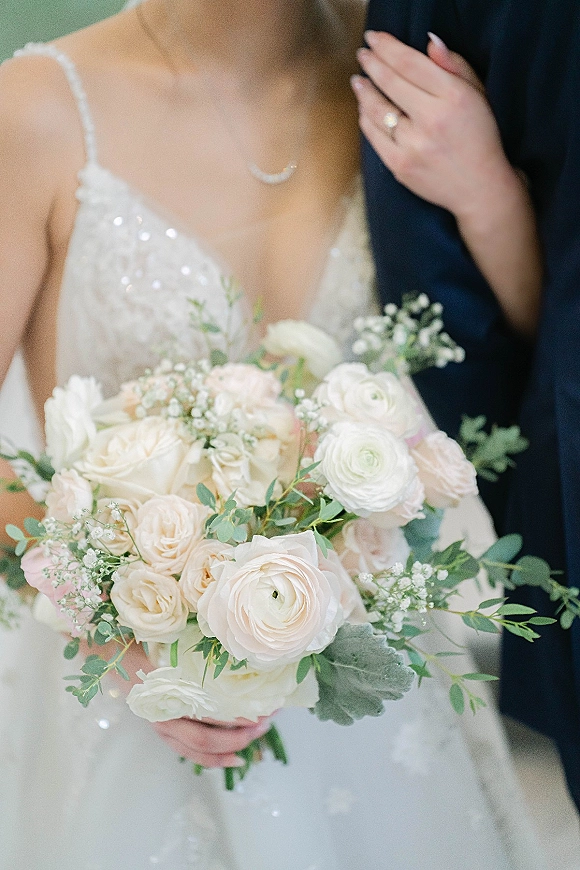
Rose and eucalyptus. The most classic pairing sets the rose’s soft, layered bloom against eucalyptus’s cool silver-green for a balance of romance and freshness, with the greenery framing each bloom instead of crowding it. It suits nearly every palette because eucalyptus is neutral: white or blush garden roses with silver dollar look soft and romantic, while deep red or burgundy roses turn dramatic. The pairing also scales down the flower budget without looking like it, since eucalyptus fills space and adds movement, so a rose-and-eucalyptus bouquet needs fewer roses than an all-rose one to feel full.
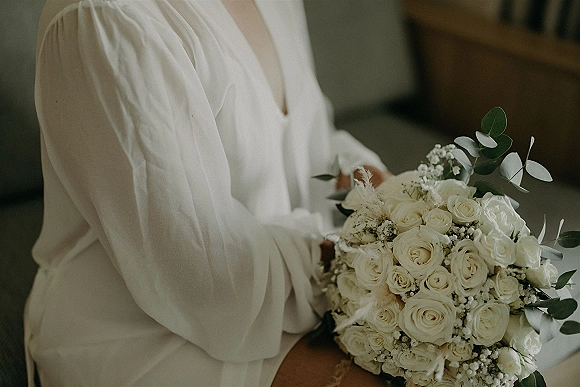
Baby’s breath and eucalyptus. Pairing baby’s breath with eucalyptus creates an airy, budget-friendly bouquet in just two elements, the cloud-like white of the gypsophila against the silvery green of the foliage. Both are inexpensive and widely available, so the combination delivers a full, textured look for far less than a bloom-heavy arrangement, and it reads soft and romantic despite its simplicity. It suits rustic, garden, and relaxed weddings, scales cleanly from a bridal bouquet down to matching bridesmaid versions, and sits naturally alongside fuller white wedding bouquets.
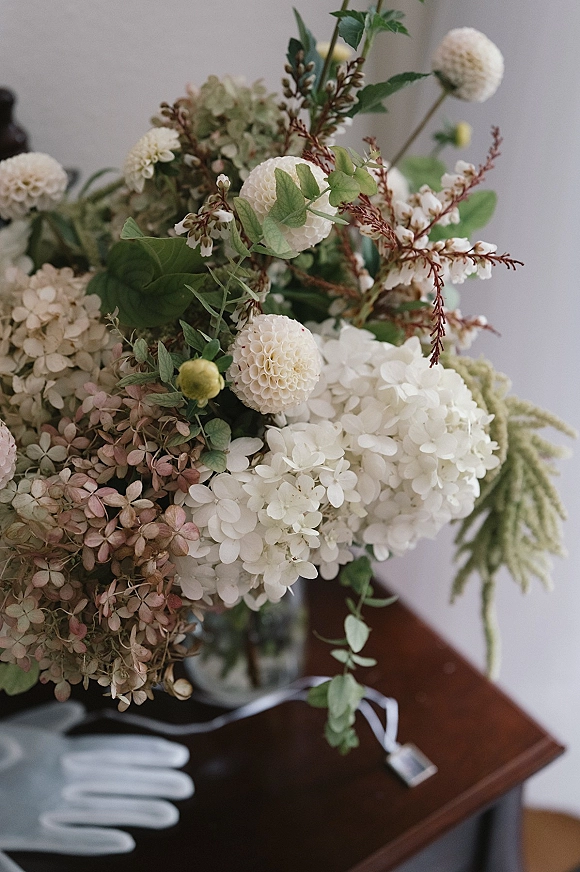
Hydrangea and eucalyptus. This pairing puts volume with movement, the hydrangea’s large, cloud-like head filling the bouquet quickly while trailing eucalyptus softens its dense, rounded mass. A few hydrangea heads build a full bouquet fast, and the greenery keeps that fullness from reading as a solid block, with blue or white hydrangeas and silver dollar reading fresh and garden, or antique-toned hydrangeas with seeded eucalyptus leaning vintage. The ratio decides the look, a hydrangea-led bouquet reading full and traditional while more trailing eucalyptus around one or two heads reads greener and more organic, and the eucalyptus’s hardiness helps a heat-sensitive hydrangea hold through the day.
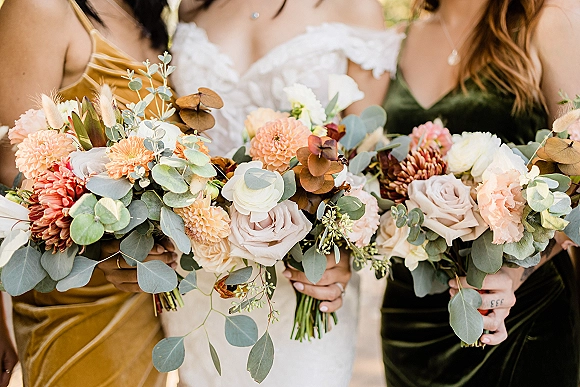
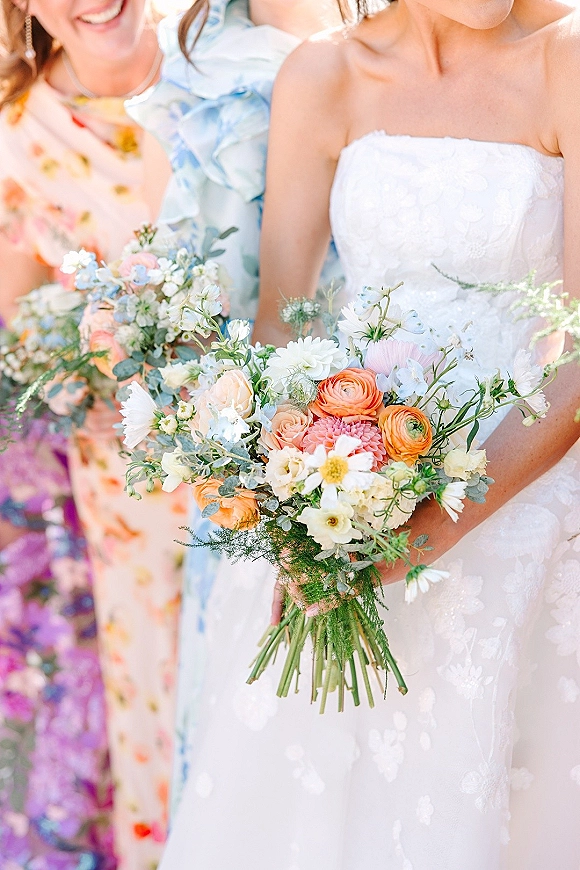
Beyond these three, eucalyptus flatters almost any focal flower a couple might choose. It softens the structured form of peonies and ranunculus, gives dahlias a cool frame that tempers their warmth, and lends anemones and tulips a garden looseness they lack on their own. The rule that holds across all of them is that eucalyptus supports rather than competes: a few trailing sprigs and a light collar are usually enough, since piling in greenery can bury the flowers the pairing is meant to showcase. When in doubt, less eucalyptus with better placement looks more considered than more of it packed in.
Lavender and Baby Blue Eucalyptus
Lavender and eucalyptus. Together these build a bouquet around scent and cool color, the purple spikes of lavender against silvery-green foliage, producing an herbal, Provencal look that is as fragrant as it is pretty, since both elements are aromatic. The muted purple and green palette feels calm and rustic, suited to garden and countryside weddings, and it carries a strong sense of place, evoking lavender fields and a relaxed, understated mood. Dried lavender extends the pairing into keepsake territory, since both elements dry well and hold their color and scent, which makes this combination a natural bridge to dried flower wedding bouquets.
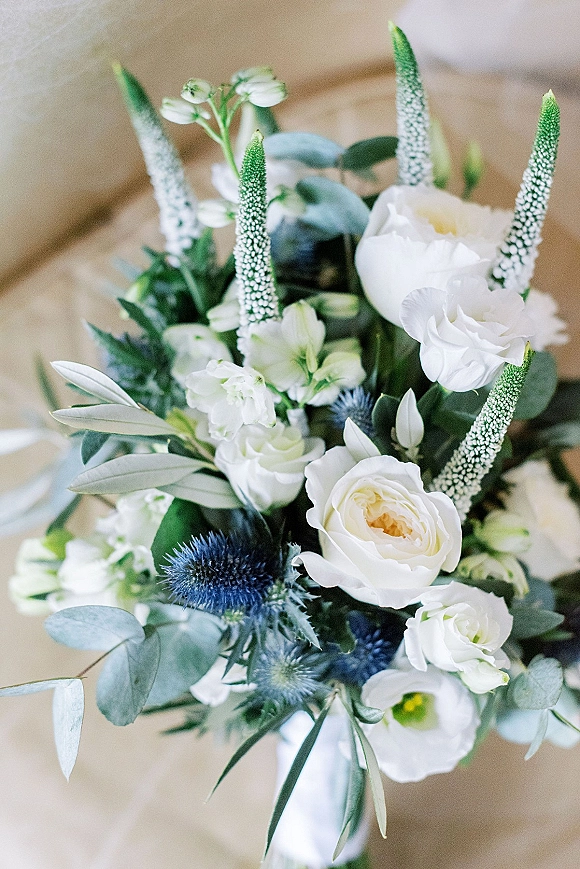
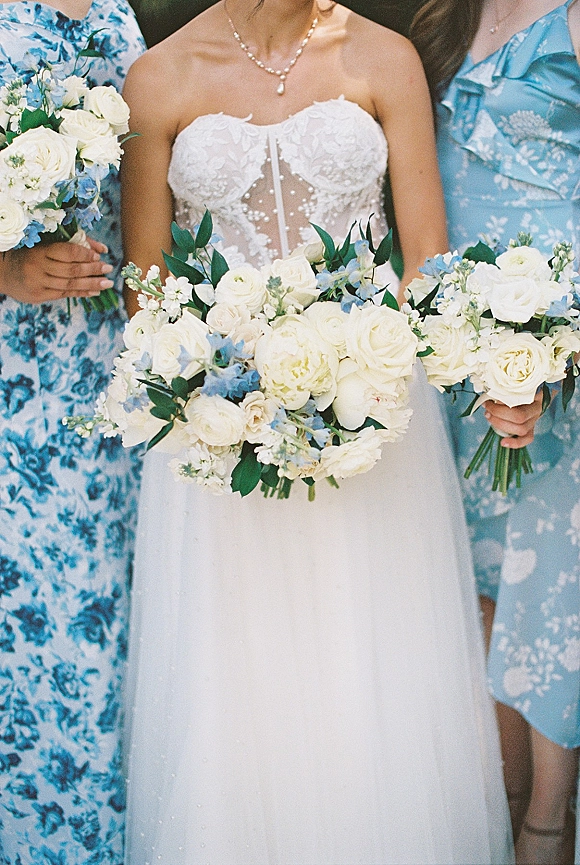
Baby blue eucalyptus. This variety has rounder, powdery blue-toned leaves that look cooler and more silver than standard eucalyptus, making it a favorite when the palette leans blue, dusty, or wintry. The foliage itself carries color, so it can shape a bouquet’s tone without any flowers doing the work, pairing beautifully with white and dusty blue florals or standing on its own in a greenery-forward build. Because the tone is distinctive, baby blue is often chosen deliberately over the greener silver dollar for winter and dusty-toned weddings, and it dries well, holding its cool color into preserved arrangements.
Eucalyptus Varieties: Silver Dollar, Seeded, and More
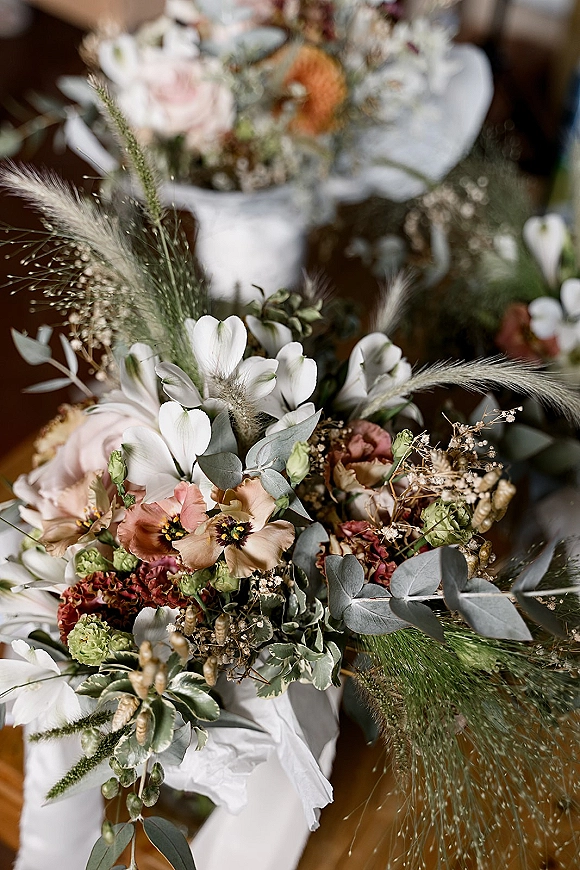
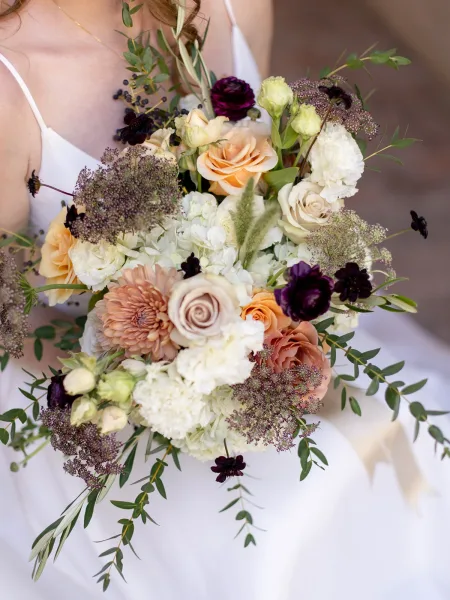
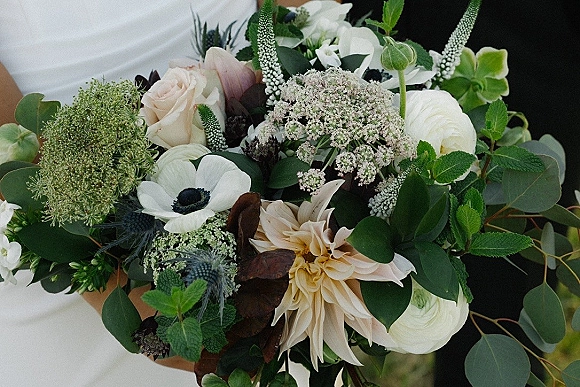
The variety of eucalyptus changes a bouquet’s texture as much as any flower, so choosing it is a design decision rather than an afterthought. Silver dollar eucalyptus, with its round, coin-shaped silvery leaves, is the most common wedding variety and gives a smooth, soft drape that suits classic and romantic bouquets where a clean silvery frame flatters the flowers. Seeded eucalyptus, with narrower leaves and small seed pods along the stem, adds a more textured, wild quality that looks rustic and organic, ideal for boho and gathered builds.
Baby blue and gunnii varieties offer smaller, powdery leaves that work as delicate filler without overpowering the flowers, and true blue-toned foliage for cool palettes. The variety sets the bouquet’s texture and cool-tone intensity before a single bloom goes in, so a florist chooses it to match the mood: smooth and silvery for romantic, seeded and wild for rustic, powdery and blue for wintry. Mixing several varieties in one bouquet is also how a greenery-only arrangement gains enough range to stand on its own.
Other varieties widen the range further. True eucalyptus with long, sickle-shaped leaves, sometimes called willow eucalyptus, gives the most dramatic trail for a cascade or a loose, sweeping bouquet, while parvifolia offers a fine, feathery texture that reads almost like fern. Seeded and silver dollar are the two a couple will encounter most, so the practical decision usually comes down to smooth versus textured, but knowing that the fine and the long-leaved varieties exist gives a florist room to tune the drape and the density precisely to the gown and the setting.
Greenery-Only and White-and-Green Bouquets
Greenery-only bouquets. An all-eucalyptus bouquet skips flowers entirely, relying on the varieties, tones, and movement of the foliage to carry the whole arrangement, and combining silver dollar, seeded, and baby blue gives enough textural and tonal range that it feels full and intentional rather than sparse. The look reads modern, minimal, and organic, a strong choice for a couple who wants green over color or a botanical aesthetic, and because eucalyptus is inexpensive relative to focal blooms, an all-foliage bouquet delivers a generous shape for a modest budget.
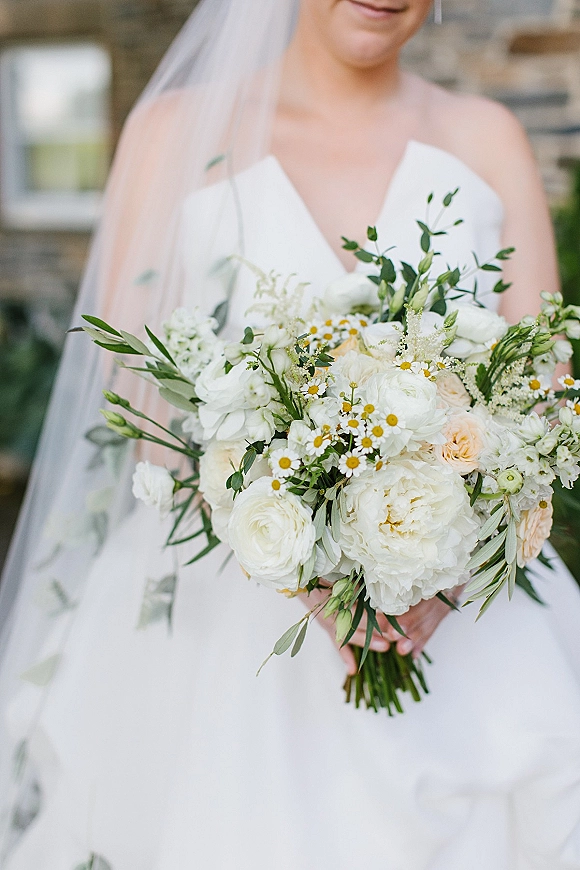
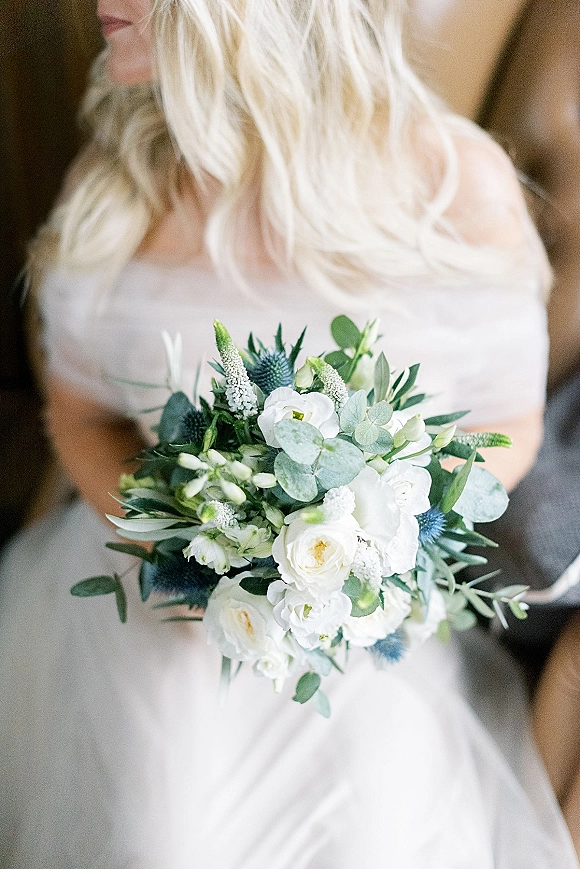
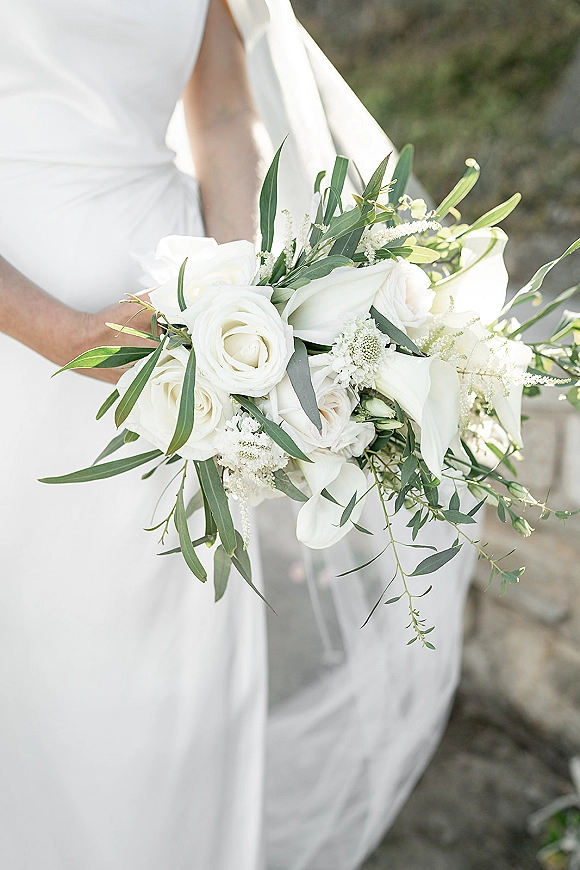
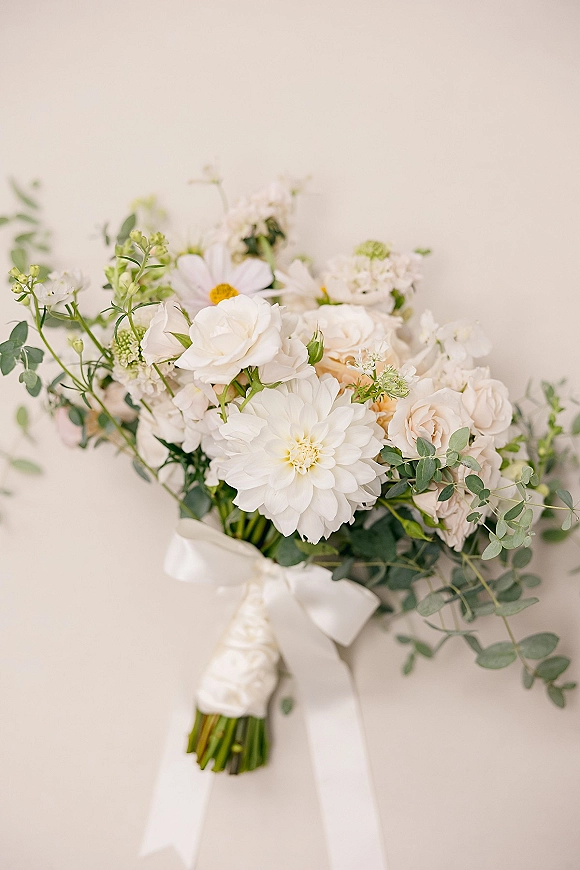
White and green bouquets. One of the most enduring wedding looks sets a few white focal flowers, roses, ranunculus, anemones, or garden blooms, against silver dollar or seeded eucalyptus for a fresh, clean arrangement that suits nearly every style from classic to garden to modern. Eucalyptus keeps a white bouquet from reading flat, since a mass of pale flowers can lose definition without the cool green tone and movement the foliage adds, and the proportion sets the mood, with more white reading formal and bridal and more green reading botanical and relaxed.
The white-and-green formula also travels across every level of formality without changing its ingredients. A tightly clustered white-rose posy with a neat silver dollar collar reads black-tie, the same flowers gathered loosely with trailing seeded eucalyptus feel garden, and a single white bloom against a spray of greenery looks modern and minimal. That range, from one simple pairing, is why so many couples land on white and green as a safe starting point and then adjust the ratio and the wrap to match their venue rather than reworking the flower list.
Seasonal Palettes and Preserved Eucalyptus
Seasonal palettes. Because eucalyptus is neutral and available year-round, it anchors bouquets across every season by shifting its flower partners rather than the greenery. In spring and summer it pairs with soft pastels, garden roses, and peonies for a fresh garden look; in fall it moves to warm blooms and dried accents; in winter it turns cool and structural with white flowers and berries. The variety carries seasonal tone too, green-toned silver dollar reading fresh for warmer months and the powdery blue of baby blue leaning cool and wintry, so one reliable greenery reads as spring-fresh or winter-cool depending on its partners.
That year-round reliability is a real planning advantage, since it means a couple never has to build their greenery around a growing window the way they might with a seasonal flower. The same bouquet shape can be ordered for a February wedding or an August one and look consistent, and if a florist substitutes one focal flower for whatever is freshest, the eucalyptus holds the arrangement’s identity steady through the swap. Few elements give a bouquet that kind of stability across the calendar.
Dried and preserved eucalyptus. Eucalyptus dries and preserves exceptionally well, holding its shape, its cool color, and much of its fragrance, which makes it a bridge between fresh and dried bouquet styles. Preserved eucalyptus keeps a soft, pliable drape rather than turning brittle, so it can be used in a dried or mixed bouquet without losing the movement that makes the fresh version appealing, and a bouquet built partly or wholly on it survives the day without water and can be kept afterward, blending naturally with pampas, bunny tails, and other dried textures.
Preserving eucalyptus is also something a couple can do at home, hanging fresh stems upside down in a dry, dark spot for a couple of weeks, which makes it an accessible way to keep a piece of the wedding flowers. Glycerin-preserved eucalyptus stays softer and more flexible than air-dried, holding a lifelike drape, while air-dried stems take on a slightly muted color and a more delicate feel. Either way, the preserved foliage keeps enough of its scent to remain recognizable, so a kept bouquet carries both the look and the smell of the day forward.
Fragrance, Party Coordination, and Budget
The fragrance. Eucalyptus is one of the few wedding greeneries with a distinctive scent, a clean, cooling, faintly medicinal fragrance that adds a sensory layer most foliage lacks and releases more as the leaves are handled and warmed. Combined with equally aromatic flowers like lavender or garden roses, it builds a bouquet that is as much about scent as sight, and for anyone sensitive to strong floral perfume it offers a fresher, herbal alternative while still giving the bouquet a presence beyond its look.
Party coordination and budget. Eucalyptus ties a whole wedding together because a few sprigs coordinate the bouquet with boutonnieres, corsages, and the wider florals at almost no cost, giving one consistent green tone across the couple, the party, and the ceremony arrangements. It is also one of the most budget-friendly ways to build a full bouquet, since the foliage is inexpensive yet delivers volume and a finished look, and greenery-forward or all-eucalyptus bridesmaid bouquets cost far less than focal-heavy arrangements while still reading cohesive. A wedding florist can run the same variety through every piece so the whole day shares one green thread.
Using eucalyptus as the connective element is also what lets a couple concentrate their flower budget where it shows most. Spending on a fuller, more expensive bridal bouquet while keeping the party’s bouquets greenery-forward, the boutonnieres to a single leaf, and the centerpieces built on runners of eucalyptus and a few focal stems, holds the overall cost down without the wedding looking sparse. Because the same greenery threads through every piece, the result feels intentional and coordinated rather than budget-driven, which is the quiet efficiency that makes eucalyptus a planner’s default.
Caring for Eucalyptus and Styling It From Green to Flower-Forward
Eucalyptus is among the hardiest wedding greenery, holding up well out of water through a long day, which is a large part of why florists reach for it so often. Its leaves resist wilting and keep their color and scent for hours, so a eucalyptus bouquet stays fresh from the ceremony through the reception with little intervention, needing only to be kept cool and out of direct heat until the ceremony, and its fragrance can actually intensify as the leaves are handled.
Eucalyptus stretches from a supporting role to the whole show: an all-eucalyptus bouquet looks modern, minimal, and green, while a few trailing sprigs simply frame a bloom-heavy arrangement and add movement to its edge. Tell your florist which variety and how much trail you want, since those two choices shape the bouquet more than the flower list does, and for a fuller greenery story across the day, eucalyptus bouquets coordinate naturally with backdrops, garlands, and the wider wedding greenery a couple might carry across the day.
Frequently Asked Questions
Why is eucalyptus so popular for wedding bouquets?
Eucalyptus is versatile, fragrant, hardy, and available year-round, and it pairs with almost any flower. Its trailing leaves add soft movement and a fresh herbal scent, and it works across bohemian, rustic, and minimal styles, which is why it is the most-used wedding greenery.
What is the difference between silver dollar and seeded eucalyptus?
Silver dollar eucalyptus has round, coin-shaped silvery leaves and gives a smooth, soft drape suited to classic and romantic bouquets. Seeded eucalyptus has narrower leaves with small seed pods along the stem, adding a more textured, wild quality that feels rustic and boho.
Can a bouquet be made of only eucalyptus?
Yes. An all-eucalyptus bouquet combining several varieties reads modern, minimal, and green, and it is a popular choice for couples who prefer foliage over flowers. Mixing silver dollar, seeded, and baby blue varieties gives the greenery-only bouquet enough texture to stand on its own.
What flowers pair best with eucalyptus?
Roses are the classic partner, along with baby's breath for an airy budget look, lavender for a fragrant herbal palette, and hydrangea for quick volume. Because eucalyptus is neutral in tone, it complements nearly any flower color from soft blush to deep burgundy.
Does eucalyptus hold up through a wedding day?
Yes. Eucalyptus is one of the hardier greeneries and holds up well out of water through a long day, which is part of its appeal. It also dries well, keeping its color and scent, so eucalyptus bouquets can be preserved as a keepsake afterward.