How Much Red Goes on a Red and White Wedding Dress
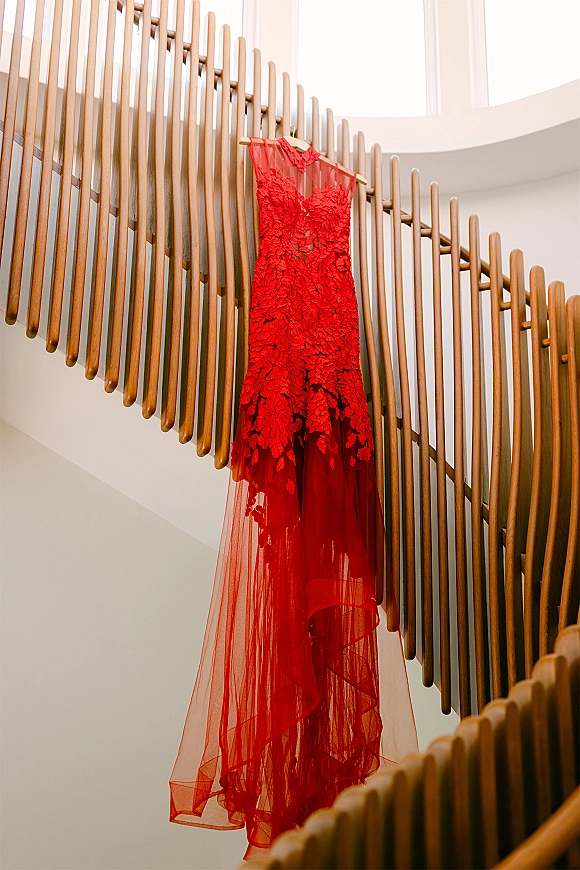
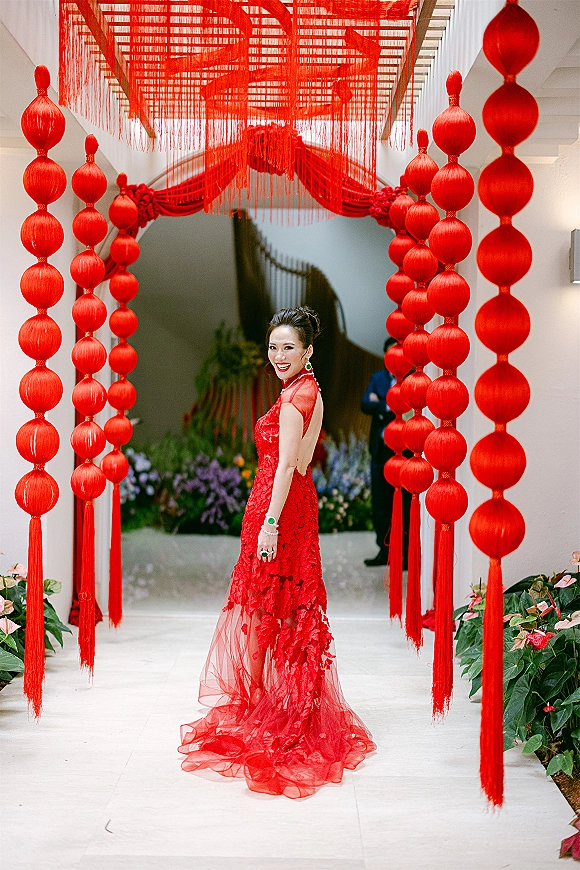
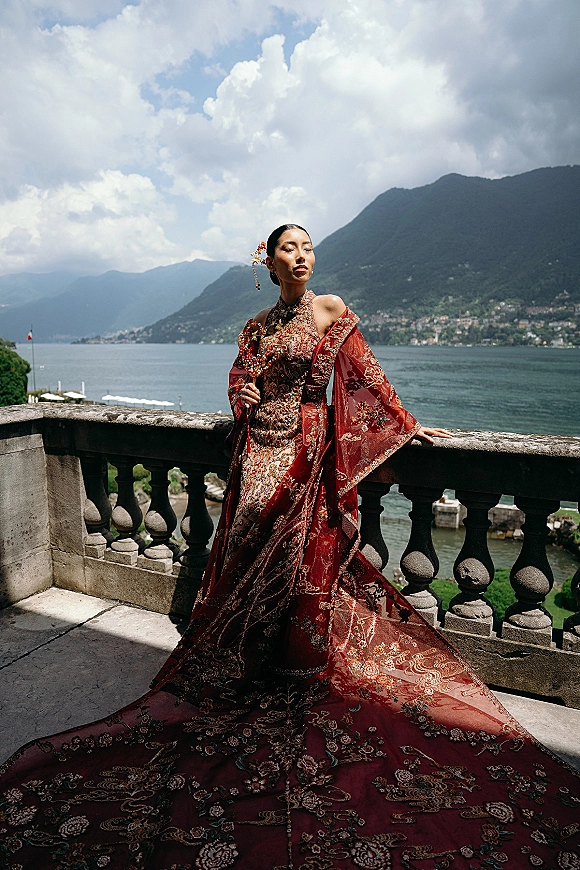
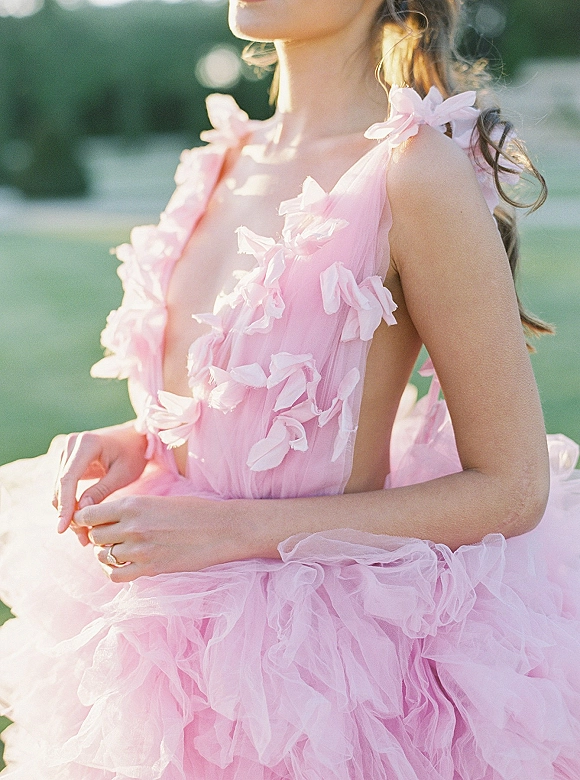
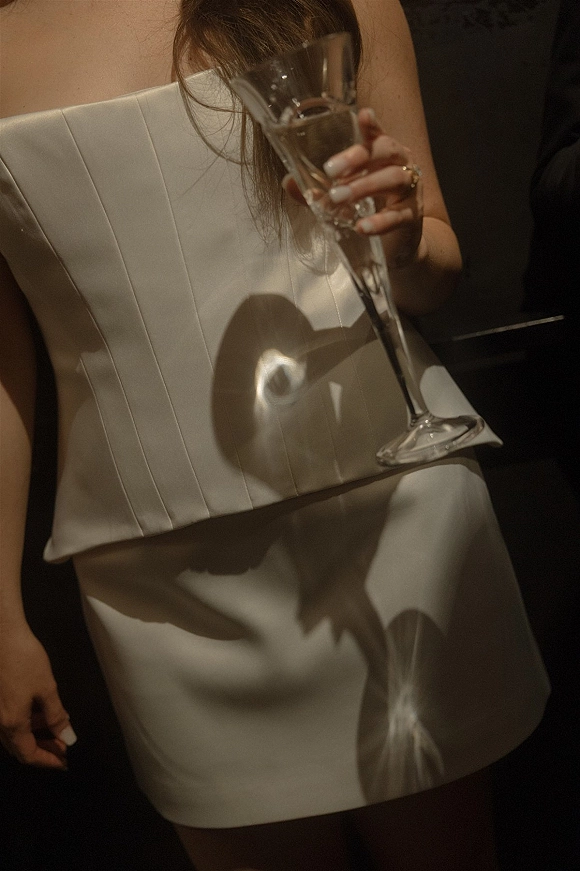
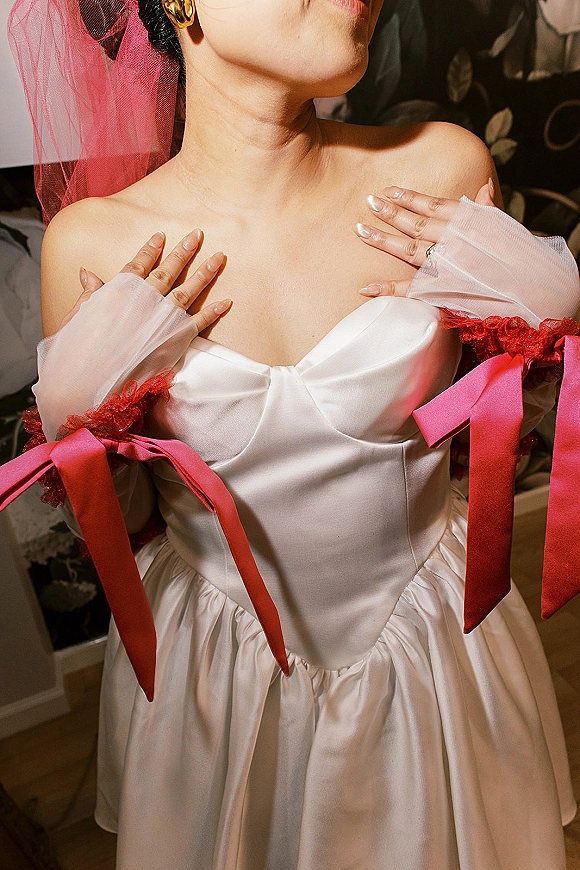
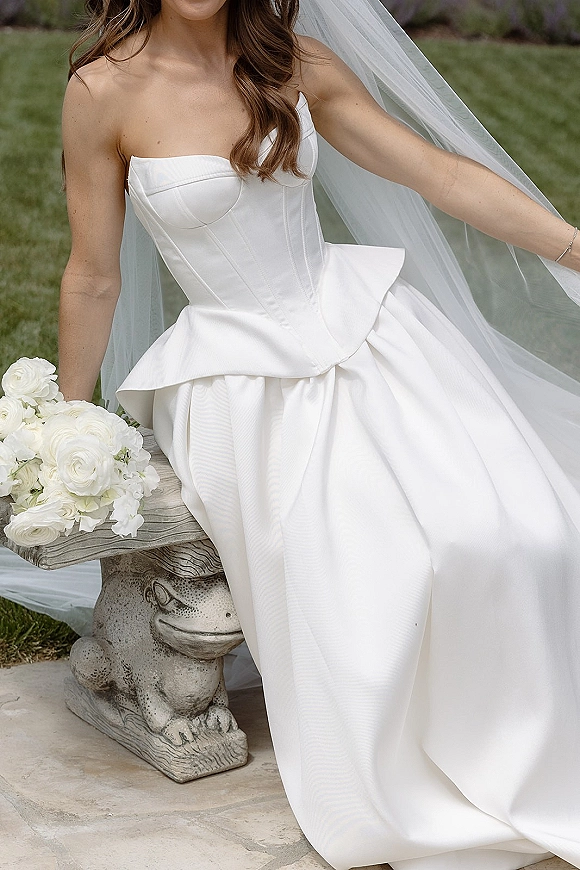
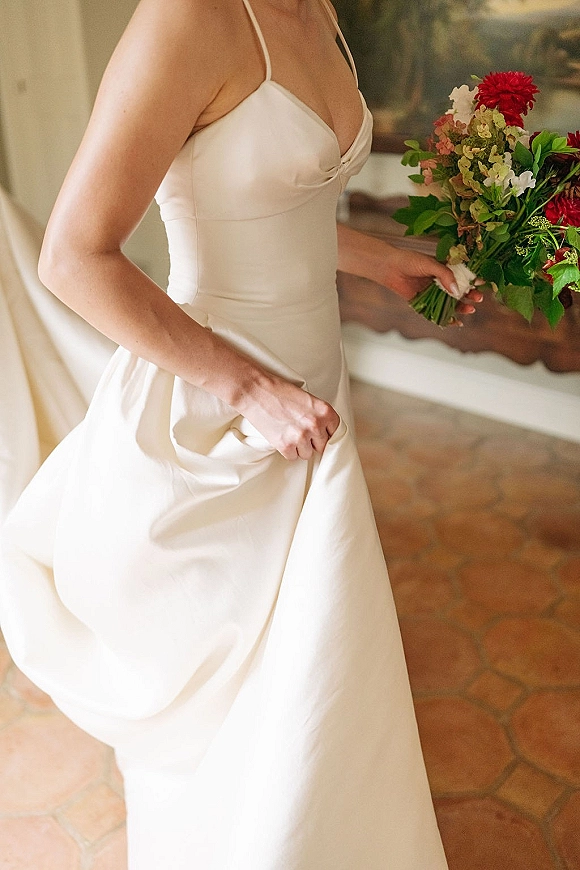
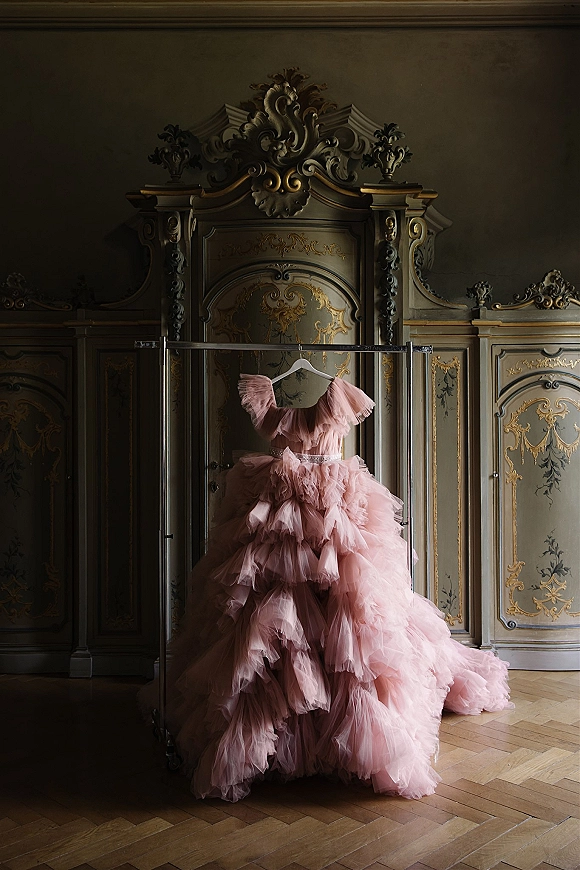
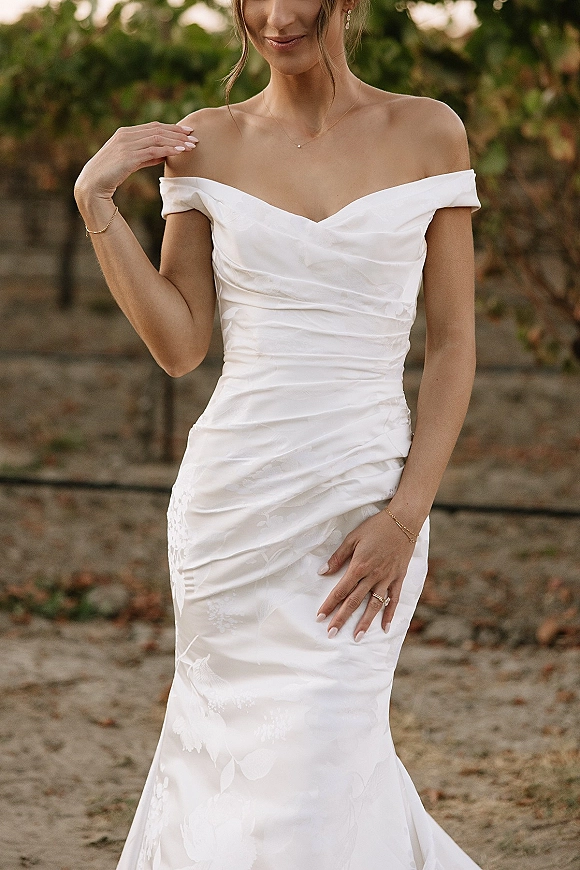
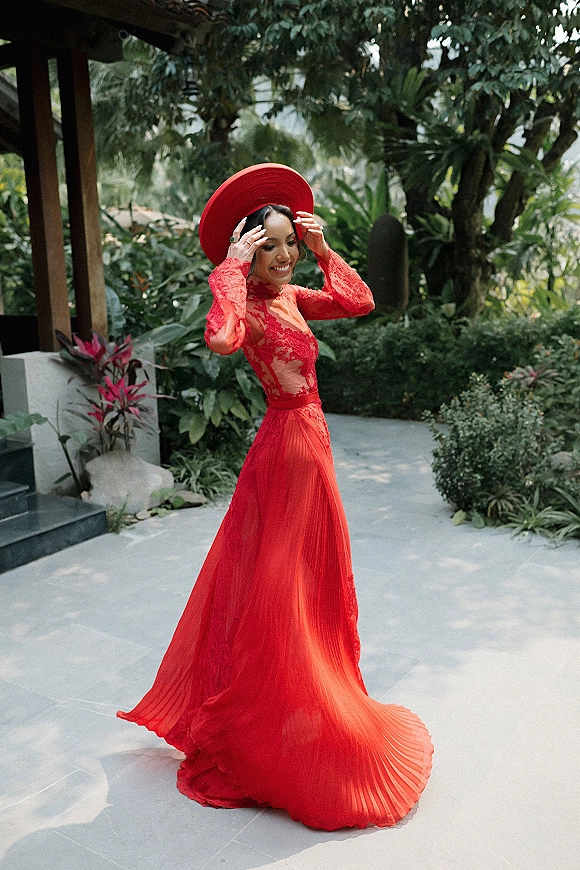
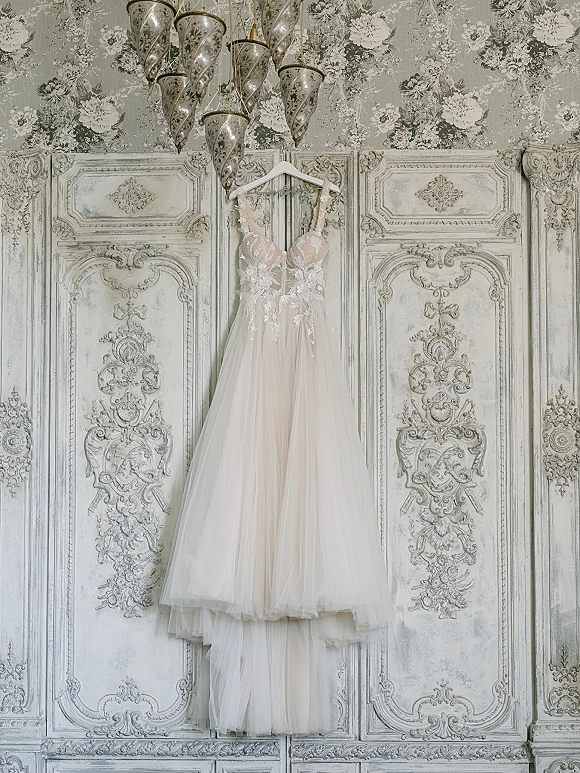
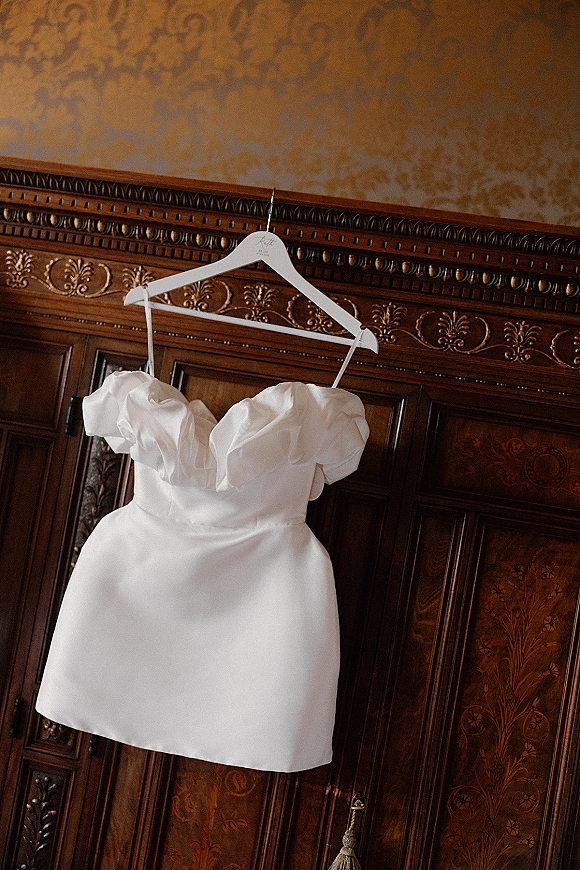
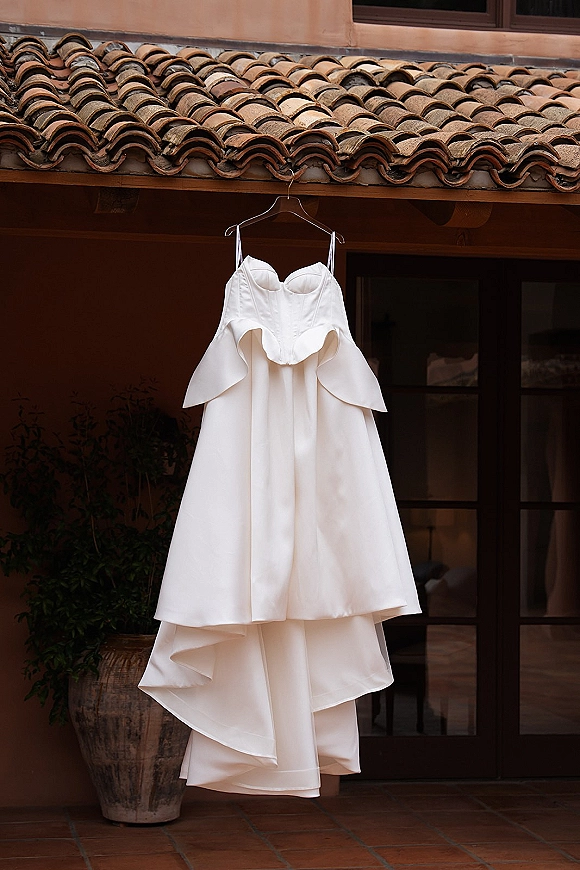
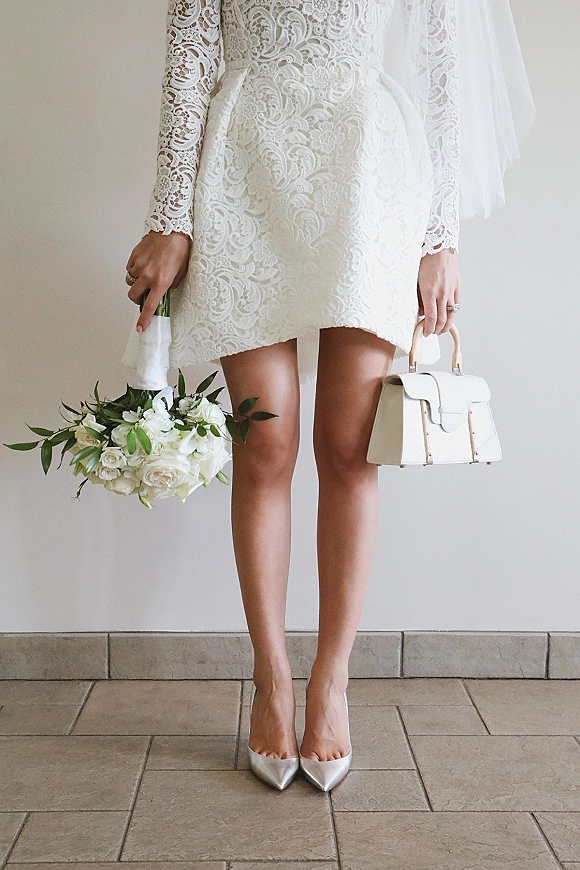
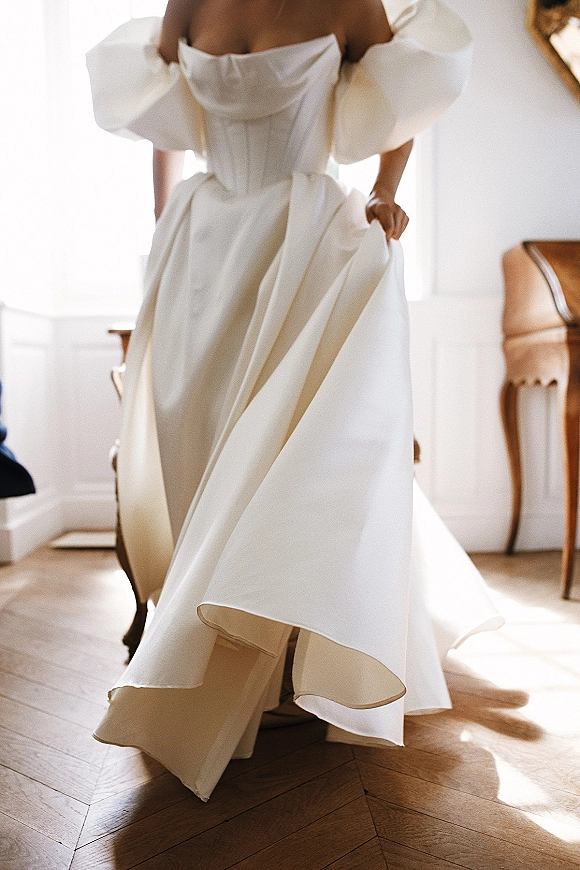
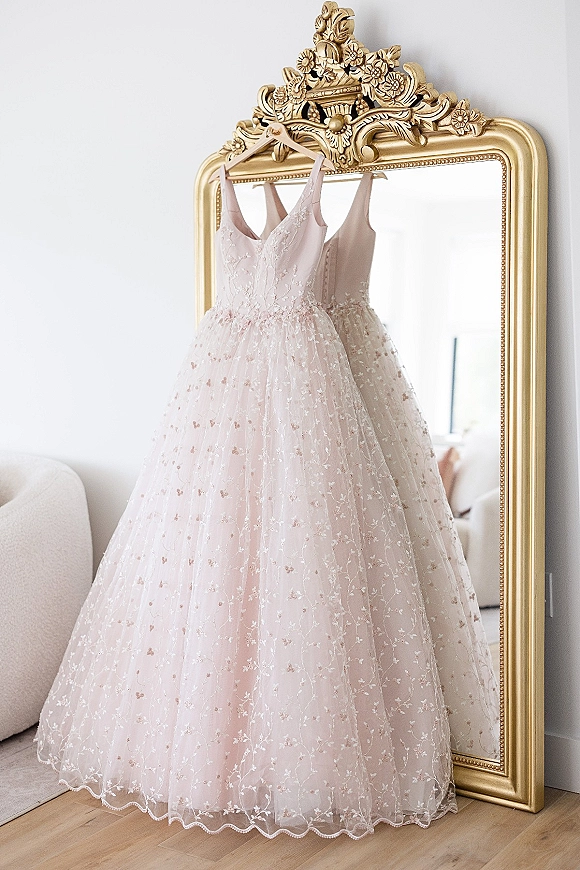
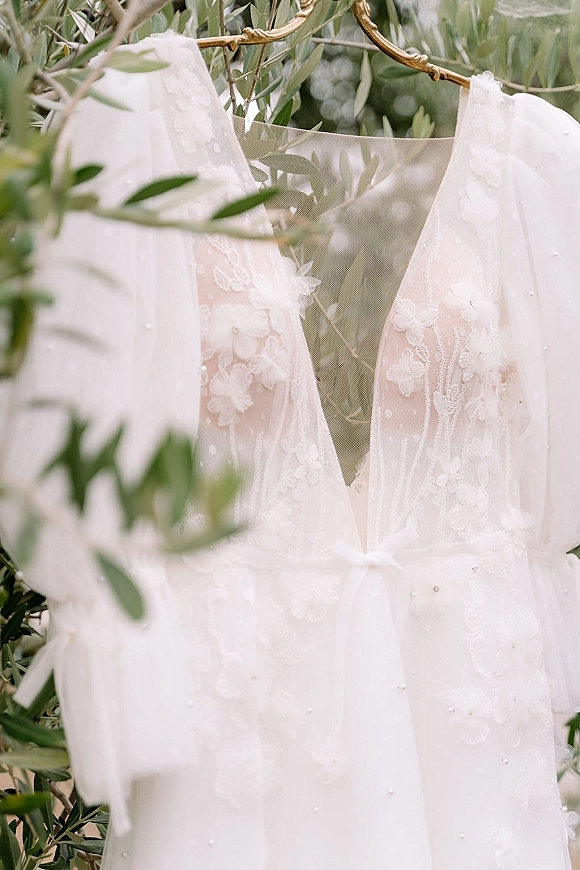
Red and white covers five different dresses, and the version you have in mind decides the price and the lead time. Scroll the gowns below and watch where the color sits: at the hem, at the waist, under the lace, or across the whole skirt. That placement is the decision, and everything else follows from it. Nothing else about the gown matters as much, including the silhouette.
Red embroidery or applique on white is the most common and the least committed. Red thread traced through white lace. A scatter of red florals climbing an ivory bodice. Beading at the waist that catches the light only when she turns. From the back of a church the gown still registers as white, and this is the one version on this list a seamstress can add to a dress you already own.
A red sash or hem band is the one you can undo. A wide grosgrain ribbon at the natural waist, or a length of silk knotted at the back and left to fall the length of the train. It comes off between the ceremony and the reception, or goes on for the reception alone, which makes it the version to choose when only half the day calls for color.
White lace over a red underlay is the quietest of the five and the one that changes most as she moves. From across a room it reads as shadow in the lacework. Up close the red resolves, through the open petals of the guipure and along the scalloped edge at the hem. The lining does the work, so ask what shade it is before ordering: a scarlet underlay beneath three layers of tulle arrives closer to blush than to red.
A dip-dyed red hem is the hardest to specify and the most alive in motion. The color pools at the floor and thins upward, and every step sends the gradient sliding across the layers underneath. Where the fade starts changes the whole gown: begin it at the hip and this is a red dress with a white top, begin it at the knee and it is a white dress with a red hem.
A red bodice or a red skirt against white is the boldest and the most expensive to fit. No gradient, no ambiguity: a hard line at the waist, one color above it and one below, readable from the last row of chairs. That seam has to land exactly on the body, and moving it later means re-cutting both halves. Order this one from measurements taken by a seamstress. A corset wedding dress in one color is far simpler to alter.
If you want one recommendation instead of five options, take the underlay. It holds its color in a dark church and photographs as depth rather than as a stripe. A satin sash flares under a photographer's flash; an underlay never does. The sash is the safer choice. The underlay is the better dress.
A gown that is red end to end with no white at all is a red wedding dress rather than this, and red against black is a different look again.
White Wedding Dresses With Red Accents: the Least Red You Can Wear
A white wedding dress with red accents keeps the gown bridal from a distance and puts the color in the details: red embroidery through white lace, a sash at the waist, red buttons down the back, or a red hem band. Shoes and a bouquet count too.
This is the version most people picture when they search for red and white, and the only one that works on a gown already hanging in a closet. A seamstress can trace red thread through existing lace, swap a run of covered buttons for red ones, set a band into a hem, or line a train in red, for a fraction of what a two-tone gown costs to cut from scratch. Done well it looks like it was cut that way.
Placement decides how much red the camera sees, and the gowns below make the case better than any rule does. Red at the hem photographs in every full-length frame and disappears in portraits. Red at the neckline or on the bodice shows in close-ups and in every photograph taken across a table. Pick the one that matches the shots you care about.
What to Ask Before You Order a Red and White Wedding Dress
Two-tone gowns go wrong in ways a single-color gown cannot, and nearly all of it is decided before the dress is cut. Five questions catch it.
What color is the underlay, exactly? White lace lightens whatever sits beneath it, and every added layer lightens it further. A scarlet lining under three layers of tulle arrives as blush. Ask for the lining shade by name, then ask how many layers sit over it.
Where does the gradient start? On a dip-dyed hem this is the whole gown. Listing photographs almost never make it clear, and a fade beginning at the hip is a different dress from one beginning at the knee. Get the answer in inches from the floor.
Is the red dyed or printed? A dip-dyed gradient moves with the skirt and looks different in every frame. A printed one holds still and shows its seams where panels meet. Neither is wrong, and only one of them survives being photographed from behind.
Do the reds match across fabrics? A satin sash and a tulle underlay dyed the same red will not read as the same red, because each fiber takes dye differently. When a gown combines materials, ask whether they came from one dye lot.
What happens at the first alteration? A two-tone seam at the waist cannot be moved without re-cutting both halves, and taking in a bodice pulls a hard color line off-center in a way nobody notices until the final fitting. Book fittings earlier than you would for a white gown.
What a Red and White Wedding Dress Costs
Two-tone gowns sit at two ends of the market with almost nothing between them, and the distance between those ends is construction rather than fabric. A made-to-order strapless ball gown from Rosymae lists at $399. A cape-backed gown from Brides & Tailor runs $2,790.
At the top of that range you are paying for twelve to fourteen weeks of atelier time, and at the bottom for a workroom that has cut the same pattern many times.
The seam is what moves the price. A gown that is white above the waist and red below has to be cut twice, matched twice and finished twice, and every place one color meets another needs an edge clean enough to survive a close-up. A gown carrying red embroidery on white has none of that work in it. It is a white dress with extra thread, and it prices accordingly.
The tier that is missing is the middle, because the salons that own the $1,200 to $2,500 band stock no red at all. Set that against what wedding dresses cost across the whole market and red and white looks cheap, which is a symptom of who makes them rather than a bargain.
Budget for alterations separately and generously. A two-tone gown costs more to alter than a single-color one, and it is likelier to need altering, because it was cut by someone who never had you in the room.
Where to Buy a Red and White Wedding Dress
Four routes exist, and none of them is a salon you can walk into. Made-to-order online makers hold the real inventory. The other three start with a white gown.
Made-to-order online. The deepest two-tone inventory, cut to your measurements, five to fourteen weeks of production before anything ships. Ask for a photograph of your actual gown before it leaves the workroom, and treat a maker who will not send one as a maker to skip.
A dye lab. Bridal dye specialists will dip a finished white gown, with ombré work starting around $350 and roughly twelve weeks of turnaround. This is the route when you already own the dress you want. Send them the gown before you have it altered, because dyeing shrinks some fabrics and every seam moves.
A seamstress. Red embroidery, a sash, a hem band, or a colored underlay set into a gown you already have. Cheapest by a wide margin and the only route with no minimum lead time. Bring the red fabric with you rather than describing the shade, and see it against the gown in daylight before anything is cut.
A cultural bridal house. Qipao, cheongsam, lehenga and saree specialists make red bridal wear as their core product rather than as a novelty, which is covered below.
Browse wedding dress designers in the directory for makers who take custom color work.
Crimson, Scarlet, Ruby, and Burgundy: What the Red Shade Names Mean
Red shade names carry fixed hex values, and two of the names the bridal trade uses most do not describe a red at all. Ruby is codified at #E0115F and cherry at #DE3163. Both are pink-reds with heavy blue in them, closer to fuchsia than to the color anyone pictures when they say ruby. Say either word to a seamstress and the swatch that comes back will not be the one you had in mind. Crimson at #DC143C and scarlet at #FF2400 are the two safe words, and they point in opposite directions: as ColorFYI puts it, "Scarlet pushes toward orange; crimson leans toward blue-purple."
Below those four sit the dark reds, and they behave differently against white. Cardinal at #C41E3A is a mid-tone true red with a slight cool cast, and brick red at #CB4154 is that same red muted and pushed toward pink. The deep end runs burgundy at #800020, which leans purple; wine at #722F37, which leans brown; maroon at #800000, a flat dark brown-red; and oxblood at #4A0404, dark enough to read as near-black until light hits it directly.
Those deep names matter most for two-tone gowns, because dark reds hold their edge against white while bright reds bleed into it in photographs. A burgundy wedding dress worn solid is the same color logic without the contrast seam.
What a Red and White Wedding Dress Symbolizes
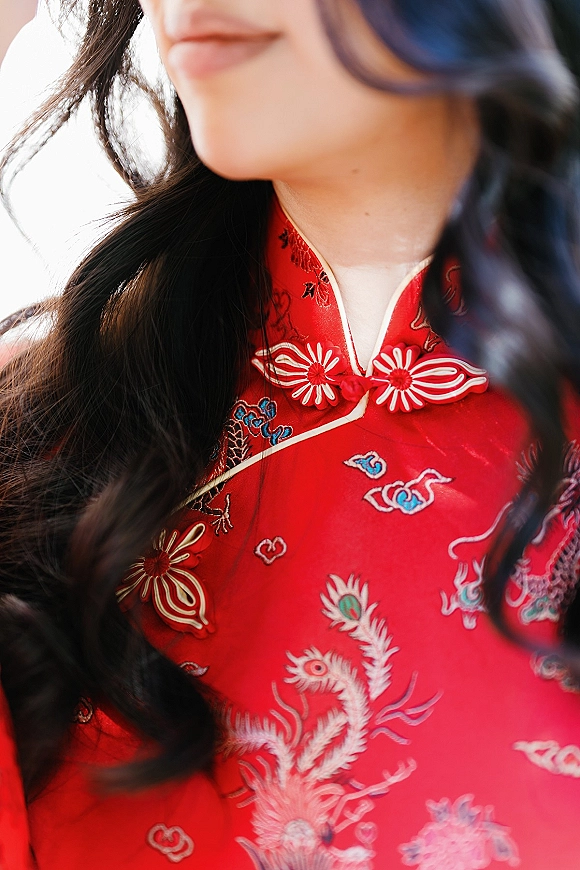
Red and white together carry two meanings at once. White descends from Western bridal tradition. Red is the auspicious color at Chinese weddings, where it stands for happiness, prosperity and good fortune, and it is the traditional bridal color across much of South Asia. Wearing both holds a Western wedding and a family tradition in the same dress.
That double meaning is why the two-tone gown reads differently depending on the room. At a Western ceremony it registers as a bride making a deliberate departure. At a Chinese or South Asian one it registers as a bride honoring both sides of her day at the same time.
The Western reading is the younger one. White as a bridal default traces to nineteenth-century fashion rather than to any older rule, which is worth knowing before treating red as the transgressive half of the pair. Our guide to red wedding dresses covers the solid-color version of that history.
Wearing Both: the White Gown and the Red Ceremony Outfit
Two outfits is the most common way brides actually wear red and white, and it needs no two-tone gown at all. The white gown carries the ceremony and the red one carries the tea ceremony or the reception, a pattern The Knot documents as standard practice at Chinese weddings rather than as an exception. Each dress gets its own moment and its own set of photographs, which is more than a single two-tone gown can offer either color.
Lead time is the real constraint, and couples get it wrong by treating the second outfit as a second decision. A custom qipao runs to sixteen weeks at a house like East Meets Dress. That clock runs alongside the white gown's fittings, not after them, so both orders go in the same week or the red one arrives during the final month when nothing can be changed.
Three practical notes. A qipao or lehenga is cut close and needs its own fitting schedule, not a single measurement taken in a hurry. The change itself takes fifteen to twenty minutes with help and closer to forty without it, which is a real hole in a reception timeline. And whoever is photographing the day needs to know both looks exist before the schedule is built. The mechanics of changing mid-day are covered in our guide to second looks.
Can Wedding Guests Wear Red and White to a Wedding?
Red is fine for a guest at most American weddings and off-limits at three kinds. The Knot names the exceptions: Indian, Pakistani and Chinese weddings, where red belongs to the couple; black-tie and white-tie, where burgundy passes and bright red reads wrong; and any wedding whose stated color scheme rules it out. White stays off a guest's list regardless of the rest, which makes red and white a poor guest combination and a good bridal one.
The superstition that a guest in red is signaling a past relationship with the groom has no basis. Brides has addressed it directly: "There are no hidden meanings to any colors of wedding guest attire."
Frequently Asked Questions
What does a red and white wedding dress symbolize?
White carries Western bridal tradition and red carries luck and prosperity, most explicitly in Chinese weddings, where The Knot describes red as symbolizing happiness, prosperity and good fortune. Red is also the traditional bridal color across much of South Asia. A two-tone gown lets a bride hold both at once.
How much does a red and white wedding dress cost?
Made-to-order two-tone gowns start near $399 and run to about $2,790 for atelier work with a cathedral cape. The construction sets the price: a hard two-tone seam costs far more to cut and finish than red embroidery on a white gown. Budget for alterations on top, since two-tone gowns cost more to alter and more often need it.
Can you dye a white wedding dress red?
Yes. Bridal dye labs dip finished gowns, with ombré work starting around $350 and roughly twelve weeks of turnaround. It is usually cheaper than commissioning a two-tone gown and it is the only route that keeps a dress you already chose. Send it before alterations, because dyeing shrinks some fabrics and shifts every seam.
Do bridal salons carry red wedding dresses?
Rarely, and the inventory explains why. Major retailers stock red by the hundreds in bridesmaid dresses and almost none in bridal, because the trade sells color to the wedding party and white to the bride. Red bridal inventory sits with made-to-order online makers and cultural bridal houses instead, which is why a salon appointment is the wrong first step for this color.
Can a wedding guest wear a red and white dress?
No, because of the white rather than the red. Red alone is acceptable at most American weddings, with exceptions for Indian, Pakistani and Chinese ceremonies where red belongs to the couple, and for black-tie dress codes where a deeper burgundy is the safer choice.
How much red should a red and white wedding dress have?
Start from where you want the color to appear in photographs. Red at the hem shows in full-length frames and vanishes in portraits, red at the neckline shows in close-ups and across tables, and a red skirt or bodice shows in everything. Red accents on white are the least committed version and the only one that can be added to a gown you already own.