What Defines a Square Neckline
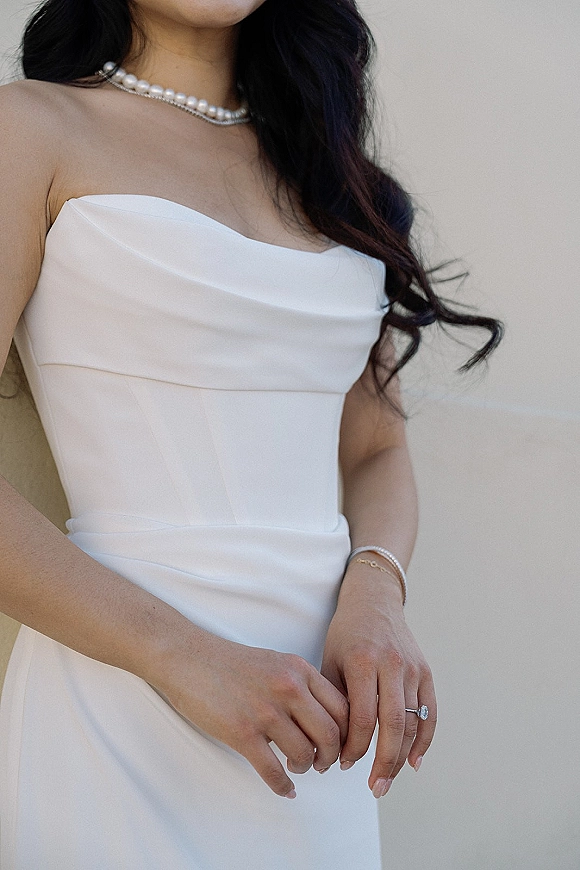
A square neckline is a straight horizontal cut across the chest that meets the straps at sharp right angles, framing the decolletage in a clean rectangle. Unlike the soft curve of a sweetheart or the point of a V, it is built from straight lines and corners, giving the bodice an architectural edge that reads modern and vintage at once.
The shape has two variables that do most of the work. Width controls how much of the shoulders and chest the neckline frames, from a narrow cut that sits close to the sternum to a broad one that opens toward the shoulder points. Depth controls how far the horizontal line drops, from a high, modest placement near the collarbone to a lower line across the fullest part of the bust. Adjusting either one shifts the whole read of the bodice without changing the essential geometry of the square.
That geometry is why the neckline flatters. The horizontal line draws the eye to the collarbone and shoulders and builds a strong frame for the face, while the right angles lengthen the neck and give the bodice a tailored finish. It reads sharp in a bare crepe and romantic in soft lace, and that range is what makes it adaptable across silhouettes and eras. Because the shape depends on straight lines rather than curves, precise construction matters more here than on a softer neckline. A sweetheart can absorb a small fit error inside its curve, but any pull, gap, or sag on a square neck shows instantly against the crisp edge the shape promises, so the interior boning and the seam placement carry real weight.
Square Neck With Long Sleeves and Puff Sleeves
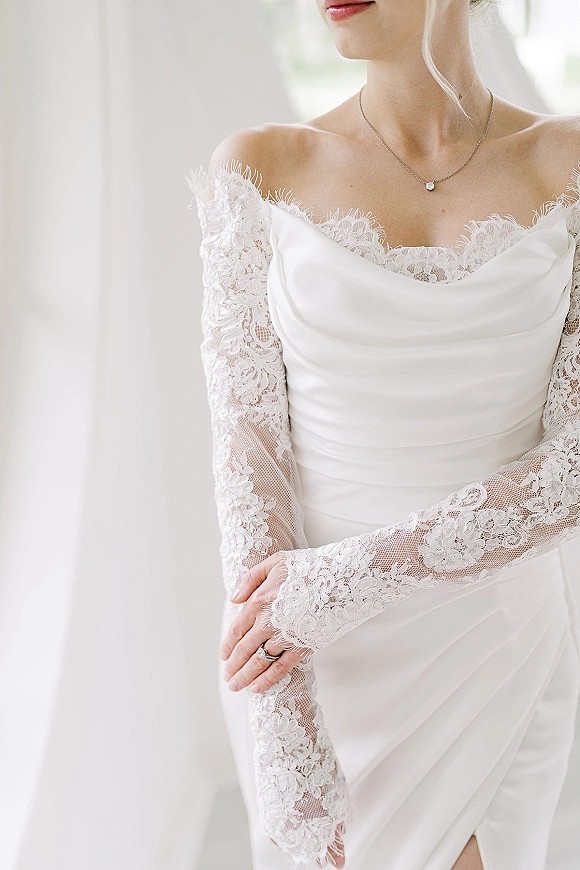
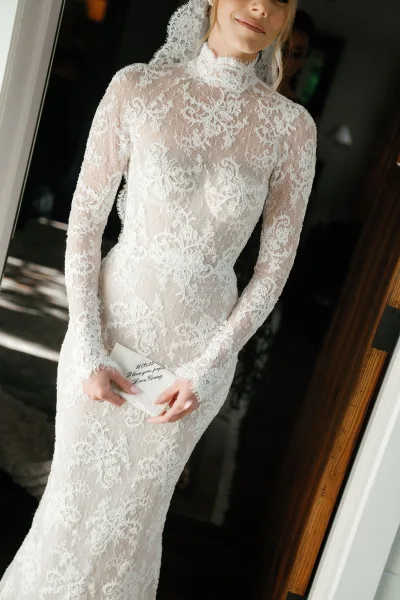
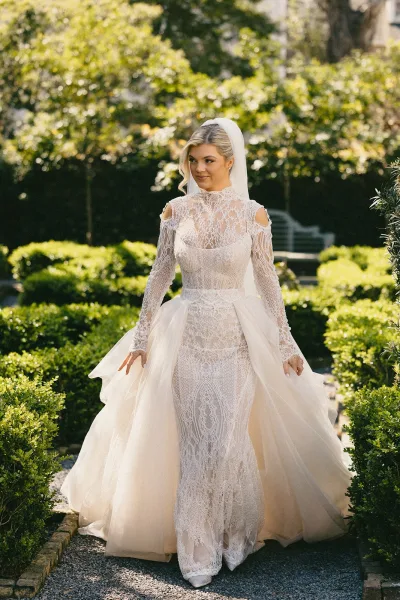
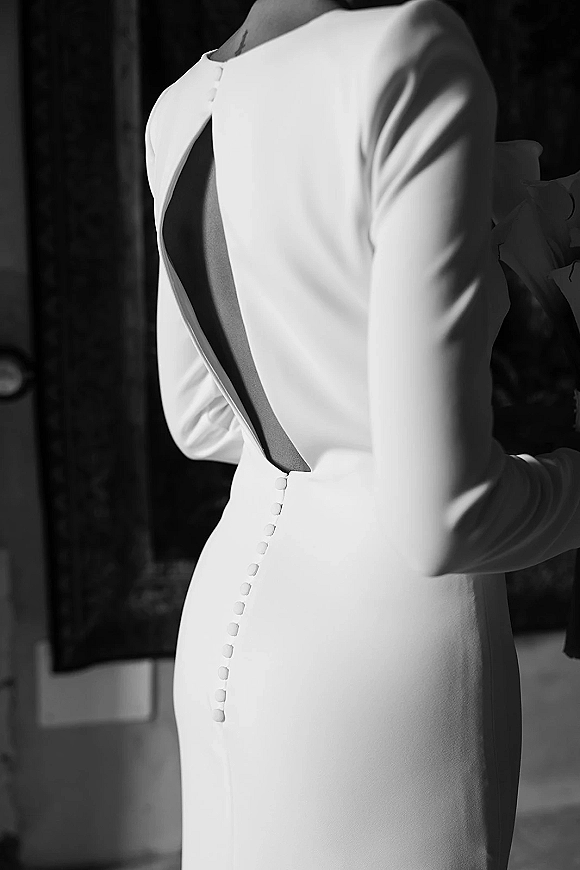
Sleeves pair closely with the square neck, and the sleeve choice sets the era more than any other single detail. A square neck long sleeve wedding dress extends the clean horizontal line into a fitted sleeve that runs to the wrist, a combination that reads architectural in crepe and heirloom in lace. The straight neckline and the fitted long sleeve together build a covered, considered look that balances a bare frame at the collarbone against full coverage down the arm. In a stretch crepe the fitted sleeve stays smooth and sculptural; traced in lace it turns the same silhouette soft and period-leaning.
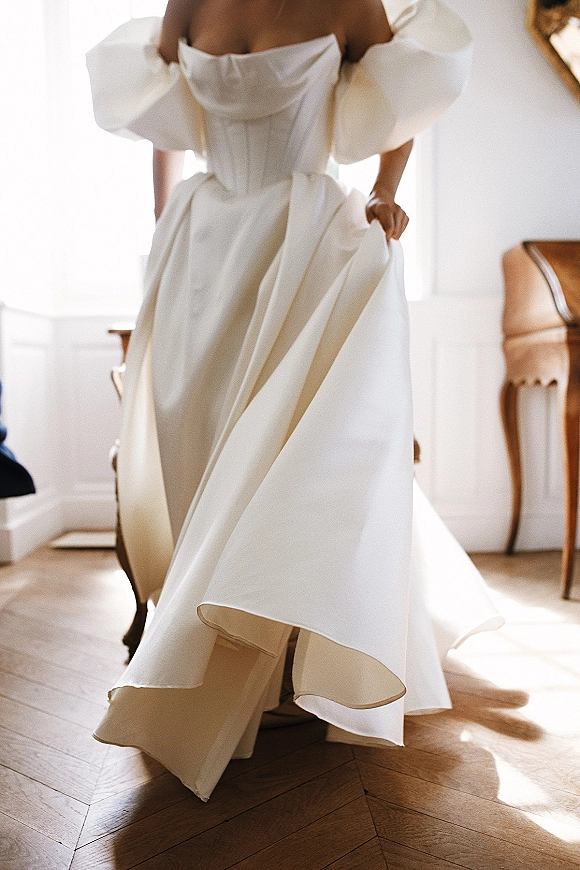
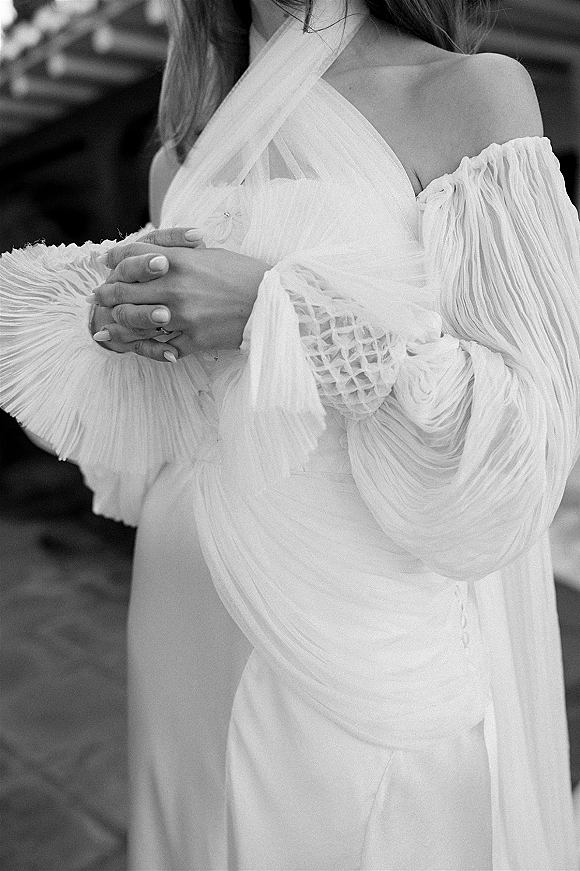
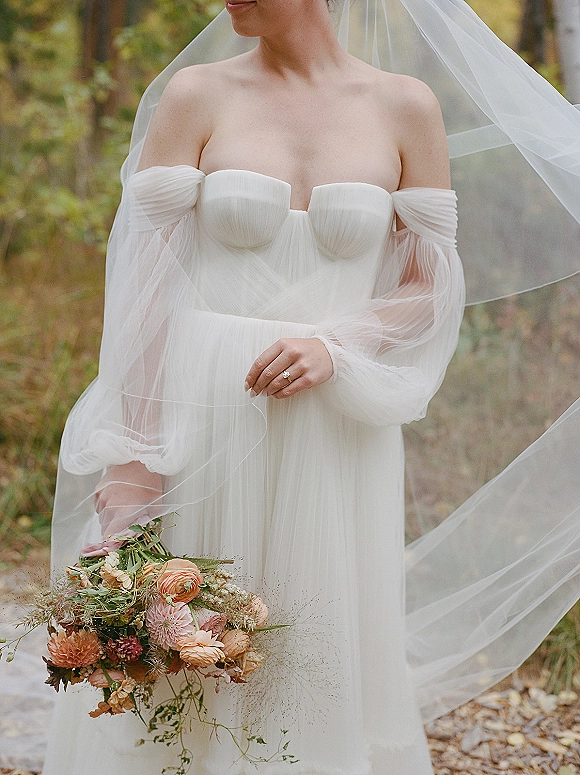
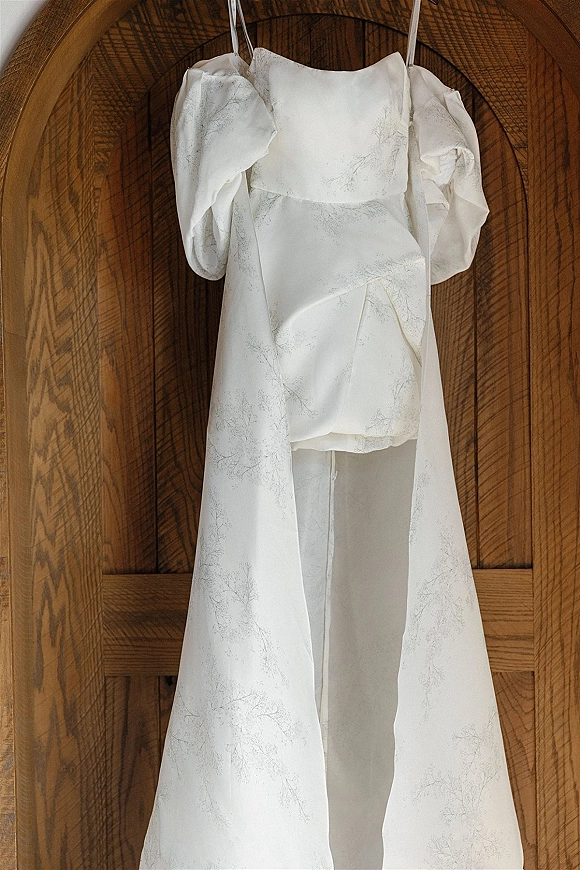
The puff sleeve is the neckline’s most distinctive partner. A square neck puff sleeve wedding dress sets a gathered, voluminous sleeve against the crisp neckline for a soft contrast that reads vintage and current at the same time. The volume comes in degrees, and each shifts the mood. A small cap sleeve barely covers the shoulder and keeps the look close to bare. A rounded balloon or puff gathers fabric high on the arm for a defined, romantic shoulder. A bishop sleeve, full through the arm and gathered into a fitted cuff at the wrist, carries the most historical weight and reads clearly vintage. A square neck wedding dress with sleeves in any of these forms uses the straight neckline as the anchor, letting the sleeve carry the softness while the neckline holds the line clean. That division of labor is why the pairing works: the sleeve can be as full as a bride wants without the bodice reading sweet, because the square edge keeps the top graphic.
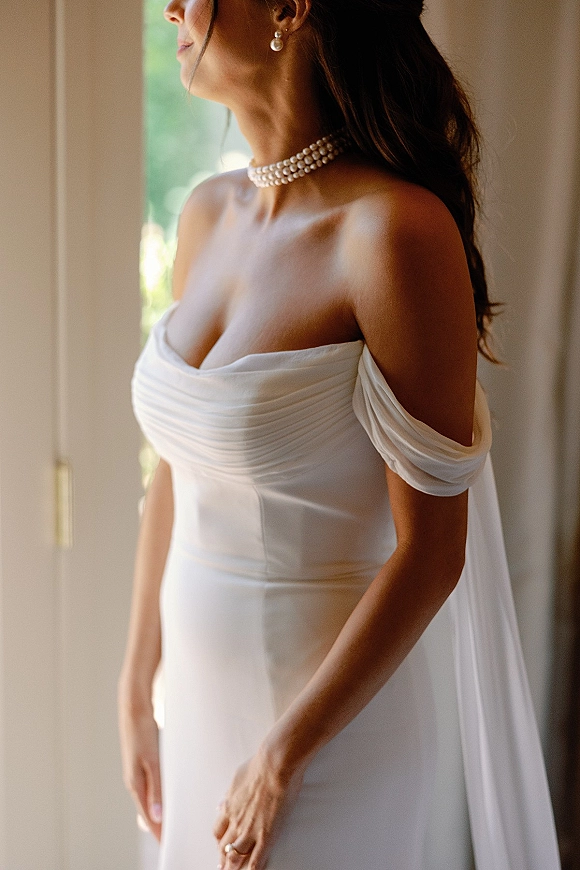
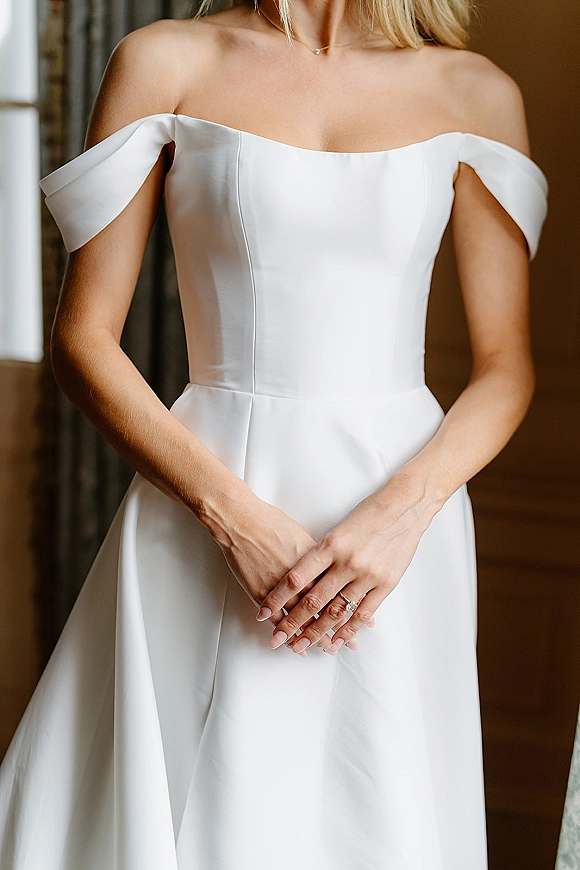
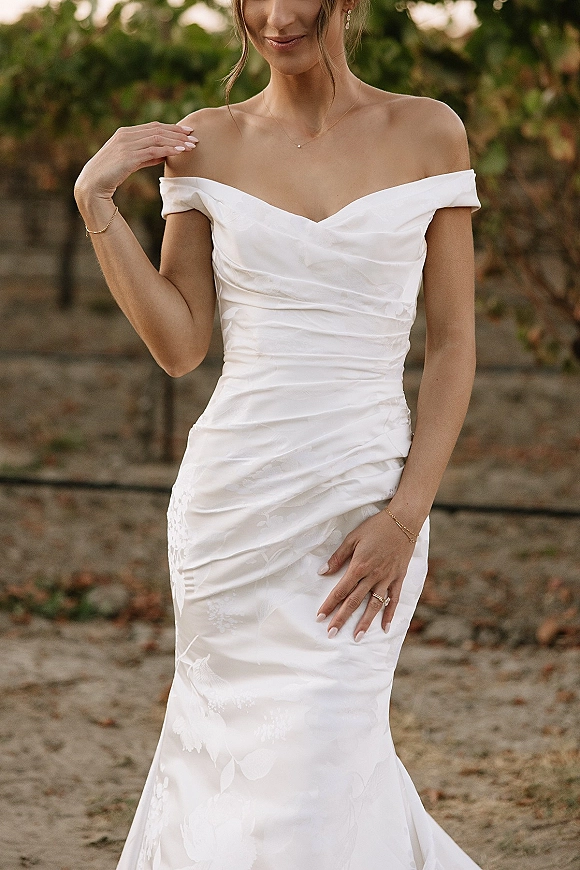
Where the sleeve joins the neckline also shapes the look. A sleeve set on the shoulder keeps the square framed by bare skin at the collarbone, so the horizontal line stays fully visible. An off-shoulder puff drops the sleeve below the shoulder and reads softer and more romantic, though it trades some of the neckline’s crispness for that softness. A strap that runs straight from the corner of the square up over the shoulder preserves the graphic edge and suits the minimal end of the range. Fabric weight matters at the sleeve too: crepe and stretch hold a fitted long sleeve smooth, while tulle and organza give a puff its lift and keep it from collapsing through the day.
Lace Versus Satin Square Necks
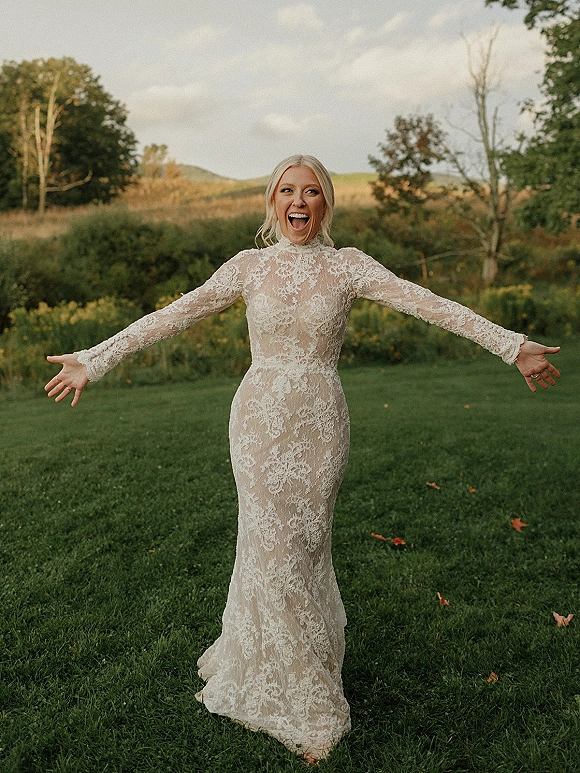
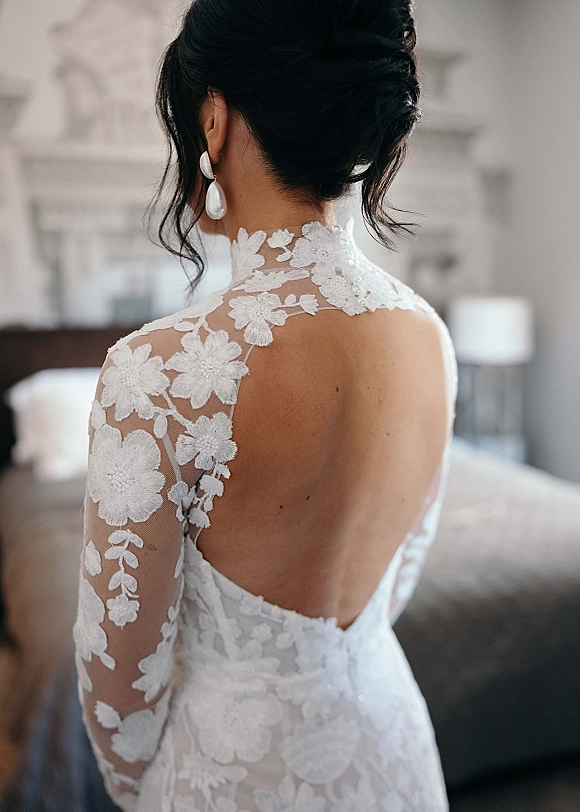
In lace, the square neck reads differently than it does in satin, and the fabric decides whether the shape leans romantic or minimal. A square neck lace wedding dress softens the crisp geometry with texture, tracing the straight edges so the rectangle reads detailed and warm. The type of lace changes the effect. Chantilly is fine and net-based with a delicate floral pattern that keeps the neckline light. Corded lace raises a slightly heavier outline along the motifs, giving the straight edge more definition and a little dimension. Appliqué lace places cut motifs individually onto the bodice or tulle, which lets a maker concentrate detail right at the neckline or scatter it toward the sleeves. Lace that fills the bodice and the sleeves warms the neckline’s architectural edge into something that reads heirloom rather than sharp.
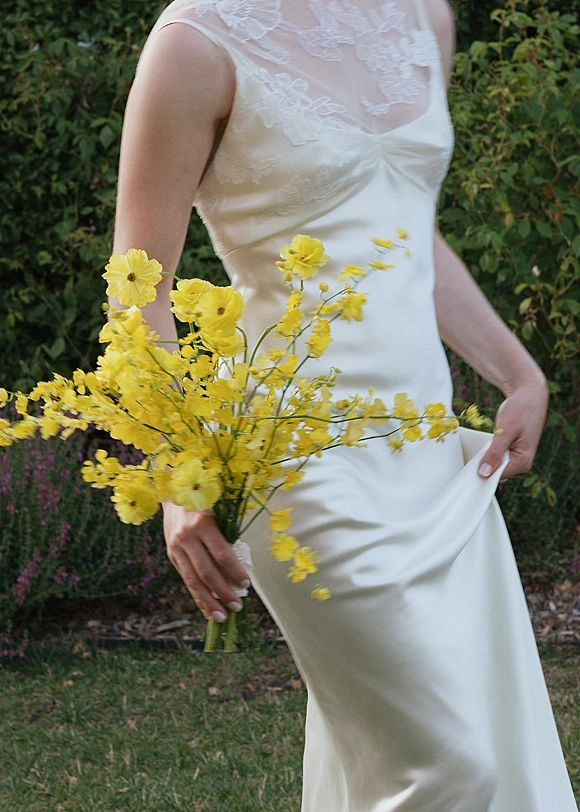
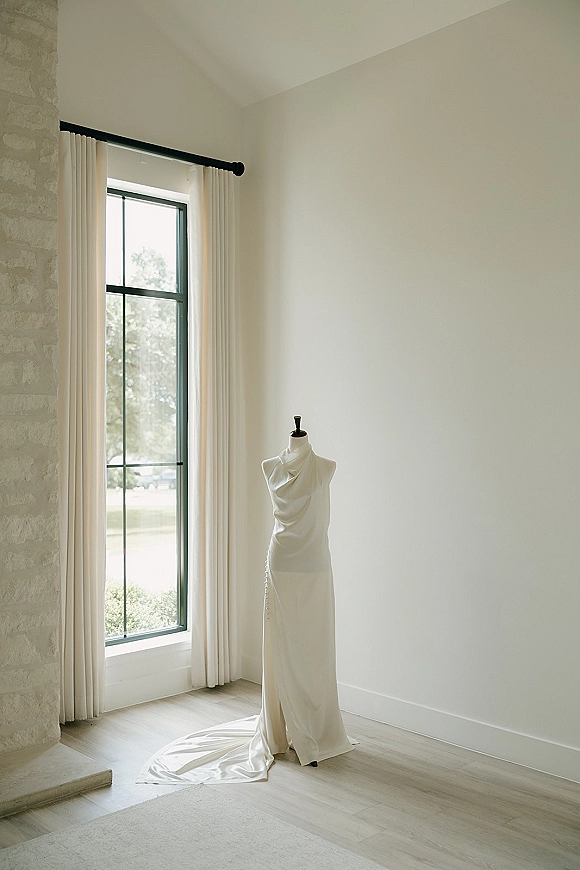
Where lace warms the geometry, a square neck satin wedding dress does the opposite, leaning fully into the clean lines. In a structured satin such as duchess or mikado, the straight edges stand crisp and sculptural, holding the corners of the square without help. Duchess is smooth and substantial with a soft sheen; mikado is heavier and slightly stiffer, which suits a bride who wants the neckline to hold a precise architectural edge. In a fluid satin the read changes again. Charmeuse falls soft and liquid with a high shine, and a square neck crepe wedding dress uses a matte, fluid fabric that skims the body so the neckline becomes the only structured element in an otherwise unbroken line. A square neck beaded wedding dress adds a run of beading along the straight edge that catches light and marks the geometry without softening it. Beading concentrated on the neckline outlines the square and keeps the rest of the gown quiet, while beading scattered across the bodice reads more decorative and moves the focus off the line. The shape stays constant underneath; the fabric decides how it reads.
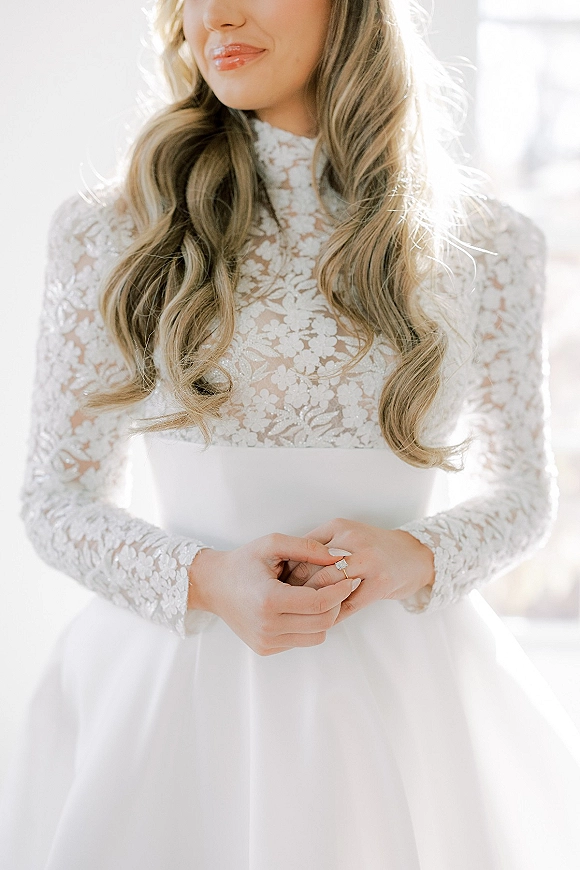
Some gowns combine the two registers on purpose. A lace bodice over a satin lining marries the softness of the texture with the crisp support the neckline needs, and a satin skirt under a beaded bodice pairs a clean lower line with detail up top. When a maker mixes fabrics this way, the neckline usually keeps a structured underlayer regardless of what shows on the surface, because the square edge relies on that hidden support to stay flat. A bride comparing lace against satin is choosing not just texture but how much the gown announces itself, since satin keeps the neckline sculptural and lace warms it toward romance.
The Square Neck by Silhouette
Sitting on every silhouette, the square neck shifts its formality and its mood with each pairing. A square neck a line wedding dress is the most versatile, grounding the clean neckline in a skirt that flares gently from the waist and flatters a wide range of figures. A square neck sheath wedding dress is the most minimal and modern, all vertical line with the neckline as the single graphic detail, and it pairs naturally with the pared-back mood of a sheath wedding dress. A square neck mermaid wedding dress is the most fitted and dramatic, following the body through the hip before the skirt releases, so the horizontal neckline at the top answers the strong curve below.
Because the neckline is so clean, it suits minimalist gowns especially well, and a minimalist wedding dress often uses a square neck as its defining line. A square neck simple wedding dress with no lace or beading lets the geometry and the fabric carry the whole gown, a quiet, contemporary read that depends entirely on cut and cloth. On a fuller skirt the straight neckline keeps the top tailored so the gown does not tip sweet; on a column it lengthens the whole line from shoulder to hem. The silhouette decides how architectural or how romantic the finished gown reads, while the neckline holds its shape across all of them.
The waist placement under the neckline factors in as well. A natural waist keeps the proportion classic and lets the square sit as the clear focal line on the bodice. A dropped or basque waist stretches the torso and answers the horizontal neckline with a vertical pull, which suits taller frames and formal gowns. An empire line, rare with a square neck but possible, raises the seam just under the bust and shifts the whole read toward soft and romantic. Matching the waist to the neckline width is part of getting the balance right, since a broad square over a high waist can shorten the torso, while a narrower square over a dropped waist lengthens it.
Square Neck Ball Gown and Fuller Skirts
A square neck ball gown wedding dress balances the most volume against the cleanest neckline, and the contrast is the point. The full skirt reads romantic and formal, while the straight horizontal cut at the top keeps the bodice sharp and stops the gown from reading purely sweet. That tension between a graphic neckline and a generous skirt is a common reason a bride drawn to a princess skirt still reaches for a square neck rather than a sweetheart. On a fuller skirt the bodice does more work, holding the neckline precisely while carrying the weight of the skirt below, so a fitted, boned bodice keeps the square edge sitting flat and stops the horizontal line from shifting as the wearer moves. The neckline can run high and modest against the volume for a formal read, or drop lower to open the decolletage and lighten the whole gown, and sleeves change the mood again: a bare square neck ball gown reads contemporary, while a puff or bishop sleeve against the same full skirt reads distinctly vintage.
Vintage Versus Modern-Minimalist Square Necks
Two aesthetics live in the square neck at once, and that doubleness is a large part of its appeal. A vintage square neck wedding dress draws on the neckline’s long history, pairing it with puff or bishop sleeves, soft lace, and a defined waist for a romantic, period feel. The straight neckline framed by a gathered sleeve has real historical roots, and in an aged ivory or warm ecru tone it reads heirloom rather than new. Add a basque waist or a corset bodice and the period read deepens further, since both details belong to the same historical vocabulary.
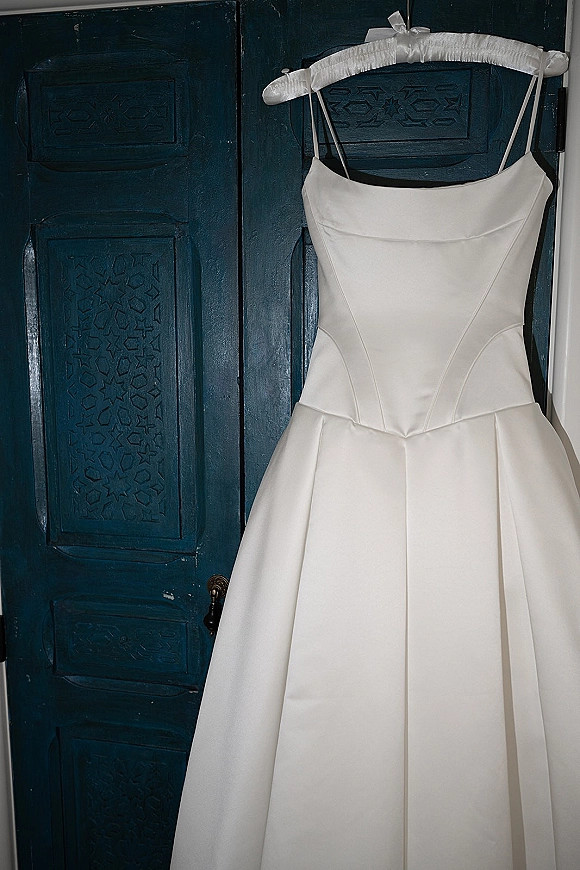
The modern-minimalist version strips that away. A clean square neck in bare crepe or duchess satin, with thin straps and no ornament, reads architectural and contemporary, the neckline doing all the work as the single line on the bodice. The same shape anchors both directions, which is why minimalist brides and vintage brides both search for it. The difference lives entirely in the fabric, the sleeve, and the ornament, since the square itself is neutral enough to read either way. A pared-back version in duchess satin keeps a little structure and sheen without ornament, landing between the two registers for a bride who wants neither full romance nor full austerity. Choosing between the two comes down to how much softness to set around the clean line: lace and gathered sleeves push it toward romance, while matte crepe and bare straps hold it sharp.
Corset and Basque-Waist Pairing
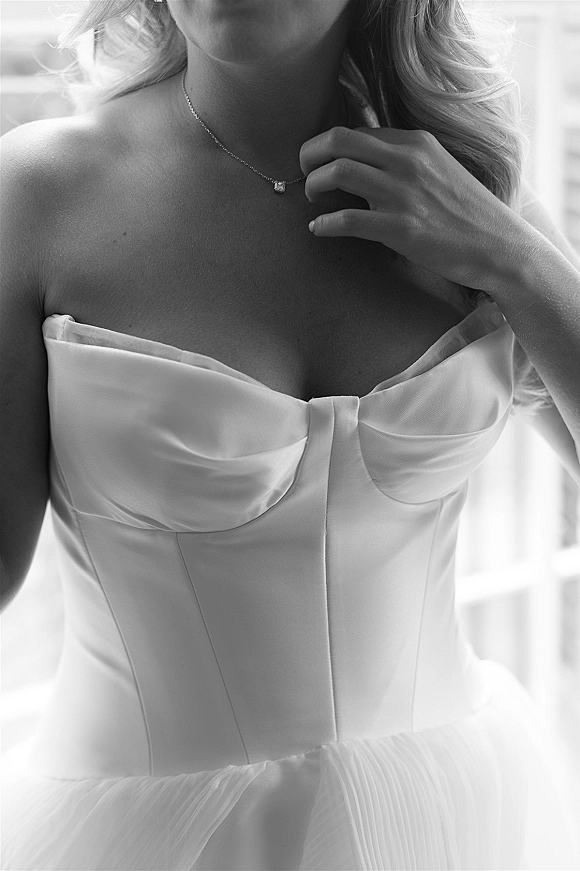
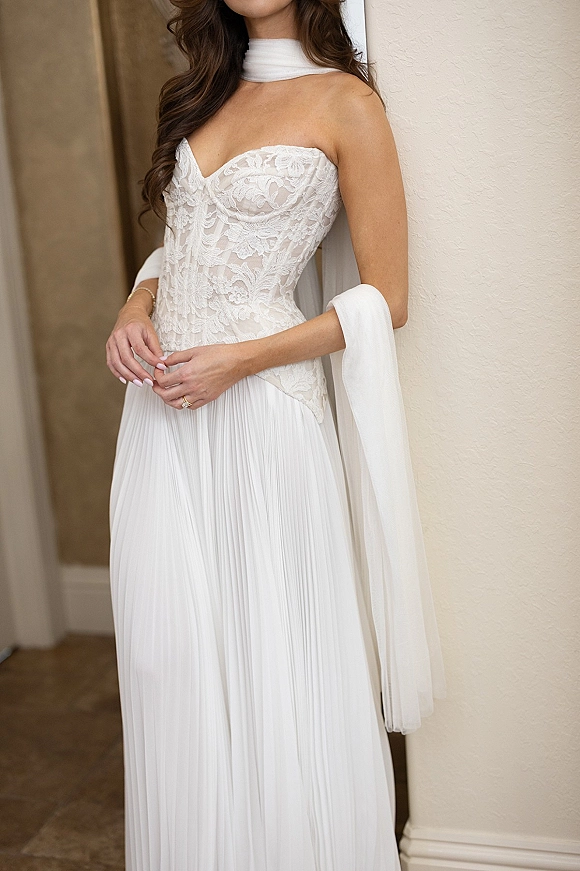
Paired naturally with a structured bodice, the square neck lets that structure do double duty as support and as line. A square neck corset wedding dress sets the clean neckline above a boned, laced bodice, so the straight edge at the top and the shaped corset below both emphasize structure and definition. The boning holds the neckline flat and keeps the square sitting exactly where it was fitted, which matters given how quickly the geometry shows a fault. The lacing at the back allows a close, adjustable fit through the ribcage, and that snug fit reads modern and a little romantic at once.
Down at the waist, a square neck basque waist wedding dress extends the idea into the skirt. The basque waist drops the bodice into a V or U below the natural waistline before the skirt begins, which lengthens the torso beneath the horizontal neckline and pulls the eye down the body. The straight line at the top and the dropped point at the waist together build a strong frame, a horizontal edge answered by a vertical drop, that flatters the figure and reads formal. Both pairings suit a bride who wants visible structure in the bodice, and both depend on precise construction so the clean lines stay clean from the ceremony through the last dance.
The corset and the square neck reinforce each other in a practical way as well. Exterior lacing or visible boning channels turn the bodice itself into a decorative element, and the straight neckline gives that structure a clean upper border to work against. On a strapless square, where the neckline has no straps to hold it, a boned corset is what keeps the horizontal edge sitting level across the bust. Brides drawn to this pairing often want the fit snug enough to sculpt the waist, and the square neck rewards that choice, since the closer the bodice sits the sharper the line at the top holds.
Fit, Bust, and Styling
Flattering most figures, the square neck turns the fit question toward the bust and the crispness of the line. On a fuller bust the straight neckline offers support and a clean frame, and the width of the cut can be set to show more or less decolletage depending on the bride’s comfort. On a smaller bust the horizontal line creates the impression of a broader, more defined chest. Because the neckline is built on straight edges, the fit has to be exact. A gap at the corner or a pull across the top breaks the geometry immediately, so a fitting session on a square neck usually spends more time on the neckline seam than a curved shape would, and internal support such as cups or light boning keeps the edge sitting true through the day.
For styling, the square neck welcomes a necklace, since the straight edge creates a clear frame that a piece can echo. A necklace that mirrors the horizontal line reinforces the geometry, while a simple pendant dropping into the open rectangle fills the space without competing with it. A delicate choker sits well above a lower cut. Earrings and hair worn up show the full neckline and the collarbone it frames, which keeps the focus on the line the shape creates. For adjacent clean and covered necklines, compare a high neck wedding dress or the framed shoulders of an off the shoulder wedding dress, and find makers in the wedding dress directory.
Frequently Asked Questions
What is a square neckline on a wedding dress?
A square neckline is a straight horizontal cut across the chest that meets the straps or bodice sides at right angles, framing the decolletage in a clean rectangle. Unlike the curve of a sweetheart or the point of a V, it is defined by straight lines and corners, which give it an architectural, graphic quality that reads modern and vintage at once.
Is a square neckline flattering?
Yes. The horizontal line draws attention to the collarbone and shoulders, frames the face, and the right angles lengthen the neck. On a fuller bust it offers a clean, supportive frame, and on a smaller bust it creates the impression of a broader chest. The width of the cut adjusts how much decolletage it shows.
Do square necklines work with sleeves?
The square neck pairs especially well with sleeves. A fitted long sleeve reads modern and architectural, while a gathered puff sleeve sets a soft, romantic contrast against the crisp neckline for a vintage-and-current look. The straight neckline anchors the gown while the sleeve carries the softness.
Is a square neck wedding dress vintage or modern?
It reads as both, which is part of its appeal. Paired with puff sleeves, soft lace, and a defined waist it reads vintage and romantic. In bare crepe or satin with thin straps and no ornament it reads sharp and minimalist. The neckline itself is neutral, so the fabric, sleeve, and ornament decide the era.
What silhouettes suit a square neckline?
The square neck sits on every silhouette. An a-line is the most versatile, a sheath is the most minimal and modern, and a mermaid is the most fitted. It pairs naturally with minimalist gowns and with structured corset and basque-waist bodices that echo its clean lines.
Can you wear a necklace with a square neckline?
Yes. The straight neckline creates a clear frame that a necklace echoes well. A pendant or delicate choker sits nicely in the open rectangle, and a piece that mirrors the horizontal line works especially well. You can also leave it bare and let earrings and an updo show the neckline and collarbone.