Why Candles Anchor a Table
Candle wedding centerpieces carry a table on light instead of color, which is what makes them the warmest option in the room. As the evening drops and the lights come down, clustered flames pull the eye to each table and give faces a soft, flattering glow that flowers alone cannot, which is why candles suit receptions that run late and rooms that lean intimate. They also stretch a budget, filling space generously for far less than an all-floral design, so they handle large table counts comfortably, either carrying a table on their own or framing a low floral base.
One rule governs every candlelit table: height. Keep the flames below the seated sightline or well above it, so guests talk across the light, not through it.
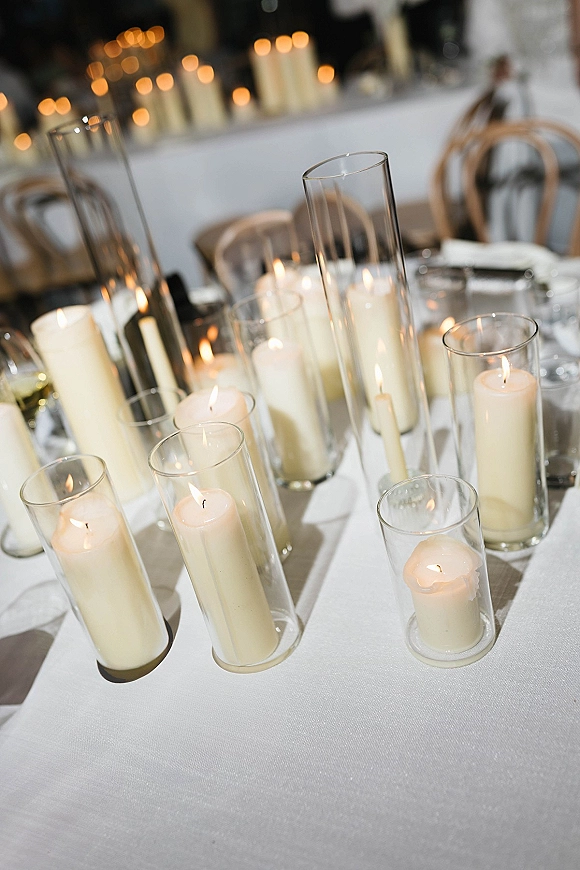
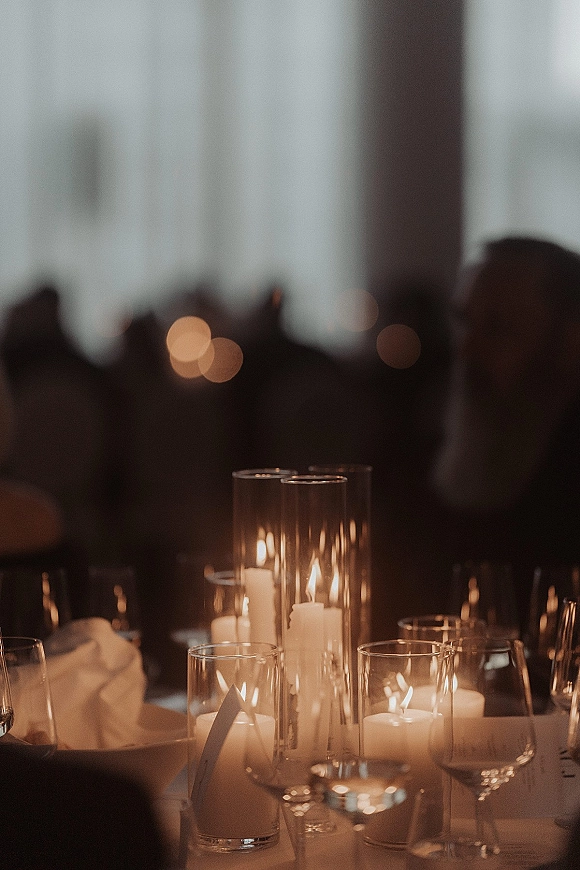
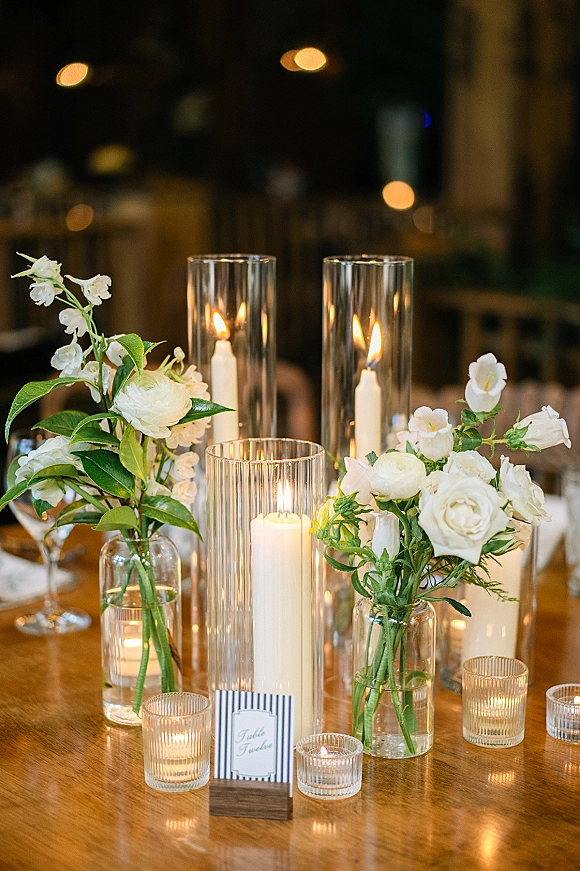
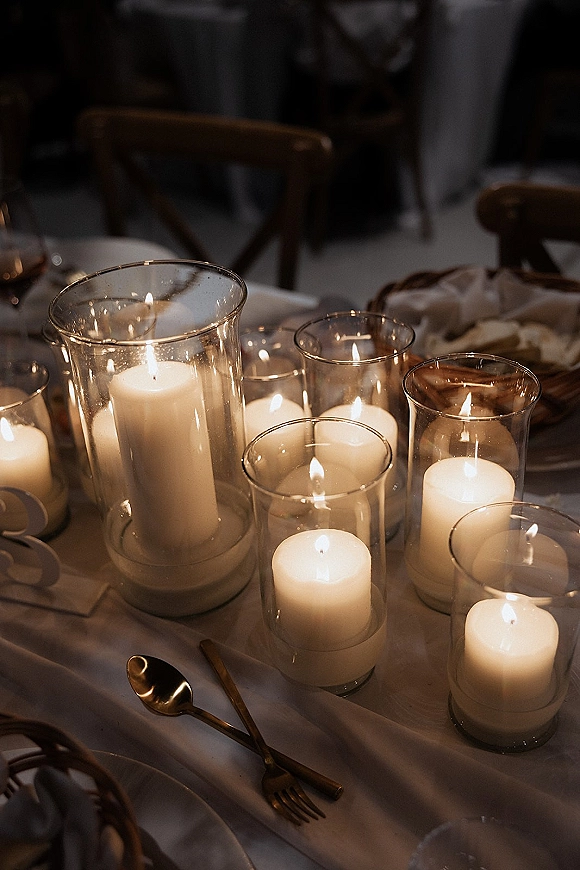
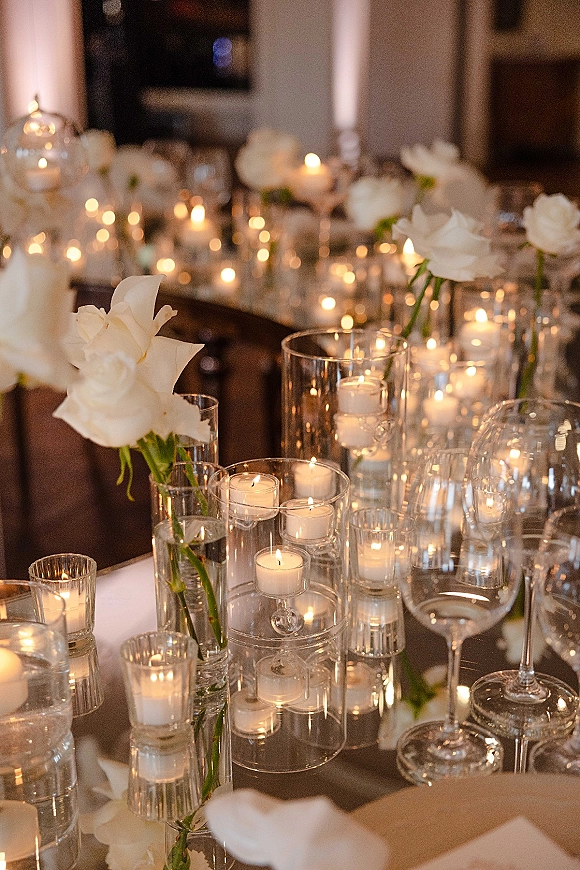
Density does the rest. A single votive per table looks stranded, while a generous cluster reads intentional and glows, so a candle table wants enough small flames, five or more votives or tealights, to fill the surface, plus a few taller pieces for height. More, smaller candles almost always beat a few large ones, both for the quality of the glow and for keeping any single flame low enough to talk across, and wedding florists who build candlelit tables can source the enclosed vessels that keep all of it safe.
Candlelight also does something no other centerpiece element can: it changes the room as the night goes on. Early in a reception, under full house lights, a table of unlit candles reads as texture; once the room dims and the flames take over, the same table becomes the warmest thing in the space. Planning for that shift, dimming the overhead lighting as dinner moves into dancing, is what lets a candlelit table peak exactly when the party does, so it is worth coordinating the lighting cues with the venue rather than leaving them to chance.
Candle Types and the All-Candle Table
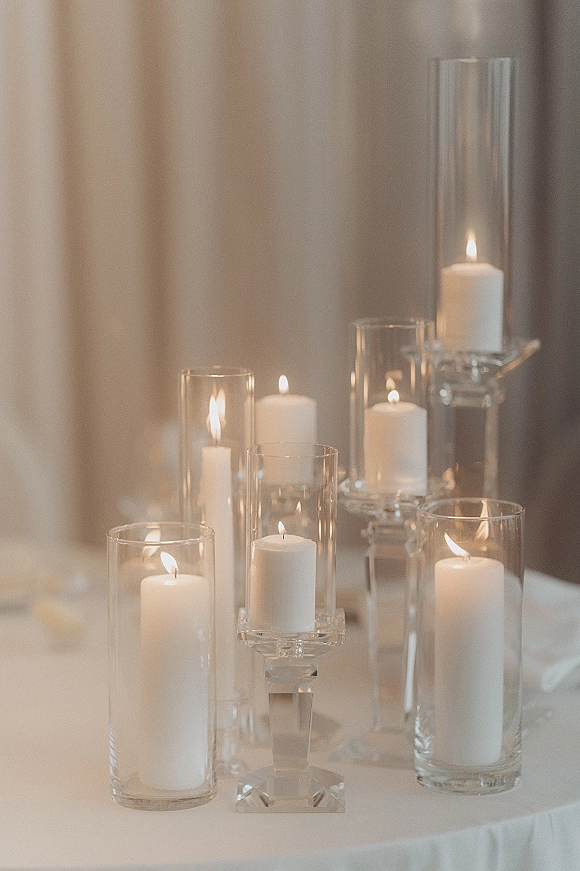
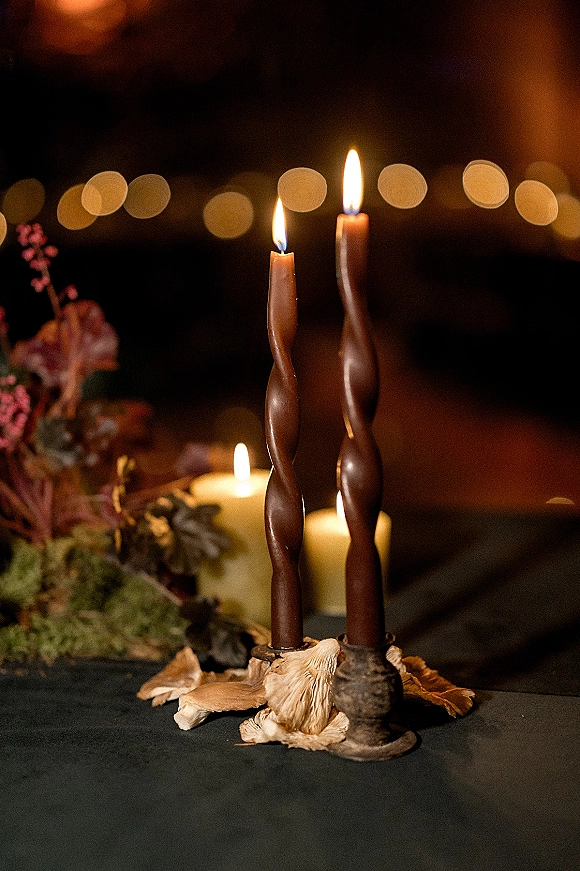
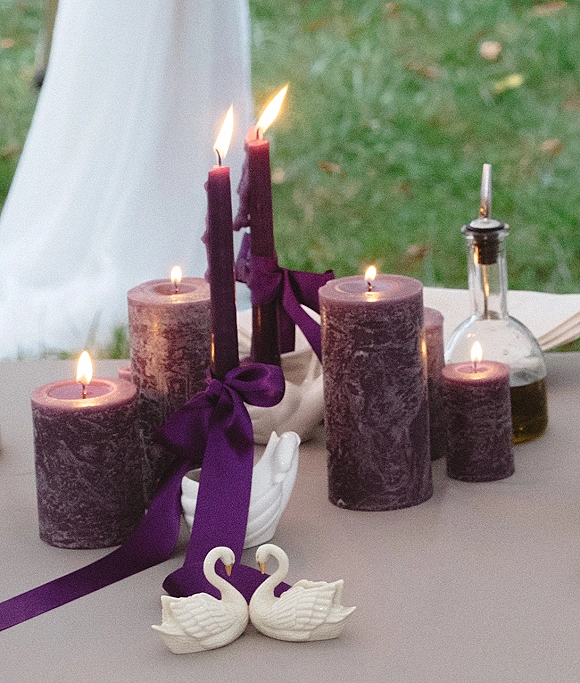
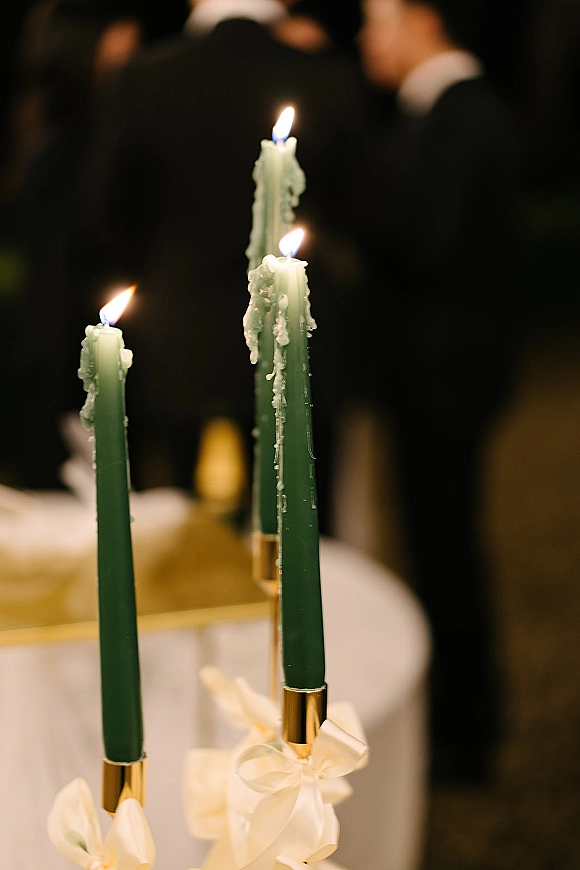
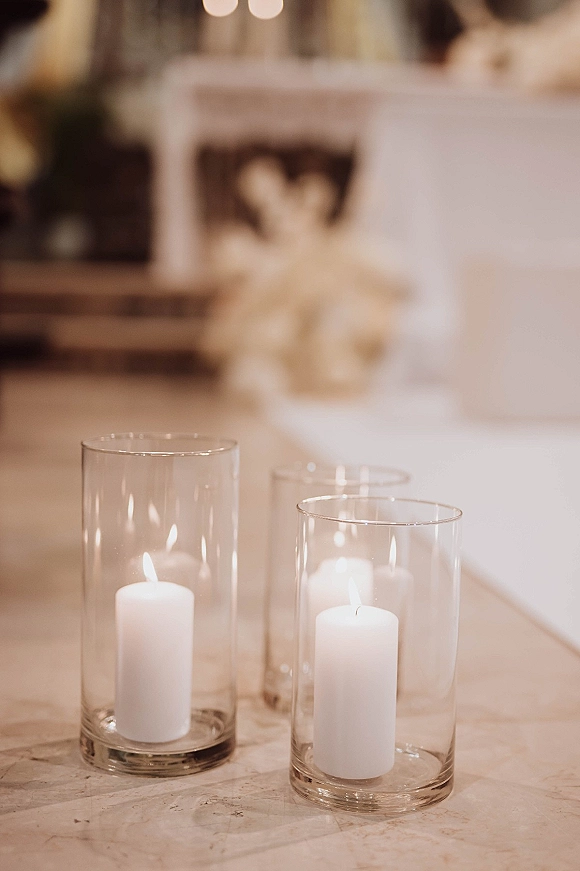
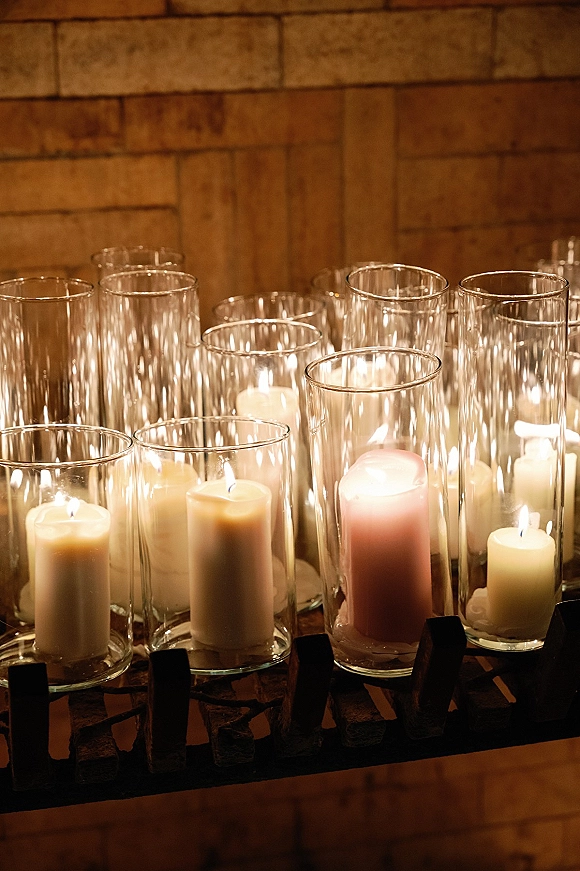
Wedding candle centerpieces are built from a handful of candle types, and mixing them is what creates depth; using one kind alone tends to read flat. Taper candles bring height and a formal, romantic line, especially down a long banquet table. Pillar candles are thick and steady, grouped in threes at varied heights and often set in glass hurricanes that shield them from drafts. Votives are the workhorses, small and low, scattered in clusters to create the dense glow that photographs so well. Floating candle wedding centerpieces sit in water inside glass, adding reflection and a little height without a tall flame, and tealights scatter by the dozen for a starry wash across the table.
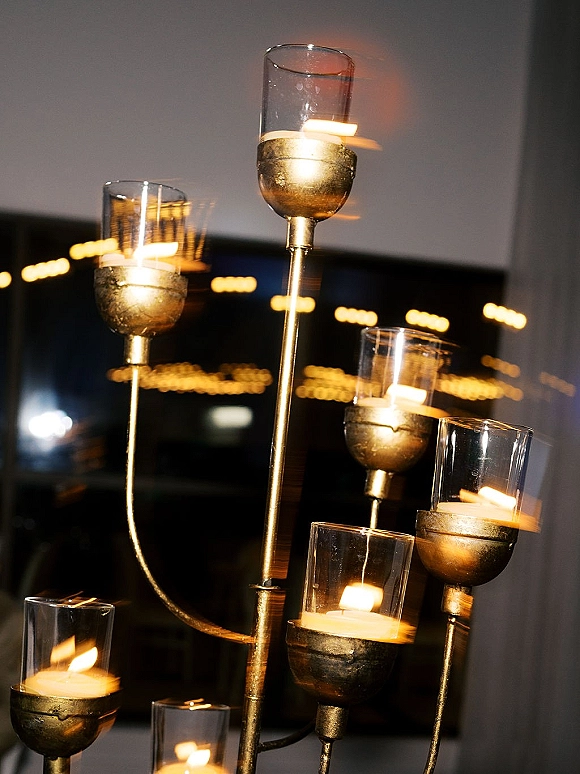
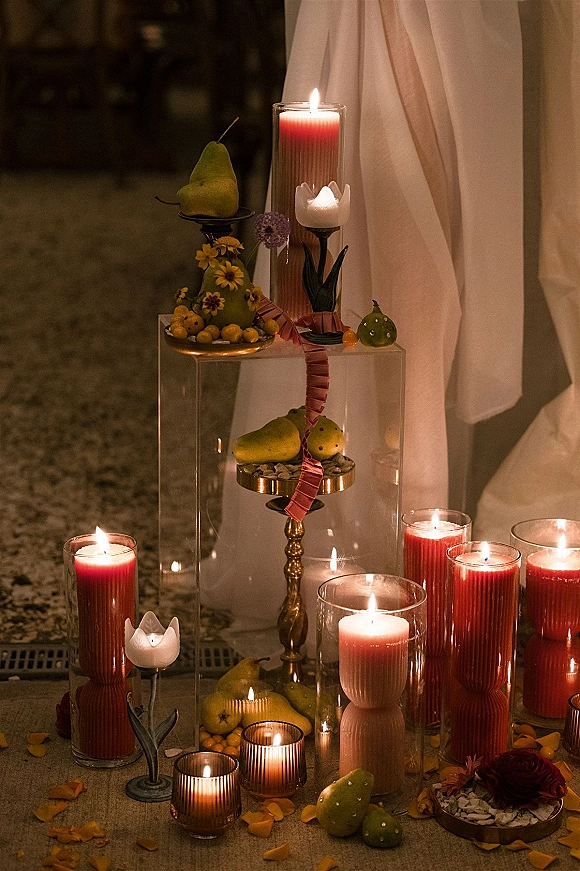
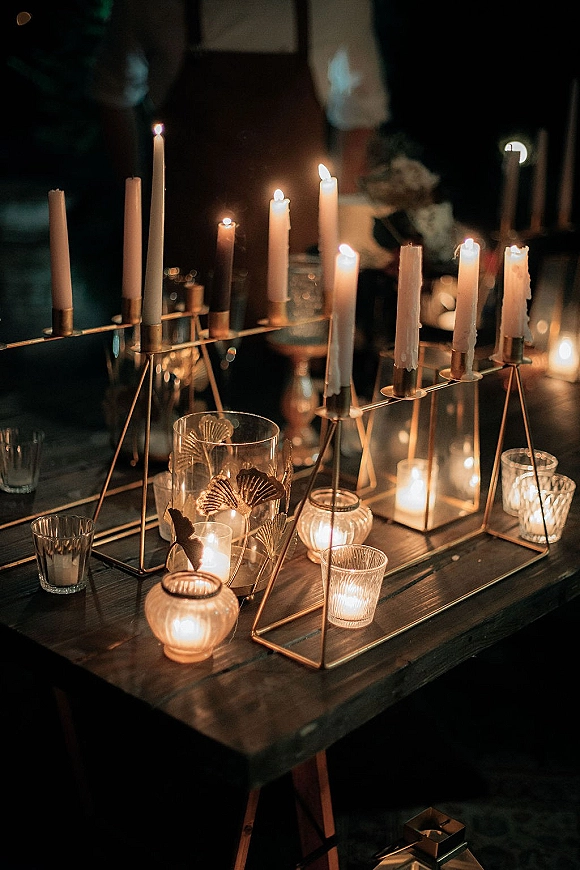
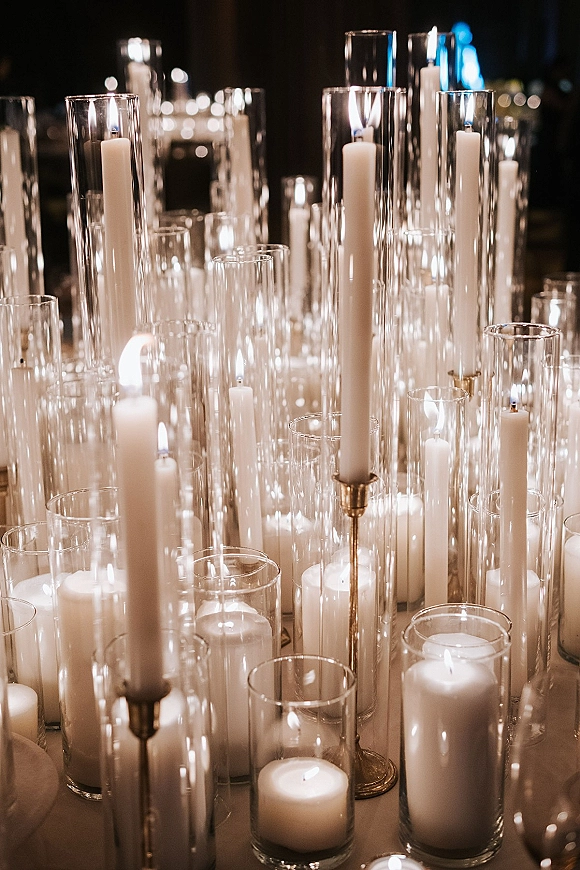
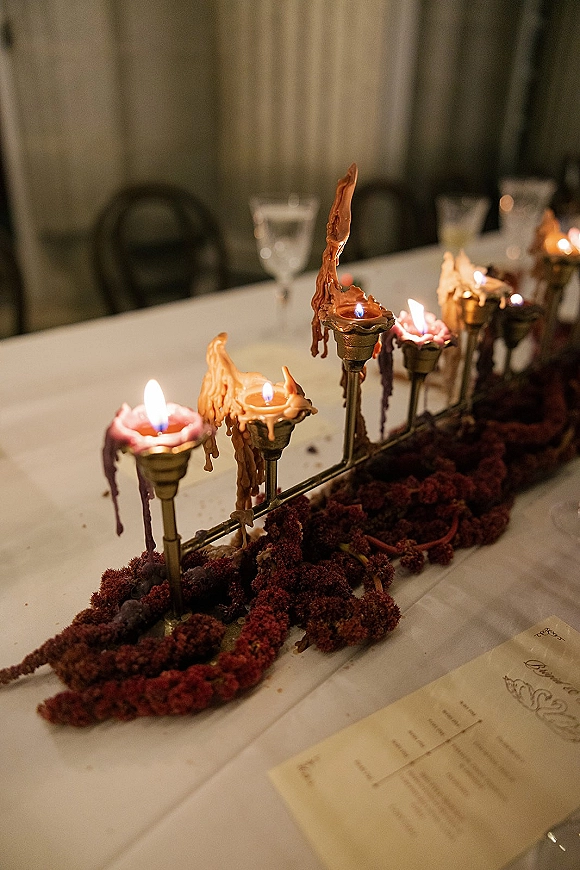
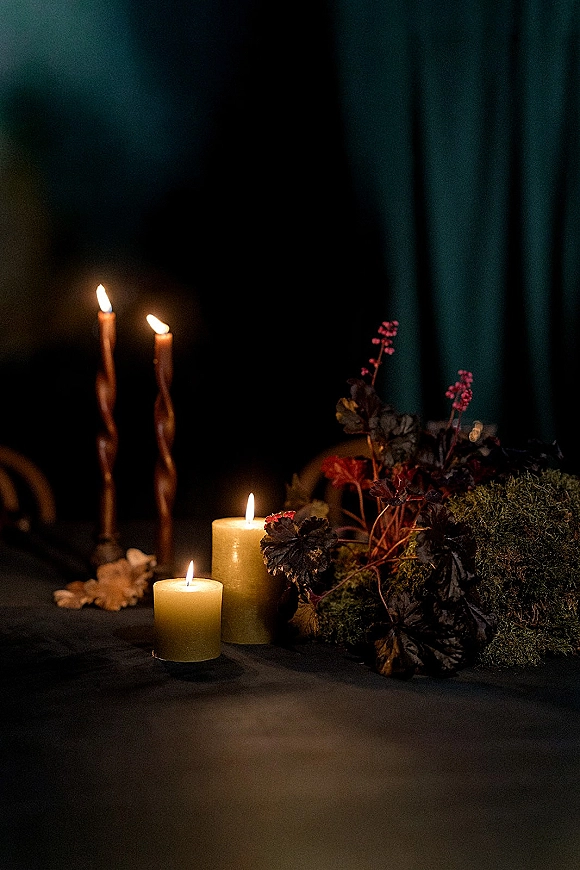
A table can run on candlelight alone, and an all-candle centerpiece is one of the most atmospheric choices in a low-lit room. Group tall tapers or a candelabra behind mid pillars behind a scatter of low votives, add floating candles for reflection, and let the candle tones and holder finishes supply the palette that flowers would otherwise provide. This is the look that makes a formal, candlelit reception glow, and it sits beautifully in the kind of grand rooms covered in these ballroom wedding ideas, where the scale of the space rewards a whole room of candlelight. Add a greenery runner if the table wants a touch of organic fullness without blooms.
Pairing, Height, and Placement
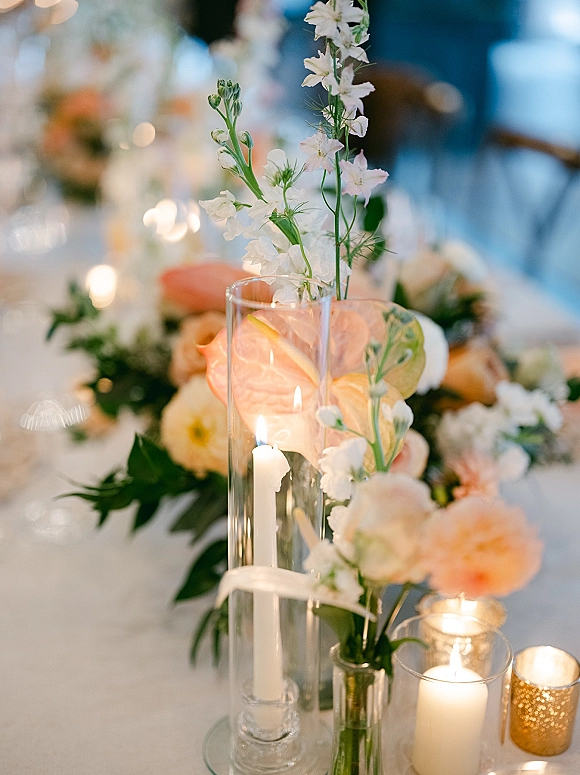
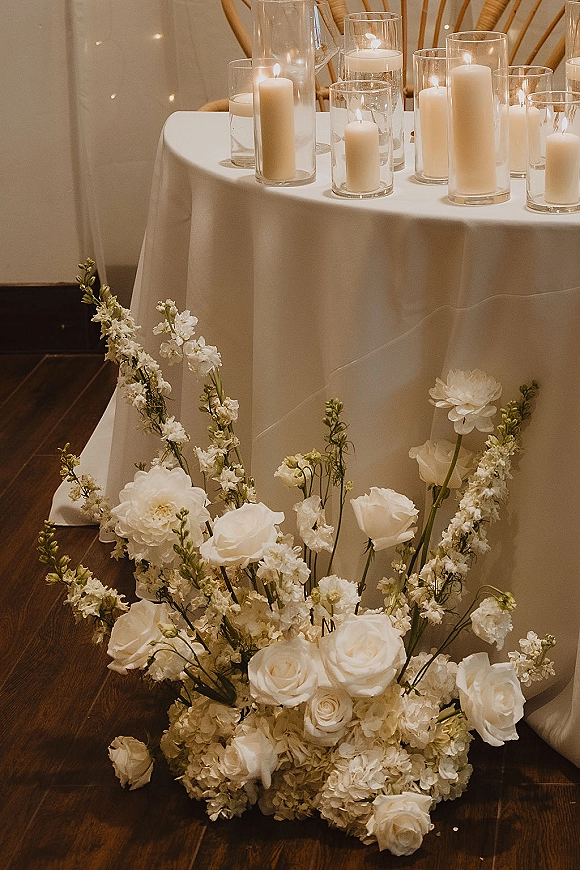
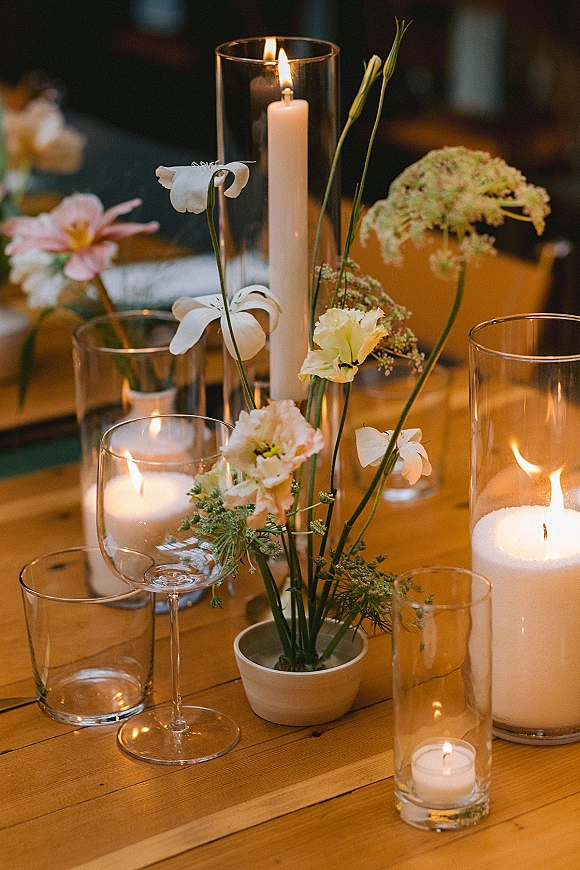
The most common wedding table pairs a low floral centerpiece with a ring of candles. The flowers carry the palette while votives and tapers extend warmth outward and fill the space between arrangements; keep the florals low so the light is not blocked, and repeat one bloom in small bud vases among the candles. The floral wedding centerpiece collection covers that floral half in depth. Candle and greenery centerpieces are the efficient, lower-bloom alternative, with a garland of eucalyptus or olive running down the center and pillars and votives nested into the foliage, so the greenery softens the glass while the flames provide the warmth; the greenery wedding centerpiece collection shows the runner formats that layer best with candlelight.
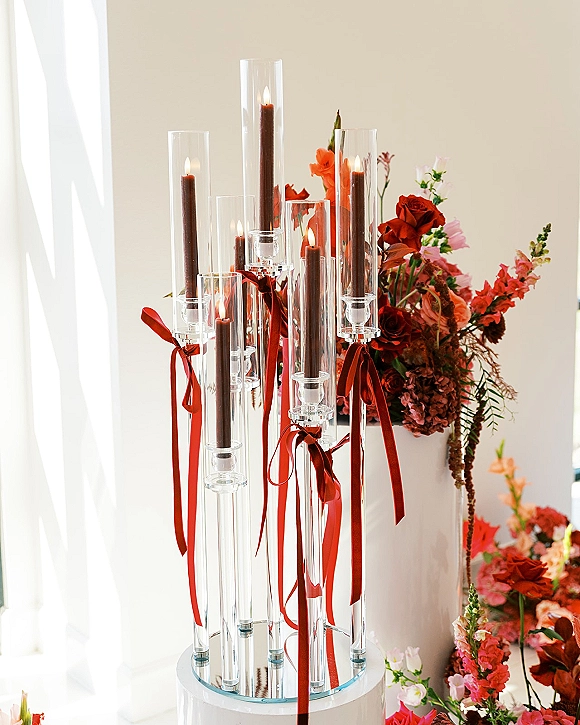
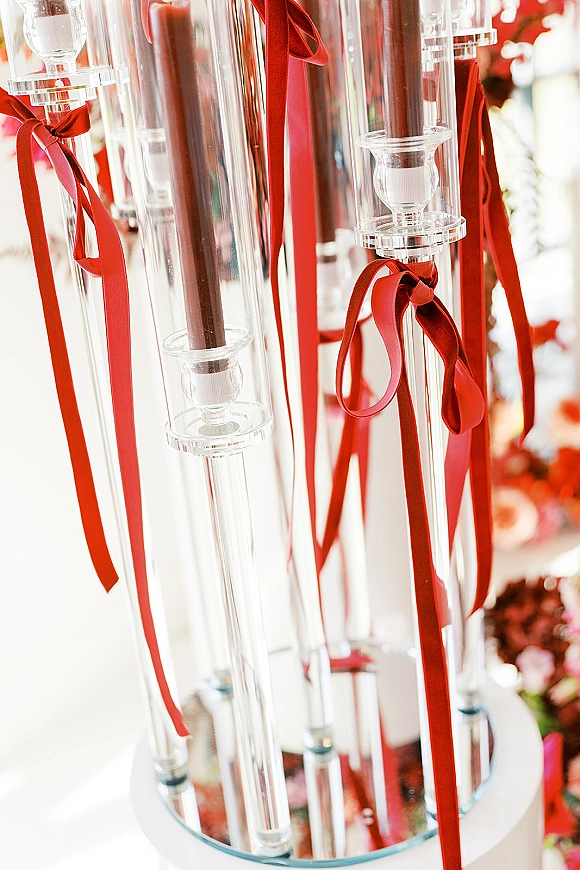
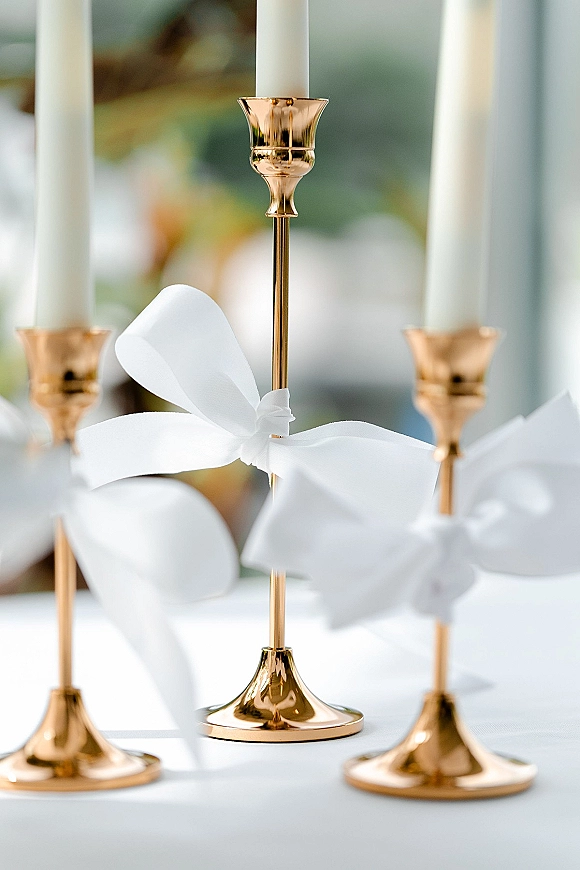
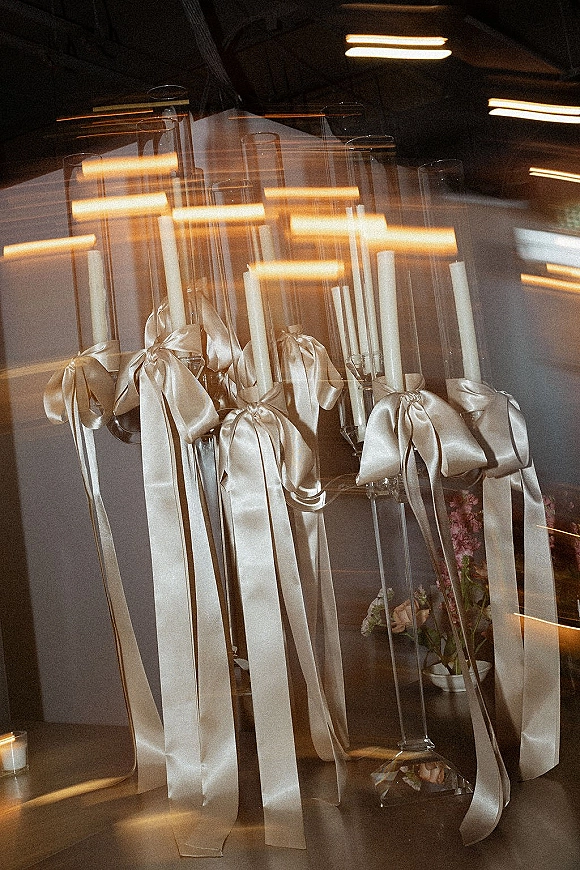
Placement matters as much as the candles themselves. On round tables, ring votives around a central low arrangement and cluster tealights in the gaps; on long banquet tables, run pillars and votives in a staggered line down the center so the glow is continuous. Vary the heights within any grouping and cluster in odd numbers, since a mix of tall tapers, mid pillars, and low votives reads far richer than candles of one size in tidy rows. When a candlelit table wants real height, candelabra wedding centerpieces lift multiple taper flames above the seated sightline for drama without a tall floral mass, and guests still see across the table beneath the flames. For other raised formats, from trumpet vases to pedestals, see the tall wedding centerpieces collection.
Quantity is where candlelit tables most often fall short. A few candles scattered across a large table read as sparse, while a generous grouping, easily a dozen or more small flames on a round once tapers and pillars are counted, reads as intentional and glows. The instinct to economize on candles usually backfires, since the whole effect depends on density and layered heights. When budget is a concern, it is better to use many inexpensive votives and tealights generously than to spread a handful of larger candles thin, since the eye reads the total number of flames far more than the size of any single one.
Color, Glass, and Venue Rules
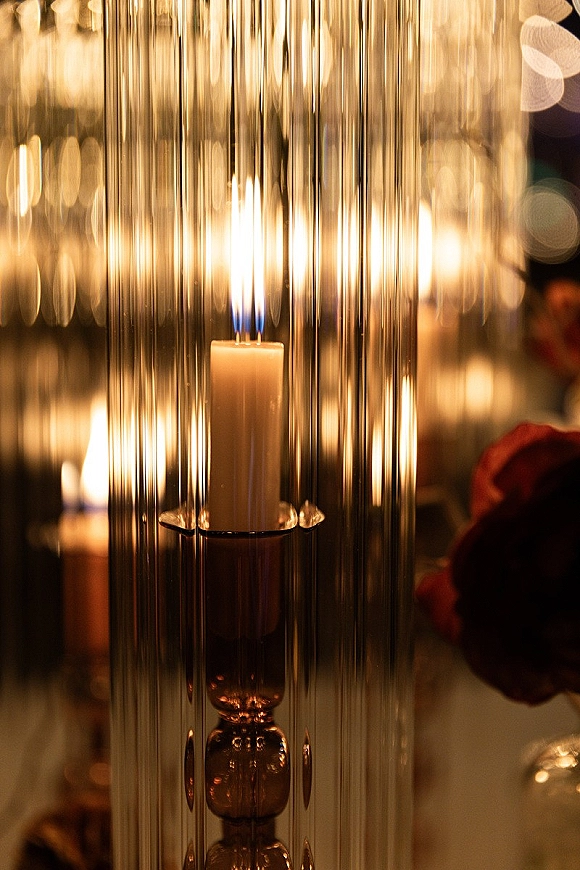
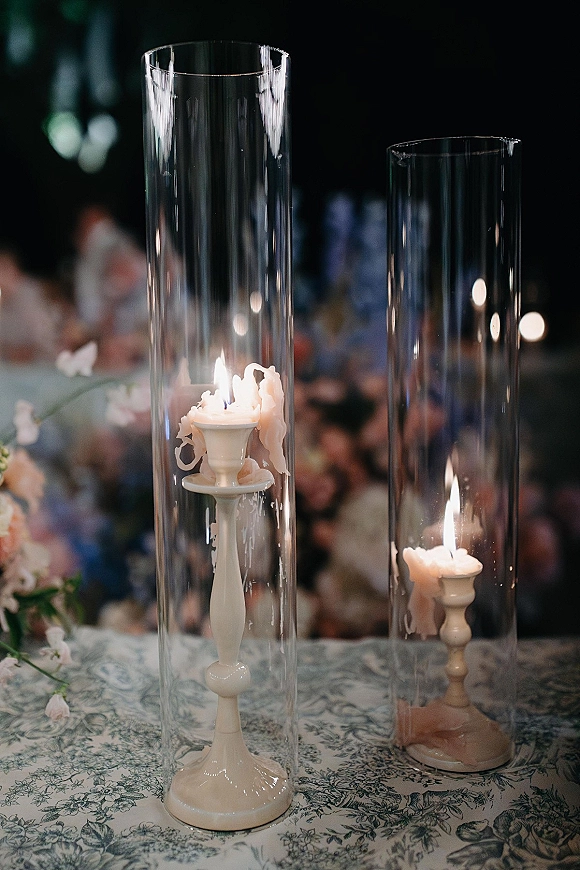
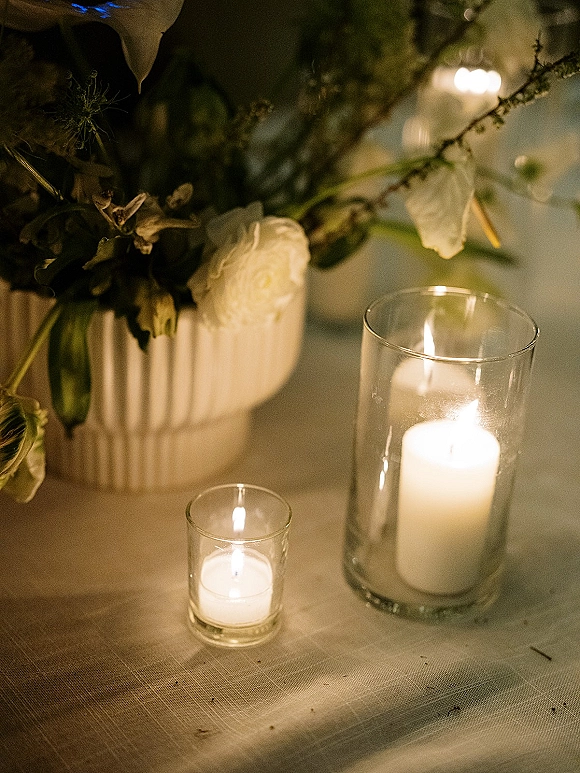
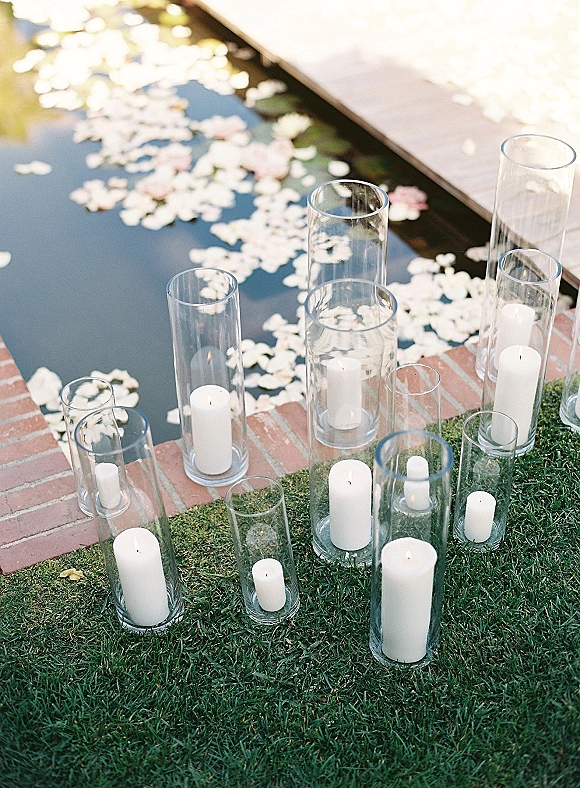
Candle color sets the mood as much as the arrangement around it. Ivory and cream read soft and classic and suit almost any palette; crisp white feels modern in clear glass; warm amber and bronze tones deepen a jewel-tone or harvest table; black tapers read dramatic against a moody setting. The holder finish carries its own weight, with clear glass keeping the focus on the flame, mercury and gold throwing a warm reflected glow, and matte black or brass adding a contemporary line. The glass around a candle controls both safety and look: cylinders and hurricanes shield flames from drafts, clustered votive holders give the low dense glow that defines the style, and tall cylinders holding floating candles add height without an exposed flame. A palette like a soft dusty blue wedding shows how flame warms cool tones into something inviting.
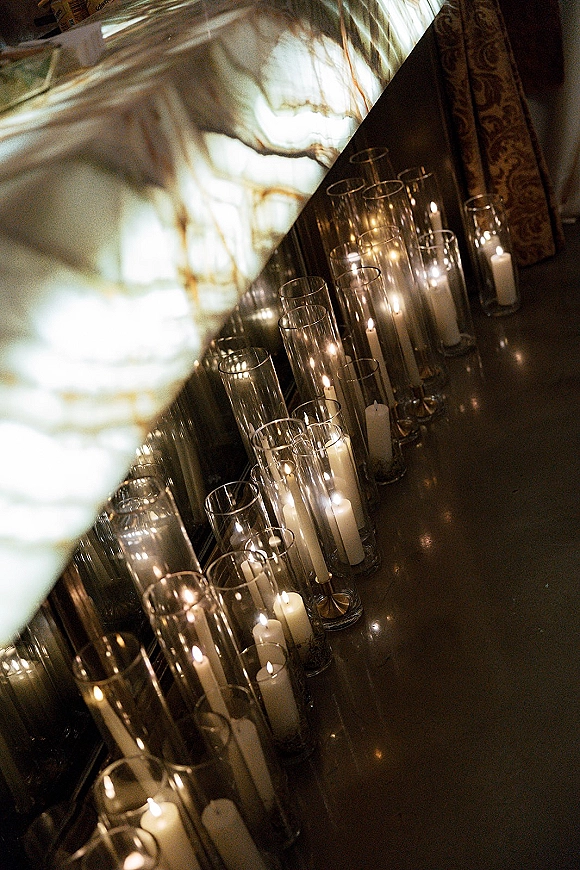
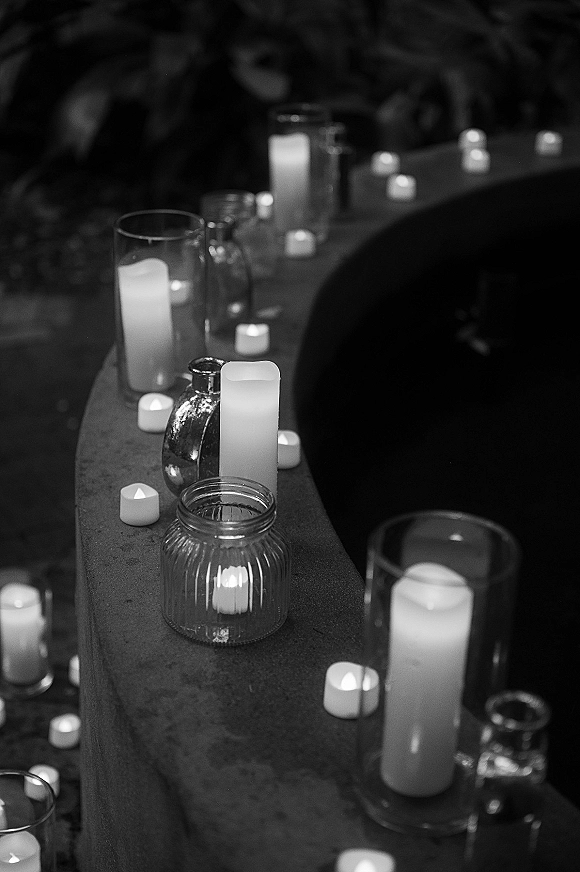
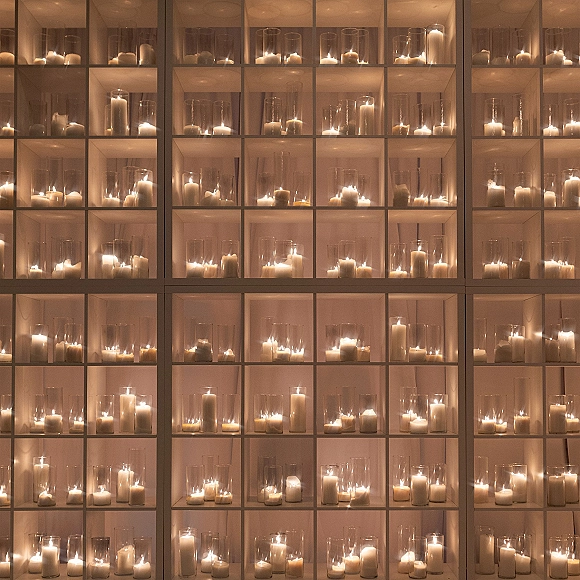
Confirm your venue’s open-flame policy before committing to a candle-heavy table. Many indoor venues require flames enclosed in glass, and some historic or tented spaces restrict open flame entirely; hurricanes and cylinders satisfy most enclosed-flame rules, and high-quality flameless LED candles read convincingly at a distance where open flame is not allowed. Candlelight also reads strongest when it carries past the dining tables into the rest of the room, so clusters on the bar, the escort-card table, and along a mantel tie the space together, and lining an aisle or staircase with enclosed candles builds atmosphere as guests move through the space. Repeating the same candle types and finishes used on the tables keeps those moments reading as one deliberate design, so the glow feels intentional everywhere rather than pooled at the guest tables. To see how candlelight sits within a fully styled room and among floral, greenery, and tall designs, start from the wedding centerpieces hub.
Frequently Asked Questions
How many candles do I need per table?
A warm, full candlelit table usually takes a mix rather than a fixed number: a few taller tapers or pillars for height plus a cluster of five or more votives or tealights to fill the surface with low glow. Varied heights and generous votive scatter read far richer than a handful of single candles.
Are candle centerpieces allowed at all venues?
Not always. Many indoor venues require open flame to be enclosed in glass, and some historic or tented spaces ban it entirely. Hurricanes and cylinders satisfy most enclosed-flame rules, and flameless LED candles are a convincing option where open flame is not permitted. Confirm the policy before designing the table.
Can I do candles without flowers?
Yes. An all-candle table of mixed pillars, tapers, and floating votives carries a reception on light alone, often with a greenery runner for fullness. This is a popular low-bloom approach that still fills a table and reads warm and intimate as the room dims.
What is the safest way to use candles near flowers and linens?
Enclose flames in glass hurricanes, cylinders, or covered lanterns so they sit away from trailing stems and fabric, and keep tapers in stable holders. Where any risk remains, flameless LED candles remove it entirely while still giving a warm glow at table level.