Why Greenery Works, and the Foliage to Use
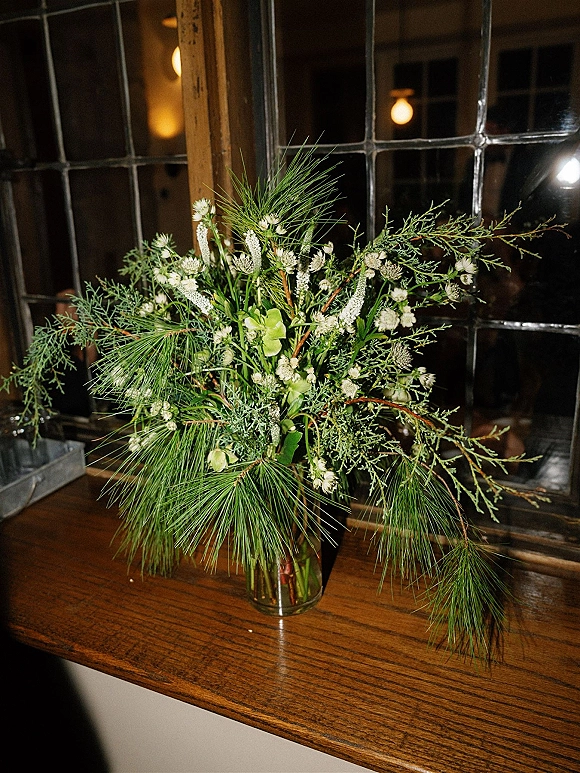
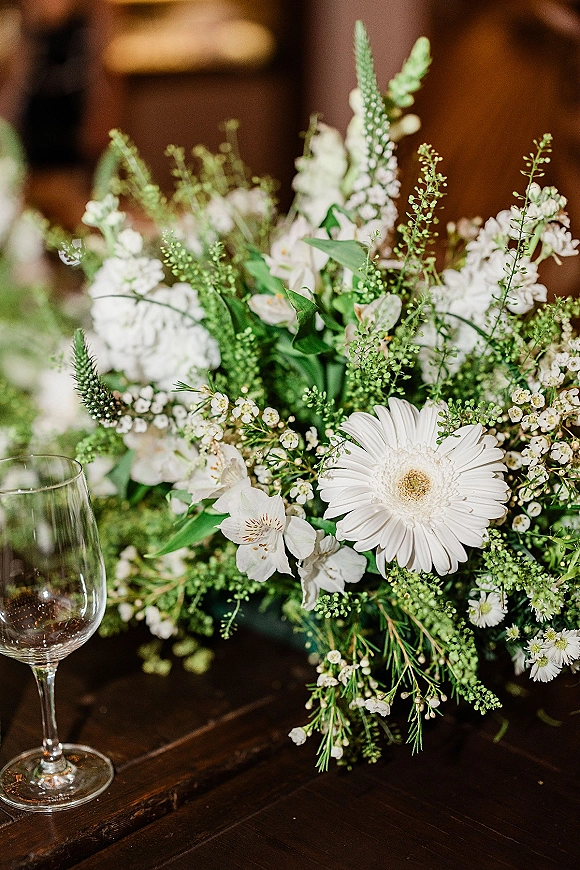
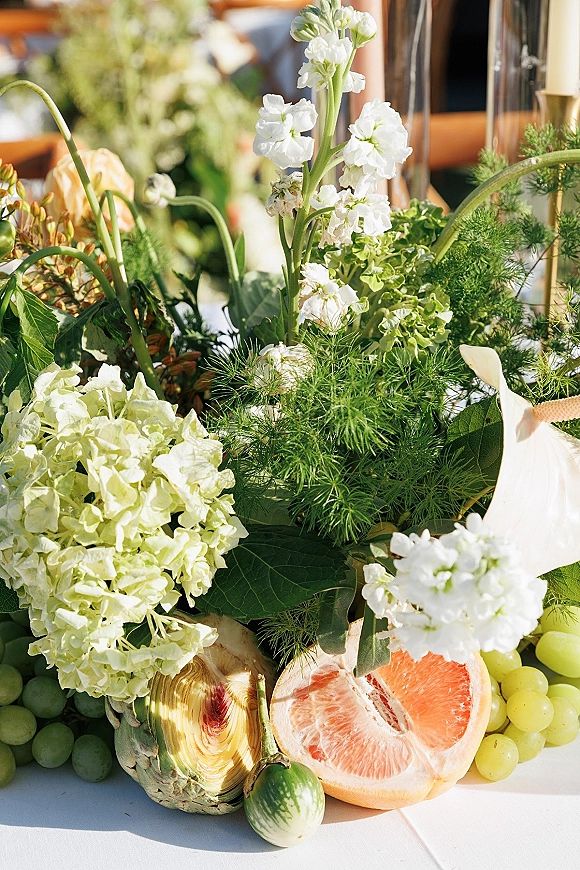
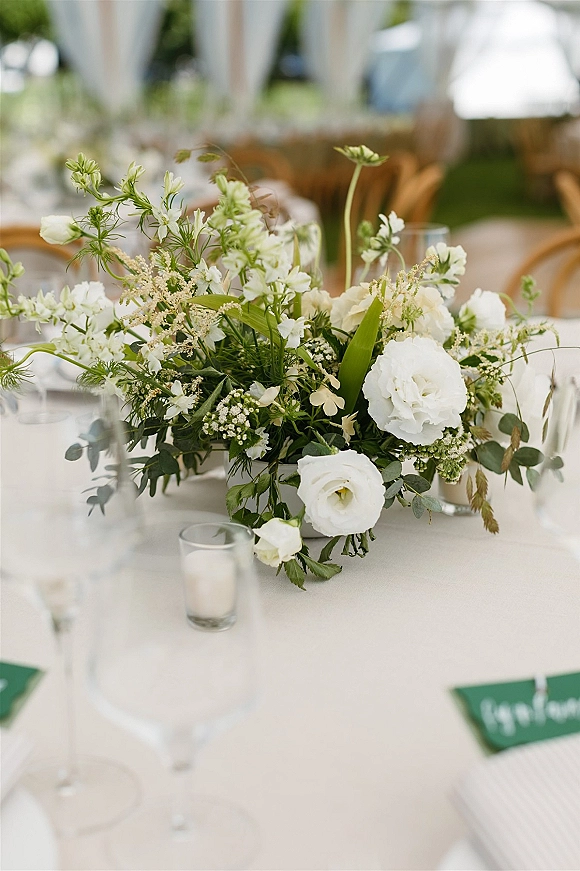
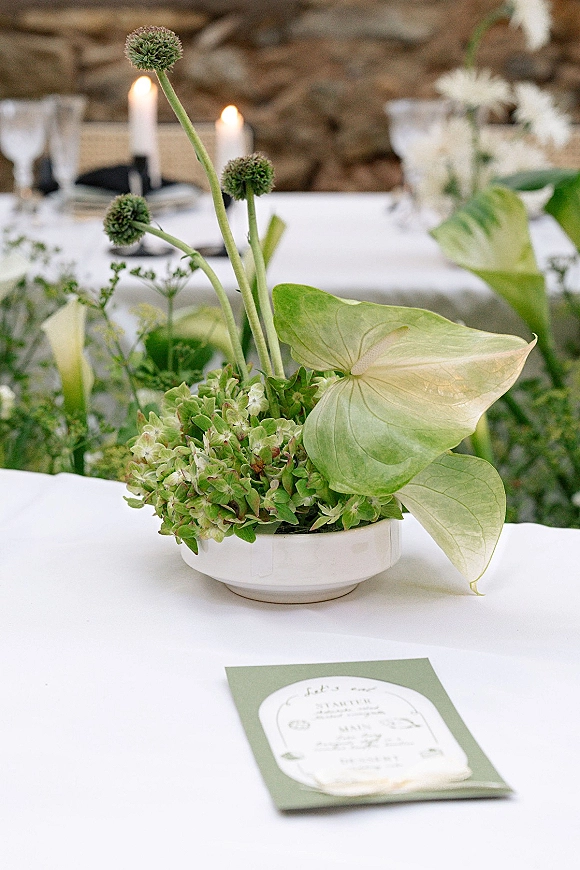
Greenery wedding centerpieces build a table on foliage, using eucalyptus, olive, ruscus, and fern to fill the space with movement and a fresh green base.
It carries a table on texture and volume, not flower color, which makes it one of the most popular non-floral wedding centerpieces: foliage fills space generously for far fewer stems than an all-floral design, so a long table can look full and styled at a much lower bloom count. It also reads fresh and organic, bridges rustic and modern rooms, and gives a neutral base that lets candles, linens, or a few accent blooms provide the color, tying directly to a wedding greenery palette used elsewhere in the day.
Eucalyptus wedding centerpieces are the dominant green, and the variety changes the look. Silver dollar eucalyptus has round, coin-shaped, silvery leaves that read soft and full, the classic runner green. Seeded eucalyptus carries small buds along thin, arching stems for a more textured, wild feel. Baby blue eucalyptus brings a cooler, dusty tone that suits blue and neutral palettes. Beyond eucalyptus, olive branches bring a silvery Mediterranean look, ferns add a lush feathery texture, and ruscus offers a glossy, structured leaf that holds up well. Mixing varieties keeps a green table from reading flat, and the same foliage that runs your table can echo a eucalyptus wedding bouquet carried by the party. Scent is part of the choice too, since eucalyptus carries a fresh fragrance while olive and ruscus are close to scentless for couples who want the look without the smell near the food.
The other quiet advantage of greenery is how well it holds up. Where a delicate bloom can wilt over a long, warm reception, hardy foliage like eucalyptus, olive, and ruscus stays crisp for hours out of water, which is exactly why a greenery runner can sit dry down the middle of a table all night. That durability, paired with a lower cost per stem, is what makes greenery the go-to when a couple wants a full, natural look across a large room without the fragility or the budget of an all-floral one.
Garlands, Runners, and Pairings
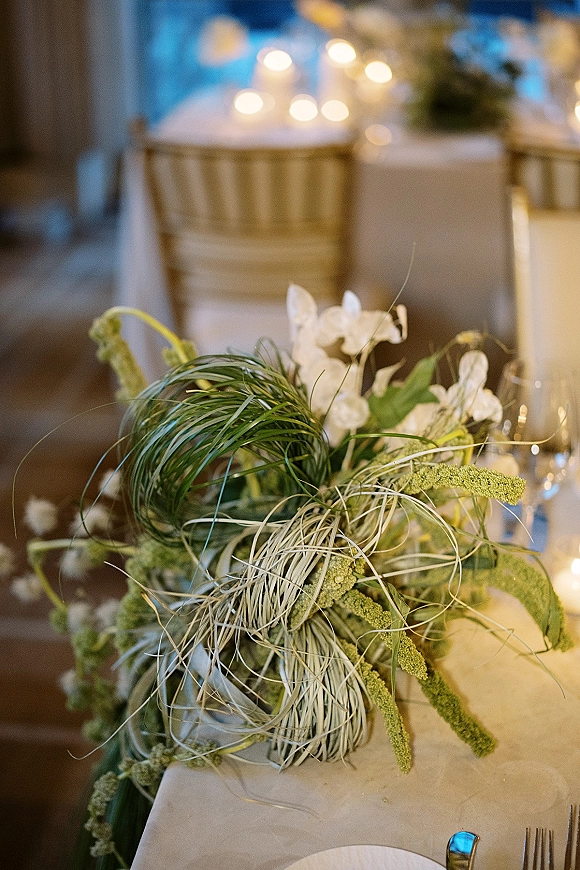
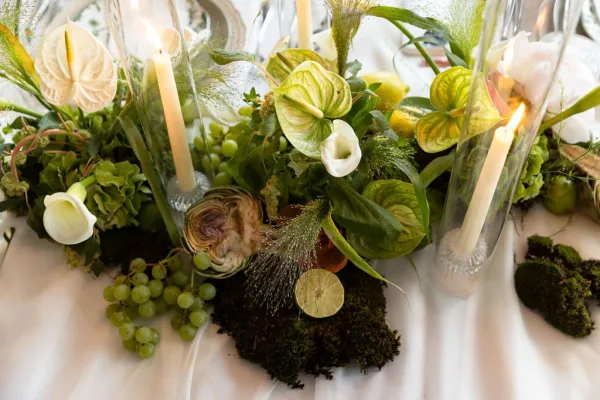
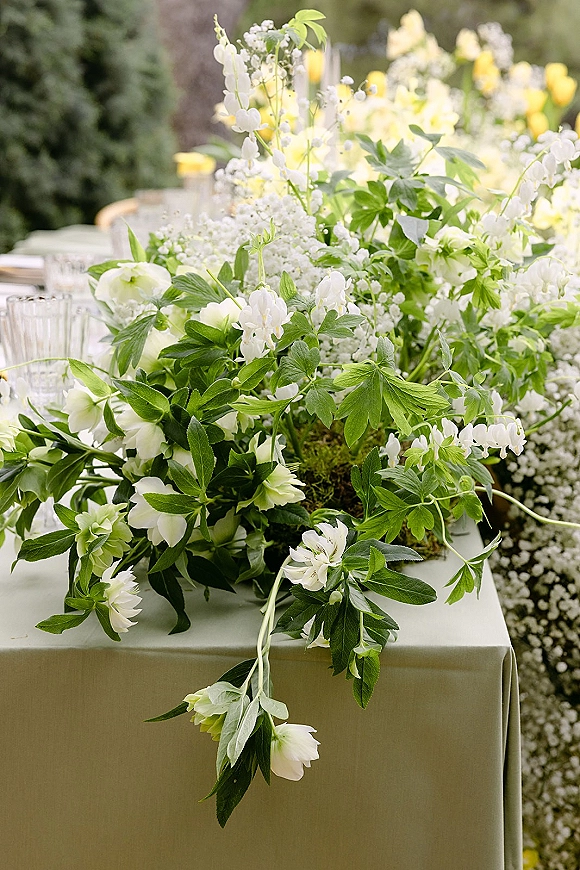
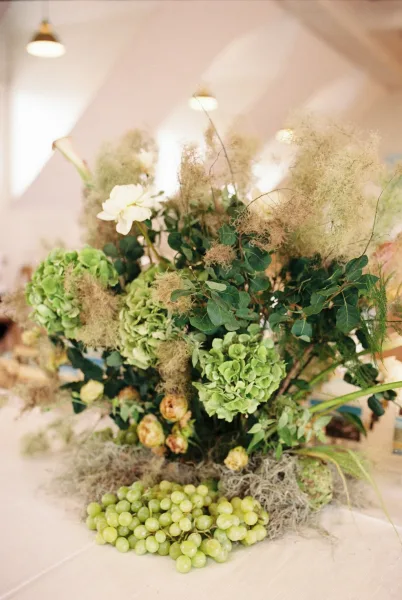
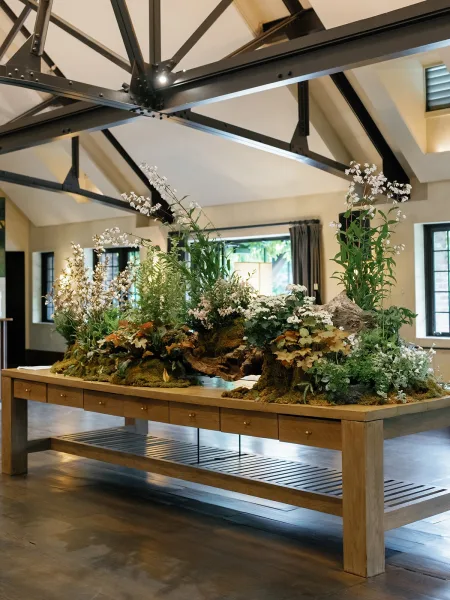
Greenery takes two main forms, and table shape decides which. A garland runs foliage in a continuous low line down the center of a long table, loose and slightly overflowing, with candles and blooms nested into it, which is the signature look for banquet and family-style seating. A gathered arrangement bunches greenery into a vessel or a low mound for round tables. The foliage runner is greenery’s strongest format, since loose eucalyptus or olive laid down a table creates a continuous green line that photographs as one uninterrupted design, and it pairs naturally with a matching greenery backdrop for wedding behind the head table. A convincing garland uses more foliage than it looks, layered in overlapping sprigs rather than laid end to end, so too little reads as a thin line of stems while enough reads lush.
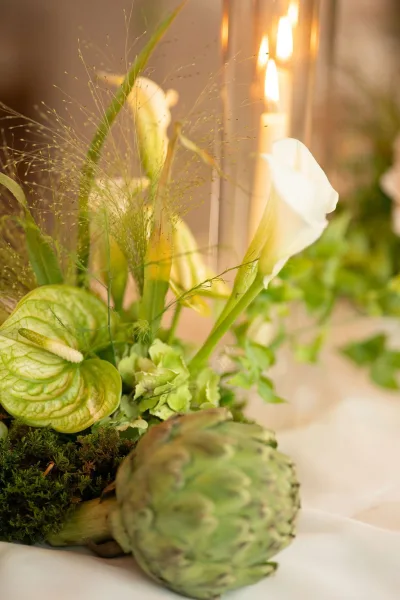
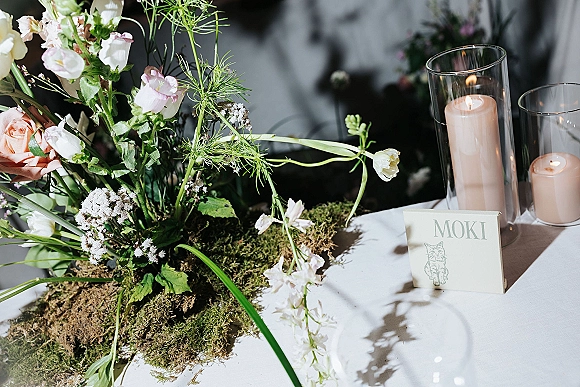
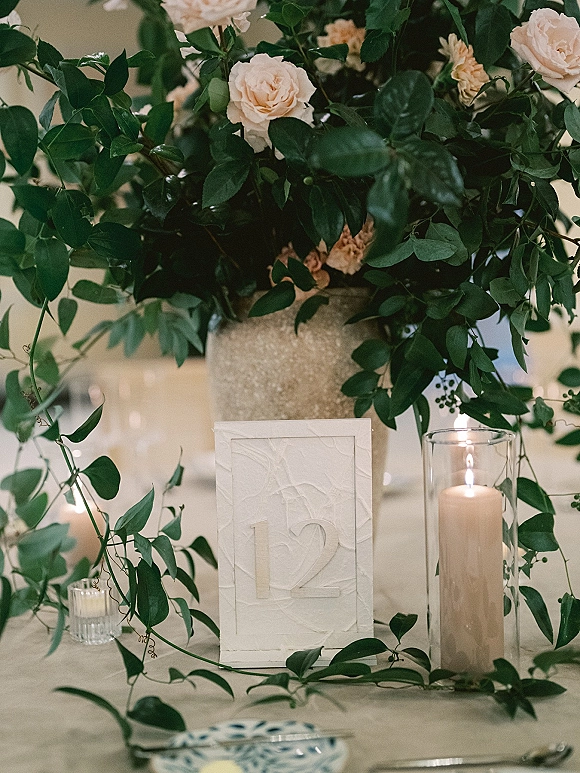
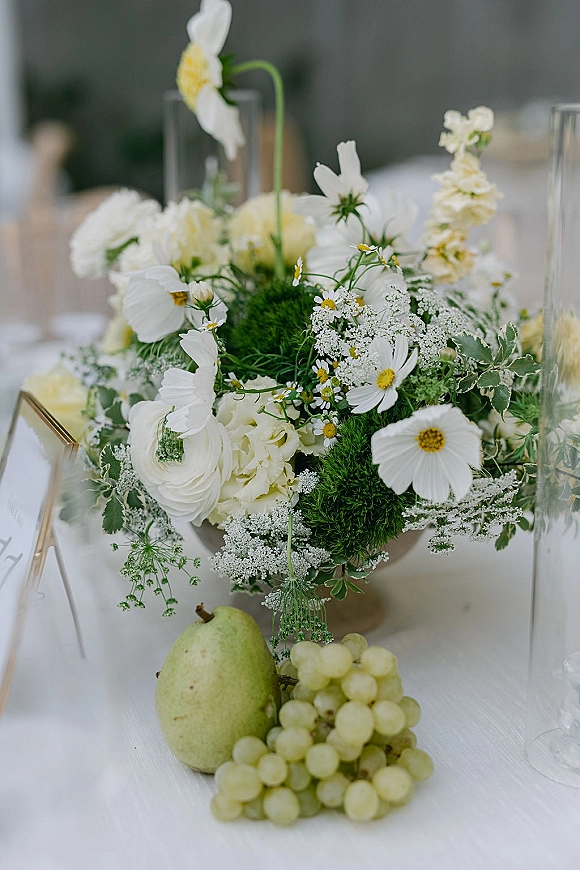
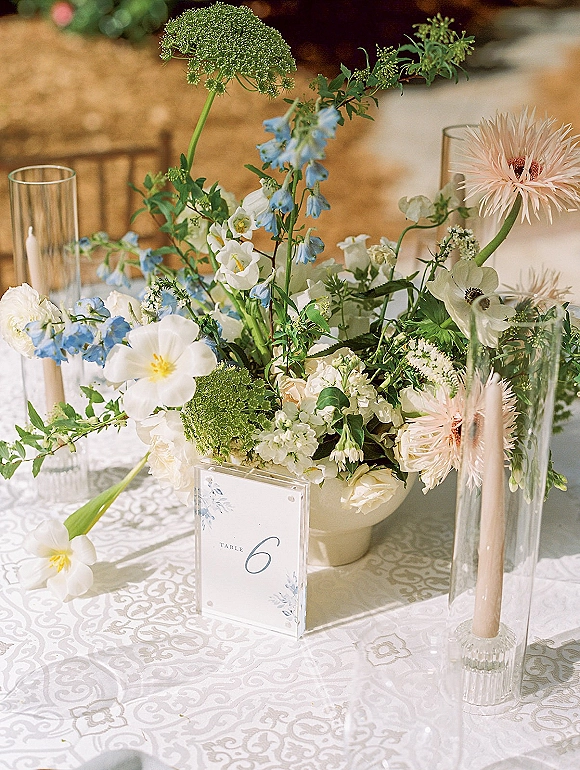
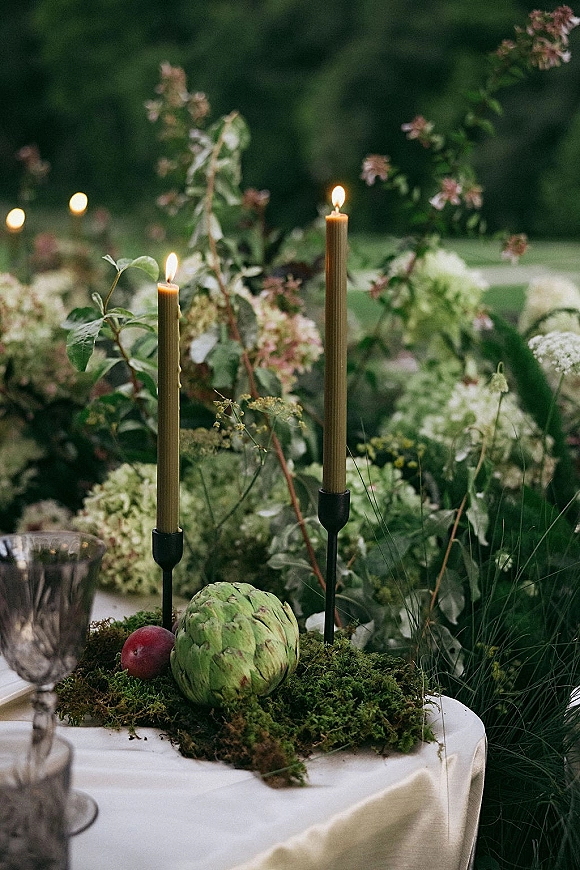
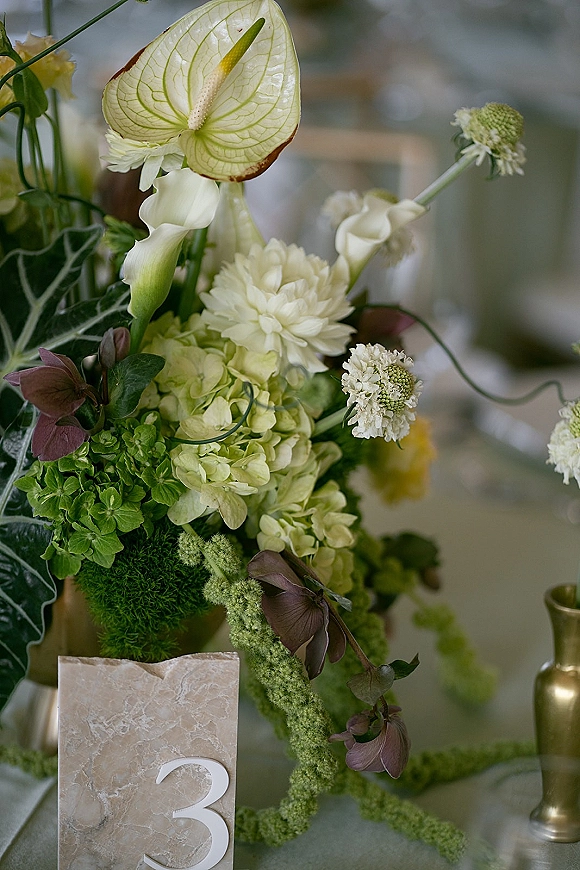
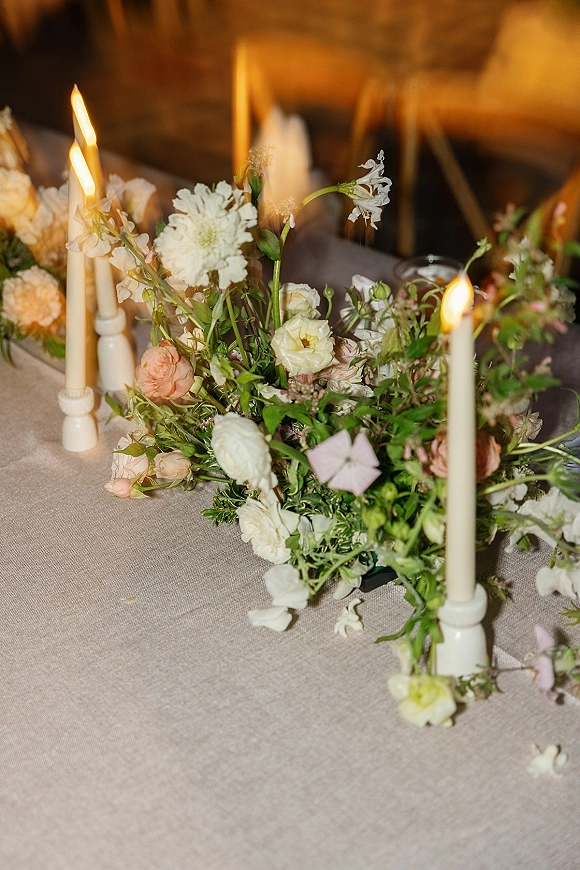
Greenery and candles are the most efficient full-table pairing in wedding styling, with a foliage garland running the center while pillars in glass and scattered votives nest into the leaves, so the greenery softens the glass while the flames add the warmth; the candle wedding centerpiece collection covers the candle side in depth. A greenery base also takes accent flowers beautifully without becoming a full floral design, so tucking a few focal blooms into a garland at intervals gives the freshness of foliage with just enough flower to carry a palette, at a lower cost than an all-floral run.
How much foliage a runner actually needs surprises most couples. A convincing garland is built from overlapping sprigs layered until the line reads continuous, not a single strand of stems laid end to end, so it takes more greenery than the finished look suggests. On especially long tables the runner can concentrate around the center and any focal points and thin toward the ends, which keeps it from feeling monotonous while putting the fullness where the eye lands. Nestling candles and a few blooms into the foliage at intervals gives the run rhythm and stops it reading as a plain green stripe.
Palettes, Freshness, and Style
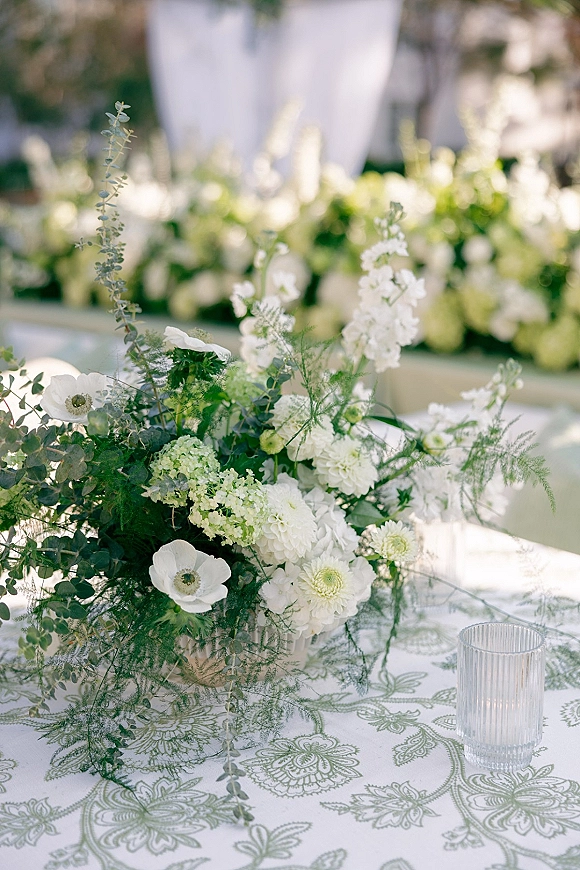
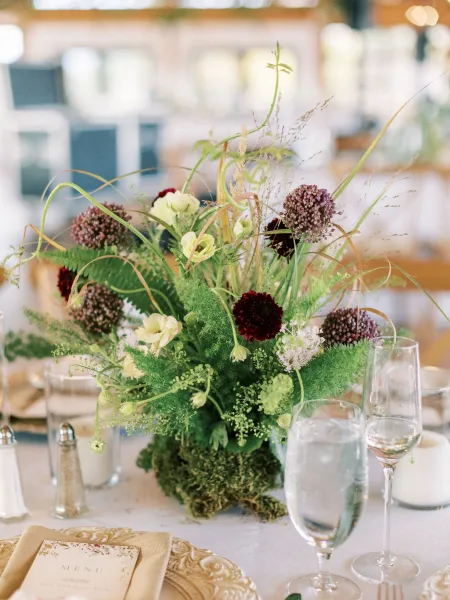
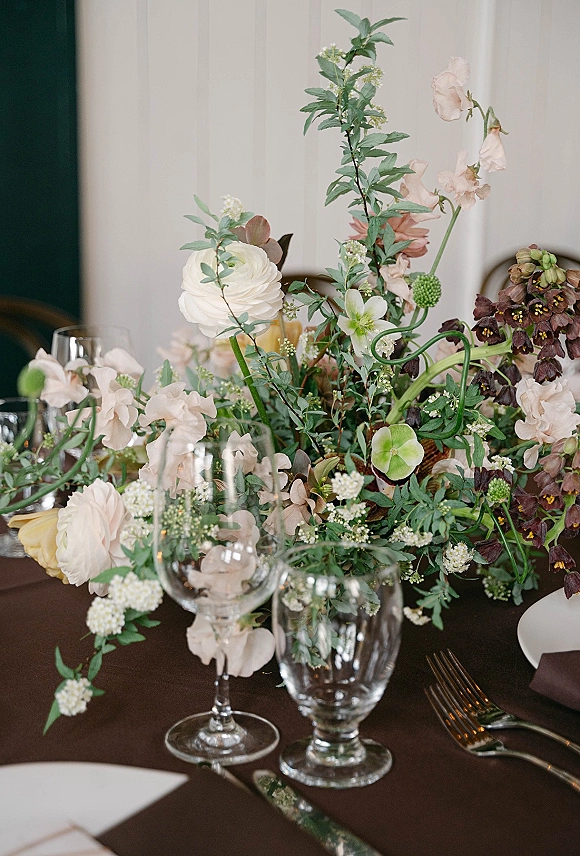
Not all greenery is the same shade, and the tone matters as much as the variety. Silver-toned foliage like silver dollar eucalyptus and olive reads cool and pairs with blue, dusty, and neutral palettes; deep true greens like ruscus and fern read rich and classic against white and jewel tones; muted, dusty greens suit boho and earthy schemes. Because greenery is the neutral base, almost any accent color sits against it, so a green-forward table adapts to a couple’s existing palette rather than dictating one. The same green table works under blush peonies or a single white bloom, which is why it complements a lush floral wedding centerpiece and a pared-back one equally well.
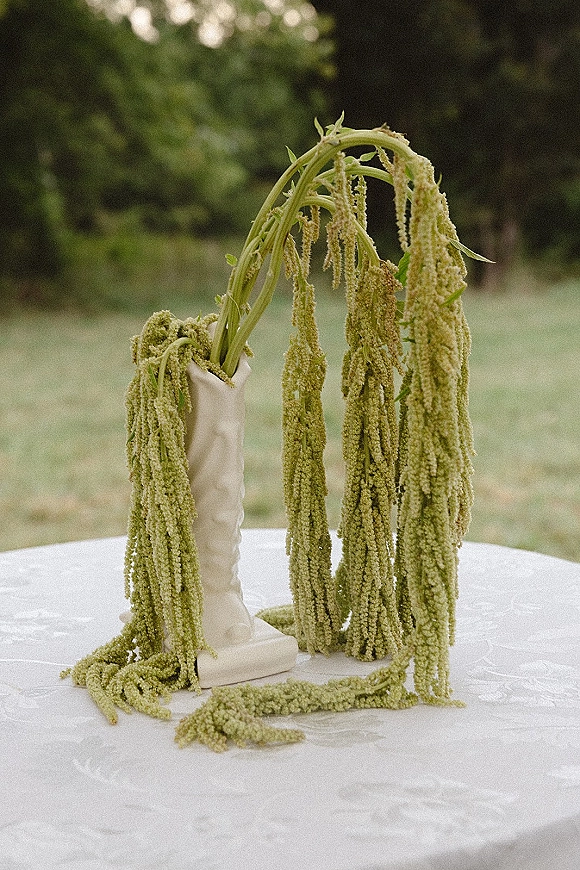
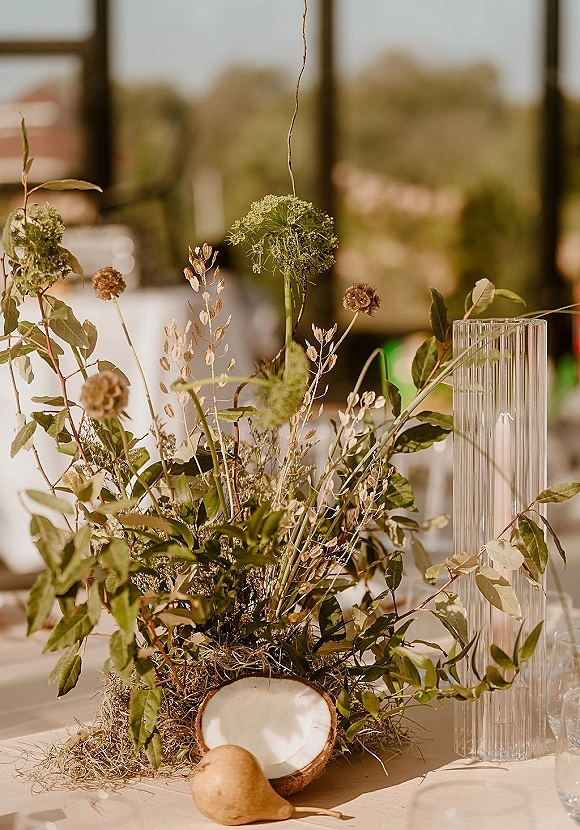
Greenery comes fresh or preserved, and the choice affects both look and logistics. Fresh foliage has the brightest color, and hardy varieties like eucalyptus, olive, and ruscus hold up well out of water through an evening, so runners can sit dry on a table. Preserved and dried greenery keeps its shape indefinitely, travels well for destination weddings, and can be prepared far ahead, though it reads more muted. The same foliage flexes between two moods, too: styled tight and clean it reads modern and architectural, left to sprawl and trail it reads garden and wild, so the styling sets the tone as much as the plant.
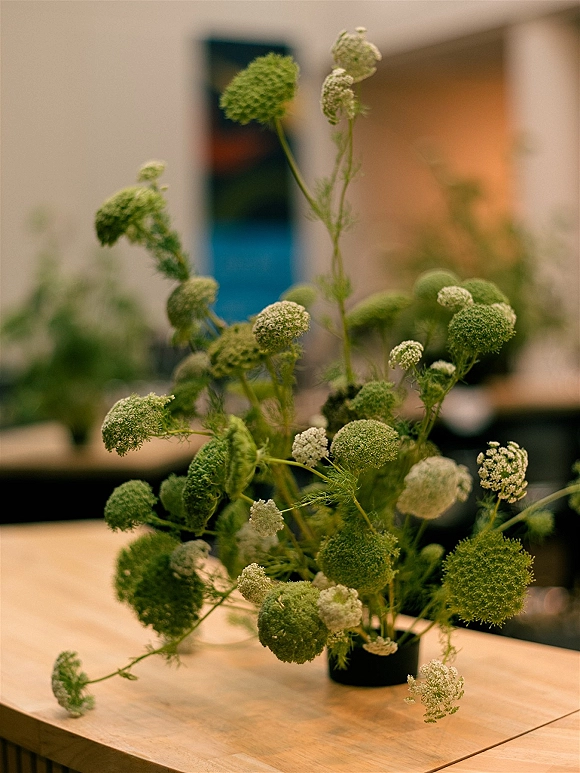
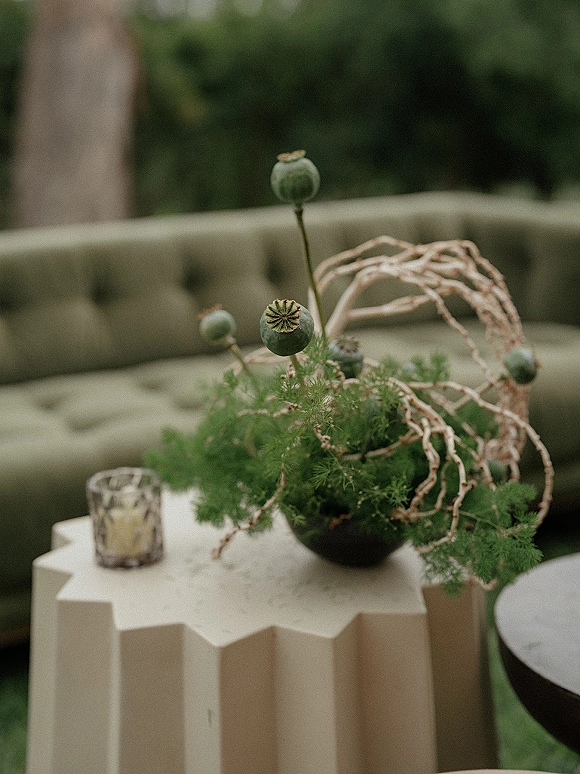
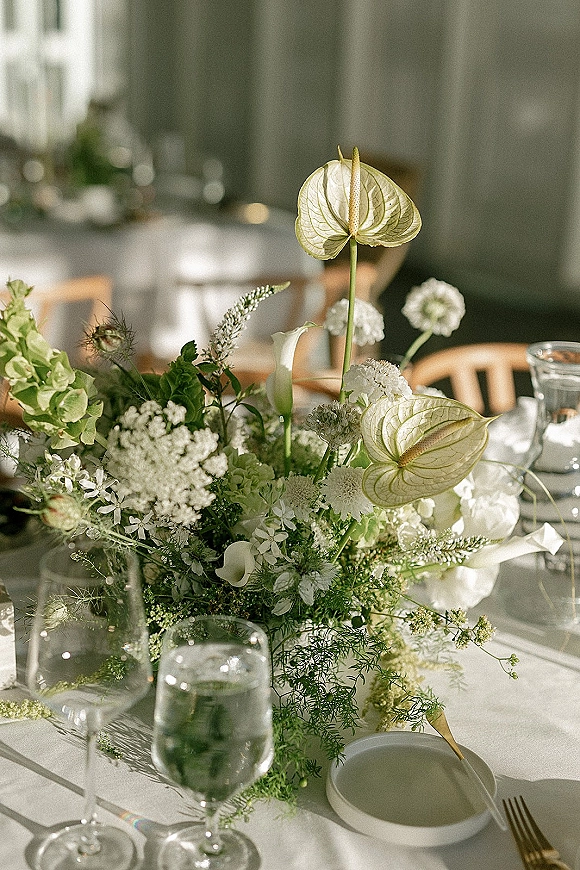
Texture within the green matters as much as the shade. Feathery ferns and soft seeded eucalyptus read romantic and loose; glossy ruscus and structured olive read tailored and crisp; and mixing two or three leaf shapes gives an all-green table the depth that a single foliage cannot. Choosing greenery for how it moves and feels, not only how it photographs, is what separates a considered green table from one that reads as filler waiting for flowers that never arrive, and it lets a greenery table hold its own beside the floral and candle designs in the wedding centerpieces collection.
Greenery Beyond the Table
The foliage that runs your tables can carry through the whole reception for a cohesive, garden-filled room. Greenery draped along the head-table edge, wound up stair railings, laid across the bar, or hung overhead extends the centerpiece look into the architecture, and trailing stems on the place settings tie each seat to the table design. Overhead greenery in particular reads as a statement in a tented or high-ceilinged space, the same instinct behind tented and outdoor reception decor that leans on natural materials. Because foliage is inexpensive relative to blooms, it is the most efficient way to bring fullness to these secondary areas without stretching the flower budget, and it makes even a large, multi-room reception feel wrapped in the same fresh, garden-filled palette from the entrance through to the dance floor.
Pulled together, a greenery table is styled by layering light and a little color into the foliage: nest candles, add a few bud vases or accent blooms, keep the runner or arrangement low, and repeat the same eucalyptus or olive across the room. To pull the look together on the day, lean on wedding florists who source and condition the foliage and build the runners, since greenery is hardy and forgiving enough to scale up for a large guest count without the cost or fragility of a fully floral room.
Frequently Asked Questions
What greenery is best for wedding centerpieces?
Eucalyptus leads, with silver dollar for a soft full look, seeded for texture, and baby blue for cooler palettes. Olive, ferns, and ruscus add range, and mixing two or three foliages gives depth. The best choice suits your palette and the runner-versus-arrangement format your tables call for.
Are greenery centerpieces cheaper than floral ones?
Generally yes. Foliage fills volume for far fewer stems than an all-floral design, so a greenery runner or arrangement covers a table at a lower bloom count. Adding a few accent blooms or candles keeps costs down while still giving color and warmth.
Can greenery be used on round tables?
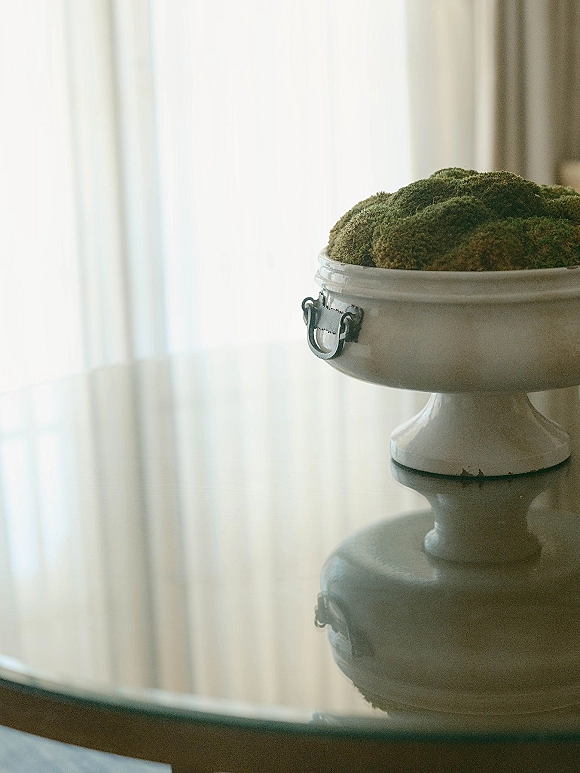
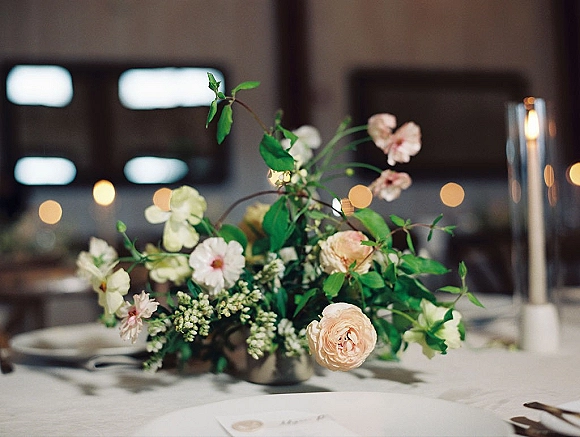
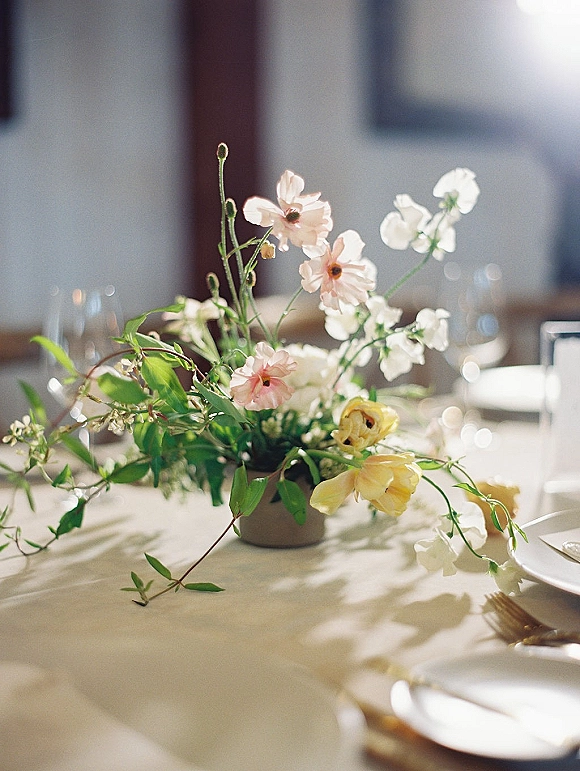
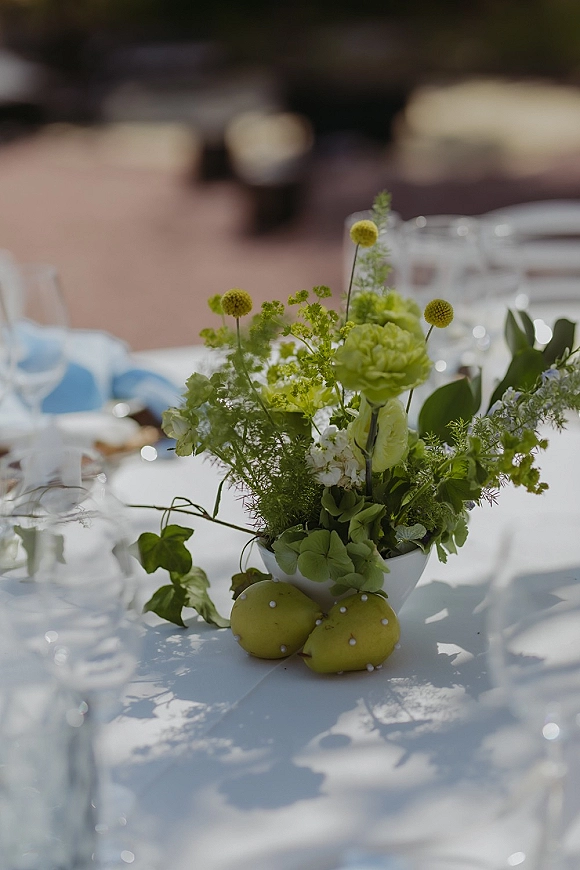
Yes. On rounds, greenery gathers into a compact low arrangement or a small mound in a vessel rather than a runner. The runner format suits long banquet tables, while the gathered arrangement gives rounds a full green centerpiece that stays conversation-height.
Does greenery hold up through a long reception?
Sturdy foliages like eucalyptus, olive, and ruscus hold well out of water for hours, which is part of why runners work. Florists condition the greenery beforehand and place it during setup, and hardier varieties keep their look through an evening far better than delicate blooms.