What Makes a Centerpiece Work
A wedding centerpiece works when it fits the table it sits on and the conversation happening around it. Before palette or flower choice, the arrangement has to respect the sightline: guests need to see and talk to the people across from them, which means keeping a design either below roughly fourteen inches or lifting it well above the seated eye line on a raised vessel. The awkward heights are the ones in between, tall enough to block a face but not tall enough to clear it. Get that wrong and even the most beautiful flowers become a wall.
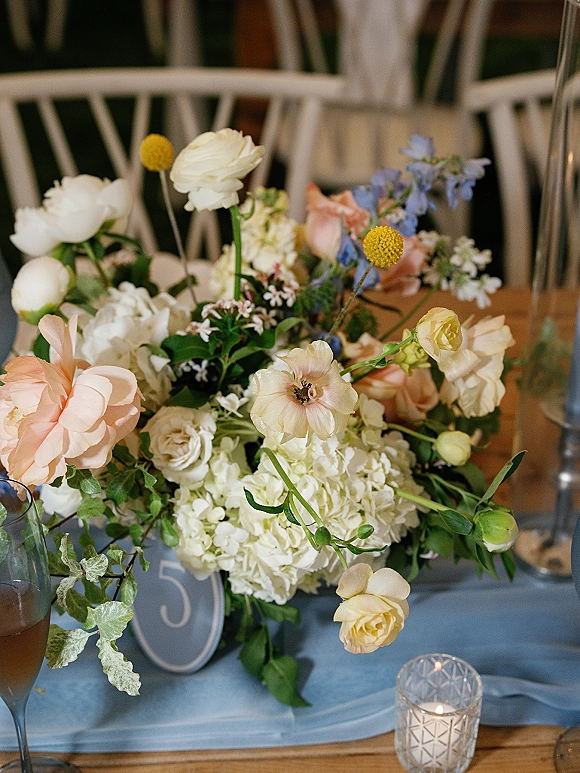
Past height, three things carry the design. Scale ties the arrangement to the size and shape of the table. Palette links it to the flowers, linens, and lighting used everywhere else in the room. And the vessel sets the tone before a single stem goes in, a footed compote reading soft and garden-like, a low bowl reading clean and modern. These four variables, working together, are what separate a table that feels designed from one that feels decorated. Nail them and a modest arrangement holds its own; miss them and expensive blooms still look off. Everything that follows is, at heart, a set of choices about those four things, and every table in this collection resolves them differently.
The four also depend on one another, which is why a table is easier to get right when you decide them in order. Height sets the ceiling on scale, since a low design can only be so full before it blocks a sightline. Scale then suggests the vessel, a lush low mound wants a compote, a few stems want a bud vase. The vessel and the room set the palette’s job, whether the flowers need to supply all the color or simply accent a candlelit, greenery-heavy table. Work them in that sequence and most of the smaller decisions answer themselves.
The Main Types of Centerpiece
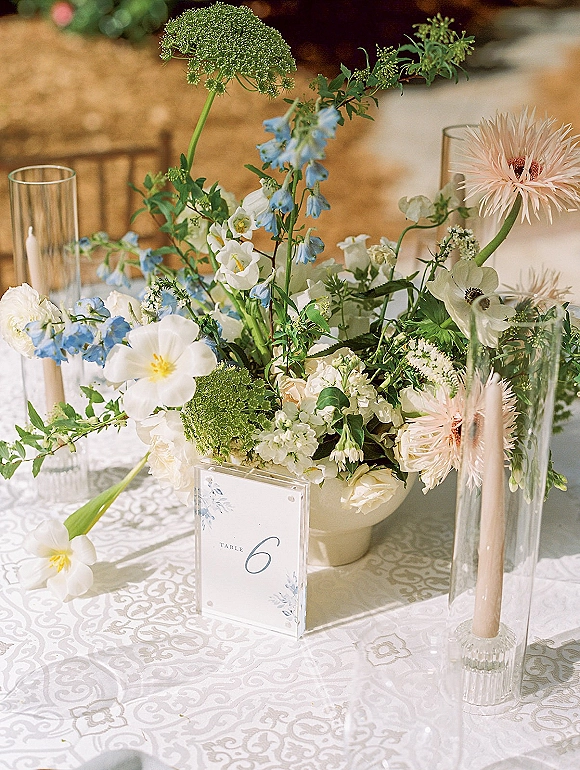
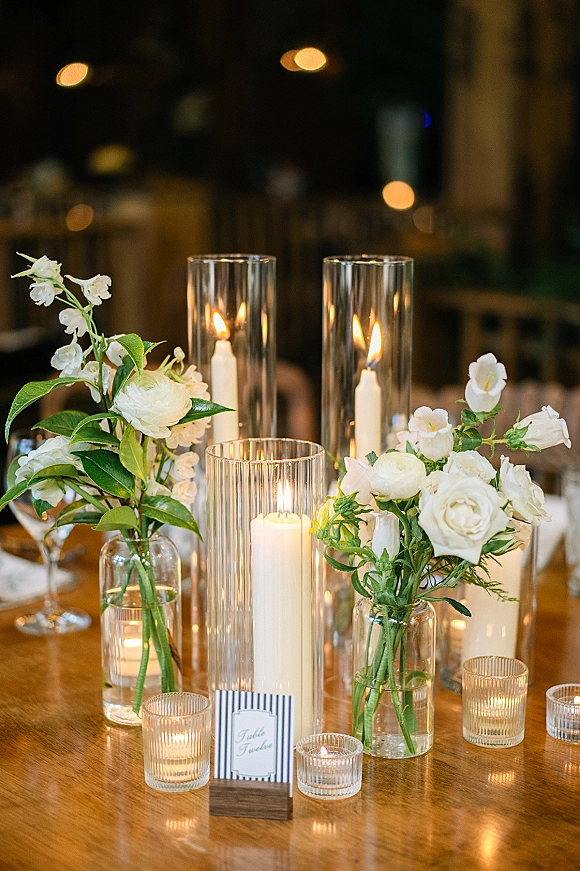
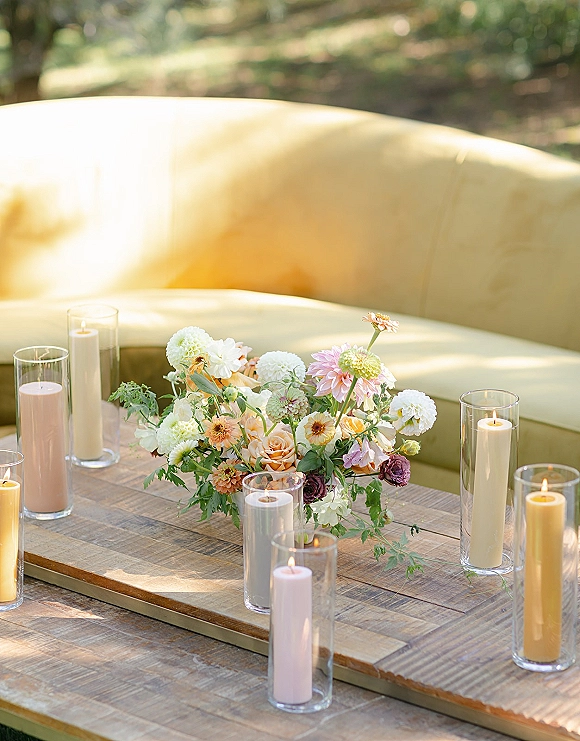
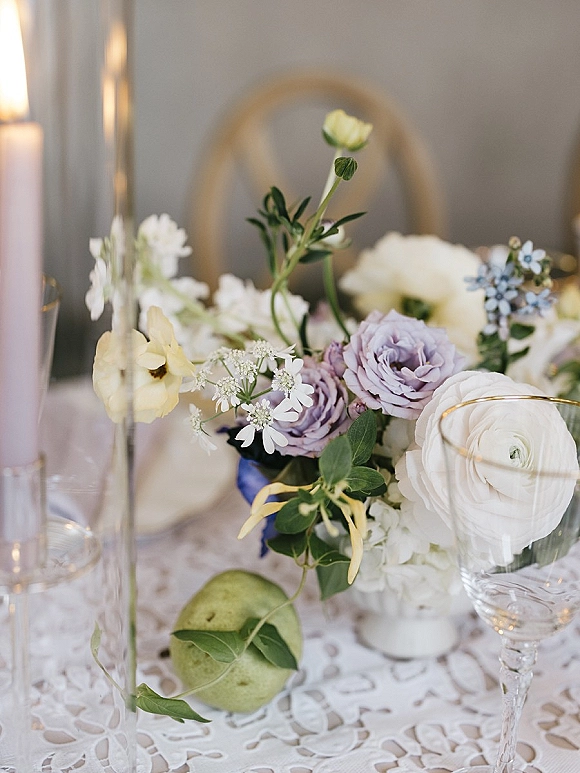
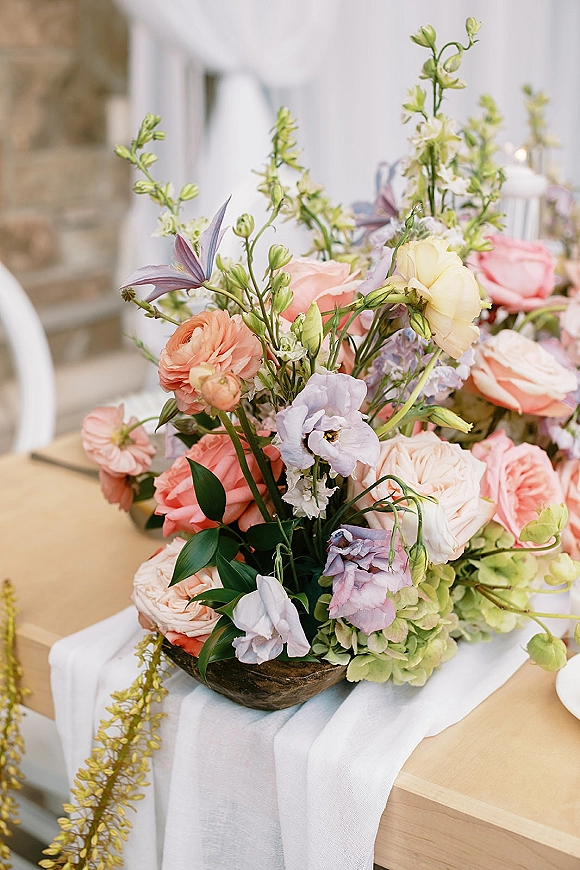
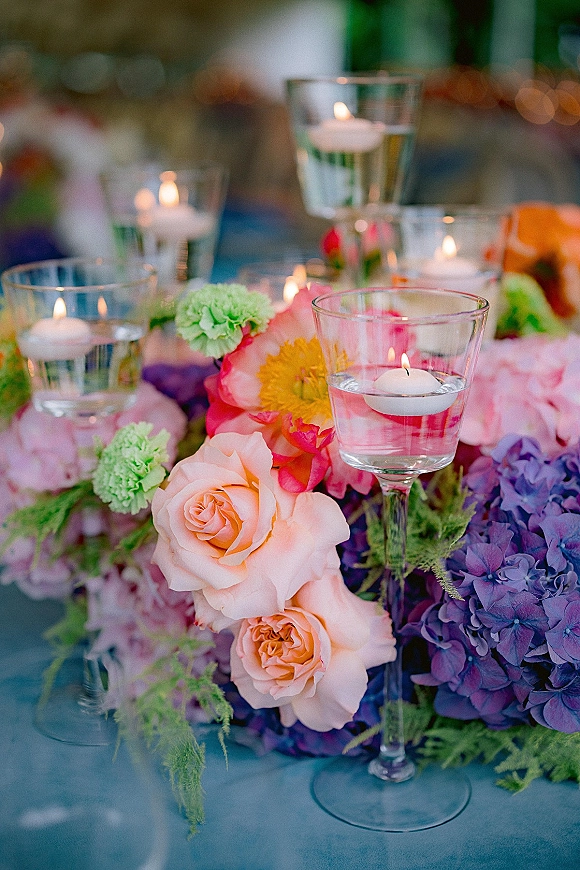
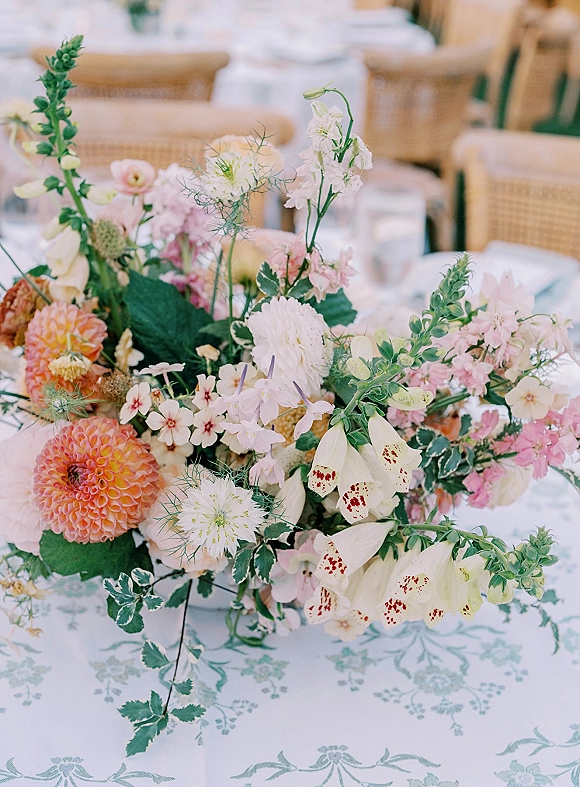
Most wedding reception centerpieces are built from one of four families, and the best ones usually blend two. The first decision is whether flowers lead the table or play a supporting role, because that single call tells your florist how to allocate the flower budget across the whole room. Floral arrangements put blooms first and carry the color story, ranging from a single focal flower to a lush, low-and-wide garden style; browse the floral wedding centerpiece collection for bloom types and shapes. Candle groupings build warmth and movement through taper, pillar, votive, and floating flames, often with no flowers at all, and a cluster of mixed heights reads far warmer than any single candle, as the candle wedding centerpiece collection shows. Greenery runs the length of a table as a garland or gathers into a foliage arrangement, giving fullness at a lower stem count; the greenery wedding centerpiece collection covers runner formats. Non-floral options lean on candles, lanterns, fruit, or sculptural objects for tables that want texture over petals.
Where you land on the floral-to-non-floral spectrum is mostly a question of mood and budget. All-floral tables read lush and lead with color but ask the most of the flower budget, since blooms fill the entire vessel. Candle and greenery tables fill space generously for far less, which is why the most common wedding centerpiece of all sits in the middle: a low floral anchor ringed by candles and a little greenery, carrying the palette while keeping the cost in check. Blending families is the norm, not the exception, and it is where most of the flexibility lives. A candle table gains color from a handful of bud vases; a greenery runner gains warmth from votives nested in the foliage; a floral arrangement gains height and glow from tapers ringed around it. Thinking in terms of a lead element plus one or two supporting layers, instead of a single material, is what lets you tune each table to the room and the budget without starting the design over.
Each family also carries its own practical strengths worth weighing. Floral tables photograph richest and set the clearest palette, but they ask the most of the budget and the most care to keep fresh. Candles deliver atmosphere for a fraction of the cost and never wilt, though they depend on venue flame rules. Greenery fills a room generously and holds up for hours, while non-floral objects personalize a table in a way flowers cannot. Naming what you most want from the tables, richness, warmth, fullness, or personality, points you straight at the family that delivers it.
Getting the Height Right
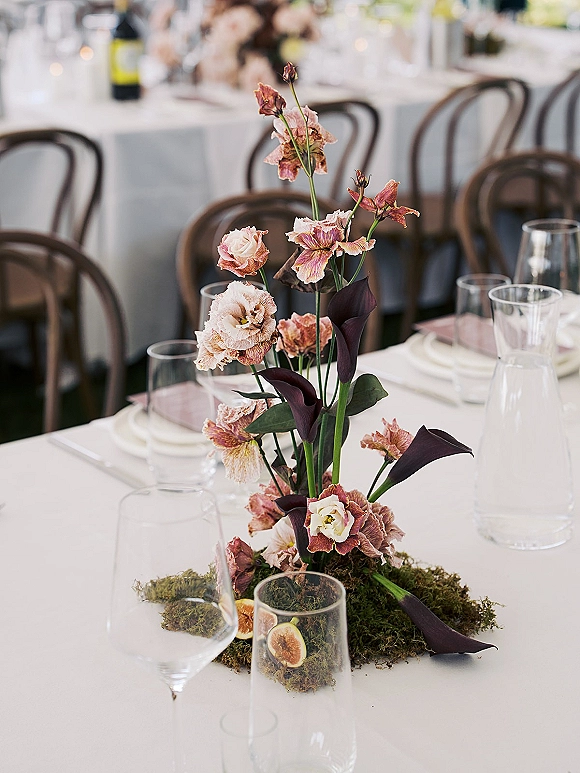
Height is the fastest way to change how a room feels, and it is the choice couples most often get wrong. Low centerpieces, kept under about fourteen inches, hold the eye at table level, feel intimate, and let everyone see each other. They are the safe default for most receptions and the reason conversation-height arrangements never quite go out of style. Tall centerpieces lift flowers and candles onto raised vessels above the seated sightline, drawing the eye up, filling the volume of a high-ceilinged ballroom, and creating drama down a long room.
Neither is better; the room decides. A grand ballroom with soaring ceilings can swallow a low arrangement, while a low-ceilinged room feels crowded by a tall one.
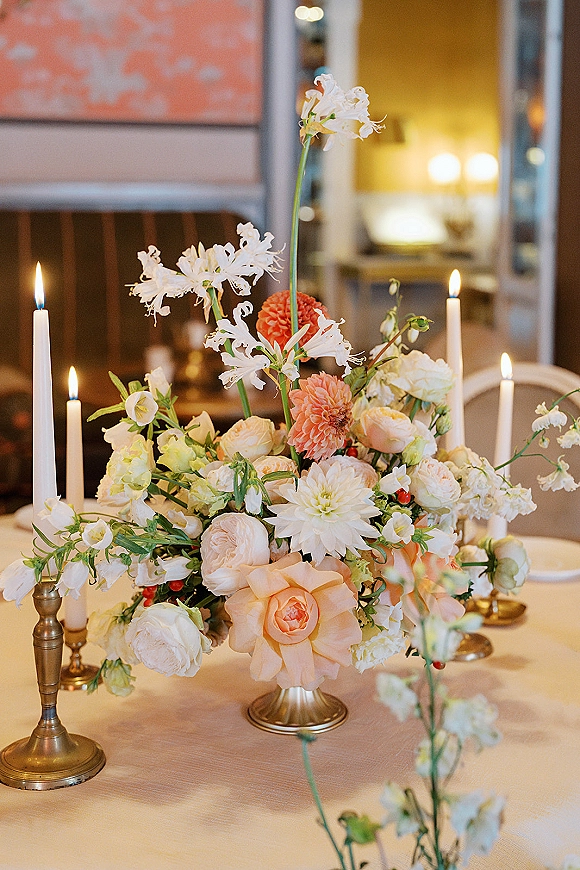
The most versatile approach mixes the two, alternating raised arrangements with low ones across the guest tables so the space gains rhythm while every guest still has tables they can see across. Tied together by a shared palette and vessel family, the two heights work as one design, and the tall wedding centerpieces collection covers the raised end, from trumpet vases to candelabra. There is a mechanic behind the rule worth knowing: the seated eye lands around the height of a water glass, so a low arrangement stays comfortably beneath it while a tall design clears it only by rising well overhead on a narrow stem. Anything that stalls at glass-to-face height becomes the wall you want to avoid. A raised vessel earns its drama by staying narrow and rising well overhead.
Alternating heights across the room is where most couples land, and it takes a little planning to do well. A common split runs low arrangements on the majority of guest tables with tall designs on a third or so, placed to give the room a rhythm and to anchor the corners and the head table. The trick is to keep the low and tall versions unmistakably related, the same blooms, the same vessel family, the same palette, so the room reads as one design at two scales rather than two different weddings sharing a space.
Designing for Your Tables
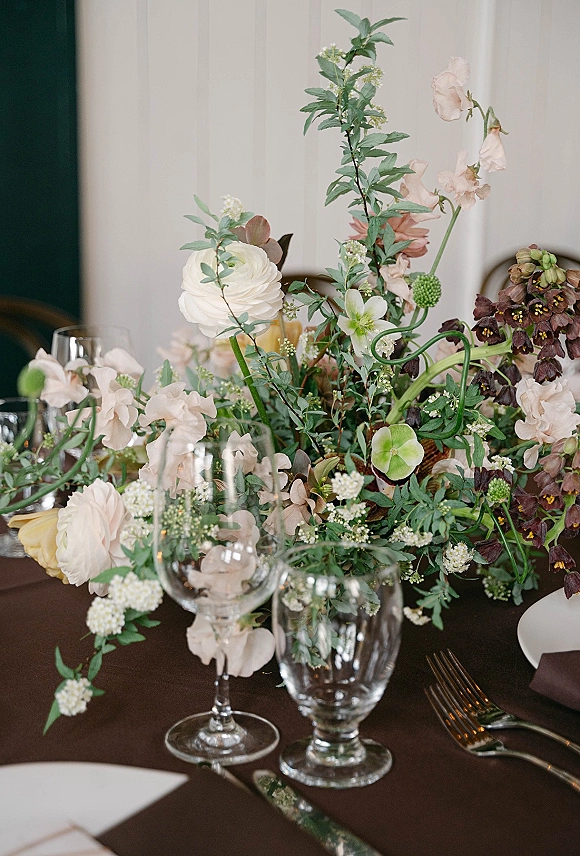
Wedding table centerpieces answer to the shape of the table before anything else. Wedding centerpieces for round tables read from every seat at once, so they want a single centered arrangement or a tight trio of vessels, compact enough to leave room for place settings and glassware. Long banquet and family-style tables reward a repeating rhythm instead: a runner of greenery and low blooms, a line of alternating bud vases, or clustered candles staggered down the center. That continuous line is why garland runners and scattered votives photograph so well on long tables, and why one large arrangement stranded in the middle of a banquet table always looks a little lost.
Proportion matters as much as shape, and the best wedding centerpieces for tables of any size get it right. A standard round seating eight to ten needs a design with enough presence to fill the center without crowding the settings, while a smaller round almost always reads better low and tight. Mixed layouts are common, and the fix is simple: repeat a shared element across both formats, whether that is a single focal bloom, one vessel finish, or one palette. Spacing plays in too, since tables set close together make tall arrangements feel crowded while a generous floor plan gives height room to breathe. Sketching the layout before locking in centerpiece heights keeps the room balanced and the sightlines to the couple and the dance floor clear, and it is worth thinking about the tables alongside the room’s other decor, from the linens to any overhead and ceiling decor that shares the palette.
The number and size of the tables shape the whole plan too. A room of large rounds seating twelve can carry substantial arrangements, while a tighter layout of smaller tables reads better with compact, low designs that leave room to dine. Long banquet seating changes the math again, trading one central arrangement per table for a continuous run down the middle. Working out the floor plan first, then scaling the centerpieces to it, prevents the common mismatch of a design that overwhelms a small table or disappears on a large one.
Style, Season, and a Single Palette
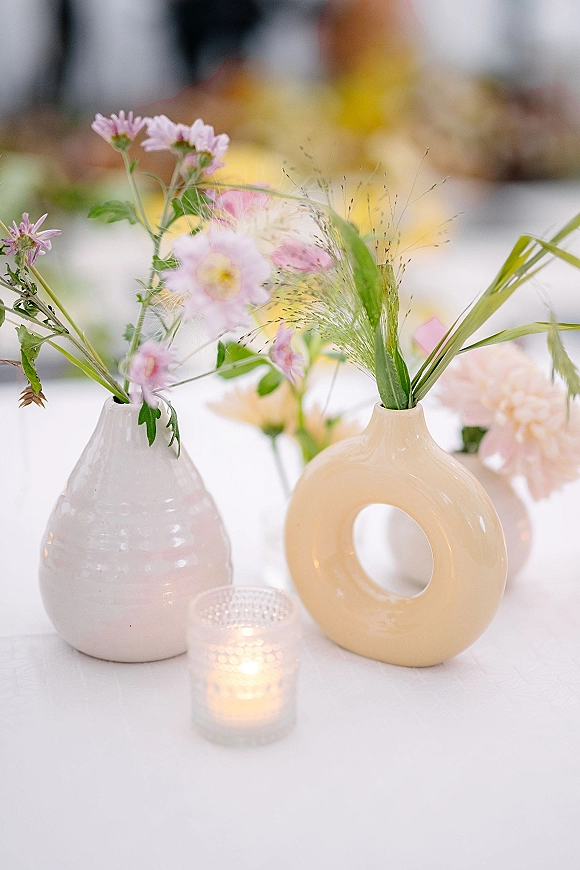
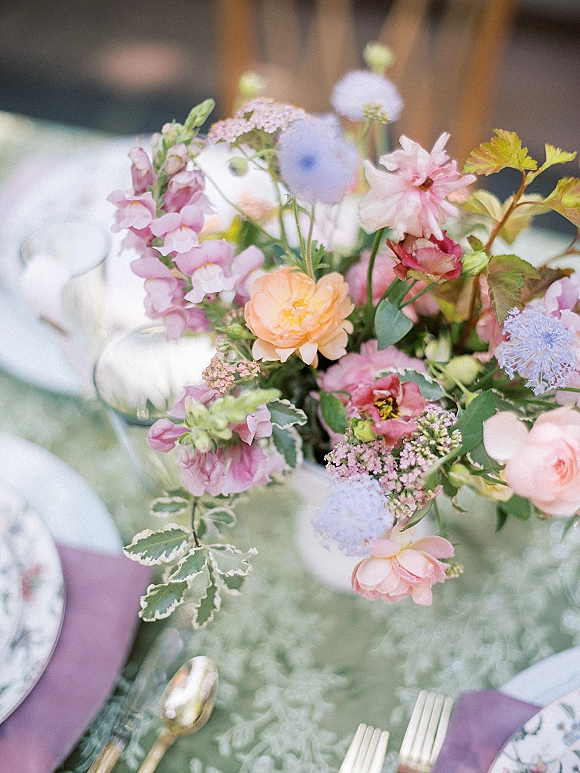
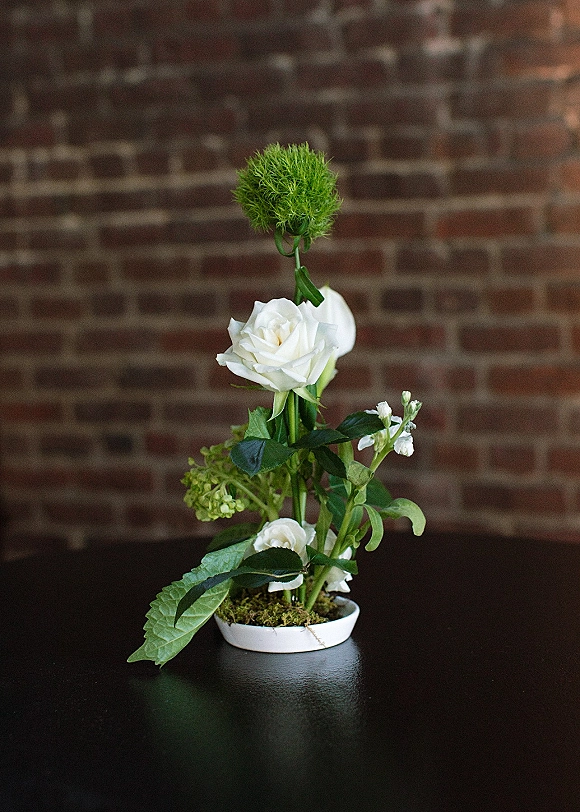
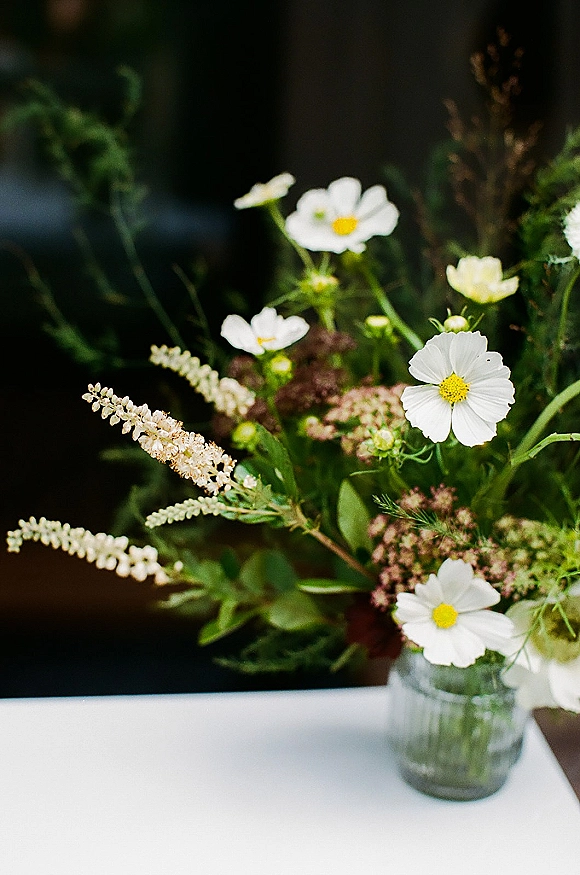
Style decides which family of centerpiece feels right. A rustic or barn reception leans on lanterns, wood, and loose seasonal blooms, gathered in the rustic wedding centerpiece collection, while a minimalist reception strips back to bud vases and clean low arrangements, shown in the simple wedding centerpiece collection. Garden and romantic tables go lush and low; modern tables lean on monochrome palettes, sculptural vessels, and candle groupings. It helps to name the direction before choosing flowers, since a garden-romantic table wants loose overflowing blooms while a modern table wants a tight palette and sculptural stems, and settling on a primary direction keeps every table pulling in the same aesthetic.
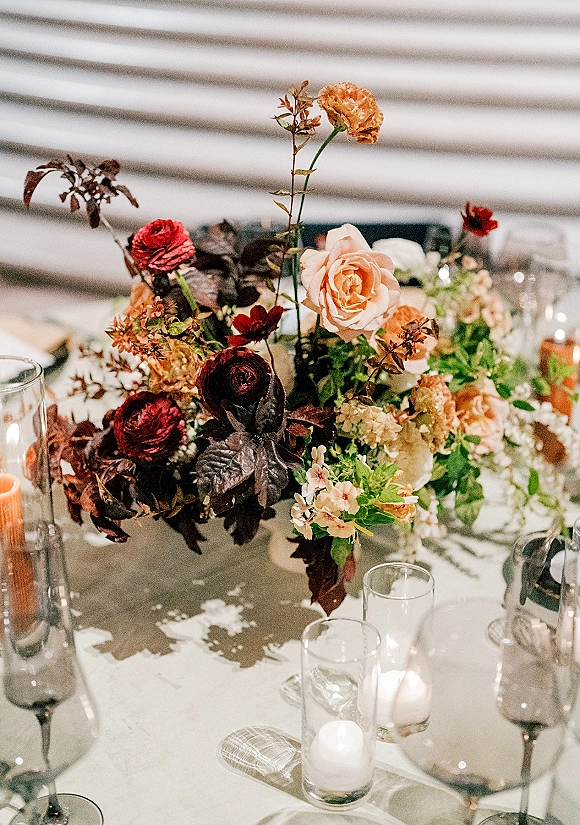
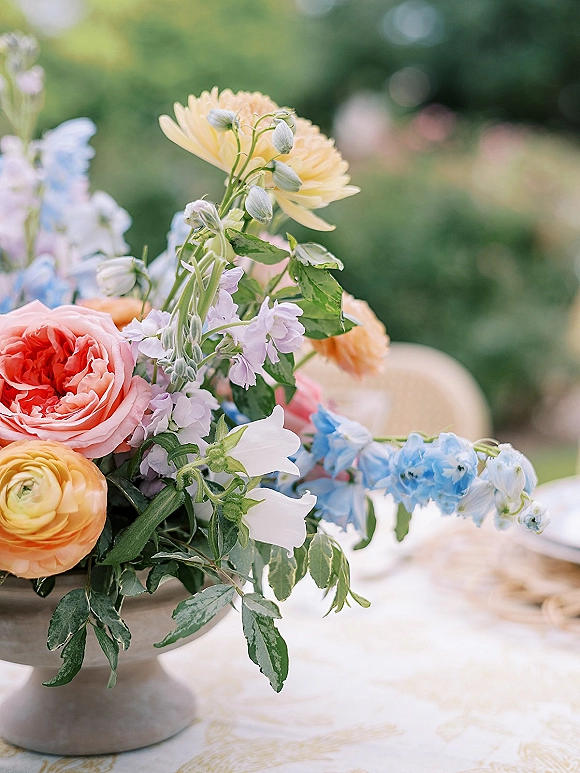
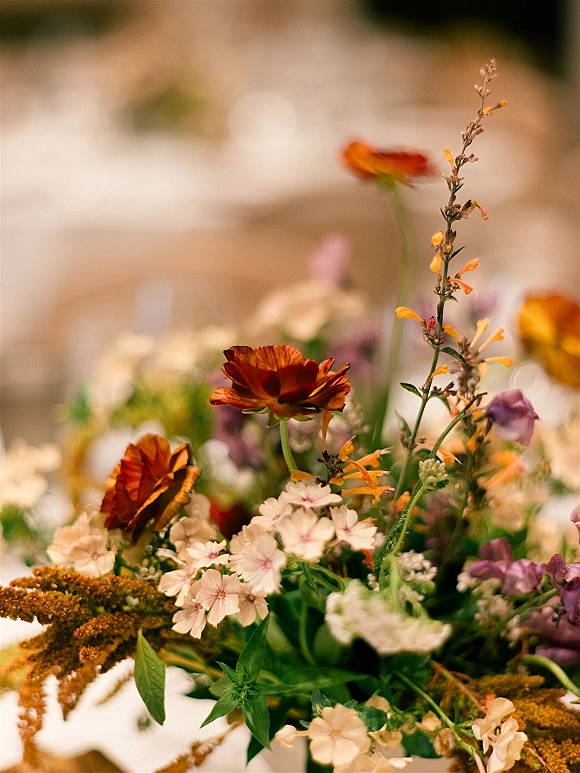
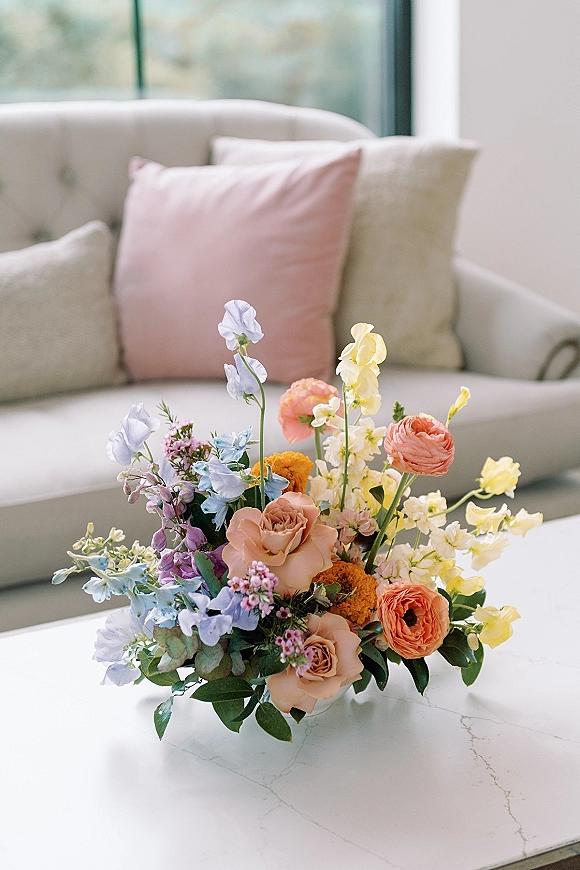
Season shapes both palette and fullness. Spring and summer tables run bright and airy with peony, ranunculus, and garden roses, while cooler months shift to burgundy, rust, and gold, with dahlia, dried elements, and candlelight doing more of the work; the fall wedding centerpiece collection covers that warm-palette end in depth. Beyond color, a bloom at its natural peak arrives larger, opens better, and holds through a long reception, so leaning on what is in season gives a fuller table for the same number of stems.
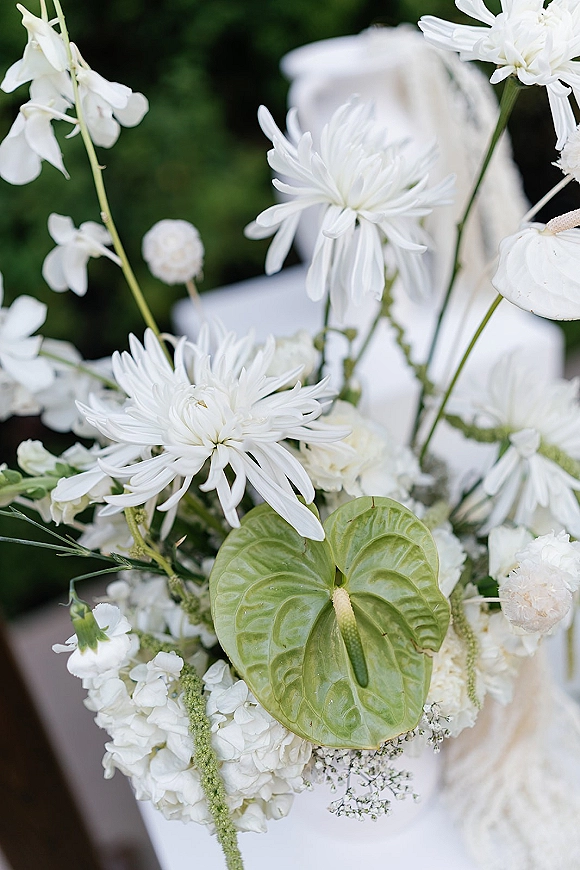
Whatever the style or season, cohesion comes from a single palette running through the whole day. The tones and key blooms on the reception tables should echo the bouquets, the ceremony, and any installations, so the flowers read as one program, not a string of separate purchases. That does not mean everything matches; it means a shared thread ties the wedding ceremony flowers to the tables and on through to the cake, giving the room a cohesion guests feel even if they never name it.
Practically, this is easier when the ceremony flowers are built to move. Arbor and aisle arrangements can often be repurposed onto the head table or the sweetheart table after the ceremony, stretching the flower budget while reinforcing the single-palette effect. A good florist plans for that reuse from the start, choosing pieces that travel and reset cleanly. Even where reuse is not possible, carrying the same two or three signature blooms from ceremony to reception is enough to make the whole day feel designed by one hand.
Vessels, and What Goes in Them
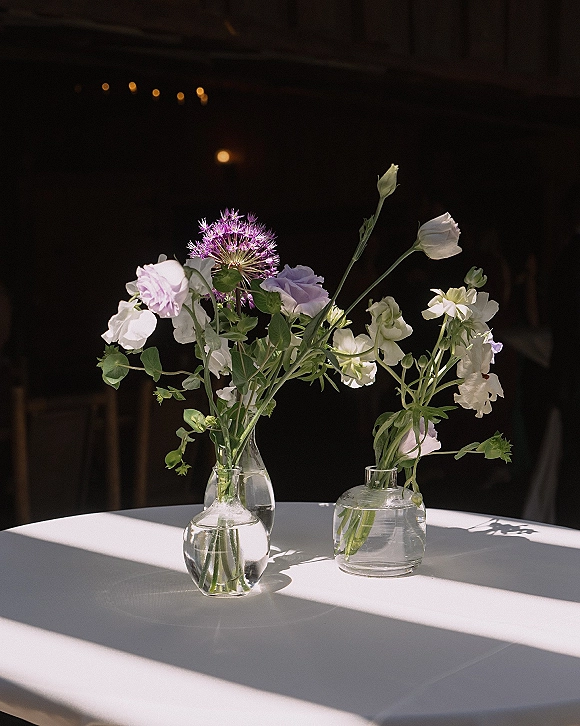
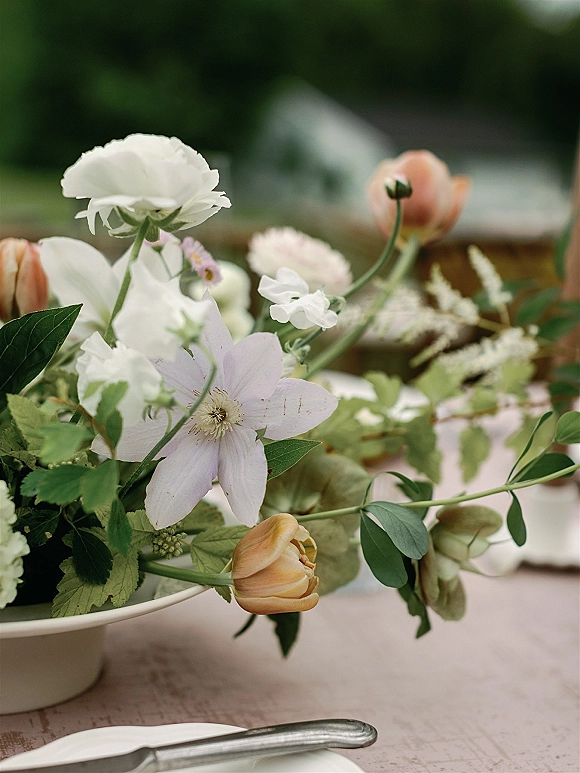
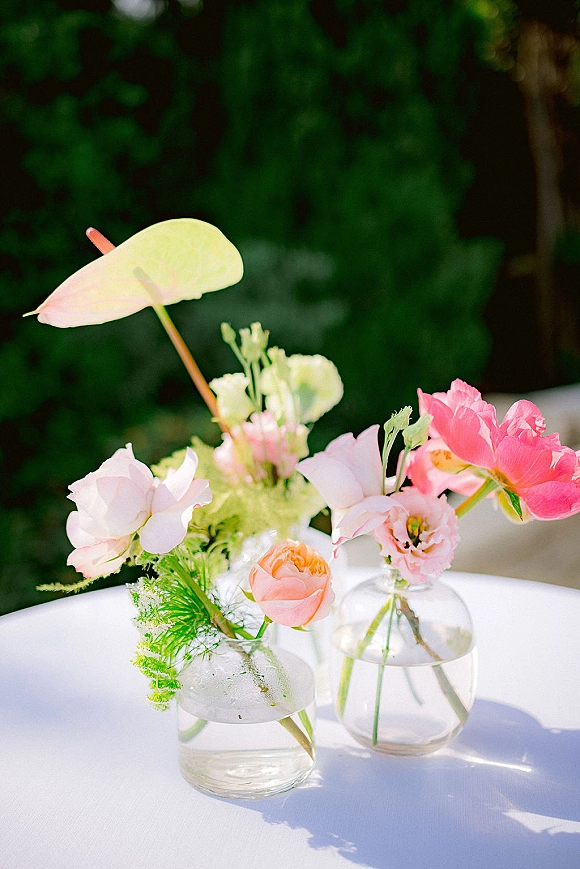
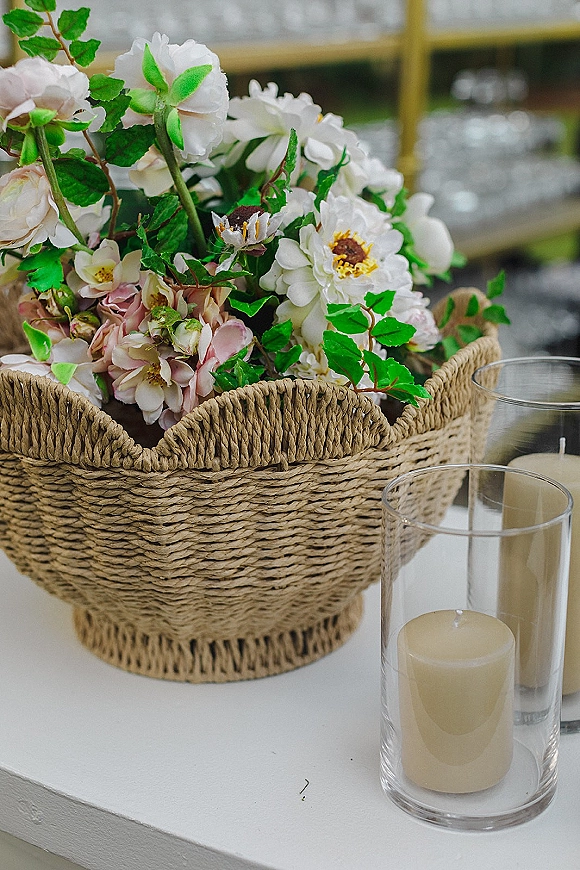
The vessel is the quietest lever in the whole design. Footed compotes lift and spread blooms for a soft garden shape; low bowls keep things compact and modern; bud vases isolate a few stems for an airy table; trumpet vases and pedestals raise a full arrangement above the sightline; lanterns and hurricanes enclose candlelight for outdoor and rustic rooms. Finish counts as much as shape, with clear glass disappearing so the flowers lead, warm metals and mercury glass reading romantic, and matte ceramic reading contemporary. Repeating one vessel type or finish across every table is one of the simplest ways to make a room feel considered, because the containers tie the arrangements together even when the flowers vary.
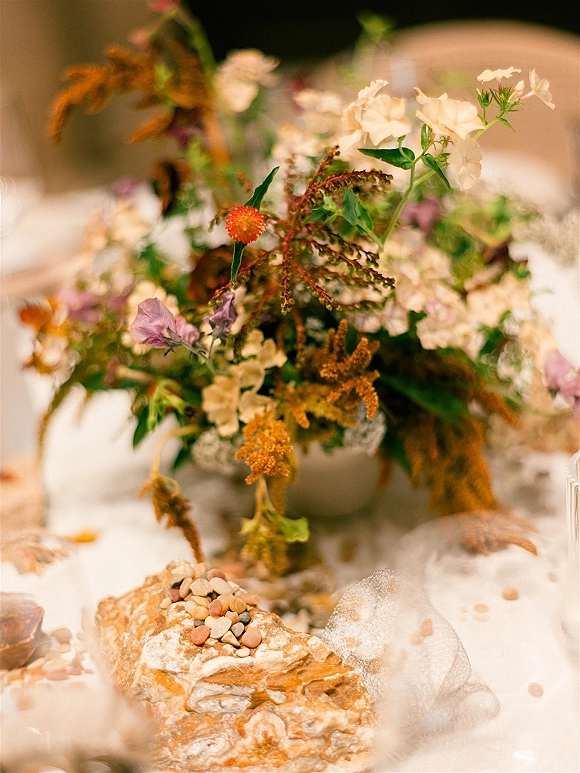
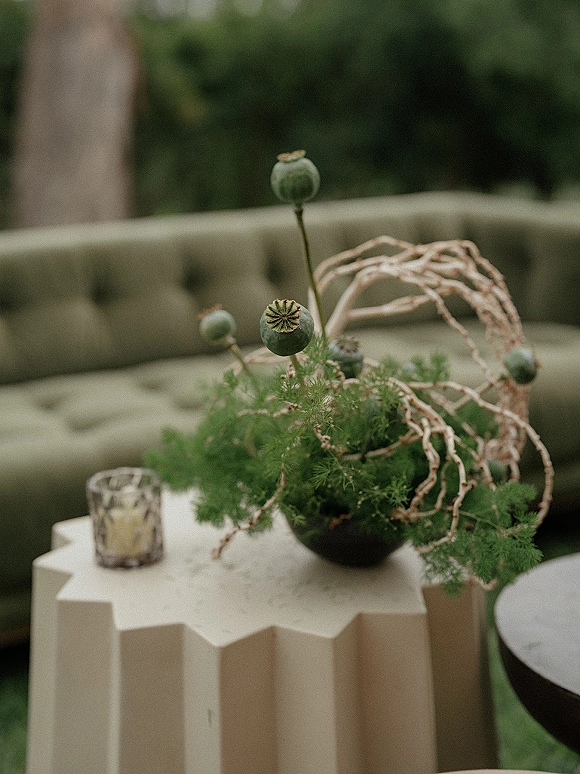
Not every centerpiece has to be fresh. Dried and preserved arrangements hold their look for the entire event and can be built well ahead, which suits destination weddings and warm outdoor receptions where fresh blooms wilt; they bring a muted, textural, organic palette. High-quality faux flowers work for a specific focal bloom that is hard to source, though they read best mixed with fresh or dried. Some of the most memorable tables lean on objects more than blooms: fruit like citrus and pomegranates adds seasonal richness, potted olive trees and herbs bring living greenery that doubles as a favor, and terrariums or sculptural vessels suit modern rooms. This is the spectrum that runs from elegant wedding centerpieces in polished footed vessels to more unique wedding centerpieces built on fruit, books, or found objects, and where you land on it says as much about the wedding as the flowers do. Underneath all of this sits one quiet call, whether to rent the vessels through a florist for a coordinated look or source your own, and deciding early lets the vessel drive the design instead of getting bolted on at the end.
Proportion between vessel and arrangement is the detail that most often separates a polished table from an awkward one. A bloom-heavy design in a too-small vessel looks top-heavy and unstable, while a few stems lost in an oversized vase read as sparse. As a rough guide, the flowers should read as roughly one and a half to two times the height of a low vessel, with the vessel itself substantial enough to look intentional. Matching the two is quiet work a florist handles instinctively, but knowing why it matters helps you read a reference photo and brief them clearly.
How Many You Need, and Planning With Your Florist
Start by counting your reception tables and planning one centerpiece per table, then decide whether to vary them. One repeated design reads clean and keeps the work efficient; alternating two or three coordinated designs adds movement while staying unified. Either way, a shared element has to run through every table so the room still holds as a single design. The couple’s own tables take special treatment: a sweetheart table carries a smaller version of the guest-table design, and a head table seating the full wedding party reads best with a continuous low runner in place of separate arrangements. Do not forget the tables that are not for seating, since the escort-card table, the bar, and the wedding dessert table all want a small arrangement or a cluster of candles to feel finished.
Several practical factors decide the right centerpiece before aesthetics enter at all: table count and size, ceiling height, venue flame rules, season, and guest comfort, plus the flower choice itself, since a lush all-bloom design asks far more than a greenery-and-candle table of the same size. Timing protects the flowers, so fresh arrangements are built a day or two before the wedding, conditioned in water, and placed during setup. A florist turns a palette and a few reference images into a room that holds together, steering you toward blooms in season, flagging where a look needs more stems than expected, and handling the mechanics that keep arrangements fresh and stable through the night. Browse wedding florists to find one whose portfolio matches the tables here.
Bring your florist as much specific information as you can early: the venue and its flame rules, the table count and shapes, the palette, and a few reference images of tables you love. The more concrete the brief, the more accurately they can steer you toward in-season blooms, flag where a look will cost more than you expect, and propose the low-and-tall mix that suits the room. Locking the design well ahead also gives them time to source specialty vessels and any specific varieties, which almost always produces a fuller, more cohesive result than a rushed order.
Pulling the Room Together
A handful of recurring mistakes undo otherwise lovely tables, and all of them are avoidable. The most common is the awkward middle height that cuts conversation in half. Close behind are a footprint so wide it crowds the place settings, overscaling a small table or underscaling a long one, ignoring venue flame rules until the last minute, and choosing out-of-season blooms that arrive sparse. Matching every table identically across a large room can read flat, while varying them with no shared thread reads chaotic. Keeping height in the safe zones, scaling to the table, and repeating one unifying element solves nearly all of them at once.
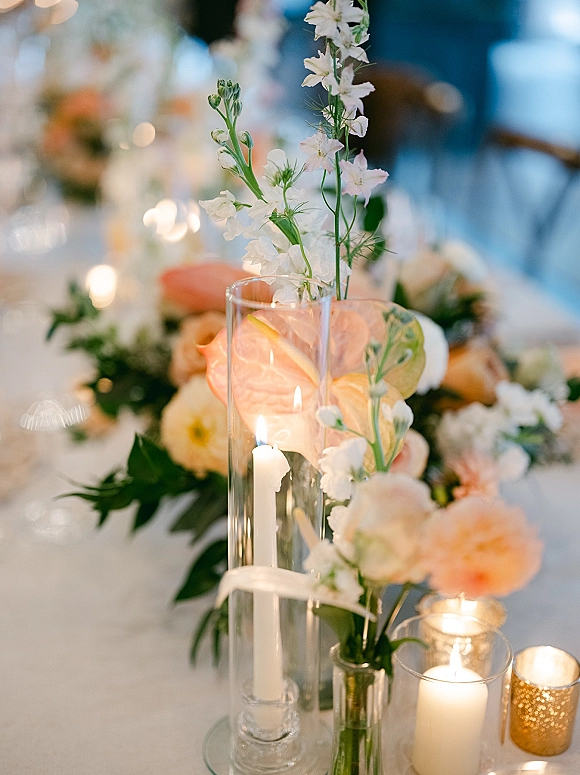
Finally, treat the centerpiece as one layer of a full tablescape. Bud vases, taper candles, and low votives extend the arrangement outward; menu cards and settings pick up the palette; a few loose petals soften the base. The reception table also sits in a room with other floral moments, so a palette that carries through to a floral wedding cake closes the loop on a single design. If it all feels like a lot to hold at once, the shortcut is to decide three things first and let them cascade: the palette, the primary height, and the lead material. Those three choices settle most of the rest, and the collections here show how real couples resolved the same decisions. The best centerpieces almost never call attention to themselves; they simply make the room feel considered, warm, and unmistakably yours.
It also helps to remember that guests experience the tables at eye level and up close, across a whole evening, not as the overhead shots that fill inspiration feeds. What they register is whether they can see and talk to each other, whether the flowers feel fresh and generous, and whether the room hangs together. A design that gets those human things right will always outshine one that only photographs well, so when a choice is unclear, favor the version that serves the people at the table. Do that, and the pictures tend to take care of themselves.
Frequently Asked Questions
How tall should a wedding centerpiece be?
Keep low centerpieces under roughly fourteen inches so guests can see and talk across the table, or lift tall arrangements well above the seated sightline on a raised vessel. The heights to avoid sit in between, tall enough to block faces but not tall enough to clear them. Many receptions alternate low and tall designs across tables.
How many flowers do I need per centerpiece?
Stem count depends on the vessel and the look. A low, lush garden arrangement in a compote uses far more stems than a single-stem bud vase or a candle-forward design. Greenery and candles fill volume with fewer blooms, which is the common approach for keeping a large table count manageable.
Do all my tables need the same centerpiece?
No. One repeated design reads clean and unified, while alternating two or three coordinated designs adds rhythm to the room. The key is a shared element, one flower, one vessel, or one palette, running through every table so the space still reads as one design.
What is the difference between a floral and a non-floral centerpiece?
Floral centerpieces lead with blooms and carry the color palette. Non-floral centerpieces use candles, greenery, lanterns, fruit, or sculptural objects for texture and warmth without flowers. Greenery is the most popular non-floral choice because it delivers fullness and a fresh base at a lower bloom count.
How far in advance are centerpieces made?
Fresh arrangements are built by the florist within a day or two of the wedding so the blooms are at their peak, then placed during setup. Candle and lantern elements, vessels, and any dried or preserved components can be prepared further ahead. Your florist coordinates the timing around your flower choices and venue access.