What Simple Means as a Design Choice
Simple wedding centerpieces strip a table back to its essentials: one clean arrangement, a line of bud vases, or a few single stems.
These simple table centerpieces for weddings trade density for restraint, not less care: a tight palette, a repeated vessel, and deliberate negative space that lets each element breathe. The look reads intentional, never sparse. This is the aesthetic of the pared-back, modern, low-and-clean table, the table equivalent of a minimalist wedding dress, where the strength is in the edit.
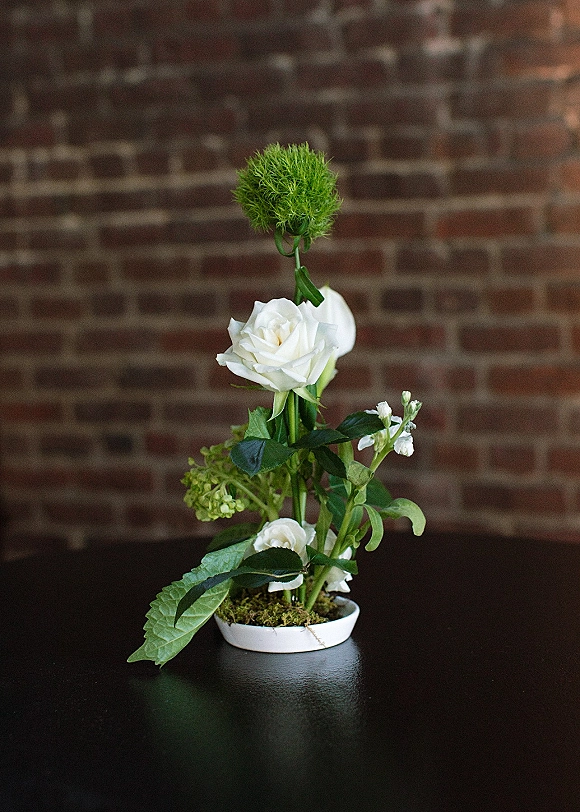
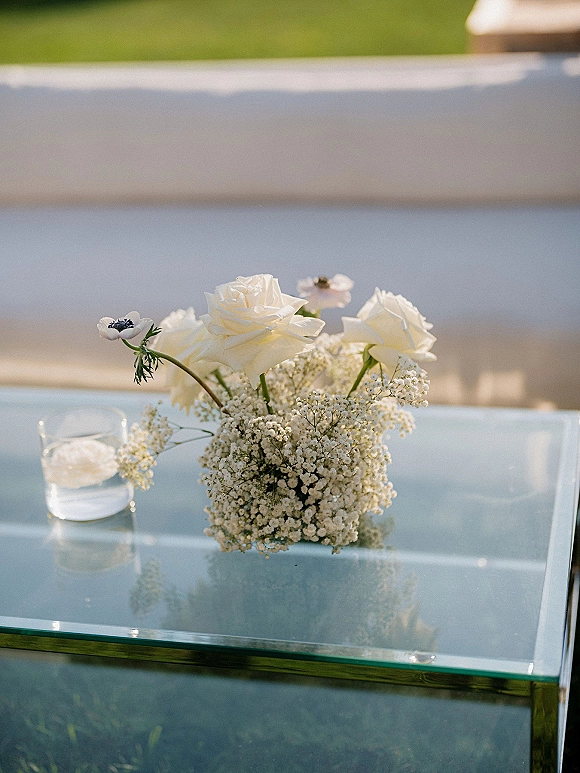
The point is not fewer flowers for their own sake; it is a considered arrangement where nothing is extra and everything placed is chosen. Negative space is the defining tool here, and using it well is what separates intentional restraint from an under-decorated table. Space between vessels lets each stem read as a deliberate object, a clear stretch of linen around a low arrangement gives it room to breathe, and even the reflective table surface becomes part of the design. The discipline is to resist filling every gap, since the emptiness does as much styling work as the flowers.
Couples reach for this look for different reasons, and the result reads the same either way. Some want a modern, architectural table that matches a contemporary venue; some want the flowers to feel calm and uncluttered so the conversation and the food take center stage; some simply prefer the quiet confidence of one beautiful bloom over a crowded arrangement. What unites them is intention, since a minimalist table only works when every choice is deliberate. Done carelessly it looks like an afterthought, but edited with care it becomes the most considered table in the room, the one guests remember precisely because it holds back where others pile on.
Bud Vases, Single Stems, and Low Arrangements
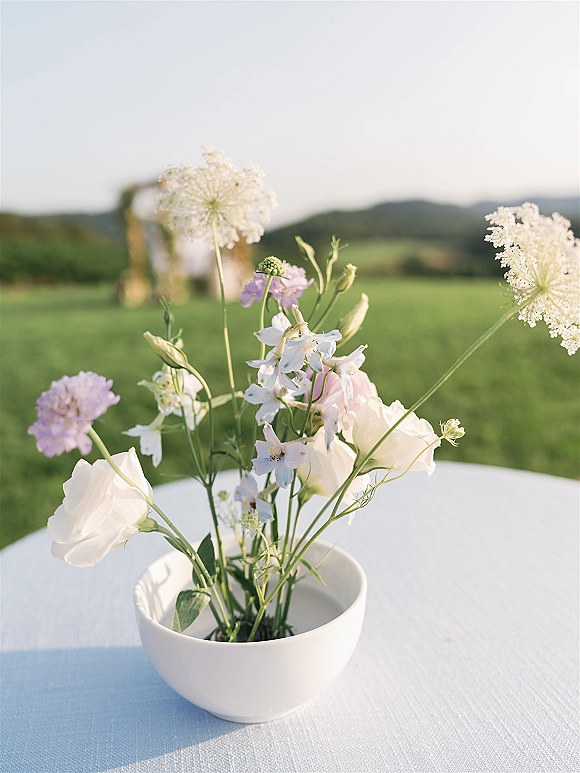
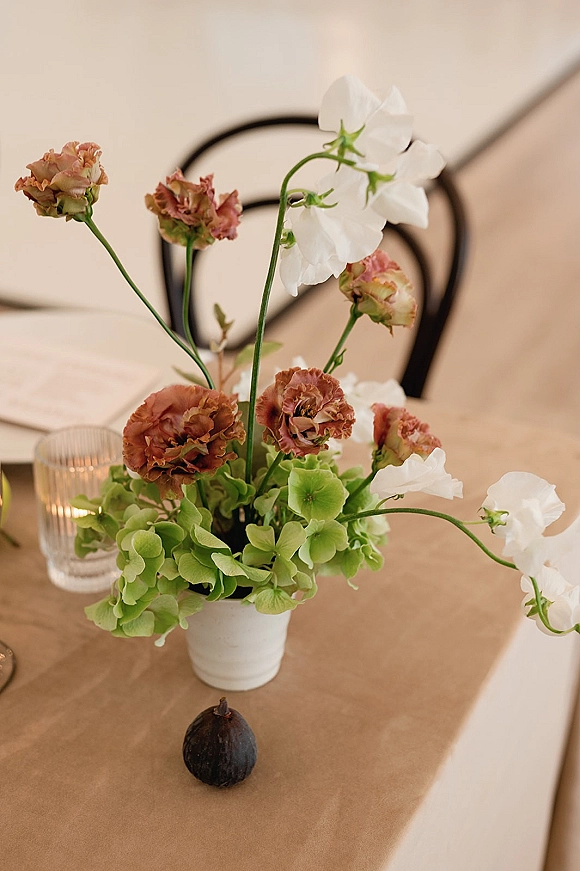
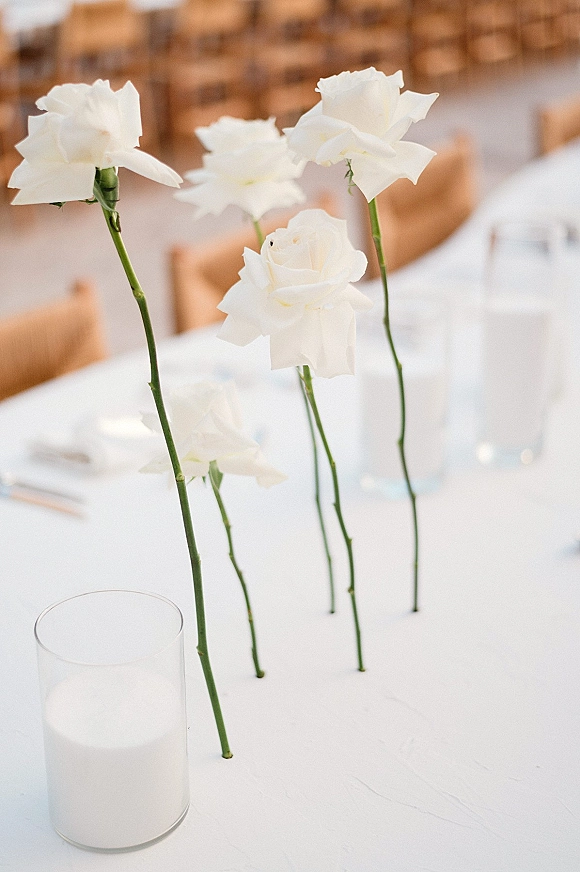
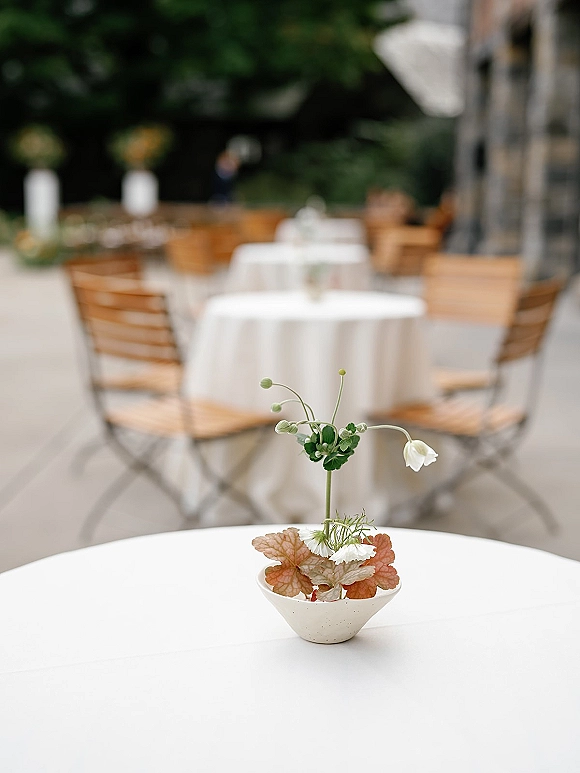
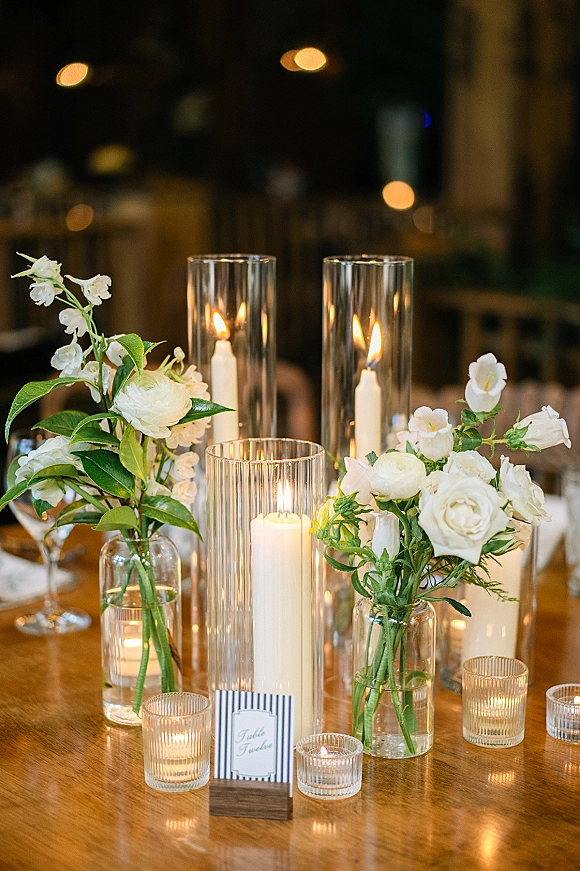
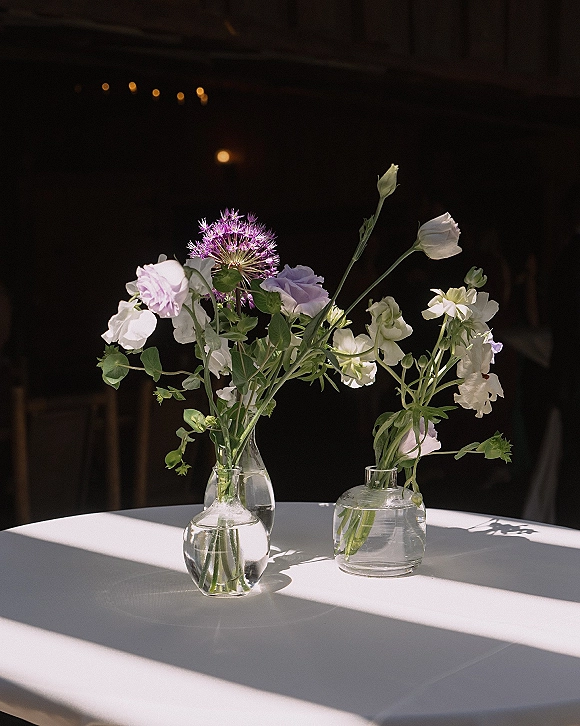
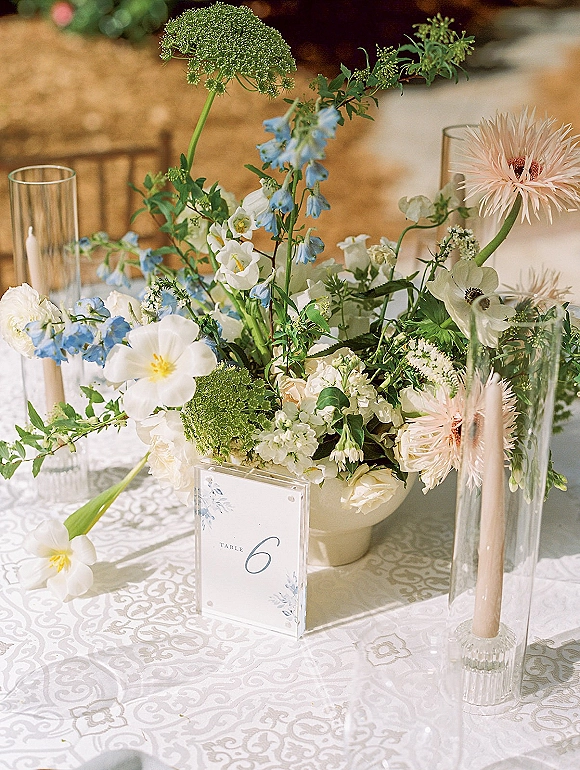
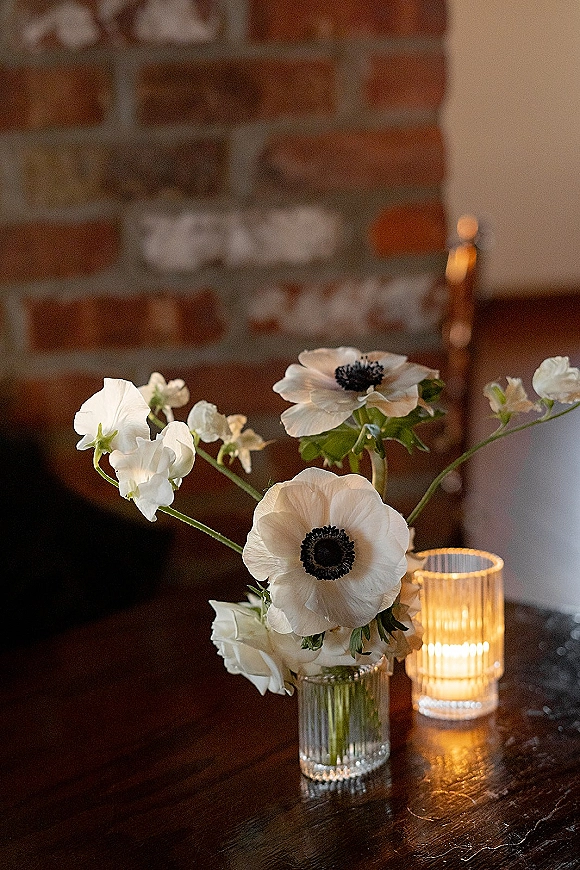
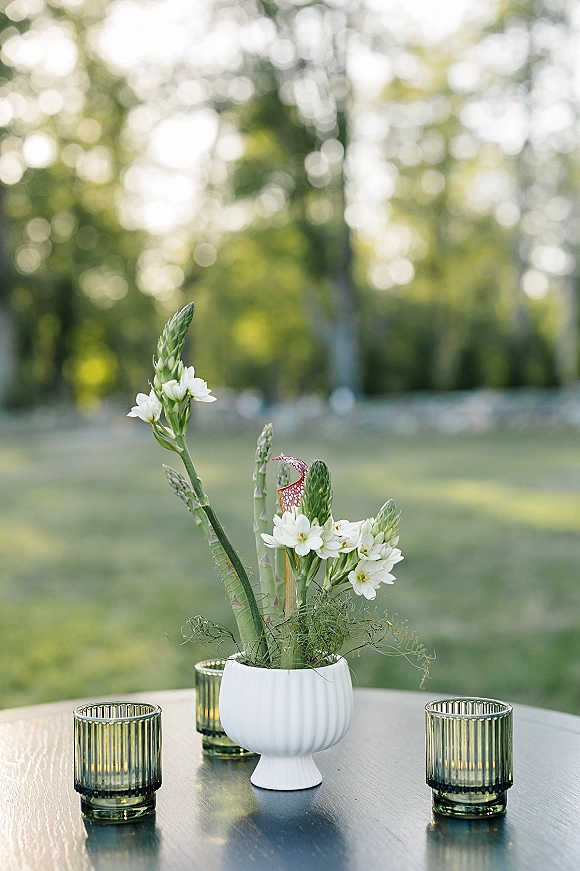
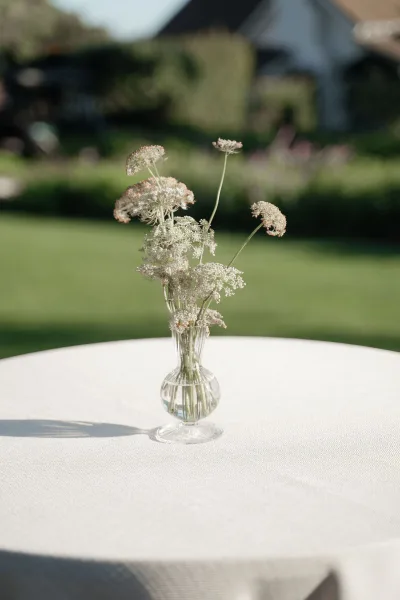
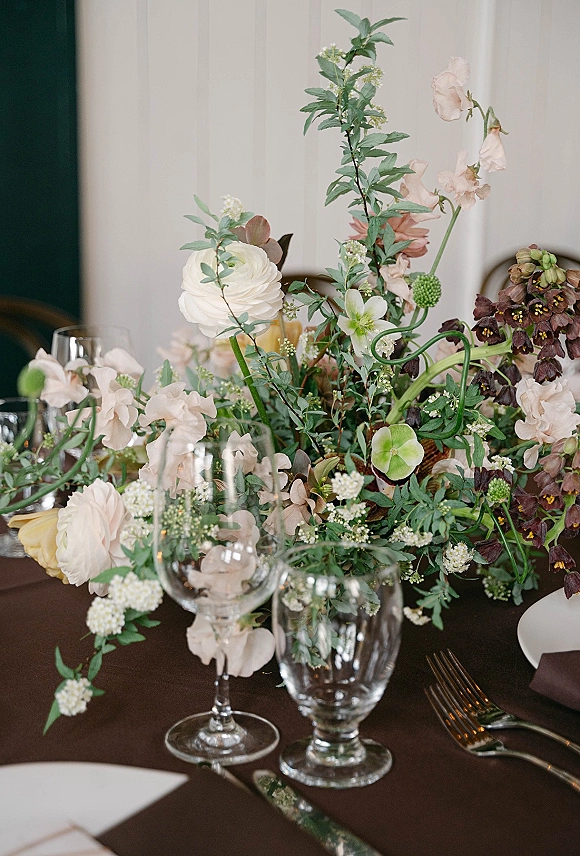
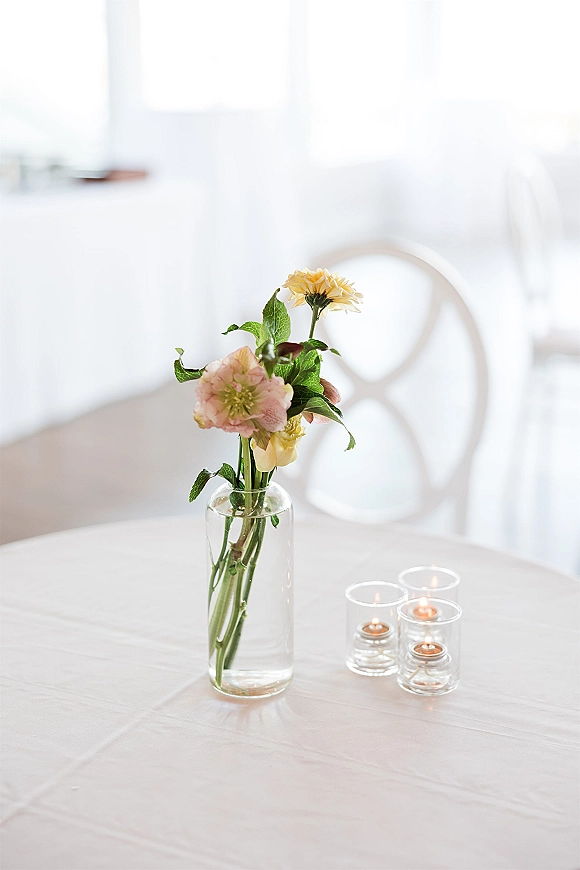
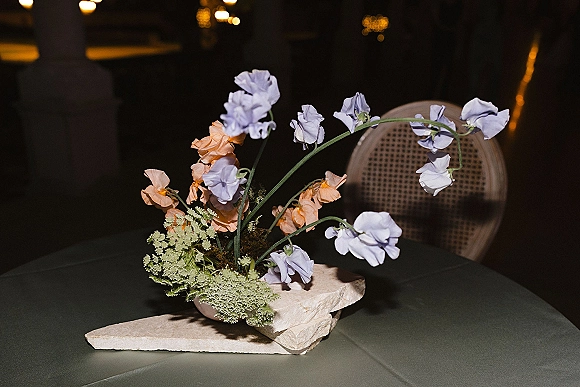
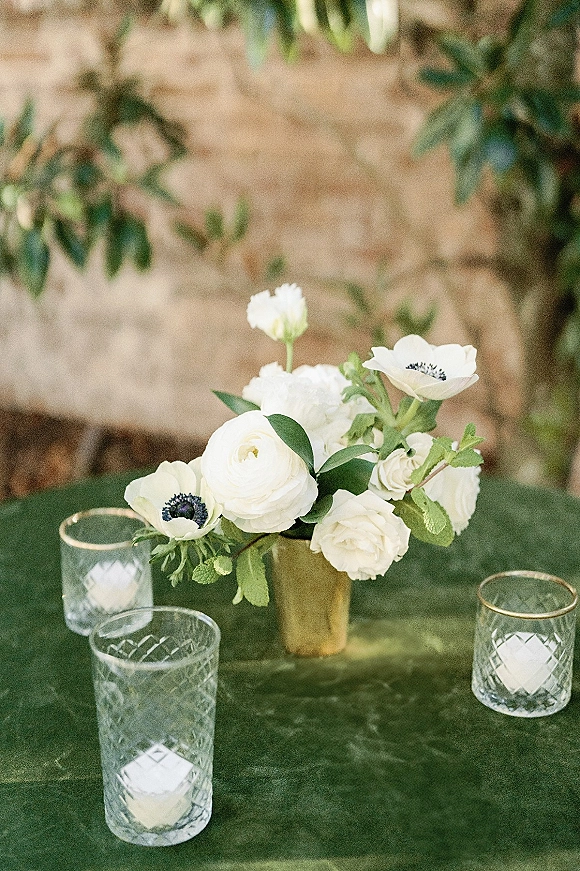
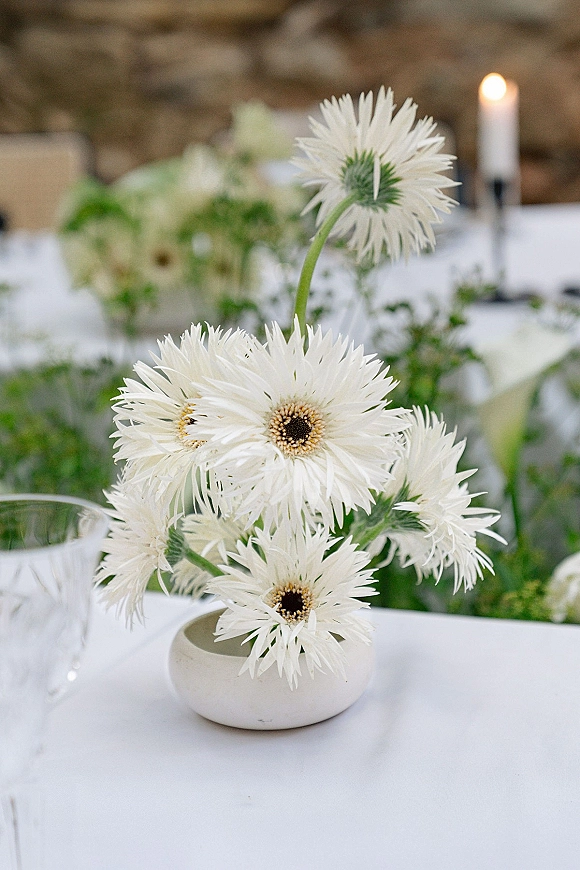
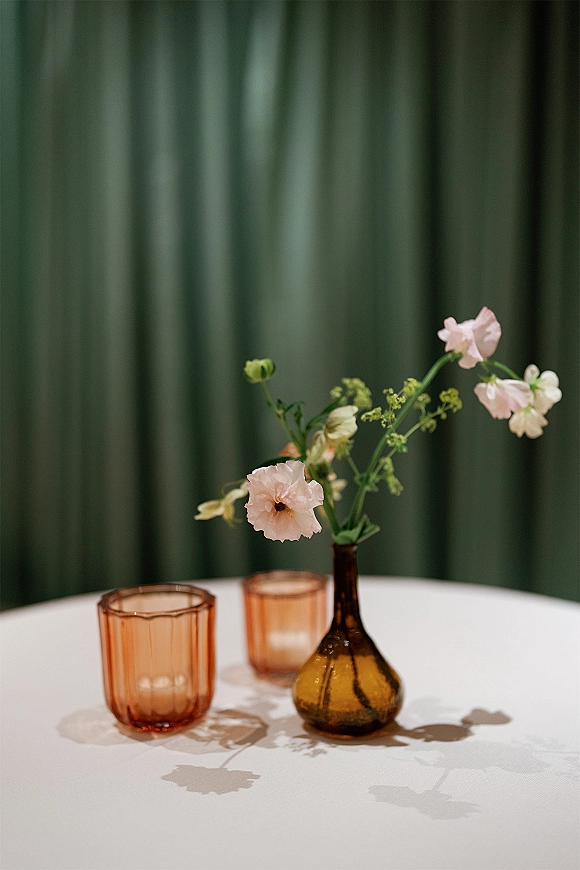
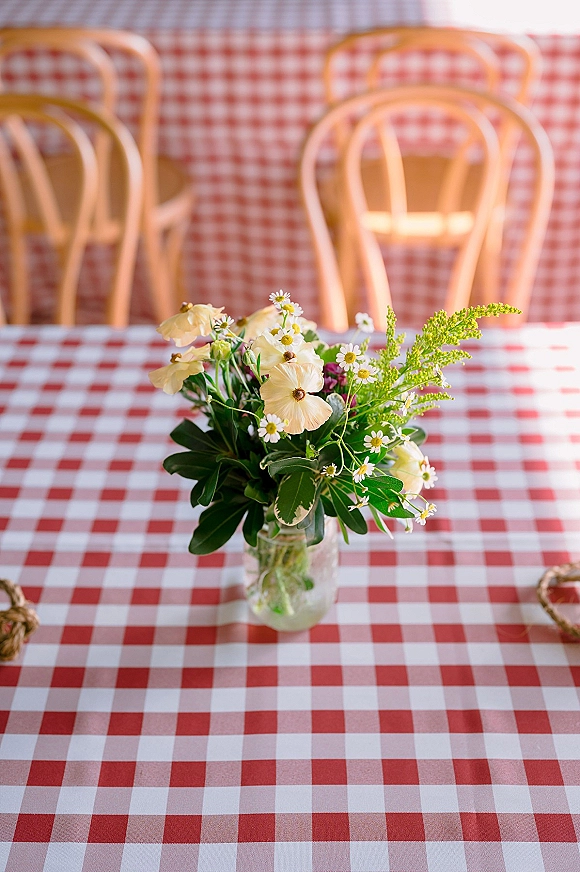
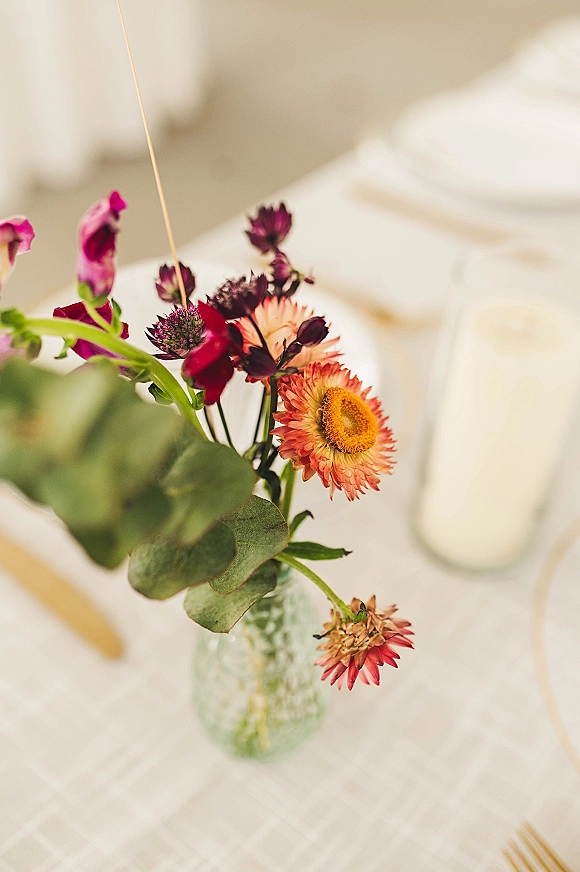
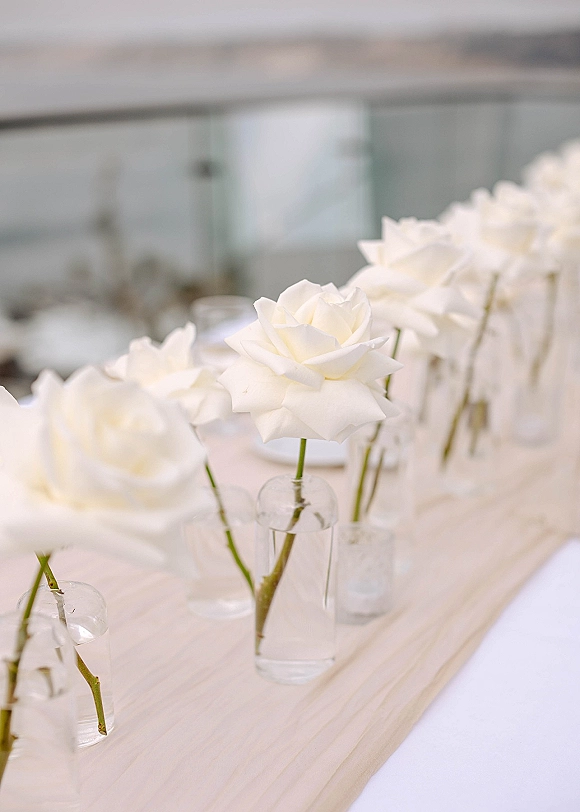
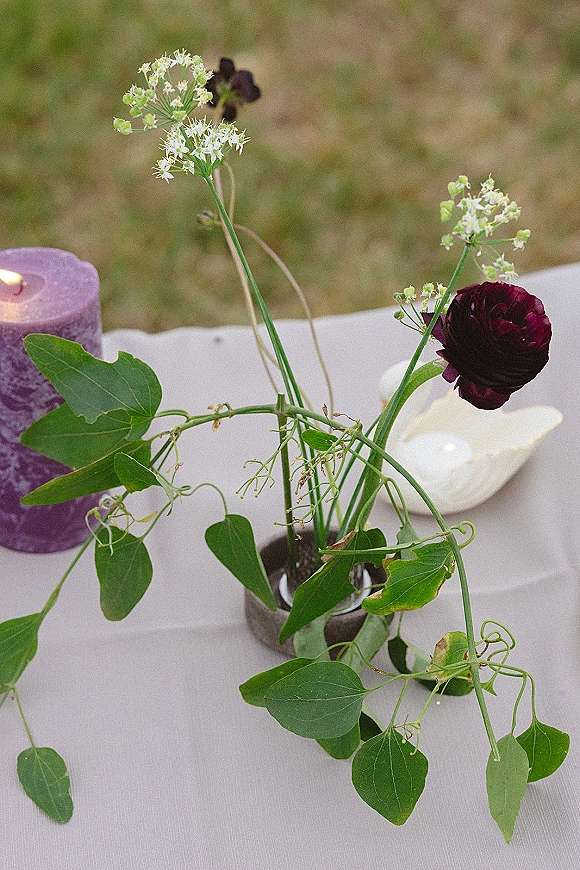
Three formats carry a minimalist table. Bud vase centerpieces are the signature, small glass vessels each holding one to three stems, grouped in a loose cluster or run down a table in a line, airy and modern with space between them. Single-stem clusters isolate one striking flower per vessel so the bloom itself is the whole statement, creating rhythm through repetition. Low arrangements gather one or two flower types into a small footed bowl for a single compact focal point that reads fuller than bud vases while staying clean. The three read differently across a long table, so bud vases and single stems suit long tables while a low arrangement anchors a round.
When a table comes down to a single bloom per vessel, the choice of flower carries real weight. A minimalist design rewards flowers with a clear, sculptural shape that reads on its own, an open garden rose, a phalaenopsis orchid stem, a ranunculus, so avoid blooms that need companions to look complete. A minimalist table can also skip flowers entirely and lead with foliage, a few sprigs of eucalyptus or olive down the center giving a fresh, clean table at the lowest bloom count of all, an approach the greenery wedding centerpiece collection covers in full. It is the restrained cousin of the lush, low-and-wide floral wedding centerpiece look, reaching the same elegance from the opposite direction.
How many vessels a table needs is its own small decision. A cluster of three to five bud vases at varied heights reads full and intentional on a round, while a longer line marching down a banquet table carries the eye and fills the space without ever crowding it. Odd numbers tend to look more natural than even, symmetrical rows, and leaving clear space between vessels is not a gap to fill but the whole point of the design. Spend on a few excellent stems rather than many ordinary ones, because on a bare table every flower is on full display.
Monochrome Palettes and Modern Vessels
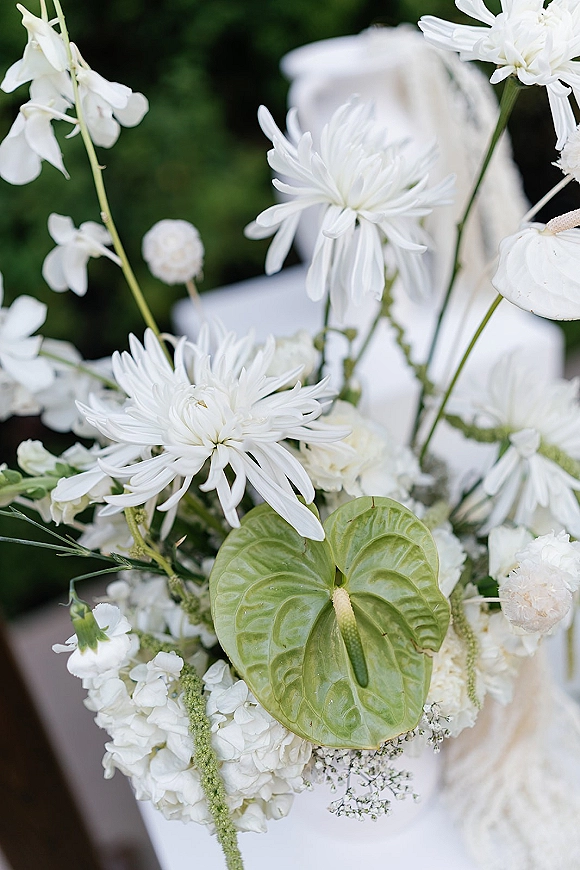
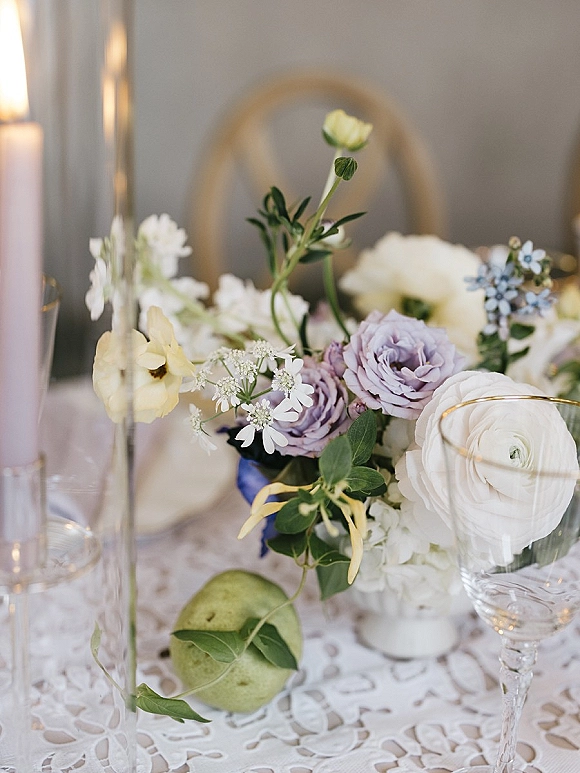
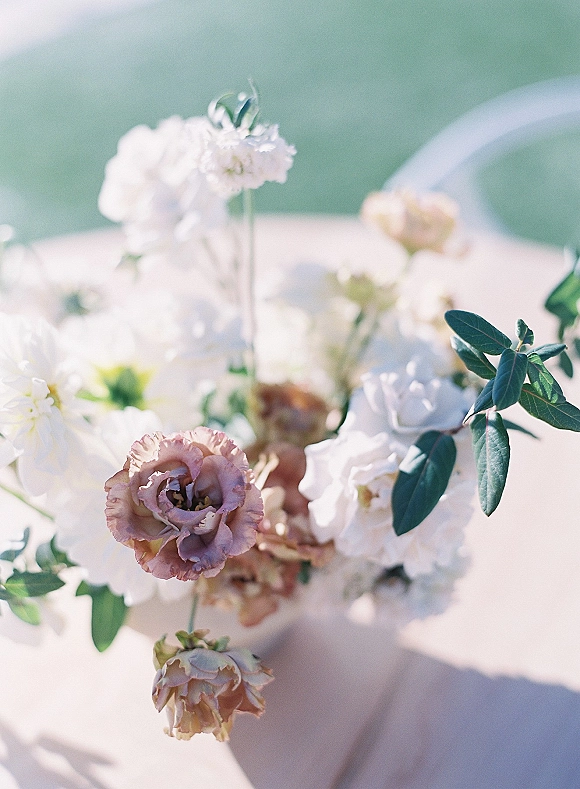
Color discipline holds a minimalist table together. A monochrome palette, all white, all blush, all one green, keeps the eye calm and lets shape and texture lead instead of contrast, with white-on-white in clear glass the purest version. Tonal palettes that stack a few shades of one color add subtle depth while staying restrained, and repeating that single palette across every table and vessel is what makes a simple room read as designed rather than under-decorated. The clean, edited look sits especially well in modern architecture, the same instinct behind these minimalist wedding venues, where open space and clean lines do half the styling.
Vessel choice carries the look because there is little else to see. Clear glass bud vases in varied heights are the classic minimalist container, disappearing so the stems lead; slim cylinders suit single architectural blooms; matte ceramic bowls add a modern, tactile note without pattern or shine; and small footed compotes hold a low arrangement while keeping the tailored feel. Minimalism can read cold if the palette and materials are not chosen with care, so warmth has to be built in deliberately, with soft ivory blooms, a warm-toned linen, brass or amber accents, or candlelight. A restrained centerpiece pairs well with a considered flat lay of the invitation and details, shown in the wedding flat lay collection.
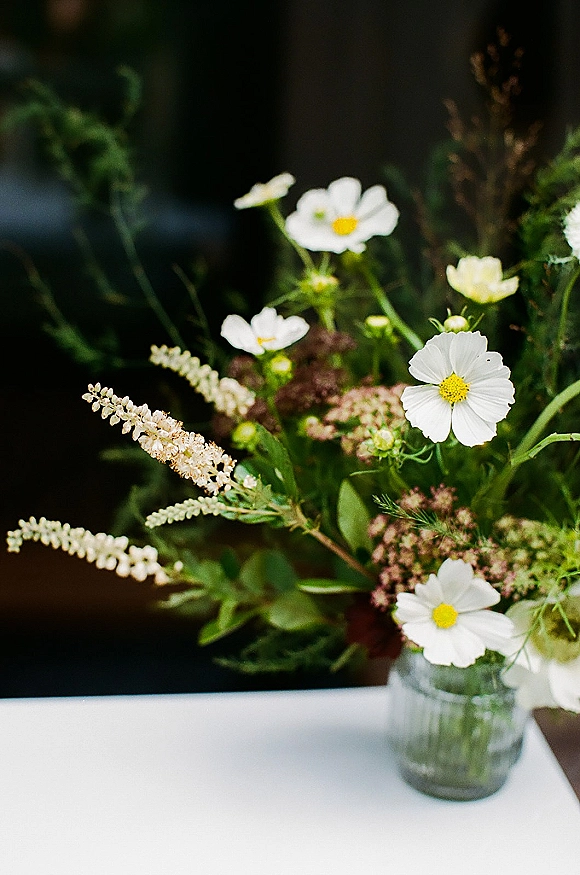
Texture is the quiet lever that keeps a monochrome table from reading flat. An all-white palette gains depth from the difference between a matte ranunculus, a waxy tulip, and a ruffled garden rose; an all-green table plays silvery eucalyptus against glossy ruscus. Because there is no color contrast to lean on, the interplay of shape and finish, in both the blooms and the vessels, does the work that a wider palette would. That is why a well-executed monochrome table so often reads as more sophisticated than a colorful one, not less.
Candles, Greenery, and Styling by Setting
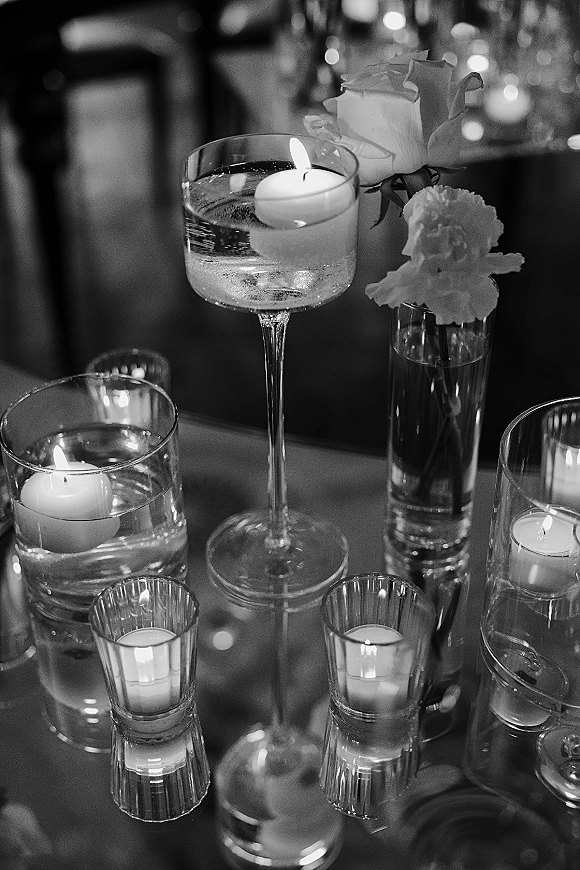
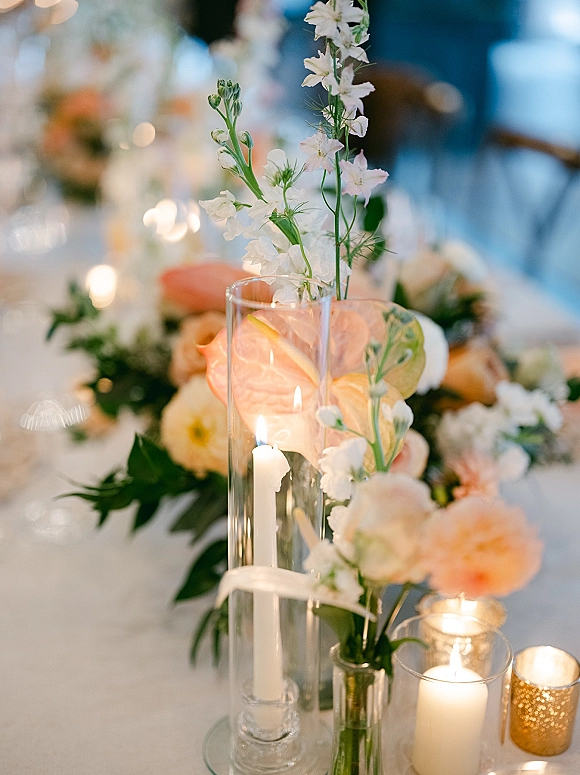
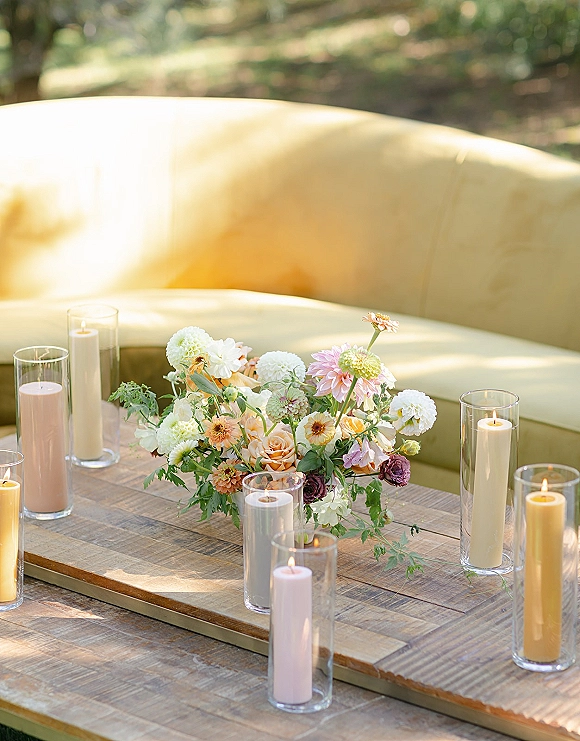
Candlelight suits a minimalist table because it adds warmth without clutter. A few taper candles in slim holders, or low votives spaced along a run of bud vases, give glow and height while keeping the clean lines intact; stick to one candle type and a consistent holder finish so the table stays edited. The pairing of a single bloom in glass with a taper candle is among the most elegant minimalist tables there is, and the candle wedding centerpiece collection shows how to build the candle layer without overloading a restrained design.
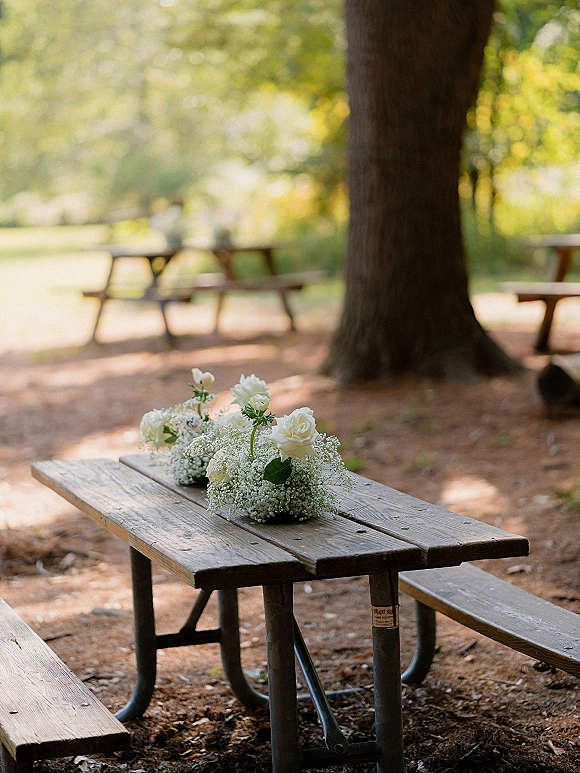
A minimalist table adapts to the room while keeping its restraint. A modern loft or gallery suits the cleanest version, a garden or outdoor setting softens the look with a few greenery stems, and a formal room can carry minimalist tables in tonal white-on-white with taper candles for quiet elegance. Because the approach is defined by editing rather than a specific material, it translates across venues by adjusting the bloom and vessel while holding to one palette. However the room reads, style it by editing, not adding: choose one vessel type, one or two flower types, and one palette, then leave deliberate space between elements so the table breathes. To place a simple table among every format, start from the wedding centerpieces hub, and browse wedding florists who work in a clean, modern style, since simple is the most forgiving look to execute well when the few elements on show are chosen with care.
Frequently Asked Questions
What is a simple wedding centerpiece?
A restrained, minimalist arrangement built on clean lines and a tight palette rather than density: bud vases, single stems, or one low compact arrangement with deliberate negative space. Simple means edited and intentional, not an afterthought, and it reads modern and calm.
Are bud vases enough for a wedding table?
Yes. A grouping of varied-height bud vases, each with a few stems of one bloom type, carries a table on its own with an airy, modern look. Adding a votive or two gives warmth. The space between vessels is part of the design, not a gap to fill.
How do I make a minimalist table look intentional, not empty?
Commit to one vessel type, one or two flower types, and a single palette, then repeat them cleanly across the room. Deliberate negative space, consistent finishes, and a monochrome or tonal color story make restraint read as design rather than something missing.
Can a simple centerpiece use only greenery?
Yes. A few sprigs of eucalyptus or olive down the center, or single greenery stems in bud vases, make a clean, modern table at the lowest bloom count. Greenery-only tables read calm and organic and pair naturally with candles for warmth.