The Fall Palette and Its Blooms
Fall wedding centerpieces bring the warm, saturated palette of the harvest season to the table, through deep blooms, dried textures, candlelight, and the season’s natural bounty.
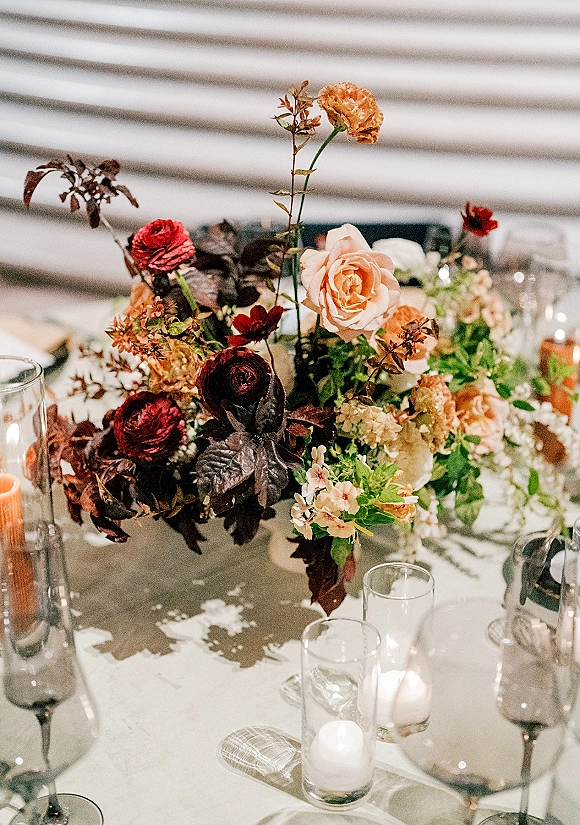
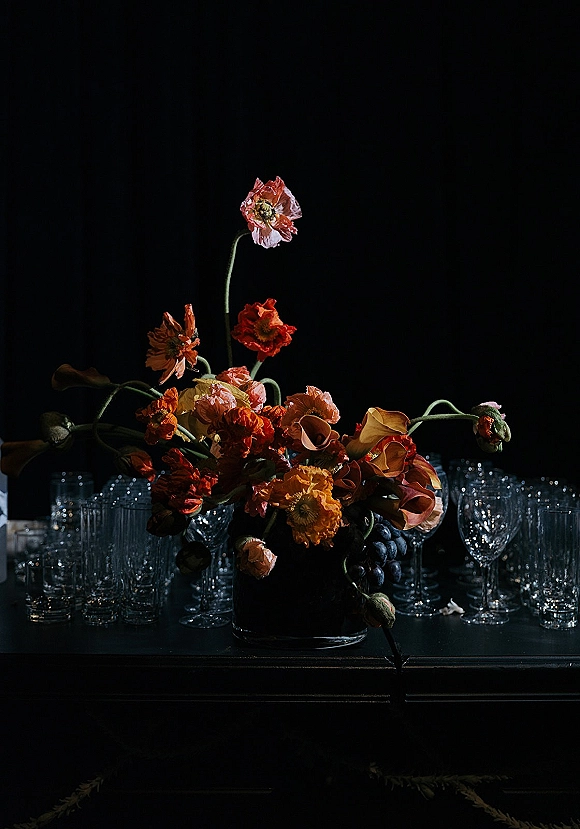
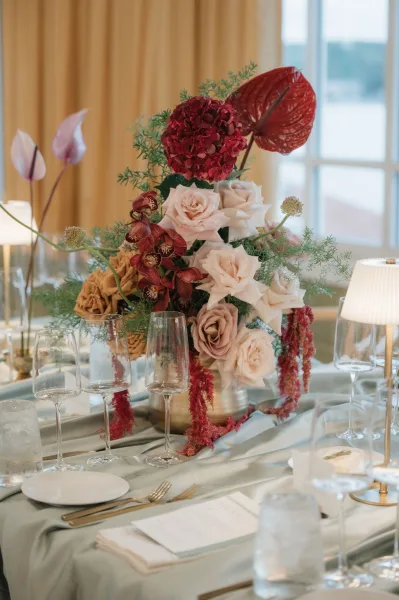
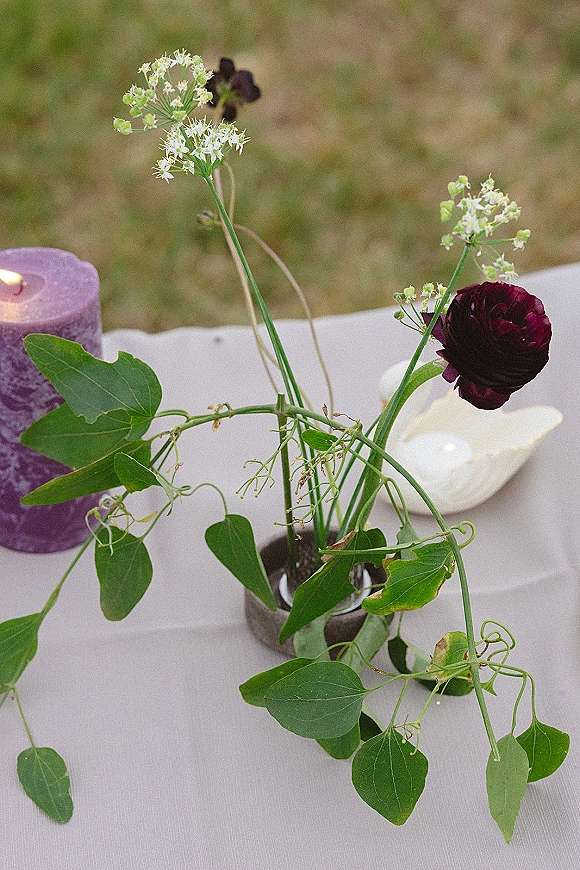
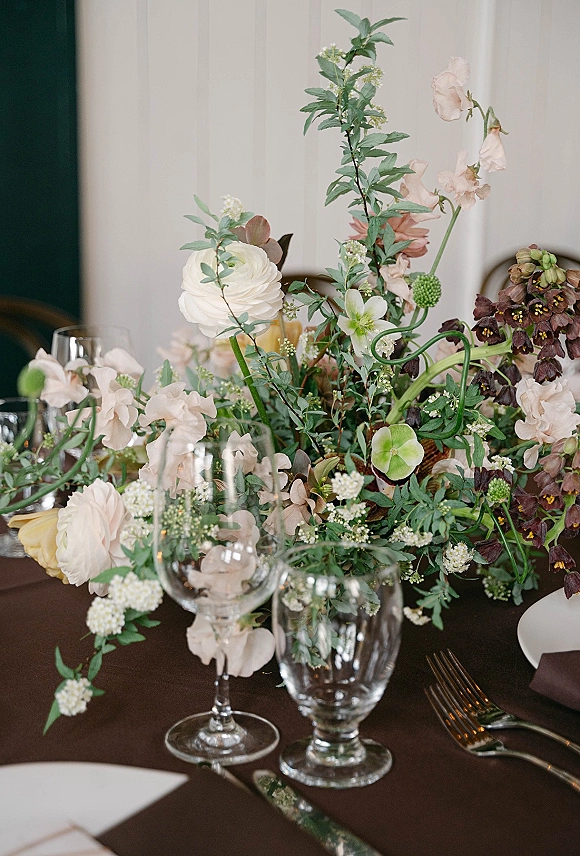
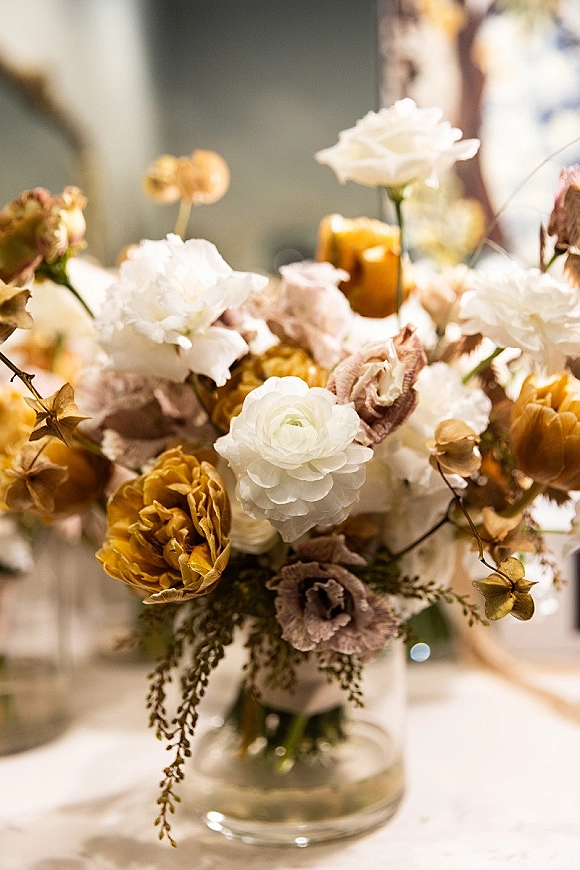
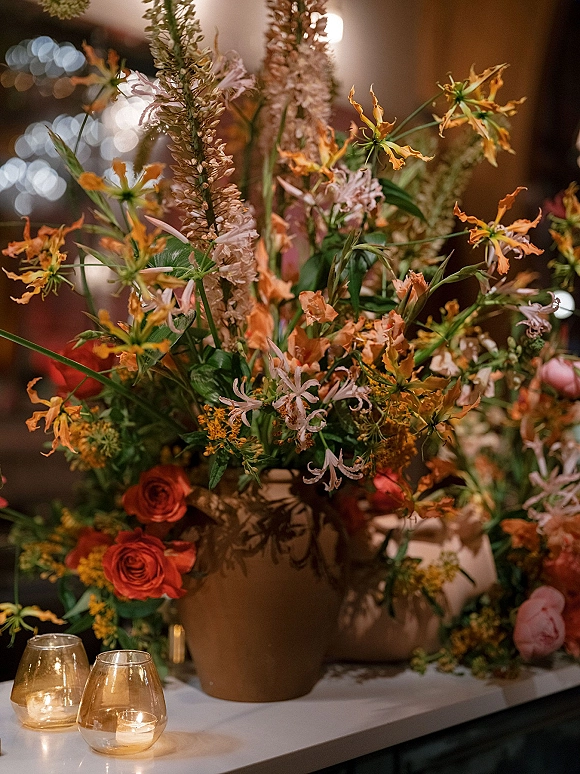
The palette is what makes a table read as autumn before you notice a single flower: burgundy, rust, terracotta, marigold, gold, and copper, layered together for richness, softened with cream and dusty neutrals and lifted with metallic accents. That earthy foundation can be dialed in several directions, so burgundy with gold and cream reads formal, rust and terracotta with sage leans boho and desert, and plum with copper gives a moodier, romantic take.
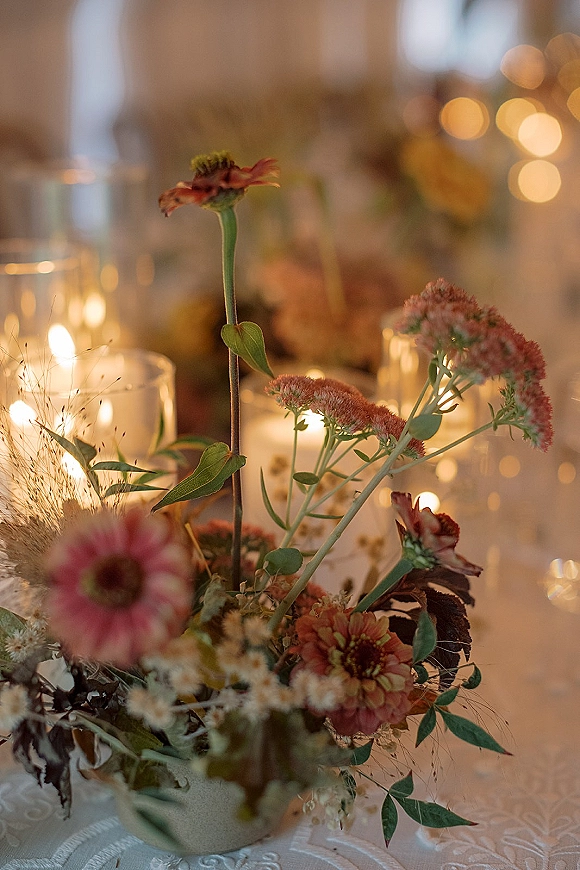
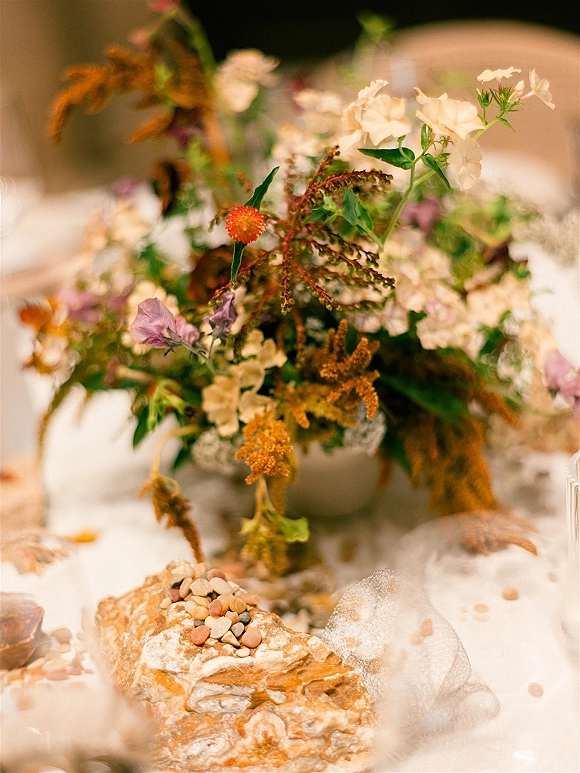
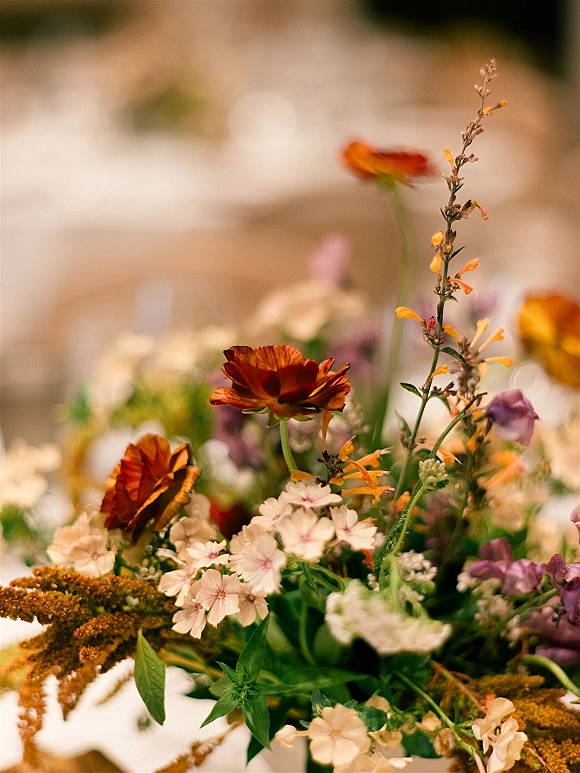
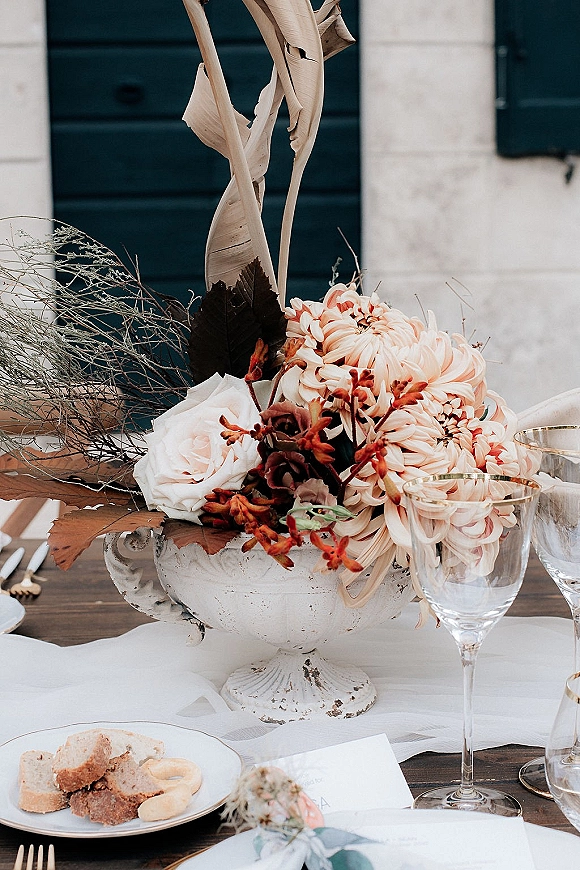
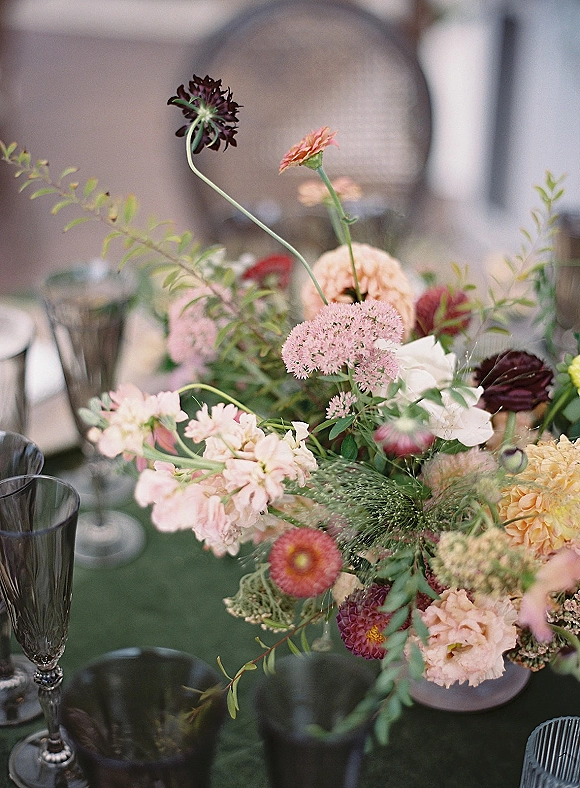
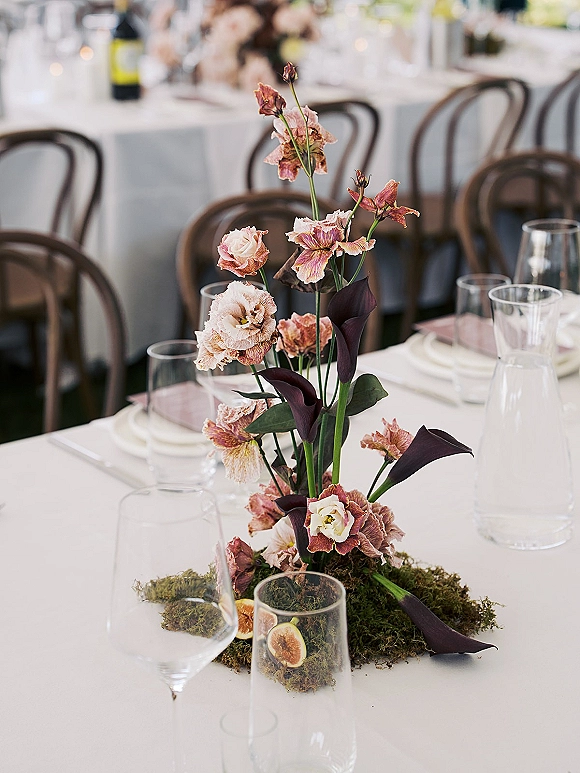
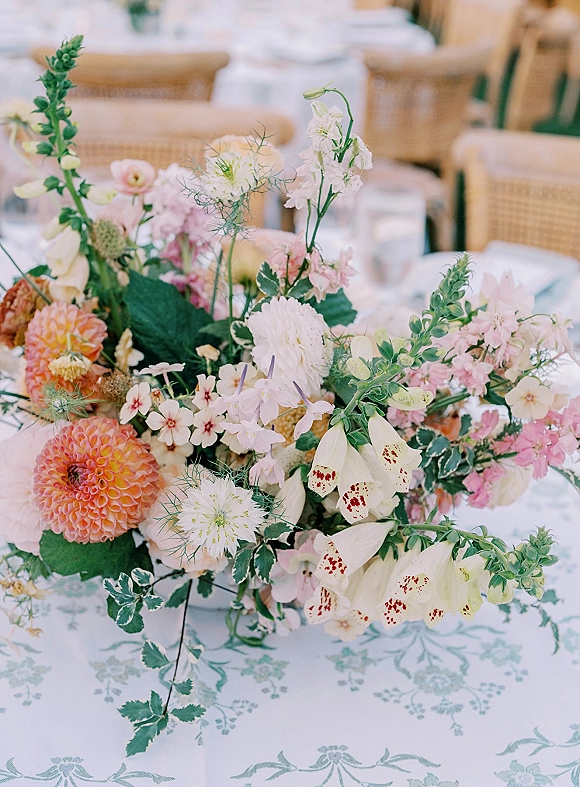
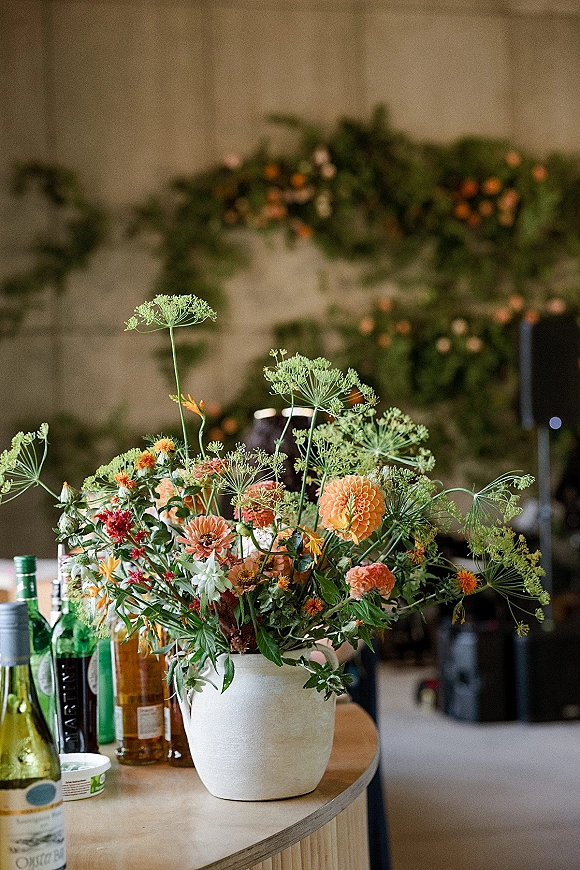
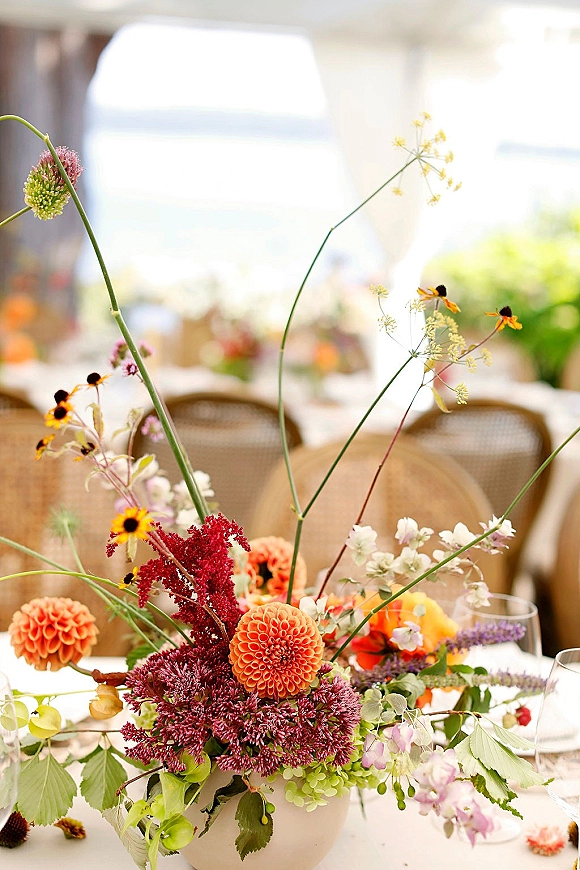
The blooms follow the season. Dahlias are the signature fall flower, large and layered in burgundy, rust, and coral; chrysanthemums bring texture and depth and hold up well through an evening; and warm-tone garden roses, ranunculus, and celosia round out the palette, with berries and seed pods adding harvest texture. A matching fall wedding bouquet carries the same palette through the party. Autumn is also the one season where non-floral texture carries a table as convincingly as blooms: dried pampas, wheat, and preserved eucalyptus hold their look for the whole event and mix beautifully with fresh dahlias, while bronzed and dyed foliage running down a table signals the season without adding more flowers, so even a table with a few focal blooms can read fully autumnal when these textures fill around them.
Variety within each bloom matters as much as the type. A café-au-lait dahlia reads soft and creamy where a cactus-flowered dahlia in deep red reads bold and architectural, and the same is true of the chrysanthemums and garden roses that fill out an autumn table. Because these flowers peak in the cooler months, they arrive at full size and open beautifully then, so a fall table built on what is genuinely in season looks fuller for the same stem count than one forcing summer blooms into October. And the low, golden light most autumn receptions run in flatters warm, saturated color, so deep-toned tables photograph beautifully.
Harvest Touches, Candlelight, and Vessels
Pumpkins, gourds, and harvest elements give a fall table its seasonal signature when styled with restraint. A few white or heirloom pumpkins as risers under arrangements, or hollowed as vessels for blooms, read charming and finished rather than kitschy, and wheat, branches, and seed pods add texture along a runner. The trick is to treat these as accents to a floral or candle base rather than the whole design, since used sparingly they read elevated and seasonal, while piled on they tip into a novelty display.
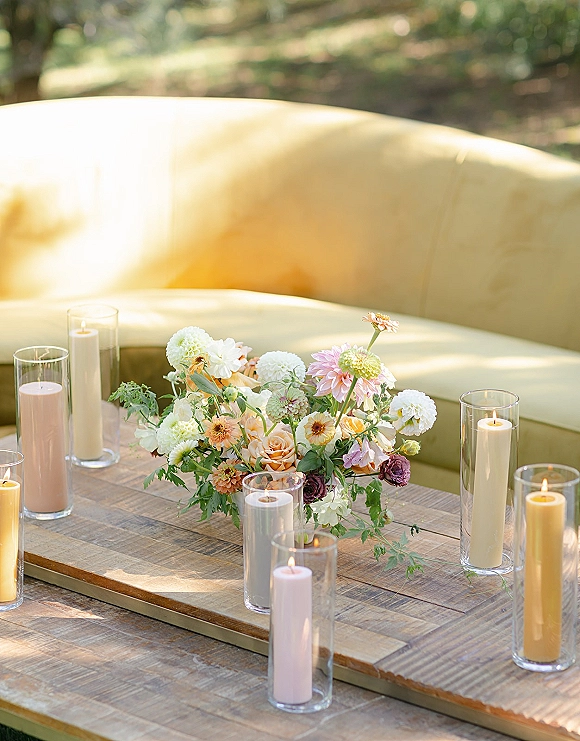
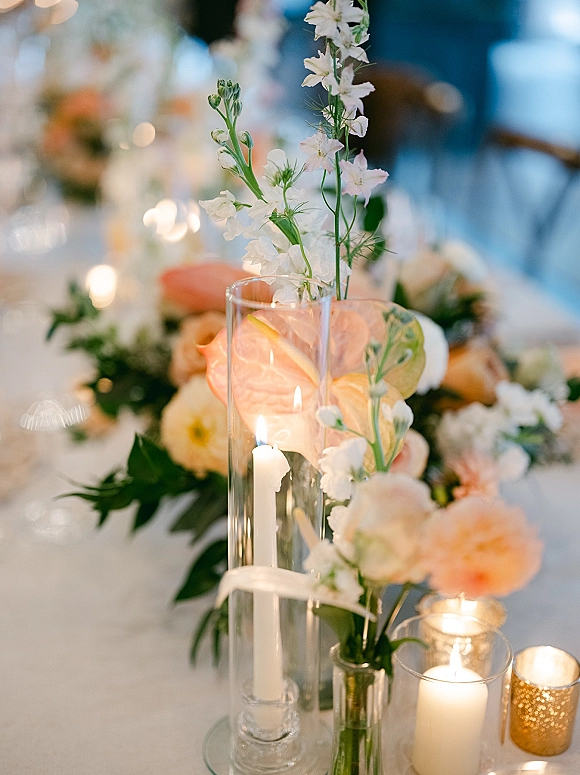
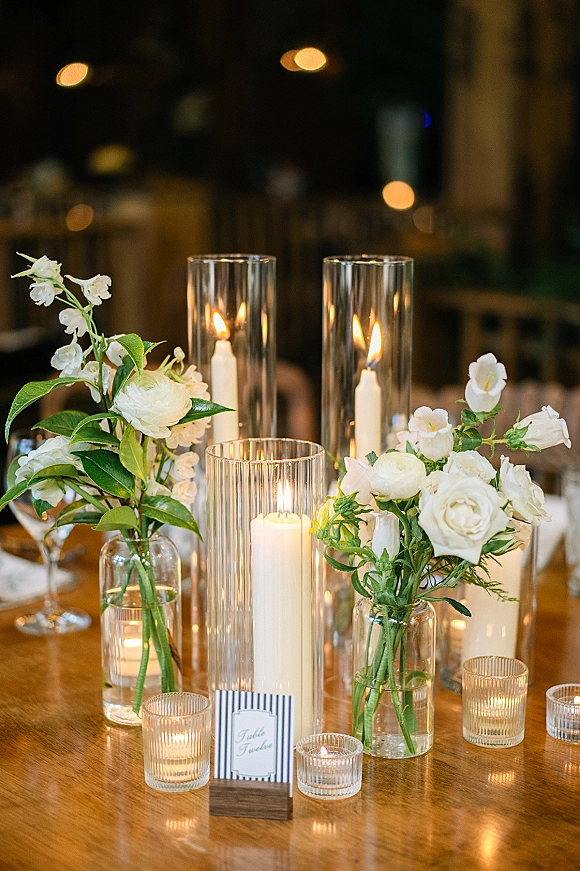
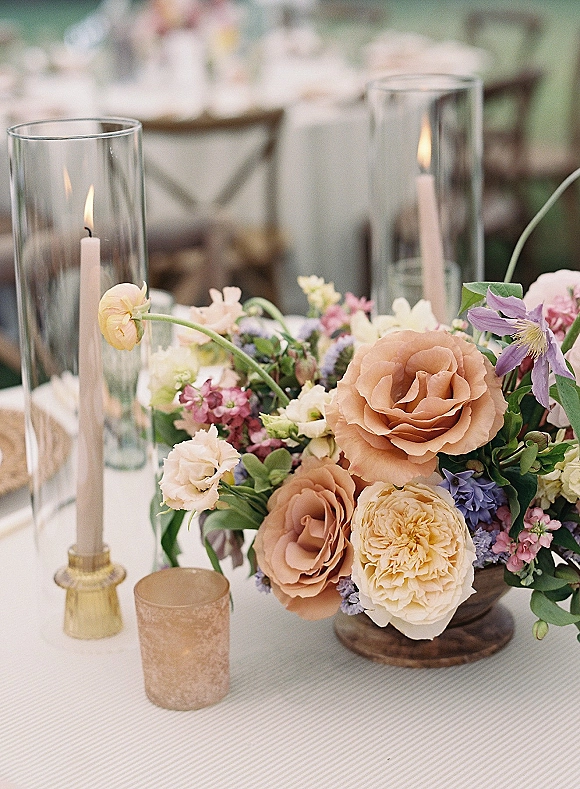
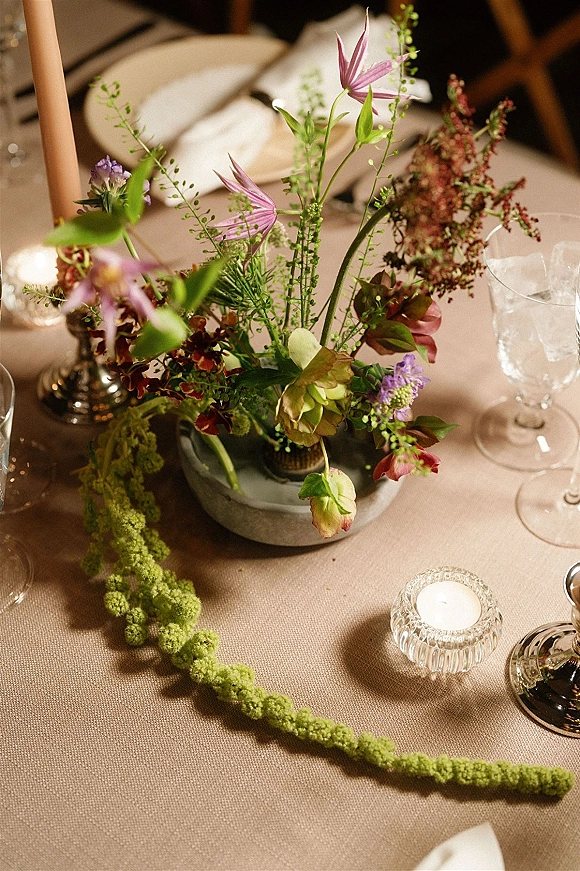
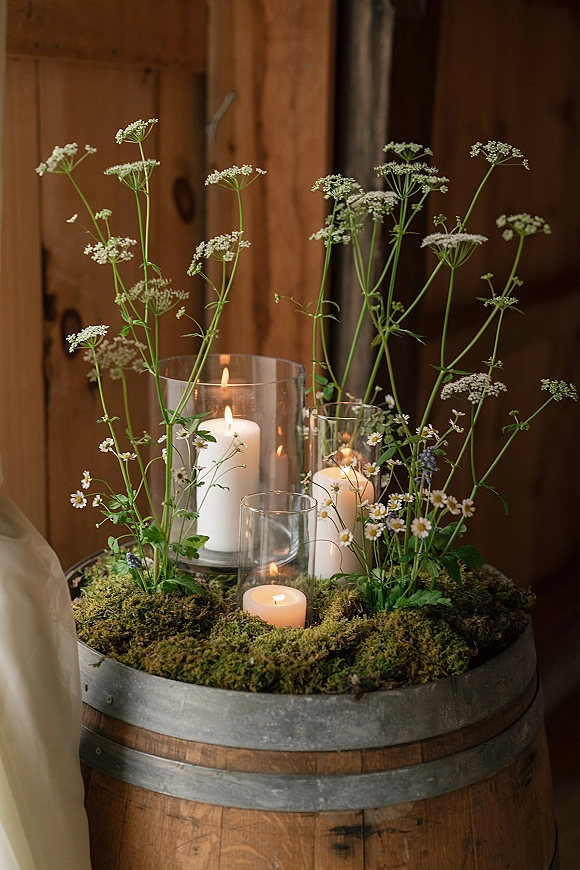
Candlelight belongs on a fall table more than almost any other season, since shorter evenings mean receptions run in low light. Warm taper and pillar flames in amber or bronze holders deepen the burgundy and gold palette, votives scattered among the blooms give the glow that makes an autumn room feel intimate, and enclosing pillars in glass keeps flames safe near dried elements; the candle wedding centerpiece collection covers how to build that layer. The vessel grounds the table and reinforces the season before the flowers register: warm metals and copper deepen the jewel tones and catch candlelight, amber and smoked glass add a moody cast, wood boxes suit the rustic end, and matte black makes burgundy blooms read modern.
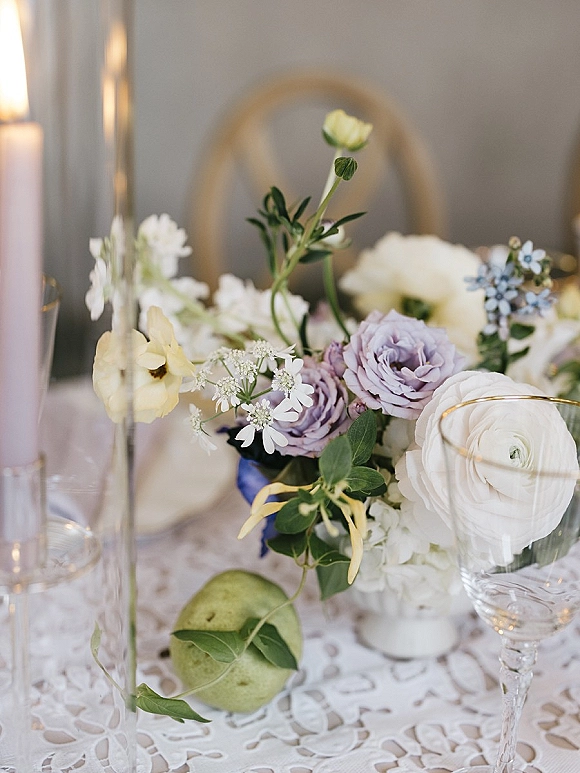
Fruit earns a place on an autumn table in a way it rarely does other seasons. Figs, grapes, pomegranates, and small pears tucked among the blooms or heaped in a low compote add richness and a nod to the harvest, and they photograph as abundance without the cost of more flowers. Because the season’s light fades early, plan the candle layer as a core part of the design rather than a finishing touch, so the table reads warm and full the moment the room dims into dinner. A fall table also forgives a lower flower count, since deep blooms read rich in small numbers and dried texture and candlelight fill the gaps a bright spring table would expose.
Rustic vs. Elegant Fall, by Venue
A fall table can go two directions on the same palette. Rustic fall leans on wood, lanterns, pumpkins, dried grasses, and loose blooms for a barn or vineyard feel, pairing naturally with the rustic wedding centerpiece approach, while elegant fall keeps the jewel-tone florals but sets them in footed compotes or raised vessels with taper candles and metallic accents for a formal room. Same burgundy-and-gold foundation, different vessels and polish.
The venue usually settles which way to lean. A barn or vineyard suits the rustic end, and the wider look lives in the barn wedding ideas collection; a ballroom or estate calls for the elegant one, where jewel-tone florals and candlelight sit beautifully among the kind of ballroom wedding ideas that reward a richer palette. An outdoor or tented autumn reception benefits from enclosed candlelight against cooler evenings and hardy blooms that hold through the night, so reading the room first tells you whether to lean rustic or refined.
The two directions share a palette but part ways on almost everything else. Rustic fall keeps arrangements low and loose in wood boxes and mason jars, lets greenery sprawl, and leans on lanterns for light. Elegant fall lifts the same burgundy and gold blooms into footed compotes or raised vessels, tightens the shape, and swaps lanterns for taper candles in warm metal holders. Neither is more correct; the choice follows how formal the rest of the day reads, and many couples land in between, pairing a lush low arrangement with a few refined metallic touches so the table feels both warm and considered.
Cool-Season Variations and Styling
Fall and autumn wedding centerpieces share one palette, and it carries into the colder months with a few shifts. Winter wedding centerpieces deepen toward burgundy, evergreen, and metallics, trading dahlias for amaryllis, ranunculus, and berried greenery, while Christmas wedding centerpieces add pinecones, cranberry-red blooms, and frosted or evergreen foliage. The warm, candlelit, jewel-tone foundation stays the same. One warm, candlelit approach carries straight through from October to the winter holidays, shifting only the blooms and a few accents as the season turns.
Pulled together, a fall table layers warmth: a low jewel-tone floral or dried arrangement, votives and tapers in warm holders, a few harvest accents, and metallic or amber vessels, all kept low for conversation. Carrying the season everywhere, onto the napkins, the glassware, and the candlelight, makes the room feel enveloped, not dotted with color, and the palette is generous enough that almost any warm tone within it flatters the others.
A holiday-season table takes the same foundation one step further, adding cranberry-red blooms, pinecones, cinnamon and citrus, and frosted or flocked greenery for a festive read that still feels elevated rather than kitschy. Keeping the arrangements low and the candlelight warm keeps a December table from tipping into decoration for its own sake. Across the whole cool half of the year, the through-line holds: warm saturated color, real candlelight, and natural texture, adjusted bloom by bloom as the season turns. Fall tables join every other format in the wedding centerpieces hub, and wedding florists who work with seasonal and dried blooms can bring the palette to life.
Frequently Asked Questions
What flowers are best for fall wedding centerpieces?
Dahlias and chrysanthemums lead, joined by warm-tone garden roses, ranunculus, celosia, berries, and seed pods. These peak in the cooler months and hold the burgundy, rust, and gold palette. Dried elements like pampas and wheat add harvest texture and last the whole event.
What colors define a fall centerpiece?
Deep, warm, saturated tones: burgundy, rust, terracotta, marigold, gold, and copper, softened with cream and neutrals and lifted with metallic accents. Layering several of these together, rather than using one alone, is what gives a fall table its rich, autumnal read.
How do I use pumpkins without the table looking like a holiday display?
Use them as accents, not the whole design. A few white or heirloom pumpkins as risers under arrangements, or hollowed as bloom vessels, read elevated when they support a floral or candle base. Restraint and a consistent palette keep the look seasonal rather than novelty.
Can a fall palette work for a winter wedding?
Yes. The warm, candlelit, jewel-tone foundation carries into winter by deepening toward burgundy, evergreen, and metallics, and trading dahlias for amaryllis and berried greenery. The same approach adapts across the whole cool half of the year.