When Tall Centerpieces Work
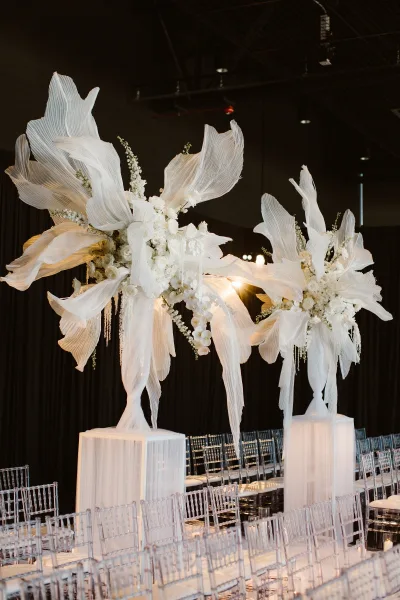
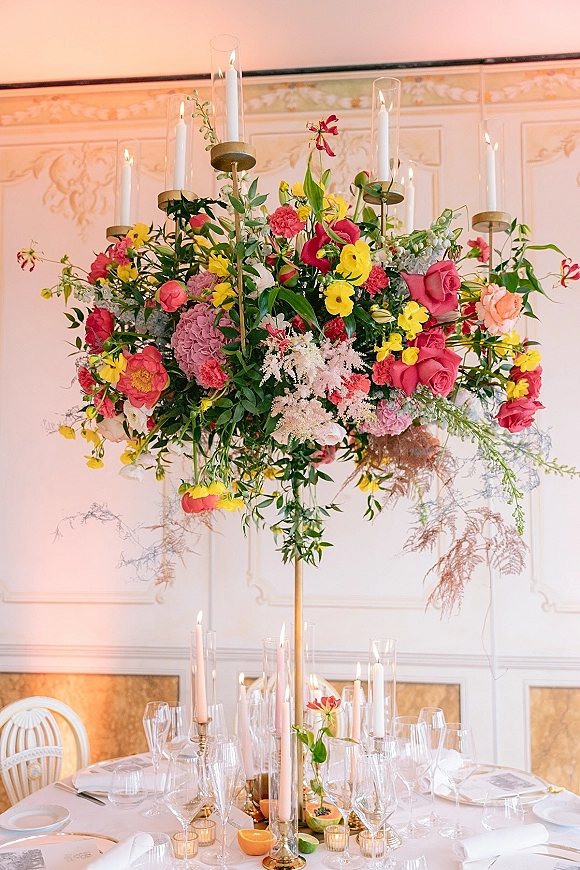
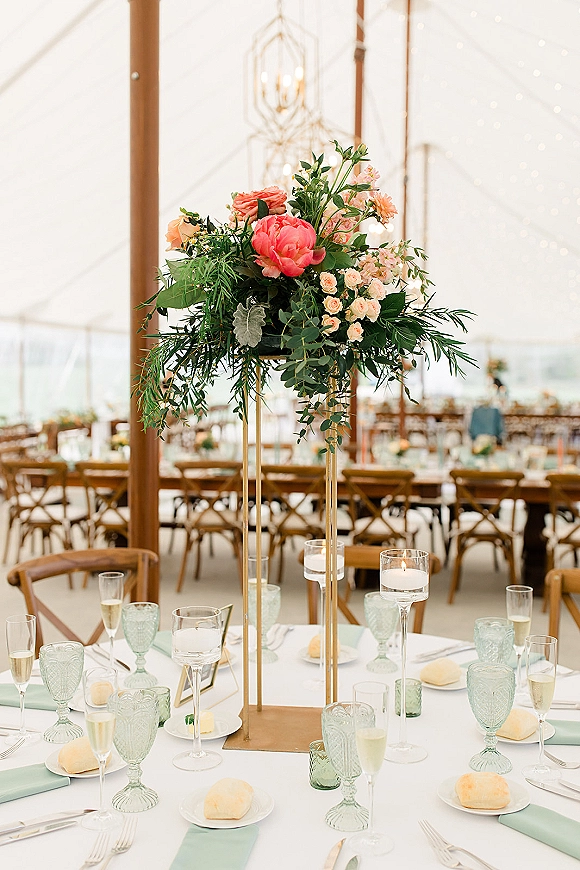
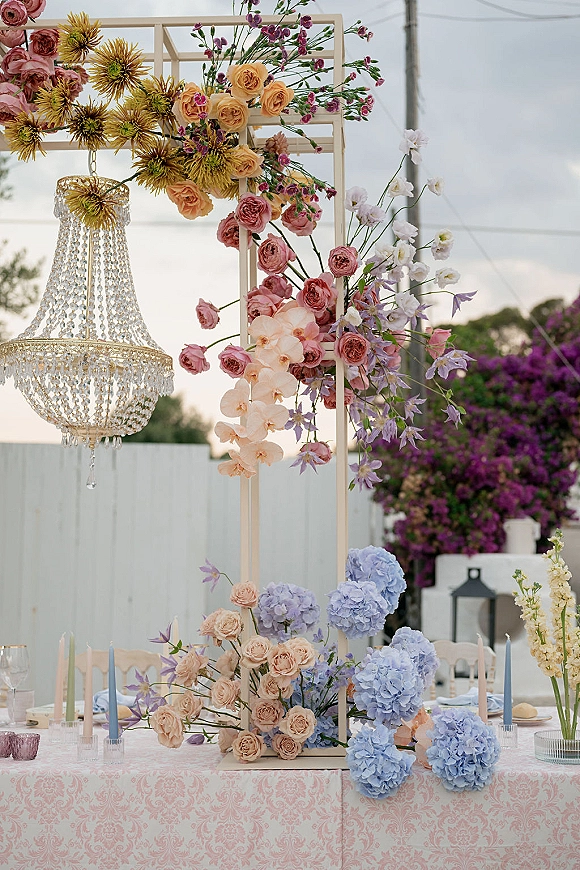
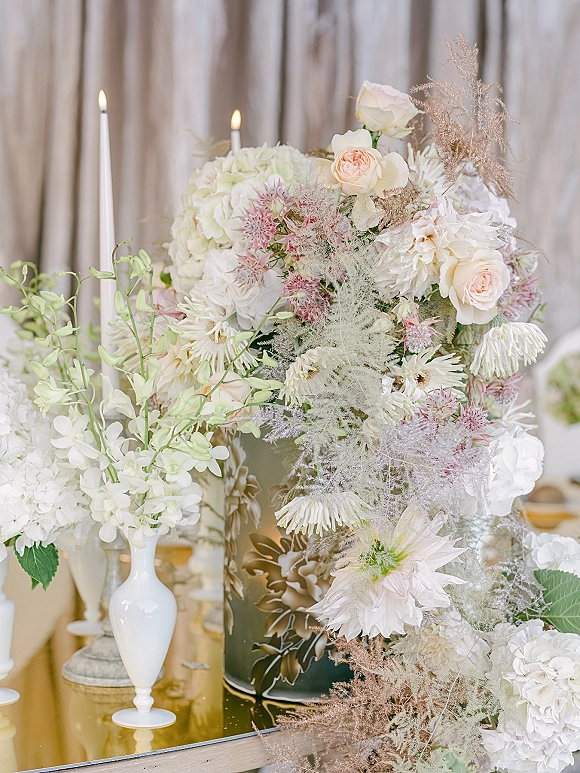
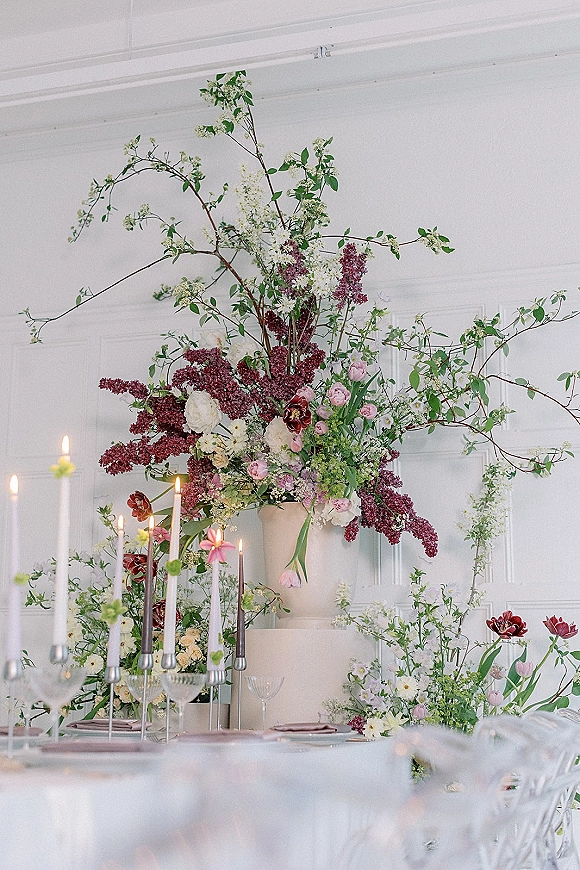
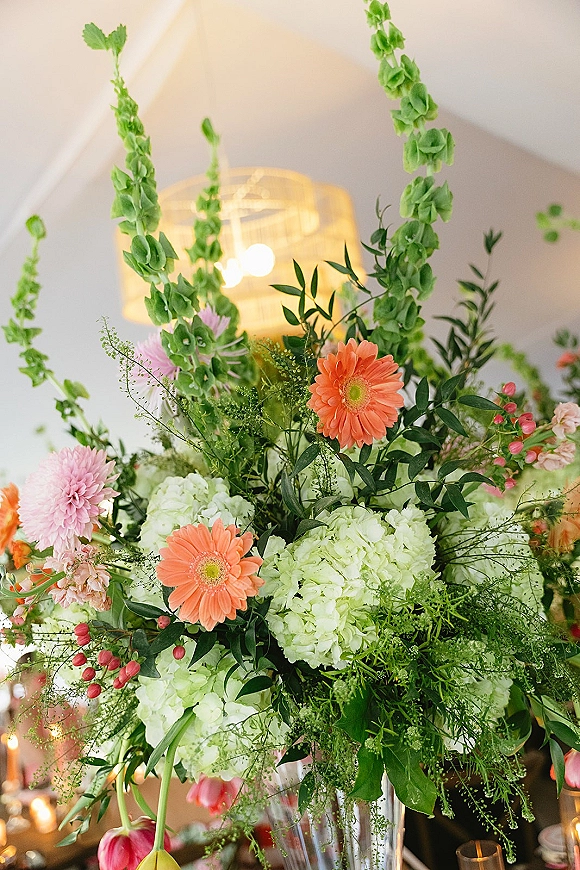
Tall wedding centerpieces lift flowers and candles onto raised vessels above the seated sightline, drawing the eye upward and filling the volume of a room that a low arrangement would leave empty. They earn their place in grand spaces: high-ceilinged ballrooms, tents, and historic rooms have vertical volume that low designs cannot reach, so height brings the arrangement up to the scale of the space and makes the room feel fully dressed. Rooms with chandeliers or hanging installations benefit most, since height connects the table to what is overhead, the same logic behind pairing tall arrangements with hanging floral and chandelier decor in a double-height room.
They are not right for every wedding, though, and knowing when they fit saves both budget and disappointment. Tall designs suit formal receptions and couples who want a statement-making room with the ceiling height to carry it. They fit less well in small, intimate, or low-ceilinged spaces and relaxed rustic receptions, where a low, gathered look feels more natural. Cost is a factor as well, since a tall arrangement uses more stems and a raised vessel than a low one, so committing to height on every table concentrates the flower budget quickly. Tall wedding table centerpieces also do specific jobs beyond drama, defining a long banquet run that a single low arrangement would leave feeling bare, while tall wedding reception centerpieces give a large room a vertical rhythm that carries the eye from table to table.
The clearest sign a room wants height is empty air above the tables. In a space with soaring ceilings, low arrangements can leave the upper two-thirds of the room feeling unfinished, and tall designs are often the only thing that brings the florals up to the scale the architecture sets. Weighing what the space actually needs, instead of defaulting to tall because it photographs impressively, is what keeps the choice deliberate and keeps the budget from pooling in a handful of enormous arrangements.
Tall, Low, and Conversation Height
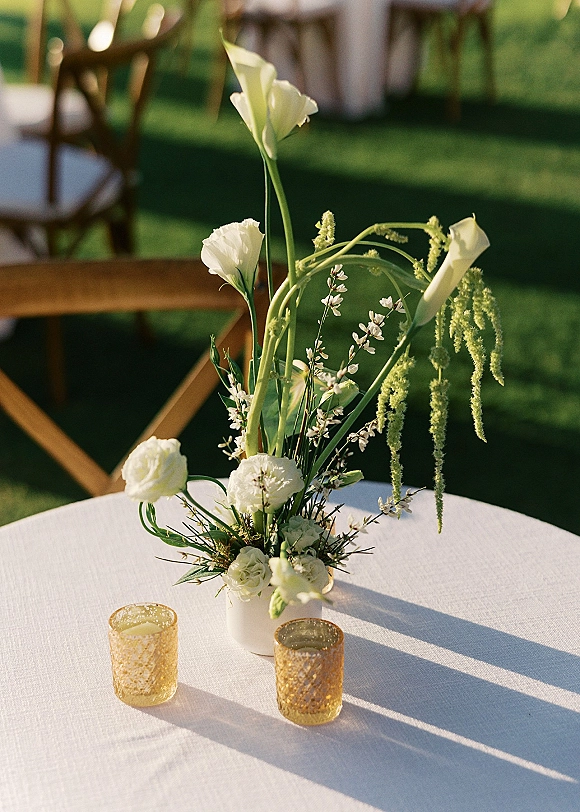
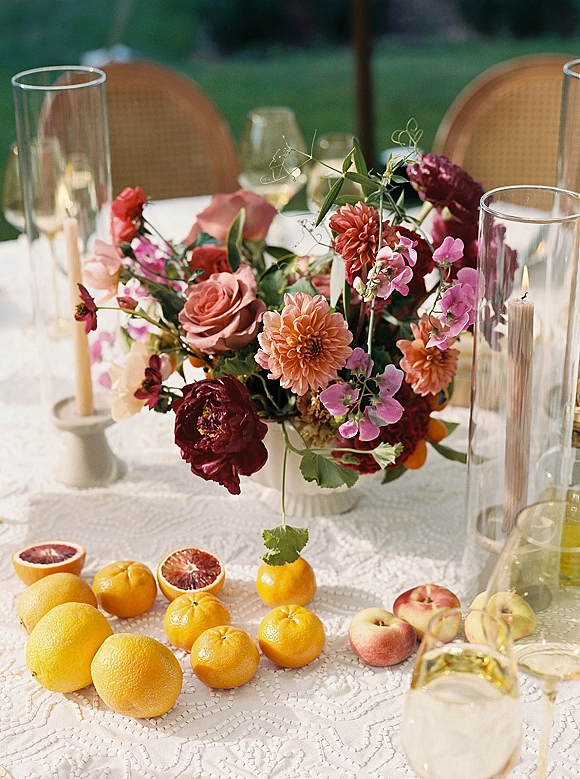
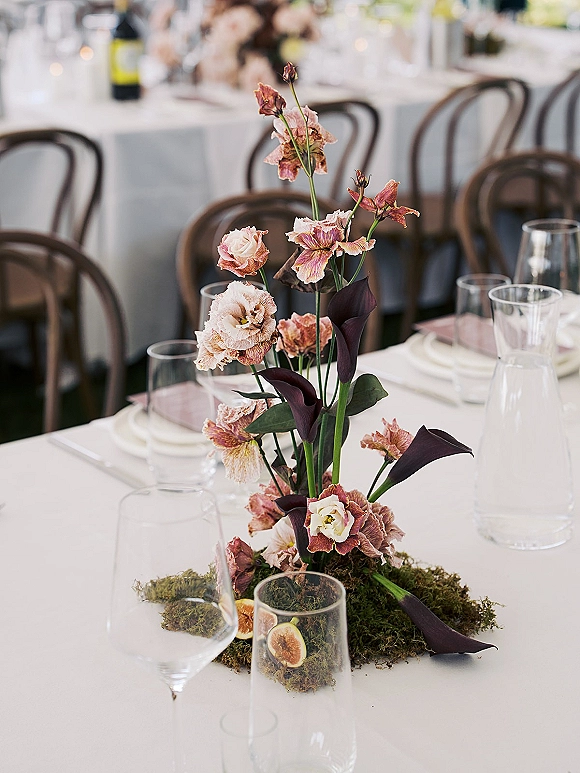
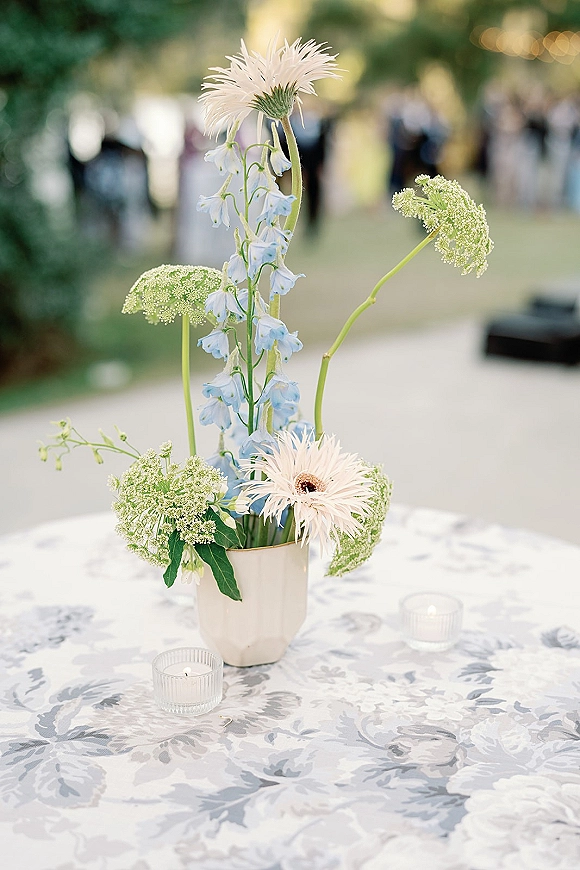
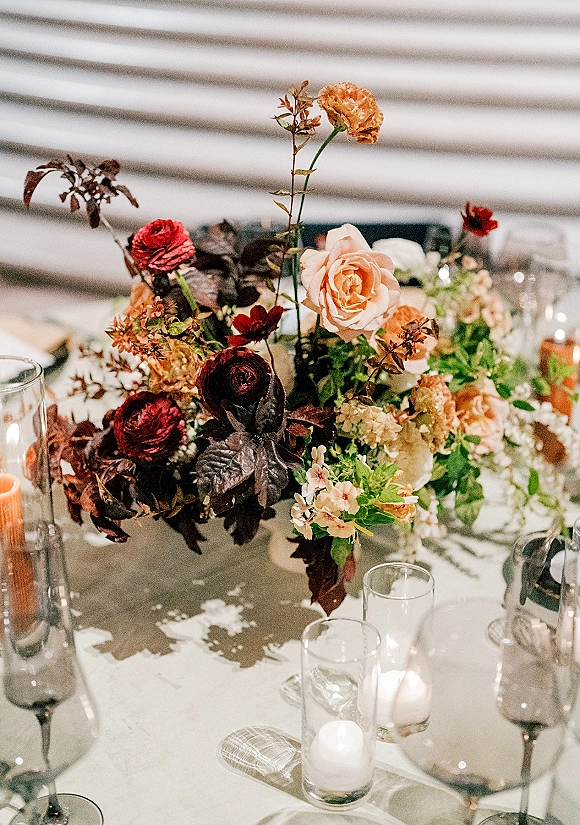
Height decides how a table feels. Low wedding centerpieces, kept under about fourteen inches, sit at table height, feel intimate, and let everyone see past them, which is why they are the default for most receptions. Tall centerpieces clear the seated sightline entirely and read as dramatic and formal, filling vertical space a low design cannot.
The heights to avoid sit between the two: tall enough to block a face, but not tall enough to clear it.
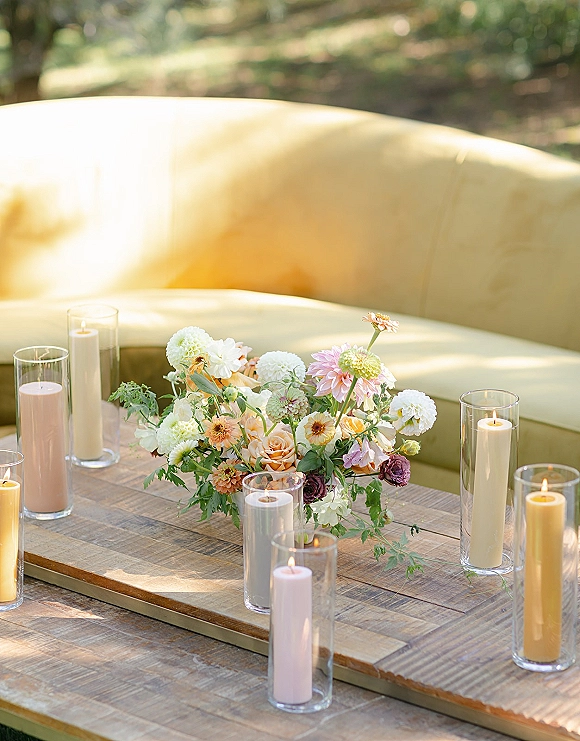
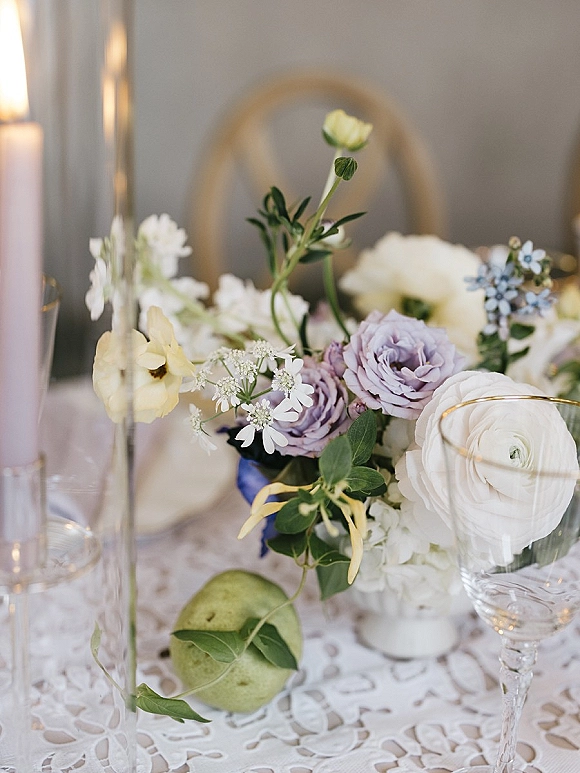
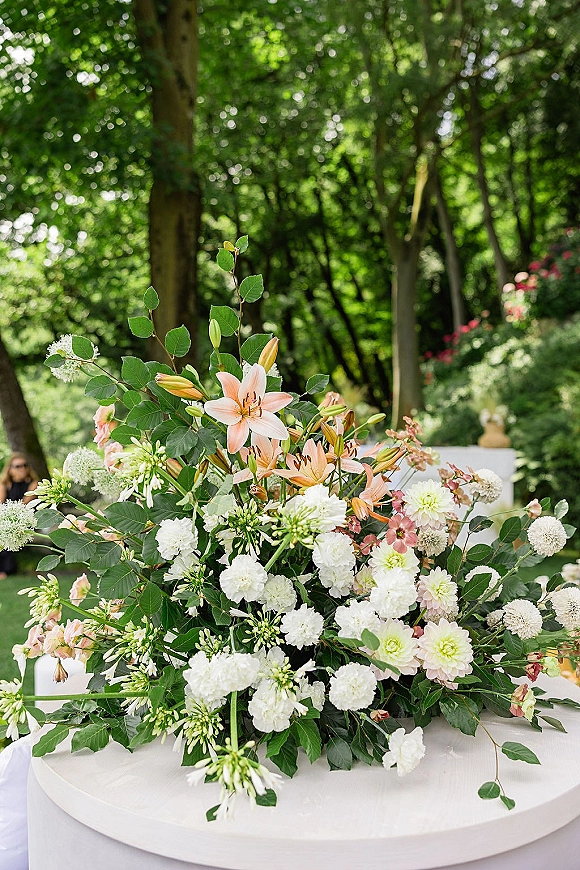
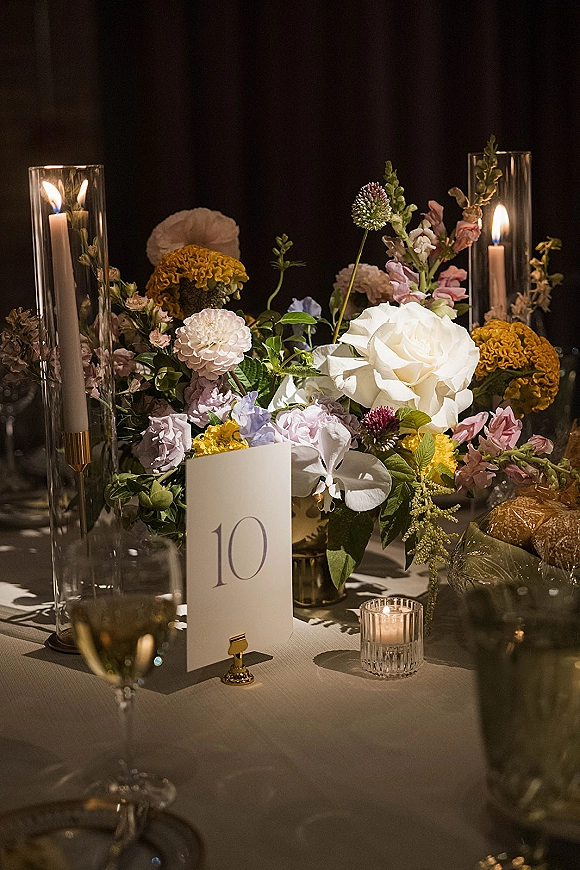
The most versatile approach is not all-tall or all-low but a deliberate mix. Alternating raised arrangements with low ones across the guest tables gives a room rhythm and dimension, keeps the flower budget from concentrating in a few enormous designs, and ensures every guest has tables they can see across. A common split places tall centerpieces on a portion of the tables and low designs on the rest, tied together by a shared palette and vessel family, so the tall arrangements act as visual anchors while the low tables keep conversation flowing. The floral wedding centerpiece and greenery wedding centerpiece collections cover the low end of that pairing.
There is a mechanic behind the height rule worth understanding. The seated eye lands around the height of a water glass, so a low design stays comfortably beneath it while a tall one clears it only by rising well overhead on a narrow stem. Anything that stalls in between, tall enough to block a face but not tall enough to see under, becomes the wall you want to avoid, which is why the least flattering option of all is a big, medium-height arrangement that sits right at eye level.
Vessels for Tall Designs
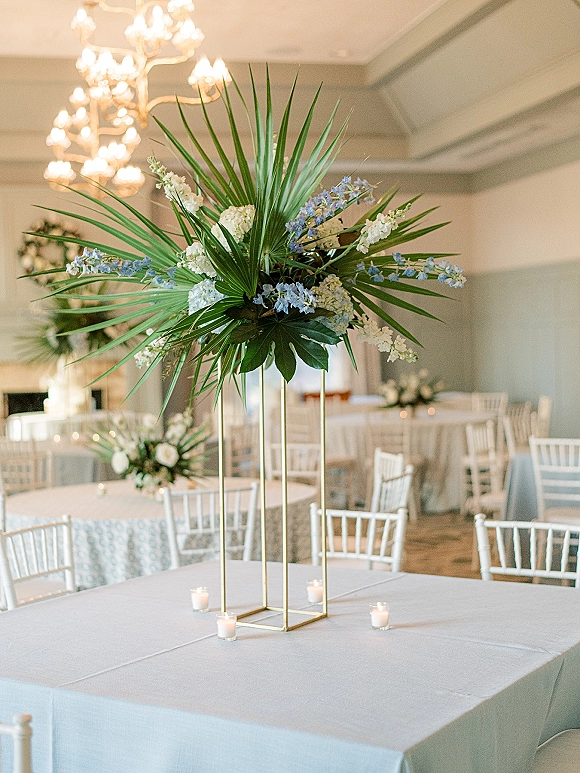
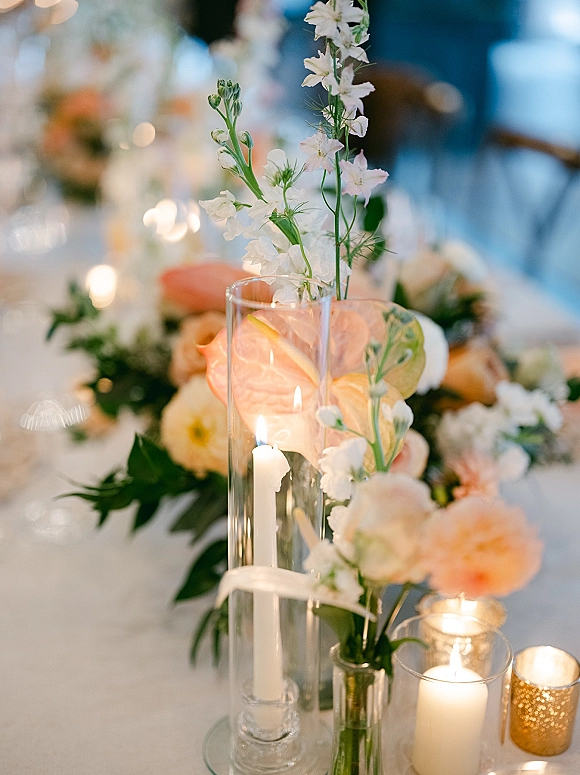
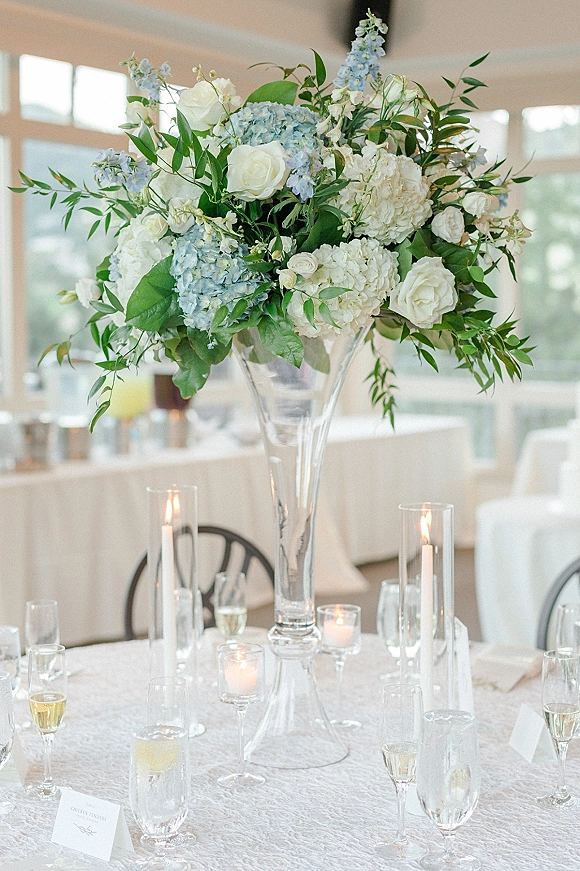
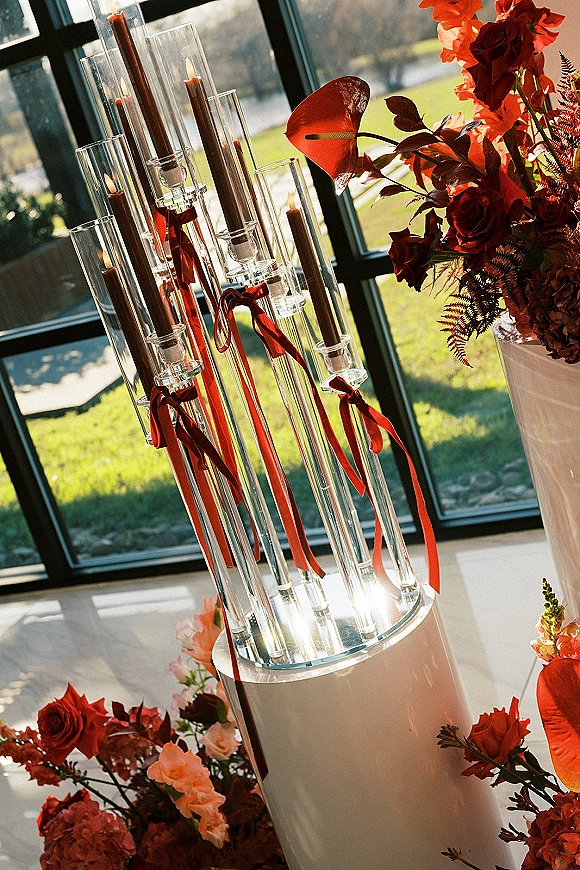
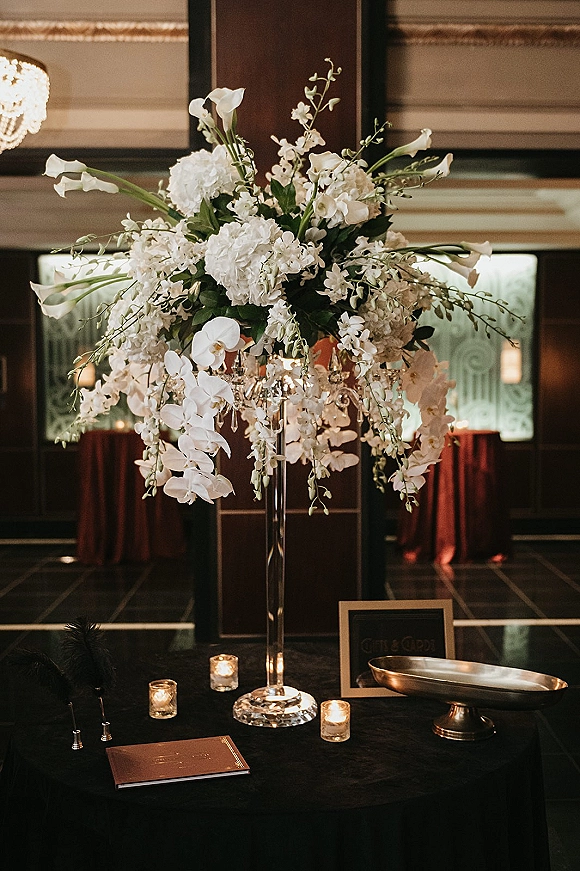
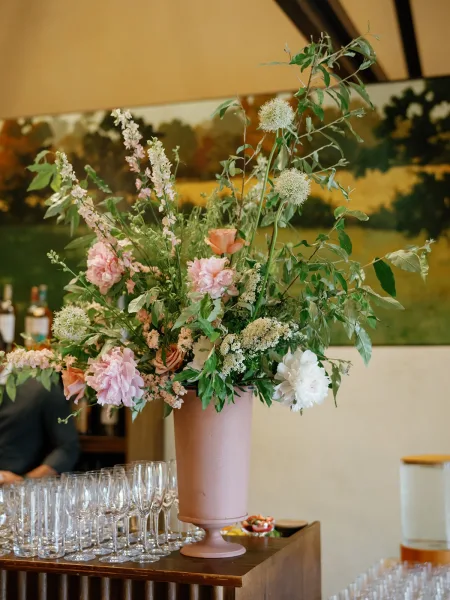
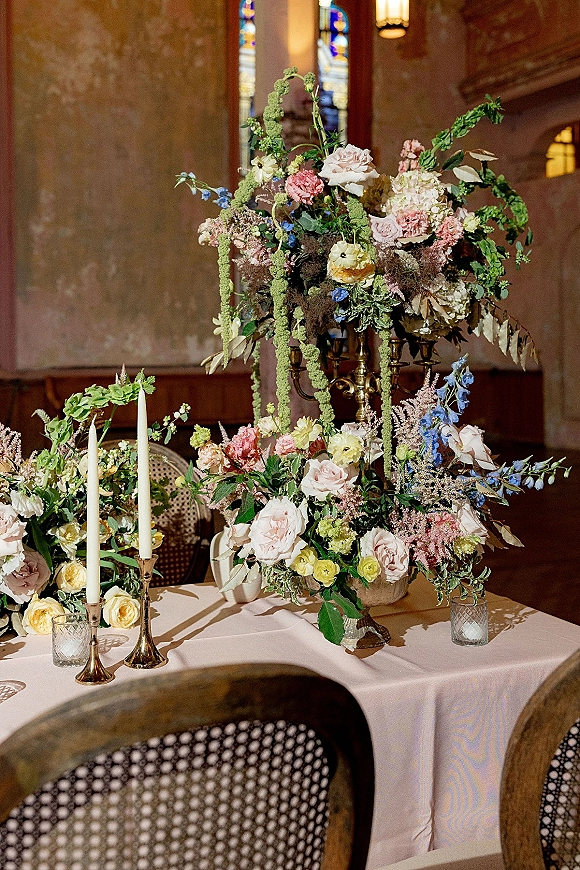
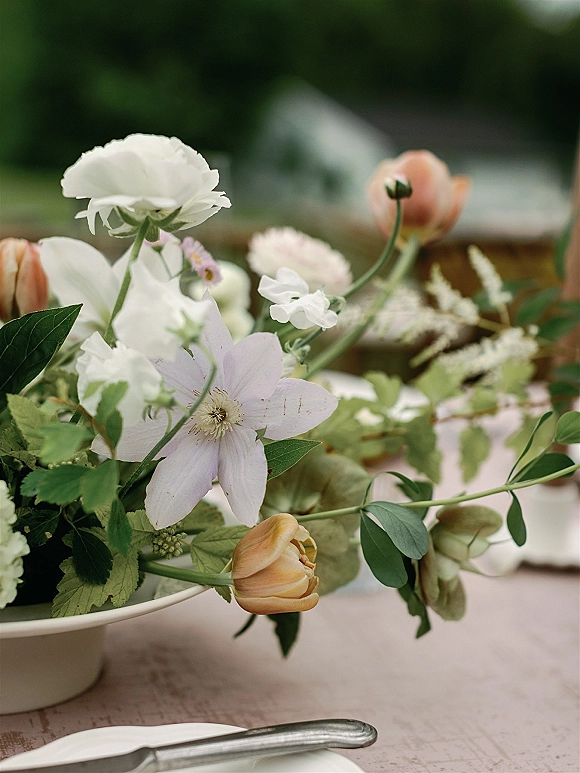
The wedding centerpiece vases that create height come in four main shapes, and the vessel is what makes a tall design read as drama, not clutter.Trumpet vases are the classic choice, a tall stem flaring to a wide mouth that holds a full arrangement high above the table, reading formal and romantic. Pedestal stands raise a compote or bowl on a column for a lifted garden look with flowers spilling over the edge, softer than a trumpet. Candelabra build height on candlelight rather than a single flower mass, the route the candle wedding centerpiece collection covers in depth, and geometric stands, metal frames and open shapes, hold flowers and greenery high with a clean, modern line.
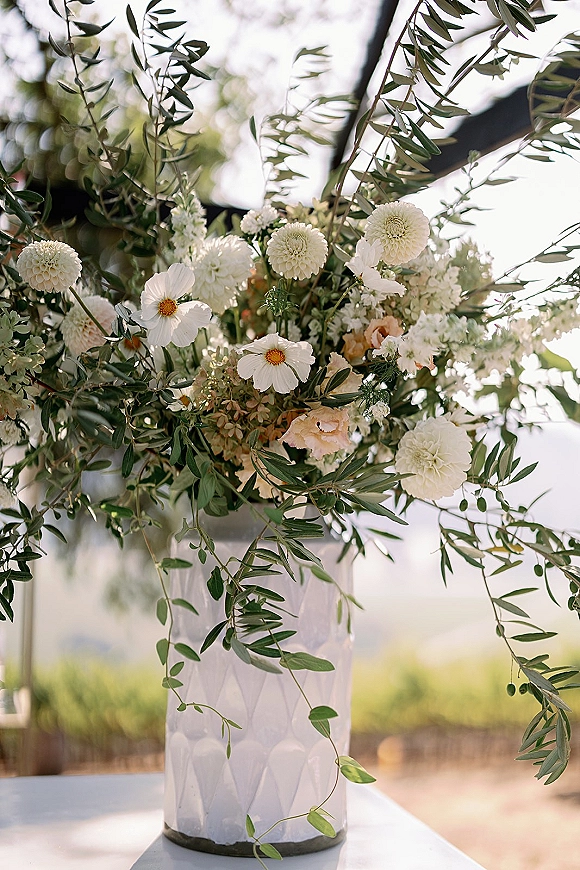
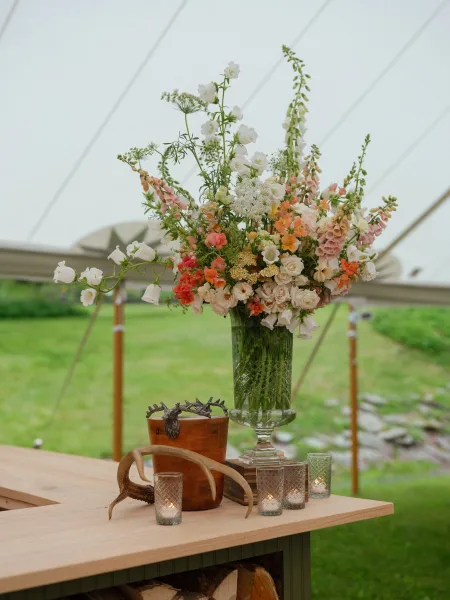
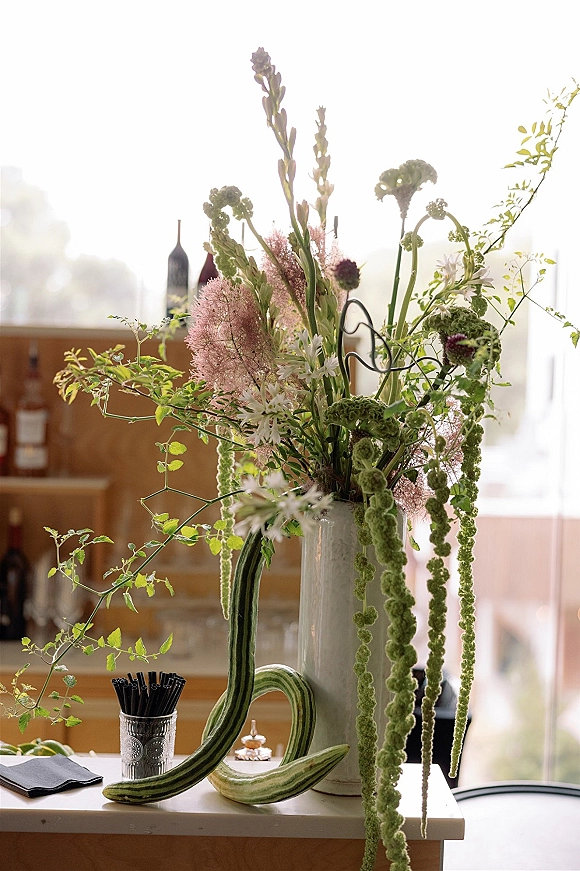
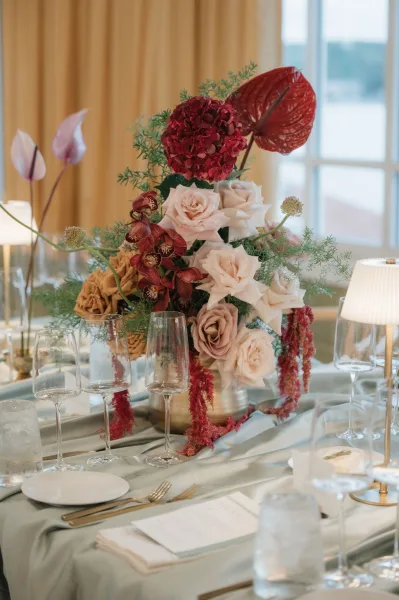
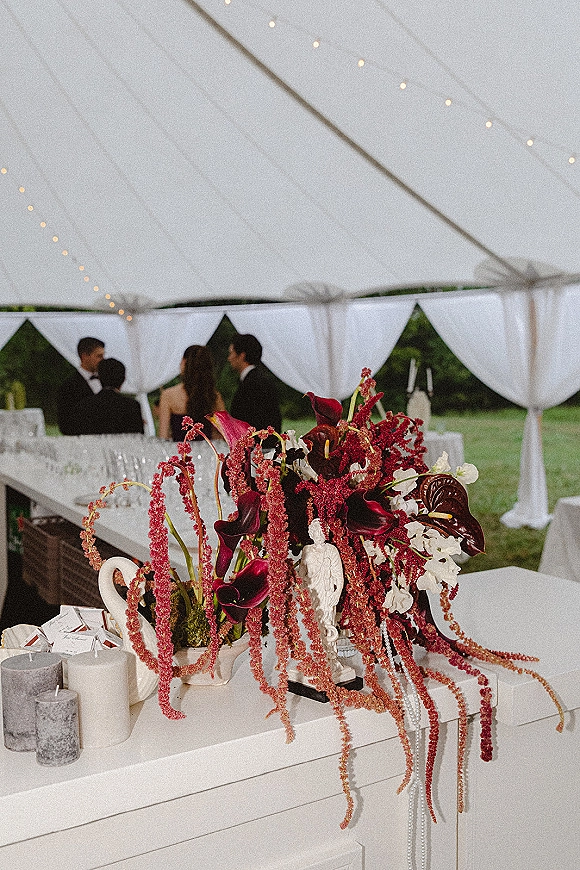
A tall design can lead with flowers or foliage, and the choice sets both budget and mood. Floral tall arrangements pack blooms into the raised vessel for a lush, romantic mass that carries the palette, while greenery-forward tall designs trail eucalyptus and amaranthus for movement and height on fewer blooms, reading organic rather than formal. Many combine the two, a floral crown above cascading greenery, to get height and fullness without filling the whole vessel with expensive blooms. Proportion matters more than it seems: a stem too short makes the arrangement look merely large instead of genuinely tall, landing in the face-height zone you want to clear, so the most reliable tall designs pair a tall, slim column with a base wide enough to feel stable.
The vessel finish plays into the room as much as the shape. Polished silver and gold trumpet vases read formal and traditional, clear glass keeps the focus on the flowers and disappears into a modern room, and matte black or blackened-metal geometric stands read architectural and current. Because a tall vessel is visible from across the space in a way a low bowl never is, its material becomes part of the room’s design language, so matching the finish to the linens, the lighting, and the overall palette keeps a tall table from looking like it wandered in from another wedding, the same coherence the wedding centerpieces hub shows across every format.
The Room, Stability, and Placement
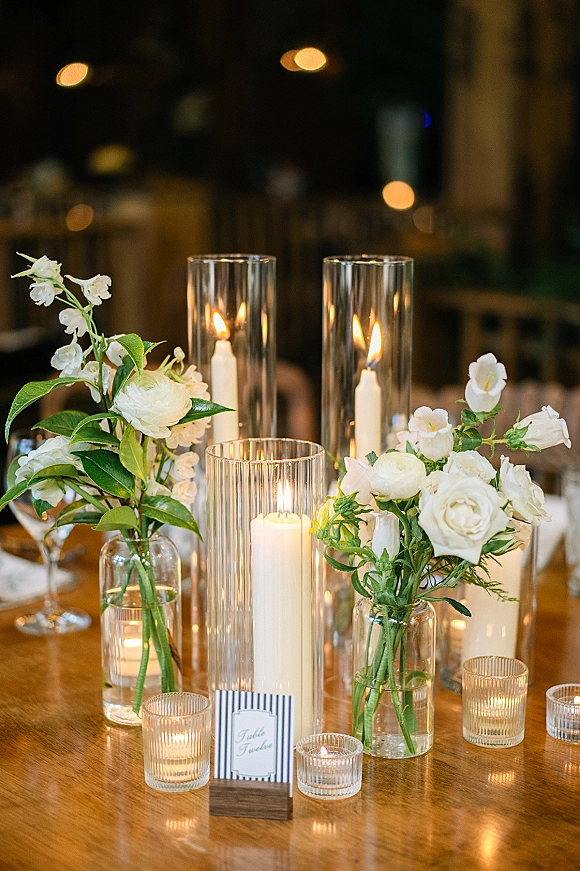
Tall arrangements are a response to the architecture as much as the table. Grand rooms with volume to spare read as fully dressed only when the design rises to meet them, so reading the room’s proportions first tells you whether height will fill the space or fight it. Guests experience a tall table differently too: because the arrangement sits high on a narrow stem, the space at eye level stays open for conversation, but the base has to leave real room for place settings and knees. Ringing the vessel foot with low votives or a few blooms gives the table something to look at while seated, and pairing it with a low foliage detail echoes the wedding greenery used elsewhere in the room.
Height means leverage, so tall centerpieces demand more planning than low ones. A raised arrangement needs a weighted or wide base so it will not tip, and trumpet vases in particular are top-heavy once filled. Because the finished design is awkward to move assembled, florists often transport the vessels and florals separately and build the arrangements on site during setup, which makes venue access time matter. On long banquet tables, alternate tall arrangements with low clusters so the eye moves along a rhythm of heights; on round tables, a single narrow-based tall vessel lets every seat see across. To build and safely install arrangements at height, lean on wedding florists who work at scale and can handle the transport, setup, and stability a raised design demands.
Frequently Asked Questions
How tall should a tall wedding centerpiece be?
Tall arrangements should clear the seated sightline so guests see each other beneath them, rather than stopping at face height where they block conversation. The exact height depends on your vessel and ceiling, but the goal is always to lift the flowers well above eye level, not just above the table.
Should every table have a tall centerpiece?
Most rooms read best when tall and low designs alternate. All-tall tables can feel formal and heavy and cost more in blooms, while mixing heights gives the room drama and rhythm without losing intimacy. A common split places tall arrangements on some tables and low ones on the rest.
Are tall centerpieces stable?
They are when built correctly. Raised vessels need a weighted or wide base so they resist tipping, and trumpet vases in particular are top-heavy once filled. Your florist balances the arrangement and secures the base, and the vessel footprint is kept clear of place settings.
Do tall centerpieces work on round tables?
Yes. A single narrow-based tall vessel centered on a round table lets every seat see across while adding height. Keeping the base compact leaves room for glassware and settings, and ringing the foot with low votives gives the table interest at eye level too.