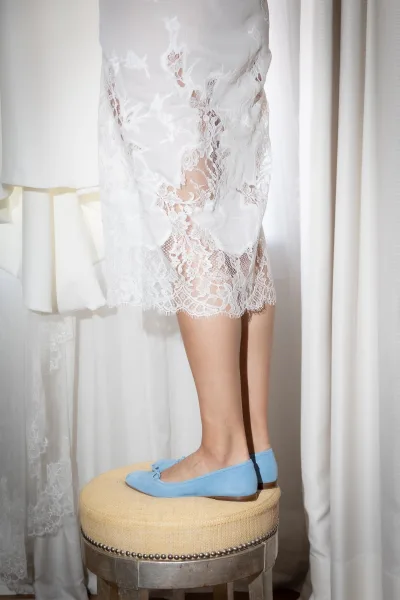
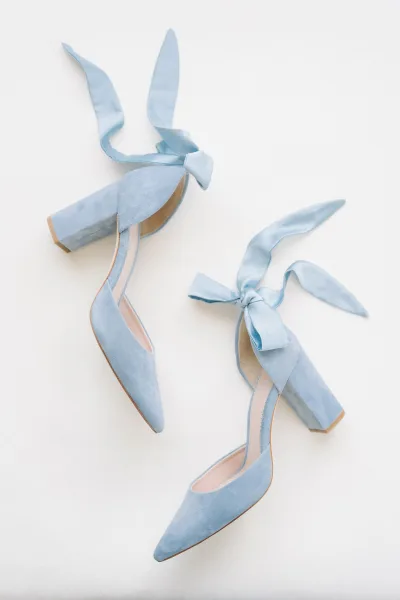
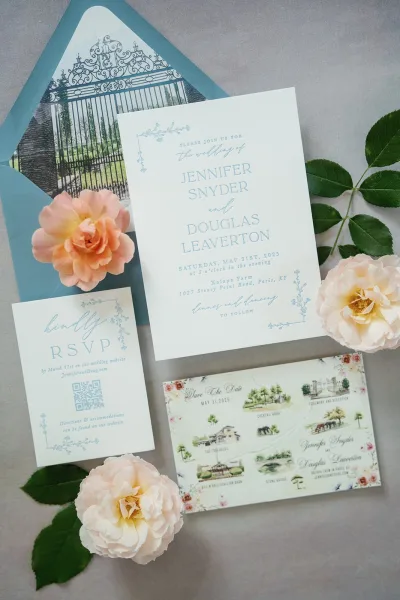
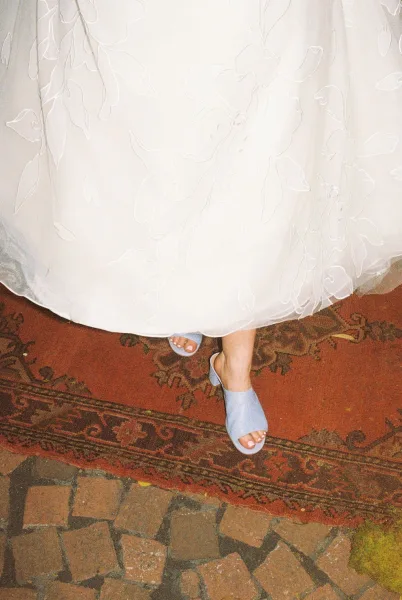
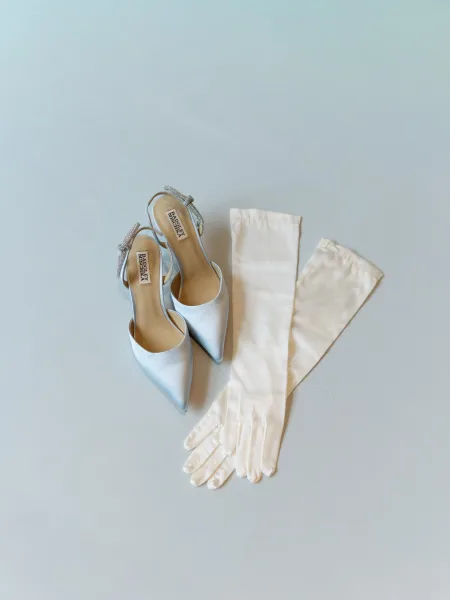
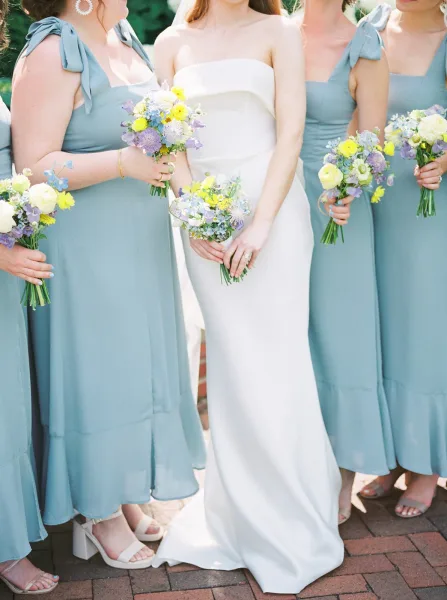
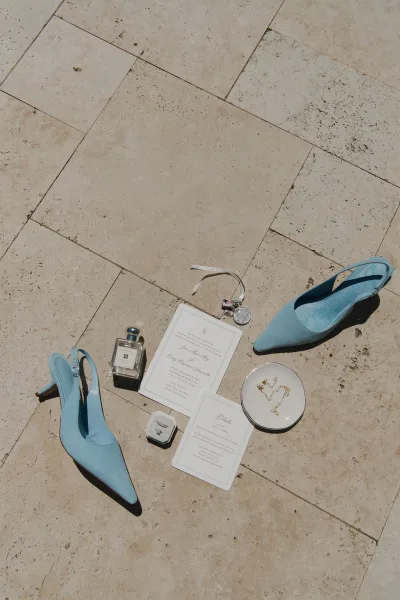
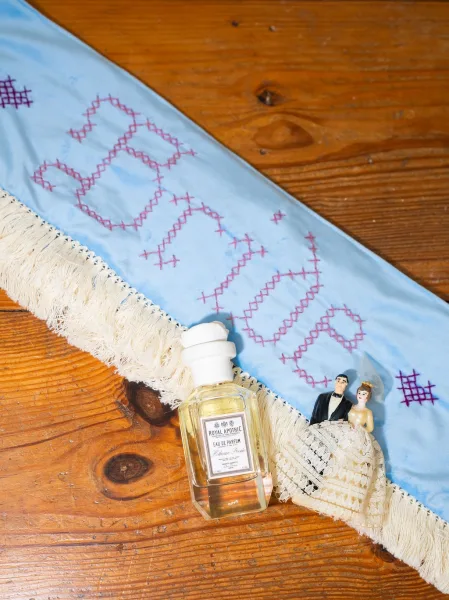
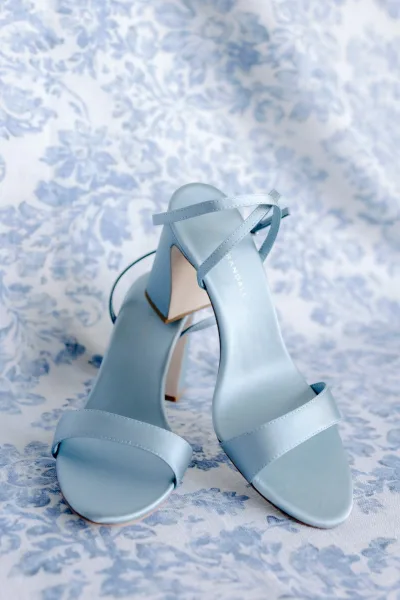
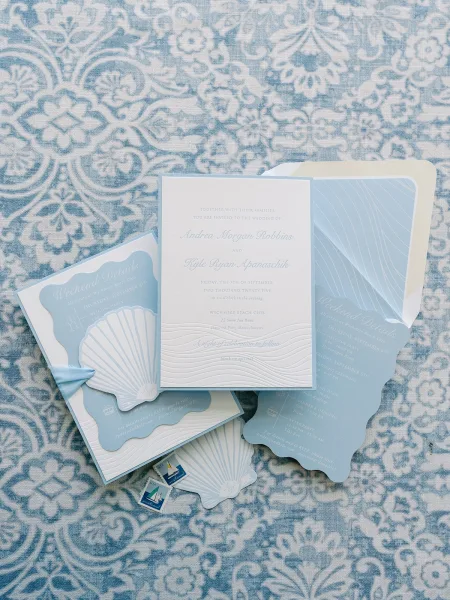
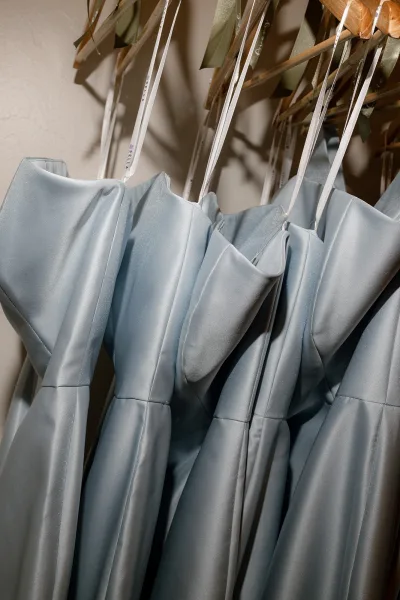
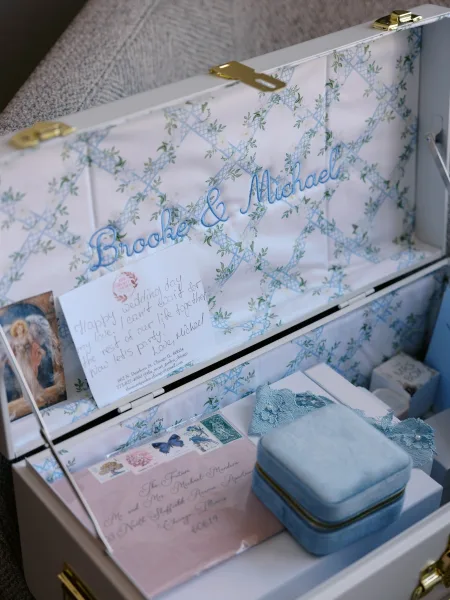
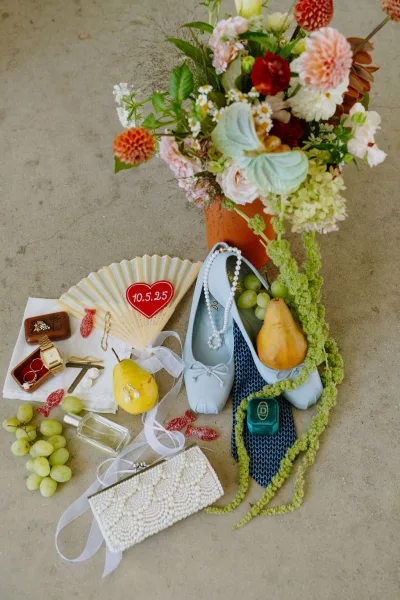
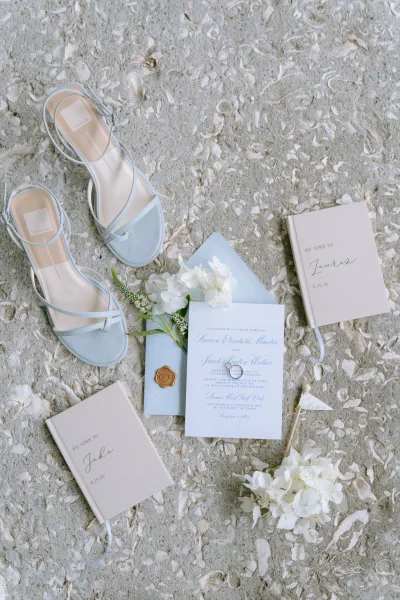
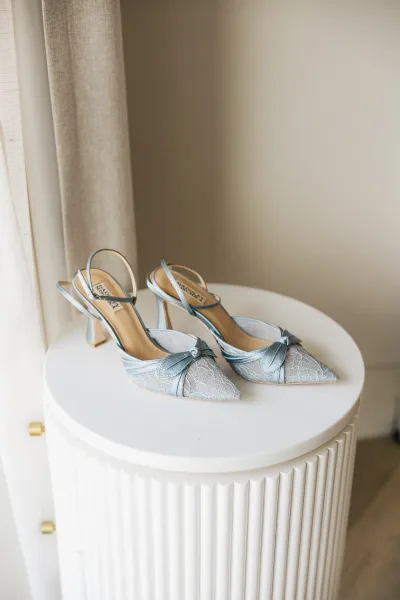
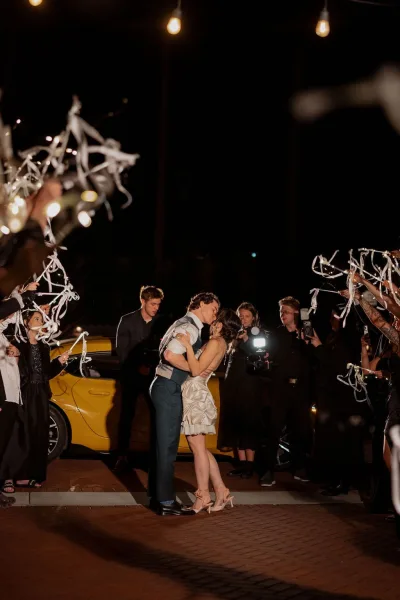
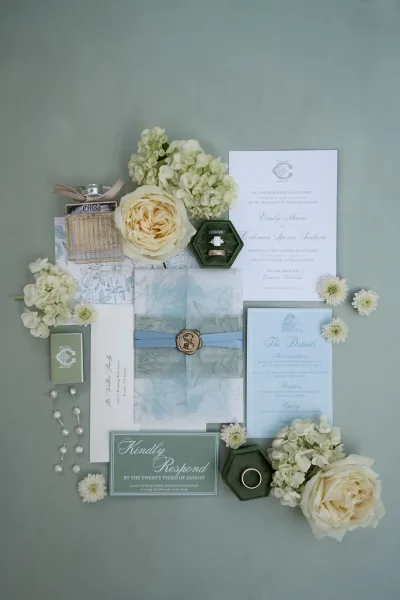
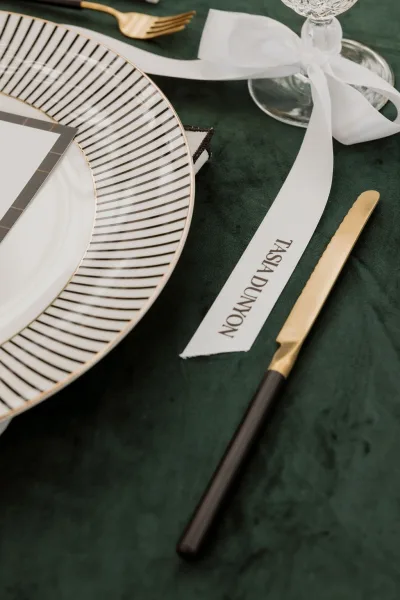
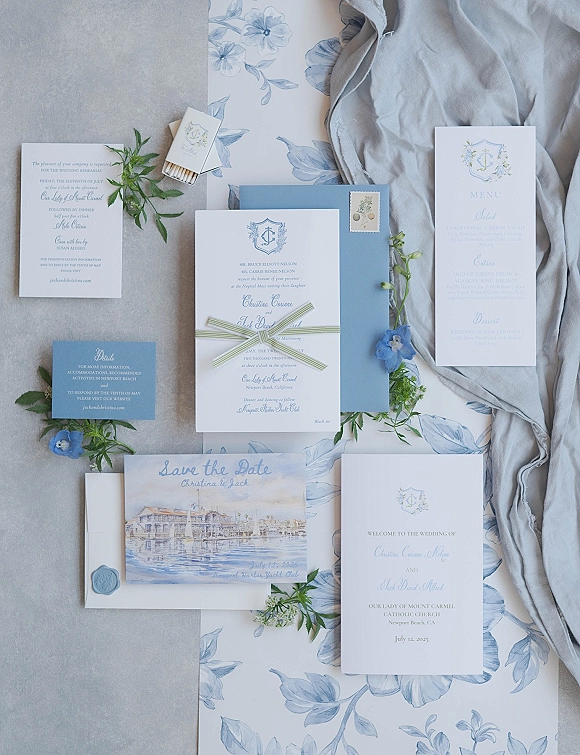
The palette has become one of the more reliably popular wedding color choices precisely because it doesn’t read as trendy. It has the quality of a color that looks considered rather than reactive to the moment. Bridesmaids in dusty blue read well in photos across skin tones, which matters for couples coordinating a larger wedding party.
Dusty Blue Wedding Colors
The color combinations that work best with dusty blue share a common quality: they don’t fight the grey undertone. Colors that are too warm or saturated can make dusty blue read muddy rather than soft. The combinations that photograph most reliably involve either cooler neutrals that let the blue lead, or muted warm tones that complement rather than compete.
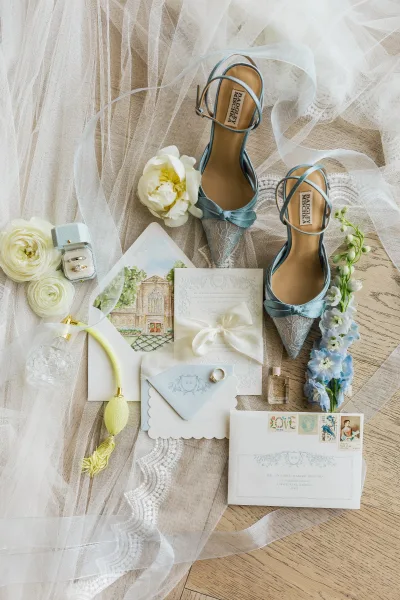
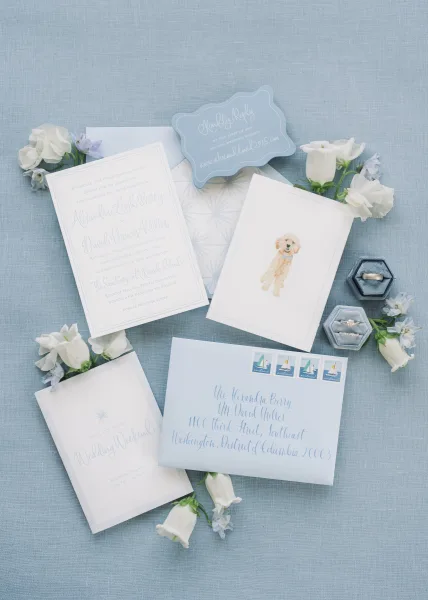
White and ivory both work as neutrals alongside dusty blue, though they read differently. White sharpens the contrast and gives the palette a cleaner, more contemporary feel. Ivory softens it and moves the overall aesthetic toward something warmer and more romantic. Greenery in silver-grey tones like eucalyptus ties the palette together regardless of which neutral anchors it.
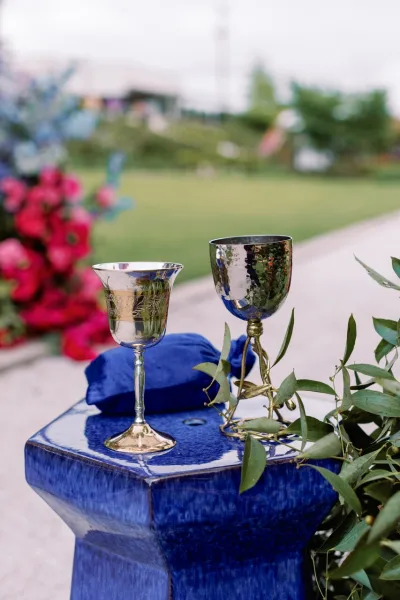
Gold as a metal accent works well with dusty blue in formal or garden settings. Silver reads crisper and suits more modern venues. Both appear frequently in dusty blue weddings and the choice is usually driven by the venue’s existing hardware and lighting rather than the couple’s preference alone.
Blush pink pairs with dusty blue in a way that differs from dusty rose: blush is lighter and slightly more saturated, which introduces a warmer contrast rather than a tonal harmony. The combination works best when white or ivory anchors the palette so neither color is competing for the softer middle ground. It suits garden ceremonies and outdoor receptions particularly well.
Dusty Blue Wedding Flowers
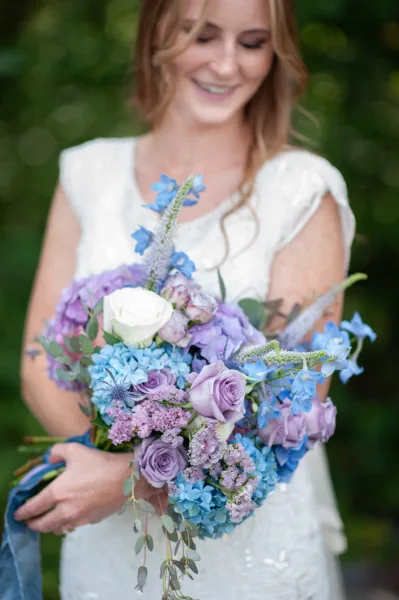
Truly blue flowers are rare in nature, which shapes how florists approach dusty blue wedding arrangements. Delphiniums and thistles come closest to the actual color: delphiniums offer vertical height and a range of blue tones from periwinkle to near-slate, while thistles bring a spiky, textural quality that pairs well with softer blooms. Both work as accent flowers rather than primary volume flowers in most arrangements.
The more common approach is building the surrounding palette in white, cream, ivory, and soft sage against dusty blue linens, bridesmaid dresses, and ribbon details. White garden roses, ivory ranunculus, lisianthus, and cream lisianthus sit naturally in this palette without introducing competing color. Dried botanicals in neutral tones, pampas grass in particular, add texture and a softer finish.
For bouquets, dusty blue satin ribbon as a stem wrap is one of the most consistent ways to bring the color into the arrangement directly without tinting flowers. Ribbon-wrapped stems with a trailing end are a common florist choice for both bridal and bridesmaid bouquets in this palette. For a broader view of how this color reads in ceremony florals, wedding ceremony flowers shows the range of arrangements real couples have used.
Dusty Blue and Sage Green Wedding
Dusty blue and sage green is one of the strongest combinations in the muted palette category. Both colors share a grey-green undertone that makes them read harmoniously without being matchy. The combination has a distinctly organic, garden-influenced quality that suits outdoor ceremonies, barn venues, and any setting with natural textures and materials.
In florals, this palette pairs naturally with white and cream blooms: white garden roses, ivory ranunculus, and cream lisianthus sit between the two tones without introducing a competing color. Dried elements in warm neutral tones, pampas grass in particular, add texture and keep the arrangement from reading too cool. Sage green bridesmaid dresses shows how the color translates across a full wedding party.
Dusty Blue and Navy Wedding
Navy and dusty blue is a tonal combination rather than a contrast pairing. The two colors share a blue base and the effect is layered and considered rather than bold. This combination suits more formal settings: ballrooms, estate venues, and ceremonies with a classic or traditional aesthetic.
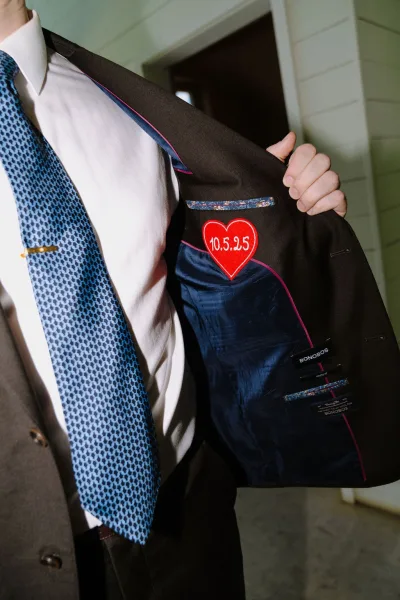
The practical application usually involves one color as the dominant and the other as an accent. Dusty blue bridesmaids with navy suit details, or a navy ceremony space accented with dusty blue florals and linens, are common approaches. White or ivory keeps the combination from reading too heavy, particularly in indoor venues with limited natural light.
Dusty Blue and Dusty Rose Wedding
Dusty blue and dusty rose is the muted version of the classic blue-and-pink combination, and it reads considerably more sophisticated than its more saturated counterpart. Both colors are desaturated enough that the combination photographs as a tonal study rather than a contrast statement. It suits romantic, garden-influenced, and vintage-leaning weddings particularly well.
The key to making this combination work is keeping both colors equally muted. A true dusty rose alongside dusty blue holds together. A brighter or more saturated pink against dusty blue creates a tension that doesn’t resolve well in photos. Florals in ivory, blush, and mauve sit naturally between the two tones. Dusty rose bridesmaid dresses shows the color in full context across a wedding party.
Dusty Blue and Burgundy Wedding
Dusty blue and burgundy is a high-contrast pairing that works because both colors have enough depth to hold their own. The combination reads rich and formal and suits fall and winter weddings most naturally, though it appears year-round in interior venues where the season is less visually present.
The ratio matters here. Equal parts dusty blue and burgundy creates a strong visual tension. Most couples use one as dominant and one as accent: dusty blue as the primary palette color with burgundy in florals and table details reads differently than a burgundy-forward palette with dusty blue in the wedding party. Greenery with burgundy undertones, like seeded eucalyptus or burgundy astilbe, ties the two colors together at the floral level.
Dusty Blue Fall Wedding
Dusty blue translates to fall more naturally than most blue-family colors because the grey undertone bridges the gap between a cooler blue and a warmer autumn palette. It photographs well in the low-angle light of fall ceremonies, where more saturated colors can flatten or shift.
The pairings that work best in fall contexts are the warmer combinations: dusty blue with burgundy, terracotta, and warm neutrals like champagne or rust. Bridesmaids in dusty blue alongside a wedding party in warm autumnal tones is one of the most photographed combinations in fall wedding archives, and the color holds its value against amber foliage without competing. Outdoor fall venues with natural wood and stone backdrops suit this palette particularly well. For venue-specific inspiration, barn wedding ideas shows how the palette reads in rustic settings.
Dusty Blue Wedding Decor
Dusty blue translates well to decor because it reads as a neutral in practice, even though it’s a color. Linens in dusty blue ground a table without overwhelming it. Candles in dusty blue or slate complement without competing with floral arrangements. Velvet ribbon and ribbon-wrapped stems in this tone are a common florist choice for bouquets and centerpiece elements.
Ceremony backdrops in dusty blue, whether fabric draping or floral installations, photograph particularly well in outdoor light. The muted tone doesn’t reflect harshly and holds its color quality across different times of day. For how this palette carries through to styled display moments beyond the table, wedding dessert table shows the range of ways couples have used it in full reception setups.
Dusty Blue Wedding Cake
Dusty blue wedding cakes are most commonly executed in buttercream, where the color can be applied with variation in tone and texture that makes the finish look intentional rather than flat. Smooth buttercream in a single dusty blue tone reads contemporary and clean. Textured buttercream in the same color, whether palette-knifed or brushed, adds depth and suits a more organic aesthetic.
Tiered cakes in dusty blue with white or ivory detailing, sugar flowers, or dried floral accents are among the most common executions. The color reads well at both small and large scale, which makes it a practical choice for cakes ranging from simple two-tier to large multi-tier designs. Floral wedding cake shows how floral detailing pairs with color-forward buttercream finishes across a range of cake styles.
Frequently Asked Questions
What colors go with dusty blue for a wedding?
Sage green, dusty rose, navy, burgundy, terracotta, blush, and champagne all pair well with dusty blue. The shared quality in the strongest combinations is a muted or grey-toned quality that matches the undertone of dusty blue rather than contrasting against it. Bright or heavily saturated colors tend to make dusty blue read muddy.
What is the difference between dusty blue and slate blue?
Dusty blue and slate blue are closely related and often used interchangeably. Slate tends to refer to a slightly darker, more grey-dominant version of the same family. In practice the distinction matters less than the specific swatch: always reference actual fabric or paint samples rather than relying on names alone, as the same term can vary considerably across vendors.
What flowers work in a dusty blue wedding?
Delphiniums and thistles come closest to a true dusty blue in nature. For volume flowers, white garden roses, ivory ranunculus, lisianthus, and cream blooms in neutral tones work within the palette without introducing competing color. Dried botanicals in warm neutral tones complement the palette well.
Does dusty blue work for a fall wedding?
Yes — particularly in combination with burgundy, terracotta, and warm neutrals. The grey undertone in dusty blue bridges the cooler blue family and the warmer autumn palette in a way that brighter blues don't. Bridesmaids in dusty blue photograph especially well against fall foliage, and the color holds its quality in the lower-angle autumn light that can flatten more saturated colors.