What a Light Blue Wedding Dress Symbolizes
Blue has signified purity and fidelity in Western wedding custom for centuries, which is why the rhyme asks for something blue rather than something green or gold. A light blue wedding dress carries that meaning across the whole gown instead of tucking it into a garter or a hem stitch.
The tradition is younger than it sounds, and it is younger than white. Queen Victoria made white fashionable for brides after her 1840 wedding, and for most of the century that followed, ordinary brides still married in their best dress or in one they expected to wear again. Blue was a common choice, because it was practical and because it already carried the right meaning.
The rhyme arrived after white did. "Something old, something new, something borrowed, something blue" first appears in print in 1876, described there as an old Lancashire custom. That is thirty-six years after Victoria's dress. So the phrase is no leftover from a blue-gown era. It grew up alongside white, and it gave brides a way to keep the older color once the gown itself had gone pale.
What it signals at your wedding is simpler than any of that. A bride in pale blue has chosen her dress rather than accepted the default, and that is what guests read. Nobody standing at the back of a ceremony is thinking about fidelity symbolism. They are thinking that you decided something.
Powder, Sky, Ice, Baby, and Dusty Blue: Which Shade to Ask For
Five shade names cover this family. Three mean the same thing everywhere. The two that do not are the two brides ask for.
Powder blue, hex #B0E0E6, is the softest and the greyest. On satin it reads as a warm off-white that only resolves into color when you get close or when it falls into shadow. Sky blue, #87CEEB, is a full step brighter and cleaner, the shade most people picture when they say light blue, and the one most likely to read as a color from the back of a room. Baby blue, #89CFF0, sits between the two and reads sweeter and slightly more juvenile, which is why it works better on a slip or a midi than on a cathedral-train ball gown.
Ice blue and dusty blue have no agreed value. Ice blue gets quoted anywhere from a pale steel to a near-cyan depending on who is selling it. Dusty blue ranges from a muted slate to a clearly saturated blue. Two suppliers using the same word will send you two different colors, and neither of them is wrong.
If you want one recommendation instead of five options, take dusty blue. It is the darkest of the pale blues, which means it survives everything that goes wrong with this color: it holds its shade under warm reception light, it does not wash to ivory in direct sun, and it still reads unmistakably bridal rather than as a bridesmaid who wandered to the front. The trade-off is real and worth naming. Dusty blue is the shade with no standard, so it is also the hardest to match across a wedding party. If matching matters more to you than the gown holding its color in photographs, take sky blue instead and accept a paler dress.
Periwinkle and cornflower sit at the edge of the family and lean purple. Periwinkle, #CCCCFF, is pale enough to read almost lavender in daylight. Cornflower, #6495ED, is deep enough that most people would call it medium blue. For the deeper end, the royal blue wedding dress is the brightest of them, and the full blue wedding dress range runs from powder through midnight.
What Light Blue Looks Like in Silk, Chiffon, and Lace
Fabric decides whether a pale blue gown reads as blue at all, because the color has no saturation to spare and every sheer layer gives some of it away.
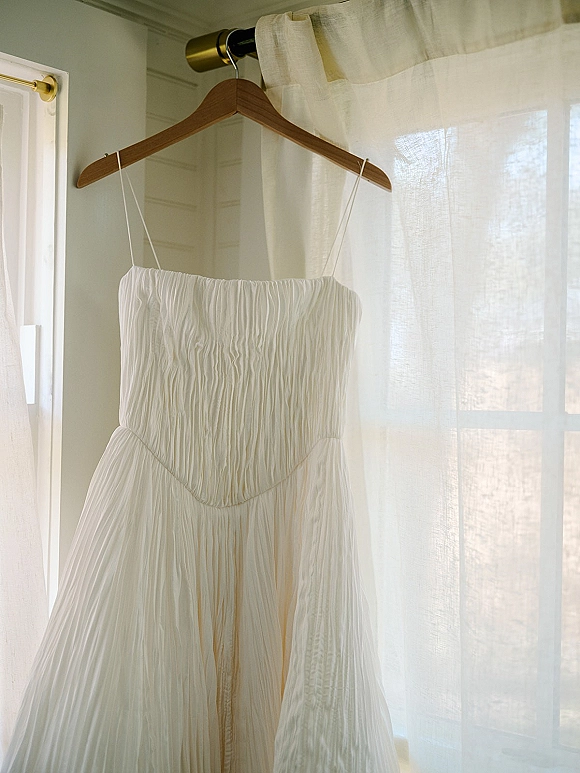
Silk mikado is the structural choice. It has a subdued, almost matte sheen, holds a pleat or a sculpted fold without collapsing, and barely moves when you walk, so the color sits still and even across the whole skirt. Duchess satin does the opposite with the same weight. It has a pearly glow that catches light from across a room, and it falls in cascading folds that shift as you move, so pale blue on duchess satin swings between near-white on the crest of a fold and a definite blue in the trough. That contrast is what makes satin the most photogenic version of this color. It also shows every water spot and press mark, which matte mikado hides.
Silk crepe goes matte and clings to the form rather than settling on it. In pale blue it reads as pure line and almost no color, closest to a slip you would wear to a city hall ceremony. Chiffon does nothing standing still and everything in motion, lifting and floating a half-step paler than it looks on the hanger, and it creases the moment you sit down.
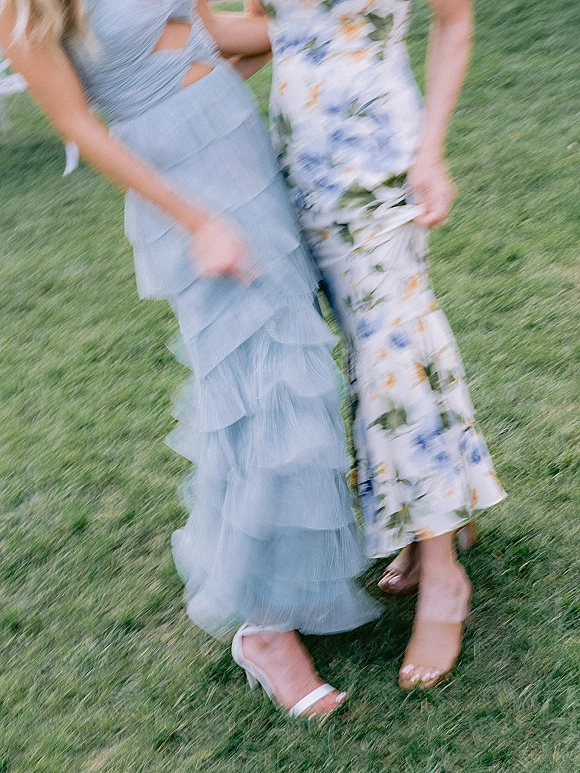
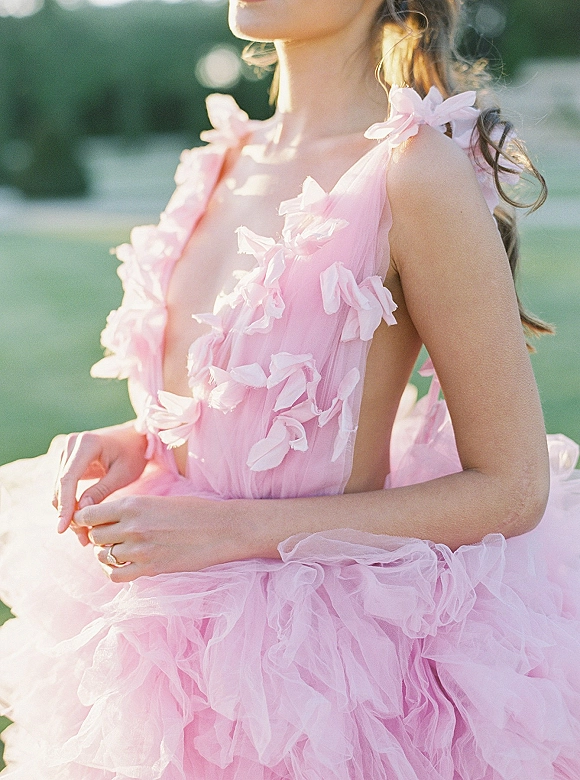
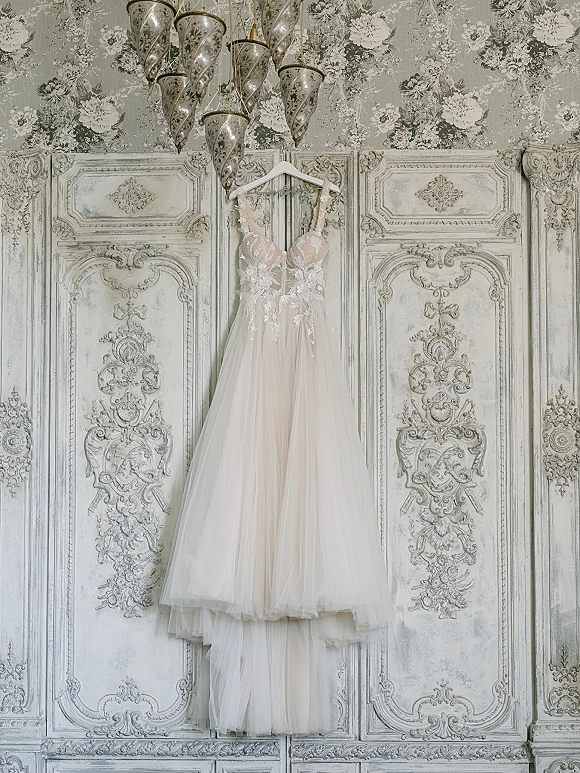
Tulle is the one that surprises people. It transmits light rather than reflecting it, so a pale blue tulle skirt glows when the sun is behind it and goes flat and slightly grey when the light is in front. Stack six layers over a blue lining and the skirt arrives paler than the swatch, closer to white than to the color on your screen. Organza stays crisp where tulle stays soft, holds a full skirt out from the body, and catches light along its open weave.
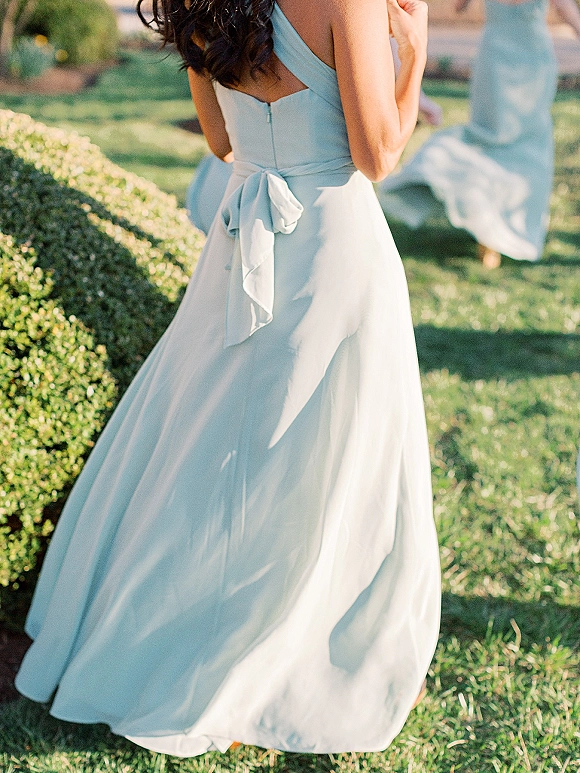
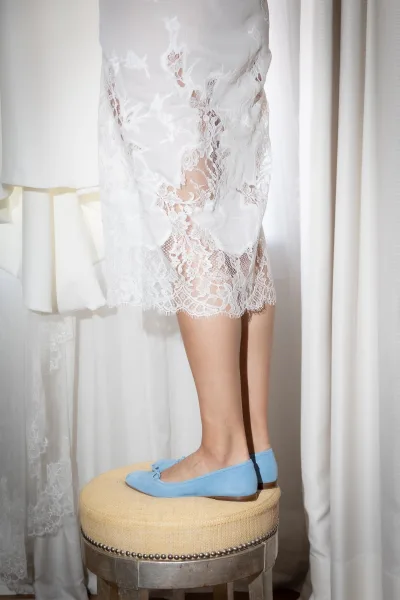
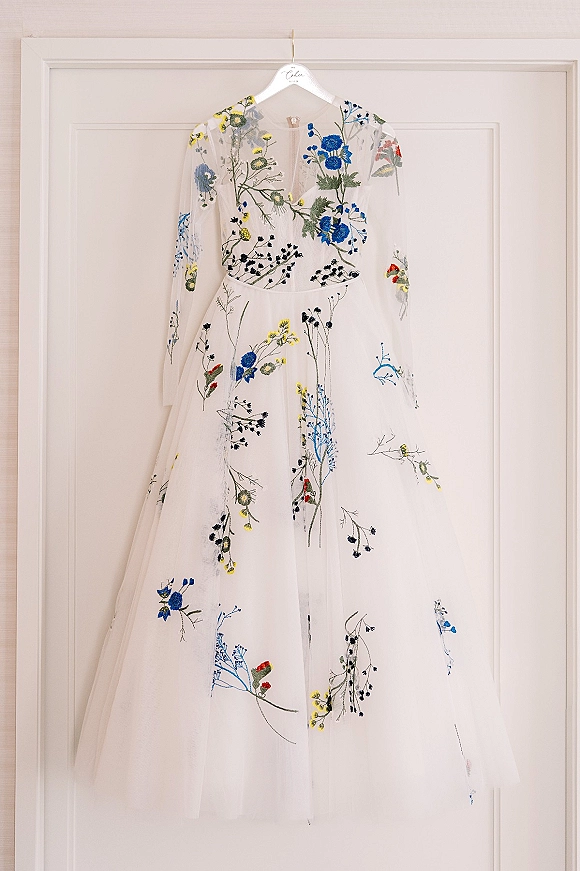
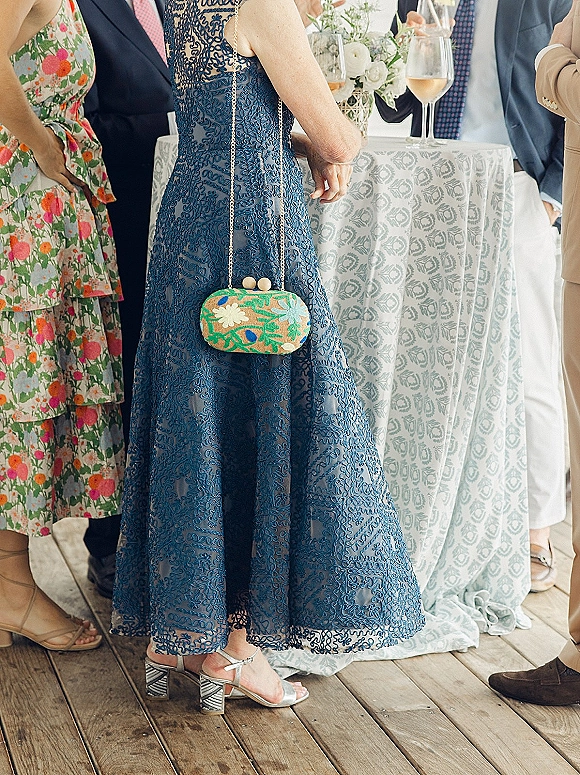
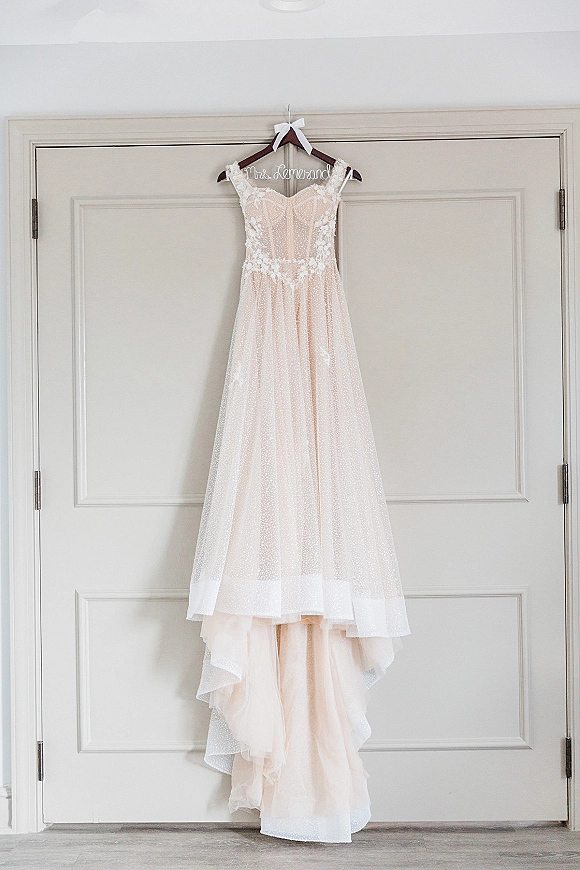
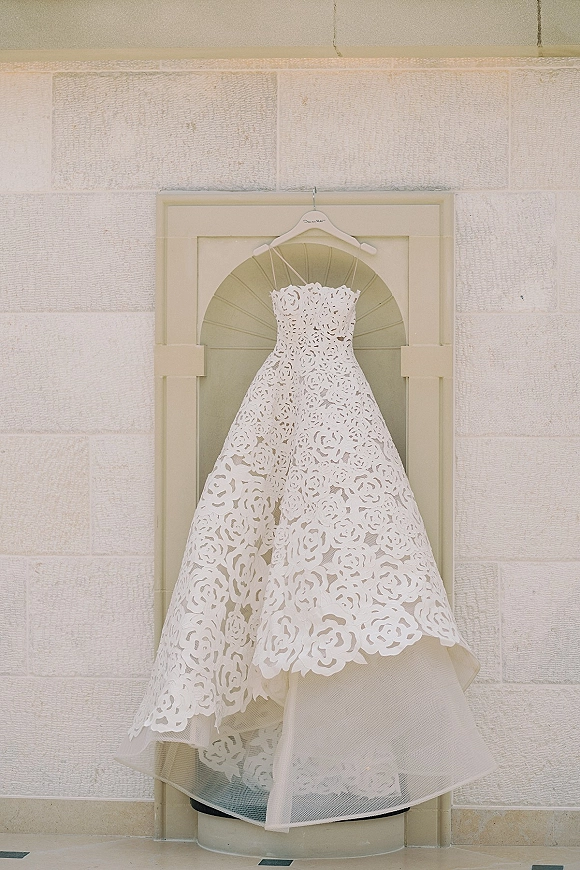
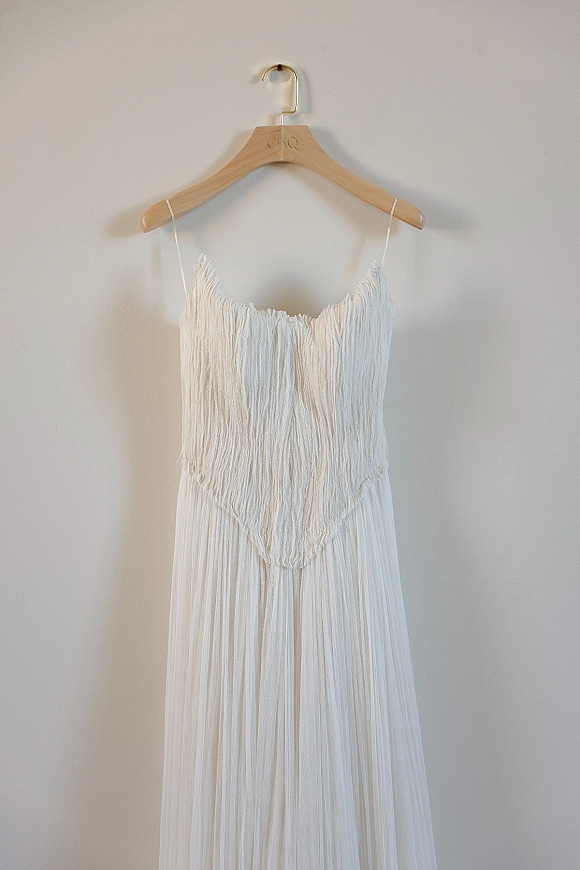
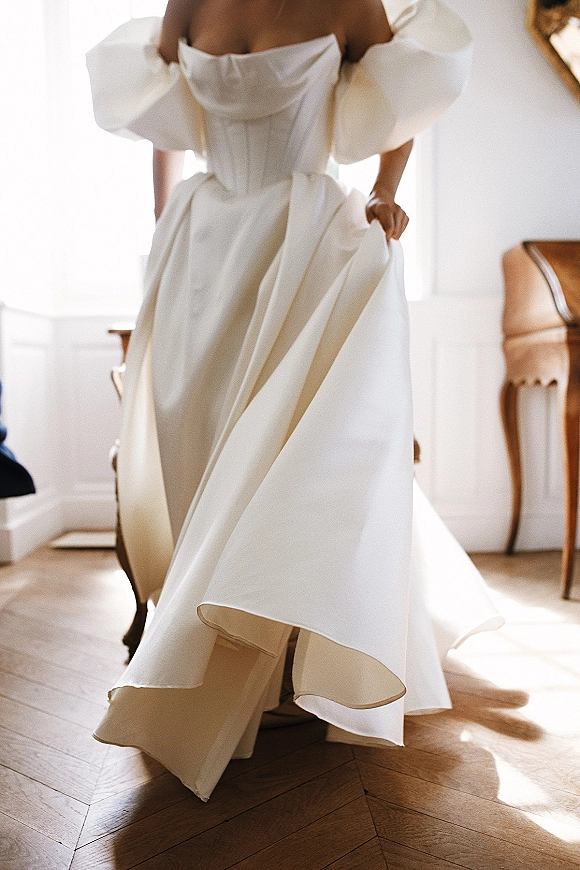
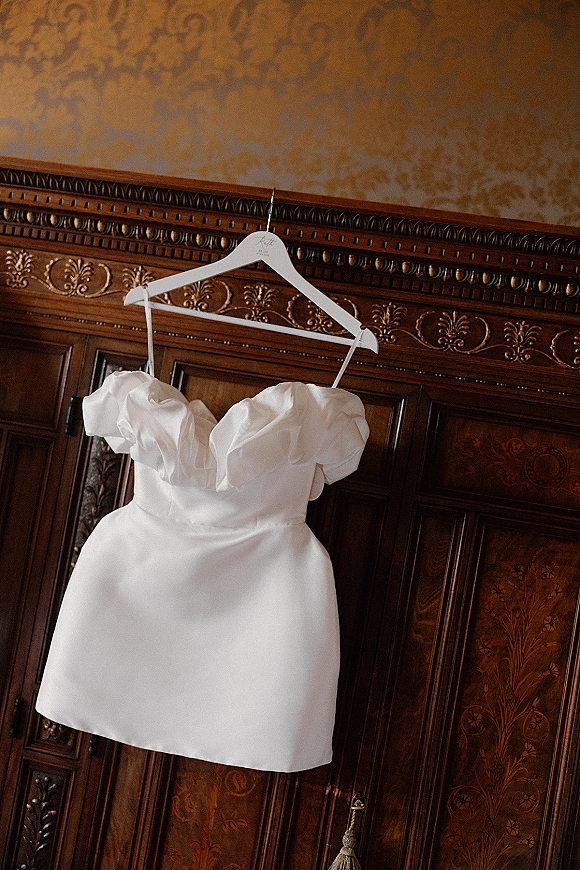
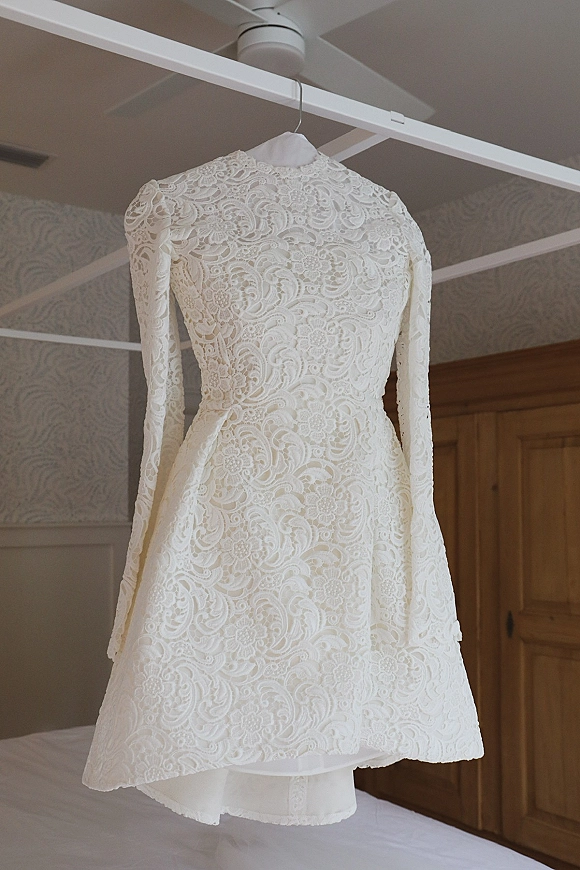
Lace over a blue underlay is the quietest version of the shade and the one that changes most as you move. Guipure, with its raised sculptural motifs and open webbing, lets the blue show through in distinct patches, so from across a room it reads as shadow in the pattern and up close the color resolves in the gaps. Corded lace on fine net does the same thing more evenly, with the blue reading as a soft wash behind the cord rather than in blocks. Watch where the color actually sits in the gowns below, and how much of it is the dress against how much is the light it was shot in.
Silhouettes and Necklines That Suit Light Blue
Soft shapes suit pale blue. Saturated blue wants the opposite.
A-line and ball gown silhouettes are the most common, because volume gives a pale color room to shade from light into shadow and keeps it from reading as a flat panel of near-white. Flowing chiffon and tulle skirts do the same with less structure behind them.
Column and slip shapes go modern and land closer to evening wear. In silk crepe or charmeuse, a pale blue slip gown is one of the few colored options that works at a restaurant reception without looking costumed.
Necklines are less constrained here than with a strong color, since there is no field of saturation to break up. Strapless, sweetheart, V-neck, and square all sit comfortably. High necks and long sleeves in pale blue push toward romantic rather than dramatic, which is where this color naturally sits anyway.
How Light Blue Photographs in Daylight, Church Light, and Candlelight
Pale blue is the shade most likely to disappear in a photograph, and the reason has less to do with the dress than with how wedding photographers are trained to edit white ones. Ivory gowns pick up a blue cast in shade and overcast light, and the standard fix is to pull the blue saturation down in post. Applied reflexively to a gown that is actually blue, that same correction drains it to grey.
So tell your photographer the dress is blue, in writing, before the day. Anyone who shoots colored gowns regularly already knows to protect the blue channel. Anyone who has never shot one will run their usual preset and hand you a gallery of an off-white dress. It costs nothing to say and it cannot be fixed afterward.
The light itself matters almost as much. Bright overcast is the most faithful, rendering the shade closest to what you saw in person. Warm tungsten uplighting and candlelight desaturate pale blue toward neutral grey, and the effect is stronger on chiffon and tulle than on satin. Direct midday sun on a high-sheen fabric blows out the highlights entirely, so the gown reads as ivory with a blue shadow rather than as a blue dress.
Backgrounds matter more here than with a saturated color. Light blue holds against dark wood, stone, deep greenery, and evening light, where contrast does the work for it. It struggles against white walls, pale florals, and bright sand, where it flattens into the background.
What to Ask Before You Order a Light Blue Wedding Dress
The bridal industry sells pale blue to the wedding party and white to the bride, which is why the shade fills a bridesmaid catalogue and barely exists on a salon rack. That single fact shapes every question below, because it means you are almost certainly ordering made to order rather than buying off a floor.
Ask what color the lining is. Pale fabric transmits light, so the underlayer, the seam allowances, and the boning channels can all telegraph through in a way ivory hides better. This is a question for your first fitting, not your last.
Ask how many sheer layers sit over that lining. Each one lightens the color further, and a skirt spec'd at six layers of tulle will not match the swatch the fabric came from.
Ask for a physical swatch and look at it at the venue. Screen calibration and shop lighting both lie, and pale shades of any color, ivory included, drift more between dye lots than deep saturated ones do. Compare it standing where you will actually stand.
Order everything blue at once. A gown and bridesmaid dresses placed as separate orders are cut weeks or months apart and rarely dyed in the same batch, so the same color name arrives as two colors. A single group order gets everything cut from one roll, and it is the only reliable fix.
Order six months out, not three. Made-to-order production runs four to eight weeks before anything ships, and alterations sit on top of that.
Where a Light Blue Wedding Dress Goes Wrong
Four failure modes account for most of it, and all four are catchable before the final fitting.
The dress arrives paler than the swatch. This is the layered-sheer problem above, and it is why the swatch has to come from the finished fabric rather than the bolt. Hold it against the gown at the first fitting, in daylight, and raise it then. After the second fitting there is nothing to be done.
The bridesmaids do not match. Two suppliers, one color name, two colors. Catch it by ordering together, and if you cannot, put deliberate distance between the shades instead of chasing a match that will not survive a photograph.
The gown photographs white. Covered above, and the only fix is a conversation before the day.
The dye job comes back two-toned. If you are having an ivory gown dyed rather than buying blue, understand what dyes and what does not. Nylon tulle and nylon lace take color beautifully. Polyester resists it and reaches pastel at best, which is fine for pale blue and hopeless for anything deeper. Glass and crystal beading will not take color at all, metal takes a faint tint, and polyester embroidery thread dyes slower than the fabric around it. A heavily beaded gown comes back with the beadwork a visibly different shade from the dress.
And dye before you alter, never after. Setting color in synthetics needs heat near 200°F, which can shift or separate the adhesive in fusible interfacing, and silk can shrink in water. Either one moves a fit your seamstress has already dialed in. Send the gown, get it back, then book alterations.
What a Light Blue Wedding Dress Costs
Expect $250 to $700 for a made-to-order light blue gown, which is where almost all of them come from. The salon tier most brides shop, roughly $1,200 to $2,500, barely exists in this color, and that absence rather than the price is the real constraint. For the mainstream benchmarks worth reading alongside this, see what wedding dresses cost across the market.
Having a gown you already own dyed runs closer to $900 for a full-gown service from a bridal dye specialist. That is more than most made-to-order blue gowns cost outright, so it makes sense for a dress with sentimental value or a silhouette nobody cuts in blue, and rarely otherwise. Browsing wedding dress designers who take custom color orders is the faster route for most people.
What Bridesmaids, Suits, and Flowers Wear With a Light Blue Gown
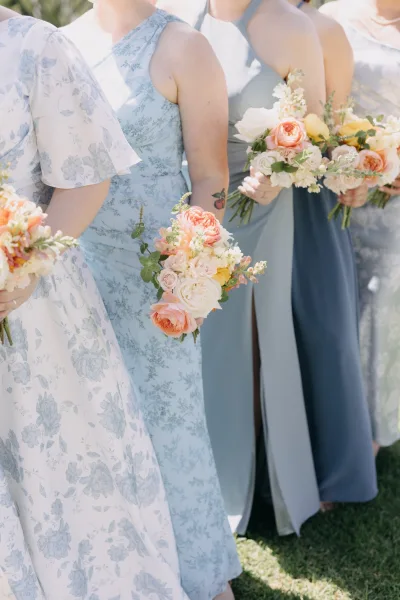
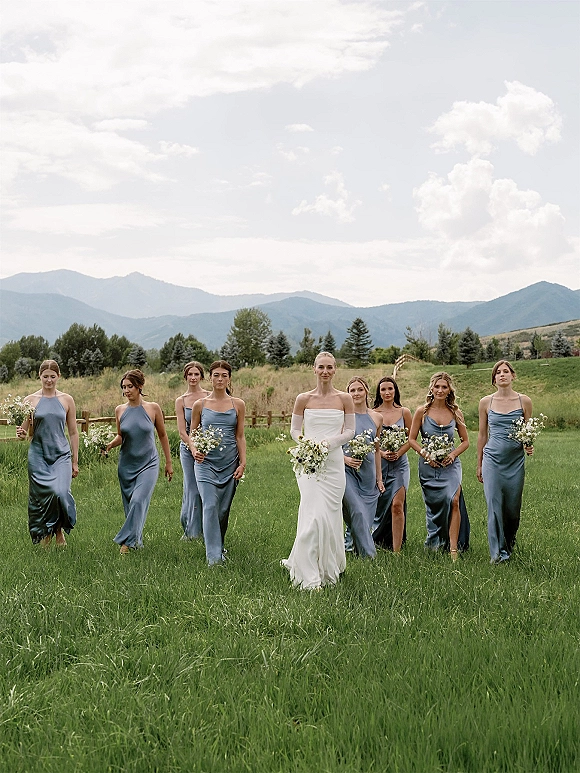
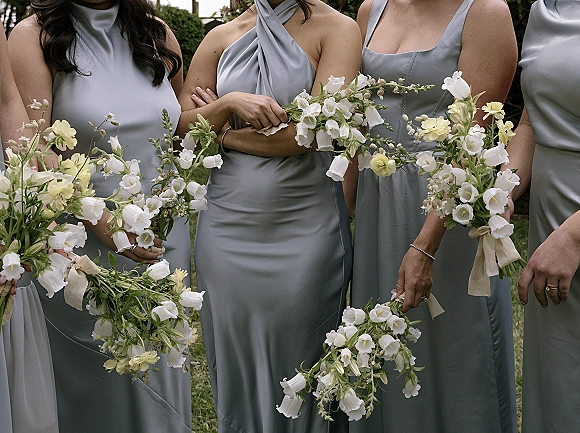
Bridesmaids should go darker or warmer, never matching. A light blue gown beside light blue bridesmaid dresses in a different dye lot photographs as a failed match rather than a palette, and dusty blue has no agreed value to match against.
Navy is the safest counterweight. It sits several steps below light blue on the same ladder and reads as intentional depth, which is why navy bridesmaid dresses are the most common pairing with a pale gown. Dusty blue bridesmaid dresseswork as well, provided the gap between the two blues is wide enough to be legible in a photograph.
Warm neutrals go the other direction and do it cleanly. Champagne and terracotta against a light blue gown give the palette somewhere warm to land, and they remove the near-miss problem by removing the possibility of a near miss.
Suits should stay dark or stay warm. Navy and charcoal are the reliable choices, with tan a good warm-weather alternative. Light grey suiting against a light blue gown produces a washed-out group photograph, and it is the one combination worth ruling out in advance.
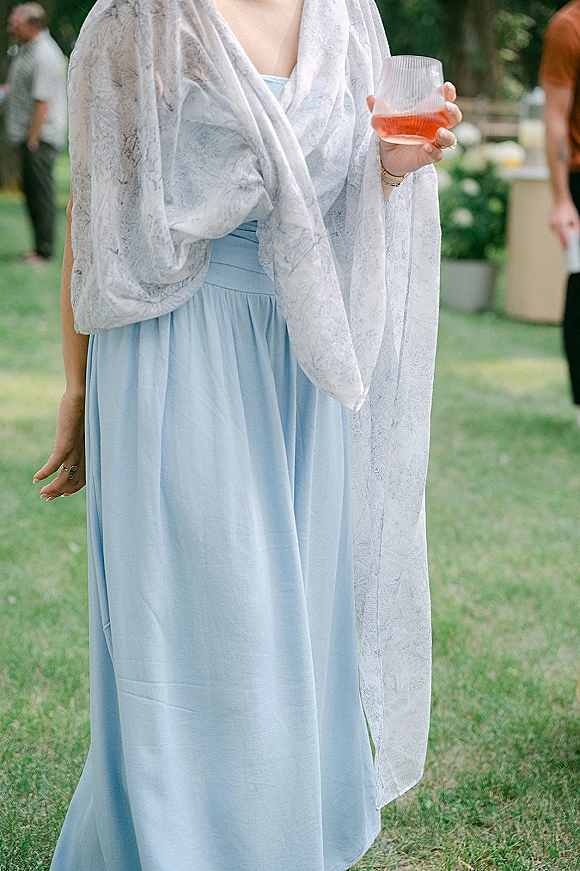
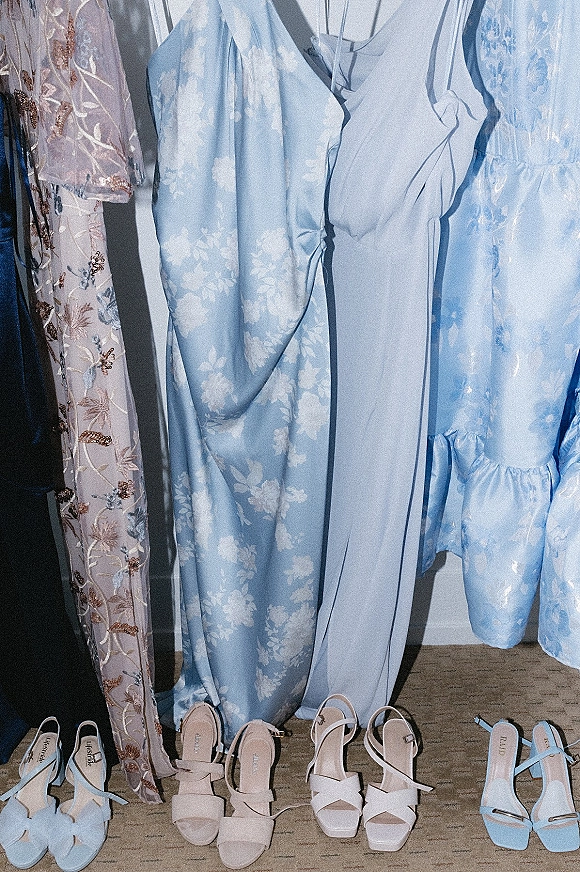
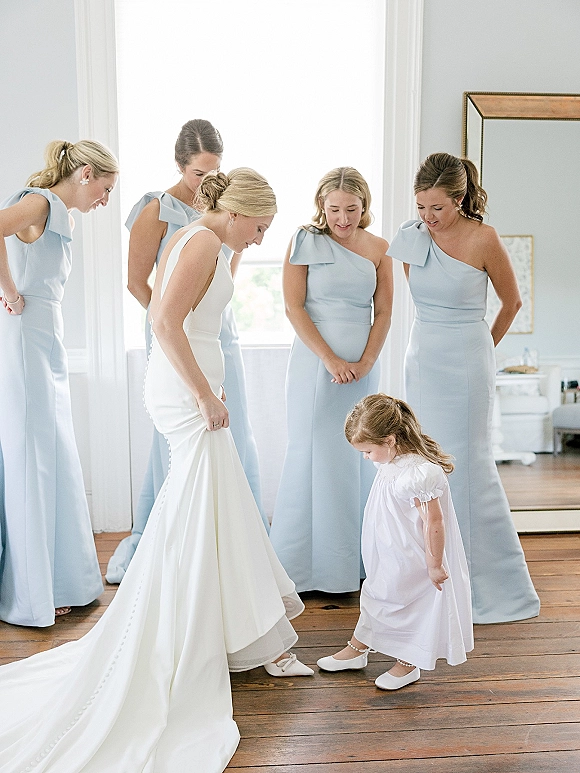
For flowers, white and cream with green foliage is the standard pairing, and white wedding bouquets hold clear contrast against pale blue from any distance. Deep burgundy and rich orange both read strongly. Pale pink and lavender blur into the gown rather than complementing it. Browsing bridesmaid dress labels that publish swatch programs saves the most time on the matching question. Look at how much distance the wedding parties below leave between the gown and the dresses.
Light Blue as a Reception Dress or Second Look
A second dress is the lowest-risk way to wear light blue, and it solves several problems at once. Ivory for the ceremony keeps family expectations intact and keeps the daylight photographs clean, which is where pale blue is most likely to wash out anyway. Pale blue for the reception puts the color in warm indoor light, where a shorter silhouette outperforms a train on a dance floor, and where nobody is comparing the gown to a white one standing next to it.
The economics favor it too. A pale blue midi, tea-length, or cocktail dress can come from evening wear rather than bridal, where this color is abundant and cheap. Compare that to committing an entire gown budget to a shade you have only seen on a screen.
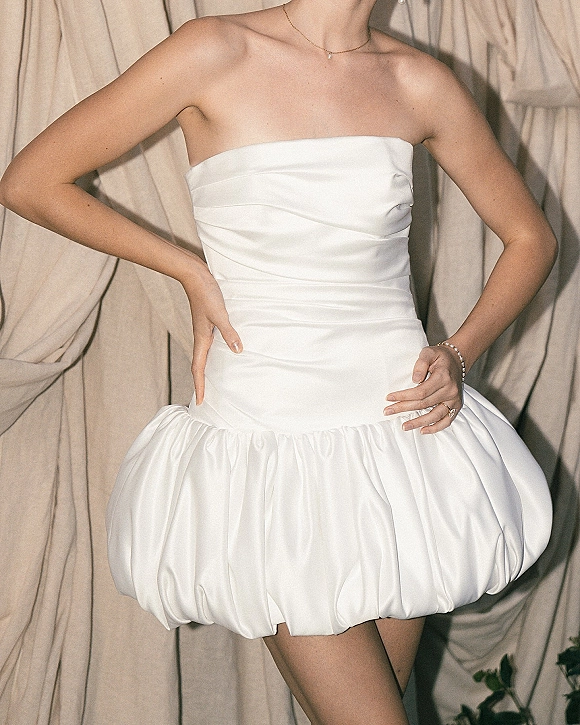
Short silhouettes suit it particularly well. Light blue at tea length reads as vintage rather than as a costume choice, and a short wedding dress in powder blue is one of the few ways to wear this color that nobody will mistake for a bridesmaid. Real second looks tend to be bolder than first ones for exactly that reason.
If you want the pale end without the blue, a grey wedding dress gives the same soft, non-white effect with fewer matching problems. If the palette rather than the gown is the real goal, a dusty blue wedding puts the shade into the flowers and the linens while the gown stays ivory.
Frequently Asked Questions
Does a light blue wedding dress count as something blue?
Yes. The tradition specifies a blue item and says nothing about size or visibility, so a blue gown satisfies it outright. Many brides wearing light blue still add a second blue token for sentiment, usually something borrowed or inherited, but the dress alone covers the custom.
Why would a bride wear blue instead of white?
Blue was a common bridal color before white became standard, and it has signified purity and fidelity in Western wedding custom for centuries. White only became fashionable after Queen Victoria's 1840 wedding. Brides who choose blue now are usually after the color itself rather than the history, but the history is real.
Is light blue too light for a wedding dress?
It is the shade most at risk of reading as off-white in photographs. Satin and mikado hold the color; layered chiffon and tulle give it away. If you want the blue to be unmistakable, choose an opaque fabric and a shade at the dusty end rather than powder.
What is the difference between light blue, powder blue, and ice blue?
Powder blue is a defined color, hex #B0E0E6, soft and slightly grey. Light blue is the family name and has no fixed shade. Ice blue has no agreed value at all and gets quoted anywhere from a pale steel to a near-cyan, which is why two suppliers selling ice blue can ship different colors. Order a physical swatch rather than trusting the name.
How much does a light blue wedding dress cost?
Expect $250 to $700 from a made-to-order specialist, which is where almost all of them come from. The $1,200 to $2,500 salon tier barely exists in this color. Having a gown you already own dyed runs closer to $900, which is more than buying one outright.
Can you dye a wedding dress light blue?
Yes, with two conditions. Nylon tulle and lace take color well and polyester resists it, reaching pastel at best, so pale blue is achievable on most gowns where a deep shade would not be. And glass beading will not take color at all, so a heavily beaded dress comes back with the beadwork a different shade. Dye before alterations, never after.
What color bridesmaid dresses go with a light blue wedding dress?
Navy, charcoal, champagne, or terracotta. Avoid light blue bridesmaid dresses, since a near-match in a different dye lot photographs as an error rather than a palette. If you want blue across the party, put at least two shades of distance between the gown and the dresses.
How long does it take to order a light blue wedding dress?
Plan on four to six months. Made-to-order production runs four to eight weeks before anything ships, and alterations sit on top of that. If you are having a gown dyed instead, add the dye turnaround and book alterations only after it comes back.